
Add GIZMOCHINA as Preferred Source on Google
MSI is reviving its high-end MEG monitor lineup, recently showcased at CES 2026 earlier this month. The new MEG X goes beyond being a standard hardware upgrade and instead delivers a built-in competitive advantage. Rather than simply displaying the game, the monitor analyzes on-screen activity and provides real-time assistance to the player. In several cases, it introduces features that would normally be considered unfair advantages.

The MEG X is built around a 34-inch fifth-generation QD-OLED panel with a 3440 x 1440 resolution and a 21:9 ultrawide aspect ratio. It runs at a 360Hz refresh rate and has a 0.03ms response time, putting it firmly in the same class as the fastest OLED gaming monitors on the market. These core specs alone make it suitable for competitive shooters and fast-paced action games, with strong contrast, clear motion, and excellent low-light performance.
What sets the MEG X apart is its AI system, which works at the display level instead of relying on game software. The monitor analyzes the video feed itself, meaning its features can work across different games without developer support. With a single toggle, players can activate AI tools that highlight characters on screen, making enemies easier to spot during fast movement or chaotic scenes. The monitor can also reduce the impact of flashbang-style effects by cutting down how long the screen stays washed out after a bright flash.
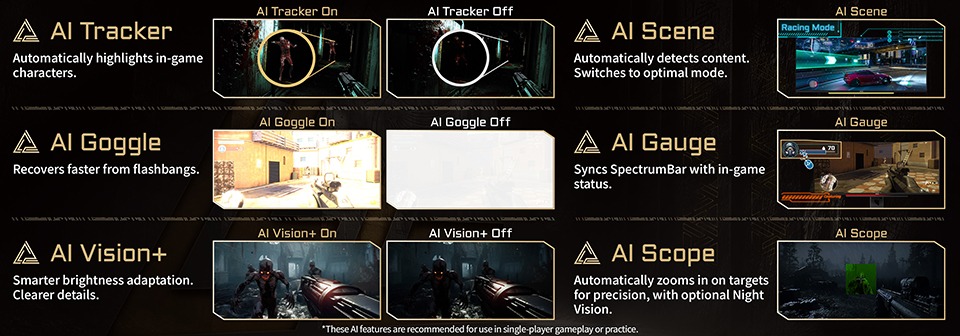
In darker scenes, the AI dynamically adjusts brightness and contrast to keep details visible without manual tuning. There is also a zoom function that digitally magnifies targets to help with precision aiming, with an optional night-vision style view for low-light areas. The monitor can detect what type of content is being shown and automatically switch display presets, such as moving into a racing mode when it recognizes a driving game.
MSI adds extra feedback through RGB lighting that syncs with in-game status indicators and includes a hands-free assistant that lets players open menus or adjust settings using voice commands. Because all of this processing happens inside the monitor, it does not rely on game files or software hooks.
MSI itself recommends using these features in single-player games or practice sessions. That suggestion matters, since display-level assistance like this would be difficult for anti-cheat systems to detect. The situation is similar to Snap Tap Mode on keyboards from Razer, which drew attention for providing input advantages that competitive games quickly moved to restrict. In titles like Counter-Strike 2 and other competitive shooters, developers can ban or disable features that offer unfair advantages, even if they come from hardware rather than software. Tournament rules already limit certain mouse and keyboard behaviors, and display-level AI assistance could face the same treatment. If MEG X ships as described, it may be powerful hardware for solo play, but its AI tools are unlikely to be welcome in serious competitive environments where fair play rules still draw a hard line.
For more daily updates, please visit our News Section.
Tech enthusiast? Get the latest news first! Follow our Telegram channel and subscribe to our free newsletter for your daily tech fix!
(Source)


Comments