
Add GIZMOCHINA on Google:
A US startup called Neurophos has announced a new kind of AI chip that uses light instead of electricity to process data. Backed by Bill Gates’ Gates Frontier Fund, the company says its optical processor could deliver dramatically higher AI performance while avoiding the power and scaling limits faced by today’s silicon chips.
The announcement, reported by Tom’s Hardware, has drawn attention across the semiconductor industry, which is increasingly searching for alternatives to traditional computing.
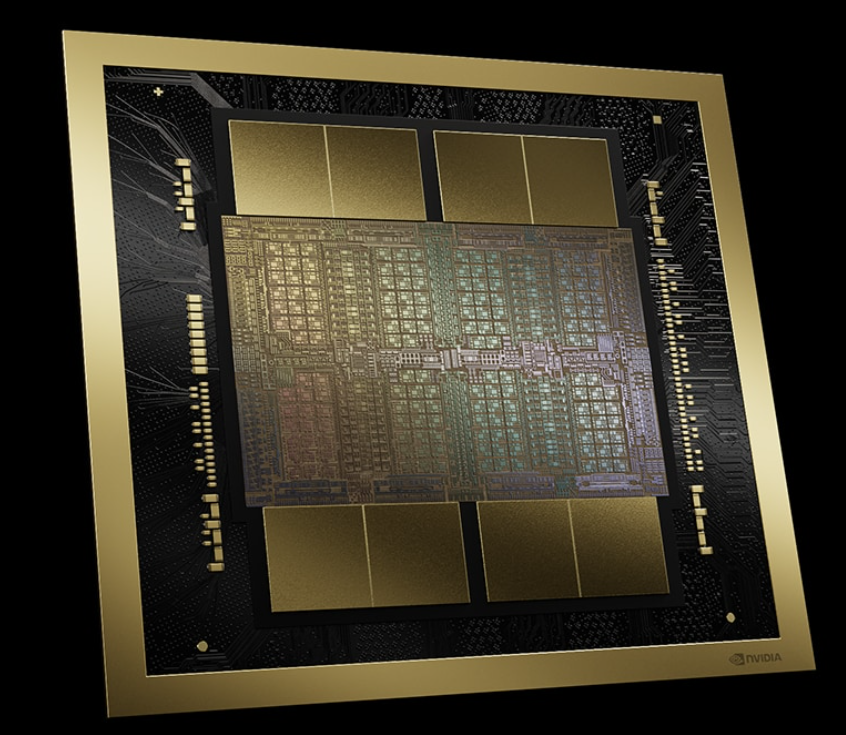
How Optical Computing Changes the Equation
Unlike conventional GPUs that move electrons through silicon, Neurophos uses photons to perform calculations. Light can switch much faster and generate less heat, allowing more work to be done in the same amount of time. Neurophos says it has overcome a long-standing barrier in optical computing by shrinking optical components enough to fit densely on a chip made with existing manufacturing technology.
This allows the company to rely on a single, very large optical compute matrix running at extremely high speeds, rather than hundreds of smaller compute cores.
How This Compares With Nvidia’s Approach
Nvidia remains the dominant force in AI hardware, and its latest platforms still rely on traditional silicon GPUs. While Nvidia is adopting photonics for faster data transfer between chips, the actual AI computation remains electronic. Neurophos, by contrast, is attempting true optical computation, representing a more radical shift in chip design.
Is Nvidia’s Dominance at Risk?
For now, Nvidia is safe. Neurophos is still years away from mass production and faces major engineering and software challenges. However, the project signals a possible future where optical computing complements or even replaces parts of today’s AI hardware, potentially reshaping the tech and AI industries over the next decade.
Read More:
- Honor Is Going All-In on Laptops in 2026: Massive PC Lineup Leak Reveals Big Plans
- NVIDIA Caught in US- China Crossfire: Jensen Huang Lands in Shanghai amidst Ban on H200 Chips
- Tech War: Why China Has Blocked Nvidia H200 AI Chip Imports Despite US Approval ?
(via)

Comments