
Add GIZMOCHINA on Google:
As an Amazon Associate, Gizmochina earns from qualifying purchases. Links on this page may earn us a commission at no extra cost to you.
Smartphone use now exceeds three hours a day on average, while total daily screen time for many adults crosses six hours. This constant close-up focus has made eye fatigue, dryness, blurred vision, and headaches a common part of modern life. As screens become unavoidable, interest is growing in technologies that don’t just relieve symptoms but train the eyes to cope better with digital habits.
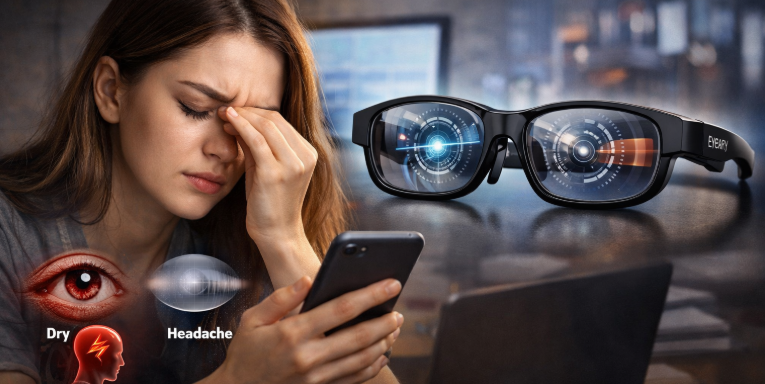
Eyeary and the Technology Behind It
South Korea–based Edenlux is preparing to launch Eyeary, a lightweight, glasses-style vision training device, in the U.S. later this year. Unlike software-only eye exercises or blue-light filters, Eyeary works directly on the ciliary muscle, which controls how the eye focuses. Heavy screen use keeps this muscle locked in a contracted state. Eyeary repeatedly guides the eyes through controlled focus changes using 144 focal points, training the muscle to relax and contract more naturally.
Is This Technology Truly New?
Eye training tools are not new, but most existing solutions are either clinical devices, simple exercise apps, or bulky headsets. Eyeary stands out by combining hardware-based visual training, AI-driven personalization, and everyday wearability. Few consumer devices currently offer this level of precision in focus training outside clinical environments.
Current Technology:
Blue-Light and Anti-Glare Glasses
Most products on the market today are blue-light filtering or anti-glare glasses. These are designed to reduce screen glare and improve viewing comfort during long hours of phone or computer use. While they are widely adopted, scientific evidence on their ability to reduce digital eye strain remains mixed.
Basic Eye Exercise Tools
Some products focus on simple eye exercises, including pinhole glasses and manual vision training tools. These aim to encourage eye movement and focus changes but lack precision. They do not use sensors, software, or personalization, and results often depend heavily on user consistency.
Clinical and Experimental Solutions
More advanced vision training exists mainly in clinical or research environments. These include VR-based vision therapy systems and adjustable-focus lenses. However, such solutions are usually bulky, expensive, or designed for supervised use rather than everyday consumers.
Market Gap in Active Vision Training
Overall, most current solutions are passive and symptom-focused. Consumer-ready, wearable devices that actively train eye-focusing muscles using data and AI are still rare, leaving this segment largely unexplored in the mainstream market.
Potential Impact on Eye Health
If effective at scale, Eyeary could shift eye care from treatment to daily prevention and recovery, especially for heavy screen users. It signals a future where vision health becomes part of consumer technology, much like fitness tracking, potentially influencing how smartphones, wearables, and displays are designed to protect long-term eye function.
| Preview | Product | |
|---|---|---|

|
LENSKART BLU | Zero Power Blue Cut Computer Glasses | Gaming Glasses | Anti Glare, Lightweight &… | Check Price on Amazon |
Please Note: When you buy something using the links in our articles, we may earn a small commission at no cost to you.
Read More:
- Honor Is Going All-In on Laptops in 2026: Massive PC Lineup Leak Reveals Big Plans
- Bill Gates Backed Startup Creates Light-Powered AI Chip That Can Beat Nvidia
- NVIDIA Caught in US- China Crossfire: Jensen Huang Lands in Shanghai amidst Ban on H200 Chips
(via)

Comments