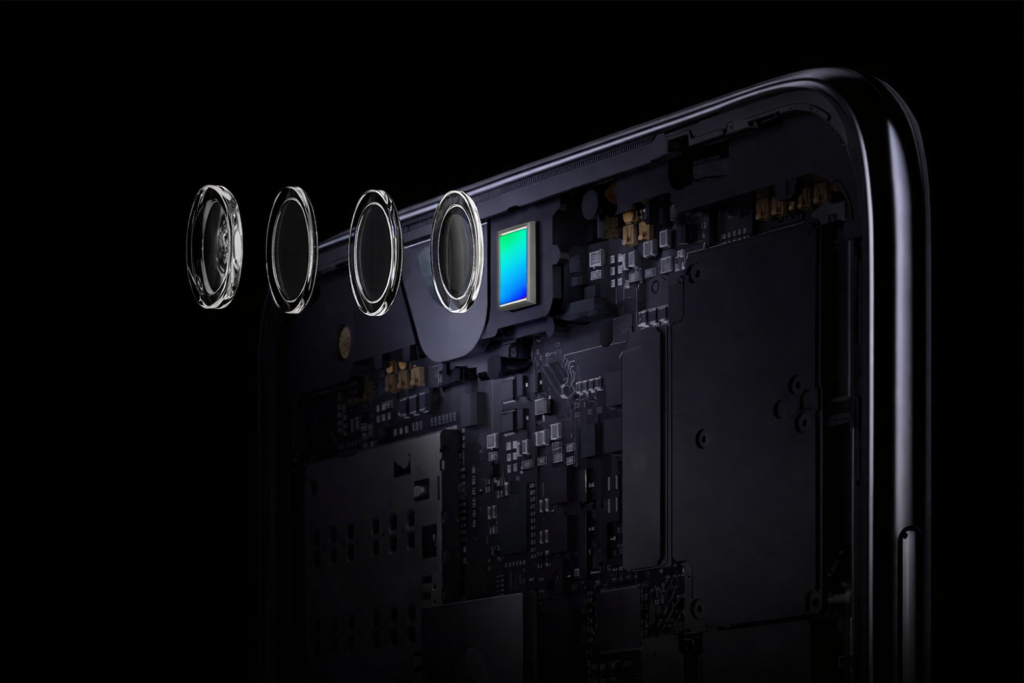
Just when you thought your smartphone’s rear-facing camera had reached its peak with 200-megapixel monster sensors, the industry has decided to turn the lens around and aim straight for your face.
According to the latest leaks from seasoned tipster Digital Chat Station, the 2026 flagship cycle is set to witness a staggering shift as manufacturers begin testing 100MP selfie cameras.
While we are already bracing for dual 200MP setups on the back of phones like the rumored Xiaomi 18 Pro, the jump to a nine-digit megapixel count for a front-facing lens raises a provocative question about where actual utility ends and marketing vanity begins.
Fitting a hundred million pixels into the punch-hole of a modern display is less about a simple hardware upgrade and more about a breakthrough in engineering. To make this work, brands like Oppo and Huawei are reportedly developing custom “small-pixel” sensors that defy traditional size constraints.
Because these pixels are so tiny, they naturally struggle with light sensitivity, but the industry isn’t just throwing numbers at a wall for the sake of it. They are likely banking on advanced pixel-binning and potentially RYYB color filters to ensure your low-light selfies don’t look grainy.
2. Vlogging Flexibility
We are now in the social media age, where almost everyone is exploring content creation, whether it’s recording for TikTok, vlogging for YouTube, or sharing high-quality videos on Instagram.
The 100MP square sensor could allow creators to shoot a single high-resolution video vertically for TikTok while seamlessly cropping it into a horizontal format for YouTube, all without compromising 4K clarity.
Manufacturers are also reportedly embracing the new 1:1 square format, an innovation inspired by Apple’s Center Stage feature introduced with the iPhone 17. According to reports, Huawei’s Nova 16 series and Oppo’s Find X10 series are expected to feature these advanced square sensors, signaling a shift in how front-facing cameras are designed.
The real value here isn’t just in capturing more detail but in enabling digital zoom, stabilization, and reframing during post-production without any loss in quality.
This level of flexibility could turn smartphones into powerful tools for content creators, rivaling even dedicated vlogging rigs and making mobile devices the preferred choice for the social media generation.
3. Spec Race or Genuine Innovation?
Despite the excitement, some might wonder if our devices can handle the immense data demands of a 100MP selfie camera. After all, such high-resolution photos come with significant processing and storage requirements.
However, with the advancements in modern chipsets and AI, refining and optimizing these massive images is no longer a challenge. AI-driven algorithms can efficiently enhance light, detail, and color in real time, ensuring that even high-resolution selfies are polished and ready to share instantly.
Ultimately, the 100MP selfie revolution might be the ultimate spec flex, but innovation is always welcome, and Android manufacturers have proven its value. Unless we experiment with new spaces, we won’t know what to expect.
Five years ago, capturing the moon with such detail seemed impossible, yet here we are. The front camera is the final frontier of smartphone imaging, and it is finally getting the upgrade it deserves.
For more daily updates, please visit our News Section.
We use cookies on our website to give you the most relevant experience by remembering your preferences and repeat visits. By clicking “Accept”, you consent to the use of ALL the cookies.
This website uses cookies to improve your experience while you navigate through the website. Out of these, the cookies that are categorized as necessary are stored on your browser as they are essential for the working of basic functionalities of the website. We also use third-party cookies that help us analyze and understand how you use this website. These cookies will be stored in your browser only with your consent. You also have the option to opt-out of these cookies. But opting out of some of these cookies may affect your browsing experience.
Necessary cookies are absolutely essential for the website to function properly. This category only includes cookies that ensures basic functionalities and security features of the website. These cookies do not store any personal information.
Any cookies that may not be particularly necessary for the website to function and is used specifically to collect user personal data via analytics, ads, other embedded contents are termed as non-necessary cookies. It is mandatory to procure user consent prior to running these cookies on your website.