As an Amazon Associate, Gizmochina earns from qualifying purchases. Links on this page may earn us a commission at no extra cost to you.
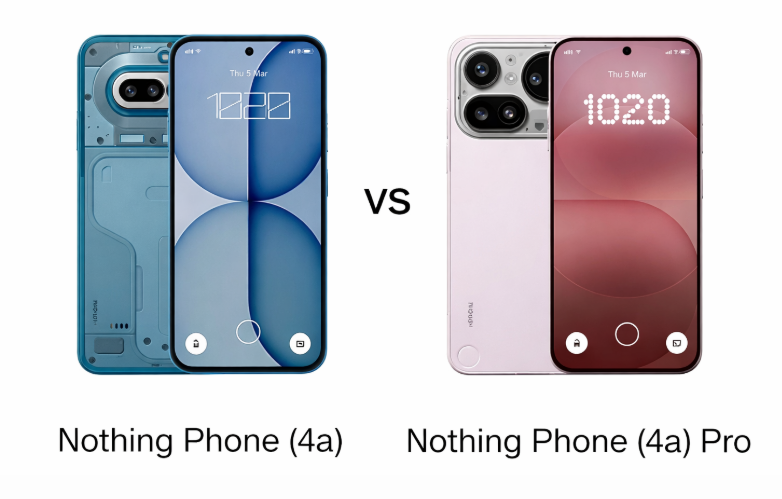
Upgrades don’t always mean dramatic changes; sometimes, they’re about refining what already works. That’s exactly the case with the Nothing Phone (4a) and Nothing Phone (4a) Pro. At first glance, both devices look familiar, but the real story lies in the subtle improvements. From build materials to display smoothness and chipset tweaks, the Pro version builds on the same foundation rather than redefining it. This comparison focuses on what actually changes, and whether those upgrades feel meaningful in everyday use.
The Nothing Phone (4a) features a glass back with a plastic frame and 63 LED glyphs, maintaining the brand’s signature look. The Nothing Phone (4a) Pro introduces a clear upgrade with an aluminum unibody and aluminum back, along with 137 LEDs. This shift highlights a move toward a more premium construction and enhanced glyph customization. The change is less about redesign and more about refinement and material improvement.
Display Quality
The standard model offers a 120Hz AMOLED panel with strong brightness and HDR support. The Pro upgrades this to a 144Hz panel with higher peak brightness and a more immersive screen experience. Resolution is also slightly improved. The differences focus on smoother visuals and enhanced outdoor visibility rather than a completely new display approach.
Verdict
The Pro introduces material and display upgrades, focusing on refinement rather than a dramatic shift in design philosophy.
2. Specifications Including Battery
Performance
The Nothing Phone (4a) runs on Snapdragon 7s Gen 4, while the Pro upgrades to Snapdragon 7 Gen 4. The improvement lies in better CPU structure and a stronger GPU, enabling smoother multitasking and improved sustained performance. The upgrade reflects a step forward in efficiency and power, rather than a jump to flagship-level performance.
Battery and Charging
Both devices retain identical battery capacities and charging speeds. There are no upgrades here, with both offering consistent all-day battery life and the same 50W charging experience. This suggests a focus on maintaining reliability rather than introducing changes.
Verdict
The Pro focuses on chipset improvements, while battery and charging remain unchanged across both models.
3. Camera
Main and Secondary Lenses
Both phones share a similar triple-camera setup, including a periscope telephoto lens. The Pro upgrades the main sensor slightly with dual-pixel autofocus, improving focus speed and consistency. The rest of the setup remains largely unchanged, indicating optimization rather than hardware overhaul.
Selfie Camera
The selfie camera remains identical on both devices, with no upgrades in hardware or video capabilities. Performance is consistent, maintaining the same output quality across both models.
Verdict
Camera differences are subtle, with the Pro offering minor refinements rather than major hardware changes.
4. Pricing
The Nothing Phone (4a) is priced at around $450 (₹32,000), while the Nothing Phone (4a) Pro is priced at about $500 (₹40,000). The price increase reflects the added materials, display improvements, and chipset upgrade.
Value for Money
The pricing difference aligns with the upgrades offered. The Pro positions itself as an enhanced version rather than a completely different segment device. The added cost mainly covers refinement in experience rather than new core features.
Verdict
The price gap directly reflects incremental upgrades, making the Pro a step-up option rather than a separate category.
Disclaimer: Prices are approximate and may vary based on country, region, and applicable taxes.
5. Conclusion
Both devices retain core Nothing features like glyph lighting and Nothing OS 4.1. The Pro expands on this with more LEDs and improved customization. Across the board, the changes focus on enhancing existing strengths rather than introducing entirely new features.
Verdict
Nothing Phone (4a) Pro is clearly an evolution, not a reinvention. Every upgrade, from aluminum build to 144Hz display and stronger chip, feels like a direct enhancement of the same foundation. There are no drastic changes, just smarter refinements that make the Pro feel like a polished version of the standard model rather than a completely different device.
Disclaimer: This comparison is based on the specifications provided and is intended for general informational purposes. Actual performance, camera results, battery life, and overall experience may vary depending on real-world usage, software updates, and individual preferences.
We use cookies on our website to give you the most relevant experience by remembering your preferences and repeat visits. By clicking “Accept”, you consent to the use of ALL the cookies.
This website uses cookies to improve your experience while you navigate through the website. Out of these, the cookies that are categorized as necessary are stored on your browser as they are essential for the working of basic functionalities of the website. We also use third-party cookies that help us analyze and understand how you use this website. These cookies will be stored in your browser only with your consent. You also have the option to opt-out of these cookies. But opting out of some of these cookies may affect your browsing experience.
Necessary cookies are absolutely essential for the website to function properly. This category only includes cookies that ensures basic functionalities and security features of the website. These cookies do not store any personal information.
Any cookies that may not be particularly necessary for the website to function and is used specifically to collect user personal data via analytics, ads, other embedded contents are termed as non-necessary cookies. It is mandatory to procure user consent prior to running these cookies on your website.




Comments