Advertisement

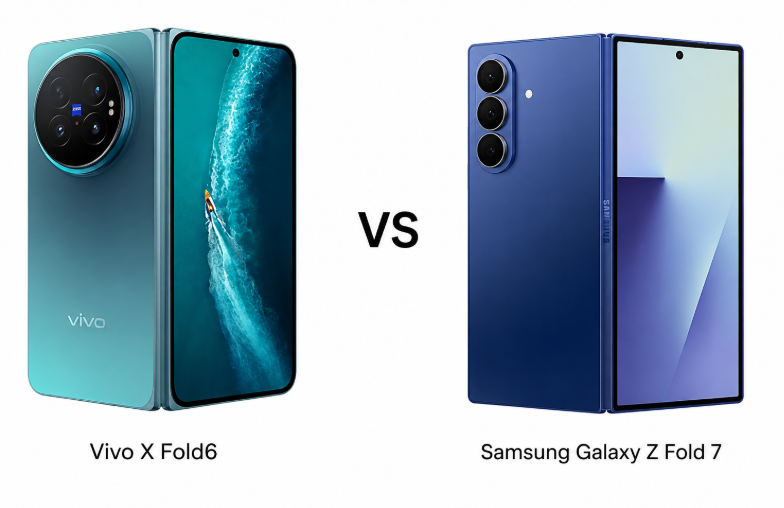
The premium foldable smartphone market is more competitive than ever, and the Vivo X Fold6 is taking on Samsung’s latest Galaxy Z Fold 7 with flagship hardware at a much lower price. While Samsung focuses on software refinement and long-term support, Vivo counters with a larger battery, faster charging, brighter displays, and an upgraded camera system. Here’s a detailed comparison to see which foldable delivers the better overall experience and value for your money. 
Major Features:

CategoryVivo X Fold6Samsung Galaxy Z Fold 7Winner
Display8.02-inch LTPO AMOLED, 120Hz, HDR10+, Dolby Vision, 2312 × 2504, 5,000 nits cover display8.0-inch Dynamic LTPO AMOLED 2X, 120Hz, HDR10+, 1968 × 2184, 2,600 nitsVivo – Sharper and brighter displays
Cover Display6.51-inch LTPO AMOLED, 120Hz, Dolby Vision6.5-inch Dynamic AMOLED 2X, 120HzVivo – Higher brightness
ProcessorMediaTek Dimensity 9500 Super (3nm)Snapdragon 8 Elite (3nm)Tie – Flagship performance
GPUMali-G1 Ultra MC12Adreno 830Samsung – Better gaming optimization
RAM & StorageUp to 16GB RAM, 1TB, UFS 4.1Up to 16GB RAM, 1TB, UFS 4.0Vivo – Faster storage
SoftwareAndroid 16, OriginOS 6 FoldAndroid 16, One UI 8, 7 major Android upgradesSamsung – Longer software support
Rear Cameras200MP + 50MP Periscope + 50MP Ultrawide200MP + 10MP Telephoto + 12MP UltrawideVivo – Superior camera hardware
Selfie CamerasDual 20MP camerasDual 10MP camerasVivo – Higher-resolution selfies
Video Recording8K@30fps, 4K@60fps8K@30fps, 4K@60fps, HDR10+, 1080p@240fpsSamsung – More versatile video features
Battery7,000mAh4,400mAhVivo – Much larger battery
Charging80W wired, 40W wireless, reverse wired, 5W reverse wireless25W wired, 15W wireless, 4.5W reverse wirelessVivo – Significantly faster charging
ConnectivityWi-Fi 7, Bluetooth 5.4, USB 3.2 Gen2, DisplayPort, IR BlasterWi-Fi 7, Bluetooth 5.4, USB 3.2, DeX, UWBSamsung – Better productivity features
DurabilityIP58/IP59 water and dust resistanceIP48 water and dust resistanceVivo – Better protection
Price / ValuePriced around $1,200 / ₹111,000Priced around $1,600 / ₹175,000Vivo – Better value for money
Disclaimer: Specs are based on available data. Actual performance may vary. Verify details from official sources before buying.

1. Design and Display

Build and Feel

The Vivo X Fold6 and Samsung Galaxy Z Fold 7 both represent the latest generation of premium foldable smartphones with refined designs and flagship materials. Vivo uses an aluminum frame paired with a glass front and a glass-fiber reinforced plastic rear panel while offering IP58/IP59 protection against dust and water. Samsung counters with Gorilla Glass Victus Ceramic 2 on the cover display, Gorilla Glass Victus 2 on the back, an Advanced Armor aluminum frame, and IP48 certification. Samsung also includes eSIM support and Ultra Wideband compatibility, making it more versatile for business users. Vivo, however, feels more practical with its higher durability rating and infrared blaster, giving it a few everyday advantages that many users may appreciate.

Display Quality

Both phones feature immersive 120Hz LTPO AMOLED foldable displays with HDR support, but Vivo delivers a sharper 8.02-inch panel with Dolby Vision, HDR Vivid, and an impressive 5,000-nit peak brightness on the cover display. Samsung’s Dynamic AMOLED 2X panel offers excellent color accuracy and One UI optimization, although its peak brightness tops out at 2,600 nits. Samsung’s software refinement makes animations exceptionally smooth, while Vivo’s brighter and higher-resolution displays provide a more striking visual experience, especially outdoors.

Verdict

Samsung offers premium materials and polished software, but Vivo delivers brighter displays, better durability certification, and a more impressive viewing experience. Overall, Vivo takes a slight lead in design and display.

2. Specifications Including Battery

Performance

The Vivo X Fold6 is powered by the MediaTek Dimensity 9500 Super chipset with UFS 4.1 storage, while the Galaxy Z Fold 7 runs Qualcomm’s Snapdragon 8 Elite paired with UFS 4.0 storage. Both deliver flagship-level performance capable of handling demanding games, multitasking, AI workloads, and productivity apps without difficulty. Samsung benefits from One UI 8 and promises seven major Android upgrades, making it a stronger long-term software investment. Vivo’s newer storage standard and powerful processor, however, provide excellent speed and responsiveness in everyday use. Both devices remain among the fastest foldables currently available.

Battery and Charging

Battery life is where the difference becomes significant. Vivo packs a massive 7,000mAh silicon-carbon battery supported by 80W wired, 40W wireless, reverse wired, and 5W reverse wireless charging. Samsung relies on a much smaller 4,400mAh battery with 25W wired and 15W wireless charging. Vivo is clearly built for heavy users who spend long hours away from a charger, while Samsung prioritizes efficiency over battery capacity.

Verdict

Samsung excels in software longevity, but Vivo delivers better battery endurance, faster charging, newer storage technology, and equally powerful performance. Vivo offers a stronger overall hardware package.

3. Camera

Main and Secondary Lenses

Both foldables feature impressive triple-camera systems led by 200MP primary sensors with optical image stabilization. Vivo complements its main sensor with a 50MP periscope telephoto camera offering 3x optical zoom and a 50MP ultrawide lens enhanced by Zeiss optics, Zeiss T* coating, laser autofocus, and a color spectrum sensor. Samsung uses a 10MP telephoto and a 12MP ultrawide camera while relying heavily on advanced computational photography. Samsung produces consistently balanced images with reliable color science, but Vivo’s superior hardware captures more detail, offers better zoom quality, and delivers greater flexibility in varied lighting conditions.

Selfie Camera

Vivo includes dual 20MP selfie cameras on both the cover and inner displays, while Samsung equips both positions with 10MP sensors capable of recording up to 4K video. Samsung offers better video recording options for selfie creators, but Vivo captures noticeably sharper still images with greater detail. Users focused primarily on photography are likely to appreciate Vivo’s approach.

Verdict

Samsung continues to impress with software processing and video capabilities, but Vivo’s stronger camera hardware, superior ultrawide and telephoto sensors, and higher-resolution selfie cameras make it the better photography-focused foldable.

4. Pricing

The Vivo X Fold6 is priced around $1,200 (₹111,000), while the Samsung Galaxy Z Fold 7 is priced around $1,600 (₹175,000). That creates a substantial difference of roughly $400 (₹64,000) between the two flagship foldables. Despite costing significantly less, Vivo includes a larger battery, dramatically faster charging, brighter displays, higher-resolution secondary cameras, UFS 4.1 storage, and a more capable camera system. Samsung justifies its premium through seven years of Android updates, One UI optimization, Samsung DeX, stronger ecosystem integration, and broader global software support. Buyers already invested in Samsung’s ecosystem may find the extra cost worthwhile, but the hardware advantage remains firmly with Vivo.

Verdict

Samsung commands a premium for software, ecosystem, and long-term support. Vivo delivers considerably more flagship hardware for a much lower asking price, making it the stronger value-for-money option for most buyers.

Disclaimer:
Prices are approximate and may vary based on country, region, launch timing, and applicable taxes. Always check whether the listed price is for a China unit or a global/international variant when purchasing.

5. Conclusion

Vivo X Fold6 stands out with its enormous 7,000mAh silicon-carbon battery, 80W wired and 40W wireless charging, Zeiss-enhanced triple-camera system, brighter dual displays, infrared blaster, and higher durability certification. Samsung Galaxy Z Fold 7 answers with seven years of Android upgrades, Samsung DeX desktop mode, Ultra Wideband support, polished One UI 8 software, and one of the most mature foldable ecosystems available today. Samsung remains an excellent productivity companion, particularly for users already using Galaxy tablets, watches, or laptops. Vivo, however, focuses on delivering flagship hardware without demanding the highest premium.

Verdict

For buyers seeking maximum hardware, longer battery life, faster charging, and better camera versatility, the Vivo X Fold6 is the stronger overall choice. Those prioritizing software support, productivity features, and seamless ecosystem integration will still appreciate the Galaxy Z Fold 7. 

Considering performance, features, and pricing together, Vivo offers the more compelling flagship foldable experience and delivers exceptional value against one of Samsung’s most premium devices.

Disclaimer: This comparison is based on the specifications provided and is intended for general informational purposes. Actual performance, camera results, battery life, and overall experience may vary depending on real-world usage, software updates, and individual preferences.

Read More:

Comments