Advertisement

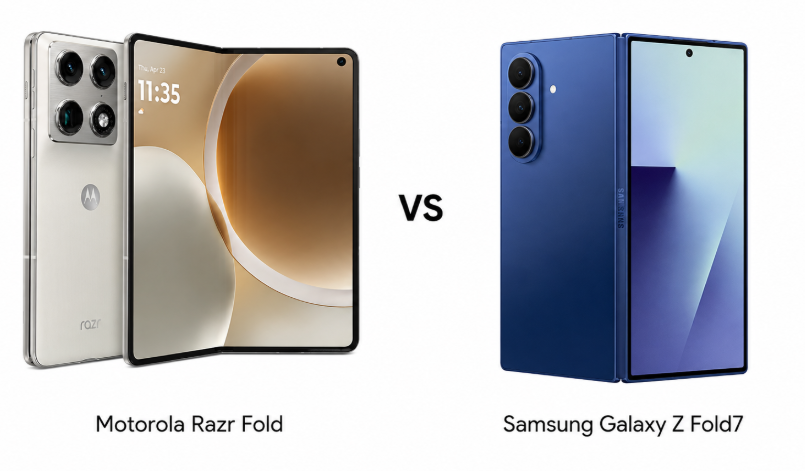
Motorola Razr Fold and Samsung Galaxy Z Fold7 take two very different approaches to the premium foldable experience. Samsung focuses on refinement, productivity, and software polish, while Motorola pushes bigger hardware upgrades with brighter displays, faster charging, and a larger battery. With both devices targeting flagship buyers, this comparison highlights which foldable actually delivers the better overall experience for everyday use. 
Major Features:

FeatureMotorola Razr FoldSamsung Galaxy Z Fold7Winner
Display8.1-inch LTPO P-OLED, 120Hz, 6200 nits8.0-inch Dynamic AMOLED 2X, 120Hz, 2600 nitsMotorola – Brighter and more immersive display
Cover Display6.6-inch LTPO P-OLED, 165Hz6.5-inch AMOLED 2X, 120HzMotorola – Smoother and brighter outer screen
ProcessorSnapdragon 8 Gen 5Snapdragon 8 EliteSamsung – Slightly stronger peak performance
RAM & StorageUp to 16GB RAM, UFS 4.1Up to 16GB RAM, UFS 4.0Motorola – Faster storage standard
Software SupportAndroid 16, 7 upgradesAndroid 16, 7 upgrades, One UI 8Samsung – Better foldable software optimization
Main Camera50MP + 50MP Periscope + 50MP Ultrawide200MP + 10MP Telephoto + 12MP UltrawideMotorola – More balanced flagship camera setup
Zoom Camera50MP periscope, 3x optical10MP telephoto, 3x opticalMotorola – Higher quality zoom hardware
Video Recording8K Dolby Vision, 4K120fps8K30fps, 4K60fpsMotorola – Stronger video capabilities
Selfie Camera20MP inner + 32MP cover10MP inner + 10MP coverMotorola – Higher-resolution selfie setup
Battery6000mAh4400mAhMotorola – Much larger battery
Charging80W wired, 50W wireless25W wired, 15W wirelessMotorola – Far faster charging
DurabilityIP48/IP49, stylus supportIP48, Armor aluminum frameMotorola – Better protection and stylus support
AudioStereo speakers with Dolby Atmos, Bose tuningStereo speakers, high-bitrate audioMotorola – Richer audio branding and tuning
Productivity FeaturesStylus supportSamsung DeX, UWB supportSamsung – Better productivity ecosystem
PriceApprox ₹1,50,000Approx ₹1,75,000Motorola – Better hardware value for money
OverallHardware-focused foldable flagshipRefined productivity-focused foldableMotorola – Better overall value and hardware package
Disclaimer: Specs are based on available data. Actual performance may vary. Verify details from official sources before buying.

1. Design and Display

Build and Feel

The Motorola Razr Fold takes a more aggressive approach toward premium foldables with its sharper styling, stylus support, and stronger durability claims. The combination of IP48/IP49 resistance and Gorilla Glass Ceramic 3 on the cover display gives it a rugged flagship personality. Samsung’s Galaxy Z Fold7, meanwhile, focuses on refinement. The lighter body, Advanced Armor aluminum frame, and polished hinge mechanism make it feel more mature and easier to carry daily. Samsung also adds DeX and Ultra Wideband support, which quietly improves the productivity experience.

Display Quality

Motorola pushes display hardware harder with a brighter inner panel, brighter cover screen, and a smoother 165Hz outer display. Content consumption and gaming feel more dramatic here, especially with Dolby Vision support across both screens. Samsung’s AMOLED tuning still looks incredibly natural and color-accurate, and One UI remains one of the best optimized foldable interfaces available. However, the Razr Fold feels more futuristic on paper and in everyday use.

Verdict

Samsung delivers the cleaner and more polished foldable experience, but Motorola wins on raw display ambition and feature richness. The Razr Fold feels designed for users who want a foldable to stand out rather than simply blend in.

2. Specifications Including Battery

Performance

Both devices sit comfortably in flagship territory, but they target performance differently. The Motorola Razr Fold uses the newer Snapdragon 8 Gen 5 paired with faster UFS 4.1 storage and up to 16GB RAM. Heavy multitasking, gaming, and AI-driven tasks should feel exceptionally fast here. Samsung’s Snapdragon 8 Elite still remains extremely powerful, and One UI 8 is known for stable long-term optimization. Samsung also benefits from a stronger productivity ecosystem thanks to DeX support and better app continuity.

Battery and Charging

Battery life is where Motorola creates a huge gap. The 6000mAh battery, combined with 80W wired and 50W wireless charging, makes the Razr Fold feel significantly more practical for power users. Samsung’s 4400mAh battery and 25W charging setup now feels conservative in comparison. Faster top-ups genuinely change the foldable experience because these devices are often used heavily throughout the day.

Verdict

The Galaxy Z Fold7 offers smoother software maturity and productivity advantages, but the Razr Fold clearly wins for hardware power, battery endurance, and charging convenience. Motorola simply feels more future-ready in this department.

3. Camera

Main and Secondary Lenses

Samsung continues to lean heavily into computational photography with its 200MP primary camera. Images are expected to have stronger dynamic range, better night processing, and more consistent social-media-ready output. Samsung’s camera software remains one of the safest options for point-and-shoot photography. Motorola counters with a more balanced triple 50MP setup, including a stronger periscope telephoto sensor and a much higher-resolution ultrawide camera. The camera hardware feels more versatile overall, especially for zoom and landscape photography.

Selfie Camera

Motorola again pushes higher numbers with a 20MP inner selfie camera and a 32MP cover shooter. Samsung keeps things simpler with dual 10MP sensors focused more on consistency and natural tones. Video creators may appreciate Motorola’s stronger recording flexibility, especially with Dolby Vision support and 4K120 recording capabilities.

Verdict

Samsung still feels safer for effortless flagship photography, but Motorola offers a more exciting and flexible camera package. Users who enjoy experimenting with zoom, ultrawide shots, and high-end video recording may find the Razr Fold more rewarding.

4. Pricing

The Motorola Razr Fold is expected to launch at around ₹1,50,000, while the Samsung Galaxy Z Fold7 sits closer to ₹1,75,000 despite offering slower charging and a smaller battery. Samsung’s pricing partly reflects its stronger brand value, foldable software maturity, and ecosystem integration. Features like DeX, long-term optimization, and Samsung’s foldable experience still hold major appeal for productivity-focused buyers.

Motorola, however, appears far more aggressive with hardware value. The brighter displays, larger battery, faster charging, stylus support, and upgraded camera hardware make the Razr Fold look unusually competitive for its price. It feels like Motorola is targeting users who want maximum specifications without crossing into ultra-premium pricing territory.

Verdict

Samsung justifies its premium mainly through software polish and ecosystem advantages. Motorola offers stronger value for money overall and delivers noticeably more hardware for a lower asking price.

Disclaimer:
Prices are approximate and may vary based on country, region, launch timing, and applicable taxes. Always check whether the listed price is for a China unit or a global/international variant when purchasing.

5. Conclusion

The Motorola Razr Fold stands out with its massive battery, ultra-fast charging, brighter displays, stylus support, and highly versatile camera hardware. It feels designed for users who want cutting-edge hardware without compromise. Samsung’s Galaxy Z Fold7 focuses more on reliability, ecosystem integration, and refined usability. Features like Samsung DeX, optimized multitasking, and One UI’s foldable polish continue to make it one of the most complete productivity foldables available.

The difference between these devices ultimately comes down to preference. Samsung prioritizes balance and maturity, while Motorola pushes hardware innovation more aggressively. That distinction becomes noticeable in daily use, especially for power users and content creators.

Verdict

The Galaxy Z Fold7 remains the safer premium foldable for long-term software confidence and productivity workflows. The Motorola Razr Fold, however, feels like the more exciting flagship overall, delivering stronger value, better battery life, superior charging, and a more ambitious hardware package for less money.

Disclaimer: This comparison is based on the specifications provided and is intended for general informational purposes. Actual performance, camera results, battery life, and overall experience may vary depending on real-world usage, software updates, and individual preferences.

Read More:

Comments