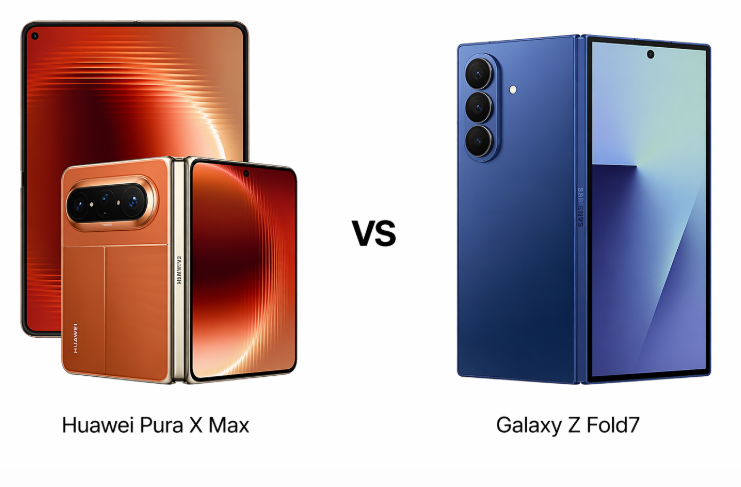
Choosing between the Huawei Pura X Max and Samsung Galaxy Z Fold7 is not just about specs; it’s about how a foldable fits into daily life. These two represent different philosophies: one prioritizes durability, battery, and practicality, while the other focuses on performance, polish, and ecosystem strength. For buyers investing in ultra-premium foldables, this comparison matters because the experience goes far beyond hardware; it’s about long-term usability, software support, and how seamlessly the device adapts to work, entertainment, and everything in between.
Major Features:
Feature
Huawei Pura X Max
Samsung Galaxy Z Fold7
Winner
Main Display
7.7″ LTPO2 OLED, 120Hz, ~412 ppi
8.0″ Dynamic AMOLED 2X, 120Hz, HDR10+, brighter
Samsung – Bigger, brighter, more immersive
Cover Display
5.4″, LTPO2 OLED
6.5″, AMOLED 2X
Samsung – More usable outer screen
Build & Protection
Kunlun Glass 2, IP58/IP59, stylus support
Gorilla Glass Victus, IP48, stronger hinge
Huawei – Better durability + stylus
Performance
Kirin 9030 Pro (6nm)
Snapdragon 8 Elite (3nm)
Samsung – Significantly more powerful
GPU
Maleoon 935
Adreno 830
Samsung – Better gaming performance
RAM & Storage
Up to 16GB RAM, 1TB
Up to 16GB RAM, 1TB (UFS 4.0)
Samsung – Faster storage tech
Battery
5300mAh
4400mAh
Huawei – Larger battery
Charging (Wired)
66W
25W
Huawei – Much faster
Wireless Charging
50W + reverse
15W + reverse
Huawei – Way faster wireless
Main Camera
50MP variable aperture
200MP sensor
Samsung – Higher detail, better processing
Telephoto
50MP periscope (3.5x)
10MP (3x)
Huawei – Better zoom hardware
Video Recording
4K HDR
8K + HDR10+
Samsung – Superior video
Selfie Camera
8MP
10MP
Samsung – Slightly better
OS & Updates
HarmonyOS 6.1
Android 16, 7 years updates
Samsung – Long-term support
Connectivity
Wi-Fi 7, Bluetooth 6.0, IR
Wi-Fi 7, UWB, DeX
Samsung – More advanced features
Special Features
Stylus, IR blaster
DeX, UWB, ecosystem
Tie – Depends on usage
Price
~$1600 / ₹150,000
~$1800 / ₹175,000
Huawei – Better value
Disclaimer: Specs are based on available data. Actual performance may vary. Verify details from official sources before buying.
Huawei Pura X Max leans toward a premium, rugged feel with Kunlun Glass 2 and higher ingress protection, making it more confidence-inspiring for daily durability. The design also supports a stylus, which adds a productivity edge. Samsung Galaxy Z Fold7, on the other hand, focuses on refinement with a thinner, lighter foldable experience and a stronger hinge system. Its build feels more polished and mature, especially with the improved materials and tighter folding mechanism. The difference comes down to durability versus finesse, and both approaches serve different user priorities well.
Display Quality
Samsung clearly leads in display immersion with a larger foldable screen, brighter peak output, and HDR10+ support. It feels more cinematic and ideal for multitasking or media consumption. Huawei counters with a sharper pixel density and PWM dimming that can feel more comfortable for long usage. Both cover displays are excellent, but Samsung’s is more practical due to its larger usable area.
Verdict
Samsung wins for display experience and refinement, while Huawei stands out for durability and eye comfort.
2. Specifications Including Battery
Performance
Samsung Galaxy Z Fold7 takes a clear lead with the Snapdragon 8 Elite chip built on a 3nm process, delivering significantly higher performance and efficiency. It feels faster in gaming, multitasking, and long-term usage. Huawei’s Kirin 9030 Pro is capable and optimized for HarmonyOS, but it doesn’t quite match the raw power or GPU performance of Samsung’s flagship chipset. For users pushing their devices daily, the difference becomes noticeable over time.
Battery and Charging
Huawei balances things out with a much larger battery and significantly faster charging speeds, including both wired and wireless options. It feels more practical for heavy users who don’t want to stay plugged in for long. Samsung, while efficient, sticks to slower charging speeds, which feels conservative for a premium foldable. However, its optimization helps maintain consistent battery life across the day.
Verdict
Samsung dominates performance, but Huawei delivers better battery convenience and charging speed.
3. Camera
Main and Secondary Lenses
Samsung Galaxy Z Fold7 pushes ahead with a 200MP primary sensor, delivering sharper detail and better dynamic range, especially in well-lit conditions. Its video capabilities are also far more advanced, including 8K recording and HDR10+ support. Huawei takes a more balanced approach with a versatile triple-camera setup, including a variable aperture and strong periscope zoom. The images tend to look more natural, which some users may prefer over Samsung’s more processed output.
Selfie Camera
Both devices offer similar front camera setups, but Samsung provides slightly better consistency and video performance. Huawei’s cameras are decent but not a standout feature.
Verdict
Samsung wins for overall camera power and video, while Huawei offers more natural photography and flexible shooting control.
4. Pricing
Huawei Pura X Max is priced around $1600 (₹150,000), while Samsung Galaxy Z Fold7 sits higher at about $1800 (₹175,000). The price gap is noticeable and places Samsung firmly in ultra-premium territory. Huawei feels slightly more accessible while still offering flagship-level features.
Is the Price Justified
Samsung justifies its higher price with superior performance, better display technology, longer software support, and a more polished ecosystem experience. It feels like a long-term investment. Huawei, however, delivers strong hardware value with better battery, faster charging, and durability, making it appealing for users focused on practical benefits. The absence of Google services in some regions may still influence the buying decision.
Verdict
Samsung is worth the premium for performance and longevity, while Huawei offers better value for hardware-focused users.
Disclaimer: Prices are approximate and may vary based on country, region, and applicable taxes.
5. Conclusion
Huawei Pura X Max stands out with its rugged build, stylus support, larger battery, and faster charging ecosystem. It feels like a productivity-focused foldable built for endurance. Samsung Galaxy Z Fold7 shines with top-tier performance, superior display quality, refined design, longer software support, and ecosystem features like DeX and UWB. It feels more complete and future-ready overall.
Verdict
Samsung Galaxy Z Fold7 is the better all-round flagship foldable, offering stronger performance, display, and long-term usability. Huawei Pura X Max, however, is a compelling alternative for those who prioritize battery life, durability, and practical everyday convenience over peak performance.
Disclaimer: This comparison is based on the specifications provided and is intended for general informational purposes. Actual performance, camera results, battery life, and overall experience may vary depending on real-world usage, software updates, and individual preferences.
We use cookies on our website to give you the most relevant experience by remembering your preferences and repeat visits. By clicking “Accept”, you consent to the use of ALL the cookies.
This website uses cookies to improve your experience while you navigate through the website. Out of these, the cookies that are categorized as necessary are stored on your browser as they are essential for the working of basic functionalities of the website. We also use third-party cookies that help us analyze and understand how you use this website. These cookies will be stored in your browser only with your consent. You also have the option to opt-out of these cookies. But opting out of some of these cookies may affect your browsing experience.
Necessary cookies are absolutely essential for the website to function properly. This category only includes cookies that ensures basic functionalities and security features of the website. These cookies do not store any personal information.
Any cookies that may not be particularly necessary for the website to function and is used specifically to collect user personal data via analytics, ads, other embedded contents are termed as non-necessary cookies. It is mandatory to procure user consent prior to running these cookies on your website.


Comments