Add GIZMOCHINA as Preferred Source on Google
As an Amazon Associate, Gizmochina earns from qualifying purchases. Links on this page may earn us a commission at no extra cost to you.
New DJI drones are becoming harder to find in the US, and alternatives aren’t much easier to come by. The FCC added DJI and Autel to its Covered List in December 2025, blocking new models from getting the authorization needed to enter the US market. The restrictions also extend to new foreign-made drones more broadly, although previously authorized models may still be available. We explained what this means for owners and buyers in our DJI drone ban guide.
Buyers outside the US have more options, including newer DJI models that continue to launch in other markets. Some are also looking at alternatives for their price, features, or to avoid relying on a single brand. This list covers both groups, with drones that remain available in the US and newer models sold in other regions. These include the Potensic Atom 3, which launched in June, and the HoverAir Aqua, which went on sale in late May. Antigravity also announced a cellular module for the A1 at IFA in September.
Availability and regulatory status vary by market, so check local listings before buying. For US buyers in particular, a drone being available elsewhere doesn’t necessarily mean it’s eligible for sale in the US.
1. Best overall
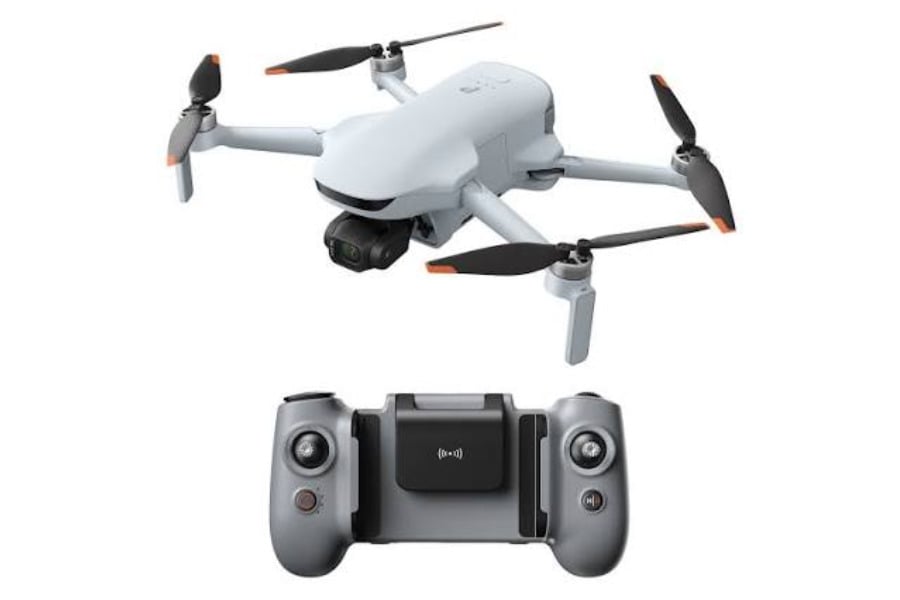
Potensic launched the Atom 3 in June as the successor to the Atom 2 with a larger camera sensor and improved video capabilities. It uses a 1/1.3-inch sensor, up from the 1/2-inch sensor in the Atom 2, and records 4K video at 60fps with HDR. It can also take 50MP stills, while a medium-telephoto mode crops into the image for tighter shots. Potensic rates its battery life at up to 40 minutes.
The Fly More bundle includes the RC PTD 2 controller, which has a built-in 5.5-inch screen. That means you can fly without attaching your phone to the remote. The drone weighs under 249g, keeping it below the registration threshold in many countries, and Potensic quotes a transmission range of up to 16 km. In practice, most users won’t need to fly anywhere near that far.
The DJI Mini 5 Pro, by comparison, has a larger 1-inch sensor. Still, the Atom 3 is a strong all-round option if you want a compact camera drone without buying DJI.
Its biggest drawback is the lack of obstacle-avoidance sensors, which can make flying more difficult for beginners. Beginner Mode helps by limiting your first flights to a 30-metre radius and height. US availability is also worth checking, as reports about its status vary.
2. Best budget pick
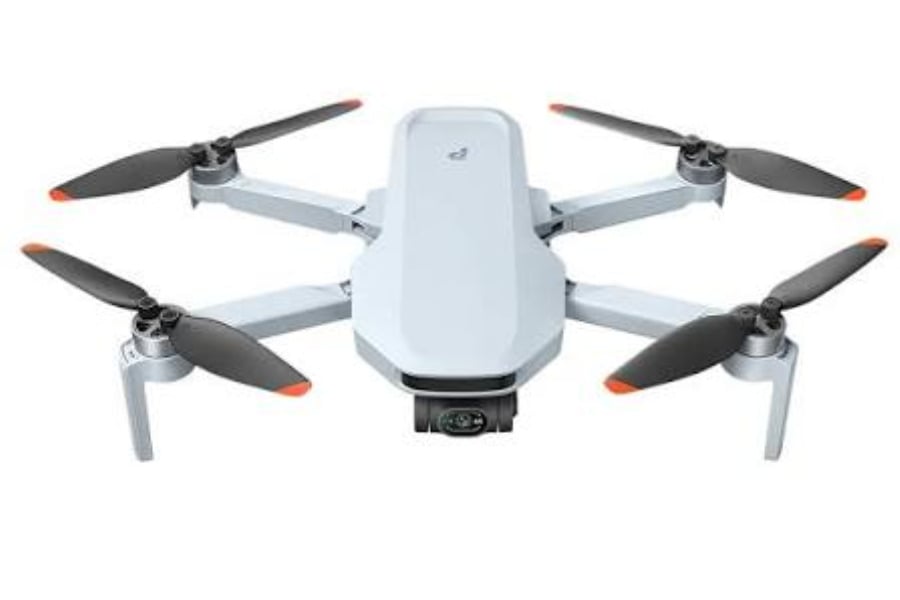
If not the Atom 3, the Potensic Atom 2 is still on sale and costs less than the successor. It uses a 1/2-inch Sony sensor and supports 4K HDR video, 48MP photos, three-axis gimbal stabilisation and AI subject tracking. Like its successor, it weighs under 249g, but its transmission range tops out at 10 km, and its battery lasts up to 32 minutes.
The Fly More bundle includes three batteries, giving you up to 96 minutes of combined flight time. Drone U lists the Atom 2 at around $330 in the US.
The Atom 2 makes sense if you want stabilised 4K footage without spending more on the newer model’s larger sensor. It also lacks collision-avoidance sensors, so flying in open areas is the safer choice.
3. Best for 360-degree footage
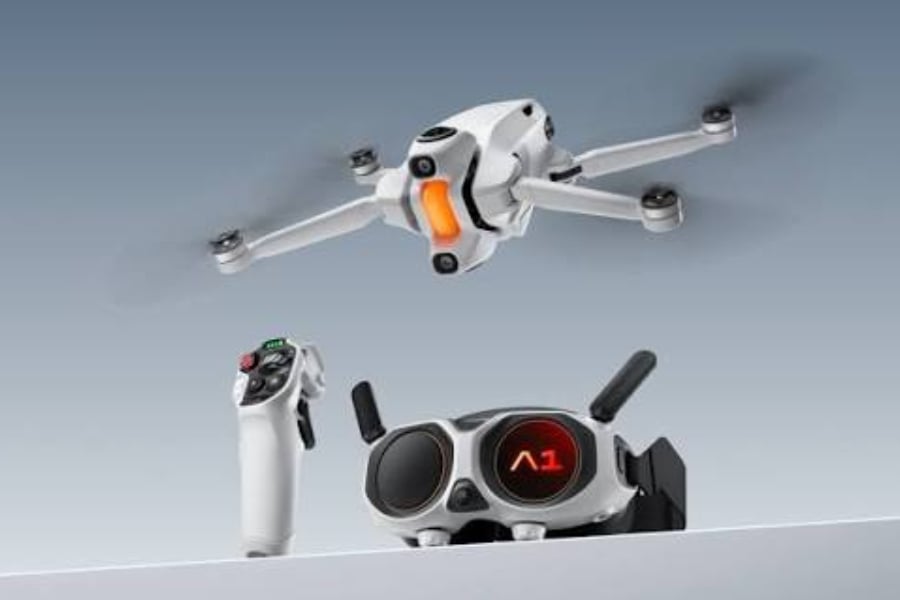
The Antigravity A1 is a bit different from conventional camera drones. The brand was incubated by Insta360, and the A1 records 8K 360-degree video using two lenses mounted on the top and bottom of the drone.
Instead of framing every shot while flying, you wear Vision goggles and use a Grip motion controller to direct the drone. After landing, you can choose the framing in the Antigravity app or desktop software. Retractable landing gear also helps keep the drone’s legs out of its 360-degree footage.
The standard bundle costs $1,599 and includes the goggles, controller, carry case, and spare propellers. The drone weighs 249g with its standard battery, while the high-capacity battery increases that to 291g, putting it in the EU’s C1 class.
At IFA in September, Antigravity announced a Cellular Module with an eSIM that attaches to the drone and goggles. Availability was scheduled for the end of September, and the best thing is that all A1 models remain compliant following the FCC’s Covered List update.
The A1 is worth considering if 360-degree video is your main priority. At $1,599, it costs considerably more than the other consumer drones here, and its goggles-based setup makes it less suitable for anyone who simply wants a conventional camera drone.
4. Best for hands-free filming
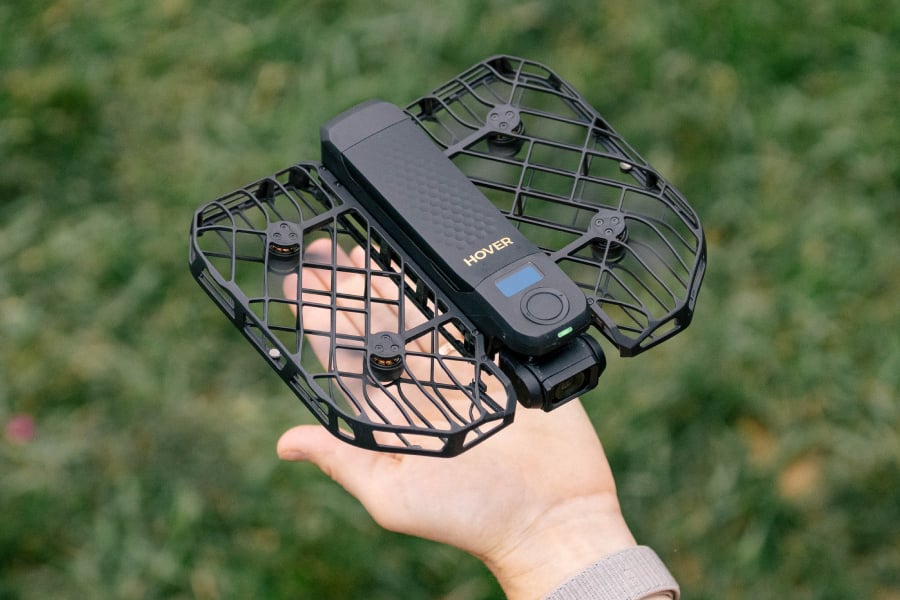
The HoverAir X1 Pro Max is built for people who want to film themselves without manually controlling a drone. You launch it from your palm, select a mode such as follow or orbit, and let it record while you ski, cycle, or run.
It uses a 1/1.3-inch sensor to record 8K video at 30fps or 4K video at up to 120fps. The drone folds into a pocket-sized body weighing 192g, while a vision sensor and rear proximity sensors help it brake when an obstacle is detected. Footage is stored on 64GB of onboard memory.
HoverAir’s original X1 reached Amazon in 2023, as we covered in our report on its retail launch. The company has since added the X1 Pro, X1 Pro Max and waterproof Aqua to its lineup.
DJI offers a similar concept with the Neo 2, which launched last year with LiDAR and 4K/60fps recording. In the UK, the HoverAir X1 Pro Max starts at £609.
Its main limitation is battery life as the run time is up to 16 minutes per battery. You also control it mainly through the app rather than traditional flight sticks, so it’s better suited to hands-free filming than general-purpose flying.
5. Best for filming on water
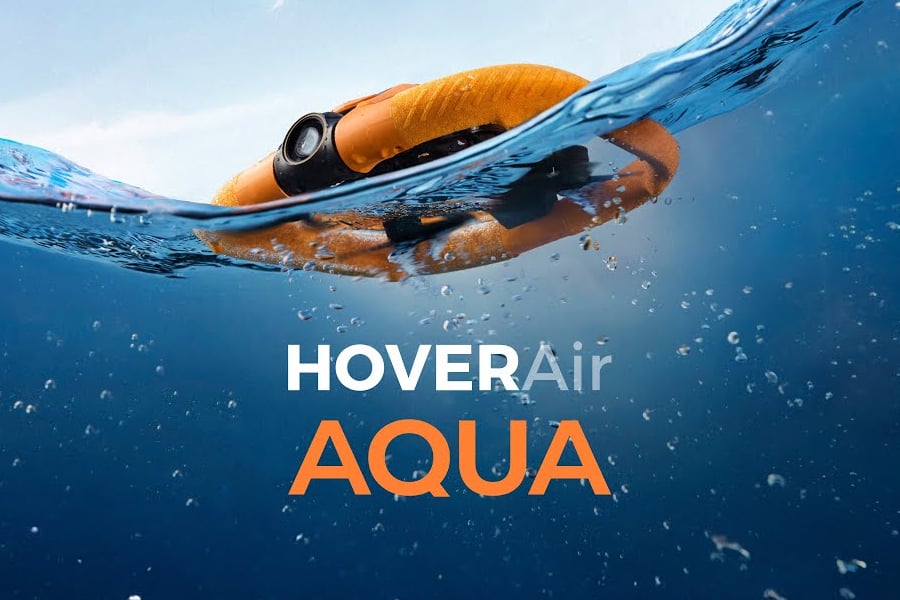
Unlike conventional drones, HoverAir Aqua has an IP67 rating, can float on water and can take off directly from the surface with a single button press. It also has a self-righting mode that turns it upright again if a wave flips it over.
Its camera uses a 1/1.28-inch sensor and records 4K video at up to 100fps. HoverAir says the drone weighs under 250g, can handle Level 7 winds, and reaches speeds of up to 55 km/h. It also includes dedicated modes for activities such as stand-up paddleboarding, kayaking and riding foil boards.
Flight time is around 23 minutes, and the drone doesn’t fold. That makes it less convenient to carry than the smaller HoverAir X1 Pro Max, but its ability to operate on water is the main reason to consider it.
The Aqua is also expensive, listing at £1,129 in the UK. However, this is a niche option for people who regularly film on or around water. If that’s not something you need, the X1 Pro Max is likely to be a more practical purchase.
6. Best for still photography
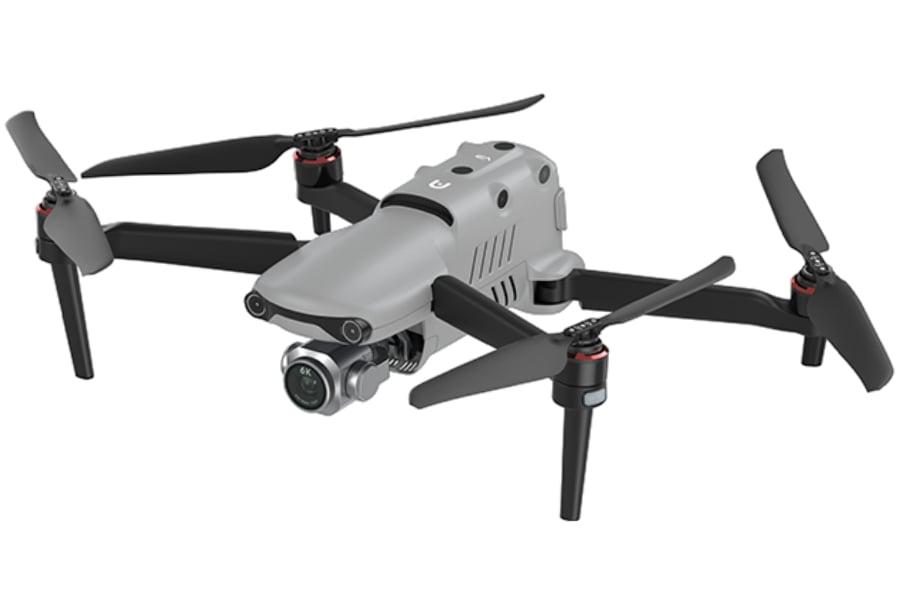
The Autel EVO II Pro V3 is an option for photographers who want a 1-inch Sony sensor without buying a DJI drone. It records 6K HDR video, supports 12-bit DNG photos, and offers up to 40 minutes of flight time. It also has 360-degree obstacle sensing and a quoted transmission range of 15 km.
The EVO II Pro V3 is considerably larger than the sub-249g models on this list. It weighs well over 249g, meaning registration rules apply in many places, and you’ll need more room in your bag to carry it.
Autel is also on the FCC’s Covered List alongside DJI, so it cannot launch new models in the US under the current restrictions. The EVO II line dates back to 2020, although the EVO II Pro V3 is already available for purchase in the country.
It’s worth considering if image quality matters more to you than portability. The trade-offs are its size and an older product line.
7. Best for government and enterprise in the US: Skydio X10
For government agencies and public-safety teams that need NDAA-compliant hardware, the Skydio X10 is a more suitable option than the consumer drones above. It’s built for autonomous inspection and assembled in the US.
The Parrot Anafi USA is another option, with US assembly and government approval. Both are worth considering for organisations that need drones for professional or government work rather than casual photography.
For daily updates, please visit our News Section.
Stay ahead in tech! Join our Telegram community and sign up for our daily newsletter of top stories!