
Advertisement

Add GIZMOCHINA on Google:

As an Amazon Associate, Gizmochina earns from qualifying purchases. Links on this page may earn us a commission at no extra cost to you.

OnePlus 16 and iPhone 17 approach the premium smartphone experience from different directions. OnePlus focuses on powerful hardware, extensive camera versatility and exceptional battery capacity, while Apple prioritizes a polished software experience, reliable photography and long-term ecosystem integration. With both phones priced around $900, the decision comes down to whether you value cutting-edge specifications and endurance or Apple’s refined everyday experience.
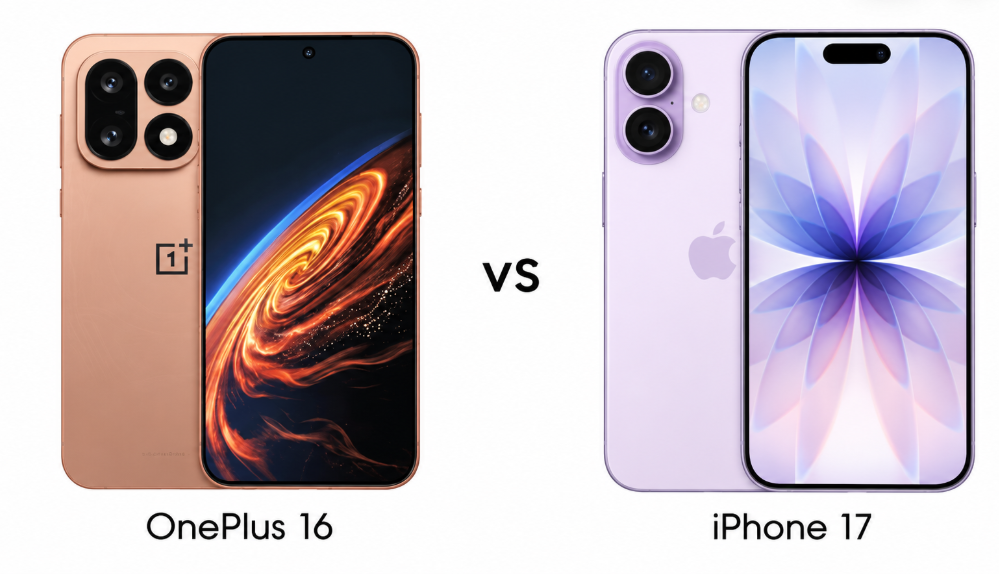
OnePlus 16 vs iPhone 17

Major Features:

CategoryOnePlus 16iPhone 17Winner & Reason
BuildCrystal Shield Glass, aluminum frame, glass or glass-fiber-reinforced plastic backCeramic Shield 2, aluminum frame, glass backApple – Ceramic Shield 2 protection
Water ResistanceIP68/IP69KIP68OnePlus – Higher ingress protection
Display6.78-inch LTPO AMOLED, 185Hz6.3-inch LTPO Super Retina XDR OLED, 120HzOnePlus – Larger screen and higher refresh rate
Display ProtectionCrystal Shield GlassCeramic Shield 2, anti-reflective coatingApple – Anti-reflective coating
ProcessorSnapdragon 8 Elite Extreme Gen 6 (2nm)Apple A19 (3nm)Qualcomm – Powerful flagship platform with advanced graphics
Operating SystemAndroid 17, OxygenOS 17iOS 26, upgradable to iOS 27.2Apple – Tight hardware-software integration
RAM12GB/16GB8GBOnePlus – Higher memory capacity
Storage256GB/512GB/1TB, UFS 4.1256GB/512GB, NVMeOnePlus – More storage options
Rear Camera200MP main, 50MP 3x telephoto, 50MP ultrawide48MP main, 48MP ultrawideOnePlus – Dedicated optical zoom camera
Optical Zoom3x optical zoomNo dedicated telephoto cameraOnePlus – Greater zoom versatility
Video RecordingUp to 8K at 30fps, 4K at 120fps, Dolby VisionUp to 4K at 60fps, Dolby Vision HDROnePlus – Higher resolution and frame-rate options
Selfie Camera50MP ultrawide with autofocus18MP multi-aspect with autofocusOnePlus – Higher resolution and ultrawide framing
Battery9,000mAh silicon-carbon3,692mAh Li-IonOnePlus – Significantly greater capacity
Wired Charging100W50% in 20 minutes advertisedOnePlus – Higher rated charging power
Wireless Charging50W25W MagSafe/Qi2OnePlus – Faster wireless charging
Reverse ChargingWireless and 5W wired4.5W wiredOnePlus – Supports wireless reverse charging
ConnectivityWi-Fi 7, Bluetooth 6.0, USB-C 3.2, infrared portWi-Fi 7, Bluetooth 6.0, USB-C 2.0, UWBOnePlus – Faster USB data interface and infrared
SecurityUltrasonic in-display fingerprint sensorFace IDTie – Different biometric approaches
Satellite FeaturesNot specifiedEmergency SOS, Messages and Find My via satelliteApple – Satellite communication features
Price/ValuePriced around $900 / ₹86,000Priced around $900 / ₹83,000OnePlus – More hardware features at a similar price
Disclaimer: Specs are based on available data. Actual performance may vary. Verify details from official sources before buying.
  1. Camera performance: Megapixel counts, lens configurations and supported recording resolutions describe hardware capabilities, not final image quality. Low-light performance, dynamic range, colour accuracy, autofocus, stabilization and processing can change the results. The iPhone 17 may have an advantage in video consistency and computational photography, while the OnePlus 16 offers greater optical zoom versatility.
  2. Display: The OnePlus 16’s 185Hz refresh rate offers smoother motion on supported content, but the iPhone 17’s anti-reflective coating and peak brightness may improve visibility in certain environments.
  3. Battery: The OnePlus 16’s larger battery and faster charging ratings suggest an endurance and charging advantage, but actual battery life depends on display settings, network conditions, workload and software efficiency.
  4. Value: The OnePlus 16 offers more hardware features, whereas the iPhone 17 may appeal more to buyers who prioritize software integration, video capture and Apple’s ecosystem. Actual value depends on individual needs and available retail pricing.

1. Design and Display

Build and Feel

The OnePlus 16 combines Crystal Shield Glass with an aluminum frame, offering a premium finish alongside IP68/IP69K protection against dust and water. Its choice of glass or glass-fiber-reinforced plastic back also gives buyers different material options. The iPhone 17 pairs Ceramic Shield 2 with an aluminum frame and glass back, creating a clean, understated design. Its IP68 rating supports immersion in deeper water under specified conditions, although OnePlus offers stronger protection against high-pressure water jets. Both phones deliver durable construction, but Apple’s simpler material configuration feels more consistent across its lineup. OnePlus is the more rugged choice on paper, particularly for users who frequently encounter demanding environments.

Display Quality

The OnePlus 16 features a 6.78-inch LTPO AMOLED display with a 185Hz refresh rate, Dolby Vision, HDR10+ and HDR Vivid support. Its exceptionally high refresh rate promises smoother scrolling and more responsive gaming. The iPhone 17 counters with a 6.3-inch LTPO Super Retina XDR OLED panel, a 120Hz refresh rate, Dolby Vision and an anti-reflective coating. Apple also features higher peak brightness, which benefits outdoor viewing. Both screens offer sharp visuals, but OnePlus prioritizes fluidity and immersion, while the iPhone delivers a more compact viewing experience.

Verdict

OnePlus wins for display size and refresh rate, while Apple offers excellent brightness and anti-reflective treatment. The OnePlus 16 suits gamers and media enthusiasts better.

2. Specifications Including Battery

Performance

The OnePlus 16 is powered by Qualcomm’s Snapdragon 8 Elite Extreme Gen 6 chipset, paired with up to 16GB of RAM and UFS 4.1 storage. Its flagship processor, powerful Adreno 850 GPU and generous memory configurations position it for demanding games, multitasking and intensive applications. The iPhone 17 uses Apple’s A19 chip with a five-core GPU and 8GB of RAM. Its hardware and iOS optimization deliver responsive everyday performance, efficient app handling and strong gaming capabilities. OnePlus offers greater memory flexibility and a more expansive multitasking configuration, while Apple benefits from tight hardware-software integration. Both should handle demanding workloads comfortably, although their real-world sustained performance depends on thermal management and software optimization.

Battery and Charging

The OnePlus 16 packs a substantial 9,000mAh silicon-carbon battery, giving it a considerable capacity advantage over the iPhone 17’s 3,692mAh battery. It supports 100W wired charging, 50W wireless charging, reverse wireless charging and bypass charging, making it particularly versatile for heavy users. Apple’s charging system supports 25W MagSafe/Qi2 wireless charging and wired charging reaches 50% in 20 minutes under suitable conditions. The iPhone also supports reverse wired charging at up to 4.5W. OnePlus is the more compelling option for extended gaming, travel and intensive daily use, while Apple’s smaller battery benefits from efficient software and hardware integration.

Verdict

The OnePlus 16 wins through its larger battery, faster charging and greater flexibility. The iPhone 17 remains capable, but heavy users will appreciate OnePlus’s endurance advantage.

3. Camera

Main and Secondary Lenses

The OnePlus 16 features a 200MP primary camera with optical image stabilization, a 50MP telephoto camera with 3x optical zoom and a 50MP ultrawide camera. This combination offers greater flexibility for portraits, distant subjects and expansive landscapes. Its video capabilities extend to 8K recording at 30fps and 4K at up to 120fps, alongside Dolby Vision support. The iPhone 17 uses a 48MP main camera with sensor-shift stabilization and a 48MP ultrawide camera, but lacks a dedicated telephoto lens. It supports 4K Dolby Vision recording at up to 60fps. OnePlus offers more hardware versatility, particularly for zoom photography, while Apple’s streamlined camera system remains attractive for consistent point-and-shoot photography and video creation. Actual image quality will depend on processing, lighting and camera tuning rather than megapixel counts alone.

Selfie Camera

The OnePlus 16 includes a 50MP autofocus ultrawide selfie camera capable of recording 4K video at 60fps. Its wider perspective is useful for group selfies, travel photography and video calls where framing flexibility matters. The iPhone 17 features an 18MP multi-aspect front camera with autofocus and a dedicated depth sensor for Face ID. It supports 4K video at up to 60fps, Dolby Vision HDR and spatial audio recording. Apple’s front camera emphasizes flexible framing, secure facial recognition and polished video capture, while OnePlus offers higher resolution and ultrawide framing. Both are well equipped for creators, although Apple’s integrated video features may appeal more to users who regularly record social content.

Verdict

OnePlus wins on camera versatility, dedicated optical zoom and front-camera resolution. The iPhone 17 remains a strong choice for dependable photography, polished video and Face ID integration.

4. Pricing

The OnePlus 16 is priced around $900 (₹86,000), while the iPhone 17 is priced around $900 (₹83,000). This places both devices in a similar premium category, although the iPhone has a slight price advantage in the stated estimates. OnePlus counters with a more extensive hardware package, including a dedicated telephoto camera, a higher-refresh-rate display, a larger battery, and faster charging. The iPhone 17 delivers Apple’s A19 processor, a refined iOS experience, and a strong camera system without requiring buyers to spend more on a Pro model. Regional pricing, storage configurations and retail offers can affect the final cost, so the exact purchase price deserves attention before choosing either device.

Is the price justified?

At these prices, the OnePlus 16 offers more hardware for buyers who prioritize battery life, charging speed, gaming and camera flexibility. The iPhone 17 justifies its cost through its software integration, compact design, Face ID and Apple ecosystem. Neither is an obvious bargain, but OnePlus delivers a broader set of headline specifications for similar money. Apple makes more sense for users already invested in its ecosystem.

Verdict

The OnePlus 16 offers better hardware value at comparable prices, while the iPhone 17 remains worthwhile for buyers who prioritize iOS and Apple’s connected ecosystem.

Check price →
Where to buy
iPhone 17
Latest price on Amazon

5. Conclusion

The OnePlus 16 stands out with its 185Hz AMOLED display, 9,000mAh silicon-carbon battery, 100W wired charging and triple-camera setup featuring a 3x optical telephoto lens. Its IP68/IP69K protection and extensive connectivity options further strengthen its appeal as a feature-packed flagship. 

The iPhone 17 counters with Apple’s A19 processor, Ceramic Shield 2, an anti-reflective display coating, Face ID and satellite-based Emergency SOS, Messages and Find My features. Its multi-aspect selfie camera and Dolby Vision video recording also make it a capable device for content creation. 

The two phones cater to different priorities: OnePlus emphasizes hardware flexibility and endurance, while Apple focuses on a cohesive user experience. For buyers who want maximum capability without moving to a more expensive Pro-tier iPhone, the OnePlus 16 makes a particularly strong case.

Verdict

iPhone 17 offers a compelling balance of performance, camera quality, display technology and software optimization, while the OnePlus 16 pushes hardware capabilities further with a 185Hz display, a 9,000mAh battery, 100W charging and a dedicated telephoto camera. The iPhone is a strong all-rounder, but OnePlus delivers greater hardware versatility. The better choice ultimately depends on whether refined everyday performance or advanced hardware features take priority. 


FAQs:

1. Which phone is better to buy, OnePlus 16 or iPhone 17?

The OnePlus 16 suits buyers seeking advanced hardware, while the iPhone 17 offers a refined, well-integrated smartphone experience.

2. Which phone takes better photos, OnePlus 16 or iPhone 17?

The OnePlus 16 offers greater zoom versatility, while the iPhone 17 is a strong choice for consistent photography and video.

3. Is the OnePlus 16 faster than the iPhone 17?

Both deliver flagship-level performance, but real-world speed depends on the workload, software optimization and sustained performance.

4. Which phone has better battery life, OnePlus 16 or iPhone 17?

The OnePlus 16 has a substantial battery capacity advantage and faster charging, making it better equipped for intensive use.

5. Which phone offers better value for money?

The OnePlus 16 offers more hardware features, while the iPhone 17 may provide better value for buyers prioritizing Apple’s ecosystem and software experience.

Disclaimer: Prices, specifications, and availability may vary by region and retailer. Recommendations in this article are based on editorial opinion, feature-based value, and market positioning at the time of writing. Readers are advised to do their own research before making a purchase.

Read More:

Comments