
Add GIZMOCHINA as Preferred Source on Google
In spite of the global tech restrictions, Shanghai Micro Electronics Equipment (SMEE), China‘s leading lithography scanner producer, is gearing up to roll out its first 28nm-class fabrication process scanner by year-end. Notably, the company’s current advanced scanner only reaches the 90nm level, making the upcoming SSA/800-10W a significant milestone.
This advancement will help China become more self-reliant with its Chips
For context, lithography is a core element in chip manufacturing, and a 28nm scanner would gradually allow China to depend less on imports for chipmaking tech. With an eye on self-reliance, China is pushing hard to overcome technological boundaries, especially when global export laws make it increasingly difficult to acquire advanced chip production tools.
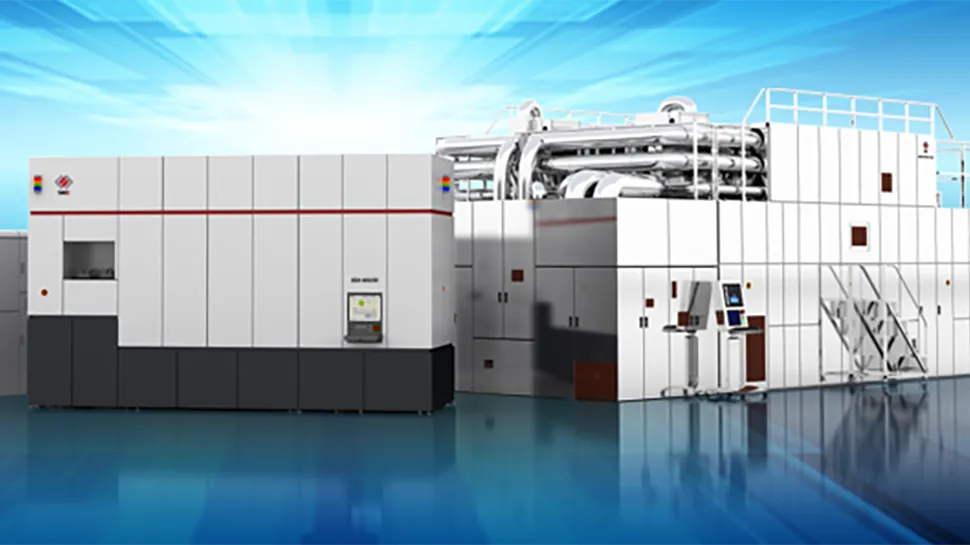
U.S. policies have already put a wrench in the plans of Chinese chip producers, restricting access to critical sub-14nm technologies. Additional regulations from the Netherlands, Japan, and Taiwan have compounded the issue. As a result, home-grown giants like SMIC and YMTC face roadblocks in advancing their newest manufacturing processes.
SMEE’s upcoming scanner is seen as a strategic asset that will primarily benefit either SMIC or a designated research institute. However, challenges remain. The major question isn’t just whether SMEE can create a 28nm scanner, but whether they can manufacture it at scale. Unless mass-produced, its positive impact would remain theoretical.
While the new scanner won’t bridge the advanced tech gap overnight, it will be a small yet significant step towards China’s broader ambitions in the semiconductor landscape. By carving out a domestic alternative, albeit for older but still relevant tech, China gains ground in a sector where independence is becoming ever more crucial. After all, the journey of a thousand miles begins with a single step—or in this case, a single chip.
RELATED:
- Honor Magic Vs 2 Foldable Rumoured to Launch in China This Week
- Xiaomi Mijia Smart Electric Thermos 5L is now up for pre-order in China for 279 yuan ($38)
- Download the best GCam APK for OnePlus Nord CE 3 5G
(Via)




Comments