Add GIZMOCHINA as Preferred Source on Google
Huawei recently introduced an entirely new Pura lineup to replace the long-standing P series. The Pura line emphasizes style, cutting-edge technology, and fashion, according to the company.
The company today took the wraps off of its new Pura 70 series smartphones, consisting of Pura 70, 70 Pro, 70 Pro Plus, and 70 Ultra.
The all-new Pura 70 Pro stands as the successor to the P60 Pro, offering an upgrade in design, display, and some key functionalities. So let’s delve into the specifics of both phones to understand how they compare.

1. Design and Display
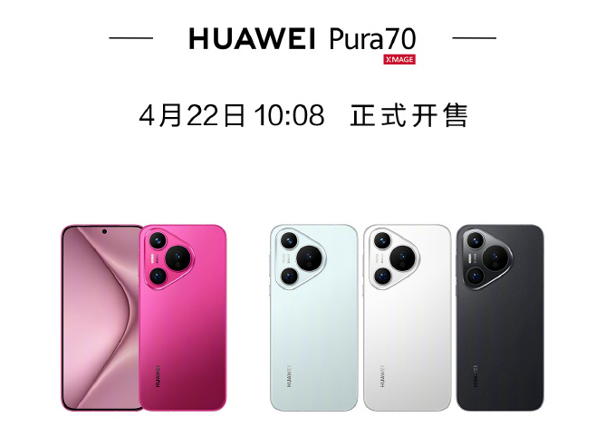
The Pura 70 Pro features a larger 6.8-inch OLED display with a slightly higher resolution compared to the P60 Pro’s 6.67-inch panel. Both offer a smooth 120Hz refresh rate and high peak brightness.
However, the Pura 70 Pro pulls ahead with its 1440Hz high-frequency PWM dimming, which should reduce eye strain. Both phones use Kunlun glass for better drop resistance. But the Pura 70 Pro steps it up with second-generation Kulun protection, offering even better resistance to drops.
The design has also been revamped since the P60. The Pura 70 sports a new triangular module on the back versus the P60’s rectangular camera setup.
Another subtle yet noticeable difference is in the display: the P60 Pro has a quad-curved screen, while the Pura 70 opts for a flat panel. However, both phones feature smaller punch-holes for the selfie camera or equally slim screen bezels.
But we do have to say that the raised angular design on the back gives the Pura 70 Pro a look unique of its own. As for colors, the P60 Pro comes in Black, Green, Violet, and Rococo Pearl, while the Pura 70 Pro offers Black, White, and Purple options.
2. Performance: The Biggest Difference
Performance is where there are significant differences between the two models. The P60 Pro runs on the Qualcomm Snapdragon 8 Gen 1, while the Pura 70 Pro opts for Huawei’s in-house Kirin 9010 chipset. Initial benchmarks of the Kirin 9010 show respectable performance.
Additionally, the Snapdragon 8 Gen 1 on the P60 Pro only supports 4G, while the Kirin 9010 in the Pura 70 Pro adds 5G connectivity.
The Pura 70 Pro also shines with its larger 5050mAh battery and faster charging speeds. It supports 100W wired charging, faster than the P60 Pro’s 88W. Both phones offer wireless charging, with the Pura 70 Pro supporting higher wattages at 80W compared to the P60 Pro’s 50W.
3. Camera and Other Features
Both phones also have powerful triple-camera systems. The P60 Pro features a 48MP primary sensor, a 13MP ultrawide sensor, and a 48MP periscope zoom lens with 5x optical zoom.
In contrast, the Pura 70 Pro takes a different approach, offering a 50MP main sensor with a variable aperture, a 48MP macro telephoto lens with impressive 35x super macro capabilities, and a 12.5MP ultrawide sensor.
Moreover, the smartphone comes pre-installed with HarmonyOS, with the Pura 70 Pro running a slightly newer iteration (Harmony OS 4.2) out of the box. Notably, both integrate satellite communication for two-way SMS functionality.
4. Verdict
All in all, with the Pura 70 Pro, Huawei has addressed some of the shortcomings of the P60 Pro. Most importantly, the phone now has an in-house Kirin chip with 5G support. Connectivity could be a big deciding factor to purchase a phone in 2024.
Apart from this, there are subtle but significant changes in design, display, camera, and even battery and charging. So the Huawei Pura 70 Pro appears to be a worthwhile upgrade over its predecessor.
Related:
- Huawei Band 9 Sale: Next-gen smart band drops in China with 2 weeks of battery & AMOLED display
- We unbox the Huawei Pura 70 Ultra
- Huawei Pura 70 series sales expected to exceed 10 million units within 2024
- REDMAGIC Magnetic VC Cooler 5 Pro now available at a discounted price at GeekWills
- Xiaomi 13 Ultra Premium Camera Phone is now only $799
- HyperOS vs MIUI: 10 Things You Must Know