Add GIZMOCHINA as Preferred Source on Google
If you’ve been shopping for a flagship Android phone this year, you’re probably going to get a device powered by Snapdragon 8 Elite Gen 5. Sounds simple enough, right? Except it isn’t quite that simple.
Qualcomm has quietly split its top-end 2026 processor into four different versions, each with its own small tweaks under the hood. That means two phones carrying the same Snapdragon 8 Elite Gen 5 branding on the box may perform differently in games or benchmarks. So let’s break down every variant that exists right now, what actually separates them, and where the brand-new “V Series” fits into all of this.
1. The Standard Version: SM8850-AC
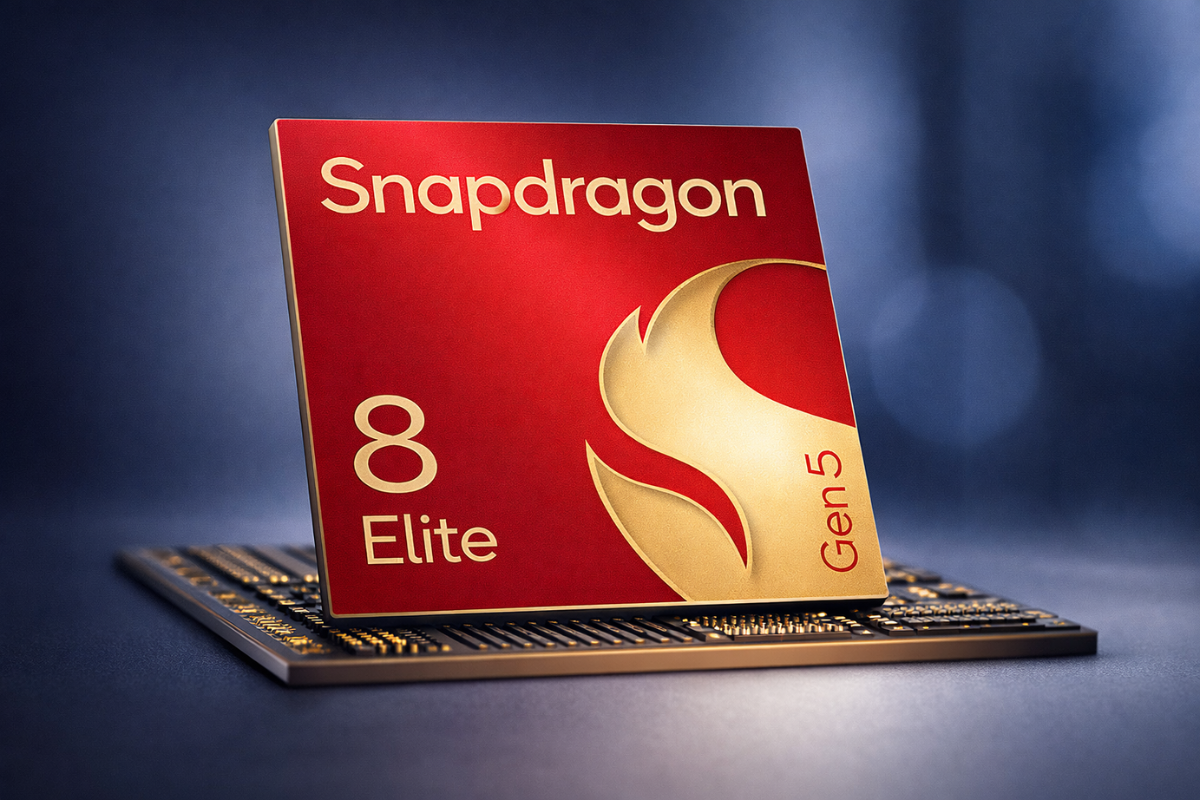
The SM8850-AC is the full Snapdragon 8 Elite Gen 5 variant from Qualcomm. The models after this are cut down in aspects here and there. It’s the version running in the majority of 2026 flagships, from the Oppo Find X9 Ultra to the Xiaomi 17 Ultra.
You get two Oryon Prime cores running up to 4.6GHz, six performance cores up to 3.62GHz, and an Adreno GPU clocked at 1.2GHz with three GPU slices and 18MB of high-performance memory for graphics.
The SM8550-AC sets the bar for Qualcomm and rivals chips from 2026’s flagship chip from MediaTek and Samsung in most benchmarks this year. Simply, it’s what most reviewers like us talk about when we praise this generation’s speed.
2. The “For Galaxy” Version: SM8850-1-AD
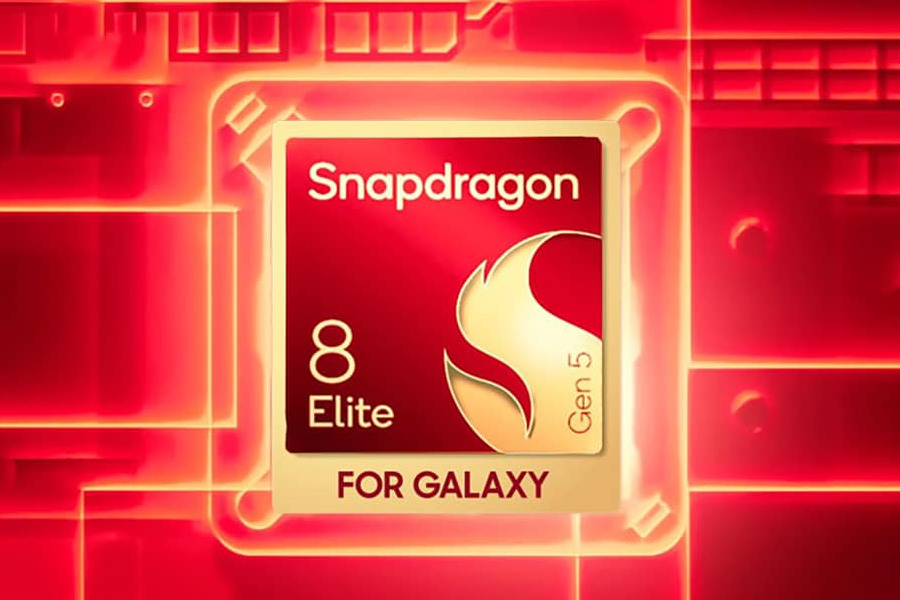
For those unaware, Samsung doesn’t just license Qualcomm’s standard chip for its flagship S and Z series phones. It works directly with Qualcomm to get its own tuned version, and this year that’s the SM8850-1-AD, which powers the Galaxy S26 lineup and the new Galaxy Fold8. The CPU cores here run a bit hotter, with the Oryon Prime cores hitting 4.74GHz instead of 4.6GHz, and the GPU also gets a bump to 1.3GHz instead of 1.2GHz.
The difference isn’t massive in daily use, but it shows up in benchmark charts, which is why the Galaxy S26 Ultra tends to edge out other Snapdragon 8 Elite Gen 5 phones in raw scores. It’s also part of why, when this chip goes head-to-head with the Dimensity 9500 and Exynos 2600, Samsung’s own version consistently comes out ahead of the standard variant in the numbers.
For a wider view of how these variants rank against Qualcomm’s other silicon, see our guide to best Snapdragon chipsets in 2026.
3. The Seven-Core Version: SM8850-5-AC
The SM8850-5-AC is the seven-core 8 Elite Gen 5, especially made for foldables. Instead of the usual two Prime cores plus six Performance cores, this variant drops one Performance core for a total of seven.
The chip is currently used in the Oppo Find N6 foldable, and it isn’t the first time Qualcomm has done this. The same trick appeared with a seven-core version of the original Snapdragon 8 Elite last year, and it performed well enough that Oppo’s foldable still posted excellent benchmark and battery-life numbers.
Why would Qualcomm sell a chip with a missing core? Mostly cost and yield. Not every chip that comes off the manufacturing line is perfect, and rather than throwing away the ones with a faulty core, Qualcomm disables it and sells the chip as a slightly cheaper variant. For a foldable phone, where thermal headroom and battery life often matter more than squeezing out the last bit of CPU power, this trade-off makes sense.
4. The New V Series: SM8850-1-AB
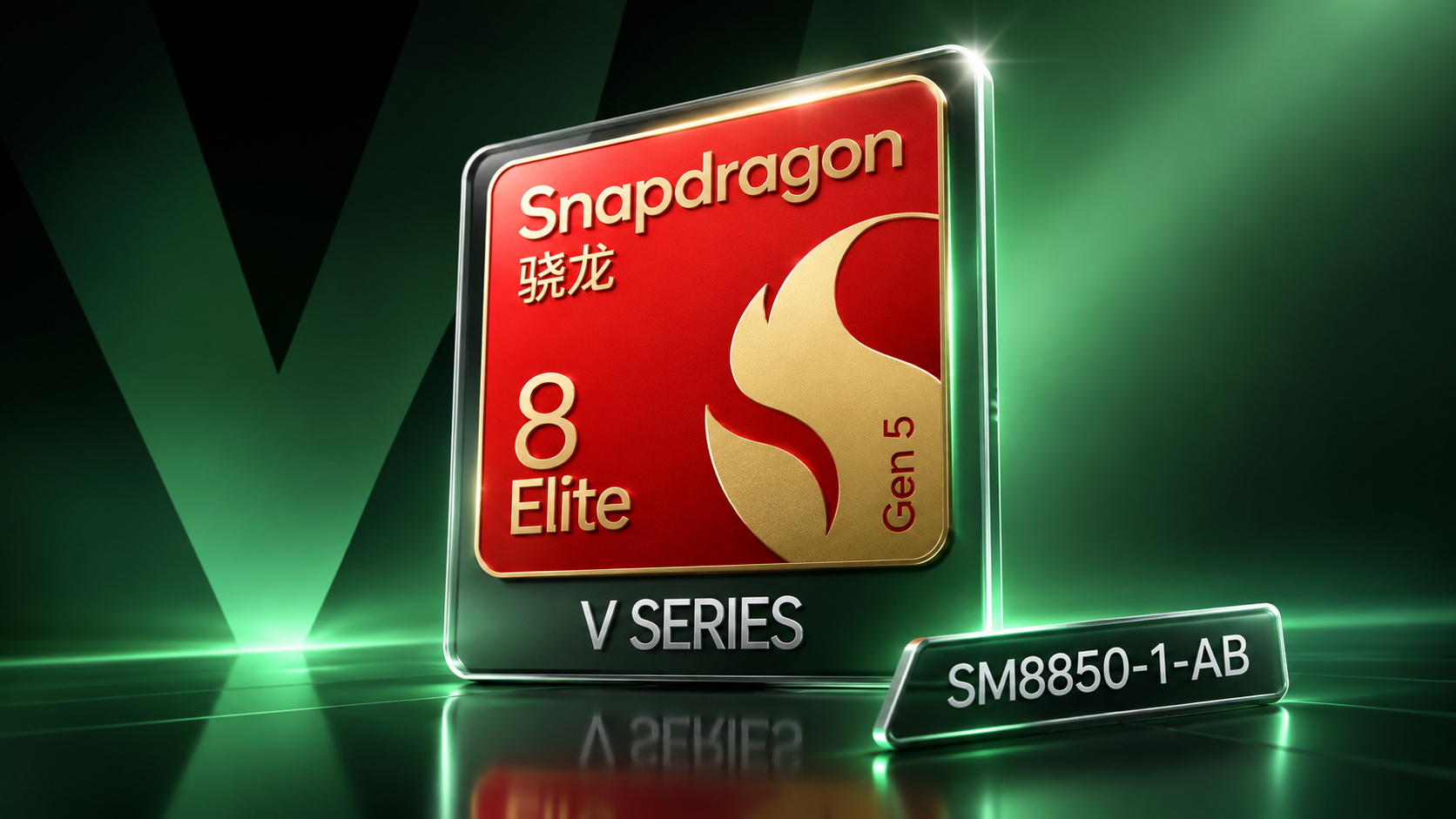
This is the newest and most confusing addition to the lineup. Qualcomm quietly listed it on the official spec sheet under model number SM8850-1-AB, and it’s set to debut inside the Redmi K100 Pro series launching in China on August 11.
Qualcomm is marketing this chip with a gaming-focused tagline, “Game smarter, not harder,” which makes it sound like an upgrade aimed at gamers. But look at the actual spec sheet, and it isn’t actually better than the full model.
The CPU retains the same 4.6GHz Oryon Prime cores and 3.62GHz performance cores as the standard chip. The GPU clock speed also stays at 1.2GHz. What changes is the GPU’s internal structure: instead of three Adreno GPU slices, the V Series only has two, and its high-performance graphics memory drops from 18MB to 12MB.
In plain terms, that’s a scaled-back GPU wearing a gaming-branded label. This actually tracks with earlier reports from a few weeks ago, which predicted a fourth, cheaper version of this chip aimed at phones priced under 4,000 yuan (roughly $590). The V Series still supports the same gaming features as the standard chip, including hardware-accelerated ray tracing, mesh shading, and Unreal Engine 5 optimizations, so it isn’t a downgrade across the board. But with one fewer GPU slice, its graphics performance realistically lands closer to the non-Elite Snapdragon 8 Gen 5 than to the flagship chip it’s named after.
For more daily updates, please visit our News Section.
Stay ahead in tech! Join our Telegram community and sign up for our daily newsletter of top stories!