
Add GIZMOCHINA on Google:
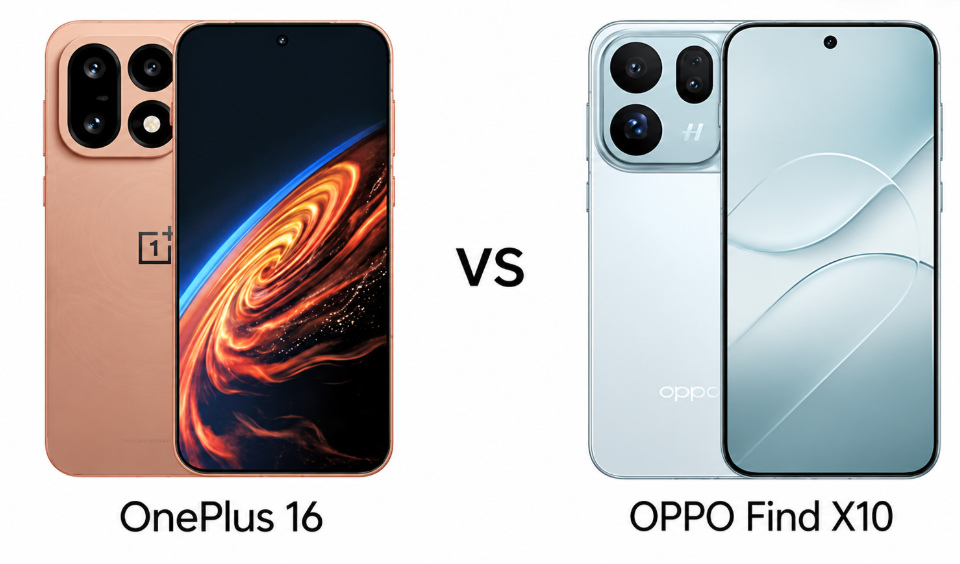
OnePlus 16 and OPPO Find X10 take different approaches to flagship smartphone design. While OnePlus focuses on extreme performance, a high-refresh-rate display, and an exceptionally large battery, OPPO puts greater emphasis on camera versatility, display brightness, and a balanced flagship experience. Both phones feature premium hardware, but their differences could make one a considerably better purchase depending on individual priorities.
1. Major Features:
| Category | OnePlus 16 | OPPO Find X10 | Winner |
|---|---|---|---|
| Build | Glass front and back, aluminum frame or glass-fiber back | Glass front and back, aluminum frame | OnePlus – Better IP69K protection |
| Water Resistance | IP68/IP69K | IP68/IP69 | OnePlus – Higher water-jet resistance |
| Display Size | 6.78-inch LTPO AMOLED | 6.59-inch LTPO AMOLED | OnePlus – Larger display |
| Refresh Rate | 185Hz | 144Hz | OnePlus – Smoother refresh rate |
| Peak Brightness | 2000 nits HBM | 3600 nits peak | OPPO – Higher peak brightness |
| Resolution | 1272 x 2772 pixels | 1272 x 2772 pixels | OPPO – Higher pixel density |
| Processor | Snapdragon 8 Elite Extreme Gen 6 | Dimensity 9600M | OnePlus – More powerful flagship chipset |
| GPU | Adreno 850 | ARM G1-Ultra | OnePlus – Stronger performance proposition |
| RAM | Up to 16GB | Up to 16GB | Tie – Same maximum RAM |
| Storage | Up to 1TB UFS 4.1 | Up to 1TB UFS 4.1 | Tie – Same storage capacity |
| Main Camera | 200MP, OIS | 200MP, OIS | Tie – Similar primary camera specifications |
| Telephoto Camera | 50MP, 3x optical zoom, OIS | 200MP periscope, 2.8x optical zoom, OIS | OPPO – Higher-resolution periscope camera |
| Ultrawide Camera | 50MP with autofocus | 50MP with autofocus | Tie – Similar camera specifications |
| Selfie Camera | 50MP ultrawide with autofocus | 50MP ultrawide with PDAF | Tie – Both support 4K video |
| Video Recording | Up to 8K@30fps, 4K@120fps | Up to 8K@30fps, 4K@120fps | Tie – Similar video capabilities |
| Battery | 9,000mAh | 8,000mAh Global | OnePlus – Larger battery |
| Wired Charging | 100W | 80W | OnePlus – Faster charging |
| Wireless Charging | 50W | 50W | Tie – Same charging speed |
| Reverse Charging | Reverse wireless and 5W reverse wired | 10W reverse wireless | OPPO – Faster reverse wireless charging |
| Connectivity | Wi-Fi 7, Bluetooth 6.0 | Wi-Fi 7, Bluetooth 6.2 | OPPO – Newer Bluetooth version |
| Special Features | Bypass charging, Dolby Vision, UAV-grade gyro | Hasselblad calibration, satellite connectivity on 1TB model | OPPO – Hasselblad imaging and satellite support |
| Price/Value | $900 / ₹86,000 | $800 / ₹78,500 | OPPO – Lower price and advanced zoom camera |
| Overall | Performance and battery-focused flagship | Camera-focused flagship | OnePlus – Better performance and battery package |
2. Design and Display
Build and Feel
The OnePlus 16 features a premium glass-and-aluminum construction, with Crystal Shield Glass protection and an option for a glass-fiber reinforced plastic back. Its IP68/IP69K rating provides excellent protection against dust and water, including high-pressure water jets. The OPPO Find X10 also uses a glass-and-aluminum design with Crystal Guard protection and an IP68/IP69 rating. Both phones offer ultrasonic fingerprint scanners, giving them a similarly premium approach to durability and security. However, OnePlus has a slight advantage in water resistance, while OPPO maintains a more understated flagship design.
Display Quality
The OnePlus 16 features a 6.78-inch LTPO AMOLED display with a 185Hz refresh rate, Dolby Vision, HDR10+ and HDR Vivid support. Its exceptionally high refresh rate makes it particularly attractive for gaming and fluid navigation. The OPPO Find X10 has a smaller 6.59-inch LTPO AMOLED panel with a 144Hz refresh rate and an impressive 3600-nit peak brightness. Both deliver sharp visuals, but OPPO’s higher peak brightness makes it particularly appealing for outdoor viewing.
Verdict
OnePlus wins for gaming-focused smoothness and durability, while OPPO offers excellent brightness and a more compact viewing experience. Overall, OnePlus takes this round.
3. Specifications Including Battery
Performance
The OnePlus 16 runs on the Snapdragon 8 Elite Extreme Gen 6, built on a 2nm process, paired with the Adreno 850 GPU. Its powerful CPU configuration makes it the stronger choice for demanding gaming, multitasking and performance-intensive applications. The OPPO Find X10 uses the MediaTek Dimensity 9600M, a 3nm chipset featuring the ARM G1-Ultra GPU. Although it should deliver flagship-level performance, the Snapdragon platform gives OnePlus a more compelling proposition for enthusiasts seeking maximum processing power. Both devices offer up to 16GB RAM and 1TB UFS 4.1 storage, ensuring plenty of room for applications, games and files.
Battery and Charging
Battery capacity is another major difference. The OnePlus 16 packs a massive 9,000mAh silicon-carbon battery with 100W wired and 50W wireless charging. It also supports reverse wireless charging and bypass charging, making it particularly useful for extended gaming sessions. OPPO offers an 8,000mAh global battery with 80W wired and 50W wireless charging. Its battery capacity is still impressive, but OnePlus provides more endurance potential and faster wired charging.
Verdict
OnePlus clearly wins this category with its more powerful chipset, larger battery and faster wired charging. It is the better option for performance enthusiasts and heavy users.
4. Camera
Main and Secondary Lenses
Both smartphones feature a 200MP primary camera with a large sensor, f/1.6 aperture and optical image stabilisation. However, their telephoto implementations are quite different. The OnePlus 16 uses a 50MP telephoto camera with 3x optical zoom, while OPPO upgrades the experience with a 200MP periscope telephoto camera offering 2.8x optical zoom and a larger sensor. This gives the Find X10 a significant advantage for capturing detailed zoom photographs. Both phones also feature 50MP ultrawide cameras with autofocus. OPPO further benefits from Hasselblad Color Calibration, while OnePlus offers a laser focus system and colour spectrum sensor. Both support 8K recording, 4K at 120fps and Dolby Vision. However, OPPO’s high-resolution periscope camera makes its camera system more versatile.
Selfie Camera
Both devices feature a 50MP ultrawide front camera with autofocus and 4K video recording at 60fps. The OPPO Find X10 additionally specifies PDAF and a dedicated sensor size, while OnePlus offers HDR and panorama features. Both should deliver detailed selfies and flexible framing.
Verdict
OPPO wins the camera category, primarily because of its 200MP periscope telephoto camera, larger zoom sensor and Hasselblad colour calibration.
5. Pricing
The OnePlus 16 is priced around $900 (₹86,000), making it approximately $100 more expensive than the OPPO Find X10, which is priced around $800 (₹78,500). This difference is particularly interesting because both phones offer premium materials, high-end AMOLED displays, 50MP selfie cameras, wireless charging, and substantial storage configurations. However, their priorities differ considerably. OnePlus justifies its higher asking price with a more powerful Snapdragon chipset, a faster display and a larger battery. OPPO, meanwhile, offers a sophisticated camera setup with a high-resolution periscope lens at a lower starting price.
Verdict
OPPO wins on value for money, offering a more versatile camera system and premium flagship features while costing approximately $100 less.
Disclaimer:
Prices are approximate and may vary based on country, region, launch timing, and applicable taxes. Always check whether the listed price is for a China unit or a global/international variant when purchasing.
6. Conclusion
The OnePlus 16 stands out with its Snapdragon 8 Elite Extreme Gen 6 processor, 185Hz LTPO AMOLED display, 9,000mAh battery, and 100W wired charging. Its IP68/IP69K protection and bypass charging also make it particularly appealing to gamers and power users. The OPPO Find X10 counters with a 200MP periscope telephoto camera, Hasselblad colour calibration, a brighter display and a substantial 8,000mAh battery. Its 3600-nit peak brightness and more affordable pricing further strengthen its appeal. Both phones deliver impressive flagship experiences, but their strengths serve different audiences. OnePlus is clearly designed around performance and endurance, whereas OPPO places greater emphasis on photography and everyday versatility.
Verdict
The OnePlus 16 is the overall winner for its superior processing hardware, faster display, larger battery, and charging capabilities. However, the OPPO Find X10 is the better buy for photography enthusiasts, offering a more advanced zoom camera and better value for money.
Disclaimer: Prices, specifications, and availability may vary by region and retailer. Recommendations in this article are based on editorial opinion, feature-based value, and market positioning at the time of writing. Readers are advised to do their own research before making a purchase.
Read More:
- OnePlus 16 vs Google Pixel 11: Which $900 Flagship Is Worth Buying?
- RedMagic 12 Pro+ vs iPhone 18 Pro Max: Is Apple’s Premium Worth It?
- OnePlus 16 vs Vivo X500 Pro: 9000mAh Battery vs Zeiss Cameras


Comments