Advertisement

Lenovo launches ThinkVision E24q-30 monitor with 1440p resolution and 100Hz refresh rate

Lenovo has announced the ThinkVision E24q-30, a new 23.8-inch monitor available in the Chinese market. The display is currently listed on the retail platform JD.com with a price of 1,149 yuan, which converts to approximately $170.

Lenovo ThinkVision E24q-30

Lenovo ThinkVision E24q-30 Specifications

The ThinkVision E24q-30 features a 23.8-inch IPS panel with a 2560 x 1440 resolution, delivering a sharp 123 PPI pixel density. It also offers 300 nits of typical brightness and a 1300:1 contrast ratio for clear and detailed visuals.

The monitor includes a native 100Hz refresh rate and a 4ms response time when set to fast mode. The exterior design incorporates a three-sided narrow bezel, which is standard for current monitors intended for multi-display setups.

Regarding color performance, the monitor supports an 8-bit color depth, which is implemented using a 6-bit panel with Frame Rate Control (FRC) technology to produce up to 16.7 million colors. The display covers 99% of the sRGB color gamut, making it suitable for standard web design, photo editing, and general media consumption.

Lenovo ThinkVision E24q-30

The monitor integrates several features designed to reduce eye strain. It uses a hardware-level low blue light solution that lowers blue light emissions without shifting the screen’s color temperature to a yellow tint, which is a common byproduct of software-based filters.

The display also utilizes DC dimming technology to eliminate screen flicker and includes an anti-glare coating to reduce surface reflections. The unit holds TÜV Rheinland Low Blue Light, TÜV Rheinland Eye Comfort, and Eyesafe 2.0 certifications.

The included monitor stand offers multiple ergonomic adjustments. You can adjust the height up to 155mm, tilt the screen from -5° to 22°, and swivel the display. It also supports a 90-degree pivot rotation for use in a vertical portrait orientation. The back of the monitor is compatible with standard VESA mounts, supporting both 100 x 100mm and 75 x 75mm configurations.

For connectivity, it includes one HDMI 2.0 port and one DisplayPort 1.2 input, with both interfaces capable of supporting the maximum 1440p resolution at 100Hz. The monitor includes a Kensington lock slot and dual built-in 2W speakers for basic audio output.

In related news, check out our roundup of the best budget gaming monitors under $200 to buy in 2026.

For more daily updates, please visit our News Section.

Stay ahead in tech! Join our Telegram community and sign up for our daily newsletter of top stories!

(JD)

Redmi 17C 5G leak confirms it’s basically a rebadged Redmi 15C 5G

A fresh Geekbench listing has given away most of what there is to know about the upcoming Redmi 17C 5G, and it turns out there isn’t much new here. The benchmark shows the phone under the codename “tornado,” which interestingly is also the codename for Redmi 15C 5G and the POCO C85 5G, both of which are already on sale in several markets. 

Redmi 17C 5G Geekbench

Xiaomi already has a plain 4G version of the Redmi 15C out there too, so it’s clear the company is simply reshuffling the same hardware across its budget lineup under different names.

Redmi 17C 5G Geekbench

Going by the listing, the Redmi 17C 5G will run on the MediaTek Dimensity 6300 chipset that Xiaomi has already used across its budget 5G lineup this year. It’s not built for heavy gaming, but it should handle everyday tasks smoothly while keeping power draw low.

Not much has leaked about the Redmi 17C 5G, but if it’s a rebrand you can expect a large 6.9-inch LCD panel with 720p resolution. Camera-wise, the device is likely to house a 50MP main sensor for photos and an 8MP front camera for selfies and video calls. 

Redmi 15C 5G

As for battery, you can expect a 6,000mAh cell with 33W fast charging support. The phone is also expected to launch with Android 16 right out of the box, running on top of Xiaomi’s HyperOS.

So far, the Redmi 17C 5G is tipped for global and Indian markets only, with no word yet on a China launch. Pricing hasn’t surfaced either, but the Redmi 15C 5G launched in India at under $140, so the 17C is likely to launch at the same price. 

We’ll share pricing and launch details as soon as they’re confirmed.

For more daily updates, please visit our News Section.

Stay ahead in tech! Join our Telegram community and sign up for our daily newsletter of top stories!

Via: X (@kacskrz)

Minisforum launches MS-03 Mini PC with Intel Core Ultra 9 386H, 128GB DDR5 RAM & discrete GPU support

Minisforum is releasing a new mini PC, the MS-03, designed specifically for enterprise IT and local AI applications. While the company typically focuses on consumer hardware, this model is built as an edge workstation for businesses that need to run large language models locally rather than relying on cloud infrastructure.

Minisforum MS-03 mini PC

Minisforum MS-03 Specifications

Inside, the MS-03 uses Intel’s Panther Lake Core Ultra 9 386H, a 16-core, 16-thread processor with a 4.9 GHz maximum turbo frequency and an 80W power limit in its standard balanced mode.

For local AI workloads, the chip utilizes an integrated NPU capable of 50 TOPS and an integrated GPU that provides an additional 40 TOPS. According to Minisforum, this hardware can run the Gemma 4-26B model at an inference speed of 22.05 tokens per second.

The system supports up to 128GB of DDR5 memory at speeds up to 7200 MT/s via two SO-DIMM slots. Storage options are relatively broad for a chassis measuring 196 x 189 x 48mm. The board includes three M.2 NVMe slots: two are PCIe 5.0 and one is PCIe 4.0. The package also comes with an M.2-to-U.2 adapter, which allows users to install 7mm-thick U.2 enterprise SSDs up to 15TB.

Minisforum MS-03 mini PC

Networking is a primary focus of the MS-03. The rear panel features dual 10GbE SFP+ fiber ports powered by an Intel X710 controller, allowing direct connection to fiber switches. It also includes a 10GbE RJ-45 port and a 2.5GbE RJ-45 port. Wireless connectivity is handled by an Intel BE211 module, which provides Wi-Fi 7 and Bluetooth 6.

For further hardware additions, there is a physical PCIe x16 slot (wired for PCIe 4.0 x4) to accommodate half-height expansion cards. It also supports a low-profile discrete GPU inside the chassis, with support for up to 75W cards running over a maximum of eight PCIe lanes.

Standard I/O includes two USB4 Type-C ports with DisplayPort 2.1 Alt Mode, an HDMI 2.1 port, and four USB-A ports split across the front and back.

For IT administrators, the system supports Intel vPro for remote management, enabling out-of-band repairs, monitoring, and power cycling. Cooling is managed by a three-heatpipe heatsink and a single fan, which operates at around 38 dB under full load in balanced mode.

Minisforum MS-03 mini PC

Pricing and Availability

Pre-orders for the MS-03 open globally on July 23. Minisforum has not yet announced pricing details.

In related news, Beelink has recently introduced the EQi 304 Mini PC, featuring Intel’s Wildcat Lake platform and support for up to 32GB of DDR5 memory.

For more daily updates, please visit our News Section.

Stay ahead in tech! Join our Telegram community and sign up for our daily newsletter of top stories!

(Minisforum)

This Indian smartphone brand is entering Europe by taking digs at Samsung

Indian smartphone maker Lava has started its marketing push before its planned entry in the United Kingdom. The company has set up a social account for UK users, and interestingly, the marketing team is taking a dig at Samsung to hype its arrival. 

The account’s bio reads “Escape the SAMe cycle,” where the highlighted word “SAM” is a reference to Samsung, which holds a large share of the UK smartphone market.

Lava has shared two posts on the account so far. The first shows a cluttered screen of Samsung app icons with the caption saying the mess is “obviously” not yours. The second shows a phone with a triple rear camera and the line “Buying new shouldn’t feel so… SAMe.”

Lava enters UK as its first major international market to make a global Indian brand

Lava has previously confirmed it’s entering the UK market in 2026 as part of a plan to build what the company’s Managing Director Sunil Raina calls a genuinely global Indian brand. 

The company had earlier sold phones in the Middle East, Africa, and Latin America but pulled back from those regions to focus on India first. It currently exports to Nepal and Bangladesh, where it has a meaningful share in the market.

Lava Agni 4 Launch Specs Price

For the UK, Lava is expected to stick to the same pricing approach that has worked for it at home — keep phones around the £300 mark rather than competing in the flagship space. Raina has said the company sees no need to chase the premium segment right away, since its growth in India has come almost entirely from mid-range devices.

Lava has not said which phone will launch first in the UK. The company recently announced Agni 4 in India with a Dimensity chipset and the brand’s own on-device AI assistant. Likewise, its budget-focused Yuva Star 3 shows the same value-first approach at a lower price point. 

For more daily updates, please visit our News Section.

Stay ahead in tech! Join our Telegram community and sign up for our daily newsletter of top stories!

Best Budget Gaming Monitors Under $200 (2026)

A good monitor matters more than most people think when building a gaming setup. A fast GPU cannot show its full potential on a slow, low-refresh screen. The good news is that 2026 has been a strong year for budget displays. 

Panel costs have dropped, and several brands have pushed 1440p resolution and refresh rates past 200Hz into the sub-$200 price bracket. Below are some of the newest options launched in 2025 and 2026 that are worth considering.

1. Dell SE2726HGS

First on the list are two 27-inch monitors from Dell — the SE2726HGS and SE2726HG — that start at $140. Both use a 1920 x 1080 IPS panel with a 240Hz refresh rate and AMD FreeSync Premium support to cut down on screen tearing. The screen also has a 5ms response time in standard mode and 0.5ms in extreme mode, and the panel covers 99 percent of the sRGB color space. 

The SE2726HGS gets a stand with height, swivel, and tilt adjustment, while the SE2726HG sticks to a basic tilt-only stand. For eye comfort, the monitor also has low blue light mode, flicker-free operation, and an anti-glare coating. These Dell monitors are a straightforward pick for anyone who wants a high refresh rate 1080p screen without paying extra for design flourishes.

2. Alienware AW2526HL

Alienware’s AW2526HL is a 24.5-inch monitor that retails for around $175. It runs a 1920 x 1080 IPS panel natively at 300Hz, which is unusually fast for this price range, and pairs it with a 1ms grey-to-grey response time. You also get 400 nits of brightness with a 1000:1 contrast ratio, and the panel covers 99% sRGB for accurate colors. 

It supports AMD FreeSync Premium and VESA Adaptive-Sync, plus TÜV Rheinland-certified blue light reduction. The stand allows tilt, height, and pivot adjustment, and the monitor is VESA mount compatible. For connectivity, there are HDMI 2.1 ports and one DisplayPort 1.4 input.


3. Redmi G27Q 2026

Xiaomi’s Redmi G27Q 2026 is one of the more aggressive releases of the year. It is priced at around $190 and brings in a 27-inch 2560 x 1440 IPS panel with a 320Hz refresh rate and 1ms GTG response time. It also supports AMD FreeSync Premium, VESA DisplayHDR 400, a 1000:1 static contrast ratio, 95% DCI-P3 and 100% sRGB color coverage, and 10-bit color depth for smoother gradients. 

Xiaomi is also factory-calibrating the panel to a Delta E under 2, which means colors should look accurate out of the box. It has two DisplayPort 2.1 ports and two HDMI 2.0 ports for connectivity. Availability outside China has not been confirmed yet, so buyers elsewhere may need to wait for a global release or import listing.

4. Redmi G27Q 240Hz

Before the 2026 edition, Xiaomi released the Redmi G27Q 240Hz, which is still worth looking at if it shows up on sale. It uses the same 27-inch 1440p Fast IPS panel design, running at 240Hz with a 1ms GTG response time and AMD FreeSync Premium support. 

It carries HDR400 certification with 400 nits peak brightness, and covers 95 percent DCI-P3 and 100 percent sRGB. It’s originally priced at around $206, but you can occasionally get it below $200. This is a good choice for anyone who wants 1440p and a high refresh rate but does not need the newer model’s extra 80Hz.

5. ViewSonic VA27G11-2

For a lower-cost option, the ViewSonic VA27G11-2 costs around $84, well under budget. It is a 27-inch 1080p IPS panel with a native 144Hz refresh rate that can be overclocked to 175Hz. Likewise, the response time is rated at 1ms MPRT and 5ms grey-to-gray, and brightness reaches 350 nits with a 1500:1 contrast ratio. 

The panel covers 100% sRGB and supports both AMD FreeSync and Nvidia G-Sync. You also get extra features like HDR10 support, a black stabilization mode, a built-in crosshair overlay, flicker-free backlighting, and hardware-level low blue light filtering. It is a practical pick for gamers on a tighter budget who still want a smooth 1080p experience.

6. KTC H27T22C-3

KTC H27T22C-3

KTC has become a familiar name in this price range, and the H27T22C-3 is one of its stronger recent releases. It has a 27-inch 1440p IPS panel with a 200Hz refresh rate that can be overclocked to 220Hz. You also get a 1ms response time and 450 nits of brightness.

It is priced at around $150, making it one of the more affordable 200Hz monitors on the market. And not to forget, it also supports adaptive sync and includes a fully adjustable stand.

7. Which One to Pick

Of course, the right monitor for you depends on the budget, size, and features you want. The Alienware AW2526HL or the ViewSonic VA27G11-2 are good pick if you are considering a 1080p or fast refresh rate monitors.

If higher resolution is what you seek, the Redmi G27Q 240Hz or the KTC H27T22C-3 offer strong value. The newer Redmi G27Q 2026 is also worth watching for a wider release if 320Hz appeals to competitive players. Whichever model you choose, it’s better that you check that the monitor has at least FreeSync or G-Sync compatibility, and a lower response time. This will help you avoid a display that looks good on paper but struggles in fast motion.

For more daily updates, please visit our News Section.

Stay ahead in tech! Join our Telegram community and sign up for our daily newsletter of top stories!

Top 5 Alternatives to the Xiaomi 17T in 2026

This year, the smartphone market is filled with several competitive premium devices, and the Xiaomi 17T stands out as a strong photography-focused flagship. Available in two main options, buyers can acquire the 12GB+256GB variant for Rs 54,999 or opt for the larger 12GB+512GB model priced at Rs 64,999.

Xiaomi 17T
Xiaomi 17T

While its heavy focus on imaging capabilities makes it an attractive choice for mobile photographers, many users look for alternative smartphones that might better fit their day-to-day habits, specific aesthetic choices, or performance needs. Fortunately, several major brands offer compelling alternatives within this price segment that challenge the status quo.

5Vivo X200T

Vivo X200T Launch Specs Price
Vivo X200T

The Vivo X200T is a complete flagship package that offers a stellar mix of camera hardware and long-lasting battery endurance. This premium device is sold in a 12GB+256GB option for Rs 59,999, while the higher capacity 12GB+512GB variant is priced at Rs 69,999.

The front of the phone is dominated by a gorgeous 6.67-inch AMOLED screen that supports a smooth 120Hz refresh rate and reaches an outstanding 5000nits local peak brightness. Under the hood, the MediaTek Dimensity 9400+ chipset handles computing tasks with lightning speed. Battery longevity is outstanding thanks to a massive 6,200mAh capacity, which is backed by a very fast 90W wired option as well as 40W wireless charging support.

The X200T has a triple 50-megapixel triple camera setup, which includes a periscope telephoto camera that captures distant subjects with crisp clarity. Vivo has committed to an excellent software policy for this device, ensuring peace of mind with a 5-year OS upgrades and 5-year security updates guarantee.

Which of these is the best alternative to the Xiaomi 17T, or is there a better option that is not included on this list? Share your thoughts with us.

For more daily updates, please visit our News Section.

Stay ahead in tech! Join our Telegram community and sign up for our daily newsletter of top stories.

Next

Samsung Galaxy M47 price shot up by Rs 8,000 in India just a week after launch

A week is all it took. Samsung Galaxy M47 5G, which went on sale in India on July 4, is already selling at a higher price than what buyers paid at launch.

The base 6GB/128GB variant launched at Rs 25,999, while the launch offer further discounted the price to Rs 22,999. However, the same variant is now selling on Amazon India for Rs 32,999, an increase of Rs 7,000. 

Samsung Galaxy M47 5G

The other two variants saw similar jumps. The 8GB/128GB model, launched at an effective Rs 25,999, now sells for Rs 36,999. The top-end 8GB/256GB version, which started at Rs 30,999, is listed at Rs 41,999. Both variants cost Rs 8,000 more than their launch-week prices.

Samsung Galaxy M47 price hike doesn’t add up

Smartphone prices in India have been climbing for months now, and this isn’t an isolated case. Brands across the board have raised prices on multiple models over the past year. 

Nothing, Realme, and Xiaomi are raising the prices of existing devices to offset rising memory costs. But the trend makes sense for phones that launched before memory costs spiked, since brands need to adjust for expenses they didn’t originally plan for.

Samsung Galaxy M47 5G

What doesn’t add up is Samsung doing the same thing to a phone it launched only a week ago. If the M47 5G was priced at INR 25,999 on July 4 — even less with a discount — Samsung already knew what memory and components cost at that point. 

Raising the price so soon after launch looks less like a response to changing costs and more like the launch price was never meant to stick around. If that’s true, Samsung basically used a short-lived offer to draw in early buyers before settling on a higher price. 

For more daily updates, please visit our News Section.

Stay ahead in tech! Join our Telegram community and sign up for our daily newsletter of top stories!

Top 5 Alternatives to the Nothing Phone (4b) in 2026

The mid-range smartphone market is highly competitive, and the Nothing Phone (4b) is a key player. Available in two configurations, this Snapdragon 6 Gen 4-powered phone’s base model pairs 8GB of RAM with 128GB of storage for Rs 34,999, while the 256GB storage version costs Rs 38,999.

Nothing Phone (4b)-
Nothing Phone (4b)

While its unique transparent design and clean software are appealing, several competitive devices challenge it. Depending on whether you value battery capacity, processing speeds, or long-term software updates, multiple manufacturers offer excellent hardware packages within this exact price bracket. Here’s a look at the top five Nothing Phone (4b) alternatives that are available in the market.

5Realme P4 Power

Realem P4 Power
Realem P4 Power

This contender provides a massive financial undercut to the Nothing ecosystem while pushing power engineering boundaries. It spans three distinct price configurations: Rs 29,999 for the 8GB of RAM and 128GB storage model, Rs 30,999 for the 8GB of RAM and 256GB storage configuration, and Rs 33,999 for the top-tier 12GB of RAM and 256GB storage edition.

The standout development is a historic 10,001 mAh silicon-carbon Titan battery pack. Thanks to next-generation high-density composition, this massive cell fits into a relatively slim 9.1mm chassis that weighs just 219 grams, avoiding the bulk of typical rugged hardware. It supports 80W wired charging along with a powerful 27W reverse wired charging feature, essentially operating as an active power bank for other electronics. Visuals are managed by a premium 6.8-inch curved AMOLED screen featuring a fluid 144Hz refresh rate and an exceptional peak outdoor brightness of 6,500 nits.

Computing tasks are powered by a MediaTek Dimensity 7400 Ultra processor combined with a secondary dedicated AI chip to maintain stable gaming frame rates. On the rear, a 50-8-megapixelmegapixel primary sensor with optical image stabilization is paired with an 8 megapixel ultra-wide lens. This phone is confirmed to receive three major Android OS updates and four years of regular security patches.

Which of these alternative smartphones stands out the most to you, or do you still prefer the unique transparent look and user experience of the Nothing Phone (4b)?

For more daily updates, please visit our News Section.

Stay ahead in tech! Join our Telegram community and sign up for our daily newsletter of top stories.

Next

Upcoming Motorola Edge 70 Max has the largest battery ever on a Motorola phone

The Motorola Edge 70 Fusion and Moto G06 Power currently hold the title of Motorola phones with the largest batteries, thanks to their 7,000mAh cells. That is about to change with the upcoming Motorola Edge 70 Max. Ahead of its July 15 launch in India, the phone’s Flipkart microsite has been updated to reveal not only its battery capacity but also its charging capabilities, giving buyers a better idea of what to expect.

Motorola Edge 70 Max battery, charging capabilities revealed

According to the updated Flipkart listing, the Motorola Edge 70 Max will pack a massive 7,100mAh battery, making it the largest battery ever fitted in a Motorola smartphone. The company claims the phone can deliver up to 58 hours of battery life on a single charge.

The device will support 90W TurboPower fast charging for quick top-ups, while also offering 25W magnetic wireless charging, which Motorola says is the fastest in its category. The promotional image also confirms support for magnetic accessories through the built-in magnetic system.

Motorola has already confirmed several other key specifications of the Edge 70 Max. The smartphone will feature a Quad HD+ LTPO display with a peak brightness of 7,000 nits and a 144Hz refresh rate. The screen will be protected by Gorilla Glass 7i, while the phone will be powered by the Snapdragon 8 Gen 5 chipset paired with up to 12GB of LPDDR5x RAM. It will also feature a premium design with a glass back and an aluminium frame.

Leaked information has revealed that it will be equipped with a 50-megapixel Sony LYT-710 primary camera. It is expected to arrive in three shades: Onyx Black, Sage Green, and Glacier Blue.

The Edge 70 Max is expected to be positioned between existing models, such as the Edge 70 Pro+ and Signature. Therefore, it is expected to cost around Rs 50,000 (~$525) in the Indian market.

For more daily updates, please visit our News Section.

Stay ahead in tech! Join our Telegram community and sign up for our daily newsletter of top stories.

Redmi Note 17 and Note 17 Pro full specs leak days before launch

The Redmi Note 17 series is making its debut on July 14 — this Tuesday. The brand has confirmed a few specs before launch, including the Note 17 being its first phone with a 7-inch screen. Now, tipster Fixed Focus Digital on Weibo has shared more detailed specifications for the upcoming Redmi Note 17 and Redmi Note 17 Pro. 

Redmi Note 17 / Note 17 Pro Specifications

According to the leak, the standard Redmi Note 17 will run on a Snapdragon 4 Gen 4 processor. The phone is said to feature a 7-inch 1080p Samsung E4 Pro display with brightness ranging between 1200 and 1800 nits. Power comes from an 8000mAh battery with 45W wired charging, along with 22.5W wired reverse charging support. 

On the camera front, the phone is tipped to carry a 50MP main sensor, along with a short-focus optical in-display fingerprint sensor. The device is also said to carry an IP65 rating and use a plastic frame.

Redmi Note 17 and Note 17 Pro Specs Leak

The Redmi Note 17 Pro, meanwhile, is tipped to come with a more powerful Snapdragon 6s Gen 4 chipset. It is said to sport a 6.83-inch 1.5K flagship-level flat display with peak brightness of up to 3500 nits. The Pro variant is expected to house a larger 9000mAh battery with 67W wired charging and the same 22.5W wired reverse charging. 

Like the standard model, it is also tipped to include a 50MP main camera and a short-focus optical fingerprint sensor. Durability appears to be a bigger focus on the Pro, with reported IP66, IP68, IP69, and IP69K ratings, compared to the IP65 rating on the standard Note 17. Both phones are said to retain a plastic frame despite the upgrades.

These figures largely match what the company has already confirmed through official teasers, which had detailed the Note 17 Pro’s 9000mAh battery, 67W charging, and 3500-nit display ahead of launch. 

The design of both models has also been revealed already, confirming a new rectangular camera module placed in the top-left corner of the rear panel. 

For more daily updates, please visit our News Section.

Stay ahead in tech! Join our Telegram community and sign up for our daily newsletter of top stories!

Hisense’s new e-ink phone has a detachable color screen

Hisense has officially started teasing its new e-ink phone, called the Hisense A10, in China. It comes with a 6.13-inch e-ink display on the front, built to mimic the look of paper. As usual, its best uses are reading e-books, taking notes, and studying for exams, while keeping power consumption low and reducing eye strain during long sessions.

Hisense A10 e-ink phone

Hisense A10 is unique with a detachable secondary screen

The standout feature, though, is on the back. The A10 uses a magnetically detachable color LCD panel that can be snapped on when users want to view images, comics, or charts in color, or use the phone for entertainment and social apps.

This is a similar approach to what BigMe has tried with its HiBreak Dual, which also pairs an e-ink front panel with a secondary color screen. However, Hisense’s version lets users remove the color panel entirely rather than keeping it fixed to the back.

Hisense A10 Launch Specs Price

By offering both a fixed e-ink screen and a removable color display, the A10 lets people switch between the two depending on what they’re doing, rather than settling for one type of screen at all times.

On the hardware side, the A10 runs on a 4nm octa-core Qualcomm chipset, ships with Android 16, and supports 5G and Wi-Fi 6.

The price is not official yet; however, Hisense is expected to launch the device at CNY 3,999 (~ $590).

Hisense has been building out this lineup for a while. Its earlier A9, launched in 2022, shipped with a 6.1-inch, 300 PPI e-ink screen and a Snapdragon 662 chip, and was priced at 1,799 yuan. That phone was later re-released with more RAM and storage in 2025.

For more daily updates, please visit our News Section.

Stay ahead in tech! Join our Telegram community and sign up for our daily newsletter of top stories!

Lenovo launches Legion R9000X 2026 with Ryzen AI Max+ 392, Radeon 8060S & 165Hz OLED display

Lenovo has released the 2026 model of the Legion R9000X in China. The 15.3-inch laptop is priced at 20,999 yuan (about $3,098) and relies entirely on AMD‘s latest mobile silicon for both processing and graphics, omitting a dedicated graphics card to maintain a thinner profile.

Lenovo Legion R9000X 2026

Lenovo Legion R9000X Specifications

The laptop is powered by the AMD Ryzen AI Max+ 392 processor. Built on a 4nm process using the Zen 5 architecture, the chip has 12 cores and 24 threads with a maximum boost clock of 5GHz.

For graphics, it uses the integrated Radeon 8060S GPU. This integrated graphics unit is based on the RDNA 3.5 architecture and includes 40 Compute Units (CUs). Lenovo says that this configuration provides graphics performance similar to a discrete GPU, which is the primary reason the laptop can remain relatively thin for a gaming-focused machine.

The R9000X weighs 1.55kg (3.4 pounds) and is 15.5mm thick. To manage heat, Lenovo is using its second-generation QianKun cooling system. In its highest performance setting, the system is rated for a 120W total power output.

Lenovo Legion R9000X 2026

The screen is a 15.3-inch OLED panel with a 2560 x 1600 resolution and a 165Hz refresh rate. It carries VESA DisplayHDR True Black 1000 certification and covers 100% of the DCI-P3 color gamut. The display is factory-calibrated by X-Rite with a stated Delta E value below 1, and it has a 0.3ms response time.

Inside, the laptop comes with 64GB of LPDDR5X-8000 RAM and a 1TB PCIe 4.0 SSD. If you need more storage, you can use the secondary M.2 slot to add another drive.

Port selection includes two 40Gbps USB4 ports, one 10Gbps USB-C port, two 10Gbps USB-A ports, an HDMI connection, an SD 4.0 card reader, and a 3.5mm audio jack. The USB-C ports support DisplayPort 2.1, which allows for 8K output at 60Hz or 4K at 240Hz.

Additionally, it includes Wi-Fi 7, a quad-speaker system, a 5MP webcam with a privacy shutter and Windows Hello support, and a keyboard with 1.5mm of key travel. The device supports 180W fast charging via USB-C and standard 100W USB Power Delivery.

In related news, Lenovo has recently launched the Legion LM50S portable Wi-Fi hotspot, featuring 4G LTE connectivity, Wi-Fi 6 support, and a battery that delivers up to 12 hours of continuous use.

For more daily updates, please visit our News Section.

Stay ahead in tech! Join our Telegram community and sign up for our daily newsletter of top stories!

(JD)

Keychron launches K5 Ultra 8K low-profile mechanical keyboard with 8K polling rate & hot-swap switches

Keychron has released its latest mechanical keyboard, the K5 Ultra 8K. It is a full-size, low-profile board that focuses on high wireless polling rates and hardware customization through open-source software.

Keychron K5 Ultra 8K keyboard

Keychron K5 Ultra 8K Specifications

The K5 Ultra 8K features a 100% layout, meaning it includes a number pad, function row, and navigation keys, while maintaining a slim footprint with a 20mm front edge.

The chassis is built from a mix of materials, combining an anodized aluminum plate and an ABS plastic bottom case with natural wood accents. There is also an aluminum rotary knob in the top right corner. It handles volume control by default but can be remapped to other system functions.

The keyboard features an 8,000Hz polling rate, which works over both the 2.4GHz wireless connection and a wired USB-C connection. This high polling rate is intended to reduce input delay, which is generally a priority for gaming.

Keychron K5 Ultra 8K keyboard

For standard daily use, the keyboard also supports Bluetooth 5.2 and can pair with up to three devices. Keychron says that the 2,600 mAh battery lasts up to 370 hours on a single charge when using the 2.4GHz connection with the RGB backlighting turned off.

Under the keycaps, the K5 Ultra uses Keychron’s low-profile Milk POM switches, which are available in linear Red, tactile Brown, or tactile Banana variants. The switches are pre-lubricated and made from POM and POK plastics. The circuit board is hot-swappable, so you can change the switches later without needing to solder anything.

To manage typing noise, Keychron included several layers of sound-dampening material inside the case, such as IXPE and EPDM foam. The keycaps are double-shot PBT, and the keyboard ships with specific keycaps for both macOS and Windows layouts.

For software, the K5 Ultra runs on open-source ZMK firmware. Instead of requiring a standalone desktop application, customization is handled through the Keychron Launcher web app. You can plug the keyboard in and use a browser like Chrome or Edge to remap keys, set up macros, and adjust the per-key RGB lighting.

Pricing and Availability

The Keychron K5 Ultra 8K is now available in a Black finish through Keychron’s official website and Amazon, with pricing starting at $114.99.

In related news, Lenovo has recently launched a budget-friendly full-size gaming keyboard featuring RGB lighting.

For more daily updates, please visit our News Section.

Stay ahead in tech! Join our Telegram community and sign up for our daily newsletter of top stories!

Vivo Y05e quietly goes on sale with 5,150mAh battery and military-grade durability

The Vivo Y05e entry-level smartphone has appeared on multiple certification platforms over the past few weeks, hinting at an imminent launch. The handset has now been listed for purchase on Vodacom South Africa’s website, confirming its key specifications and pricing. Here’s a look at what the smartphone packs.

Vivo Y05e specifications and features

Vivo Y05e
Vivo Y05e

The Vivo Y05e features a 6.74-inch LCD display with an HD+ resolution of 1600 x 720 pixels. It runs OriginOS 6 based on Android 16 and is powered by a 5,150mAh battery that Vivo claims can retain its health for up to four years.

The smartphone comes with 4GB RAM and 64GB storage, while virtual RAM expansion increases the total available memory to 8GB. The Vodacom listing has no information about the phone’s chip, but it has previously spotted with Unisoc T606 in the Google Play Console’s database. Its back panel has an 8-megapixel camera with LED flash, and its front features a 5-megapixel selfie camera.

The device also carries an IP64 rating for dust and water resistance, along with military-grade drop resistance for added durability. Other confirmed details include dual Nano SIM support, Wi-Fi, Bluetooth, a USB-C port, a 3.5mm audio jack, and a body measuring 167.3 x 76.95mm, weighing 199 grams.

Vivo Y05e price and availability

The Vivo Y05e has been listed on Vodacom South Africa in a Green color option with 4GB RAM and 64GB storage. The handset is priced at R2,499 (~$150) and is currently marked as out of stock on the retailer’s website.

For more daily updates, please visit our News Section.

Stay ahead in tech! Join our Telegram community and sign up for our daily newsletter of top stories.

New Acer smartphone launches with dual displays, 64MP main camera

Two Acer smartphones debuted in India last year, but the brand has remained quiet since then. Now, Acer Mobile LATAM has silently unveiled the new Acer Sospiro A15, introducing a distinctive dual-display design, Android 16, and a 64-megapixel rear camera. Read on to know everything the new smartphone has to offer.

Acer Sospiro A15 specifications and features

Acer Sospiro A15
Acer Sospiro A15

The Acer Sospiro A15 features a 6.67-inch HD+ IPS display with a 120Hz refresh rate and a waterdrop notch. The highlight of the device is the 1.88-inch TFT display on the rear, which can show notifications, music controls and also works as a viewfinder for taking selfies with the primary camera.

Powering the smartphone is the Unisoc T615, which means the phone lacks support for 5G connectivity. The chip is coupled with 6GB RAM and 128GB storage. It also supports virtual RAM expansion up to 14GB by adding 8GB of unused storage, while storage can be expanded up to 1TB via a microSD card. The device runs Android 16 out of the box and packs a 5,000mAh battery with 18W fast charging.

Acer Sospiro A15
Acer Sospiro A15

The Acer Sospiro A15 is equipped with a 64-megapixel AI dual rear camera system with LED flash. On the front, it has a 16-megapixel selfie camera with its own flash. Thanks to the rear display, users can also capture higher quality selfies using the main rear camera.

Connectivity features include dual-band Wi-Fi, Bluetooth 5.0, NFC, GPS, VoLTE, ViLTE, FM radio, a USB Type-C port and a 3.5mm headphone jack. The phone carries an IP64 rating for dust and splash resistance and supports both side-mounted fingerprint authentication and face unlock.

Acer Sospiro A15 price and availability

Acer Sospiro A15
Acer Sospiro A15

Acer Mobile LATAM has listed the Sospiro A15 on its official website, confirming that the device is headed for select Latin American markets, including Mexico. However, the company has not revealed its price or sale timeline yet. The phone is showcased in Naranja Vibrante (orange) and Azul Profundo (blue) color options.

For more daily updates, please visit our News Section.

Stay ahead in tech! Join our Telegram community and sign up for our daily newsletter of top stories.

Vivo X300 Ultra Global Gets $300 Discount on Giztop

Vivo X300 Ultra Global Edition is now available at a discounted price, making the flagship smartphone more attractive for buyers looking for premium performance and photography. The device combines a high-resolution AMOLED display, Qualcomm’s latest flagship chipset, a powerful Zeiss camera system, and a large battery with ultra-fast charging. It runs Android 16 with OriginOS 6 for a smooth and responsive user experience.

Deal and Availability

Vivo X300 Ultra Global Edition is now available on Giztop with a $300 discount. The 16GB RAM + 512GB storage variant is currently priced at $1,399, reduced from its original price of $1,699. The offer gives buyers a chance to purchase Vivo’s latest flagship at a lower price while stocks last.

6.82-inch 2K AMOLED Display

The smartphone features a 6.82-inch BOE Q10+ AMOLED display with a 3168 × 1440 resolution for sharp visuals and vibrant colors. It supports a 144Hz refresh rate for smoother scrolling, gaming, and animations, along with 144Hz high-frequency dimming for a more comfortable viewing experience during extended use.

Snapdragon 8 Elite Gen 5 Performance

Powering the Vivo X300 Ultra Global is Qualcomm’s Snapdragon 8 Elite Gen 5 processor, paired with 12GB or 16GB of RAM and 256GB, 512GB, or 1TB of UFS 4.1 storage. This combination delivers fast multitasking, quick app launches, and reliable performance for demanding games and productivity tasks. The phone runs Android 16 with OriginOS 6, providing a modern and fluid software experience.

Zeiss-Powered Triple Camera System

The Vivo X300 Ultra Global features a premium triple rear camera setup with Zeiss T coating*. It includes a 200MP Sony YT-901 main camera, a 200MP Samsung ISOCELL HPB periscope telephoto camera with 85mm focal length and telephoto macro support, and a 50MP ultra-wide camera. A 50MP front camera handles selfies and video calls, making the device suitable for both photography enthusiasts and content creators.

6600mAh Battery and Premium Features

The phone is equipped with a 6600mAh battery that supports 100W wired fast charging. Vivo says the battery can reach 50% in around 10 minutes and fully charge in approximately 30 minutes. The device is also Rheinland-certified for safe fast charging.

Additional features include Dual Nano SIM support, NFC, HiFi audio, an X-axis linear motor, dual stereo speakers, an in-display fingerprint sensor, and facial recognition.


Read More:

Rollme launches AirCam, an open-ear headset with 8MP camera, AI translation & object recognition

Rollme has released the AirCam, a new wearable device that merges open-ear headphones with an 8-megapixel camera and AI voice features. It offers a different form factor for hands-free recording, opting for a wraparound headset design rather than the smart-glasses format we have seen from other tech companies.

Rollme AirCam

Rollme AirCam Specifications

The AirCam is equipped with an 8MP Sony side-mounted camera capable of shooting 1080p video at 30 frames per second. To make the device viable for outdoor activities like cycling, hiking, or running, where chest mounts or handhelds are often cumbersome, Rollme has included electronic image stabilization (EIS) to help smooth out the footage.

Device control relies on a straightforward touch interface on the headset: a single tap captures a photo, a double tap toggles video recording, and a triple tap initiates an audio recording. Media is saved directly to 8GB of onboard storage and can be offloaded using dual-band Wi-Fi 6. The continuous video recording is capped at 10 minutes per clip.

For audio, the AirCam relies on an open-ear design with 16mm dynamic drivers. Because the speakers sit outside the ear canal, ambient noise passes through. This is a standard setup for fitness wearables, allowing you to hear traffic and pedestrians while listening to audio. It also includes dual microphones with environmental noise cancellation (ENC) to filter out background sound during phone calls.

Rollme AirCam

Rollme is also integrating AI software features into the device. The headset connects to large language models to process voice queries and offer real-time translation for conversations. According to the company, the camera can also be used for visual recognition, letting users identify text, objects, or landmarks in their line of sight and receive contextual information.

The headset is powered by a 220mAh battery. Rollme claims this capacity provides up to 10 hours of music playback or talk time, and 120 hours on standby.

Rollme AirCam

Pricing and Availability

The Rollme AirCam is now available through Rollme’s official online store for $79.99. It comes in three color options: Classic Black, Vibrant Orange, and Pearl White.

In related news, Rollme has recently unveiled the Hero D5 smartwatch, featuring dual-band GPS, offline maps, and MIL-STD 810H-rated durability.

For more daily updates, please visit our News Section.

Stay ahead in tech! Join our Telegram community and sign up for our daily newsletter of top stories!

Galaxy S12+ real-life image confirms Samsung is saving the premium look for the Ultra

Samsung is gearing up to refresh its premium tablet lineup, and we just got our first real look at the upcoming Galaxy Tab S12+ through regulatory filings. The early glimpse gives us a solid preview of the front design, and it looks like Samsung is sticking with a refined, evolutionary approach rather than making drastic changes.
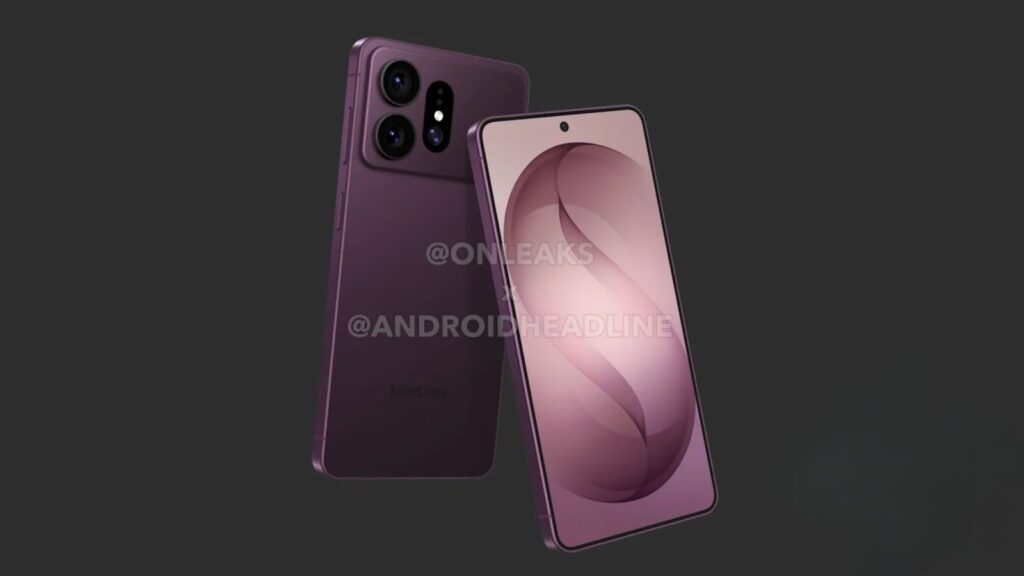
The Galaxy Tab S11 series launched last September. For 2026, Samsung is expected to bring us the Tab S12+ and a new Tab S12 Ultra. The latter was spotted in the One UI 9 beta firmware last month, revealing a hole-punch selfie camera instead of the notch design Samsung has used on Ultra models so far.

The S12+ has now popped up in Safety Korea certification under model numbers SM-X840 (Wi-Fi) and SM-X846N (5G version for Korea). The filing includes an actual image of the front of the tablet. Contrary to some reports that suggested a punch-hole camera for both models, the photo confirms the front camera is neatly tucked into the display bezel.

The decision makes sense because the S12+ retains bezel dimensions similar to the S11. In contrast, the Ultra model’s move to a hole-punch camera appears to be driven by its slimmer bezels, while also helping Samsung visually differentiate the two models at different price points.

On the performance side, expectations are high thanks to the rumored MediaTek Dimensity 9500 chipset, an upgrade over last year’s Dimensity 9400+. This 3nm flagship processor should deliver a nice boost in power for multitasking, content creation, and gaming.

We don’t have full official specs yet, but the Tab S12 Ultra is expected to retain the large 14.6-inch display and around 11,600mAh battery from its predecessor. The S12+ is rumored to feature a 12.4-inch screen, the same size as the S10+, and the certification photo also shows it has very similar overall dimensions. The entire S12 series is likely to launch around September or October 2026.

The Tab S12+ could be a strong option for Galaxy fans looking for a well-balanced premium Android tablet that excels at productivity and entertainment.

Don’t miss a thing! Join our Telegram community for instant updates and grab our free daily newsletter for the best tech stories!

For more daily updates, please visit our News Section.

(Source)

Google Pixel Watch 5 Roundup: Everything We Know So Far

Google’s hardware events rarely come with surprises these days. The company has a well-documented history of its upcoming devices appearing online months before they are officially announced, and the Pixel Watch 5 is following that same pattern.

With the Made by Google event scheduled for August 12, 2026, a bit earlier than the company’s usual fall timeline, Google is preparing to introduce the Pixel 11 smartphone lineup alongside its newest smartwatch. Thanks to a series of supply chain reports, regulatory filings, and one unusual real-world discovery, we already have a clear idea of what the Pixel Watch 5 will offer.

Based on the leaks, the upcoming watch looks very similar to last year’s Pixel Watch 4, but it will come with a few new hardware updates and a higher price tag. Here is a breakdown of what to expect.

Google Pixel Watch 4

1. Underwater prototype

If you were expecting a major redesign for the Pixel Watch 5, the current evidence suggests otherwise. In an unusual turn of events, a prototype of the device was recently found underwater. Randy Pitchford, the co-founder of Gearbox Software, was scuba diving near the Caribbean island of St. Martin when he discovered the unreleased smartwatch.

Pitchford posted photos of the device online, which confirmed a few basic details. First, Google is sticking with the familiar circular, domed glass design that has defined the Pixel Watch line since its introduction. Second, the device’s water resistance appears to be quite effective. Despite being submerged in the ocean, the watch was still functioning in low-power mode and displaying the correct time.

The markings on the back of the recovered prototype also confirmed a few specifications, including a 45mm size option, IP68 water and dust resistance, an ultra-wideband (UWB) chip, and the standard array of health sensors for tracking heart rate, SpO2, and skin temperature.

2. Sizing and new color options

Google introduced a larger size option with the Pixel Watch 4, and it looks like that strategy is continuing. The Pixel Watch 5 will reportedly be available in both 41mm and 45mm variants, giving users an option depending on their wrist size and screen preference.

While the overall shape remains the same, Google is updating the color options. According to leaks from Dealabs, the company is introducing a new color called “Pyrite.” It is described as a pale, brassy-yellow hue with a matte finish, and it will be available on both watch sizes.

For the 41mm model, buyers will reportedly have four finishes to choose from: Dark Anthracite (matte), Natural Silver (polished), Pyrite (matte), and Warm Gold (polished). The larger 45mm model will have a slightly smaller selection, dropping the Warm Gold option but keeping Dark Anthracite, Natural Silver, and Pyrite.

3. Processors and ultra-wideband

The internal hardware is where things are a bit less clear. The previous generation used the Qualcomm Snapdragon W5 Gen 2 chip, which provided a much-needed improvement to battery life and everyday performance. For the Pixel Watch 5, the rumors are currently divided.

Some reports indicate Google will use Qualcomm’s newer Snapdragon Wear Elite chipset, which would likely bring standard improvements to battery efficiency and app loading times. Other rumors suggest Google might introduce a custom Tensor chip for its wearables, aligning the watch with the processors used in its Pixel phones.

Regardless of the processor, the addition of an ultra-wideband (UWB) chip is a practical upgrade. UWB technology allows for precise spatial tracking. In everyday use, this means the Find My Device network will be much more accurate if you misplace your watch, and it could also allow the Pixel Watch 5 to function as a digital car key for supported vehicles.

4. Pricing

The Pixel Watch 5 is expected to see a price increase across all models, marking the first time Google has raised the base price of the lineup since the original watch launched in 2022.

According to leaked pricing data for the US and Europe, the base 41mm Wi-Fi model will start at $399. That is a $50 increase over the Pixel Watch 4. The larger 45mm Wi-Fi model is expected to start at $429, representing a $30 increase.

The models with cellular connectivity will also cost more. The 41mm LTE version is rumored to be priced at $499, while the 45mm LTE model will likely cost $529.

This price adjustment is likely tied to broader trends in the tech industry. Manufacturers are currently dealing with higher component costs, particularly for memory and storage chips, due to increased demand in other tech sectors.

Rather than absorbing these higher manufacturing costs, it appears Google is adjusting the retail price accordingly. At $399, the Pixel Watch 5 will sit in the same price bracket as the base Apple Watch Series 11.

5. Release date

Google’s hardware event will take place in New York City on August 12, 2026. Pre-orders for the Pixel Watch 5 and the Pixel 11 series are expected to open on the same day. The devices are expected to begin shipping to customers and arrive in retail stores a week later, on August 20.

We will know the full details soon enough, but for now, it looks like the Pixel Watch 5 will be a straightforward refinement of last year’s model, focused on internal upgrades rather than a visual overhaul.

For more daily updates, please visit our News Section.

Stay ahead in tech! Join our Telegram community and sign up for our daily newsletter of top stories!

Motorola reveals Edge 70 Max chipset, display and battery ahead of launch

Motorola is set to launch the Edge 70 Max smartphone on July 15 in India. Ahead of the reveal, the company has shared the core specifications of the phone through a listing on Flipkart. It confirms the phone will use a Qualcomm Snapdragon 8 Gen 5 chipset and support magnetic wireless charging, a feature we’ve been tracking since its certification listing surfaced.

Motorola Edge 70 Max Specifications 

The Edge 70 Max will run on the Snapdragon 8 Gen 5, built on a 3nm process. It will be paired with up to 12GB of LPDDR5X RAM. Motorola is using a 5500 mm² vapor chamber cooling system to keep the thermals in check, and the phone is expected to score over 3 million points on AnTuTu.

On the front, you get a QHD+ LTPO panel with a 144Hz refresh rate and a peak brightness of 7000 nits. It supports 10-bit color depth, DCI-P3 wide color coverage, and is protected by Corning Gorilla Glass 7i. The screen-to-body ratio is listed at 95.12 percent.

The Edge 70 Max will have a 7100mAh battery. It supports 90W wired charging and 25W magnetic wireless charging.

The phone will have an aluminum alloy frame and a glass back cover. The camera module layout looks similar to the one on the Lenovo Legion Y70, and is expected to house a 50-megapixel Sony LYT-710 primary camera with a 1/1.56-inch sensor, along with a flat display and premium design. The handset is expected to be available in Green, Light Blue and Black colour options.

Motorola Edge 70 Max

This follows a series of leaks and teasers building up to launch. Our earlier coverage of the Flipkart teasers had already pointed to the Snapdragon 8 Gen 5 chip and magnetic charging support, while leaked renders shared last month gave an early look at the phone’s design and camera setup.

For more daily updates, please visit our News Section.

Stay ahead in tech! Join our Telegram community and sign up for our daily newsletter of top stories!