Advertisement

Samsung starts working on the Galaxy S24 FE, but it may arrive a few months late

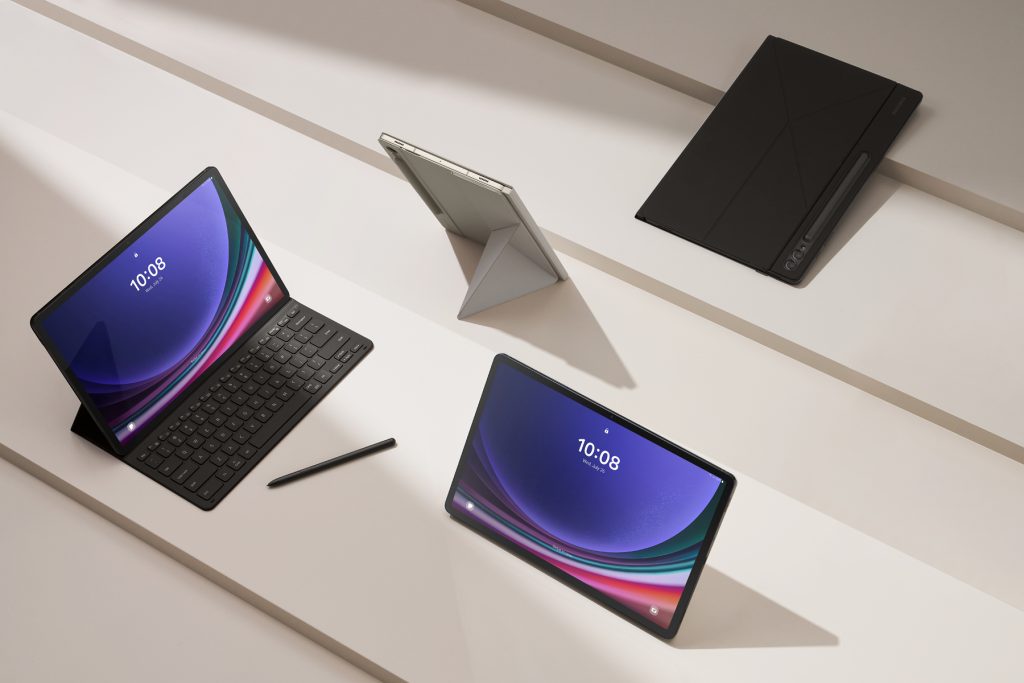
Samsung debuted its top-of-the-line Galaxy S24 smartphone series back in January. The company is now likely preparing to reveal its next Galaxy Z series foldable smartphones, alongside a few other products: the Galaxy Tab S10 series, Galaxy Watch 7 series, and Galaxy Ring wearables.

Interestingly, it seems Samsung is also working on an FE smartphone within the Galaxy S24 series. Though specifics about this smartphone are currently scarce, GalaxyClub, a trusted source for Samsung leaks, spilled the beans that Samsung is cooking up a new smartphone codenamed R12.

Samsung Galaxy S24 FE
Galaxy S23 FE.

Following the pattern of previous FE models (S20 FE – R8, S21 FE – R9, S23 FE – R11), it’s reasonable to guess that R12 is the Galaxy S24 FE. The codename R10 was allegedly assigned for Galaxy S22 FE, but it was never released. 

Apart from the codename, there’s not much else we know about the S24 FE. In contrast, leaks about the S23 FE were abundant around this time last year. This could mean a possible delay for the S24 FE launch.

Samsung launched the Galaxy S23 FE in October last year. So, considering the current development stage of the S24 FE, a November launch or later seems more probable.

Samsung Galaxy S23 FE Specifications

Since there’s not much we know about the Galaxy S23 FE, let’s quickly recap the specifications of the Galaxy S23 FE. The Samsung Galaxy S23 FE  is powered by a Qualcomm Snapdragon 8 Gen 1 SoC in the US and a Samsung Exynos 2200 SoC elsewhere. The SoCs are paired with 8GB of RAM and 128GB or 256 GB storage.

On the front, you get a 6.4-inch AMOLED display that offers an FHD+ resolution and a 120Hz refresh rate. Out of the box, the smartphone runs on One UI 5.1-based Android 13 (upgraded to Android 14) and features an in-screen fingerprint sensor for security. 

The device ships with a 4,500mAh battery that supports 25W wired and 15W wireless charging. 

Camera-wise, the S23 FE has a 10-megapixel front camera, and a 50-megapixel (main, with OIS) + 12-megapixel (ultra-wide) + 8-megapixel (telephoto, with 3x optical zoom) triple camera unit on the back. 

Other key features of the device include dual speakers and an IP68-rated body.

Related:

Kirin 9010 vs Snapdragon 8 Gen 3: Who Holds the Key to Superior Performance?

Kirin 9010 vs Snapdragon 8 Gen 3

A chipset is like the heart of a device, and therefore, it’s always a crucial decision to pick the best one. It is not just the performance; the chip also decides other parameters, such as the maximum camera resolution, RAM, and screen resolution the device supports.

Today, we’ll put the Huawei Kirin 9010, the company’s latest flagship chip, up against Qualcomm’s most powerful mobile chip – Snapdragon 8 Gen 3. Explore the comparison to pick the best flagship chip for a stellar performance.

FeatureKirin 9010Snapdragon 8 Gen 3
Fabrication Process7nm4nm
CPU Cores1 x Taishan Prime Core @ 2.30 GHz
3 x Taishan Middle Core @ 2.18 GHz
4 x Cortex-A510 @ 1.55 GHz
1 x Cortex-X4 @ 3.3 GHz
3 x Cortex-A720 @ 3.15 GHz
2 x Cortex-A720 @ 2.96 GHz
1 x Cortex-A520 @ 2.27 GHz
GPUMaleoon 910 @ 750 MHzAdreno 750 @ 770 MHz

Kirin 9010 vs Snapdragon 8 Gen 3: Performance

Huawei hasn’t revealed the Kirin 9010 spec sheet, and it’s unlikely to do that in the near future. The new Kirin 9010 chip is nothing but the polished version of the Kirin 9000S found in the Huawei Mate 60 series.

For some reason, Huawei has underclocked the Kirin 9010’s prime core, which operates at 2.30 GHz (vs 2.62 GHz in Kirin 9000S). However, the three middle cores and the last four power-efficient cores get a slight clock bump.

The clock speeds of Kirin 9010 cores are nowhere near that of Snapdragon 8 Gen 3’s. Even the power-efficient Snapdragon 8 Gen 3 core operates at a higher clock speed than Kirin 9010’s middle cores.

The Kirin 9010 is fabricated using a 7nm technology, whereas the Snapdragon 8 Gen 3 uses a 4nm fabrication process, resulting in better power efficiency.

The Snapdragon chip also has a faster GPU. The core architecture of the Kirin 9010 is believed to be similar to the Kirin 9000S.

Kirin 9010 vs Snapdragon 8 Gen 3: Benchmark

Geekbench v6:

  • Kirin 9010 (single-core): 1442
  • Kirin 9010 (multi-core): 4471
  • Snapdragon 8 Gen 3 (single-core): 2170
  • Snapdragon 8 Gen 3 (multi-core): 6777

AnTuTu:

  • Kirin 9010: 979511
  • Snapdragon 8 Gen 3: 2114718

These numbers themselves tell the story. There’s a significant performance gap between the Snapdragon 8 Gen 3 and Kirin 9010 chipsets, with the Snapdragon one leading the race.

However, the Kirin 9010, despite having an underclocked prime core, is able to beat the Kirin 9000S in benchmarks by a small margin. But, the Snapdragon 8 Gen 3 is far ahead in the race.

Kirin 9010 vs Snapdragon 8 Gen 3: Games

The benchmarking numbers for the Huawei Kirin 9010 SoC are terrifying, but it does better than that in the real world. The Huawei P70 Ultra, powered by the same chip, was able to handle Genshin Impact fairly well.

The device resulted in an average frame rate of 60.2fps when running the same game at the highest settings with 60fps locked and the frame rate boosting feature turned off. The frame rate remained stable at around 60fps for the initial 10 minutes before dropping to 55.7fps over the next 15 minutes. The phone’s temperature reached a maximum of 46.8 degrees during the test.
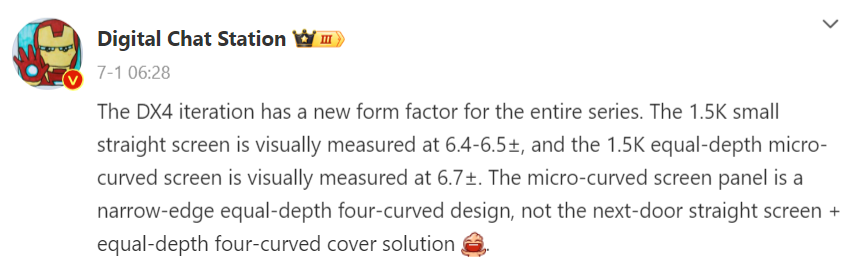
Snapdragon 8 Gen 3, on the other hand, smoothly handles Genshin Impact and other resource-demanding titles while maintaining a 60fps stable frame rate. Secondly, the phone doesn’t get as warm as phones powered by the Kirin 9010 SoC.

Conclusion

While both Kirin 9010 and Snapdragon 8 Gen 3 are termed as flagship chipsets, there’s a lot of difference between them. In fact, the Snapdragon 8 Gen 3 beats the Huawei’s Kirin 9010 in every aspect. So, if you had to pick one of these two, it should be the Snapdragon 8 Gen 3.

Other Popular Chip Comparisons:
1.
MediaTek Dimensity 7050 vs. Snapdragon 6 Gen 1
2. Snapdragon 8s Gen 3 vs Snapdragon 7+ Gen 2
3. Snapdragon 7+ Gen 3 vs. Snapdragon 8 Gen 2

Oppo K12 launch date, design revealed: here’s what to expect

Reports have claimed that Oppo will soon launch the Oppo K12 in China. Today, the brand released an official confirmation that the K12 will break cover on April 24 in China. The below post not only confirms its rear design but also the color options.

Oppo K12: what to expect?

Oppo K12 launch date

The Oppo K12 will be available in black and green hues. The back panel of the device features a vertical dual-camera system. The teaser video below reveals the K12’s flat display.

While the company has revealed the design of the K12, it is yet to confirm anything about its specifications. As per reports, the K12 will be a rebranded version of the OnePlus Nord CE 4 5G, which recently debuted in India.
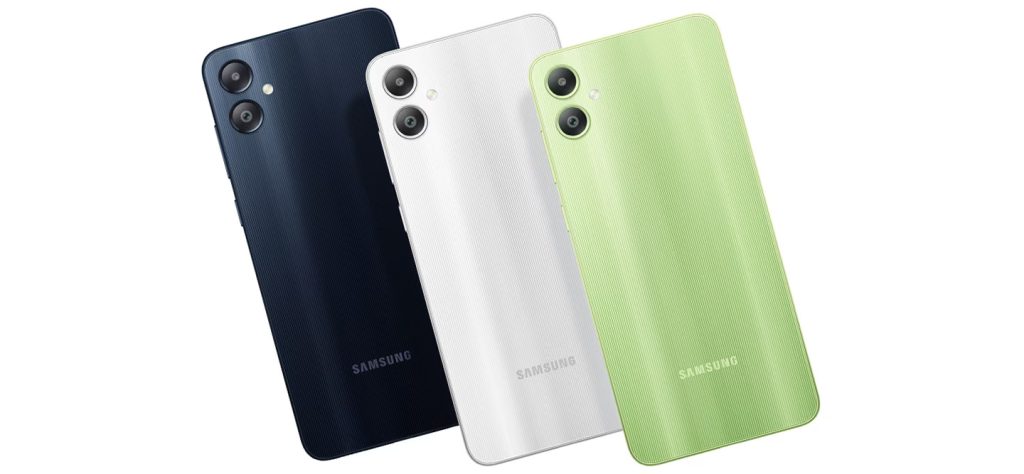
Oppo K12 specifications

The Oppo K12 is likely to offer the same specs that are available on the OnePlus Nord CE 4 5G. The device features a 6.7-inch AMOLED FHD+ 120Hz display, a Snapdragon 7 Gen 3 chipset, LPDDR4x RAM, and UFS 3.1 storage. Speculation suggests that the K12 will feature up to 12 GB of RAM and up to 512 GB of built-in storage, whereas the Nord CE 4 offers 8 GB of RAM and up to 256 GB of storage.

The K12 is likely to pack a 5,500mAh battery with 100W fast charging support. For photography, it may feature a 16-megapixel selfie camera, and a 50-megapixel (main, with OIS) + 8-megapixel (ultra-wide) lens. The phone is expected to run on ColorOS 14-based Android 14.

RELATED:

iQOO 13 series will bring Snapdragon 8 Gen 4 SoC and improved battery and charging speed

iQOO introduced the iQOO 12 series in China back in November 2023. Then the company launched the iQOO 12 in India in December as the country’s first Snapdragon 8 Gen 3-powered phone. 

Four months down the line, rumors about its successor, the iQOO 13 series, have now started surfacing online. A leak from Mobile China and tipster Smart Pikachu has revealed what we can expect from the upcoming line. 

Similar to the iQOO 12, the iQOO 13 is expected to arrive in standard and Pro variants. The standard model is rumored to sport a 1.5K resolution with a flat display, while the Pro variant might boast a curved display with a higher 2K resolution. 

That’s the same display setup as the iQOO 12 line. So there seems no major change on this front. The leak further suggests that both models could use displays sourced from Samsung and domestic Chinese display manufacturers, likely BOE. 

Perhaps the most notable improvement could come in the form of the chipset. The iQOO 13 series is rumored to run on the upcoming Snapdragon 8 Gen 4 SoC, which boasts custom Oryon CPU cores and an enhanced NPU for superior AI capabilities.

Battery life is another area where the line could be upgraded. The leaks suggest significant improvements in battery capacity and faster charging speeds. However, none of the leaks spill the beans about the exact battery size or charging speed of the smartphone. 

Moreover, there’s also no specific mention of the launch timeframe for the iQOO 13 series in the leaks. But considering that the Snapdragon 8 Gen 4 is expected to be unveiled in October 2024, it’s unlikely that the iQOO 13 series will launch before then.

Related:

Here are AOC’s Three New U3 Graphic Pro Series Monitors with 4K Resolution and High Color Accuracy

Recently, the monitor market has been getting a lot of attention. Taiwanese brand AOC has announced a new line of U3 Graphic Pro series monitors aimed at overseas markets. The U32U3CV, U27U3CV, and Q27U3CV all boast a sleek design, but their key differentiator lies in screen size and panel technology.

The U32U3CV has the biggest display at 32 inches and 4K resolution

The U32U3CV offers the largest display of the bunch, measuring 32 inches with a crisp 4K resolution and a 60Hz refresh rate. This monitor prioritizes color accuracy with a 4ms response time, 400 nits of brightness, 10-bit color depth, and impressive 98% DCI-P3 color gamut coverage. In terms of connectivity, it features 2x HDMI 2.0 ports, 1x DP 1.4 port, a 3.5mm audio jack, and a full-featured USB-C port.

AOC Monitor

The U27U3CV and Q27U3CV share a smaller 27-inch screen size while maintaining the 4K resolution and 60Hz refresh rate. Both monitors boast similar specifications, including a 4ms response time, 10-bit color with 98% DCI-P3 color gamut coverage, and the same connectivity options (2x HDMI 2.0, 1x DP 1.4, 1x 3.5mm audio jack, and 1x full-featured USB-C). The key difference between these two models lies in brightness, with the U27U3CV reaching 350 nits and the Q27U3CV exceeding it slightly at 420 nits.

RELATED:

(Via)

BYD’s Latest Teaser Video Showcases the Incredibly Stylish Seal 06 DM-i, Debut Slated for 2024 Beijing Auto Show

BYD Ocean Network has released a teaser video showcasing the upcoming Seal 06 DM-i ahead of its official debut at the 2024 Beijing Auto Show. Safe to say, from the snapshots, the car looks like a head turner. The design is just one aspect of the teaser, it seems like the Chinese automobile manufacturer has more in store for us.

The car will retain the 1.5L engine with a 180km/h top speed

The car adopts the Ocean Net family design aesthetic, featuring sharp headlights, a fastback design on the sides, and popular taillights that stretch across the rear.

BYD Seal

Based on Ministry of Industry and Information Technology filings, the Seal 06 DM-i will have dimensions of 4830/1875/1495mm with a 2790mm wheelbase, similar in size to the previously reported Qin L. It will also sport stylish petal-style wheels and offer sunroof options (panoramic, standard, or small).

Under the hood, the Seal 06 DM-i retains the 1498ml engine with 74kW of power and a 180km/h top speed. It boasts a pure electric cruising range of 90km and a fuel consumption rating of 3.98L/100km. From the images, the design looks extremely sleek, giving the car a whole new modern feel with the stylized BYD logo. Let’s see what the company plans to do around the launch in the Beijing Auto Show.

RELATED:

(Via)

TikTok Moves One Step Closer to a Ban in the United States

The US House of Representatives has reignited the debate over TikTok with a renewed effort to potentially ban the app or force its sale. This time around, the bill was attached to a critical foreign aid package, giving it higher priority and potentially expediting

The new version of the bill requires ByteDance to sell TikTok within a year

Previously, a similar bill passed the House in March but stalled in the Senate. This revised version offers TikTok’s Chinese parent company, ByteDance, a year to sell the app if the bill is enacted, compared to the original six-month deadline. The House approved the bill with a strong 360-58 vote.

Tiktok

The bill now heads to the Senate, where a vote could happen as early as next Tuesday. Senate leaders are currently working on a timeline for the foreign aid package vote, which will determine the fate of the TikTok provision attached to it. President Biden has previously indicated his support for the bill if passed by Congress.

The legislation views TikTok as a national security threat due to its Chinese ownership. However, a potential ban faces strong opposition. With an estimated 170 million US users, according to TikTok itself, ByteDance is likely to challenge any such move. The company argues that a ban would violate user free speech rights, harm millions of businesses that utilize the platform, and negatively impact the US economy to the tune of $24 billion annually. Critics of the bill further argue that banning TikTok offers minimal protection for American user data.

RELATED:

(Via)

iFlytek launches new AI-powered Hearing Aid boasting industry-leading 65dB gain, real-time subtitles

iFlytek has launched a new behind-the-ear hearing aid in the Chinese market. The hearing aid boasts industry-leading capabilities like 65dB audio gain, AI-powered scene recognition, and subtitle hearing assistance. Let’s check out its key specs.

iFlytek AI Behind-the-Ear Hearing Aid

iFlytek AI Behind-the-Ear Hearing Aid Specifications:

This hearing aid leverages iFlytek’s StarFire Cognitive Big Model technology and the Al Scene 2.0 adaptive scene recognition system. This allows the device to automatically adjust to various environments, dynamically reducing noise from wind, traffic, and conversations. Users can finally ditch the need to manually switch noise reduction modes.

The StarFire Edition caters specifically to those with severe hearing loss. Its 65dB high gain empowers users to hear clearly even in challenging situations. Additionally, iFlytek’s self-developed 48 smart channels with 24 adjustable channels and frequency points provide personalized compensation for a more natural listening experience.

For those who struggle with understanding speech in noisy environments, the StarFire Edition offers a revolutionary subtitle hearing aid function. This feature utilizes real-time voice-to-text conversion, displaying conversations on a smartphone app, ensuring important information is never missed.

Furthermore, the iFlytek hearing aid prioritizes convenience. It functions as a Bluetooth headset, allowing users to answer calls and enjoy music streaming effortlessly. The long-lasting battery life provides 14 hours of continuous use and a total of 50 hours when combined with the charging case.

For those concerned about hygiene, the StarFire Edition utilizes silver ion antibacterial technology. This ensures long-term wearability and a 99.9% antibacterial rate, keeping the device hygienic and safe for extended use.

Pricing and Availability

The device is up for sale on JD.com and comes in two options: for one ear or both ears. The single-ear version is priced at 2699 yuan (roughly $380). If you need a hearing aid for both ears, the price jumps to 3999 yuan (roughly $563).

RELATED:

Apple reportedly stops production of eco-friendly FineWoven accessories due to durability concerns

Apple appears to have stopped the production of its FineWoven accessories, according to a new leak by tipster Kosutami. 

These accessories were launched last September as part of Apple’s commitment to sustainability and were claimed to be a durable alternative to leather. However, it appears the company’s durability claims haven’t held up over time.

Kosutami, known for accurate leaks regarding Apple products, has shared on X (formerly Twitter) that the company has ended production for FineWoven accessories due to the material’s poor durability. 

Now that FineWoven accessories are no longer in production, Apple might be on the lookout for a new material for its high-end accessory range. But it would not be leather, says the tipster. 

Kosutami has a history of reliable leaks regarding Apple products, and especially FineWoven accessories. The tipster accurately revealed Apple’s plans for new Apple Watch bands and matching iPhone cases made from a “woven fabric material” over a month before their official release. 

Apple stops FineWoven production

Additionally, Kosutami also shared the first images of FineWoven accessories just before their official announcement.

Last September, Apple replaced its leather accessories with FineWoven material, claiming it to be more environmentally friendly. They described it as a “luxurious and durable microtwill” made from 68% post-consumer recycled polyester. 

The accessories weren’t affordable either. For instance, FineWoven iPhone cases cost $59, MagSafe Wallets are $59, AirTag holders are $35, and Apple Watch bands are priced at $99.

However, customer reception for FineWoven accessories has been negative, with complaints citing poor durability and disappointing quality. We’ve covered multiple reports of such incidents and YouTuber Arun Maini also pointed out the issue saying the FineWoven case “doesn’t seem as good at holding up over time.”

Notably, Apple’s recent spring refresh also omitted new color options for FineWoven accessories. If Apple has indeed stopped production, it might take some time before existing stock depletes noticeably.

Related:

(Via)

Motorola Edge 50 Ultra: Top Reasons to Buy

Motorola recently launched the Motorola Edge 50 Ultra smartphone in the global market. It comes with the latest Qualcomm Snapdragon processor, released just a month ago, along with other features that make it a standout choice for anyone looking for a new smartphone.

Motorola Edge 50 Ultra

1. Design

First off, let’s talk about the smartphone’s design. Those who have used Motorola smartphones in the past might remember the unique wooden cases that gave the devices a distinctive and comfortable feel. While the brand hasn’t offered these cases for its newer models, the Edge 50 Ultra introduces a nod to this tradition. It offers a color option called Nordic Wood, which includes a back panel made entirely of wood. Not only that but the wood is also infused with a subtle wood fragrance to make it feel as natural as possible.

Other than the Nordic Wood color, the device is also offered in two other beautiful colors called Forest Grey and Peach Fuzz, both of which offer a natural-feeling vegan leather finish. The overall construction of the device is quite curvy, making it comfortable to hold, while the frame is made out of sandblasted Aluminium.

2. Display

The phone boasts a 6.7-inch LTPS pOLED curved screen, offering a resolution of 2,712 x 1,220 pixels and a fluid refresh rate of 144 Hz. It also features a remarkable peak brightness of 2,500 nits, which isn’t accessible manually. Instead, the phone intelligently adjusts brightness based on ambient light conditions, such as when you’re outdoors in bright sunlight.

The screen also comes with HDR10+ certification, along with Pantone-validated colors covering the entire DCI-P3 color space, which is over a billion shades of color. The display also has Low Blue Light and Low Motion Blur certifications, making it ideal for viewing content for gaming for extended periods.

3. Audio

Audio is also a strong suit of this device. It has a Dolby Atmos-tuned stereo audio setup with two speaker grills located on the top and the bottom of the device. As for wireless audio, the device offers Snapdragon Sound support, which enables lossless audio for wireless headphones and earbuds that use Qualcomm’s should platform.

4. Performance

The device is equipped with the recently launched Snapdragon 8s Gen 3 SoC, which is a slightly cut-down version of the flagship Snapdragon 8 Gen 3 SoC. The chip is capable of scoring north of 1.5 million points on AnTuTu, which means that you won’t be facing any performance issues while using the device for demanding tasks like gaming. Additionally, the device has LPDDR5x RAM and UFS 4.0 storage, making the user experience smooth.

5. Battery & fast charging

The Edge 50 Ultra draws power from a 4500 mAh battery, which is backed by 125W of wired fast charging. The brand claims that the phone can easily last more than a day on a single charge and it only takes about 4 minutes of wired charging to make it last a day. There is also support for 50W wireless charging, and 10W wireless power-sharing onboard.

6. Software & features

The phone comes with the new Hello UI, based on Android 14. Like its predecessor, it also offers a clutter-free user experience. One cool feature is the ability to create wallpapers and device themes that match your style. Just snap a photo of your outfit or any interesting pattern, and the Motorola Edge 50 Ultra will use AI to generate four unique images.

The phone uses Google Photos as its default gallery app. Motorola promises that AI-powered tools such as Magic Editor, Magic Eraser, Photo Unblur, and more will be available on the device starting May 8, 2024.

Motorola has included some of its classic features in the device, like using a double chopping motion to turn on the flashlight, twisting your wrist to open the camera, and using a three-finger gesture for taking screenshots. They’ve also added the Edge Light feature, a notification alert for incoming calls, messages, and alarms. This light shines from the curved edges of the phone’s screen, making it easy to see even when the phone is placed face down.

7. Camera

The phone has a triple camera system offering three sensors on the back including a primary 50MP OIS sensor (with laser autofocus), a 64MP periscope telephoto sensor with OIS and 3x optical zoom, and a 50MP ultra-wide sensor. It also has a 50MP front camera as well.

The camera system in this phone is Pantone-validated, meaning it accurately reproduces colors, including skin tones. Coupled with Motorola’s Pantone-validated display, you can trust that the colors you see in photos or on the screen are true to life.

The Motorola Edge 50 Ultra boasts a variety of shooting modes for different situations. These include standard options like portrait and macro, along with creative modes like long exposure, timelapse, and panorama. You can also get fancy with effects like tilt-shift (miniaturization) and selective color.

For additional control, the phone offers a pro mode and a super high-resolution mode for capturing extra detail. Night vision helps in low-light scenarios, while AI features like auto-smile capture and smart high-resolution improve your photos automatically.

The Motorola Edge 50 Ultra is yet to hit store shelves, however, the brand has already announced that in the Eurozone, it will have a starting price of €999, which could likely be for the 12GB RAM + 512GB storage option.

RELATED:

TCL launches Q10K Mini-LED TVs featuring 4K 144Hz display, up to 2592 zones & more

TCL has unveiled its flagship Mini-LED TV series, the Q10K in the Chinese market alongside T7K Mini LED TVs. Available in 65-inch, 75-inch, 85-inch, and 98-inch versions, the Q10K boasts impressive features like a 4K 144Hz refresh rate, high peak brightness, and a zone dimming system for exceptional contrast.

TCL Q10K Mini-LED TV

TCL Q10K Mini-LED TV Specifications:

The Q10K utilizes an industry-leading Mini-LED backlight system with a varying number of zones depending on the screen size (from 1512 for the 65-inch to 2592 for the 98-inch). This allows for precise control over brightness and darkness, achieving deeper blacks and brighter highlights. The peak brightness reaches 3800 nits delivering a significant improvement in HDR performance.

TCL’s self-developed global halo control technology tackles a common Mini-LED issue – blooming or halos around bright objects. The Q10K employs hexagonal square core micrometer-level light-emitting chips and super-condensing micro-lenses to minimize halo effects, ensuring a clear and pristine picture.

The TV boasts an XDR HVA wide-angle low-reflective screen, offering a wider viewing angle and reduced glare compared to traditional ADS screens used in some Mini-LED TVs. Q10K also features TCL’s TXR Mini LED image enhancement chip, which works alongside the Linyao Chip M2 main processor to deliver pixel-level picture calibration for exceptional clarity and detail.

TCL Q10K Mini-LED TV

The color reproduction is equally impressive, with the Q10K achieving 98% DCI-P3 color gamut and utilizing TCL’s Quantum Dot Pro 2024 technology for exceptional color accuracy and longevity. The TV also features a powerful 2.1.2 channel Hi-Fi audio system with 90W total power and Dolby Atmos support.

The Q10K comes loaded with features, including support for Wi-Fi 6, 4GB of RAM and 64GB of storage, four HDMI 2.1 ports for high-speed connectivity, and USB 3.0 ports for external storage. It also supports NAS (Network Attached Storage) for convenient access to media files stored on a network drive. Additionally, the TV boasts a VRR (Variable Refresh Rate) and an ultra-low latency of 1.5ms, minimizing input lag for a truly responsive gaming experience.

Pricing and Availability

The Q10K Flagship Mini LED TV offers the following pricing and dimming zones for its various sizes:

  • 65-inch version: Priced at 6,499 Yuan ($915) with 1,512 dimming zones
  • 75-inch version: Priced at 8,499 Yuan ($1,196) with 2,160 dimming zones
  • 85-inch version: Priced at 10,999 Yuan ($1,549) with 2,304 dimming zones
  • 98-inch version: Priced at 19,999 Yuan ($2,816) with 2,592 dimming zones

RELATED:

TCL launches T7K Mini LED TVs with 4K 144Hz XDR display, ultra-thin design, 1600 nits brightness

TCL has unveiled its latest T7K Mini LED TV series, boasting a range of features designed to deliver a superior viewing experience. The TVs come in sizes ranging from 55 inches to a whopping 98 inches, making them ideal for both home theaters and living rooms.

TCL T7K Mini LED TVs

Pricing and Availability

Yesterday, we reported that the 65-inch variant went on pre-sale in China. Now all the models are up for pre-sale. Coming to the pricing, the 55-inch model is priced at 3299 Yuan ($464), the 75-inch at 5999 Yuan ($844), the 85-inch at 7999 Yuan ($1,126), and the largest, the 98-inch model is available for 13999 Yuan ($1,971).

Specifications:

Talking about specs, The T7K series boasts a True XDR Mini LED display with peak brightness reaching a staggering 1600 nits. This, combined with over 960 dimming zones in the largest model, delivers exceptional contrast and HDR performance. Blacks appear deeper, whites shine brighter, and details come alive with incredible clarity.

TCL’s Quantum Dot Pro 2024 technology ensures a wide color gamut of 98% DCI-P3, showcasing over 10 billion colors with exceptional accuracy. Additionally, the T7K boasts a ΔE<0.99 color accuracy rating, guaranteeing professional-grade color reproduction.

TCL has equipped the T7K TVs with its self-developed optical imaging micro-lens technology. This tech promises improved emission angle, heat dissipation, and brightness uniformity. The TVs also utilize anti-yellowing optical material and a micron-level precision carving process to further enhance picture quality.

TCL T7K Mini LED TVs

The T7K series boasts 16-bit environmental brightness and color temperature perception, enabling precise control of 65,000 levels of regional backlight. This translates to a clearer and more realistic display with minimal halo effects. The TVs also feature a wide viewing angle of 178 degrees.

Under the hood, the T7K series is powered by the Loyo Chip M2 picture quality enhancement chip. This chip works in conjunction with TCL’s TXR Mini LED technology to deliver a range of picture quality improvements, including detail enhancement, scene optimization, noise reduction, and AI color enhancement.

The audio experience isn’t left behind either. The T7K TVs feature a 5-unit 70W 2.1 channel Hi-Fi professional sound system with Dolby Atmos support. Additionally, the TVs boast a 20W super-filter subwoofer for deep and impactful bass.

The T7K runs on Smart Desktop, offering a user-friendly interface with no startup ads and a quick boot time. It supports various connectivity options, including 4-channel HDMI 2.1, USB 3.0, and Wi-Fi 6. Additionally, the T7K boasts NAS (Network Attached Storage) compatibility, allowing you to stream large media files smoothly from your home network. In terms of storage, the TVs come with 4GB RAM and 128GB inbuilt memory.

The T7K features a pure flat integrated ultra-thin design, achieving a screen-to-body ratio of up to 98%. Additionally, the T7K boasts support for various audio-visual certifications like Dolby Vision Atmos, HDR10+, HLG, and IMAX Enhanced, ensuring an immersive cinematic experience.

RELATED:

Xiaomi launches Redmi Max 100-inch 2025 model TV with up to 240Hz screen, HyperOS, and more

Xiaomi recently launched the Redmi Max 100-inch 2025 model, a sizable smart TV catering to both entertainment and gaming enthusiasts, in China. As of today, the TV is officially available for purchase in the mainland. Let’s delve into its pricing and specifications in this article.

Xiaomi Redmi Max 100-inch 2025 Specifications

The centerpiece of the Redmi Max 100 is its massive 100-inch display boasting a 4K resolution. The refresh rate reaches 144Hz with support for variable refresh rate (VRR) technology. 

For smoother motion handling, the TV utilizes 120Hz MEMC motion compensation. Notably, there’s a competitive mode that pushes the refresh rate to an even higher 240Hz.

Redmi Max 100-inch 2025 TV Launch Specs Price

The display can reproduce 1.07 billion colors, implying it is a 10-bit screen, and covers 94% of the DCI-P3 wide color gamut. Additionally, the color accuracy is rated at ΔE≈2, suggesting a high degree of color fidelity. The TV also has Xiaomi’s native Qingshan eye protection technology.

As for connectivity, the TV has three HDMI, two USB-A, one ethernet, one optical, one AV input, and an Antenna port. Two of the three HDMI 2.1 ports support the HDMI 2.1 standard for lower input latency while playing games. 

They also support VRR, ALLM (automatic low latency mode), and AMD FreeSync technology for a more responsive gaming experience.

The Redmi Max 100 comes equipped with four speakers for audio. There’s support for Dolby Vision and Dolby Atmos technologies to enhance the audio experience, with DTS-X compatibility for high-quality audio processing.

Powering the TV is a 4-core A73 processor paired with 4GB of RAM and 64GB of storage. Wireless connectivity options include Wi-Fi 6 for smooth streaming and internet access. 

The TV supports multi-function screen projection for easy content sharing from mobile devices. You get a Bluetooth voice remote control with a built-in NFC function that facilitates navigation and interaction. 

It boots on Xiaomi’s latest HyperOS operating system with third-party app support. Then there’s Xiaoai, Xiaomi’s virtual assistant, for intelligent voice control. 

Pricing and Availability

The Redmi Max 100-inch 2025 TV is priced at 8,999 yuan (approximately $1,243 USD) in China. You can buy it from JD.com or the company’s official website. Plus, Xiaomi is offering a free Xiaomi TV Speaker 3.1, which usually costs 1,499 yuan, if you order before April 30th or until stocks last.

Related:

iQOO launching its first Magnetic Cooling Back Clip alongside Z9 series on April 24th

Mobile gaming can get intense, and phones can get quite hot during extended sessions. To address this, iQOO, a sub-brand of Vivo, has officially announced its first magnetic heat dissipation back clip, slated for release on April 24th at 19:00 (Chinese time).

iQOO Magnetic Cooling Back Clip

iQOO Magnetic Cooling Back Clip will launch on April 24

While full specifications haven’t been revealed yet, iQOO boasts a comfortable design at only 19.9mm thin and 69g lightweight. The clip comes in two colors: Crystal White and Ice Shadow Black, and according to iQOO, will be compatible with a wide range of smartphones including popular brands like Apple, Xiaomi, Huawei, Black Shark, Red Magic, and Nubia.

This isn’t iQOO’s first foray into mobile cooling solutions. Last year, they launched the Cooler Back Clip 2 and Cooler Back Clip 2 Pro. The regular Clip 2 features a TEC cooling sheet and reportedly reduces phone temperatures by up to 30 degrees. The Clip 2 Pro boasts a larger cooling chip, copper plate, and offers three fan speeds with RGB lighting and a max temperature drop of up to 35 degrees. Both support charging while cooling.

iQOO Magnetic Cooling Back Clip

While details are scarce for the new magnetic clip, it will likely offer a more streamlined and potentially quieter solution than the Clip 2 with its fan. The magnetic design suggests easier attachment and detachment from your phone without the need for clamps or clips.

The announcement of the magnetic back clip coincides with the upcoming launch of the iQOO Z9 series smartphones on April 24th. Three models are rumored to be released: iQOO Z9, iQOO Z9x, and iQOO Z9 Turbo.

With a new cooling solution and potentially powerful new phones, iQOO is targeting mobile gamers who prioritize performance without compromising on thermals. Whether the magnetic clip offers the same level of cooling performance as the Clip 2 series with its fan remains to be seen, but it will likely be a more portable and more universally compatible option for gamers on the go.

RELATED:

Teardown video shows Huawei Pura 70 Ultra’s innovative retractable camera module

Huawei‘s latest flagship phone in China, the Pura 70 Ultra, is getting a closer look thanks to a new teardown video. We’ve already had deep dives into its performance, but this video lets us see what makes it tick inside.

You can watch the full teardown (in Chinese) below. Here we’ll try to summarize its key findings.

The Pura 70 Ultra has a stylish design with a barely thin bezel around the screen and a now-familiar camera layout on the back. 

While the design is subjective, the phone seems well-built with metal frames and a leather back. It is a bit on the heavy side though, weighing in at 232 grams, a little more than the iPhone 14 Pro Max.

The Pura 70 Ultra’s main highlight is its innovative retractable main camera. This design allows the lens to remain flush with the back of the phone when not in use. 

Huawei Pura 70 Ultra teardown

It not only protects the lens from scratches, but the retractable mechanism allows Huawei to pack a bigger sensor in a relatively compact space. 

The retraction mechanism uses stepper motors and is also IP68 dustproof and waterproof certified. It’s a first for mass-produced phones to feature such an innovative camera design. 

Under the hood, the Pura 70 Ultra packs the Kirin 9010 processor. Its benchmark scores are already out, and rather than being flagship level, the performance is more in line with SoCs like Snapdragon 888 and Dimensity 8200. 

However, the CPU performance did see improvements compared to the Kirin 9000s on the Mate 60. Huawei’s vapor chamber cooling mechanism is another interesting aspect of the device.

Huawei Pura 70 Ultra teardown

While it appears similar to conventional copper alloy VCs, the reviewer says it is significantly lighter and thinner. Hence Huawei might be using a composite material VC that offers exceptional thermal conductivity. 

For those interested, we’ve already shared our initial impressions of the Huawei Pura 70 Ultra. You can either read it or watch the video linked below for more insights.

Samsung is offering free display replacement for Galaxy S21 and S22 with green line issue in only one country

We’ve been hearing reports of green line issues on some Samsung Galaxy devices since last year. The problem mainly affects models with Super AMOLED displays.

Since it became widespread, Samsung introduced a program for a one-time free display replacement in some markets. For instance, the company has been offering this service in India since last year. 

The devices eligible for free display replacement include Samsung Galaxy S20 and Note 20 series. But as newer Samsung smartphones have also started facing the same issue, Samsung has now extended the program to cover Galaxy S21 and S22 series too. 

Samsung free display replacement for devices with green line issues

The green lines on the screen can significantly hamper the usability of a device. Even small tasks like app opening can become frustrating in such conditions. 

So to help affected users, Samsung is offering a free display replacement. But along with the display, the affected devices will also get a free battery and kit replacement. 

However, here’s the catch – there’s a deadline to get in on this offer. You have to book an appointment for the free replacements at a Samsung Service Center by April 30th, 2024. If you miss this deadline, you might end up having to pay for repairs yourself.

Basically, this program means affected users get a free refurbishment for their devices. Since the Galaxy S21 and S22 series are still getting software updates and have relatively modern hardware, this free repair could really help extend the life of these smartphones. 

So if you’re in India and own a Galaxy S20, Note 20, S21, or S22 with green lines, we recommend you schedule an appointment at your nearest Samsung Service Center before April 30th, 2024. Don’t let this opportunity slip by to fix your phone and continue enjoying it for years to come.

Related:

(Via)

Honor Magic Flip tipped to debut after the Honor 200 series

Honor is reportedly working on the Honor Magic Flip (tentative name), a clamshell foldable phone, for the Chinese market. There is no official word on the launch timeframe for the device. However, a new leak, courtesy of a Chinese leaker, has revealed when the Magic Flip is expected to be released in the market.

Honor Magic Flip launch timeframe (rumored)

Honor 200 first, Honor Flip later
Honor Magic Flip is said to launch after the Honro 200 series

According to the leaker, the Honor 200 series will launch first and after that, the brand will unveil its first-ever flip phone equipped with a foldable screen. A recent leak revealed a couple of upper mid-range phones, such as the Huawei Nova 13 series, the Reno 12 series, the Vivo S19 lineup, and the Honor 200 series will debut in June in China.

Unfortunately, the new leak has not revealed anything about the specifications of the Honor 200 series and the Magic Flip. So far, reports have revealed a few details of the flip phone. A mock render based on rumors surrounding the device.

It was revealed that the Honor Magic Flip will have a large external display like the Motorola Razr 40 Ultra. It is expected to feature a dual camera system and a leather back. The device is expected to pack a 4,500mAh dual-cell battery.

Honor Magic Flip mock render

A previous report claimed that the Magic Flip will make its debut by the end of Q2 this year. This suggests that the Honor 200 and Magic Flip could potentially launch in June. The digital series could be introduced first, with the flip potentially arriving in the latter part of June.

It appears that the company plans to release two more foldable phones in the second half of the year. These are likely to include the Magic V3 and the V Purse 2 as successors to last year’s Magic V2 and V Purse foldable phones. These devices are likely to sport inward and outward folding designs, respectively.

RELATED:

Oppo Reno 12 series key specifications leaked, tipped to feature Dimensity 8300 / 9200 Plus phones

In June, Huawei, Honor, Vivo, and Oppo are poised to compete in the upper mid-range smartphone segment as they are set to release new devices in this category. The four-way battle would include the Nova 13 series, the Honor 200 series, the Vivo S19 lineup, and the Reno 12 series. Back in February, a major leak revealed the key specifications of the Reno 12 and the Reno 12 Pro. However, it did not explicitly mention the names of the chipsets that power these smartphones. A new leak that has emerged on Weibo today revealed the chipsets of both smartphones along with some of their other specs.

Oppo Reno 12, Reno 12 Pro key specifications (rumored)

OPPO Reno 11 series
OPPO Reno 11 series

According to the tipster, the Reno 12 series will be powered by the Dimensity 8300 and the Dimensity 9200 Plus chipsets. To recall, the Chinese variants of the Reno 11 and Reno 11 Pro were powered by the Dimensity 8200 and the Snapdragon 8+ Gen 1 chipsets. Hence, it appears that the company may power the Reno 12 with the Dimensity 8300, whereas the Reno 12 Pro may come equipped with the Dimensity 9200 Plus.

The leak suggests that the Reno 12’s screen will support a 1080p resolution whereas the Pro variant’s display may offer a 1.5K resolution. The screens of both phones are said to feature micro curvature on all four sides equally.

The new leak further states that the Reno 12 series will have a plastic middle frame and a glass back. The back panel of both phones will have a 50-megapixel telephoto camera with 2x optical zoom for portrait shots. Both phones are also said to support 80W fast charging.

Recent reports have revealed that the Oppo is also working on the Snapdragon 8 Gen 3-powered Oppo Pad 3. In addition, a new leak claims that the brand is also planning to launch a new pair of earphones. The launch schedule of these devices is said to be similar to the Reno 12 lineup. Hence, it seems that apart from the Reno 12 series, the brand may also launch other devices in June in China.

RELATED:

(source)

Honor 200 Lite launch date confirmed, design, color options revealed

Recently, an upcoming mid-range phone, the Honor 200 Lite, was spotted on Thailand’s NBTC certification platform, which indicated that it may debut soon. However, a fresh development reveals that the brand is all set to launch the Honor 200 Lite on April 25 in France. Its official microsite, available on Honor France’s website, has revealed its design and color options.

Honor 200 Lite design, color options

Honor 200 Lite
Honor 200 Lite

In the above render, the Honor 200 Lite can be seen sporting a flat display with a pill-shaped cutout, which suggests that it could be equipped with a dual selfie camera system. The back panel of the device seems to feature a 108-megapixel dual-camera unit and an LED flash.

Honor 200 Lite
Honor 200 Lite

The 200 Lite seems to have a polycarbonate chassis with flat edges. The left edge of the device features a SIM slot, and its right side has a volume rocker and a power button integrated with a fingerprint scanner.

The 200 Lite will be available in three shades, such as Midnight Black, Cyan Lake, and textured Starry Blue. It is said to have a thickness of 6.78mm and weighs 166 grams.

Honor X50i Plus
Honor X50i Plus

Rumors suggest that the Honor 200 Lite will bear similarities to the Honor X50i+, which is exclusively available in the Chinese market. The X50i+ has a 6.7-inch AMOLED FHD+ 90Hz display, a Dimensity 6080 chipset, 12 GB of RAM, 256 GB / 512 GB of storage, a 4,5000mAh battery, MagicOS 7.2-based Android 13, a 108-megapixel dual-camera system, and a side-facing fingerprint scanner. Interestingly, the X50i+ also features a pill-shaped camera cutout on its display, but it has a single 8-megapixel selfie camera.

RELATED:

Samsung Galaxy F55 is a rebranded Galaxy M55, confirms Google!

Samsung is gearing up to expand its popular Galaxy F series with the Galaxy F55 5G. Over the past couple of months, leaks and certifications about the device have been popping up. Now, the smartphone has surfaced on the Google Play Console database.

Per the Play Console listing, the Galaxy F55 5G appears to be a rebranded version of the recently launched Samsung Galaxy M55 5G. The specifications listed there are quite similar to the M55 5G, strongly indicating a rebranding.

Galaxy F55 5G

So under the hood, the Galaxy F55 5G packs a Qualcomm Snapdragon 7 Gen 1 SoC. It’s an octa-core processor built on a power-efficient 4nm process. You can expect smooth performance for everyday tasks and even some light gaming. It will be paired with 8GB of RAM.

The phone’s display will offer a resolution of 2400 x 1080 pixels, and although details regarding the refresh rate are under wrap, it’s likely to refresh at 120Hz.

Samsung Galaxy M55
Samsung Galaxy M55

Adding weight to its imminent arrival, the Galaxy F55 5G has secured India’s BIS certification recently with model number SM-E556B/DS. Moreover, it has also been spotted on Samsung India’s support page.

While details about the camera setup and battery capacity are yet to be revealed, considering the Galaxy M55 5G as a reference, we can expect a triple-lens rear camera system and a sizeable battery that should keep the phone running for a full day on a single charge.

With an official launch expected soon, we look forward to learning more about the phone’s complete specifications, pricing, and availability details. Rest assured, we’ll keep you posted on any updates regarding the device.

Related:

(Via)