Advertisement

Mechanical Revolution’s New Budget-friendly Yaoshi 16 Pro Gaming Laptop Starts at 7,799 Yuan ($1076) in China

The Mechanical Revolution Yaoshi 16 Pro gaming laptop has arrived, starting at a wallet-friendly 7,799 yuan ($1076 USD). And this laptop packs a serious number of features for the asking price. Read on to find out more!

The laptop features a 16-inch 2.5K display with a 240Hz refresh rate.

This machine boasts a powerful 12th Gen Intel Core i7-14650HX processor (exact wattage to be announced) and an NVIDIA RTX 4060 graphics card with dedicated GDDR6 memory to handle even demanding games. Multitasking is a breeze with 32GB of DDR5 5600 RAM in a dual-channel configuration, while a speedy 1TB PCIe 4.0 solid state drive ensures quick boot times and fast game loading.

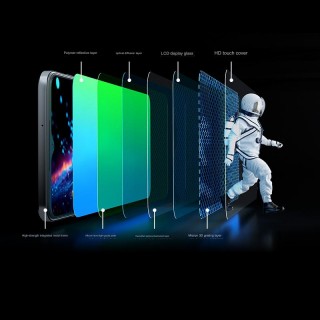
The star of the show is undoubtedly the stunning 16-inch 2.5K resolution display. Gamers will appreciate the ultra-smooth 240Hz refresh rate for blur-free visuals during fast-paced action. The display boasts a peak brightness of 500 nits, 100% sRGB color gamut, and excellent color accuracy (ΔE < 2) for vibrant and realistic in-game scenes.

Gaming Laptop

Keeping thermals in check is a robust cooling system that combines phase-change silicone grease with 7 ultra-thick copper heat pipes and dual 81-blade fans. This ensures your laptop stays cool even during the most intense gaming sessions.

Beyond performance, the Yaoshi 16 Pro offers several user-friendly features. The 180-degree hinge allows for maximum viewing flexibility, while Nahimic sound certification guarantees immersive audio for an enhanced gaming experience. The three-sided metal chassis exudes a premium feel, and the 240W SiC power adapter, although hefty at 550g, supports convenient 100W fast charging via USB-C.

Connectivity options are plentiful, including the latest Wi-Fi 6E enabled by the AX211 network card, along with Thunderbolt 4, RJ45 (Ethernet), HDMI 2.1, USB-A 3.2 Gen 1, and USB-C 3.2 Gen 1 ports. The laptop weighs approximately 2.2kg (4.8 lbs) and measures about 26.5mm thick, making it reasonably portable for its size.

The starting configuration comes in a sleek Star Gray color, with additional exciting options like Mirror Lake Blue, Diamond Pink, and Platinum Sand arriving soon.

If you’re a gamer in China looking for a powerful and affordable gaming laptop with a gorgeous display, the Mechanical Revolution Yaoshi 16 Pro is a sweet option, especially at its attractive starting price. Be sure to keep an eye out for the upcoming variants featuring the i9-14900HX processor, available for purchase on April 26th.

RELATED:

(Via)

Motorola Edge 50 Fusion will compete with these phones in India

A few days back, Motorola unveiled the Edge 50 Fusion. This smartphone was announced alongside the Edge 50 Pro and the Edge 50 Ultra.

It is the most affordable of all three phones. It also comes in two variants for different markets.

One of these versions is exclusive to Latin America. This model has a downgraded chipset but a faster display.

That being said, the Edge 50 Fusion is expected to be released soon in India. Since the Edge 50 Pro is already available in the country with a starting price of ₹31,999, we can guess the price of the former.

The Edge 50 Fusion will likely cost around ₹25,000 in India. At this price, it will compete with several popular devices. Let’s have a look at some of its potential alternatives.

Motorola Edge 50 Fusion

1. OnePlus Nord CE 4

OnePlus Nord CE 4

The OnePlus Nord CE 4 is probably the well-balanced smartphone in this price segment just like its predecessor OnePlus Nord CE 3. It starts at ₹24,999 in the country.

At this price, it offers a more powerful Snapdragon 7 Gen 3 chip compared to a Snapdragon 7s Gen 2 inside the Motorola Edge 50 Fusion. However, the Nord sports a flat 120Hz OLED display compared to a curved 144Hz OLED panel on the Fusion.

Further, the Nord CE 4 comes with a larger 5,5000mAh battery and also supports faster 100W wired charging.

2. Nothing Phone 2a

Nothing Phone (2a)

Nothing Phone 2a is the most unique-looking smartphone in its segment. It starts at ₹23,999 in India.

It is powered by a MediaTke Dimensity 7200 Pro chip, which is again more powerful than the silicon present underneath the Edge 50 Fusion. It has also got Glyph LED lights for personalized customizations.

The Phone 2a may have a flat OLED display but it sports a higher megapixel 50MP ultrawide camera. Finally, the battery is the same at 5,000mAh capacity but it only supports 45W wired charging, and the power adapter is not included in the box.

3. Redmi Note 13 Pro

Redmi Note 13 Pro 5G

The Redmi Note 13 Pro starts at ₹24,999 in India. It is powered by the same Snapdragon 7s Gen 2 chipset as the Motorola Edge 50 Fusion.

The Redmi Phone also arrives with a higher 200MP primary camera and a larger 5,100mAh battery.  But the charging speed is comparable at 67W.

Lastly, the 120Hz OLED display may be flat but it can play Dolby Vision content. Also, the panel is sharper as it has a 1.5K resolution (2712 x 1220 pixels).

4. Realme 12 Pro

Realme 12 Pro

The Realme 12 Pro also starts at ₹24,999 in India. It is the only competitor that also has a curved display and a vegan leather back.

However, the handset houses a less powerful Qualcomm Snapdragon 6 Gen 1 chip. Anyhoo, the battery capacity and charging speed are nearly identical at 5,000mAh and 67W, respectively.

Most importantly, the Realme 12 Pro is the only device on the list with a proper three lens camera system. It arrives with a 50MP primary sensor, a 32MP 2x telephoto shooter, and an 8MP ultrawide unit.

5. Samsung Galaxy M55

Samsung Galaxy M55
Samsung Galaxy M55

The Galaxy M55 is the best option for someone looking for a Samsung alternative in this segment. It starts at ₹26,999 in India.

The device is powered by a Qualcomm Snapdragon 7 Gen 1 chipset. This makes it slower than the Motorola Edge 50 Fusion.

However, Samsung will offer longer software support than any other handset on this list. It will receive four Android updates and five years of security updates.

At last,  the smartphone supports 45W wired charging but the power adapter needs to be purchased separately.

RELATED:

Samsung releases 50W dual port PD charger for €69.90

Samsung has unveiled a brand-new dual port USB C charging adapter in the global market, with a maximum power output of 50W. While Samsung has yet to release this dual port charger in China and Korea, it will be available for purchase in the US and Europe.

Samsung 50W PD Duo Power Adapter

Samsung’s new “50W PD Duo” charging adapter priced at €69.60 in Europe, comes with a 5A USB C cable in the box. This charger, with two ports, can deliver a maximum power of 50W when one port is plugged in, and can charge two devices simultaneously, with each port delivering a maximum of 25W. Additionally, the charger is only available in black color.

According to Roland Quandt, the charging device will be launched for sale in Europe, and currently, the Samsung US website is already active, listing the new 50W dual port charging adapter with the model number of EP-T5020.

While Samsung phones does not feature crazy fast charging solutions like Chinese smartphone manufacturers, the introduction of a 50W charging adapter from Samsung is noteworthy. This is interesting considering that the fast charging feature of the Galaxy S24 Ultra is capped at only 45W. However, for people who need to use or charge multiple devices simultaneously, a dual port USB C charging device will be quite beneficial.

Related:

Huawei Pura 70 Ultra Retractable Camera Explained

The Huawei Pura 70 Ultra (unboxing & hands-on) boasts a revolutionary feature: a retractable main camera. This isn’t the first phone though to feature a retractable lens.

The first commercial phone that came with this feature was the Tecno Phantom X2 Pro. Well, this innovative design offers a unique solution to the age-old challenge of balancing large sensor sizes with a sleek phone profile.

Let’s delve into the fascinating mechanism of this camera and understand how it works.

HUAWEI Pura 70 Ultra Retractable Camera

What is a Retractable Camera?

A retractable camera is a type of camera that hides its lens within the device when not in use. This allows for a sleeker design without the typical camera bump on smartphones or other devices.

These cameras can extend when needed for capturing photos or videos.

Pura 70 Ultra’s Retractable Mechanism

The Pura 70 Ultra’s main camera is housed in a hidden compartment within the phone’s body. When you activate the camera app, a precisely engineered mechanism springs into action.

Stepper Motors: The driving force behind the camera’s movement lies in a pair of stepper motors. These motors use controlled electrical pulses to rotate, smoothly extending or retracting the camera module. The stepper motor is equipped with noise-suppressing foam.

Telescopic Lens Cover: The lens itself is protected by a telescopic cover. This cover extends alongside the camera module, shielding it from dust and scratches when not in use.

Sensor Stabilization: To ensure sharp images even when the camera is moving, the Pura 70 Ultra utilizes sensor-shift stabilization. This technology moves the sensor itself to compensate for hand movements, minimizing blur.

HUAWEI Pura 70 Ultra Retractable Camera

Advantages of a Retractable Camera

The retractable design offers several key benefits:

Larger Sensor: Using this tech Huawei is able to place a large 1-inch sensor in a small space. This allows for greater light capture, resulting in sharper, clearer images, especially in low-light conditions.

Compact Design: Most phones with large sensors are bulky, and the large camera bump can be uncomfortable to hold. Huawei addressed this by placing the retractable module, eliminating the huge camera bump, and improving ergonomics. This makes Pura 70 Ultra more comfortable to hold and pocket-friendly compared to other phones with 1-inch sensors.

HUAWEI Pura 70 Ultra Retractable Camera

Additional Features and Considerations

Speed and Durability: The retraction mechanism operates swiftly, ensuring a seamless transition between camera modes. Huawei claims the system is designed to withstand over 100,000 cycles of extension and retraction.

Water Resistance: Despite the moving parts, the Pura 70 Ultra boasts an IP68 water and dust resistance rating. This is achieved through a sealed telescopic cover and careful internal engineering.

Potential Drawbacks: The moving parts introduce a potential point of failure. How well the mechanism will withstand long-term use and potential drops remains to be seen. Also, the complex engineering behind the retractable camera likely contributes to the phone’s premium price tag.

Conclusion

The Huawei Pura 70 Ultra’s retractable camera represents a significant leap forward in mobile photography. By prioritizing a larger sensor and a compact design, this technology opens doors to improved image quality and a more refined user experience.

While durability and potential points of failure require further observation, the Pura 70 Ultra’s retractable camera marks a bold step towards the future of smartphone photography.

RELATED:

Bad news for Apple fans: Upcoming iPad Air will feature LCD display yet again

iPad mini, iPad, iPad Air, and iPad Pro are the tablets offered by Apple and the Pro one, as you could guess from its name, has the best specs. Mini-LED technology was allegedly going to be featured in the 2024 12.9-inch iPad Air, however it appears Apple has decided against offering mini-LED screens in the iPad Air.

Apple abandons the mini-LED display for 2024 iPad Air

Ross Young, CEO of Display Supply Chain Consultants (DSCC) and a well-known analyst in the display industry, had previously stated that the 2024 iPad Air might come with a mini-LED panel. However, he now explains that his new sources reveal the iPad Air will come with an LCD panel instead, due to the high costs of manufacturing mini-LED panels.

Ross Young also mentioned that Apple will introduce a brand new iPad model with a mini-LED display in the fourth quarter of 2024. The exact model is yet to be determined; it could possibly be a low-end iPad Pro or an entirely new iPad lineup. It’s already known that Apple is working on a new iPad Air, but the complete technical specs are not available yet.

Mini-LED display technology is slowly being adopted in some devices, offering richer contrast and truly black areas compared to LCD panels, but not exactly same as OLED displays. mini-LEDs can achieve better colors by illuminating the display with much smaller LEDs. Apple first used mini-LED panels in the 2021 iPad Pro, and it seems they will continue to avoid using mini-LEDs in iPads Air due to their costliness.

(source)

Related:

Fujifilm to Release the GFX100S II Medium Format Camera & X-T50 APS-C Mirrorless Camera + Lens on May 16

Photography equipment manufacturer Fujifilm is hosting its X Summit SYDNEY event on May 16th, and they’ve got some exciting announcements planned. The star of the show will undoubtedly be the new GFX100S II medium format camera.

The GFX100S II is expected to boast a top-of-the-line 100MP sensor

But wait, there’s more! Rumors suggest Fujifilm will also unveil the X-T50 APS-C mirrorless camera alongside a new XF16-50mm F2.8-4.8 kit lens at the press conference. The X-T50 is expected to boast a 40-megapixel sensor and in-body image stabilization.

The GFX100S II has been a hot topic since rumors of its early 2024 launch surfaced last year. Priced to be more affordable than its predecessor (around US$7,499 compared to US$9,999 for the original GFX100), the GFX100S II is poised to be a compelling option for medium format enthusiasts.

Reports hail the GFX100S II as “Fuji’s medium-format camera with the most powerful focusing performance in history.” It’s rumored to sport a new 100-megapixel sensor and a 5th-generation processor, along with a next-generation focus tracking function capable of detecting and identifying animals, vehicles, and birds. Videographers will be happy to hear about the inclusion of new video features like video touch tracking for autofocus, a waveform monitor, and an anamorphic widescreen mode.

RELATED:

(Via)

Apple expands supplier network in China despite US-China tensions

In the latest fiscal year, Apple has taken significant strides in expanding its supplier base, with a notable focus on mainland China. This is the first time since 2021 that Apple has added more suppliers from China. This development comes as a surprise amidst the ongoing US-China tech war and the continued imposition of sanctions by the US on various Chinese entities.

Apple has added 8 new suppliers from mainland China while removing 4, highlighting the country’s significance in its supply chain. With 157 contractors operating in mainland China, representing over a third of its disclosed suppliers, Apple reaffirms its reliance on the region for manufacturing and assembly.

Among the newly added mainland Chinese suppliers are industry leaders such as Baoji Titanium Industry and San’an Optoelectronics. Baoji Titanium Industry, based in Shaanxi, specializes in alloy manufacturing, while San’an Optoelectronics, located in Xiamen, supplies mini-LED chips for Apple’s premium products like the iPad Pro and MacBook Pro.

While mainland China remains dominant, Apple is actively diversifying its manufacturing footprint by increasing production in South and Southeast Asia. The addition of Tata Electronics from India to Apple’s supplier list highlights the company’s commitment to broadening its global supplier network.

Apart from China, Taiwan, Japan, Norway, and India have contributed to Apple’s supplier network. This strategic approach ensures resilience in the face of geopolitical challenges and strengthens Apple’s ability to meet global demand.

Carbon Neutrality Pledges by Apple Suppliers

A notable development is the commitment of some supply chain partners to achieve carbon neutrality by 2030, aligning with Apple’s sustainability goals. This underscores Apple’s dedication to reducing its environmental footprint and promoting responsible practices across its supply chain.

Apple expects its supply chain partners to align with its mission, including commitments to carbon neutrality and ethical standards. Non-compliant partners risk losing their partnership with Apple, emphasizing the importance of shared values and responsible business practices.

Tighter export controls on China, driven by regulatory changes, pose potential challenges for Apple’s operations. However, the company remains committed to compliance with trade regulations and adapting to geopolitical dynamics to ensure seamless supply chain management.

Related:

(via)

Huawei’s new upcoming tablet visits 3C website

Huawei is performing quite good with its MatePad tablets, and now it seems a brand new Huawei tablet is on the way. A 3C certificate must be obtained by some products ahead of their release in China, and the upcoming new tablet from Huawei has been discovered on the 3C website.

3C listing reveals a new Huawei tablet with 22.5W charging and 4G variant

Huawei offers a range of options in its MatePad series, including high-end tablets as well as more affordable options. The next Huawei tablet discovered by the ITHome team looks like an affordable option, even though the specifications are still unknown. This is because the tablet’s 3C certification demonstrates its 22.5W charging capacity. That’s quite slow compared to Huawei’s high-end tablets, considering Huawei’s flagship tablets like the MatePad Pro 13.2 boasting 88W charging, it’s unlikely that this new tablet will have beefy specs.

The 3C certification lists four different devices: TGR-W00, TGR-W10, DMG-W00, and BBG7-W00. These devices will come with Huawei’s 22.5W (10V/2.25A) HW-100225C00 charging adapter. According to ITHome, these tablets will have different model variations (models starting with “TGR”), including TGR-W00, TGR-W09, TGR-W10, TGR-W19, TGR-AL00, TGR-L09, TGRZ-W00, and TGRZ-W10. While the specs of the upcoming Huawei tablet are yet to be revealed, it is expected to come with a Kirin processor. Additionally, a cellular version of the tablet will also be released (4G).

Related:

Colorful Unveils Powerful EVOL P15 Gaming Laptop in India, Starting from INR 64,990 ($780)

Colorful has launched its powerful EVOL P15 gaming laptop in the Indian market. The starting price for the base variant featuring a 12th-generation Intel Core i5 processor is Rs 64,990 (approximately $780 USD). Here’s a breakdown of the pricing by configuration:

  • i5-12450H: Rs 64,990 ($780 USD)
  • i7-12650H: Rs 79,990 ($960 USD)
  • i7-13620H: Rs 89,990 ($1,080 USD)

It is retailing via Flipkart in India.

The company is also offering a laptop bag for just INR 99 when you buy the laptop

As an introductory offer, Colorful is including a laptop bag for just Rs 99 (around $1.20 USD) and customers can choose between an instant discount or a Rs 3,000 exchange bonus (around $36 USD) on Flipkart.

The EVOL P15 comes in three stylish colors: Blue, Gray, and White (although the White color option isn’t available with the latest 13th-gen Intel Core i7 variant).

Display options include a 15.6-inch IPS panel with either Full HD+ (1920 x 1080 pixels) or QHD (2560 x 1440 pixels) resolution, both boasting a smooth 165Hz refresh rate and 100% sRGB color gamut.

Under the hood, you can choose between powerful processors ranging from 12th-gen Intel Core i5-12450H all the way up to the latest 13th-gen Intel Core i7-13620H. Graphics options include the NVIDIA GeForce RTX 4050 (6GB) and the top-of-the-line RTX 4080 (8GB).

The laptop comes pre-loaded with Windows 11 Home and packs a decent 1MP HD webcam with G-SYNC support. Memory-wise, it boasts 16GB of DDR5 4800MHz RAM (expandable up to 64GB) and storage options include a 512GB PCIe 3.0×4 NVMe SSD with an additional empty M.2-2280 slot that supports PCIe 4.0×4 for future expansion.

A 54Wh battery keeps the lights on, while a hefty 180W power adapter ensures quick charging. The audio experience is powered by Sound Blaster Cinemas 6+. Connectivity options are plentiful, including 1000M LAN, Wi-Fi 6E, and Bluetooth 5.3. The port selection is comprehensive, featuring a mix of USB Type-A, USB Type-C, Mini DisplayPort 1.4, HDMI 2.1, an audio jack, RJ45 LAN, and a DC-in jack. The laptop measures 361 x 264 x 249 mm (14.21 x 10.39 x 0.98 inches) and weighs in at 2.4 kg (5.29 lbs).

If you’re a gamer in India looking for a powerful and stylish gaming laptop, the Colorful EVOL P15 is definitely worth considering, especially with its attractive introductory offers.

RELATED:

(Via)

China’s Three-Person Crew will Take Off in the Shenzhou XVIII Aircraft on April 25

China is set for another exciting chapter in its space exploration journey! The Shenzhou XVIII crewed spacecraft is scheduled to launch on Thursday, April 25th at 8:59 pm from the Jiuquan Satellite Launch Center.

The crew will conduct an orbital handover with the current Shenzhou XVII crew

Aboard the Shenzhou XVIII will be a three-person crew: Ye Guangfu (mission commander), Li Cong, and Li Guangsu. This mission marks Li Cong and Li Guangsu’s first spaceflight, while Ye Guangfu previously served as a crew member on Shenzhou XIII.

China Space Mission

The mission has two main objectives. First, the Shenzhou XVIII crew will conduct an orbital handover with the current Shenzhou XVII crew. Second, they will carry out various scientific experiments and missions during their six-month stay aboard the space station. Their return to Earth is planned for late October at the Dongfeng landing site.

China’s space ambitions extend beyond this mission. They have announced plans to ramp up research and open doors to foreign astronauts and even space tourists for future space station flights.

RELATED:

(VIA)

Apple’s China iPhone sales dropped by 19%, Huawei’s sales rose by 67%

In the first quarter of 2024, Apple encountered significant hurdles in the Chinese smartphone market. Despite a global increase in smartphone shipments, Apple experienced a sharp 19% decline in iPhone sales in China, marking its lowest performance since 2020. This downturn led to a drop in market share from 19.7% to 15.7% compared to the previous year, pushing Apple to third place behind Vivo and Honor.

The decline in iPhone sales can be attributed to various factors. Notably, a government ban on using Apple devices by employees impacted the company’s sales. Additionally, Huawei Technologies’ resurgence posed a formidable challenge. Huawei’s sales soared by an impressive 69.7%, driven by the successful launch of its high-end Mate 60 series. This surge catapulted Huawei to fourth place in market share, capturing 15.5% of the market.
Furthermore, subdued demand for Apple devices contributed to the decline. Despite efforts to entice consumers with discount campaigns and subsidies of up to 1,300 yuan ($180), Apple struggled to maintain its foothold in the competitive Chinese market.

Looking ahead, there are signs of potential improvement for Apple in the second quarter of 2024. Analysts at Counterpoint Research suggest a possible shift in momentum for iPhones, fueled by the introduction of new color options and aggressive sales initiatives.

All eyes are now on Apple’s upcoming earnings report on May 2, where investors anticipate insights into the company’s strategies to address the challenges in China. Apple’s ability to adapt and innovate will be crucial as it navigates the dynamic landscape of the Chinese smartphone market.

As Apple contends with fierce competition and regulatory challenges, its response in the coming months will shape its trajectory in one of the world’s largest consumer markets. The company’s resilience and strategic decisions will be closely monitored by industry observers and consumers alike.

Related:

(via)

Apple ‘Let Loose’ Event Set For May 7: What To Expect & Everything We Know Till Now

Last month Apple announced the MacBook Air M3 laptop. Now, the Cupertino-based tech giant is gearing up to unveil new devices.

The company has scheduled a launch event in just a couple of weeks. It is titled ‘Let Loose’ and shows an artistic render hinting at the upcoming devices.

Numerous rumors in the past have revealed that Apple will unveil the next-generation iPads. These have been long overdue as last year marked the first time the company did not announce a single new tablet. 

Apple Let Loose Event Date 

The Apple Let Loose event is set to take place on May 7 at 7 am PT. It will be a virtual event and can be live-streamed on the company’s official YouTube channel, the Apple TV app, and the Apple Events website.

The artistic render of the event shows the Pencil along with the Apple logo in various colors suggesting the graphic design capabilities. This hints at the arrival of the next-generation iPads along with accessories like a new Pencil and Magic Keyboard. 

1. What we know so far about the upcoming iPads

The iPad Pros and iPad Air are expected to be the centre stage of Apple’s upcoming event. As per rumours, the former will arrive with major upgrades after the last one being in 2018. They will boast an OLED display, slightly larger dimensions, and a thinner design.

The seventh-generation iPad Pro models will be powered by the latest M3 processor offering a performance bump. They will reportedly support MagSafe charging. 

Meanwhile, for the iPad Air lineup, Apple will introduce a larger 12.9-inch model for the first time alongside the regular 10.9-inch variant. A CAD-based leaked render revealed that the upcoming iPad Air will have a pill-shaped camera island on the rear that looks similar to the iPhone XS. The next-generation offerings are expected to be equipped with a M2 processor. 

2. Apple Pencil and Magic Keyboard to tag along

Although Apple does not explicitly reveal the products that would be launching, a post by CEO Tim Cook on X says ‘Pencil us in for May 7’. This confirms that the company will indeed announce a new generation that will probably be called Apple Pencil 3.

Barring the cheaper Pencil with USB-C that was released last October, the last generation Apple Pencil debuted way back in 2018. The Apple Pencil 3 is expected to come with Find My support that will enable tracking it if it gets lost.

The accessory will feature interchangeable magnetic tips. Rumours also suggest that it will have a ‘squeeze’ gesture and be compatible with the Vision Pro headset. 

The Apple Magic Keyboard is also expected to get a long overdue upgrade. It will reportedly have a larger trackpad, an aluminium build, and will ditch the current floating design. This will make the iPad look more like a traditional laptop. 

Related:

US reviews national security implications of China’s use of RISC-V Chip technology

To address national security concerns, the US Department of Commerce has embarked on a thorough review of China’s involvement in open-source RISC-V chip technology. RISC-V, a burgeoning alternative to proprietary technologies like those from Arm Holdings, has garnered significant attention for its versatility, spanning applications from smartphone chips to cutting-edge AI processors.

With major Chinese tech firms, including Alibaba Group Holding, using RISC-V, the strategic competition over advanced chip technology between the US and China has intensified. This has prompted 18 US lawmakers to urge the Biden administration to prevent China from attaining dominance in RISC-V technology.

source: Wikipedia

In light of these concerns, the Commerce Department has confirmed its commitment to evaluating potential risks and exploring appropriate measures within its jurisdiction. However, it is also striving to proceed cautiously to avoid obstructing the participation of US companies in international collaborations concerning RISC-V technology.

Previous restrictions on transferring 5G technology to China have highlighted difficulties for US companies in global standards organizations, which could endanger US dominance in the sector. In this context, the Commerce Department’s examination of China’s role in RISC-V technology emphasizes the wider geopolitical consequences of technological rivalry.

China’s military institute, the PLA’s Academy of Military Sciences, has notably adopted open-source RISC-V technology, utilizing it in patents for high-performance chips to improve reliability in cloud computing and smart cars. Chinese state entities and research institutes have made substantial investments in RISC-V projects, aiming to contest the dominance of Western architectures such as x86 and Arm.

While RISC-V has yet to surpass the dominance of x86 and Arm architectures, its advantages in cost-effectiveness, customizability, and energy efficiency have made it an attractive prospect for chipmakers and OEMs. However, the increasing adoption of RISC-V in China, supported by substantial government funding, has raised concerns about its potential impact on US technological leadership and national security interests.

As the Commerce Department continues its review, the outcome will likely shape the trajectory of US-China technological competition and influence policies regarding the transfer of advanced chip technologies.

Related:

(via)

Redmi Note 13 Pro Plus vs Redmi Note 12 Pro Plus: What’s the better pick for you?

The Redmi Note series has been an immensely popular lineup from Xiaomi. These mid range devices have always been among the highest selling devices from the brand. The last two iterations that were released include the latest Redmi Note 13 Pro Plus and the Redmi Note 12 Pro Plus, which came before it. But which one is a better deal for you now? What’s the better pick? Let’s find out in this comparison.

Redmi Note 13 Pro+ vs Redmi Note 12 Pro+

1. Note 13 Pro+ vs Note 12 Pro+: Newer & Faster

Newer never always means better, but the Redmi Note 13 Pro+ has a noticeable edge over its predecessor. It is equipped with the MediaTek Dimensity 7200 Ultra SoC, while the Note 12 Pro+ features the Dimensity 1080 chipset (AKA Dimensity 7050). The Dimensity 7200 Ultra scored 739,097 on AnTuTu, which is higher than the Dimensity 1080’s 527,053 score on the same platform. Although, the storage configuration (up to 12GB + 512GB) and battery specs (5,000mAh with 120W wired fast charging) is the same on both phones.

2. Slight visual makeover

Between the two generations, not a lot has changed in terms of design. The camera placement and arrangement are almost identical, but there are slight differences overall. Redmi’s older Note 12 Pro+ only came with a glass body variant. On the other hand, the Note 13 Pro+ follows the recent trend of including a glass and eco-leather rear design. There is also a dual tone color scheme on the newer model.

3. Which one has a better screen and cameras?

Unlike the processor and design elements, there aren’t a lot of major changes between the two devices. Both models sport a tall 6.67-inch display that offers FHD+ resolution, 120Hz refresh rate, Dolby Vision, and HDR10+. The only noticeable differences are the AMOLED screen on the Note 13 series and OLED on the Note 12 lineup along with a brighter screen on the newer phone.

The similarities are reflected in the photography department as well. Both phones features a 200-megapixel triple camera setup on the rear, and a 16-megapixel selfie shooter on the front. The primary sensor is a Samsung ISOCELL HPX primary camera with OIS on the Note 12 Pro+, while the Note 13 Pro+ offers a Samsung ISOCELL HP3 sensor with OIS and EIS. In other words, there isn’t a major upgrade or difference between the two.

4. Pricing: What’s more worth it for you?

When the two options presented to you are so similar, the pricing is typically a tie breaker. As of right now, the Redmi Note 13 Pro+ starts from 31,999 INR. Although, it can go down to 30,399 INR with an exchange offer. There is even a bank discount of up to 2,500 on ICICI, HDFC, and SBI credit cards, which lowers its effective price to just 29,499 INR. On the other hand, the Note 12 Pro+ starts at 27,499 INR, but there’s a 2,500 INR Credit and Debit card discount on certain banks and even an exchange deal worth 1,500 INR. So this makes it more affordable.

The Redmi Note 13 Pro+ should be the easier option to recommend since its newer, faster, and will get longer software support, which is great since HyperOS is out. But if you’re on a strict budget of under 25,000 INR, then the Redmi Note 12 Pro+ is an option that you won’t regret. Apart from the chipset, there is nothing major that you’ll miss out between the two generations. To help you make a decision, you can click check out our review of the Note 13 Pro+ and the Note 12 Pro+.

RELATED:

iQOO Z9 Turbo Debuts In China With Snapdragon 8s Gen 3, 16GB RAM, And More

The iQOO Z9 Turbo is the top-end model in the Z9 series smartphones that was announced today in China. It is a new addition in the Z9 series. The latest offering packs mid-range flagship specifications. The iQOO Z9 Turbo is also quite different compared to its siblings. Read on to learn more about the device. 

iQOO Z9 Turbo specifications and features 

iQOO Z9 Turbo front design

The iQOO Z9 Turbo sports the same 6.72-inch OLED display with a 1.5K resolution, 4,500 nits peak brightness, and 144Hz refresh rate as the standard model. It has an in-screen fingerprint scanner. The design of the phone is also similar to its siblings with a flat frame and an iQOO 12-like squarish camera island. The device is IP64-rated dust and water-resistant making it usable in wet conditions.

On the optics front, the iQOO Z9 Turbo has a dual rear camera setup of a 50MP Sony IMX882 main sensor with OIS support and an 8MP ultra-wide-angle lens. There is a 16MP front-facing selfie snapper. 

Internally, the iQOO Z9 Turbo houses a Snapdragon 8s Gen 3 processor. It packs up to 16GB LPDDR5x RAM along with 16GB virtual RAM. There is up to 512GB UFS 4 storage. The device is equipped with a large 6K VC liquid cooling for heat dissipation. The phone draws its power from a 6,000mAh battery cell with support for 80W wired charging and 7.5W wired reverse charging. It ships with Android 14 OS with OriginOS 4 skinned on the top. 
The iQOO Z9 Turbo has an X-Axis Linear motor, WiFi-6, Bluetooth 5.4, and a USB-C port.

The iQOO Z9 Turbo carries a starting price tag of CNY 1,999 (~$275) for the base 12GB + 256GB variant and the 12GB + 512GB costs CNY 2,399 (~$331). The 16GB + 256GB and 16GB + 512GB configurations are priced at CNY 2,299 (~$317) and CNY 2,599 (~$358) respectively.

Related:

iQOO Z9, Z9x With 6,000mAh Battery, IP64 Rating Launched In China

At a launch event held today in China. iQOO has unveiled the Z9 series smartphones. The lineup comprises the Z9, Z9x, and Z9 Turbo. These phones arrive as the successor to the last year’s iQOO Z8 series. The The Z9x is the base variant whereas the Z9 Turbo is the top-end model. In between, sits the iQOO Z9. In this post, let’s find out what the Z9 and Z9x offer out of the box. 

iQOO Z9, Z9x specifications and features 

The iQOO Z9, it has a 6.78-inch AMOLED display bearing a 1.5K resolution, 4,500 nits peak brightness, and a 144Hz refresh rate. It is integrated with a fingerprint scanner. Meanwhile, the iQOO Z9x has a stripped-down LCD screen measuring 6.72 inches with a 120Hz refresh rate, 1,000 nits peak brightness, and FHD+ resolution. The iQOO Z9 duo have a flat frame and a squarish camera module with rounded corners that is found on the iQOO 12. The latter looks slightly different on the Z9x. It also has a side-mounted fingerprint scanner embedded in the power button. Both phones are IP64-certified dust and water-resistant. 

On the imaging front, the iQOO Z9 and Z9x feature dual rear cameras. The setup comprises a 50MP main sensor and a 2MP depth lens. The former has a 16MP selfie snapper whereas the latter has an 8MP sensor.

Under the hood, the iQOO Z9 is powered by a Snapdragon 7 Gen 3 whereas the Z9x is equipped with a Snapdragon 6 Gen 1 SoC. Both phones pack up to 12GB RAM and up to 512GB storage on the former whereas the latter maxes out at 256GB. The devices are backed by a huge 6,000mAh battery unit with support for 80W and 44W charging on the Z9 and Z9x respectively. Software-wise, the Z9 duo run on OriginOS 4 based on Android 14. 

The iQOO Z9 starts at CNY 1,199 (~$165) for the 8GB + 128GB whereas the 8GB + 256GB costs CNY 1,299 (~$179). The 12GB + 256GB retails at CNY 1,499 (~$206). On the other hand, the 8GB + 128GB and 8GB + 256GB variants of the iQOO Z9 are priced at CNY 1,499 (~$206) and CNY 1,599 (~$). The 12GB + 256GB and 12GB + 512GB configurations carry a price tag of CNY 1,799 (~$248) and CNY 1,999 (~$275) respectively. The Z9 duo come in White, Green, and Black colors.

Related:

Exclusive: Nubia Z60S Pro is coming, here are the details!

ZTE’s new upcoming smartphone, the “Nubia Z60S Pro,” has been spotted in the database. Last year, ZTE released the phone Nubia Z60 Ultra, which took attention for its impressive specifications. The phone comes with Snapdragon 8 Gen 3 processor and a 6000 mAh battery capacity. The launch date of the Nubia Z60S Pro is not yet known, however, ZTE introduced the Nubia Z50S Pro in July 2023, and you can expect the unveiling of the Z60S Pro in 2024, possibly this summer, even maybe again in July.

The Z50S Pro came with Snapdragon 8 Gen 2, and we expect the Z60S Pro to come with Snapdragon 8 Gen 3. We expect the camera specs of the Z60S Pro to be much better than those of the Z50S Pro, but of course, it won’t be as good as the Z60 Ultra unfortunately. ZTE usually keeps the superior camera features for the Ultra model, as the Z50 Ultra had a 1/2.0″ telephoto camera, while the telephoto sensor size of the Z50S Pro was 1/4.4″, which means nearly as twice as small a camera and slightly more grainy photos. Now, let’s turn back to the Z60S Pro

Nubia Z60S Pro is on the way

We spotted a new smartphone model named Nubia Z60S Pro in the our database. While the specifications of the phone are not yet known, we expect the Z60S Pro to be not as good as the Z60 Ultra for sure, but still expect it to be a powerful device. The model number for the upcoming smartphone is “NX725J.”

The previously introduced Nubia Z60 Ultra was truly impressive upon its market release. With its powerful Snapdragon 8 Gen 3 processor and 6000 mAh battery, the Z60 Ultra also features a main camera with a 35mm focal length, a sweet choice loved by many photographers. This is noteworthy as most modern smartphones typically come with a 23 or 24mm lens, which can result in distortion even in the main camera. It seems that ZTE will be joining the powerful camera hardware trend in smartphones, as evidenced by their recent introduction of the special “Z60 Ultra Photographer Edition.” You can learn more by reading our previous article.

ZTE may surprise us by equipping the Z60S Pro with special camera features, similar to those found in the Ultra model. Note that the camera system of Z60S Pro will be slightly worse. However, it is too early to discuss what the new phone will offer, this is all we know for now.

Related:

iQOO Pad 2 to be released as a rebrand of vivo Pad3 Pro

iQOO is gearing up to unveil its new “gaming tablet” very soon. According to the latest news from ITHome, the iQOO Pad 2 actually will be a rebrand of the vivo Pad3 Pro. It’s worth noting that iQOO’s new tablet boasts some beefy specs.

iQOO Pad 2 had previously appeared on the Google Play Console. While the Play Console details didn’t fully disclose the tablet’s specs, now that we know it’s a rebrand of the vivo Pad3 Pro, we have all the specs of the iQOO Pad 2. Additionally, the iQOO Pad 2 will be available for sale outside of China as well.

iQOO Pad 2 specs

The upcoming iQOO tablet, the Pad 2, will come with the MediaTek Dimensity 9300 chipset, which is quite a powerful processor to be dubbed a “gaming tablet.” The tablet features a 13″ 144 Hz IPS display with a resolution of 2064 x 3096 and a maximum brightness of 900 nits. The specs of the iQOO Pad 2 are quite impressive.

The tablet boasts a sizable 11500 mAh battery and supports 66W wired charging. Additionally, thanks to this large battery, the tablet can perform 5W reverse charging via wired connection. The tablet comes in variations of 8GB, 12GB, and 16GB of RAM, with UFS 4.0 storage available in all options except for 128GB. The tablet also houses a total of 8 speakers and weighs 679 grams.

Related:

Vivo Y18e surfaces online: Upcoming budget phone with the same chip as the Tecno Spark 20

Vivo is apparently gearing up to launch a new Y series smartphone soon. The company’s new Vivo Y18e model was recently spotted in an Indian certification. And now, another online listing has revealed more details regarding this device. So let’s have a look.

Vivo Y18e visits Google Play Console

Vivo Y17s
Vivo Y17s

The Chinese brand’s Y18e model surfaced on the Google Play Console database carrying the V2333 model number. Previously, it was spotted on the BIS certification but with the V2350 model number. The Vivo Y18e’s sighting on Google Play Console confirms that it will offer a 720×1612 or HD+ resolution with 300ppi pixel density. Under the hood, it is equipped with a MediaTek MT6769Z SoC, which is an octa core processor. The chip is paired with Mali G52 GPU.

This chipset is expected to be the MediaTek Helio G85 SoC that is paired with 4GB of RAM. This is the same processor that powers the Tecno Spark 20 that went on sale in India recently. The device also runs on the Android 14 OS out of the box. To recall, the Vivo Y18 model was also spotted on the Google Play Console with the same V2333 model number. So the earlier listing might get updated as the device could launch with the Vivo Y18e moniker.

Vivo Y18e

The certification also had a render of this device, which showcases its waterdrop notch display. We can even see a thick chin on the front and a dual camera setup on the rear. It is also listed with the green color option. This is all the information we have at the moment, so stick around for more updates.

RELATED:

(Via)

Galaxy C55: Top 5 key features of Samsung’s first C-series phone in nearly a decade

Samsung discontinued the C-series of smartphones after launching the Samsung Galaxy C9 Pro back in 2016. Without releasing any official statement to bring back the C-series, the company unveiled the Galaxy C55 without much fanfare in China. The C55 is an interesting mid-range phone that is exclusively available in the Chinese market. Here’s a look at its top five key features:

1. Samsung’s first phone with vegan leather back

The Galaxy C55 5G is Samsung’s first smartphone to feature a premium vegan leather back cover graced with a stitched design. The phone comes in color options, such as Colorful Orange and Stylish Black. It measures 163.9 x 76.5 x 7.8mm and weighs 180 grams.

2. Versatile camera setup

The back panel of the Galaxy C55 features a 50-megapixel primary camera with OIS (optical image stabilization) and VDIS (digital video stabilization) for shooting stabilized videos in up to 4K resolution. An 8-megapixel ultra-wide lens and a 2-megapixel macro camera accompany it. The device features a 50-megapixel front-facing camera for selfies.

The device offers a dual-camera recording function, allowing simultaneous recording from the rear and front cameras. Additionally, the “Clip Object” function enables users to easily separate and edit subjects from the background, enhancing creativity in photo editing and sharing.

3. A bright display

Featuring an immersive 6.7-inch FHD+ Super AMOLED+ display with ultra-thin bezels, the Galaxy C55 supports up to 120Hz refresh rate and up to 1,000nits of peak brightness.

4. Big battery with fast charging

The Galaxy C55 is equipped with a powerful 5000mAh battery. In addition, the mid-range phone comes with support for 45W charging, allowing users to quickly recharge and stay productive or entertained for longer periods.

5. Decent performance

The Galaxy C55 has the Snapdragon 7 Gen 1 processor onboard. In terms of performance, the chip is suitable for casual gaming and high-quality video streaming. With 8GB or 12GB of RAM and 256GB of internal storage, expandable via a microSD card slot, the device offers ample storage options to suit user needs.

Samsung Galaxy C55 price

The Galaxy C55 comes in two options, such as 8GB+256GB and 12GB+256GB. The base model is priced at 1,999 Yuan (~$276), whereas the higher model costs 2,299 Yuan (~$317). The C55 is a rebranded version of the Galaxy M55 available in India. Samsung is also rumored to release the Galaxy F55 in the country. It is said to be a rebranded version of the Galaxy M55 / C55.