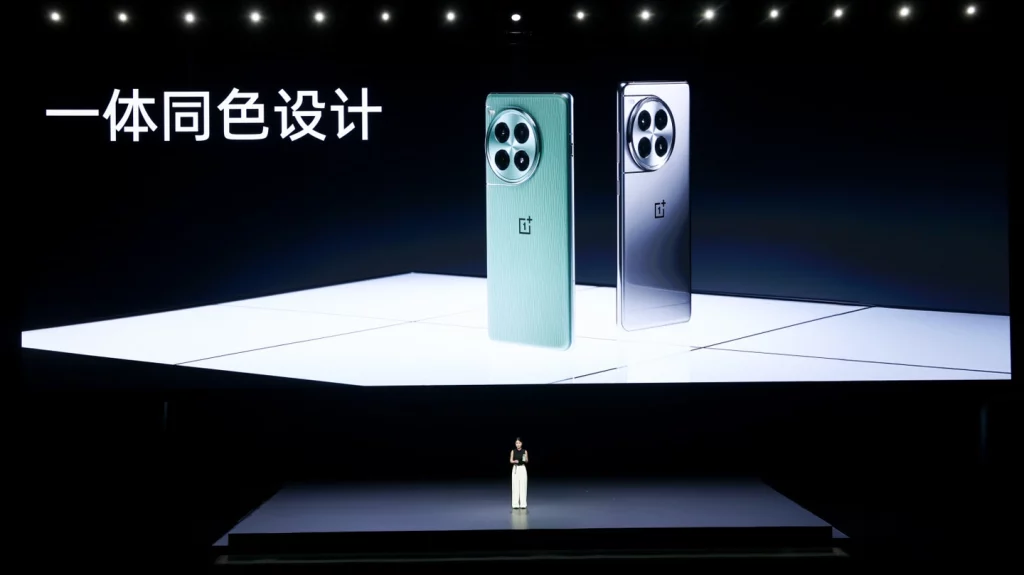
The OnePlus Ace 3 Pro has finally made an official debut. Earlier today, the company unveiled some information regarding the device themselves. With the official announcement, we now have all the data we need. Let’s see what the smartphone has to offer.
The Ace 3 Pro is the only Android phone to support 120 FPS gameplay in Genshin Impact
At the heart of the phone lies the powerful Snapdragon 8 Gen 3 processor, bolstered by an e-sports grade gaming discrete graphics chip. This powerhouse is paired with up to 24GB of LPDDR5X RAM and 1TB of UFS 4.0 storage, claiming smooth operation even after years of use thanks to OnePlus’s “memory gene recombination 3.0” and exclusive storage technology. Gamers will be extremely happy as the Ace 3 Pro is the only Android phone to support native 120 FPS gameplay in Genshin Impact.
OnePlus premieres the second generation of its Tiangong cooling system in the Ace 3 Pro. This innovative system features a new, expansive 9126mm² 10,000-level VC heat dissipation area, marking a 36% improvement over the previous generation. The phone further boasts the industry’s first 2K supercritical thermal conductive graphite for enhanced thermal conductivity and a low-temperature aerospace aluminum middle frame for comfortable long gaming sessions. AI global temperature control management adds another layer of precision cooling.
A stable gaming experience is ensured by the innovative dual golden gaming antenna that tackles signal obstruction caused by the human body.
Powering the device is a long-lasting 6100mAh glacier battery that supports 100W fast charging. Official tests suggest it can last up to two days on a single charge with moderate use. The stunning 1.5K “Oriental Screen” features an 8T LTPO circuit design and Rain Touch 2.0 technology for improved touch response in wet conditions. The phone is also IP65 dust and water resistant, boasts ultra-thin fingerprint unlocking, and prioritizes eye protection.
On the imaging front, the Ace 3 Pro features a powerful Sony IMX890 50-megapixel flagship main camera, complemented by the Find series’ flagship imaging algorithm. The OnePlus Ace 3 Pro comes in three standard colors: Titanium Mirror Silver, Green Field Blue, and Supercar Porcelain Collection. A limited-edition Supercar Porcelain Collector’s Edition is also available. Prices start at 3,199 yuan (approximately $440 USD) and go up to 4,599 yuan (approximately $632 USD) for the limited edition with the highest specs. The phone goes on sale starting July 3rd at 10 am.
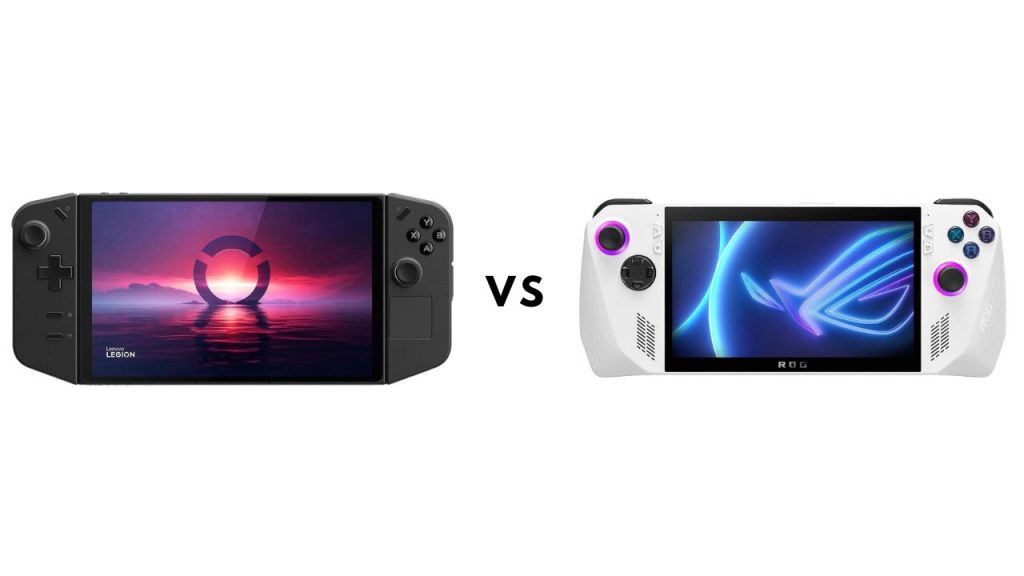
Handheld gaming consoles have become quite popular in recent years. There are many great options like the Nintendo Switch and the Steam Deck. But in India, gaming handhelds are mostly restricted to the gray market. So far, the ASUS ROG Ally is one of the few portable consoles that is sold in the market. Although, Lenovo is gearing up to release its own alternative. But how does the Lenovo Legion Go stack up against the ASUS ROG Ally? Let’s find out.
1. Lenovo Legion Go vs ASUS ROG Ally: Legion packs a taller screen
ASUS released the ROG Ally with a 7-inch IPS LCD panel with a Full HD resolution (1920 x 1080 pixels) and a 16:10 aspect ratio. This panel offers a 120Hz refresh rate, Corning Gorilla Glass Victus for protection, along with a variable refresh rate and low frame compensation support as well.
But while these are decent specs, Lenovo sought to bring a better visual experience on its own handheld console. The Legion Go sports a taller 8.8-inch IPS touchscreen display that has a WQXGA resolution (2560×1600 pixels). So you get sharper resolution along with a smoother 144Hz refresh rate panel and Corning Gorilla Glass 5 for protection.
2. Performance, Battery, & More
In terms of performance, both gaming handhelds are quite evenly matched, at least on paper. The Legion Go and ROG Ally are equipped with AMD’s Ryzen Z1 series processors. The former has the Ryzen Z1 Extreme while the latter is available in Ryzen Z1 and Z1 Extreme options. Lenovo pairs this chipset with 16GB of LPDDR5X RAM and up to 1TB of SSD storage. You also get an option to expand the storage via a microSD card slot.
On the other hand, the ROG Ally packs 16GB of LPDDR5 RAM but only 512GB of PCIe 4.0 NVMe M.2 SSD storage. These two models run on the Windows 11 OS out of the box. But another area where the Legion Go edges ahead of the ROG Ally is the battery. ASUS’ console is powered by a 40Wh battery that supports 65W charging. Meanwhile, a 49.2Wh cell runs the Legion Go with Super Rapid Charge support. But this difference shouldn’t impact battery life much considering the larger screen and higher resolution.
Since handheld consoles were built to be portable the weight also factors into the overall experience. Having said that, the ROG Ally weighs 608 grams, which is noticeably lighter than the massive Legion Go. Lenovo’s handheld weighs a hefty 856 grams, so let’s just say you’re getting a light workout.
3. Pricing
The pricing is another major aspect that could determine if the Legion Go is a good alternative to the ROG Ally. ASUS released its portable console for 69,990 INR or about 853 US Dollars for the Z1 Extreme variant (base Z1 costs 64,990 INR). The Legion Go will be announced in India for the first time on 1st July 2024, with its pricing set at 89,990 INR (roughly 1,079 US Dollars). With such similar specs, it seems hard to justify paying an additional 200 US Dollar premium for a slightly larger screen. The higher resolution is welcomed too, but not many graphically intensive games can take advantage of it. We can expect special launch offers and other sweet deals, so stick around for more updates.
Xiaomi has unveiled the MIJIA Disney Princess Limited Edition Hair Dryer in its home country. The scheduled launch event for the product coincides with the unveiling of the Xiaomi Civi 4 Pro Disney Princess Limited Edition smartphone.
The new Xiaomi high-speed hair dryer, MIJIA Disney Princess Limited Edition has a customized appearance highlighting a unique purple design. The handle of the hair dryer is decorated with a picture of the Disney Queen character. The new MIJIA customized hair dryer is understood to be the same model as the MIJIA H501 hair dryer which was launched in 2023. The H501 was originally priced at 279 yuan ($38) but is currently retailing at 249 yuan ($34). The MIJIA H501 comes with a pretty compact design and weighs 345g. The center of gravity of the device’s motor is below its handle, offering a reasonable weight distribution. The design allows the H501 to be used longer without any discomfort to the hands.
The hair dryer is equipped with a high-speed brushless motor with 7 extra-long air outlets that can rapidly generate an airflow of up to 62 m/s. The motor has a speed of 110,000 rpm and its wind speed is up to 5 times that of a low-speed hair dryer. The MIJIA Disney Princess Limited Edition Hair Dryer has a constant temperature of 57ºC which combines with its high-speed drying technology to offer effective drying of the hair and protection of the scalp. The exact pricing and availability details of the new limited-edition MIJIA high-speed hair dryer are not out yet.
Today OnePlus launched the performance-focused Ace 3 Pro smartphone in China, which equips the Snapdragon 8 Gen 3 chipset. Li Jie, the President of OnePlus China has shared his views about the newly launched device through a Weibo post. He also noted the key parameters of the device.
A performance-oriented smartphone that starts from 3,199 Yuan (~$440)
Li Jie notes that the OnePlus Ace Pro devices are priced in the range of 3,500 Yuan – 4,500 Yuan (~$480 – ~$620), which makes them a good choice for people who seek value-for-money offerings. Someone asked in the comment section whether the new phone will cost more than 3000 Yuan and Li Jie clearly stated that the price of the phone is definitely more than 3,000 Yuan. The Ace 3 Pro has now launched and it starts from 3,199 Yuan (~$440). The first sale will begin on July 3.
As he noted, the Snapdragon 8 Gen 3 chipset is paired with 24GB RAM and 1TB storage. For sustainability, it packs a 9126mm² VC cooling system. The aerospace aluminum middle frame also reportedly helps dissipate the heat to the outer environment. According to the company official, the phone can play games at native 120fps, however, he didn’t mention specific titles in his post.
He also mentioned that this ColorOS14-powered device comes equipped with special features like Live Photo, Tidal Architecture, and some AI features.
The Ace 3 Pro equips a massive 6100mAh “Glacier Battery” and supports 100W fast charging.
On the front, the phone packs a 6.78″ 8T LTPO “Oriental Screen”. The panel has a 1.5K resolution and can reach a peak brightness of 4500 nits. It also supports a 100 percent DCI-P3 color gamut, HDR10+. On the back of the phone packs a 50MP + 8MP + 2MP camera setup. While previously sharing image samples of the Ace 3 Pro, Li Jie revealed that the company is using the Oppo Find series’ image processing algorithm in this device.
The OPPO Reno 12 series has already debuted in China and global markets. However, it is still yet to make its way to the Indian shores. Now, the brand has confirmed the Reno 12 5G and Reno 12 Pro 5G’s arrival in the country alongside revealing some key details about AI features. The microsite of the upcoming offering has also gone live on the company’s website as well as Flipkart. The latter confirms the Reno 12 series’s availability from the e-commerce platform.
OPPO Reno 12 series India launch confirmed with AI feature
The OPPO Reno 12 series will feature a flat frame and a rectangular camera island on the back panel. The core specifications of the smartphones have not been revealed but we can expect it to be the same as the global variants. OPPO has also not announced the launch date of the Reno 12 series yet.
The OPPO Reno 12 series is confirmed to come with a host of AI features. The brand is teasing the Reno 12 5G and Reno 12 Pro 5G as ‘Your everyday AI companions’. In terms of photography, it will come with AI Eraser 2.0 which will allow removing unwanted elements from pictures whereas the AI Best Face will ensure that your poses don’t turn out awkward in group photos. The phones will also pack AI Studio based on GenAI that will create a stylized portrait in only one photo.
The OPPO Reno 12 series will also come with productivity-based AI features. The AI Recording Summary is said to be co-developed with Google and Microsoft and it will be capable of summarizing recordings up to 5 hours. Meanwhile, the AI Summary will provide key highlights of long content. The AI Writer will help you write smartly.
The OPPO Reno 12 series is confirmed to come with AI-loaded voice calling and connectivity features. The AI Clear Voice will reduce background noise by up to 40 dB. The smartphones will come with an industry-first feature called BeaconLink that will allow voice calls via Bluetooth connectivity in case there is a low cellular network or no signal at all.
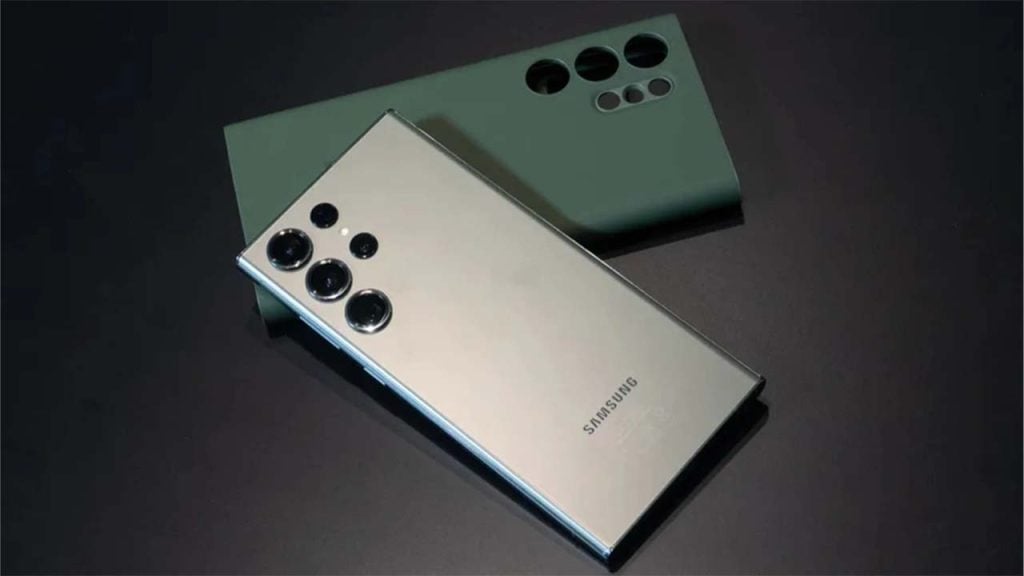
A new rumor from South Korea suggests a major shift for Samsung‘s upcoming flagship line. The Galaxy S25, expected in January 2025, might move away from its usual strategy of using only Qualcomm Snapdragon and Samsung Exynos processors.
Instead, the S25 could also utilize MediaTek’s Dimensity chips, specifically the Dimensity 9400, alongside the traditional options. It would be a significant change, if and only if this pans out, equipping the Galaxy S25 with three different SoCs.
However, it’s important to note that this is purely speculative. The rumor suggests that Samsung is considering this change, but nothing has been confirmed yet.
The reasons behind choosing MediaTek is because of rising costs for Qualcomm’s next-generation Snapdragon 8 Gen 4 and production issues with Samsung’s Exynos 2500.
The Snapdragon 8 Gen 3 reportedly costs around $190-200 per unit, with the 8 Gen 4 reaching $260. This significant price increase could strain Samsung’s margins.
Additionally, the Exynos 2500 is said to be facing production challenges, currently achieving only a 40% yield rate. Mass production typically requires a 60% yield, and while Samsung aims to improve this by August, there is still uncertainty.
Given these factors, MediaTek does seem like an attractive option for Samsung. Especially considering that Dimensity chips are known for being more affordable than their Snapdragon counterparts.
Moreover, the upcoming Dimensity 9400 is rumored to use the same 3nm N3E manufacturing process as the Snapdragon 8 Gen 4, possibly offering similar performance.
Another aspect to consider is negotiation leverage. By introducing MediaTek as a viable alternative, Samsung could pressure Qualcomm to offer more competitive pricing for the Snapdragon 8 Gen 4.
Ultimately, the Galaxy S25’s processor situation remains unclear. While the inclusion of MediaTek is an intriguing possibility, it’s too early to draw definitive conclusions.
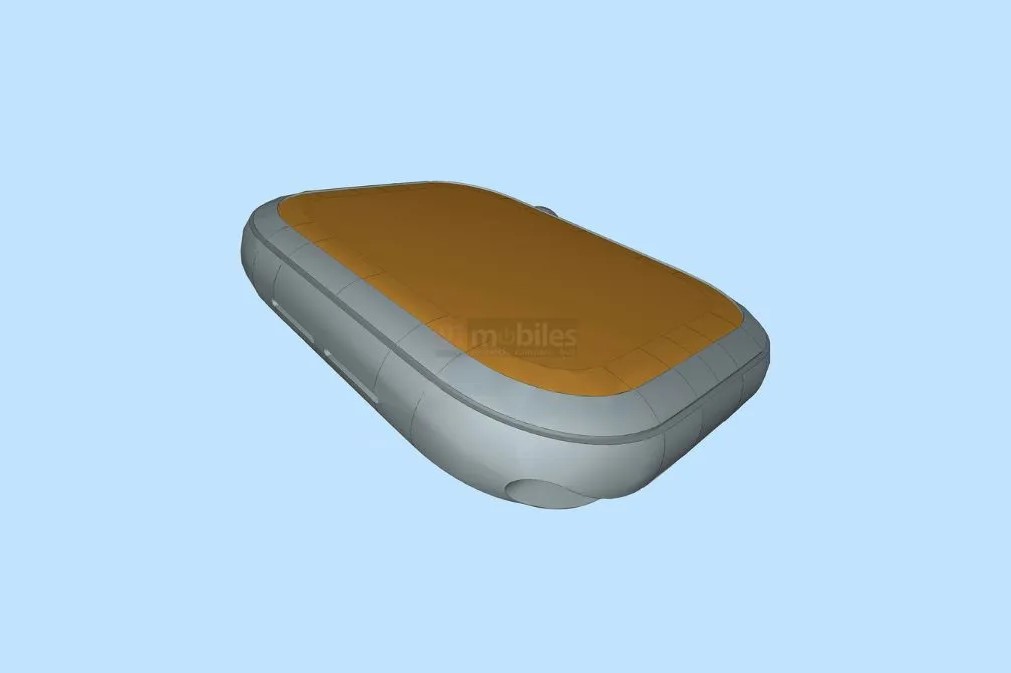
Apple’s annual Fall event is a few months away. As usual, it will see the launch of the next-generation iPhones and Apple Watch. This year marks the tenth anniversary of the Apple Watch with a special offering reportedly labelled Watch X on the cards. Past reports suggest that the Cupertino-based tech giant may introduce a major overhaul to the Watch Series 10 including a thinner design and larger display. Now, raw CAD-based renders give us a first glimpse at this year’s Watch Series 10. It’s worth noting that there is still no clarity between Watch Series 10 and Watch X.
Apple Watch Series 10 leaked CAD-based renders
As per the leaked renders, the Apple Watch Series 10 will feature a familiar design as its predecessors. It will have a square dial with a rotating crown on the top right side and a physical button below it.
Coming to the changes, the Apple Watch Series 10 is seen with a bigger display. It will reportedly feature a 2-inch screen which is quite an upgrade from the 1.7-inch on the Watch Series 9. Additionally, the Watch Ultra 2 has a 1.93-inch display. This will make the upcoming offering the biggest screen Apple Watch so far. The increase in screen size will result in to increased dimensions of the smartwatch. Dimensions-wise, it will measure 46 x 39.7 x 11.6mm making it bigger than the Watch Series 9 but smaller than the Watch Ultra. In other words, it will sit between the two models.
As for the confusion between the Apple Watch Series 10 and Watch X, the CAD-based renders don’t seem to reveal any significant overhaul on the former. Hence, it could be a minor refresh with the Watch X coming out as an anniversary model. Previously, it was reported that the Watch X could feature a magnetic band attachment system which is not seen in the renders.
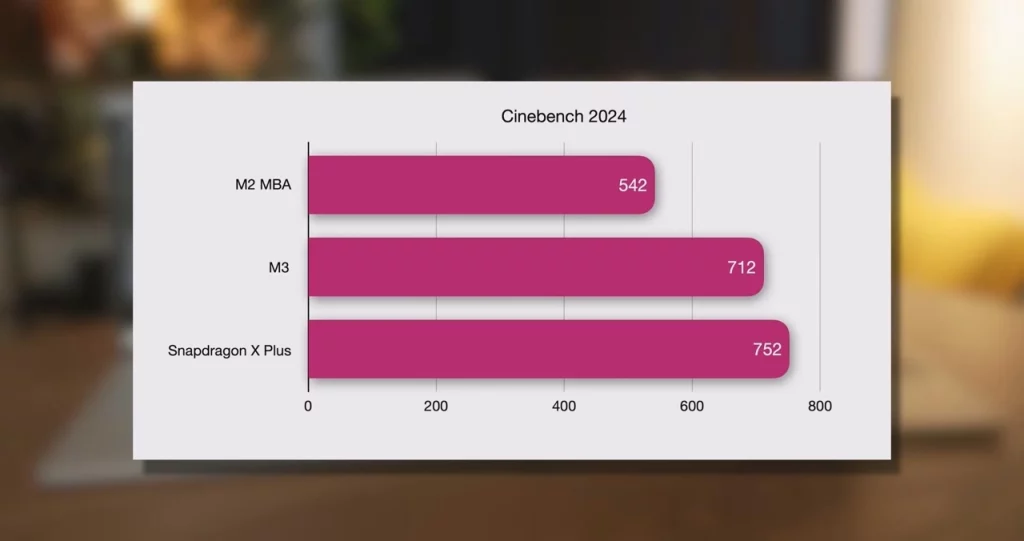
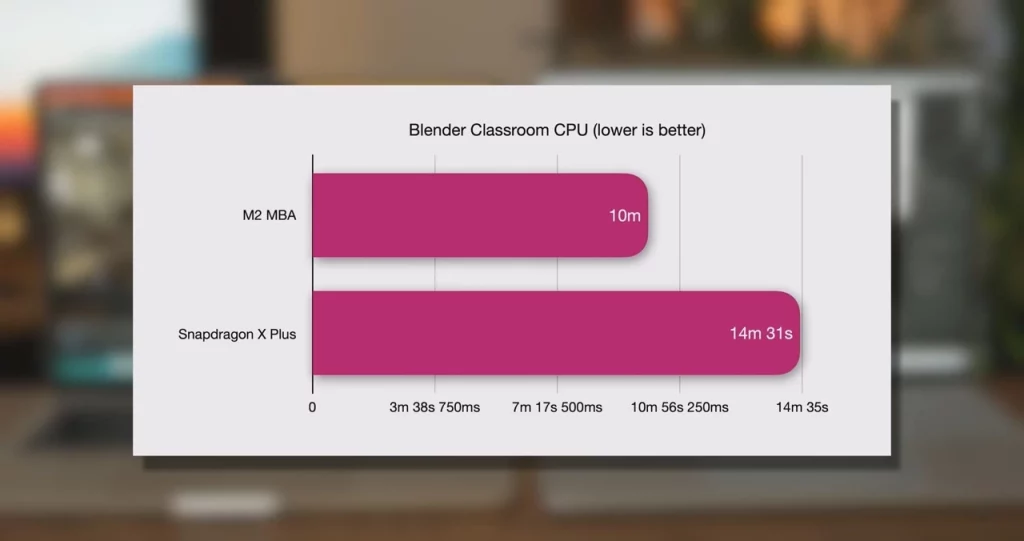
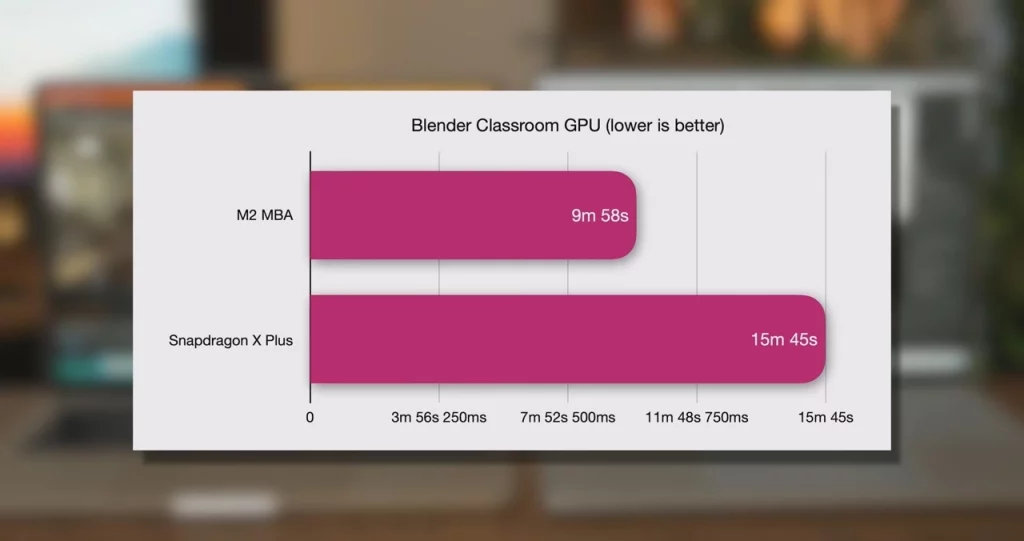
The new Snapdragon X Plus-powered Surface Laptop 7th Edition was compared with the M2-powered Apple MacBook Air by YouTube creator Luke Miani. He used Cinebench to measure the CPU capability of the machines and the results are somewhat shocking. However, in some areas, the M2 MacBook Air still performed better than the Surface Laptop. So let’s take a look.
Battery life and performance
Luke Miani ran Cinebench twice, 10 minutes each time, for a total of 20 minutes. The test shows that the power efficiency of Apple Silicon is still superior to Qualcomm’s new offering. When the M2 MacBook Air lost 10% of its battery during testing, the Snapdragon X Plus-powered Surface Laptop 7th Edition was already down to 65%.
Speaking of the battery capacity, there is not much of a difference between the two machines. The M2 MacBook Air is equipped with a 52Wh battery, while the Surface Laptop 7th Edition is equipped with a 54Wh battery. So the result we saw was due to the significantly higher power consumption of the Snapdragon X Plus during the testing. On the other side, the keyboard area of the Surface Laptop reached 45°C while the MacBook Air was at 36°C. You should also keep in mind that the Surface Laptop has an active cooling mechanism.
However, in Cinebench, the Surface Laptop also achieved a significantly higher score as compared to the M2 MacBook Air. It even outperformed the M3 MacBook Air in the test. Nonetheless, the Snapdragon SoC is still new and needs some work in different aspects. You can see the results below (lower is better).
While the Cinebench test highlighted the power efficiency difference between the two chips, the Surface Laptop performed relatively better in normal video streaming when it comes to battery life. With a total of 7.5 hours of video playback the MacBook Air reached 36% while the Surface Laptop was at 12%.
Xiaomi has unveiled a new addition to its Mijia line – a cold water kettle designed for convenient refreshment during the hot summer months. The kettle is currently available for purchase in China at a price of 79 yuan (approximately $11). Let’s check out its key specs.
Xiaomi Mijia Cold Water Kettle Specifications:
The Mijia Cold Water Kettle boasts a space-saving flat body design measuring only 95mm wide, allowing it to fit perfectly into the side door of your refrigerator. This thoughtful design maximizes refrigerator space and ensures the kettle stays cool for easy access to refreshing beverages.
The kettle comes with a leakproof design, achieved through a silicone sealing ring and threaded mouth, allowing you to store the kettle horizontally or even upside down without worrying about spills.
The kettle features a built-in cold brew filter compartment. This compartment allows you to cold brew tea, brew hot beverages, or even use it for low-temperature fermentation. When not using the cold brew function, the filter compartment can be conveniently removed for regular cold water use.
It comes with a 300-mesh filter screen that ensures a clear and flavorful drinking experience by filtering out tea leaves, fruits, coffee grounds, and other unwanted particles. The kettle body itself is crafted from food-grade AS material, known for its durability, resistance to breakage, and safety for storing beverages.
It can withstand temperatures ranging from -10°C to 92°C, making it suitable for a variety of drink preparations. However, users are advised not to expose the filter compartment to hot water as it may deform under heat.
The kettle also comes with a 90-degree rotating lid that allows for easy pouring without removing the entire lid, while the V-shaped spout ensures smooth and even water flow, preventing splashes. Additionally, the kettle features built-in scale units for precise water measurement, ideal for creating perfect drink ratios.
For easy cleaning and maintenance, the kettle boasts a wide opening and a comfortable ergonomic handle. The filter compartment lid also features a handle for convenient removal.
The Honor Magic V2 still has the title of the world’s slimmest horizontal folding phone. It launched in July last year measuring just 4.7mm and 9.9mm thick when unfolded and folded respectively. Now, the brand is readying the foldable phone’s successor. Honor has shared an official teaser of the Magic V3 on the microblogging platform Weibo revealing some key details.
Honor Magic V3 will take the foldable phone’s thickness to next level
The Honor Magic V3 is touted to be an ultra-thin and versatile folding phone. The company continues to deepen its research and innovation in the field of folding screens. Honor isn’t stopping even after the Magic V2’s achievement in the thickness aspect. The Weibo post shows the phone how slim it looks when folded along with a protruding camera island on the back panel. Surprisingly, the Magic V2 and even its upcoming successor are thinner than many slab phones in the market.
The exact dimensions of the Honor Magic V3 remain unknown at the moment. But we can definitely expect it to be thinner than its predecessor.
In a separate post, Honor also confirmed that the Magic V3 will come with AI features like AI eye protection and AI anti-fraud. The foldable phone is teased to be coming soon. So we can expect to learn more details about the device in the coming days. The Magic V3 is rumoured to launch next month in China.
As per leaks, the Honor Magic V3 is tipped to be powered by a Snapdragon 8 Gen 3 SoC. It is speculated to be backed by a large 5,000mAh battery unit despite having a slim form factor. As per a 3C certification listing, the foldable phone will reportedly support 66W fast charging and also satellite connectivity.
OpenAI’s decision to block access for China-based developers will reshape the AI landscape in the region. Industry insiders and analysts believe this move will not hinder but rather accelerate the growth of the Chinese AI sector.
Zhou Hongyi, CEO of Qihoo 360, anticipates that the ban will drive Chinese users towards local AI models. Qihoo 360 has already developed its large language model (LLM). Despite OpenAI’s services being officially unavailable in China, developers have been using VPNs and APIs to bypass restrictions. However, the new ban is prompting a swift response from Chinese tech firms eager to capitalize on the opportunity.
In reaction to OpenAI’s ban, several Chinese companies are offering incentives to attract developers. Beijing-based Zhipu AI, for example, has launched a “special house-moving plan” to facilitate the transition to its platform. Major firms like Alibaba, Baidu, Baichuan, and 01.ai are also providing various perks, including discounts, freebies, and technical support. Baidu is offering free AI model fine-tuning and 50 million free tokens, while SenseTime Group Inc. is providing 50 million free tokens and Zhipu AI is giving away 150 million tokens along with training sessions.
source:openai.com
The ban could significantly impact the market, leading to an exit of smaller startups that emerged during the “battle of a hundred models.” There are concerns about whether other open-source models, like Meta’s Llama, will also cut off access to Chinese developers.
OpenAI’s move will likely benefit local LLMs by reducing competition, but Chinese developers might face challenges accessing advanced global algorithms. This aligns with the US government’s efforts to limit Chinese access to advanced AI and semiconductor technology, impacting the broader US-China tech competition.
In the long term, the lack of access to global tools may slow down Chinese AI progress. Alibaba Chairman Joe Tsai estimates it will take two years for Chinese AI models to match their US counterparts. This situation might also accelerate the migration of Chinese tech startups overseas to find more stable markets.
Microsoft, however, is maintaining access to OpenAI models for eligible Hong Kong customers through its Azure cloud platform, with no changes to Azure OpenAI service offerings in Hong Kong. This continues to provide some developers in the region with the tools they need.
Overall, OpenAI’s ban is not a setback but a catalyst for growth and transformation in the Chinese AI sector. With over 200 home-grown LLMs, including 117 approved for public release, China is poised to strengthen its position in the global AI industry.
Amid various rumors and reports, The Redmi K70 Ultra has officially been teased by a senior executive of Xiaomi. The upcoming device is highly anticipated in China. But ahead of its release, the device will arrive with a water and dust resistance body. So here are all the details.
Redmi K70 Ultra comes with an IP68 rating
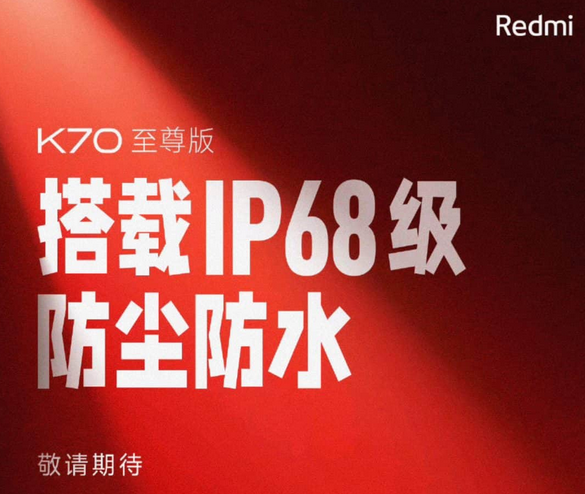
The Chinese tech giant’s Wang Teng (General Manager of Redmi) shared a poster image, which confirmed support for the IP68 rating. This means that the Redmi K70 Ultra is water resistant in fresh water to a maximum depth of 1.5 meters for up to 30 minutes. It is also protected from dust so the user does not need to worry about an extra case.
The senior official also added that this makes it perfect for users who love to travel during the summer. To recall, the Redmi K70 Ultra was spotted on the IMEI database earlier this month with the 2407FRK8EC model number. Just recently, a Weibo tipster confirmed some of the key specs and features of this new device. The smartphone will reportedly pack a MediaTek Dimensity 9300+ SoC. Since the Redmi K70 Pro launched last November with the Snapdragon 8 Gen 3 chip, it seems like Redmi is moving away from Qualcomm for its flagship model.
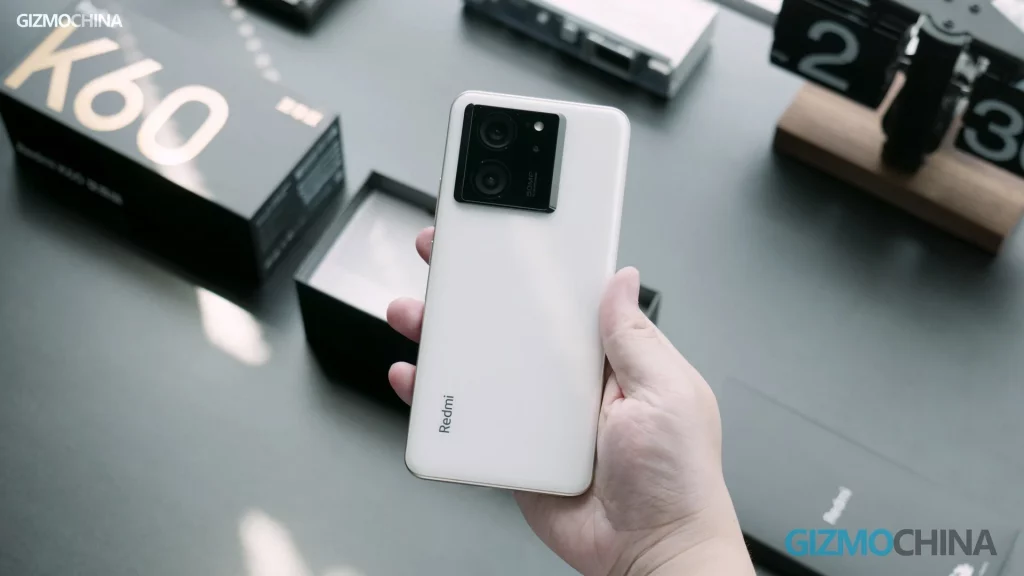
Redmi K60 Ultra
The high-end Dimensity chip is paired with up to 24GB of LPDDR5X RAM and 1TB of UFS 4.0 storage. A large 5,500mAh battery pack is expected to power this device, which may offer a 120W wired fast charging. The front sports an 8T OLED display that offers 1.5K resolution and a 144Hz refresh rate. This screen is surrounded by a metal middle frame, while the back has a glass panel. For optics, you get a 50MP + 8MP + 2MP triple camera setup on the back. This is all the information we have at the moment, so stick around for more updates.
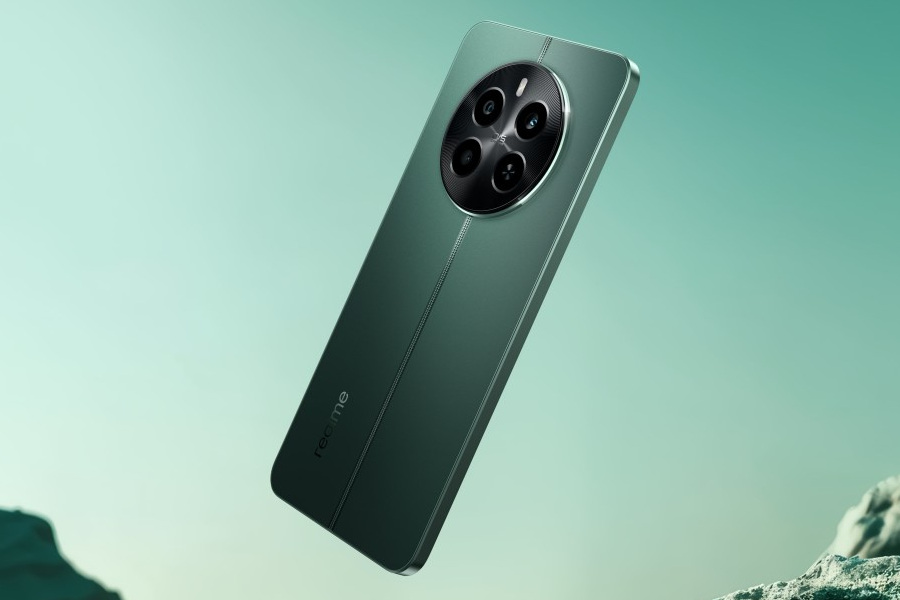
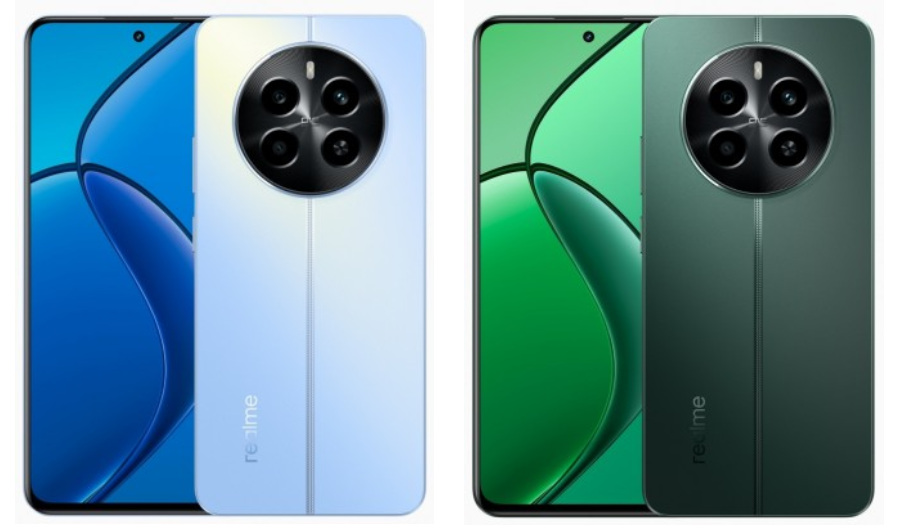
Following a two-year hiatus, Realme’s number has re-entered the Pakistani smartphone market with two new devices – the Realme 12+ and the Realme 12 4G.
While the 12+ mirrors the global model with its Dimensity 7050 and 5G capabilities, the 12 4G is the Realme 12 line. Let’s walk through its specifications and price here.
Realme 12 4G Specifications
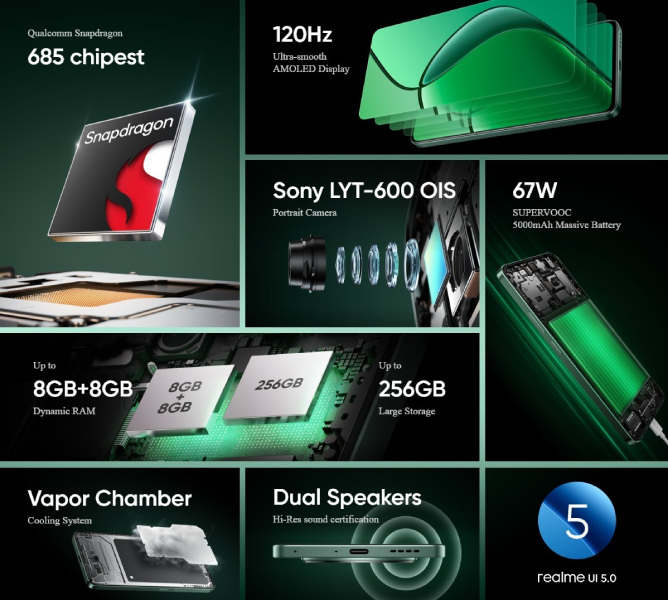
The Realme 12 4G features a 6.67-inch OLED panel with a 120Hz refresh rate and 1080 x 2400px resolution. The display can reach a peak brightness of 2,000 nits, is protected by an unnamed strengthened glass, and has an under-display fingerprint sensor. The front also has a punch-hole cutout for a 16MP camera.
On the back, the phone has a 50MP Sony LYT-600 sensor with f/1.9 aperture and OIS support. Accompanying the main camera is a 2MP depth sensor.
Powering the device is the Snapdragon 685, a 6nm processor with four high-performance cores clocked up to 2.8 GHz (Kryo 265 Gold – based on Cortex-A73) and four power-efficient cores running at up to 1.9 GHz (Kryo 265 Silver – based on Cortex-A53). Memory options include 8GB of RAM and 128/256GB of storage.
Realme is also offering a dedicated microSD slot for storage expansion alongside dual SIM card slots, a 3.5mm headphone jack for wired audio, and dual speakers for stereo sound. The phone also has an IP54 dust and water resistance rating.
The battery capacity is 5,000mAh which supports faster 67W charging. Realme claims the phone can reach 50% charge in just 19 minutes and achieve a full charge in 47 minutes. The phone comes bundled with an even faster 80W charger.
Pricing and Availability
The Realme 12 4G comes in two storage options: 8GB/128GB and 8GB/256GB. The pricing starts at PKR 60,000 (approximately USD 215, EUR 200, or INR 18,000). It will be available for purchase through Shopee, Lazada, and TikTok platforms alongside Realme 12+.
Samsung announced the Exynos 1380 mobile chipset in February 2023, whereas the Snapdragon 778G 5G chip was announced in May 2021. Despite being a three-year-old chip, Snapdragon 778G 5G is still popular among mid-range phones.
The Exynos 1380 is another powerful mid-range chip built using Samsung’s 5nm process node. Both chipsets look strong on the spec sheet and target the same user segment, making it a little more work to pick the right one.
In this post, we’ll compare the Exynos 1380 and Snapdragon 778G 5G mobile chipsets and find out how they stack up against each other.
Here’s the spec sheet for a quick overview:
Exynos 1380
SD 778G 5G
Release Date
Feb 2023
May 2021
Process Node
5 nm Samsung
6 nm TSMC
CPU
4 x Cortex-A78 @ 2.4 GHz 4 x Cortex-A55 @ 2.0 GHz
1 x Kryo 670 Prime (Cortex-A78) @ 2.4 GHz 3 x Kryo 670 Gold (Cortex-A78) @ 2.4 GHz 4 x Kryo 670 Silver (Cortex-A55) @ 1.8 GHz
GPU
Mali-G68 MP5
Areno 642
NPU
Yes, 4.9 TOPS
Hexagon 770, 12 TOPS
Memory
Up to 8GB LPDDR5 RAM 3200 MHz (frequency)
Up to 16GB LPDDR5 RAM 3200 MHz (frequency)
Storage
UFS 3.1
UFS 3.1
Camera
200MP single camera 64MP (ZSL) single camera 16+16+16 MP triple cameras
200MP single camera 64MP (ZSL) single camera 36+22 MP (ZSL) dual cameras 22+22+22 MP (ZSL) triple cameras
Video Recording
4K @ 30 fps
4K @ 30 fps 720p slow-mo @ 240 fps
Display
FHD+ @ 144Hz
FHD+ @ 144Hz
Connectivity
5G, Wi-Fi 6, Bluetooth 5.3
5G, Wi-Fi 6, Bluetooth 5.2
Benchmarks
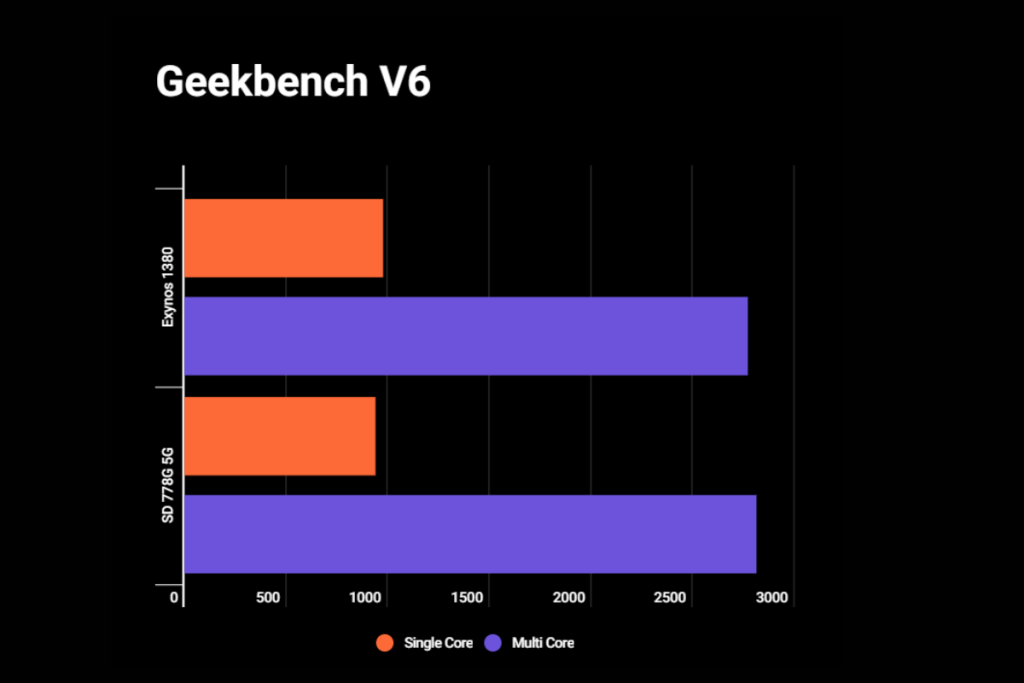
[Geekbench 6]
Exynos 1380
Single core: 979
Multi core: 2771
Snapdragon 778G 5G
Single core: 939
Multi core: 2811
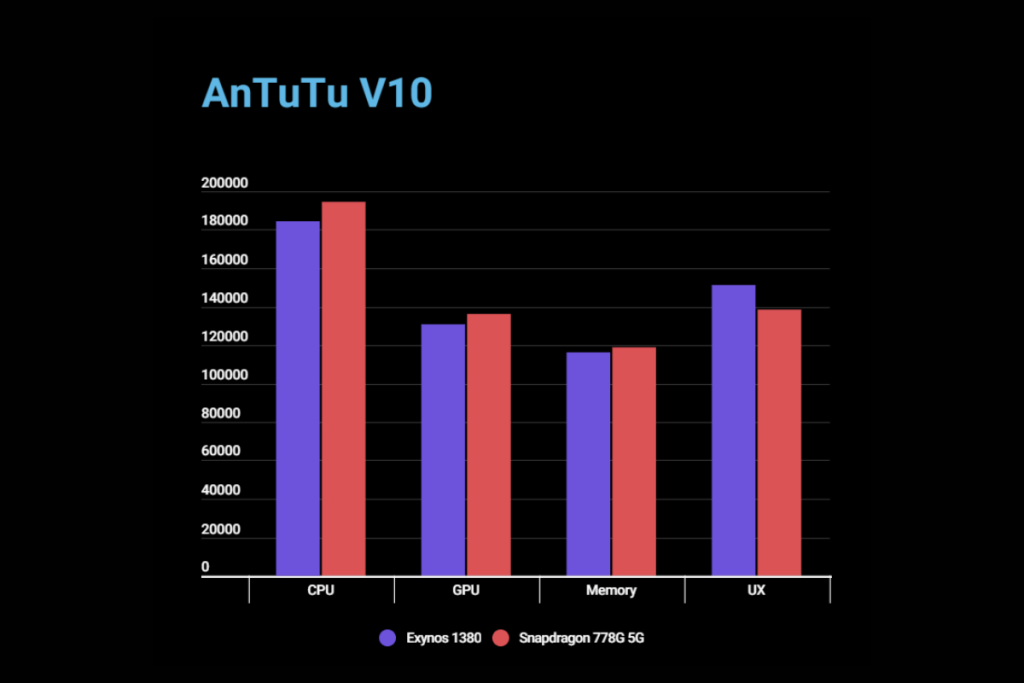
[AnTuTu V10]
Exynos 1380
CPU: 184416
GPU: 130783
Memory: 116200
UX: 151230
Total score: 582629
Snapdragon 778G 5G:
CPU: 194499
GPU: 136185
Memory: 118841
UX: 138451
Total score: 587976
CPU Performance
Both Exynos 1380 and Snapdragon 778G 5G are octa-core chips, although they have different core clusters. The Exynos chip has four Cortex-A78 performance cores clocked at 2.4 GHz and four Cortex-A55 power-efficient cores with 2.0 GHz clock speed.
The Snapdragon chip has one Kryo 670 Prime (Cortex-A78) core running at 2.4 GHz, three Kryo 670 Gold (Cortex-A78) at the same clock speed, and four Kryo 670 Silver (Cortex-A55) running at 1.8 GHz.
On the Geekbench platform, which measures CPU performance, both chips have obtained similar scores in single-core and multi-core tests. However, the CPU test on AnTuTu tests favours Snapdragon 778G 5G over Exynos 1380 by a small margin.
GPU & NPU Performance
The Exynos 1380 chipset has Mali-G68 MP5 GPU, while the Snapdragon 778G 5G chip has Adreno 642 to handle graphics tasks. Both are capable GPUs for lightweight to medium gaming needs. However, the Adreno 642 (in Snapdragon 778G 5G) has a slight edge over the Mali-G68 MP5 (in Exynos 1380) on GPU benchmarks, such as 3D Mark WildLife Extreme.
The Snapdragon 778G 5G also has an AI advantage as the Hexagon 770 inside the chip can perform 12 trillion operations per second (TOPS), while the NPU in Exynos 1380 has 4.9 TOPS capacity.
Camera Capabilities
Both Exynos and Snapdragon chips have a triple image signal processor (ISP). It’s the Spectra 570L on the Snapdragon chip, but Samsung hasn’t revealed the name of the ISP.
Both chips support up to 200-megapixel single camera and up to 64-megapixel single camera with zero shutter lag. The Snapdragon chip also supports zero shutter lag for 36-megapixel + 22-megapixel dual cameras and 22-megapixel + 22-megapixel + 22-megapixel triple cameras.
The chipsets support up to 4K video recording at 30 frames per second (fps). The Snapdragon chip also supports 720p slow-mo videos at 240 fps.
Connectivity Features
Both Exynos 1380 and Snapdragon 778G 5G chips have all the necessary connectivity features like 5G, Wi-Fi 6, Bluetooth (5.3 on Exynos, 5.2 on Snapdragon) and satellite systems (GLONASS, Beidou, GPS, QZSS, Galileo).
The Exynos chip has an integrated 5G modem, offering up to 3.79 Gbps of download speed and up to 1.28 Gbps of upload speed. The Qualcomm 778G 5G, on the other hand, has a Snapdragon X53 5G modem with 3.7 Gbps maximum download speed and 1.6 Gbps maximum upload speed.
Miscellaneous
Both Snapdragon 778G 5G and Exynos 1380 support Full HD+ resolution display with up to 144Hz refresh rate. They don’t differ in terms of display capabilities.
Both chips also support UFS 3.1 storage and LPDDR5 RAM, although the Snapdragon chip supports higher RAM of 16GB RAM (vs. 8GB on Exynos 1380).
Exynos 1380 vs Snapdragon 778G 5G: Which is Better?
Snapdragon 778G 5G and Exynos 1380 are good mid-range chipsets. Both have similar CPU performance. However, the Snapdragon chip has a slight GPU advantage, resulting in better gaming performance. It also has a better NPU with higher TOPS than Exynos 1380.
Exynos 1380’s advantages include a newer Bluetooth standard and an advanced fabrication process that results in better power efficiency.
Choosing one of these two chipsets really comes down to your needs. But If I had to pick one, I’d go with the Snapdragon 778G 5G.
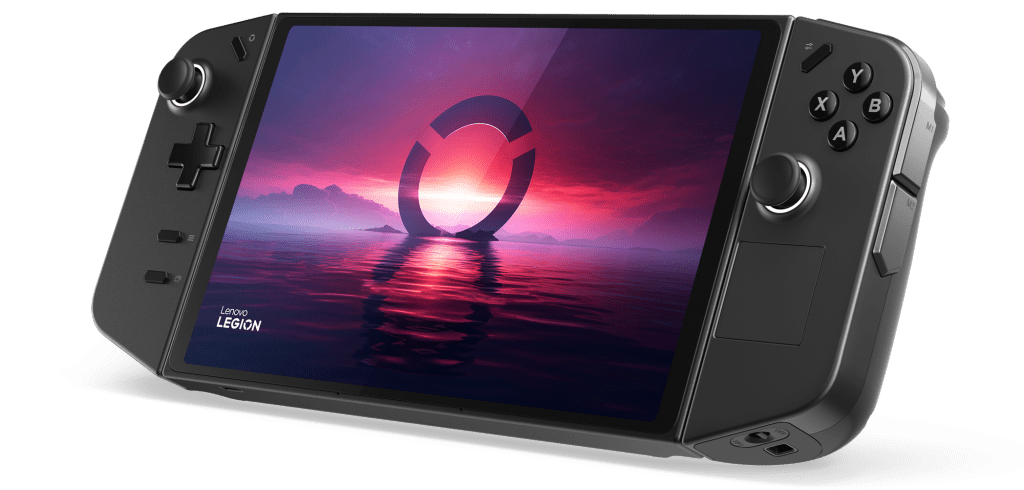
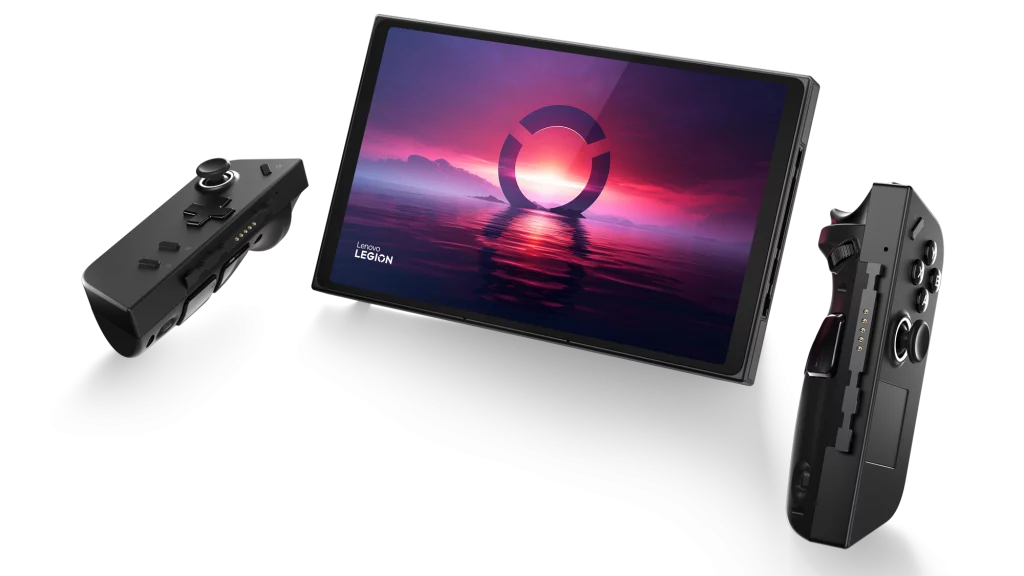
Lenovo has launched its first Windows-based handheld console, Legion Go, in India. The device runs on Windows 11, offering a familiar PC experience in a portable form factor. It also features detachable controllers for enhanced portability. Let’s get into Lenovo Legion Go’s complete specifications and price in India here.
Specifications
The Legion Go boasts an 8.8-inch IPS touchscreen display with a WQXGA resolution (2560×1600 pixels) for sharp visuals. The display features a 144Hz refresh rate for smooth gameplay and is protected by Corning Gorilla Glass 5 for increased durability.
Under the hood, the device is powered by an AMD Ryzen Z1 Extreme processor paired with 16GB of LPDDR5X RAM. Storage options go up to 1TB SSD, with a microSD card slot for additional expandability.
Controllers are a key feature for any handheld gaming device, and the Legion Go offers a familiar layout with Hall Effect joysticks for precise control. Uniquely, the left and right controllers can detach from the main unit, allowing for a more traditional console experience or use in a detached mode.
The right controller can even transform into an ergonomic mouse. Both controllers also feature a small buttonless touchpad for additional navigation options.
In terms of connectivity, the Legion Go offers Wi-Fi 6 and Bluetooth 5.1 for seamless online gaming and accessory pairing. The device also includes two USB 4 Type-C ports, two Pogo pin connectors, a headphone jack, and the aforementioned MicroSD card reader.
Lenovo claims the Legion Go is equipped with a 49.2Wh battery with Super Rapid Charge support, allowing it to be charged from 0 to 100% in 80 minutes. The entire unit measures 298.83 x 131 x 40.7 mm and weighs 854g.
Price and Availability
The Lenovo Legion Go will be available for purchase starting July 1st in India. It will be sold in a single Shadow Black colorway and can be purchased from Flipkart, the Lenovo website, and select Lenovo-exclusive stores. The price is set at Rs. 89,990 and includes a one-year accidental damage protection plan and a free screen protector.
OnePlus is set to launch the OnePlus Pad Pro later today in China (27th June 2024). This tablet model would bring improved hardware over the existing OnePlus Pad. But ahead of its official launch, a fresh leak revealed live images of this upcoming tablet.
OnePlus Pad Pro Live Images
The latest leak arrives from known tipster Digital Chat Station who shared the images on Weibo (a Chinese microblogging website). Looking at these images, we can see that the OnePlus Pad Pro appears quite similar to the base Pad model. It also retains the premium all-metal body. In other words, the only refresh is for the internals. The selfie and rear camera placement are basically identical and the light green color option is back as well.
For those unaware, the Chinese brand is set to unveiled a bunch of products in China alongside the OnePlus Pad Pro. Based on what we know, this model will sport a tall 12.1-inch LCD panel that offers a 3K resolution, a 144Hz refresh rate, and a 7:5 aspect ratio. Under the hood, it is expected to be equipped with the Qualcomm Snapdragon 8 Gen 3 SoC, which is paired with 16GB of RAM and 512GB of internal storage. A massive 8,510mAh battery pack could power the device, and it may support 67W wired fast charging.
The OnePlus Pad Pro is rumored to launch in four storage configurations in total. This includes 8GB + 128GB, 8GB + 256GB, 12GB + 256GB, and 16GB + 512GB variants. The tablet has an upgraded keyboard accessory that supports NFC as well, which can be seen in the live images. For optics, the front packs an 8-megapixel selfie shooter, while the rear has a 13-megapixel camera. So stick around for more, as we will be covering the launch event where the Ace 3 Pro and Pad Pro will be released.
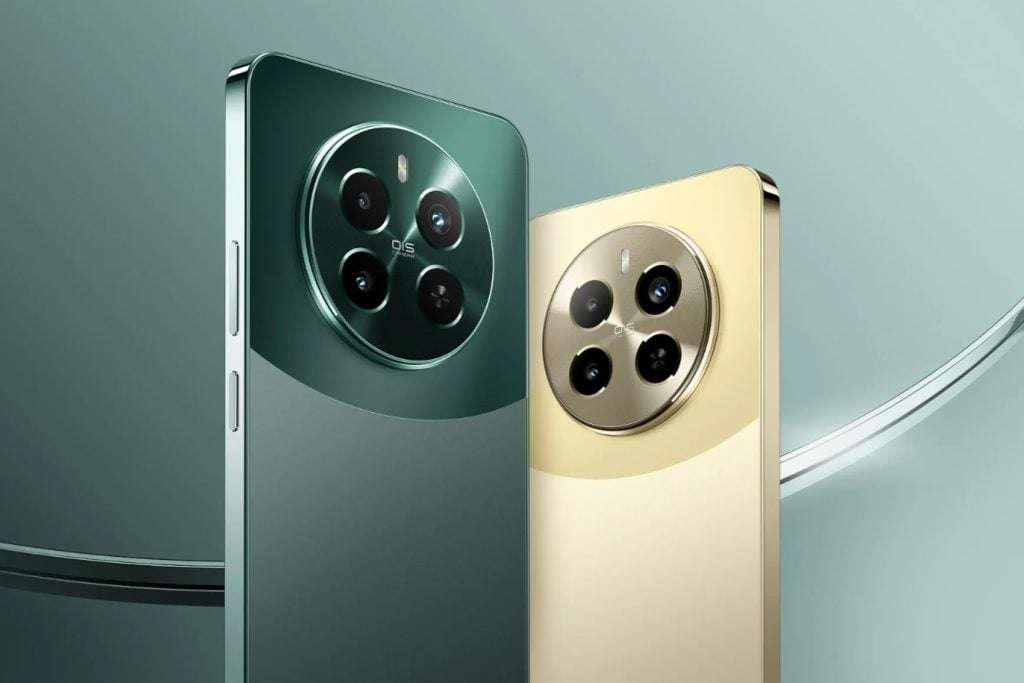
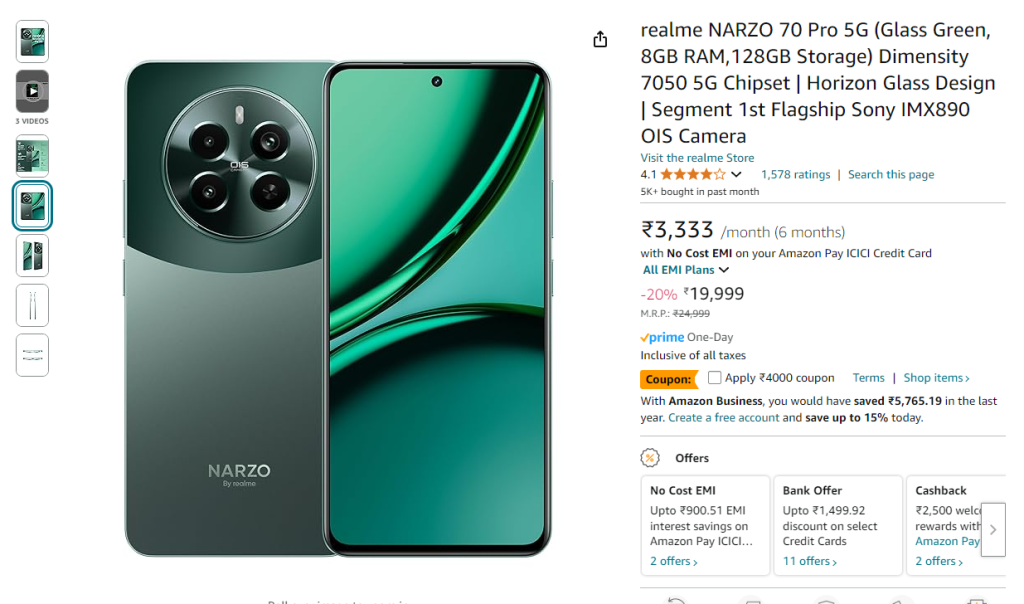
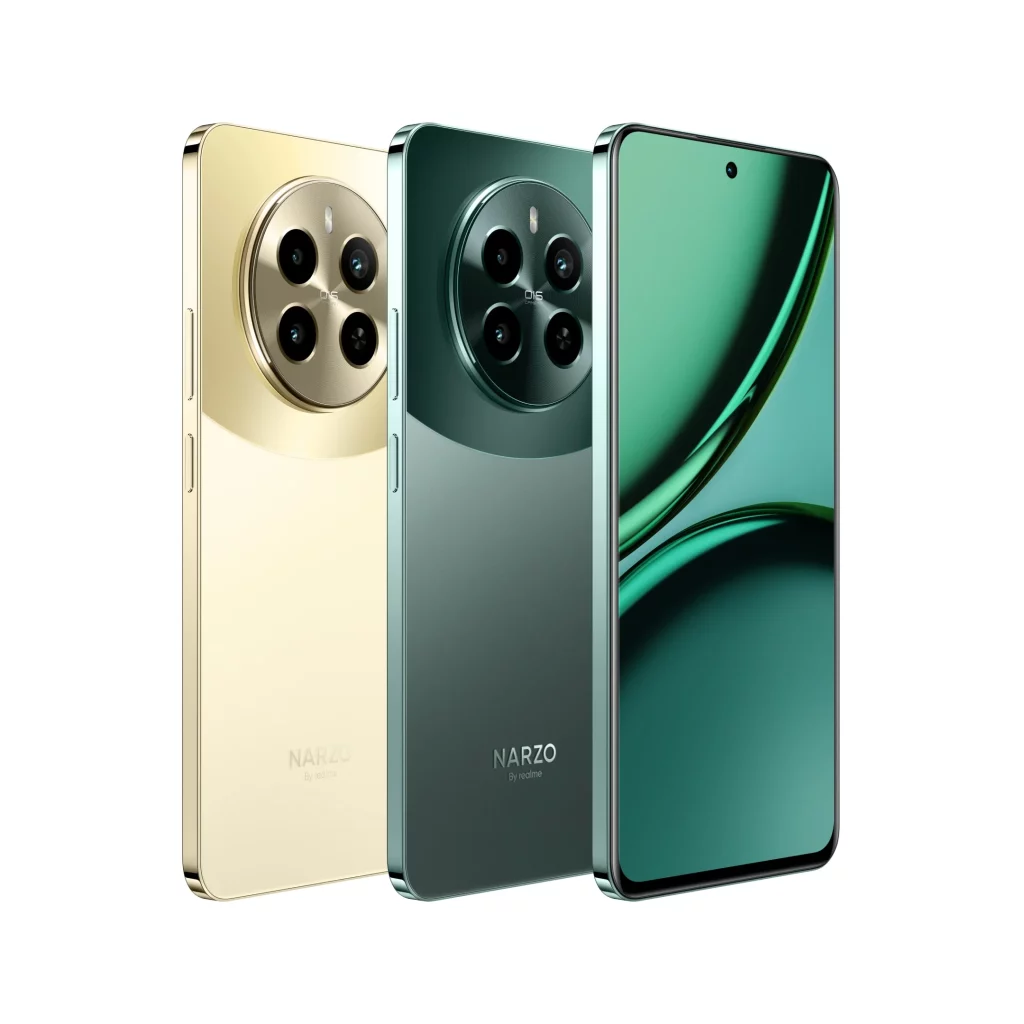
The Realme Narzo 70 Pro is on sale again after the massive Realme Savings Day discount offers earlier this month. Only this time, the discounts are even more ridiculous than before. Currently, the brand is offering up to Rs. 4,000 off on the device. Keep reading to know more details.
Realme Narzo 70 Pro 5G discount offer:
Amazon India is currently offering a Rs 4,000 coupon on the 128 GB storage models of the Narzo 70 Pro, bringing its prices down to Rs. 15,999. In addition to that, customers using an IDFC First Bank credit card for the purchase get a Rs. 250 instant discount.
A similar offer is available for the 256GB storage variant on Realme.com, where the brand is selling it for Rs. 18,999.
Realme Narzo 70 Pro 5G specs:
The Narzo 70 Pro features a 6.67-inch FHD+ AMOLED display with a 120 Hz refresh rate and is powered by the MediaTek Dimensity 7050 SoC. It includes LPDDR4x RAM, UFS 3.1 storage, and a VC liquid cooling system. Running on Realme UI 5.0 based on Android 14, it supports air gestures and is backed by a 5,000mAh battery with 67W wired fast charging.
The device sports a triple rear camera setup with a 50 MP OIS-assisted Sony IMX890 sensor, an 8 MP ultrawide lens, and a 2 MP macro lens. The front camera is 16 MP. It lacks a 3.5mm headphone jack and a MicroSD card slot but features Dolby Atmos-supported dual stereo speakers. Connectivity options include dual SIM, 5G, WiFi 6, Bluetooth 5.2, GNSS, and USB Type-C.
Xiaomi 15 series is expected to be one of the first Android flagships to adopt the Snapdragon 8 Gen 4 chipset. According to previous rumors, the series will launch towards the end of the year in China.
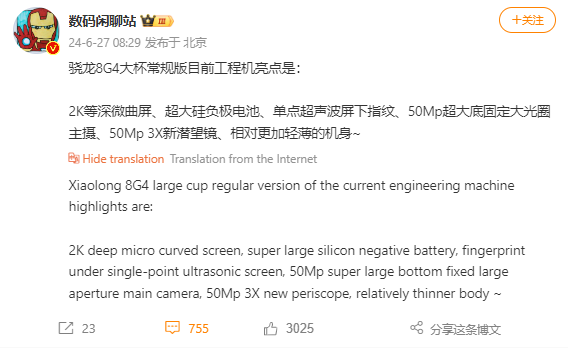
In the latest news, Weibo tipster Digital Chat Station has revealed some of the key specifications of the Xiaomi 15 Pro. According to him, the phone will come with a 2K micro-curved screen. He also claims that the Xiaomi 15 series will finally switch from an optical fingerprint scanner to an ultrasonic one, which generally offers faster and more reliable unlocking speeds.
Speaking of cameras, there will be a 50MP main sensor underneath a large aperture. However, he notes that the aperture won’t be a variable one, just like the Xiaomi 14. Notably, the Xiaomi 14 Pro from last year offers a variable aperture of f/1.4-f/4.0. He adds that there will be a 50MP 3x telephoto camera.
Although DCS didn’t reveal anything about a third camera, you can expect another 50MP sensor for the ultrawide. A previous rumor from earlier this month claims that the Xiaomi 15 Pro will boast a similar 50MP triple camera setup where the OmniVision OV50K and IMX882 will be used as the main and the 3x telephoto sensor respectively.
DCS also claimed that the phone will be equipped with a silicon-carbon negative electrode battery. A silicon-carbon negative electrode battery is a lithium-ion battery that uses silicon as the material for its negative electrode. Silicon is a promising material for this purpose because it has several advantages over graphite, the material currently used in most lithium-ion batteries. One of the advantages of using silicon is its higher energy density. The tipster also hinted that the phone will have a larger battery capacity. Previously, it was reported that the phone will come with a 5,500 mAh battery and will weigh less than 200g.
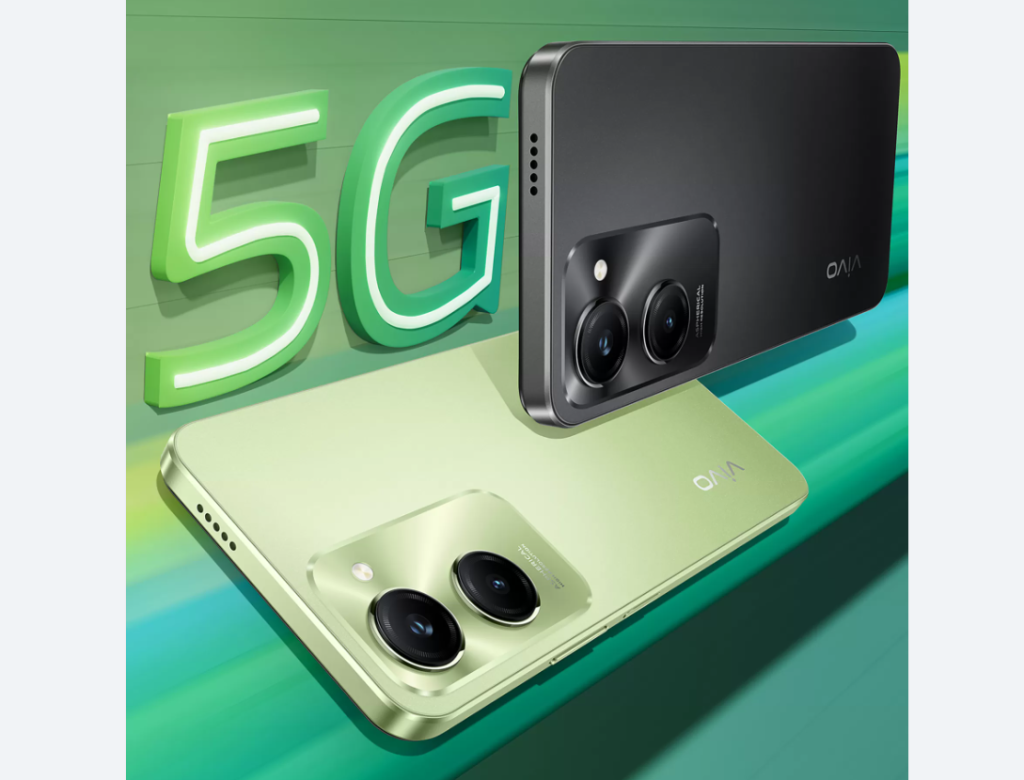
Vivo has just unveiled a brand-new budget 5G phone in India. The Vivo T3 Lite was recently teased in the region, and now, it has finally been launched. It carries a budget price tag and offers decent specs and features. So here’s everything you need to know.
Vivo T3 Lite Specs
The Vivo T3 Lite sports a 6.56-inch LCD panel that offers HD+ resolution, a 20:9 aspect ratio, a 90Hz refresh rate, and up to 840 nits of peak brightness. Under the hood, the new smartphone is equipped with the MediaTek Dimensity 6300 SoC, which is paired with up to 6GB of LPDDR4X RAM and 128GB of eMMC 5.1 storage. You can further expand storage by up to 1TB via a microSD card slot.
A large 5,000mAh battery pack powers this device, which supports a modest 15W wired fast charging. This model runs on the Android 14 OS based Funtouch OS 14 custom skin out of the box. For optics, the rear packs a 50-megapixel primary camera and a 2-megapixel depth sensor. Meanwhile, the front houses an 8-megapixel shooter for selfies and video calls. Other notable features include an IP64 rating for water and dust resistance, a 3.5mm headphone jack, Bluetooth 5.4, USB Type-C, and a side mounted fingerprint scanner.
Vivo T3 Lite Pricing and Availability
The Vivo T3 Lite has been released in two color options in the Indian market, namely Vibrant Green and Majestic Black. It has a starting price tag of 10,499 INR (roughly 125 US Dollars) for its base 4GB + 128GB model. On the other hand, the 6GB + 128GB variant costs 11,499 INR (roughly 138 US Dollars). The first sale of this device will kick off on 4th July 2024 and you can buy it via Flipkart, Vivo’s official online store, and across authorized offline retail stores. Customers can avail a flat 500 INR instant discount on HDFC Bank and Flipkart Axis Credit Card.
Xiaomi appears to be prepping for the launch of the Xiaomi 14T series. A recent sighting of the global variant of the Xiaomi 14T Pro in Thailand’s NBTC certification database sheds some light on the upcoming phone’s specifications.
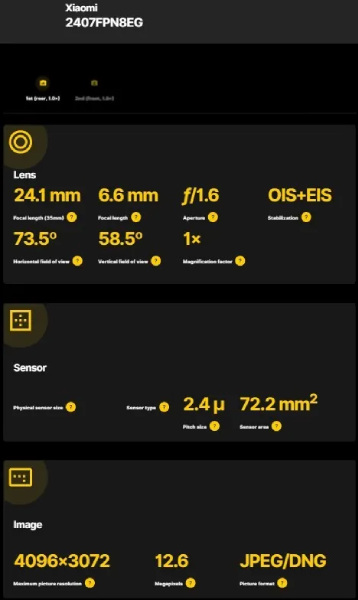
The NBTC certification confirms the model number (2407FPN8EG) and the phone’s moniker – Xiaomi 14T Pro. It also reveals support for GSM, WCDMA, LTE, and NR connectivity.
Additional information comes from the Camera FV-5 database, which suggests a primary rear camera with an f/1.6 aperture, 12.6MP pixel binning, and Optical Image Stabilization (OIS).
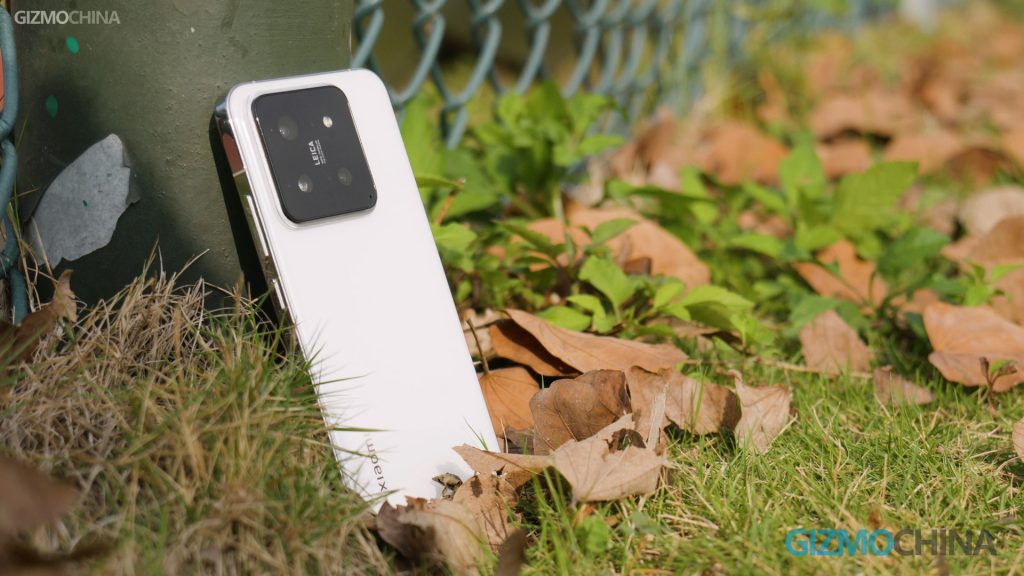
A 12.6MP resolution with pixel binning means we can expect the phone to feature a 50MP main sensor. The selfie camera might come with an f/2.0 aperture and will capture 8.1MP pixel-binned images. We might also see Leica co-branding for the cameras, similar to Xiaomi’s flagship models.
Under the hood, the Xiaomi 14T Pro is expected to pack a MediaTek Dimensity 9300 processor built on a 4nm process.
The SoC features one Cortex-X4 core clocked at 3.25GHz, three Cortex-X4 cores at 2.85GHz, four Cortex-A720 cores at 2.0GHz, and a Mali-G720 Immortalis MP12 GPU.
The Xiaomi T series typically differentiates the standard and Pro models with the processor. Both the 13T and 13T Pro shared similar cameras and battery capacities. The trend is follow suit with the 14T series.
As for the launch, the Xiaomi 14T series is expected to launch sometime in August or September. However, there is uncertainty about the launch of the Xiaomi 14T series in India, as Xiaomi skipped the launch of the 12T and 13T series in the country.
We use cookies on our website to give you the most relevant experience by remembering your preferences and repeat visits. By clicking “Accept”, you consent to the use of ALL the cookies.
This website uses cookies to improve your experience while you navigate through the website. Out of these, the cookies that are categorized as necessary are stored on your browser as they are essential for the working of basic functionalities of the website. We also use third-party cookies that help us analyze and understand how you use this website. These cookies will be stored in your browser only with your consent. You also have the option to opt-out of these cookies. But opting out of some of these cookies may affect your browsing experience.
Necessary cookies are absolutely essential for the website to function properly. This category only includes cookies that ensures basic functionalities and security features of the website. These cookies do not store any personal information.
Any cookies that may not be particularly necessary for the website to function and is used specifically to collect user personal data via analytics, ads, other embedded contents are termed as non-necessary cookies. It is mandatory to procure user consent prior to running these cookies on your website.