Advertisement

China’s drone industry soars to new heights, with more than 1.26 million registered UAVs

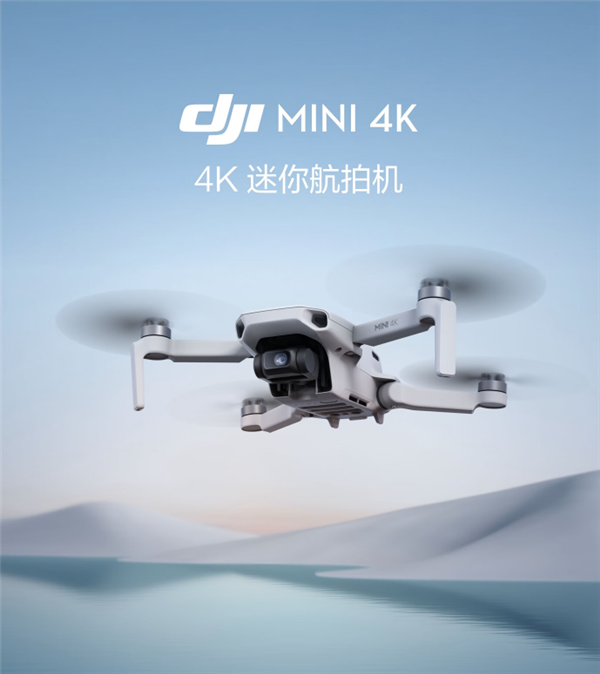
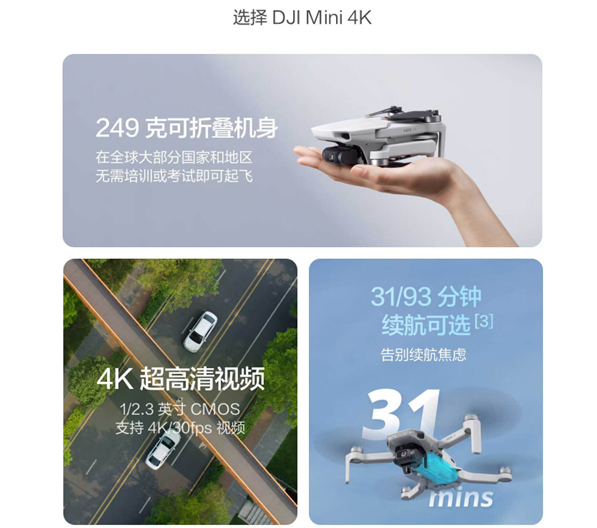
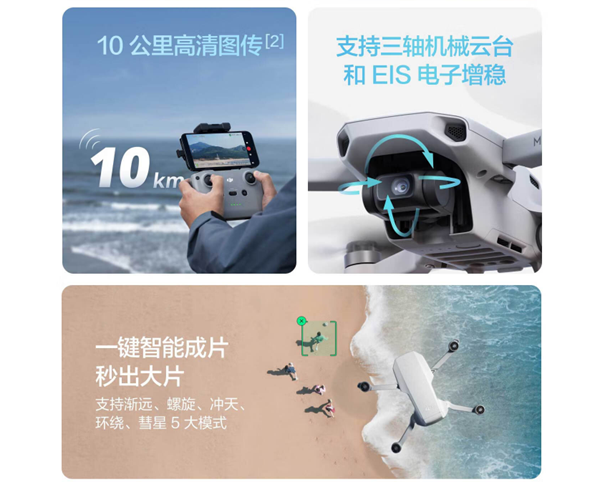
The drone industry in China has reached unprecedented levels, mirroring the rapid growth of the country’s low-altitude economy. By the end of 2023, the number of Unmanned Aerial Vehicles (UAVs) in China exceeded a staggering 1.26 million, marking a remarkable 32 percent year-on-year increase. These drones collectively logged over 23 million flight hours, underlining their integral role in various sectors, from agriculture to entertainment.

The Ministry of Industry and Information Technology underscores the significance of the general aviation industry, positioning it as a cornerstone of China’s low-altitude economy. Support measures, including innovation initiatives and technology upgrades, are underway to foster a new development model tailored to Chinese characteristics.

Furthermore, China’s prowess in drone manufacturing is unparalleled, with the capability to produce nearly every type of drone. This manufacturing strength fuels the rapid growth of the industry, enabling diverse applications across sectors.

In response to the exponential growth, China has established 17 civil unmanned aviation test zones and three test bases, spanning cities, islands, and other application areas. These initiatives aim to advance drone technology and applications, further propelling China’s dominance in the global drone market.
The government’s emphasis on developing new growth engines, particularly in the low-altitude economy, underscores the strategic importance of the drone industry. Forecasts predict sustained rapid growth, with expectations of further segmentation of drone types and expanded usage across industries.

China says it is committed to global security as it has stringent regulations on drone exports. Measures have been implemented to prevent civilian drones from being repurposed for military use, addressing concerns raised by Western countries regarding military drone capabilities.

Meanwhile, China’s military drone capabilities continue to advance, with significant progress demonstrated in surveillance and attack UAVs. Also, the strategic importance of drone warfare is recognized by the government, driving investments in military modernization efforts.

Overall, China’s drone industry’s exponential growth signals not only economic prosperity but also strategic advancements in technology and security. As the nation continues to lead in drone innovation and deployment, its influence in shaping the global drone landscape remains undeniable.

Related:

(via)

Redmi Note 13 Pro+ Mystic Silver is up for sale in Hong Kong

Redmi Note 13 Pro+ has been available for purchase for quite some time, and Xiaomi recently expanded its color range by introducing a new option: Mystic Silver. While this sleek color variant was already accessible in select regions, it has now hit the shelves in Hong Kong as well.

Hong Kong finally gets Mystic Silver Redmi Note 13 Pro+

We can say that the Redmi Note 13 Pro+ is quite a powerful model among midrange devices. With its MediaTek Dimensity 7200 Ultra chipset and 5000 mAh battery, it’s powerful enough for many tasks, and it also comes with a unique design and multiple color options.

The phone was originally launched in Midnight Black, Moonlight White, and Aurora Purple colors and now Xiaomi offers the new Mystic Silver, characterized by its sleek, shiny gray finish and tiny icon at the back.

Although the Redmi Note 13 Pro+ comes in various RAM and storage configurations, the Mystic Silver variant is exclusively available in the 12GB+512GB option, priced at 2999 HKD (approximately 383 USD) in Hong Kong.

Notably, while the Mystic Silver variant is accessible beyond Hong Kong however, keep in mind that this color is a limited edition, so it may not be restocked once supplies run out.

(Source)

Related:

Xiaomi SU7 EV sparks frenzy with 3 AM test drives and overwhelming demand

Xiaomi’s latest venture into the automotive industry with the launch of its SU7 electric vehicle has taken China by storm. The fervor surrounding this release has reached unprecedented levels, fueled by reports of enthusiasts queuing up until the early hours of the morning for test drives.

Since its debut on March 28, the Xiaomi SU7 has become the talk of the town, dominating conversations on social media platforms and drawing crowds of eager customers to Xiaomi Auto dealerships across the nation. What sets this frenzy apart, however, is the remarkable dedication shown by enthusiasts who have been willing to wait until 3 AM just to experience the thrill of test-driving Xiaomi’s EV.

The allure of the SU7 lies not only in its cutting-edge technology and impressive performance but also in the promise of a greener and more sustainable future. Equipped with dual motors generating a staggering 495 kW (663 hp) and powered by a high-capacity 101 kWh Qilin battery from CATL, the SU7 boasts an impressive 800 km CLTC range, setting a new standard for electric vehicles.

The sheer demand for the SU7 has taken Xiaomi by surprise, with the company reporting a staggering 88,898 orders within just 24 hours of its launch. Despite efforts to meet this overwhelming demand, Xiaomi has found itself grappling with logistical challenges, including complaints regarding pre-order cancellations and non-refundable deposits.

However, amidst these challenges, Xiaomi has remained steadfast in its commitment to delivering a premium experience to its customers. To sweeten the deal for early adopters, Xiaomi has introduced pre-order incentives, offering free upgrades valued at 34,000 yuan (approximately $4,700) for those who place orders before April 30th.

As production ramps up at Xiaomi’s new Beijing plant in partnership with BAIC, the company is poised to make a significant impact in the electric vehicle market, with plans to produce around 100,000 cars in 2024. Despite the SU7 BEV being completely sold out for 2024, Xiaomi continues to work tirelessly to fulfill deliveries, with the Standard and Max versions set to commence deliveries by the end of April, followed by the Pro edition by the end of May.

Related:

(via)

iQOO Pad 2 Pro Will Have 12GB RAM, Dimensity 9300 SoC As Per Google Play Console Listing

iQOO is working on launching the successor to the iQOO Pad in China. The device has already bagged 3C certification revealing its charging details. Now, the iQOO Pad 2 Pro’s moniker has been confirmed as it has been spotted on the Google Play Console certification website. The listing also reveals its key specifications. 

iQOO Pad 2 Pro surfaces on Google Play Console

The iQOO Pad 2 Pro carries a model number PA2473 on the Google Play Console certification website. As per the render in the listing, the display on the tablet is surrounded by symmetrical bezels. The power and volume rocker buttons are located on the right side as per the landscape orientation of the device. 

The iQOO Pad 2 Pro will have a display resolution of 2,064 x 3,096 pixels and a screen density of 400 dpi. The certification listing reveals that the iQOO Pad 2 Pro will be equipped with a processor codenamed MT8796. The configuration comprises four Cortex-A72 cores at 2GHz, three Cortex-X4 cores ticking at 2.8GHz, and a prime Cortex-X4 clocked at 3.2GHz. This suggests that it could be the Dimensity 9300. The recently launched Vivo Pad 3 Pro in China is also powered by the same SoC. As per Google Play Console, the iQOO Pad 2 Pro will pack 12GB RAM and there could be other variants too. The tablet will ship with Android 14 OS. 

The Google Play Console listing does not reveal any additional details. As per 3C certification, the iQOO Pad 2 Pro will support up to 66W fast charging. The first-generation iQOO Pad was a tweaked version of the Vivo Pad 2, hence the Pad 2 Pro could also be slightly different from the Vivo Pad 3 Pro. 

Related:

Via

MiniLED TVs are getting more and more popular than OLED; will surpass in market share for the first time in 2024

Market research agency Luotu Technology shared their findings at the UBI research conference held in Seoul, South Korea. The agency predicts that the MiniLED TV shipment this year will surpass the OLED TV shipment for the first time this year.

Credit: TCL

According to the research data, this year’s shipments of MiniLED TVs will be 6.8 million units, which is 0.4 million higher than the predicted OLED TV shipment for 2024. Notably, MiniLED TV shipments are catching up with OLED in the last few years.

Researcher Melissa Wang noted that OLED TV shipments decreased by 20.6% year-on-year in 2023, while MiniLED shipments saw a growth of 24.7% year-on-year for the same period. The shipment figures for OLED and MiniLED TVs last year were 5.48 AND 4.25 million units respectively.

YearMiniLED TV shipment (million)OLED TV shipment (million)
20212.36.5
20223.46.9
20234.255.48
20246.8 6.4
202510.27.1
202616.47.6
202721.68.1
202825.58.5
MiniLED TV shipments growing at a much faster pace than OLED

As you can see from the data, MiniLED TVs are expected to get more and more popular. While OLED TV shipments are also expected to grow, MiniLED TV shipments are predicted to grow exponentially and achieve a figure more than three times bigger than its competitor.

Currently, the MiniLED TV market is led by Samsung Electronics, TCL, and Hisense, While the OLED TV market is led by LG, Samsung, and Sony. The Elec notes that TV shipments from Samsung Electronics (which contributes to both of the technologies) will play a crucial role in shaping the future market share. MiniLED TVs such as the TCL C12H series or the Terrace TV from Samsung Electronics can offer higher contrast and improved brightness, thanks to their smaller diodes.

Related:

(via)

High demand for Xiaomi’s SU7 Electric Car leads to 7 month long delivery time

Xiaomi’s first Electric vehicle the SU7 sedan has ignited unprecedented consumer interest. With pre-orders surpassing 88,898 within the initial 24-hour window, it’s evident that Xiaomi has struck a chord with prospective buyers. However, the surge in demand has led to an unexpected challenge, an extended delivery waiting period.

Prospective buyers eager to own Xiaomi’s SU7 are now confronted with the reality of lengthy delivery periods, stretching up to seven months in some cases. The allure of Xiaomi’s sleek design and advanced features is undeniable, but the wait for delivery is testing the patience of even the most enthusiastic customers.

source: Xiaomi SU7

For the standard SU7 model, priced at 215,900 yuan ($29,870), delivery times are estimated between 18 to 21 weeks. Similarly, the SU7 Pro and the AWD SU7 Max models are facing comparable waiting periods, with deliveries expected within the same timeframe. The anticipation surrounding Xiaomi’s limited-edition “Founder’s Edition” further exacerbates the situation, as the initial batch of 5,000 units sold out instantaneously, leaving many hopeful buyers anxiously awaiting news of a second release.

The prolonged delivery timelines come as a surprise to many, especially considering the swift pre-order uptake and Xiaomi’s reputation for efficient production and distribution in other product categories. Nevertheless, the sheer volume of orders has presented logistical challenges that Xiaomi must navigate to meet consumer expectations.

Despite the delays, Xiaomi remains optimistic about the SU7’s prospects in the competitive EV market. The vehicle’s impressive specifications, including a range of up to 830 kilometers (516 miles) for the Pro variant, position it as a formidable contender against established players. Moreover, Xiaomi’s CEO, Lei Jun, has outlined ambitious plans for the company’s future in the automotive industry, signaling a long-term commitment to innovation and growth.

As consumers eagerly await the arrival of their SU7 sedans, Xiaomi faces the dual challenge of managing expectations and maintaining momentum in a rapidly evolving market. While the extended delivery times may test the patience of eager buyers, they also underscore the undeniable appeal of Xiaomi’s entry into the EV arena. In the coming months, all eyes will be on Xiaomi as it navigates this critical phase of its automotive journey, balancing supply chain efficiency with the growing demand for its groundbreaking electric sedan.

Related:

(via)

Razer Viper V3 Pro Edition Leaked Renders Surface Online, Mouse Lacks DPI Switch Button

As per a report, leaked renders point to a new addition to the Razer Viper 3 lineup – the Viper V3 Pro Edition gaming mouse. Boasting an ultralight design (weighing in at 53g for most colors and 54g for the white version), the Pro Edition appears very similar to its predecessor, the Viper V3 Express Edition. The most noticeable difference is the missing DPI switching button on the top of the Pro Edition mouse. The underside also features a large pad design. The Viper lineup is one of the newer series Razer has been working with, and this release points towards Razer continually bringing upgrades to the Viper lineup gaming mice.

The device was first leaked on Amazon France, where the company posted the mouse details

According to a redditor u/xRebeckahx, the Viper V3 Pro Edition is already available for pre-order in some regions for €179.95 (roughly ¥1407), with an expected shipping date of April 17th. It is slightly on the heftier side, but what specs are you actually getting for that price?

Razer

Based on previous leaks, here’s what you can expect from the Pro Edition’s specs:

  • An incredibly lightweight design for maximum agility (between 53g and 54g).
  • The Razer Focus Pro Gen-2 sensor with a high 35,000 DPI for precise control.
  • Third-generation Razer optical micro-switches for super-fast clicks.
  • A built-in Razer HyperPolling 8000Hz receiver to minimize latency.
  • An impressive battery life that can last up to 100 hours.
r/MouseReview - Razer Viper V3 Pro leaked (on Amazon France)

While there’s no official launch date yet, leaked information suggests the Razer Viper V3 Pro Edition could be available very soon. A link to the original reddit post is available here.

RELATED:

(Via)

BYD’s New Denza N7 has been Launched with Up to 700km of Range, Pricing Starts at 239,800 Yuan ($33,163)

BYD‘s new Denza N7 has arrived, bringing multiple upgrades in design, smart driving features, configurations, and most importantly, battery range. With options of 550km, 630km, and a class-leading 702km on a single charge, the N7 caters to a variety of driving needs. Pricing starts at 239,800 yuan for the 550 Smart Driving Pro version, reaching up to 329,800 yuan (~$45,610) for the feature-packed 630 4WD Intelligent Driving Ultra version.

Consumers can now pay extra money for new colorways and features

On the outside, the controversial “moustache” headlights are a thing of the past, replaced by a more modern and streamlined design. The N7 also boasts a stunning new “Xizi Blue” color option, available for an additional cost. Performance is another highlight, with the N7 offering a choice between a powerful 160kW+230kW dual motor setup or a capable 170kW single motor. The fastest acceleration from 0 to 100km/h takes a mere 3.9 seconds.

Charging is a breeze thanks to the N7’s global 800V platform, compatible with a whopping 99.5% of DC charging stations. It supports rapid charging with a maximum power of 150kW for a single gun or 230kW for dual guns. Stepping inside the N7 reveals a luxurious and tech-laden interior. The driver is greeted by a massive 50-inch AR-HUD, a 17.3-inch central control screen, and a 10.25-inch passenger screen. Comfort is prioritized with dual 50W wireless charging, 5D cloud-sensing seats, and a premium Devialet sound system. Rear seat passengers are treated to heated and ventilated seats with massage functions, adding to the overall luxurious feel.

Denza hasn’t forgotten about smart driving features. The N7 comes equipped with the “Eye of God” intelligent driving assistance system as standard, featuring both high-speed pilot (available nationwide later this year) and city pilot (expected to be available nationwide by the end of 2024). Existing N7 owners can enjoy these features through an over-the-air (OTA) update. The N7 also holds the title of the world’s first mass-produced car with a close-range valet parking function, another feature coming to existing owners via OTA in the second quarter of 2024.

To celebrate the launch, Denza is offering a few limited-time packages. For 10,000 yuan, you can upgrade your N7 with an executive luxury rear seat package that includes an armrest screen, electric adjustment, ventilation, heating, and massage functions. A 15,000 yuan luxury package adds Nappa leather seats and a suede ceiling, while special “Xizi Blue” and “Morning Gold” exterior color options can be yours for 6,000 yuan and 3,000 yuan respectively. The new Denza N7 arrives packed with innovation and luxury, offering a more than compelling option for those seeking a feature-rich electric SUV with impressive range.

RELATED:

(VIA)

Skyworth’s affordable A4E series 4K TVs with 120Hz refresh rates hit the shelves in China

Skyworth, a leading player in the consumer electronics market, announced its A4E series of 4K TVs in China earlier this year, offering features that rival MiniLED technology at a fraction of the price.

Now the TVs are up for sale in China from JD.com. Available in sizes ranging from 55 inches to a whopping 85 inches, the A4E series caters to various living spaces and budgets.

The A4E lineup starts with the compact 55-inch model priced at a competitive 2099 yuan (around $290). It then scales up to 65 inches (2799 yuan, ~$387), 75 inches (3599 yuan, ~$498), and finally, a massive 85 inches for 5599 yuan (around $774).

Skyworth A4E Series

Skyworth A4E Series Specifications:

Despite using an LCD panel, the A4E series boasts a high refresh rate of 120Hz, ensuring smoother visuals during fast-paced content like sports and action movies. The 400 nits brightness delivers a clear picture, while the 130% sRGB color gamut promises vibrant and accurate colors. Additionally, a Delta E of less than 0.99 guarantees monitor-level color accuracy, reproducing lifelike images.

For extended viewing sessions, the A4E series incorporates quadruple hardware eye protection to minimize strain. MEMC (Motion Estimation, Motion Compensation) technology further enhances the experience by reducing motion blur. The TVs also support dual-language voice input/output for easy control.

Under the hood, the A4E series packs a punch with a combination of dual-core A55 and A75 processors. This is complemented by 4GB of RAM and 64GB of storage, ensuring smooth operation and ample space for apps and downloaded content. The TVs run on the Cool Open System 9.2, providing a user-friendly smart TV experience.

Skyworth A4E Series

The audio experience is just as impressive as the visuals. Skyworth equips the A4E series with HiFi-grade dual-band speakers and an independent subwoofer, delivering a total of 50W of powerful sound.

The A4E series comes loaded with connectivity options, including HDMI 2.1, USB 3.0, and dual-band WiFi. This ensures the TVs can seamlessly handle modern streaming services, gaming consoles, and internet browsing needs.

The Youku ZREAL Frame Enjoyment Zone provides access to a vast library of content in high frame rates and 4K resolution, perfect for movie enthusiasts. The top-of-the-line 85-inch model goes a step further with an exclusive audiovisual matching system. This system automatically calibrates the picture and sound quality based on your specific room environment.

RELATED:

Huawei Watch 4 Pro appears in new red color

The new red variant of Huawei’s currently most feature packed smartwatch has been spotted, Huawei Watch 4 Pro. Currently, there is limited information available about the watch, but it is known that Huawei will introduce this red-colored variant named as “Huawei Watch 4 Pro Space Exploration Edition”.

Huawei Watch 4 Pro comes in red color

Huawei WATCH 4 Pro currently comes with three different strap options: titanium, composite, and leather. The Space Exploration Edition will be available with a red chassis and a titanium strap in silver color.

Huawei Watch 4 Pro is currently Huawei’s flagship smartwatch, and due to its beefy specs, it has a slightly thick design; the Watch 4 Pro weighs 65 grams.

The only difference in the Watch 4 Pro Space Exploration Edition is, of course, the color, but it will also come with some improved specs compared to the regular Watch 4 Pro, although what the red edition will bring new is not known.

The Watch 4 Pro was recently upgraded to the HarmonyOS 4.0 system and has a battery life of 4.5 days and this can extend up to 21 days in ultra battery saving mode . What do you think about the new color of the watch? Would you consider buying the red version of the Watch 4 Pro if it were available in the global market?

Related:

OnePlus Nord CE 4 Launches Globally With 100W Fast Charging, Aquatouch Display 

The OnePlus Nord CE 4 is here in the global market. It has the same look as the OnePlus Ace 3 that debuted in China last month but packs a few different specifications. The latest smartphone arrives as the successor to last year’s Nord CE 3. It packs significant upgrades including a new design. The Nord CE 4 is a mid-range offering. 

OnePlus Nord CE 4 launched globally

The OnePlus Nord CE 4 has a flat frame with power and volume rocker buttons on the right side and a three-step alert slider on the left edge. The back panel features a pill-shaped camera module. The device is IP54-certified dust and water-resistant.

In terms of display, the OnePlus Nord CE 4 comes with an AMOLED screen measuring 6.7 inches. It bears an FHD+ resolution which is downgraded from 1.5K on the Ace 3V. The device packs an in-display fingerprint scanner, a 120Hz refresh rate, 1,100 nits peak brightness, and HDR10 certification. The smartphone also features Aquatouch display technology that is found on the premium OnePlus 12 phones. This means users can use the device with wet hands. 

On the imaging front, the OnePlus Nord CE 4 has a dual rear camera setup of a 1/1.95-inch 50MP Sony LYT-600 primary sensor with OIS and an 8MP ultra-wide-angle lens. There is a 16MP front-facing selfie snapper. The device is capable of recording 4K video at 30fps. The RAW HDR algorithm is said to produce richer and lifelike images.

Under the hood, the OnePlus Nord CE 4 global variant is equipped with a Snapdragon 7 Gen 3 processor compared to the Snapdragon 7+ Gen 3 on Ace 3V. It packs 8GB RAM along with 8GB virtual RAM technology. The device is offered in 128GB and 256GB storage options. The smartphone draws its power from a 5,500mAh battery unit with support for 100W fast charging. It comes with a Battery Health Engine that is claimed to increase the charging cycles to support up to four years.

Software-wise, the OnePlus Nord CE 4 ships with OxygenOS 14 based on Android 14 OS out of the box. It is confirmed to receive two years of OS updates. Connectivity options on the device include Wi-Fi6, Bluetooth 5.4, USB-C port, GPS, and more.

OnePlus Nord CE 4 pricing and availability 

In India, the OnePlus Nord CE 4 starts at Rs 24,999 for the base 8GB + 128GB variant whereas the 8GB + 256GB option costs Rs 26,999. It comes in Dark Chrome and Celedon Marble colours. The smartphone goes on sale starting April 4 from Amazon, the brand’s online and offline stores, and retail partners. Those purchasing on April 4 will be eligible for free Nord Buds 2r worth Rs 2,199. From April 5, there is an instant bank discount of Rs 1,500 and an exchange bonus of Rs 2,500 on the purchase of the smartphone.

Related:

iPhone SE 4 Design Seemingly Confirmed Via Leaked Dummy Case

Leaks and rumors about this year’s iPhone 16 series have been in full swing. Usually, this time around we would have been closer to the affordable new-generation of the iPhone SE  because Apple refreshes the SE variant every two years. However, that’s not the case as the iPhone SE 4 has been delayed to 2025 as per various reports. This hasn’t stopped the smartphone from doing the rounds of the rumor mill. Today’s development seemingly confirms the design of the iPhone SE 4. 

iPhone SE 4 design seemingly confirmed through a dummy case unit

This isn’t the first (and probably won’t be the last) time we’re learning that the iPhone SE 4 will borrow the same design as the iPhone 14 series. The device surfaced in CAD-based leaked renders last month. Leaked images of phone cases are often the first confirmation at their design. This is the case with the next-generation iPhone SE. 

The leaked dummy case unit reveals that the iPhone SE 4’s design will indeed be similar to the iPhone 14. It is seen with cutouts for the volume rocker and mute switch on the left side. It remains to be seen if Apple will replace the later with the action button found on the iPhone 15 Pro models. The power key is located on the right edge. . As per the leaked case, the back panel will have a horizontal pill-shaped camera module housing a single camera sensor. There is also a cutout for an LED flash unit. 

On the front, the iPhone SE 4 will have a notched display. It will accommodate the front camera and facial recognition sensors. The leaked case also potentially confirms that Apple will do away with the Touch ID sensor on the next-generation SE model. This will also offer a large screen-estate owing to thinner bezels compared to the SE 3. 

While the iPhone SE 4 is very much said to be delayed to 2025 as per past reports, the fact that the case makers have already started production for the smartphone suggests it’s arrival this year. Now, everything is up to Apple. 

Related:

realme 12 Pro+ gets new air gesture, AIGC photo editing, and more with realmeUI 5.0 latest version in China

The realme 12 Pro+ starts receiving a new update with version number RMX3841_14.0.0.805 (CN01) in China today. This realmeUI 5.0-based update is 1.2GB is size and packs a number of features and improvements including a new air gesture feature and the AIGC photo editing feature.

New features and improvements:

System:

  • A new air gesture feature
  • New device sensor permission management
  • Optimize system stability
  • Fix some known issues and improve user experience

Gallery:

  • Added AIGC elimination function

Camera:

  • Solve the blurry problem of taking photos in “moon mode”
  • Optimize camera performance and stability

Safety:

  • Updated March security patch

Earlier today we reported about the realme 12 Pro series’ AIGC photo editing feature that has previously started rolling out in the US and Japan. It lets you easily remove an object from the image just by drawing a circle around it. The feature is capable enough to recognize and remove the object and recreate the part of the background that was covered by the unwanted object.

AIGC photo editing

realme 12 Pro+ key specifications

The phone is powered by the 4 nm-based Snapdragon 7s Gen 2 chip. Another highlight of this phone is its 64 MP 3x telephoto camera. Aside from that, it equips a reasonably larger 1/1.56″, 1.0µm, 50MP main sensor and an additional 8 MP ultrawide. For selfies, this phone equips a 32MP front-facing camera.

This phone was launched back in January this year and comes equipped with realmeUI 5.0 based on Android 14. For enhanced communication this 5G phone includes support for all-round NFC, Wi-Fi 6, Bluetooth 5.2. Another notable feature of this device is the IP 65 dust and water resistance rating.

Related:

(via)

Huawei and Chery’s Luxeed S7 EV takes on Tesla Model S, Delivery Begins

Huaweis CEO of Consumer BG, Richard Yu Chengdong announced on Weibo that they’ve started delivering the long-awaited Luxeed S7 electric sedan. This is a big deal because it’s the first time Chinese state-owned Chery Automobile and Huawei are working together on such a project. Despite earlier production challenges attributed to semiconductor shortages and manufacturing issues, the Luxeed S7 has finally begun reaching customers.

The Luxeed S7 generated a lot of excitement in the market and garnered impressive pre-orders totaling 20,000 by November 28, 2023, positioning itself as a competitor to Tesla’s Model S in the premium EV segment. However, the standout feature is its affordability, with a starting price of approximately 249,800 yuan (equivalent to US$34,600), making it notably cheaper than the Tesla Model S.

source: consumer.huawei.com

There were initial setbacks caused by shortages of semiconductors and worries regarding a crucial computing component provided by Huawei. Nevertheless, these challenges were addressed, allowing deliveries to begin. Richard Yu said that a considerable number of vehicles are already on their way to customers. This achievement in deliveries marks a pivotal moment for both Chery and Huawei in the electric vehicle domain, potentially shaping the direction of their future partnership.

Analysts anticipate the Luxeed S7 to compete with other premium pure EVs in China, leveraging digital technologies such as autonomous driving and voice-activated controls. The partnership between Chery and Huawei, combining technological expertise with manufacturing capabilities, holds promising prospects in the rapidly growing Chinese EV market.

Luxeed S7 Electric Sedan

The Luxeed S7, the first sedan from Luxeed, a collaboration between Huawei and Chery, offers four variants, including Pro, Max, Max+, and Max RS. Built on Huawei’s advanced 800 V-based Giant Whale high-voltage platform, it promises exceptional performance and efficiency. 

Equipped with cutting-edge technology like Huawei ADS 2.0 ADAS software, it offers a CLTC range of up to 855 km for certain versions, along with rapid charging capabilities. Customers can choose between single-motor and dual-motor versions, with the latter boasting a maximum power of 215 kW and accelerating from 0 to 100 km/h in just 3.3 seconds. Advanced features such as roof-mounted LiDAR for enhanced assisted driving functions further enhance its appeal, making the Luxeed S7 a compelling choice in the electric vehicle market.
Analysts say that Luxeed S7 will offer advanced digital technologies, making it a strong contender in the growing EV market. The partnership between Chery and Huawei is seen as promising, leveraging Huawei’s technological expertise in areas like computing systems, radar, and autonomous driving platforms with Chery’s manufacturing capabilities.

As the Luxeed S7 hits the roads and customer reviews emerge, its features and performance will be closely scrutinized. Its success or failure could have significant implications for both Chery and Huawei in the competitive EV landscape.

Related:

(via)

PS5 Pro Enhanced Label Requirements For Games Will Enable Upscaled Resolution And Frame Rate

The PS5 Pro is widely expected to arrive towards the end of the year. Leaks and rumours have revealed plenty of information about the upcoming console. Details circulating about the device don’t seem to stop as this time a new report reveals about the games that are being developed for it. To take advantage of PS5 Pro’s abilities, Sony will use PS5 Pro Enhanced labels on games that fulfil necessary requirements. 

PS5 Pro Enhanced label for games detailed 

For those unaware, Sony first introduced the Enhanced label on the last-generation PlayStation 4 Pro. Games with the same tag are meant to take advantage of the Pro variant’s hardware improvements. Leaked specifications of the PS5 Pro suggest that it will get a GPU upgrade and specialized hardware for ray-tracing acceleration. 

According to the documents procured by Insider Gaming, the PS5 Pro will feature exclusive graphics mode including PSSR to upscale resolution to 4K, getting a constant 60 fps, and adding or increasing ray tracing effects. The Enhanced label is called Trinity Engine internally. The documents reveal that these features will be possible as the upcoming console will have 28 per cent faster RAM and a 67 per cent larger as well as 45 per cent faster GPU compared to the standard PS5. 

The publication notes that for games to get the PS5 Pro Enhanced tag if they meet any of the four requirements mentioned ahead. The first is increased target resolution for titles that run at fixed resolution and the second is increased target maximum resolution for titles running at variable resolution on standard console. The third condition is that games should achieve a higher target frame rate compared to the standard variant. Lastly, the titles should include ray-tracing effects that is enabled on the PS5 Pro. 

Related:

Google explains why it chose 7 years of update promise for Pixel phones

Google with its Pixel 8 series made a bold promise — the phones will receive seven years of software updates.  It means longer security, new features, and a smartphone that feels fresh further into the future.

But how will this work in practice? In a recent podcast, Google’s VP of Devices & Services Software shed light on this groundbreaking commitment.

Google’s Seang Chau, VP of Devices & Services Software, emphasizes the immense collaboration required for this endeavor. Partners like chip suppliers, the Android team, and even carriers needed to be in the loop early on for consistent testing and smooth updates.

Google’s use of its own Tensor chip across generations simplifies things further, as updates are optimized primarily for that single piece of hardware.

Moreover, the switch to year-round beta programs and Quarterly Platform Releases (QPRs) also plays a big role. Google now gets more extensive feedback on updates before they hit the masses. This means they can move features once reserved for major Android releases into smaller, more frequent updates.

Google didn’t just pluck a number out of thin air. Google carefully analyzed how long people use their Pixel phones, including secondary markets and hand-me-downs. They found solid activity on older devices well into the seven-year timeframe, making this a pledge to keep your Pixel secure and relevant for as long as it’s in your hands.

Google Pixel 8 7 year software update

However, after the initial years, not every feature will be rolled out for older devices. Rather Google will focus on software-based additions that don’t heavily tax the hardware. Older Pixels will still benefit from features originally launched on newer models whenever possible.

The decision to bring Gemini Nano (an AI language model) to Pixel 8 is a perfect example. RAM limitations were the key concern due to the model’s memory-intensive nature. Google is carefully evaluating its impact to avoid performance issues on both the Pixel 8 and 8 Pro.

Google’s 7-year update promise is a major win for users. It means your Pixel phone will stay secure and relevant for years to come. 

Related:

(Via)

ASUS launches ROG Keris 2 Ace gaming mouse with 42000 DPI, 8K polling rate, triple connectivity & more

ASUS Republic of Gamers (ROG) has launched its latest gaming mouse ROG Keris 2 Ace in the Chinese market. This feature-packed peripheral announced last month boasts an ultra-lightweight design, exceptional precision, and versatile connectivity options, making it a compelling choice for esports enthusiasts and hardcore gamers alike.
ASUS has officially opened pre-orders for the mouse available for 899 yuan ($124). Early buyers have the opportunity to receive a 100 yuan JD E-card cashback by leaving a review on JD.com.

ASUS ROG Keris 2 Ace

ASUS ROG Keris 2 Ace Specifications:

ROG Keris 2 Ace features a ROG AimPoint Pro 42K optical sensor, delivering an industry-leading 42,000 DPI resolution and a maximum tracking speed of 750 IPS. This translates to incredibly precise tracking with minimal deviation (below 1%), ensuring your in-game actions are reflected with pinpoint accuracy. This precision is further enhanced by Glass Tracking Technology, allowing for accurate tracking across different surfaces.

The mouse also incorporates the ROG Polling Rate Accelerator, offering a polling rate of up to 8000 Hz in wired mode, which significantly reduces input latency to as low as 0.125 milliseconds. In wireless mode, it offers up to 4000 Hz polling rate. This ensures faster and more accurate responses during critical gaming moments, providing gamers with a competitive advantage.

The gaming mouse weighs only 54 grams, achieved through an eco-friendly bio-based nylon material and a meticulously designed PCB layout. This feathery weight minimizes fatigue during extended gaming sessions, allowing for quicker flicks and improved dexterity.


In terms of connectivity, the Keris 2 Ace supports triple connectivity options, including 2.4GHz wireless, Bluetooth, and wired modes. The mouse also features ROG’s Omni technology which enables multi-device pairing. This versatility allows gamers to choose the most suitable connection method for their gaming setup, whether they prefer wireless freedom or the reliability of a wired connection.

Furthermore, the mouse features SpeedNova Wireless Technology, which optimizes wireless transmission for lower latency and eliminates signal blocking, ensuring a smooth gaming experience even in environments with severe signal interference.

The mouse also boasts durable construction, featuring ROG Optical Mechanical Micro Switches with a lifespan of 100 million clicks, ensuring reliable performance even under intense gaming conditions.

With a battery life of up to 106 hours in 2.4GHz mode, the Keris 2 Ace offers long-lasting endurance, allowing gamers to enjoy extended gaming sessions without interruption.

Additionally, it includes practical features such as PBT Left/Right Buttons for a consistent clicking feel, ROG Textured Anti-slip Stickers for enhanced grip, and AuraSync RGB Synchronization for customizable lighting effects.

RELATED:

Realme 12 Pro+ Killer Deal on Flipkart: Discount of up to Rs 5000

Back in January 2024, the Realme 12 Pro+ and Realme 12 Pro were officially unveiled in India. Now, the top end Pro Plus model is getting a killer deal on Flipkart. The Realme 12 Pro+ is getting a sizeable discount in the region, so let’s check it out.

Realme 12 Pro+ Amazing Deal via Flipkart

The Chinese brand is offering this discount on all three storage configurations. Although, the base 8GB + 128GB variant gets the best offer. The Realme 12 Pro+ has received an instant Rs 4,000 discount on Flipkart via HDFC, ICICI, Axis, and SBI Debit and Credit cards. Buyers can also avail an additional 1,000 INR discount. This means that the base model has an effective cost of 24,999 INR, down from 29,999 INR. For those interested, you can click here to check out this deal.

Realme 12 Pro

On the other hand, the 8GB + 256GB and 12GB + 256GB versions are only getting a 3,000 INR discount via the ICICI, SBI, Axis, and HDFC bank debit and credit cards. In other words, their price tag is down to just 28,999 INR and 30,999 INR respectively. To recall, the Realme 12 Pro+ sports a tall 6.7-inch curved AMOLED display that offers Full HD+ resolution, a 120Hz refresh rate, and Full HD+ resolution.

Under the hood, it is equipped with the Qualcomm Snapdragon 7s Gen 2 SoC that is paired with LPDDR4X RAM and UFS 3.1 storage. The rear packs a 50-megapixel triple camera setup, while the front houses a 32-megapixel selfie shooter. A large 5,000mAh battery pack powers this device, which also supports 67W wired fast charging. Other notable features include an in-display fingerprint scanner, stereo speaker setup with Dolby Atmos support, Bluetooth 5.2, and the Android 14 OS based Realme UI 5 custom skin.

RELATED:

Ryzen 7-powered Honor MagicBook X14/X16 Plus laptops go on sale starting from 4499 Yuan (~$622)

Honor launched its MagicBook X14/X16 Plus laptops towards the end of March with productivity-enhancing AI features, alongside the Honor Magic 6 RSR Porsche Design and Honor Band 9 in China.

The MagicBook X14 Plus and X16 Plus laptops go on sale today in China with a starting price of 4499 Yuan and 4699 Yuan for the 14″ and 16″ laptops respectively. The launch prices start from 4699 Yuan and 4899 Yuan for the X14 Plus and X16 Plus laptops respectively.

Sale prices:

MagicBook X14 Plus –
16GB + 512GB: 4499 Yuan
32GB + 1TB: 4999 Yuan

MagicBook X16 Plus –
16GB + 512GB: 4699 Yuan
32GB + 1TB: 5199 Yuan

Both the 14″ and 16″ laptops come equipped with the Ryzen 7 8845HS processor and utilize its integrated Radeon 780M GPU. Both the laptops come with LPDDR5x memory and a performance mode that you can easily activate using Fn+P.

There are a few differences worth noting between the 14″ and 16″ laptops aside from the size itself.

The Honor MagicBook X14 Plus comes with a 2.8K (243 pixels per inch) IPS display with a matte anti-glare finish, 120Hz refresh rate, and 430 nits of peak brightness. In comparison, the MagicBook X16 Plus comes with a 2.5K (189 pixels per inch) panel.

The 16″ counterpart comes with a bigger 75W battery as compared to the 60W one of the 14″ laptop. As a result of the better cooling system, the 16″ laptop also reaches 45W TDP in performance mode as compared to the 40W of the small one. Although both of them support 65W charging. While the smaller counterpart takes 1.5 hours for a full charge, the larger one takes 2 hours for the same.

The MagicBook X14 Plus is also significantly lightweight as compared to the larger X16 Plus. The small one weighs 1.34kg, while the bigger MagicBook X16 Plus weighs 1.79kg.

Related:

Huawei Watch Fit 3 gets one step closer to launch, Spotted in Malaysia

The Huawei Watch Fit 3 launch might be right around the corner. The device has just been spotted in Malaysia’s SIRIM certification platform, which hints that its release in the global market is near. So here are all the details.

Huawei Watch Fit 3 Certified in Malaysia

Huawei Watch Fit 2
Watch Fit 2

The Chinese tech giant’s new Watch Fit 3 was spotted on multiple certification databases. This includes Indonesia’s SDPPI and even China’s CQC platforms. Now, the Huawei Watch Fit 3 has been spotted on SIRIM in Malaysia. The upcoming smartwatch was spotted with the SLO-B19 model number in the previous listings, which has been confirmed with the latest SIRIM certification.

Although, the Watch Fit 3 was seen with two model numbers, namely SLO-B19 and SLO-B09. Based on what we know so far, the new smartwatch will support Bluetooth connectivity, display notifications, track your physical activities, and offer storage for audio files as well as playback functionality. Unfortunately, this is all the information we have at the moment and finer details like specs, features, pricing, and design are still unclear.

Huawei Watch Fit 3

Previously, the Huawei Watch Fit 2 was unveiled back in 2022 with a rectangular 1.74-inch AMOLED display that offers a 336 PPI pixel density and 336 x 480 pixel resolution. It offers Always on Display and with a water resistant body. It supports Bluetooth 5.2, NFC, and is powered by a 292mAh battery pack. In other words, we can expect a similar design with its successor, but with improved specifications. This is all the information we have right now, so stick around for more updates.

RELATED:

(Via)