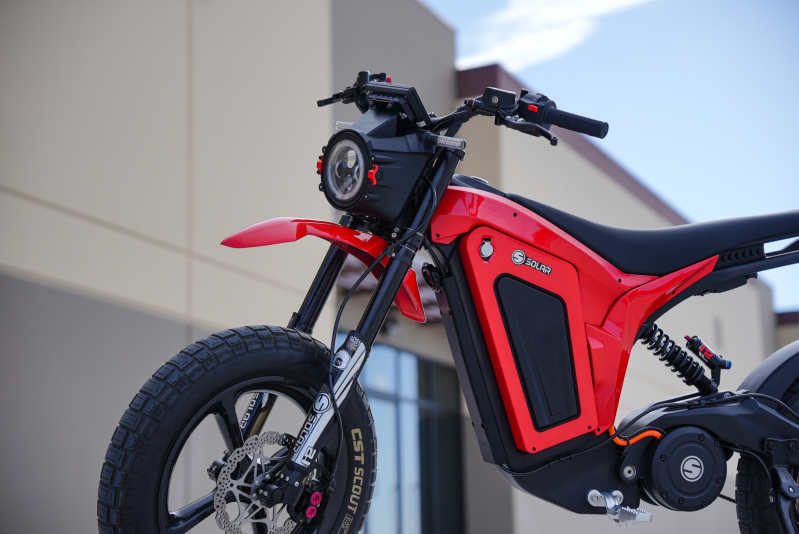
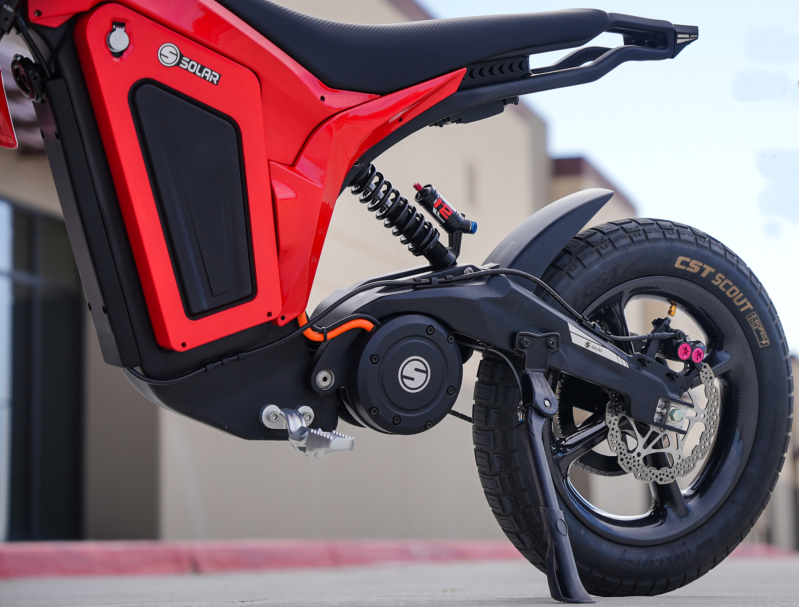
Solar Scooters has unveiled the lightweight and affordable Solar Eclipse Race Edition electric motorcycle. The Solar Eclipse Race Edition is the brand’s most powerful electric motorcycle to date. It comes with a 13,000W peak power output and a top speed of 65mph. it delivers up to 70 miles of range on a single full charge.
The Solar Eclipse Race Edition electric motorcycle comes with an affordable price tag in comparison to other models. The electric motorcycle is seen as a market disrupter, given its performance specs and affordability. It is coming at a time when manufacturers continue to evolve new form factors of electric motorbikes.
The electric motorcycle as designed by Solar Scooters is lightweight and is primarily an e-motorcycle that is suitable for use on urban roads.
The Eclipse Race Edition e-motorcycle is equipped with an LG 45Ah battery, a 45A output controller, and a 13000W peak output motor. The bike’s frame chassis and swingarm are made from carbon fiber which underscores its lightweight credentials.
Although it is a lightweight motorcycle, the Eclipse Race Edition is durable and rigid. Interested customers may order the bike with wheel and tire configurations to suit their riding requirements. The options are supermoto, endure, and street riding. The bike features turn signals, mirrors, and a plate bracket, and riders will need to get a motorcycle license and insurance.
Pricing & Availability
The Solar Eclipse Race Edition motorcycle starts at $6,795 and more details about the release can be viewed on the Solar official website.
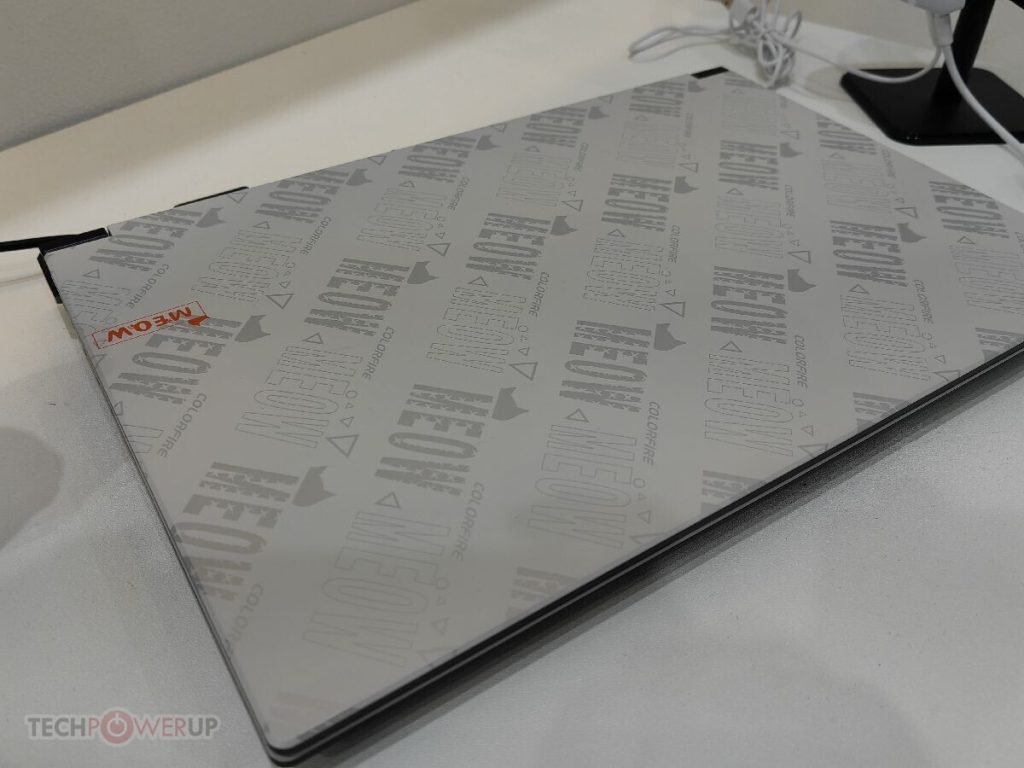
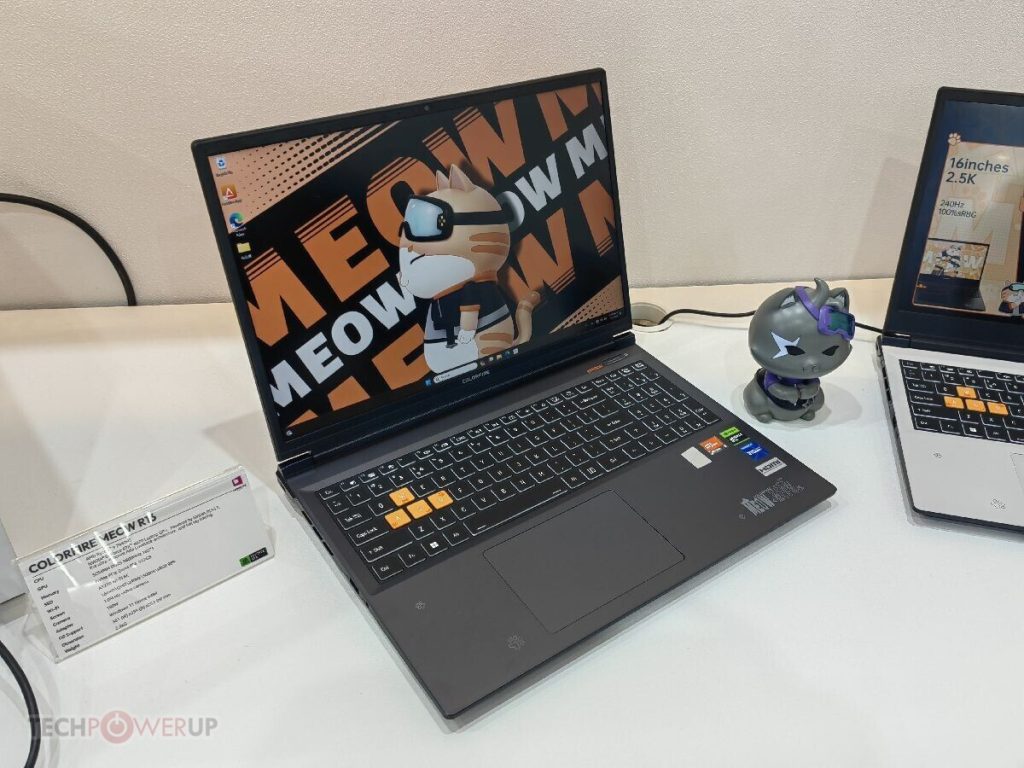
Colorful‘s Colorfire MEOW gaming laptop is making its international debut after being launched in China last February. The model comes with AMD Ryzen 7 8845HS SoC and up to RTX 4060 graphics card. Colorful Colorfire showcased the MEOW R15 and MEOW R16 models at Computex 2024.
Features
The MEOW R15 has a 15.6-inch IPS display with a resolution of 2560 x 1440 pixels and a 165Hz refresh rate. The MEOW R16 comes with a 16-inch IPS display with a 240Hz refresh rate and a resolution of 2560 x 1600 pixels. Both models have 100% sRGB color space coverage. The new MEOW R15/ R16 gaming laptops have subtle shades of orange and are cat-themed.
The MEOW gaming laptops launched for the international market do not feature the Ryzen 7 7735H processor featured in the China variant. It is seen that the Ryzen 7 7735H is a Chinese-exclusive CPU while the more powerful Ryzen 7 8845HS is suited for the international market. It is a premium processor from the Hawk Point family and it can be paired with up to RTX 4070 running at 140W TGP.
The performance of the gaming laptops therefore matches with even processor-intensive games for a seamless performance. They offer a stable performance even under heavy loads. The models have an efficient cooling architecture with a 6-heatpipe setup and dual turbo fans. You can also tune the performance to suit individual needs using a software application. The company has not provided availability and pricing information yet for the laptops.
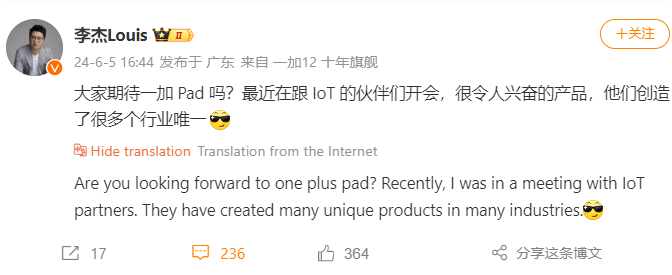
Li Jie, President of OnePlus China, recently talked about the upcoming OnePlus Pad 2 in his Weibo (a Chinese microblogging site) post. According to him, the Pad 2 will bring a number of industry firsts. “I was in a meeting with IoT partners. They have created many unique products in many industries,” he wrote. However, he didn’t reveal much about the product himself.
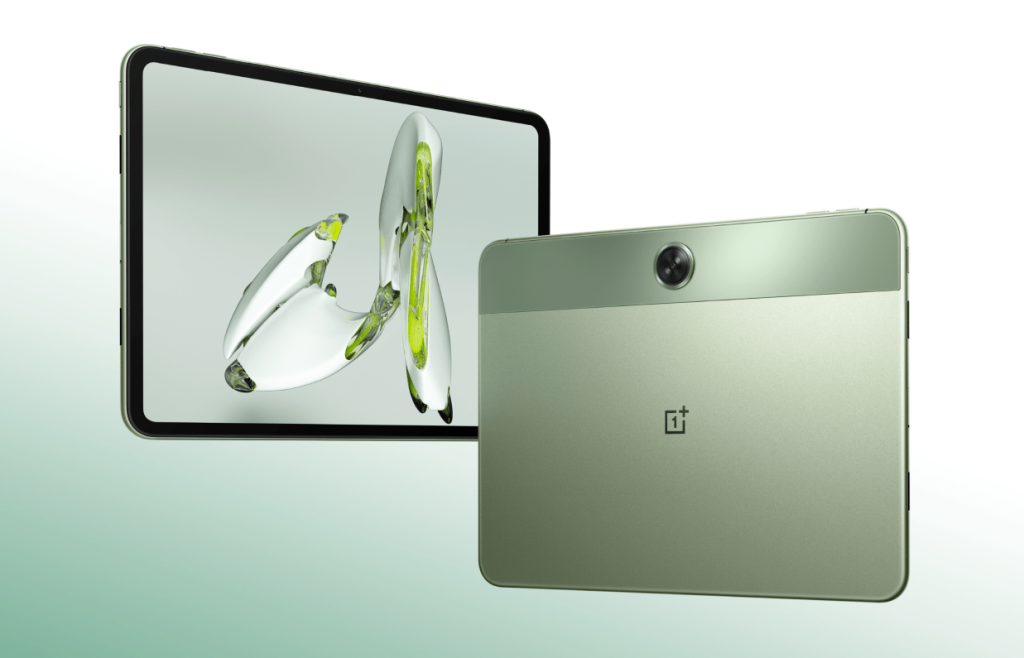
According to a recent rumor, the Pad 2 will come with four storage configurations 8GB+128GB, 8GB+256GB, 12GB+256GB, and 16GB+512GB, and two color options: space gray and fresh khaki green. According to the leak, it could be released as soon as this month.
The device weighs 585 grams, which is slightly heavier as compared to the 552g OnePlus Pad, which was released in April last year.
The OnePlus Pad 2 has already surfaced on Geekbench with model “OP2404” confirming that it will house the latest Snapdragon 8 Gen 3 flagship chipset. This device will surely have an edge in performance compared to its competitors. As the president hinted, the device could come with certain software features that take advantage of the raw power. In comparison, last year’s OnePlus Pad packed the 4nm Dimensity 9000, a flagship chipset that was released towards the end of 2021.
The Snapdragon 8 Gen 3 chipset comes with a Cortex-X4 core clocked at 3.3GHz, 5 x Cortex A720 cores (3 clocked at 3.2GHz, and 2 clocked at 3.0 GHz), and 2 x power efficient Cortex A-520 cores clocked at 2.3GHz. It packs the Adreno 750 GPU. The silicon achieves over 2000 and 7000 points in single and multi-core tests in Geekbench respectively, which is slightly below the Dimensity 9300.
On the outside you will likely see a 12.1″ 3K (3000 x 2120) LCD display that has a pixel density of 304PPI and reaches a peak brightness of 900 nits. The device is reported to boast a 9510mAh battery paired with 67W charging support, which is the exact same as the predecessor. Since the SD 8 Gen 3 is more powerful than the Dimensity 9000 and still based on a 4nm process, it will be interesting to see how the Pad 2’s battery life compares to its predecessor while it introduces some industry firsts.
At Computex 2024, COLORFUL has released the EPOCH 14 AI laptop, aimed at professionals and content creators who need a powerful yet portable device. This new laptop is lightweight, weighing only 1.5 kilograms, and has a slim profile of 17.9mm. Its durable all-metal body and CNC-machined aluminum unibody give it a sleek, professional look.
The EPOCH 14 features a 14-inch QHD display with a 165Hz refresh rate and a resolution of 2560 x 1600. It fully covers the DCI-P3 color range and offers a brightness of 500 nits.
The laptop is powered by the latest 13th Gen Intel Core i9 processors and includes an NVIDIA GeForce RTX 4070 GPU. It supports up to 32GB of DDR5 RAM and has 1TB of PCIe Gen 4 storage, allowing for efficient multitasking and storage of large files.
It includes a tempered glass touchpad, an LED-backlit keyboard, and multiple connectivity options such as HDMI 2.1, USB-C, and USB A Gen 3.2 ports. It also supports Wi-Fi 6E and Bluetooth 5.2, ensuring fast and reliable wireless connectivity.
Additional features include a 1MP HD video camera, stereo speakers, a 58Whr battery with a 150W charger, and it operates on Windows 11. COLORFUL plans to introduce an OLED screen option and is developing its own AI software to further improve this laptop’s capabilities.
Pricing & availability
Starting at USD 1359, the EPOCH 14 is available in two colors: Deep Ocean Blue and Silvery White.
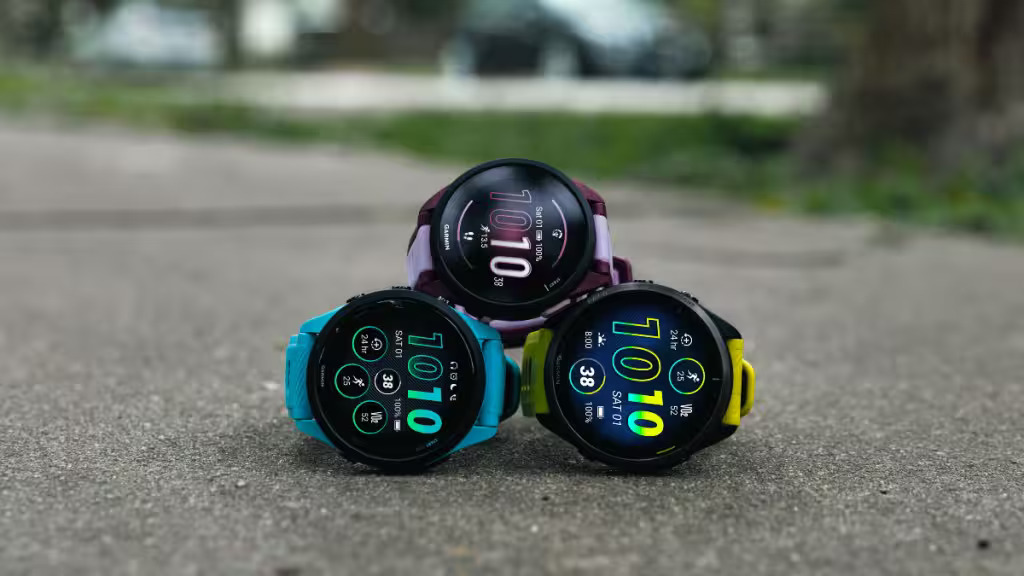
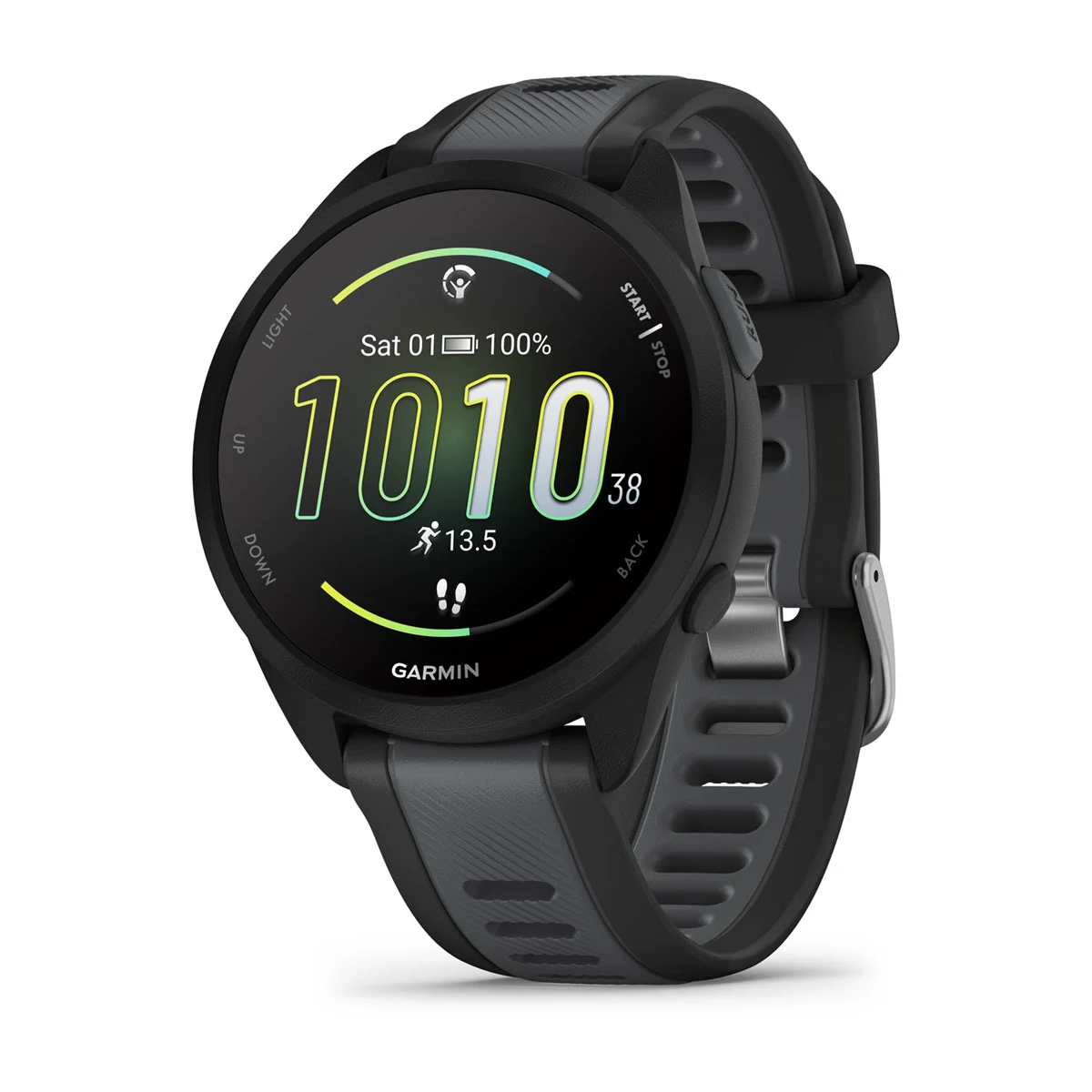
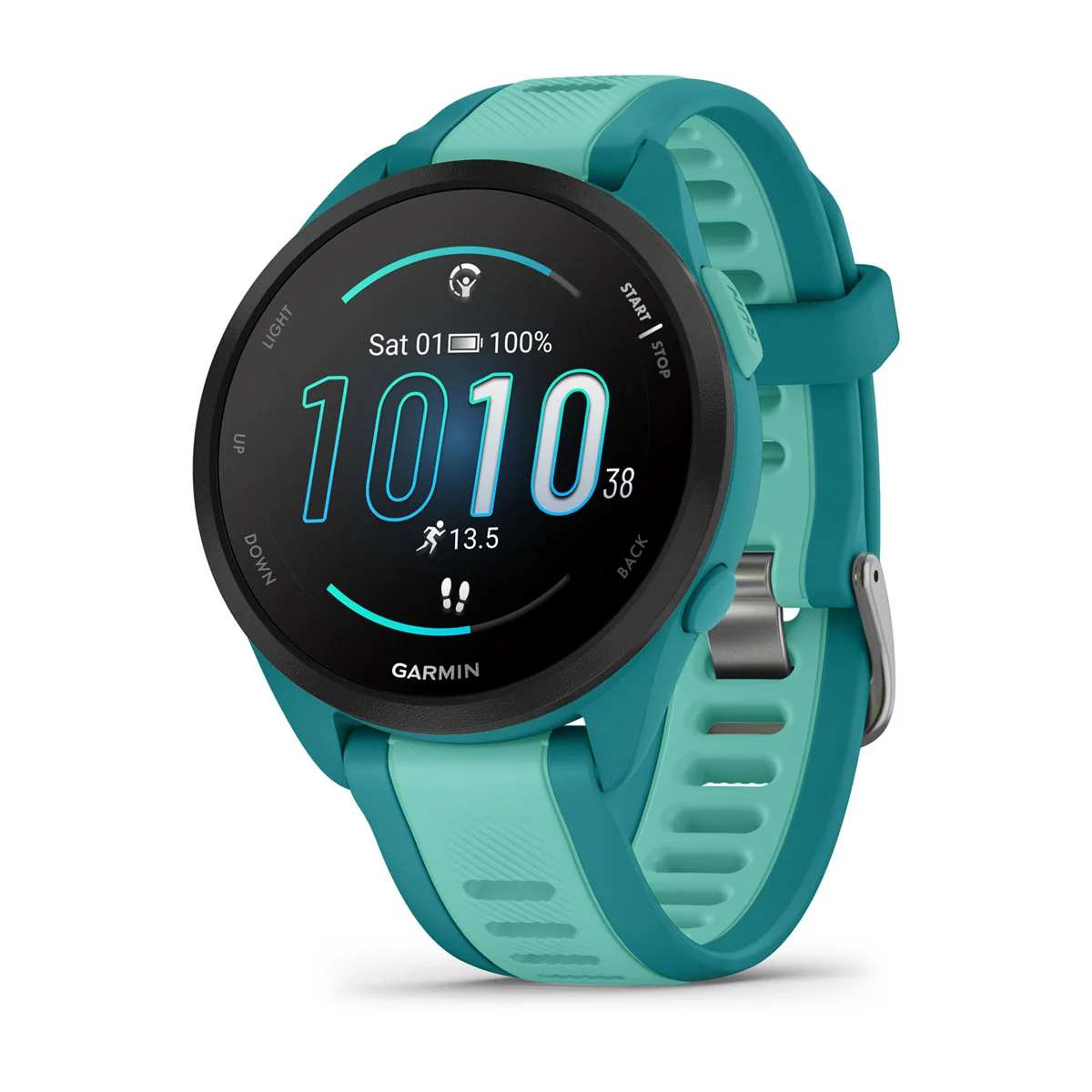
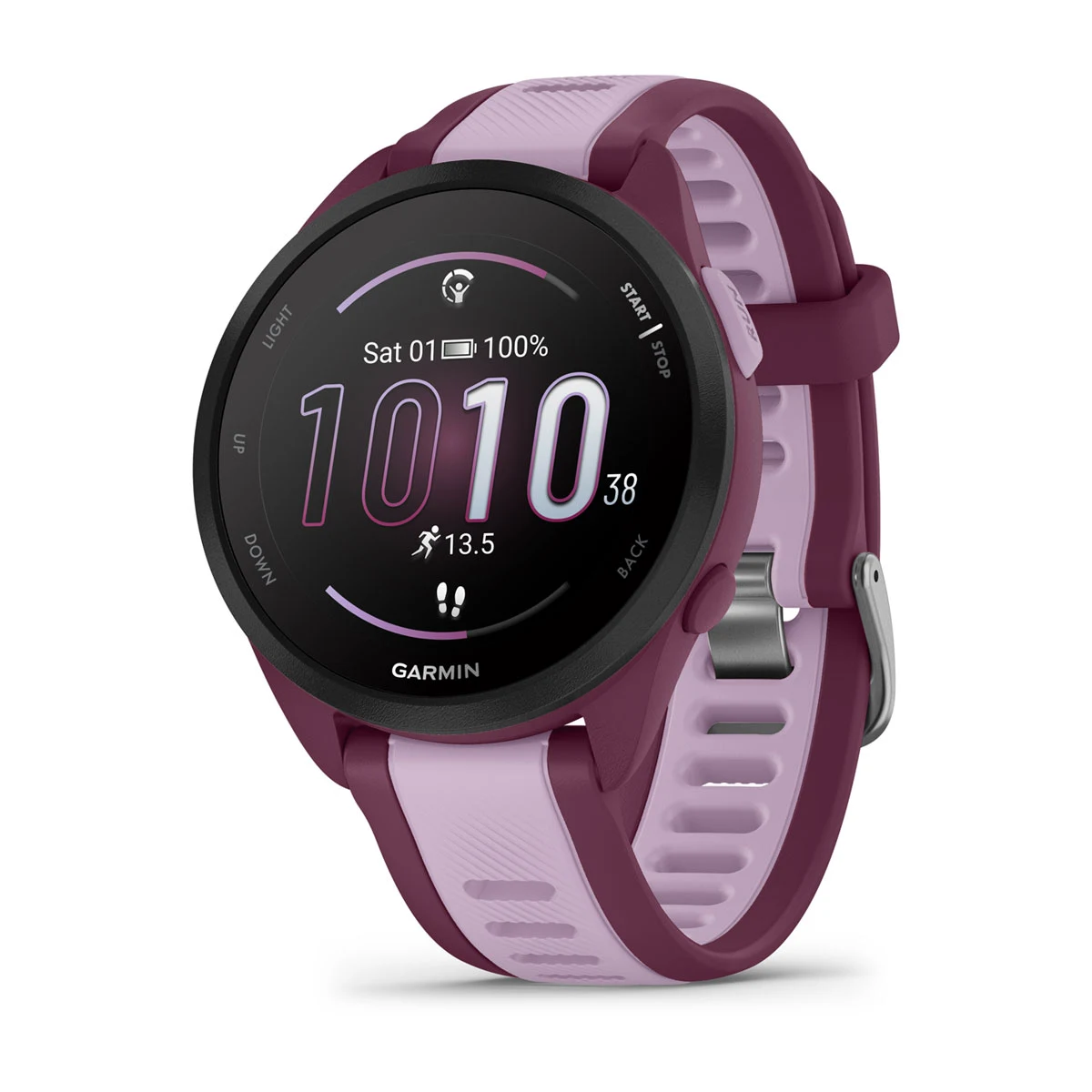
Garmin has released the Forerunner 165 smartwatch in India to coincide with Global Running Day. This new GPS smartwatch is tailored for professional runners and sports enthusiasts. It features a clear 1.2-inch AMOLED screen, a lightweight frame, and is available in a range of colors.
The Forerunner 165 allows users to download music directly from Spotify or Amazon Music, enabling them to listen without a phone by connecting wireless headphones. This feature is particularly useful for runners who prefer to train without carrying extra gadgets.
The smartwatch includes built-in GPS for precise tracking of distance and pace, and a heart rate monitor on the wrist. It offers adaptive training plans that adjust to users’ fitness levels and goals, which can be managed and customized through the Garmin Connect app.
For health tracking, the device measures blood oxygen levels, monitors sleep, and tracks other health indicators. It supports more than 25 activity profiles, making it useful for a variety of sports including running, swimming, and tennis.
The Forerunner 165 also provides a daily Morning Report, which gives users an overview of their sleep quality, upcoming training, heart rate variability, and the day’s weather.
With a battery life of up to 11 days in smartwatch mode and 19 hours with GPS use, the watch is designed to last through extended training sessions without frequent recharges.
Pricing & availabiliy
The Forerunner 165 Series is priced at Rs. 33,490 and comes with a two-year warranty. Available in colors such as Turquoise/Aqua, Black/Slate Grey, Mist Grey/Whitestone, and Berry/Lilac, it can be found at select premium brand stores.
Qualcomm is reportedly thinking of a “dual-sourcing production strategy” for the Snapdragon 8 Gen 5 chipset. The two companies will be Samsung Electronics and TSMC. According to Businesskorea, during a media briefing held at the W Hotel in Taipei, Taiwan, on June 4th, Qualcomm CEO Cristiano Amon shared the information in response to a question.
Qualcomm is considering a dual-sourcing strategy important for its business
The question was about the risk of relying solely on a single manufacturer for all of its chips. He responded that he is thinking of partnering with Samsung alongside TSMC for its chip fabrication. Notably, the upcoming Snapdragon 8 Gen 4 will be manufactured entirely by TSMC. However, changes is the strategy may take place starting with the Snapdragon 8 Gen 5. “The current focus must be on the foundry production at TSMC,” he confirmed.
Reportedly, the possibility of a dual-sourcing strategy for the Snapdragon 8 Gen 5 has been a recurring topic recently. On top of that, Qualcomm internally appreciates Samsung’s 2nm SF2 process. The node is expected to offer significant improvements in both performance and power efficiency.
Previous collaboration with Samsung Foundry wasn’t successful
Qualcomm has already tried collaborating with Samsung for its chip fabrication (the Snapdragon 888 and Snapdragon 8 Gen 1). However, both the chips failed to meet everyone’s expectations regarding a stable performance. Due to the overheating issues with the two chips, Qualcomm had to move back to TSMC starting with the Snapdragon 8+ Gen 1, which was adopted by the Galaxy Z Fold 4. The refreshed version of the Snapdragon 8 Gen 1 with TSMC’s 4nm process node showed significant improvement when it comes to power efficiency and sustained performance.
On the other hand, Samsung has managed to significantly improve the power efficiency of its last two generations of Exynos chips (Exynos 220 and Exynos 2400) that are also fabricated by Samsung Foundry. The Exynos 2400 version of the Galaxy S24 and S24 Plus does not show a performance gap nearly as wide as it used to be a couple of years ago. That being said, we will have to wait to see how successful Samsung will be with its 3nm process, and more importantly, with the 2nm and smaller nodes that might be used to fabricate future Snapdragon chips.
Lastly, the CEO mentioned the dual-sourcing strategy but did not reveal how they plan to implement it. Samsung offers different chipsets in its flagships based on regions. Will Qualcomm’s dual-sourcing strategy be similar? Well, the only thing that’s clear at this point is that Qualcomm is considering the new partnership with Samsung as a backup and keeps the focus on the collaboration with TSMC. We will share more information as they become available.
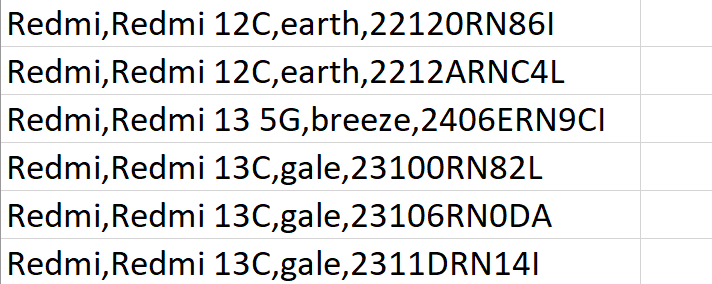
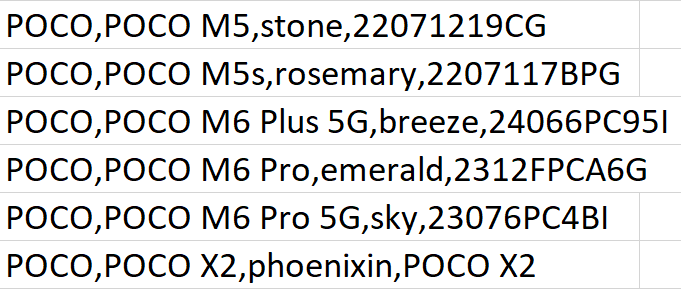
Redmi 13 5G was introduced in China under the name Redmi Note 13R and is now expected to be introduced in India. We are eagerly wondering how the Redmi 13 5G, which is similar to the previous generation Redmi 12 5G, will be greeted by users. Two different “breeze” codenamed devices expected to be introduced in India have been spotted: Redmi 13 5G & POCO M6 Plus 5G. Both smartphones will have similar features and may come with slight differences in camera. Now that the devices are showing up on the Google Play Certificate, there is a good chance that they will be unveiled soon.
Redmi 13 5G & POCO M6 Plus 5G Google Play Certificate
In the Google Play certificate, devices with 2 different model numbers were detected: 24066PC95I and 2406ERN9CI. The first one belongs to POCO M6 Plus 5G and the second one to Redmi 13 5G. We are eagerly waiting to see how the models that will be supported by Snapdragon 4 Gen 2 will perform.
Redmi 13 5G BreezePOCO M6 Plus 5G 5G Breeze
Although the launch date of the smartphones is not yet known, they are expected to be unveiled soon. Between the 2 devices, there will be differences only at the camera level, which we have already mentioned in a previous article. With the unveiling of the Redmi 13 today, the Redmi 13 5G may be introduced soon.
OnePlus has recently been pushing out a major update to its devices with many changes and improvements to the operating system and UI. This new update called the OxygenOS 14.0.0.800 is now being pushed for Indian users of the OnePlus 11R. You can find the list of changes below.
OnePlus 11R OxygenOS 14.0.0.800 update changelog
New smooth animations
Adds wallpaper zoom and seamless icon transitions during app launch and exit for a smoother visual experience.
Adds a bounce animation effect when sliding to the bottom of the notification drawer and optimizes the layer effects of Quick Setting icons and widgets, bringing a more natural and delicate visual effect.
Optimizes the transition animations for Home screen icons and widgets and adds wallpaper zoom animations upon device unlock.
Adds wallpaper zoom animations and gradual brightness transitions when the screen is turned on or off.
Optimizes the background colors and Gaussian blur effects in Quick Settings, Notification drawer, Home screen drawer, and Global Search.
Optimizes the transition animation when the Lock screen clock and buttons disappear upon device unlock.
Optimizes animations when entering and exiting Global Search, ensuring a smoother and more consistent visual experience.
New touch control experience
Adds a transition animation when swiping in from one side of the screen to exit an app before it starts up.
Adds a transition animation when swiping in from one side of the screen to go back to the previous page before a new page is opened.
Adds a transition animation when swiping inward from a side of the screen or swiping up to exit an app in landscape mode.
You can now tap the lower right corner of a large folder to view more apps.
You can now pull down app icons in large folders and then open an app in just one move.
Improves touch control responsiveness. Tapping and swiping on the Home screen and Recent tasks screen is now faster and more stable.
Increases touch responsiveness for app usage scenarios, for example, when opening and closing apps, entering and exiting recent tasks, or swiping on the gesture guide bar to switch between apps.
Optimizes animations when using large folders. Dragging apps on the Home screen is now smoother.
System
Adds a horizontal layout for the Lock screen clock.
You can now adjust the volume in Quick Settings.
You can now choose not to show the track when drawing the Lock screen pattern to unlock your device.
You can now use fingerprint unlock without waking up the screen.
You can now create photo collages without frames in Photos.
Adds a “Partial screenshot” option in the Smart Sidebar.
You can now press and hold the Volume Down button to turn the flashlight on when the screen is off.
You can now try out the “app-specific volume” feature to adjust the volume for individual apps based on your needs.
You can now adjust the size of a floating window by dragging its bottom and swipe up to close a mini window.
Improves the volume bar’s design for ease of use and visual consistency.
Integrates the May 2024 Android security patch to enhance system security.
The update is initially being rolled out to a select number of devices in India, with a wider release anticipated soon. If you haven’t received the OTA update notification on your device, you can manually check for it by going to Settings > About Device > OxygenOS and tapping on Check for Update.
A recent outage of OpenAI‘s ChatGPT chatbot triggered a surge in interest for Google’s conversational AI competitor, Gemini. Data from QR Code Generator reveals a near 60% jump in global searches for “Gemini” on June 4th, coinciding precisely with the reported downtime of ChatGPT. On average, daily searches for “Gemini” hover around 204,991, but during the ChatGPT outage, that number skyrocketed to 327,058. This suggests that users actively sought alternatives when their go-to chatbot became unavailable.
The ChatGPT outage began around 8:00 AM London time on June 4th
Interestingly, the rise in Gemini searches mirrored the rise in searches for “ChatGPT down” during the same timeframe, highlighting a clear correlation. Reports from DownDetector indicate that the ChatGPT outage began around 8:00 AM London time on June 4th.
While Gemini emerged as the most popular alternative, other searches like “Microsoft Copilot” and “ChatGPT Alternative” also saw a rise. Daily searches for “Microsoft Copilot” typically average around 11,090, but on June 4th, that number jumped to 16,677, a 50% increase. Similarly, searches for “ChatGPT Alternative” spiked to 11,000 within the first few hours of the outage, compared to a typical daily average of 898. However, it’s important to note that these alternative searches pale in comparison to the surge in Gemini interest.
Marc Porcar, CEO of QR Code Generator, sees this as a validation of Google’s efforts to position itself as a major player in generative AI. “The clear parallel trend between the ChatGPT outage and the surge in Gemini searches suggests that people see Gemini as an obvious alternative,” commented Porcar. He further emphasizes that in the absence of ChatGPT, users readily turned to Gemini, signifying its potential as a strong competitor.
FILE PHOTO: OpenAI and ChatGPT logos are seen in this illustration taken, February 3, 2023. REUTERS/Dado Ruvic/Illustration/File Photo
It’s worth mentioning that OpenAI’s ChatGPT boasts around 180 million active users worldwide, solidifying its position as a leader in generative AI chatbots. Google’s Gemini, launched in late 2023 as the successor to LaMDA and PaLM 2, entered the scene with claims from Google’s parent company, Alphabet, that its “Gemini Ultra” outperformed OpenAI’s GPT-V4 in various text and multimodal functionalities. The recent outage of ChatGPT provided Gemini with an unexpected opportunity to gain traction among users seeking alternatives, and it will be interesting to see if this translates into sustained growth for Google’s conversational AI offering.
Popular PC Case manufacturer Fractal Design has announced a wave of new products, including their first gaming chair, wireless gaming headset, and two new PC cases. The company is exploring new avenues, let’s check out what features these products have to offer.
The Gaming chair is inspired by Nordic Furniture Design
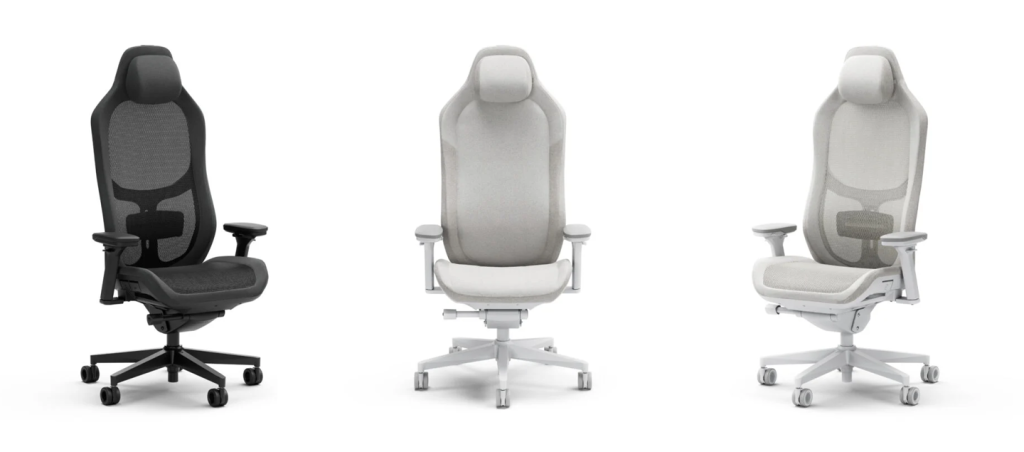
The centerpiece of the announcement is the Refine gaming chair, inspired by Nordic furniture design with clean lines and a minimalist aesthetic. The chair boasts extensive adjustability for the headrest, seat, lumbar support, and armrests, and reclines to various positions for maximum comfort. The Refine comes in two material options: mesh and fiber for $549.99 (around 3,984 Yuan) or Alcantara for $899.99 (around 6,519 Yuan), and will be available later this year.
Fractal Design also unveiled the Scape wireless gaming headset, which utilizes Bluetooth 5.3 for a reliable connection. The headset allows for unique customization of its sound profile through the Adjust Pro website and features ambient lighting effects for a touch of personality. The Scape is priced at $199.99 (around RMB 1,449) and is expected to hit shelves later this year.
For PC enthusiasts, Fractal Design introduced two new cases: the Mood mid-tower case and the Era 2 small form factor (SFF) case. The Mood features a unique column design with ample space for most graphics cards and comes equipped with a 180mm top fan for improved cooling. The Mood will be available on June 18th for $149.99 (around RMB 1,086).
The Era 2 SFF case is designed for smaller builds but offers surprising power. It supports graphics cards up to 326mm and can even accommodate a water cooling radiator. The Era 2 is expected to launch in Q3 of this year with a price tag of $199.99 (around RMB 1,449).
Lenovo is adding a new “Princess Peach” color option to its YOGA Air 14 AI Yuanqi laptop, endorsed by popular celebrity Dilraba Dilmurat. The new color is described as sweet yet elegant, offering a warm and fashionable look. This version will be officially available for purchase starting at 10:08 am on June 8th.
The laptop weighs around just 1.4kg and is only 14.9mm thin
The Lenovo YOGA Air 14 AI remains powerful on the inside, packing a Core Ultra 7 155H processor, 32GB of LPDDR5x-7467 memory, and a 1TB PCIe 4.0 solid-state drive. It carries a price tag of 8,499 yuan.
For portability, the YOGA Air 14 weighs just around 1.4kg and measures a mere 14.9mm thin. Its exterior boasts a beautiful “PureBright treasure craftsmanship” finish, with the existing light seashell color option drawing inspiration from the luster of ocean shells.
The star of the show might be the display. The YOGA Air 14 features a stunning 2.8K 120Hz PureSight super-sensitive OLED screen. This high-resolution display boasts 400 nits of brightness, 100% DCI-P3 color gamut, Dolby Vision support, and VESA DisplayHDR True Black 500 certification, ensuring vibrant visuals and a premium viewing experience.
Beyond the gorgeous display, the YOGA Air 14 offers a comfortable typing experience with its 1.5mm rhythmic keyboard featuring a 0.3mm key travel and a spacious 5.6-inch anti-mistouch touchpad. The laptop is equipped with a built-in 65Wh battery and supports Windows Hello IR face recognition for added security.
For connectivity, you’ll find a selection of ports including HDMI 2.1 and two Thunderbolt 4 ports on the left side, while the right side houses a camera switch, a 3.5mm headphone jack, and a USB-A 3.2 Gen 1 port.
The Lenovo Xiaotian AI agent, powered by the Tianxi big language model, is integrated into the system to provide users with natural and intelligent interaction in various work and study scenarios, offering a more personalized user experience.
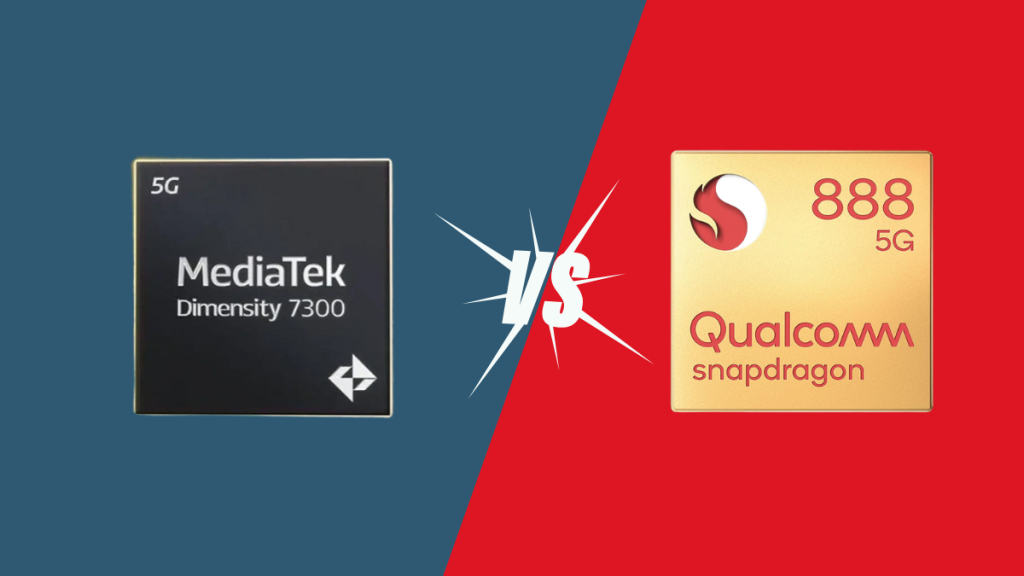
Qualcomm released the Snapdragon 888 in late 2020, while the Dimensity 7300 is a newer chip announced in May 2024. Despite being a 3-year-old chip, it’s still popular among mid-range phones. But how well does it compare with MediaTek’s Dimensity 7300? Let’s find out.
The Dimensity chip is manufactured using TSMC’s 4nm process node, while the Snapdragon 888 chip uses a 5nm process from Samsung. Both chips have different core architectures and configurations.
Let’s quickly review the spec sheet, and then we’ll discuss different aspects of a chip comparison that will help you make an informed decision.
Dimensity 7300
Snapdragon 888
Process Node
TSMC 4nm
Samsung 5nm
CPU Cores
8
8
CPU Architecture
4 x Cortex-A78 @ 2.5 GHz 4 x Cortex-A55 @ 2.0 GHz
1 x Cortex-X1 @ 2.8 GHz 3 x Cortex-A78 @ 2.4 GHz 4 x Cortex-A55 @ 1.8 GHz
GPU
Arm Mali-G615 MC2
Adreno 660
NPU
MediaTek APU 655
Hexagon 780
Memory
LPDDR5 RAM UFS 3.1 storage
LPDDR5 RAM UFS 3.1 storage
Camera
Imagiq 950 12-bit ISP Up to 200MP camera sensor support Up to 4K videos @ 30 FPS
Spectra 580 14-bit ISP Up to 200MP camera sensor support Up to 8K videos @ 30 FPS
Display
WFHD+ @ 120Hz, Full HD+ @ 144Hz
4K Ultra HD @ 60Hz, QHD+ @ 144Hz
Connectivity
MediaTek 5G R16 modem Wi-Fi 6E Bluetooth 5.4
Snapdragon X60 5G modem Wi-Fi 6E Bluetooth 5.2
Dimensity 7300 vs Snapdragon 888: Performance
The Dimensity 7300 is equipped with four Cortex-A78 performance cores clocked at up to 2.5 GHz, and the remaining four are Cortex-A55 power-efficient cores running at 2.0 GHz.
The Snapdragon 888 has a Cortex-X1 prime core clocked at up to 2.8 GHz, three Cortex-A78 performance cores at 2.4 GHz, and the remaining four Cortex-A55 are power efficient cores clocked at 1.8 GHz.
The Cortex-X1 prime core in Snapdragon 888 provides the chip an edge over the Dimensity 7300 in terms of performance. The Qualcomm chip will likely perform better in demanding tasks like gaming and intensive multitasking. However, the Dimensity 7300 offers better battery life due to a more power-efficient core configuration.
Both chips have different GPUs (Arm Mali-G615 MC2 in Dimensity 7300 and Adreno 660 in Snapdragon 888). The Adreno 660 is a more powerful GPU but consumes more power, while the Mali-G615 MC2 is a power-efficient chip, leading to a longer battery life, but don’t expect the same performance as Adreno 660 in high-end gaming and graphics-intensive tasks.
The Snapdragon chip has a full suite of Snapdragon Elite Gaming features, including variable rate shading for better graphics performance and Qualcomm Game Quick Touch for increased display responsiveness. The MediaTek chip employs MediTek HyperEngine optimizations, promising to accelerate gaming experiences and energy efficiency by up to 20%.
The Snapdragon 888 delivers great CPU and GPU performance, but many devices powered by this chip were overheating during gaming and other process-intensive tasks.
Smartphones are getting smarter with AI features, and therefore, selecting the right NPU has become crucial. The Dimensity 7300 uses MediaTek NPU 655, which offers 2x performance compared to its previous generation. The chip supports AI camera enhancements, such as AI-NR, AI-HDR, and AI-PQ, and integrates with MediaTek HyperEngine to enhance gaming performance and reduce GPU load.
The Hexagon 780 in Snapdragon 888 is a powerful NPU optimized for low power consumption and high performance. It is designed to accelerate AI processing tasks, such as machine learning and other AI-related applications. It is capable of 26 trillion operations per second (TOPS).
Dimensity 7300 vs Snapdragon 888: Multimedia
Both chips have excellent imaging capabilities, supporting up to a 200MP single camera sensor. However, the video recording is a limiting factor in the Dimensity chip. It can take up to 4K videos at 30FPS, while the Snapdragon 888 can take up to 8K videos at the same frame rate.
The Dimensity 7300 featuring Imagiq 950 12-bit ISP provides precise noise reduction (MCNR), face detection (HWFD), and video HDR. The chip has up to 1.3x faster live focus photo performance and up to 1.5x faster photo remastering than its previous counterparts.
The Snapdragon 888 has a Spectra 580 14-bit ISP with camera features such as real-time object classification, HDR, multi-frame noise reduction (MFNR) low-light photography architecture, and high-efficiency image file format (HEID).
Dimensity 7300 vs Snapdragon 888: Connectivity
Both Dimensity 7300 and Snapdragon 888 chips boast excellent connectivity features, including Wi-Fi 6E, 5G, and necessary satellite systems (GPS, BeiDou, Glonass, Galileo, QZSS, NavIC).
The Dimensity 7300 chip has a peak downlink speed of 3.27 Gbps, slightly shorter than that of 3.6 Gbps in the Snapdragon 888. Both chips also have their own optimization solutions for network enhancements.
Dimensity 7300 vs Snapdragon 888: Which Is Better?
The Snapdragon 888 has performance advantages over the Dimensity 7300 but lags behind the Dimensity chip when it comes to lesser battery consumption. Notably, the Snapdragon 888-powered device overheats while playing high-end games and doing other tasks that require a lot of processing.
Both chips have powerful imaging capabilities, but the Snapdragon chip can take videos at 8K 30FPS resolution (vs. 4K 30FPS in Dimensity 7300). Another big difference is that the Dimensity chip supports WFHD+ resolution, whereas the Snapdragon 888 supports a higher 4K Ultra HD display resolution. The Snapdragon chip also edges out the Dimensity chip in terms of Bluetooth version and peak download speed.
So, the Snapdragon 888 is clearly ahead of the Dimensity 7300 in terms of performance, connectivity, and display resolution. The higher video resolution is another reason to prefer Snapdragon 888 over the Dimensity 7300. However, the core architecture of Dimensity 7300 suggests a better power efficiency than the Snapdragon 888 chip.
If you can’t compromise on performance, the Snapdragon 888 chip is a suitable choice over the Dimensity 7300. However, for an optimal balance of battery and performance, the Dimensity chip would be a better option.
Xiaomi unveiled the CyberOne, its first humanoid robot in 2022, which is reportedly equipped with high power density actuators. It joins the company’s Cyber series robots – the CyberDog and CyberDog 2.
Image: Xiaomi
Now the latest news is that Xiaomi Robotics is currently actively promoting a phased implementation of the robot in its own manufacturing system. According to the company, the intelligence of the robots could be utilized in specific scenarios of its manufacturing process.
Xiaomi reportedly envisions building an open-source platform through technological innovations and breakthroughs.
The division is continuing to develop the technology. A more capable and intelligent version of the robot will be able to contribute to more fields of Xiaomi’s manufacturing process. The company also reportedly plans to expand the application to various industries such as electronics, machinery, artificial intelligence and automobiles.
Reportedly, the project is expected to become Beijing’s first humanoid product development, manufacturing and application demonstration project.
Abilities of the CyberOne bipedal robot
The CyberOne is fitted with advanced arms and legs, supports bipedal-motion posture balancing, and reaches a peak torque of up to 300Nm. The company also demonstrated the robot’s ability to detect human emotion alongside having advanced vision capabilities. It can create a three-dimensional virtual reconstruction of the real world, alongside a host of other advanced technologies.
Image: Xiaomi
The robot measures 177cm in height and 52kg in weight, with an arm span of 168cm. It supports up to 21 degrees of freedom in motion and achieves a real-time response speed of 0.5ms for each degree of freedom, which allows it to fully simulate human movements. Thanks to the self-developed humanoid bipedal control algorithm, CyberOne’s walking posture has been programmed to be both natural and stable.
“With AI at its core and a full-size humanoid frame as its vessel, this is an exploration of possibilities of Xiaomi’s future technological ecosystem and a new breakthrough for the company,” said Lei Jun, Founder, Chairman, and CEO of Xiaomi Group.
Noise has just announced a brand-new smartwatch, which arrives as a premium model in the Indian market. The NoiseFit Origin recently had some of its key features revealed. And now, the wearable has been officially launched in the region. So here are all the details.
NoiseFit Origin Specs
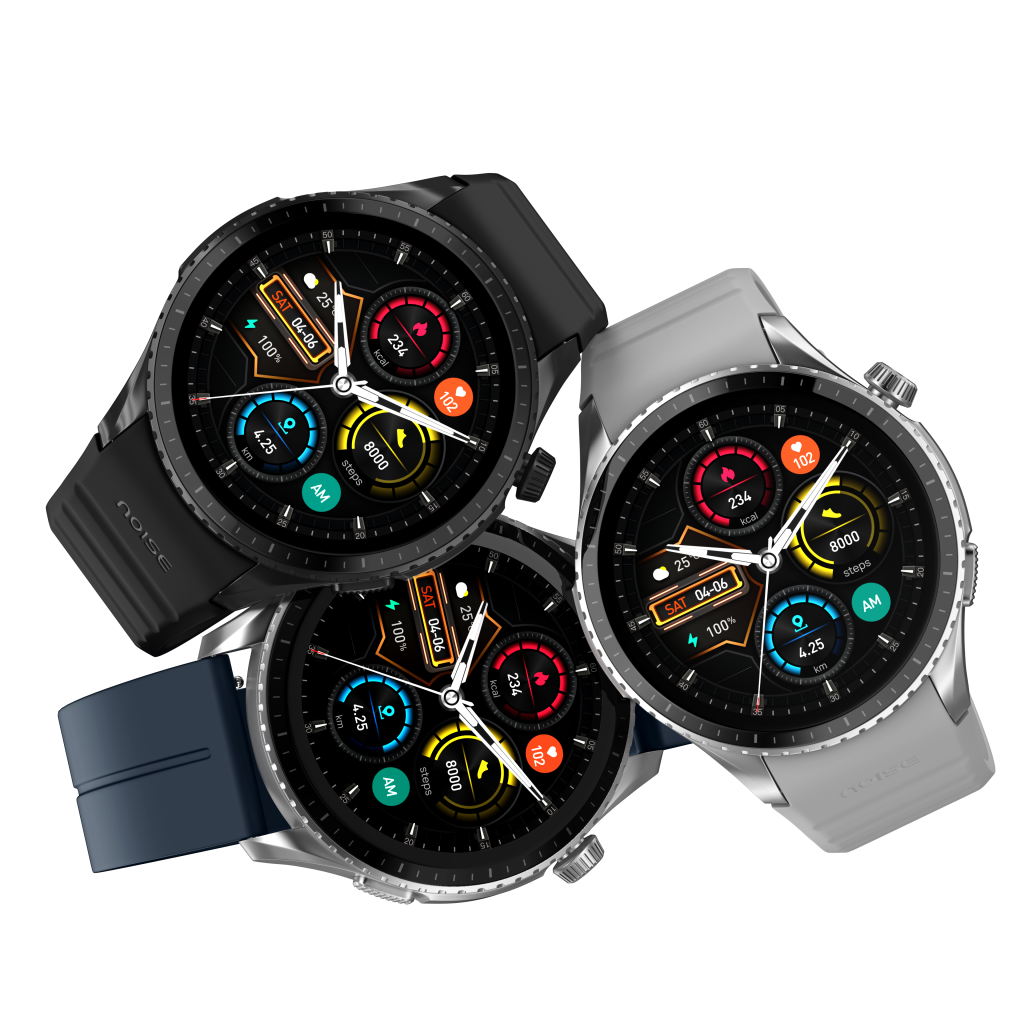
The brand’s latest smartwatch sports a 1.46-inch ApexVision AMOLED panel that offers 466 x 466 resolution, 600 nits of peak brightness, 100+ watch faces, and an Always-on display. This screen showcases the brand’s all-new Nebula UI which promises to offer an intuitive design and user-friendliness. It is powered by the new EN 1 processor that offers a 30 percent faster response rate to help keep things running smoothly and seamlessly. The smartwatch is built using a stainless steel design with a brushed finish and 3ATM water resistance.
The NoiseFit Origin comes with support for various health related features for 24/7 heart rate tracking, sleep monitoring, blood oxygen level measurement, stress tracking, and a female cycle tracker. There are also gesture controls and smart widgets that show important data at a quick glance. On a single full charge, this model can last for up to 7 days and supports fast charging. You can pair the watch with your phone using Bluetooth 5.3.
Pricing and Availability
Noise released the NoiseFit Origin premium smartwatch in six color variants, namely Jet Black, Silver Grey, Midnight Black, Mosaic Blue, Classic Black, and Classic Brown. It has a price tag of 6,499 INR (roughly 78 US Dollars). You can purchase this watch via the brand’s official website and in Croma stores today (5th June 2024). The device will also go on sale via popular online e-retailers Amazon and Flipkart on 7th June 2024. This launch also arrives a month after the brand unveiled the ColorFit Pulse 4 smartwatch in India.
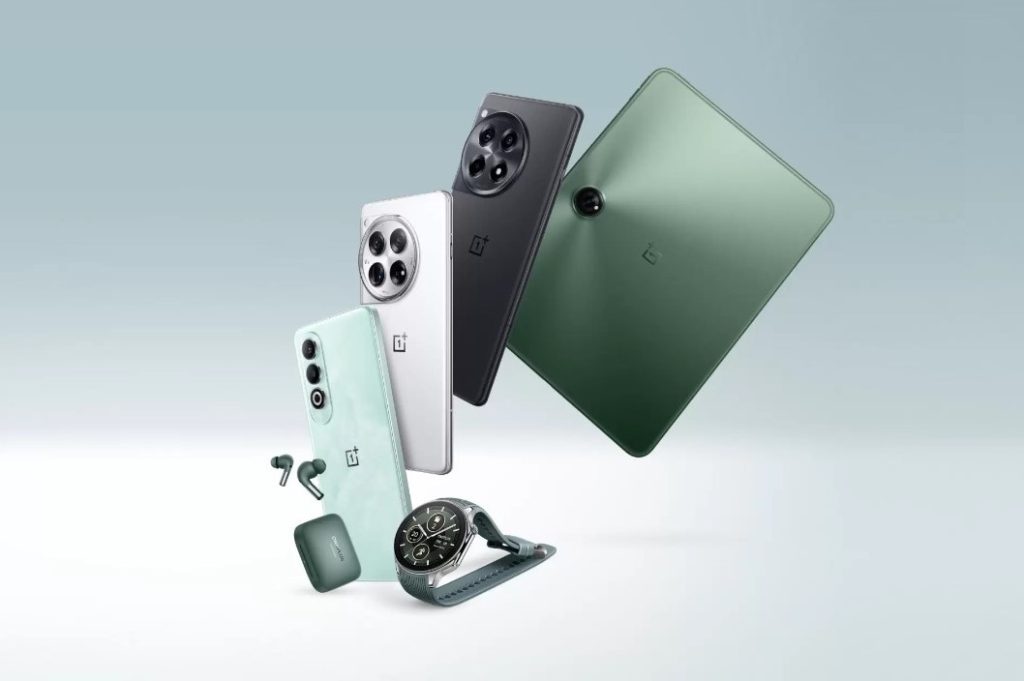
OnePlus Community Sale has begun from today. It will happen for six days till June 11. The brand has announced discounts and bank offers on various products including smartphones, TWS earphones, tablets, and more. Some of the older devices have got heftier discounts. The OnePlus Community Sale can be accessed from both online and offline channels across the country. Continue reading to check the regular and sale prices below.
OnePlus Community Sale starts with huge discounts
OnePlus products are often exclusively available on Amazon as well as the brand’s website and retail stores. Hence, it’s worth noting that there might be differences in the discounted prices on devices depending on where you choose to purchase from. The sale prices can also change during the duration of the sale period.
OnePlus is offering coupon discounts along with bigger bank offers on select products. These will be only valid on purchasing the device from the official website. Other channels like Amazon, Reliance Digital and more also have bank offers but no coupon discounts. There’s also exchange offers on older devices.
The discounts on the aforementioned list of devices are for the base configurations. For bank discounts, they are valid for ICIC Bank, HDFC Bank, OneCard, BOB, and IDFC First transactions. There is up to 12-months of no-cost EMI on major bank cards. OnePlus audio devices are also eligible for discounts and offers.
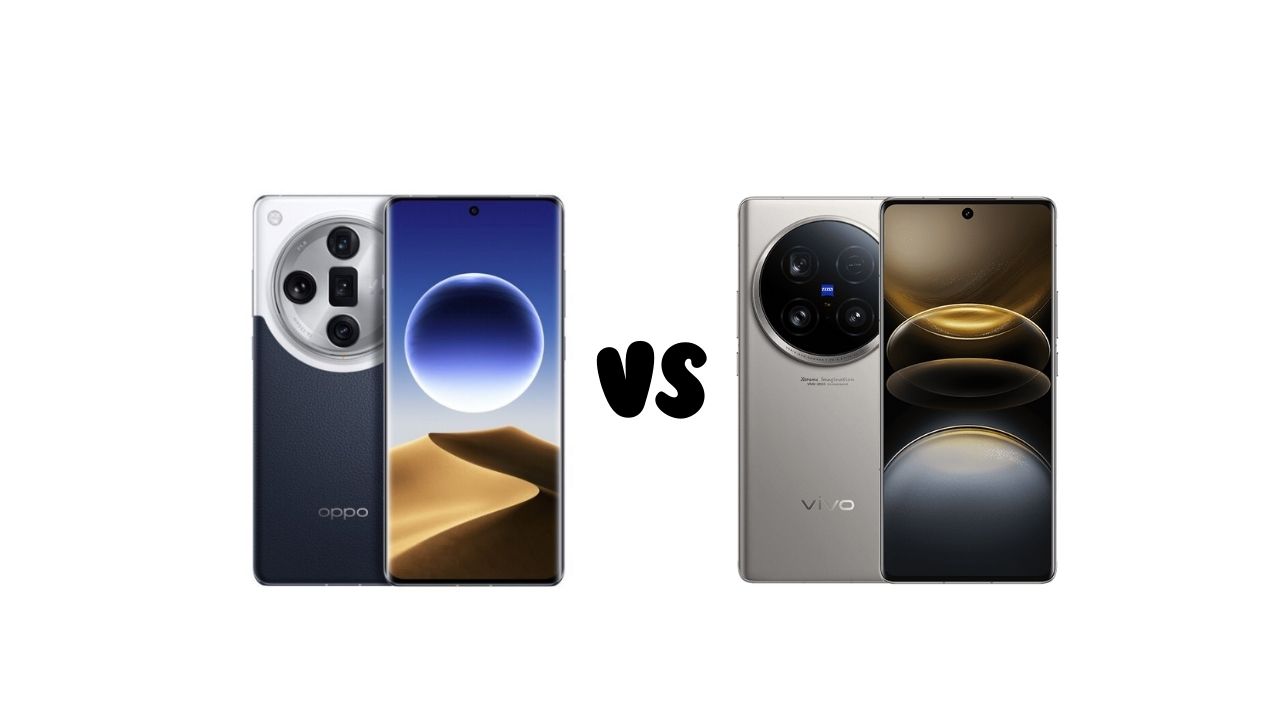
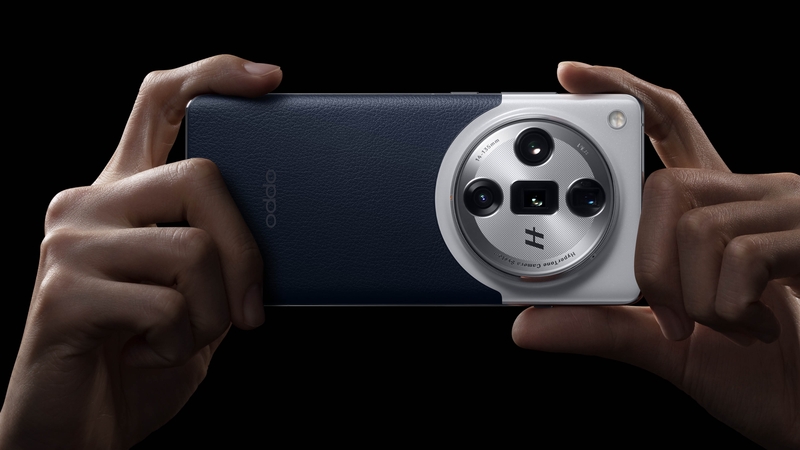
Design-wise, the Oppo Find X7 Ultra and the Vivo X100 Ultra share some similarities as both the devices have large circular camera modules on their back housing multiple camera lenses. However, the Find X7 Ultra features a distinct two-tone design on its back that makes it stand out. The Find X7 Ultra has a vegan leather back, while the X100 Ultra comes with a metallic-looking back that’s coated with glass.
Both of these devices feature excellent curved OLED displays with QHD+ resolution, however, the display on the Find X7 Ultra is slightly bigger (6.82-inch) than the X100 Ultra (6.78-inch). Both have support for 3,000 nits peak brightness and 120Hz variable refresh rate. One notable thing is that the X100 Ultra uses an ultrasonic fingerprint sensor, which is better and much faster compared to the optical sensor on the Find X7 Ultra.
Lastly, the Find X7 Ultra has an IP68 water and dust-resistant rating, while the Vivo X100 Ultra is certified with IP68 and IP69. What this means is that other than surviving 1.5m submersion in water for 30 minutes, the device can also withstand close-range high-pressure, high-temperature water jets.
2. Cameras
The cameras are what make these devices “Ultra”. Starting with the hardware, both devices use a 50 MP Sony LYT-900 one-inch sensor with 23mm focal length as their primary cameras. They both also use a 50 MP sensor for the secondary camera with a 14 mm focal length, however, the Find X7 Ultra’s ultra-wide camera has a 123-degree field of view, compared with 116 degrees on the X100 Ultra. The X100 Ultra is equipped with a 200 MP Samsung HP9 periscope telephoto lens capable of 3.7x optical and 100x digital zoom. On the other hand, the Find X7 Ultra has two 50 MP telephoto cameras with 3x and 6x periscope zoom, and a maximum digital zoom of up to 120x.
The X100 Ultra uses a gimbal OIS for its primary camera, while the Find X7 Ultra provides optical image stabilization for its primary, as well as both the telephoto cameras. It’s also worth mentioning that the Vivo device uses Zeiss T* coated ultra-clear lenses. On the front, the Vivo device has a 50 MP selfie camera, while the Oppo device uses a 32 MP sensor. Moving over to video capabilities, the X100 Ultra can shoot 8K@30fps and 4K@30/60/120fps. The Find X7 Ultra is limited to shooting 4K videos at 30/60fps.
With the hardware out of the way, we go to camera quality and image processing. Currently, the Oppo Find X7 Ultra has an edge in this department, evident by its crowning as DxOMark’s best camera phone back in March. It is excellent for capturing portraits and natural skin tones, as well as distortion-free, detailed images in low-light scenarios. The Vivo X100 Ultra is a bit lacking in terms of camera polish since it hasn’t been long since the smartphone made its debut. The camera system on the X100 Ultra is expected to get better in the coming months with updates.
3. Performance
Both the Vivo and Oppo Ultra phones feature Snapdragon 8 Gen 3 processors, paired with LPDDR5X RAM and UFS 4.0, so they are pretty even in terms of performance. They both can easily handle demanding tasks for long periods thanks to their heat management systems.
The battery on the X100 Ultra is bigger at 5,500mAh and supports 80W wired and 30W wireless charging, while the Find X7 Ultra has a 5,000mAh battery with 100W SUPERVOOC charging and 50W wireless charging support.
4. Pricing & availability
The Vivo X100 Ultra has a starting price of 6,499 Yuan (~$897) for the 12GB + 256GB model, while the Find X7 Ultra has a starting price of 5,999 Yuan (~$828). The 16GB + 512GB variant of these devices has a price tag of 7,299 Yuan (~$1,007) and 6,999 Yuan ($966), respectively. The Vivo 100 Ultra comes with a 16GB +1TB model as well which costs CNY 7,999 (~$1,104).
Unfortunately, both of these devices are China-exclusive, meaning that global customers interested in these devices will have to import them via sellers like Geekwills.
5. Verdict
Both the Vivo X100 Ultra and Oppo Find X7 Ultra are top-of-the-line smartphones packed with cutting-edge hardware. Vivo’s offering comes with some exceptional features like an IP69 water and dust-resistant rating and an ultrasonic fingerprint sensor. On the other hand, the Find X7 Ultra from Oppo has an eye-catching design with a vegan leather finish, a cheaper price tag, and faster wired and wireless charging.
All that said, the Vivo X100 Ultra is still somewhat lacking in camera optimization compared to the Find X7 Ultra, which gives Oppo’s offering a significant edge over Vivo’s Ultra phone. This might change in the future, as Vivo rolls out updates to polish its camera experience.
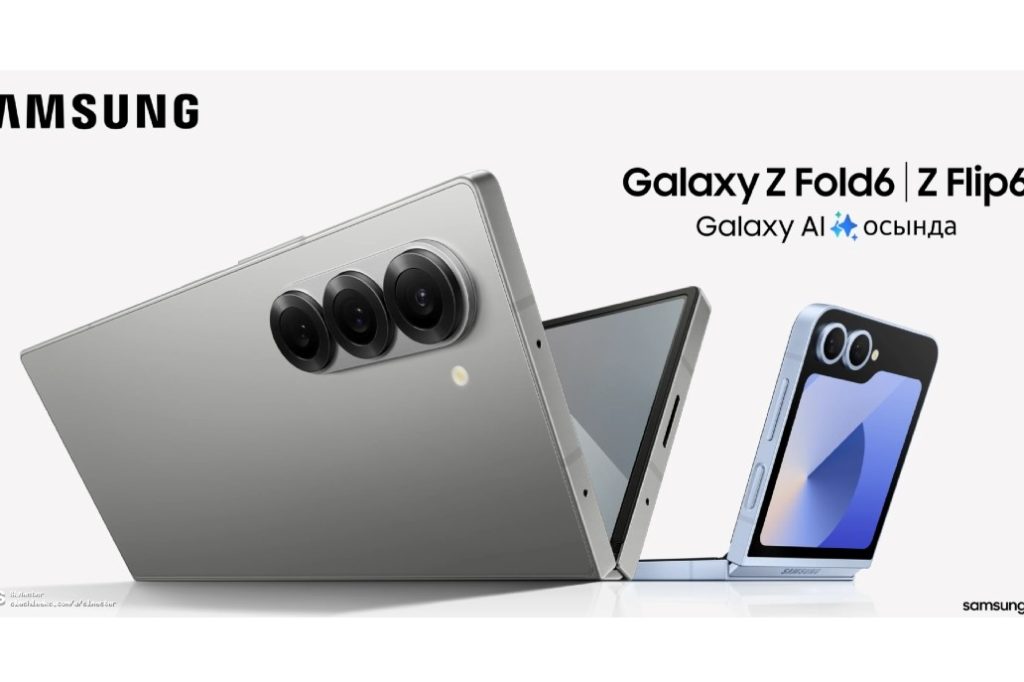
Samsung’s Galaxy Z Fold 6 and Z Flip 6 surfaced in leaked renders a few months ago. Now, the first official promo image featuring the upcoming offerings has leaked out. It was first spotted on Samsung’s Kazakhstan website (now deleted). The marketing poster gives us our best look at the sixth-generation foldables. The South Korean brand is rumoured to unveil a slew of devices at the Galaxy Unpacked event on July 10.
Leaked promo image of Galaxy Z Fold 6 and Z Flip 6 reveal design
The Galaxy Z Fold 6 and Galaxy Z Flip 6’s design in the marketing poster is largely in line with the leaked CAD-based renders. The former has a boxy design with sharp corners and a pill-shaped protruding camera island on the rear. The edges are also less rounded compared to its predecessor. The Z Fold 6 is seen in a Grey color option that will likely be marketed at Silver Shadow. Another unnoticeable change on the upcoming offering is that the camera sensors have a ring with a grooved texture.
As for the Galaxy Z Flip 6, it won’t have any major cosmetic changes and will retain the same design as its predecessor. It will feature a side-mounted fingerprint scanner embedded in the power button and the same folder icon-shaped cover display on the back. The camera placement is also horizontal but it seems that the sensor ring will be accentuated by the color of the device. In the promo image, it is seen in Light Blue color and so is the Galaxy Z Flip 6.
So far, rumors suggest that the Samsung Galaxy Z Fold 6 and Z Flip 6 will be powered by a Snapdragon 8 Gen 3 processor, come with improved batteries, and support for the same 25W fast charging. More details are expected to surface in the coming weeks as we get closer to the launch event.
There are plenty of platforms through which you can buy a smartphone online. Some of the most popular websites are Flipkart and Amazon. But today, we want to explain why you should only stick to one of these for any POCO branded product. There are multiple reasons why the popular e-retailer in India is the way to go for POCO phones. So let’s check it out.
An example of the POCO F6 being listed on Flipkart
For those unaware, Flipkart is the only seller that is authorized by the Chinese brand. This means that this is the only online channel through which you should buy POCO products like its smartphone for earbuds. Even when you head to the official website of the company, the “Where to buy” section simply directs you to the official Flipkart listing rather than a store of their own. Simply put, POCO is a Flipkart exclusive.
2. Amazon Resellers
You might be wondering if you have seen POCO smartphones and other products on Amazon as well. But it is worth noting that these are simply resellers. In other words, these are not official sellers and are third party groups/sellers that list the brand’s gadgets. While there are plenty of trustworthy Amazon sellers, there is always an inherent risk with deals that could be too good to be true.
3. Warranty Claims
When purchasing from platforms outside of Flipkart, like the aforementioned Amazon resellers, there are issues with the warranty as well. While claiming your warranty, there have been instances of people having their warranty denied due to unofficial resellers on other platforms. It is recommended to buy from Flipkart. Just recently, the POCO F6 went on sale in India with a special 1+1 year warranty deal. So why look elsewhere?
4. Better Deals
Smartphone makers bring special deals and discounts to their devices every now and then. Meaning, you can get your hands on phones for cheaper on sales days or during those special holiday deals. These are again an official offer from brands and even POCO lists its smartphones with bank offers and discount coupons. Keep in mind, that these are again official and not something offered by a reseller.
5. First Listed on Flipkart
Another great reason to only buy from Flipkart is due to the first sales. An example is the newly unveiled POCO F6. It was announced last month and went on sale on 29th May 2024. This budget flagship model was listed on the sale date and was ready to purchase with bank offers and an exchange bonus worth up to 29,000 INR (which is also the POCO F6’s starting price). Other platforms or sellers usually take some time to list newly launched phones on other websites. The only other channel for POCO devices is through offline retailers. The company also launched its first ever offline sales and service outlet in Kolkata, India earlier this year.
Oppo is making a big bet on artificial intelligence (AI), aiming to democratize access to next-gen smartphone features for millions of users. The company announced its plans to integrate over 100 generative AI features across its entire smartphone lineup by the end of 2024, reaching an estimated 50 million users.
This ambitious goal is backed by the establishment of a dedicated AI R&D Center in Shenzhen. The center focuses on core AI capabilities like image processing, computer vision, and natural language processing. Oppo emphasizes its commitment to user privacy by pledging not to use user data for training models and implementing robust data security measures.
The strategic partnerships formed with Google, Microsoft, and MediaTek are a key pillar of Oppo’s AI strategy. Google’s Gemini family of large language models (LLMs) will be integrated into Oppo’s flagship phones, enabling features like AI Writer and AI Recording Summary. AI Writer offers content suggestions, grammar checks, and multi-language translation, while AI Recording Summary efficiently summarizes meetings and podcasts, highlighting key points.
Microsoft brings its expertise in voice and text conversion to the table. Oppo users will benefit from Microsoft Fast Transcription for smooth audio recording transcription and improved voice assistant interactions with Neural TTS. Additionally, Oppo and Microsoft are collaborating on Desktop Copilot, allowing users to generate content, translate text, and search information on their smartphones through a connected PC.
The collaboration with MediaTek focuses on hardware optimization. Chipsets with dedicated AI processing units (NPUs) are being developed to ensure smooth performance and efficient AI processing. Custom AI frameworks are also being created to leverage MediaTek’s strengths while enabling unique AI features on Oppo devices.
OPPO believes the shift towards AI phones is a long-term trend that will transform the mobile experience. The company envisions a future with intelligent operating systems equipped with AI agents and multimodal interaction, paving the way for a complete AI phone ecosystem.
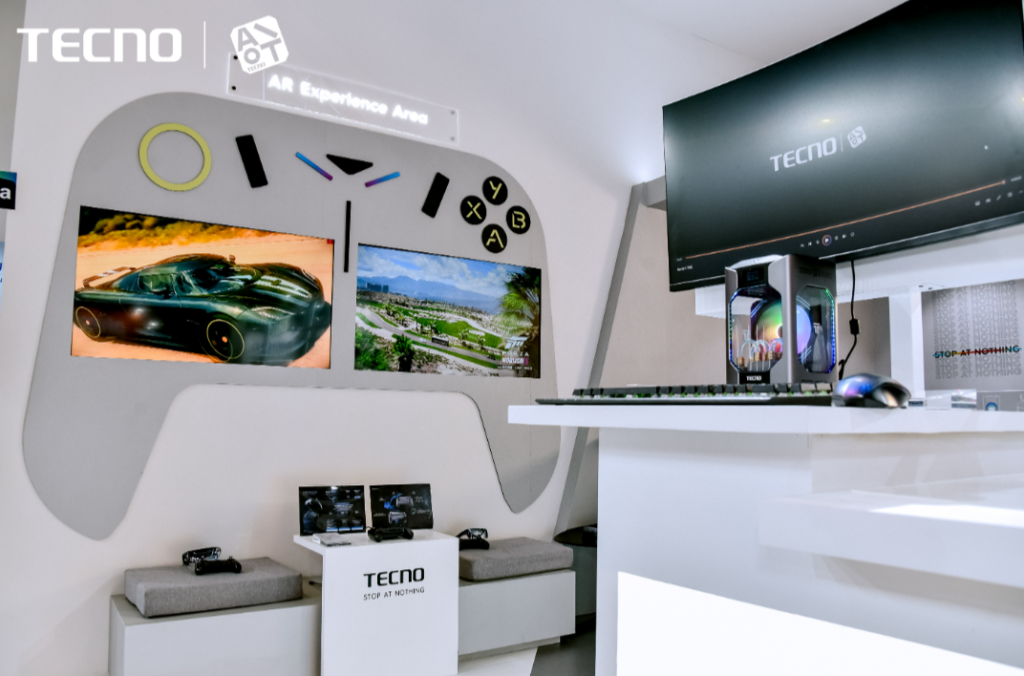
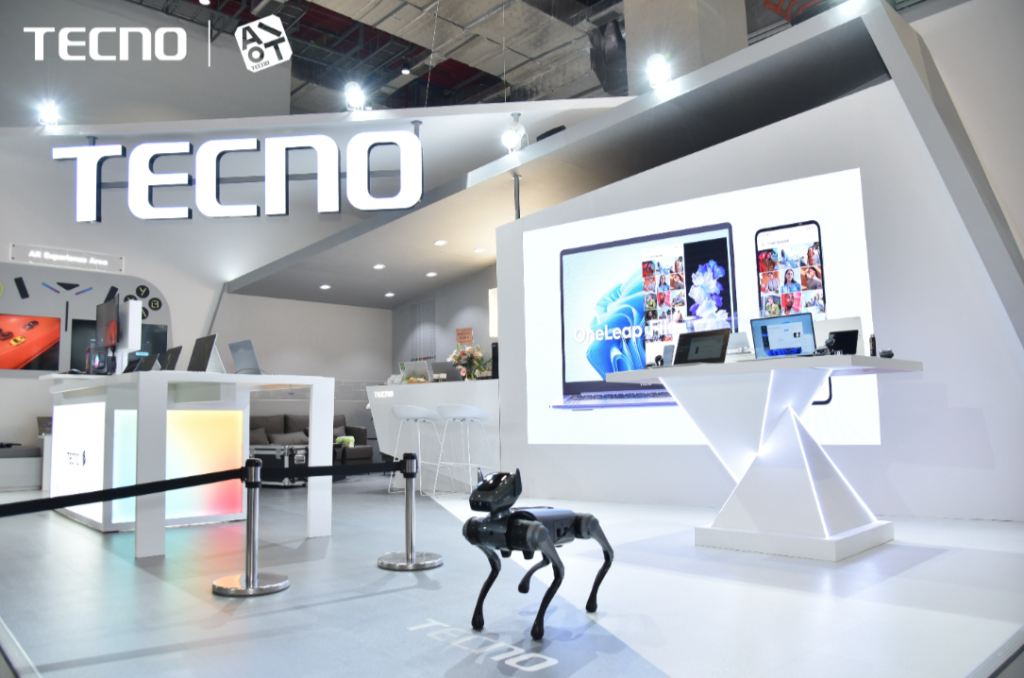
TECNO has made a splash at COMPUTEX 2024, showcasing an impressive array of AI-enhanced products under the theme “Smart of Creation.” The highlight of TECNO’s presentation includes cutting-edge devices like the Dynamic 1 robotic dog, PocketGo, Mini PCs, MEGABOOK Series, and the AI-powered CAMON 30 Premier 5G.
TECNO AI and AR Innovations
One standout product is the TECNO PocketGo, an AR PC handheld that recently won the Red Dot 2024 Product Design Award. This device combines AR glasses with a handheld PC, revolutionizing mobile gaming. Featuring the AMD® Ryzen™ 7 8840HS processor and advanced head tracking, it provides a 6D immersive gaming experience. The PocketGo integrates seamlessly with Windows and connects with TECNO smartphones and mini PCs.
Dynamic 1 Robotic Dog
TECNO’s Dynamic 1 robotic dog is another highlight. This bio-inspired quadruped, resembling a German Shepherd, features AI interaction capabilities. With an Intel® RealSense™ D430 depth camera and multiple sensors, it excels in obstacle detection and navigation. Dynamic 1 can climb stairs, jump, and respond to voice commands, showcasing TECNO’s innovation in robotics.
CAMON 30 Premier 5G
The CAMON 30 Premier 5G redefines video calling and imaging with AI features like AIGC Portrait, AI Erase, and Universal Tone. The new CAMON 30 Premier LOEWE Edition, debuting at the exhibition, offers an eco-friendly design with a coffee grounds back cover and green color accents.
Mini PCs and MEGABOOK Series
TECNO introduces the world’s smallest water-cooled gaming MINI PC G1, featuring an Intel® Core™ Ultra processor, 32GB DDR5 RAM, and 1TB SSD for top-tier performance. The MEGA MINI M1, a pocket-sized desktop weighing only 445g, delivers up to 45W performance in a compact design.
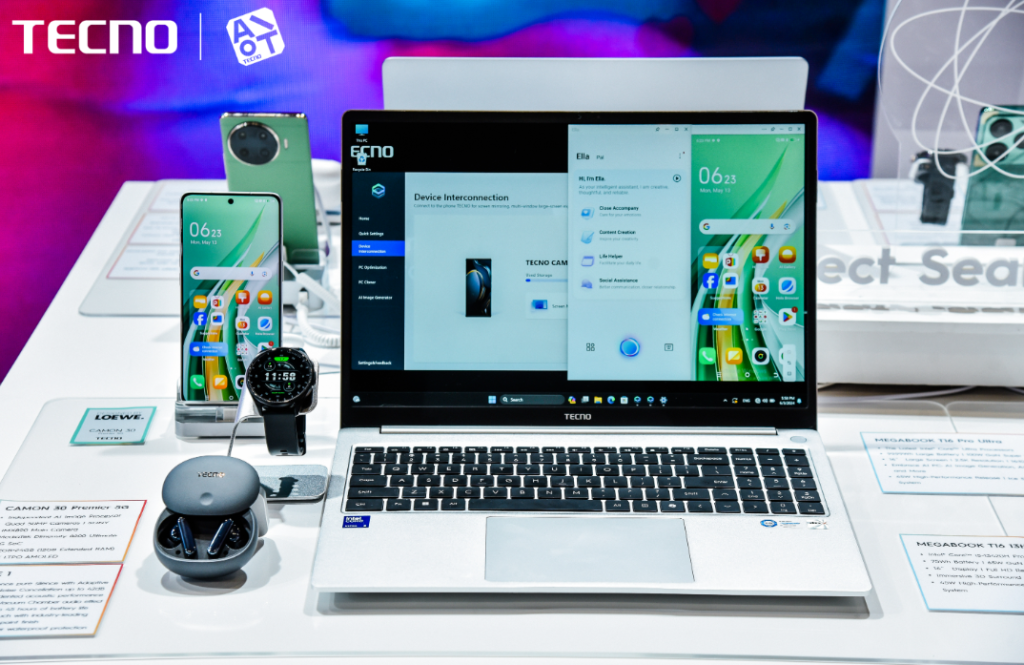
The MEGABOOK T16 Pro 2024 Ultra, TECNO’s first AI PC, boasts an Intel® Core™ Ultra 7 Processor, a 99Wh battery, up to 32GB LPDDR5 RAM, and 1TB storage. It offers AI capabilities like Al Image Generation and Al Copilot.
Mega Interconnect, Smart Manager
TECNO’s PC Manager software enhances collaboration between TECNO laptops and smartphones, streamlining workflows and optimizing device performance. The OneLeap feature enables seamless data sharing, multi-screen collaboration, and file management, ensuring data security and efficiency.
TECNO’s diverse range of innovative products at COMPUTEX 2024 demonstrates its commitment to leading the future of technology with AI and AR advancements.
We use cookies on our website to give you the most relevant experience by remembering your preferences and repeat visits. By clicking “Accept”, you consent to the use of ALL the cookies.
This website uses cookies to improve your experience while you navigate through the website. Out of these, the cookies that are categorized as necessary are stored on your browser as they are essential for the working of basic functionalities of the website. We also use third-party cookies that help us analyze and understand how you use this website. These cookies will be stored in your browser only with your consent. You also have the option to opt-out of these cookies. But opting out of some of these cookies may affect your browsing experience.
Necessary cookies are absolutely essential for the website to function properly. This category only includes cookies that ensures basic functionalities and security features of the website. These cookies do not store any personal information.
Any cookies that may not be particularly necessary for the website to function and is used specifically to collect user personal data via analytics, ads, other embedded contents are termed as non-necessary cookies. It is mandatory to procure user consent prior to running these cookies on your website.