Advertisement

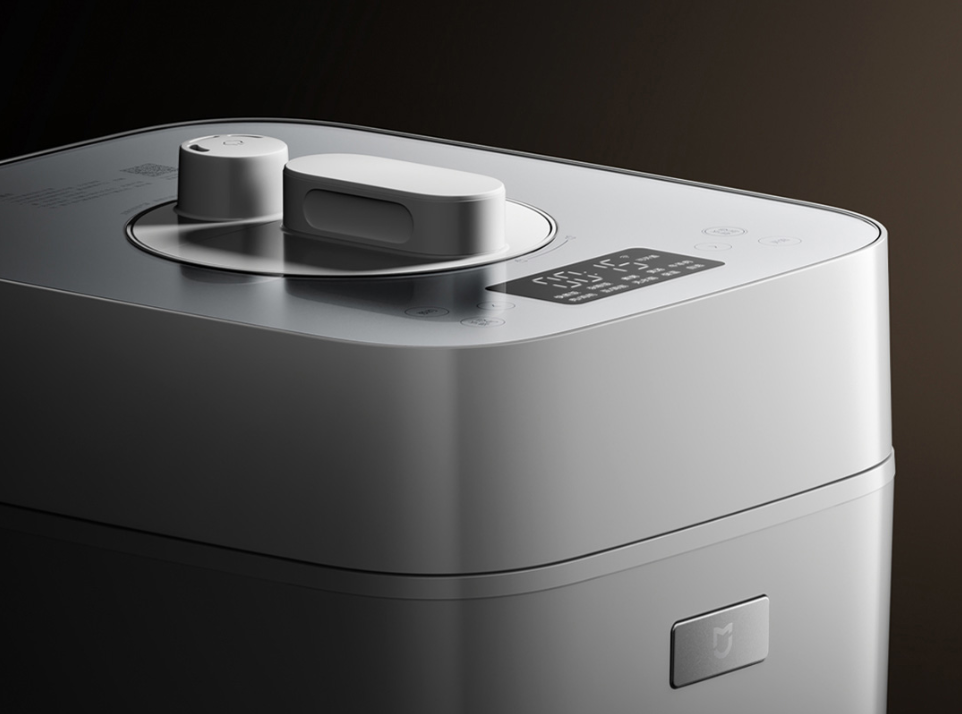
Xiaomi unveils Vertical Study Lamp 2 with 17-year lifespan, 12700 lumens brightness

Xiaomi has introduced a new floor-standing desk lamp in China called the Xiaomi Mijia Vertical Study Lamp 2. It’s the company’s latest attempt to turn something as ordinary as a study light into a spec-heavy smart home product. So let’s walk through the details here.

Xiaomi Mijia Vertical Study Lamp 2 Specifications

The lamp is designed for rooms up to 15 square meters, which makes it suitable for bedrooms or small home offices. Xiaomi says it uses long-lasting LED beads rated for up to 17 years of use. `

The company further claims the model boosts brightness by 27 percent compared to its predecessor. It delivers a total luminous flux of 12,700 lumens, with an average illuminance of over 1,800 lux in the central area. The uniformity in that center area is rated at 1.04.

The company also says the lamp produces almost no noticeable hand shadows under the light, something that could matter if you spend long hours writing or sketching at a desk.

Like many recent Xiaomi lighting products, the Study Lamp 2 focuses heavily on eye comfort. It supports anti-glare performance with a UGR rating below 13 and offers a high color rendering index of Ra98. The lamp also has a solar spectrum fitting coefficient above 0.985, which indicates that it simulates natural daylight more closely.

There’s also a smart layer. The lamp supports AI-based automatic dimming and can detect when someone is seated. It connects to the Mi Home app and works with Xiaomi’s broader smart ecosystem. Controls include touch interaction on the lamp post itself, as well as remote operation through the app and Xiaomi’s Super AI features.

The official price of the Xiaomi Mijia Vertical Study Lamp 2 is 2,499 yuan (~ $363). It is currently available at a launch price of 2,349 yuan (~ $350), with a national subsidy bringing the final price down to 1,996.65 yuan (~ $290).

For more daily updates, please visit our News Section.

Stay ahead in tech! Join our Telegram community and sign up for our daily newsletter of top stories.

Apple iPhone 17e vs. Google Pixel 10a: Which one offers the best value?

Apple has just officially unveiled the iPhone 17e as its most accessible gateway into the ecosystem. In the same way, the Pixel 10a, which debuted last month, is an entry-level phone from Google. Here’s a comparison between the two to know which one offers the best value.

Apple iPhone 17e vs Google Pixel 10a

6The Verdict: Ecosystem vs. Value

Choosing between the iPhone 17e and the Pixel 10a ultimately comes down to whether you prioritize a refined, high-performance ecosystem or cutting-edge display and AI features at a lower price point.

The iPhone 17e is the “safe” and powerful choice. It offers the best-in-class A19 chip, ensuring that this phone will remain fast for years to come. If you are already tied to iMessage, iCloud, and Apple Watch, or if video quality is your top priority, the 17e is a massive upgrade over previous budget models. The addition of Apple Intelligence and the jump to 256GB base storage makes the higher price tag much easier to swallow.

On the other hand, the Pixel 10a is the clear winner for tech enthusiasts who want the best hardware for their money. Its 120Hz display makes the iPhone’s 60Hz screen look dated, and the inclusion of an ultrawide lens provides photographic flexibility that Apple’s single-sensor setup simply cannot match. If you want a phone that feels “smarter” with its deeply integrated Gemini AI and you prefer a smoother visual experience, the Pixel 10a is the superior value proposition in 2026.

For more daily updates, please visit our News Section.

Stay ahead in tech! Join our Telegram community and sign up for our daily newsletter of top stories

Next

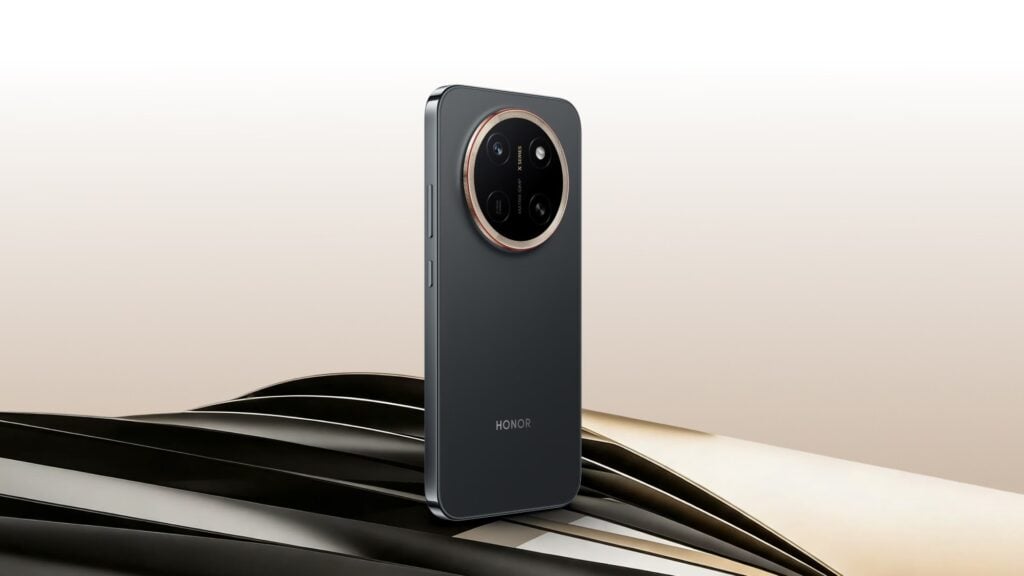
Honor 600 Lite full specs revealed, has a 6520mAh battery, and Dimensity 7100 Elite chip

Just days after details surfaced about the Honor 600, we’re now getting a full look at another member of the lineup, the Honor 600 Lite. German outlet WinFuture has published a batch of official-looking renders alongside a rundown of the phone’s core specs.

The information appears to originate from a listing by a Singapore-based retailer, suggesting the device may be close to launch.

The Honor 600 Lite will ship with 8GB of RAM and 256GB of internal storage. The listed price is 399 Singapore dollars, which roughly converts to around $315.

Honor 600 Lite Specifications

The renders show a fairly clean design with a pill-shaped notch on the front. On the right side of the frame, there’s a dedicated shutter button. Around the back, the camera module sits inside a rectangular bump that stands out slightly from the rear panel.

The Honor 600 Lite will be available in Velvet Black and Desert Gold options. The black version looks understated, while the gold model leans more toward a softer, muted finish.

As for the display, the Honor 600 Lite is said to feature a 6.6-inch AMOLED panel with a resolution of 2600 x 1200. It’s rated for peak HDR brightness of 6,500 nits. It also reportedly carries an IP66 rating for water resistance.

Under the hood, the phone is expected to run on the MediaTek Dimensity 7100 Elite processor. Furthermore, the leak reveals a 6,250mAh battery paired with 45W wired charging support.

On the camera side, the front houses a 16-megapixel f/2.2 selfie camera. On the back, there’s a 10.8-megapixel f/1.75 main sensor and a 5-megapixel ultra-wide camera. There’s no telephoto lens, which isn’t surprising at this price point, but it does mean zoom capabilities will likely rely on digital cropping.

It’s not yet confirmed when Honor will announce this smartphone. However, its appearance in the retailer listing suggests that the launch isn’t too far off.

For more daily updates, please visit our News Section.

Stay ahead in tech! Join our Telegram community and sign up for our daily newsletter of top stories.

(Source)

OnePlus 15T’s first real-life image reveals ultra-thin bezels on all four sides

The OnePlus 15T compact flagship phone is poised to launch this month in China. Ahead of its debut, OnePlus China President Li Jie has shared the first real-life image of the device, highlighting the ultra-thin bezels the 15T is expected to feature.

OnePlus 15T’s ultra-thin bezels revealed

OnePlus 15T (left) and IPhone 17 Pro (right)

In the shared image, the OnePlus 15T is placed on the left, while the Apple iPhone 17 Pro appears on the right. The executive stated that the 15T will feature the visually narrowest bezels on a compact phone. He hinted that the bezel size is around 1.xx mm without revealing the exact figure. In comparison, the iPhone 17 Pro is said to have 1.44mm bezels.

He added that this achievement was made possible due to a brand-new chip-level packaging system and a series of groundbreaking screen packaging technologies developed in-house by the company. Yesterday, the same executive confirmed that the 15T will have a periscope telephoto camera and offer an enhanced battery life.

OnePlus 15T specifications (rumored)

According to reports, the OnePlus 15T could feature a 6.32-inch OLED display offering a 1.5K resolution, a 165Hz refresh rate, and an ultrasonic in-display fingerprint sensor. For selfies, it may include a 32-megapixel front camera.

The rear camera setup may either include a 200-megapixel Samsung HP5 primary sensor or a 50-megapixel Sony IMX906 primary camera, paired with a 50-megapixel Samsung JN5 periscope telephoto camera. The device is unlikely to feature an ultra-wide camera.

Under the hood, the 15T could be powered by the Snapdragon 8 Elite Gen 5 chipset and pack a battery with a capacity of around 7,500mAh. It may support 100W wired charging and 50W wireless charging. The device is also expected to include a Plus Key and feature an IP68/69-rated dustproof and water-resistant chassis.

For more daily updates, please visit our News Section.

Stay ahead in tech! Join our Telegram community and sign up for our daily newsletter of top stories

Xiaomi 18 Pro, 18 Pro Max may sport dual 200MP cameras, Xiaomi 18 may get 200MP periscope zoom lens

Xiaomi is reportedly working on the Xiaomi 18 lineup for the Chinese market. So far, the lineup is expected to include the Xiaomi 18, 18 Pro, 18 Pro Max, and 18 Ultra. The Ultra edition may debut by the end of this year, whereas the other three models may go official in September in China. A new leak, courtesy of tipster Digital Chat Station, has revealed that the entire lineup will feature a 200-megapixel camera.

Xiaomi 18’s entire lineup to feature 200MP cameras

The new leak suggests that the current engineering samples of the entire Xiaomi 18 series are equipped with a 200-megapixel camera backed by a large 1/1.28-inch sensor. The tipster added that this generation is said to feature a dual 200-megapixel imaging system, described internally as a landmark upgrade for the brand’s camera capabilities.

As per previous reports, the Xiaomi 18 Pro and 18 Pro Max may both sport dual 200-megapixel cameras in their rear setup. These could be used for the primary and periscope telephoto cameras.

The standard Xiaomi 17 has a telephoto camera in its rear camera setup. However, rumors surrounding the Xiaomi 18 suggest that it will be equipped with a periscope telephoto camera. Related rumors also suggest that the Xiaomi 18’s periscope telephoto camera will feature a 200-megapixel sensor.

Xiaomi 18 render
Xiaomi 18 render

Speaking of the standard Xiaomi 18, it may arrive with a slight increase in display size, reaching 6.4 inches compared to 6.3 inches on the Xiaomi 17. As far as the chipset is concerned, the Xiaomi 18, 18 Pro, and 18 Pro Max are all expected to feature the Snapdragon 8 Elite Gen 6 chip. Likely, the Xiaomi 18 Ultra could be equipped with the more powerful Snapdragon 8 Elite Gen 6 Pro SoC.

For more daily updates, please visit our News Section.

Stay ahead in tech! Join our Telegram community and sign up for our daily newsletter of top stories

Snapdragon Wear Elite brings 3nm power and on-device AI to Wear OS

At MWC 2026, Qualcomm introduced the Snapdragon Wear Elite platform, signalling a fresh push into premium wearable silicon. The new chip is aimed at upcoming Wear OS smartwatches, including future Galaxy Watch models, while also expanding into AI-driven wearable devices. It marks a clear shift in Qualcomm’s wearable strategy toward stronger performance and deeper on-device intelligence.

Snapdragon Wear Elite: A 3nm platform focused on performance and AI

Snapdragon Wear Elite

The Snapdragon Wear Elite is built on a 3nm process and adopts a big.LITTLE architecture for the first time in Qualcomm’s wearable lineup. It features a single prime core clocked at 2.1GHz alongside four efficiency cores running at 1.95GHz. Compared to the earlier Snapdragon W5+ Gen 2, Qualcomm claims up to five times better single-core CPU performance, which should translate into faster app launches, smoother multitasking and quicker boot times.

Graphics performance also sees a notable jump, with the Adreno GPU delivering up to seven times higher peak frame rates and support for 1080p at 60fps. A dedicated Hexagon NPU enables on-device AI models with up to two billion parameters, supporting use cases such as real-time transcription, contextual recommendations, voice interaction and AI agents. An additional low-power AI engine handles always-on tasks like keyword detection and activity recognition without heavily impacting battery life.

Qualcomm says devices powered by Snapdragon Wear Elite can offer up to 30 percent longer usage compared to the previous generation. Fast charging support allows compatible watches with 300 to 600mAh batteries to reach 50 percent charge in around 10 minutes at 9V.

On connectivity, the chip integrates Wi-Fi 802.11ax, Bluetooth 6.0, UWB, GNSS, 5G RedCap and NB-NTN satellite support. Micro-power Wi-Fi enables lower energy consumption for continuous syncing, while UWB opens up secure unlock and proximity-based features. Qualcomm expects the first commercial devices running Snapdragon Wear Elite to arrive in the coming months, with partners including Google and Samsung onboard.

For more daily updates, please visit our News Section.

Stay ahead in tech! Join our Telegram community and sign up for our daily newsletter of top stories

TECNO MEGAPAD 2, Watch GT 1S, and FreeHear 2 Go Official with OneLeap Platform

At Mobile World Congress 2026, TECNO announced an upgrade to its AIoT ecosystem. The update is built around TECNO OneLeap, a new interconnection platform that connects smartphones, tablets, PCs, and other smart devices. The company also introduced three new products: the MEGAPAD 2 AI tablet, the Watch GT 1S smartwatch, and the FreeHear 2 open-ear earbuds.

TECNO OneLeap is designed to make multi-device use simple. Devices are discovered automatically and can be connected with a single drag or tap. There is no need for repeated logins or complex setup. Discovery, connection, management, and cross-device interaction are handled in one unified interface.

OneLeap supports three-device collaboration across smartphones, tablets, and PCs at the same time. Trusted devices reconnect automatically. With Keyboard and Mouse Sharing, users can control three screens using one keyboard and mouse. A unified clipboard allows instant sharing of text and files. Images copied on a smartphone can be pasted directly into documents on a tablet or laptop. These tools are built to improve workflow across multiple screens.

The platform also offers flexible display options. A smartphone can mirror to a laptop, while a tablet works as an extended PC display. This enables a three-screen setup. In Phone Widescreen Extension mode, optimized for tablet screen ratios, smartphone and tablet activities stay independent so users can multitask without interruption.

OneLeap also supports real-time, face-to-face translation in more than 160 languages when paired with TECNO audio devices. Translated speech plays through earbuds instantly, and transcripts are saved on the phone for later reference.

The MEGAPAD 2 features an 11-inch 2.5K display with a 90Hz refresh rate and TÜV Low Blue Light certification. It has a 6.6mm ultra-slim body and runs on HiOS. AI Problem Solving supports independent learning and allows parents to guide children. AI Translation works in up to 140 languages across images, calls, videos, and meetings. AI document summary and writing refinement tools support light study and everyday tasks. Through OneLeap, it supports file sharing and PC screen extension.

The Watch GT 1S includes dual-band L1 and L5 high-precision GPS and motion sensors for stable tracking in urban and remote areas. It monitors heart rate, blood oxygen, stress, and sleep. The battery lasts up to 15 days. It has 5ATM water resistance. AI watch faces can be created using image-to-image or text-to-image customization.

The FreeHear 2 weighs 5.4g per earbud and uses a C-bridge clip design for a secure and natural fit. It features a 10.8mm dual-magnetic dynamic driver for spatial audio. Total battery life reaches up to 46 hours. A five-minute charge provides more than one hour of playback.

The MEGAPAD 2, Watch GT 1S, and FreeHear 2 will roll out in selected global markets during Q1 and Q2 2026. Pricing and regional specifications will be announced at local launches.

Don’t miss a thing! Join our Telegram community for instant updates and grab our free daily newsletter for the best tech stories!

For more daily updates, please visit our News Section.

TCL unveils CrystalClip open-ear earbuds with Swarovski special edition

TCL has launched the CrystalClip, a new pair of open-ear, clip-on earbuds designed for comfort, functionality, and style. The company also revealed a special Swarovski edition of the earbuds, which incorporates a detachable crystal accessory for a touch of elegance.

TCL CrystalClip

TCL CrystalClip Specifications

The CrystalClip earbuds use a lightweight, clip-on design to provide a comfortable fit for users who don’t want the intrusive feel of in-ear models. Each earbud weighs just 5.5 grams and features a titanium-reinforced arch bridge for flexibility and durability.

The earbuds include 10.8 mm dual-magnetic dynamic drivers, which TCL claims deliver rich, detailed sound and enhanced bass. The earbuds also support 3D Spatial Audio, which adds depth to music, gaming, and movies. For phone calls, the earbuds use dual-mic AI-powered ENC (Environmental Noise Cancelation) to ensure clear voice quality while reducing background noise.

The earbuds support up to 36 hours of battery life with the charging case, offering 8 hours of playback on a single charge. TCL says users can get 3 hours of playback after just 15 minutes of charging. The earbuds also have IPX4 sweat and splash resistance, ensuring they can handle workouts and light rain.

TCL has added customizable touch controls to the CrystalClip earbuds for music, calls, and voice assistants, along with real-time translation when paired with TCL smartphones.

TCL CrystalClip

The special edition CrystalClip earbuds come with a detachable accessory shaped like a rose made with Swarovski crystals. TCL says the crystal accessory can be clipped to the earbuds or worn separately as a decorative piece on bags, hats, or even styled into hair.

Pricing and Availability

TCL will release the standard CrystalClip earbuds in February 2026 for €79. The Swarovski edition will launch in Q2 2026 for €149. Both models will be available in Asia-Pacific, Europe, and North America.

For more daily updates, please visit our News Section.

Stay ahead in tech! Join our Telegram community and sign up for our daily newsletter of top stories! 💡

Anker launches Soundcore Boom Go 3i portable speaker in Europe

Anker has launched the Soundcore Boom Go 3i Bluetooth speaker in European markets. The portable speaker, already available in the US for $79.99, is now on sale in the UK and Germany for £59.99 and €69.99. Anker announced the product at MWC 2026 as part of its Soundcore lineup, which also includes the new Space 2 noise-canceling headphones.

Anker Soundcore Boom Go 3i

Soundcore Boom Go 3i Specifications

The Soundcore Boom Go 3i is an outdoor speaker with IP68 water resistance, drop protection for falls up to one meter, and a compact yet durable design. It features a 15W driver delivering up to 92dB peak volume and uses BassUp 2.0 technology to enhance low-frequency output for punchy bass.

The speaker offers up to 24 hours of battery life and features an LED indicator for real-time power levels. It also functions as a power bank, capable of charging devices like smartphones, with internal tests showing it charged an iPhone 17 from 0% to 40% in one hour.

Anker added LED lighting that syncs with music, featuring six reactive light modes and eight ambient options, customizable through the Soundcore app.

Anker Soundcore Boom Go 3i

The Boom Go 3i supports Auracast Bluetooth technology for improved connectivity and device pairing. It allows users to connect multiple devices simultaneously or pair two speakers for stereo sound. The speaker also includes a 92dB emergency alarm that helps users signal for help in outdoor scenarios.

The speaker is available in four colors: Black, Beige, Blue, and Pink. Its compact design and dual-slot silicone strap provide flexibility for carrying or attaching it to backpacks or bikes.

For more daily updates, please visit our News Section.

Stay ahead in tech! Join our Telegram community and sign up for our daily newsletter of top stories! 💡

Anker unveils Soundcore Space 2 headphones with improved ANC & 70h battery

At MWC 2026, Anker has announced the Soundcore Space 2, a pair of over-ear noise-canceling headphones designed for travel and everyday use. The headphones come in three colors: Cream White, Jet Black, and Sage Green.

Soundcore Space 2

Soundcore Space 2 Specifications

The Soundcore Space 2 headphones include advanced 4-stage active noise cancellation (ANC) that reduces low-frequency sounds like airplane engines, subway noise, and other background disturbances. The headphones weigh 261 grams, and the earcup design has been updated for a sleek, unified appearance.

The Soundcore Space 2 headphones improve on the Space One with better battery life, upgraded noise cancellation, and a lighter design. The Space 2 delivers up to 50 hours of playback with ANC on and 70 hours with ANC off, compared to the Space One’s 40 hours and 55 hours, respectively.

It also features fast charging, and a 5-minute quick charge provides up to 4 hours of playback, making the Space 2 a practical option for users in a hurry.

Soundcore Space 2

Anker has used soft memory foam padding to ensure comfort during long listening sessions. The ergonomic design has been tested with over 2,000 real head profiles for an optimal fit, according to the company.

The headphones feature 40mm double-layer diaphragm drivers and support Hi-Res Audio and LDAC, delivering high-quality sound with up to three times the data transmission rate of standard Bluetooth codecs. LDAC is only compatible with Android devices and can be enabled through the Soundcore app.

Pricing and Availability

The Soundcore Space 2 will launch globally on April 21, 2026, through Amazon and Soundcore.com. The headphones will cost $129.99 in the United States, £129.99 in the UK, and €129.99 in Europe.

In related news, you can also check out our roundup on the best wireless earbuds under $100.

For more daily updates, please visit our News Section.

Stay ahead in tech! Join our Telegram community and sign up for our daily newsletter of top stories! 💡

TCL CSOT Introduces Super Pixel Displays and 8.6-Gen Printed OLED Plans at MWC 2026

TCL CSOT is at Mobile World Congress in Barcelona, showing off display tech focused on efficiency over higher resolution. The TCL Technology subsidiary is presenting Super Pixel technology for phones alongside progress in fine-metal-mask OLED, inkjet-printed OLED, and MLED under its APEX brand.

TCL

Super Pixel changes how pixels are arranged rather than cramming in more of them. TCL CSOT boosts sub-pixel count by 1.8% to match WQHD SPR sharpness while cutting power use up to 25% through better data processing. The Real RGB layout needs less bandwidth than SPR, pushing refresh rates up to 40% higher.

The real bet is on inkjet-printed OLED manufacturing. TCL CSOT says it spent over a decade on IJP OLED research and started mass production from its G5.5 line in Wuhan in November 2024. Construction kicked off on October 21, 2025 on an 8.6-generation facility in Guangzhou after a $4.15 billion investment. Inkjet printing puts down OLED materials without masks and cuts contamination, but scaling it up is hard because of issues with drying control, production speed, and material limits compared to vacuum evaporation.

TCL CSOT is showing concept hardware to prove what printed OLED can do: a 28-inch tri-fold monitor with a 1.8mm folding radius and 4.48mm profile, plus a 14-inch laptop panel that’s 0.77mm thick and weighs 77 grams.

The timing matters because competition for large OLED production is heating up. Samsung Display’s Gen-8.6 FMM tandem OLED line could hit mass production in Q2 2026, with panels headed to Apple MacBook Pro models. TCL CSOT is taking a different route with printed OLED to reach the same IT display market.

TCL CSOT is exhibiting March 2 to 5 at Fira Gran Via, Hall 2, Stand 2M30, during the GSMA show in L’Hospitalet de Llobregat.

For more daily updates, please visit our News Section.

Stay ahead in tech! Join our Telegram community and sign up for our daily newsletter of top stories!

Xiaomi’s HyperOS 3.1 update is ready for release, testing phase completed

Xiaomi has announced that it has completed the official testing phase for the highly anticipated HyperOS 3.1 stable update, bringing a major Android 16-based software refresh closer to a public rollout. So here’s everything you need to know.

Xiaomi HyperOS 3.1 Update is Ready

According to a XiaomiTime report, the OS3.0.301.0 builds, which are the final stable build of HyperOS 3.1, have reached release-ready status. So we can expect the official rollout to kick off soon. This news arrives after weeks of beta testing and marks a key step forward for Xiaomi. Up until recently, the Chinese tech giant was busy rolling out the HyperOS 3 update for more devices, and now we are getting its next evolution.

HyperOS 3.1 beta testing
Xiaomi HyperOS 3.1

What HyperOS 3.1 Promises

Although Xiaomi hasn’t published a full changelog alongside the stable readiness announcement, the broader HyperOS 3.1 update is known to be based on Android 16 and brings a blend of UI enhancements, smarter system behaviour, ecosystem connectivity improvements, and optimisations over the base HyperOS 3 release.

Based on our earlier report, HyperOS 3.1 is expected to bring a bunch of features that include:

  • Smarter UI elements and refined animations for smoother overall navigation.
  • Cross-device ecosystem upgrades, making interaction between Xiaomi devices and other platforms more seamless.
  • Polished system stability and performance improvements compared to earlier builds.

Brand-new models like the Xiaomi 17 series and the Redmi K90 lineup are expected to be among the first wave of devices to receive this update. The official rollout schedule should be revealed soon, so stick around for more. In the meantime, you can click here to check out every new feature, changes, and the full eligible device list.

For more daily updates, please visit our News Section.

Tech enthusiast? Get the latest news first! Follow our Telegram channel and subscribe to our free newsletter for your daily tech fix! ⚡

Lenovo launches Idea Tab Pro Gen 2 with a 13″ 3.5K display, Snapdragon 8s Gen 4 & 10200mAh battery

Lenovo has officially unveiled the Idea Tab Pro Gen 2 at the Mobile World Congress (MWC) 2026 in Barcelona. Let’s check out its specifications and pricing details.

Lenovo Idea Tab Pro Gen 2

Lenovo Idea Tab Pro Gen 2 Specifications

The Idea Tab Pro Gen 2 features a 13-inch 3.5K PureSight Pro display with Dolby Vision, a 144Hz refresh rate, up to 800 nits peak brightness, and 99% DCI-P3 color coverage for sharp visuals and vibrant colors. Lenovo also offers an optional matte anti-glare version designed to reduce reflections.

Under the hood, the tablet is powered by the Qualcomm Snapdragon 8s Gen 4 processor with an Octa-Core CPU (up to 3.2 GHz) and Adreno 825 GPU. It offers up to 12 GB RAM, 512 GB storage, and supports up to 2 TB expandable storage via microSD.

The Idea Tab Pro Gen 2 runs on Android 16 out of the box and is guaranteed to receive upgrades up to Android 18, alongside four years of security patches.

The tablet features a 13 MP rear camera with autofocus for sharp photos and videos, and an 8 MP front camera for high-quality video calls and selfies. Lenovo has packed a massive 10,200mAh battery into the tablet. It supports 45W rapid charging.

The Idea Tab Pro Gen 2 boasts a slim and lightweight design, measuring just 6.20mm thick and weighing under 600g, making it highly portable. It features a JBL quad-speaker system with Dolby Atmos for an immersive audio experience. Lenovo also offers a 2-in-1 keyboard case with a dedicated Smart Key, enabling quick access to AI-powered features like text generation and translation.

Lenovo Idea Tab Pro Gen 2

Pricing and Availability

The Lenovo Idea Tab Pro Gen 2 will be available in three fresh colors: Luna Grey, Cloud Grey, and Jelly Mint. It is priced starting at €549 and is set to launch in March 2026.

In related news, Lenovo has also introduced the Legion Tab Gen 5 at MWC, featuring an 8.8-inch 3K 165Hz display, the Snapdragon 8 Elite Gen 5 chipset, and a 9,000mAh battery.

For more daily updates, please visit our News Section.

Stay ahead in tech! Join our Telegram community and sign up for our daily newsletter of top stories! 💡

Lenovo Legion Tab Gen 5 debuts with 8.8″ 3K 165Hz display, Snapdragon 8 Elite Gen 5 & 9000mAh battery

Lenovo has officially announced the Legion Tab Gen 5 at MWC 2026, a high-performance gaming tablet designed for serious mobile gamers. Let’s check out its key specs and pricing details.

Lenovo Legion Tab Gen 5

Lenovo Legion Tab Gen 5 Specifications

The Legion Tab Gen 5 features an 8.8-inch 3K LCD display with a resolution of 3040 x 1904 pixels, a 16:10 aspect ratio, and 408 PPI for sharp visuals. It offers a 165Hz variable refresh, a 144Hz touch sampling rate, and 750 nits peak brightness with HDR10 and 98% DCI-P3 color gamut support.

Under the hood, the tablet is powered by the Qualcomm Snapdragon 8 Elite Gen 5 chipset, built on a 3nm process. It comes with up to 16GB of LPDDR5T RAM and 512GB of UFS 4.1 Pro storage. To complement this raw power, it features Legion Coldfront Vapor cooling system with a vapor chamber, improving heat dissipation by 32%.

Lenovo Legion Tab Gen 5

The tablet runs on Android 16, optimized for gaming and multitasking, with Lenovo’s AI Engine+ enhancing the experience through improved in-game sound, AI-powered noise cancellation for voice chats, and AI-driven touch sensitivity optimization.

The Legion Tab is equipped with a 50MP rear camera and a 50MP front-facing camera. For power, it features a 9000mAh battery with 68W fast charging support.

The tablet is lightweight and portable at 360g with dimensions of 206.5 x 128.5 x 7.6 mm. It includes two USB-C ports for charging and peripherals, supports Wi-Fi 7, Bluetooth 6.0, and USB-C audio.

Pricing and Availability

The Lenovo Legion Tab will be available in Eclipse Black, Glacier White, and Fifa Edition color options. It is priced at €999 for the base model in Europe and will be available starting April 2026.

The tablet will also launch in China as the Legion Y700 (2026) later this month. Availability in other markets, including Africa and the Middle East, is expected to follow soon.

For more daily updates, please visit our News Section.

Stay ahead in tech! Join our Telegram community and sign up for our daily newsletter of top stories! 💡

Apple launches iPhone 17e with A19 chip, 48MP Fusion camera & MagSafe

Apple has launched its latest smartphone, the iPhone 17e, the successor to the iPhone 16e. The device was unveiled alongside the iPad Air 2026 models, offering advanced features, improved durability, and double the starting storage at an accessible price.

iPhone 17e

iPhone 17e Specifications

The iPhone 17e features a 6.1-inch Super Retina XDR OLED display, offering exceptional clarity with a resolution of 2532 x 1170 pixels and a pixel density of 460 ppi. It supports HDR and True Tone for lifelike colors and boasts up to 1200 nits of peak brightness. The screen is protected by Ceramic Shield 2, which provides three times better scratch resistance than its predecessor and includes an anti-reflective coating.

Under the hood, the device is powered by the 3nm A19 chip, featuring a 6-core CPU, 4-core GPU, and a 16-core Neural Engine. This delivers twice the performance of the iPhone 11, enabling smooth multitasking, console-level gaming, and enhanced AI capabilities.

The iPhone 17e runs on iOS 26 and features a Liquid Glass design and enhanced Apple Intelligence, including Live Translation and Call Screening.

iPhone 17e

For photography, the iPhone 17e features a 48MP Fusion camera with f/1.6 aperture, optical image stabilization, 2x telephoto zoom, and the Photonic Engine for enhanced quality. It supports HDR video with Dolby Vision at 4K 60 fps, Slo-Mo at 1080p 240 fps. On the front, it features a 12MP TrueDepth lens which offers f/1.9 aperture, autofocus, and Dolby Vision HDR video up to 4K 60 fps.

For power, the iPhone 17e features fast USB-C charging, reaching 50% in 30 minutes, and upgraded 15W wireless charging with MagSafe and Qi2.

iPhone 17e

The iPhone 17e is built with aerospace-grade aluminum and is IP68-rated for water and dust resistance. It also includes Face ID for secure authentication and an Action Button for customizable shortcuts. Connectivity options include 5G, Wi-Fi 7, and Bluetooth 5.3.

Pricing and Availability

The iPhone 17e is available in three elegant colors: black, white, and a new soft pink. It starts at $599 for the 256GB model, with a 512GB variant priced at $799.

Pre-orders begin on March 4, with availability starting March 11 in over 70 countries, including the United States.

For more daily updates, please visit our News Section.

Stay ahead in tech! Join our Telegram community and sign up for our daily newsletter of top stories! 💡

Xiaomi TV S Mini LED 2026 lineup launches in Europe with 4K, 1200 nits brightness, up to 144Hz refresh rate

Xiaomi has expanded its smart TV lineup in Europe with the launch of the TV S Mini LED 2026 series. The new range brings Mini LED backlighting, high refresh rates, and Google TV integration to several price tiers, starting well below many established premium brands.

The lineup covers five sizes: 55, 65, 75, 85, and 98 inches. All models offer 4K resolution (3840 × 2160) with a peak brightness rated at up to 1,200 nits. Xiaomi claims 94% DCI-P3 color coverage, along with support for HDR10+ and HLG. Dolby Vision is available on the 85-inch and 98-inch versions.

Refresh rate varies depending on size. The 55-inch, 65-inch, and 75-inch models use 120Hz panels, while the 85-inch and 98-inch step up to 144Hz. That higher refresh rate makes the larger models more appealing for console gaming or PC setups.

Audio is handled by dual 15W speakers with Dolby Atmos support. Like previous Xiaomi TVs, the software experience is built around Google TV, which means access to major streaming platforms, Chromecast built-in, and Apple AirPlay compatibility.

Connectivity also differs slightly by size. The smaller models include Wi-Fi 5, Bluetooth 5.0, two HDMI 2.0 ports, and one HDMI 2.1. The 85-inch and 98-inch versions upgrade to Wi-Fi 6, Bluetooth 5.2, and three HDMI 2.1 ports — a more future-ready configuration for multiple high-bandwidth devices.

Pricing and availability:

The new lineup is already listed on Xiaomi’s official online stores in countries including the Netherlands, Spain, Italy, and Germany. There’s no confirmation yet on UK availability, though Xiaomi’s broader European rollout suggests additional markets could follow.

Pricing currently starts at €549 for the 55-inch model. The 65-inch comes in at €749, followed by €949 for the 75-inch. The larger 85-inch variant is priced at €1,399, while the 98-inch tops out at €2,199.

Don’t miss a thing! Join our Telegram community for instant updates and grab our free daily newsletter for the best tech stories!

For more daily updates, please visit our News Section.

(Sources: 1, 2, 3, 4, 5)

Apple launches iPad Air (2026) 11″ and 13″ with M4 chip

Apple has introduced the latest iPad Air 8th Gen (2026), powered by the advanced M4 chip. It comes in two sizes: 11 inches and 13 inches, offering improved performance, enhanced AI capabilities, and premium features. It maintains the same starting price as the previous model. Here’s everything you need to know about Apple’s latest iPad Air lineup.

iPad Air (2026)

iPad Air (2026) Specifications

The new iPad Air features Liquid Retina displays in 11-inch (2360 x 1640 resolution) and 13-inch (2732 x 2048 resolution) sizes. Both support P3 wide color, True Tone, 500 nits brightness, anti-reflective coating, and full lamination for vibrant, sharp visuals. Both models also support Apple Pencil Pro and Apple Pencil (USB-C) for creative tasks like note-taking, sketching, and editing.

The new iPad Air is powered by the M4 chip, offering a 30% performance boost over the M3 and 2.3x the speed of the M1. Its 8-core CPU, 9-core GPU, second-gen ray tracing, and mesh shading enable ultra-realistic gaming and 3D rendering. It also features 12GB RAM and 120GB/s memory bandwidth, which ensures faster AI processing, gaming, and video editing.

iPad Air (2026)

The iPad Air runs on iPadOS 26, featuring a new windowing system for easier multitasking, a redesigned menu bar, and updates to the Files app. It also adds improved audio controls, Background Tasks support, and AI-powered features like scene removal from videos and faster search.

On the optics side, the iPad Air features a 12MP rear camera with Smart HDR 4 support, 4K video recording at up to 60fps, and cinematic stabilization. The front uses a 12MP Ultra Wide camera with Center Stage for video calls, along with extended dynamic range and Retina Flash to deliver sharp photos and clear video output.

The iPad Air is designed for all-day productivity, offering up to 10 hours of web browsing or video playback on Wi-Fi and up to 9 hours on cellular networks. The 11-inch model features a 28.93-watt-hour lithium-polymer battery, while the 13-inch version includes a larger 36.59-watt-hour battery. Both models support fast charging via the included 20W USB-C power adapter.

iPad Air (2026)

The tablet features Apple’s N1 wireless chip for Wi-Fi 7, Bluetooth 6, and Thread networking. Cellular models include the C1X modem for faster 5G and better energy efficiency. It also offers Touch ID, Thunderbolt 3, and USB 4 for secure authentication, fast file transfers, and external display support.

Pricing & Availability

The new iPad Air (2026) comes in four colors: blue, purple, starlight, and space gray. Below is the detailed pricing for all configurations:

11-inch iPad Air (Wi-Fi)

  • 128GB: $599
  • 256GB: $749
  • 512GB: $949
  • 1TB: $1,149

11-inch iPad Air (Wi-Fi + Cellular)

  • 128GB: $749
  • 256GB: $899
  • 512GB: $1,099
  • 1TB: $1,299

13-inch iPad Air (Wi-Fi)

  • 128GB: $799
  • 256GB: $949
  • 512GB: $1,149
  • 1TB: $1,349

13-inch iPad Air (Wi-Fi + Cellular)

  • 128GB: $949
  • 256GB: $1,099
  • 512GB: $1,299
  • 1TB: $1,499

Pre-orders begin on March 4, with availability starting March 11.

For more daily updates, please visit our News Section.

Stay ahead in tech! Join our Telegram community and sign up for our daily newsletter of top stories! 💡

Micron exits consumer business as AI demand reshapes priorities

Micron confirmed in December 2025 that it will exit the Crucial consumer business, which covers retail RAM, SSDs, and memory cards sold through distributors and online channels. Shipments will reportedly continue through the end of Micron’s fiscal Q2. After that, Crucial-branded products will no longer be supplied to retail partners.

Warranty support for existing products will remain in place, and Micron will continue operating its enterprise portfolio under its own name. The change is specifically aimed at reallocating resources toward higher-margin segments such as data-center DRAM, high-bandwidth memory (HBM), and enterprise SSDs.

The reasoning isn’t subtle. AI infrastructure has significantly altered the memory market over the past two years. Data centers training and running large AI models require enormous amounts of DRAM and specialized memory solutions. As Micron’s Chief Business Officer Sumit Sadana put it, AI-driven growth in data centers has led to a surge in demand for memory and storage.

In a market where only three major suppliers — Samsung, SK hynix, and Micron — account for the vast majority of DRAM production, shifts like this matter. When capacity is redirected toward HBM and other server-grade products, less supply is available for traditional consumer devices. That imbalance is showing up in pricing.

For PC builders and upgraders, Crucial’s exit is notable. The brand has long been associated with reliable, reasonably priced memory upgrades. While other brands will continue selling DRAM and SSDs, the overall pool of consumer-focused supply is narrowing.

This doesn’t necessarily mean immediate shortages across the board. But it does suggest that consumer memory may no longer be a priority growth area for major manufacturers, at least in the near term. As AI data centers absorb more production capacity, everyday devices could face tighter pricing and slower cost declines than in previous cycles.

Micron’s decision reflects a broader reality in the semiconductor industry right now: AI infrastructure is where margins are strongest, and companies are following that demand. For consumers, the effects are hard to accept.

Don’t miss a thing! Join our Telegram community for instant updates and grab our free daily newsletter for the best tech stories!

For more daily updates, please visit our News Section.

Samsung is working on a near 1″ 200MP sensor, claims new leak

Samsung may be preparing a noticeably larger 200MP camera sensor for future flagships. According to new leaks out of China, the company is working on what’s reportedly called the ISOCELL HPA.

The information comes from Digital Chat Station, who claims the ISOCELL HPA will feature a 1/1.12-inch optical format. That would make it significantly larger than Samsung’s recent 200MP sensors, such as the HP2 and HP3, which sit at around 1/1.3-inch.

In practical terms, a jump to 1/1.12-inch brings the sensor much closer to the 1-inch class used by some competitors. A larger surface area generally means better light gathering, which can improve low-light performance, detail retention, and overall image quality.

Another key detail in the leak is the use of LOFIC (Lateral Overflow Integration Capacitor) technology. LOFIC is designed to extend dynamic range at the hardware level, helping preserve highlight and shadow detail in high-contrast scenes. Instead of relying entirely on multi-frame HDR processing, the sensor itself handles more of the dynamic range capture. If implemented well, that could lead to more natural-looking images and fewer blown highlights.

The ISOCELL HPA is reportedly targeted for a 2027 release. As with many recent high resolution ISOCELL sensors, it may first appear in devices from Chinese smartphone brands before making its way into Galaxy flagships.

For Samsung’s own lineup, another leak from Ice Universe suggests the Galaxy S27 Ultra could instead use a different 200MP sensor called the ISOCELL HP6. That unit is said to retain the 1/1.3-inch size seen in recent generations but incorporate LOFIC improvements and refined image processing to close the performance gap.

In other words, Samsung may be pursuing two parallel strategies: increasing sensor size for its Chinese customers while continuing to optimize its existing form factor for Galaxy flagships.

With a 2027 timeline, there’s still time before any of this becomes official. Still, the direction is clear: Samsung finally appears to be investing in sensor physics and underlying imaging hardware.

Don’t miss a thing! Join our Telegram community for instant updates and grab our free daily newsletter for the best tech stories!

For more daily updates, please visit our News Section.

(Source)
Samsung devices getting the February 2026 security update

Samsung February 2026 security update

Samsung was pretty late to begin the February 2026 security update rollout, probably because it was too busy with the Galaxy S26 series launch. The update finally started rolling out in the last week of February, starting with the Galaxy S25 series. However, the rollout has since expanded to other Galaxy devices at a good pace.

The February 2026 security update now covers over a dozen Galaxy devices. Here’s a list of all Samsung devices now receiving the latest security patch.

The February 2026 security update is rolling out to these Samsung devices

Galaxy S series

  • Galaxy S25, S25+, S25 Ultra
  • Galaxy S25 Edge, S25 FE
  • Galaxy S24, S24+, S24 Ultra
  • Galaxy S24 FE
  • Galaxy S23, S23+, S23 Ultra
  • Galaxy S23 FE

Galaxy Z series

  • Galaxy Z TriFold
  • Galaxy Z Fold SE
  • Galaxy Z Fold 7, Z Flip 7
  • Galaxy Z Flip 7 FE
  • Galaxy Z Fold 6, Z Flip 6
  • Galaxy Z Fold 5, Z Flip 5
  • Galaxy Z Flip 4, Z Flip 4

Galaxy A series

  • Galaxy A56
  • Galaxy A55
  • Galaxy A54
  • Galaxy A53

Galaxy Tab series

  • Galaxy Tab S10 Ultra (Wi-Fi & cellular)
  • Galaxy Tab S10+ (Wi-Fi & cellular)

The update will expand to more Galaxy devices over the coming days and weeks. We’ll update the list periodically to ensure it remains up-to-date.

Keep in mind that the update rolls out in stages, so it may take a few days to reach your device, even if it’s on the above list. You can manually check for updates by navigating to Settings > Software updates > Download and install.

The February 2026 security patch doesn’t include new features or improvements, like any other security patches. However, it includes patches for dozens of vulnerabilities, further strengthening your device security. Specifically, it addresses 37 security vulnerabilities, including 25 fixes provided by Google, while the remaining 12 are from Samsung.

Those Samsung-specific fixes address vulnerabilities related to Emergency Sharing, Knox Guard Manager, Samsung Dialer, the Settings app, facial and fingerprint authentication systems, and the company’s PACM module.

Samsung is also preparing to roll out the One UI 8.5 update to older Galaxy devices, which debuted with the Galaxy S26 series recently. You can read more about One UI 8.5 here.

Be sure to visit the Samsung section regularly on this website for the latest updates. You can also join our Telegram channel to get instant notifications about the breaking news and software rollouts.