Huawei has launched the Band 11 series in India, introducing the Band 11, Band 11 Metal and Band 11 Pro. The new fitness wearables combine comprehensive health tracking, AI-powered wellness features, bright AMOLED displays and long battery life, while the Pro model adds built-in GNSS for outdoor fitness enthusiasts.
Huawei Band 11 series specifications and features
Huawei Band 11 series
The Huawei Band 11 lineup features a 1.62-inch AMOLED display, with the Band 11 offering up to 1,500 nits of brightness, while the Band 11 Pro reaches 2,000 nits for improved outdoor visibility. The wearables have a slim 8.99mm profile and weigh between 16g and 17g for comfortable all-day wear. The Band 11 Metal and Band 11 Pro also feature an aluminium alloy casing for a more premium finish.
The series focuses heavily on health monitoring with continuous heart rate, SpO₂ and stress tracking, enhanced sleep analysis with Heart Rate Variability, sleep breathing awareness and personalised sleep insights. Huawei has also added emotional wellbeing monitoring with guided breathing exercises, while Pulse Wave Arrhythmia Analysis provides additional heart health insights.
Fitness tracking includes more than 100 workout modes with intelligent activity monitoring. The Band 11 Pro further adds autonomous GNSS positioning for more accurate route tracking during outdoor activities such as running and cycling. Smart features include call and message notifications, calendar alerts, weather updates, a calculator and remote camera controls. The wearables are compatible with both Android and iOS devices.
Huawei says the Band 11 series can deliver up to 14 days of battery life under maximum usage or up to eight days during typical use. The wearables also support magnetic fast charging for quicker top-ups.
Price and availability
The Huawei Band 11 is priced at Rs 6,499 (~$68), while the Band 11 Metal costs Rs 7,999 (~$84). The Band 11 Pro is available for Rs 8,999 (~$94). The new wearables are available in India starting today through leading online and offline retail channels.
For more daily updates, please visit our News Section.
Oppo has launched the Reno 16 and Reno 16c in India, bringing a stronger focus on artificial intelligence alongside upgraded cameras, bigger batteries and refreshed hardware. The new phones are also the first Reno series devices to feature the AI Snap Key, a dedicated shortcut that works with AI-powered tools while introducing several photography and productivity upgrades.
Oppo Reno 16 specifications and features
Oppo Reno 16c
The Oppo Reno 16 features a 6.32-inch 1.5K AMOLED display with a 120Hz refresh rate, up to 3,600 nits peak brightness and Crystal Guard protection. It is powered by the Snapdragon 7 Gen 4 chipset with up to 12GB LPDDR5X RAM and 256GB UFS 3.1 storage. The phone packs a 6,700mAh battery with 80W SuperVOOC charging.
Its triple rear camera setup includes a 50-megapixel Sony LYT-600 primary sensor with OIS, a 50-megapixel ultra-wide camera and a 50-megapixel 3.5x telephoto camera. A 50-megapixel front camera supports 4K video recording. Running ColorOS 16 based on Android 16, it also introduces AI Mind Pilot, AI Mind Space, AI Bill Manager and AI translation features with support for ChatGPT, Gemini and Perplexity.
Oppo Reno 16c: specifications and features
Oppo Reno 16c
The Reno 16c gets a 6.57-inch AMOLED display with a 120Hz refresh rate and is powered by the MediaTek Dimensity 7300 processor. It offers up to 12GB RAM and 256GB storage, while a 7,000mAh battery with 80W charging powers the device. The rear camera system includes a 50-megapixel main sensor with OIS, an 8-megapixel ultra-wide camera and a 50-megapixel 3.5x telephoto lens, paired with a 50-megapixel selfie camera. Both phones carry IP66, IP68, IP69 and IP69K ratings.
Oppo Bubble
Oppo Bubble
Alongside the phones, Oppo introduced the Bubble accessory. It magnetically attaches to the smartphone and features a 1.73-inch AMOLED display that lets users preview shots using the rear cameras. It also works as a wireless camera remote and packs a 550mAh battery.
Price and availability
The Oppo Reno 16 is priced at Rs 61,999 (~$650) for the 8GB+256GB variant, while the 12GB+256GB model costs Rs 67,999 (~$713). The Reno 16c starts at Rs 46,999 (~$493) for the 8GB+128GB version, followed by the 8GB+256GB model at Rs 49,999 (~$524) and the 12GB+256GB variant at Rs 55,999 (~$587). Oppo has also introduced the Bubble magnetic camera companion at Rs 7,999 (~$84).
Pre-orders for the Reno 16 series are now open, with open sales beginning on July 9 via Amazon, Flipkart, the Oppo e-store and authorised retail outlets. Buyers can avail up to 10 percent instant cashback on eligible credit card and UPI transactions from select banking partners, exchange bonuses of up to Rs 5,000, zero down payment financing for up to 18 months, and 180 days of complimentary screen damage protection. Oppo is also offering the Enco Buds 3 Pro+ at 50 percent off with the Reno 16 series, while customers purchasing the phones with the Bubble accessory can choose between an 18-month zero down payment plan or a 10 percent instant cashback offer.
For more daily updates, please visit our News Section.
There’s a lot of excitement building around the iPhone 18 series, especially with fresh rumors about meaningful battery life improvements on the Pro Max.
A new leak shared on Weibo suggests the iPhone 18 Pro Max will come with bigger batteries, and the size will vary slightly depending on the region. The European/global version (which still has a physical nano-SIM slot) is rumored to get a 5,235 mAh battery, which is an increase of about 412 mAh (roughly 8.5%) over the iPhone 17 Pro Max. The US variant, which is expected to go fully eSIM-only, could jump to 5,425 mAh from 5,088 mAh (around a 6.6% boost).
For some context, here’s how the rumored iPhone 18 Pro series batteries compare to the previous generation:
iPhone 17 Pro: 3,998 mAh (EU) | 4,252 mAh (US)
iPhone 17 Pro Max: 4,823 mAh (EU) | 5,088 mAh (US)
iPhone 18 Pro: 4,056 mAh (EU) | 4,288 mAh (US)
iPhone 18 Pro Max: 5,235 mAh (EU) | 5,425 mAh (US)
These numbers line up with an earlier leak from tipster Digital Chat Station, who had already hinted that the Pro Max would finally cross the 5,000 mAh mark. The physical SIM tray in certain regions still takes up space, which explains why the battery sizes differ by market.
Samsung’s current Galaxy S26 Ultra matches the iPhone 17 Pro Max in battery capacity on paper, but it usually delivers slightly shorter real-world endurance. The upcoming S27 Ultra is rumored to get a bump to 5,500mAh, which would be the first battery upgrade on the Ultra model since the Galaxy S20 Ultra back in 2020.
That said, the iPhone 18 Pro Max’s rumored 5,425 mAh (eSIM version) makes direct comparisons very interesting, especially given Apple’s strong hardware-software optimization.
On the other hand, Chinese brands have already made 7,500mAh batteries fairly common in their flagships. Phones like the Xiaomi 17 Pro Max, Oppo Find X9 Pro, and OnePlus 15 have been outperforming both the latest iPhones and Galaxies in battery tests.
It’ll be fascinating to see how the iPhone 18 Pro Max, with its bigger battery and the new 2nm A20 Pro chip, stacks up against competitors from South Korea and China. The iPhone 18 series is expected to launch in September 2026.
Lumio has launched Project Neo, a new AI-powered content discovery experience designed to simplify how people find and watch shows on their televisions. Available in public beta for Lumio Vision TV users in India, the feature connects WhatsApp and Instagram with the TV, removing the need to search using a traditional remote.
Lumio Project Neo brings chat-based TV content discovery
Project Neo
Project Neo is built into Lumio’s TLDR app and allows users to search for movies and TV shows by sending natural language messages through WhatsApp or Instagram. Instead of typing with a TV remote or switching between multiple streaming apps, users can describe what they want to watch in English, Hindi or Hinglish. Searches can be based on a title, actor, director, genre, language, mood or even a partially remembered storyline. If users are unsure what to watch, Neo can also recommend trending content available across supported streaming platforms.
The feature is designed around familiar messaging habits rather than introducing another standalone application. Lumio says the idea is to bridge the gap between discovering content through conversations or social media and watching it on the television. Since WhatsApp and Instagram are already widely used for sharing recommendations, the company believes they are the ideal platforms for interacting with Neo.
Project Neo also supports content discovery through Instagram. If users come across a Reel, post, movie poster or screenshot related to a film or TV show, they can share it directly with Neo. The system identifies the content and sends it to the connected Lumio Vision TV, allowing users to start watching without manually searching for the title.
Lumio has started rolling out Project Neo in public beta for Vision TV users across India. The company says the experience will continue to evolve based on user feedback as it refines the platform and expands its capabilities.
For more daily updates, please visit our News Section.
Ever had a close call on the highway or worried about someone falsely blaming you after an accident? That’s exactly why you may want to install a dash cam in your car. And in 2026, dash cams have become more of a necessity than an accessory. With so many options available across different price points, choosing the right one can be confusing. To help you out, we’ve curated a list of the best dash cams you can buy in India across budgets.
How to choose the right dash cam
The right dash for you depends on how and where you drive. If you mostly commute within the city, a basic front-facing dash cam with 2K video recording is enough.
However, if you frequently drive on highways or take long road trips, it’s worth investing in a dual-channel or triple channel dash cam with good sensors and 4K video recording. Sony’s STARVIS 2 sensor works great even in low-light, making it the ideal choice for most.
You can also look out for added features like GPS tracking, Wi-Fi and app support, and external SSD compatibility if you don’t plan to delete any recordings.
Triple-channel, 4K front, rear, and cabin recording, STARVIS 2, up to 4TB SSD support
Rs 46,999
70mai M310 (Best under Rs 5,000)
If you’re buying your very first dash cam, the 70mai M310 is an easy recommendation. It gets the basics right, with a wide-angle lens supporting 2K video recording. This ensures you get clear footage of lane changes and traffic.
It gets built-in Wi-Fi and has a dedicated 70mai app, making it easy to download clips, change settings, and review incidents on your phone. It also includes features like loop recording and parking surveillance support when hardwired.
If you simply want reliable video recording without spending much, the 70mai M310 is the best value-for-money option in the segment.
If you want a deeper look at how 70mai’s triple-channel recording performs in real driving, read our 70mai 4K T800 review.
Qubo Dash Cam Pro 2.7K (Best under Rs 10,000)
Qubo’s latest dash cam brings 2.7K video recording and dual-channel support for Rs 8,990. Unlike the 70mai M310, this one gets a built-in display for viewing the footage even before it reaches your phone. It also has GPS for location tracking and G-sensor-based emergency locking.
Since it’s a dual-channel dash cam, it captures both the front and rear of your car simultaneously. Other features include Wi-Fi connectivity, a built-in microphone, and support for storage expansion up to 1TB.
If you want a feature-rich setup with front and rear coverage, this is one of the strongest picks in the segment.
If you don’t like traditional dash cams sitting on your windshield, this one doubles as a smart rear-view mirror. It pairs a large 10-inch display with 4K front recording and 1080p rear capture, giving you a wider digital view.
The mirror-style screen is useful at night, in rain, or when the rear window is blocked by passengers or luggage. You also get features like loop recording, parking monitoring, GPS tagging, and Night View.
The 70mai A810 takes image quality to the next level with Sony’s STARVIS 2 sensor and support for 4K front recording. It also offers excellent low-light performance, making it easier to capture number plates and road details even at night.
The dash cam supports dual-channel recording and supports HDR for better contrast in bright and dark scenes. You get GPS logging, Wi-Fi app control, loop recording, G-sensor protection, and parking surveillance support.
70mai’s lineup moves fast — the recently launched 70mai A810S with GPS and 4G remote access is worth a look if you want parking surveillance without a companion app.
REDTIGER F17 Elite (Best under Rs 30,000)
Stepping in the Rs 30,000 segment, the REDTIGER F17 Elite offers premium features, including 4K front recording, STARVIS imaging, advanced parking surveillance, and fast Wi-Fi connectivity.
It is designed to capture both front and rear incidents, which is useful for highway driving and city traffic. The dash cam also includes GPS tracking, loop recording, G-sensor emergency locking, and app-based file transfer for quick access to footage.
VIOFO A229 Ultra and VIOFO 329S (Best in the Rs 40,000 – 50,000 segment)
If you want one of the most advanced dash cams available, the VIOFO A229 Ultra 3CH is a great pick at around Rs 40,000.
It comes with a 3-channel setup, recording the front, rear, and cabin area. The cabin camera supports 210-degree field of view, giving you complete coverage inside and outside the car.
All three cameras use the STARVIS 2 sensor for improved low-light performance. The front and rear cameras are powered by Sony IMX678 sensors and support 4K video recording, while the cabin camera uses the Sony IMX662 sensor and records in FHD.
If you’re willing to stretch your budget further, the VIOFO A329S SSD version is worth considering. It offers almost the same video recording features, but adds external SSD support of up to 4TB, letting you store more footage without having to delete older recordings. It also comes with Wi-Fi 6 for faster file transfers between the dash cam and your smartphone.
Most dash cams don’t ship with an SD card, and this is where people trip up. A regular card from your old phone will die within months, dash cams overwrite footage constantly, and only High Endurance cards (like the SanDisk High Endurance or Samsung PRO Endurance) are built for that kind of abuse.
Budget another ₹1,000–1,500 for a proper 128GB card for speeds good enough for dashcam operations, or your camera will start corrupting files exactly when you need them.
Ignoring the Indian summer.
A dashboard behind glass can cross 70°C in May. Cheaper cams with lithium batteries swell up and die in a year, look for models with a supercapacitor instead of a battery if your car parks in the open. Most of our picks above use one, it’s worth checking before you buy anything else.
Expecting parking mode to work out of the box.
Parking surveillance needs a hardwire kit (around ₹1,000–2,000 extra) that connects to your fuse box, so the camera stays powered with the ignition off. It’s a 30-minute job for any car accessories shop but if nobody tells you, you’ll wonder why your “24-hour parking mode” never records anything.
Mounting it in the wrong spot.
Place the camera behind the rear-view mirror, not in the middle of the windscreen — it should record the road, not block your view. Tuck the cable along the headliner and down the A-pillar; every installer does this by default, but it takes two minutes to ask.
Get these four right, and even a budget pick from this list will serve you better than an expensive one set up carelessly.
What’s the best budget dash cam in India?
The 70mai M310 is one of the best budget dash cams, as it offers 2K recording, smart controls, and loop recording. It also gets parking surveillance support when hardwired.
What’s the best overall dash cam in India?
The 70mai A810 under Rs 20,000 is the best overall dash cam you can buy. It gets the STARVIS 2 sensors, 4K recording, and G-sensor protection. It offers one of the best value-for-money packages in the segment.
What’s the best premium dash cam in India?
If budget isn’t a concern, the VIOFO A329S 3CH is one the best premium dash cams available in India. It gets a 3-channel setup, STARVIS 2 sensors with 4K recording support for all cameras, and up to 4TB of external SSD support.
If you’d rather go with a global brand, Garmin’s Dash Cam X series launched in India starting at ₹12,550,, we’ve covered the full pricing and specs.
So, which one of these dash cams is your pick? Let us know in the comments below.
Robot lawn mowers are becoming more popular, but many models still feel too expensive or too complicated for average homeowners. Some require buried boundary wires, difficult setup, oversized hardware, or advanced RTK systems that small garden owners simply do not need.
A Simple Robot Mower Designed for Everyday Use
The RoboUP Raccoon 2 SE takes a much simpler and more practical approach. Designed specifically for lawns up to 600㎡, the Raccoon 2 SE focuses on convenience, beginner-friendly operation, and stress-free lawn care. Instead of overengineering the experience, RoboUP delivers a mower that works straight out of the box and feels easy to use from day one.
For first-time robot mower buyers, busy families, seniors, and homeowners tired of pushing heavy lawn mowers every weekend, the Raccoon 2 SE feels like a smart and practical upgrade.
Mow Straight Out of the Box
One of the biggest advantages of the Raccoon 2 SE is its simplicity. Many robotic lawn mowers require complicated installation before mowing can even begin. RoboUP removes most of that frustration with a simple one-press operation.
With a single press on the control panel, the robot mower automatically maps the lawn and starts mowing immediately. There is no need for buried wires, RTK systems, or complicated setup procedures. For simple lawns, users do not even need to download an app to get started.
That “just press play” experience makes the mower especially appealing for beginners who want automated lawn care without technical complexity.
Highly Efficient Daily Lawn Care
Although the Raccoon 2 SE focuses heavily on ease of use, it still includes impressive performance features. The mower uses full-map parallel mowing instead of random mowing patterns, helping it deliver cleaner and more organized lawn coverage. According to RoboUP, this system is up to 1.6× more efficient than random mowing.
The mower also features a 5Ah battery capable of delivering up to 150 minutes of runtime while supporting fast charging in around 70 minutes. Once the battery gets low, the mower automatically returns to the charging dock, recharges itself, and resumes mowing automatically.
Its 20 cm cutting blade and powerful blade rotation help maintain smooth and even trimming results, allowing homeowners to enjoy a consistently neat lawn with very little manual effort.
Flagship Features and Real-World Versatility
RoboUP also includes several flagship-style smart features in the Raccoon 2 SE. The mower uses an AI camera system combined with bumper-based obstacle avoidance to navigate around objects more effectively.
The mower is designed for real-world gardens rather than perfectly flat lawns. It can handle slopes up to 36%, narrow passages as tight as 80 cm, potholes up to 5 cm deep, and steps up to 4 cm high. That versatility makes it much more practical for everyday home gardens.
Another major advantage is its quiet operation. With noise levels at or below 56 dBA, the mower runs quieter than many traditional lawn mowers, making daily lawn maintenance far less disruptive.
The mower also includes useful features like rain protection and automatic recharge functionality, helping it operate more independently with less supervision.
Prime Day Offer Makes It an Even Better Value
This Prime Day, the RoboUP Raccoon 2 SE is available at one of its lowest prices ever, making wire-free robotic mowing more affordable than ever.
For homeowners looking to upgrade from traditional mowing or purchase their first robotic mower, Prime Day offers an excellent opportunity to enjoy hassle-free lawn care at a significantly reduced price. With no boundary wires, no RTK station, and a simple drop-and-mow experience, the Raccoon 2 SE delivers exceptional value for small and medium-sized lawns.
Strong Early Market Validation
The Raccoon 2 SE officially launched on March 18 and has already received very positive market feedback. RoboUP is currently cooperating with major retail partners, including Leroy Merlin, FnacDarty, OBI, Bauhaus, and Hornbach.
Before launch, the mower was validated by more than 20 professional media outlets and tested by over 80 beta testers in 2025. RoboUP also gained strong early support through its Kickstarter debut in late 2025, attracting more than 600 backers.
RoboUP Raccoon 2 SE succeeds because it focuses on what small garden owners actually need. It combines beginner-friendly operation, efficient mowing, useful flagship features, and affordable pricing into a package that feels practical and easy to use.
For homeowners looking for their first robot lawn mower under €500, the Raccoon 2 SE feels like one of the smartest and most convenient options currently available.
Availability & Prime Day Deals
Raccoon 2 SE RRP $699 → Prime Day Price $521 (Save $178, 25% Off)
LG has introduced two new portable Bluetooth speakers in India under its xboom lineup, bringing artificial intelligence features to everyday music listening. The new xboom Bounce and xboom Grab have been developed in collaboration with musician and technology entrepreneur will.i.am, with the focus on delivering personalised sound and portable designs.
LG xboom Bounce and Grab specifications and features
LG xboom BounceLG xboom Grab
Both speakers are tuned by will.i.am and feature AI-powered technologies that automatically adjust the listening experience. AI Sound analyses the type of content being played and fine-tunes the output depending on whether the track focuses on vocals, rhythm or melody.
AI Calibration detects the surrounding environment and adjusts the sound profile accordingly, while AI Lighting synchronises the built-in lighting effects with the music. The speakers also support LE Audio Auracast, allowing multiple compatible xboom speakers to play the same audio simultaneously. LG has also partnered with Danish audio specialist Peerless to equip both models with premium speaker drivers.
The flagship xboom Bounce features dual dome tweeters, a track-type woofer and distinctive passive radiators that move in sync with the music. It carries an IP67 rating for water and dust resistance, meets MIL-STD 810G durability standards and delivers up to 30 hours of battery life.
The compact xboom Grab is designed for portability and includes dual passive radiators for enhanced bass, versatile carrying straps, IP67 certification, MIL-STD 810G durability and up to 20 hours of battery life. Both models are designed for indoor and outdoor use, whether at home, while travelling or during gatherings.
Price and availability
LG has announced the xboom Bounce and xboom Grab for the Indian market, but the company is yet to reveal their official prices. Both speakers will be available through LG’s official website and authorised retail channels. Additional details regarding pricing and availability are expected to be announced soon.
For more daily updates, please visit our News Section.
The Vivo Pad 5c has gone official in China as the newest addition to its tablet lineup. Positioned in the mid-range segment, the new model shares much of its hardware with the iQOO Pad 5c while combining a high refresh rate display, a Snapdragon 8-series chipset and a large battery.
Vivo Pad 5c specifications and features
Vivo Pad 5c
The Vivo Pad 5c features a 12.1-inch LCD display with a 2.8K resolution, a 144Hz refresh rate and up to 900 nits of peak brightness. It is powered by Qualcomm’s Snapdragon 8s Gen 3 processor and is available with up to 12GB of LPDDR5X RAM and 256GB of UFS 4.1 storage.
The tablet runs OriginOS 6 based on Android 16 and includes AI-powered features such as AI PPT Assistant, Vivo File Transfer and floating window support. Vivo has also equipped it with a 32,200mm² vapour chamber cooling system to help manage temperatures during demanding workloads.
For photography, the tablet includes an 8 megapixel rear camera and a 5 megapixel front camera. It packs a 10,000mAh battery with 44W fast charging support. Other highlights include a quad-speaker audio system, Wi-Fi 6, Bluetooth 5.4, USB Type-C, a 3.5mm headphone jack and facial recognition. The Pad 5c also supports the Vivo Pencil 3 stylus and Vivo Smart Touch Keyboard 5. It measures 6.62mm thick and weighs 584g.
Vivo Pad 5c price and availability
The Vivo Pad 5c starts at CNY 2,699 (~$400) for the 8GB+128GB variant. The 8GB+256GB model is priced at CNY 2,999 (~$440), while the 12GB+256GB version costs CNY 3,499 (~$515). The tablet is available in Blue, Green and Grey colour options and is currently on sale in China through Vivo’s official channels.
For more daily updates, please visit our News Section.
Nothing is adding some real excitement to its smartphone lineup with the upcoming Phone (4b), especially thanks to a fun partnership with Royal Challengers Bengaluru (RCB). As the company prepares for the global and India launch on July 7, they’ve officially teased a special RCB Edition made in collaboration with the IPL team they sponsor.
The teaser, which Nothing India shared on Instagram, shows RCB players checking out design ideas and picking a bold matte red finish. It’s a big departure from Nothing’s usual transparent, glyph-heavy style, but it fits perfectly with RCB’s energetic red branding. This limited edition is expected to include custom touches like team logos on the back, special software themes, and maybe even unique packaging – basically a dream item for cricket fans who love tech.
Alongside the RCB version, the standard Phone (4b) will come in classic black, white, and a standout blue. It still keeps Nothing’s signature transparent back and Glyph interface, with a dual-camera setup in the top-left corner and that distinctive red recording light.
On the inside, it’s powered by Qualcomm’s Snapdragon 6 Gen 4 chipset, which brings better performance and efficiency than the previous generation. You’ll get 8GB of RAM, with storage options of 128GB or 256GB (and rumors of up to four different variants for the Indian market). The screen is a big 6.7-inch AMOLED with a smooth 120Hz refresh rate.
The phone is rumored to pack a 6,000mAh battery, the largest Nothing has ever put in a phone. The Phone (4b) is shaping up as a more affordable option in Nothing’s “b” series, aimed at budget-conscious buyers who still want good performance and style. It’ll probably be available through Flipkart in India.
Launching together with the new Ear (3a) earbuds on July 7, this feels like a proper ecosystem push from Nothing. The RCB Edition, in particular, could really help them connect with India’s massive cricket audience.
For more daily updates, please visit our News Section.
Samsung has launched the Galaxy Jump 5 in South Korea today, marking the fifth smartphone in its Galaxy Jump lineup. The device is exclusive to telecom operator KT and aims to bring artificial intelligence features to the Galaxy A series for the first time through this model, targeting users looking for a practical mid-range smartphone.
Samsung Galaxy Jump 5 specifications and features
Samsung Galaxy Jump 5
The Galaxy Jump 5 features a 6.7-inch Super AMOLED display with Full HD+ resolution and a 120Hz refresh rate. Powering the device is the Snapdragon 6 Gen 3 chipset, paired with 6GB of RAM and 128GB of storage, with support for microSD card expansion.
For photography, the phone includes a triple rear camera setup consisting of a 50-megapixel primary sensor with optical image stabilisation, a 5-megapixel ultra-wide camera, and a 2-megapixel depth sensor. It also carries a 12-megapixel front-facing camera for selfies and video calls.
Samsung Galaxy Jump 5
The handset packs a 5,000mAh battery with 25W fast charging and runs Android 16 with One UI 8.5. Samsung has also promised up to six major Android OS upgrades. Other features include an IP64-rated water and dust-resistant body, stereo security options with a side-mounted fingerprint scanner and face unlock, USB-C, and 5G support.
Samsung Galaxy Jump 5 price and availability
The Galaxy Jump 5 is priced at 545,600 KRW (~$350). It is available in Black, Light Green, and Light Pink color options. Sales begin on July 3 through KT retail stores and the carrier’s official online store across South Korea. It should be noted that it is a carrier-exclusive model based on the existing Galaxy A27 5G.
For more daily updates, please visit our News Section.
The Redmi Note series has reached a major milestone, with global cumulative sales crossing 500 million units after 12 years in the market. Alongside the announcement, Redmi has confirmed that the Note 17 series will debut later this month, hinting at upgrades across display, battery, durability and the overall user experience.
Redmi Note series reaches 500 million sales milestone
Redmi Note 17 series incoming
Redmi describes the Note lineup as its long-running mid-range smartphone series and says the upcoming Note 17 family will continue its focus on delivering better quality, improved displays, longer battery life and enhanced everyday usability.
\
One notable change this year is the branding. Instead of introducing a Note 16 lineup, the company appears to have aligned the naming with Xiaomi’s flagship number series by jumping directly to Note 17.
The company has not shared official hardware specifications yet, but leaks suggest the series could include at least three models, which are named as Note 17, Note 17 Pro, and Note 17 Pro Max by the rumor mill.
Redmi Note 17 series specifications: What to expect?
As per a recent report, the standard Redmi Note 17 is tipped to feature a 6.83-inch flat OLED display with 1.5K resolution, the Snapdragon 6s Gen 4 chipset, 67W fast charging, a 50-megapixel main camera, and an optical in-display fingerprint scanner.
The Redmi Note 17 Pro is expected to offer a 1.5K flat display, a Snapdragon 6 Gen 5 processor, a 9,000mAh battery, a 50-megapixel primary camera, dual speakers and full water resistance. Meanwhile, the Redmi Note 17 Pro Max is rumoured to feature a 1.5K flat display, MediaTek Dimensity 7500 chip, a 10,100mAh battery, a 200-megapixel main camera, dual speakers, and a fully water-resistant design.
For more daily updates, please visit our News Section.
Citizen UK has announced a new addition to its Marvel lineup ahead of the upcoming Spider-Man film. The AW1437-61W is a £349 watch that leans heavily into comic book aesthetics, pairing a dark, subdued case with a highly illustrated dial.
Design Details
The watch features a 43mm stainless steel case and a matching three-link bracelet. Both are treated with a matte black ion-plated finish, which gives the watch a muted, stealthy look. That dark frame is clearly designed to contrast with the busy silver-gray dial.
Instead of a subtle logo or a minimal color nod to the character, Citizen went with a very literal interpretation. The dial shows Spider-Man swinging over a stylized web, with a New York City skyline sitting at the bottom. It’s a dense design, layered with scattered web graphics to add some visual depth.
To keep the watch functionally readable amidst the artwork, Citizen included white sword-style hands, a black chapter ring with minute markers, and a standard date window at the 3 o’clock position.
The most interesting hardware detail is how the watch looks in the dark. Citizen applied a bright green luminous material to the hands, as you would expect, but also to Spider-Man’s eyes and several of the web elements. It’s a neat trick that gives the dial a completely different layout in the dark.
Inside, the watch runs on Citizen’s Eco-Drive technology. It’s a practical, light-powered quartz movement that charges via any natural or artificial light, meaning you won’t have to worry about replacing a battery every couple of years. The dial is covered by a mineral crystal.
While this is normal for licensed watches at this price point, it won’t offer the same scratch resistance as a sapphire crystal. It does, however, come with 100 meters of water resistance, so it will easily survive swimming, showering, or snorkeling.
Pricing and Availability
The watch is packaged as a box set and is currently listed on Citizen UK’s website as Coming Soon for £349.00. There is no firm release date yet.
In related news, Casio has recently launched the Pro Trek PRJ-01 watches with analog dials, solar charging, and a built-in carabiner clip.
For more daily updates, please visit our News Section.
Casio is adding three new analog watches to its outdoor-focused Pro Trek brand. The PRJ-01 series, launching in the Japanese market this July, steps away from the bulky, sensor-heavy digital designs usually associated with the lineup. Instead, these new models offer a straightforward three-hand analog layout housed in a much smaller footprint.
Design Details
The two higher-tier models, the PRJ-01AE-8JR and PRJ-01AE-7JR, ship with a carabiner attachment that can replace the standard urethane band. The swap doesn’t require specialized tools, allowing users to detach the watch case from their wrist and clip it directly to a backpack strap, belt loop, or outdoor gear.
In terms of size, the PRJ-01 is relatively small for an outdoor watch. The case measures 39.1mm wide and 11.6mm thick, bringing the total weight to just 32 grams. Casio is using bio-based resin for the case, case back, and the standard strap.
The strap itself uses a tuck-under design, which routes the tail end of the band against the wrist rather than leaving it exposed. This is a practical design choice intended to keep the watch from catching on jacket sleeves or equipment.
Casio has also changed how the crown operates. Rather than a standard screw-down mechanism, the PRJ-01 uses a rotating guard bezel. In its default position, the bezel covers the crown entirely to prevent accidental time adjustments or snagging. Turning the bezel 45 degrees exposes the crown at the bottom right of the case, allowing access to the time and date settings.
The dial is fully phosphorescent, meaning the entire white background glows in low-light environments to provide contrast against the hands and markers. The dial is also light-transmissive, which allows the built-in solar charging system to draw power from sunlight and indoor lighting.
Casio claims the watch can operate for approximately five months on a full charge, even without further exposure to light. It also features 100 meters of water resistance and a mineral glass crystal.
Pricing and Availability
The carabiner-equipped PRJ-01AE-8JR (grey) and PRJ-01AE-7JR (white) are priced at ¥31,350 ($192), while the base PRJ-01-1JF (black) model is priced at ¥25,300 ($156). All three models are currently available for pre-order in Japan.
Colorful has released a new portable storage drive in China called the RP600X Pro. It comes with 512GB and 1TB storage options, with the 512GB variant priced at 899 yuan ($132). While it looks like a standard thumb drive, it functions as a portable SSD, offering read speeds of up to 1000MB/s.
Colorful RP600X Pro Specifications
The hardware is built around a dual-connector design. The drive includes both USB Type-C and USB Type-A plugs, which are accessed via a three-position slider on the casing. This setup allows you to switch between ports depending on the device you are using, removing the need to carry separate dongles or adapters. You can plug it directly into older desktop PCs, modern laptops, tablets, or smartphones.
To handle the heat that typically comes with fast data transfers, Colorful used a die-cast zinc alloy for the chassis. The metal body features integrated cooling grooves designed to improve airflow and dissipate heat when moving large files over extended periods. In terms of size, it measures 74 x 22 x 10.2mm and weighs about 50 grams, keeping it in line with standard portable flash storage.
Internally, the drive relies on a USB 3.2 Gen 2 interface to reach its maximum transfer speeds. It also supports Apple ProRes direct recording, allowing compatible iPhone 15 Pro, iPhone 15 Pro Max, and newer Pro-series iPhones to record Apple Log and ProRes video directly onto the external drive. This expands available recording capacity for professional video capture without relying solely on the phone’s internal storage.
The RP600X Pro is compatible with Windows, macOS, iOS, Android, and HarmonyOS. Colorful includes a three-year warranty with the device, positioning it as a straightforward option for routine backups, cross-device file transfers, and direct media recording.
In related news, Lexar has recently launched the D70E portable SSD with built-in USB-C and USB-A connectors, while SanDisk has introduced a new 1TB portable SSD offering read speeds of up to 600MB/s.
For more daily updates, please visit our News Section.
Xiaomi has introduced the Wireless Mouse 4 Pro in China. The new wireless mouse is priced at 199 yuan (around $29) and is scheduled to go on sale on July 7th.
Xiaomi Wireless Mouse 4 Pro Specifications
The mouse is relatively small, measuring 115.5 by 62 by 36.5 mm, and weighs 66 grams without a battery installed. The dimensions are best suited for users with small to medium-sized hands. It comes in black and white plastic with a magnetic top cover that pulls off to reveal the battery compartment and a storage slot for the included 2.4GHz USB receiver. The bottom of the mouse is fitted with standard PTFE feet.
For the main left and right clicks, Xiaomi is using TTC silent switches. These are built with a longer key travel to provide distinct physical feedback while keeping the actual clicking noise quiet, which is practical for shared office spaces or libraries. The side buttons have a metallic coating and can be remapped, while a small LED indicator on top shows battery life and DPI settings.
For the scroll wheel, Xiaomi uses a dynamic electromagnetic mechanism that changes how it scrolls based on how fast you move your finger. If you scroll slowly, the wheel stays in a stepped, notched mode for standard line-by-line reading. If you flick it faster, the mechanism automatically releases into a free-spin mode to quickly scroll to the bottom of a long document or webpage.
Inside, the mouse uses Xiaomi’s TOG (Track-On-Glass) sensor. It is built to track on clear glass surfaces as long as they are at least 4mm thick, meaning you don’t necessarily need a mouse pad if you work on a glass desk.
For connectivity, the mouse supports up to three devices at once: one through the 2.4GHz USB receiver and two via Bluetooth 5.0. There is a dedicated button on the mouse to cycle through the connected computers or tablets.
The mouse supports a web-based driver. You can navigate to a browser utility to adjust the DPI (which has hardware presets of 1000, 1600, and 2400), remap the side buttons, and change performance settings without installing extra software on your machine.
In related news, Xiaomi has recently launched the Mijia Handheld Fan in a fresh new green color, alongside a new 5L smart kettle with app control, 1°C temperature adjustment, and water circulation technology.
For more daily updates, please visit our News Section.
Nothing is expanding its audio lineup with a new pair of affordable true wireless earbuds called the Ear (3a).
The company just officially confirmed the earbuds and their launch date, and they’re dropping on July 7 at 11:00 BST, the exact same day as the Nothing Phone (4b). It looks like they’re planning a nice little ecosystem event.
A short teaser video shows the Ear (3a) in four fresh colors: white, black, yellow, and a fun new pink option. The buds keep Nothing’s signature transparent design, but the extra color choices give them more personality. Fun fact: the teaser was apparently shot using the upcoming Phone (4b), which nicely ties everything together.
Pricing hasn’t been officially revealed yet, but leaks suggest it’ll be in the same ballpark as the previous Ear (a), around €99 in Europe. That would keep it nicely positioned as a solid budget-friendly option in Nothing’s “a” series.
We don’t have full specs yet, but people are hoping for improvements in sound quality, battery life, or features like wireless charging on the case. Since it sits below the regular Ear (3) models, it will probably focus on delivering the essentials really well: comfortable fit, good connectivity, and smooth integration with Nothing phones.
This feels like a smart move from Nothing. They’ve been steadily building a fun, distinctive ecosystem, and launching the earbuds together with the new phone creates a nice cohesive story. For budget-conscious buyers who like stylish, well-matched gadgets, this could be quite appealing.
We’ve only got about a week until the official launch, so more details on noise cancellation, drivers, mics, and battery life should start trickling out soon.
Xiaomi is adding a new green colorway to its Mijia Handheld Fan lineup. The device is currently launching on Xiaomi’s crowdfunding platform in China for 169 yuan (about $25), with a standard retail price of 249 yuan (around $36). It joins the existing white model in the company’s smart ecosystem catalog.
Mijia Handheld Fan Specifications
The fan is powered by a DC variable-frequency motor that spins at up to 10,000 RPM. It can generate wind speeds of up to 8.5 meters per second and push air up to five meters away. The maximum airflow volume is rated at 250 cubic meters per hour. At its highest setting, the fan produces 69 dB(A) of noise, which is standard for a motor running at that speed.
The handheld fan weighs 260 grams and measures 63 x 64 x 167 mm, making it compact and easy to carry. It comes with an adjustable crossbody strap for convenient transport and features a sliding power switch that helps prevent accidental activation while in a bag.
The front-mounted LED display shows the current speed level and remaining battery percentage. Unlike most handheld fans that offer only a few preset speeds, Xiaomi equips this model with a slider that enables 100 levels of stepless speed adjustment for more precise airflow control.
For battery life, the fan packs a 5,000mAh lithium-ion battery that can deliver up to 40 hours of runtime on the lowest speed setting. It charges via USB-C, supports fast charging, and can provide up to four hours of use after a 10-minute charge with a compatible charger. The fan also supports power bank charging for extended use on the go.
In related news, Xiaomi has recently unveiled a new 5L smart kettle with app control, 1°C temperature tuning, and water circulation technology, alongside opening pre-orders for the Mijia Portable Coffee Machine.
Qualcomm’s latest mid-range chipset, the Snapdragon 6 Gen 5, just showed up in Geekbench testing, giving us an early look at what to expect from upcoming mid-range phones.
Announced last month as the successor to the 6 Gen 4, this chip is expected to power devices like the Redmi Note series and others later this year. It recently appeared in benchmarking results on a device listed as the Honor X80 Pro Max (model BSN-AN00).
The CPU scores are pretty modest. The Snapdragon 6 Gen 5 posted a single-core result of 1,095 and a multi-core score of 3,355. For comparison, the previous-gen Snapdragon 6 Gen 4 in the Honor Magic 8 Lite scored around 1,112 single-core and 3,124 multi-core. So basically, there’s very little improvement in raw CPU performance.
That said, there are some positive points. The test device was running with 8GB of RAM on Android 16, and the chipset uses a new Adreno 812 GPU. Qualcomm claims this GPU is about 20% more powerful than the one in the 6 Gen 4, which could mean smoother gaming and fewer stutters in day-to-day use.
Official specs mention a Kryo CPU with peak speeds up to 2.6 GHz, support for LPDDR5 memory, and features like the Adaptive Performance Engine 4.0. Qualcomm is highlighting better app launch speeds, improved power efficiency, and tools like Snapdragon Game Super Resolution. There’s also an updated 5G modem for better connectivity.
Overall, the Snapdragon 6 Gen 5 doesn’t look like a huge performance leap on paper, especially in CPU terms. Instead, it seems focused on delivering a more balanced, efficient experience for the mid-range segment. We’ll get a clearer picture once real devices like the Redmi Note 17 Pro 5G start rolling out.
Samsung is now restarting the development of its 1.4nm process technology (codenamed SF 1.4), The Bell reported. However, the mass production target has been pushed back to 2029, originally planned for 2027.
TSMC and Intel are currently leading the development of 1.4nm-class foundry technologies. While both are designated as 1.4nm products, each process technology is fundamentally different from the other. TSMC’s 1.4nm node is called A14, and Intel refers to its 1.4nm-class node as Intel 14A.
Samsung is looking to narrow the gap with its rivals as it has reportedly asked its equipment suppliers, including Applied Materials and Lam Research, to begin early development on the equipment for the SF 1.4 process. Both are key equipment partners, with their tools used across the company’s foundry and memory processes. The first set of tools will be delivered to NRD-K, which is Samsung’s cutting-edge R&D center for semiconductors.
Samsung’s 1.4nm tech was originally planned to enter mass production next year, but the company later adjusted it to 2029 to strengthen its 2nm processes, such as SF2 and SF2P. Not only did the company achieve high yields in its 2nm process, but it also secured orders for Tesla’s next-generation AI chips. Having achieved that, Samsung is now moving forward with the preparations for its 1.4 process.
ASML has delivered its next-generation High NA Extreme Ultraviolet (EUV) to Samsung’s NRD-K. It will reportedly be used on select layers starting with the 1.4nm process. Samsung has also requested orders for equipment to develop its next-generation V12 NAND, which is expected to enter full-scale mass production around 2030.
Samsung’s rivals, Intel and TSMC, are ahead in the 1.4nm race. Intel plans to begin mass production of 1.4nm chips in 2027, while TSMC is eyeing full-scale production in 2028. That puts Samsung a year or two behind its rivals, but the South Korean giant has an advantage over TSMC since the latter isn’t using high-NA EUV tools just yet.
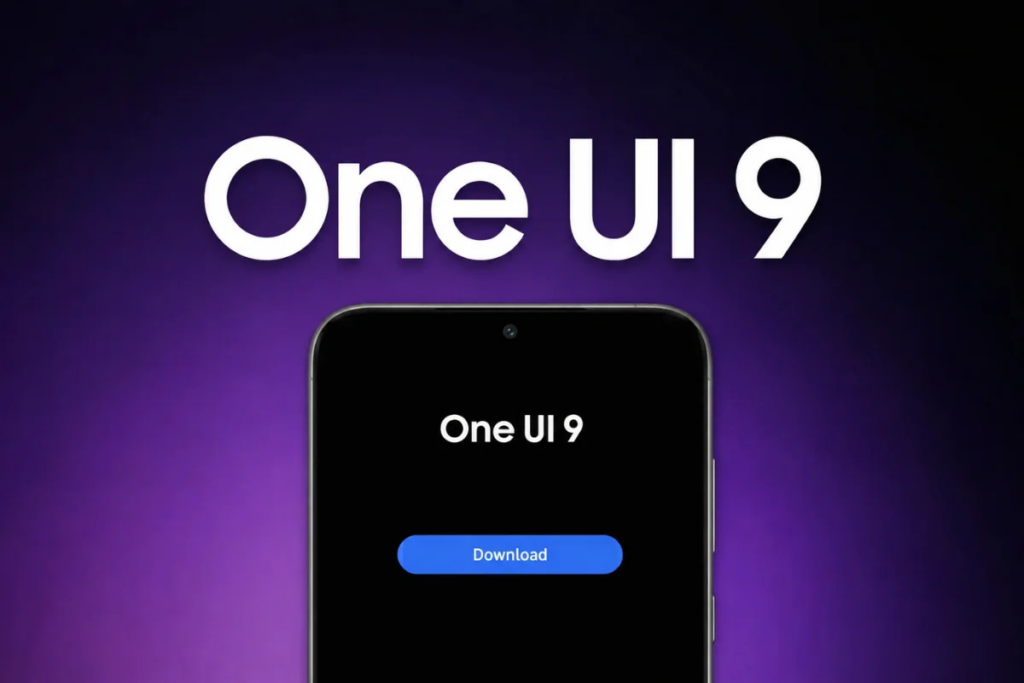
While the One UI 9.0 public beta is limited to the Galaxy S26 series, Samsung’s One UI team is doing a lot of hard work behind the scenes to ensure a timely release for other Galaxy devices. Internal testing has been underway for weeks, mainly for high-end and mid-range smartphones, but recently, a batch of budget phones has been spotted on the test server.
Many budget phones, including the Galaxy A07, Galaxy A17, and Galaxy A16, have been spotted on the server with a One UI 9.0 test firmware. This doesn’t necessarily mean a quicker release for these devices. Early testing gives the brand additional time to build and test the software to deliver a timely release without critical bugs.
In addition to these three phones, Samsung is internally testing the upcoming One UI 9.0 software on over two dozen devices. Below is the complete list.
Samsung is internally testing One UI 9.0 on these Galaxy devices
Galaxy S Series
Galaxy S25
Galaxy S25+
Galaxy S25 Ultra
Galaxy S24
Galaxy S24+
Galaxy S24 Ultra
Galaxy S24 FE
Galaxy S23
Galaxy S23+
Galaxy S23 Ultra
Galaxy Z Series
Galaxy Z Fold 7
Galaxy Z Flip 7
Galaxy A Series
Galaxy A57
Galaxy A56
Galaxy A55
Galaxy A54
Galaxy A35
Galaxy A34
Galaxy A25
Galaxy A24
Galaxy A17
Galaxy A16
Galaxy A07
Galaxy Tab S Series
Galaxy Tab S11
Galaxy Tab S11 Ultra
Galaxy Tab S10+
Galaxy Tab S10 Ultra
In the coming weeks, Samsung might expand the public One UI 9.0 beta program to more devices, including the Galaxy S25 series. But that’s unlikely to be opened for any of the budget Galaxy phones. They will receive the stable update directly, which is expected to be released alongside the new foldable phones at the upcoming Galaxy Unpacked event next month.
Don’t miss out on the latest One UI news. Check back on our Samsung section regularly, or follow us on Telegram to get notified the second a new story drops.
We use cookies on our website to give you the most relevant experience by remembering your preferences and repeat visits. By clicking “Accept”, you consent to the use of ALL the cookies.
This website uses cookies to improve your experience while you navigate through the website. Out of these, the cookies that are categorized as necessary are stored on your browser as they are essential for the working of basic functionalities of the website. We also use third-party cookies that help us analyze and understand how you use this website. These cookies will be stored in your browser only with your consent. You also have the option to opt-out of these cookies. But opting out of some of these cookies may affect your browsing experience.
Necessary cookies are absolutely essential for the website to function properly. This category only includes cookies that ensures basic functionalities and security features of the website. These cookies do not store any personal information.
Any cookies that may not be particularly necessary for the website to function and is used specifically to collect user personal data via analytics, ads, other embedded contents are termed as non-necessary cookies. It is mandatory to procure user consent prior to running these cookies on your website.