Advertisement

China Accelerates Space Race with G60 Satellite Megaconstellation

China has accelerated its efforts in the space technology sector, marking a new chapter in the global race for satellite-based internet services. This development comes as China’s G60 megaconstellation satellite initiative in Shanghai moves into production, directly challenging SpaceX‘s Starlink program.

The G60 satellites will go up against Tesla’s Starlink

Located in the G60 Starlink industrial base, the new digital-production plant in Shanghai, backed by the municipal government, has started rolling out commercial satellites. This advancement is part of China’s broader strategy to strengthen its position in the commercial satellite market, which is increasingly viewed as a key area in technological innovation and international competition.

Satellites China

With plans to launch and operate at least 108 satellites by 2024, the factory aims to establish a competitive global industry chain by 2027. The factory’s impressive production capacity of 300 satellites per year marks a significant step forward, drastically reducing the satellite building time from months to just a day and a half.

However, it’s important to note that China’s production rate is still behind SpaceX’s Starlink, which produces six satellites daily. This gap highlights the competitive nature of the sector and the challenges China faces in catching up with established players.

China’s ambitious G60 Starlink project, alongside the Guo Wang national network, showcases the country’s determination to match and potentially surpass Elon Musk‘s Starlink. The G60 project, which began in 2016, has gained momentum with the Shanghai government’s support and the strategic importance of the Yangtze River Delta region’s high-tech manufacturing capabilities.

With the aerospace information industry expected to grow significantly by 2025, China’s foray into this sector is more than just a technological endeavor; it’s a strategic move in the global economic landscape. The G60 megaconstellation is not only a feat in satellite technology but also a critical component in an industrial chain that includes data services, artificial intelligence, and deep learning, essential for processing vast amounts of data from satellites.

This development points towards the growing importance of satellite-based internet services and the intensifying global competition to dominate this burgeoning market. As China continues to push forward, the world watches to see how this race will shape the future of global internet connectivity and technological supremacy.

RELATED:

(Via)

BMC is Redefining Urban Commuting with the 257 AMP AL One E-Bike

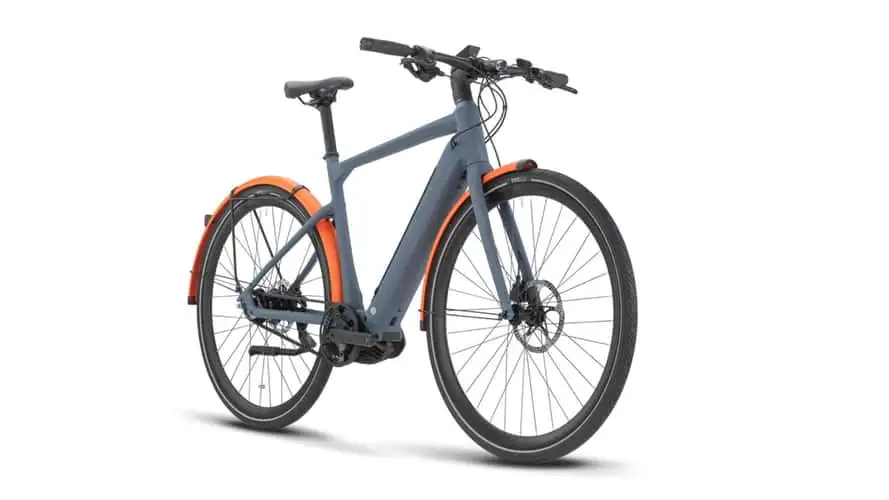
As cities grow busier and streets more crowded, BMC, a Swiss bike specialist, has crafted a solution for urban commuters: the 257 AMP AL One e-bike. This isn’t just any electric bike; it’s a blend of performance, style, and practicality, engineered for the everyday city rider.

The bike adopts a more sleek, streamlined look

BMC is no stranger to the high-performance bike world. Their pedigree in road and mountain bikes is well-established. However, with the 257 AMP AL One, they’re taking a different route. This bike isn’t designed for the racing tracks or mountain trails but for the bustling city streets. It’s an urban commuter’s dream, combining the reliability of a traditional bike with the latest technology.

E-bike

One of the standout features of the 257 AMP AL One is its partnership with Bosch for the powertrain. It features the Bosch Performance Line CX motor and a 625-watt-hour PowerTube battery, seamlessly integrated into the frame. This e-bike offers enough power and range for daily commutes without the bulkiness often seen in other models.

Beyond the motor, BMC focuses on longevity and ease of use. The bike opts for a maintenance-free belt drive over the traditional chain drive, reducing noise and the need for frequent servicing. Paired with the Shimano Alfine eight-speed system, it ensures a smooth ride.

But it’s not just about the mechanics. The 257 AMP AL One cares for its rider’s comfort too. It comes with full-coverage fenders, a Redshift ShockStop Suspension Stem, and a Selle Royal Vivo saddle. These features work together to provide a comfortable ride, even on rough urban roads.

Priced at around $6,305, the 257 AMP AL One is a premium option. It’s not just a mode of transport; it’s an investment in a more efficient, enjoyable urban commute. With cities evolving, the BMC 257 AMP AL One stands as a testament to what the future of urban cycling could look like: efficient, stylish, and perfectly in tune with the needs of city dwellers.

RELATED:

(Via)

Oppo Find X7, Find X7 Ultra launch date, configurations, color options officially confirmed

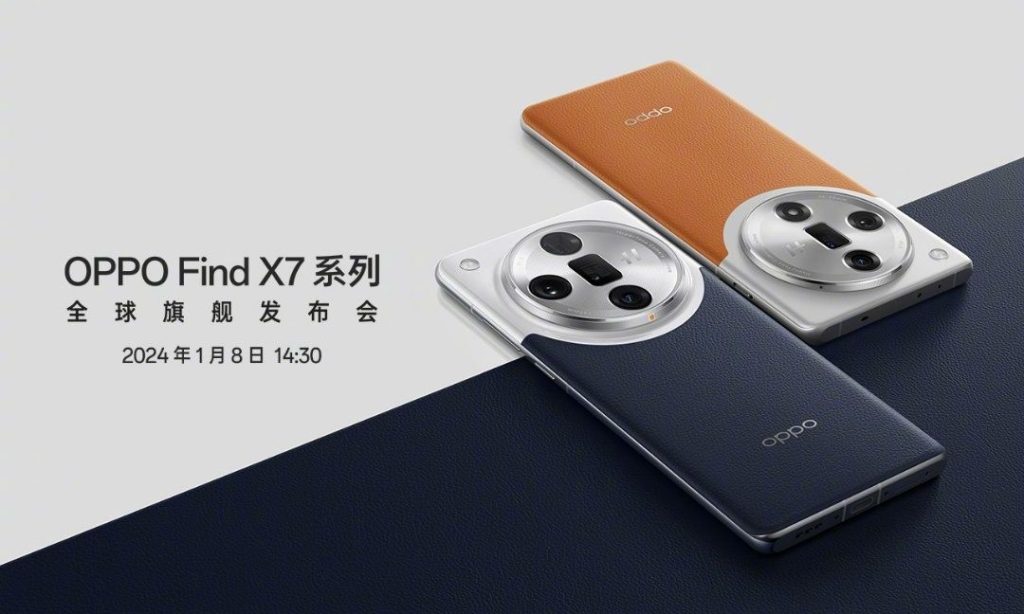
Oppo has officially confirmed that it will unveil the Find X7 series of smartphones at 2:30 pm (local time) on Jan. 8, 2024, in China. In addition, the Find X7 and Find X7 Ultra smartphones are now listed on Oppo China’s online store for reservations. The official listings have confirmed the configurations and color options of both smartphones well ahead of the official announcement.

Oppo Find X7 series launch date-
Oppo Find X7 series launch date

Oppo Find X7

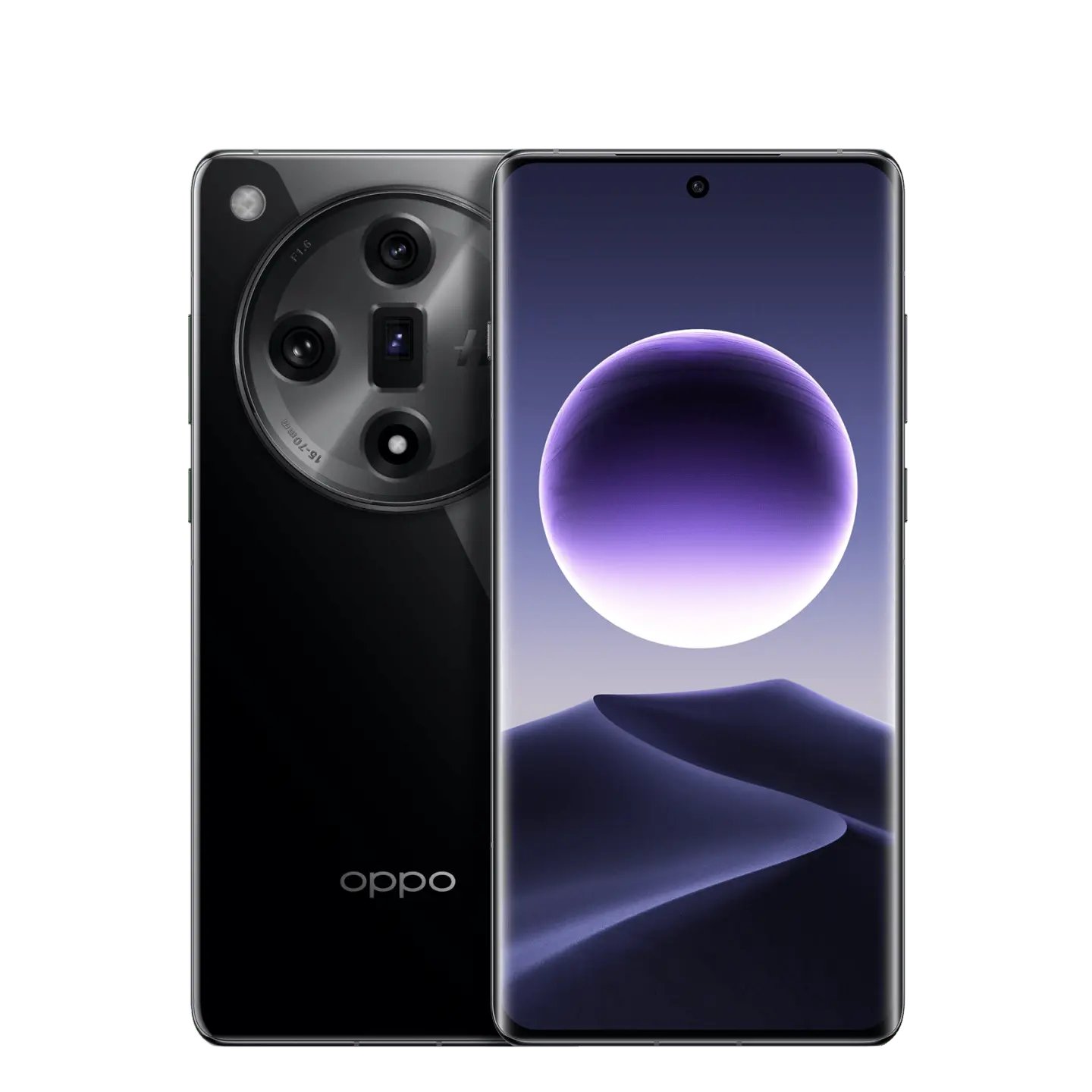
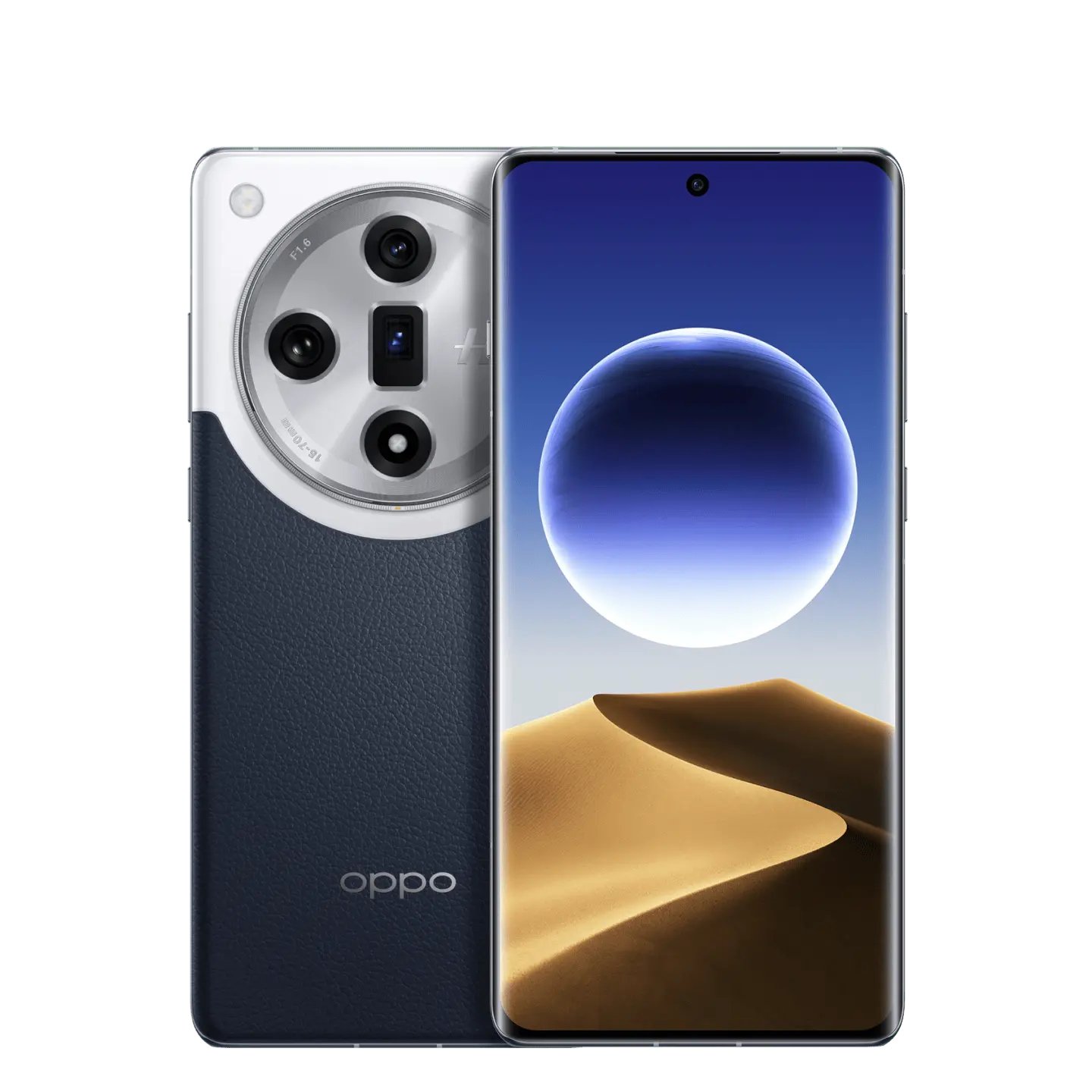
Reports have revealed that the Find X7 will come equipped with the Dimensity 9300 chipset. The official listing reveals that it will come in four configurations, such as 12 GB RAM + 256 GB storage, 16 GB RAM + 256 GB storage, 16 GB RAM + 512 GB storage, and 16 GB RAM + 1 TB storage.

The Find X7 will be available in four shades, such as Starry Sky Black, Sea and Sky, Desert Moon Silver, and Smokey Purple.

Oppo Find X7 Ultra

The Find X7 Ultra is expected to come equipped with the Snapdragon 8 Gen 3 SoC. It will be available in three variants, such as 12 GB RAM + 256 GB storage, 16 GB RAM + 256 GB storage, and 16 GB RAM + 512 GB storage.

When it comes to color options, the Find X7 Ultra will come in choices such as Pine Shadow Ink, Sea and Sky, and Desert Moon Silver.

The Find X7 and Find X7 Ultra have a similar design, with the front featuring a punch-hole display with curved edges and a dual-tone back panel with a massive camera module. The Find X7 has a triple-camera unit, whereas the Find X7 Ultra has a quad-camera system. The Ultra variant will be the world’s first smartphone to feature dual periscope telephoto cameras. In addition, it will also be the first-ever phone to feature the one-inch Sony LYT-900 50-megapixel camera sensor as the primary snapper.

It is said that there will be a third device called the Oppo Find X7 Ultra Satellite Communication Version, which will come with support for two-way satellite communication. The rest of its specs will be identical to the Find X7 Ultra.

RELATED:

Realme India teases periscope zoom camera flagship phone, launch imminent

Indian smartphone brands are preparing for a wave of new releases in January 2024. Redmi is set to reveal the Note 13 series on January 4, while Vivo will introduce the Vivo x100 lineup. Poco is expected to launch the Poco X6 series, and Samsung might unveil the Galaxy S24 lineup in the Indian market. Realme is also adding to the excitement by teasing the impending launch of a new smartphone.

Realme’s next smartphone will be launching soon in India

Realme’s teaser image reads, “No Periscope. No Flagship,” which could mean that the brand will launch a flagship phone with a periscope telephoto camera. Earlier this month, Realme launched the Realme GT 5 Pro (model number: RMX3888) as its first-ever flagship phone equipped with a periscope telephoto camera. 

There is a possibility that Realme may launch a mid-range smartphone featuring a periscope telephoto camera typically found in flagship devices. According to reports, the upcoming Realme 12 Pro+ is rumored to be equipped with an OmniVision OV64B periscope telephoto camera offering 3x optical zoom. This high-end camera is also available on flagship models like the OnePlus 12, iQOO 12 series, and Vivo X100. In contrast, the Realme 12 Pro is expected to sport a 32-megapixel Sony IMX709 telephoto camera with 2x optical zoom.

While the Realme GT 5 Pro is equipped with the Snapdragon 8 Gen 3 chipset, the Realme 12 Pro lineup may feature the Snapdragon 7 Gen 3 SoC. It is worth nothing that the GT 5 Pro hasn’t appeared in the database of India’s BIS certification. On the other hand, the Realme 12 Pro+ and 12 Pro have RMX3840 and RMX3842 have both received BIS certification, indicating that these devices may launch soon in India.

As per a leak by tipster Abhishek Yadav, the Realme 12 Pro+ is slated for announcement either by the end of January 2024 or in February. For a more accurate understanding of the teased Realme phone’s specifications and features, it is recommended to await additional reports and updates as they become available.Top of Form

RELATED:

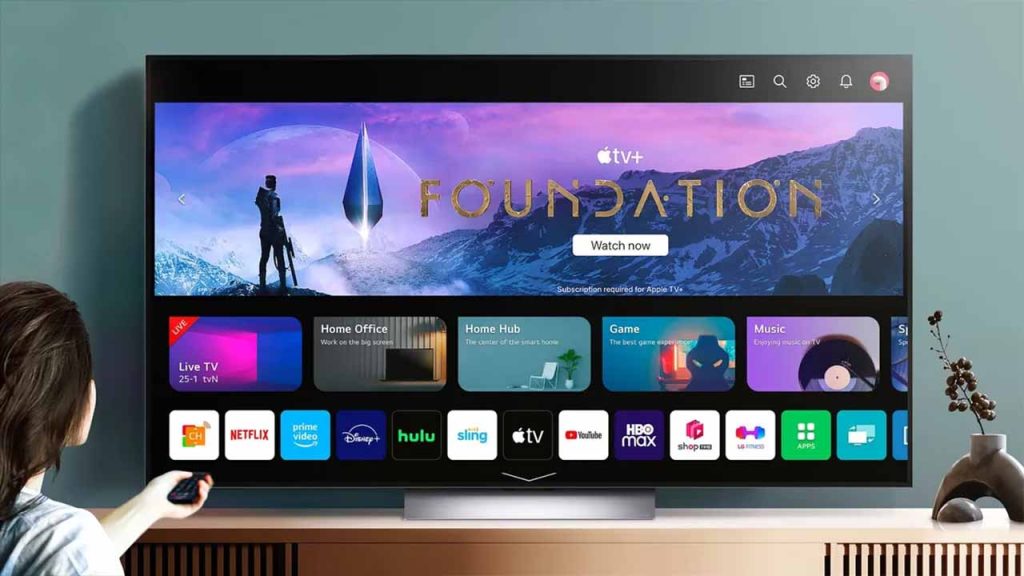
Future-Proofing Entertainment: LG Promises At Least 5 Years Update Guarantee for WebOS TVs

When it comes to consumer electronics, software is as important as hardware. Updates can enhance the performance of your device long after its release, add new features, fix issues, and most importantly, improve security. While we often discuss software updates in relation to smartphones, it’s equally important for other smart technologies in our lives. LG, recognizing this importance, promised five years of updates for webOS TVs. Here are the details…

LG Promises At Least 5 Years Update Guarantee for WebOS TVs

The widespread availability of digital content platforms like YouTube and Netflix has given people the freedom to watch what they want, when they want. This trend has also contributed to the popularity of smart TVs. Nowadays, many of us have modern smart televisions at home or technologies like the Xiaomi TV Stick that smarten up older TVs. However, this situation also brings along some challenges.

Adding another smart device to the ones you already own means another addition to the products list that might concern you in terms of updates. Considering even Android phones have recently been resolving issues in this regard, one can imagine how the situation might be for smart TVs. Thankfully, with its promise of five years of updates for webOS TVs, it aims to change this scenario.

The company announcing the introduction of the 2024 model televisions has promised five years of updates for webOS. However, this update will only apply to LG smart TVs produced in 2024 and later. Consequently, manufacturers of webOS TVs from other companies will still be responsible for their own updates. This situation can be likened to Google’s comprehensive update support for Pixel models while leaving other manufacturers to manage updates independently.

RELATED:

Keychron Q1/Q65 Max mechanical keyboards launched in China, pricing starts at 1118 Yuan ($157)

Keychron has launched the Q1 Max and Q65 Max, two mechanical keyboards in the Chinese market. This comes after the recent launch of Q60 Max with a retro design.

Keychron Q1/Q65 Max Specifications:

The Q1 Max and Q65 Max differ mainly in their layouts, with the Q1 Max sporting a 65% layout and the Q65 Max a 75% layout. Both keyboards feature a Gasket structure, offering a comfortable and responsive typing experience.

Both models are constructed with CNC 6063 aluminum, ensuring durability and a premium feel. They come equipped with KSA PBT double-shot keycaps, known for their resilience and tactile feedback.

Both keyboards have a substantial 4000mAh battery capable of lasting up to 180 hours on a single charge. The keyboards offer hot-swappable switch functionality, providing flexibility for users to change switches without soldering. They also feature south-facing RGB backlighting with 22 adjustable lighting effects, adding to their aesthetic appeal. In terms of ergonomics, the keyboards do not include a wrist rest but are designed to support general use.

The keyboards support a high polling rate of 1000Hz, which is crucial for fast and accurate keystroke recognition. They are compatible with Windows and macOS operating systems, providing versatility for different user needs. Both keyboards feature three-mode connectivity, including Bluetooth, 2.4GHz wireless, and wired options. They can connect to up to five devices simultaneously, enabling seamless switching between different systems.

These keyboards support customizable key mapping by QMK/VIA, allowing users to personalize their typing experience. This customization extends to the choice of switches, with options including Gateron’s custom-made Jupiter Tea, Red, and Banana switches. These switches are designed to last up to 80 million keystrokes and are integrated with optical lens technology to enhance RGB lighting effects. Both keyboards also feature a mini rotary knob for volume control and QMK editing.

Pricing and Availability

The Q65 Max and Q1 Max are available in both Black and white color options, with different configurations for each color. The Q65 Max is priced at 1118 Yuan ($157), and the Q1 Max is priced at 1238 Yuan ($174).

RELATED:

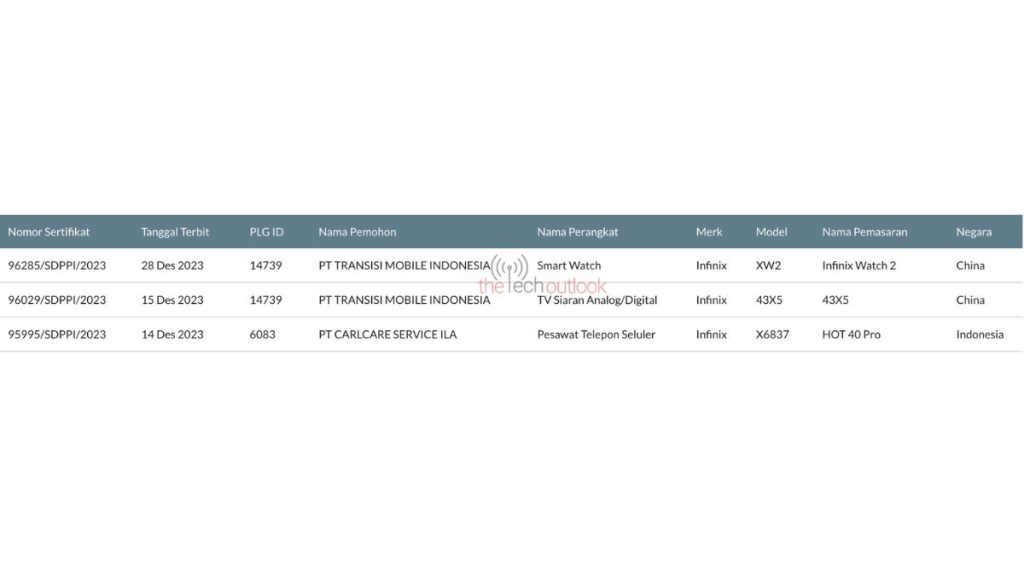
Infinix XW2 smartwatch clears SDPPI certification, Could launch soon

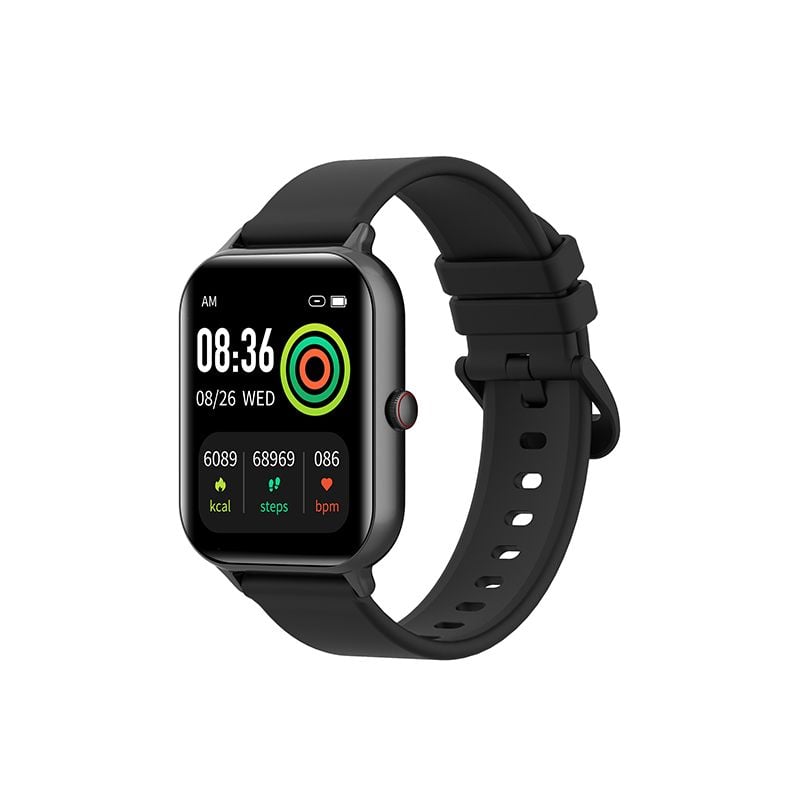
Infinix is gearing up to introduce its new smartwatch globally, likely named Infinix Watch 2. The upcoming device, with the model number XW2, has made an appearance on the SDPPI certification website, hinting at an imminent launch.

While Infinix is yet to confirm this, this won’t be the brand’s first smartwatch in the market as it has previously launched the XW1 and XW1 Pro smartwatches in some markets around the globe.

Infinix XW1 smartwatch specs:

Infinix XW1 Pro

The previous model called the Infinix XW1 features a 1.83-inch TFT square-shaped display with Bluetooth 5.2, the XW1 offers over 100 clock interfaces, heart rate and acceleration sensors, and various functions like heart rhythm measurement, pedometer, blood oxygen rate measurement, sleep tracking, breath tracking, special day tracking for women, music control, camera control, water drinking reminder, sedentary reminder, voice assistant, weather updates, alarm, games, calculator, and flashlight.

Its IP68-rated body makes it water and dust-resistant, suitable for an active lifestyle. While Infinix is yet to spill the beans on the Infinix Watch 2, the anticipation is building as the brand ventures into the global smartwatch scene. Stay tuned for more updates on this upcoming tech.

RELATED:

(via: TheTechOutlook)

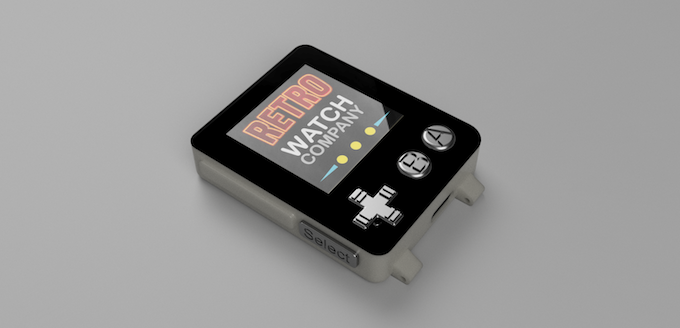
Retro Gaming Watch that doubles as a mini gaming handheld console launched on Kickstarter

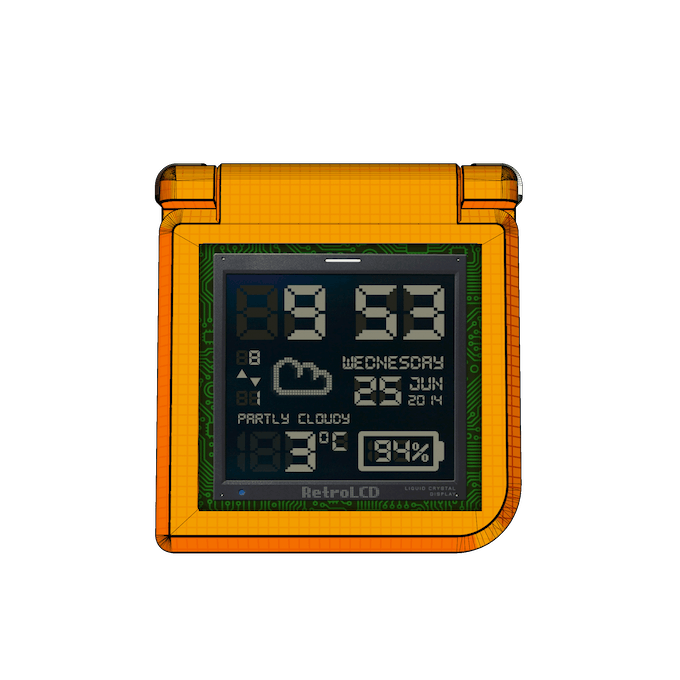
A US start-up has launched a portable gaming device with a unique smartwatch design. The Retro Gaming Watch is a gaming wearable just like a mini Game Boy SP. You can wear the Retro Gaming Watch on your wrist and flip it open to play retro games. The developer of the Retro Gaming Watch – Jason Rogers is raising money for the device via a Kickstarter crowdfunding campaign.

Retro Gaming Watch

Features

The Retro Gaming Watch is a tiny game console that can be worn on the wrist and used as a watch when not playing games. The watch screen of the Retro Gaming Watch can be flipped to reveal a mini game console. It also features hardware and software for the emulation of classic games. The early bird rewards for the Kickstarter campaign start at $159 while the top backers will get their devices by November 2024.

Retro Gaming Watch

It is noted that the Retro Gaming Watch is not meant to play games while it is on your wrist. Rather it is to be played when off the wrist and it is placed on a wrist strap for use as a watch. There is a small display for basic watch functions as well as a 1.54-inch 320 x 320 pixels internal LCD with a 60Hz refresh rate. The 1.54-inch LCD is for gaming purposes. Four action buttons are present in the Retro Gaming Watch in addition to a D-Pad, a magnetometer, an accelerometer, and a single speaker.

The Retro Gaming Watch is equipped with a Renesas/ Dialog DA14706 chip with a 160MHz application processor and two ARM Cortex-MD processors for sensors and Bluetooth. The gaming console also features a 2D GPU, 1.5MB of internal memory, and 8MB of external QSPI RAM. The device also comes equipped with an Efinix T20 FPGA to create custom video game hardware with custom cores to emulate popular 8- and 16-bit game consoles. The Retro Gaming Watch is therefore well-suited for playing emulated classic games with its FPGA handling the bulk of processor tasks.

Retro Gaming Watch

The developer claims that the Retro Gaming Watch can offer up to two days of battery life when used as a smartwatch but 2-4 hours of playtime for 2D games.

Pricing & Availability

The Kickstarter campaign will determine the further trajectory of the Retro Gaming Watch. If sufficient funding is raised from Kickstarter, then the Retro Gaming Watch will probably have a machined steel body. Otherwise, 500+ pledges will translate to an injection-molded plastic body for the console. Beta testing options are also open for a $350 pledge and a March 2024 delivery of the watch.

RELATED:

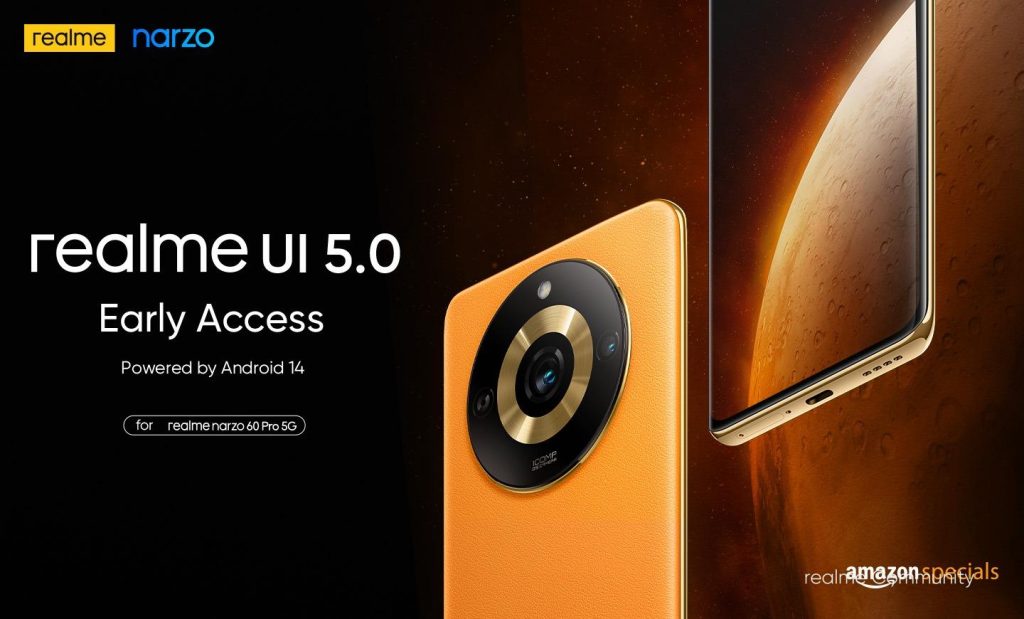
Realme Narzo 60 Pro 5G gets Android 14 Early Access 2 update

Realme is gearing up to deploy the Android 14-based Realme UI 5.0 on many of its eligible smartphones. The Realme Narzo 60 Pro 5G has recently received its second Realme UI 5.0 early access build.

realme narzo 60 Pro 5G Android 14 Early Access 2

For those already enrolled in the first early access testing, this update brings several notable changes. With Fluid Cloud in the Pantanal Service, you can now easily check real-time info using morphing forms. The File Dock feature makes moving stuff between apps and devices super easy.

They’re also improving how your phone connects with other devices. The Shelf is getting better with more widget suggestions. And, they’re making sure your phone is safer with improved photo and video permissions.

They’re working on making your phone faster and smoother too. The design is getting refreshed with gentle colors for a comfy look. New ringtones and notification sounds are coming too.

In a green move, they’re adding a feature to show how much carbon you save by walking instead of driving. But, keep in mind there might be some issues, like problems with sliding windows and the Glance Lock-screen feature missing.

For those eager to dive into the realme UI 5.0 Early Access, the application channel opens on December 25, 2023, with applications accepted in limited batches. As always, users are advised to exercise caution, back up their data, and ensure sufficient phone storage before taking the plunge into the early software release.

To apply, Settings → About device → Click on the “realme UI 4.0” banner at the top → Click on the three dots in the top right corner → Beta program →Early Access →Apply Now → Submit your details and finish the application.

RELATED:

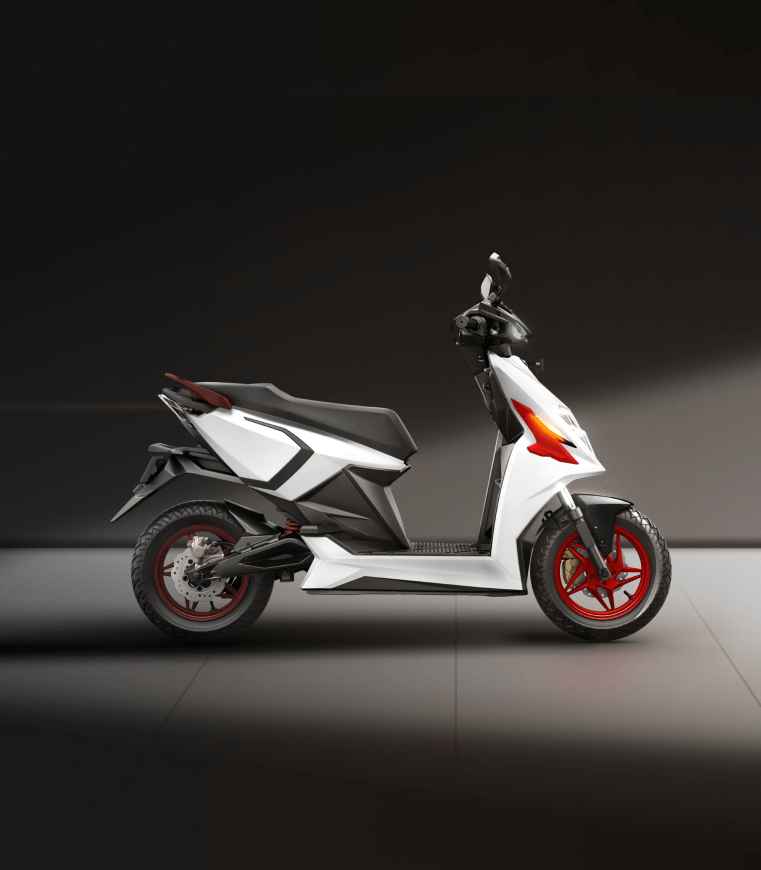
Simple Dot One electric scooter with a range of up to 151km launched in India starting at Rs. 1.4 lakhs ($1,683)

Simple Energy has unveiled its latest electric scooter in India. The Simple Dot One e-scooter comes with a range of 151km. The Simple Dot One release is coming on the heels of the launch of the Simple ONE back in May 2023, with a range of 212km.

Simple Dot One electric scooter

Features

The Simple Dot One is equipped with the PMSM motor patented for the previous model. It has up to 8.5kW peak/ 4.5kW continuous power and a peak torque of 72Nm. It can go from 0 to 40km/h in 2.77 seconds and hit a top speed of 105km/h. The Simple Dot One has a smaller 3.7kWh battery than that of the Simple Dot. It has a fast charge architecture, achieving a 1.5km range per minute using the Simple Loop charging station.

Simple Dot One electric scooter

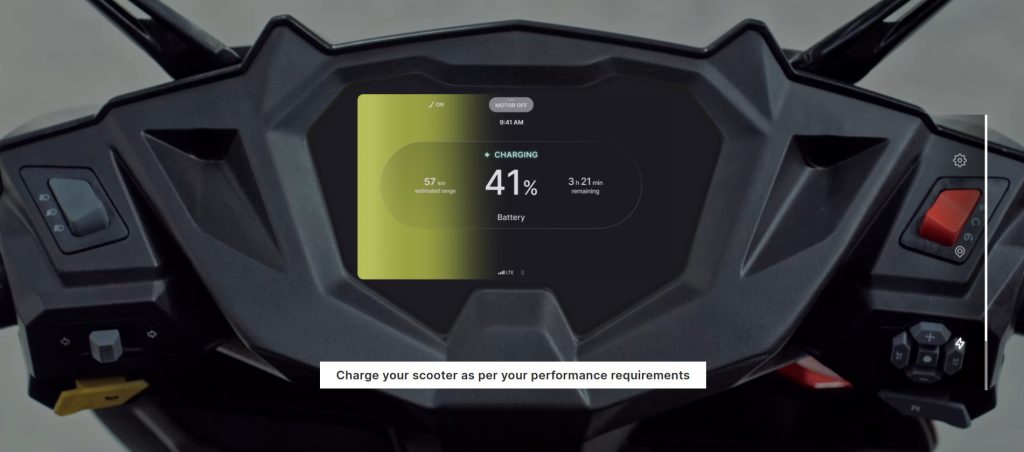
The Simple Dot One electric scooter has a 7-inch touchscreen with a customizable interface and support for 4G and Bluetooth 5.2 connectivity. You can receive calls, listen to music, and do a few other things while cruising on the scooter. It has a decent brake system consisting of CBS and efficient disc brakes. There is a 35-liter under storage for luggage and the entire scooter is rated IP67, including its battery pack and display.

Simple Dot One electric scooter

Pricing & Availability

The Simple Dot One electric scooter is priced starting at Rs. 139999 ($1,683) Ex-showroom Bangalore. It is available in Brazen Black, Grace White, Azure Blue, and Namma Red color options. Simple Energy says it will give priority to owners of the Simple One willing to switch their scooter for the Simple Dot One. New customers can pre-book the Simple Dot One directly from Simple Energy for Rs. 1947 ($24) beginning from January 27, 2024. There is no global availability and pricing information yet for the Simple Dot One e-scooter.

RELATED:

Huawei’s Aito M9 SUV with multiple displays, projector screens & up to 630km range debuts in China

Huawei-backed electric vehicle brand Aito has unveiled the M9 SUV for the Chinese market. The Aito M9 comes with a bountiful collection of displays and projector screens rather than seats for passengers. Aito is a joint venture between Huawei and Seres.

Aito M9 SUV

Features

The Aito M9 is a flagship offering from Aito and is a 6-seater SUV. The electric version of the Aito M9 comes with premium features including the latest Huawei tech, several screens, and two projectors that can deliver a cinema experience inside and outside the vehicle. The launch comes just a few months after the company unveiled the M7 SUV.

Aito M9 SUV

The M9 comes with modern styling and reflects a sleek design, although the body is seemingly generic. The SUV features high-tech headlights similar to the Huawei Luxeed S7 sedan. The lighting tech adopted is the adaptive matrix LED technology that helps to identify pedestrians and vehicles. The integrated projector is capable of projecting images up to 100 inches.

Apart from being capable of functioning as a drive-in movie theater or open-air karaoke system, the M9 features a laser projector and a retractable 32-inch panel in the cabin. This allows passengers to enjoy movies, games, and other content from the comfort of their seats.

The Aito M9 dashboard bears a close semblance to the hyperscreen of a Mercedes. It houses a 12.3-inch digital instrument cluster, a 15.6-inch central infotainment screen, and a 16-inch front passenger screen. There is also a 75-inch head-up display and four tablets for each of the rear passengers. The system runs on Huawei’s homegrown HarmonyOS 4, while a 25-speaker 2,080W audio system delivers premium sound output. Active noise reduction technology is also part of the mix to give a unique audio experience.

Aito M9 SUV

The layout of the Aito M9 SUV can be adjusted to meet the needs of the occupants. The official gallery of the SUV shows a double bed configuration, with all the seats electrically controlled. There are 27 sensors in the Aito M9 for enhanced safety in combination with the Huawei ADS 2.0 system. Aito announced two powertrains for the M9 namely a fully electric option (BEV) and a range-extender (EREV).

The BEV option features dual electric motors that produce a combined power of 390kW, while a 97.7kWh CATL battery pack delivers a CLTC range of 630km. The EREV has a turbo-charged 1.5-liter engine and dual electric motors with a combined power of 365kW. The EREV has a 42kWh/ 52kWh CATL battery and delivers a combined range of up to 1,402km on a full tank and fully charged battery.

Pricing & Availability

The Aito M9 is priced between 469,800 yuan ($65,725) and 569,800 yuan ($79,715) in China. The earliest deliveries of the M9 will be in early 2024 and Aito has not provided any global availability plans for the models yet.

RELATED:

E-bike and electric scooter injuries are reportedly increasing by at least 20% every year – US CSPC

A new report by the United States’ Consumer Product Safety Commission (CSPC) indicates that injuries from micromobility solutions like e-bikes and e-scooters are increasing by at least 20% every year. The report is titled Micromobility Products-Related Deaths, Injuries, and Hazard Patterns. The new report underscores the rising cases of injuries connected with the increasing use of electric bikes, electric scooters, and other micro-mobility solutions.

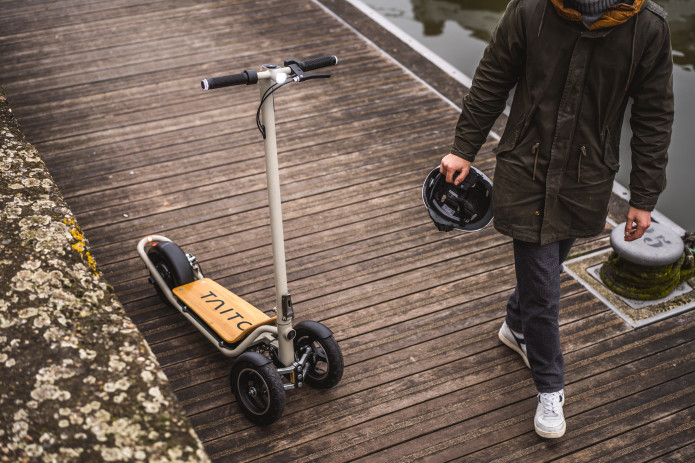
Taitans e-scooter

The rise in e-scooters/e-bikes adoption increases the chances of an e-scooter/e-bike accident happening

The electric revolution in micromobility has grown in leaps and bounds in the US, as well as other developed markets. The number of e-bikes, e-scooters, and other micromobility products is multiplying seemingly exponentially. This is a good measure to reduce carbon emissions in our cities and rural areas. The e-mobility revolution however has a flipside highlighted by a growing number of injuries and fatalities from accidents. The report specifically focused on the risks and injuries inherent in e-bike and e-scooter travel, especially for younger riders.

The CSPC report covers a period of five years, from 2017 to 2022 and the findings indicate that there is a significant increase in the percentage of injuries that could potentially be avoided. Safety measures like wearing a helmet, choosing safer places to ride, increasing visibility on the road, and avoiding distractions while riding will potentially help to prevent injuries. The most common injuries, according to the report, were fractures, contusions, and abrasions. The report also highlights that injuries from micromobility devices increased by about 21% in 2022 from the previous year.

Electric scooter injuries increased by 21% from 2021, with the bulk (about 50%) of injuries within the period (2017-2022) happening in 2022. The injuries associated with e-scooters and e-bikes occurred most frequently on streets and highways, according to the CSPC report. Hoverboard injuries decreased within the period and occurred mostly at home. Males accounted for the bulk of e-scooter (65%) and e-bike (75%) injuries while females (55%) had more hoverboard injuries.

The CSPC report aligns with previous studies which underscore the need for enhanced safety practices by riders to reduce injuries and damage from accidents. There is also an aspect of enforcement of safety rules (like making helmets compulsory) that could further eliminate potential injuries from the use of micromobility products.

RELATED:

(via)

Realme 11 Pro/Pro+ get Android 14 Early Access 2 update

After recently launching the Realme UI 5.0 early access program for the Realme 11 Pro and 11 Pro+ devices, the brand is now inviting users to participate in the second round of the early access program. This exclusive beta opportunity allows users to preview upcoming changes to their devices with the Android 14 update.

Key Features of UI 5.0 Early Access 2:

For users that have already participated in the first early access program, here are the changes coming with the new update:

The realme UI 5.0 Early Access brings several enhancements aimed at refining the user experience and device functionality.

Key updates include the introduction of the Pantanal Service featuring Fluid Cloud, offering dynamic information at your fingertips. The Smart Efficiency upgrade introduces File Dock for seamless content transfer between apps and devices.

Cross-device connectivity sees improvements with added widget recommendations on the Shelf. Security and privacy concerns are addressed through enhanced permission management for photos and videos, ensuring safer app access. Performance optimization takes center stage, promising improved system stability, faster app launches, and smoother animations.

Aesthetic updates include the Aquamorphic Design enhancement, offering a more comfortable and clear color experience. The update also introduces Aquamorphic-themed ringtones and revamped system notification sounds. For environmentally-conscious users, a carbon tracking Always-On Display (AOD) visualizes carbon emissions avoided by choosing to walk over driving.

Known Issues and Important Information:

However, users should be aware of a couple of known issues. When using floating windows, there might be difficulty sliding the desktop, which can be resolved by pulling down the status bar. Additionally, the Glance Lock-screen feature is not yet available in the Early Access release but is promised in future versions.

Realme emphasizes that the Early Access program is a beta initiative, cautioning users about potential bugs and app compatibility issues. The company recommends avoiding installation on primary devices due to the unpredictable impact it may have on daily use.

How to Join Early Access:

The application channel for Early Access opened on December 25, 2023, with limited seats available. Interested users need to ensure their device meets certain criteria, such as having 60% or more battery, the required UI version (RMX3741_13.1.0.545(EX01) for the 11 Pro+ and RMX3771_13.1.0.546(EX01) for the 11 Pro. Lastly, Developer Mode should be enabled before updating.

Applying is straightforward: users navigate to Settings, click on the “realme UI 4.0” banner, select Beta program, then Early Access, and finally, apply by submitting their details.

Disclaimer: Read Before Applying:

Before opting for the Early Access experience, realme urges users to read and understand the disclaimer. Key points include ensuring the device is not rooted, backing up personal data to prevent loss, updating all third-party apps to the latest versions, and having more than 15 GB of available phone storage.

RELATED:

(Source 1, 2)

Chinese CMOS sensors could enter Samsung’s supply chain, telephoto lens costs are expected to rise

OmniVision, a key player in CMOS image sensors, faced difficulties after losing Apple as a client in 2011. Following its acquisition by Visionox, it shifted its focus to serving Chinese smartphone brands. The OV50H sensor is now adopted by numerous top Chinese manufacturers, strengthening China’s domestic supply chain and positioning OmniVision as a potential rival to industry giants like Sony and Samsung.

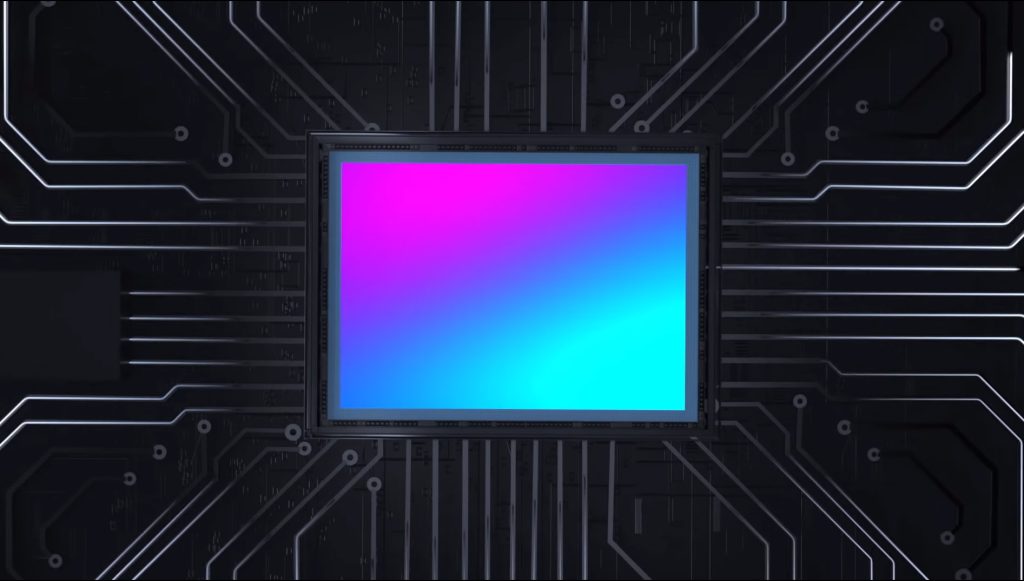
Camera Sensor

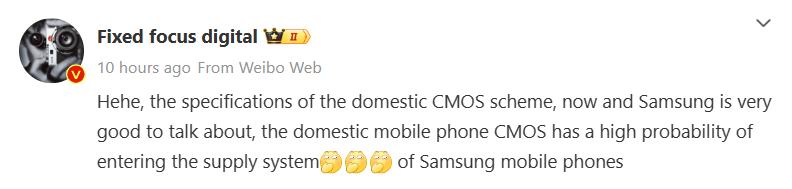
Now according to a recent tip from a popular Weibo tipster, Fixed Focus, suggests that there are advanced discussions between Chinese-made CMOS solutions and Samsung. This hints at the possibility of integrating domestic CMOS technology into Samsung’s smartphone supply chain, which would be a significant milestone for Chinese technology.

Chinese CMOS sensors details Leak

Earlier, the tipster also disclosed details about OmniVision’s upcoming OV50K sensor, featuring the innovative LOFIC technology. This advancement allows for enhanced performance in high-brightness scenarios by increasing the Full-Well Charge capacity, thus offering a wider dynamic range and effectively tackling overexposure issues.

This development is not limited to Samsung. Honor is also reportedly planning to incorporate OmniVision sensors across its product line. The OV50H sensor will be featured in some Huawei and Honor models, while the more advanced OV50K sensor will be used in higher-end Honor series models.

The tipster also suggests that “super affordable telephoto smartphones” may become less common next year. This is because domestic CMOS manufacturers initially sold their products at cost to gain market share, but in 2024, they are expected to adjust prices to ensure profitability.

Currently, Sony’s IMX989 and LYT900 sensors lead the market. However, OmniVision’s new offerings, coupled with support from major players like Samsung, Huawei, and Honor, could reshape the competitive landscape in the sensor industry.

At the same time, various Chinese entities, including Huawei, are exploring the development of their own CMOS image sensors, fostering an environment conducive to domestic production.

RELATED:

Apple’s Smartwatches Return to the Shelves – Temporarily

Apple, known for its cutting-edge technology, recently faced a significant hurdle with its smartwatch line, the Apple Watch Series 9 and Ultra 2. The US International Trade Commission (ITC) had imposed a ban on the sale of these products, citing patent infringement. This decision, based on a lawsuit by medical device maker Masimo, threatened Apple’s $17 billion smartwatch business. However, an appellate court in Washington has now provided a temporary respite, lifting the ban and allowing Apple to resume sales.

Masimo is filing a lawsuit against Apple citing a patent infringement

The conflict began when Masimo accused Apple of infringing patents related to blood-oxygen saturation measurement technology. This led to the ITC’s decision to ban the import and sale of certain Apple Watch models. The move was significant, as it forced Apple to halt sales just before Christmas, a peak shopping season. Despite the White House’s 60-day review period, the ban was not vetoed, adding to Apple’s challenges.

Apple Watch

Apple’s response has been multifaceted. While challenging the ITC’s decision, the company also developed a software update, potentially mitigating the patent infringement issue. This update is under review, with a decision expected soon. Meanwhile, the appellate court’s temporary lift of the ban is a welcome development for Apple. The company’s statement highlights its commitment to developing industry-leading health and wellness technologies.

This situation underscores the complex interplay between innovation, patent rights, and market competition. Apple’s struggle to defend its product and intellectual property rights against Masimo’s claims highlights the challenges tech companies face in a highly competitive and legally intricate environment. The outcome of this legal battle will be closely watched, as it could have significant implications for how tech companies innovate and protect their inventions in the future.

For now, Apple fans can rejoice as the coveted smartwatches return to shelves, but the overarching story is far from over. The final decision on the appeal and the impact of the software update will determine the future course for Apple’s smartwatch line and perhaps set a precedent in the tech industry’s ongoing patent disputes.

RELATED:

(Via)

From Game to Film, Bendy and the Ink Machine is making a Big Screen Debut

The gaming community received thrilling news recently: the popular horror game “Bendy and the Ink Machine” is set to make its cinematic debut. Originally released in chapters in 2017, with a full version arriving on various platforms a year later, Bendy quickly became a hit with fans, winning hearts with its unique blend of classic cartoon aesthetics and engaging puzzles.

The news was shared by the official Bendy X (formerly Twitter) account

This transition from game to film was teased in a captivating image shared by the official Bendy X, or Twitter account. The picture shows Bendy’s iconic hand pointing towards a projector screen, boldly announcing the character’s upcoming film adventure. It’s a moment filled with anticipation for fans and a significant step for Joey Drew Studios, the brains behind the game.

Bendy and the Ink Machine

Radar Pictures, known for their work on high-profile projects like the Jumanji reboot and classics like The Last Samurai, is set to bring their expertise to Bendy’s cinematic journey. This collaboration promises to blend Radar’s film-making prowess with the distinctive charm of Bendy’s world, creating an experience that is both familiar and fresh.

While specific details about the movie are scarce, with no release date or plot details revealed, the commitment to maintaining the game’s essence is clear. Paul Crawford, aka theMeatly, Bendy’s creator, emphasizes the importance of staying true to the game’s spirit, ensuring that the film is not just a mere adaptation but a tribute to Bendy’s unique world.

Meanwhile, the Bendy saga continues to expand with the release of “Bendy and the Dark Revival” in November 2022. This sequel, or rather, a new chapter in the Bendy story, ensures that the inkwell of creativity at Joey Drew Studios is far from dry.

As fans eagerly await more details, they can revisit the spooky charm of “Bendy and the Ink Machine” or explore other indie horror games. For those fascinated with the classic cartoon style, the upcoming game “Mouse” is also worth a look. Bendy’s move to the big screen is not just a leap for the character but a testament to the evolving relationship between video games and cinema, where worlds born in digital realms find new life and audiences in the expansive universe of film.

RELATED:

(Via)

Baidu’s ERNIE AI Bot Crosses the 100-Million-User Milestone

Baidu, a Chinese leader in AI technology, has achieved a significant breakthrough with its ERNIE Bot, a state-of-the-art generative AI tool. This bot, which is a product of the ERNIE Foundation Model, has now reached over 100 million users. What’s more impressive is the ERNIE Foundation Model 4.0, which has seen a 32% boost in performance in just two months.

Baidu claims that the bot has produced 3.7 billion words in workplaces

Since its debut in late August 2023, ERNIE Bot has rapidly become a go-to solution for a wide range of tasks. Its versatility is evident in its usage statistics: it has produced 3.7 billion words in workplace settings, aided over 2 million professional users, penned 300 million lines of code, and processed 400 million words in contracts. It’s not just about work, though. ERNIE Bot has also created 5 million travel plans and helped write 10.83 million supportive messages, earning 20 million likes from users.

Baidu

These numbers are more than just statistics. They reflect a growing reliance on AI tools in everyday life and work. From drafting codes to planning trips, ERNIE Bot is reshaping how we approach tasks that were once time-consuming and complex. It’s a testament to the evolving relationship between humans and technology, where AI is no longer just an assistant but a collaborator.

Baidu’s commitment to advancing AI doesn’t stop with ERNIE Bot. The Wave Summit highlighted the company’s PaddlePaddle platform, which has become a critical resource for developers and enterprises. With over 10.7 million developers and 235,000 enterprises using it to create 860,000 models, PaddlePaddle is at the forefront of AI innovation.

The rise in ERNIE Bot’s popularity, combined with the continuous improvements in the ERNIE Foundation Model, signals a significant shift in AI’s role in our lives. As these tools become more integrated into various sectors, we can expect to see more groundbreaking changes, simplifying tasks and opening new possibilities for innovation and efficiency.

RELATED:

LG Unveils 2024 QNED & QNED Mini LED TVs ahead of CES 2024

LG Electronics recently introduced its latest lineup of QNED and QNED Mini LED TVs for 2024, featuring various screen sizes, including a 98-inch variant. These televisions focus on key aspects such as picture quality, advanced AI processing, personalized options, and a sleek design.

LG QNED TV

A notable feature of the 2024 QNED TVs is the upgraded α8 AI Processor, which offers improved AI and graphic performance, resulting in a more responsive viewing experience. The AI Picture Pro feature enhances picture quality by recognizing faces, objects, and backgrounds in each scene, while Dynamic Tone Mapping Pro optimizes HDR for improved three-dimensional image quality. The Personalized Picture Wizard allows users to customize image quality based on personal preferences.

In terms of sound performance, LG AI Sound Pro provides virtual surround sound with a 9.1.2 channel configuration, and WOW Orchestra seamlessly integrates TV speakers with the LG Sound Bar for an immersive three-dimensional sound experience.

Utilizing Quantum Dot and NanoCell color technologies, these TVs deliver vibrant picture quality for an engaging home entertainment experience. Precision Dimming and local dimming technologies work together to improve gradients, enhance contrast, and optimize brightness levels.

The 2024 QNED TVs feature a slim profile of just 29mm, offering a stylish design that blends seamlessly into any space. The TVs support wall mounting options for added flexibility.

LG introduces the webOS Re:New program, providing a five-year upgrade to the latest webOS smart TV platform. This initiative includes personalized profiles, fast access with Dynamic Q Card, and support for Apple AirPlay and Chromecast.

Addressing various needs, LG incorporates accessibility features, such as dedicated menu settings, sign language avatars, and remote control tutorials.

Pricing & availability

The pricing and release dates for the newest TV models will be disclosed during the launch. LG is set to exhibit the latest QNED and QNED Mini LED TVs at CES 2024, taking place from January 9 to 12.

RELATED:

Tecno Pop 8 India launch date revealed, Amazon availability confirmed

Tecno is gearing up to launch the new Pop 8 in the Indian market soon. The device was the company’s latest budget smartphone model, which is now making its way to the Southeast Asian country. The official Indian launch has been revealed. So let’s have a look.

Tecno Pop 8 to Launch in India on January 3

Earlier this month, the company teased the announcement of the upcoming Pop 8 in India. The latest teaser now shares the official launch date of the device. It will be unveiled in the region on 3rd January 2024. Apart from this, the brand recently confirmed a bunch of key specs regarding this device. This includes its design, display, color options, and more.

Tecno Pop 8 India

Just recently, the AnTuTu score of the Tecno Pop 8 was leaked. This new smartphone managed to score over 240,000 on the popular benchmarking platform. Now, the microsite for the Pop 8 has gone live on Amazon, confirming the availability in the region. On the e-commerce platform, Tecno claims that the handset will be the fastest 8GB model in this segment. Based on what we know so far, the 8GB memory includes 4GB of physical RAM and 4GB of virtual RAM expansion. It also comes with 64GB of internal storage.

For those unaware, the Tecno Pop 8 is equipped with the UNISOC T606 SoC and is powered by a massive 5,000mAh battery pack that supports standard 10W charging. On the front, the smartphone features a 6.6-inch 90Hz LCD panel that offers HD+ resolution and 8-megapixel selfie shooter. Meanwhile, the rear features a 13-megapixel dual camera with an LED flash. This is all the information we have at the moment, so stick around for more as we will be covering the launch event next week.

RELATED:

Nothing Phone (2a) Configurations, Color Options, Pricing Tipped
Nothing is working on a new smartphone if recent reports are anything to go by. The upcoming offering from the brand is rumored to be the Nothing Phone (2a). It is expected to be a toned-down version of the premium Phone (2). While Nothing is yet to confirm the existence of the Phone (2a), the pace of the leaks hint at its imminent arrival. Now, in a new development, the upcoming smartphone’s configurations, color options, and pricing have surfaced. 

Nothing Phone (2a) variants, pricing leaked

The latest information on the Nothing Phone (2a) has been shared by tipster Roland Quandt on X (formerly Twitter). The smartphone will arrive in 8GB + 128GB and 12GB + 256GB RAM and storage configurations. It will be offered in White or Black color options. The Nothing Phone (2a) is tipped to carry a sub-EUR 400 price tag for the base model. 

As per leaks and rumors, the Nothing Phone (2a) will feature a brand-new design. It will have a circular module housing horizontally positioned dual camera sensors. The camera island is surrounded by Glyph LED light strips. A leaked production validation unit of the device revealed that it will have 50MP dual rear cameras and a 6.7-inch AMOLED display bearing an FHD+ resolution. The OLED panel is expected to be supplied by China’s Visionox or BOE. The Nothing Phone (2a) will reportedly be powered by a MediaTek Dimensity 7200 processor. 

Nothing has already confirmed its presence at MWC 2024 with an event scheduled for February 27. We can expect the brand to announce the device at that time. 

Related: