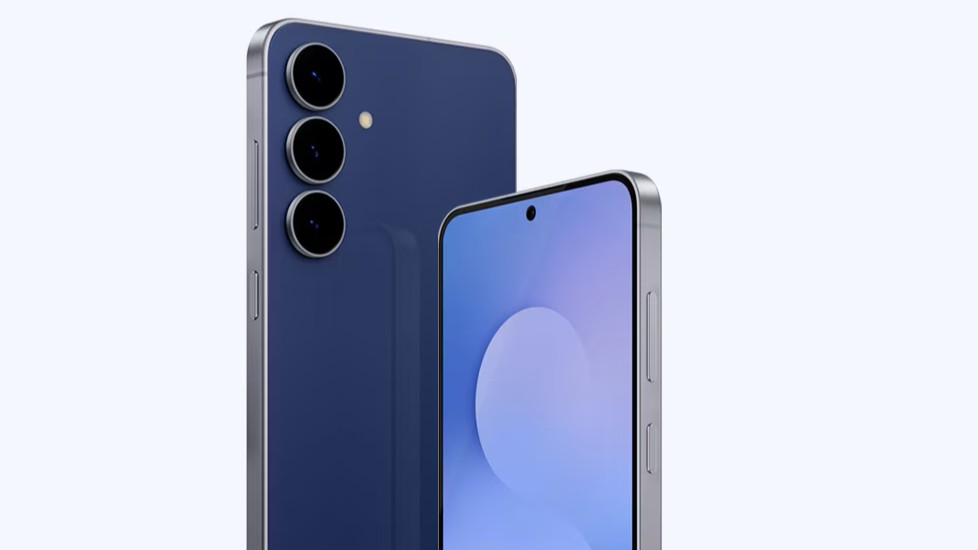
Samsung’s upcoming foldable devices have appeared in early software testing leaks, hinting that the company has already begun working on One UI 9. Firmware sightings linked to unreleased models suggest that development is progressing alongside preparations for next-generation foldables expected later this year.
One UI 9 testing spotted on upcoming foldables
Samsung Galaxy Z Fold 7
Recent reports indicate that internal One UI 9 builds have been detected for multiple upcoming foldable smartphones, including the Galaxy Z Fold 8 and Galaxy Z Flip 8. Firmware versions such as F976USQU0AZB1 and F776USQU0AZB1 have surfaced through test servers, pointing toward early-stage software testing.
Another mysterious device carrying the model number SM-F971U has also been seen running similar firmware, suggesting Samsung may be working on an additional foldable model alongside its usual Fold and Flip lineup. Leakers claim that One UI 9 will be based on Android 17 and could debut directly on new foldable devices once they launch.
Reports also mention that testing has extended to current foldable hardware like the Galaxy Z Fold 7, indicating that Samsung is preparing the update for both new and existing devices simultaneously. This early testing phase highlights Samsung’s strategy to accelerate software readiness ahead of hardware launches.
Galaxy Z Fold 8, Z Flip 8: What to expect?
While details about the hardware remain limited, early rumors suggest that the Galaxy Z Fold 8 could feature a triple-camera system, including a 200-megapixel main sensor, a 50-megapixel ultrawide camera, and a 12-megapixel telephoto unit. The Galaxy Z Flip 8 is tipped to run on a next-generation chipset, possibly built on a 2nm process, though confirmation is still pending.
Samsung is also believed to be developing a wider foldable device internally codenamed H8, which may adopt a different form factor compared to existing models. The next foldable lineup is expected to arrive later this year, potentially making these devices the first to ship with One UI 9 out of the box, while the Galaxy S26 series may debut with One UI 8.5 before transitioning to the newer software.
For more daily updates, please visit our News Section.
While the One UI 8.5 release is yet to happen, Samsung is already laying the groundwork for its next major release, One UI 9. A few Galaxy devices have been spotted on Samsung’s test servers with new build versions pointing to One UI 9.
The Galaxy Z Fold 8 and Galaxy Z Flip 8 were the first phones to show up on the server with One UI 9 test builds (1, 2). Both foldables will launch around July 2026 with One UI 9 right from the box.
Perhaps the most intriguing is the appearance of a mysterious third device with the modem number SM-F971U running the build version F971USQU0AZB1. This could mean Samsung might also launch a third foldable phone alongside the Fold 8 and Flip 8 in the second half. We don’t know what it would be called, but rumors say this could be the Galaxy Wide Fold.
Alongside these three upcoming foldable phones, the One UI 9 test build has also been spotted for the Galaxy Z Fold 7. This is kind of surprising, as the Galaxy Z Fold 7 hasn’t even received the One UI 8.5 update.
So, here’s a list of Samsung devices that are currently under One UI 9 testing:
Galaxy Z Fold 8
Galaxy Z Flip 8
Galaxy Wide Fold (name unconfirmed)
Galaxy Z Fold 7
The list is currently small, as Samsung began testing One UI 9 just recently. It will grow in the coming days, especially after the One UI 8.5 release, when more of the company’s focus will shift towards One UI 9.
It’s important to highlight that One UI 9 testing is happening internally, so you can’t download and test the firmware on your Galaxy device. The presence of such test builds on the server indicates that the company is testing the firmware behind closed doors to ensure a stable, smooth rollout in the future.
While Samsung has begun development of One UI 9 for its Galaxy devices, its primary focus will be the Galaxy S26 series, which is launching later this month with One UI 8.5. In late April, we might see One UI 8.5 rolling out to older Galaxy devices. You can check the list of eligible devices here.
We’ll continue to update you with the latest One UI news in our Samsung section. Visit it regularly to stay up to date. Or, join our Telegram channel to get instant notifications about the latest happenings in tech.
The Poco X8 series, which includes the Poco X8 Pro and X8 Pro Max, has been gradually receiving new certifications. In the latest development, the Pro Max edition has received approval from the Indonesian TKDN certification platform. While it has not revealed any technical details, it marks another hurdle cleared before launch.
Poco X8 Pro Max TKDN certified
Poco X8 Pro Max TKDN listing
The TKDN listing of the Poco X8 Pro Max reveals 5G support and nothing else. The handset carries the model number 2602BPC18G, which has already surfaced on other certification platforms, including IMDA in Singapore, BIS in India, and the EEC, suggesting preparations for availability across multiple markets.
While the above-mentioned listings only revealed the model number, a previously seen IMEI listing helped confirm the device’s final marketing name. In all likelihood, the Poco X8 Pro Max and the X8 Pro may debut in March across different countries.
Poco X8 Pro Max specifications (rumored)
Poco X8 Pro Max
Although official details remain undisclosed in certifications, leaks based on Xiaomi’s HyperOS 3 code provide a clearer picture of what to expect. The Poco X8 Pro Max is tipped to feature a large 8,500mAh battery along with support for 100W wired charging. In all likelihood, it will be a tweaked version of the China-exclusive Redmi Turbo 5 Max, with one major difference being in the battery department. To put this into context, the Redmi model packs a massive 9,000mAh battery.
The Poco X8 Pro Max is expected to feature a 6.83-inch AMOLED display with a resolution of 1280 x 2772 pixels, combined with a 120Hz refresh rate, 3,840Hz PWM dimming, and peak brightness of up to 3,500 nits. It is likely to be powered by the MediaTek Dimensity 9500s chipset, paired with 12GB or 16GB RAM and storage options reaching up to 512GB. Camera hardware is rumored to include a 50-megapixel primary sensor with OIS, supported by an 8-megapixel ultrawide lens and a 20-megapixel front camera.
For more daily updates, please visit our News Section.
Apple’s upcoming iPhone 17e has surfaced in a fresh leak by FrontPageTech, offering an early look at its expected design changes, hardware upgrades, and positioning within the company’s lineup. The leak reveals that it could arrive sooner than usual, possibly through a press announcement later this month, signalling Apple’s renewed push in the affordable premium segment.
iPhone 17e key specifications, design
iPhone 17e render by FPT
According to FPT, the iPhone 17e may drop the traditional notch in favor of Dynamic Island, aligning its appearance more closely with higher-end models. The device is expected to feature a 6.1-inch display, although reports indicate it may retain a 60Hz refresh rate, which could remain one of its compromises.
Apple appears to be targeting users looking for a relatively accessible entry into the iOS ecosystem, especially in markets where mid-range competition is strong. The handset is also tipped to introduce an upgraded 18-megapixel front camera with Centre Stage functionality, improving video calls and content creation.
iPhone 17e render by FPT
On the rear, a single 48-megapixel Fusion camera is likely to continue, relying on improved processing from the newer chipset to deliver better imaging results rather than major hardware changes. Its rear design is almost identical to the previous generation.
Internally, the iPhone 17e is said to run on a lower-binned A19 processor paired with 8GB RAM, enabling support for Apple Intelligence features. Connectivity improvements may come via Apple’s C1X networking chip, while MagSafe charging is reportedly making its way to this tier for the first time.
iPhone 17e render by FPT
Pricing is said to start at around $599, keeping it in line with its predecessor. Standard Black and White color options are likely, with a possible Lavender variant under consideration.
For more daily updates, please visit our News Section.
Huawei is set to break its recent streak of China-only flagship launches with the global debut of the Mate 80 Pro. The company unveiled this premium phone a couple of months ago, and it is finally making its way outside of China. So here’s everything you need to know.
Huawei Mate 80 Pro Goes Global on Feb 26
The Chinese tech giant has confirmed that it will be unveiling its latest Mate series premium phone on 26th February 2026. The company will make the official announcement during an event in Madrid, Spain. In this conference, Huawei will also showcase new TWS earbuds and its latest smartwatch. To recall, the Mate 80 Pro was first introduced in China in November 2025, and its international debut marks a significant step as Huawei continues to re-establish flagship momentum outside its home market.
Huawei Mate 80 Pro
The global press event is dubbed the “Global Innovative Product Launch”, which will launch the Mate 80 Pro, FreeBuds Pro 5 TWS, and Watch GT Runner smartwatch. Based on the earlier release, the Mate 80 Pro stands out with its Dual Space Ring design, which adds a bold visual identity that surrounds the rear camera array with a large circular camera module and a secondary ring below it.
Huawei’s teaser poster shows the upcoming phone in refined colour options such as Dawn Gold and Aurora Blue, paired with a near-edge-to-edge front display and slim bezels. On the front is a 6.75-inch LTPO AMOLED panel with FHD+ resolution and a 1–120Hz dynamic refresh rate. Other notable features include an advanced triple camera with large sensors and the brand’s XMAGE imaging algorithm.
For more daily updates, please visit our News Section.
Xiaomi has quietly expanded its accessory lineup with a new 45W Mini GaN Charger that aims to make fast charging more portable, powerful and affordable. Instead of a bulky charging brick, the company’s latest charging accessory uses Gallium Nitride (GaN) technology to deliver quick power in a much smaller footprint.
Xiaomi 45W Mini GaN Charger Specifications
Despite its tiny size, Xiaomi’s new charger pumps out up to 45W of power, which is enough to juice up most modern phones quickly. Using GaN tech, Xiaomi has managed to shrink the charging adapter, since the materials run cooler and more efficiently than traditional silicon. The Chinese tech giant’s tiny charger is ideal for travel or everyday carry. You get support for universal fast charging standards like PD 3.0 (Power Delivery), QC 3.0 (Quick Charge), and PPS (Programmable Power Supply).
Xiaomi 45W Mini GaN Charger
This means it works not just with Xiaomi and Redmi phones, but also with many iPhones, Samsung Galaxy models, tablets and even lightweight laptops or portable devices that support higher-wattage USB-C charging. The charger’s single USB-C port makes it straightforward to use, and the inclusion of the USB-C cable in the box saves buyers from needing to buy one separately. Xiaomi has also built in multiple protection layers, including over-voltage, over-current, short-circuit and over-temperature safeguards, so the charger is designed to keep your device safe while powering up.
The brand has released the Xiaomi 45W Mini GaN Charger in the Indian market for Rs 1,799, arriving in a clean white finish. Unlike many lower-wattage GaN chargers that don’t include a cable, Xiaomi’s decision to package a USB-C to USB-C cable adds extra value and convenience for users. This accessory is currently available for purchase via the brand’s official website, the official Xiaomi India online store and offline retail outlets.
For more daily updates, please visit our News Section.
The affordable 5G segment is getting more competitive, and that’s exactly why the Samsung Galaxy A17 5G and OPPO K14x 5G are being compared. Both target buyers in the ₹15,000–₹20,000 range, but they take completely different approaches. Samsung focuses on a refined experience with a Super AMOLED display, OIS-backed camera, and long-term software support. OPPO, on the other hand, pushes aggressive value with a massive battery, faster charging, and a lower expected price.
For buyers trying to choose between display quality and battery endurance, long-term reliability and immediate power, this comparison highlights which phone truly delivers the better overall value in 2026’s crowded budget 5G market.
MajorFeatures:
Feature
Samsung Galaxy A17 5G
OPPO K14x 5G
Winner
Display Quality
6.7″ Super AMOLED, 90Hz, Full HD+ — vibrant colors, deep blacks
The Galaxy A17 5G uses Gorilla Glass Victus on the front with a fiber-reinforced plastic back and IP54 protection. It feels slightly more refined and durable for daily use. The OPPO K14x 5G offers IP64 dust-tight protection, which adds a practical edge against dust exposure. However, its plastic-heavy build makes it feel more utility-focused than premium. Samsung’s cleaner finish gives it a more polished everyday appeal.
Display Quality
Samsung features a 6.7-inch Super AMOLED panel with 90Hz refresh rate, Full HD+ resolution, and 800 nits brightness. Colors are richer, blacks are deeper, and clarity is noticeably sharper. OPPO counters with a 6.75-inch IPS LCD, 120Hz refresh rate, and higher peak brightness, but its HD+ resolution lowers overall sharpness. While OPPO feels smoother, Samsung looks more vibrant and refined.
Verdict
Samsung wins on display quality and overall visual experience, while OPPO offers better dust resistance and smoother scrolling.
2. Specifications
Performance
The Galaxy A17 5G runs on the Exynos 1330 (5nm) with up to 8GB RAM and promises six major Android upgrades. That long-term support adds serious value. The OPPO K14x 5G uses the Dimensity 6300 (6nm) with up to 6GB RAM and UFS 2.2 storage. Both are capable of daily tasks, but Samsung’s extended software support makes it feel like a safer long-term investment.
Battery and Charging
OPPO clearly focuses on endurance with a massive 6500mAh battery and 45W wired charging, plus reverse charging support. It’s built for users who hate frequent charging. Samsung offers a 5000mAh battery with 25W charging, which is reliable but not exciting. OPPO’s charging speeds and larger battery make it more future-ready.
Verdict
OPPO wins in battery and charging. Samsung holds an edge in long-term software reliability.
3. Camera
Main and Secondary Lenses
Samsung provides a 50MP main sensor with OIS, along with 5MP ultrawide and 2MP macro lenses. Optical stabilization gives it an advantage in steadier shots and low-light clarity. OPPO features a 50MP main camera and an auxiliary lens but lacks OIS. While both deliver solid daylight shots, Samsung’s OIS makes photos feel more consistent and dependable.
Selfie Camera
The Galaxy A17 5G includes a 13MP front camera capable of 1080p recording. OPPO offers a 5MP selfie camera. The resolution difference is noticeable in detail and sharpness. Samsung clearly prioritizes better front-camera performance.
Verdict
Samsung wins comfortably in overall camera versatility and selfie performance.
4. Pricing
The Galaxy A17 5G is priced at approximately $200 (₹19,500). The OPPO K14x 5G is expected to cost around $170 (₹15,000), though it has not officially been out for sale yet. OPPO undercuts Samsung in pricing while offering a larger battery and faster charging, which makes it very attractive for budget buyers.
Samsung justifies its higher price with a Super AMOLED display, OIS camera, Gorilla Glass Victus protection, NFC support (region dependent), and extended software updates. Those features make it feel more premium and future-proof.
Verdict
OPPO offers stronger value for budget-focused buyers. Samsung justifies its higher price with better display and camera hardware.
Disclaimer: Prices are approximate and may vary based on country, region, and applicable taxes.
5. Conclusion
Samsung stands out with its Super AMOLED display, OIS-enabled camera, Gorilla Glass Victus protection, NFC support, and long-term Android upgrade promise. These elements make it ideal for users prioritizing display quality and camera stability.
OPPO shines with its 6500mAh battery, 45W charging, reverse wired charging, 120Hz refresh rate, Bluetooth 5.4 with aptX HD, and a lower entry price. It feels built for heavy battery users who want maximum endurance without spending much.
Verdict
Overall, the Samsung Galaxy A17 5G stands out as the better all-around smartphone. While the OPPO K14x 5G impresses with its larger battery, faster charging, and lower expected price, Samsung delivers a more complete experience with its Super AMOLED display, OIS-backed camera system, sharper selfie performance, and long-term software support. For users wanting a balanced phone that feels more refined and future-proof, the Galaxy A17 5G is the stronger overall choice.
Tecno has launched the Pova Curve 2 5G in India, introducing a curved AMOLED display, a large 8,000mAh battery, Dimensity 7100 chipset, and Android 16 OS. The device aims to deliver strong battery endurance and smooth performance in the mid-range segment. Here’s a closer look at its specifications, features, and pricing.
Tecno Pova Curve 2 5G specifications and features
Tecno Pova Curve 2
The Tecno Pova Curve 2 5G has a 6.78-inch curved AMOLED display with a Full HD+ resolution and a 144Hz refresh rate, offering fluid visuals for gaming and everyday use. The panel supports peak brightness of up to 4,500 nits and is protected by Corning Gorilla Glass 7i, enhancing durability while maintaining a premium appearance.
Under the hood, the MediaTek Dimensity 7100 chipset paired with 8GB LPDDR5x RAM. The handset is available with 128GB and 256GB of UFS 2.2 storage options, along with 8GB virtual RAM expansion for improved multitasking.
A standout highlight is the 8,000mAh battery, supported by 45W fast charging. With a full charge, the phone can easily last for up to two days. While it packs a huge battery, it is ultra-thin at 7.42mm and weighs just under 200 grams.
The phone runs on Android 16 with HiOS 16 on top. For photography, it features a 50-megapixel primary rear camera accompanied by a 2-mgeapixel secondary sensor, while the front houses a 13-megapixel camera for selfies and video calls.
The Pova Curve 2 packs other features, such as an in-display fingerprint scanner, an enhanced display protection for everyday reliability, an IR blaster, a single speaker with Dolby Atmos support, and an IP65-rated dust and splash resistance.
Tecno Pova Curve 2 5G price and availability
The Tecno Pova Curve 2 5G starts at Rs 27,999 (~$310) for the 8GB+128GB variant, while the 8GB+256GB model is priced at Rs 29,999 ($330). The device comes in Storm Titanium, Melting Silver, and Mystic Purple color options. Sales begin on February 20 at 12pm (local time) via Flipkart. Launch offers include bank discounts of up to Rs 3,000 (~$33) for eligible buyers.
For more daily updates, please visit our News Section.
In September, Xiaomi may unveil the Xiaomi 18, 18 Pro, and 18 Pro Max in China. These devices will replace the Xiaomi 17, 17 Pro, and 17 Pro Max, which were announced in the same month last year. Well before the expected launch, a Chinese tech blogger has shared a render of the Xiaomi 18. Before reading ahead, readers are advised to take this report with a grain of salt, as the authenticity of the design could not be confirmed.
Xiaomi 18 render
Xiaomi 18 render
The above image showcases a square-shaped camera module for the Xiaomi 18 with rounded corners and a minimalist aesthetic. The triple cameras are arranged in a triangular layout, complemented by subtle Leica branding and an LED flash. This design is more in line with the recently unveiled Oppo Reno 15 series.
Xiaomi 18 specifications (rumored)
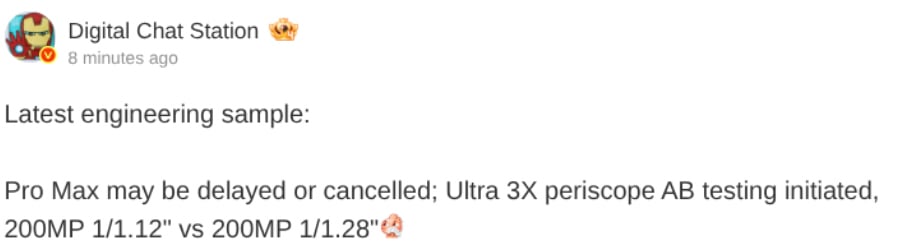
According to a recent leak by tipster Digital Chat Station, Xiaomi may increase the display from 6.3 inches to 6.4 inches on the Xiaomi 18. A bigger display means the device will internally have more space to accommodate advanced specs.
Therefore, while the Xiaomi 17 came with a massive 7,000mAh battery, it is likely that the Xiaomi 18’s battery could be even bigger than its predecessor. Under the hood, the device is said to feature the next-generation Snapdragon 8 Elite Gen 6 chipset.
DCS also revealed that the entire Xiaomi 18 lineup will have a 200-megapixel periscope telephoto camera. Hence, the Xiaomi 18 may also include a 200-megapixel periscope camera. Like the previous generation, it may continue to feature a 50-megapixel main camera and a 50-megapixel ultra-wide lens. Considering the phone is scheduled to launch later this year, it is expected to ship with Android 17 and a new version of HyperOS.
For more daily updates, please visit our News Section.
Xiaomi has begun rolling out the February 2026 security patch to its devices. While the update doesn’t include new features or improvements, it’s still important because it ensures the devices have fixes for the latest security vulnerabilities. Fortunately, Xiaomi isn’t prioritizing newer devices, as the February update has already started rolling out to HyperOS 2 (Android 14) devices, alongside many HyperOS 3 devices.
The latest security patch doesn’t include any critical “zero-day” vulnerabilities or high-level severity, according to the official Android Security Bulletin. This appears to be a standard maintenance release focused on bug fixes and improvements to system stability.
List of Xiaomi devices receiving the February 2026 security update
HyperOS 3 (Android 16) devices getting the February update:
Xiaomi 15
Global: OS3.0.6.0.WOCMIXM
Taiwan: OS3.0.3.0.WOCTWXM
Xiaomi 15T
Global: OS3.0.9.0.WOEMIXM
EEA (Europe): OS3.0.10.0.WOEEUXM
Xiaomi 15T Pro
Global: OS3.0.11.0.WOSMIXM
EEA (Europe): OS3.0.13.0.WOSEUXM
Xiaomi 14T
Indonesia: OS3.0.2.0.WNEIDXM
EEA (Europe): OS3.0.9.0.WNEEUXM
POCO F6 Pro/Redmi K70
Global: OS3.0.7.0.WNKMIXM
POCO X7/Redmi Note 14 Pro
Global: OS3.0.9.0.WOOMIXM
EEA (Europe): OS3.0.3.0.WOOEUXM
India: OS3.0.4.0.WOOINXM
Taiwan: OS3.0.2.0.WOOTWXM
Turkey: OS3.0.2.0.WOOTRXM
Indonesia: OS3.0.2.0.WOOIDXM
POCO X7 Pro
Turkey: OS3.0.5.0.WOJTRXM
Global: OS3.0.9.0.WOJMIXM
EEA (Europe): OS3.0.5.0.WOJEUXM
India, Indonesia, Russia, Taiwan
POCO M6/Redmi 13/Redmi 13X
Global: OS3.0.6.0.WNTMIXM
EEA (Europe): OS3.0.3.0.WNTEUXM
Turkey: OS3.0.3.0.WNTTRXM
Russia: OS3.0.3.0.WNTRUXM
Indonesia: OS3.0.3.0.WNTIDXM
POCO M7 4G/Redmi 15 4G
Global: OS3.0.10.0.WBOMIXM
EEA (Europe): OS3.0.5.0.WBOEUXM
Indonesia: OS3.0.4.0.WBOIDXM
Russia: OS3.0.2.0.WBORUXM
POCO M6 Plus 5G/Redmi 13 5G/Redmi Note 13R
India: OS3.0.10.0.WNUINXM
HyperOS 2 (Android 15) devices getting the February update:
Xiaomi 12T
Global: OS2.0.212.0.VLQMIXM
Russia: OS2.0.207.0.VLQRUXM
Taiwan: OS2.0.207.0.VLQTWXM
Redmi Note 15 Pro 4G
Global: OS2.0.210.0.VPFMIXM
EEA (Europe): OS2.0.207.0.VPFEUXM
Redmi Note 15 Pro 5G
India: OS2.0.203.0.VPPINXM
Turkey: OS2.0.202.0.VPPTRXM
EEA (Europe): OS2.0.204.0.VPPEUXM
Russia: OS2.0.202.0.VPPRUXM
Redmi 13C 5G/Redmi 13R
Taiwan: OS2.0.203.0.VGQTWXM
EEA (Europe): OS2.0.209.0.VGQEUXM
Redmi Note 12S
Turkey: OS2.0.208.0.VHZTRXM
Russia: OS2.0.209.0.VHZRUXM
Taiwan: OS2.0.209.0.VHZTWXM
Redmi Note 12 4G
Global: OS2.0.205.0.VMTMIXM
Redmi Pad 2 4G
India: OS2.0.209.0.VOWINXM
Redmi Pad 2 Pro 5G
Russia: OS2.0.203.0.VPXRUXM
Redmi 13C 5G, Redmi 13R
Taiwan: OS2.0.203.0.VGQTWXM
EEA (Europe): OS2.0.209.0.VGQEUXM
Redmi Pad 2 Pro 5G
Russia: OS2.0.203.0.VPXRUXM
Redmi Pad 2 4G
India: OS2.0.209.0.VOWINXM
POCO Pad, Redmi Pad Pro
EEA (Europe): OS2.0.208.0.VNSEUXM
Russia: OS2.0.207.0.VNSRUXM
Turkey: OS2.0.207.0.VNSTRXM
Indonesia: OS2.0.207.0.VNSIDXM
Redmi Pad Pro 5G
India: OS2.0.207.0.VFSINXM
EEA (Europe): OS2.0.208.0.VFSEUXM
Redmi Pad SE
Global: OS2.0.207.0.VMUMIXM
Turkey: OS2.0.203.0.VMUTRXM
Taiwan: OS2.0.202.0.VMUTWXM
POCO M7 Pro 5G/Redmi Note 14
Global: OS2.0.211.0.VOQMIXM
POCO M7 Plus/Redmi 15
Global: OS2.0.208.0.VOUMIXM
POCO C65/Redmi 13C
India: OS2.0.205.0.VGPINXM
Indonesia: OS2.0.205.0.VGPIDXM
HyperOS 2 (Android 14) devices getting the February update
Redmi Note 12 series (Explorer, Pro, Pro+)
Turkey: OS2.0.8.0.UMOTRXM
India: OS2.0.10.0.UMOINXM
Indonesia: OS2.0.12.0.UMOIDXM
Taiwan: OS2.0.8.0.UMOTWXM
POCO X5 Pro 5G/Redmi Note 12 Pro Speed
Indonesia: OS2.0.13.0.UMSIDXM
The above list has been shared by Xiaomi Time, which also includes some Xiaomi devices running Android 14. It’s good to see the brand expanding the update to older devices alongside newer models. We’ll update the list regularly as Xiaomi expands the update to more devices.
If your Xiaomi device is on the list and you live in a region where the update is already rolling out, you can upgrade to the latest security patch by navigating to Settings > My Device and tapping the HyperOS logo at the top.
Be sure to visit the Xiaomi section regularly for the latest updates. Or, you can join us on Telegram to get instant notifications about the latest HyperOS updates, along with the biggest tech headlines.
A new accessory kit developed in collaboration with accessory maker Telesin is designed specifically for the Honor Magic 8 Pro, turning the flagship into something that feels closer to a compact camera. While the Porsche Design variant already has its own official kit, the Magic 8 Pro didn’t. This new “Professional Photography Grip Kit” fills that gap.
The Magic 8 Pro already has solid camera hardware. It features a 200MP periscope telephoto sensor and a 50MP main camera with a bright f/1.6 aperture. On paper, it’s more than capable. What this kit changes is how you interact with it.
The kit starts with a custom protective case that supports standard 67mm screw-on filters. That means users can attach ND filters, polarizers, and other accessories typically reserved for dedicated cameras. There’s also a mounting point for a wrist strap and magnetic support for quick attachments.
The more interesting piece is the detachable grip. It magnetically snaps onto the case and adds physical controls, including a prominent red shutter button, a zoom slider, and additional shortcut keys. One button handles quick video recording, while another can act as a power switch or programmable function key. A front dial allows for exposure adjustments or other manual tweaks. It’s clearly aimed at users who prefer tactile controls instead of tapping a screen.
The package also includes a 200mm teleconverter lens attachment. It connects via an adapter ring and effectively increases the phone’s optical reach. Combined with the Magic 8 Pro’s existing periscope camera, it should help with distant subjects like wildlife or sports.
As with most clip-on or add-on lenses, real-world performance will depend on alignment and optical quality. But in theory, this gives the phone a bit more versatility than stock hardware alone.
Honor and Telesin have been teasing the kit ahead of a full reveal at Mobile World Congress 2026, where pricing and broader availability are expected to be confirmed.
For Magic 8 Pro users who want more control without carrying a separate camera, this kit could make sense. For everyone else, it’s at least a reminder that smartphone photography still has room to evolve beyond just bigger sensors and software processing.
Ultra smartwatches are no longer just fitness trackers; they’re built as rugged companions for extreme workouts, outdoor adventures, and everyday productivity. The Apple Watch Ultra 3 and Samsung Galaxy Watch Ultra represent the very best from Apple and Samsung, blending premium materials with serious health and performance features. But with similar durability claims and flagship specs, and now a much wider price gap, choosing the right one isn’t simple. This comparison breaks down where each watch truly excels and which one offers the best overall value.
Apple Watch Ultra 3 features a 49mm titanium (grade 5) frame with sapphire crystal protection and a ceramic/sapphire back. It carries IP6X dust resistance, 100m water resistance, 40m dive certification, and MIL-STD-810H compliance. At 61.6g, it feels solid and purpose-built for rugged adventures.
Samsung Galaxy Watch Ultra uses grade 4 titanium with sapphire protection and a ceramic/sapphire back. It offers IP68, 10ATM (100m) water resistance, and MIL-STD-810H durability. At 60.5g, it is slightly lighter and more compact on the wrist.
Display Brightness & Visibility
Apple’s 1.98-inch Retina LTPO3 OLED reaches an impressive 3000 nits peak brightness, making it extremely readable under harsh sunlight.
Samsung’s 1.5-inch Super AMOLED delivers sharp 480×480 resolution and excellent contrast, but brightness levels are lower than Apple’s peak output.
Verdict
Apple dominates outdoor visibility with its ultra-bright 3000-nit panel. Samsung feels slightly more compact and balanced for daily wear. For extreme environments, Apple has the edge.
2. Health and Fitness Tracking
Sensors & Tracking Accuracy
Apple Watch Ultra 3 includes heart rate, ECG (region dependent), SpO2, VO2 max, body and water temperature sensing (0.01˚ accuracy), depth gauge (±1m), always-on altimeter, and satellite Emergency SOS. Its depth and diving tools make it particularly appealing to serious explorers.
Samsung Galaxy Watch Ultra offers heart rate, ECG, SpO2, body and water temperature, BioActive sensor suite, barometer, and altimeter. It covers all essential health metrics with reliable performance for everyday athletes.
Workout Modes
Both watches support extensive fitness tracking with multi-GNSS positioning (L1+L5 GPS support). Apple leans toward adventure and diving precision, while Samsung integrates tightly with broader Android fitness ecosystems.
Verdict
Apple stands out for advanced depth tracking and satellite safety tools. Samsung remains comprehensive for mainstream fitness users.
3. Performance and Software
UI Smoothness
Apple Watch Ultra 3 runs watchOS 26 (upgradable to 26.3) powered by the Apple S10 dual-core chip. Animations are fluid, and system optimization is typically seamless within Apple’s ecosystem.
Samsung Galaxy Watch Ultra runs Wear OS 5 (upgradable to 6.0) with One UI Watch 8 on the 3nm Exynos W1000 penta-core chipset. Multitasking benefits from up to 2GB RAM and 64GB storage options.
App Support & Features
Apple offers 64GB storage and strong ecosystem integration with iPhone, plus UWB (Gen 2) support.
Samsung provides 32GB or 64GB storage options and deep integration with Android devices. Wear OS brings broader Google app compatibility.
Verdict
Apple delivers refined ecosystem cohesion, while Samsung offers stronger hardware versatility and Wear OS flexibility. Choice largely depends on smartphone pairing.
4. Battery and Connectivity
Battery Life
Apple packs a 599mAh battery with wireless charging reaching 0–80% in 45 minutes. Fast top-ups are convenient for active users.
Samsung houses a 590mAh battery with 10W wireless charging. Capacity is similar, and efficiency depends on OS optimization.
GPS, Bluetooth, LTE
Both support eSIM for LTE connectivity. Apple includes GPS (L1+L5), GLONASS, GALILEO, BDS, QZSS, Bluetooth 5.3, dual-band Wi-Fi, NFC, and satellite Emergency SOS.
Samsung supports GPS (L1+L5), GLONASS, GALILEO, BDS, Bluetooth 5.3, dual-band Wi-Fi, and NFC.
Verdict
Battery capacities are nearly identical. Apple adds satellite connectivity and QZSS support, giving it a slight advantage for remote travel.
5. Pricing
Apple Watch Ultra 3 is priced around $800 / ₹89,900. Samsung Galaxy Watch Ultra now comes in at approximately $500 / ₹45,000.
Verdict
The price gap is substantial. Samsung undercuts Apple by roughly $300 globally and over ₹40,000 in India. While Apple offers brighter display tech and satellite features, Samsung delivers flagship durability and performance at a dramatically more accessible price. In terms of pure value, Samsung clearly wins.
Disclaimer: Prices are approximate and may vary based on country, region, and applicable taxes.
6. Conclusion
Apple Watch Ultra 3 suits adventurers, divers, and dedicated iPhone users who want maximum outdoor capability and advanced safety tools.
Samsung Galaxy Watch Ultra is ideal for Android users seeking premium durability and flagship performance without paying ultra-premium pricing.
Final Verdict
Overall, the Apple Watch Ultra 3 remains the more feature-rich and adventure-focused smartwatch. However, with Samsung’s aggressive pricing, the Galaxy Watch Ultra becomes the smarter buy for most people. It delivers flagship durability, strong performance, and comprehensive health tracking at a significantly lower cost. Unless satellite SOS and extreme brightness are must-haves, Samsung offers the better overall value.
The Nothing Phone (4a) series launch is drawing near. While the company is mum about its launch date, it is expected to go official globally next month (March). Recently, the Phone (4a) was spotted on the Geekbench benchmarking platform, confirming that it is powered by the Snapdragon 7s Gen 4 chip and 12GB of RAM. The latest leak that has emerged now reveals the Phone (4a) series’ configurations and color options.
Nothing Phone (4a) series configs, color variants revealed
According to tipster Sudhanshu Ambhore, the Nothing Phone (4a) and Phone (4a) Pro will arrive in two configurations: 8GB+128GB and 12GB+256GB. Both phones will come in a common black color, while the Phone (4a) will also have a white variant, and the Pro edition could also be available in a silver edition.
Reports have claimed that the Phone (4a) series will also have blue and pink editions, but this leak does not mention their existence. Speculation is rife that the brand will announce the Headphone (a) over-the-ear headphones on March 12. It remains to be seen whether the company launches the Phone (4a) alongside the Headphone (a) or separately.
The Nothing Phone (4a) Pro was recently spotted on the EPREL certification platform, revealing a rated battery of 5,088mAh and 50W charging. The company has also confirmed that the (4a) series will offer upgraded UFS 3.1 storage. The other specifications of both phones are under wraps.
In related news, Nothing has no plans to launch the Nothing Phone (4a) flagship phone in 2026. Instead, it will shift its focus to bring flagship-level features on the Phone (4a) lineup.
For more daily updates, please visit our News Section.
After showing off a wave of concept and commercial PCs at CES 2026, Lenovo is now preparing its next business machine to show off at MWC.
A new report from Windows Latest reveals a series of renders of what’s said to be the upcoming Lenovo ThinkPad X13 Detachable. According to the report, the device will debut at Mobile World Congress 2026, which runs from March 2nd to 5th in Barcelona.
Here’s your first look at Lenovo ThinkPad X13 Detachable
Visually, the most noticeable change is in the display. Lenovo has trimmed down the bezels compared to the ThinkPad X12 Detachable while making the screen a tad bigger from 12.3 inches to 13 inches.
As a ThinkPad, there’s no denying the laptop is made with business users in mind. The renders show the ThinkPad X13 Detachable with USB-C charging ports on both sides. The laptop also keeps the good ol’ 3.5mm headphone jack and a Kensington lock slot.
Interestingly, we can see four visible screws on the bottom panel, which suggests that repairability hasn’t been ignored. That’s notable in a detachable category where many devices are sealed tightly.
Performance details remain unclear, though. The previous generation shipped with Intel’s Core Ultra 7 processor, so it’s safe to expect Intel Panther Lake chips to power this version.
Now, the thing that gives it the “detachable” name is its detachable keyboard. However, unlike the Microsoft Surface Pro keyboard that lies flat, the X13 Detachable’s magnetic keyboard attaches at a slight angle.
Lenovo is also keeping the signature TrackPoint and physical buttons. The stylus slot has reportedly been redesigned to take up less space.
On the security front, the device includes a front-facing camera with a mechanical privacy shutter, along with a circular fingerprint reader next to the touchpad. Combined with an infrared camera, the system supports dual Windows Hello authentication.
For more daily updates, please visit our News Section.
As China prepares to celebrate its most important annual holiday, Xiaomi is pressing pause on HyperOS software updates.
According to XiaomiTime, the company is entering a roughly two-week slowdown for the Chinese New Year that runs from February 17 through March 3. During this stretch, Xiaomi will not roll out any new HyperOS update, and work on internal test builds will also stop temporarily.
Xiaomi 17 Pro New Year Collection Wallpaper
As a result, don’t expect any new features or bug fixes in the coming days. The report also suggests the usual stream of bug reports and progress summaries will also go dark for the duration of the break.
XiaomiTime suggests the slowdown has already started behind the scenes. Xiaomi reportedly began winding down development several days ago, with internal test builds largely halted around four to five days back. Any updates that are currently reaching users were actually compiled weeks earlier, before the holiday freeze took effect.
Xiaomi isn’t alone in this
This kind of extended break may seem unusual compared to New Year holidays in Europe or the United States, where companies typically shut down for only a few days. But in China, the Lunar New Year is a major cultural event.
It’s common for businesses across industries to close for an extended period, giving employees time to travel home and spend time with family. For many workers, it’s the only long holiday of the year.
As such, you can guess Xiaomi isn’t alone in this. Other major China-based smartphone makers like Oppo, Vivo, and OnePlus follow similar schedules during this time, slowing development and pausing non-essential operations.
Regular update cycles are expected to resume once the holiday period ends in early March. Until then, HyperOS users shouldn’t expect much movement.
For more daily updates, please visit our News Section.
Huawei may be getting ready to refresh its fitness band lineup again. Almost a year after introducing the Huawei Band 10 in March, signs of a new model have quietly appeared inside the company’s own software.
The listing for something called the Huawei Band 11 Pro has appeared in the Huawei Smart Life app. Tapping on it redirects users to the Huawei Health app, where the interface — particularly in the HarmonyOS version — reveals the band’s final design. Huawei hasn’t said anything publicly yet, but the software trail makes the product hard to ignore.
Huawei Band 11 Pro shows up on the Huawei Health app
From the images visible in the app, the Band 11 Pro adopts a noticeably refined look. The frame appears to feature curved edges around the perimeter, paired with what looks like a metallic finish.
The display is surrounded by evenly sized bezels on all four sides. Also, the screen edges on the left and right are slightly curved, though the curvature looks subtle enough that this is probably still a flat panel.
Huawei will offer at least two strap options for the Band 11 Pro: braided and silicone. There’s also a physical button on the side, which is expected to handle common tasks like switching between function pages or waking the display.
So far, Huawei hasn’t shared any official details about the Band 11 series. Still, as an iterative update, the new model will likely build on the foundation laid by Band 10.
The previous generation supported customizable watch faces, including different styles and color options. It also offered Always-On Display (AOD), average HRV-based sleep tracking, and hundreds of sports modes. Those features are now fairly standard in this category, so it would be surprising if they didn’t return.
What makes this launch more notable is the “Pro” branding. It’s been four years since Huawei released a Pro model in this lineup. The last one was the Huawei Band 6 Pro, which added a temperature sensor and body temperature tracking features. It will be interesting to see what new feature Huawei will bring with this one.
For more daily updates, please visit our News Section.
ASUS India has started pan-India sales of its new AI-powered laptops, including the Zenbook S16 (UM5606GA), Zenbook 14 (UM3406GA), Vivobook S16 (M3607GA), Vivobook 16 (M1607GA), Vivobook 15 (M1502NAQ), and Vivobook 16 (M1605NAQ). The launch follows last week’s pre-booking phase. The lineup covers both premium and everyday use segments.
All models are powered by AMD Ryzen AI 400 Series processors with AMD XDNA NPUs delivering up to 50 TOPS of AI performance. These chips support on-device AI tasks, Copilot+ PC features, and ASUS apps such as MyASUS, StoryCube, AI Noise Canceling, WiFi SmartConnect, TaskFirst, and system-level tuning tools.
Zenbook S16 (UM5606GA)
The Zenbook S16 runs on the AMD Ryzen AI 9 465 processor with 10 cores and 20 threads. It comes with 32GB LPDDR5X RAM and a 1TB M.2 NVMe PCIe 4.0 SSD. The laptop features a 16-inch 3K OLED touchscreen with 2880 x 1800 resolution, 16:10 aspect ratio, 120Hz refresh rate, and 0.2ms response time. It offers 500 nits brightness, 1000 nits HDR peak brightness, 100 percent DCI-P3 color coverage, 1,000,000:1 contrast ratio, PANTONE validation, stylus support, and eye care certification.
The aluminum chassis comes in Antrim Gray and measures 35.36 x 24.30 x 1.19 to 1.29 cm. It weighs 1.5 kg. Connectivity includes WiFi 7, Bluetooth 5.4, one USB-A port, two USB-C ports, HDMI 2.1, a 3.5mm audio jack, and an SD 4.0 card reader. It packs an 83Wh 4-cell battery with a 68W USB-C adapter. Security features include Microsoft Pluton. It also meets MIL-STD 810H durability standards and offers a 1-year warranty.
Zenbook 14 (UM3406GA)
The Zenbook 14 is powered by the AMD Ryzen AI 5 430 processor with 4 cores and 8 threads. It includes 16GB LPDDR5X RAM and a 1TB M.2 NVMe PCIe 4.0 SSD. The 14-inch FHD+ OLED touchscreen has a 1920 x 1200 resolution, 16:10 aspect ratio, 60Hz refresh rate, and 0.2ms response time. It delivers 400 nits brightness, 500 nits HDR peak brightness, 100 percent DCI-P3 coverage, 1,000,000:1 contrast ratio, glossy finish, reduced blue light, TÜV Rheinland and SGS eye care certification, stylus support, and an 87 percent screen-to-body ratio.
The aluminum chassis comes in Jade Black and measures 31.24 x 22.01 x 1.49 cm. It weighs 1.28 kg. It supports WiFi 6E tri-band 2×2 and Bluetooth 5.4. Ports include one USB-A, one USB 3.2 Gen 2 Type-C, one USB 4.0 Gen 3 Type-C, HDMI 2.1, and a 3.5mm combo jack. It houses a 75Wh 4-cell battery with a 68W USB-C adapter supporting 45W to 68W charging. Security is handled by Microsoft Pluton. The laptop also includes McAfee for 1 year.
Vivobook S16 (M3607GA)
The Vivobook S16 runs on the AMD Ryzen AI 7 445 processor with 6 cores and 12 threads. It comes with 16GB DDR5 onboard memory, a 1TB M.2 NVMe PCIe 4.0 SSD, one DDR5 SO-DIMM slot, and one M.2 PCIe 4.0 slot. The 16-inch FHD OLED touchscreen has a 1920 x 1200 resolution, 16:10 aspect ratio, 60Hz refresh rate, and 0.2ms response time. It offers 300 nits brightness, 1,000,000:1 contrast ratio, 1.07 billion colors, glossy finish, reduced blue light, and TÜV Rheinland certification.
The aluminum body comes in Cool Silver and weighs 1.7 kg. It measures 35.70 x 25.06 x 1.59 to 1.79 cm. It includes WiFi 6 dual-band 2×2, Bluetooth 5.4, two USB-C ports, two USB-A ports, HDMI 2.1, and a 3.5mm combo jack. It has a 70Wh 4-cell battery with a 68W USB-C adapter. Security features include firmware TPM and BIOS boot password protection.
Vivobook 16 (M1607GA)
The Vivobook 16 uses the same Ryzen AI 7 445 processor with 16GB DDR5 onboard memory, a 512GB M.2 NVMe PCIe 4.0 SSD, one DDR5 SO-DIMM slot, and one M.2 PCIe 4.0 slot. It features a 16-inch FHD+ LED display with 1920 x 1200 resolution, 16:10 aspect ratio, 60Hz refresh rate, anti-glare coating, and 300 nits brightness.
The aluminum chassis is available in Quiet Blue and Cool Silver. It measures 35.70 x 25.06 x 1.79 to 1.99 cm and weighs 1.88 kg. It supports WiFi 6 dual-band 2×2 and Bluetooth 5.4. Ports include two USB-C, two USB-A, HDMI 2.1, and a 3.5mm combo jack. It packs a 42Wh 3-cell battery with a 68W USB-C adapter. It meets MIL-STD 810H durability standards.
Vivobook 15 (M1502NAQ) and Vivobook 16 (M1605NAQ)
The Vivobook 15 (M1502NAQ) is designed for office and business use. It features a 15.6-inch Full HD display with 1920 x 1080 resolution. The screen has a matte finish, uses an IPS panel, and supports a 60Hz refresh rate. It is powered by an AMD Ryzen 7 150 processor with 6 cores and a base frequency of 3.30 GHz. The laptop comes with 16GB DDR5 RAM, expandable up to 24GB. Storage includes a 512GB PCIe NVMe SSD. Graphics are handled by AMD Radeon 660M Graphics with dynamic shared memory.
Pricing and Availability
The Zenbook S16 starts at Rs. 1,69,990. The Zenbook 14 starts at Rs. 1,15,990. The Vivobook S16 starts at Rs. 1,04,990. The Vivobook 16 (M1607GA) starts at Rs. 87,990. The Vivobook 15 (M1502NAQ) starts at Rs. 62,990. The Vivobook 16 (M1605NAQ) starts at Rs. 65,990.
The Zenbook S16, Vivobook S16, and Vivobook 16 (M1607GA) are available through ASUS Exclusive Stores, ASUS Eshop, Amazon, and authorized retailers. The Zenbook 14 is available via Amazon and ASUS Eshop. The Vivobook 15 is available through ASUS Stores, ASUS Eshop, Amazon, Flipkart, and authorized retailers. The Vivobook 16 (M1605NAQ) will go on sale in the first week of March.
For more daily updates, please visit our News Section.
Sony Electronics has expanded its WH-1000XM6 flagship wireless noise-cancelling headphones with a new Sand Pink color option, joining Black, Platinum Silver, and Midnight Blue variants at $459.99 USD and $599.99 CAD.
Originally launched in May 2025, the WH-1000XM6 represents Sony’s latest premium offering, featuring the HD Noise Canceling Processor QN3, which is seven times faster than previous generations. The advanced active noise cancellation system employs twelve microphones working with an Adaptive NC Optimizer that continuously analyzes environmental conditions and wearing patterns to adjust noise reduction across different settings.
Sony redesigned the driver unit specifically for enhanced audio performance, collaborating with mastering engineers from Sterling Sound, Battery Studios, and Coast Mastering for precise tuning. The headphones support LDAC high-resolution audio and include Edge-AI with DSEE Extreme upscaling technology.
Design improvements include a vegan leather headband, soft stretchable earpads, and a reinstated foldable mechanism that enables a more compact carrying case with magnetic buckle closure. Control options combine a touch panel with tactile buttons and a dedicated mute function.
Feature highlights include Auto Ambient Sound mode for environmental awareness, Game EQ optimized for shooters, and Cinema 360 Reality Audio Upmix for immersive film experiences. Battery performance reaches 40 hours with ANC disabled.
The WH-1000XM6 utilizes Sony’s Integrated Processor V2, which powers the Adaptive Noise Canceling Optimizer to maintain consistent performance regardless of environmental changes or how the headphones sit on the user’s head.
The Sand Pink model is immediately available through Sony’s direct channels, Amazon, Best Buy, and authorized retailers.
For more daily updates, please visit our News Section.
Sony has launched the WF-1000XM6 wireless earbuds, claiming a 25 percent noise cancellation improvement over the WF-1000XM5, particularly in mid-to-high frequencies encountered in everyday settings.
The earbuds deploy Sony’s HD Noise Canceling Processor QN3e and Integrated Processor V2. Each earbud now houses four microphones instead of three, paired with an Adaptive Noise Canceling Optimizer that continuously analyzes external noise and fit conditions. The system compensates for sound leakage from imperfect ear tip seals. New Noise Isolation Earbud Tips come in four sizes, and the earbuds are 11 percent slimmer, conforming to inner ear anatomy. A ventilation structure reduces internal noise from movement and chewing.
Audio processing uses dual processors with enhanced DAC amplification and 32-bit support. The driver unit combines a soft edge for bass response with a rigid dome for high-frequency extension. The package includes Hi-Res Audio Wireless, DSEE Extreme upscaling, 360 Reality Audio, 10-band EQ via the Sound Connect app, head tracking, and Background Music Effect. Sony consulted mastering engineers Randy Merrill, Chris Gehringer, Mike Piacentini, and Michael Romanowski for sound tuning.
Call quality relies on bone conduction sensors, dual microphones with AI beamforming, and AI-based noise reduction per earbud. Connectivity improvements include antennas 1.5 times larger than the previous generation. The earbuds support LE Audio and deliver up to eight hours of playback, extending to 24 hours with the charging case. Qi wireless charging is included.
The WF-1000XM6 launches at $329.99 USD ($429.99 CAD) in Black and Platinum Silver.
For more daily updates, please visit our News Section.
Casio has officially released the GMWBZ5000D-1, GMWBZ5000BD-1, and GMWBZ5000GD-9 G-Shock watches in the US market. These models first debuted in Japan in November 2025 and now expand availability to global buyers. The new lineup continues the brand’s 5000-series legacy with a full-metal construction and updated internals.
Design Details
Each watch in the series features a square stainless steel case, measuring 49.3 x 43.6 x 13 mm, and a solid metal bracelet with a three-fold clasp. The GMWBZ5000D-1 uses a natural silver finish, the GMWBZ5000BD-1 adopts a black ion-plated treatment, and the GMWBZ5000GD-9 is coated in a gold ion-plated finish. All three watches maintain the signature G-Shock design but introduce a redesigned internal structure developed through AI-assisted design processes.
Casio created a new shock-resistant structure after studying decades of G-Shock performance data. Using AI, the company designed a case extension that connects with the lugs to minimize shock transmission. Inside, a resin protector absorbs impacts while preserving the strength of the full-metal exterior.
The watches use a high-contrast, full-dot Memory in Pixel (MIP) LCD for improved readability and energy efficiency. Casio enables eight display modes across two font styles, with options for dual time, day-date, and triple time layouts. The LCD offers wide viewing angles and remains visible even in direct sunlight.
Connectivity features include Bluetooth support through the Casio Watches app and Multi Band 6 radio signal calibration. Casio includes its Tough Solar charging system, which powers the watch from ambient light. The battery can run for up to 22 months in power-saving mode after a full charge.
Other functions include 38 world time zones, a 1/100-second stopwatch, a countdown timer, five daily alarms, an LED backlight, and a full auto-calendar valid through 2099. The watches are water-resistant to 200 meters and feature a screw-lock case back for added durability.
Pricing and Availability
Casio has priced the GMWBZ5000D-1 at $660, while the black and gold models retail for $720. All three models are now available through Casio’s official US channels, select online stores, and authorized jeweler-exclusive outlets.
In related news, Casio has recently launched the premium G-Shock MRGB2100D-2A in the US, featuring a titanium build and Bluetooth connectivity. The company has also introduced its latest Baby-G series with playful pastel tones and translucent straps.
For more daily updates, please visit our News Section.
We use cookies on our website to give you the most relevant experience by remembering your preferences and repeat visits. By clicking “Accept”, you consent to the use of ALL the cookies.
This website uses cookies to improve your experience while you navigate through the website. Out of these, the cookies that are categorized as necessary are stored on your browser as they are essential for the working of basic functionalities of the website. We also use third-party cookies that help us analyze and understand how you use this website. These cookies will be stored in your browser only with your consent. You also have the option to opt-out of these cookies. But opting out of some of these cookies may affect your browsing experience.
Necessary cookies are absolutely essential for the website to function properly. This category only includes cookies that ensures basic functionalities and security features of the website. These cookies do not store any personal information.
Any cookies that may not be particularly necessary for the website to function and is used specifically to collect user personal data via analytics, ads, other embedded contents are termed as non-necessary cookies. It is mandatory to procure user consent prior to running these cookies on your website.