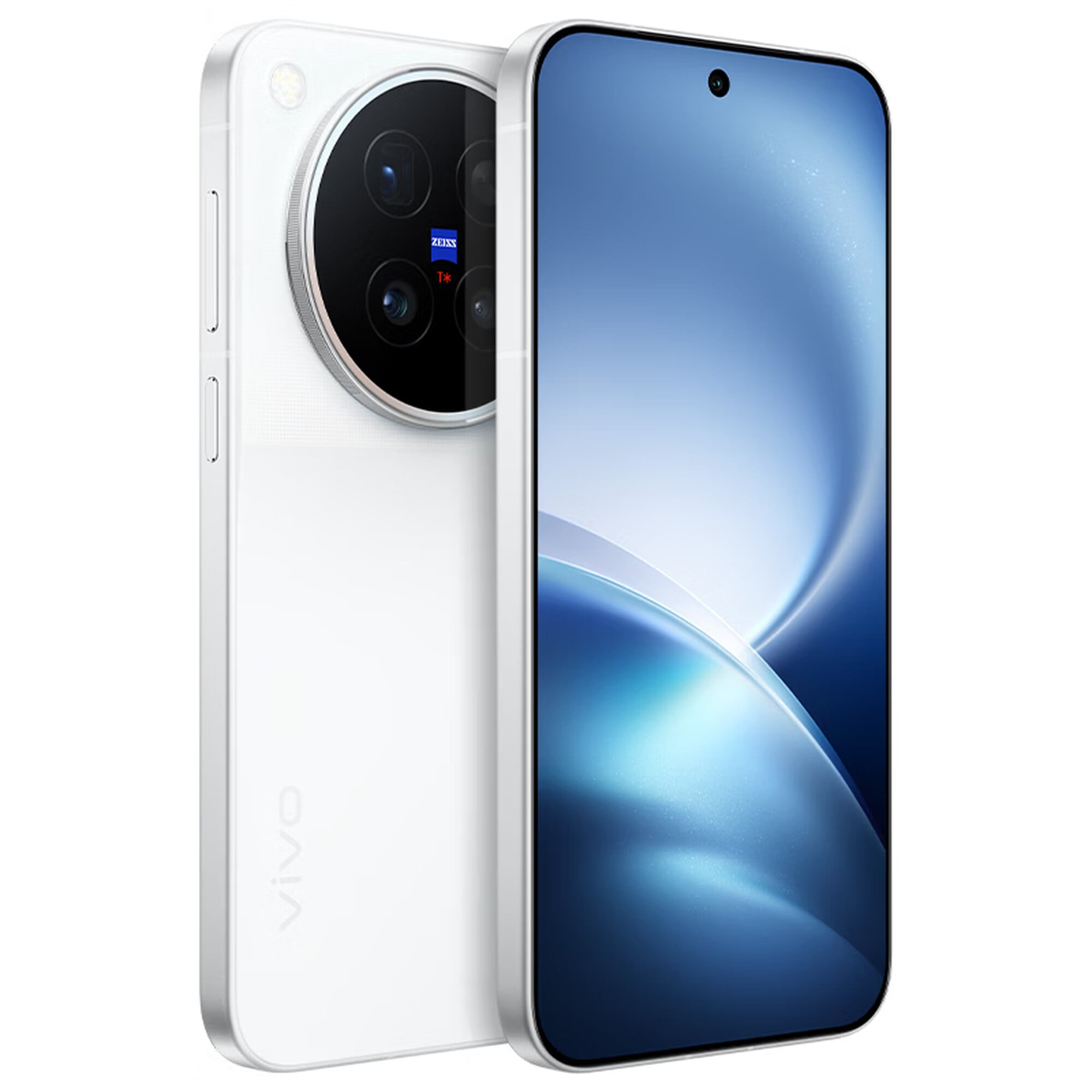
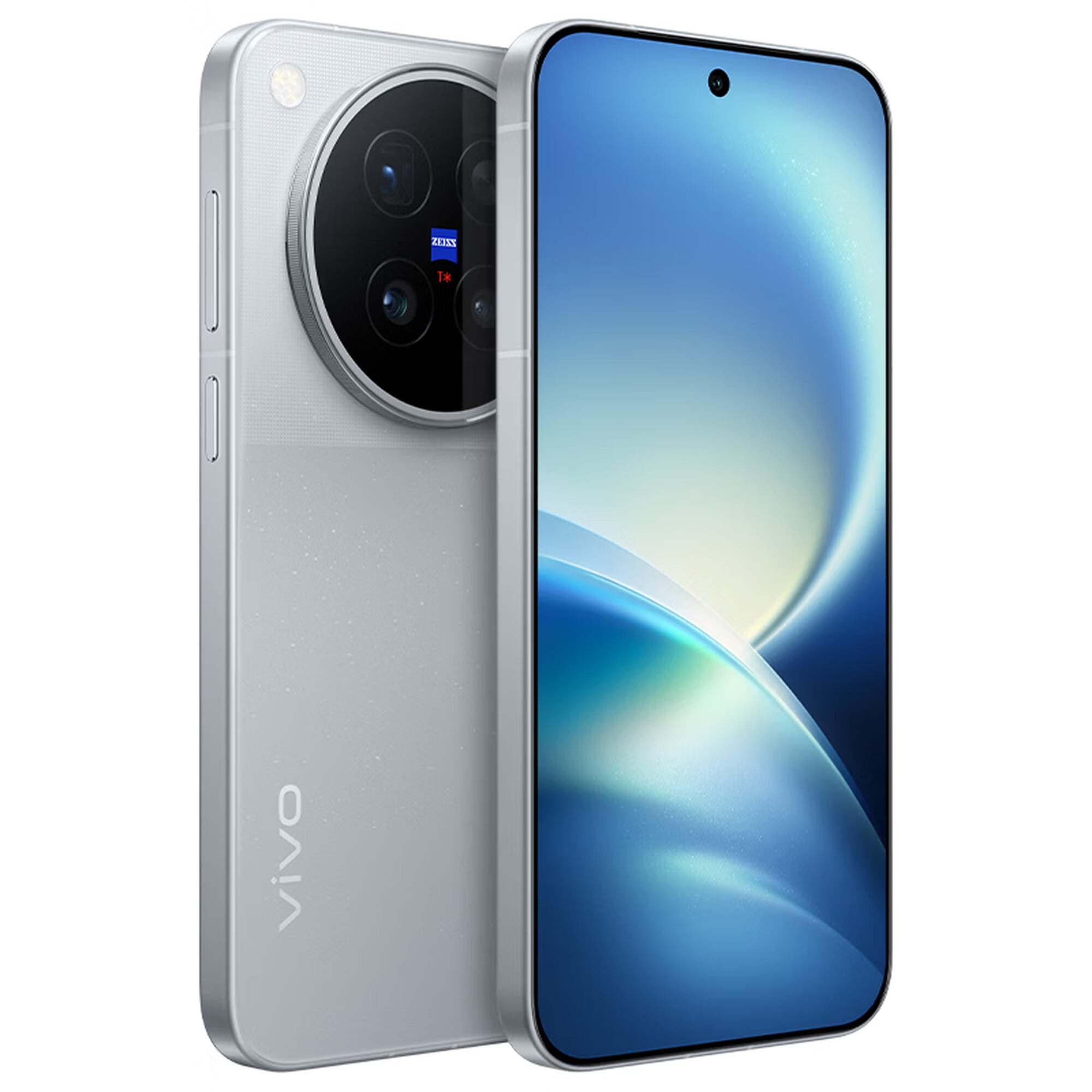
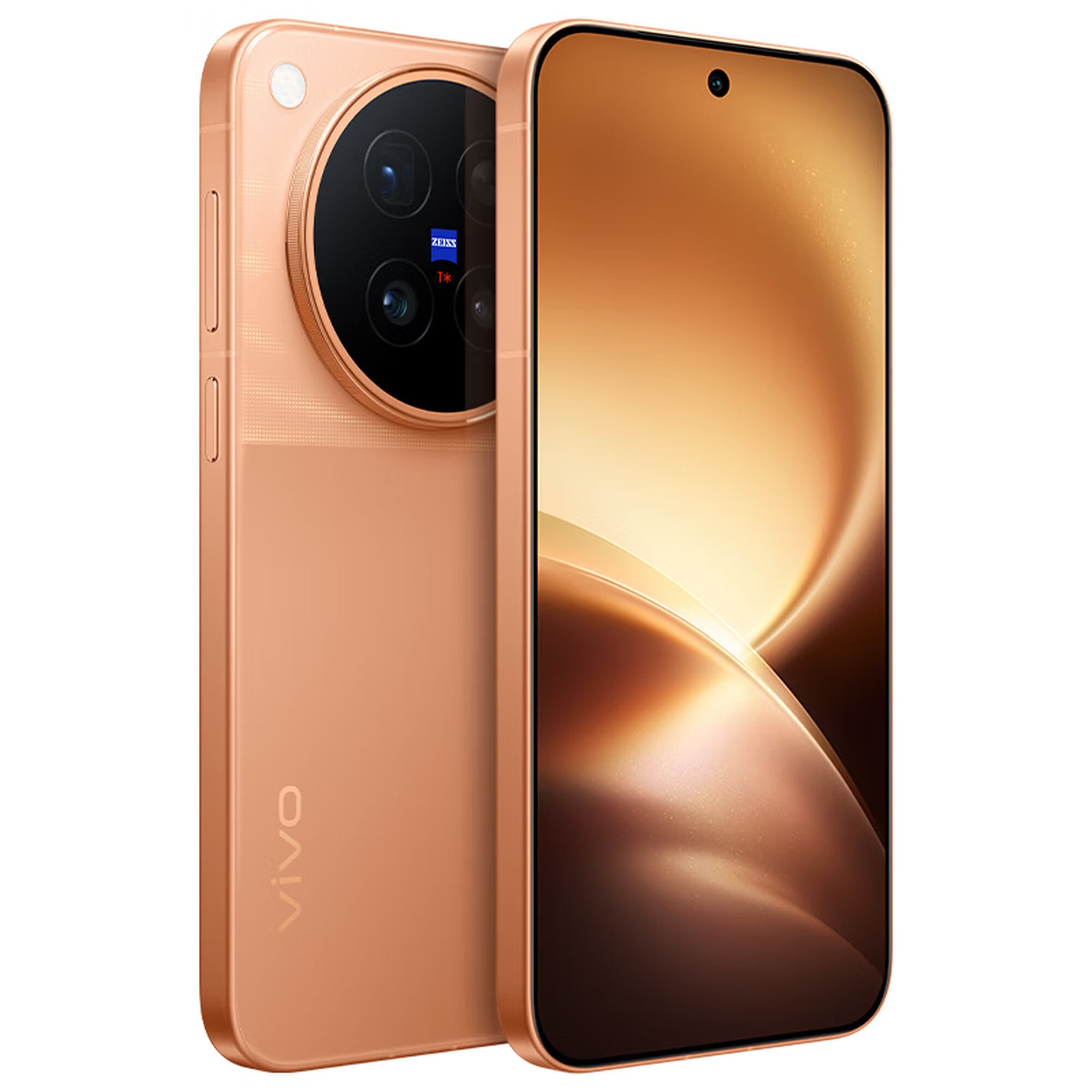
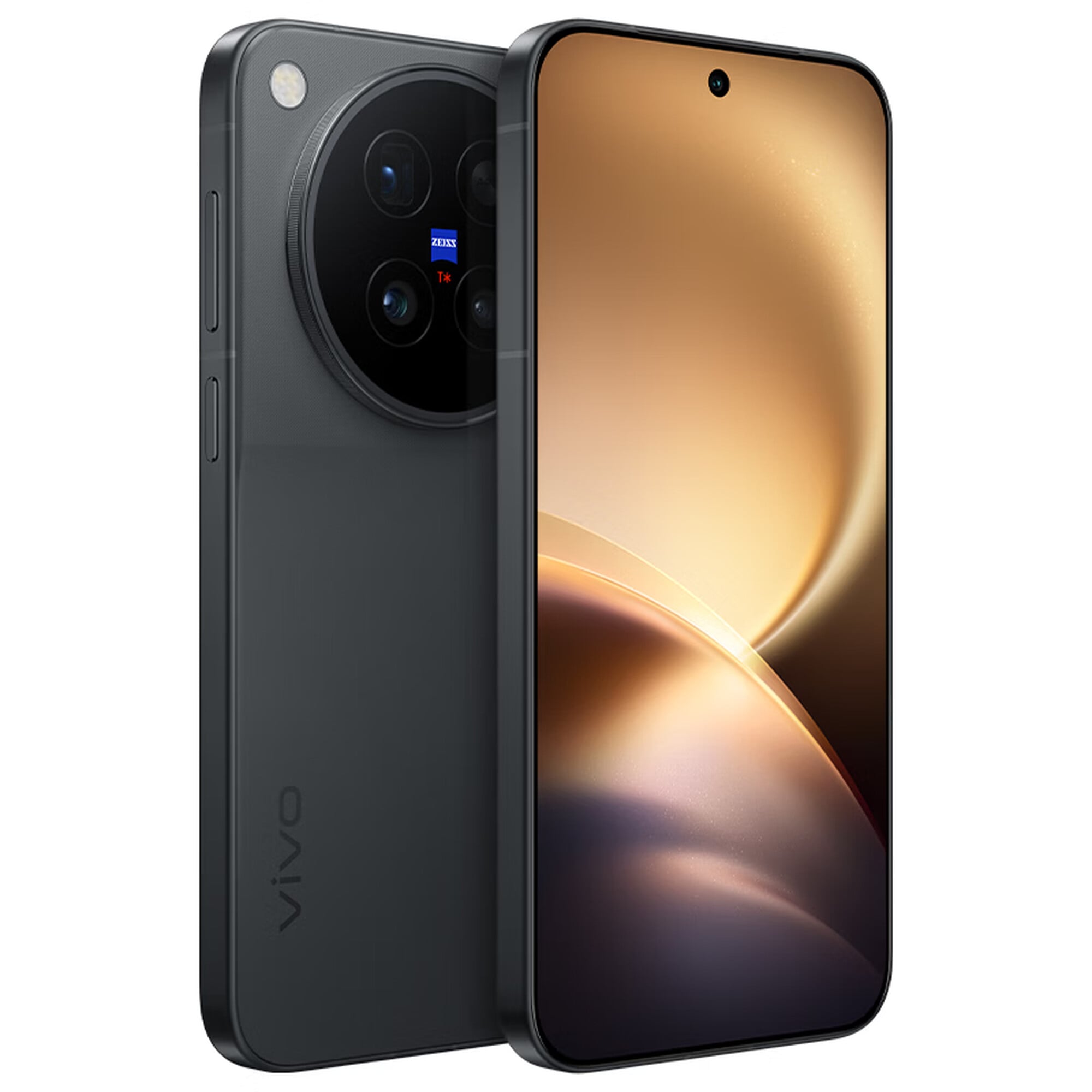
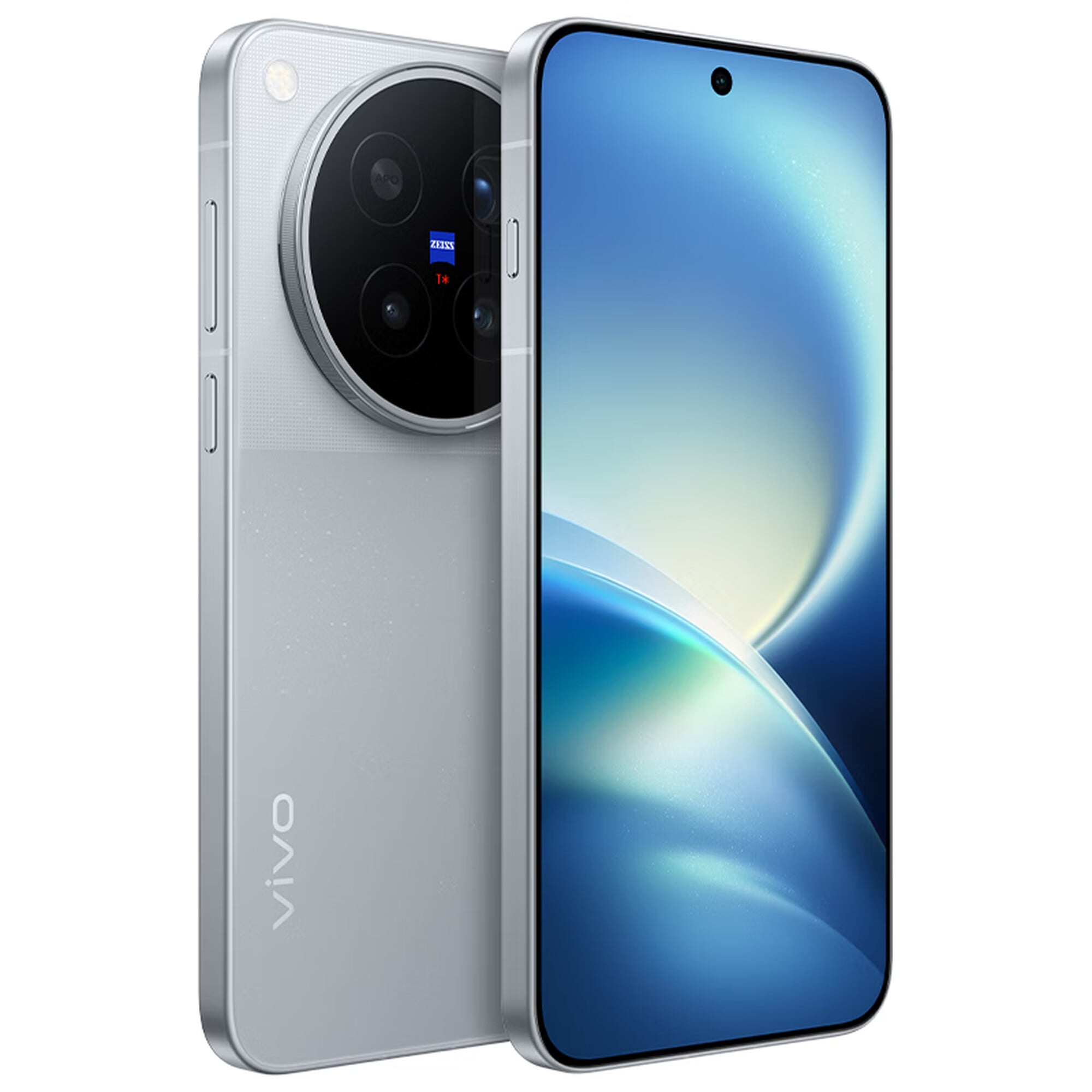
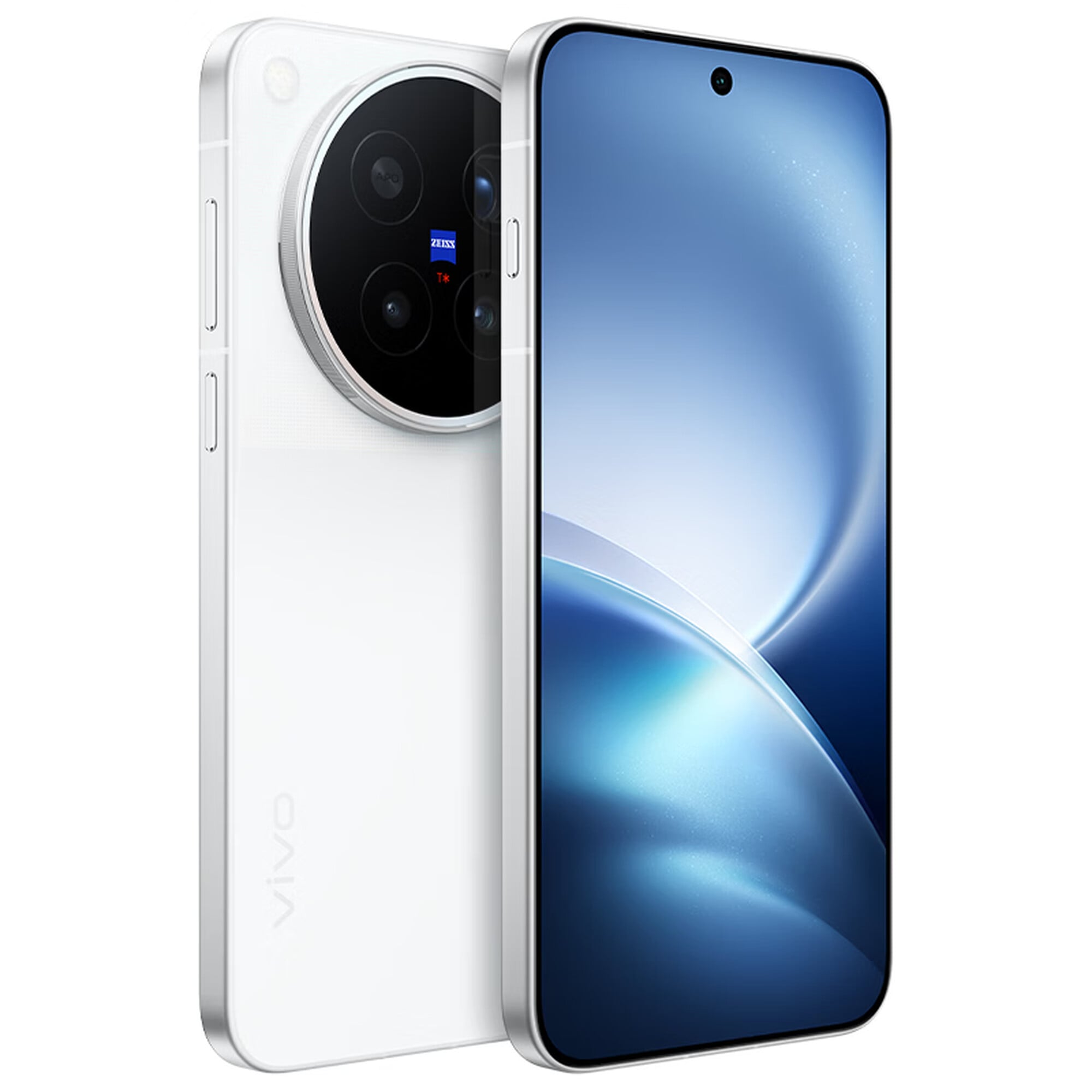
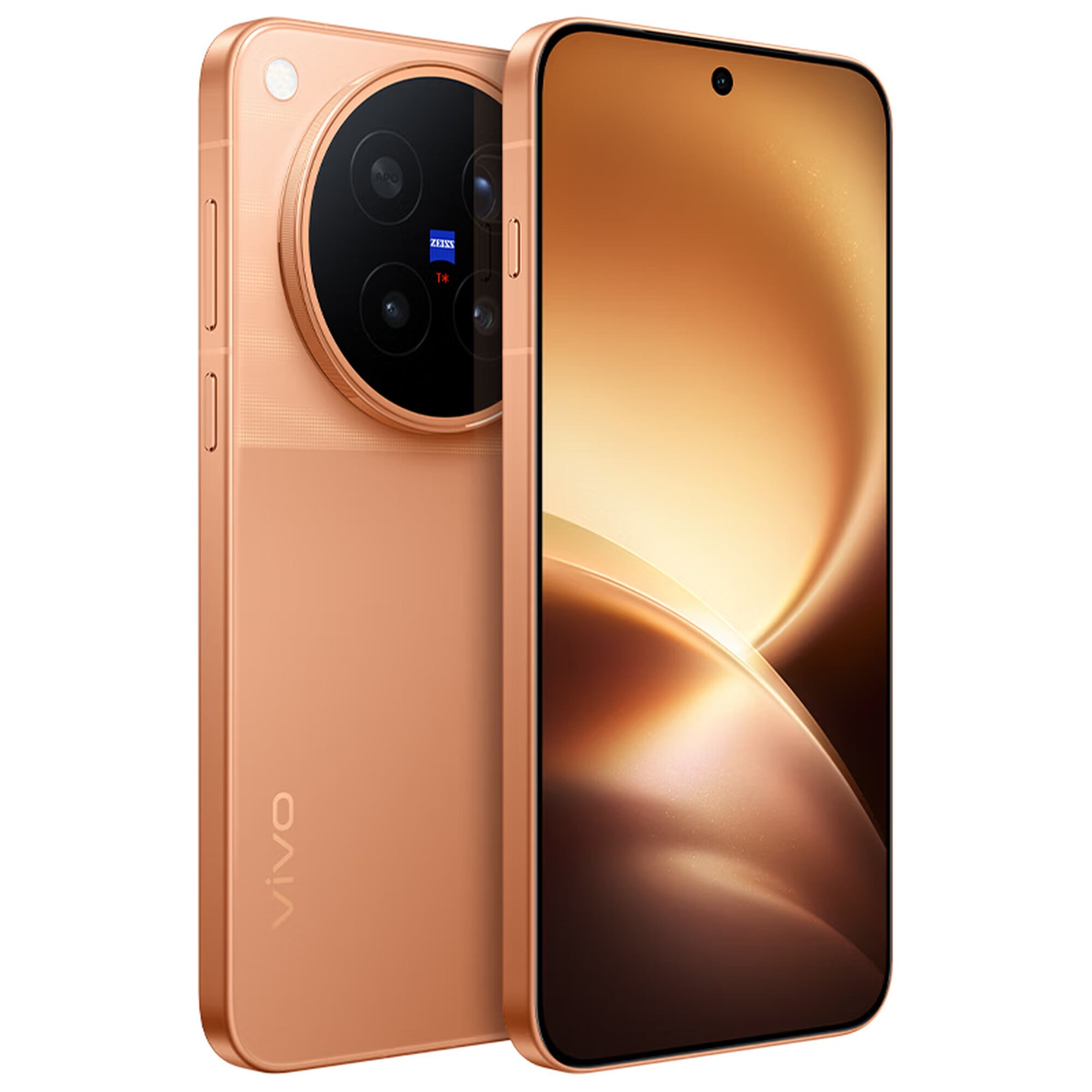
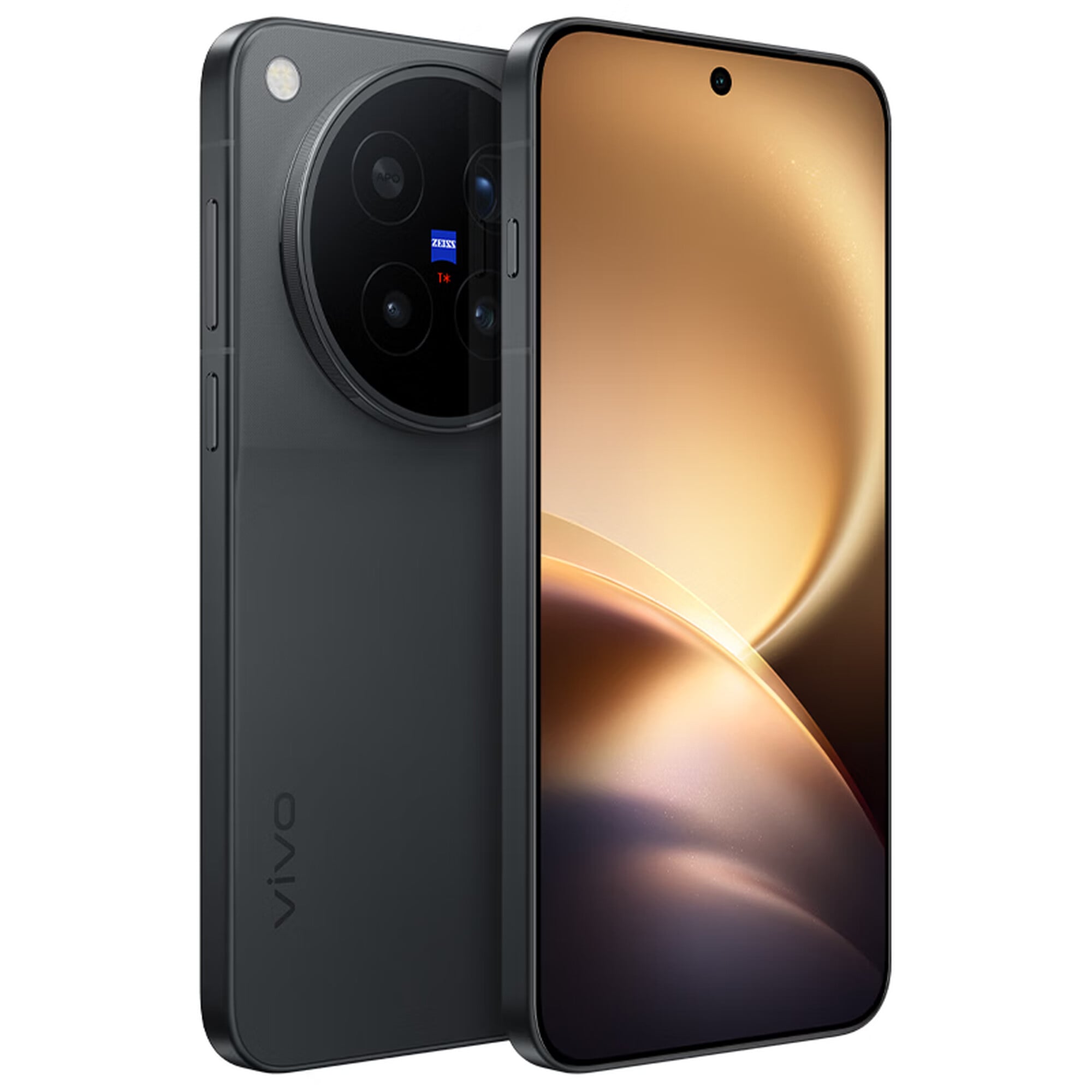
Oppo Find series Product Manager Zhuo Shijie has been gradually revealing details about the upcoming Find X10 series on social media. After sharing several hardware details regarding the Find X10 Pro Max recently, his latest Weibo posts turn the spotlight toward the standard Find X10. Here is an early look at the camera system, battery capacity, and display design shared by the executive.
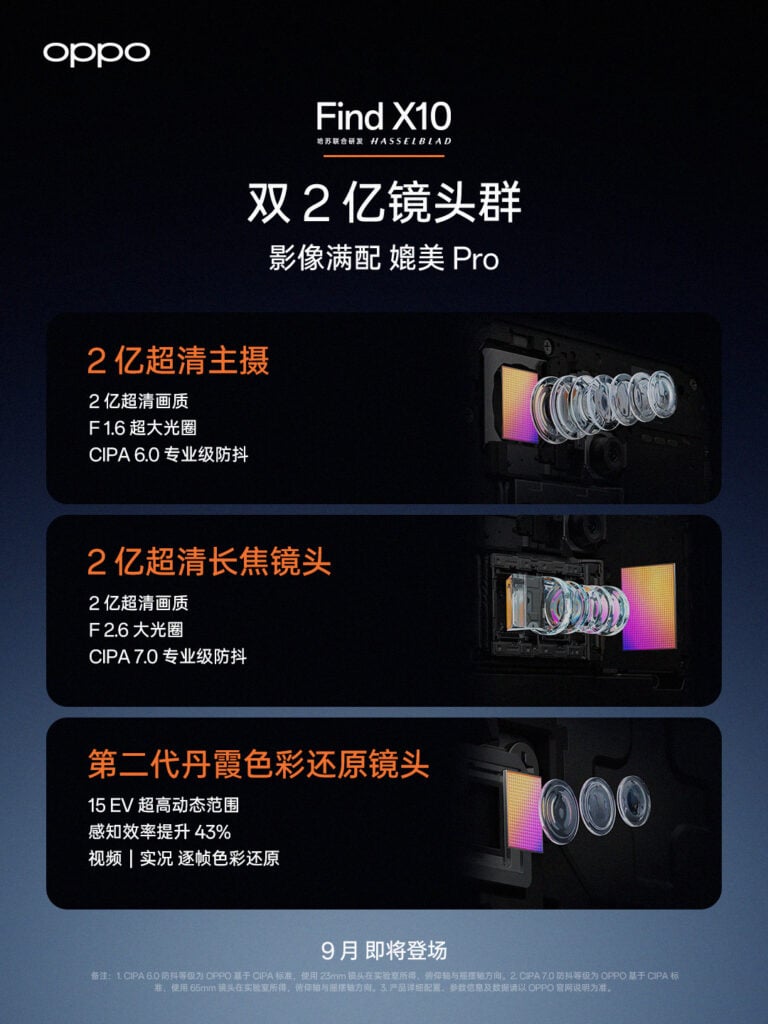
The Find X10 incorporates two 200-megapixel cameras on the rear, marking the first time a base model receives this configuration. The primary 200-megapixel shooter comes with a large sensor, an f/1.6 aperture, and CIPA 6.0 image stabilization to handle low-light photography and shaky video recording. Accompanying it is a 200-megapixel telephoto camera with an f/2.6 aperture and CIPA 7.0 stabilization, giving the handset the most capable telephoto hardware seen on a standard flagship.
Oppo also includes the Hasselblad Ultra-Clear Original Camera setup alongside a second-generation Danxia color restoration lens. This hardware provides a 15EV dynamic range and improves light-sensing efficiency by 43 percent across photos, live photos, and video recordings. To maintain realistic skin tones and uniform lighting without crushed shadows, the camera system routes all visual processing through Oppo’s LUMO native light and shadow engine.
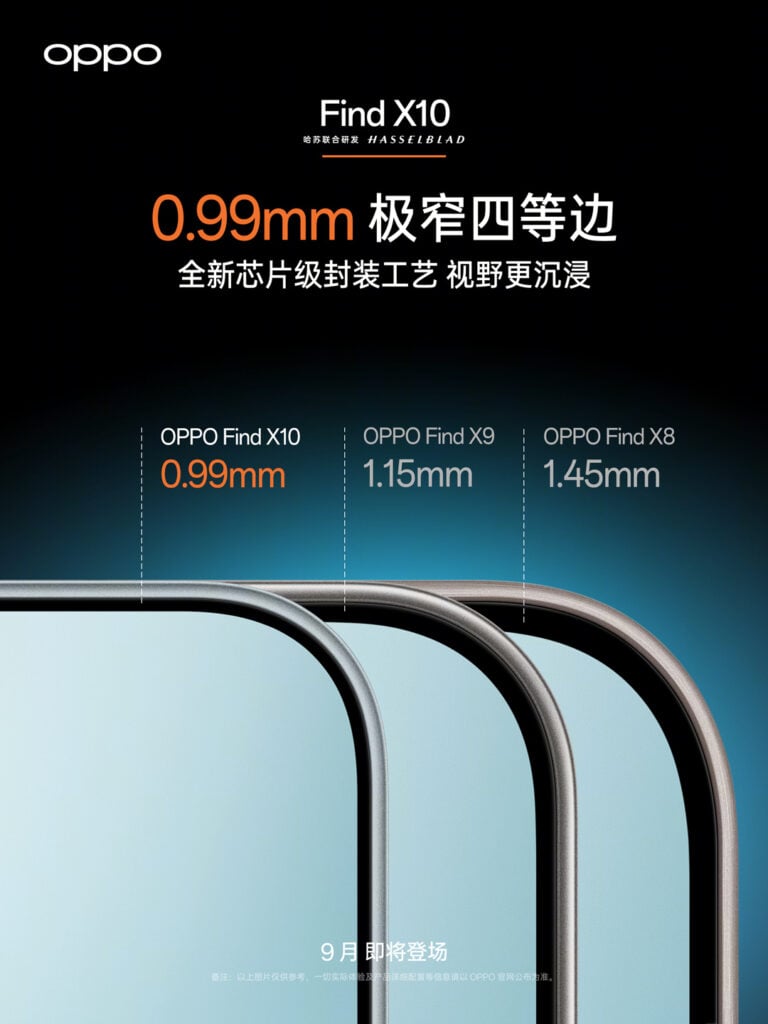
Oppo Find X10 ultra-thin bezels
On the front, the Find X10 features symmetrical four-sided bezels measuring just 0.99mm, making it the first Find series device to drop below the one-millimeter threshold. Oppo achieved this uniform profile through advanced chip-level packaging, cutting border thickness down from 1.45mm on the Find X8 and 1.15mm on the Find X9 to maximize usable screen real estate. Powering the handset is an 8,000mAh Glacier battery rated to last through five years of regular daily use.
Apart from the Find X10 and X10 Pro Max, the lineup includes the Find X10E, though its specifications remain unconfirmed for now. The upcoming launch event will also introduce companion accessories, including the Enco X4 premium wireless earbuds and the Watch S2, which are currently up for reservations in China. Market chatter suggests that the entire Find X10 family will hit global markets by late October.
Apple has just launched the iPhone 18 Pro series and iPhone Duo, and the new devices have already started appearing on benchmarking platforms. Specifically, the iPhone 18 Pro has appeared on Geekbench, while the Pro Max has surfaced on both Geekbench and AnTuTu, revealing early performance details of Apple’s first 2nm chip, the A20 Pro. Here’s a look at what the benchmark results reveal about the iPhone 18 Pro and iPhone 18 Pro Max.
iPhone 18 Pro Max scores over 3.5 million on AnTuTu
iPhone 18 Pro Max AnTuTu listing
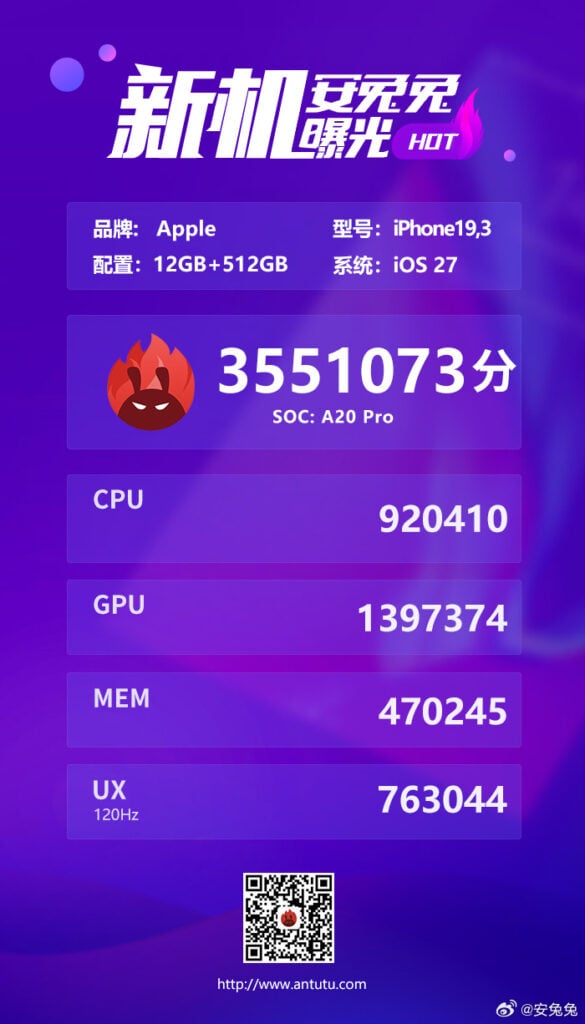
AnTuTu has spotted the iPhone 19,3 in its backend, which is believed to correspond to the iPhone 18 Pro Max. The 2868 × 1320 display resolution helps identify it as the larger Pro model. The listing shows 12GB of RAM, 512GB of storage, iOS 27, and Apple’s A20 Pro chip.
The device recorded an overall AnTuTu iOS V11 score of 3,551,073. Its CPU score was 920,410, while the GPU achieved 1,397,374 points. The memory and UX tests returned 470,245 and 763,044 points, respectively. For comparison, the iPhone 17 Pro Max averaged 2,275,118 points last month, putting the new model substantially ahead in the benchmark.
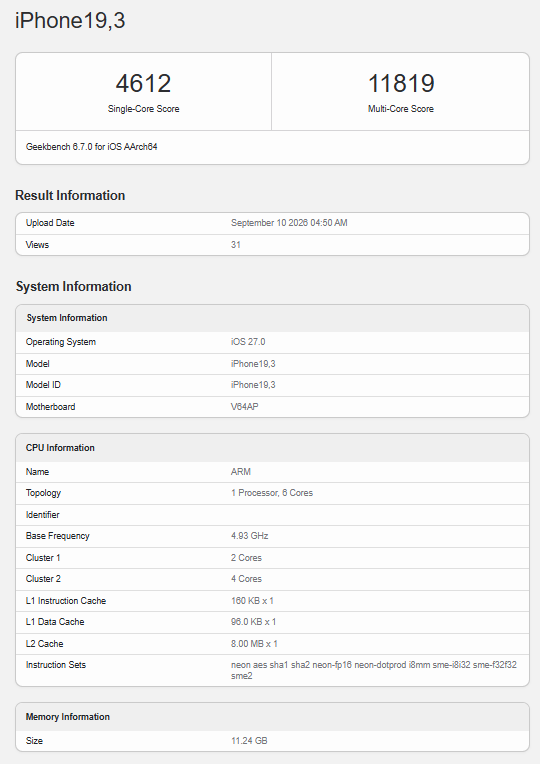
The iPhone 18 Pro Max has also appeared on Geekbench 6 with the same iPhone 19,3 identifier. It scored 4,612 points in the single-core test and 11,819 points in the multi-core test. The listing shows a six-core CPU with a base frequency of 4.93GHz, alongside 12GB of memory and iOS 27.
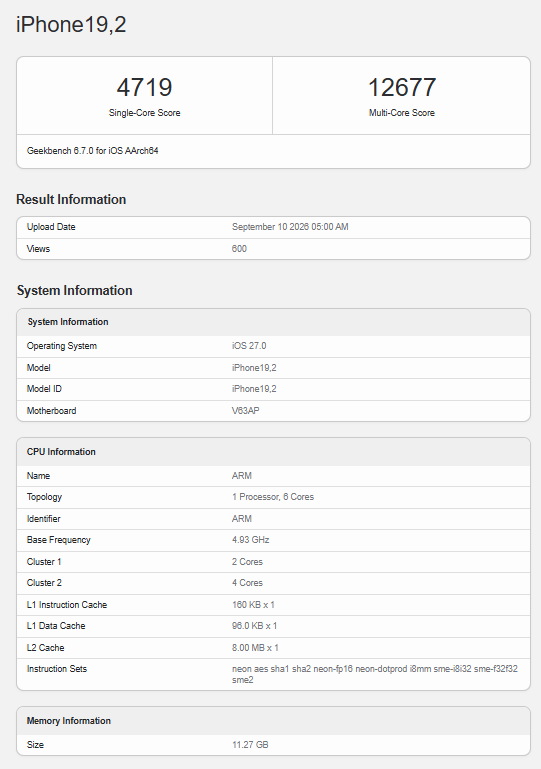
The alleged iPhone 18 Pro, identified as iPhone19,2, has also appeared on Geekbench 6.7 with a higher single-core score of 4,719 and a better multi-core score of 12,677. It is also equipped with the Apple A20 Pro chip, 12GB of RAM, and iOS 27.
The A20 Pro is expected to play a major role in the performance increase, while a more capable cooling system could help the phone sustain higher performance under demanding workloads. The combination suggests that Apple may be targeting both higher peak performance and improved thermal management with the iPhone 18 Pro Max.
However, benchmark scores should not be treated as a direct measure of real-world performance. AnTuTu also points out that its Android and iOS versions use different testing systems, meaning their scores cannot be directly compared across the two platforms. The figures can instead provide a useful reference when comparing different iPhone generations.
Apple concluded its high-profile product showcase with significant updates regarding domestic retail tags. Enthusiasts tracking the launch now have a clear breakdown of retail figures across both conventional pro iterations and the folding iPhone Duo. A parallel development reveals major price restructuring across previously released devices, dramatically altering purchasing decisions.
Massive adjustments across older generations and iPhone 18 Pro pricing
iPhone 18 Pro series
Retail numbers across legacy models have seen steep revisions throughout the Indian market. Here’s a look at the revised pricing:
As far as the new models are concerned, they are priced as follows:
iPhone 18 Pro
256GB: Rs 1,64,900
512GB: Rs 1,89,900
1TB: Rs 2,39,900
2TB: Rs 3,14,900
iPhone 18 Pro Max
256GB: Rs 1,79,900
512GB: Rs 2,04,900
1TB: Rs 2,54,900
2TB: Rs 3,29,900
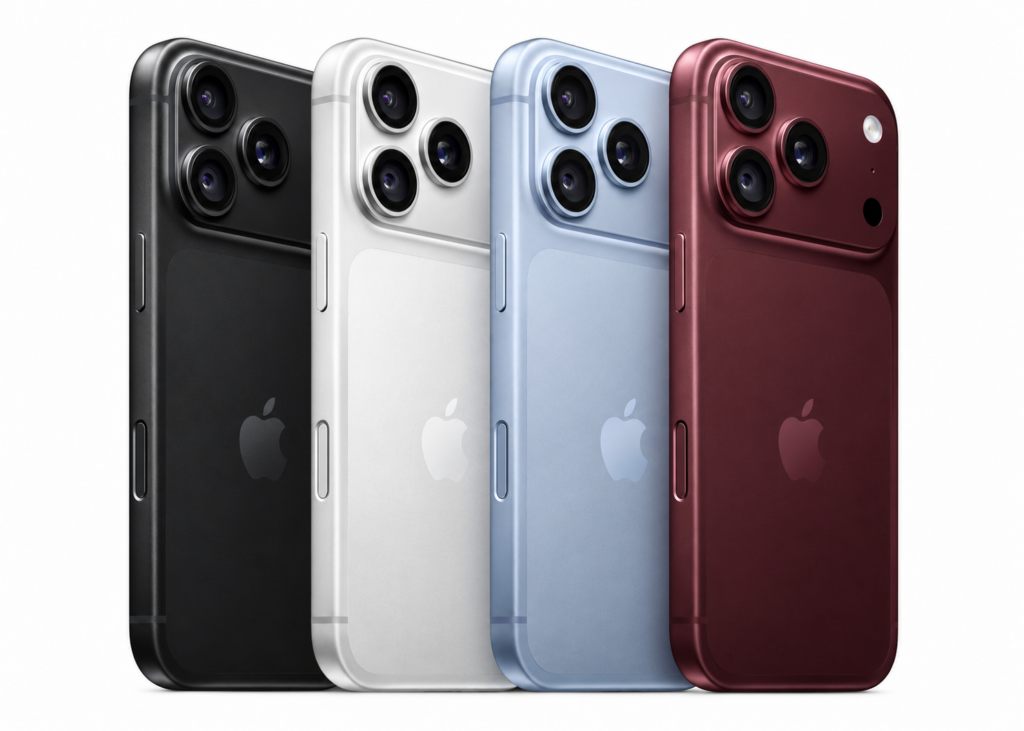
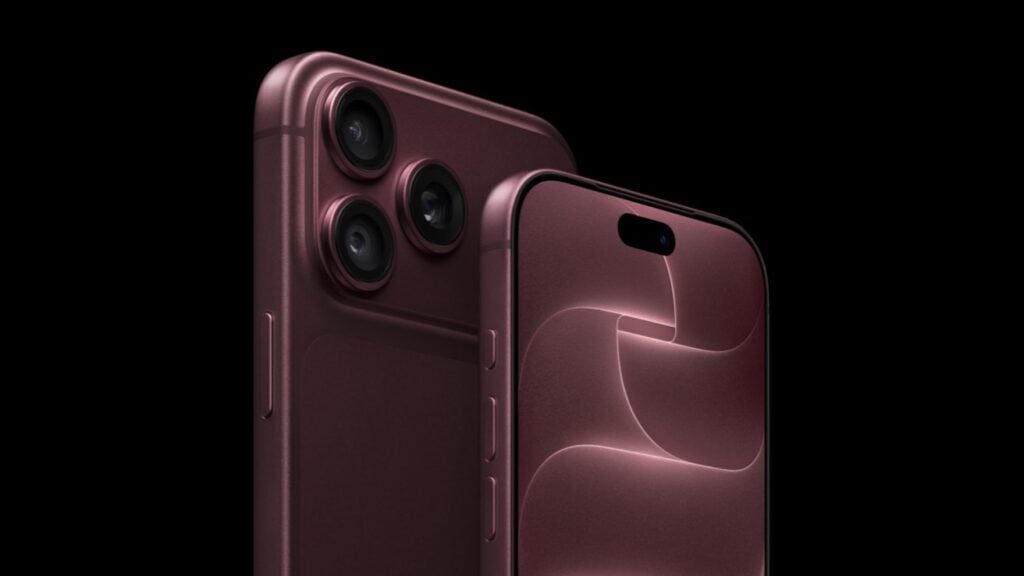
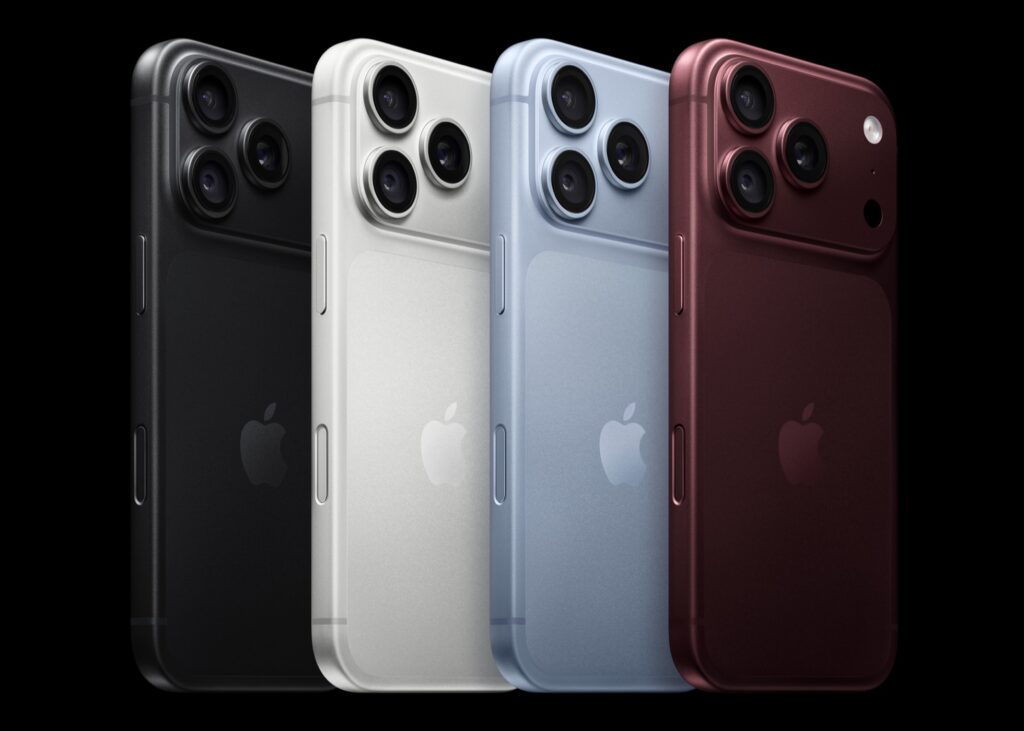
The iPhone 18 Pro and 18 Pro Max arrive in Black, Silver, Dark Cherry, and Light Blue color options. Pre-orders open on Sept. 12, with official retail sales commencing on Sept. 18.
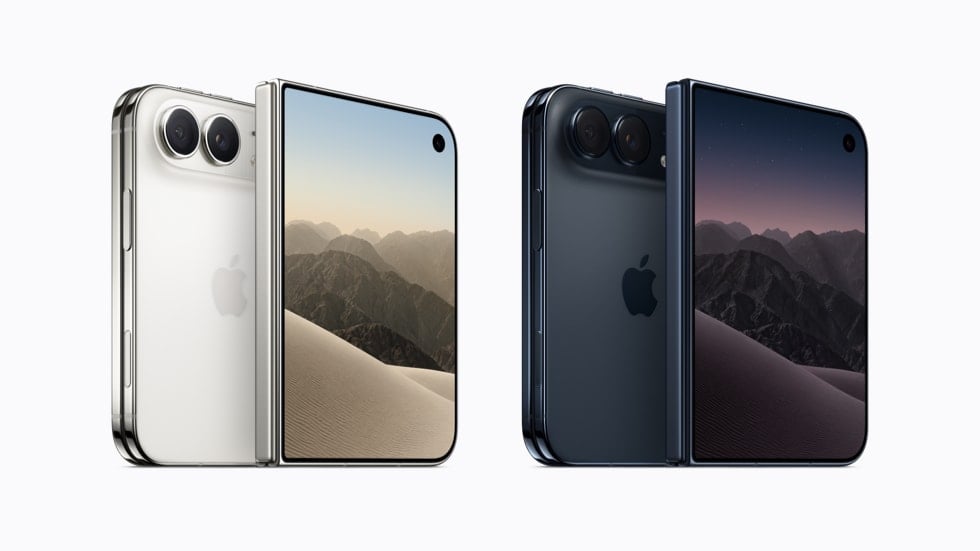
The spotlight inevitably turns toward the book-style iPhone Duo, which carries a hefty starting price of Rs 2,99,900. The foldable comes in Night Sky and Star White finishes.
256GB: Rs 2,99,900
512GB: Rs 3,24,900
1TB: Rs 3,74,900
2TB: Rs 4,49,900
Pre-orders for the folding device start on Oct. 16, with commercial deliveries and general sales beginning on Oct. 23.
All newly announced smartphones will be distributed widely across online and physical retail channels throughout the country. Shoppers can purchase units directly via Apple.com or pick them up through leading authorized e-commerce and retail destinations such as Amazon, Flipkart, Croma, Vijay Sales, Lotus Electronics, and others.
The wait for Apple’s next major iPhone software update is almost over. The company has confirmed that iOS 27 will start rolling out on September 14, giving compatible iPhone owners access to a redesigned interface and a range of new system features. Here’s a look at all the iPhones that will receive the new OS upgrade.
Here is every iPhone that can run iOS 27
Apple’s compatibility list stretches across multiple generations, from the iPhone 11 lineup all the way to its newest models. The supported devices are:
– iPhone 17 series – iPhone 16 series – iPhone 15 series – iPhone 14 series – iPhone 13 series – iPhone 12 series – iPhone 11 series – iPhone SE (2nd generation)
The update will appear as an over-the-air download. Once available, it can be accessed through Settings > General > Software Update.
All the key changes arriving with iOS 27
While the new visual treatment will be immediately noticeable, Siri could ultimately be the more important part of iOS 27. Apple is introducing a next-generation version of its assistant that combines its own Foundation Models with Google’s Gemini models.
The revamped Siri is designed to handle more conversational requests and maintain context between interactions. Apple is also turning Siri into a standalone app where users can access previous conversations.
There is a catch, though. iOS 27 compatibility does not guarantee access to every feature. Some of the new AI capabilities require newer hardware, meaning owners of older supported iPhones may not get the complete Siri experience.
iOS 27 will not be arriving alone. Apple plans to release iPadOS 27, macOS 27, watchOS 27, tvOS 27 and visionOS 27 on the same September 14 date. The iOS 27 comes preloaded on the newly unveiled iPhone 18 Pro series and iPhone Duo.
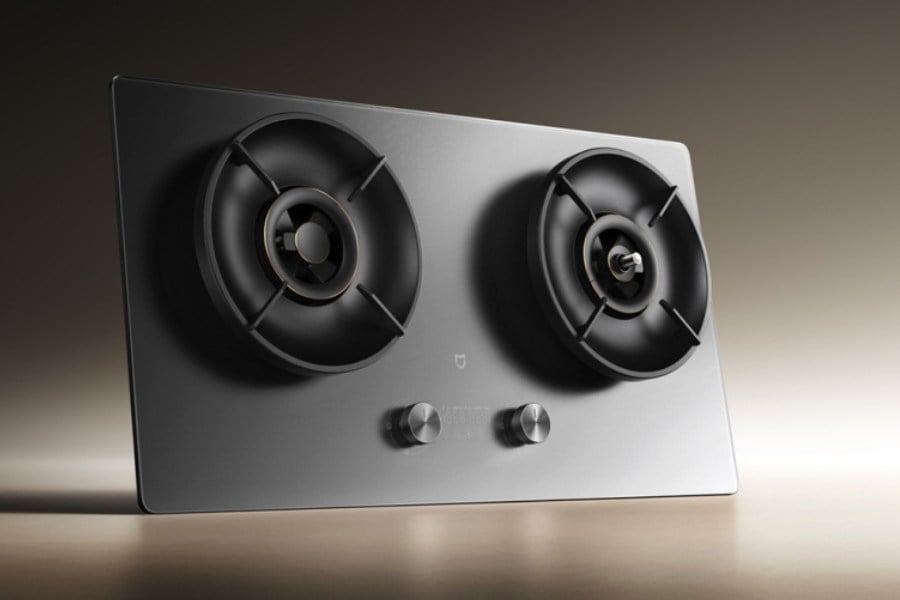
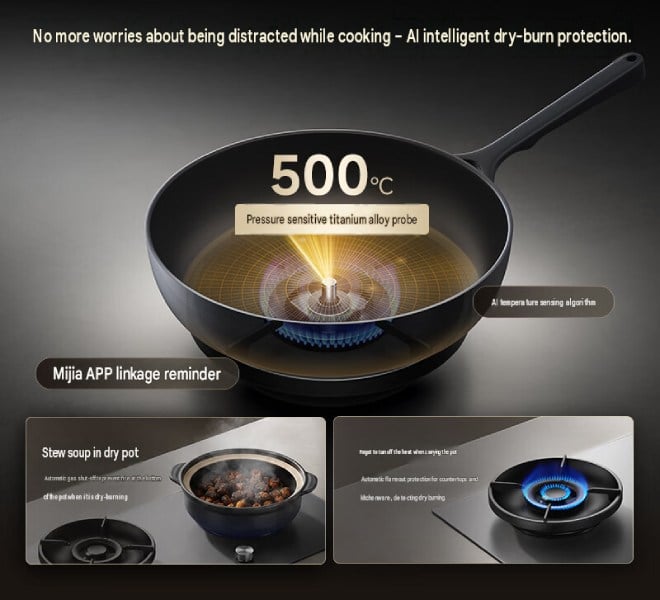
Xiaomi just opened pre-sales for the Mijia Smart Gas Stove 3 Max in China, and it’s the brand’s first stove built around AI safety controls rather than just cooking power. It’s live on JD.com now for 2704 yuan (~ $400).
The stove uses AI for two main safety features: dry-burn protection and off-stove detection. The right burner has a 500°C pressure-sensitive titanium alloy probe that sits against the bottom of the pot and monitors its temperature while cooking. An AI temperature algorithm uses this data to detect dry or empty pots. If it detects a problem, the stove automatically cuts the gas supply and puts out the flame. The Xiaomi Home app can also send an alert if you’re away from the kitchen.
The off-stove detection system is another safety feature built into the stove. Its radar covers up to 0.9 meters in front of the unit and can detect when you’ve walked away. If you’re gone for 30 minutes, the stove sounds a buzzer to remind you. If you remain away for 60 minutes, it automatically shuts off the gas and sends a notification through the app.
5,200W burners and built-in timers
Both burners can reach 5,200W and use a dual-channel oxygen-supplying design with 154 flame holes to spread heat more evenly across the pot. The burners also use forged brass caps designed to handle high temperatures without easily warping.
Each burner has its own timer, which can be set from 1 to 180 minutes. This lets you set a cooking time for things like soup or braised dishes without having to keep checking the stove. The right burner can also show the pot’s temperature in real time when you press a button, which can be useful for frying and stir-frying.
Xiaomi has also added a three-layer air chamber to the stove rack. The company says it can lower the temperature around the cooktop by up to 22°C, which should make the kitchen more comfortable during long cooking sessions.
The Mijia Smart Gas Stove 3 Max has a 75% thermal efficiency rating and meets China’s new first-tier energy efficiency standard. Xiaomi says this is a 12% improvement over the previous model and could save a typical household around 980 yuan in gas costs over eight years.
The glass cooktop has a lotus-leaf-inspired nano coating designed to repel oil and water. Installation should also be relatively flexible. The stove has an adjustable chassis that supports openings between 630- 710 mm wide and 330- 400 mm deep, so most kitchen swaps won’t need any cutting.
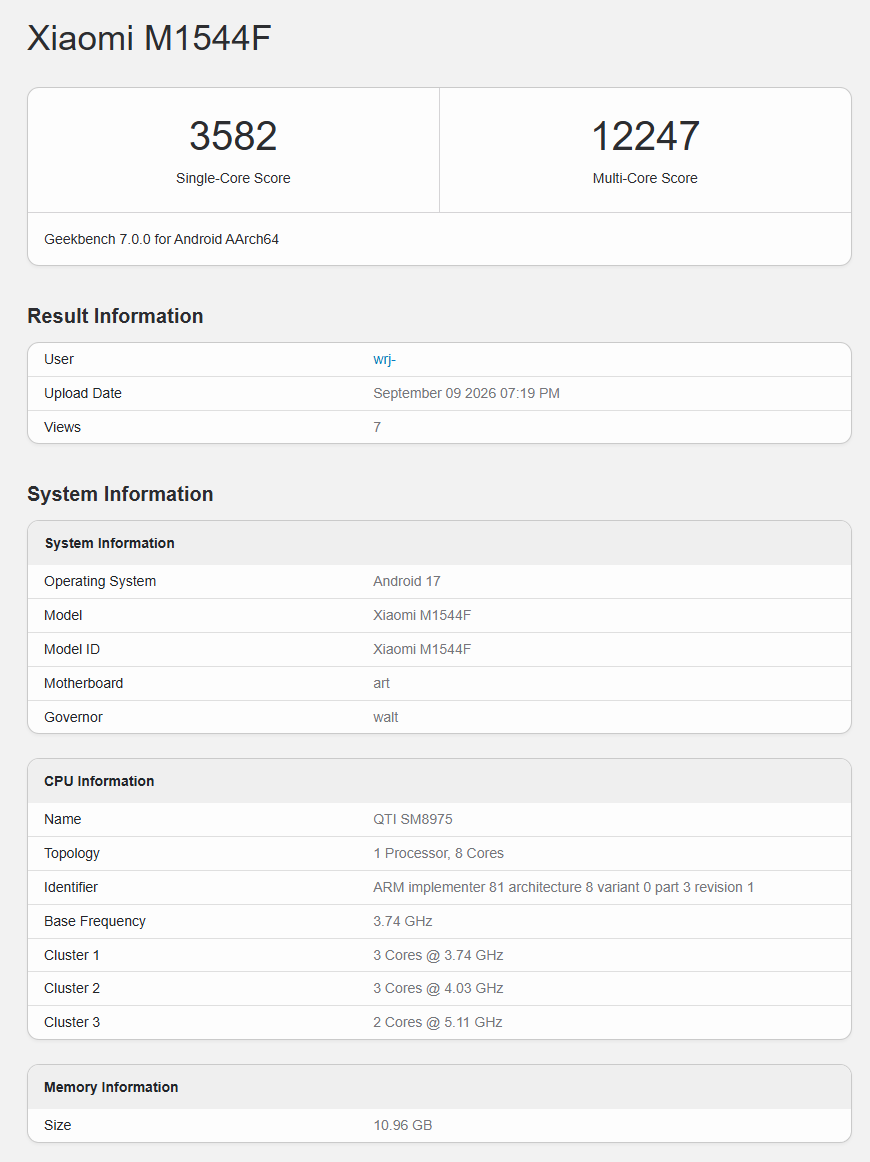
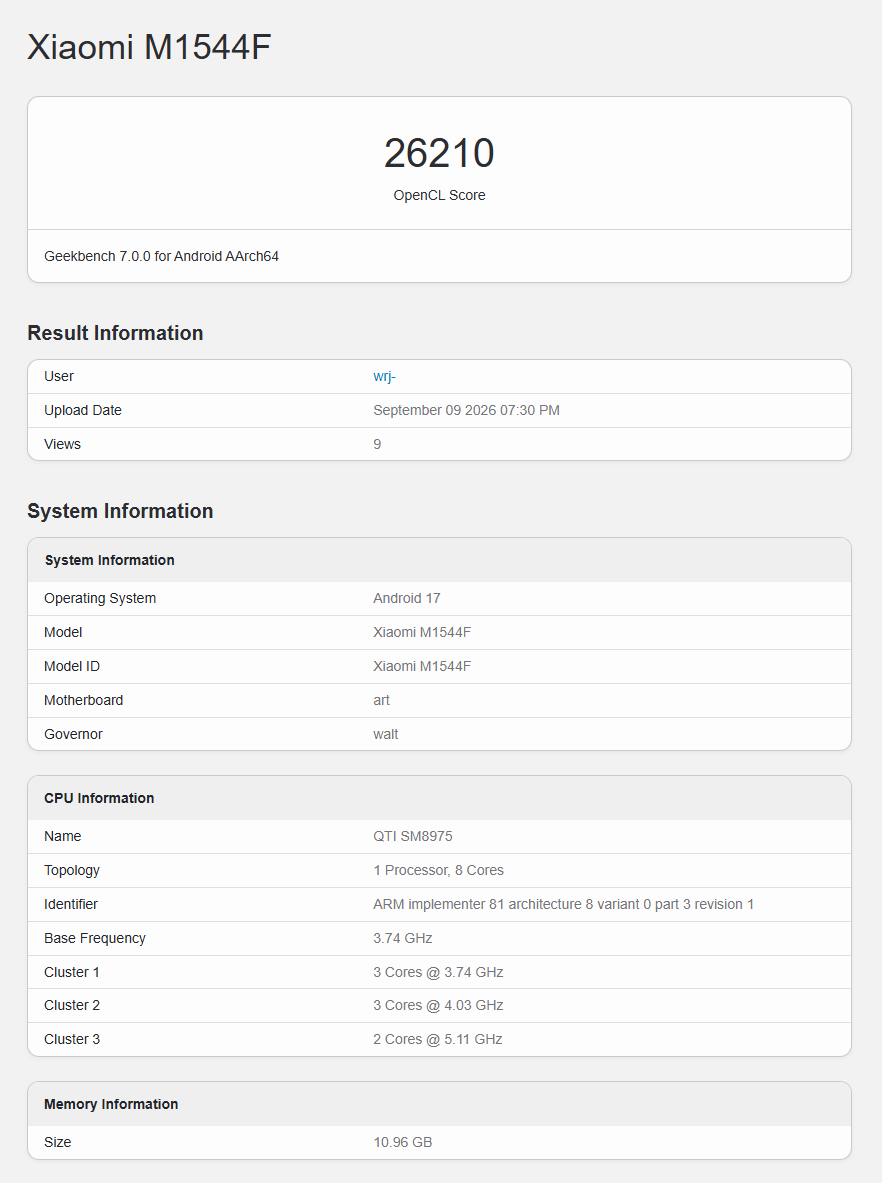
The Xiaomi 18 Pro Max has surfaced on Geekbench, offering an early look at what to expect from the upcoming flagship. The listing identifies the Chinese variant as model M1544F and provides details about its processor, memory, and software. More importantly, the benchmark entries give us an early indication of the performance level Xiaomi’s next flagship could deliver.
Xiaomi 18 Pro Max reveals Snapdragon 8 Elite Gen 6 Pro
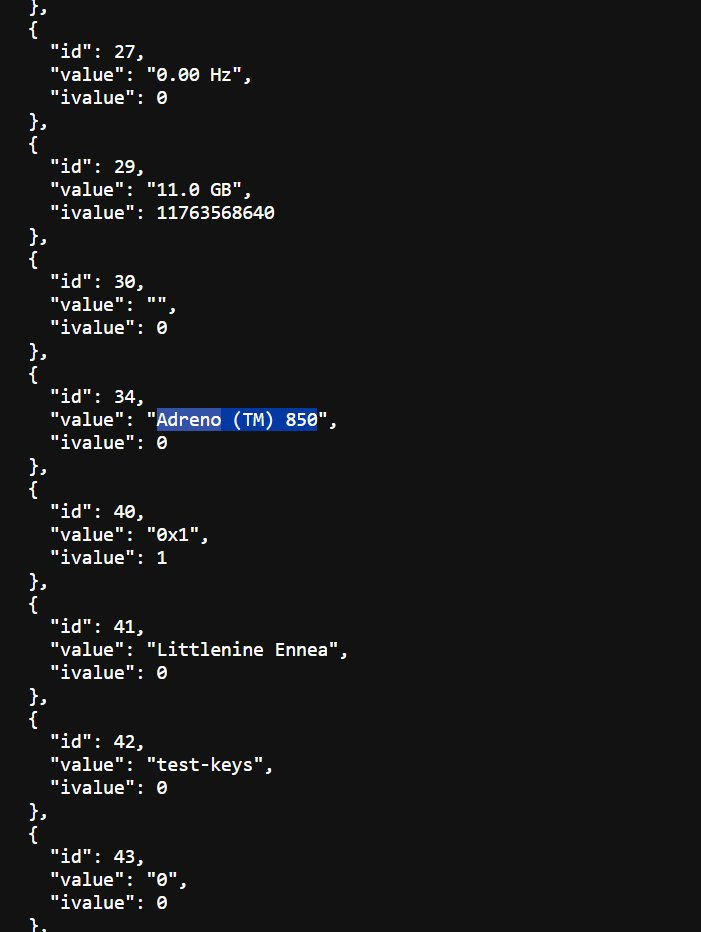
The Xiaomi 18 Pro Max listing shows the Snapdragon 8 Elite Gen 6 Pro (tentative name), carrying the SM8975 model number. The processor configuration includes eight cores, with the Geekbench entry showing a base frequency of 3.74GHz. The CPU setup consists of three cores clocked at 3.74GHz, three cores at 4.03GHz and two cores reaching 5.11GHz. For graphics, it is equipped with the Adreno 850 GPU.
The device recorded 3,582 points in the single-core test and 12,247 points in the multi-core test on Geekbench 7. The listing also shows 11.0GB of available memory, which points to a 12GB RAM configuration for the device. On the software side, the Xiaomi 18 Pro Max is listed with Android 17, which will have the HyperOS 4 skin.
GPU scores offer an early performance glimpse
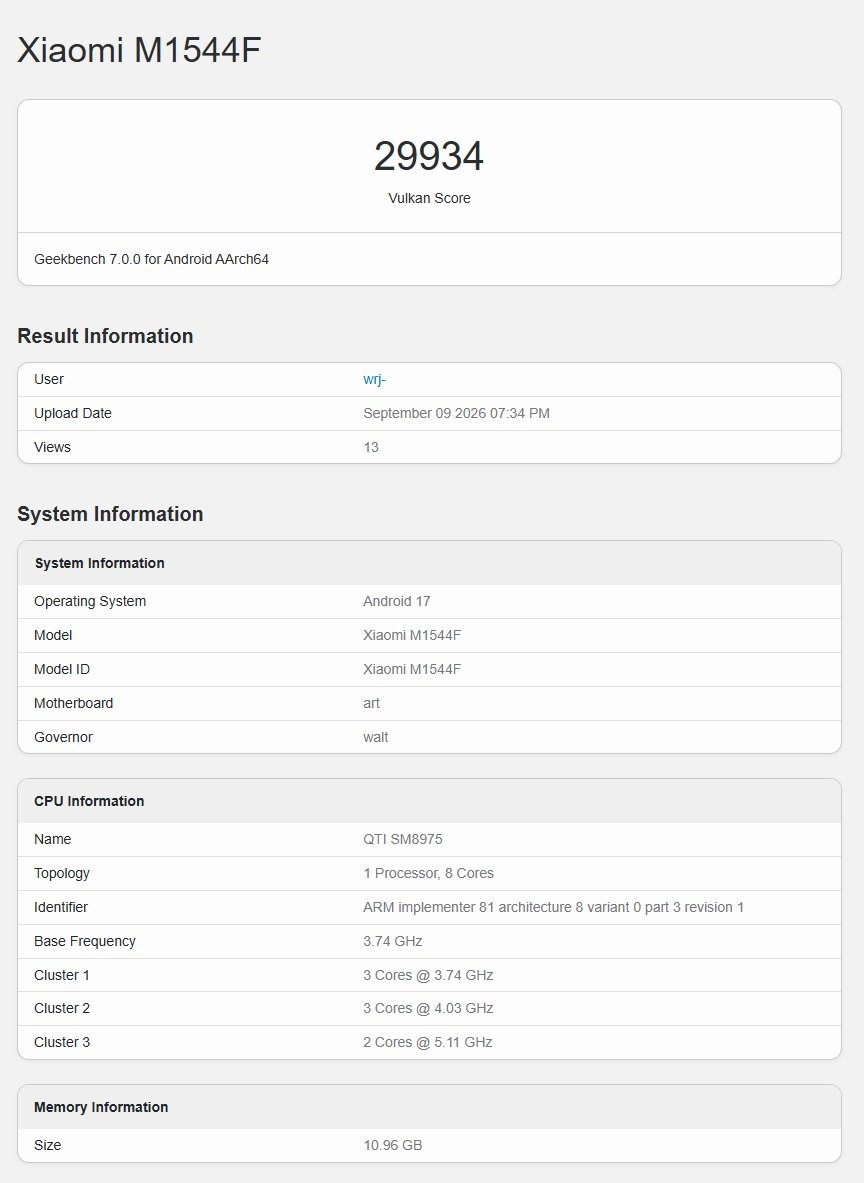
The same device has also appeared in Geekbench 7’s GPU tests, with the Snapdragon 8 Elite Gen 6 Pro recording 26,210 points in the OpenCL test. The Vulkan test produced a higher score of 29,934 points. These results provide an early look at the graphics performance of Qualcomm’s upcoming flagship platform, although benchmark scores from pre-release hardware can vary between runs and software versions.
The Xiaomi 18 Pro Max is not the only upcoming flagship to surface ahead of the new chipsets. The forthcoming MediaTek Dimensity 9600 series and Qualcomm Snapdragon 8 Elite Gen 6 series are set to debut this month, with devices such as the Vivo X500 Pro Max and Oppo Find X10 Pro Max already appearing on Geekbench with Dimensity 9600-series hardware. Meanwhile, the Snapdragon 8 Elite Gen 6-powered iQOO 16 has also made an appearance on the benchmarking platform.
With the Xiaomi 18 Pro Max now joining the benchmark race, its CPU and GPU results give us an early indication of how Xiaomi’s next flagship may perform. More details about the phone’s specifications, design and launch are expected to emerge ahead of its official debut.
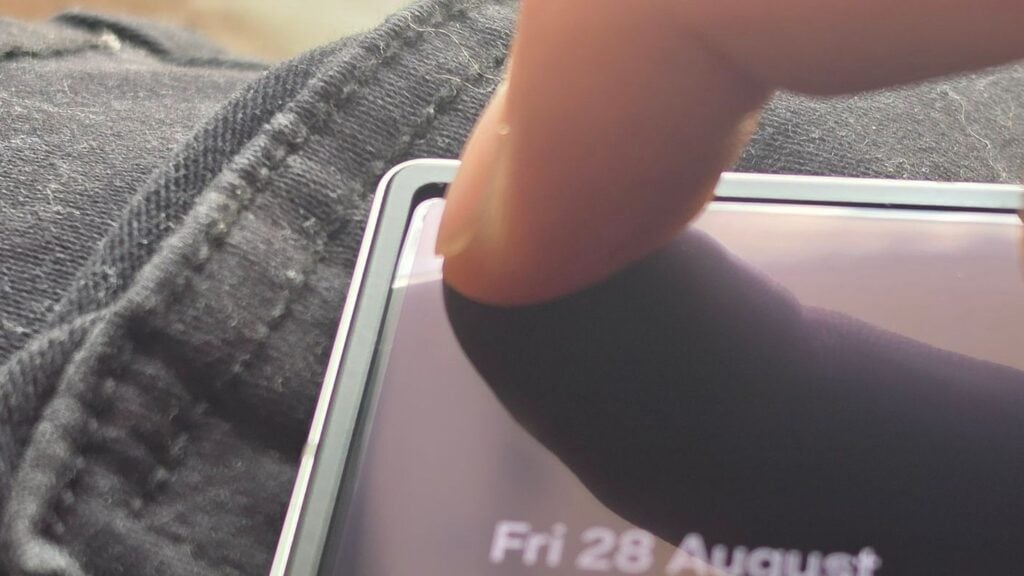
If you’ve got a new Galaxy Z Fold 8 and noticed the edges of the big inner screen feel a little soft when you press them, you’re not imagining things, and you’re not the only one who’s been wondering about it.
Some early owners started posting about it online: some flex when you push on the corners. It looked odd enough that people started asking whether something was wrong with the manufacturing or the support under the display.
The Z Fold 8 is extremely thin when unfolded, about 4.5 mm, and uses their Flex Titanium display tech. That’s a dual-layer setup with a titanium-alloy film and supporting plate meant to make the screen stiffer, hide the crease better, and improve durability without adding bulk. Even with all that, the corners still feel softer than the rest of the panel for some people.
Android Authority checked a review unit and confirmed there’s a mild amount of give in the top-right corner. It wasn’t as dramatic as some of the social-media videos, and it didn’t get in the way of normal use. Similar reports showed up on Reddit, Samsung’s forums, and elsewhere, with the severity varying a bit from phone to phone.
Samsung finally addressed it through the South Korean outlet Business Post. A company rep said the soft corners are deliberate. Because the phone is so thin, engineers worried about tiny bits of debris, sand, dust, whatever, sticking to the screen. If you fold the phone with something trapped there, it could scratch or damage the inner display.
So they designed the corners to flex a little, basically acting as a cushion that absorbs pressure and helps protect the panel. The same goes for the Galaxy Z Fold8 Ultra. Samsung says it doesn’t affect how the phone works, and they didn’t make a big deal about it in the marketing because they just wanted to avoid hassle for users.
It’s a good reminder of the trade-offs that come with making foldables thinner and thinner. Sometimes protecting a flexible screen means building in a little controlled give at the edges. For most Fold 8 owners, those soft corners look like a protective feature rather than a flaw.
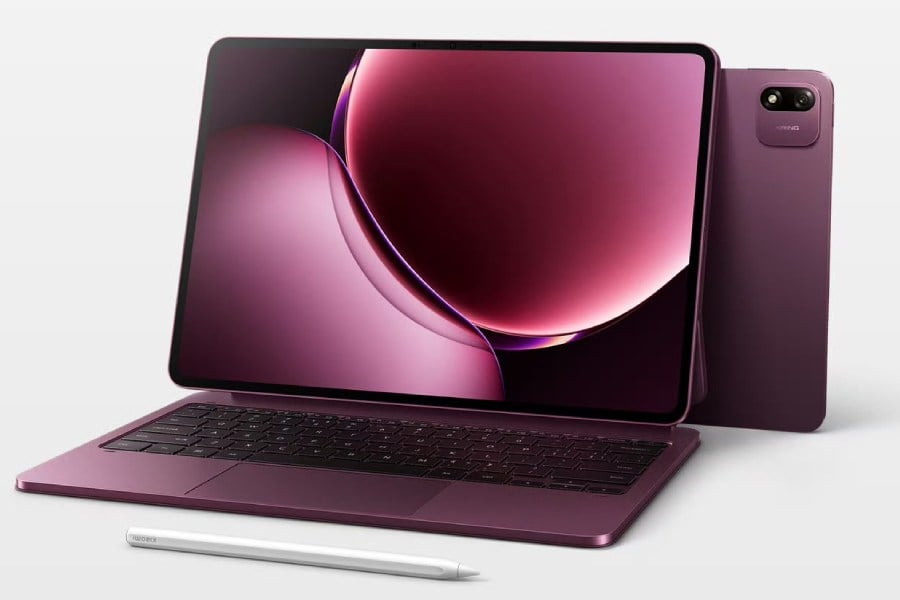
We already have a good idea of the Xiaomi Pad 9 Pro’s rumored specs thanks to last week’s leak. Now, a Geekbench listing has revealed more details about the tablet, including the processor it will use.
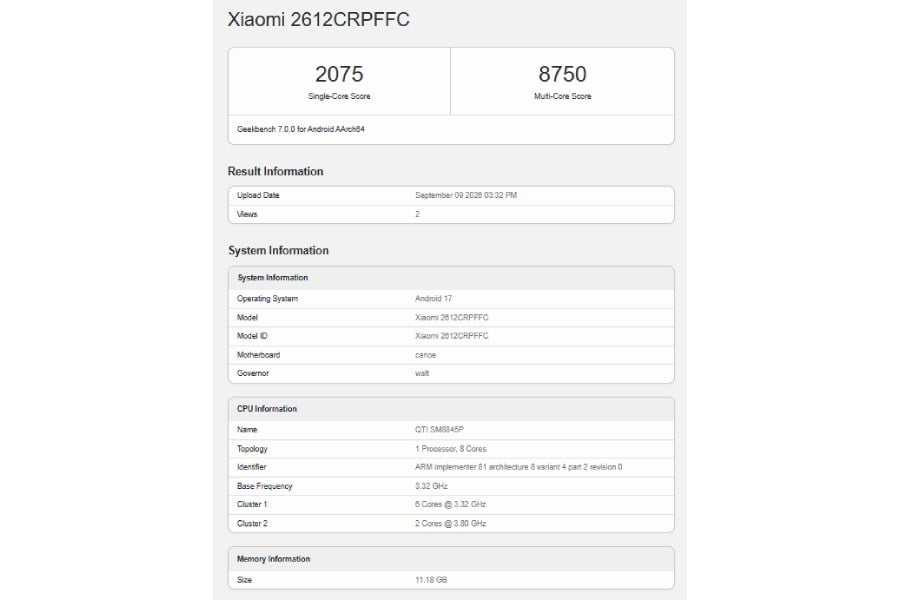
A device with the model number 2612CRPFFC has appeared on Geekbench. The same model number was also mentioned in an earlier specs leak linked to the Xiaomi Pad 9 Pro.
The Geekbench listing confirms that the Pad 9 Pro will use the Snapdragon 8 Gen 5. The chip appears under Qualcomm’s QTI SM8845P identifier and has an octa-core setup, with two cores clocked at 3.80GHz and six cores running at 3.32GHz. It is paired with an Adreno 829 GPU.
The tested unit also has 12GB of RAM and runs Android 17. On Geekbench 7, it scored 2,075 points in the single-core test and 8,750 points in the multi-core test. These are results from an early unit, so the scores could change with final software and retail firmware.
Xiaomi Pad 9 Pro rumored specs
The Geekbench listing doesn’t reveal much about the rest of the hardware, but recent leaks have already filled in some of the details. The tablet is expected to feature a 12.1-inch LCD with a 3.2K resolution and a 144Hz refresh rate. It could also pack an 11,000mAh battery with support for 67W wired charging.
That would give the Pad 9 Pro a larger battery than the current Xiaomi Pad 8 Pro. The older model comes with an 11.2-inch display, a Snapdragon 8 Elite chip, and a 9,200mAh battery. Xiaomi also brought the Pad 8 Pro to global markets in February.
Xiaomi Pad 9 Pro Max
The new listing also gives us a better idea of where the Pad 9 Pro will sit in Xiaomi’s tablet lineup. The Pad 9 Pro Max is the top-tier model with Xiaomi’s own Xring O3 chip. It is already available in China, with a larger 13.3-inch display and a bigger battery.
The Pad 9 Pro, meanwhile, will offer Qualcomm’s flagship chip in a smaller and potentially more affordable tablet. With its model number now appearing on Geekbench, Xiaomi’s official announcement may not be far away.
Vivo has been teasing the X500 series in China for the past few days without revealing its design. That has now changed, as the company has officially showcased the Vivo X500, X500 Pro, and X500 Pro Max. Here’s a first look at the three models.
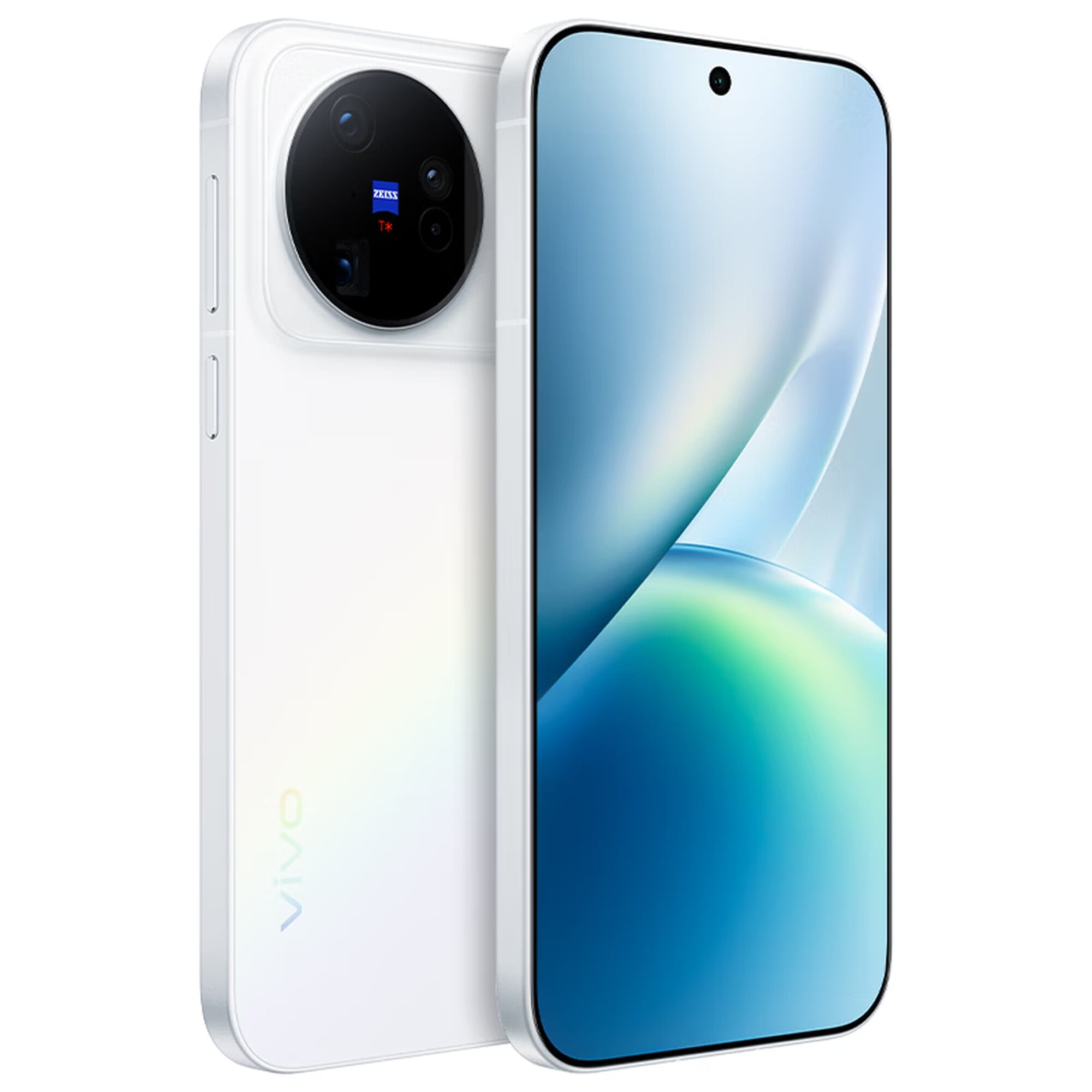
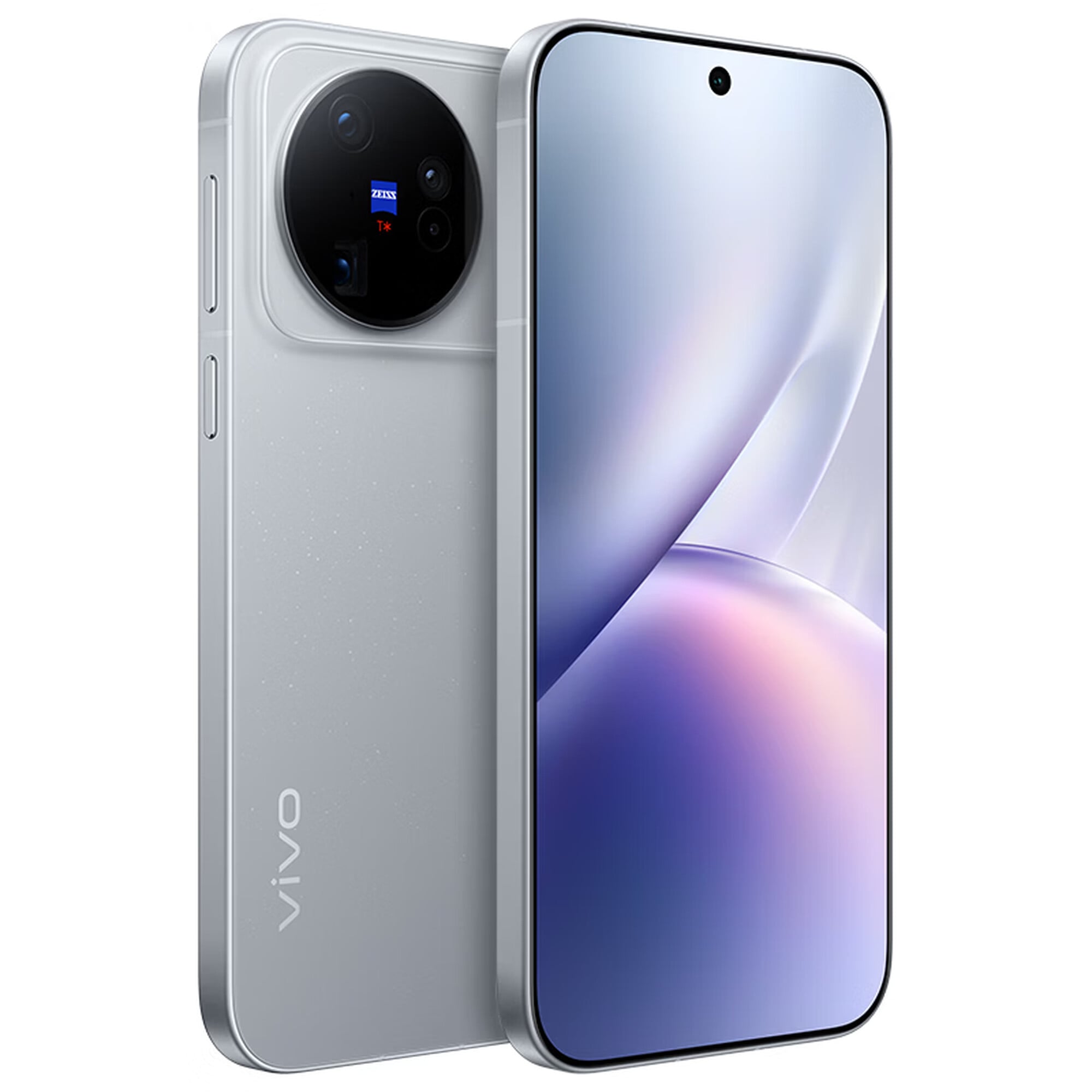
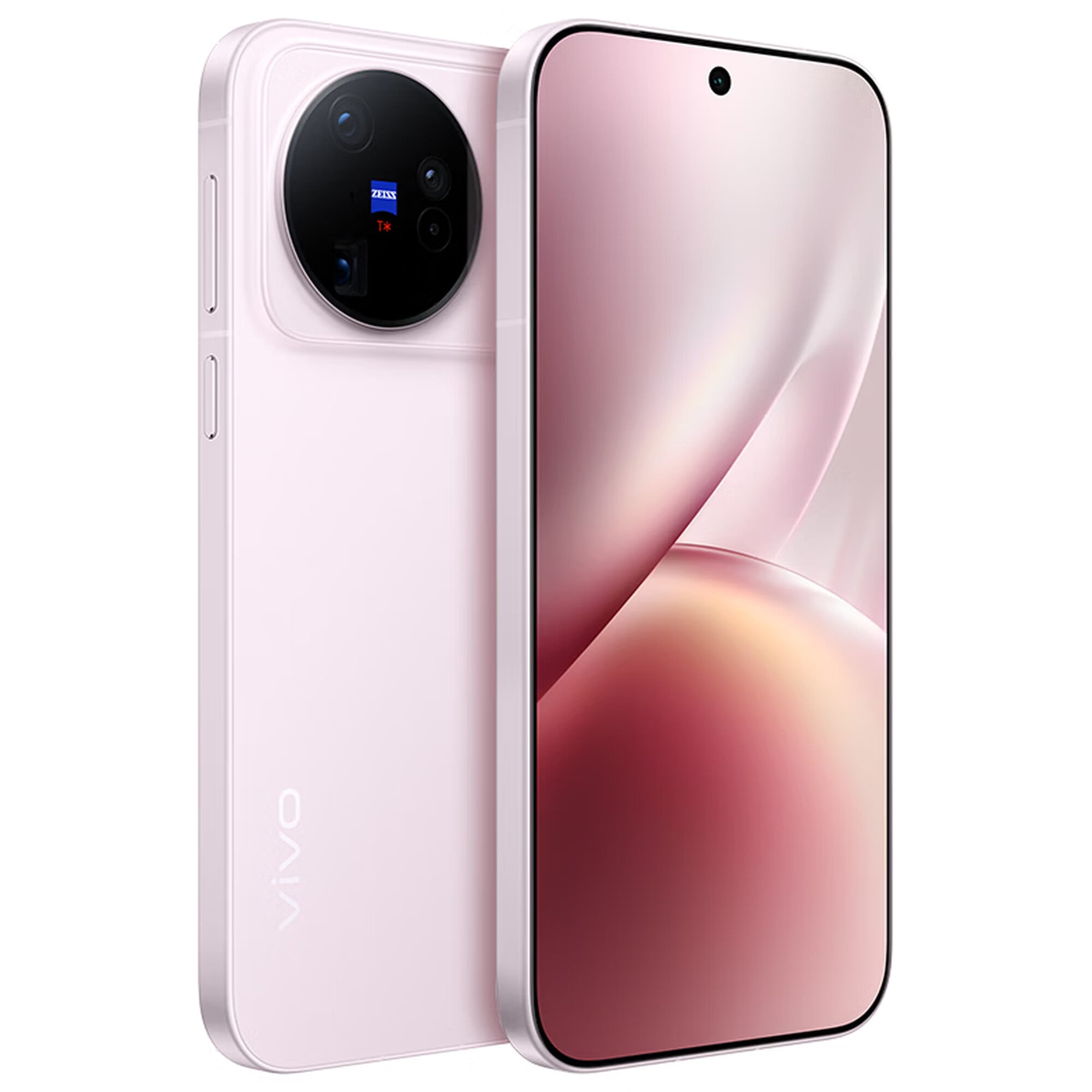
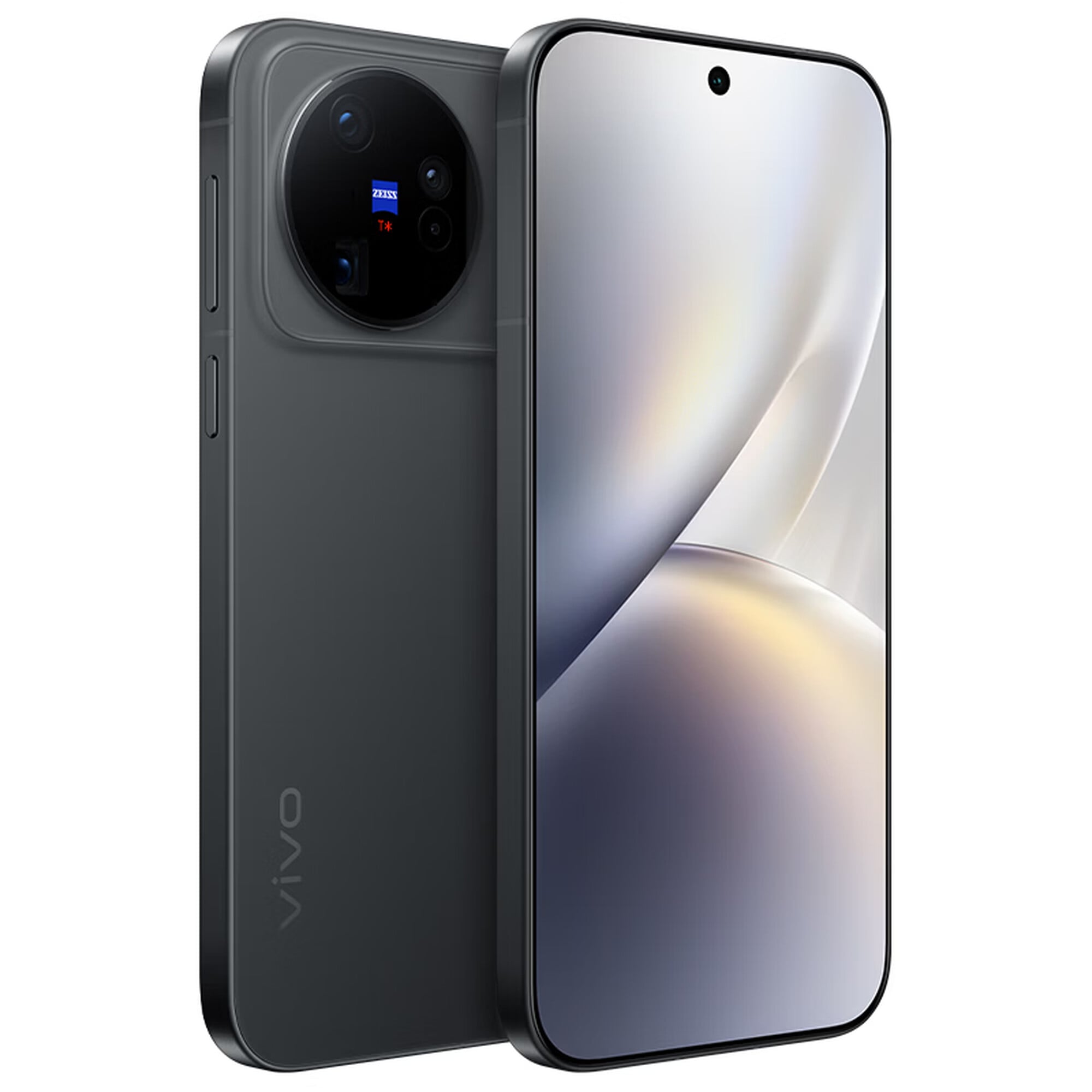
As can be seen, the Vivo X500 will be available in four shades, such as white, grey, dawn (pink), and black. The images show that the X500 has a different design compared to the Pro models.
While the Pro models have a larger circular module like the previous generation, the design of the X500 seems to be inspired by the older Vivo X90, which debuted back in 2022, as it features a circular camera unit on the left housed in a rectangular module. Inside, towards the right, is a camera sensor and an LED flash.
The Vivo X500 Pro and X500 Pro Max images show that they have an almost identical design. The only noticeable differences are the size, with the Pro being a smaller device compared to the Pro Max. Also, the Pro Max edition has an extra button on the left edge. Both devices will be available in colors like grey, white, orange, and black.
Apart from the Vivo X500 series, the brand will also announce a couple of other devices, including the Vivo Watch 6 and Vivo Buds Clip, through the Sept. 21 launch event in China. As far as the global launch is concerned, the X500 lineup is expected to arrive in other markets in November.
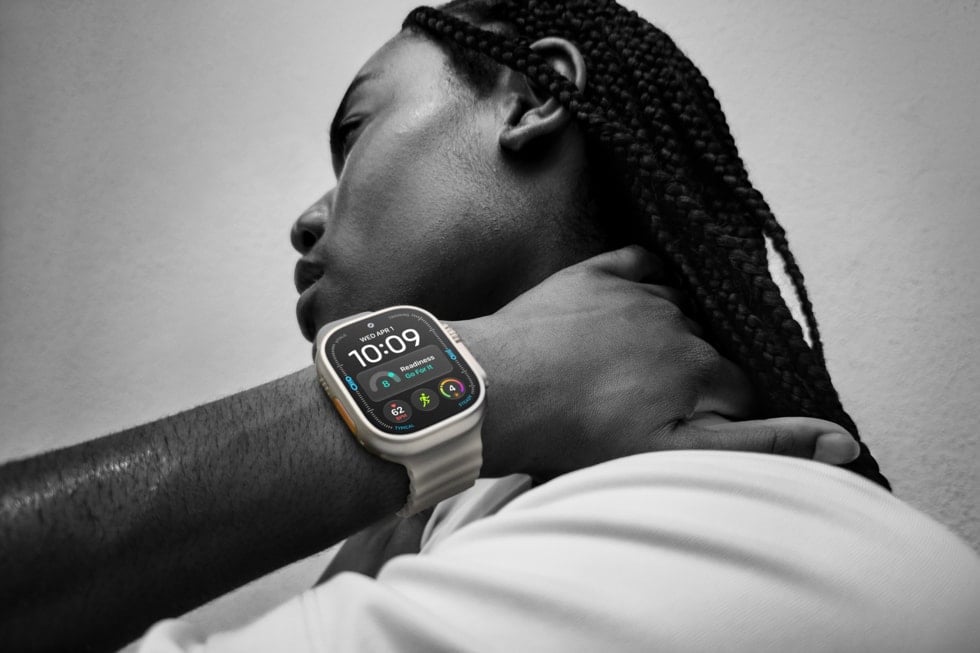
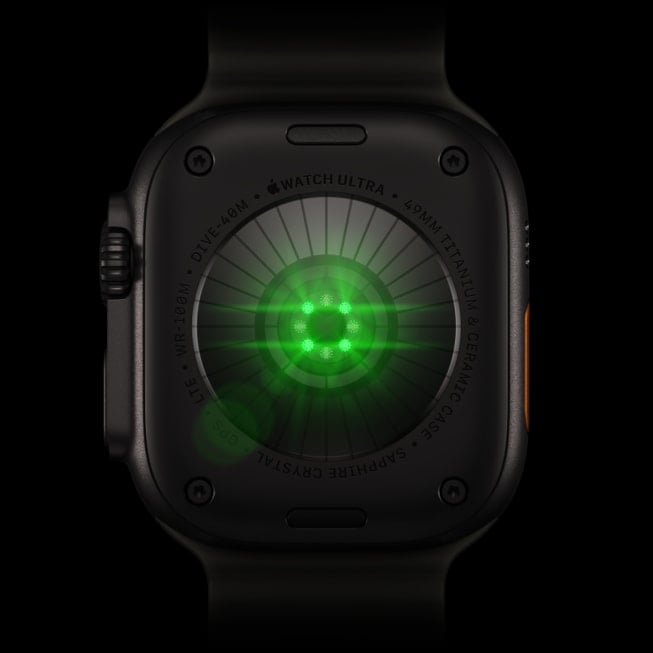
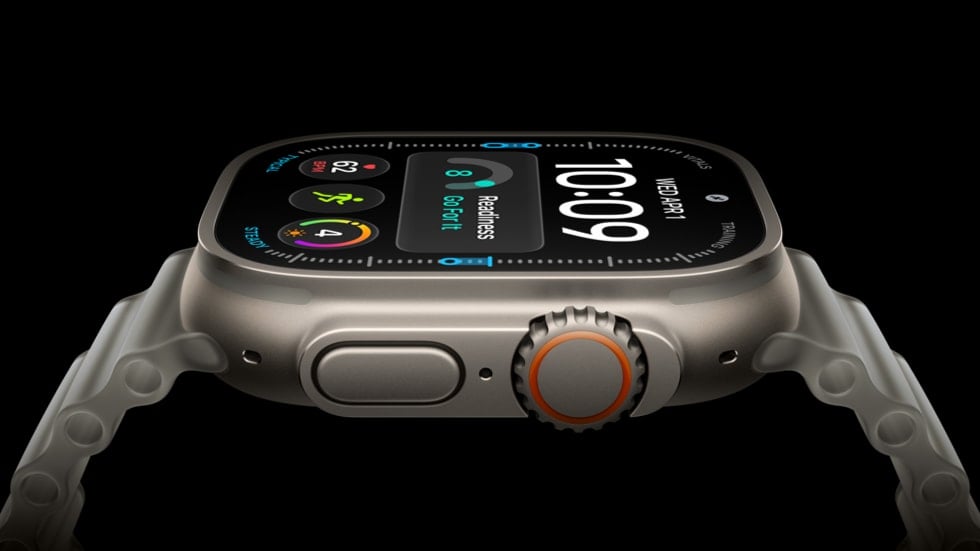
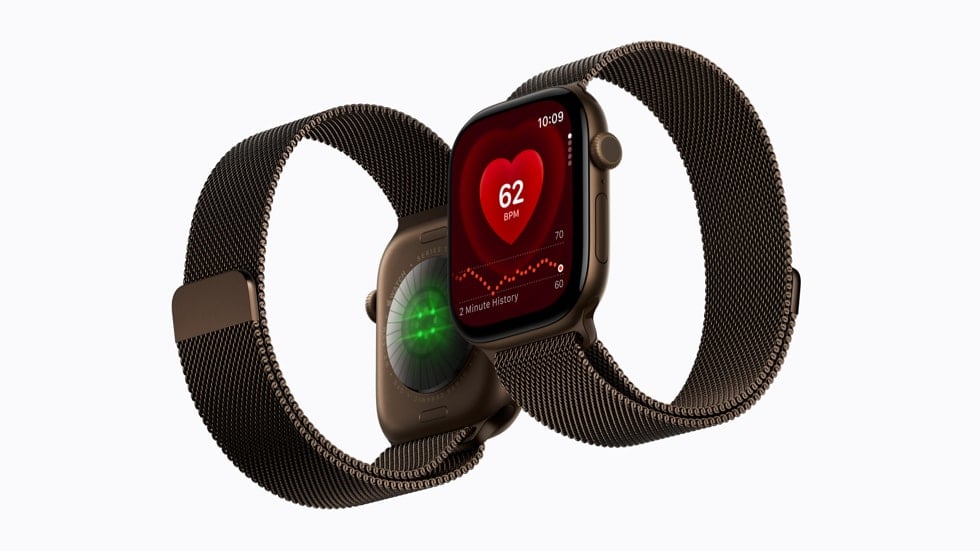
Apple has introduced the Apple Watch Ultra 4. On the outside, it looks largely identical to previous iterations, though it is now available in a black titanium finish alongside the standard natural titanium. The actual changes this year are internal, focusing on more frequent health data sampling, a longer-lasting battery, and the integration of Apple Intelligence.
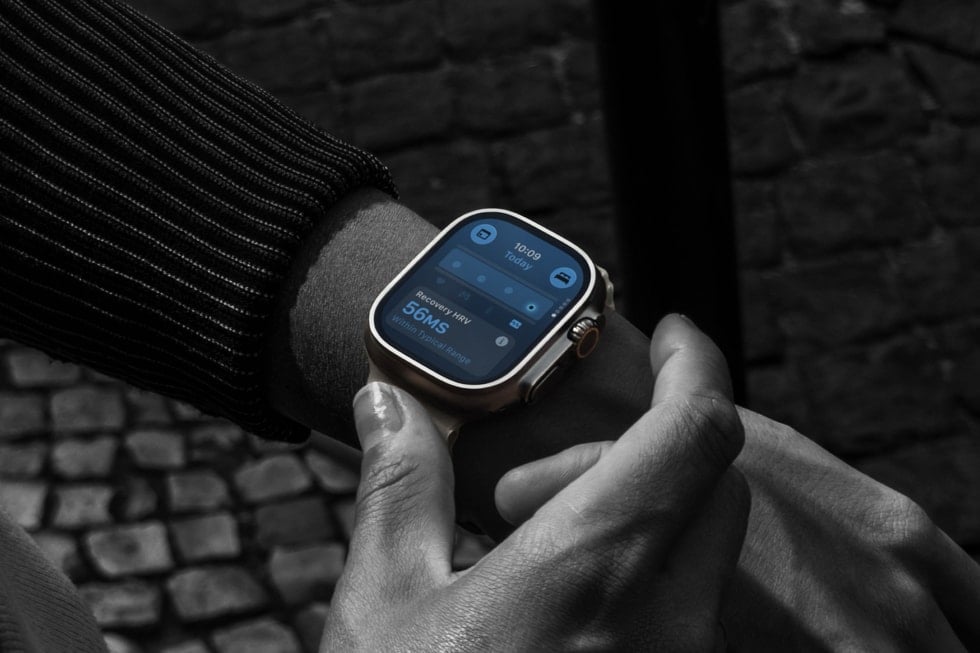
Just like the Series 12, the Watch Ultra 4 also features the new S11 chip and Apple’s upgraded Health Sensing System. The updated optical and electrical sensors can measure your heart rate every five seconds throughout the day, while heart rate variability (HRV) is recorded up to 24 times more frequently than on the Ultra 3.
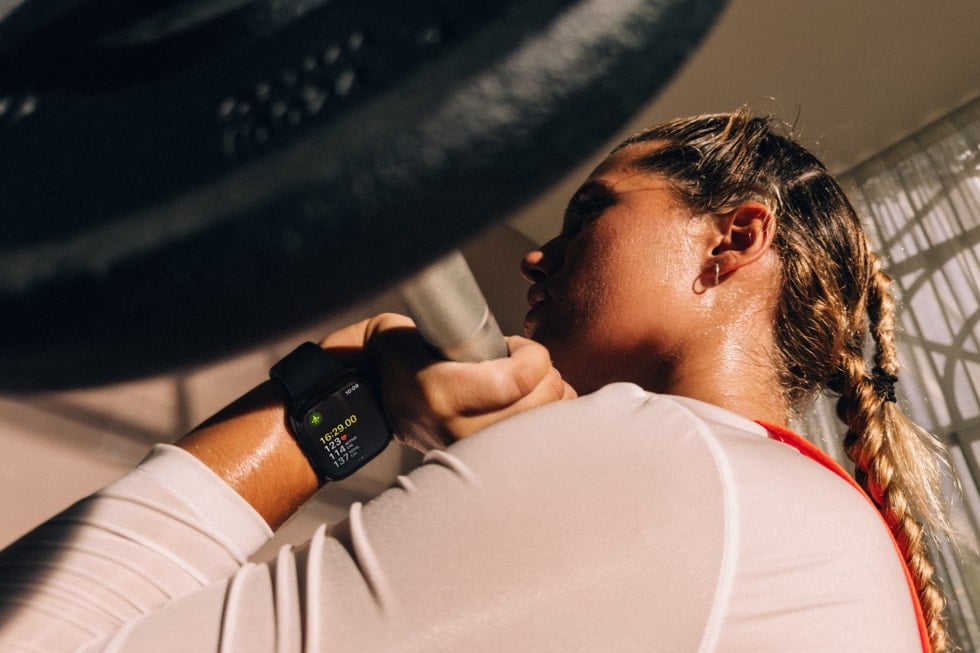
Apple is using the increased health data to introduce a new Readiness score. The feature provides a daily score from 0 to 10 based on your sleep, training load, and daytime vitals, helping you decide whether to train harder or take a rest day. Apple has also improved the pedometer for more accurate step counting and distance tracking during indoor walks and runs.
In terms of battery life, the Ultra 4 offers up to 50 hours of regular use or up to 84 hours with Low Power Mode enabled. The new Max Extended Workout mode provides up to 45 hours of continuous GPS tracking for outdoor activities. Apple has also improved charging speeds, with a 15-minute charge providing up to 18 hours of regular use.
For software, watchOS 27 adds some new AI tools that Apple is calling Audio Intelligence. If you ever get distracted and miss what someone said, a tool called Live Rewind lets you double-press the Digital Crown to read a quick transcript of the last 15 seconds. Siri can also summarize longer conversations for you. To address privacy concerns, Apple says the watch processes all of this audio locally in a secure part of the chip, meaning nothing is recorded, saved, or sent to their servers.
The Apple Watch Ultra 4 maintains its predecessor’s pricing, starting at $799. Preorders are open now, and the device will be available in stores starting Friday, September 18.
Apple has announced the Watch Series 12, an update that primarily focuses on more frequent health data collection and a new set of audio-based AI features. The new smartwatch starts at $399, is available for pre-order today, and will ship on September 18th.
The new series comes with what Apple calls the Health Sensing System, which includes redesigned optical and electrical sensors with larger green LEDs. The upgraded sensors allow the watch to record your heart rate every five seconds in the background and measure Heart Rate Variability (HRV) up to 24 times more frequently than the Series 11.
This increased data collection feeds into a new Readiness metric. Catching up to features already standard on Garmin and Oura devices, the Apple Watch now provides a daily score from 0 to 10 based on recent activity, sleep, and daytime vitals. It advises users whether to rest or proceed with a workout.
The watch also adds passive notifications for potential hypertension and sleep apnea. On the iPhone side, a redesigned Health app introduces a Health Age metric to compare user data against age-based averages.
The new S11 chipset also brings a suite of microphone-dependent features branded as Audio Intelligence. The standout is Live Rewind, which transcribes the last 15 seconds of audio when the user double-clicks the Digital Crown, designed for when you miss a detail in conversation. Another feature, Siri Recap, generates text summaries of recent chats.
For privacy, Apple says all audio processing takes place directly on the watch using the S11 chip’s Secure Exclave, so raw audio is neither stored nor sent to the cloud. Live Rewind also plays an audible chime and shows an on-screen animation to let people nearby know when transcription is active.
The Series 12 comes in 42mm and 46mm sizes. Apple is offering aluminum and titanium cases, alongside the return of a ceramic option in white and blue. Aluminum models get an updated Ceramic Shield 2 glass, which Apple claims is 60% tougher than the previous generation.
Battery life remains at 24 hours for standard use, though Apple says outdoor workout tracking now lasts up to 10 hours. Charging speeds have improved slightly, with a 15-minute charge yielding 12 hours of use. The device ships with watchOS 27, which includes a new Siri AI integration for more conversational queries.
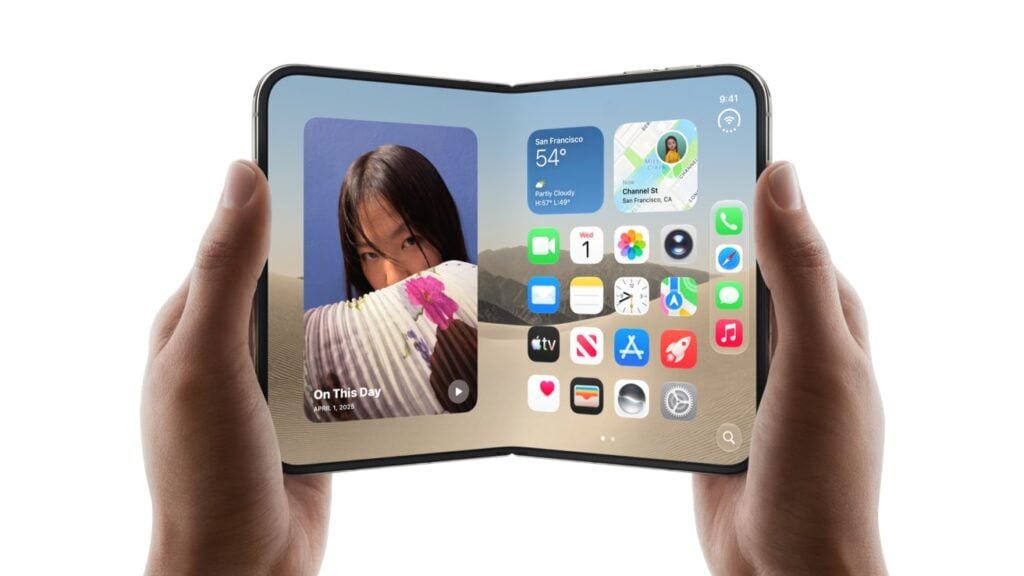
At the event, Apple launched its first foldable smartphone, the iPhone Duo, featuring dual 120Hz displays, a titanium build, and the A20 Pro chip. The company also introduced the iPhone 18 Pro and iPhone 18 Pro Max, which come with a variable aperture camera and the 2nm A20 Pro chip.
For more daily updates, please visit our News Section.
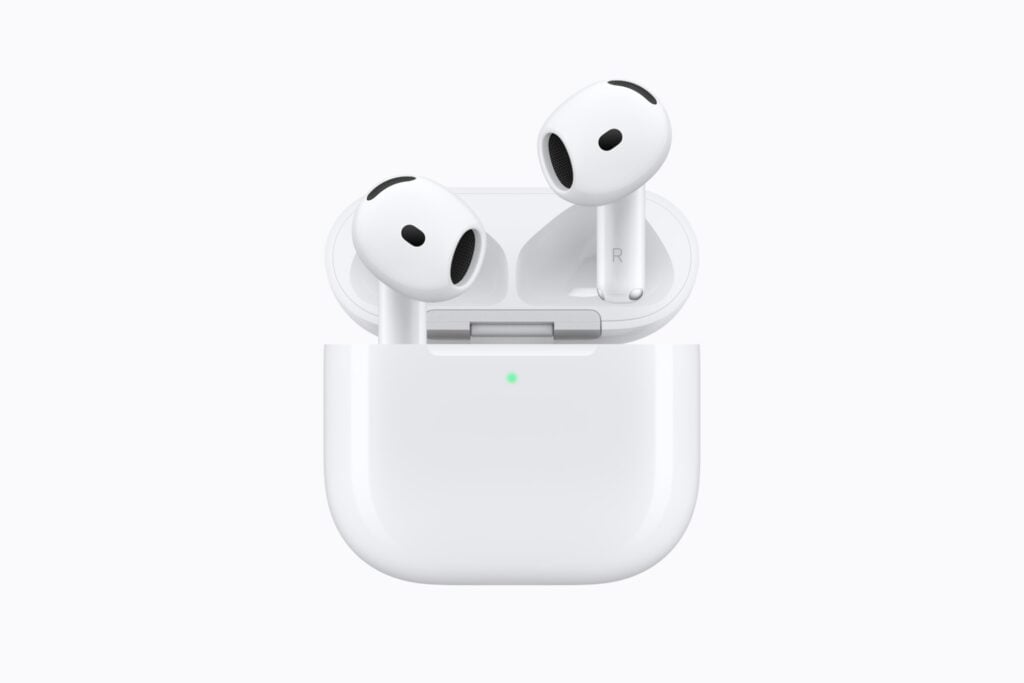
Apple is updating its standard, unsealed earbuds with the announcement of the AirPods 5, featuring improved active noise cancellation. The new generation is divided into two separate models: a base version and a slightly upgraded tier that adds a wireless charging case and a few extra hardware controls.
Apple AirPods 5 Specifications
While Apple introduced ANC to its open-ear design with the previous generation, the AirPods 5 aim to make it significantly more effective. To achieve this, Apple says it redesigned the internal acoustics and updated its computational audio processing algorithms.
The company claims this new setup removes up to 50% more ambient noise compared to the AirPods 4 with ANC. Alongside the upgraded noise cancellation, the AirPods 5 support transparency mode, adaptive audio for automatically mixing the two settings based on your surroundings, and conversation awareness, which drops the volume of whatever you are listening to when you start talking.
The AirPods 5 also bring deeper Apple Intelligence integration, giving you access to the updated Siri directly through the earbuds. You can also respond to Siri prompts using head gestures, such as nodding to accept or shaking your head to dismiss them.
There is also a new Live Translation feature tied to the iOS Translate app. By pressing both earbud stems at the same time, users can listen to real-time translations of spoken conversations directly in their ears.
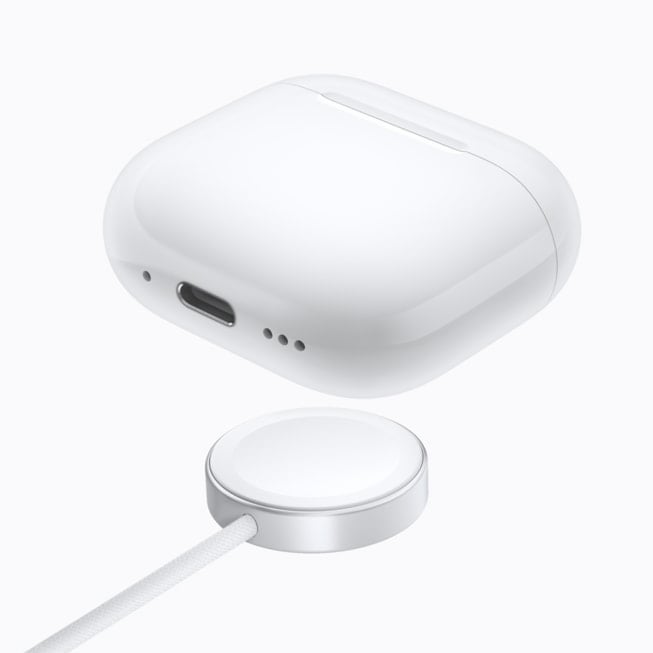
If you opt for the higher-tier model, Apple includes swipe-based volume controls directly on the earbud stems, a feature it previously kept exclusive to the AirPods Pro line. This version also comes with a wireless charging case that works with USB-C, standard Qi pads, and Apple Watch chargers.
For battery life, you get up to five hours of listening time with ANC enabled and up to 22 hours with the charging case. Both models also use 40% recycled materials overall, including recycled cobalt in the batteries.
Pricing
As for the pricing, the base model of the AirPods 5 costs $129. The upgraded version, which gets you the wireless charging case, the on-stem volume swipes, and the battery improvements, is priced at $149. Both are available to preorder today and will start shipping on September 18th.
At the event, Apple has launched its first foldable iPhone Duo with dual 120Hz displays, a titanium build, and the A20 Pro chip. The company has also unveiled the iPhone 18 Pro and Pro Max with a variable aperture camera and 2nm A20 Pro chip.
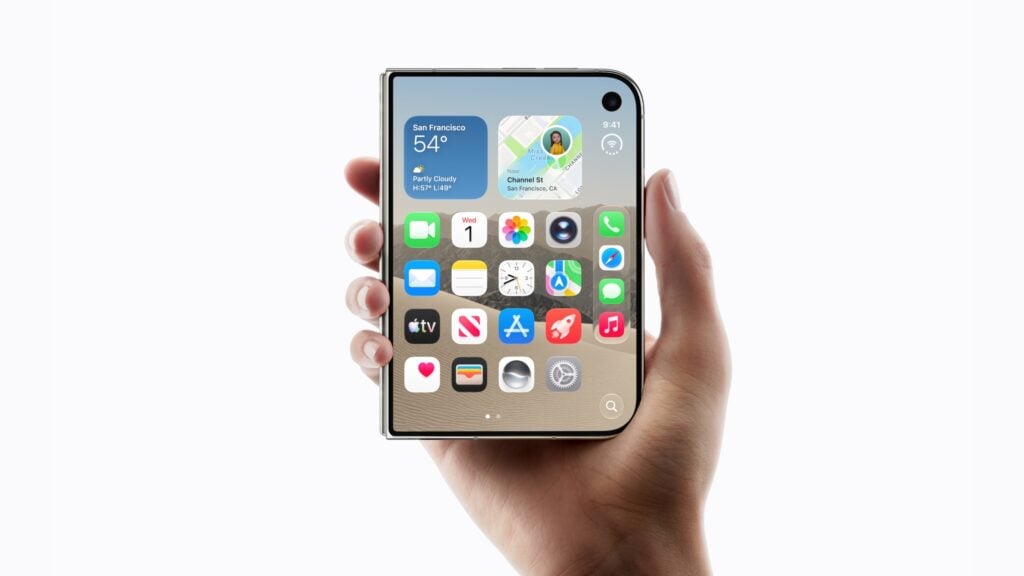
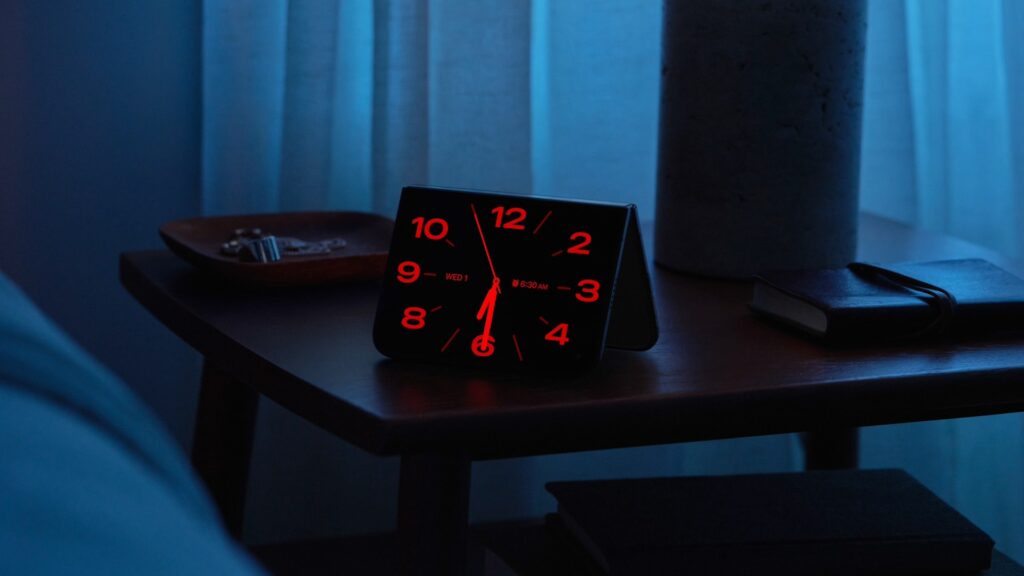
After years of watching competitors like Samsung and Google iterate on flexible displays, Apple has officially entered the foldable smartphone market. Announced today, the iPhone Duo is a book-style foldable that starts at a steep $1,999, bringing the company’s hardware design to a category it has long observed from the sidelines.
The iPhone Duo features a 5.4-inch outer display and opens to reveal a 7.6-inch inner screen. Both are Super Retina XDR panels equipped with 120Hz ProMotion, always-on support, and a peak outdoor brightness of 3,000 nits.
The two screens share the same aspect ratio, which should help apps scale consistently when moving between the cover and the main display. The inner screen utilizes a nano-texture finish designed to reduce glare and minimize the visibility of the center crease. It also houses an under-display FaceTime camera, keeping the 7.6-inch panel free of a notch or hole-punch cutout.
To address the standard durability concerns associated with foldables, Apple has built the Duo’s chassis from grade 5 titanium, paired with a 3D-printed hinge cover. The device carries an IP68 rating for water and dust resistance. According to Apple, the hinge relies on over 100 components to keep the flexible display flat when open, while a custom polymer layer and a titanium base plate reinforce the inner screen against daily wear.
Internally, the phone runs on the A20 Pro chip, the same processor powering the iPhone 18 Pro lineup. Because foldables present unique thermal challenges, Apple has included a custom vapor chamber. Power is managed by a dual-battery system split between the two halves of the device, which Apple claims will provide up to 31 hours of video playback on the inner screen and 44 hours on the outer screen.
The rear camera system consists of a 48MP main sensor and a 48MP ultrawide lens. With the new form factor, Apple is adopting several software features that will be familiar to anyone who has used an Android foldable. This includes Duo Preview, which uses the cover screen as a viewfinder for high-resolution selfies, and Kid Cue, which plays animations on the outer display to get children to look at the camera.
On the software side, the Duo ships with iOS 27, which introduces native Split View multitasking to the iPhone for the first time, allowing users to run two apps side-by-side. The interface has also been tweaked for the hardware, moving elements like the Dynamic Island and the app dock to the side of the screen to maximize vertical space.
The iPhone Duo is an eSIM-only device worldwide and supports Wi-Fi 7. It will be available in two colors, Star White and Night Sky. Pricing starts at $1,999 for the base 256GB model, with the 512GB version priced at $2,199, and a 1TB option available for $2,399.
Pre-orders begin on October 16 ahead of general availability on October 23. Apple has also said that the device will gain support for the USB-C Apple Pencil in a software update later this year.
For more daily updates, please visit our News Section.
Apple has announced the iPhone 18 Pro and iPhone 18 Pro Max today. The new phones focus on hardware adjustments to the camera system, a shift to a 2-nanometer processor, and improved internal cooling.
iPhone 18 Pro & Pro Max Specifications
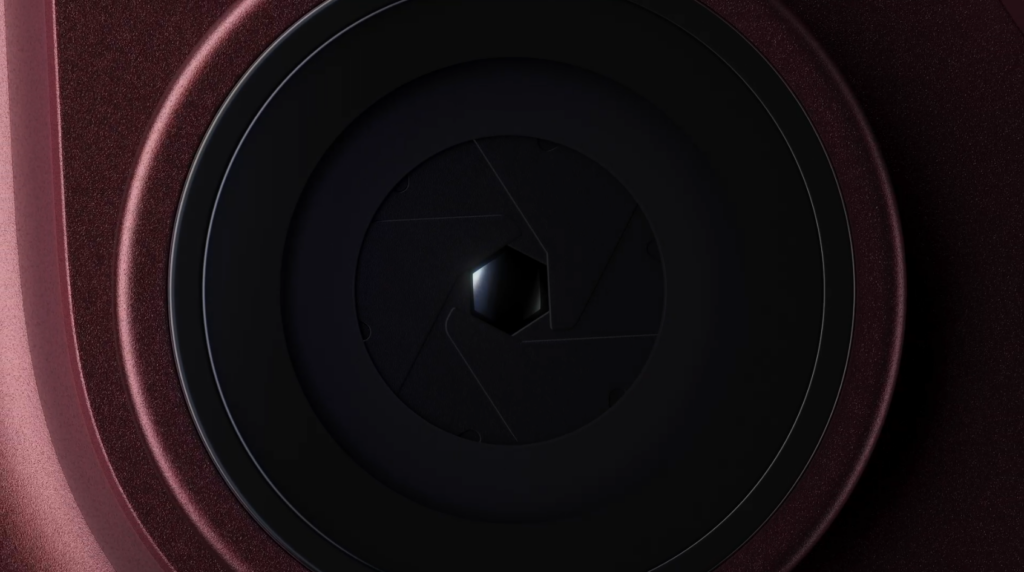
The primary hardware update is the 48-megapixel main camera, which now features a mechanical variable aperture. Using a six-blade system, the lens can physically adjust between f/1.48 for low-light situations and f/4.0 for a wider depth of field.
This allows for optical adjustments to light and focus rather than relying entirely on software processing. To accompany this, Apple is updating the default iOS camera app with manual controls, allowing users to adjust shutter speed and white balance, and view a live histogram.
Apple is also introducing a feature called Apple Reference Image. When enabled, the camera signs the sensor data at the moment of capture, creating an unalterable reference file. This is designed to help users and platforms verify whether a photo is an original, unedited shot or if it has been altered or generated by AI.
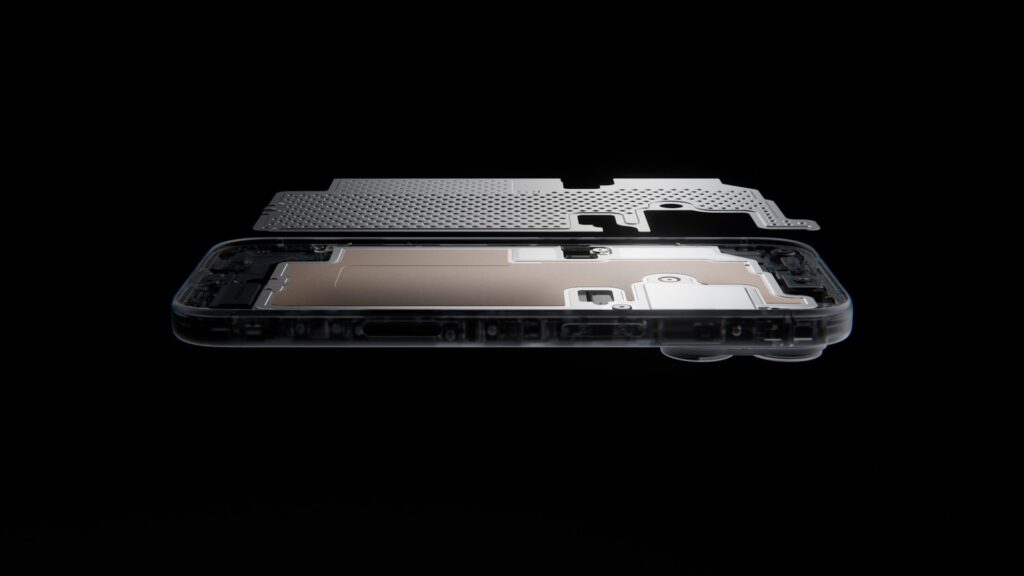
Internally, the phones are powered by the A20 Pro chip, manufactured on a 2-nanometer process. It includes a 6-core CPU, a 7-core GPU, and a 32-core Neural Engine for on-device AI tasks. Apple has also redesigned the internal cooling system.
The chip now attaches directly to a vapor chamber that has three times the surface area of the one used in the iPhone 17 Pro, which should help maintain performance during sustained workloads without overheating.
The phones will ship with iOS 27, which includes an updated version of the company’s voice assistant, branded as Siri AI. The software is designed to read on-screen context and pull data from across different apps. Additionally, the Dynamic Island interface has been adjusted to display up to three Live Activities simultaneously.
For connectivity, the devices support Wi-Fi 7, Bluetooth 6, and use a new Apple-designed C2 cellular modem. In the US and several other regions, the phones will be eSIM-only. Apple says that removing the physical SIM tray allowed them to increase the battery size, giving the Pro Max an estimated 45 hours of video playback.
Pricing and Availability
The new models come with a price increase over previous generations. The iPhone 18 Pro starts at $1,199, and the Pro Max starts at $1,299. Both base models include 256GB of storage, with higher capacity options available at 512GB, 1TB, and 2TB.
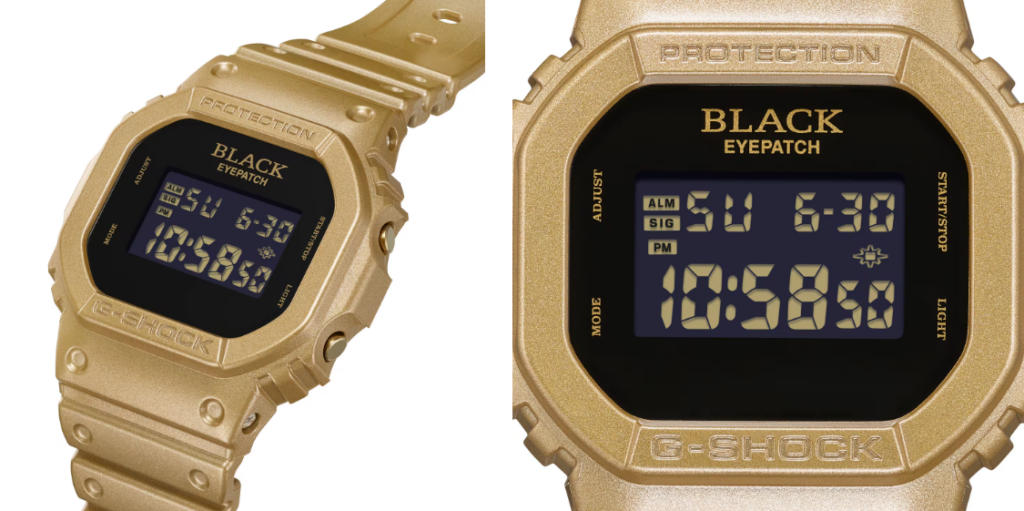
Casio is releasing a new G-Shock watch in collaboration with the Tokyo-based streetwear label BlackEyePatch. This marks the third time the two companies have partnered on a release. The new model, the DW-5600BEP-9, is scheduled to launch in October 2026. It will retail for ¥19,800 ($129) in Japan, and its appearance on Casio’s global website indicates it will be available in international markets as well.
The watch is a modified version of the DW-5600, which is Casio’s standard square-faced digital watch. The main difference for this release is the color scheme. The bezel and the strap are molded in a bright gold tone, which is paired with a standard black digital display.
Casio says that the design is meant to reference hip-hop culture, which aligns with BlackEyePatch’s usual apparel output. Aside from the color, the watch features an engraved BlackEyePatch logo on the stainless steel case back and comes in custom packaging.
From a materials standpoint, the bezel and band are made from bio-based resin. Casio has been transitioning most of its new G-Shock models to this material over the last couple of years as a renewable alternative to traditional petroleum-based plastics.
Internally, the DW-5600BEP-9 is a standard DW-5600. It has a case size of 48.9 x 42.8 x 13.4 mm and weighs 53 grams. It includes the standard G-Shock shock resistance and 200 meters of water resistance. The watch runs on a CR2016 battery, which Casio estimates will last for about five years.
The software features are also standard for this module. It includes a 1/100-second stopwatch, a 24-hour countdown timer, a multi-function alarm, and an hourly time signal. The backlight is a white LED that can be set to flash when an alarm or timer goes off. The calendar is pre-programmed through the year 2099, and the timekeeping is accurate to plus or minus 15 seconds per month.
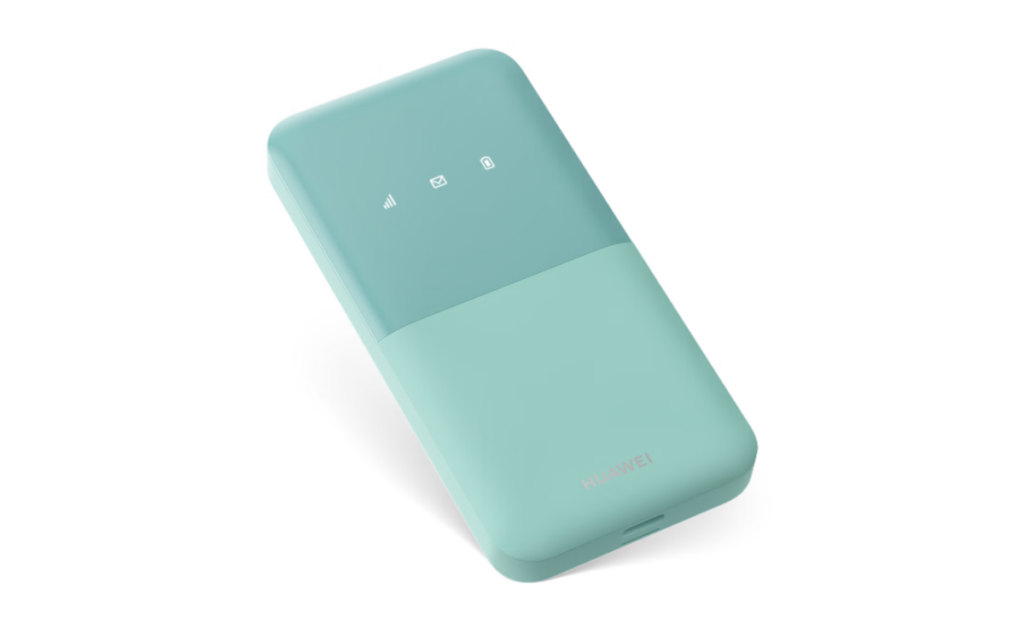
Huawei has introduced a new portable hotspot, the Mobile WiFi 5 eSIM edition (model E5586-822-E), in the Chinese market. The device is currently available for an introductory price of 269 yuan ($40), with a regular retail price set at 299 yuan ($44). As the name indicates, it includes a built-in eSIM, which allows you to connect to cellular networks without needing to purchase or insert a physical SIM card.
The hotspot is designed to be carried easily on a daily basis. It weighs 96 grams and measures 13.7mm in thickness. According to Huawei, this makes the device about 15% thinner than the previous version. It is currently sold in a single cyan color option with a textured finish, making it small enough to fit inside a pocket or a small bag compartment.
The eSIM functionality is the main feature of this model. It supports networks from both China Mobile and China Unicom. By default, the device is configured to automatically switch between these two carriers based on which one provides a better signal in a given location. You also have the option to manually select their preferred network using the companion app. If you prefer to use a standard data plan, the device still retains a physical SIM card slot. However, this slot only accepts standard carrier SIMs and is not compatible with IoT SIM cards.
Managing the device and purchasing data plans is done entirely through the Huawei Smart Life app. The app displays available data packages, current data usage, and plan expiration dates. Huawei says that you must be careful with the eSIM profile: once the service is activated, the assigned number cannot be written to the device again. Deleting or deactivating the SIM data will result in the permanent loss of that specific number.
The wireless specifications are basic. The hotspot operates exclusively on the 2.4GHz Wi-Fi band and does not support the 5GHz band. It offers a maximum theoretical wireless transmission rate of up to 300Mbps. While Huawei says that download speeds are 30% faster than the older Mobile WiFi 3 model, the reliance on 2.4GHz means you might experience interference in areas with many competing Wi-Fi signals. Despite this, the device can support up to 16 devices connected at the same time.
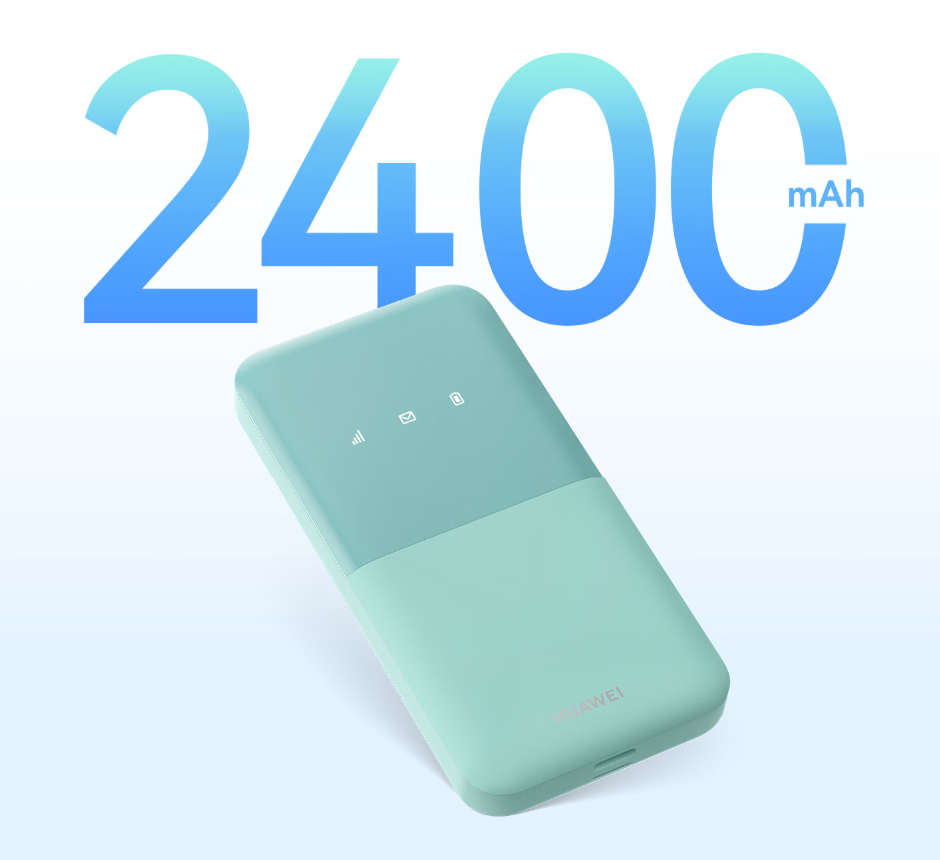
The hotspot is powered by a 2400mAh battery. This provides around eight to nine hours of continuous operation per charge. It includes a USB Type-C port for charging, allowing it to share cables with most current smartphones, tablets, and laptops.
In related news, Lenovo has recently launched the Legion LM50S portable Wi-Fi with Wi-Fi 6, 4G LTE, and up to 12 hours of battery life, while ZTE introduced the U15S 4G portable Wi-Fi with Wi-Fi 6 and a 10,000mAh battery.
For more daily updates, please visit our News Section.
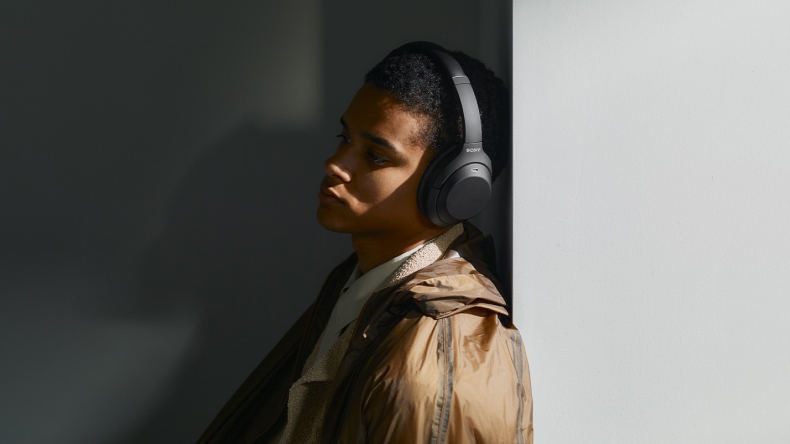
Sony launched three pairs of headphones on Monday:- the WH-1000XM4C at $299.99, the WH-CH730N at $179.99, and the WH-CH530 at $69.99. All three are listed on Amazon. We covered the CH-series leak and the XM4C design images before the announcement, so here is where they actually land on price.
The one to buy. It is ten dollars more than the WH-CH520 launched at in 2023 and for that you get 55 hours instead of 50, multipoint, and a three-minute charge that returns an hour and a half of playback. Swivel design, DSEE upscaling, recycled plastic in the body. At seventy dollars that is a lot of headphone.
Amazon and Sony split two exclusive colours between them – Coral and Mint – alongside the Black, Cobalt, White and Pink you will find anywhere.
The trade-off is that it is on-ear, not over-ear. If you wear glasses or you are sensitive to clamping pressure over a long flight, spend the extra and go over-ear. There is no ANC either, which at this price is not surprising.
Here is the awkward one. The CH730N is genuinely improved: 50 hours with ANC running, Dual Noise Sensor, multipoint, a foldable frame, better call handling than the 720N managed. Oat is the Amazon and Sony exclusive colour.
But the WH-CH720N it replaces launched at $149.99 is still around. Unless you specifically want the extra fifteen hours of battery or the new colours, the old one at half the money is not a bad buy.
Buy the 730N if you are coming off something with no ANC at all and you want one pair that lasts a working week between charges.
Sony has brought the 2020 XM4 back. Same swivel-fold design, same four-mic array, same QN1 noise-cancelling chip. What is new is a 10-band equaliser in place of the original five-band, a retuned sound profile, and a Lavender finish that Sony and Amazon have to themselves. Pre-orders are open with delivery quoted between 23 September and 1 October.
You get 27 hours with ANC on and 34 with it off, against 30 and 38 on the original XM4. That is a strange thing to find in a 2026 relaunch.
At $299.99 it also runs into the XM5. If you can find the XM5 near that number, buy that instead.
There is one real reason to choose the XM4C, and it is the hinge. The XM5 does not fold – it only swivels flat, and the case is a slab. The XM4C folds into something you can drop in a backpack pocket. If you travel constantly and that has annoyed you about the XM5, this is the answer, and the QN1 is still a very good ANC chip.
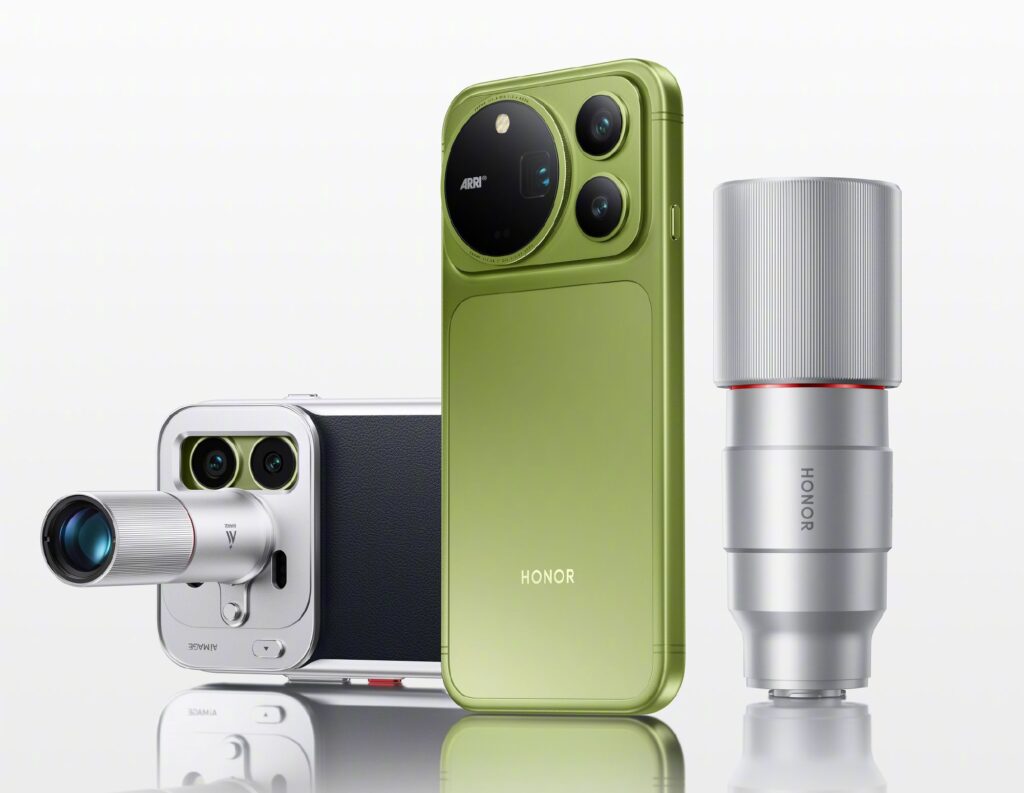
Honor has officially lifted the lid on the camera architecture powering its upcoming top-tier flagship. Honor Product Line President Fang Fei released a Weibo post to reveal how the company intends to bridge professional filmmaking tools and everyday mobile hardware with the Honor Magic 9 Pro Max. She has also shared some samples to showcase its camera capabilities.
ARRI color science meets dual 200MP sensors
Honor Magic 9 Pro Max camera samples using telephoto converter
The optical system relies on a 200-megapixel primary camera alongside a 200-megapixel periscope telephoto lens, both developed in close collaboration with cinema brand ARRI. These large sensors work alongside expansive physical apertures to retain fine textures across diverse lighting setups.
To maintain film-like dynamic range, the camera pipeline supports ARRI LogC3 gamma curves alongside 10-bit 4:2:2 APV recording, ensuring natural skin tones and preserving highlight details from burning out.
Honor Magic 9 Pro Max camera sample using native periscope telephoto camera
Image clarity requires steady framing, which is why the main sensor incorporates 3-degree mechanical gimbal stabilization rated for CIPA 8.0 standards. The dedicated telephoto camera also achieves CIPA 7.5-level stabilization. This setup triples conventional physical shake compensation limits, smoothing out jerky hand movements during fast walking or light jogging.
Powering the CIPA 8.0 performance is the company’s proprietary TrueShift stabilization system. Unlike legacy setups that track movement solely through inertial measurement units, TrueShift tracks full image frames and runs multimodal AI motion prediction calculations 1,000 times per second to eliminate sub-pixel jitters.
Honor Magic 9 series
To overcome the distance limitations of handheld concert and stage shooting, two bespoke teleconverter accessories have been detailed. The G500 unit provides a 5.88x optical extension factor, while the compact G200 lens cuts 55 percent of its predecessor’s weight to offer a 2.35x zoom boost inside a lipstick-sized chassis.
Shown above are camera samples captured using the Honor Magic 9 Pro Max. The 85mm image is captured using phone’s native periscope telephoto camera, while the 1000mm and 500mm images have been shot using the teleconverter attachment.
Oppo’s latest A7 series phones could soon make their way beyond the Chinese market. The company recently introduced the A7 Pro and A7 Pro Max in China, and their international versions have already started appearing across certification databases. Now, two Geekbench 7 listings provide additional clues about what to expect from the upcoming global models.
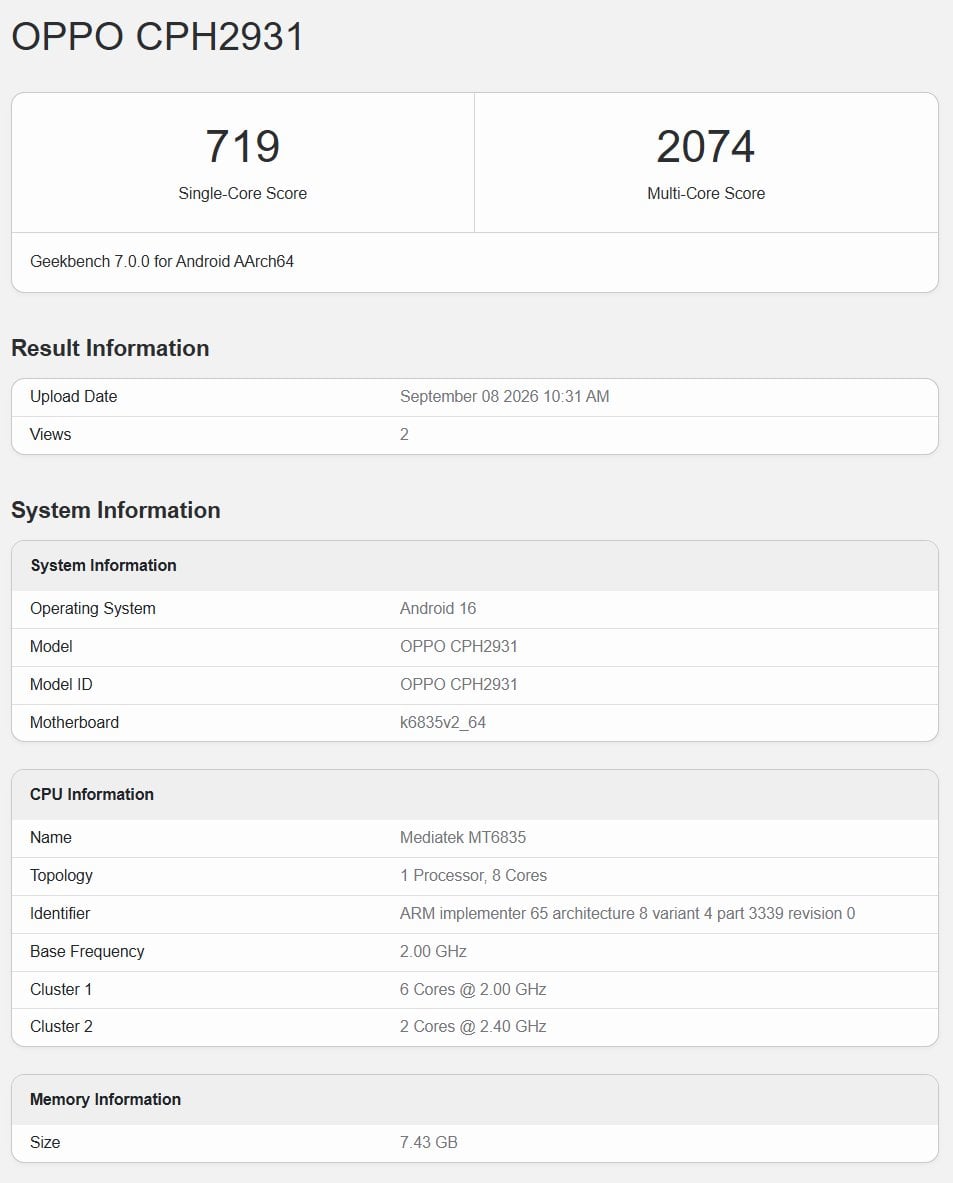
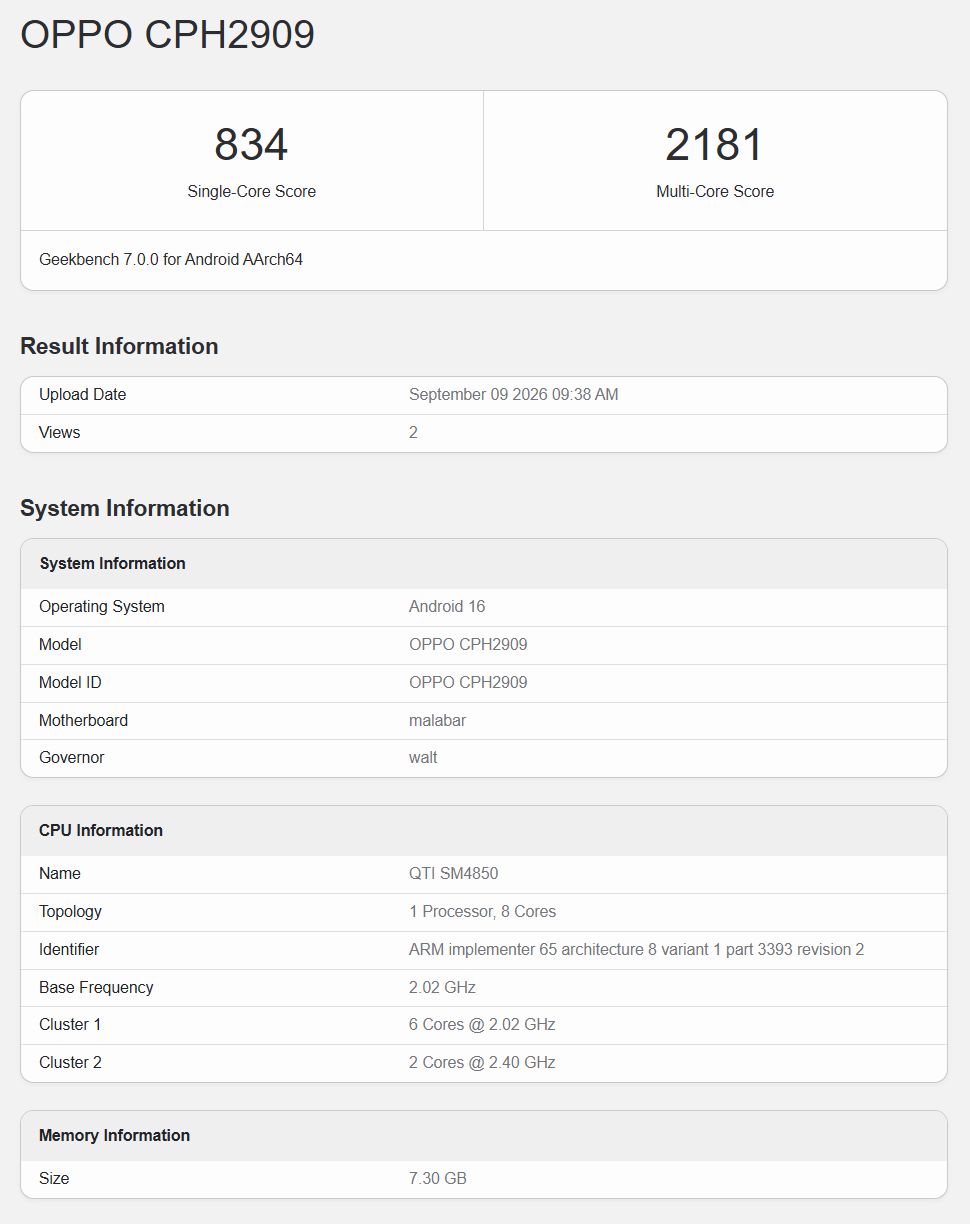
The Oppo A7 Pro 5G has appeared with model number CPH2931, while the A7 Pro Max 5G is listed as CPH2909. Both models have previously surfaced on certification platforms, including Thailand’s NBTC, adding further weight to their potential international release.
Oppo A7 Pro 5G Geekbench listingOppo A7 Pro Max 5G Geekbench listing
The Geekbench listings show that the Oppo A7 Pro (CPH2931) and A7 Pro Max (CPH2909) are powered by the MediaTek MT6835 and Qualcomm SM4850 chipsets, respectively. These findings suggest that the A7 Pro could be powered by a Dimensity 6300-series chip, most likely the Dimensity 6360 Max, while the A7 Pro Max could use the Snapdragon 4 Gen 5.
Both devices have 8GB of RAM and run Android 16, which will have the ColorOS 16 skin on top. The A7 Pro recorded 719 points in the single-core test and 2,074 points in the multi-core test, whereas the Pro Max edition achieved 834 points in single-core and 2,181 points in multi-core testing.
Oppo A7 Pro 5G
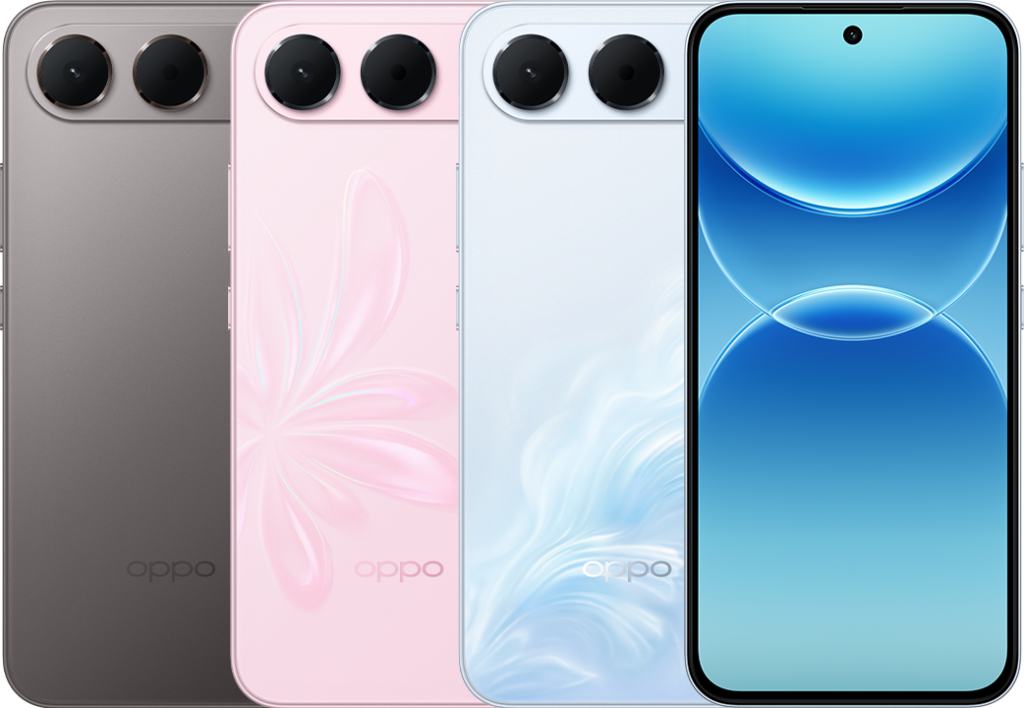
These listings suggest that the global A7 Pro and A7 Pro Max could be identical to their Chinese counterparts. The A7 Pro’s Chinese version has a 6.57-inch OLED FHD+ 120Hz screen, an 8,000mAh battery with 45W charging, a 50-megapixel rear camera, and an 8-megapixel front camera.
Oppo A7 Pro Max
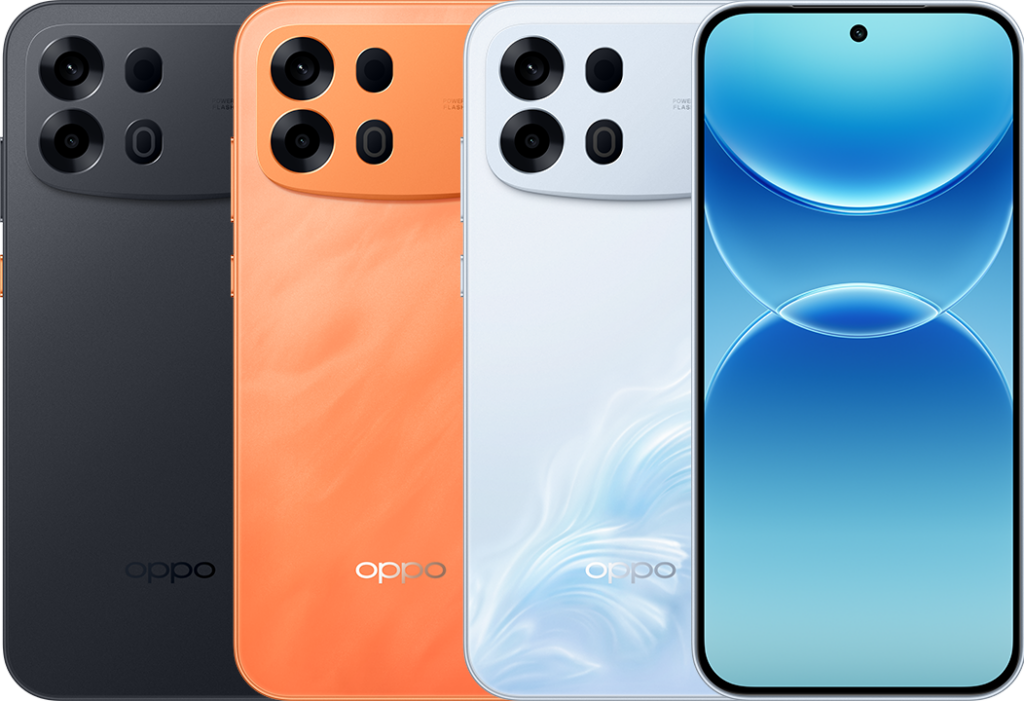
On the other hand, the A7 Pro Max’s Chinese edition has a 6.78-inch FHD+ 120Hz display, a massive 10,000mAh battery with 80W charging, a 50-megapixel primary camera with a 2-megapixel secondary camera, and a 50-megapixel selfie camera.
The Vivo X500 series’ launch event is set for September 21st. That’s when it will launch in China, while the global launch has yet to be announced. Ahead of the launch event, the company has teased many key specs of the upcoming X500 series phones, and the leaks have spilled the rest of the details.
So, while the launch event is still at least two weeks away, we already know pretty much everything about the upcoming X500 series phones. This article is a roundup of leaks and confirmed details we know so far.
Vivo X500 series: Here’s everything we know so far
The upcoming X500 series will be a successor to the popular X300 series. But unlike last year, there’ll be a new “Pro Max” model this time. Vivo has confirmed three models in the lineup: X500, X500 Pro, and X500 Pro Max. More models, including the X500 Ultra and X500s, might launch next year, but there’s no official confirmation right now.
The standard X500 will focus on delivering flagship value and a large battery, while the Pro model will be a compact flagship with powerful hardware. The Pro Max will bring top-tier camera hardware, a larger battery, and a bigger display.
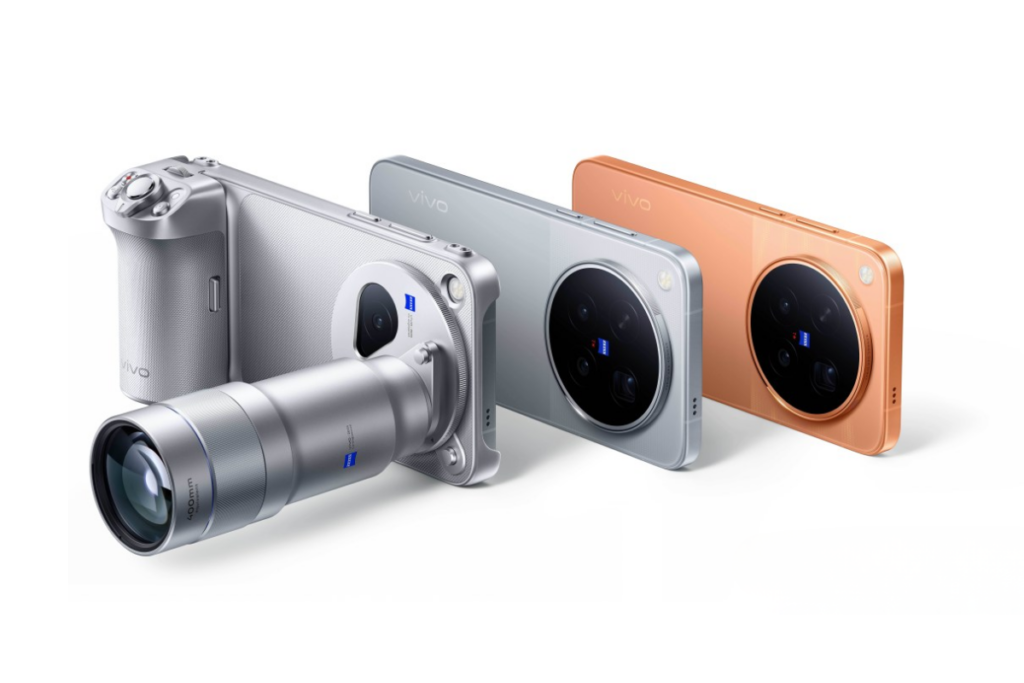
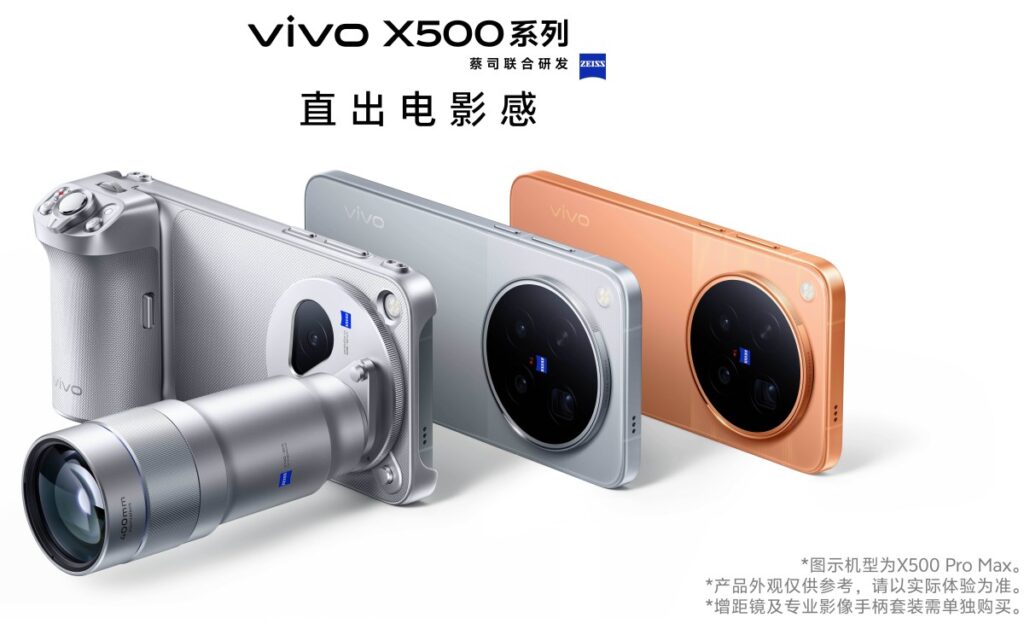
The X500 Pro Max retains the large circular camera module on the back, featuring four sensors. The official image confirms the phone will have hardware compatibility for camera grips and optical lens attachments. It will be available in four color options as shown below.
Vivo has confirmed that the X500 Pro Max will feature the same 1/1.4-inch 200MP Samsung HP0 telephoto sensor as in the X300 Ultra, with CIPA 7.0 stabilization and up to 30x zoom. The device also supports the 400mm professional teleconverter kit.
Vivo X500 Pro Max color options
The smartphone is confirmed to use a new custom Phantom 900 sensor, developed by Sony and Vivo’s Blueprint imaging team, which enables up to 17 EV of dynamic range and 3-axis gimbal stabilization. The X500 Pro Max is also confirmed to offer 4K slow-motion video recording at 240 fps, 480 fps, and 960 fps. It will also feature dedicated professional Log video hardware, enabling 4K 120fps 10-bit Log recording.
The X500 Pro Max is confirmed to feature a 2nm Dimensity chip, which is likely to be the Dimensity 9600 Pro, and a 6.85-inch 2K LTPO display with a 144Hz refresh rate and a total battery capacity of around 8000mAh.
Vivo X500 Pro
The X500 Pro will reportedly be a successor to last year’s “mini” model. It’s said to feature a 6.37-inch 1.5K OLED screen with a 144Hz refresh rate. The phone is confirmed to feature the same 2nm Dimensity chip as the Pro Max model, likely the Dimensity 9600 Pro.
Vivo X500 Pro color options
The X500 Pro is confirmed to feature a 64MP APO telephoto camera with a custom Sony LYT-610 sensor. It will use a GG 1×1 and RB 2×2 pixel structure to deliver better focusing performance. The camera will offer 85mm focal length, CIPA 7.0 stabilization, 4K 120fps slow-motion video recording and 4K 60fps HDR video output.
The Vivo X500 Pro will also use a new custom Phantom 900 sensor, and could feature a 50MP resolution. The ultrawide unit is also said to carry a 50MP resolution.
Vivo X500
The standard Vivo X500 will reportedly feature a 6.59-inch 1.5K OLED display and a 7500mAh battery with 90W wired and 40W wireless charging. The phone will be offered in four color options as shown below.
Vivo X500 color options
Recent leaks suggest the phone may not use a 2nm Dimensity 9600-series chipset but instead a 3nm Dimensity 9500-series processor. This shouldn’t be too surprising, considering the significant rise in chip prices. We reported about this back in April.
Vivo has confirmed that the X500 will feature the same camera sensor as the X300 Pro. That means it will use a 50MP 1/1.28-inch Sony LYT-828 sensor with Zeiss gimbal-level stabilization and a CIPA 5.5 professional stabilization rating.
The telephoto camera will use the same 64MP Sony LYT-610 sensor as the X500 Pro. It will also offer a CIPA 5.5 stabilization rating and support 4K 120fps slow-motion video recording. The device is confirmed to support a 200mm teleconverter.
Here’s the spec sheet based on the confirmed and leaked details we have so far:
We’ll keep posting fresh detais in our Vivo section. You can visit the page to stay updated, or simply join our Telegram channel to get instant alerts.
We use cookies on our website to give you the most relevant experience by remembering your preferences and repeat visits. By clicking “Accept”, you consent to the use of ALL the cookies.
This website uses cookies to improve your experience while you navigate through the website. Out of these, the cookies that are categorized as necessary are stored on your browser as they are essential for the working of basic functionalities of the website. We also use third-party cookies that help us analyze and understand how you use this website. These cookies will be stored in your browser only with your consent. You also have the option to opt-out of these cookies. But opting out of some of these cookies may affect your browsing experience.
Necessary cookies are absolutely essential for the website to function properly. This category only includes cookies that ensures basic functionalities and security features of the website. These cookies do not store any personal information.
Any cookies that may not be particularly necessary for the website to function and is used specifically to collect user personal data via analytics, ads, other embedded contents are termed as non-necessary cookies. It is mandatory to procure user consent prior to running these cookies on your website.