Posters that surfaced online ahead of the February 25 Unpacked event show Samsung claiming up to 31 hours of video playback on a single charge. That’s the exact same figure the company advertised for the Galaxy S25 Ultra.
While advertised playback time doesn’t technically confirm the battery capacity, it does make a larger cell unlikely. The new Snapdragon 8 Elite Gen 5 is rated for notable efficiency gains, with improvements in CPU and GPU power efficiency, better sustained SoC power savings, and stronger performance per watt for AI tasks. In theory, that means the chip should draw less power for everyday workloads compared to last year’s model.
Video playback in particular is a relatively light, steady task that doesn’t push peak performance limits. If the processor is indeed more efficient, matching last year’s 31-hour figure strongly suggests the battery capacity remains at 5,000mAh.
Charging doesn’t look dramatically different either
The posters highlight 0 to 75 percent in 30 minutes, which again mirrors last year’s Ultra. There have been whispers of a move to 60W wired charging, up from 45W on the S25 Ultra, but if the real-world time to 75 percent hasn’t changed, the difference may be more technical than practical. Thermal limits and battery longevity tuning often cap the visible gains from higher wattage. In other words, if you were expecting a major battery leap, this may not be it.
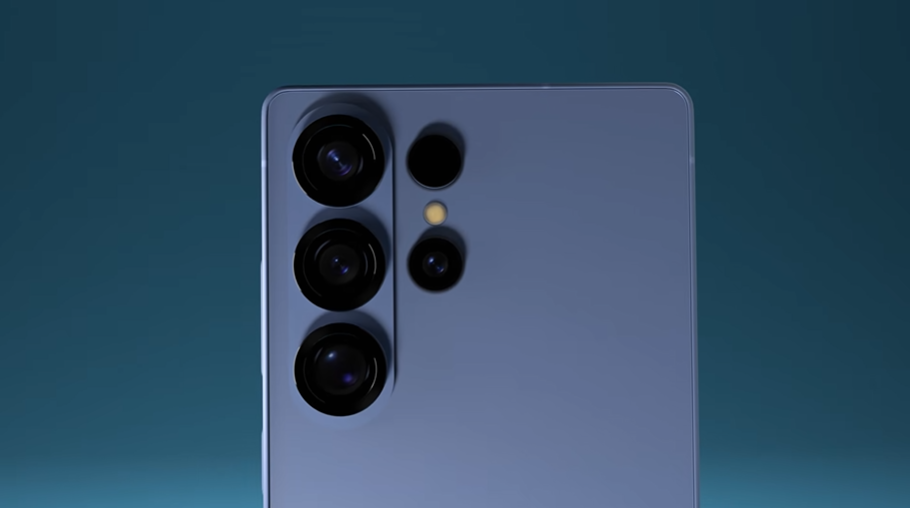
That said, the leaked materials do confirm a few other details. The rear camera setup appears largely unchanged on paper: a 200MP main sensor, 50MP ultrawide, 50MP 5x periscope telephoto, and a 10MP 3x telephoto. The front camera is listed at 12MP with autofocus.
Samsung is also promoting a new “Privacy Display” feature, which reportedly reduces screen visibility from side angles. It’s one of the few new additions being highlighted in the early marketing material.
On paper, the S26 Ultra looks more like a refinement than a dramatic overhaul. Whether optimization in One UI 8.5 makes up for the lack of bigger numbers is something we’ll find out once real-world testing begins.
Apple introduced titanium as the signature material for the iPhone 15 Pro and Pro Max in 2023. The company marketed it as a revolutionary step in design, highlighting its strength, reduced weight, and premium feel.
Two years later, Apple has replaced titanium with aluminum for the iPhone 17 Pro and Pro Max. The decision raises questions about whether titanium was ever worth the hype or just another marketing gimmick.
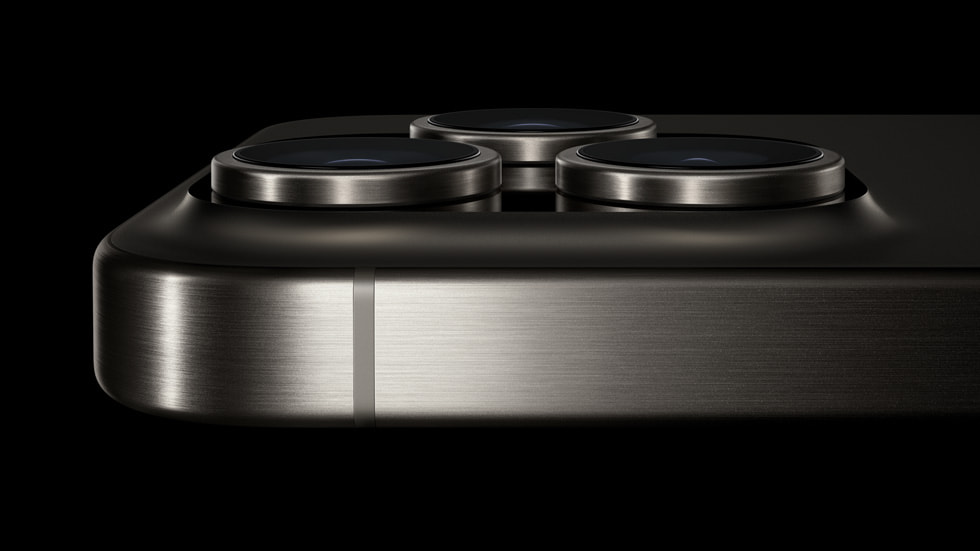
Apple chose titanium to differentiate its Pro lineup. Titanium provided a stronger and lighter alternative to stainless steel, reducing the iPhone 15 Pro’s weight by 19 grams. The material also delivered better resistance to scratches and dents, which appealed to customers who valued durability. For many, titanium’s association with high-performance industries like aerospace and luxury watches added to its allure.
Apple used Grade 5 titanium for the iPhone 15 Pro series, an alloy known for its strength and corrosion resistance. To address titanium’s poor thermal conductivity, Apple paired it with an internal aluminum mid-frame to improve heat dissipation. At the time, this dual-material approach seemed like an innovative solution that balanced premium aesthetics with functional performance.
2. The Problems That Killed Titanium
Titanium came with significant trade-offs that quickly became apparent. Its poor thermal conductivity created overheating issues during gaming, fast charging, and other demanding tasks. As Apple introduced more powerful chips like the A17 Pro, heat management became a critical challenge. This limitation undermined the performance benefits Apple aimed to deliver with its flagship devices.
Production challenges also made titanium less practical. Machining titanium required specialized tools, slower production speeds, and resulted in higher scrap rates. These factors drove up manufacturing costs. While the material itself added only $30-$40 to production, the iPhone 15 Pro’s $400 price premium over the base iPhone 15 relied heavily on titanium as a justification. The combination of high costs and limited benefits made titanium difficult to sustain as a flagship material.
3. Why Aluminum is a Better Fit for the iPhone 17 Pro
Apple’s return to aluminum for the iPhone 17 Pro addresses many of the issues titanium created. Aluminum conducts heat far better than titanium, making it a better choice for managing the heat generated by the new A19 Pro chip and the vapor chamber cooling system. This change improves thermal performance and allows Apple to include a larger battery.
Aluminum also reduces production complexity. It is easier to machine, faster to produce, and more cost-effective at scale. The material aligns better with Apple’s environmental goals, as aluminum has a smaller carbon footprint than titanium. Apple’s partnerships with low-carbon aluminum smelters and its efficient recycling processes make aluminum a sustainable choice for the company’s carbon neutrality targets.
Aluminum also enables new design possibilities. Unlike titanium, which limits anodization options, aluminum allows for a broader range of colors. The iPhone 17 Pro introduces new finishes, including dark blue and orange, which were not feasible with titanium. This change gives Apple more flexibility to appeal to users who value customization.
4. Was Titanium Ever Worth It?
Titanium provided real benefits, but they were marginal for most users. While it improved durability and reduced weight, these advantages mattered less to people who used protective cases. The higher price and the thermal challenges outweighed its benefits. Apple’s decision to abandon titanium after just two years suggests that the material was more about marketing than long-term performance or practicality.
Titanium is not disappearing entirely. Apple now uses titanium exclusively for the ultra-thin iPhone Air, where its strength is critical for maintaining structural integrity in a 5.6mm-thick device. However, for the Pro lineup, aluminum offers a more balanced combination of performance, cost, and sustainability.
5. The Verdict: Materials Matter Less Than Experience
The shift from titanium to aluminum highlights a broader reality in smartphone design. Materials matter, but user experience matters more. Battery life, thermal performance, and ecosystem integration have a greater impact on daily use than the frame material. Aluminum solves the problems that titanium created, making it the practical choice for Apple’s latest Pro models.
Titanium may have been marketed as a futuristic material, but its real-world impact was limited. Apple’s decision to replace it with aluminum reflects a focus on functionality and sustainability over flash. For the iPhone 17 Pro, aluminum is not a step backward, it is a step in the right direction.
For more daily updates, please visit our News Section.
A developer’s routine cleanup task reportedly turned into a disaster after a small mistake in AI-generated code wiped an entire drive.
The incident, first described in a Reddit post, involved code generated by ChatGPT Codex (version 5.3). The user had asked for a simple PowerShell script to remove Python pycache folders. Instead, the script ended up deleting the contents of the user’s F: drive, including project files and Docker data.
What went wrong
According to the post, the issue came down to a subtle escaping problem in the path string. The generated script used a backslash () to escape quotation marks. That approach can work in certain command-line contexts, but things get messy when PowerShell calls cmd.exe via cmd /c. In this case, the escaping didn’t behave as intended. The path variable was effectively reduced to just \, which Windows interprets as the root of the current drive.
Combined with rmdir parameters for silent, recursive deletion, the command reportedly ran without prompting for confirmation. The result: everything under the drive’s root directory was removed.
It wasn’t a complex exploit or some obscure bug, just a small mismatch in how different Windows shells handle escaping.
The episode highlights a growing trend sometimes referred to as “vibecoding”. For simple tasks, that can save time. But when commands interact directly with the file system, small errors can escalate quickly.
PowerShell and cmd.exe don’t interpret escaping the same way. In native PowerShell, the correct escape character is typically the backtick (`), not a backslash. Mixing the two environments introduces edge cases that aren’t always obvious, even to experienced users.
There’s also the broader Windows command-line reality: destructive commands like rmdir or Remove-Item -Recurse -Force don’t necessarily include built-in safety checks unless explicitly configured to prompt.
The developer reportedly managed to recover some data from backups, but much of the drive’s contents were lost.
Incidents like this don’t mean AI coding tools are inherently unsafe. They do, however, reinforce a basic rule: always review generated scripts carefully. Running commands in a sandboxed directory first, or removing force/silent flags during testing, can help avoid worst-case scenarios.
AI can speed up workflows. But when it comes to file operations, a single misplaced character can still have outsized consequences.
Choosing between the Vivo V70 Elite and iQOO Neo 10 isn’t just about specs; it’s about deciding what matters more in daily use: flagship camera polish or raw performance value. Both phones come from the same ecosystem but target very different buyers, with one focusing on a premium experience and the other pushing aggressive performance at a lower price. This comparison breaks down the real differences that actually impact gaming, photography, and long-term usability, helping buyers understand which phone truly fits their priorities.
Amazon Deals
Vivo V70 Elite is currently available with pre-sale offers, dropping from an original price of ₹55,000 to around ₹52,000, along with exchange benefits of up to ₹42,000, plus bank offers and no-cost EMI options. Meanwhile, the iQOO Neo 10 (8GB + 256GB) is listed at a discounted price of ₹36,998, down from ₹38,000, with exchange offers of up to ₹35,000, alongside additional bank discounts and no-cost EMI deals, making both phones more attractive for buyers looking for extra savings.
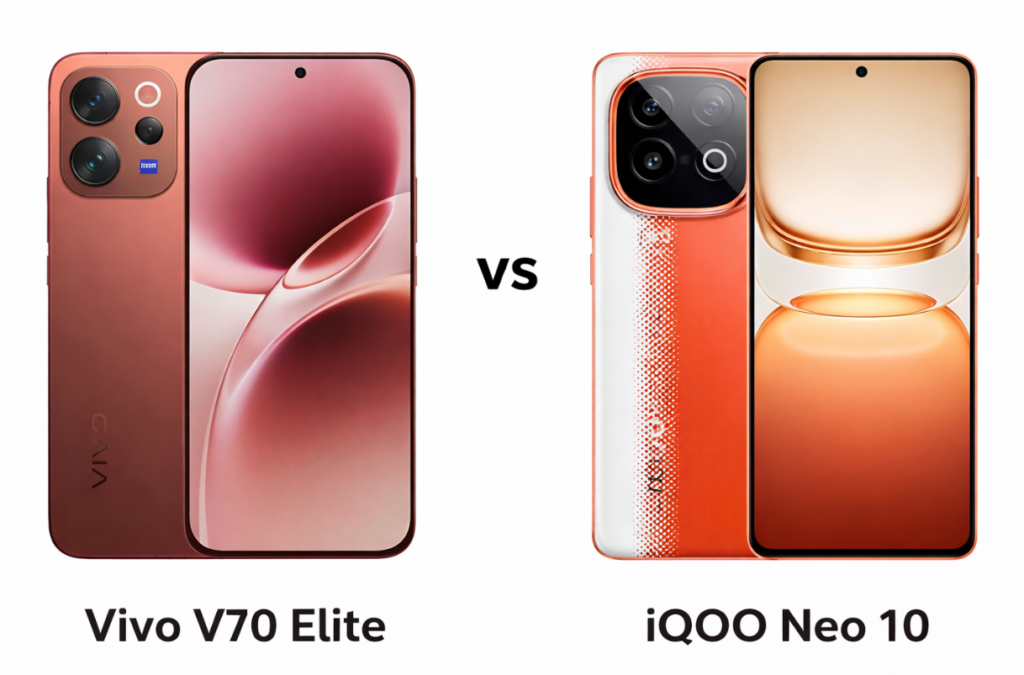
The Vivo V70 Elite focuses on a premium experience with a glass build, aluminum alloy frame, and stronger water resistance ratings, giving it a more flagship-like identity. The overall design feels refined and polished, aimed at users who value aesthetics alongside durability. The iQOO Neo 10 takes a more performance-first approach with a simpler build and practical materials, which helps keep the cost lower while still offering decent protection. The difference in construction clearly reflects the target audience; one prioritizes elegance, while the other leans toward utility and gaming-focused durability.
Display Quality
Both devices use AMOLED panels with vivid colors and HDR support, but their tuning differs. The Vivo V70 Elite emphasizes brightness and cinematic visuals, making media consumption feel richer and more premium. Meanwhile, the iQOO Neo 10 pushes higher refresh rates and advanced PWM dimming, which feels smoother for gaming and scrolling. The display experience on Vivo feels more balanced overall, while iQOO clearly targets speed and responsiveness.
Verdict
Vivo V70 Elite wins for premium display experience and build quality, while iQOO Neo 10 suits users wanting a fast, gaming-oriented screen.
2. Specifications Including Battery
Performance
The Vivo V70 Elite runs on the Snapdragon 8s Gen 3, delivering flagship-level performance that comfortably handles multitasking, camera processing, and heavy apps. The iQOO Neo 10 steps ahead with the newer Snapdragon 8s Gen 4, giving it stronger raw power and better sustained gaming performance. Everyday users may not notice a massive gap, but gamers and power users will appreciate the extra headroom. The software experience also differs, with Vivo focusing on smoother refinement and iQOO leaning toward aggressive performance tuning.
Battery and Charging
Battery capacity clearly favors the iQOO Neo 10 with a larger cell and faster 120W charging, making it more practical for long gaming sessions and quick top-ups. Vivo’s battery is still large and efficient, with 90W charging providing fast enough speeds for most users. Both include bypass charging, which is a useful feature for reducing heat during heavy use. iQOO feels more future-proof for heavy usage patterns.
Verdict
iQOO Neo 10 wins for raw performance and battery value, while Vivo V70 Elite focuses more on balanced flagship-level optimization.
3. Camera
Main and Secondary Lenses
The Vivo V70 Elite clearly targets photography enthusiasts with a triple-camera setup, including a high-quality periscope telephoto lens and Zeiss optics. This gives it stronger versatility for portraits and zoom shots, producing more flagship-style results. The iQOO Neo 10 keeps things simpler with a dual-camera system that focuses on reliability rather than flexibility. While the main sensor performs well in good lighting, the lack of a dedicated telephoto lens limits creative shooting options. Vivo’s camera system feels more complete and premium in real-world use.
Selfie Camera
Vivo again takes the lead with a higher-resolution autofocus selfie camera and Zeiss tuning, delivering sharper portraits and more detailed video calls. The iQOO Neo 10’s selfie camera is capable but more standard, aimed at casual usage rather than content creation. The difference becomes noticeable when shooting videos or selfies in varied lighting conditions.
Verdict
Vivo V70 Elite wins comfortably for cameras, offering more versatility and a stronger flagship photography experience.
4. Pricing
Vivo V70 Elite is priced around ₹55,000, placing it in the premium flagship segment where users expect strong design, cameras, and polished software. The iQOO Neo 10 comes in at approximately ₹32,000, making it significantly more affordable while still offering high-end performance hardware. This price gap changes the comparison entirely. Vivo sells a premium experience, while iQOO focuses on delivering maximum specifications per rupee. For buyers prioritizing gaming and speed, the iQOO price feels extremely aggressive and difficult to ignore.
Is the Price Justified?
Vivo’s pricing is justified mainly by its camera hardware, build quality, and overall flagship polish. iQOO, however, offers outstanding value for performance-focused users who do not need advanced camera versatility. One feels like a lifestyle flagship, while the other feels like a performance bargain.
Verdict
iQOO Neo 10 wins on value for money, while Vivo V70 Elite justifies its higher price through premium features.
Disclaimer: Prices are approximate and may vary based on country, region, and applicable taxes.
5. Conclusion
Vivo V70 Elite stands out with Zeiss-powered cameras, a premium build, stronger water resistance, and a more photography-focused approach. It targets users who want a balanced flagship experience that feels refined in everyday use. The iQOO Neo 10 focuses on pure performance, offering a newer chipset, faster charging, and a large battery that makes it ideal for gaming and heavy multitasking. Both phones include modern extras like stereo speakers, bypass charging, and AMOLED displays, but their priorities are clearly different.
Final Verdict
Overall, the iQOO Neo 10 is the better choice for most users because it offers stronger performance, a larger battery, faster charging, and significantly better value for money at a much lower price. It feels like a smarter all-around purchase for gaming, heavy usage, and long-term performance. The Vivo V70 Elite still stands out with its premium build and superior camera system, making it a better option only for users who prioritize photography and flagship styling over raw performance and value.
Finding great wireless earbuds under $100 is easier than ever. Brands are now delivering premium features like active noise cancellation, Hi-Res audio, and long battery life at prices that won’t break the bank.
Whether you’re looking for crisp sound, clear calls, or long-lasting performance, these earbuds offer excellent value. Here’s a roundup of the best wireless earbuds you can buy for under $100.
The EarFun Air Pro 4+ delivers a flagship-like experience at an affordable price. It uses a dual-driver system with a FeatherBA balanced armature and a 10mm dynamic driver to produce strong bass and clear treble. The QuietSmart 3.0 ANC reduces noise by up to 50dB, ensuring a distraction-free listening experience.
These earbuds include support for LDAC and Qualcomm Snapdragon Sound, enabling high-quality, low-latency audio. The AI-powered real-time translation and Nano Side-Fitted Acoustic Architecture (NSAA) enhance functionality and sound clarity. With 54 hours of battery life and IP55 water resistance, the EarFun Air Pro 4+ stands out as one of the best options under $100.
Please Note: When you buy something using the links in our articles, we may earn a small commission at no cost to you.
2. OnePlus Buds 4
The OnePlus Buds 4 deliver balanced sound and premium features. Its dual-driver system combines an 11mm woofer and a 6mm tweeter, delivering deep bass and vibrant mids. These earbuds are Hi-Res Audio certified and support LHDC 5.0, ensuring high-quality sound.
The earbuds feature adaptive noise cancellation that blocks up to 55dB of noise. OnePlus includes a gaming mode with 47ms latency, making these a strong pick for gamers. With 30 hours of total playtime and IP55 water resistance, the OnePlus Buds 4 is a versatile and reliable choice.
Please Note: When you buy something using the links in our articles, we may earn a small commission at no cost to you.
3. Baseus Inspire XP1
The Baseus Inspire XP1 (full review) offers advanced sound and a sturdy build. It uses Sound by Bose and Dolby Audio technology to create a rich, immersive listening experience. Adaptive noise cancellation supports up to 55dB noise reduction, while the ergonomic design provides a comfortable fit for extended use.
These earbuds feature a six-microphone array that ensures clear calls in noisy environments. The XP1 provides 45 hours of battery life and Bluetooth 6.1 for stable, low-latency connections. Frequent discounts make the Baseus Inspire XP1 an excellent deal for users who want premium features at an affordable price.
Please Note: When you buy something using the links in our articles, we may earn a small commission at no cost to you.
4. Sony WF-C710N
The Sony WF-C710N offers impressive noise cancellation and dependable performance. Equipped with dual noise sensors, it effectively blocks background noise, while its 5mm driver and DSEE technology restore detail to compressed audio files for enhanced sound quality.
The earbuds offer up to 30 hours of battery life, with 8.5 hours on the earbuds and 21.5 hours from the charging case. Sony includes IPX4 water resistance, making these earbuds suitable for workouts or light rain. Multipoint connectivity and the comfortable design make the WF-C710N a dependable choice for everyday use.
Please Note: When you buy something using the links in our articles, we may earn a small commission at no cost to you.
5. Anker Soundcore Liberty 5
The Soundcore Liberty 5 offers exceptional sound quality and features at an affordable price. It features Dolby Audio for an immersive listening experience, while Adaptive ANC 3.0 dynamically adjusts noise cancellation every 0.3 seconds. Its wool-paper diaphragm drivers ensure crisp highs and rich, deep bass.
The Liberty 5 offers up to 12 hours of playtime on a single charge and extends to 48 hours with the charging case. It also features fast charging and a quick 10-minute charge gives you five hours of listening time. With IP55 water resistance and personalized sound settings through the HearID 4.0 feature, these earbuds are perfect for users seeking durability, long battery life, and excellent sound quality.
Please Note: When you buy something using the links in our articles, we may earn a small commission at no cost to you.
6. Soundpeats H3
The Soundpeats H3 combines a premium design with excellent sound quality. It uses a triple-driver system, including a 12mm dynamic driver and two balanced armatures, to deliver studio-grade sound with deep lows, clear mids, and crisp highs.
The earbuds support LDAC, aptX Lossless, and Hi-Res Wireless Audio for high-quality streaming. The PeatsAudio app offers EQ customization, while AI ANC with four modes and six microphones improves noise reduction and call clarity. With 37 hours of battery life and IPX5 water resistance, the H3 is a top-tier option for under $100 during sales.
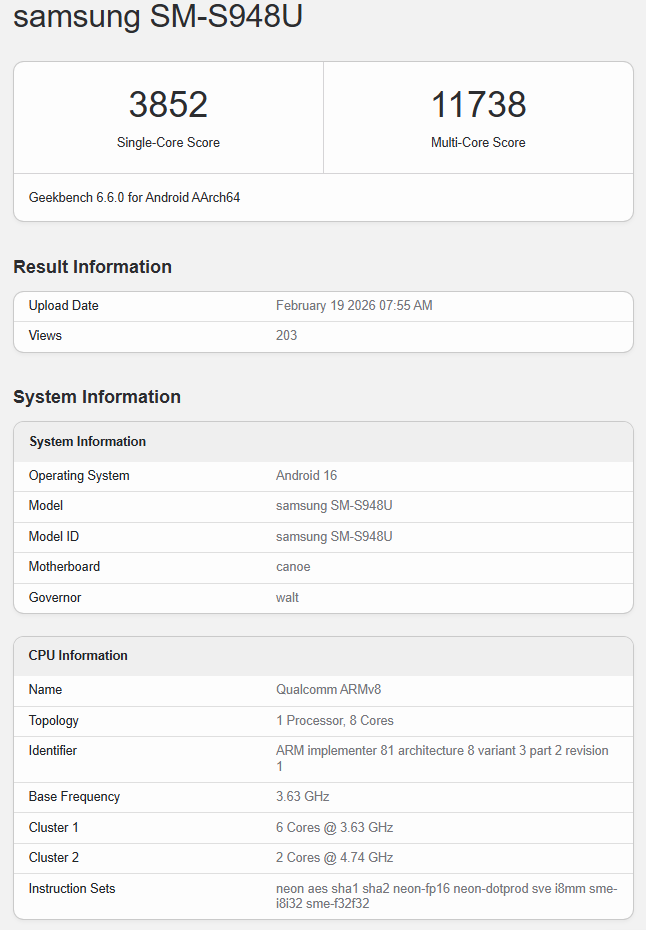
With just days to go before Samsung’s next Unpacked event, a new benchmark result for the Galaxy S26 Ultra has surfaced online, and it’s impressive.
The recent Geekbench 6 listing shows the S26 Ultra posting a single-core score of 3,852 and a multi-core score of 11,738. Samsung typically tunes its custom Snapdragon chips slightly higher than the standard versions found in other Android phones, and that “for Galaxy” tuning appears to be paying off.
A noticeable multi-core jump
The most interesting part of the leak isn’t just the raw number, it’s the gap. If we compare these results to early scores attributed to the Apple iPhone 17 Pro Max, powered by the A19 Pro, the unreleased S26 Ultra appears to have pulled ahead in multi-core performance. The iPhone’s leaked numbers hover around the high 9,000 range in multi-core testing, while the S26 Ultra is approaching 11,700. That’s a sizeable margin — roughly 19–20% in synthetic multi-core tests.
Single-core performance remains much closer, which isn’t surprising. Apple’s chips have traditionally been strong in single-threaded workloads, and the two devices are nearly neck-and-neck there. In theory, those gains should benefit multi-threaded workloads such as rendering, exporting, and intensive gaming.
Big gains over the S25 Ultra?
Compared to the Samsung Galaxy S25 Ultra, the jump is significant. The predecessor typically scored in the low 3,000s for single-core and around 9,700–10,000 in multi-core. That means the S26 Ultra could be delivering over 30% gains in multi-core performance year over year.
Of course, benchmarks only tell part of the story. Real-world performance depends on thermal management, sustained performance, GPU capability, and software optimization. A high peak score doesn’t always mean improved performance in every task.
Samsung is set to unveil the S26 lineup at its February 25 Galaxy Unpacked event, where we’ll likely get confirmation of final specs, regional chipset details, and pricing. The Ultra model is also rumored to include slightly faster wired charging, proper Qi2 support for easier alignment on a wireless charging pad, and new privacy-focused display tech, alongside incremental camera upgrades.
For now, these Geekbench scores add fuel to the pre-launch hype. We won’t have to wait long to see how it holds up outside of synthetic tests.
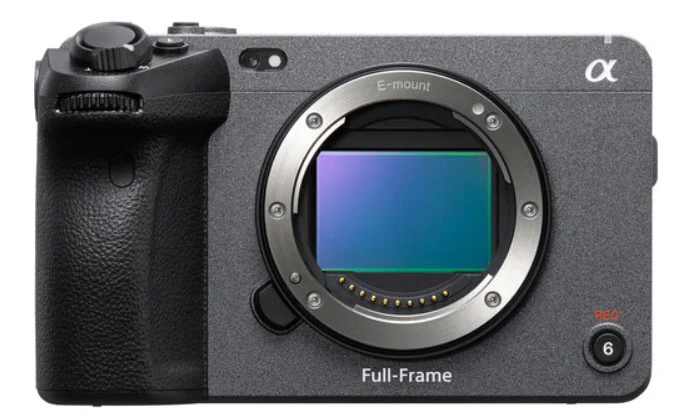
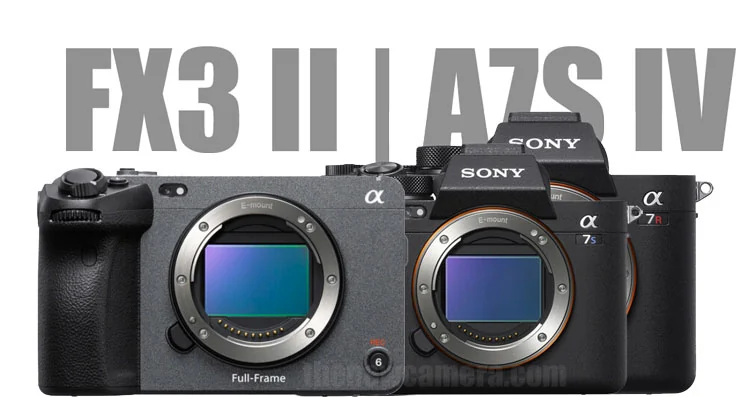
According to a report from TheNewCamera, Sony is testing a 16-megapixel partially stacked CMOS sensor designed with video performance in mind. While this is still at the prototype stage, the rumored specifications suggest Sony is prioritizing speed and low-light performance over sheer resolution, a move that would make sense for successors to cameras like the Sony FX3 and the long-awaited Sony A7S III refresh.
What “partially stacked” actually means
Sony has used fully stacked sensors in high-end models like the Sony A1, which offer extremely fast readout speeds but come at a higher cost. A partially stacked design sits somewhere in between.
In simple terms, some of the circuitry, including analog-to-digital components, is placed beneath the photodiodes. That improves readout speed compared to traditional backside-illuminated sensors, without the full expense of a fully stacked architecture.
The result should be faster video performance with fewer rolling shutter artifacts, but at a more realistic price point.
The most eye-catching rumor is support for oversampling from nearly 5K down to 4K, combined with readout speeds reportedly capable of up to 240 frames per second.
If accurate, that could mean 4K 240fps recording in certain modes, a significant jump from the 4K 60fps limits on the current FX3. For filmmakers and hybrid shooters, that kind of frame rate opens up new slow-motion possibilities without relying on external recorders or workarounds.
The sensor is also said to feature large 7.2μm pixels, which would naturally benefit low-light performance. That’s in line with Sony’s A7S philosophy: fewer megapixels, but better high-ISO results and cleaner video output.
Other rumored features include full-pixel dual-phase detection autofocus, potentially operating at high frame rates, along with DCG-HDR support for improved dynamic range. Active stabilization with minimal crop is also mentioned.
When could we see it?
Timeline speculation points to a possible cinema-line update in Q2 2026, with a potential A7S IV arriving later in the year or slipping into early 2027. Pricing rumors place a new FX3 II in the $3,500–$4,000 range, with the A7S IV potentially targeting around $3,000.
For now, it’s one to watch, especially for shooters who prioritize low-light performance and slow motion over megapixel counts.
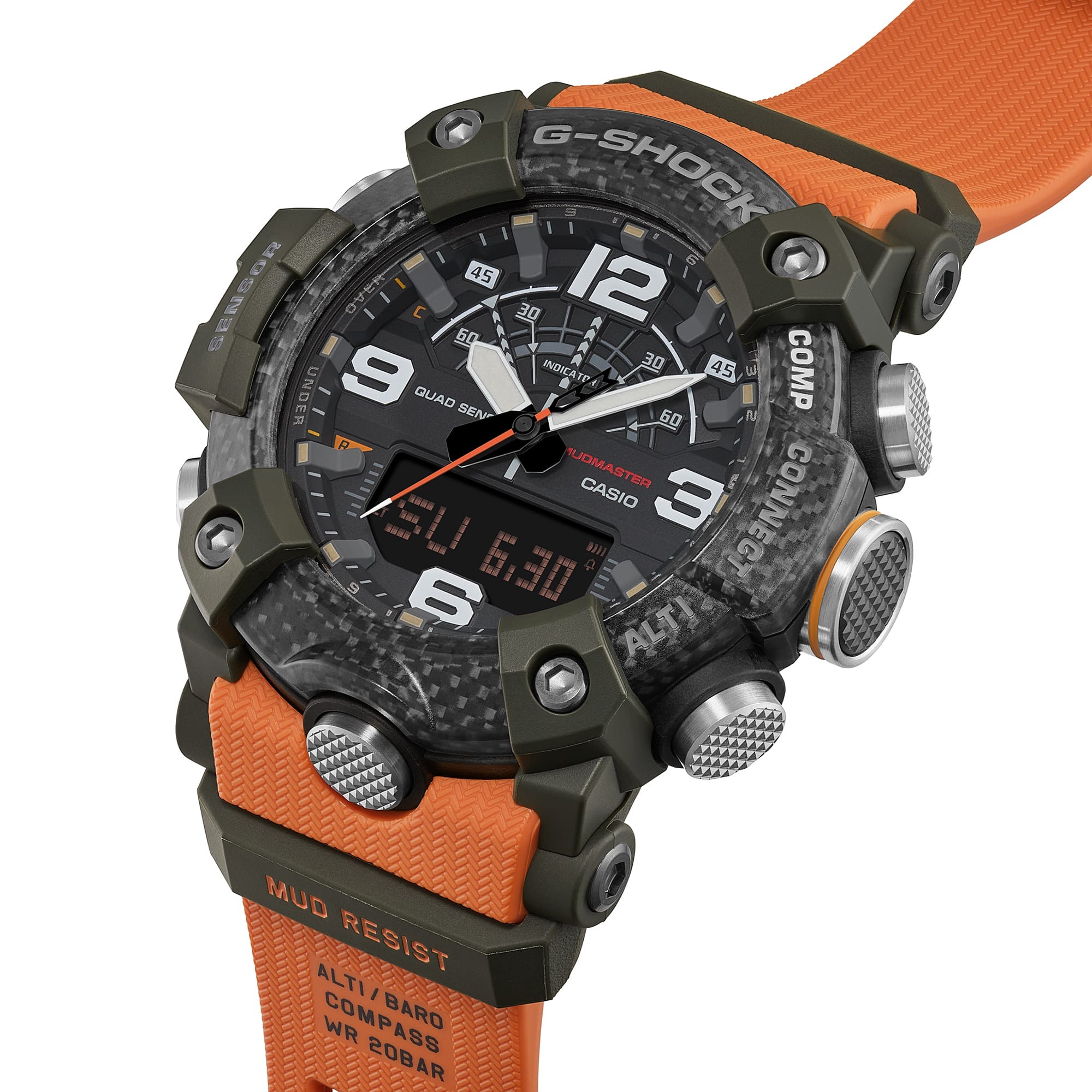
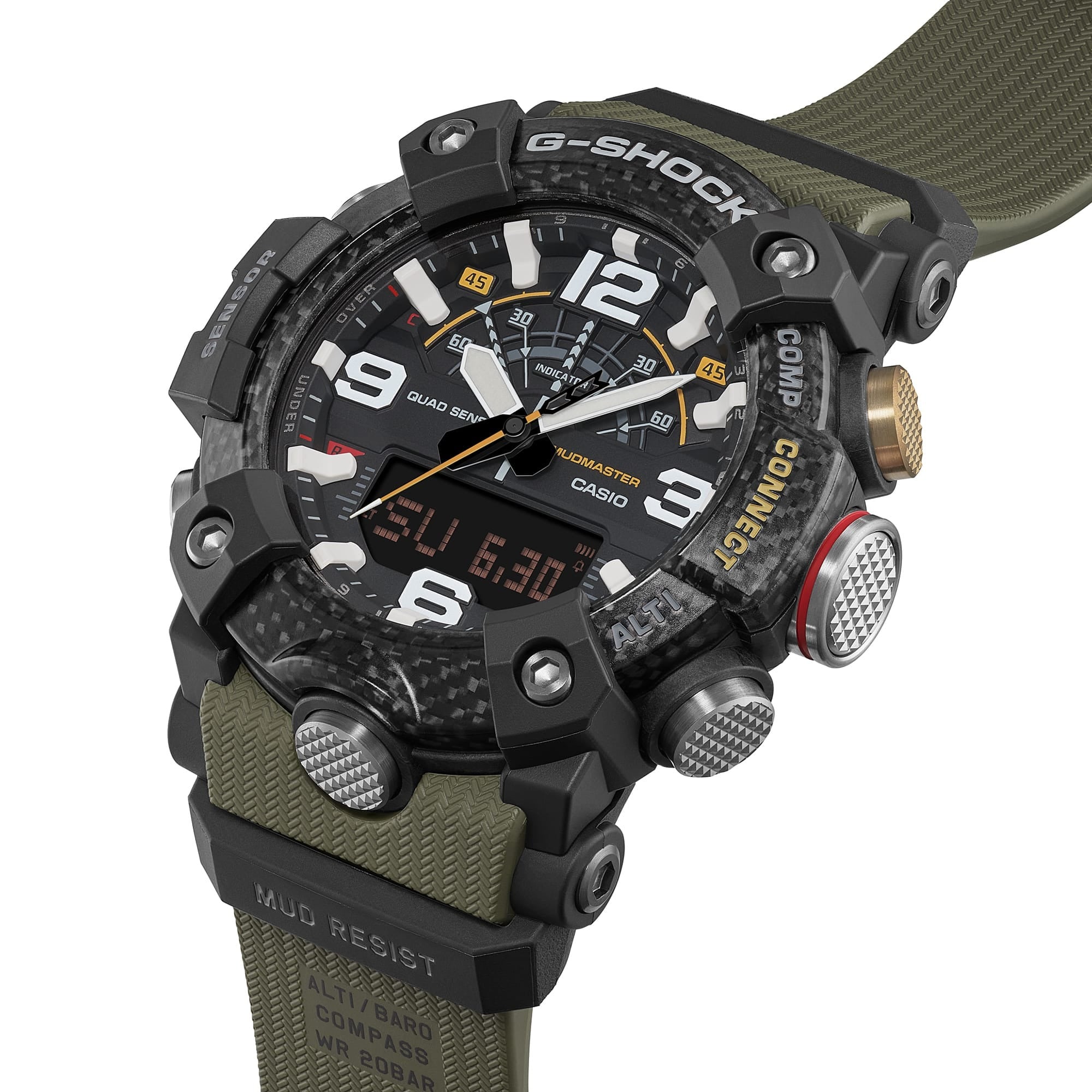
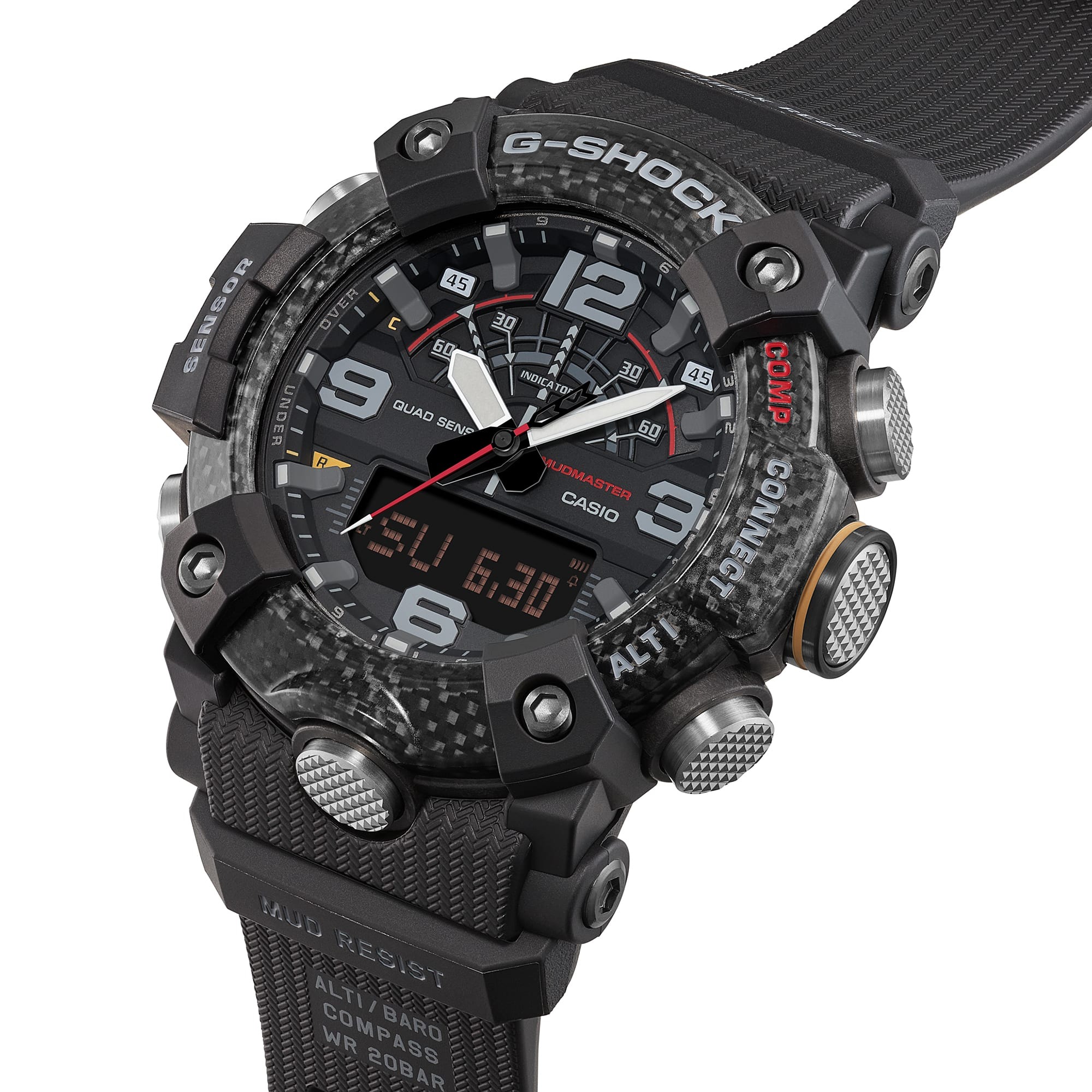
Casio has launched three G-Shock Master of G Mudmaster GG-B100X watches in the UK. The models are the GG-B100X-1A, GG-B100X-1A3, and GG-B100X-1A9. These watches are part of a five-version GG-B100X series that was announced in February 2025.
From left to right: Casio G-Shock GG-B100X-1A9, GG-B100X-1A3 and GG-B100X-1A
Design and Durability
The Mudmaster series is made for professionals working in extreme conditions, including rescue teams and rangers. The watches have a carbon fiber-reinforced resin case that protects against impact while staying lightweight. The bezel uses three layers of fine resin with carbon fiber inserts. Sealed buttons and mud filters keep out dust and mud. The case back is stainless steel, and the back cover uses impact-resistant glass-fiber-reinforced resin.
The design takes inspiration from jerrycans mounted on off-road vehicles. Key components of the case and strap use bio-based resin made from renewable organic resources.
Technical Features
The watches include a quad sensor system with a digital compass, altimeter/barometer, thermometer, and pedometer. This setup monitors environmental changes and tracks activity patterns during land missions.
Bluetooth connects the watch to smartphones for automatic time setting through the G-SHOCK app. The Mission Log function automatically records altitude data from the watch and route data from your smartphone. The Super Illuminator feature provides automatic double LED lighting for visibility in the dark.
The GG-B100XM-1A variant has a silver-tone stainless steel bezel with a brushed finish that resists scratches and reduces light reflections.
Pricing and Availability
The three models are available now at Casio’s UK online store for £349 each. In EU countries, the GG-B100X-1A and GG-B100X-1A3 will retail between €399 and €419. Two other models, the GG-B100XM-1A and GG-B100XMB-1A, are listed as coming soon in the UK.
For more daily updates, please visit our News Section.
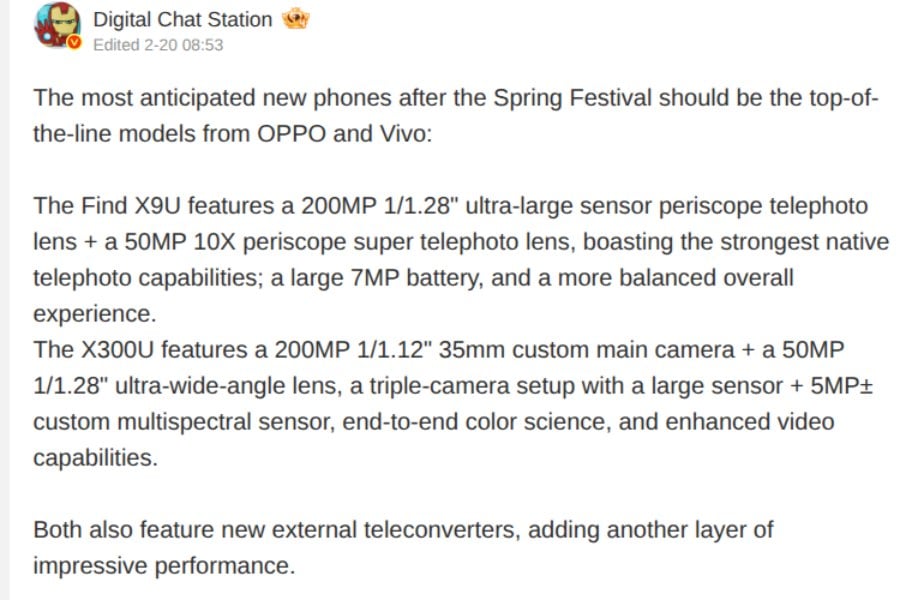
A recent leak from a well-known tipster, Digital Chat Station, pits the Oppo Find X9 Ultra and the Vivo X300 Ultra well ahead of their launches. As expected, both are camera-first phones, and the leak focuses almost entirely on that.
Starting with Oppo, the Find X9 Ultra reportedly will have strong telephoto performance. According to the leak, it will feature a 200-megapixel periscope telephoto camera with a large 1/1.28-inch sensor. That would be paired with a 50-megapixel 10x periscope telephoto lens.
Apart from this, the phone is expected to include a 200MP main and a 50MP ultrawide camera. The leak also points to a sizable 7,000mAh battery.
Meanwhile, Vivo X300 Ultra will feature a triple rear camera setup with a 200MP 200-megapixel custom 35mm main camera with a larger 1/1.12-inch sensor, alongside a 50-megapixel ultra-wide camera with a 1/1.28-inch sensor.
Its telephoto is expected to be a 200MP unit allowing optical zoom from around 35mm up to 85mm. It will also have a custom multispectral sensor in the 5-megapixel range.
Per the leak, Vivo is also putting effort into end-to-end color science and improved video capabilities. Last but not least, both devices are rumored to support new external teleconverters.
Vivo X300 Pro
For now, though, these details remain unconfirmed. Neither Oppo nor Vivo has officially shared specifications. Both phones are expected to launch in China sometime after the Chinese New Year.
We do hope both Oppo and Vivo plan a wider global release for these upcoming phones. That is because neither the Oppo Find X8 Ultra nor the Vivo X200 Ultra made it to the global market.
For more daily updates, please visit our News Section.
Gigabyte has launched the MO27Q28GR gaming monitor in the US after showing it at CES 2026 last month. It uses LG Display’s 280Hz Tandem OLED panel with 4th Gen WOLED technology and Primary RGB Tandem OLED architecture. The panel reaches up to 1,500 nits peak brightness in HDR, covers 99.5% DCI-P3 and 84% BT.2020 color gamut, and reduces power consumption by about 20% compared to third-generation WOLED displays.
The monitor has a 27-inch QHD OLED panel with a 2560 × 1440 resolution, 280Hz refresh rate, and 0.03ms GTG response time. It supports DisplayHDR True Black 500, Delta E < 2 color accuracy, 1.07 billion colors, and G-Sync compatibility for tear-free gameplay. Gigabyte also includes OLED VRR anti-flicker technology to reduce flickering in variable refresh rate mode.
A key difference from the 2025 MO27Q28G model is the new RealBlack Glossy coating. The earlier version used a matte finish, while this model offers a glossy panel with a zero-haze optical layer to maintain deeper blacks and better clarity. An advanced anti-reflective coating is also included to suppress reflections. Glossy panels generally deliver more vibrant colors and stronger contrast, especially in brighter environments.
The monitor features a four-sided borderless design for multi-monitor setups. Gaming tools include Tactical Switch 2.0 for instant resolution switching, Aim Stabilizer Sync Ultra Clear motion reduction with black frame insertion, and Game Assist features such as crosshairs, timers, picture-in-picture, and custom HDR modes.
Gigabyte includes AI OLED Care with adjustable settings that run in the background to reduce burn-in risk, along with cooling support. The monitor comes with a three-year warranty that also covers panel burn-in.
Eye comfort features include Eyesafe 3.0 certification, low blue light, flicker-free technology, and glare reduction. Ergonomic adjustments include 130mm height adjustment, tilt from −5° to +21°, swivel ±15°, and 90° pivot.
Connectivity options include two HDMI 2.1 ports, one DisplayPort 1.4, USB-C with DisplayPort Alt mode and up to 18W power delivery with dynamic 45W support, USB Type-B upstream, USB Type-A ports, and a headphone jack. A built-in KVM switch allows control of multiple devices with one keyboard and mouse.
The Gigabyte MO27Q28GR is priced at $599.99 in the US, the same as the matte version.
For more daily updates, please visit ourNews Section.
Huawei has officially launched two new fitness bands in the Philippines: the Huawei Band 11 and the Huawei Band 11 Pro. The pair looks nearly identical on paper, sharing most of their core features, but they differ slightly in materials, size, and price.
Huawei Band 11 and Band 11 Pro Specifications
Both the Band 11 and Band 11 Pro come with a 1.62-inch AMOLED display with a 286 × 482 resolution and 347 PPI pixel density. The display supports full touchscreen controls and is paired with a physical side button for navigation.
Huawei is positioning both devices as lightweight, everyday wearables. The standard Band 11 offers two case options: aluminium alloy or durable polymer. The Pro model, meanwhile, uses an aluminium alloy case by default.
Huawei Band 11 Pro
The difference slightly affects weight. The Band 11 weighs 17 grams with the aluminium case or 16 grams with the polymer case, while the Pro comes in at 18 grams without the strap. In terms of size, the Pro is marginally taller at 43.5 mm compared to 42.6 mm on the regular version.
Both models use a fluoroelastomer strap and carry a 5 ATM water resistance rating, meaning they should handle swimming and everyday water exposure without issue. Inside, Huawei includes a 9-axis IMU sensor setup, which combines an accelerometer, gyroscope, and magnetometer. There’s also an optical heart rate sensor and an ambient light sensor.
Connectivity is handled via Bluetooth 6.0 with BLE, and the bands are compatible with devices running Android 9.0 or later and iOS 13.0 or later.
Each band packs a 300mAh battery that Huawei says can last up to 14 days under light usage, around 8 days with typical use, or up to 3 days if the always-on display is enabled.
Pricing and Availability
Pricing is where the two bands have a clear difference. The Huawei Band 11 starts at PHP 2,399, while the Huawei Band 11 Pro is priced at PHP 4,499 through Huawei’s official online store in the Philippines.
Color options also differ slightly. The Band 11 is available in Beige, Green, White, Black, and Purple (for the polymer version), with Black also offered in polymer. The Pro model comes in Green, Blue, and Black.
For more daily updates, please visit our News Section.
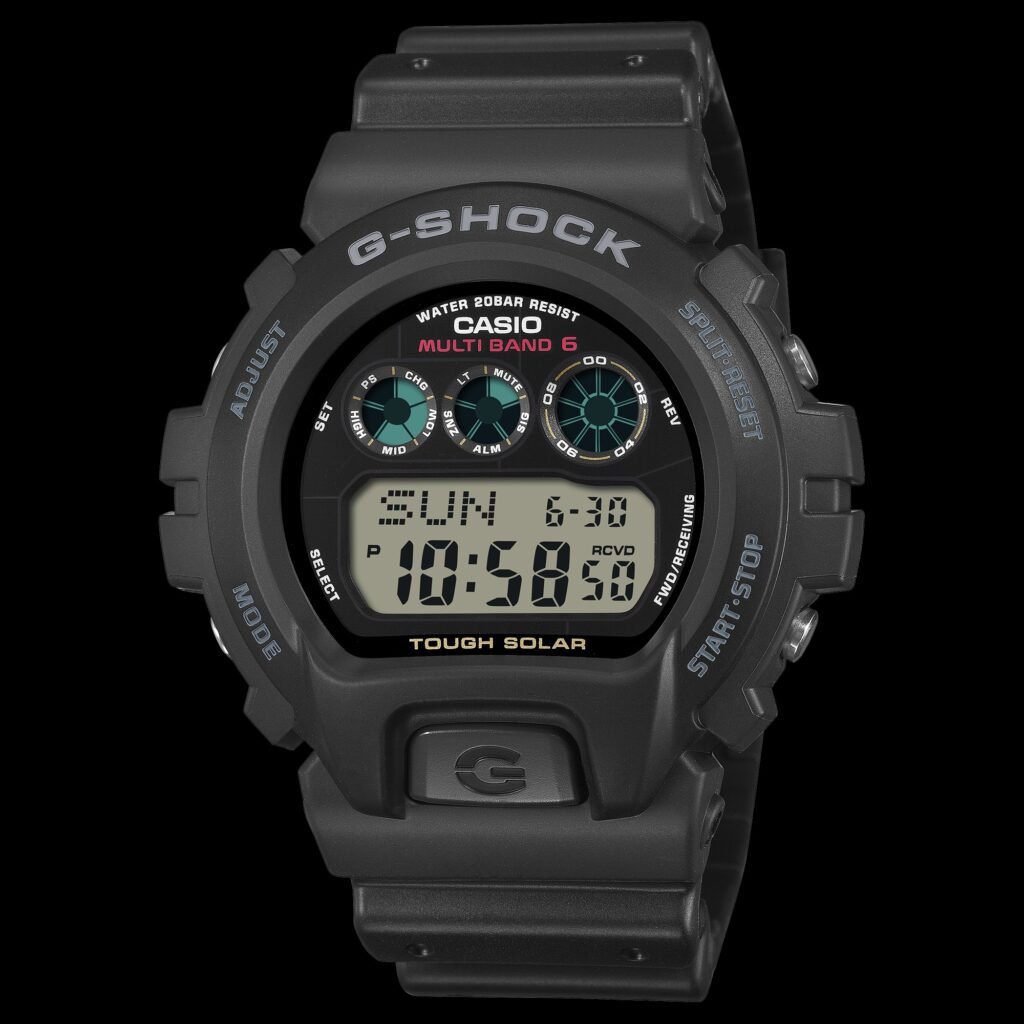
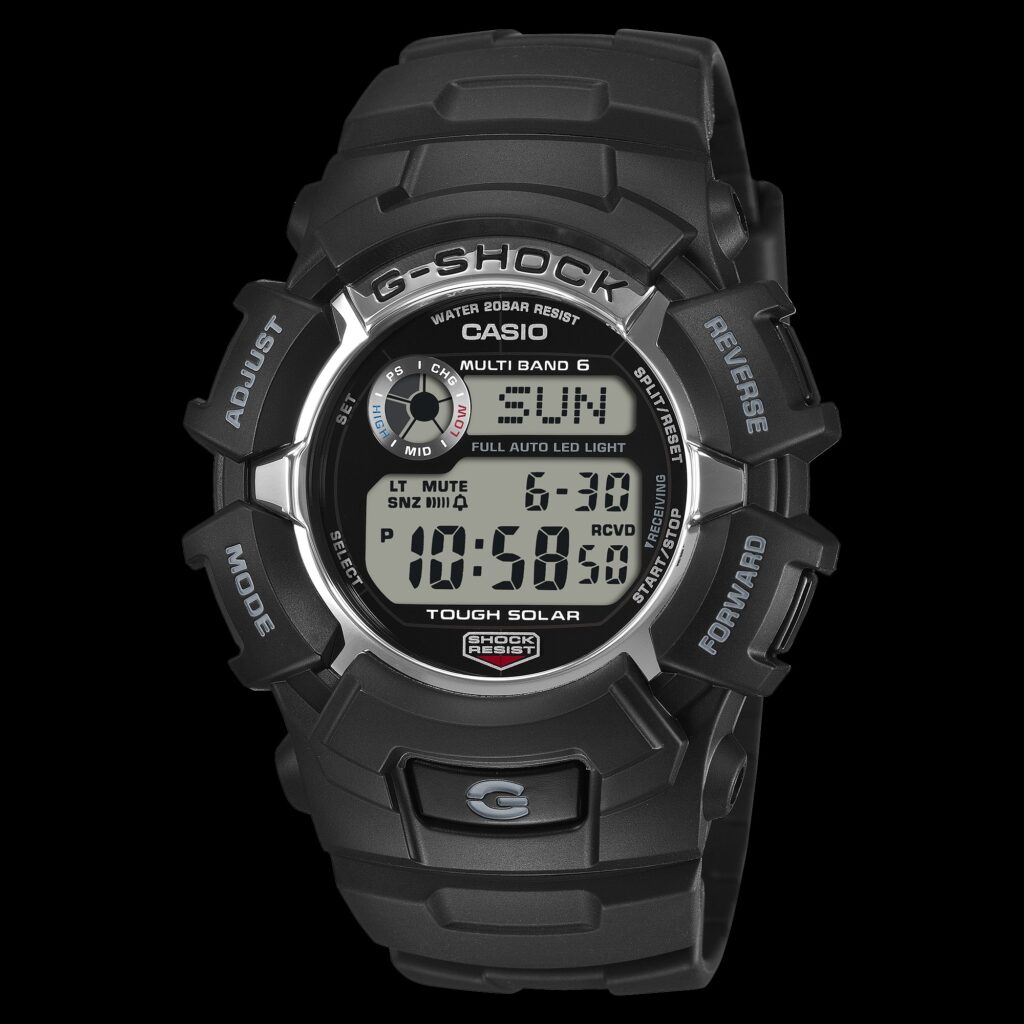
Casio has launched three new G-Shock models in the US. The GW2310U-1, GW6900U-1, and GX56UBB-1 offer upgraded features while maintaining the toughness and reliability that G-Shock is known for. These models debuted in Japanese and European markets earlier this year and are now available to US customers.
GX56UBB-1
The GX56UBB-1 delivers a bold, all-black design with a rugged build. Casio designed the watch to withstand shocks and impacts from all directions. The matte finish highlights the unique contours of the case, while the high-brightness LED backlight ensures visibility in dark conditions. The watch is powered by Tough Solar technology, which recharges using both natural and artificial light. Casio has priced it at $165.
GW6900U-1
The GW6900U-1 updates the popular DW-6900 with modern features. Casio added Multiband 6 technology, which automatically calibrates the time using radio signals from six global stations. This ensures precise timekeeping no matter where you are. The watch is powered by Tough Solar and includes a high-brightness LED backlight for easy readability. Casio has kept the simple, versatile design of the original, making it suitable for everyday wear. The GW6900U-1 costs $155.
GW2310U-1
The GW2310U-1 provides reliable performance in a compact, lightweight design. Casio kept the symmetrical look of the original G-2300 while adding Multiband 6 for automatic time calibration. The watch uses Tough Solar technology for power and features a durable resin and stainless steel construction for long-lasting reliability. It weighs only 64 grams, making it a comfortable option for everyday use. Casio has priced this model at $155.
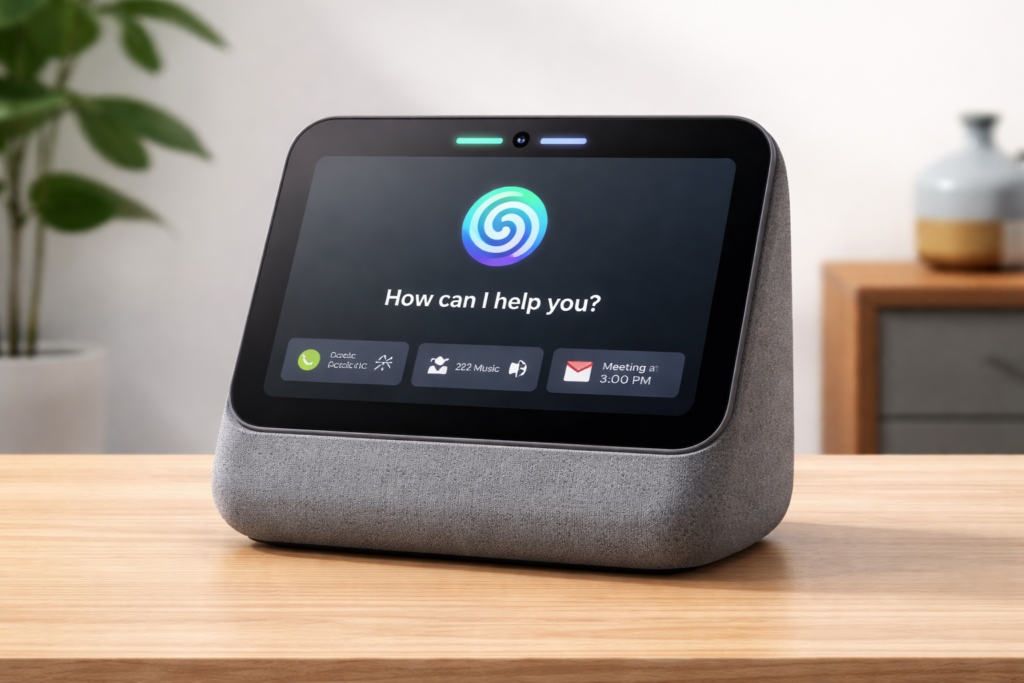
It might not be a wearable device after all, as OpenAI is reportedly working on its first hardware product, a smart speaker powered by ChatGPT. According to The Information (via Engadget), the device will include advanced features like a built-in camera for facial recognition and object identification. OpenAI aims to position the speaker as a more interactive and intelligent alternative to existing products like Amazon Echo and Google Home.
AI-Generated Concept
The smart speaker could cost between $200 and $300 and is expected to launch in early 2027. The device will reportedly use its camera to recognize objects nearby, scan faces with Face ID-like authentication, and even listen to conversations in its surroundings.
The speaker will try to assist users by nudging them toward actions that align with their goals. For example, it could suggest going to bed early if a user has a major event the next day.
OpenAI hired former Apple designer Jony Ive to lead the hardware design. Ive’s design firm, io Products, was acquired by OpenAI in 2025 for $6.5 billion. Over 200 employees are currently working on OpenAI’s hardware division, indicating the company’s serious commitment to entering the consumer tech market.
Privacy concerns have already become a major talking point, as some of you might already feel while reading this article. Yes, the always-on camera and microphone could raise serious questions about how OpenAI stores and processes user data.
Some of you might also feel uncomfortable being watched all the time through a camera, especially in private spaces like in living rooms. The fact that the device is designed to actively track its surroundings only amplifies these concerns.
In addition to the smart speaker, OpenAI is working on other AI-powered devices, including smart glasses and a smart lamp. Reports suggest the smart glasses may not be ready until 2028, while the smart lamp’s production status remains unclear.
As OpenAI is facing a competitive market and might actually go bankrupt in 2027, according to many reports, the company is planning to diversify its product strategy and eventually launch hardware products powered by ChatGPT. This diversification could help stabilize the company in the long run, but it won’t be easy.
Established players like Amazon, Google, and Apple already have proven smart speaker products in the market, and OpenAI will need to overcome significant challenges, including ChatGPT’s tendency to generate inaccurate or biased responses, to convince consumers to embrace its new devices.
For more daily updates, please visit our News Section.
Google has introduced Gemini 3.1 Pro, the latest version of its advanced AI model. The update delivers significant improvements in reasoning and problem-solving, making it one of the most powerful AI systems available today. The model is now rolling out in preview for developers, enterprises, and consumers, with wider availability expected soon.
Gemini 3.1 Pro focuses on handling complex, multi-step tasks that require advanced reasoning. The model can build interactive experiences, translate creative ideas into functional code, and connect complex APIs with user-friendly interfaces.
It can generate immersive projects such as 3D simulations with real-time interaction, create live data dashboards like ISS orbit visualizations, and turn literary themes into modern web designs.
The model also generates animated SVGs directly from text prompts. These animations are created as code rather than video files, which preserves image quality at any scale while keeping file sizes smaller.
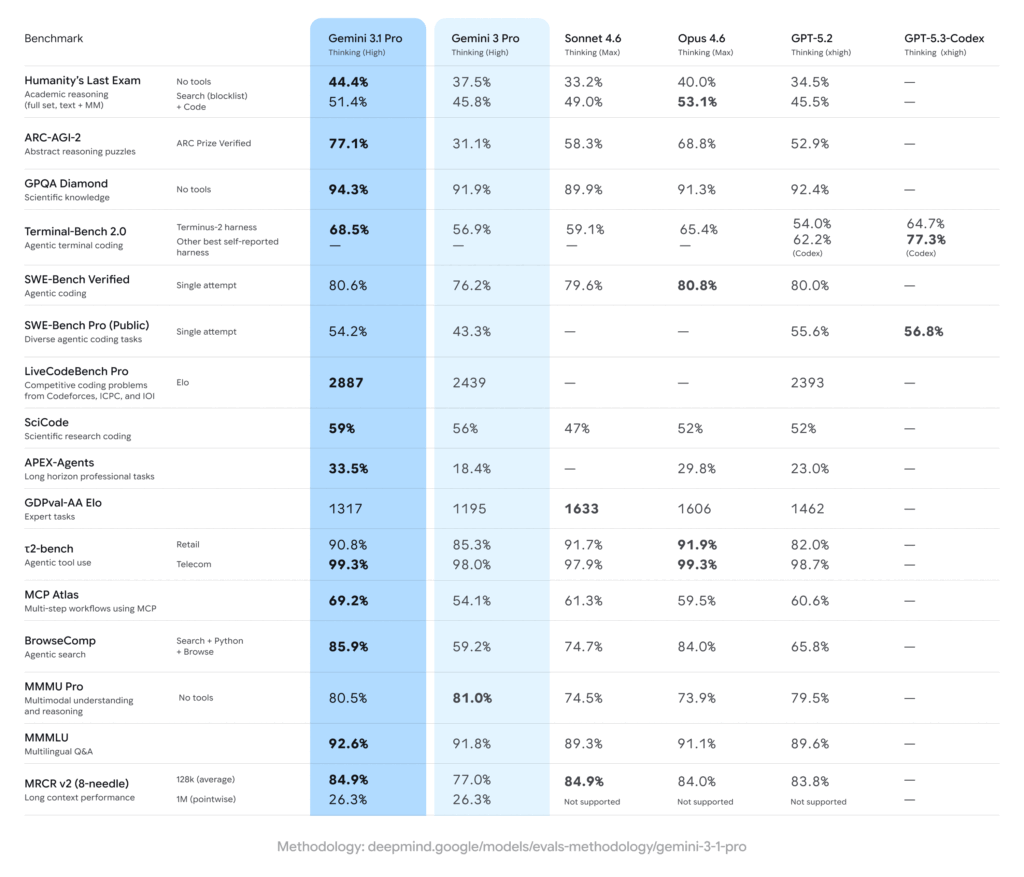
In terms of performance, Gemini 3.1 Pro achieved a score of 77.1% on the ARC-AGI-2 benchmark, which tests abstract reasoning. This result more than doubles the score of its predecessor, Gemini 3 Pro, and outperforms competitors like GPT-5.2 (52.9%) and Opus 4.6 (68.8%). The model also posted strong results on GPQA Diamond, SWE Bench Verified, and BrowseComp, which evaluate scientific reasoning, coding ability, and search-related tasks.
Google is making Gemini 3.1 Pro available through several platforms. Developers can access it via Google AI Studio, Gemini CLI, and Android Studio. Enterprises can use it through Vertex AI and Gemini Enterprise. Consumers can try it on the Gemini app and NotebookLM, with Pro and Ultra subscribers receiving higher usage limits.
Xiaomi is steadily expanding its presence in Europe’s home appliance market, and its latest move brings a connected washer-dryer combo to the UK.
The Xiaomi Mijia Front Load Washer Dryer Pro 9kg is now available for £599. The washing machine has been rolling out across parts of Europe since late last year, and it’s already been spotted in markets like Germany and France at slightly lower prices. Now it’s officially landed in the UK as well.
At its core, this is a 9kg front-load washer that also handles drying, aimed at people who don’t have space (or patience) for separate machines. It supports a range of programs, including a 36-minute Smart Wash and a shorter 12-minute cycle for lighter loads. Xiaomi also claims it can wash and dry 3kg of laundry in around three hours. That’s not lightning-fast, but for a combo unit, it’s reasonable.
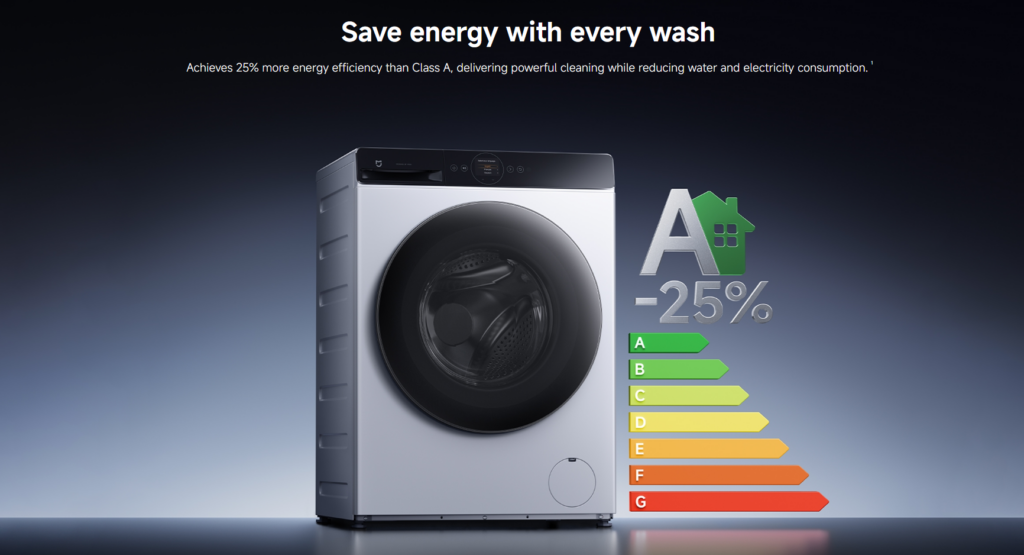
Steam cleaning is part of the package too. The company says it can eliminate up to 99.99% of bacteria, which is increasingly becoming a standard claim in this category. The machine carries a Class A energy rating and is said to be more efficient than the minimum requirement for that tier.
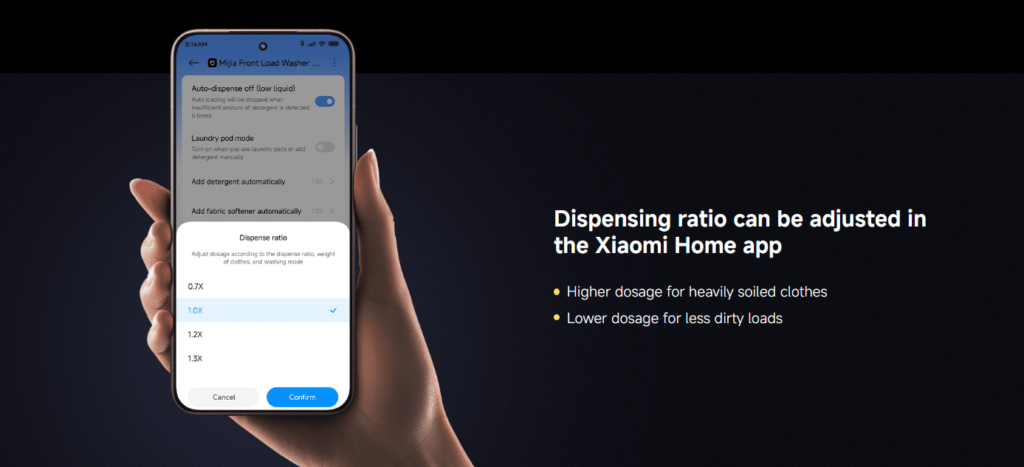
Where Xiaomi really leans in is the smart functionality. Through the Xiaomi Home app, users can start or pause cycles remotely, check remaining time, schedule washes, and even receive firmware updates.
There’s also automatic detergent dosing for up to two products. The machine adjusts the amount based on the selected program and load size.
One detail that stands out is the self-cleaning system. Washer-dryer combos are known for collecting lint and residue over time, and maintenance can be a chore. Xiaomi says this model uses high-pressure water to rinse parts of the drying system and periodically cleans the drum and detergent drawer at high temperatures. In theory, that means less manual upkeep.
At £599, it’s not exactly entry-level, but it’s competitive for a smart washer-dryer with these features. For households already invested in Xiaomi’s ecosystem, it makes a certain kind of sense.
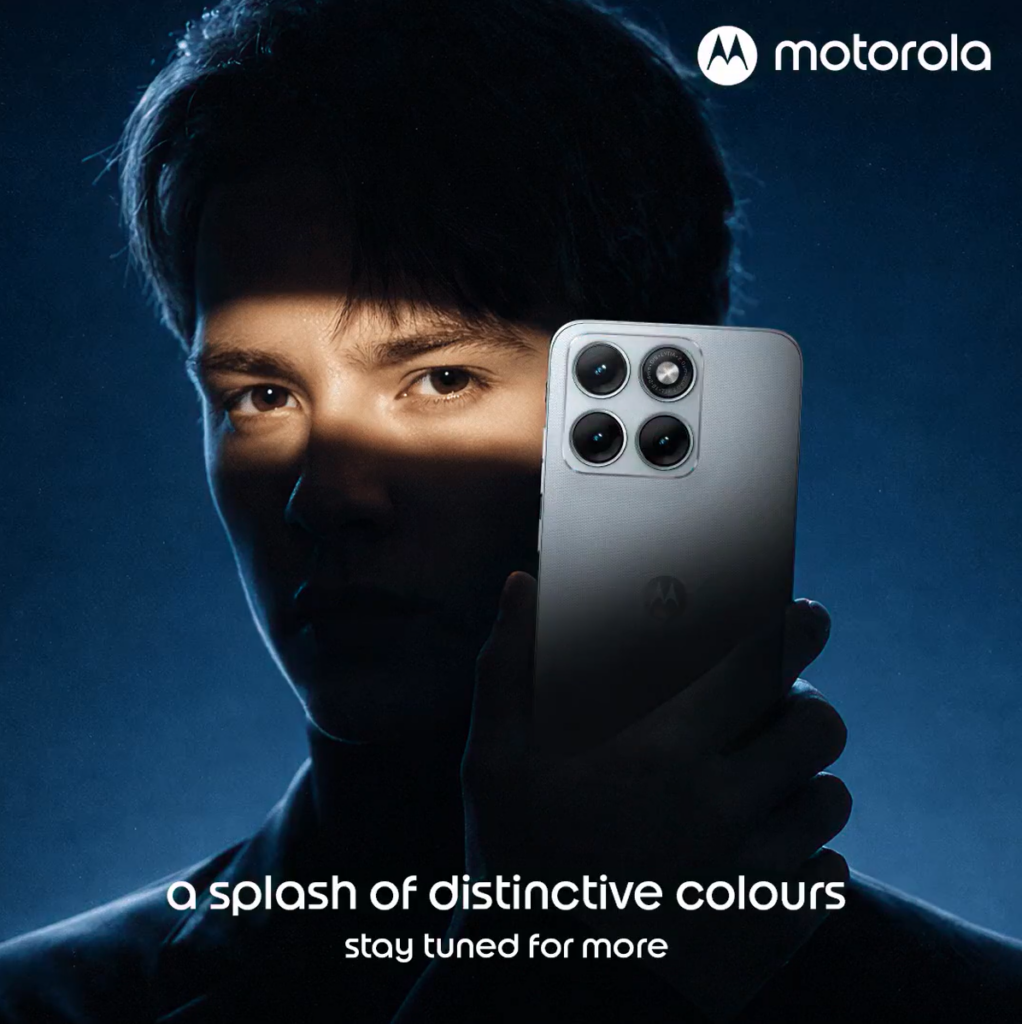
Motorola has started teasing its next Edge series phone in India, and all signs point to the upcoming Motorola Edge 70 Fusion.
The company hasn’t explicitly named the device in its initial X posts, but the hints are hard to miss. One teaser cleverly played around with the word “fusion,” alongside images of a new handset in bright, textured finishes. Shortly after, Flipkart went live with a dedicated promo page carrying the tagline, “a fusion that gives you the edge.” At that point, the identity was pretty clear.
Color options confirmed
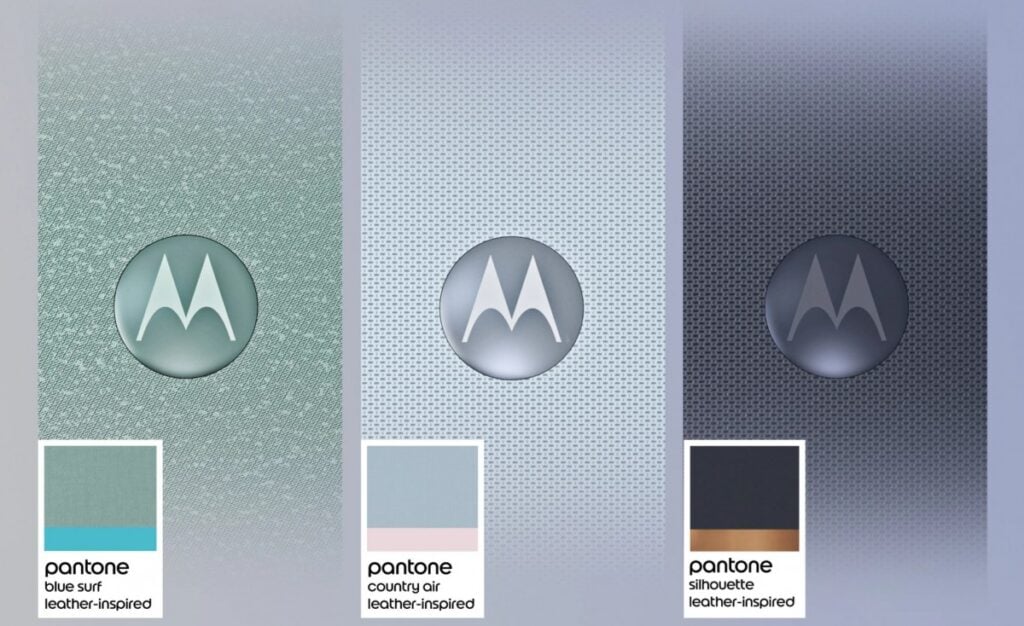
Flipkart’s microsite confirms three color options for India: Pantone Blue Surf, Pantone Country Air, and Pantone Silhouette. All three appear to feature Motorola’s now-familiar leather-inspired textured back, which has become a signature look for the brand’s recent Edge devices.
Earlier global leaks suggested as many as five Pantone shades, including Orient Blue and Sporting Green, but it looks like India may be getting a trimmed-down selection at launch.
The overall design sticks to Motorola’s recent formula: curved display edges, slim bezels, and a distinct camera module that blends into the back panel.
One confirmed detail is the presence of a “LYTIA camera,” which likely refers to a Sony LYTIA sensor. Leaks suggest the main camera could be a 50MP unit, with improved low-light performance.
As for the processor, earlier rumors pointed toward the Snapdragon 7s Gen 3. However, more recent leaks, including marketing renders and benchmark listings, suggest the phone may instead use the newer Snapdragon 7s Gen 4. If true, that would bring modest CPU and GPU improvements, along with better efficiency compared to the previous generation.
The rest of the spec sheet hasn’t been officially confirmed yet, but leaks paint a fairly ambitious mid-range picture. The Edge 70 Fusion is rumored to pack:
A massive 7,000mAh battery
68W fast charging
A 6.78-inch 1.5K AMOLED display with 144Hz refresh rate
Up to 12GB RAM
Android 16 out of the box
Launch timeline
Flipkart has promised more details on February 23, while subtle hints in the promo page URL suggest February 26 could be a key date — possibly for launch or availability. Motorola hasn’t officially confirmed the timeline yet.
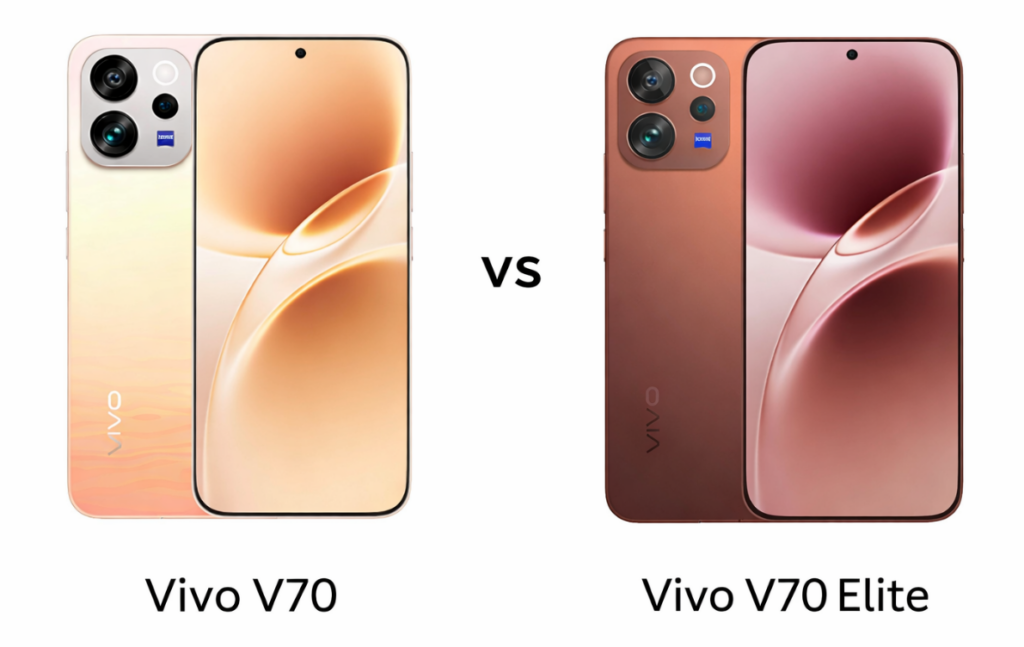
Choosing between two phones that look almost identical but promise very different experiences can be surprisingly tricky, and that’s exactly the case with the Vivo V70 and Vivo V70 Elite. On paper, both share the same premium design, display, and camera hardware, yet their real difference lies in performance and positioning. One focuses on balanced value, while the other pushes toward flagship-level power. This comparison matters because the price gap isn’t huge, making it important to know whether the extra money truly changes the everyday experience or just adds numbers on a spec sheet.
Amazon Pre-Sale Discounts (Vivo V70 Series)
Amazon’s pre-sale for the Vivo V70 series is live, with official shipments starting from February 27. The Vivo V70 base variant is priced at ₹50,000, but the pre-sale discounted price brings it down to ₹46,000. The Vivo V70 Elite base variant, originally priced at ₹55,000, is available at a discounted pre-sale price of ₹52,000. Buyers can also combine these price cuts with additional launch offers, including bank discounts, EMI options, exchange bonuses, and other deals listed on the Amazon product page.
Both Vivo V70 and V70 Elite follow a premium design approach with a glass front, aluminum alloy frame, and either glass or fiber-reinforced back finishes. The overall styling feels modern and refined, giving both phones a flagship-like presence in daily use. Water and dust resistance adds a practical layer of durability, making them feel reliable beyond just looks. Since the design language is shared, the difference here is more about positioning than appearance; the Elite feels like a performance-focused variant rather than a visual upgrade. This similarity can actually be a positive, as buyers don’t have to compromise on aesthetics when choosing the more affordable model.
Display Quality
Both devices use the same AMOLED panel with a 120Hz refresh rate, HDR10+ support, and very high peak brightness. Colors look vibrant, contrast remains deep, and smooth animations make scrolling and gaming feel premium. Outdoor visibility is excellent, and the display experience feels equally polished on both models. In real-world use, there is virtually no separation between them visually.
Verdict
Design and display are essentially tied. The V70 stands out as the smarter pick here since it delivers the same premium viewing experience without paying extra.
2. Specifications Including Battery
Performance
The main difference between these two phones appears under the hood. Vivo V70 runs on the Snapdragon 7 Gen 4, which handles daily apps, multitasking, and moderate gaming smoothly. Vivo V70 Elite steps up to the Snapdragon 8s Gen 3, offering noticeably stronger performance for demanding games, heavier editing tasks, and longer-term performance stability. The Elite feels faster under pressure, especially when pushing graphics or multitasking heavily. Still, the standard V70 proves that upper mid-range chips now deliver a very polished everyday experience without feeling slow.
Battery and Charging
Both phones pack a large 6500mAh battery with 90W fast charging, reverse wired charging, and bypass charging. Endurance should comfortably last a full day, even with heavy use, and charging speeds remain equally impressive. The V70 may feel slightly more power-efficient due to its chipset, while the Elite focuses more on raw speed and sustained performance.
Verdict
Performance clearly favors the V70 Elite, but battery experience remains equally strong on both. The choice depends on whether raw power or balanced efficiency is more important.
3. Camera
Main and Secondary Lenses
Camera hardware is nearly identical across both devices, featuring a 50MP main sensor with OIS, a 50MP periscope telephoto lens with 3.7x optical zoom, and an 8MP ultrawide camera. Image output should be very similar, delivering sharp details, balanced colors, and strong zoom versatility. The V70 Elite adds a color spectrum sensor and slightly improved HDR video processing, which can help with more consistent tones in complex lighting scenes. In everyday photography, however, differences remain subtle rather than dramatic, making both phones strong camera performers in their segment.
Selfie Camera
Each model uses the same 50MP autofocus selfie camera capable of 4K video recording. Selfies are expected to look detailed with natural skin tones, and autofocus helps maintain sharpness in both photos and video calls. Social media creators and casual users alike will find the front camera experience consistent across both models.
Verdict
Camera performance is nearly equal, but the V70 Elite takes a slight lead due to small processing improvements. The V70 still delivers flagship-style results without clear compromises.
4. Pricing
Vivo V70 is priced at around ₹50,000, while Vivo V70 Elite comes in at approximately ₹55,000. The almost ₹5,000 difference mainly reflects the jump to a more powerful processor and small imaging refinements rather than major hardware changes. For buyers comparing pure features, the pricing gap feels narrow enough to make the decision more about usage style than budget limits.
Is the Price Justified?
The V70 offers stronger value because it delivers the same design, display, battery, and almost identical camera experience at a lower price. The Elite justifies its higher cost for users who want extra performance headroom for gaming or long-term heavy usage. The pricing strategy feels balanced, but the benefits of the Elite are more performance-focused than all-around upgrades.
Disclaimer: Prices are approximate and may vary based on country, region, and applicable taxes.
Verdict
Vivo V70 wins on value for most users, while V70 Elite makes sense for buyers prioritizing performance and future-proofing.
5. Conclusion
Both smartphones offer premium AMOLED displays, large batteries, fast charging, and Zeiss-tuned camera systems, creating a flagship-like experience regardless of choice. The real separation lies in processing power; the V70 Elite targets users who want stronger gaming performance and longer-term speed consistency, while the V70 focuses on delivering a balanced experience at a more accessible price. This makes the lineup easy to understand, as buyers are essentially choosing between value and extra performance rather than completely different devices.
Verdict
Vivo V70 is the smarter all-round choice thanks to its pricing and balanced specifications. Vivo V70 Elite is the better option for power users who want higher performance ceilings and slightly refined imaging performance without changing the overall experience.
Gemini 3.1 Pro is the company’s most capable LLM with stronger core reasoning and better performance on complex, multi-step work. It outperforms the best from Anthropic and OpenAI across many benchmarks. Here, I’ll show you the top 5 ways to access Gemini 3.1 Pro for free with all the steps.
Image credit: Google
How to use Gemini 3.1 Pro for free (5 methods)
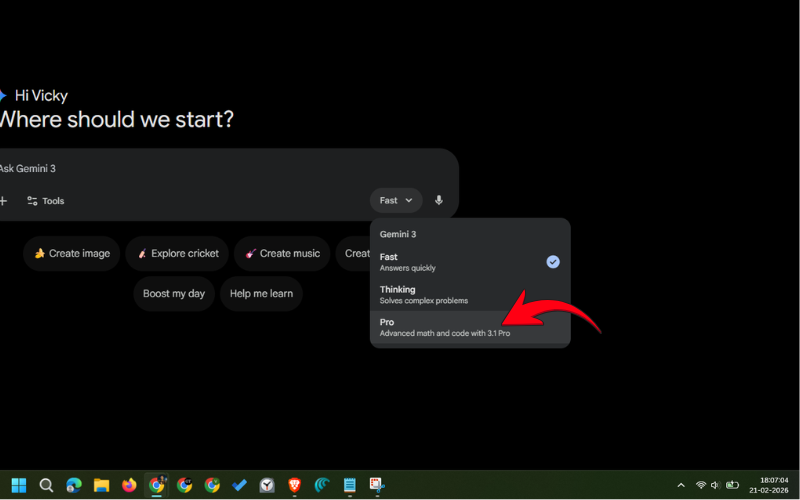
1. Google Gemini
This is the easiest and quickest way to test the capabilities of Gemini 3.1 Pro. Simply go to gemini.google.com, choose the “Pro” option, and get things done.
Step 2: Log in to your Google account (if not logged in).
Step 3: Tap the mode selector and choose “Pro”.
Step 4: Type your prompt and hit Enter.
If you’re using a smartphone, it’s best to download the Google Gemini app from Google Play Store (Android) or App Store (iPhone). The steps remain the same.
Please note that the free version of Google Gemini allows only a few messages per day for Gemini 3.1 Pro. That’s best for the testing purpose. However, you can upgrade to the Pro or Ultra plan to increase your limits. Luckily, there are ways to get Google Gemini Pro for free for a year. Comment below if you want a detailed post on that.
2. Google’s Vertex AI platform
Google is offering $300 in free credits to use Google Cloud services, including the Vertex AI platform, which allows us access to Gemini 3.1 Pro, Google Veo, and many other AI tools. Note that free credits are available for 90 days. After which, they expire.
Step 2: Choose your Google account and your country.
Step 3: Fill in your contact information, then verify a payment method.
[Note: You won’t be charged automatically even after the free trial ends unless you do a manual activation. You can verify the same in the screenshot below.]
Step 4: In your Google Cloud dashboard, tap the menu button and choose “Vertex AI”.
Step 5: Click “Try now” below Vertex AI Studio.
Step 6: Click “Agree & continue” to enable the required APIs for using Vertex AI Studio.
Step 7: Choose “Gemini 3.1 Pro” and start using it.
The $300 free credit gives you very high usage limits to Google’s top AI models for 90 days. You can even create videos, build tools using coding, and do a lot more stuff without paying a penny.
3. Try That LLM
This is an easy and free tool for comparing responses from various LLMs. The platform offers dozens of LLMs to test your prompt, including Gemini 3.1 Pro, Claude Opus 4.6, and ChatGPT 5.2.
This is super easy to use. Just sign up on the website (it takes less than a minute), choose your model, and start using it. The best part is you don’t need to fill in payment details.
Step 1: Go to trythatllm.com and click the “Sign up” button.
Step 2: Fill in basic details to create your account.
Step 3: Verify your email.
Step 4: Tap “New Prompt Group”.
Step 5: Click “Choose an LLM” and select Google > Gemini 3.1 Preview.
Step 6: Click “Confirm LLM + Start Prompting”.
Step 7: Enter your message in the prompt section and click “Confirm Prompt”.
You get 1000 free credits when you create an account. Note that these are one-time credits and are not added every month.
4. Arena AI
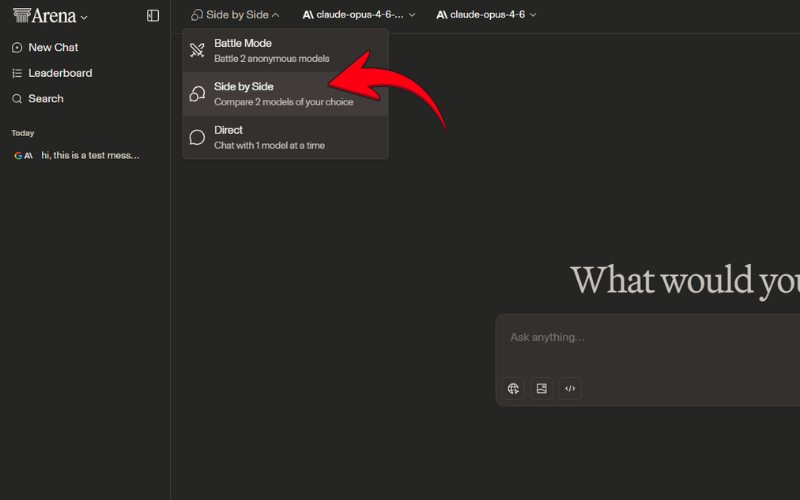
Arena AI also lets you compare different LLMs for free. The best part is that you don’t need to sign up on the platform to use Gemini 3.1 Pro or any other LLM. Just open the website, choose your AI model, and start messaging.
Step 1: Go to Arena.ai and make sure side-by-side mode is selected.
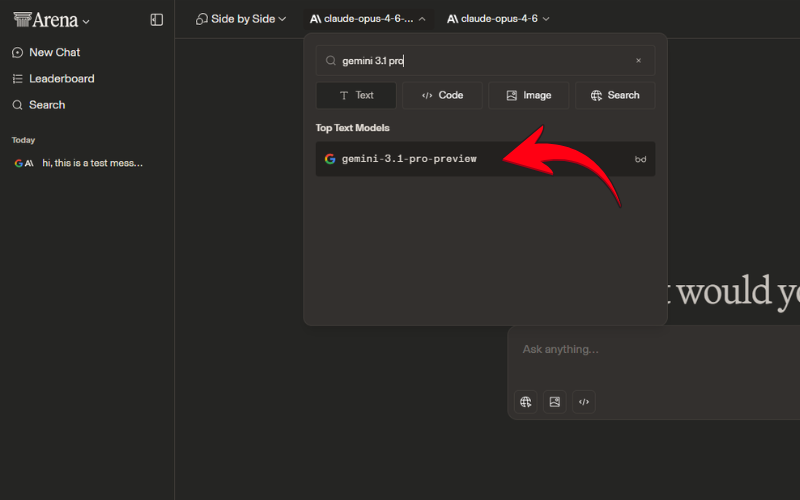
Step 2: Tap on the first LLM field.
Step 3: Search for “Gemini 3.1 Pro” and choose the right LLM from.
Step 4: Write your message/prompt in the Ask anything section and enter.
Arena AI is completely free to test LLMs, but it doesn’t offer unlimited responses. The platform provides pretty generous limits, which should be more than enough for small use cases.
5. ChatPlayGround AI
ChatPlayGround AI also offers access to dozens of LLM models, including Gemini 3.1 Pro, Claude Opus 4.6, and ChatGPT 5.2. Unlike Try That LLM and Arena AI, this AI tool lets you use images and PDFs with your message. But what’s the catch here? It doesn’t have a free plan; instead, it offers a 3-day free trial, and for that, you’ll need to link your bank cards.
So, if you only need access to Gemini 3.1 Pro and other LLMs with better capabilities, you can go for the free trial, but make sure to cancel the plan before three days to avoid any charges. Simply go to chatplayground.ai, tap “Sign Up”, and fill in the required details to get started.
Be sure to visit the AI section on Gizmochina regularly for the latest updates.
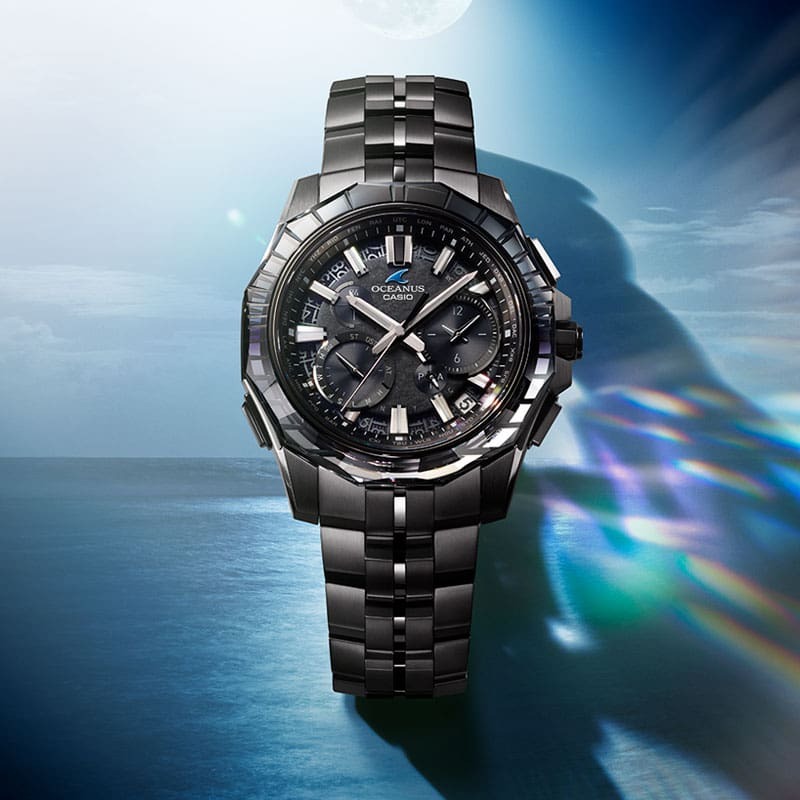
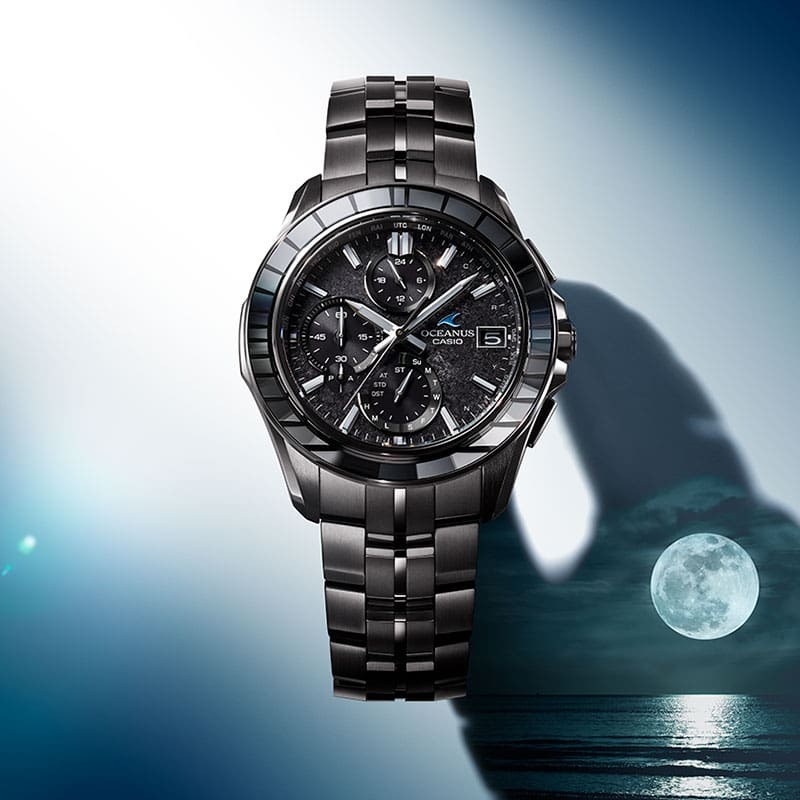
Casio has launched two limited-edition models, the Oceanus OCWSG1000CN1A and OCWS7000CN1A, in the United States. These watches, part of Casio’s premium Oceanus Manta series, first debuted in global markets last year and are now available in limited quantities in the US.
Design Details
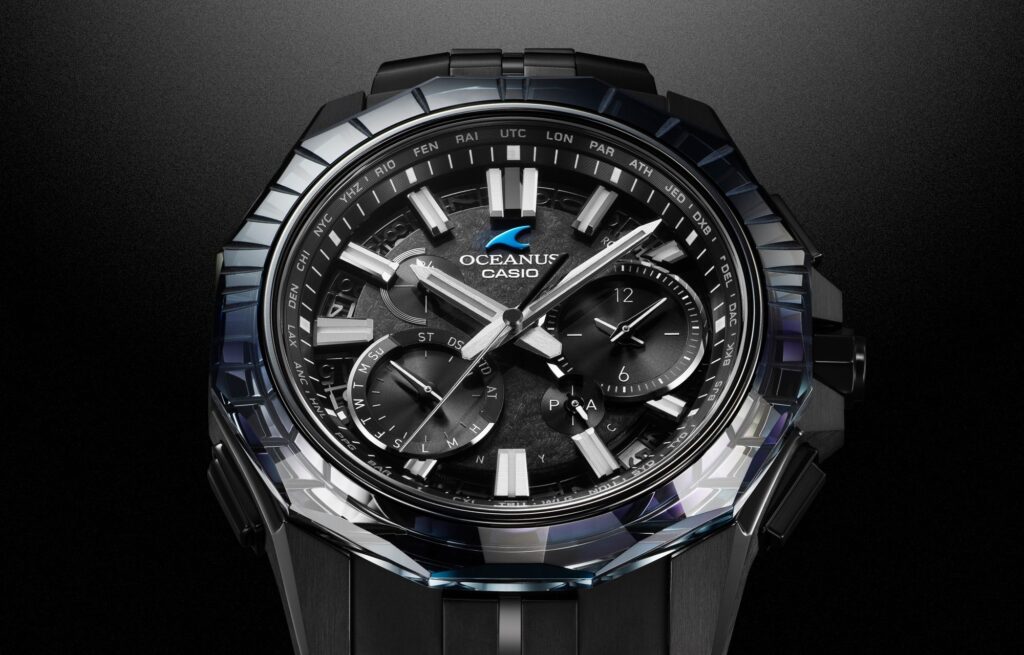
The OCWSG1000CN1A costs $4,800 and is limited to only 600 pieces worldwide. Casio engraved each watch with a unique serial number to highlight its exclusivity. The watch design takes inspiration from a Calm Night theme, evoking the look of a moonlit sea.
Casio used Edo Kiriko craftsmanship for the sapphire glass bezel, with each cut handcrafted by third-generation Edo Kiriko artisan Toru Horiguchi. The titanium case features a DLC (Diamond-Like Carbon) coating, which enhances durability and gives the watch a sleek, polished appearance.
Casio equipped the OCWSG1000CN1A with Gallium Tough Solar technology, which significantly improves power generation efficiency. The watch includes advanced timekeeping features such as Bluetooth connectivity, multi-band radio-controlled timekeeping, and automatic time adjustments. It also offers water resistance up to 10 bars and a textured dial that resembles the moon’s surface.
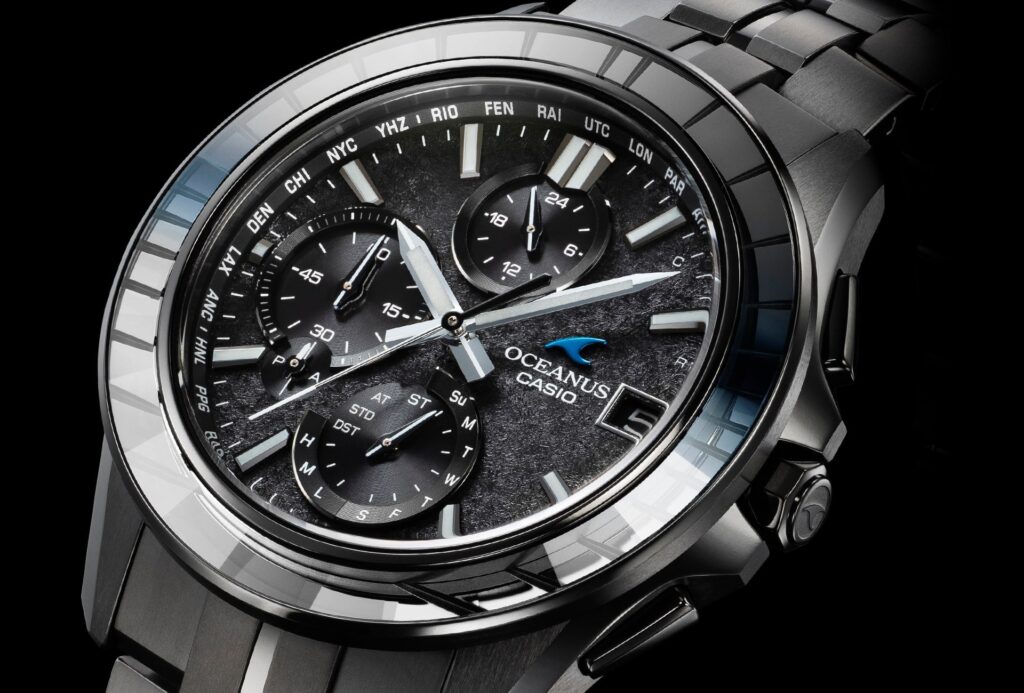
The OCWS7000CN1A is priced at $2,200 and features a similar Calm Night design theme. Casio crafted this model with an all-black titanium case and an Edo Kiriko sapphire glass bezel. The dial incorporates a silver and black gradient, creating depth and a dynamic aesthetic. The blue accents on the watch reflect light differently depending on the angle, mimicking the ocean’s natural movement.
Casio designed the OCWS7000CN1A to be slimmer and lighter, measuring just 9.8 mm thick and weighing 81 grams. The watch includes Bluetooth connectivity, multi-band timekeeping, and a solar-powered battery with an operating life of up to five months on a full charge. It is limited to only 1,600 pieces worldwide.
Both models provide additional features like 100-meter water resistance, smartphone connectivity via the Casio Watches app, and support for over 300 world time cities.
With the rollout of One UI 8.5 Beta 5 for the Galaxy S25 series, Samsung has quietly introduced a major refresh to Bixby. The changelog only mentions an applied Bixby version upgrade, but early testers are reporting much bigger changes under the surface.
The update is currently rolling out in regions including the US, UK, Germany, India, Korea, and Poland, with a download size of around 550MB and the February 2026 security patch.
According to beta users, the assistant now delivers noticeably faster and more detailed answers. It can generate longer, structured content, such as poems, essays, and in-depth explanations, directly on device.
There are also signs of deeper web integration. Bixby appears to pull real-time information from online sources, and some testers have noticed a small Perplexity icon appearing in certain search results. Samsung hasn’t officially confirmed the integration in this beta, but the visual cue strongly suggests backend support from Perplexity AI.
Image: SammyFans
In practical terms, that means Bixby is starting to feel less like a basic voice command tool and more like a conversational assistant.
Better device control
Beyond web queries, Bixby seems more responsive when controlling the phone itself. Natural-language commands such as “Set display brightness to 30 percent” or “Change system sound to level 3” execute instantly, without requiring users to navigate through menus. That may sound minor, but smoother system-level control is exactly where voice assistants often fall short.
The assistant now appears to better understand both the device and online context, blending hardware control with web-powered intelligence.
Samsung has also updated the visual experience. When activated, Bixby now displays a cleaner, pill-shaped animation bar at the bottom of the screen. The Bixby icon sits on the left, the microphone on the right, and the edges glow subtly while listening. The overall design feels more modern and less intrusive.
Bixby has long struggled to compete with Google Assistant and, more recently, Gemini. But this update suggests Samsung is taking its assistant more seriously again. With the stable version of One UI 8.5 expected to debut alongside the Samsung Galaxy S26 at Galaxy Unpacked on February 25, this beta may be laying the groundwork for a broader AI push.
We use cookies on our website to give you the most relevant experience by remembering your preferences and repeat visits. By clicking “Accept”, you consent to the use of ALL the cookies.
This website uses cookies to improve your experience while you navigate through the website. Out of these, the cookies that are categorized as necessary are stored on your browser as they are essential for the working of basic functionalities of the website. We also use third-party cookies that help us analyze and understand how you use this website. These cookies will be stored in your browser only with your consent. You also have the option to opt-out of these cookies. But opting out of some of these cookies may affect your browsing experience.
Necessary cookies are absolutely essential for the website to function properly. This category only includes cookies that ensures basic functionalities and security features of the website. These cookies do not store any personal information.
Any cookies that may not be particularly necessary for the website to function and is used specifically to collect user personal data via analytics, ads, other embedded contents are termed as non-necessary cookies. It is mandatory to procure user consent prior to running these cookies on your website.







![EarFun [2025 VGP Winner] Air Pro 4+ Adaptive Hybrid Noise Cancelling Wireless Earbuds Bluetooth 6.0,Qualcomm Snapdragon Sound, aptX Lossless,LDAC Hi-Res Audio, 6 Mics AI CVC Call,54H Playtime](https://www.gizmochina.com/wp-content/plugins/aawp/public/image.php?url=YUhSMGNITTZMeTl0TG0xbFpHbGhMV0Z0WVhwdmJpNWpiMjB2YVcxaFoyVnpMMGt2TXpGS09GZEJLMGRhTjB3dVgxTk1NVFl3WHk1cWNHYz18MTc5MTk3MTA2Mw=)

![OnePlus Buds 4 TWS Earbuds with Upto 55dB Real-time ANC,Adaptive Mode,Dual Drivers with Dual DACs,3D Audio,Upto 45hrs Music Playback,Dual-Device connectivity,47ms Low Latency[Storm Gray]](https://www.gizmochina.com/wp-content/plugins/aawp/public/image.php?url=YUhSMGNITTZMeTl0TG0xbFpHbGhMV0Z0WVhwdmJpNWpiMjB2YVcxaFoyVnpMMGt2TXpGeGEwRjJTMFJYZGt3dVgxTk1NVFl3WHk1cWNHYz18MTc5MTk3MTA2Mw=)