Advertisement

HyperOS 3 on Android 15: 12 Xiaomi devices under testing

Xiaomi has quietly begun testing HyperOS 3, based on Android 15, and a dozen devices are already running early builds. For many of them, this will also be the last major software upgrade they ever receive.

Internal Mi Community testing logs show that these models are currently being tested with Android 15-based HyperOS 3 builds:

  • Redmi Note 13 5G series (Global, EEA, Turkey, China)
  • POCO F5 Pro / Redmi K60 (Global + China)
  • Xiaomi 13 Lite / Civi 2 (EEA)
  • Xiaomi MIX FOLD 2
  • Xiaomi 12T Pro / Redmi K50 Ultra
  • Xiaomi 12 Pro / 12S Ultra / 12
  • Redmi K60 Pro
  • Xiaomi Civi 3
  • Redmi Note 12T Pro
  • Xiaomi Pad 6 Pro

Among them, the Redmi Note 13 5G appears to be closest to a public rollout with the build OS3.0.0.2.VNQMIXM already in a near-stable state.

For many of the devices on this list, XiaomiTime expects HyperOS 3 to be the final major update. After HyperOS 3:

  • Only security updates may continue
  • No HyperOS 3.1
  • No Android 16
  • No more feature additions

If a device isn’t on the testing list by now, chances are slim that it will ever receive HyperOS 3.

HyperOS 3 does bring meaningful improvements—smoother animations and improved memory handling. But for a lot of users, this update won’t just be another version bump. It’s the final chapter for phones that still have plenty of life left in their hardware.

In short, if your Xiaomi device made the cut, enjoy the upgrade while it lasts. If not, you may soon start feeling the limits of an aging software base.

Don’t miss a thing! Join our Telegram community for instant updates and grab our free daily newsletter for the best tech stories!

For more daily updates, please visit our News Section.

(Source)

Oppo Find X9, X9 Pro pricing surfaces ahead of India launch

Just a day after Oppo announced the launch date for the Find X9 and X9 Pro in India, their pricing has popped up on the internet now. Tipster Abhishek Yadav shared the alleged numbers on X.

According to the leak, the standard Find X9 with 12GB of RAM and 256GB of storage could be priced at ₹74,999. Meanwhile, the Find X9 Pro is expected to come in at ₹99,999. 

Of course, these are still expected prices, so don’t be surprised if they shift once the phones officially go on sale. 

For reference, the Find X8 debuted at ₹69,999, while the X8 Pro launched at the same price in India.

What can you expect?

The Find X9 features a 6.59-inch AMOLED display with a 2760×1256 resolution and a 120Hz refresh rate. Peak brightness hits an impressive 3600 nits, and 3840Hz PWM dimming should help reduce flicker. 

Oppo Find X9
Oppo Find X9

The design keeps things clean with a flat aluminum frame and matte glass back in Titanium Grey, Space Black, or Velvet Red. IP66, IP68, and IP69 ratings mean serious dust and water protection.

Oppo is again leaning into camera hardware. The phone adopts a new Hasselblad Master Camera System, pairing a 50MP Sony LYT-808 main sensor with 50MP ultra-wide and 50MP periscope telephoto lenses. A dedicated 2MP True Color Camera handles ambient light sensing.

Under the hood, the MediaTek Dimensity 9500 brings a claimed 32% CPU boost and 55% lower peak power draw. The 7.99mm chassis packs a hefty 7025mAh battery with 80W wired, 50W wireless, and 10W reverse charging.

The Find X9 Pro pushes things further with a 6.78-inch LTPO AMOLED panel, the same Dimensity 9500 chip, up to 16GB RAM and 512GB storage, and a 7500mAh battery. 

Oppo Find X9 Pro

The big headline is its 200MP Hasselblad telephoto camera with 3x optical zoom and a Samsung HP5 sensor, joined by a custom 1/1.28-inch main camera with Real-Time Triple Exposure. It also shoots 4K 120fps Dolby Vision HDR.

Don’t miss a thing! Join our Telegram community for instant updates and grab our free daily newsletter for the best tech stories!

For more daily updates, please visit our News Section.

Leica SL3 Reporter Full-Frame Camera Announced with 8K Video, IBIS, and Aramid Fiber Build

Leica Camera AG has introduced the Leica SL3 Reporter, a rugged version of its SL3 full-frame mirrorless camera made for professionals who work in tough conditions.

Leica SL3 Reporter

The SL3 Reporter comes in a matte olive-green finish and features an aramid fiber trim that resists scratches and provides a stronger grip. The material also protects the body from abrasions and weather exposure. Over time, the trim develops a patina that gives each camera a unique look. The red Leica logo has been removed for a more low-profile appearance suited for field photography.

Inside, the camera uses a 60-megapixel full-frame BSI CMOS sensor with Triple Resolution Technology, allowing users to shoot at 60, 36, or 18 megapixels. It supports 8K video recording and includes In-Body Image Stabilization (IBIS). The Hybrid Autofocus System combines phase detection, contrast detection, and object detection for faster and more accurate focusing.

The SL3 Reporter is equipped with a 5.76-million-dot OLED electronic viewfinder and a 3.2-inch tiltable touchscreen with 2.3 million dots. It offers Bluetooth and dual-band Wi-Fi (MIMO) for quick connectivity to the Leica FOTOS app, allowing smooth image transfer and editing.

Built to IP54 standards for dust and splash resistance, the camera is made in Germany using premium materials to ensure durability and long service life.

Key specifications:

  • Matte olive-green finish and aramid trim
  • 60 MP full-frame BSI CMOS sensor (60/36/18 MP output)
  • In-Body Image Stabilization (IBIS) and L-Mount bayonet
  • 8K video, H.265 and ProRes formats
  • 5.76M-dot OLED EVF and tiltable 3.2″ touchscreen
  • Hybrid Autofocus (Phase, Contrast, Object Detection)
  • Bluetooth, Wi-Fi (MIMO), IP54 protection

Pricing & availability

The Leica SL3 Reporter is available now worldwide through Leica Stores, the Leica Online Store, and authorized retailers at €7,200 including VAT.

Don’t miss a thing! Join our Telegram community for instant updates and grab our free daily newsletter for the best tech stories!

For more daily updates, please visit our News Section.

(Source, via)

OxygenOS October 2025 FAQ: OnePlus Addresses Camera Lag, 5G Issues, and New Updates

OnePlus has released the October 2025 OxygenOS FAQ, answering common questions from users and sharing updates on software fixes and upcoming features.

Camera Lag and Gaming Frame Rate Fixes

Some users have noticed a lag when switching to the front camera. OnePlus confirmed that the issue has been identified and is being fixed.
For users in India, connecting to WiFi and enabling automatic system file updates can help improve performance. Go to Settings > System & updates > Software update > three dots in the top right corner > Auto update > System files update.
For users in other regions, updating to the latest version should resolve the issue.

Another concern is that some devices are only reaching 120fps instead of 144fps during gameplay. The company said it has found the cause and is working on a fix, which will be included in a future software update.

Network and App Issues Under Review

Several users have reported problems accessing 5G networks. OnePlus acknowledged the issue, stating that the team is working on restoring 5G network access for affected models. The fix will be released as soon as possible.

A bug affecting the Instagram app prevents users from opening avatars on their profile pages. This has been confirmed to be an app-related issue, and Instagram will fix it in an upcoming update. As a temporary solution, users can restart the app or log out and back in.

OxygenOS 16 Rollout and Version V120P02 Update

On the topic of the latest Android 16-based operating system, OnePlus stated that the official OxygenOS 16 version has started arriving on flagships and will soon make its way to other models as well. It promises smoother performance, smarter AI tools, improved cross-device functions, and stronger privacy protection. Users can follow official OnePlus channels for the rollout schedule.

The V120P02 version began rolling out on October 9 and will be completed by October 30. This update adds better file management options, improved sorting, and enhanced photo quality.

Diwali Watermark Feature

To celebrate Diwali, OnePlus is offering a limited-time Diwali watermark from October 14 to November 15, 2025. Users can add it by going to Photo > Edit > Diwali watermark. The feature works only on photos taken with the device and requires the Photo app version 15.70.1 or later.

Don’t miss a thing! Join our Telegram community for instant updates and grab our free daily newsletter for the best tech stories!

For more daily updates, please visit our News Section.

(Source)

Dyson HP2 De-NOx and HP1 Air Purifiers Now Available in India with Heating and Cooling

Dyson has launched two new Hot+Cool air purifiers in India, the Purifier Hot+Cool HP2 De-NOx and the Purifier Hot+Cool HP1. Both models offer air purification, heating, and cooling in one device.

Dyson Purifier Hot+Cool HP2 De-NOx

Dyson Purifier Hot+Cool HP2 De-NOx

The HP2 De-NOx model features a new K-Carbon filter that captures up to 50 percent more nitrogen dioxide than standard carbon filters. It also destroys formaldehyde. The filtration system combines HEPA H13, activated carbon, and K-Carbon filters to remove ultrafine particles, VOCs, odours, PM2.5, and PM10. Dyson says each unit is fully sealed and tested to meet HEPA standards, ensuring no air leakage.

Dyson Purifier Hot+Cool HP2 De-NOx

It uses real-time sensors to detect dust, allergens, and gases like nitrogen dioxide. Based on this data, the device automatically adjusts purification levels. It uses Air Multiplier technology to project over 290 litres of air per second across a room. The unit offers 350-degree oscillation and maintains the set temperature for both heating in winter and cooling in summer.

Dyson Purifier Hot+Cool HP1

Dyson Purifier Hot+Cool HP1

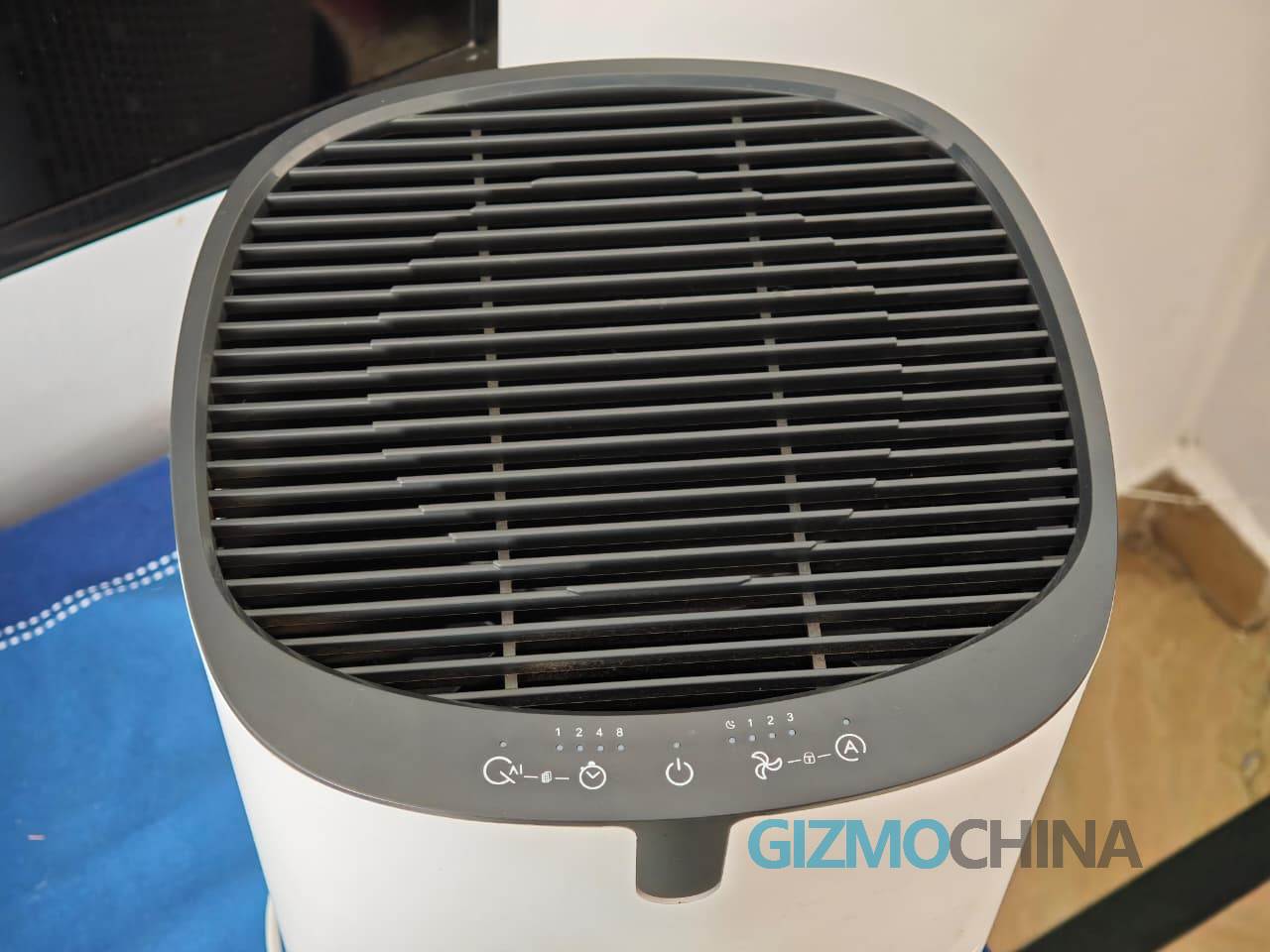
The HP2 De-NOx has a standby power consumption of less than 0.5 watts. It covers a room size of 81 cubic meters using the POLAR testing standard. The unit measures 764 millimeters in height with a 248 millimeter base. It weighs 5.55 kilograms. The filter is easy to replace. Auto Mode adjusts airflow automatically. It can be controlled through the MyDyson app and supports voice assistants.

Dyson Purifier Hot+Cool HP1

The HP1 model uses a HEPA H13 and activated carbon filter setup without the K-Carbon layer. It captures ultrafine particles, allergens, and odours. It also features real-time sensors, an LCD screen for live air quality updates, and app support for reports and remote control. It delivers both heating and cooling through Air Multiplier airflow, and adjusts performance based on indoor conditions.

The HP1 also offers 350-degree oscillation and covers 81 cubic meters. It delivers 290 litres per second of airflow. It stands 30.3 inches tall, 9.8 inches long, and 8.7 inches wide. It weighs 11.5 pounds. It includes a quiet night mode and sends app alerts when the filter needs replacement. Smart features include app control, voice assistant support, Wi-Fi and Bluetooth connectivity, and firmware update access.

Pricing & availability

The Dyson Purifier Hot+Cool HP2 De-NOx is priced at Rs. 68,900 and comes in White/Gold and Nickel/Gold finishes. The HP1 is priced at Rs. 56,900 and is available in White/Silver and Nickel/Silver. Both are available on Dyson India’s official website, Dyson Demo stores, and through authorised retail partners.

For more daily updates, please visit our News Section.

Tech enthusiast? Get the latest news first! Follow our Telegram channel and subscribe to our free newsletter for your daily tech fix!

Xiaomi Pushes Global OTA Update for HyperOS 3, Brings Smoother Performance

After slowly rolling out its next generation of HyperOS custom skin, Xiaomi is now pushing a new OTA update for the HyperOS 3 launcher globally. This software upgrade aims to bring a series of optimizations and improvements to the Android 16 OS based UI, so here are all the details.

Xiaomi Releases HyperOS 3 Launcher OTA Update Globally

The Chinese tech giant’s latest global update for the HyperOS 3 arrives to bring improvements in performance and stability for its smartphones across the Xiaomi, Redmi, and POCO brands. This update is dubbed RELEASE-6.01.02.1321-10302137, and it is currently rolling out in the global market and even the Chinese build of HyperOS. This release basically aims to improve the user experience of the HyperOS 3 launcher by making it smoother and faster.

HyperOS 3 upgrades
Xiaomi HyperOS 3 Update

In particular, these improvements are with app transitions, animations, and memory allocation. All of these aspects are seeing a notable upgrade, while tests are reporting quick app switching on devices powered by older chips like the Snapdragon 7 Gen 1 and Helio series chipsets (Via NotebookCheck). To recall, the HyperOS 3 update recently started rolling out with the Xiaomi 15 across the globe.

The brand also announced that it is expanding the list of smartphones, tablets, and other devices getting this update, including models like the Redmi K80, Xiaomi TV S Pro Mini LED series, Xiaomi Watch S4 lineup, and more. Although, Xiaomi also confirmed that it is skipping the HyperOS 3.1 update for a number of other smartphones and tablets, which you can click here to check out.

For more daily updates, please visit our News Section.

Tech enthusiast? Get the latest news first! Follow our Telegram channel and subscribe to our free newsletter for your daily tech fix! ⚡

Xiaomi’s New Super Slim Power Bank Goes Global with 15W Magnetic Charging

One of Xiaomi’s handy smartphone accessories is finally launching outside of China. The Xiaomi Super Slim Magnetic Power Bank 5000 first debuted in China, and now, it is finally arriving in the global market. This power bank brings wireless magnetic charging in a portable form factor, so let’s check it out.

Xiaomi’s Sleek New Power Bank Drops in Europe

The Chinese tech giant has officially announced the Xiaomi Super Slim Magnetic Power Bank 5000 in the European region. This thin and lightweight power bank was first spotted in the region back in July, and is finally rolling out in the UK, Italy, and France. As the name suggests, the power bank has a slim profile that measures just 8.7mm thick and weighs around 122 grams.

Xiaomi Super Slim Magnetic Power Bank 5000

The highlight of the Xiaomi Super Slim Power Bank is the wireless charging pad on the front, which houses 17 neodymium magnets to hold your phone in place. Looking at the official marketing material, this accessory is clearly meant to work with products like the iPhone. Xiaomi claims that the magnets are capable of holding over five times the weight of the iPhone 16. It can charge your device wirelessly at 15W, but users also get 22W fast charging via a USB Type-C port.

Xiaomi’s Super Slim Magnetic Power Bank packs a sizeable 5,000mAh battery pack, features integrated LEDs to indicate battery life, and dual NTC sensors to prevent overheating. The body of the power bank uses an aluminum body and arrives in four color options, namely black, blue, gold, and purple. However, the Xiaomi Super Slim Magnetic Power Bank 5000 is listed in Spain in a single black option for 21.99 Euros.

For more daily updates, please visit our News Section.

Don’t miss a thing! Join our Telegram community for instant updates and grab our free daily newsletter for the best tech stories!

In China, Sky Is the New Highway: Future Flying Taxi Fares Revealed at CIIE 2025

Key Highlights:

  • China unveils its vision for low-altitude urban and regional air travel at the 2025 China International Import Expo.
  • Simulated “flying fares” show 10–15 minute flights between Shanghai and nearby cities for under CNY120 / $17
  • Electric aircraft with five-passenger capacity and 250 km range highlight sustainable mobility innovation.
source: ithome.com

A Glimpse into the Future of Urban Air Travel

The 8th China International Import Expo (CIIE) in Shanghai is not just a showcase of global trade; it’s a window into the future of transportation. On the third day of the event, the spotlight fell on the “Future Low-Altitude Travel” zone within the Automotive and Smart Mobility exhibition area. This unique section introduced visitors to the possibilities of everyday air commuting through low-altitude mobility systems.

The “Future Terminal” Experience

The exhibit was designed like a futuristic low-altitude travel terminal, complete with zones for security checks, digital flight information boards, and even a cozy waiting lounge. A key attraction was a simulated ticket vending machine, which allowed visitors to explore potential routes and fares of short-distance air travel.

According to the simulation, a 10-minute intra-city flight from the National Exhibition Center to The Bund in Shanghai could cost around ¥49 / $7, while a 15-minute cross-city flight from Shanghai to Suzhou would be priced at about ¥119 / $17. These figures are based on realistic projections of future operating costs, making the idea of “flying to work” seem surprisingly affordable.

source: ithome.com

Electric Aircraft Lead the Way

A prototype electric aircraft on display captured significant attention. The model featured a 15-meter wingspan, a 10-meter fuselage, and room for five passengers. It can reach speeds of up to 200 km/h and cover distances of up to 250 km on a single charge, perfect for regional commutes. The design emphasizes zero-emission, sustainable travel powered by advanced battery technology.

Strategic Significance for China

Low-altitude travel has been identified as a key component of China’s next-generation transportation network. It forms a crucial part of the country’s “low-altitude economy,” which has been prioritized under China’s 15th Five-Year Plan. The focus reflects China’s ambition to integrate electric air mobility into daily life, connecting urban and suburban regions faster, cleaner, and more efficiently.

At CIIE 2025, this showcase wasn’t just an exhibit; it was a bold statement of how China envisions the skies becoming part of everyday travel in the years ahead.

Read More:

(via)

China Will Win the AI Race: Nvidia CEO Jensen Huang’s Warning to the West

Key Highlights:

  • Jensen Huang warns that China is catching up fast in AI and could “win the race.”
  • He criticizes U.S. restrictions and overregulation for slowing innovation.
  • Huang clarifies he wants America to lead by accelerating, not isolating.

Huang’s Warning at the London AI Summit

Nvidia CEO Jensen Huang has warned that China is moving rapidly toward AI dominance and could “win the AI race” if the U.S. continues to slow its innovation through overregulation and export restrictions. Speaking at the Financial Times Future of AI Summit in London, Huang said China is “nanoseconds behind America” in AI progress, highlighting how quickly the global gap is closing.

Huang urged Western countries to speed up AI development rather than hold it back. “It’s vital that America wins by racing ahead and winning developers worldwide,” he later wrote on X (formerly Twitter).

source: nvidia.com

China’s Rapid AI Growth

According to Huang, China’s government-backed energy subsidies and strong state support are helping local companies advance faster. Beijing’s investments in semiconductor manufacturing and AI research are creating an ecosystem that rivals the U.S. in both scale and ambition.

He noted that while China faces technological hurdles, its developer community and policy environment are highly motivated and unified under national goals for AI self-reliance.

U.S. Restrictions and Policy Concerns

The U.S. government recently reaffirmed its ban on Nvidia’s advanced Blackwell AI chips being sold to China, citing national security reasons. Huang criticized these restrictions, arguing they hurt U.S. competitiveness and inadvertently push China to accelerate its own chip development.

He also pointed to state-level AI regulations and high energy costs as factors slowing innovation in the U.S. “Cynicism and overregulation are making it harder for American companies to move fast,” he said.

Market Reaction and Clarification

After his remarks were reported, Nvidia’s stock briefly dipped, prompting Huang to clarify that he wasn’t predicting U.S. defeat. Instead, he emphasized that the U.S. must act faster to maintain its lead. Nvidia remains the world’s most valuable company, valued at around US$4.7 trillion, even after a recent dip from its US$5 trillion milestone.

Balancing Global AI Competition

Huang’s comments come amid rising U.S.–China tensions over technology and trade. While Washington focuses on limiting China’s access to cutting-edge AI hardware, Beijing is boosting domestic innovation.

Huang’s message was clear: the U.S. should lead through innovation and collaboration, not isolation. “We want America to win,” he said, “but winning means building faster, not building walls.”

Read More:

(via)

Apple Turns to Google for AI Help: $1 Billion Deal to Power Siri With Gemini

Key Highlights:

  • Apple is close to signing a US$1 billion per year deal with Google to use its Gemini AI model for Siri.
  • The upgraded Siri is expected to launch in spring 2026 as part of iOS 26.4.
  • Apple plans to use Gemini temporarily while developing its own large-scale AI model.

Apple Turns to Google for AI Upgrade

Apple is in final talks with Google to integrate its powerful Gemini AI model into Siri, marking one of the biggest artificial intelligence partnerships in the tech industry. The deal, worth around US$1 billion per year, aims to overhaul Siri’s capabilities and bring Apple up to speed in the fast-moving AI race. According to Bloomberg, the Gemini-powered Siri could launch by spring 2026 with iOS 26.4.

AI Generated Image

A Smarter, More Capable Siri

Currently, Siri runs on Apple’s in-house cloud AI with around 150 billion parameters. Under the new agreement, it will tap into Google’s Gemini model, which boasts 1.2 trillion parameters, nearly eight times more powerful. The upgrade will allow Siri to better understand complex commands, summarise information, and plan multi-step tasks.

Internally, the Siri revamp is known as “Linwood”, while the larger AI project is called “Glenwood.” The effort is being led by Apple executives Craig Federighi and Mike Rockwell, the creator of the Vision Pro headset.

Privacy and Performance

Despite using Google’s AI, Apple will maintain strict privacy controls. Gemini will operate on Apple’s Private Cloud Compute (PCC) servers, ensuring user data remains isolated from Google’s infrastructure. All processing will be temporary, with no data stored between sessions, reinforcing Apple’s privacy-first image.

However, this setup means Apple must expand its cloud hardware to handle Gemini’s massive size, potentially increasing costs and system load.

Why Apple Chose Google

Apple reportedly tested multiple AI models, including OpenAI’s GPT and Anthropic’s Claude, before selecting Gemini for its contextual understanding, scalability, and integration flexibility. While the deal gives Apple a major AI boost, it’s seen as a temporary arrangement until Apple completes its own 1-trillion-parameter AI model.

In markets like China, where Google services are banned, Apple plans to rely on its in-house models and local partners like Alibaba for regulatory compliance.

Strategic Implications

The collaboration marks a shift in Apple’s strategy, from building everything internally to selectively partnering with industry leaders. While the partnership won’t be publicly branded like the Safari-Google Search deal, it highlights how Apple is adapting to remain competitive in generative AI.

Both Apple and Google stocks rose after reports of the deal, signaling investor optimism. Once launched, the Gemini-powered Siri could redefine what voice assistants are capable of, blending power, privacy, and intelligence in a way that reshapes the AI landscape.

Read More:

(via)

iPhone 18 Pro leak reaffirms variable aperture, transparent back

We’re almost a year away from the iPhone 18 lineup, but Apple’s early hardware tests are already making the rounds — and there are a few interesting additions.

The most eye-catching aspect is the camera. Weibo tipster Digital Chat Station claims Apple is deep into testing a variable-aperture main camera for both the iPhone 18 Pro and Pro Max. Instead of being stuck at f/1.78, the phone would be able to open up for shallow-depth portrait shots and then stop down in bright conditions for more controlled detail.

While this isn’t the first time we’re hearing about this addition, its recurrence from different sources certainly reaffirms the possibility of this feature being included in the upcoming models. According to a previous report from South Korea’s ET News, this camera feature has the highest chance of making the cut for 2026.

According to the tipster, Apple is also testing a hole-punch solution for the front camera on the iPhone 18 Pro models. The company has been exploring under-display solutions as well, and it will be interesting to see if the Face ID system finally sits under the display, leaving a smaller hole-punch cutout for the selfie — similar to what almost all Android phones use.

While the camera layout isn’t changing much — Apple is reportedly sticking with the horizontal “deco” — there could be a much bigger visual twist on the back. The tipster talked about a “transparent” back panel. It’s a sharp departure from the current design language of iPhones.

Apple made some significant changes this year to its Pro iPhones — both in terms of design and functionality — and it will be interesting to see if the company is finally increasing its focus on innovation. Nonetheless, the iPhone 19 series (Apple’s 20th-anniversary iPhone) is also around the corner, and it wouldn’t be surprising if Apple reserves a few groundbreaking changes — like a hole-punch + UDC setup for the front or the transparent back design — for its 20th-anniversary models. More concrete information is expected as development progresses.

Don’t miss a thing! Join our Telegram community for instant updates and grab our free daily newsletter for the best tech stories!

For more daily updates, please visit our News Section.

(Source: DCS on Weibo)

US AI Tools Under Fire: Are America’s Top Coders Using Chinese Models?

Key Highlights:

  • Two US-based AI coding tools are suspected of using Chinese open-source models.
  • The issue has sparked debates on ethics, transparency, and attribution in AI development.
  • Chinese foundational models like GLM-4.6 are shaping global AI products, even in the US market.

Rising Concerns Over Model Origins

Two newly launched AI coding tools from US-based companies, Cognition AI and Cursor, are under scrutiny for possibly being built on Chinese foundational AI models. The controversy has reignited discussions around transparency and credit in the commercialization of open-source artificial intelligence systems.

AI Generated Image

Cognition AI’s SWE-1.5 Under the Spotlight

San Francisco–based Cognition AI, valued at about $10.2 billion, recently introduced its SWE-1.5 model, which boasts near state-of-the-art coding performance and record generation speed. While the company confirmed that SWE-1.5 was built “on top of a leading open-source base model,” it did not specify which one.

However, speculation quickly arose that SWE-1.5 may be based on Zhipu AI’s GLM-4.6, a flagship Chinese model released under an MIT open-source license. Zhipu AI itself hinted that Cognition’s model might have used GLM-4.6 as its foundation, though Cognition AI has not commented publicly on the matter.

Cursor’s Composer Faces Similar Questions

Another San Francisco startup, Cursor, valued at $9.9 billion, launched a coding assistant called Composer, which delivers performance similar to SWE-1.5. Users reported discovering traces of Chinese-language reasoning in the tool’s output, leading to speculation that Composer also relies on a Chinese base model. Cursor has so far declined to address these claims.

Ethical and Licensing Debate

At the center of the issue lies the question of ethical use and attribution in AI. Many Chinese models, including GLM-4.6, are released under permissive licenses like MIT, which allow companies to use and modify them commercially without mandatory credit. While legal, this practice has raised concerns about fairness and transparency in AI development.

According to AI researcher Florian Brand from Trier University, “the fine-tuning is the ‘sauce’”, meaning the true value often comes from customization and reinforcement learning, not just the base model itself.

Zhipu AI’s Perspective

Rather than seeing the situation as negative, Zhipu AI has emphasized the positive impact of open-source collaboration, saying it strengthens the global AI ecosystem. The company has seen a tenfold rise in overseas paid users in recent months and has launched a coding subscription plan to expand internationally.

Why This Matters to Everyday Users

For ordinary users, this controversy highlights growing concerns around trust, transparency, and data security in AI tools. When companies don’t disclose where their models come from, users can’t be sure how their data is handled or whether the technology follows proper privacy standards. It also raises ethical questions about fair use and credit in open-source AI, meaning the tools people rely on might be built on others’ work without acknowledgment. 

Ultimately, this shows how AI has become deeply global and interconnected, blurring national boundaries and making transparency more important than ever for user trust.

Read More:

(via)

DJI Osmo Action 6 retail packaging and side-by-side comparison with Action 5 Pro surfaces ahead of launch

The upcoming Osmo Action 6 has leaked from a couple of reliable corners online, and the early peek shows a camera that looks familiar at first glance — until you notice the front. The lens housing is huge, and there’s a good reason for that.

Two major leaks dropped almost back-to-back. The New Camera shared what seems to be the Action 6 shell sitting next to the Action 5 Pro, and XdronesStudio went further, posting a full retail box along with what appears to be a production unit. Put together, the leaks paint a pretty clear picture of where DJI is heading.

The camera itself doesn’t grow much in size, which is good news for people who already have mounts or cages. But the redesign up front hints at the headline feature: a variable-aperture lens. DJI is reportedly letting users switch between f/2.0 and f/4.0, which opens up a lot of flexibility. You get a brighter image and nicer background separation at f/2.0, and when the sun is blazing, f/4.0 helps keep everything sharp without slapping on ND filters every five minutes.

The sensor is getting a bump too — up from 1/1.3-inch to 1/1.1-inch. It’s not a gigantic jump, but it’s enough to squeeze out cleaner footage, especially in low light, where the older models struggled a bit.

Despite the bigger lens module, the shell is more or less the same as the Action 5 Pro. Early pricing leaks suggest it’ll land at around £329 in the UK, €379 in Europe, and somewhere near $379 in the US, so a mild price increase but nothing wild.

GoPro’s Hero 13 Black still has its ecosystem advantage, but if these leaks hold up, DJI’s giving users something GoPro hasn’t touched: actual optical control. For action-cam shooters who bounce between bright outdoors and sketchy indoor light, that alone could make the Action 6 worth a serious look when it launches later this month.

Don’t miss a thing! Join our Telegram community for instant updates and grab our free daily newsletter for the best tech stories!

For more daily updates, please visit our News Section.

(Sources: 1, 2)

AI Chip War Heats Up: U.S. Blocks Nvidia, China Responds with Total Ban

Key Highlights:

  • U.S. government has officially blocked Nvidia from selling its advanced Blackwell and B30A AI chips to China.
  • China has responded with a new rule banning foreign AI chips from all state-funded data centers.
  • Global AI chip war deepens as both nations tighten technology controls

White House Blocks Nvidia’s Advanced Blackwell Chip Sales to China

The Trump administration has decided not to allow Nvidia to sell its latest Blackwell AI chip to China. White House spokeswoman Karoline Leavitt confirmed the decision, stating, “The Blackwell chip is not something we’re interested in selling to China right now.”

This decision follows months of speculation about whether a scaled-down version of the chip might be cleared for sale. The move aligns with President Trump’s strategy to maintain America’s technological edge in artificial intelligence and prevent China from acquiring high-end U.S. hardware.

US Treasury Secretary Calls Blackwell the “Crown Jewel”

U.S. Treasury Secretary Scott Bessent described Nvidia’s Blackwell chip as the “crown jewel” of American AI innovation. He indicated that sales to China might be reconsidered only after the chip becomes outdated in 12 to 24 months. According to Bessent, Nvidia’s rapid pace of innovation means that the Blackwell could soon be several generations behind the company’s latest models.

Nvidia’s Market Collapse in China

Nvidia’s position in China has deteriorated sharply. Once controlling 95% of the Chinese AI data center market in 2022, the company now holds no market share. CEO Jensen Huang has expressed hope that Nvidia will eventually return to the Chinese market, but admitted there are no current plans to do so. Nvidia is reportedly redesigning its B30A chip in hopes of meeting future U.S. export conditions.

China Retaliates with Ban on Foreign AI Chips

In a direct response, Beijing has ordered that all new data centre projects receiving state funding must use only domestically produced AI chips. Projects that are less than 30% complete are required to remove or cancel any foreign chip orders, while those further along will be reviewed individually.

This directive represents one of China’s most aggressive steps toward achieving AI chip self-sufficiency. It is expected to benefit domestic manufacturers such as Huawei, Cambricon, and MetaX. However, industry analysts warn that Chinese AI chips still lag behind Nvidia’s products in performance and software ecosystem support, potentially slowing China’s AI development.

The Global AI Divide Widens

The escalating U.S.–China chip restrictions are reshaping the global AI landscape. The United States aims to secure national security and preserve its technological dominance, while China seeks independence from U.S. technology and to strengthen its domestic semiconductor ecosystem.

While American tech giants like Microsoft, Meta, and OpenAI continue to build massive AI data centres using Nvidia’s most advanced chips, China risks falling behind in computing capacity despite gains in local chip production.

Both the U.S. and China are pursuing self-reliance in AI technology, setting the stage for a deeper divide in global innovation. The U.S. is safeguarding its AI lead, while China is accelerating its domestic semiconductor push. 

Nvidia and other American chipmakers are losing access to one of the world’s largest markets, while Chinese chip firms stand to benefit, though at the cost of slower advancement in high-end AI capabilities.
Read More:

(via)

OPPO Find X9 vs Reno 13 Pro: Huge Differences You Need to Know Before Buying

OPPO Find X9 vs OPPO Reno 13 Pro comparison is an exciting one because it pits a true flagship against a near-flagship contender from the same brand. Both phones showcase OPPO’s design excellence and cutting-edge tech, but they cater to slightly different users; one prioritizes power and innovation, while the other focuses on balanced performance and value. This comparison highlights how much of the flagship experience you actually get when spending less.

Key Features:

CategoryOPPO Find X9OPPO Reno 13 ProWinner
Processor & PerformanceMediaTek Dimensity 9500 (3nm), UFS 4.1MediaTek Dimensity 8350 (4nm), UFS 3.1Find X9
Display Quality6.59″ AMOLED, 3600 nits peak, Dolby Vision, HDR10+6.83″ AMOLED, 1200 nits peak, HDR10+Find X9
Camera SetupTriple 50MP (Hasselblad tuned, Dolby Vision video)50MP + 50MP + 8MP, good but smaller sensorsFind X9
Selfie Camera32MP, 4K video, stable EIS50MP with AF, sharper stillsReno 13 Pro
Battery & Charging7025mAh, 80W wired, 50W wireless, reverse charge5800mAh, 80W wired, 50W wireless (China only)Find X9

1. Design and Display

Build and Feel:

Both the OPPO Find X9 and Reno 13 Pro flaunt premium glass-and-metal designs, complete with IP68/IP69 water and dust resistance. The Find X9 edges ahead with a sturdier aluminum frame and slightly more refined build, offering a higher-end flagship finish. The Reno 13 Pro, while slim and elegant, leans toward a lighter, sleeker aesthetic that prioritizes comfort and portability. The Find X9’s design feels more luxurious and robust, targeting users who prefer a solid hand feel, while the Reno 13 Pro appeals to those who value modern minimalism. In essence, the Find X9 looks and feels more “flagship,” whereas the Reno 13 Pro delivers a balance between style and practicality.

Display Quality:

The Find X9 offers a 6.59-inch AMOLED display with HDR10+, Dolby Vision, and a staggering 3600 nits peak brightness, making it a treat for content lovers. Its color vibrancy and HDR calibration are flagship-grade, enhanced further by Dolby Vision and Ultra HDR support. The Reno 13 Pro, with its larger 6.83-inch AMOLED, also impresses but caps at 1200 nits peak brightness. While it provides fluid visuals with 120Hz and HDR10+, it lacks the ultra-high brightness and HDR depth of the Find X9. The Find X9 delivers superior clarity and dynamic contrast, ideal for outdoor use and multimedia enthusiasts.

Verdict:

The Find X9 dominates in both build quality and display richness, setting a higher bar for brightness, HDR performance, and luxury feel. The Reno 13 Pro remains an excellent choice for users who want a bigger screen at a slightly lower cost, but doesn’t quite reach the flagship finesse of the Find X9.

2. Specifications 

Performance:

The Find X9 houses the powerful Dimensity 9500 chipset built on a 3nm process, easily outclassing the Reno 13 Pro’s Dimensity 8350 (4nm). This translates to faster processing, smoother multitasking, and superior AI and gaming capabilities. The G1-Ultra GPU enhances graphical performance, while UFS 4.1 storage ensures blazing-fast app loading and data access. The Reno 13 Pro’s hardware still performs impressively for everyday users, but it is a step behind in raw computational and graphical muscle. The Find X9’s advanced chipset makes it more future-proof and ideal for demanding users or gamers who want sustained top-tier performance without throttling.
Battery and Charging:

The Find X9 offers a massive 7025mAh battery, one of the largest in its class, paired with 80W wired and 50W wireless charging. It also supports reverse wireless charging, a rare flagship-grade addition. The Reno 13 Pro, with a 5800mAh battery, still provides excellent endurance but uses slower UFCS and PPS charging protocols (33W). Its 50W wireless charging is region-limited, adding minor inconsistency. In day-to-day performance, the Find X9 lasts longer and charges faster, making it the superior choice for heavy users who prioritize reliability and convenience.

Verdict:

When it comes to performance and endurance, the Find X9 clearly leads with stronger silicon, better energy management, and more versatile charging options. The Reno 13 Pro still holds its ground for moderate users, but falls short of the Find X9’s flagship-grade efficiency and power delivery.

3. Camera

Main and Secondary Lenses:

The Find X9’s triple 50MP system, fine-tuned by Hasselblad, delivers professional-grade results. Its larger sensor, periscope telephoto with OIS, and advanced color calibration produce sharper detail and truer tones across all lighting conditions. The Reno 13 Pro’s 50MP setup, while solid, uses a smaller sensor and lacks the same level of post-processing finesse. Its 8MP ultrawide feels limited compared to the Find X9’s 50MP ultrawide lens. The Find X9’s imaging pipeline also benefits from enhanced HDR video recording and Dolby Vision support, offering a cinematic edge that content creators will appreciate.

Selfie Camera:

The Reno 13 Pro packs a standout 50MP selfie camera with autofocus, one of the best in its segment. It captures excellent skin tones and dynamic range, even outperforming the Find X9’s 32MP shooter in certain lighting. However, the Find X9 compensates with 4K selfie video and consistent stabilization, making it more balanced for vlogging and professional content. Both phones handle selfies well, but the Reno 13 Pro has a slight advantage for high-detail stills.

Verdict:

For overall imaging performance, the Find X9 remains the more capable camera phone with superior optics, processing, and versatility. The Reno 13 Pro shines with its front camera but doesn’t match the flagship’s depth and color accuracy on the rear.

4. Pricing

At approximately $650, the OPPO Find X9 sits slightly above the $600 Reno 13 Pro, positioning itself firmly in flagship territory. The $50 difference is modest considering the Find X9’s superior chipset, camera, and charging features. The Reno 13 Pro’s pricing makes it an excellent value pick for those who want near-flagship specs without paying the full premium.

Verdict 

While the Reno 13 Pro offers great value, the Find X9 justifies its slightly higher cost with significant improvements in performance, camera, and battery. For users seeking a well-rounded premium experience, the Find X9 delivers more long-term value per dollar.

Disclaimer:
Prices are approximate and may vary based on country, region, and applicable taxes.

5. Conclusion

Both smartphones reflect OPPO’s excellence in design and innovation, but they cater to slightly different audiences. For just $50 more, the Find X9 offers a superior processor (Dimensity 9500), better HDR display with Dolby Vision, a larger 7025mAh battery, and a Hasselblad-tuned triple camera system that outperforms the Reno 13 Pro in detail, low-light, and video quality. While the Reno 13 Pro impresses with its 50MP selfie camera and sleek design, the Find X9 delivers a more complete flagship experience, faster, brighter, longer-lasting, and more future-proof.

Verdict:

OPPO Find X9 is the smarter buy, a true flagship upgrade that offers significantly better value for only a small price difference.

Read More:

Oppo Find X9 & Find X9 Pro Set to Launch in India on November 18

Oppo has officially confirmed that its much-anticipated Find X9 series will debut in India later this month. The brand first announced Find X9 and Find X9 Pro in its home market of China last month, so we’re finally getting a wider release. So here are all the details.

Oppo Find X9 Series Coming to India on November 18: Here’s What You Need to Know

Oppo Find X9 Pro

In a recent teaser, the Chinese tech giant confirmed that the Find X9 and Find X9 Pro models will debut in India on 18th November 2025 at 12 PM IST. Looking at the image posters, the Find X9 is confirmed to launch in a Space Black and Titanium Gray variant, while the Find X9 Pro will debut in Silk White and Titanium Charcoal. We recently reviewed the Find X9 Pro model, which you can click here to check out.

Both smartphones are Oppo’s latest flagships that feature the Android 16 OS based ColorOS 16 custom skin out of the box. These premium phones are also powered by MediaTek’s latest and greatest Dimensity 9500 SoC. A massive 7,025mAh battery pack powers the base model, while the higher end Pro variants gets an even larger 7,500mAh cell.

OPPO Find X9
Oppo Find X9

Just like its predecessors, the Find X9 lineup brings Hasselblad tuning for the camera system. However, the duo features Oppo’s new in-house LUMO Image Engine as well. In related news, we’ve compared the Find X9 Pro with the OnePlus 15, Xiaomi 17 and Vivo X300, and even the Samsung Galaxy S25 Ultra. So stick around for more as we will be covering its global release.

For more daily updates, please visit our News Section.

Tech enthusiast? Get the latest news first! Follow our Telegram channel and subscribe to our free newsletter for your daily tech fix! ⚡

OnePlus 15 vs iPhone 17: Design, Performance, Camera & Battery Compared

OnePlus 15 vs iPhone 17 showdown highlights two flagship giants with distinct philosophies, Android innovation versus Apple refinement. This comparison matters because it reveals how OnePlus challenges Apple’s dominance with cutting-edge hardware, while the iPhone focuses on seamless performance and ecosystem strength. It’s a clash between raw power and polished experience.

1. Design and Display

Build and Feel: The OnePlus 15 feels solid and durable with its aluminum frame, Gorilla Glass Victus 2, and IP69K rating, built for rugged use. The iPhone 17, though lighter, leans toward elegance with its Ceramic Shield 2 and refined aluminum finish. The OnePlus offers better practicality and toughness, while the iPhone focuses on premium minimalist features.

Display Quality:
OnePlus 15’s 6.78-inch AMOLED 165Hz display is made for speed and immersion, perfect for gamers and heavy media users. The iPhone 17’s smaller 6.3-inch OLED shines in brightness and color accuracy, delivering natural tones and higher peak brightness. The OnePlus is about punch and motion, the iPhone about realism and polish.

Verdict:
Both are premium, but the OnePlus 15 wins for versatility and smoother visuals. The iPhone 17 remains ideal for users who value visual balance and sleek design.

Please Note: When you buy something using the links in our articles, we may earn a small commission at no cost to you.

2. Specifications 

Performance:
With Snapdragon 8 Elite Gen 5 and up to 16GB RAM, the OnePlus 15 offers raw power and smoother multitasking. The iPhone 17’s A19 chip is efficient and stable, but slightly limited by 8GB RAM. The OnePlus feels faster in high-load use, while the iPhone excels in thermal management and stability.

Battery and Charging:
OnePlus 15’s 7300mAh battery and 120W charging easily outperform the iPhone 17’s smaller 3692mAh cell and slower speeds. Its 50W wireless and reverse charging options make it far more flexible for daily use. iPhone remains efficient but can’t match OnePlus’ endurance.

Verdict:
Both are powerful, but the OnePlus 15 dominates in charging speed and stamina. iPhone 17 wins only in long-term efficiency.

3. Camera

Main and Secondary Lenses:
OnePlus 15 packs triple 50MP sensors, including a periscope lens with 3.5x zoom, versatile and pro-friendly. iPhone 17’s dual 48MP setup is simpler but delivers more natural and balanced results. OnePlus suits creators seeking flexibility, while the iPhone prioritizes clean, consistent shots.

Selfie Camera:
OnePlus offers a sharp 32MP camera with 4K recording and EIS, great for vlogs. The iPhone’s 18MP lens, though smaller, shines in color realism and depth sensing with spatial audio.

Verdict:
OnePlus 15 provides a better creative range, while iPhone 17 ensures polished, life-like captures. 

Pricing

At around $900, the OnePlus 15 delivers superior specs, display, and battery tech. The iPhone 17, priced at $800, banks on brand appeal, ecosystem, and long-term updates. For those valuing performance and flexibility, the OnePlus is worth the extra cost; for simplicity and reliability, the iPhone remains a safer pick.

Disclaimer:
Prices are approximate and may vary based on country, region, and applicable taxes.

4. Conclusion

The OnePlus 15 stands out with blazing-fast charging, a bigger battery, an infrared port, and IP69K protection, a true powerhouse for enthusiasts. The iPhone 17’s strengths lie in its software ecosystem, satellite SOS, and Face ID security. The OnePlus feels more feature-rich and performance-driven, while the iPhone excels in refinement and user trust.

Final Verdict: OnePlus 15 takes the crown for innovation and hardware value, whereas iPhone 17 wins for simplicity and ecosystem integration.

Read More:

China’s smartphone market slows in Q3 2025, IDC reports slight year-on-year dip

China’s smartphone market hit a small bump in the third quarter of 2025. According to new data from the International Data Corporation (IDC), total phone shipments in the mainland reached 68.46 million units, down 0.5% compared to the same period last year. 

IDC says the third quarter is typically a slow season for smartphone sales, and this year was no exception. With fewer new product launches and reduced national subsidies, many buyers held off on upgrades. 

The situation could improve next quarter, as many brands launched their new flagships earlier than usual. Xiaomi, for instance, announced the Xiaomi 17 series a month early in September.

The Double Eleven (November 11) sales event is where we may see an increase in purchases. However, IDC Senior Research Analyst Arthur Guo says the event is “unlikely to spark significant additional consumer demand amid economic uncertainty.”

Here’s how the brand performed

Among individual brands, vivo held onto the top spot with 11.8 million units shipped, taking a 17.2% market share despite a 7.8% year-on-year decline. 

Apple followed closely with 10.8 million units and a 15.8% share, posting a small 0.6% increase from last year. Huawei came in third with 10.4 million units and a 15.2% share, slipping 1% year-on-year. Xiaomi shipped 10 million units, taking 14.7% of the whole market. It’s a 1.7% drop from last year. 

Meanwhile, Oppo managed a slight recovery, shipping 9.9 million units for a 14.5% share, up 0.4% year-on-year. Honor matched Oppo’s shipments at 9.9 million units, but its market share dipped 1.5% to 14.4%.

Don’t miss a thing! Join our Telegram community for instant updates and grab our free daily newsletter for the best tech stories!

For more daily updates, please visit our News Section.

(Source)

Harman Kardon Aura Studio 5 Debuts in Japan with Nature-Themed Light Projection

Harman Kardon has officially launched its Aura Studio 5. The company first unveiled the transparent Bluetooth speaker in China back in August 2025, and it is now being released in the Japanese market. So here are all the details.

Harman Kardon Aura Studio 5: What makes it special?

The known audio brand’s new Aura Studio 5 features a transparent top design that houses one of its key features, which is the new projection lighting system. This is a dynamic lighting system that offers visual effects that surround walls and ceilings. There are five ambient themes that are inspired by nature, namely Snowy Fireplace, Sunrise, Blossom, Aurora, and Ocean. Users can customize between these themes through the Harman Kardon One app, which lets you adjust the brightness as well.

Harman Kardon Aura Studio 5 Bluetooth speaker

This is a powerful Bluetooth speaker that has a 160W output and 360 degree sound from a 25mm tweeter, six mid range drivers, and one subwoofer. The Harman Kardon Aura Studio 5 has a frequency range of 45Hz to 20kHz, supports Bluetooth 5.4, a 3.5mm audio jack for AUX in, and stereo playback support (so one can link two Aura Studio 5 units).

The design includes a recessed waistline with touch-sensitive controls arranged in a ring layout. Harmon Kardon just launched the Aura Studio 5 in the Japanese market for 46,200 yen, which is roughly around 320 US Dollars. The wireless speaker with built-in light projection will go on sale in the region on 13th November 2025. In related news, Dreame recently unveiled the S1 and S2 Dolby Atmos soundbards, while Edifier launched the M130 retro mini speaker.

For more daily updates, please visit our News Section.

Don’t miss a thing! Join our Telegram community for instant updates and grab our free daily newsletter for the best tech stories!

GTA 6 Delayed Yet Again: Here’s the New Launch Window

Bad news for fans eagerly awaiting the next chapter in Rockstar’s iconic open-world franchise. The studio has confirmed that Grand Theft Auto VI is being officially delayed once again. While the game was set to release in the first half of 2026, the latest announcement has revealed that the release has been pushed back by a couple of months.

Rockstar Games Delays GTA 6 to Late 2026

Rockstar Games has confirmed that it is postponing the release of Grand Theft Auto VI again. The highly anticipated game was set to debut on 26th May 2026, but it will now launch on 19th November 2026. To recall, the game was originally set to debut sometime in late 2025, so this marks a year long delay.

GTA 6
Grand Theft Auto VI

In an official statement, Rockstar Games stated, “We are sorry for adding additional time to what we realize has been a long wait, but these extra months will allow us to finish the game with the level of polish you have come to expect and deserve. We want to thank you again for your patience and support. While the wait is a little longer, we are incredibly excited for players to experience the sprawling state of Leonida and a return to modern day Vice City.”

In the recent past, AAA titles have been released in a pretty bad state, being plagued by bugs, performance issues, and a lack of optimizations. So the developers taking the extra time does seem like the right call. But with crunch culture in the video game industry, there are likely more pressing matters behind the scenes.

For more daily updates, please visit our News Section.

Tech enthusiast? Get the latest news first! Follow our Telegram channel and subscribe to our free newsletter for your daily tech fix! ⚡