Advertisement

Lava Shark 2 quietly launches in India with 120Hz display, 5000mAh battery

Lava has added a new budget phone to its lineup in India. The company has quietly launched the Lava Shark 2, a low-cost device that does just the basics.

Unlike most entry-level phones that debut on Amazon or Flipkart, Lava is keeping the Shark 2 strictly offline-only, which means you’ll have to visit a nearby retail shop if you want to pick it up.

Lava Shark 2 Specifications

The Shark 2 keeps things simple on the hardware front. You get a 6.75-inch display with a notch and a 120Hz refresh rate; however, the screen resolution is still limited to HD+.

Powering the device is the Unisoc T7250 chipset, which Lava claims can score over 375,000 on AnTuTu. It comes with 4GB of RAM and 64GB of internal storage, along with support for an additional 4GB of virtual RAM.

On the software side, the phone runs a clean version of Android 15, with no ads and no bloatware. The camera setup includes a 50MP rear sensor and an 8MP selfie shooter. 

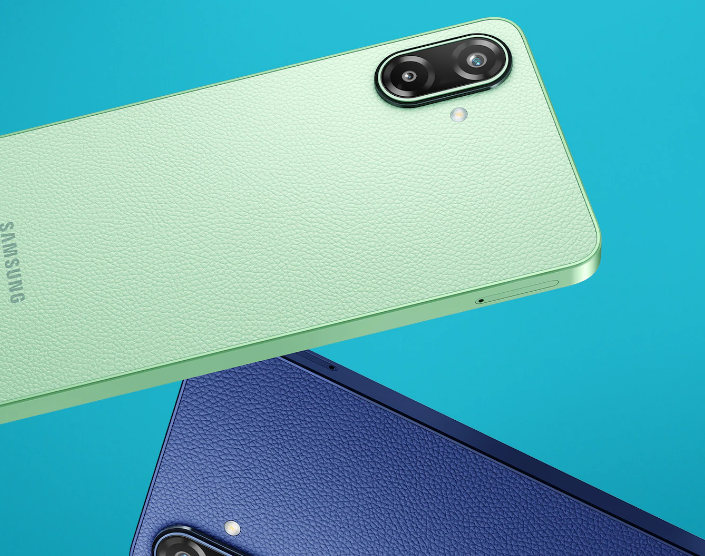
Fueling the Shark 2 is a 5,000mAh battery that supports 18W charging. Other highlights include IP54 dust and splash resistance, a glossy back design, and free doorstep service, something you don’t often see in this price bracket.

Pricing and Availability

The Lava Shark 2 is available in retail stores across India in Aurora Gold and Eclipse Gray shades. The solitary 4GB + 64GB model is priced at Rs 7,500, but there’s an instant bank discount of Rs 750, bringing the effective price down to Rs 6,750. And as mentioned earlier, this is an offline-only device. 

For more daily updates, please visit our News Section.

Stay ahead in tech! Join our Telegram community and sign up for our daily newsletter of top stories! 💡

Redmi Monitor A24 2026 Multi-Function Stand Edition with 144Hz IPS display launched for just $70

Xiaomi has launched the Redmi Monitor A24 Multi-Function Stand Edition (2026) in China, priced at 519 yuan (~$70) in China. This is the same model released in August, now upgraded with a Multi-Function Stand for height, tilt, and swivel adjustment.

Redmi Monitor A24 2026

Redmi Monitor A24 2026 Specifications

The Redmi A24 (2026) uses a 23.8-inch IPS panel with a resolution of 1920×1080 pixels and a 144Hz refresh rate. It delivers a wide 178-degree viewing angle and supports 8-bit color depth using a 6-bit + FRC setup.

Xiaomi claims the display covers 99% of the sRGB color gamut and achieves factory-calibrated color accuracy of ΔE<1. This level of precision makes the monitor suitable for basic photo editing and color-sensitive tasks.

The panel reaches a typical brightness of 300 nits and includes TÜV Rheinland Low Blue Light certification. It also uses DC dimming to reduce screen flicker, aiming to reduce eye strain during long hours of work or study.

Xiaomi has equipped the monitor with a height-adjustable stand that supports tilt and swivel adjustments. The display can also be mounted on a wall or monitor arm using a standard 75×75mm VESA mount. The stand allows tilt adjustments between –5° and +15°, providing flexibility for different viewing positions.

For connectivity, the monitor includes one HDMI 2.0 port and one DisplayPort 1.4, offering compatibility with laptops, desktops, and game consoles.

Xiaomi has used a minimalist three-side micro-bezel design, which helps reduce distractions and improves the visual flow in multi-monitor setups. The monitor weighs around 3.9 kilograms with the stand and has a typical power consumption of 24 watts.

In related Redmi news, the company also introduced the Redmi A27Q Type-C Monitor (2026) with a 2K 120Hz display and 90W reverse charging support, along with the Redmi TV X 98 (2026) featuring a Mini LED screen and 144Hz refresh rate.

For more daily updates, please visit our News Section.

Stay ahead in tech! Join our Telegram community and sign up for our daily newsletter of top stories! 💡

(Xiaomi JD)

TP-Link launches entry-level Wi-Fi 7 gaming router Archer GE400

TP-Link has announced the Archer GE400, a new entry-level Wi-Fi 7 gaming router. The router supports dual-band BE6500 specifications and is now available on Amazon US at a launch price of $169.99 after a limited-time discount.

TP-Link Archer GE400

TP-Link Archer GE400 Specifications

The Archer GE400 delivers combined wireless speeds of up to 6.5 Gbps, with 5765 Mbps on the 5GHz band and 688 Mbps on 2.4GHz. It uses Wi-Fi 7 technologies such as 4K-QAM and Multi-Link Operation (MLO) to improve speed, reduce latency, and provide more stable connections in busy network environments.

TP-Link equips the GE400 with six high-performance external antennas and beamforming technology to deliver wide coverage and stable connectivity across large areas. It features a quad-core processor that manages network traffic and optimizes performance in real time. The router provides two 2.5GbE RJ45 ports, three 1GbE ports, and a 5Gbps USB-A port for file sharing or media storage.

The router integrates several gaming-oriented enhancements like Turbo Game Acceleration, which prioritizes traffic for gaming apps and devices, while the dedicated gaming LAN port ensures stable wired performance. It also features TP-Link’s Game QoS to minimize lag and jitter, and the built-in port-forwarding tool simplifies multiplayer setup.

TP-Link Archer GE400

TP-Link has designed the GE400 with a racing car-inspired look. It includes a central RGB light strip that users can customize through the Tether app or web interface. The interface also provides real-time performance monitoring, network status, and detailed traffic analytics through a dedicated gaming panel.

The router supports EasyMesh, allowing users to expand coverage across multiple rooms or floors by linking additional compatible TP-Link routers or extenders. The mesh system ensures smooth roaming, one unified network name, and centralized management through the TP-Link app.

The Archer GE400 also includes TP-Link’s HomeShield security suite, which provides malware protection, intrusion prevention, DDoS attack blocking, and IoT device monitoring.

In related news, TP-Link also recently introduced its new 7DR7270 and 7DR7290 Wi-Fi 7 routers, along with the company’s first Wi-Fi 7 travel router, the TL-WR3602BE.

For more daily updates, please visit our News Section.

Stay ahead in tech! Join our Telegram community and sign up for our daily newsletter of top stories! 💡

Audio-Technica Launches ATH-ADX7000 Flagship Open-Back Headphones for $3,499

Audio-Technica has introduced its new flagship headphones, the ATH-ADX7000, designed and built in Japan. The ATH-ADX7000 features a new HXDT process, ensuring that every part of the driver, including the diaphragm, magnet, baffle plate, and voice coil, is aligned with extreme precision, within ±0.02 mm. This level of accuracy allows smoother diaphragm movement, giving faster response, improved detail, and more natural sound reproduction.

Audio-Technica ATH-ADX7000

The True Open-Air Audio design lets air move freely through the housing, reducing pressure and resonance. This helps create clear and balanced sound without fatigue, even during long listening sessions. The custom drivers are built specifically for open-air use and can reproduce the full frequency range, including deep bass that is usually associated with closed-back headphones.

The driver uses a 490-ohm voice coil to increase mechanical force while keeping the headphones lightweight. This improves low-frequency response, dynamic range, and clarity across the spectrum. The Core Mount Technology balances acoustic impedance between the front and back cavities, ensuring consistent diaphragm motion at any frequency.

The ADX7000 weighs only 275 grams. It has honeycomb aluminium housings and a magnesium die-cast frame that keeps the structure strong while reducing vibrations. Users can choose between high-density velvet or Alcantara earpads, offering different comfort and sound characteristics.

Each unit comes with a nylon-wound balanced XLR cable and a nylon-wound unbalanced 6.3 mm (1/4”) cable, both using Neutrik connectors and gold-tipped A2DC connectors. A compact storage case is also included.

Pricing & availability

The Audio-Technica ATH-ADX7000 will be available in the US and UK from October 31, priced at $3,499 and £3,000 respectively.

For more daily updates, please visit our News Section.

Stay ahead in tech! Join our Telegram community and sign up for our daily newsletter of top stories.

beyerdynamic Introduces DJ 300 PRO X and CLUB Headphones with 2-in-1 On-Ear and Over-Ear Design

beyerdynamic has introduced two new DJ headphones, the DJ 300 PRO X and DJ 300 PRO X CLUB. Both models can be used as on-ear or over-ear headphones and will make their public debut at the Amsterdam Dance Event (ADE) from October 22 to 26, 2025.

beyerdynamic DJ 300 PRO X

The DJ 300 PRO X and CLUB Edition feature a 2-in-1 modular system that lets users switch between on-ear and over-ear styles by simply changing the ear pads. The on-ear design offers better mobility during live sets, while the over-ear setup provides stronger noise isolation and focus for studio work.

beyerdynamic DJ 300 PRO X

Each headphone uses a 45 mm dynamic driver with a frequency response of 5–35,000 Hz and a nominal impedance of 48 Ω. The on-ear mode delivers a nominal SPL of 115 dB, while the over-ear mode reaches 109 dB at 1 mW and up to 117 dB at 1 V. Maximum SPL levels are 122 dB (on-ear) and 117 dB (over-ear), with total harmonic distortion at 0.05% and 0.07% respectively.

beyerdynamic DJ 300 PRO X

The closed design offers 20 dB(A) of ambient noise isolation. The 1.5-meter cable, supplied in both coiled and straight versions, can connect to either ear cup through a bayonet lock and is detachable to reduce handling noise and vibration. An angled plug helps prevent cable strain. The headphones weigh 288 g in on-ear mode and 315 g in over-ear mode.

The DJ 300 PRO X has a simple, professional appearance, while the CLUB Edition features a silver fork and orange lettering for a more distinctive style. Both models can be customized using beyerdynamic’s online configurator, allowing users to add their own logos or designs. Each unit includes two sets of ear pads, a 6.35 mm adapter, and a carrying pouch.

Pricing and availability

The DJ 300 PRO X and DJ 300 PRO X CLUB will be available starting October 22, 2025, at a retail price of €199 through beyerdynamic’s official online store, Amazon, and authorized retailers.

For more daily updates, please visit our News Section.

Stay ahead in tech! Join our Telegram community and sign up for our daily newsletter of top stories.

Garmin launches new Venu X1 GPS smartwatch in India

Garmin has just launched one of its latest premium smartwatches in the Indian market. The Venu X1 was first announced globally back in June, and now, this flagship GPS smartwatch is making its way to India with a hefty price, making it more expensive than its global counterpart. So here are all the details.

Garmin Venu X1 Launch: Big Display, Titanium Build, & Premium Features

The brand’s Venu X1 is a part of its top of the line smartwatch models, bringing a premium titanium case and scratch resistant sapphire lens for protection. Using titanium also allowed Garmin to make a slim 8mm smartwatch, which sports a tall 2-inch AMOLED display with Always on support and 448 x 486 pixel resolution. Despite its thin footprint, the company promises up to 8 days of battery life on smartwatch mode, with always on bringing the figure down to just 2 days.

Garmin Venu X1
Garmin Venu X1

On a single full charge, the battery saver mode offers 11 days of use, while GPS only offers 16 hours of function when enabled. The Garmin Venu X1 connects via Bluetooth, and also houses a speaker and microphone for Bluetooth calling support. Garmin is known to offer advanced health tracking features, with the Venu X1 also delivering heart rate, respiration, body battery, skin temp, menstrual cycle, and other useful trackers.

You also get a series of sports and fitness related features for helping you track HIIT, running, swimming, strength, and other forms of physical activities. Other notable features include Garmin Pay, built in LED flashlight, Find My support, 40 gram weight (with the band included), and ComfortFit Nylon bands. It is available in India for 97,990 INR in black and moss strap options.

For more daily updates, please visit our News Section.

Don’t miss a thing! Join our Telegram community for instant updates and grab our free daily newsletter for the best tech stories!

Redmi A27Q Type-C Monitor 2026 launched with 2K 120Hz display & 90W reverse charging

Xiaomi has launched the Redmi A27Q Monitor 2026 Type-C Edition in the Chinese market. It’s essentially the same model that launched last month, but this version includes a Type-C port with support for up to 90W reverse charging. It still comes with an affordable price tag at 899 yuan ($126) and targets casual gamers and regular users.

Redmi A27Q Type-C Monitor 2026

Redmi A27Q Type-C Monitor 2026 Specifications

The Redmi A27Q Type-C monitor features a 2K IPS panel with a 120Hz refresh rate and 2560×1440 resolution. It delivers wide 178-degree viewing angles and factory-calibrated ΔE<1 color accuracy, making it ideal for design, editing, and other color-critical tasks.

The monitor covers 95% of the DCI-P3 color gamut and 100% of the sRGB color space. It supports 8-bit color depth, which enables smooth gradients and consistent color performance. Xiaomi includes a feature called “multi-screen color consistency” that ensures matching colors across Xiaomi and Redmi devices during cross-screen workflows.

Xiaomi has emphasized eye protection with TÜV Rheinland hardware-level low blue light certification and DC dimming to minimize flicker. The monitor also features Xiaomi’s Aoyama Eye Care system, designed and certified to maintain visual comfort during extended use.

In terms of connectivity, the monitor supports a multifunctional Type-C port that handles video transmission, data transfer, and reverse charging up to 90W. It also includes one DisplayPort 1.4, one HDMI 2.0 port, two USB 3.0 ports, a 3.5mm audio jack, and a DC-in power connector.

The stand supports height, tilt, swivel, and pivot adjustments. It also supports 75×75 mm VESA mounting. Xiaomi includes a detachable rear panel for cable management and a three-micro-edge bezel design that improves the experience in multi-monitor setups. The monitor weighs 5.6 kg with the stand and measures 612.5×185×510 mm.

For more daily updates, please visit our News Section.

Stay ahead in tech! Join our Telegram community and sign up for our daily newsletter of top stories! 💡

(Xiaomi JD)

Nothing confirms upcoming phones will include third-party apps (bloatware) out of the box

Nothing recently started rolling out its Android 16–based Nothing OS 4 update to the Phone (3a) and Phone (3a) Pro. The release brings a handful of new features, including an AI-powered dashboard, a refreshed Nothing icon pack, and a new “Stretch” camera preset.

But the update also introduces something we haven’t seen on a Nothing device before: Lock Glimpse. It’s a customizable lock-screen feed that rotates through curated wallpapers and quick-view widgets for things like weather, reminders, and more.

However, the decision to include Lock Glimpse isn’t being well-received by users and community members, as many are criticizing it as bloatware. 

The feature is quite similar to the Glance lock-screen feed on budget and mid-range phones from Realme, Oppo, and Redmi. And as someone who uses a Realme phone with Glance enabled by default, I can relate. I don’t enjoy having my lock-screen wallpaper constantly swapped out or cluttered with bite-sized content I didn’t ask for. 

Here’s what Nothing has to say

Responding to this, Nothing’s co-founder Akis Evangelidis revealed that it’s actually a part of a broader strategy to include third-party apps on Nothing phones. 

The official says that the company will begin pre-installing a “carefully considered selection” of third-party partner apps and services on select non-flagship devices.

He cited Instagram as the type of app that will come out of the box. The irony, though, CEO Carl Pei publicly called out Instagram as bloatware in replies to his own X post back in 2022.

Image: Nothing Community

As for why Nothing is doing this, Akis says it’s partly to manage the BOM (Bill of Materials) cost, which is higher for Nothing compared to more established smartphone players. Other brands also benefit from software-based revenue streams, while Nothing is dealing with “razor-thin margins.”

So to stay sustainable, the company is exploring new revenue models, which include third-party partnerships. Still, Akis assures that Nothing will keep such apps “minimal and easy to remove,” and will be transparent about what’s being installed and why.

Don’t miss a thing! Join our Telegram community for instant updates and grab our free daily newsletter for the best tech stories!

For more daily updates, please visit our News Section.

(Source)

Redmi K90 Pro Max Now Available at Giztop: Snapdragon 8 Elite Gen 5, 100W Fast Charging

The Redmi K90 Pro Max is the latest flagship smartphone from Redmi, designed for users who want extreme power, immersive visuals, and next-level photography. With a massive 6.9-inch LTPO AMOLED display, the latest Snapdragon 8 Elite Gen 5 processor, and an advanced triple-camera system, this device delivers flagship performance in every way.

Price and Availability

The Redmi K90 Pro Max is available at a starting price of $699. It comes in three elegant color options: Black, White, and Blue. The device is available for purchase on Giztop, which offers worldwide shipping, making it easy for users across the globe to get their hands on this flagship smartphone.

Display: Immersive and Brilliant

The Redmi K90 Pro Max features a 6.9-inch LTPO AMOLED display with a resolution of 2608×1200 pixels. It supports a 120Hz refresh rate, ensuring smooth scrolling and gaming experiences. With Dolby Vision, HDR10+, and a peak brightness of 3200 nits, the display offers vibrant colors and sharp contrast. Covering the P3 color gamut and supporting 68.7 billion colors, it delivers a true-to-life visual experience, perfect for streaming, gaming, and creative work.

Performance: Built for Speed

Powered by the Qualcomm Snapdragon 8 Elite Gen 5 processor, the Redmi K90 Pro Max handles multitasking, gaming, and demanding apps effortlessly. It comes with 12GB or 16GB LPDDR5x RAM and storage options up to 1TB (UFS 4.1), offering lightning-fast performance and ample space for all your needs. Running on the latest Xiaomi Hyper OS, it provides a smooth, optimized, and connected user experience.

Cameras: Triple 50MP Powerhouse

Photography enthusiasts will love the 50MP + 50MP + 50MP triple-camera setup. The main 50MP Light Hunter 950 sensor supports OIS and high dynamic range, ensuring crisp and detailed shots even in low light. The 50MP periscope lens offers 5x optical zoom and 10x lossless zoom, while the 50MP ultra-wide lens captures stunning landscapes. The 20MP front camera ensures beautiful selfies and crystal-clear video calls. It also supports 8K video recording at 30fps and multiple slow-motion modes up to 1920fps for creative videography.

Battery and Charging: Long-Lasting Power

Equipped with a 7560mAh battery, the Redmi K90 Pro Max delivers long-lasting performance for heavy users. It supports 100W wired fast charging, 50W wireless charging, and even 22.5W reverse wired charging, allowing you to power up quickly and share battery with other devices.

Audio: Immersive Sound by Bose

Redmi has partnered with Bose to deliver a premium audio experience. The 2.1 stereo system features a built-in woofer and Dolby Atmos support, providing rich, detailed, and immersive sound for movies, music, and gaming.

The Redmi K90 Pro Max is a complete flagship smartphone, powerful, feature-packed, and built for users who demand excellence in display, performance, and photography.


Read More:

AgiBot Launches LinkCraft: A Zero-Code Platform for Human-to-Robot Performance Creation

AgiBot, a global leader in humanoid robotics, has officially launched LinkCraft, a revolutionary zero-code content creation platform that allows anyone to turn human movement videos into precise robot actions. Designed for creators, educators, and businesses, LinkCraft removes the barriers of coding and complex robotics programming, making humanoid performance creation simple, visual, and accessible to all.

Breaking the Barriers of Traditional Robot Programming

Previously, creating robot movements required specialized motion capture systems, complex reinforcement learning, and deep engineering expertise. These methods limited creativity to only a few experts with technical backgrounds.

LinkCraft changes that completely. Using AI-based motion capture and cloud-powered imitation learning, it can automatically analyze a human performance video, like a dance, martial arts routine, or expressive gesture, and replicate it precisely on a humanoid robot. Users simply record and upload a video, and the platform handles the rest, converting motion into accurate robot control strategies.

Future updates will go even deeper, adding fine motor control down to individual fingers for more lifelike and detailed performances.

Voice, Emotion, and Expression for Human-Like Performances

LinkCraft doesn’t stop at movement. The platform also supports voice performance creation with customizable tone, emotion, and expression. Users can upload or record their own voice or use AI-based synthesis to generate speech.

The system intelligently synchronizes voice, facial expressions, and gestures using multimodal AI models, creating natural, emotionally engaging robot performances. Voice options include male, female, or even fully custom AI-generated tones ideal for storytelling, education, or customer engagement.

Precision Timeline and Multi-Robot Collaboration

For creators and professionals, LinkCraft includes a timeline orchestration system that functions much like video editing software. Users can combine multiple actions, expressions, and sounds into seamless performances with frame-by-frame control.

The platform also supports group editing and synchronized control of multiple robots perfect for coordinated stage shows, retail displays, or research collaborations. With just one click, users can deploy different actions across several robots simultaneously.

Expansive Library and Community Sharing

To make creation even easier, LinkCraft provides access to a material library featuring 180+ action sets, 140 facial expression templates, and 11 themed scenarios. Users can remix official content or share their own, helping build a growing creative community where shared materials are instantly usable by others.

Availability and Expansion

Currently, LinkCraft is fully compatible with AgiBot X2, which is already in mass production with thousands of units expected to ship in 2025. Support for AgiBot A2 and other upcoming models is on the way.

Applications range from entertainment and retail performances to research and education, positioning humanoid robots as real-world tools instead of just technology demos.

The public beta of LinkCraft is now live and free to explore at linkcraft.agibot.com. With LinkCraft, AgiBot is transforming how humans and robots collaborate, turning creativity into motion, and motion into life.

Xiaomi devices eligible for five major Android OS updates

Xiaomi five Android updates

Xiaomi has greatly improved its software update policy in recent years. It had long offered a maximum of three Android OS updates to its devices, which extended to four in late 2023, starting with the Xiaomi 13T series. The update policy was once again upgraded earlier this year to offer up to five major Android updates to select devices.

We’ve prepared a list of Xiaomi devices that are covered under this updated software policy, which promises five generations of Android updates. Review the list below to find out if your Xiaomi device is eligible for long-term OS updates.

These Xiaomi devices will get five major Android OS updates

  • Xiaomi 15T Pro (last update: Android 20)
  • Redmi Pad 2 Pro (last update: Android 20)
  • Redmi Pad 2 (last update: Android 20)
  • Redmi Pad 2 4G (last update: Android 20)

The Redmi Pad 2 and Redmi Pad 2 4G were the company’s first phones to offer support for five major OS updates. The Redmi Pad 2 Pro and Xiaomi 15T Pro joined the list in September.

While Redmi Pad 2 Pro and Xiaomi 15T Pro users might find themselves lucky to be on the list, it’s disappointing that the devices launched in September 2025 with Android 15, not Android 16. That means all the devices on the above list will receive OS updates up to Android 20.

Only a few Xiaomi devices are currently covered under this new update policy. It’s likely that the majority, if not all, of upcoming high-end phones and tablets from the brand will also receive the same treat. Anyway, we’ll regularly update the list as and when more Xiaomi devices are announced, with a promise of five major Android updates.

With the latest software update policy, Xiaomi outperforms many of its competitors, including OnePlus, Vivo, and Realme, which are currently stuck with four Android updates, while matching Oppo and Motorola. Samsung and Google are currently leading the chart with seven years of both Android and security updates. Xiaomi will hopefully bridge the gap in the near future.

Also read:
1. HyperOS 3 global rollout schedule is here: check when it’s coming to your device
2. Here are the five biggest upgrades to HyperOS 3

Amazfit Introduces 44 mm T-Rex 3 Pro with AMOLED Display and 10 ATM Water Resistance

Amazfit has launched a new 44mm version of the T-Rex 3 Pro in China, offering a smaller and lighter option alongside the existing 48mm model. While there’s no word yet on a global release, it’s expected to follow soon. The new version comes in Arctic Gold and Black Gold colors.

Amazfit T-Rex 3 Pro (44mm)

The T-Rex 3 Pro 44mm measures 44.8 × 44.8 × 13.2 mm and weighs 46.8 g without the strap. It keeps the rugged look of the series with a fiber-reinforced plastic case, Grade 5 titanium bezel and buttons, and four physical buttons. The smartwatch is water-resistant up to 10 ATM and includes a microphone, speaker, and linear motor.

The display is a 1.32-inch AMOLED touchscreen protected by sapphire crystal. It offers a resolution of 466 × 466 pixels, 353 ppi, and a peak brightness of 3,000 nits. Although smaller than the 1.5-inch screen on the 48mm version, it maintains the same quality and clarity.

Connectivity options include Wi-Fi (2.4 GHz) and Bluetooth 5.2 BLE. The watch supports Bluetooth calling, Zepp Flow voice assistant (in select regions), offline music storage, and app notifications. It pairs with the Zepp app and works with Android 7.0 or later and iOS 15.0 or later. Users get access to 187 sport modes, auto-recognition for 25 strength training and 8 sport moves, and running tools such as Track Run mode, Virtual Pacemaker, and trajectory correction. It syncs with Strava, Runkeeper, Adidas Running, TrainingPeaks, Apple Health, and Google Fit.

Health tracking covers heart rate, SpO₂, stress, skin temperature, and detailed sleep stages including REM and naps. It uses the BioTracker 6.0 PPG sensor along with accelerometer, gyroscope, geomagnetic, barometric, ambient light, and temperature sensors. The watch supports six satellite systems with a circularly polarized GPS antenna.

Powering it is a 500 mAh battery that lasts up to 17 days on typical use, 8 days on heavy use, and up to 86 hours in maximum GPS battery mode. As for pricing, the T-Rex 3 Pro is currently going for 2305 yuan on JD.com.

For more daily updates, please visit our News Section.

Stay ahead in tech! Join our Telegram community and sign up for our daily newsletter of top stories.

(Source)

Huawei Mate 70 Air could arrive next week, leaks suggest

After Apple’s recent debut of the iPhone Air, Huawei is preparing its own ultra-thin contender: the Huawei Mate 70 Air. The device has already appeared on China Telecom’s website, and now fresh leaks are filling in the details of its launch timeline.

According to popular Weibo blogger Fixed Focus Digital, the Mate 70 Air will be officially released later this month, featuring a body thickness of just 6.x mm.

Another tipster, Panda is very bald, claims it will launch on October 29 — this Tuesday.

Huawei Mate 70 Air from the back

Fixed Focus Digital also says Huawei will ship the Mate 70 Air only with physical SIM support, and no eSIM version. In contrast, Apple’s iPhone Air is eSIM-only, which has reportedly been a hassle for many users in China. 

eSIM adoption in the region isn’t particularly strong, either. In Taiwan, for example, eSIM penetration is said to be below 1%, partly due to low consumer awareness and the added friction of having to visit a carrier office, pay extra fees, and register in person just to activate one. So Huawei seems to be catering as per demand. 

Huawei Mate 70 Air Specifications

Anyway, the Mate 70 Air is said to feature a large 6.9-inch display with an 18.8:9 aspect ratio. Around the back, it reportedly packs a 1/1.3-inch main camera sensor paired with what’s described as a “red maple” lens, all housed in Huawei’s signature circular XMAGE camera module.

The device will allegedly ship in two configurations: 12GB RAM with either 256GB or 512GB of storage. And it will run HarmonyOS 5 out of the box. 

Huawei Mate 70 Air from the front

Interestingly, Huawei’s history with ultra-thin smartphones goes back more than a decade. The company launched the Ascend P1 S in 2012 with a 6.68mm profile. Later P-series models, including the P6 (6.2mm) and P7 (6.5mm), continued that legacy before the lineup became slightly thicker with the P20 series, which measures 7mm.

For more daily updates, please visit our News Section.

Stay ahead in tech! Join our Telegram community and sign up for our daily newsletter of top stories.

(Source 1, 2)

Upcoming Infinix X6878 phone spotted at Geekbench with Snapdragon 7s Gen 4 chip

Infinix has mainly been using MediaTek chips to power its smartphones for several years. However, earlier this year, the company unveiled the Infinix Xpad GT, equipped with the older Snapdragon 888 chip for the global market. It now appears that the brand is gearing up to launch a new Snapdragon-powered Infinix phone. In fact, this new mysterious phone seems to use a brand-new chip that has been previously seen only on the Chinese variant of the Redmi Note 15 Pro+.

Infinix X6878 Geekbench listing

The above screenshot shows that a forthcoming Infinix phone with the model number X6878 has surfaced in Geekbench’s database. Before appearing on Geekbench, this device was also spotted in Europe’s EEC certification, but that listing did not reveal anything significant.

The Geekbench listing reveals that the Infinix X6878 phone is powered by a Snapdragon chip that includes a prime core running at 2.71GHz, three cores operating at 2.40GHz, and four cores clocked at 1.80GHz. For graphics, the chipset is equipped with the Adreno 810 GPU.

Although the chipset’s name is not specified, the device appears to be powered by the Snapdragon 7s Gen 4 SoC, which went official in August this year. The handset scored 1,232 in Geekbench 6.5’s single-core test and 2,882 in the multi-core test. The only other phone that features the said chip is the Redmi Note 15 Pro+, which debuted in August in China.

The Geekbench listing further reveals that the Infinix X6878 phone has 8GB of RAM and runs on Android 16. Unfortunately, there is no information about the final marketing name of this phone. There is a possibility that it could be the forthcoming Infinix Zero 50 or Note Edge phone. Likely, the said device may go official in November, but there’s no clarity about its targeted markets.

For more daily updates, please visit our News Section.

Stay ahead in tech! Join our Telegram community and sign up for our daily newsletter of top stories.

HarmonyOS 6 eligible devices and rollout timeline

HarmonyOS 6 eligible devices, rollout timeline

Huawei has announced HarmonyOS 6 around the same time as its Chinese competitors, such as OnePlus, Oppo, Vivo, and Xiaomi, are releasing their latest custom skins based on Android 16, potentially signaling to the tech industry that Huawei isn’t playing catch-up anymore but is challenging Android’s dominance.

The latest HarmonyOS software focuses on deeper on-device AI integration with an upgraded Xiaoyi assistance, broader lock-screen customization, improved performance and responsiveness, stronger security, and richer cross-device integration. So, there’s a lot to explore in HarmonyOS 6. Check out the eligible devices and rollout timeline below to find out when the update will reach your Huawei device.

HarmonyOS 6 eligible devices and rollout timeline

Huawei has announced the public beta and closed beta timeline for HarmonyOS 6, which is as follows:

Public beta (October 2025)

  • Huawei Mate 70
  • Huawei Mate 60
  • Huawei Mate X6
  • Huawei Mate X5 series
  • Huawei Pura 80
  • Huawei Pura 70
  • Huawei Pura X series
  • Huawei Pocket 2 Series
  • Huawei Nova 14
  • Huawei Nova 13
  • Huawei Nova 12
  • Huawei Nova Flip
  • Huawei Nova Flip S
  • Huawei MatePad Pro 13.2 (2025 & 2023)
  • Huawei MatePad Pro 12.2 (2024)
  • Huawei MatePad 11 Pro (2024)

Closed beta (October 2025)

  • Huawei Mate XT
  • Huawei Mate XT Ultimate Design
  • Huawei MatePad Pro 12.2 (2025)
  • Huawei MateBook Pro
  • Huawei Watch 5
  • Huawei Watch GT 5 Series
  • Huawei FreeBuds 6
  • Huawei FreeBuds 7i
  • Huawei FreeArc

November – December 2025

  • Huawei Nova 14 Lite (Vitality Edition)
  • Huawei Enjoy 70X
  • Huawei MatePad Mini
  • Huawei MatePad Air (2024 & 2025)
  • Huawei MatePad 11.5S (2024 & 2025)
  • Huawei Watch Fit 4 Series
  • Huawei FreeBuds Pro 4
  • Huawei FreeClip 2
  • Huawei FreeClip

Smart Home Products

  • Huawei Smart Mate TV Series
  • Huawei Smart Home X2 Pro
  • Huawei Router X1 series
  • Huawei Lingxi Router Q7
  • Huawei Smart Door Lock 2 Series
  • Huawei Sound X4
  • Huawei Sound X Gilded Theater Edition
  • Huawei Sound X New
  • Huawei Sound X 2021
HarmonyOS 6 rollout schedule

You can regularly visit the Huawei section on this website for the latest news. Alternatively, you can join us on Telegram to get the notifications about the latest happenings in tech.

Also read: Here are all the new features and major upgrades in HarmonyOS 6

The modular HMD Fusion 2 could bring new outfits, a faster display, and a Snapdragon processor

HMD’s next modular smartphone might be right around the corner. According to a leak shared by HMD Meme on X, the upcoming HMD Fusion 2 will bring notable upgrades to both its display and processor, while keeping the modular concept that made the original Fusion stand out.

The new model reportedly moves to a 6.58-inch Full HD+ display with a smoother 120Hz refresh rate, a nice step up from the Fusion’s 6.56-inch HD+ 90Hz panel. 

Under the hood, HMD is said to be swapping out the Snapdragon 4 Gen 2 for the Qualcomm Snapdragon 6s Gen 4.

HMD Fusion
HMD Fusion

On the camera side, HMD seems to be taking a sensible approach. The Fusion 2 will keep its 108MP main sensor, but the 2MP secondary lens is reportedly being replaced with a much more useful 8MP ultra-wide camera.

Other features of the phone could include IP65 water and dust resistance, NFC, Bluetooth 5.3, and, thankfully, a 3.5mm headphone jack.

The Smart Outfits Gen 2

But what makes the Fusion series special isn’t the specs, it’s the modular “Smart Outfits.” The smartphone is likely to feature two-way magnetic pins on the back that let users attach different cases for different use cases.

HMD-Fusion-X1

Speaking of which, HMD is reportedly expanding this lineup with the new Smart Outfits Gen 2, said to include a Wireless Charge Outfit, Gaming Outfit, Camera Grip Outfit, Speaker Outfit, and even a Smart Projector Outfit. There’s also a Casual Outfit with a Kickstand, a Rugged Outfit, and a Flashy Outfit for users who want a touch of style.

HMD also lets users 3D print their own custom designs using the open-source Fusion Development Toolkit, which was introduced for the first-gen Fusion. It’s likely the same support will continue with the Fusion 2.

There’s no official launch date yet. We will keep you posted as soon as we hear more about it.

For more daily updates, please visit our News Section.

Stay ahead in tech! Join our Telegram community and sign up for our daily newsletter of top stories! 💡

(Source 1, 2)

Apple reportedly plans to skip iPhone 19, head straight to iPhone 20 in 2027

The iPhone 17 series is doing well in the market, likely thanks to the noticeable updates Apple introduced this year. Naturally, the next in line is the iPhone 18 series, expected to debut in the fall of 2026.

But things might change a little after that. According to research firm Omdia, Apple could skip the “iPhone 19” branding entirely and go straight to iPhone 20 in 2027. 

iPhone 17 Pro / 17 Pro Max

The reason is that 2027 marks the 20th anniversary of the iPhone, and Apple reportedly wants the milestone to reflect directly in the name.

It wouldn’t be the first time Apple has played with its naming convention. Back in 2017, the company jumped from the iPhone 8 to the iPhone X, skipping the iPhone 9 to celebrate the device’s tenth anniversary. 

Apple is also changing how it rolls out new iPhones

Omdia’s Chief Researcher Heo Moo-yeol says Apple is also planning significant changes to how it rolls out new iPhones over the next few years. According to the report, Apple may skip the standard iPhone 18 model in 2026 and instead launch an iPhone 18 Air and iPhone 18 Pro, alongside the long-rumored foldable iPhone.

iPhone 17
iPhone 17

Then, in 2027, Apple is expected to introduce the iPhone 20 lineup. However, in the first half of that year, the company may release the “iPhone 18e” and “iPhone 18.” 

It will be followed by a second wave later in the year that could include the iPhone Air, iPhone 20 Pro, iPhone 20 Pro Max, and a second-generation foldable iPhone. 

Here’s the summarized release timeline and models:

  • 2026: iPhone 18 Air, iPhone 18 Pro, iPhone Fold
  • H1 2027: iPhone 18e, iPhone 18
  • H2 2027: iPhone 20 Air, iPhone 20 Pro, iPhone 20 Pro Max, iPhone Fold 2

Don’t miss a thing! Join our Telegram community for instant updates and grab our free daily newsletter for the best tech stories!

For more daily updates, please visit our News Section.

(Source)

Nothing Phone (3a) Lite price and launch date leaks

Following its appearance on Geekbench yesterday, the rumored Nothing Phone (3a) Lite has surfaced in another leak, this time revealing its possible price and launch date.

According to French outlet Dealabs, the Phone (3a) Lite is expected to go on sale in Europe on November 4. If true, it is a bit surprising that Nothing has still not begun hyping up the device yet.

Nothing Phone (3a)
Nothing Phone (3a)

The company typically kicks off its teaser campaigns weeks, if not months, ahead of a product launch, but so far there has been no hint that a “Lite” model is on the way. 

Seems like it could be a surprise launch. And with an alleged November 4 release on the calendar, Nothing could announce the device as early as this week.

What can you expect?

The leak also claims that the device will ship in a single configuration with 8GB of RAM and 128GB of storage, and will be available in the classic black and white shades. 

As for pricing, the Phone (3a) Lite is said to cost €249.99 (around $290) in France, while some European markets could get it for as low as €239.99. For comparison, the standard Nothing Phone (3a) starts at €349.99 for the same base storage and RAM.

In terms of hardware, the “Lite” model is likely to feature MediaTek’s Dimensity 7300 chipset, as confirmed via Geekbench listing, and could ship with Android 15 out of the box. 

The Dimensity 7300 is an octa-core CPU with four Cortex-A78 cores running at 2.5GHz and four Cortex-A55 at 2GHz. Graphics is handled by the ARM Mali-G615 GPU.

There’s not much else to go on for now, though we’ll likely learn more as we get closer to that rumored launch.

For more daily updates, please visit our News Section.

Stay ahead in tech! Join our Telegram community and sign up for our daily newsletter of top stories.

(Source)

Google’s Willow chip demonstrated 13,000x speed boost over supercomputers

Google’s Quantum AI team has unveiled a major milestone in quantum computing with its new Willow processor — a 105-qubit superconducting chip that reportedly runs certain calculations 13,000 times faster than today’s most powerful supercomputers. The breakthrough, published in Nature, marks one of the clearest demonstrations yet of quantum advantage in a practical, verifiable experiment.

The Willow chip successfully completed the Quantum Echoes algorithm — a test designed to measure quantum chaos. Unlike the company’s 2019 Sycamore experiment, which showed quantum “supremacy” only on a highly specific random-sampling test, Willow’s performance has broader scientific value, simulating molecular structures and electronic behaviors with far greater accuracy.

Michel Devoret, one of the project’s lead physicists, described Willow as evidence that electrical circuits can behave like “artificial atoms,” allowing researchers to explore atomic interactions without relying on traditional approximations.

Each qubit of the chip can exist in multiple states simultaneously and become entangled with others, enabling computations across an enormous range of possibilities at once. Its single-qubit gate fidelity reaches 99.97%, while entangling operations hit 99.88%, both critical for reducing cumulative errors in larger systems.

The performance jump could have practical consequences beyond academic benchmarks. Simulating molecular bonds and chemical reactions could accelerate drug discovery and materials research, while future applications might help design more efficient batteries or superconductors. Quantum methods may even aid AI training by handling complex optimization tasks with less energy consumption.

Still, researchers caution that the field is far from fully realized. Scaling to stable, error-corrected logical qubits remains the hardest problem to solve. But Willow represents a meaningful step forward — not just a flashy demo, but a testbed showing that quantum hardware can now produce results worth verifying and building on.

Don’t miss a thing! Join our Telegram community for instant updates and grab our free daily newsletter for the best tech stories!

For more daily updates, please visit our News Section.

(Source | Via)

OnePlus 15 magnetic cases official: A mix of nostalgia and fresh ideas

With the OnePlus 15 launch just around the corner, the company is already building hype with a look at its new magnetic cases.

Revealed on October 24 through OnePlus’s official Weibo account, the lineup includes three cases—each with a built-in magnetic ring for use with wireless chargers, wallets, or stands. They’re part of OnePlus’s push into the wider Oppo Mag ecosystem, allowing easy accessory swaps across both brands.

First up is the Sandstone Magnetic Case, a clear throwback to the original OnePlus One. It brings back the grippy matte texture fans loved, offering better hold and resistance to smudges.

The Aramid Fiber Case takes a more premium route, with a lightweight woven finish that feels refined while keeping the phone slim.

Then there’s the Magnetic Hole Case, an option aimed at customization. The perforated back reportedly helps with cooling and also gives users room to add stickers or personal designs.

They’re expected to launch alongside the OnePlus 15 at the October 27 China event, with wider availability likely in December. The pricing of the accessories hasn’t been confirmed yet.

These cases also signal something bigger: OnePlus is moving toward Qi2 magnetic wireless charging, making it easier to use third-party accessories from brands like Anker. The company has also announced a Bonus Drop Bundle for the European market that includes a Sling Bag and a 120W GaN charger.

In other aspects, the OnePlus 15 packs a 165Hz, 1.5K AMOLED display, triple 50MP cameras, and a massive 7,300 mAh battery. The phone can even hit 165fps through frame rate interpolation in supported games.

For now, the new cases seem built to match that mix of power and polish, offering protection without extra bulk.

Don’t miss a thing! Join our Telegram community for instant updates and grab our free daily newsletter for the best tech stories!

For more daily updates, please visit our News Section.

(Source: OnePlus on Weibo)