Advertisement

Narzo 30 Pro vs Poco X3 vs Realme X7: Specs Comparison

The new Narzo 30 series recently hitten the Indian shelves with three variants: the most powerful of them is the Narzo 30 Pro 5G, which is also the only 5G phone from the series. It belongs to the midrange segment and offers a very high value for money, but is it actually the highest? In order to understand this, we decided to compare it to two other amazing mid-rangers, one of which is equipped with 5G connectivity: the POCO X3 by Xiaomi and the Realme X7, both available in the Indian market.

Realme Narzo 30 Pro vs Xiaomi Poco X3 vs Realme X7

Realme Narzo 30 Pro 5G Xiaomi POCO X3 NFC Realme X7 5G
DIMENSIONS AND WEIGHT 162.2 x 75.1 x 9.1 mm, 196 grams 165.3 x 76.8 x 9.4 mm, 215 grams 160.9 x 74.4 x 8.1 mm, 175 grams
DISPLAY 6.5 inches, 1080 x 2400p (Full HD+), 405 ppi, IPS LCD  6.67 inches, 1080 x 2400p (Full HD+), IPS LCD 6.4 inches, 1080 x 2400p (Full HD+), 411 ppi, AMOLED
PROCESSOR Mediatek Dimensity 800U, octa-core 2.4 GHz Qualcomm Snapdragon 732G, octa-core 2.3 GHz Mediatek Dimensity 800U, octa-core 2.4 GHz
MEMORY 6 GB RAM, 64 GB – 8 GB RAM, 128 GB – micro SD slot 6 GB RAM, 64 GB – 6 GB RAM, 128 GB – micro SD slot 6 GB RAM, 128 GB – 8 GB RAM, 128 GB
SOFTWARE Android 10, MIUI  Android 10, MIUI Android 10, Realme UI
CONNECTIVITY Wi-Fi 802.11 a/b/g/n/ac, Bluetooth 5.1, GPS  Wi-Fi 802.11 a/b/g/n/ac, Bluetooth 5.1, GPS Wi-Fi 802.11 a/b/g/n/ac, Bluetooth 5.1, GPS
CAMERA Triple 48 + 8 + 2 MP f/1.8, f/2.3 and f/2.4
16 MP f/2.1 front camera
Quad 64 + 13 + 2 + 2 MP, f/1.8 + f/2.2 + f/2.4 + f/2.4
20 MP f/2.2 front camera
Quad 64 + 8 + 2 + 2 MP f/1.8, f/2.3, f/2.4 and f/2.4
32 MP f/2.5 front camera
BATTERY 5000 mAh, fast charging 30W, USB-PD 15W  5160 mAh, fast charging 33W 4300 mAh, fast charging 65W
ADDITIONAL FEATURES Dual SIM slot, 5G Dual SIM slot, splash proof Dual SIM slot, 5G

Design

If you mind having a beautiful phone with an attractive design, go for the Realme X7. You should go for it because it is actually thinner, lighter, and more compact than Realme Narzo 30 Pro 5G and POCO X3. The aesthetics are very similar to the Realme Narzo 30 Pro but given that the Narzo is thicker and bigger, it is also less attractive. The POCO X3 does not come with an amazing design, but it offers a great build quality. Its frame is made of aluminum and the phone has the IP53 certification which makes it dust resistant and splash resistant. Further, its front glass is protected by Gorilla Glass 5.


Display

Despite it comes with a standard refresh rate, the best display belongs to the Realme X7 for a simple reason: it has an AMOLED panel. AMOLED displays are able to show more brilliant colors and deeper blacks. The phone is also equipped with an in-display fingerprint reader allowing for a more comfortable unlock. The Realme Narzo 30 Pro has a 120 Hz display just like the POCO X3, but a higher refresh rate does not stand for better image quality. You can get a smoother viewing experience, but the quality of these IPS displays is actually lower if you compare them to the Realme X7.


Specs & Software

The POCO X3 NFC is inferior when it comes to the hardware department because its chipset, the Snapdragon 732G, is actually less powerful than the Mediatek Dimensity 800U found on the Realme Narzo 30 Pro 5G and the Realme X7. But the most important difference between the two chipsets is 5G: with the Snapdragon 732G, you do not get 5G connectivity, while you do with the Dimensity 800U. All the phones are based on Android 10 and run a highly-customized user interface. Further, they all pack up to 8 GB of RAM and up to 128 GB of UFS 2.1 internal storage.


Camera

On the paper, the Realme X7 looks like the device with the best camera setup. On the rear side, it has a 64 MP main camera, an 8 MP ultrawide sensor, and a pair of 2 MP sensors for macros and depth. Last but not least, a great 32 MP selfie snapper.


Battery

The POCO X3 has the biggest battery and, given that the components are similar to the Realme Narzo 30 Pro in terms of energy consumption, it should provide a longer battery life. The Realme X7 has a smaller 4300 mAh battery, but it charges faster with its 65W fast charging technology.


Price

Realme Narzo 30 Pro is priced Rs. 18,799 / $257, POCO X3 costs Rs. 16,999 / $232, and Realme X7 starts from Rs. 19,999 / $273. Given that it does not support 5G, the POCO X3 is not the smartest choice for everyone. The Realme X7 is for those who love the camera and display quality, while Realme Narzo 30 Pro provides a longer battery life. Overall, the Realme X7 is more interesting (but also costlier) and it wins the comparison.


Realme Narzo 30 Pro 5G vs Xiaomi Poco X3 vs Realme X7: PROs and CONS

Realme Narzo 30 Pro 5G

PROs

  • 120 Hz display
  • Micro SD slot
  • USB-PD
  • Long battery life

CONS

  • Limited availability
  • IPS display


Xiaomi POCO X3 NFC

PROs

  • Great price
  • Best hardware
  • Good cameras
  • Stereo speakers
  • 120 Hz HDR10 wide display
  • Worldwide availability
  • Huge battery

CONS

  • IPS display


Realme X7 5G

PROs

  • AMOLED display
  • Faster charging
  • More compact
  • Thinner

CONS

  • Smaller battery


RELATED

Check the latest videos from our YouTube channel and subscribe:

Apple to discontinue the iMac Pro once current stock depletes

In line with ongoing moves by US tech giant Apple to revamp its PC line of iMacs, it has now been announced that the iMac Pro, which is barely four years old, having been launched in 2017, will be rested after its present stock of units is exhausted. This is a clear indication that the iMac Pro was not able to pull the punches required of it and has not had any significant upgrades since its debut, which obviously had affected its overall performance rating.New Apple 27-inch iMac

In addition, Apple had released the iMac in August 2020, which clearly satisfied the projected audience of the iMac Pro, and comes with greater power and speed. In a report monitored on business and tech news platform Bloomberg in January 2021, Apple was said to be at an advanced stage of retooling its lineup of desktop computers which were underpinned by the iMacs. The ongoing restructuring of the lineup may have thus taken the iMac Pro as the first casualty.

The iMac Pro costs about $5,000 for the base model can still be gotten across the various sales options available for Apple users, of course only while the present stock remains. Apple did not provide information on how long it will take before the stock of iMac Pros are exhausted across all its channels.

Apple also said on Saturday that Apple users who are interested in scaling their expectations and desire expandability and greater power for their desktop computers could opt for its present flagship product in the PC segment – the Apple Mac Pro. The Mac Pro comes packed with greater functionality and power, enabling it to eclipse both the iMac Pro and iMac in performance.

RELATED;

(source)


2019 award to Xiaomi’s founder was behind the recent US blacklist – WSJ report

Chinese smartphone brand Xiaomi, until January 2021, had seen rising interest and growth, as it continued to try to fill the void created by the US government’s shut-out of Huawei on fears that it has a strong connection with the Chinese military and could be carrying out espionage activities on their behalf. The brand had grown rapidly in the aftermath of Huawei’s blacklisting to become the third-largest smartphone manufacturer in the world.Xiaomi Logo Co-founder Lei Jun

However, it got a rude shock when the then outgoing government of President Donald Trump imposed a ban on the company together with seven other Chinese companies on the accusation of being owned by the Chinese military or having very strong ties with the Chinese communist government.

A Wall Street Journal report has now revealed that the reason for the blacklisting of Xiaomi was that its founder Lei Jun was the recipient of a 2019 award by MIIT titled: Outstanding Builder of Socialism with Chinese Characteristics. The award was well received by the company, as it was well highlighted in the biography of its founder and in the corresponding annual report of the company.

In response to the blacklist by the US government, Xiaomi had put out a public statement reaffirming the claim that it has no links whatsoever with the Chinese government, neither is the company owned by the Chinese military establishment. Xiaomi stressed that the company had continued to abide by all legal protocols in their business operations and had not been found to run foul of these by the US government. It insisted that it will pursue all legal avenues to seek redress for the unfair categorization and blacklisting by the US government. The company’s shares had experienced substantial declines since the January decision, shedding a quarter of its shares (25%) as of this week, and closed at $15.34 per share.

Xiaomi had also filed a lawsuit challenging the blacklisting in the US, and an extended legal struggle has already ensued with the battle shifting to the courts. However, it remains to be seen the amount of evidence the US Defense Department would be willing to make public in support of the blacklist decision.

RELATED;

Nokia G10 may be the first in a new series; HMD will adopt a new naming scheme too

HMD Global has been unimpressive lately. Multiple Nokia phones that were expected to launch last year are still unannounced and its rollout of Android 11 to eligible devices has been really slow. However, exciting news has surfaced from the Finnish company and it says that the manufacturer is planning a new series of phones, the first of which will launch as the Nokia G10.

First reported by NokiaPowerUser, the Nokia G10 will be the first of a new line, the Nokia G-series. According to their source, the Nokia phone with model number TA-1334 is the Nokia G10.

The phone is expected to have a 6.4-inch screen, an octa-core processor, and have a 48MP quad-camera setup on its back. The device is said to share a lot of its specs with the Nokia 5.4 but we expect it to have some notable differences.

There is no news on when the phone will launch but it may not be too long considering the device has been certified in Thailand as well as by TÜV Rheinland.

In related news, it has been reported that HMD Global will adopt a new naming scheme this year. The info comes from the Twitter account Nokibar (@baidunokibar) and it revealed in a tweet that HMD Global will ditch the “dot” naming style it has used since it began manufacturing Nokia smartphones.

There have been several complaints about how the current naming scheme is confusing, and it appears HMD Global has decided to resolve it. From the image, it appears Nokia will be going with a mix of alphabets and numbers. So there is a chance that the Nokia G10 may actually not be a new series but the first phone to launch under the new naming scheme.

We advise you to take the info with a pinch of salt until there is concrete evidence.


RELATED:

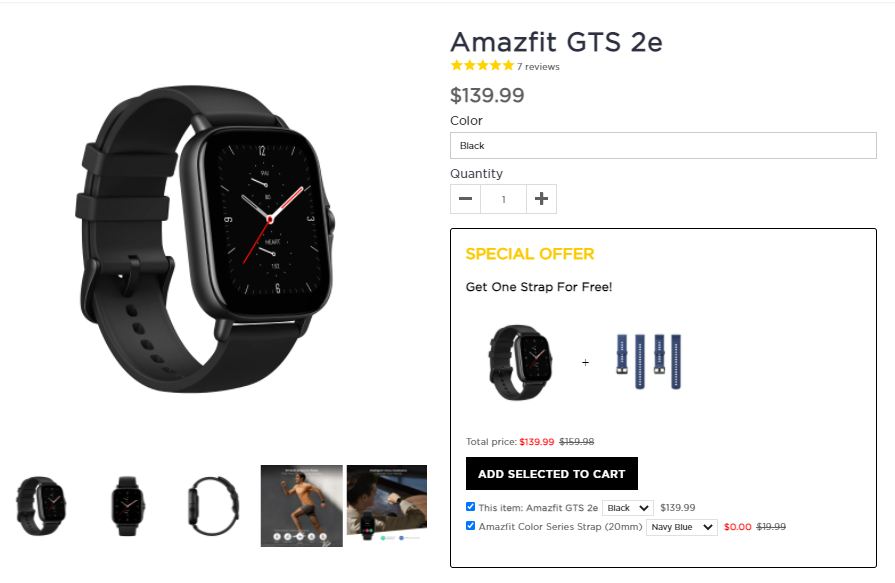
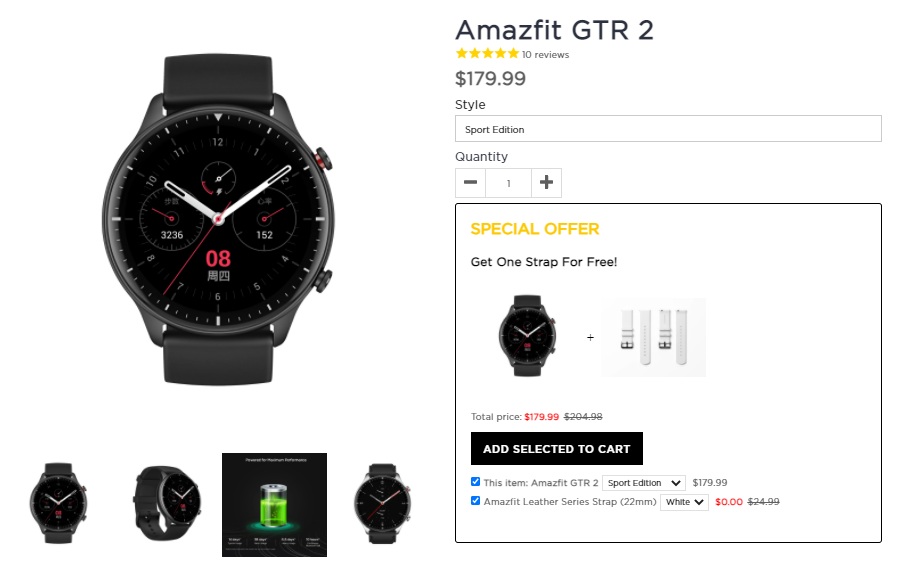
Amazfit is offering a free strap when you purchase select models

If you are picking up a new Amazfit smartwatch in the US anytime soon, you will be eligible for a free strap depending on the model you purchase. We don’t know how long the promo has been on, but it will end on the 16th of March in the US.

Amazfit Free Strap Promo

According to the promotional page, all purchases of the Amazfit GTS 2, Amazfit GTR 2, Amazfit GTR 2e, and Amazfit GTS 2e will come with a free strap. The straps usually sell for between $19.99 to $24.99 depending on the model of the watch.

Those who purchase the Amazfit GTR 2 or Amazfit GTR 2e will get a free Amazfit Leather Series Strap (22mm) and can choose if they want it in white or black. While those who purchase the Amazfit GTS 2 or Amazfit GTS 2e will get the Amazfit Coor Series Strap (20mm) and get to choose if they want it in Navy Blue, Coral Red, and Olive Green.

We checked other regions and found out that the promo is also on in Germany where it will end on March 8.


RELATED:

Narzo 30A vs Poco M3: Specs Comparison

A few days ago, Realme launched the new Narzo 30 series: a lineup targeted to young people with great specifications offered at an affordable price. The lowest-end variant of the series is the Realme Narzo 30A providing entry-level specifications but great performance. POCO is actually one of the best Realme’s rivals in the low-end segment: the Xiaomi subsidiary recently released the POCO M3 in the global market. While waiting for the Narzo 30A to exit the Indian market under another moniker (even though it was never confirmed), we think it is time to compare it with the POCO M3 in order to establish which one is the king of entry-level phones.

Realme Narzo 30A vs Xiaomi Poco M3

Realme Narzo 30A Xiaomi POCO M3
DIMENSIONS AND WEIGHT 164.5 x 75.9 x 9.8 mm, 205 grams 162.3 x 77.3 x 9.6 mm, 198 g
DISPLAY  6.5 inches, 720 x 1600p (HD+), IPS LCD  6.53 inches, 1080 x 2340p (Full HD+), IPS LCD
PROCESSOR MediaTek Helio G85, octa-core 2 GHz Qualcomm Snapdragon 662, octa-core 2.0 GHz
MEMORY  3 GB RAM, 32 GB – 4 GB RAM, 64 GB – micro SD dedicated slot  4 GB RAM, 64 GB – 4 GB RAM, 128 GB –  micro SD dedicated slot
SOFTWARE  Android 10, Realme UI  Android 10, MIUI
CONNECTIVITY  Wi-Fi 802.11 a/b/g/n/ac, Bluetooth 5.0, GPS  Wi-Fi 802.11 a/b/g/n/ac, Bluetooth 5, GPS
CAMERA Dual 13 + 2 MP, f/2.2 + f/2.4
8 MP f/2.0 front camera
Triple 48 + 8 + 2  MP, f/1.8 + f/2.4 + f/2.4
8 MP f/2.1 front camera
BATTERY 6000 mAh, fast charging 18W  6000 mAh, fast charging 18W
ADDITIONAL FEATURES Dual SIM slot, reverse charging Dual SIM slot, reverse charging

Design

Unfortunately, you can not expect a great design from devices in the low-end segment. Despite that, the Realme Narzo 30A and the POCO M3 have a pretty nice build quality and original aesthetics. I like the Realme Narzo 30A with its “laser” color variants composed of two pieces: a straight one on the upper part of the rear cover and a pattern on the lower part. Both the phones are made of plastic and they do not provide certification against water and dust. Fortunately, each of these devices is equipped with a fingerprint reader: it is placed on the side of the POCO M3 and on the rear of the Realme Narzo 30A.


Display

The displays on the Realme Narzo 30A and the POCO M3 are nothing special. Both come with a below-average HD+ resolution and IPS technology. The color reproduction is not very realistic and the definition is all but high, especially if we consider that these phones come with 6.5-inch displays. The Realme Narzo 30A is actually better because it sports a higher brightness (470 nits of typical brightness and 570 nits of peak brightness), but the differences are marginal. The phones have a waterdrop notch for the selfie camera.


Specs & Software

The POCO M3 is equipped with a Snapdragon 662 chipset, while the Realme Narzo 30A is powered by the Helio G85. While the Helio G85 is slightly more powerful than the Snapdragon 662 on benchmarks, the POCO M3 actually provides better memory configurations and faster internal storage, that is why it wins the hardware comparison. The RAM goes up to 6 GB in the most expensive configuration, and you get either UFS 2.1 or UFS 2.2 storage. The Realme Narzo 30A has just 4 GB of RAM in the best configuration paired with eMMC native storage. Both the phones run Android 10 as the operating system out of the box.


Camera

The POCO M3 has a superior camera department to the Realme Narzo 30A. With the POCO M3, you get a 48 MP main camera, a 2 MP macro camera and a 2 MP depth sensor. The Realme Narzo 30A has an inferior 13 MP main camera and just one 2 MP depth sensor. There is no challenge: the POCO M3 is able to provide a better photo quality with a higher level of detail, as well as better macro shots.


Battery

Both Realme Narzo 30A and POCO M3 are equipped with a 6000 mAh battery. Their 6000 mAh batteries are the strongest point of these devices as they allow them to reach three days of battery life even with pretty intensive usage. Further, the phones support 18W fast charging and even reverse charging (only through the USB cable). These are real battery phones among the best in the whole market.


Price

The starting price of the Realme Narzo 30A in the Indian market is Rs. 9,799 / $134, while POCO M3 starts from Rs. 11,970 / $164. With the Realme Narzo 30A, you can save money, but the POCO M3 is actually a better phone thanks to its better memory configurations (more RAM and UFS internal storage) and higher-end cameras (48 MP sensor and a pair of 2 MP additional ones). The POCO M3 wins the comparison, while you should go for the Realme Narzo 30A only if you want to pay the lowest amount of money possible for your new phone (you would still get a similar experience if we exclude the camera).


Realme Narzo 30A vs Xiaomi Poco M3: PRO and CONS

Realme Narzo 30A

PRO

  • Slightly more compact
  • Powerful chipset
  • Interesting design

CONS

  • Limited availability


Xiaomi POCO M3

PRO

  • Slightly wider display
  • Better rear camera
  • UFS storage
  • Stereo speakers
  • IR blaster
  • Worldwide availability

CONS

  • Nothing particular


RELATED

Check the latest videos from our YouTube channel and subscribe:

Next Week in Tech: OnePlus announcement, ROG Phone 5 is coming, OPPO Find X3 and F19 series launch, and more

The month of March is packed full of announcements and just like this week, there will be multiple launches in the second week too, most of which we are already expecting and a few others that may come as a surprise. Here’s what we are sure of:

OnePlus March 8

OnePlus March 8 announcement

Kicking off the work week on Monday, the 8th of March is OnePlus with a special announcement. We are pretty sure it won’t be announcing the OnePlus 9 series but we expect to get official details with respect to the upcoming phones. There are reports that OnePlus will be announcing its partnership with Hasselblad. Regardless, you should not miss it.


OPPO F19 Series Pro Plus 5G Teaser Poster Leak

OPPO F19 Pro series and OPPO Band Style

OPPO has two big launch events next week and the first is the unveiling of the F19 Pro series and the OPPO Band Style. The phones and the fitness tracker will be announced in India on Monday, March 8, but we expect them to make their way to other markets too.


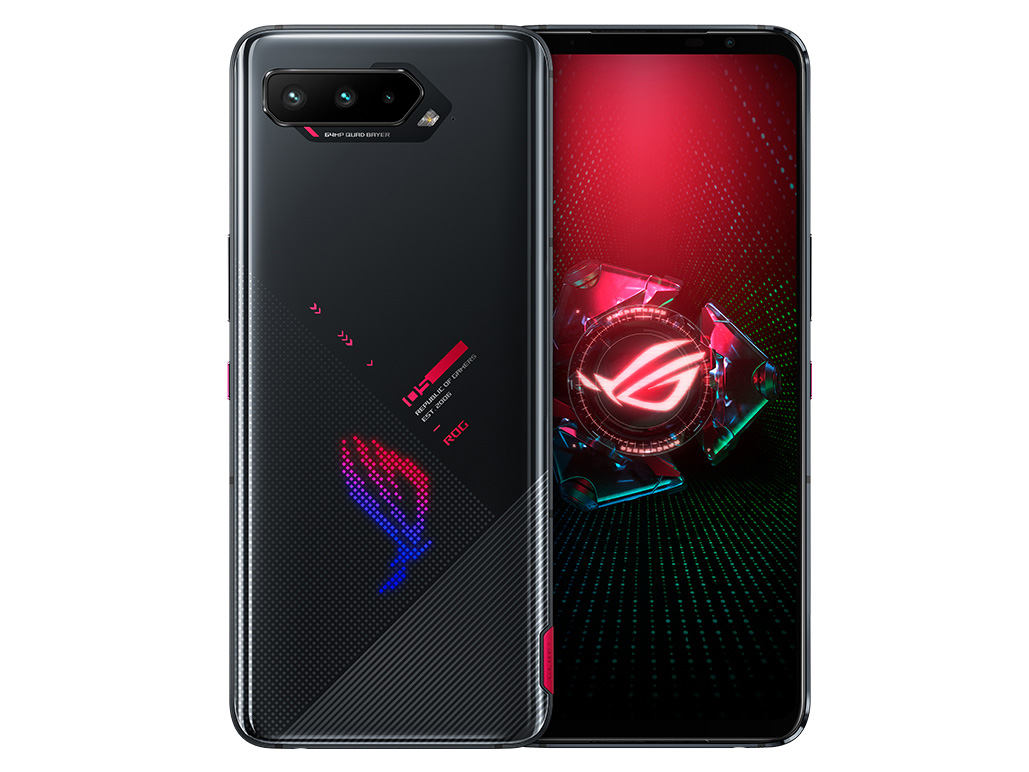
ROG Phone 5

ASUS ROG Phone 5

Last week, Nubia unveiled its gaming flagship phones for 2021 – the Red Magic 6 and Red Magic 6 Pro. ASUS will be challenging them when it announces the ROG Phone 5 next week on March 10. The phone has already been ranked by DxOMark as the smartphone with the best audio performance weeks before its release. It has also set a new record on the Chinese benchmark app, Master Lu.


OPPO Find X3 series March 11 launch date leaked poster-

OPPO Find X3 series

OPPO’s second launch event for the week is the bigger one as it is for the launch of the Find X3 series. There will be multiple models – a Find X3 Pro, Find X3, Find X3 Neo, and a Find X3 Lite. The Find X3 Pro will set a new record with respect to its display. The FInd X3 Pro will also come with impressive cameras as OPPO has revealed that it has more than a single primary rear camera. The launch will happen in China and globally on Thursday, March 11.


RELATED:


HONOR 20, 20 Pro, and V20 get Magic UI 4.0 global stable update

Huawei’s ex-sister brand HONOR had already confirmed that the older devices will continue to receive the software updates as planned. Accordingly, the HONOR 20 series and V20 are now getting the Magic UI 4.0 global stable update.

If you recall, the stable update has already been rolled out to these devices in China. Now, the global variants of the HONOR 20, HONOR 20 Pro, and HONOR V20 are getting the Magic UI 4.0 global stable version. Carrying the build with firmware version 11.0.0.138, an OTA update weighing about 1.84GB in size is rolling out.

This software version is based on the EMUI 11 which is in turn an Android 10-based UI without GMS. Huawei unveiled the EMUI 11 back in September 2020. Due to the tussle with the US, the company couldn’t incorporate the latest Android 11 as Google was barred from working with the Chinese giant.

That said, the UI still had improved features like Photo sharing Privacy, Gallery, ringtones, UI animation, multiwindow mode, and more. The Magic UI 4.0, which is based on this, also has the relevant features and if you are having one of the devices mentioned above, you can expect the following features to land on your device:

  •  Artistic themes
  • Multi-screen collaboration
  • Smoother animation
  • Super notepad
  • Subtle effect
  • Rhythmic ringtones
  • Notepad & Photo sharing Privacy
  • Undisturbed screen protection, and more.

Anyway, the update is reportedly in the early stages and it might take a few days to reach everyone as a result of staggered rollout. Huawei has announced the plan of updating the flagships to its HarmonyOS in the future and we will have to wait and see what HONOR does for its devices.

RELATED:
 

(via)

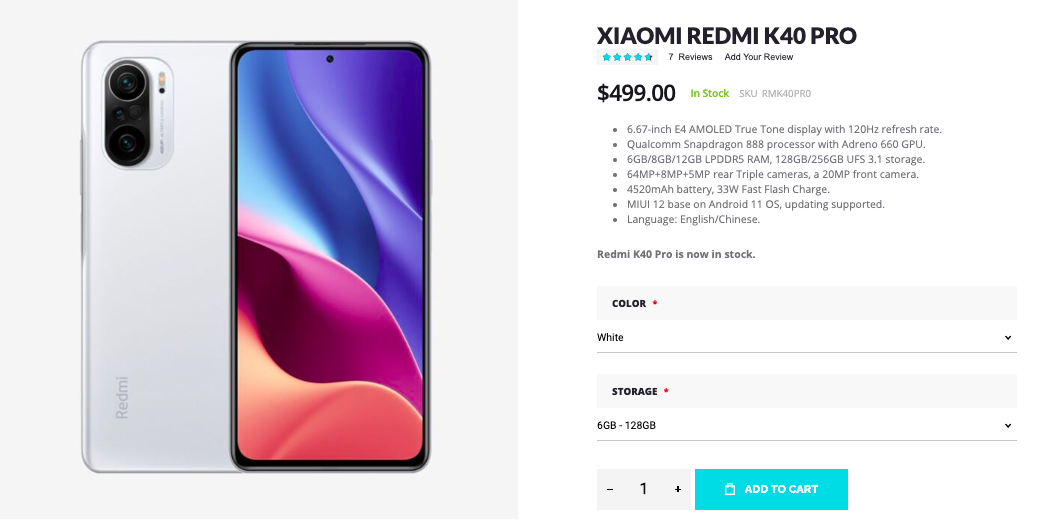
Xiaomi Redmi K40 Pro is now available on Giztop for $499 only. 

Attention readers! Redmi K40 Pro is now in stock at Giztop

redmi k40 pro in stock

This flagship which comes with the same 6.67 inch super AMOLED display and Corning Gorilla Glass 5 Protection as Redmi K40, differs in its powerful processor and camera setup. While Redmi K40 is powered by Snapdragon 870 5G and an Octa-Core processor the Redmi K40 Pro runs on Snapdragon 888 processor with Adreno 660 GPU. 

The powerful triple rear camera setup is also upgraded with a 64MP main camera (48MP for Redmi K40 ) and an 8MP ultra-wide and 5MP macro camera. The 20MP selfie camera remains the same for both the Redmi K40 and K40 pro versions. 

Xiaomi Redmi K40 Pro has a 4520 mAh battery and 33W fast charge which charges your phone to 100% in just 52 minutes.

For more detailed information and comparisons, you can check out this article on Gizmochina.

Redmi K40 Pro featured

For all global customers, Xiaomi Redmi K40 Pro is now available for purchase. Please note that this smartphone is of the Chinese Edition but comes with the Global Version software (pre-installed) and the Google Play Store. Also, the smartphone supports OTA updates and multiple languages like English, Spanish, Portuguese, Russian, Italian, etc. 

Xiaomi Redmi K40 Pro is now available for purchase at Giztop for the following price :

STORAGE  COLOR PRICE
6GB – 128GB White $499
6GB – 128GB Black/Blue $529
8GB – 128GB Black $569
8GB – 128GB Blue/White $599
8GB – 256GB Black  $649
8GB – 256GB Blue/White $659


So go and grab your Xiaomi Redmi K40 Pro from Giztop asap.


Official teaser shows the Moto G10 Power is not a rebadged Moto G10

Motorola India will unveil the Moto G10 Power and Moto G30 on Tuesday, March 9. There are reports that the former is a rebadge of the Moto G10 that launched in Europe last month due to their near-identical design. A new teaser from Motorola has now revealed that they are two different devices.

A tweet posted by the Motorola India account has revealed some of the key specs of the Motorola G10 Power and at the top of the list is the battery capacity. Unlike the Moto G10 which has a 5000mAh battery, the Moto G10 Power has a 6000mAh battery.

The promotional page put on Flipkart ahead of its release on Tuesday says owners will be able to stream music for 190 hours, play videos for 23 hours, or browse the web for 20 hours on a single charge.

Moto G10 Power cameras

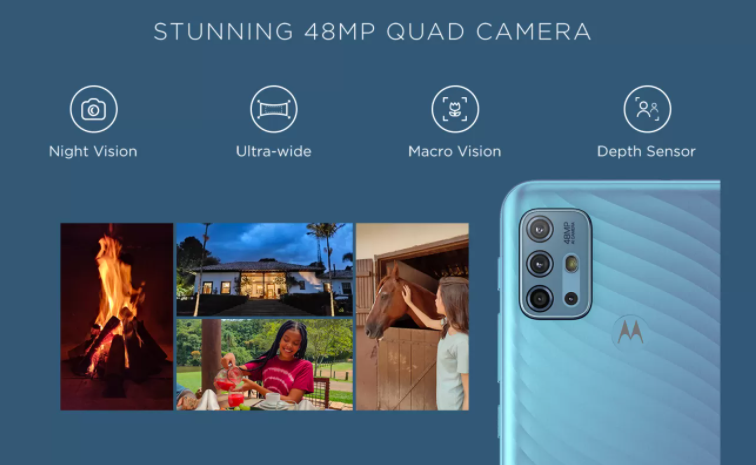
It has also been revealed that the phone will have a 48MP quad-camera system that includes an ultrawide angle camera, a macro camera, and a depth sensor. The camera app will have a feature called Night Vision which is Motorola’s version of Night Mode for shooting in low-light. The Moto G10 Power will also have ThinkShield for Advanced Security and run a Near-Stock Version of Android 11 out of the box.

Another tweet posted by the manufacturer reveals some of the key specs of the Moto G30 for India. It will have a 64MP quad-camera system and a 6.5-inch Max Vision 90Hz display, and just like the Moto G10 Power, the display has a waterdrop notch for the front-facing camera. It too will run a Near-Stock Version of Android 11 and have ThinkShield For Advanced Security.


RELATED:

Xiaomi Redmi Note 10 Pro (Max) teardown shows 108MP camera, Z-axis vibration motor, & more

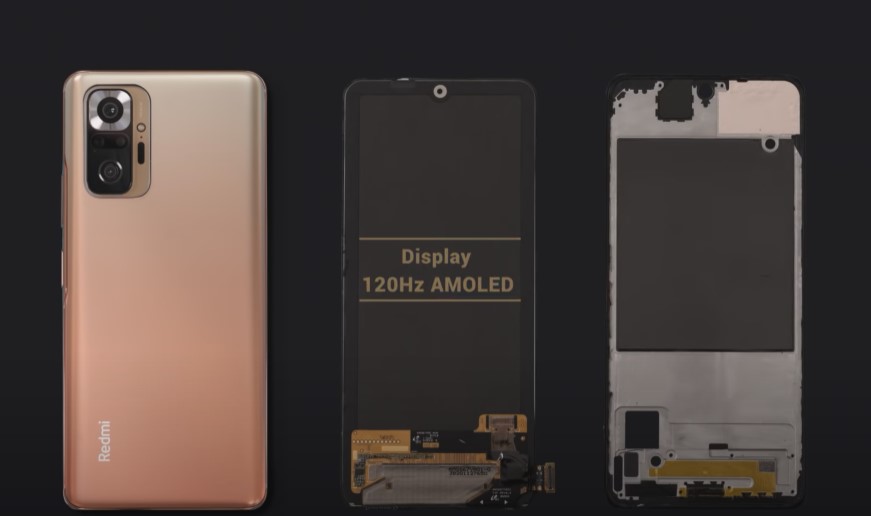
Xiaomi launched the Redmi Note 10 series in India and other Global markets on March 4. The sales of the devices are expected to begin Globally in a couple of days and from March 16 in India. Ahead of this, Xiaomi has released an official teardown of the Redmi Note 10 Pro/ Redmi Note 10 Pro Max.

Redmi Note 10 Pro / Max Teardown
Credit: Xiaomi/YouTube

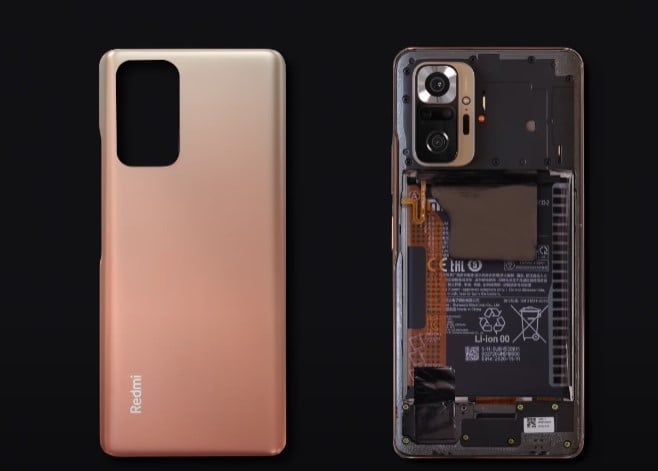
In the YouTube video, released by Xiaomi officially, the device being torn down is the Gradient Bronze variant of the Global Redmi Note 10 Pro. We already know that the device is the almost same as the Redmi Note 10 Pro Max in India.

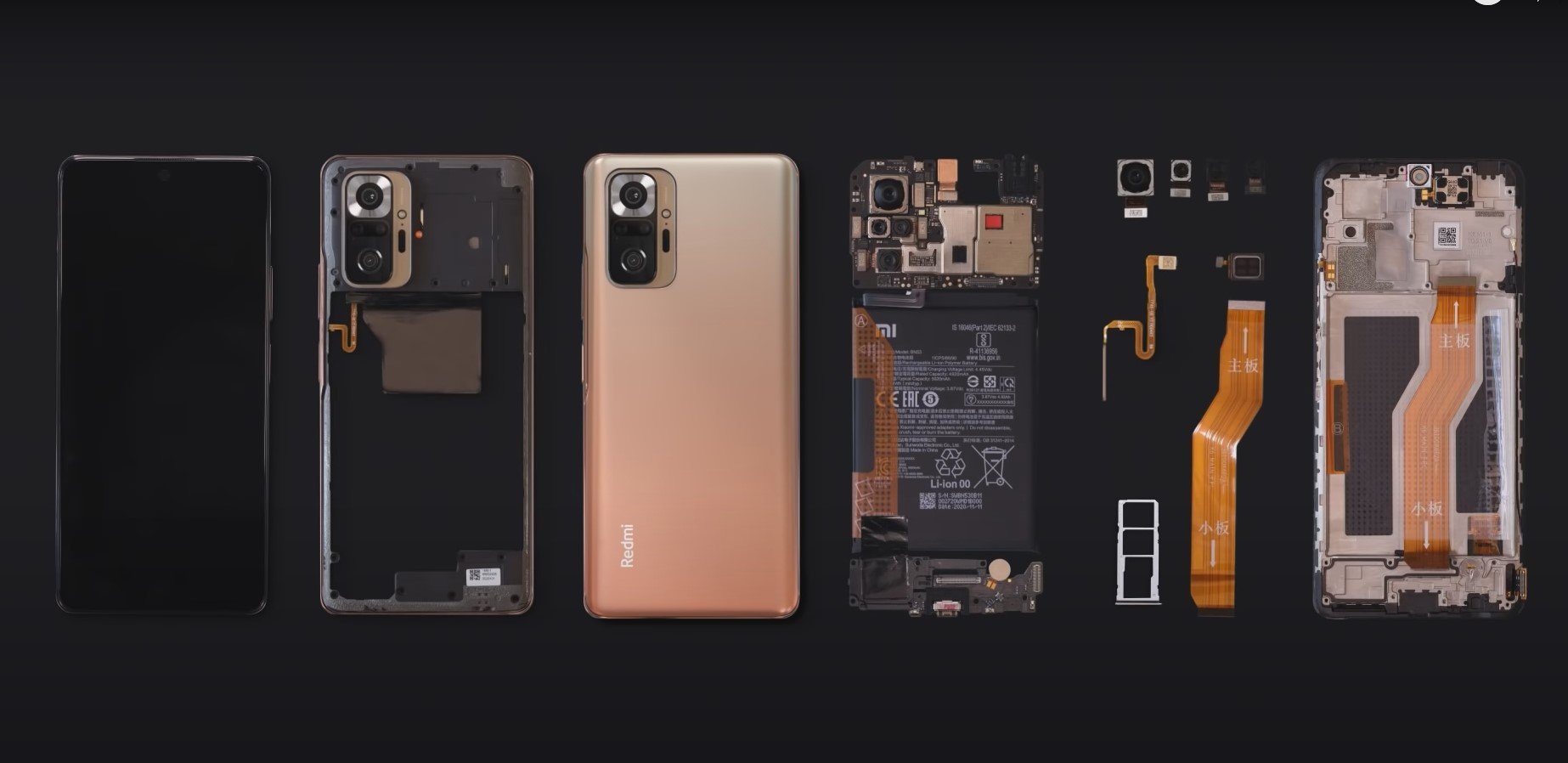
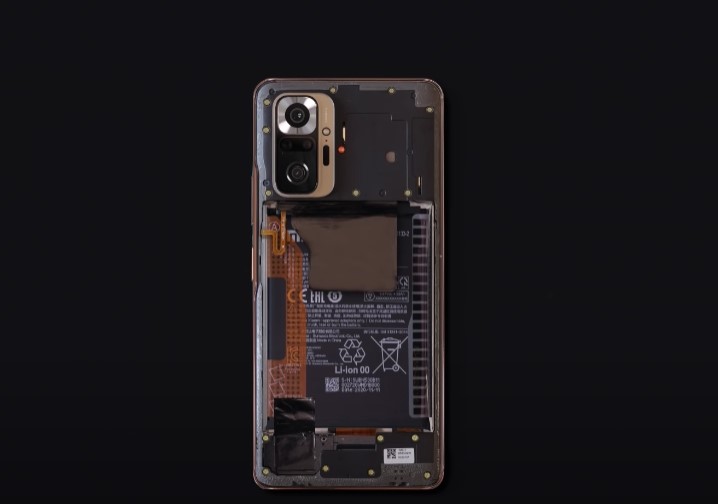
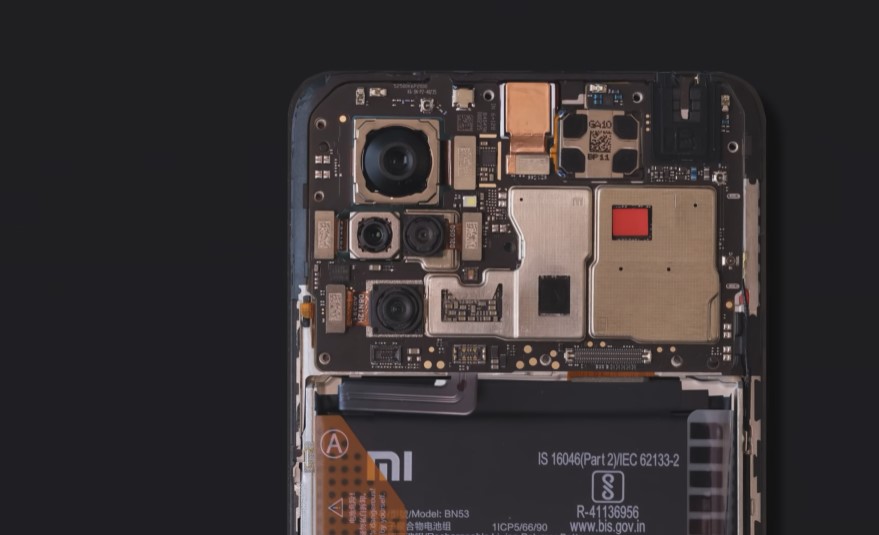
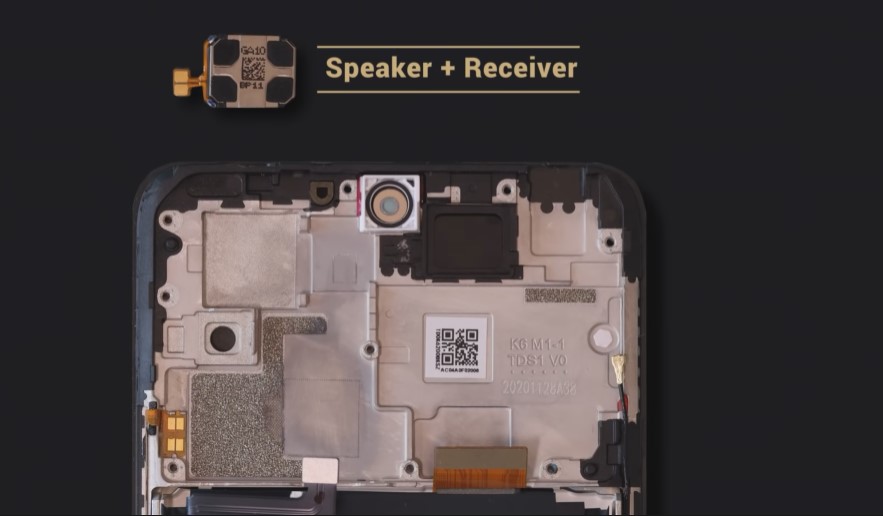
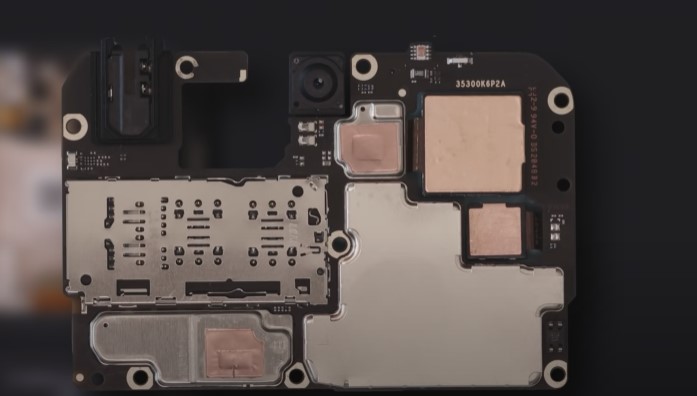
The video begins with removing the back panel cover and showing the rear of the device. Here, we see three parts already- The top portion with processor, storage, camera, one of the dual speakers, battery at the center, and the bottom part.

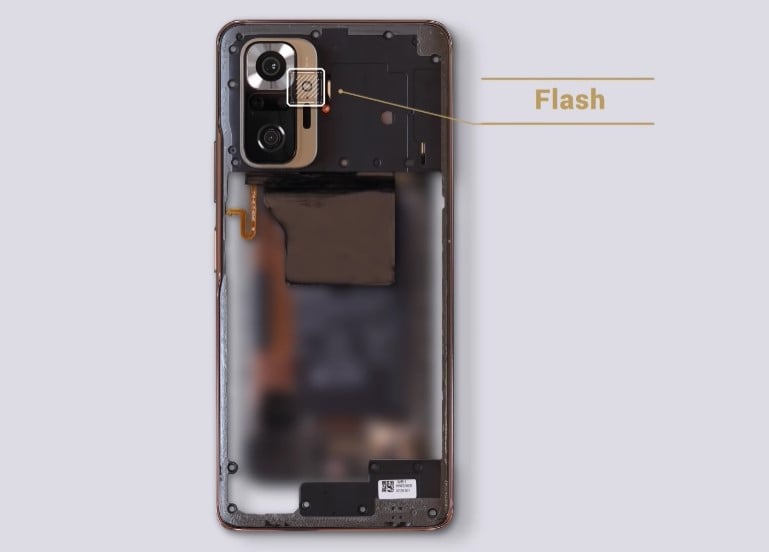
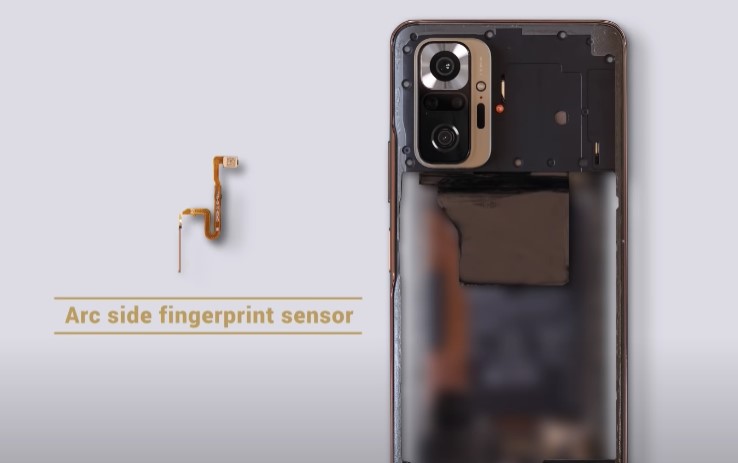
First, the top inside portion of the rear panel that has the camera and CPU cover, along with the side frame is removed. This also has the connection to the Arc side-fingerprint sensor. As we all know, the LED Flash is beside the camera setup and here, it looks like Xiaomi has soldered it onto the motherboard.

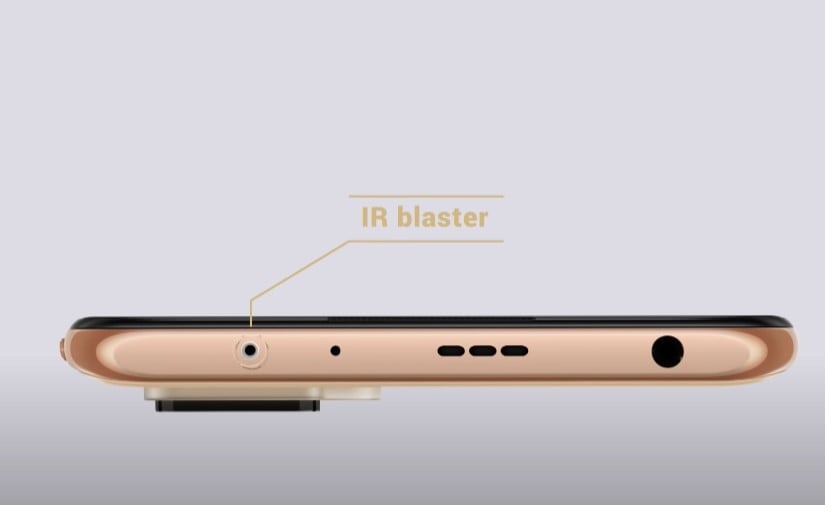
Moving on, we see the huge 108MP Samsung HM2 sensor along with ultra-wide, Telemacro, and depth sensor. Do note that all of them are placed separately and not as a single module. The top portion also has IR blaster, 3.5mm audio jack.

At the center resides the single 16MP selfie camera which is revealed by turning the top portion of the arrangement. Speaking of which, the inverted top portion shows the CPU, LPDDR4x RAM, covered in metal plate, and SIM card tray.

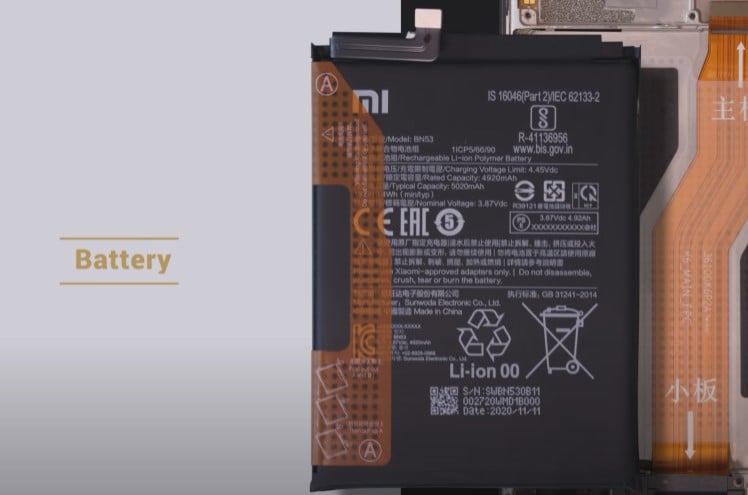
Also, one of the Stereo speakers/receiving unit is actually fixed to the mid-frame and not the top portion we saw above. After, this, decoupling the battery from the center position shows us the manufacturer in detail. The rated 4,920mAh/Typical 5,020mAh Li-ion Polymer battery is made by China’s Sunwoda Electronics Co Ltd.,

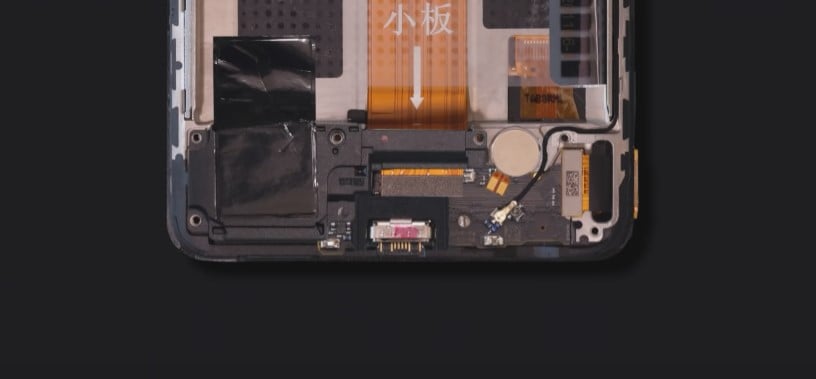
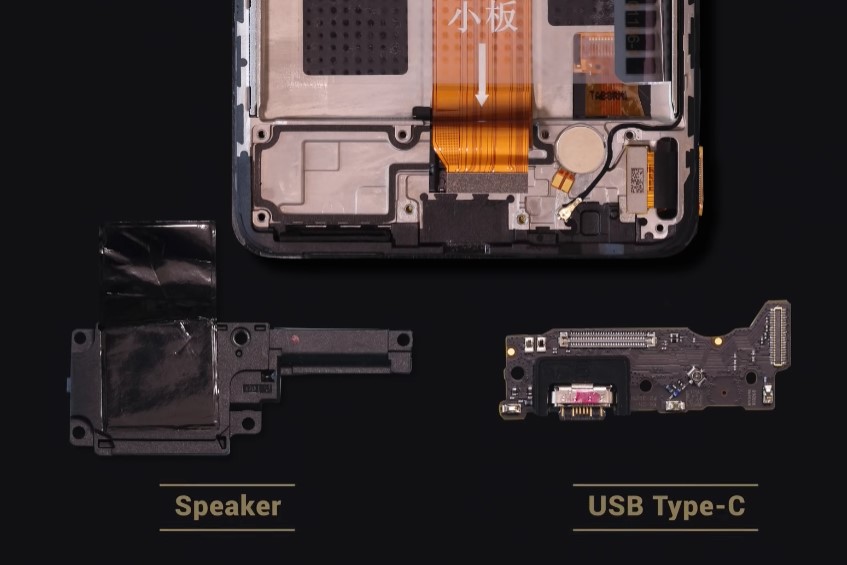
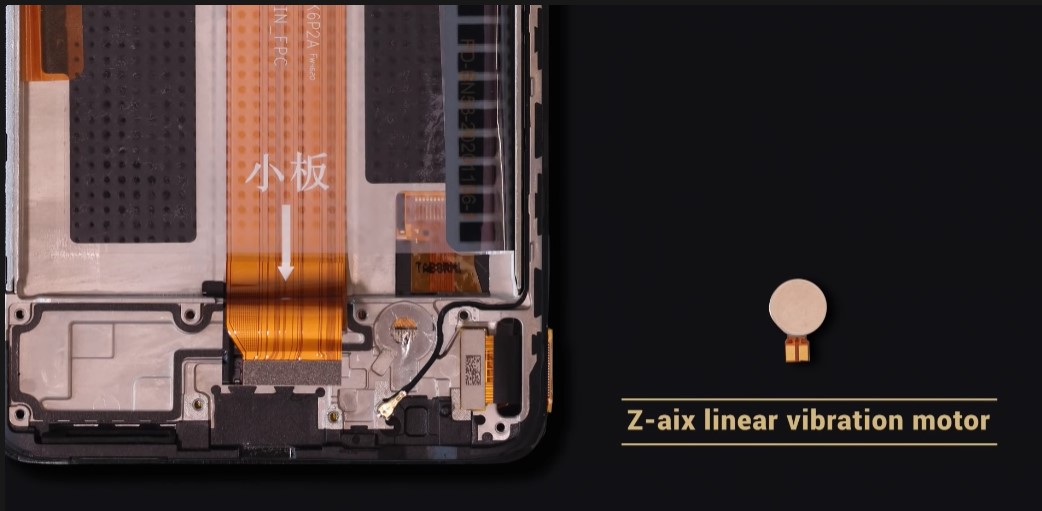
Last but not the least, we see the display and the bottom portion. Here, the bottom port has the other speaker, Type-C port, Z-Axis linear vibration motor, and is connected via a long ribbon cable to the motherboard.

RELATED:

Giveaway: win 3 conico outdoor security cameras

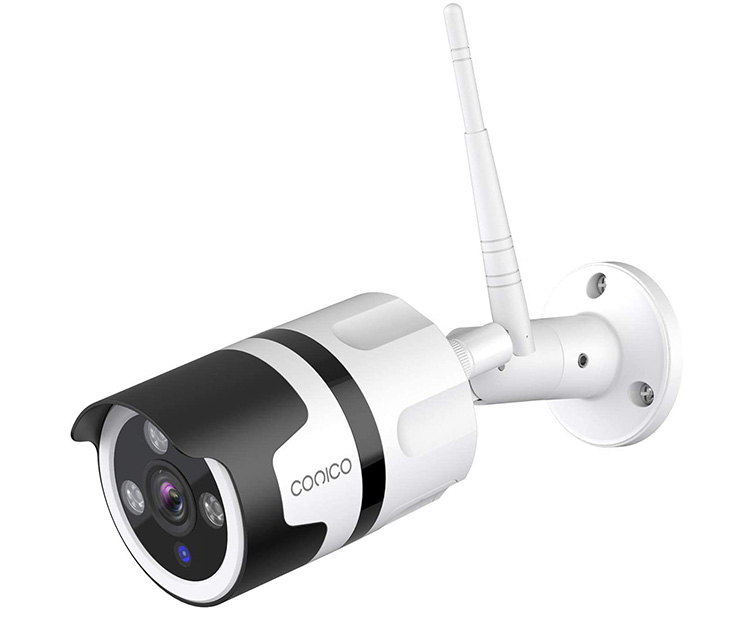
Gizmochina along with Conico is conducting 3 units of Conico Outdoor Security Camera as a giveaway gift to 3 lucky readers. Like always, you just have to follow the steps mentioned on the Gleam widget to get a chance to win these amazing gifts.

Conico Outdoor Security Camera

Conico outdoor security camera supports 1080P video, and with IP66 waterproof feature. The camera comes with sound motion detection, supports night vision. It’s now available for $28 on Amazon.

How to enter this giveaway? Just follow this step:

First, please visit Gizmochina Youtube channel, and subscribe to Gizmochina’s Youtube channel.

The winner will be posted on Gizmochina’s twitter and Gizmochina’s Facebook, so please follow us on Twitter and Facebook, so that you don’t miss the winner announcement.

Terms & Conditions:

1. The giveaway is an international giveaway.
2. We are not responsible for lost shipments.
3. We are not responsible for any duties, import taxes that you may incur.
4. We reserve all rights to make any changes to this giveaway.
5. The prize will be shipped in a month when the giveaway ends.

Just follow the steps mentioned in the Gleam widget to participate in the giveaway.

Once again, good luck.

Win 3 Units Outdoor Security Camera

New Xiaomi Mi 11 Lite 4G Specs leak reveals distinction between the India and Global variant

Xiaomi is expected to launch a few more devices in the Xiaomi Mi 11 series. Among these, the ‘Mi 11 Lite’ has leaked considerably in the past. It is probably coming in 4G and 5G versions in the respective markets. Now, a new specs leak reveals the distinction between the Mi 11 Lite Global and India variants.

Live shots of Xiaomi M2101K9AG(Mi 11 Lite)

A leak by Xiaomiui Telegram channel reveals the details of the Mi 11 Lite 4G that could be launching in India and other global markets soon. The info that is probably obtained from a firmware code shows that the Mi 11 Lite 4G is codenamed ‘courbet’ with ‘courbet_global’ and ‘courbetin_india’ names for the respective regions.

A recent Google Play Console listing of the 5G variant showed that its codename could be ‘renoir’. Anyway, the leak says that the Mi 11 Lite 4G whose model number is M2101K9AG, will feature a 90Hz FHD+ AMOLED display. This is a bit contradictory to the LCD panel that was rumored before.

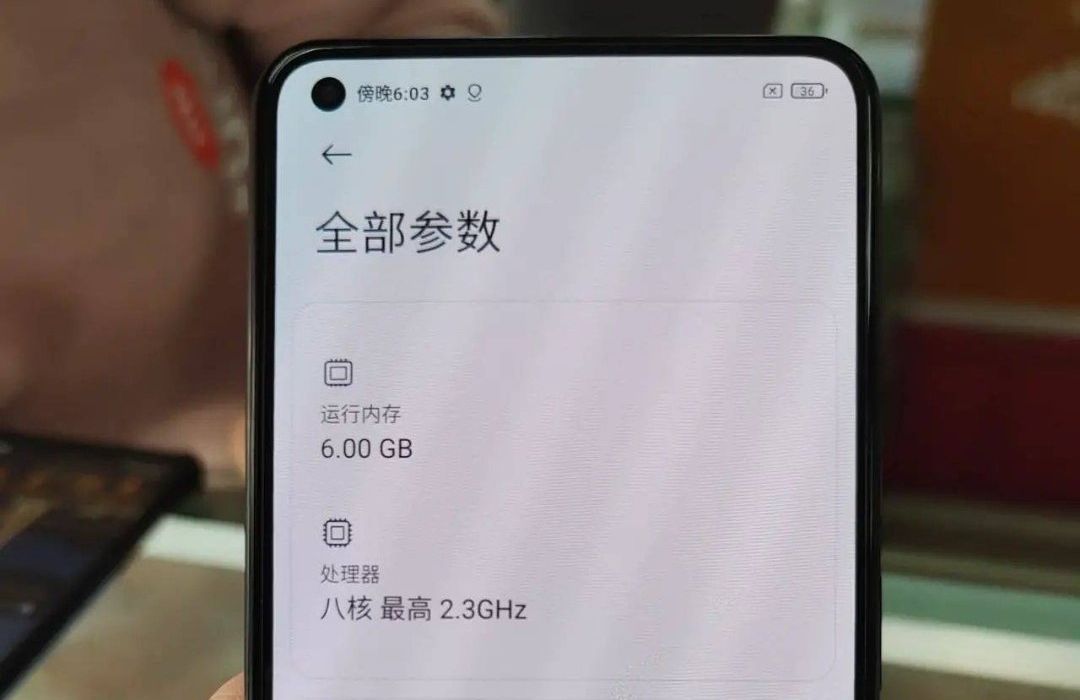
Moving on, it says that the device will feature an SM7125-based CPU which is hinting at the Qualcomm chipset. If that’s the case, the Snapdragon 720G could run the show for the 4G variant. This is a 2.3GHz processor and was also spotted on the settings of a recent Live images leak.

For cameras, the Mi 11 Lite 4G is expected to feature a Triple-camera setup and the design could be similar to the Xiaomi Mi 11. However, this isn’t confirmed yet. The sensors, on the other hand, are expected to be the 64MP primary lens(could be Samsung GW2 sensor).

Additionally, the new leaks say the Global variant would get the ‘macro’ lens while the Indian version would opt for a ‘depth’ sensor(could be 5MP sensors). We can expect the second sensor to be a 0.6x 8MP ultra-wide lens.

Other specs of the 4G variant include a 4,250mAh battery with 33W wired and reverse charging support,  MIUI 12/12.5, black, blue, and pink colors, 6/8GB RAM, 64/128GB storage, Wi-Fi 5GHz, and Bluetooth 5.1.

RELATED:

Samsung Galaxy M51 is the first Galaxy M series device to get One UI Core 3.1 (Android 11) update

The Galaxy M51 was the most-expensive Galaxy M series smartphone up until Galaxy M62 was released a few days back. This handset debuted with One UI Core 2.1 based on Android 10. Months after its release, Samsung is now rolling out the Android 11-based One UI 3.1 core update for this phone.

Samsung Galaxy M51 Celestial Black Featured

Unlike many Samsung budget smartphones, the Galaxy M51 did not receive the One UI Core 2.5 update. It also did not get the One UI Core 3.0 (Android 11) update. Instead, the South Korean tech giant is updating it directly to One UI Core 3.1.

In other words, the Galaxy M51 is the first Galaxy M series smartphone to get the One UI 3.1 Core update based on Android 11.

According to SamMobile, the update for this device is currently live in Russia with firmware version M515FXXU2CUB7. Apart from bringing Android 11 and new features, the latest system update for the Galaxy M51 also bumps up the security patch level to March 2021.

Right now, the software build is being pushed in batches, and therefore, it may take time to reach every unit in the country. Also, we can expect Samsung to extend the availability of this update to more regions in the coming days.

Anyway, if you happen to own this handset, then head over to Settings > Software update > Download and install to check whether your phone has received the OTA update yet.


RELATED:


realme X7 and X7 Pro will get Android 11 beta update only in Q2 2021 in India

Earlier last month, realme launched the realme X7 series in India consisting of two smartphones, namely realme X7 and realme X7 Pro. Despite getting released in February 2021, these phones debuted with realme UI based on Android 10. Now, a month after their announcement, the brand has finally revealed when these handsets will be updated to Android 11 (realme UI 2.0).

realme X7 Featured
realme X7

Both the realme X7 and realme X7 Pro sold in India are 5G smartphones powered by MediaTek SoCs. The former is a rebranded realme V15 5G, whereas the latter is the original device that was released in China last year.

These phones start at ₹19,999 and go up to ₹29,999. In other words, they are expensive than the Indian smartphone market’s average ASP. But that’s fine as these devices not only offer 5G but also other goodies.

However, India does not have 5G networks. Even if the latest mobile networks go live by the end of 2021, it may take years to reach most parts of the country. Hence, buyers of the realme X7 series will need to hold on to their handset for a long time.

realme X7 Pro Featured
realme X7 Pro

But the problem is that realme X7 and realme X7 Pro may not get software support for that long. According to the updated realme UI 2.0 update timeline, these devices will start receiving Android 11 beta builds only in Q2 2021. 

So that could be anytime from April to June. This means the stable update will be rolling out even later. Considering these factors, we can expect realme to provide one more major update in the form of Android 12 (or realme UI 3.0).

Hence, basically, users only get to experience a single new Android release. Hopefully, realme or any other brands for that matter stop launching new smartphones with older software.


RELATED:


(Via)

realme narzo 20 is only the second realme phone to get Android 11 stable update in India

Chinese smartphone maker realme unveiled realme UI 2.0 based on Android 11 in September 2020. Just like the previous iteration, the new version of the band’s mobile software is basically a tweaked variant of the latest ColorOS 11. The company’s realme narzo 20 is one of the many eligible devices for this update. It has now finally begun to get the stable release.

realme narzo 20 relame UI 2.0 Android 11 Stable Update

Although realme has been seeding realme UI 2.0 beta builds to select eligible handsets since last September, only a single phone called realme X50 Pro 5G is on the stable build. But not anymore.

Because the brand has finally started rolling out realme UI 2.0 stable build for the realme narzo 20. Hence, this device has now become only the second realme smartphone to get the Android 11 stable update in India. For those unaware, this phone has been receiving beta builds since late November 2020.

It’s sad that though realme offers some good hardware for affordable price tags, the company’s software support is subpar. One of the firm’s old handset known as realme C2 got its Android 10 (realme UI) update only recently.

But credit where credit’s due, realme is good at proving security patches, unlike Xiaomi. The latter, however, is much better at supporting its devices for over a long time with multiple MIUI and Android updates even for budget models.

That said, the realme UI 2.0 (Android 11) stable update for realme narzo 20 comes with build number RMX2193_11.C.06. The update is currently rolling out in batches for users on the latest beta release as well as select stable channel users who are on build version RMX2193_11.A.25.

The update may take time to reach your unit. But you can head over to Settings > Software Update to check whether your phone has received it yet.


RELATED:


OPPO Reno5 K pricing confirmed, goes on sale from today

OPPO announced the OPPO Reno5 K smartphone in China on Feb. 25 in China. At that time, the company did not confirm its pricing and availability. The Reno5 K has finally gone on sale in China starting from today. It has arrived with a starting price of 2,699 Yuan (~$415).

OPPO Reno5 K pricing

The OPPO Reno5 K variants such as 8 GB RAM + 128 GB storage and 12 GB RAM + 256 GB storage are priced at 2,699 Yuan (~$415) and 2,999 Yuan (~$461) in China. The handset is now listed for purchase through multiple Chinese retailer platforms such as OPPO China’s online store, Tmall, JD.com, and so on. It comes in two color options such as Green Breeze and, Starry Dream, and Night Black.

OPPO Reno5 K
OPPO Reno5 K

OPPO Reno5 K specifications

The OPPO Reno5 K has a 6.43-inch AMOLED screen with a punch-hole design. It supports FHD+ resolution, a 20:9 aspect ratio, a 90Hz refresh rate, and an in-screen fingerprint scanner.

The OPPO Reno5 K is driven by the Snapdragon 750G chipset with LPPDR4x RAM and UFS 2.1 storage. It has a 4,300mAh battery with 65W fast charging support. It boots to Android 11 OS and ColorOS 11.

The Reno5 K has a 32-megapixel front-facing camera. Its quad-camera setup has a 64-megapixel main camera, an 8-megapixel ultrawide lens, a 2-megapixel macro lens, and a 2-megapixel depth sensor.

The OPPO Reno5 K is a new chipset version of the Snapdragon 765G powered Reno5 5G smartphone that debuted back in December 2020 in China.

RELATED:

OPPO A94 for ~$299 brings 6.43-inch display, Helio P95, 48MP quad cameras, and 30W fast charging

OPPO has silently launched a new A-series smartphone called the OPPO A94 in UAE. The smartphone is now listed on OPPO UAE’s website with full specifications.

OPPO A94 specifications and features

The OPPO A94 has a 6.43-inch AMOLED display with a hole-punch design. It offers a Full HD+ resolution of 1080 x 2400 pixels, a regular refresh rate of 60Hz, up to 180Hz touch sampling rate, 409ppi pixel density, and 92 percent DCI-P3 color gamut, and 430nits brightness. The phone offers a screen-to-body ratio of 90.80 percent. It sports a slim profile of 7.8 grams and weighs 172 grams.

The OPPO A94 has a front camera of 32-megapixel that supports features like time-lapse, selfie beautification, night mode, and portrait mode.  It can shoot 1080p videos at 30fps with EIS support. The large-size camera island placed on the backside of the device has a 48-megapixel primary camera, an 8-megapixel wide-angle lens with 119-degree FOV, a 2-megapixel macro camera, and a 2-megapixel depth assist lens. The rear cameras offer features like portrait mode, time-lapse, portrait mode, panorama, night mode, EIS, 4K video shooting at 30fps, and 1080p slow-motion videos at 120fps.

OPPO A94
OPPO A94

The MediaTek Helio P95 chipset along with 8 GB of LPDDR4x RAM fuels the OPP A94. The phone ships with 128 GB of UFS 2.0 storage and it has a microSD card slot. The device is backed by a 4,310mAh battery that supports 30W VOOC Charge fast charging. The OPPO A94 runs on ColorOS 11.1 based Android 11 OS. It offers other features such as dual SIM, 4G VoLTE, Wi-Fi 802.11ac, Bluetooth 5.1, USB-C, an in-screen fingerprint sensor, and a 3.5mm audio jack.

The OPPO A94 is expected to get rebranded as OPPO Reno5 F in some markets like Kenya. In India, the same device is expected to launch as an F19 series phone on March 8.

OPPO A94 price and availability

Multiple e-commerce sites in UAE including Amazon UAE has listed the OPPO A94 for AED 1,099 (~$299). It comes in two colors like Fluid Black and Fantasy Purple.

RELATED:


Xiaomi Mi 10S moniker appears in multiple listings at JD, likely to launch this month

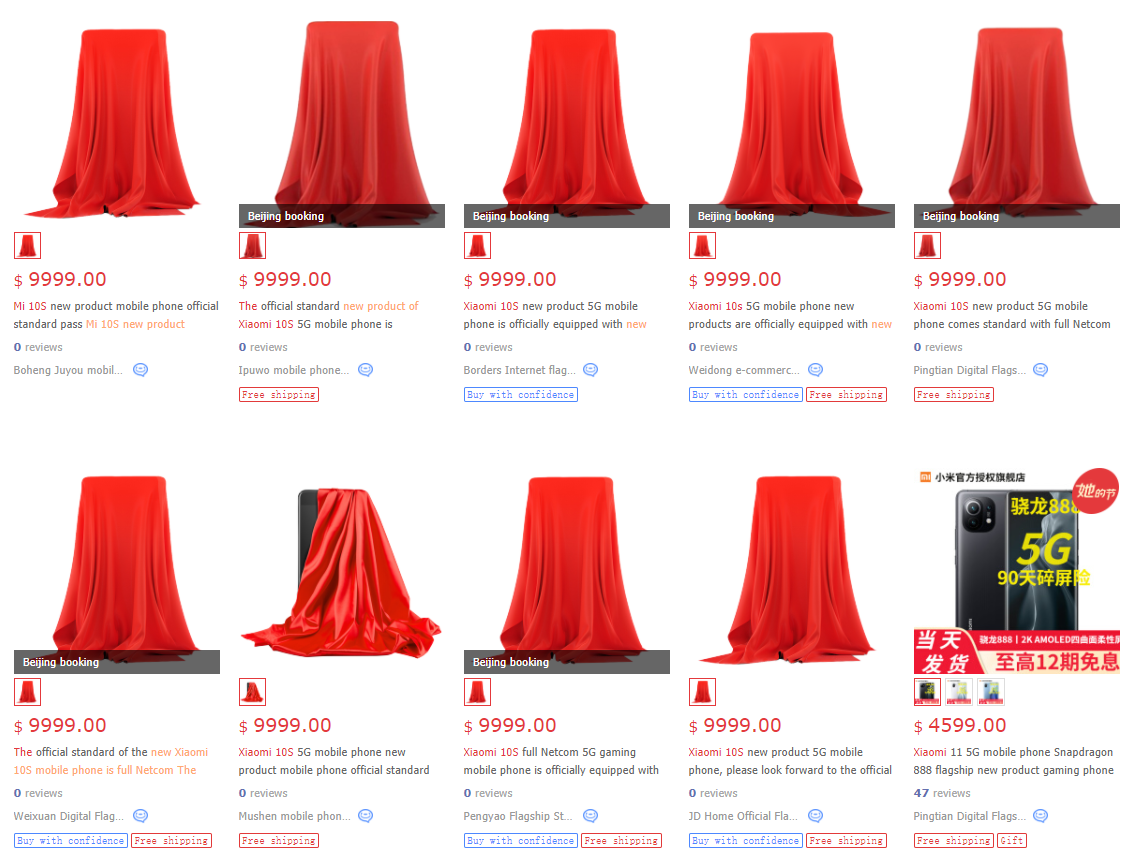
Last month, three Xiaomi devices with model numbers M2012J2SC, M2012K11AC, and M2012K11C at TENAA and 3C certification platforms. The M2012K11AC and M2012K11C have already gone official as the Redmi K40 and Redmi K40 Pro, respectively. It is speculated that the M2012J2SC may launch this month a new version of the Xiaomi Mi 10 handset from last year. Some reports claimed that the device may go official with the Xiaomi Mi 10S moniker. Multiple listings of the Mi 10S have appeared on JD.com, which indicates that the device may arrive with the rumored moniker.

None of the listings of the Xiaomi Mi 10S are official, meaning they are from third-party retailers. JD.com is known for listing upcoming smartphones with a placeholder image having a red-colored cloth over a phone. None of the listings have the specifications of the Mi 10S.

Xiaomi Mi 10S JD.com

The TENAA images of the alleged Mi 10S revealed that it will borrow its front design from the Xiaomi Mi 10 5G and its rear appearance from the Xiaomi Mi 10 Ultra. As far as specs are concerned, it is said to arrive with the Snapdragon 870. Recently, the handset was spotted with an SD870 chip and 8 GB of RAM at the Geekbench benchmarking platform.

Alleged Xiaomi Mi 10S TENAA images

The 3C appearance of the purported Xiaomi MI 10S revealed that it may carry support for 33W fast charging. The TENAA listing revealed that it has a 6.67-inch display, a 4,680mAh rated battery, and Android 11 OS. The display features curved edges and a hole-punch at the top-left corner. Rumors are rife that its other specs could be identical to the Mi 10 5G.

Xiaomi MI 10 5G specifications

Debuted back in February 2020, the Xiaomi Mi 10 5G has a 6.67-inch FHD+ AMOLED display that offers a Full HD+ resolution and a 90Hz refresh rate. It has a front camera of 20-megapixel and its rear camera setup has a 108-megapixel primary camera, a 13-megapixel ultrawide lens, a 2-megapixel macro lens, and a 2-megapixel depth. It is backed by a 4,780mAh battery that supports 33W fast charging. It features Snapdragon 865, LPDDR5 RAM, UFS 3.0 storage, and an in-screen fingerprint scanner.

RELATED:

Amazfit T-Rex Pro pricing and hands-on video leaked ahead of launch

Huami‘s premium sports watch, the Amazfit T-Rex may get a successor soon. The successor which will bear the moniker Amazfit T-Rex Pro has been the subject of a couple of leaks in recent times driving speculations that the launch is imminent. A comprehensive unboxing video of the T-Rex Pro has now appeared on YouTube.

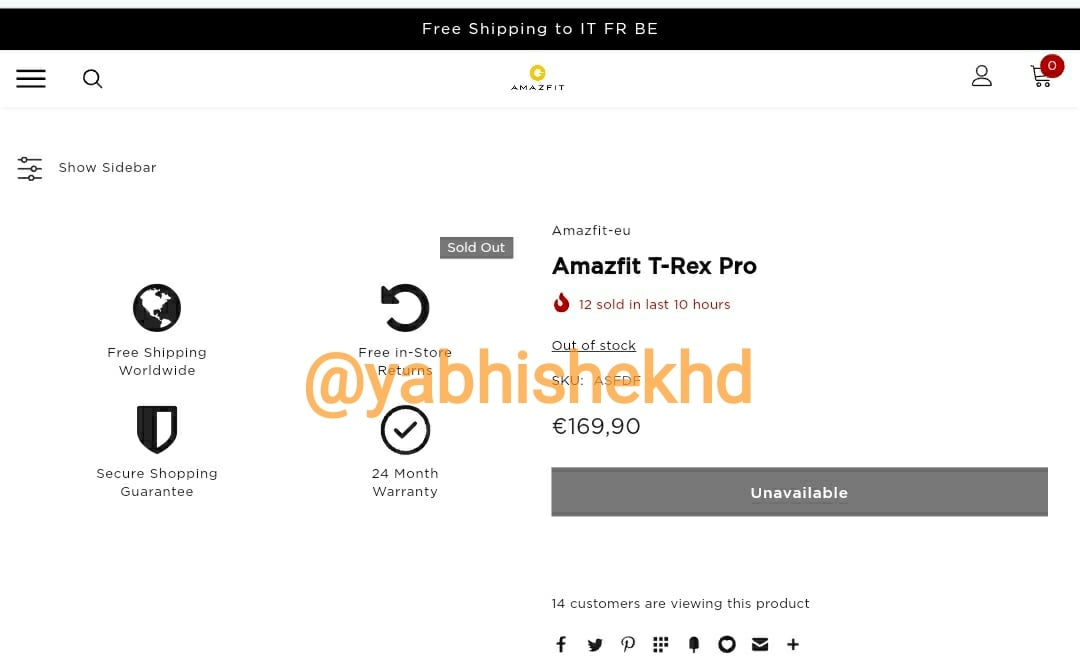
Also, a screenshot of the official Amazfit EU listing for the T-Rex Pro that is yet to go live has leaked on Twitter. The wearable device will be sold for €169,90. The T-Rex is presently listed on Amazfit website for €139,90.

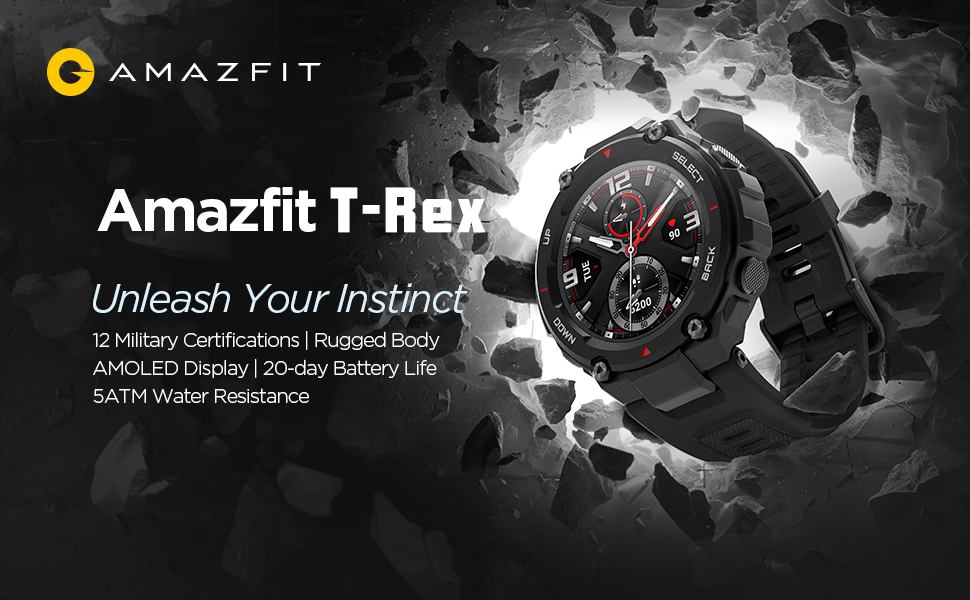
The video shows the T-Rex Pro still retains the same packaging as well as design as its predecessor.  The Pro version however, is said to feature a newer BioTracker 2 PPG sensor and a higher waterproof rating. Recall that the T-Rex has a waterproof rating of 5ATM but the T-Rex Pro rating is 10ATM which means the watch is truly waterproof and good for most watersports like swimming, sailing and snorkeling in shallow water.

Other specifications include a 1.3-inch AMOLED display with a resolutionof 360 x 360p and 277PPI. The display is protected by a layer of Corning Gorilla Glass 3 as well as an oleophobic coating. It also comes with a 3-axis acceleration sensor, 3-axis gyroscope,
Geomagnetic sensor, Altimeter, GPS, and now, GLONASS, BeiDou, Galileo navigation systems. It equally supports Bluetooth 5.0 BLE.

We also expects the T-Rex Pro to run on a new operating system based on RTOS. Under the hood, there is a 390mAh battery. On the T-Rex, Huami claims it offer up to 20 days of battery life on a single charge. With the software improvements, we expect the battery life to be longer.

An earlier leak suggests the upcoming smartwatch will be available in three colors – black, gray, and green. We think the camouflage version looked cool and Huami won’t likely skip that.

You can check the hands-on video below before it gets pulled down.

RELATED;