Advertisement

Apple could pair magnetic smart gloves for finer controls on Apple Glass

The Apple Glass might be paired with a magnetic glove to interact with the company’s long rumored AR and VR gadget. This product would use magnetic fields to determine the location of the users’ individual fingers.

Apple

According to an AppleInsider report, current day VR headsets arrive with a hand held controllers face an issue. While these systems can tell the location of the users’ hand in relation to the headset, these controllers are not able to accurately finding out the position of users’ individual fingers. in other words, hand held controllers might not be a great tool with AR headsets (augmented reality), where one might have to grab onto a physical object or other items necessary for AR applications.

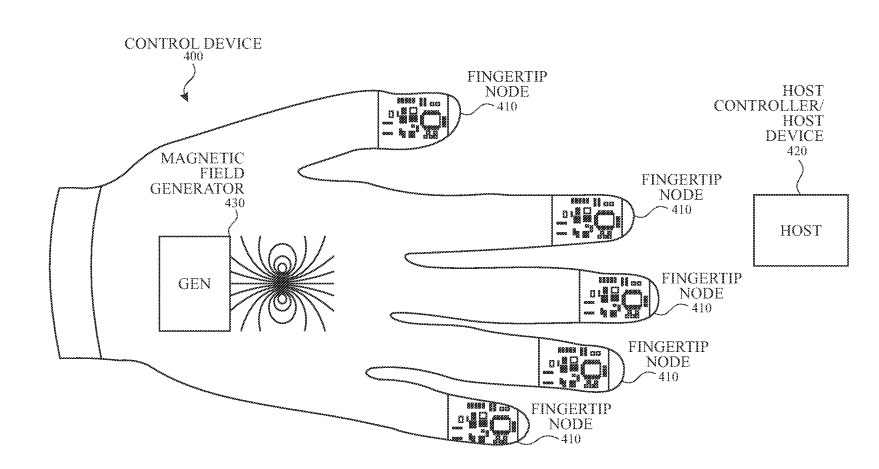
Thus, this magnetic glove might be even more useful for the Apple Glass, which is the Cupertino based giant’s long rumored AR glasses that may be paired with a controller less system for its interaction. This glove was seen in a recent patent that was filed by the US Patent and Trademark Office. The patent was titled “Magnetic sensor based proximity sensing.” This suggests that the iPhone maker could be creating a smart glove gadget that can accurately map the location of the users’ fingertips.
Apple

The patent states that this can be achieved through magnetic sensing technology. Apple could be implementing this technology through coil based magnetic field generator with a specific modulation, which would be situated on the back of a hand. These magnetic sensor could then be attached to each fingertip that would enable accurate mapping of the distance between these tips and the source. Unfortunately, it is unknown if the company is actually working on such a product or is just covering all bases, so stay tuned.

RELATED:


Samsung Galaxy F62 confirmed to feature 7,000mAh battery

Samsung will be launching the Galaxy F62 mid-range phone in India on Feb. 15. The mid-range phone is confirmed to arrive with a flagship-grade processor. Now, the updated promo page of the phone at Flipkart has revealed that it is equipped with a behemoth battery.

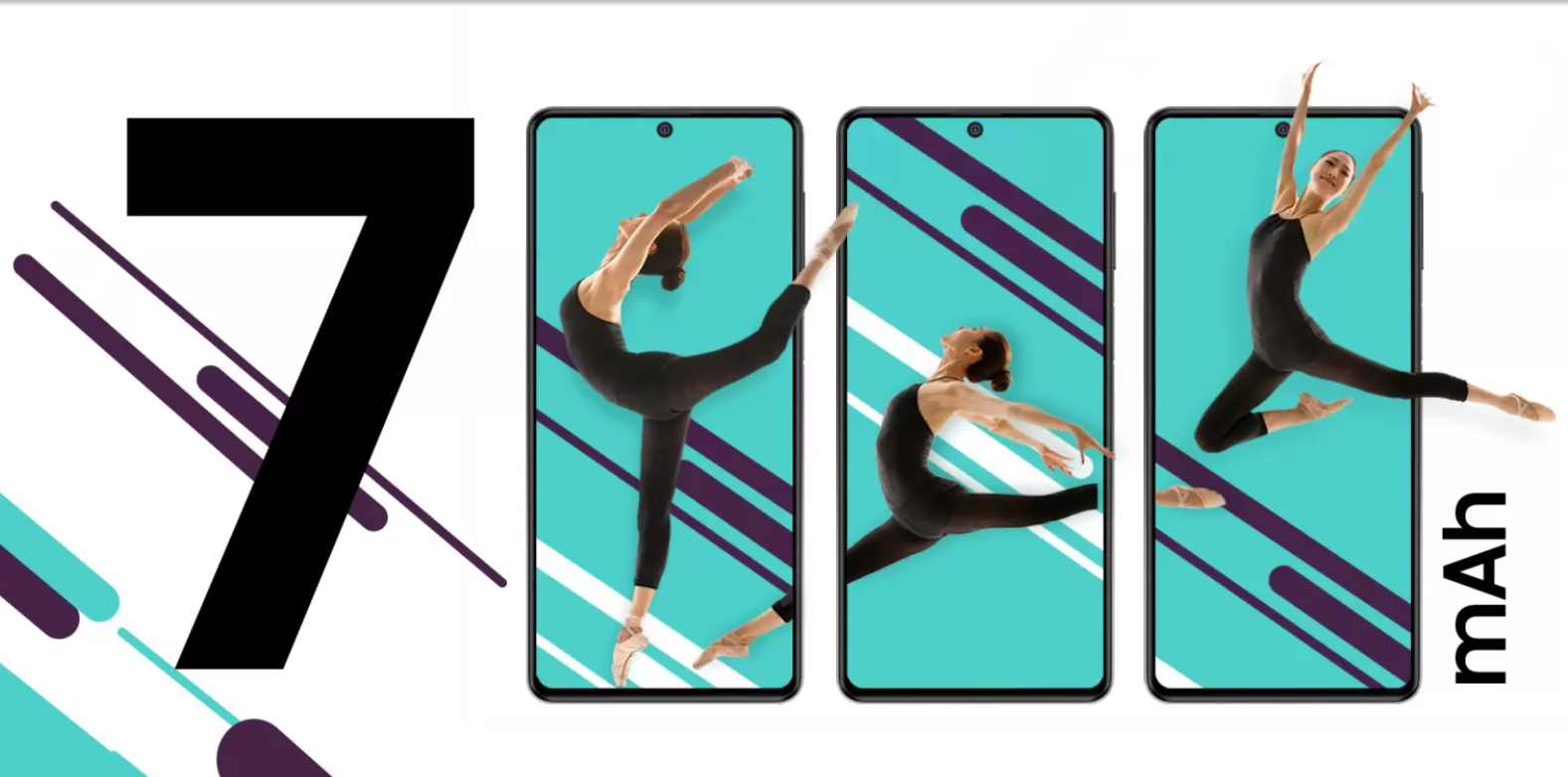
It is now confirmed that the Galaxy F62 will be housing a massive battery of 7,000mAh capacity. The South Korean tech giant its yet to confirm the fast-charging capabilities of the device.

Samsung is the only mainstream smartphone brand that sells 7,000mAh battery phones. The Galaxy M51 that debuted last year is the company’s first phone to feature a 7,000mAh battery. It is believed that some of the specs of the upcoming Galaxy F62 will bear a resemblance with the Galaxy M51.

Samsung Galaxy F62 battery

So far, the rumor mill has revealed that the Galaxy F62 will come with a 6.7-inch AMOLED FHD+ display with an Infinity-O punch-hole design. It is fitted with a side-facing fingerprint reader. The phone will draw power from Exynos 9825 chipset.

The Galaxy F62 is expected to arrive with 8 GB of RAM and internal storage of 128 GB. The phone is likely to boot to One UI 3.1 based Android 11 OS. For photography, the handset could be featuring a 32-megapixel front camera and a 64-megapixel quad-camera system. The device may land in India with a price tag of Rs 25,000 (~$343).

RELATED:

Huawei to acquire Chinese digital payment firm: Report

Huawei is currently seeking the approval from local authorities to acquire licensed digital payment service provider, Xunlian Zhifu, in China. The move arrives as the company aims to diversify and expands its services into the digital payment industry.

Huawei

According to a TechNode report, the Chinese tech giant attempting to acquire the digitial payment based firm as an attempt to enter the market, while local regulators are attempting to break the duopoly in the market held by Ant Group and Tencent. The local government has proposed new antitrust laws to deal with both firms. Furthermore, Huawei is also planning on recruiting a large number of digital payment positions (like deposit management, clearance, and bank cooperation), apart from just acquiring the payment service provider.

For those unaware, Xunlian Zhifu was founded back in 2013, by a rival Chinese tech giant, ZTE. The firm launched its online payment license in 2014. Back in 2016, ZTE sold over 90 percent of its stake in the digital payment firm to a Shanghai based holding company. At the moment, Huawei is operating Huawei Pay, which is a payment service that uses NFC and has been built into its smartphones since 2016.

Huawei

Currently, regulators in China have ramped up anti monopoly policies in the last few months, after the suspension of the Ant group deal back in November 2020. Ant Group accounts for 55.6 percent of the country’s digital payment market and Tencent with 38.8 percent. So, with this acquisition we can expect Huawei to maybe become a notable player in the digital payment sector in China.

RELATED:


SQ11 Mini Night Vision Vlog Camera available for just $6 at Banggood

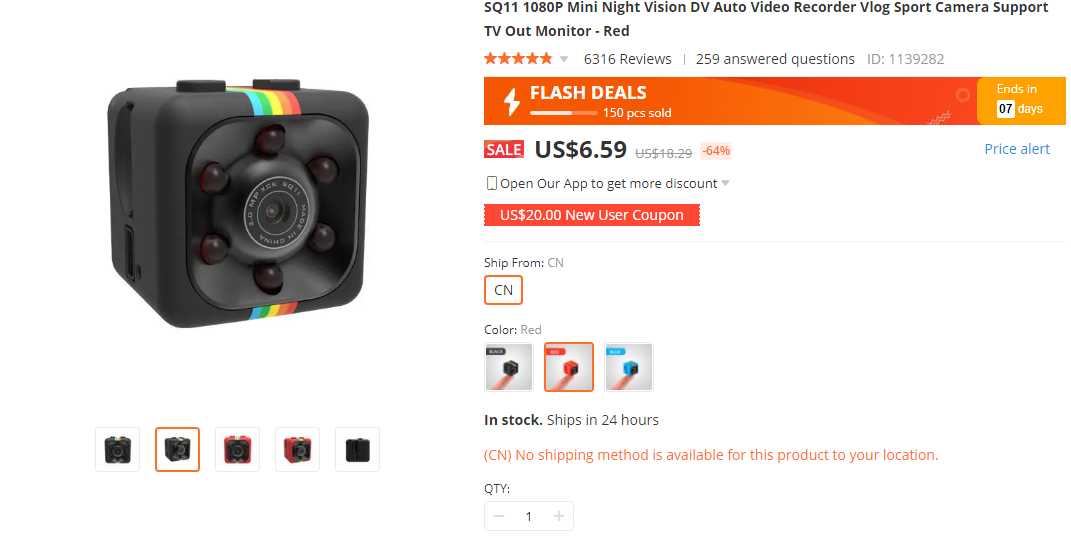
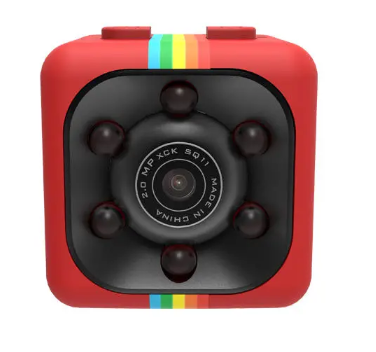
Creating vlogs has become quite common, of late, but only high-end cameras give you the liberty of capturing content in dark lights, and of course, they are pretty expensive. Hence Banggood is offering a discount on the SQ11 Mini Night Vision Vlog Camera. It is currently available for just $6.59 (original price: $12.09).SQ11 Mini Night Vision Vlog Camera BanggoodSQ11 Mini Night Vision Vlog Camera features a 1080P full HD car DVR camera recorder to help capture the surroundings in sharp quality. It has a 200mAh battery that offers 100-minute use. It supports up to 32GB TF card and can be used on Windows ME, 2000, XP, 2003, Vista, Mac OS, and Linux. Its compact and sleek form provides enhanced portability and easy storage.SQ11 Mini Night Vision Vlog Camera

This vlog camera can be purchased for just $6.59 (original price: $12.09) at Banggood. This is a limited time offer that ends in the next 7 days. So hurry and make the most of it while you can.

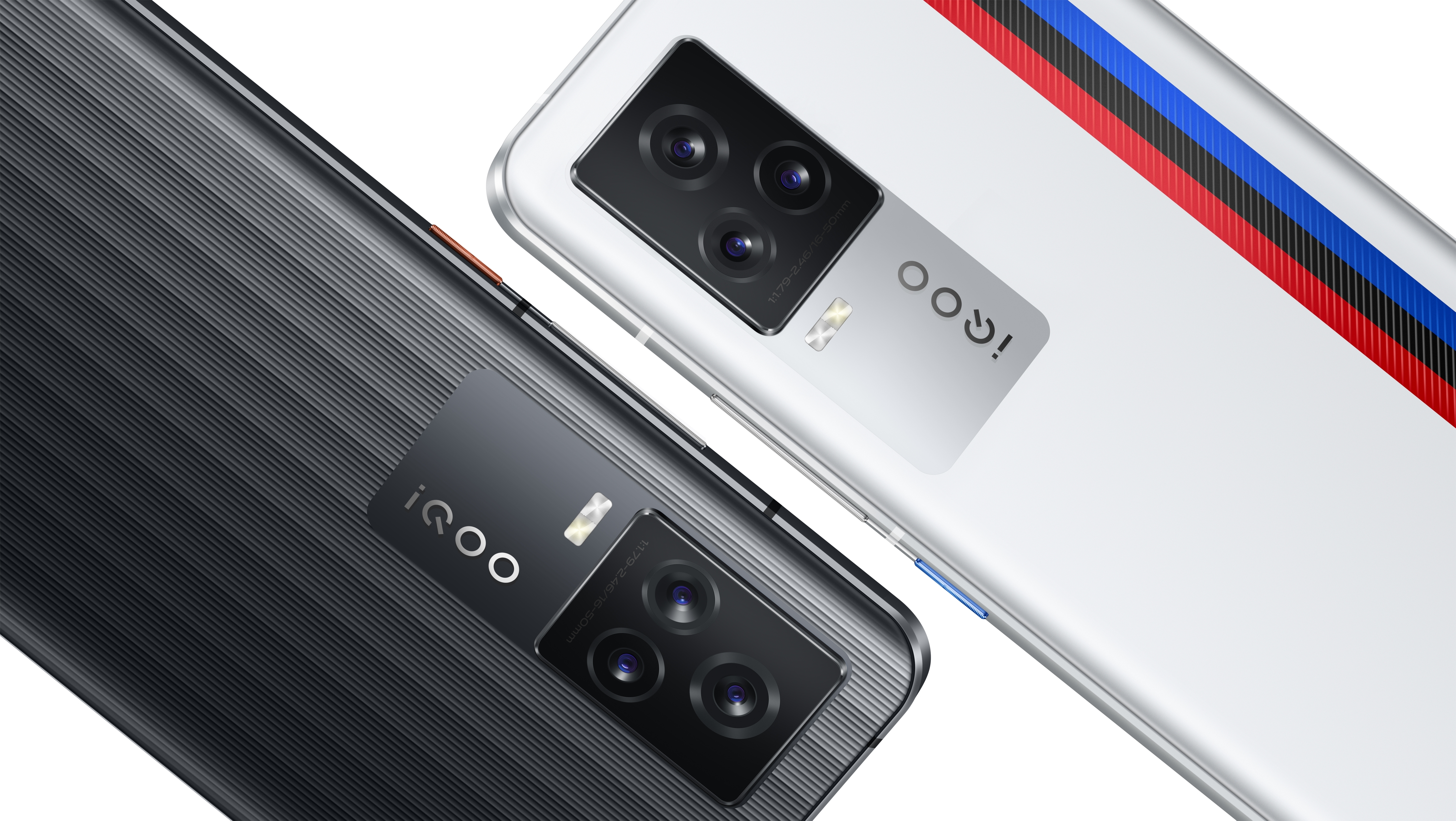
iQOO 7 India launch could be in March end, more iQOO phones coming by April, reveals a new leak

Last year, iQOO launched a wide range of smartphones in China. However, India was treated with only one phone i.e., the iQOO 3 in February. The Snapdragon 865 powered handset is now selling for as low as Rs 29,990 (~$411) in the country. The company recently released the Snapdragon 888 powered iQOO 7 flagship phone in January in China and it also expected to unveil the iQOO Neo5 soon in the home market. Fresh information shared by tipster Debayan Roy reveals that India will be receiving as many as three iQOO phones by April.

The new leak states that iQOO will be launching the one flagship in the third or fourth week of March. The tipster speculated that it could be the iQOO 7 smartphone.

He also stated India will be receiving two more iQOO devices by April end. The names of these devices are not known yet. If the new leak turns out to be true, the company may soon start teasing the arrival of its next flagship for India in the coming weeks.

iQOO 7 Black
iQOO 7

iQOO 7 specifications

The iQOO 7 has a 6.62-inch AMOLED display that offers a 120Hz refresh rate and a Full HD+ resolution. It is loaded with OriginOS based Android 11 OS. The SD888 powered phone ships with up to 12 GB of LPDDR5 RAM and up to 256 GB of UFS 3.1 storage.

It has a selfie snapper of 16-megapixel and a 48-megapixel (main with OIS) + 13-megapixel (120-degree ultrawide) + 13-megapixel (portrait) triple camera system. The 4,000mAh battery of the phone supports 120W fast charging. It also features an in-screen fingerprint reader.

RELATED:

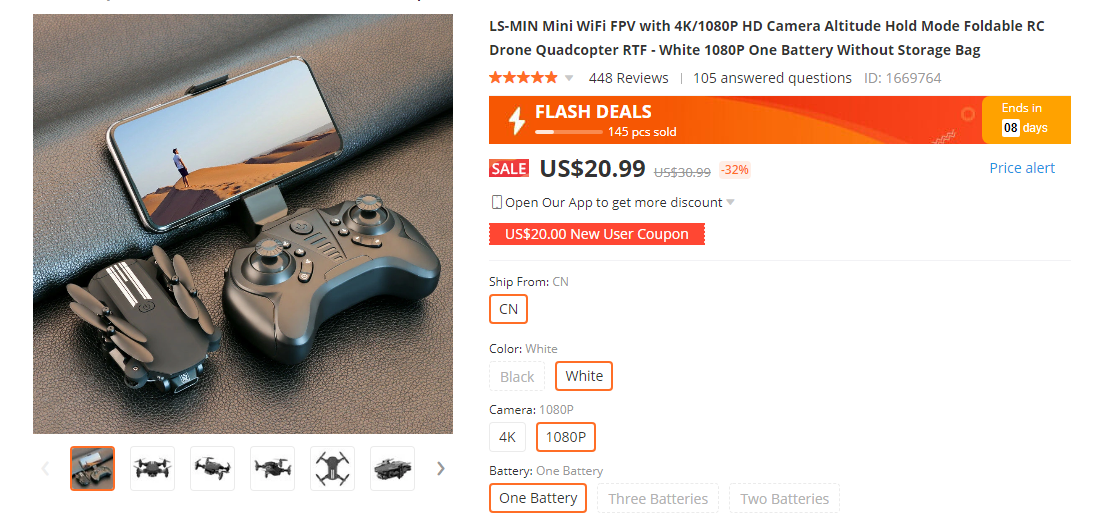
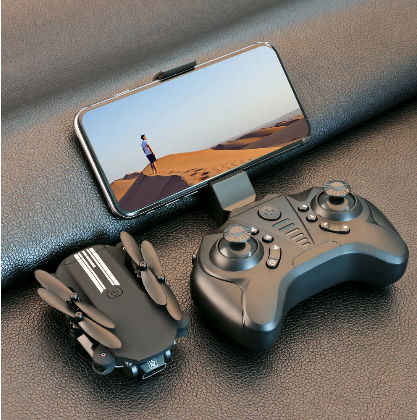
LS-MIN Mini Drone Quadcopter available for just $20.99 at Banggood

Drones are super cool gadgets and are a complete source of entertainment. Currently, Banggood is offering a discount on LS-MIN Mini Drone Quadcopter. It comes with 4K/1080P HD camera and a foldable design for efficient use. All interested users can buy it for just $20.99 (original price: $30.99).LS-MIN Mini Drone Quadcopter Banggood

LS-MIN Mini Drone Quadcopter comes with an altitude hold mode that ensures a stable flight. Headless mode auto-adjusts the position of the aircraft before flying. Its one-button back function easily brings the drone back to you. This drone features a 500W pixel /4K pixel HD camera and a WiFi function to transmit the content to other devices. Other features include 2.4GHz anti-interference technology, six-axis gyroscope, LED lights, autonomous flight mode, and much more.LS-MIN Mini Drone Quadcopter

Packed with a host of features, this drone offers decent specs for its budgeted price range. Banggood is currently offering a discount on it, and interested users can buy it for just $20.99 (original price: $30.99). This is a limited time offer, and the deal ends in the next 8 days, so hurry.

OnePlus 9, 9 Pro battery capacities revealed, in-box charger expected

It can be said based on the rumors surrounding the OnePlus 9 series that it may go official by mid-March. The appearance of both phones is no secret as the rumor mill has already leaked their live shots. Some of the key specs of both smartphones are also known. Now, reliable tipster Max Jambor has revealed the battery capacities of both smartphones.

According to Jambor, the OnePlus 9 and OnePlus 9 Pro are both equipped with 4,500mAh batteries. He also claimed that the OnePlus 9 series would be coming with a charger in the box. The tipster did not reveal any information on the fast-charging capabilities of both phones.

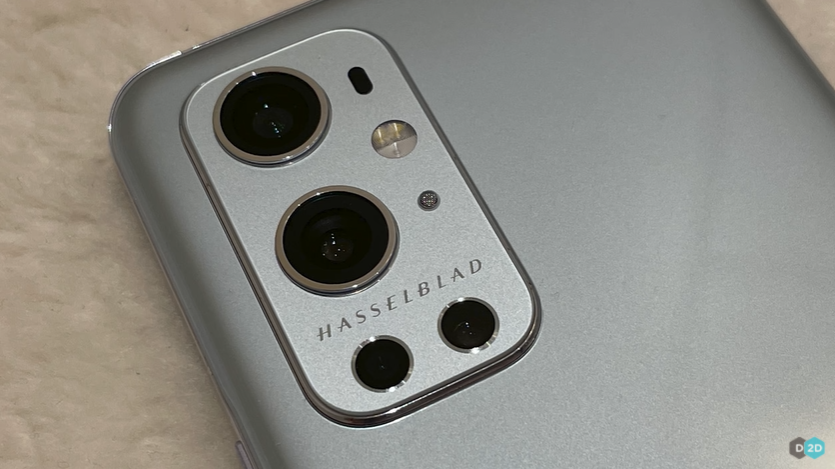
OnePlus 9 Pro live photo
A live photo of the upcoming OnePlus 9 Pro shared by Dave2D YouTuber

Past reports have revealed that the OnePlus 9 will be arriving with a 6.55-inch AMOLED flat display that will offer a Full HD+ resolution of 1080 x 2400 pixels and a 120Hz refresh rate. It is expected to house the same display that is available on the OnePlus 8T smartphone. The punch-hole on its screen is expected to house a 16-megapixel selfie camera.

The triple camera system of the OnePlus 9 may include a Sony IMX689 48-megapixel primary lens, a 48-megapixel ultrawide lens, and an unknown third camera. Apart from 65W Warp Charging, the OnePlus 9 is expected to carry support for up to 30W wireless charging for its 4,500mAh battery.

The OnePlus 9 Pro may come with a curved edge display of 6.78 inches. It is expected to produce Quad HD+ resolution and a 120Hz refresh rate. It may come with 12 GB of RAM and 256 GB of storage. Specific details of its cameras are known, but its leaked shots revealed that OnePlus has teamed up with Hasselblad for an enhanced photography experience on the OnePlus 9 Pro. Besides 65W Warp Charging for its 4,500mAh battery, it may carry support for 45W wireless charging and reverse wireless charging.

Both phones are also expected to carry support for reverse OnePlus 9 Lite smartphone wireless charging. Rumors have it that OnePlus may launch another phone called OnePlus 9 Lite with Snapdragon 870 SoC along with Snapdragon 888 powered OnePlus 9 and 9 Pro phones.

RELATED:

Xiaomi patents new technology that can detect if a battery is bulging

Battery bulging is more than just a sign of an aging battery pack, but also a matter of safety risk. Now, Xiaomi has patented a new lithium battery technology that seeks to address this issue.

Xiaomi

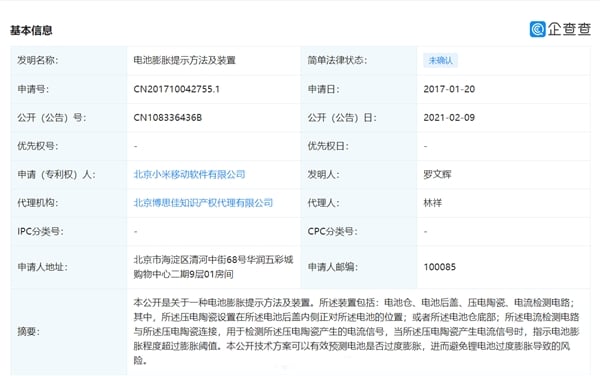
According to a MyDrivers report, the Chinese tech giant applied for a patent last month, which got published earlier this week. This patent was titled “Battery Expansion Prompt Method and Device,” and was invented by Luo Wenhui. As the name suggests, this technology will be able to detect and inform the user regarding their aging battery and its health. In other words, it can detect if the battery is bulging and alert the user, so as to avoid any complications.

The description states that “The present disclosure relates to a method for prompting battery expansion. The device includes: a battery compartment, a battery back cover, piezoelectric ceramics, and a current detection circuit; wherein the piezoelectric ceramic is arranged on the inner side of the battery back cover at a position facing the battery; or the bottom of the battery compartment. The current detection circuit is connected to the piezoelectric ceramic and is used to detect a current signal generated by the piezoelectric ceramic. When the piezoelectric ceramic generates a current signal, it indicates that the degree of battery expansion exceeds an expansion threshold.”

Xiaomi

To put it simply, the technology would be based around the battery/surrounding it and will be able to detect any abnormalities in its shape. This technology could soon even be staple in the industry, especially in terms of safety. So stay tuned for more, as we will be providing updates when additional information is available.

RELATED:


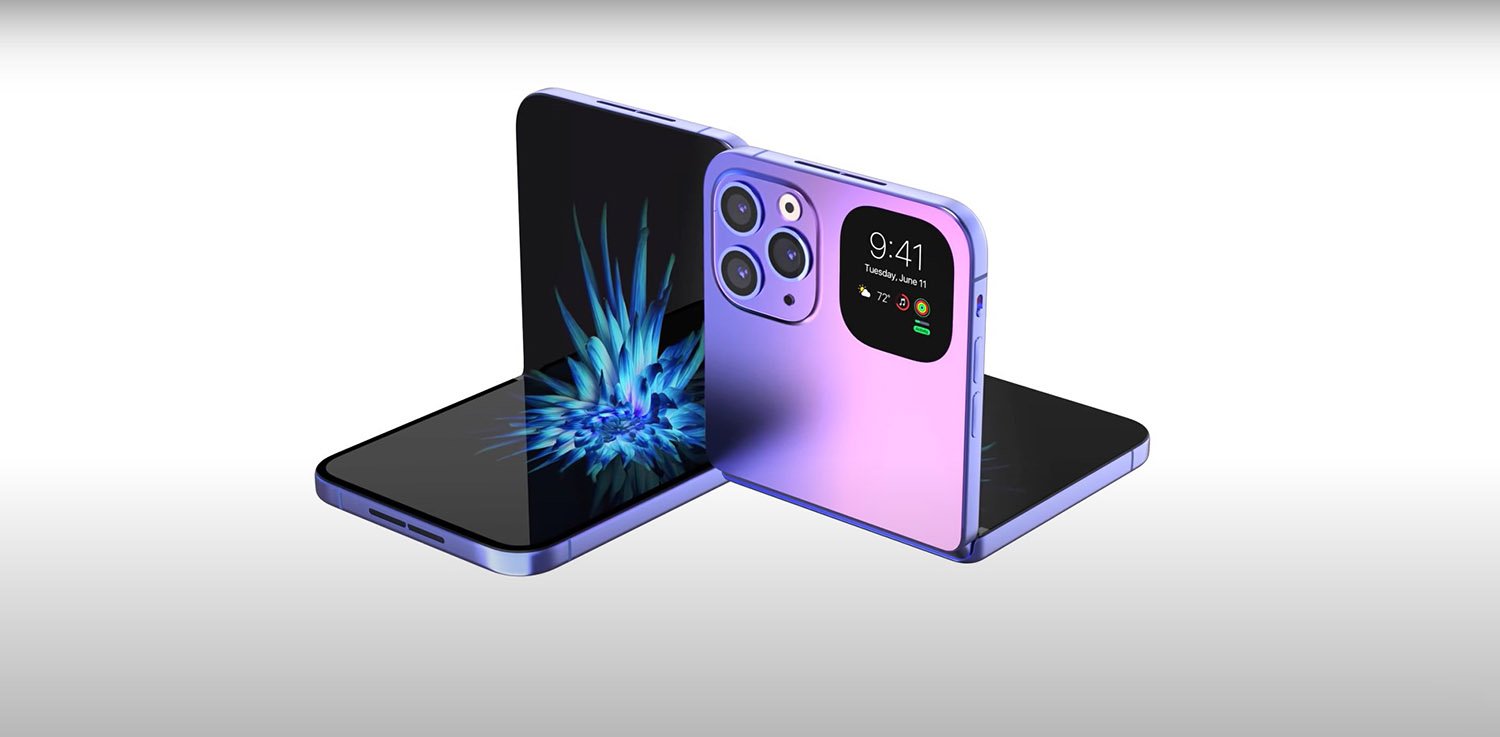
Apple to launch relatively affordable clamshell foldable iPhone in the future

Apple is apparently working on a foldable iPhone that will feature a clamshell design. This foldable device would also be relatively affordable to the current offerings from rival vendors, but is not launching anytime soon.

According to a WCCFTech report, a tipster has suggested that the Cupertino based giant might have settled on a Galaxy Z Flip-like design for its upcoming foldable iPhone. Furthermore, this foldable phone will also be more affordable that the competing rivals in the same market. But unfortunately, this foldable iPhone will not be launching anytime soon. As per YouTuber Jon Prosser’s channel, Front Page Tech, the company is working on what appears to be a flip phone-like iPhone model.

In other words, it won’t be similar to a Galaxy Z Fold 2, rather, it would be geared towards reducing its overall size when folded. This would also enable it to be more portable as well. Previously, Prosser had stated that Apple is developing two foldable iPhones, with both variants in early stages of development. Jon further added that the company would be using a Ceramic Shield glass will be chemically treated for the device, which will enable it to handle a significant level of tolerance when it is folded or unfolded.

Apple

Notably, the YouTuber claimed that the foldable iPhone will cost less than rival offerings from the competition. Although, the clamshell designed iPhone will not arrive before 2023. Additionally, this launch date could potentially be pushed back further if the company faced development hurdles. Keep in mind, it isn’t necessary that Apple might be offering a cheap foldable handset, but it could be that the components for such a device might become cheaper in the near future, allowing for reduced retail price.

RELATED:


Nokia 3.4, Nokia 5.4, and Nokia Power Earbuds Lite launched in India

HMD Global, the Nokia brand licensee has launched Nokia 3.4 and Nokia 5.4 budget smartphones in India as we exclusively reported last week. These handsets are also joined by the Nokia Power Earbuds Lite truly wireless earphones. For those unaware, all these products debuted in Europe late last year.

Nokia 3.4, Nokia 5.4 Specifications and Features

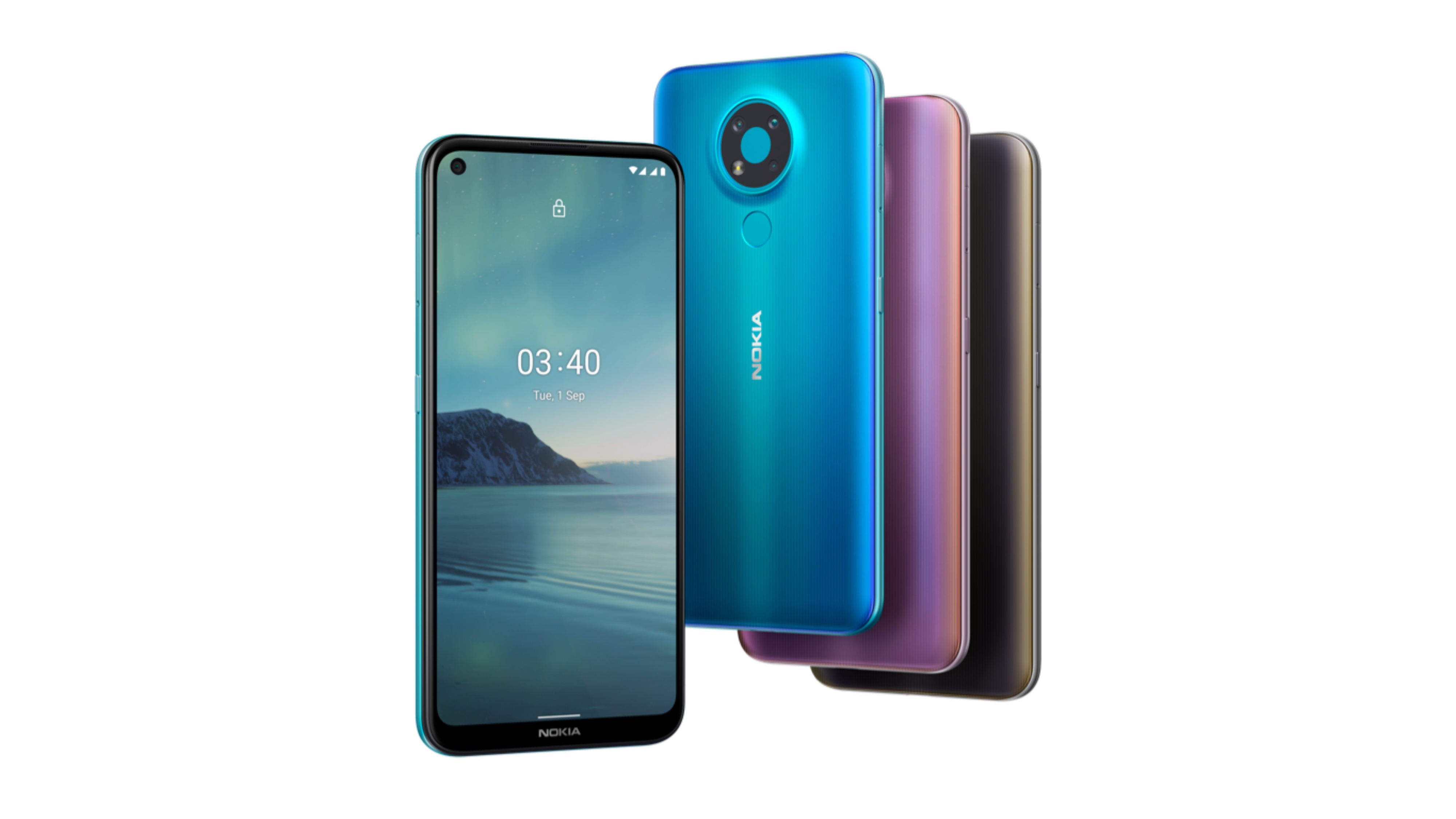
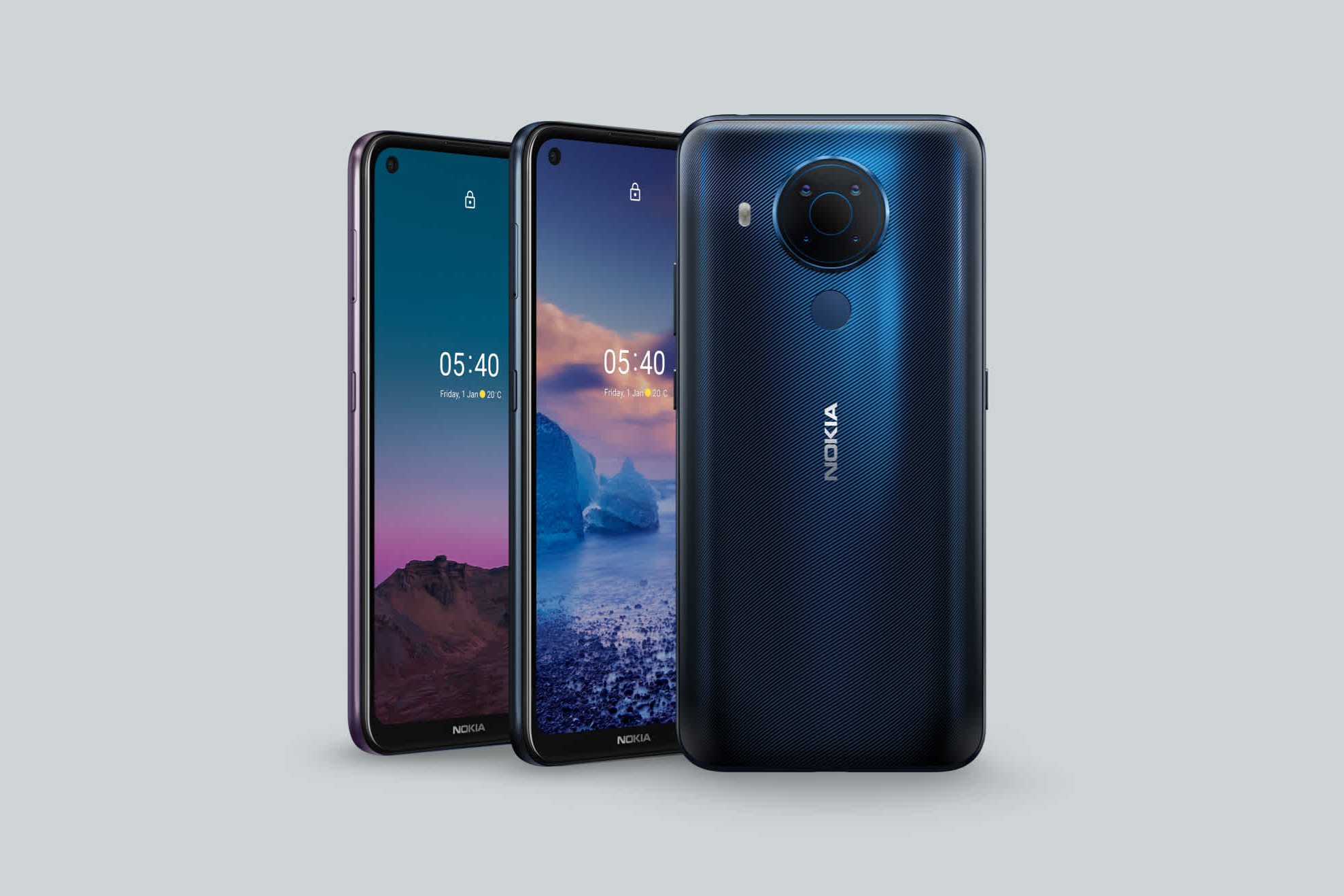
Both the Nokia 3.4 and Nokia 5.4 flaunt a 6.39-inch HD+ (720 x 1560 pixels) LCD panel with a 19:5:9 aspect ratio and a single punch hole at the top left corner. However, the former is powered by Qualcomm Snapdragon 460 chipset paired with 4GB RAM and 64GB internal storage, whereas the latter features a Qualcomm Snapdragon 662 SoC coupled with 4GB/6GB RAM and 64GB internal storage.

Nokia 3.4 Featured
Nokia 3.4

Talking about optics, the Nokia 3.4 comes with a 13MP (wide) + 5MP (ultra-wide) + 2MP (depth) triple camera setup and the back as opposed to a 48MP (wide) + 5MP (ultra-wide) + 2MP (macro) + 2MP (depth) quad-camera setup on the Nokia 5.4. As for selfies and video calls, the former features an 8MP shooter, while the latter sports a 16MP snapper.

On the connectivity front, the duo support dual-SIM, 4G, VoLTE, single-band WiFi, Bluetooth 4.2, and GNSS (GPS, A-GPS, GLONASS, GALILEO, BDS). Other features on these two devices include a MicroSD card slot (up to 512GB), 3.5mm headphone jack, USB Type-C port, Google Assistant key, ambient light sensor, accelerometer, proximity sensor, gyroscope, and a rear-mounted fingerprint sensor.

Nokia 5.4 Featured
Nokia 5.4

Lastly, these budget smartphones run Android 10 backed by a 4,000mAh battery with support for standard 10W charging. They will be soon updated to Android 11, as per the company.

The Nokia 3.4 measures 160.97 x 75.99 x 8.7mm in dimensions, weighs 180g, and comes in three colors (Fjord, Dusk, Charcoal). On the other hand, the Nokia 5.4 is only available in two colors (Polar Night, Dusk) and surprisingly, the dimensions and weight are as same as the previous model.

Nokia Power Earbuds Lite Specifications and Features

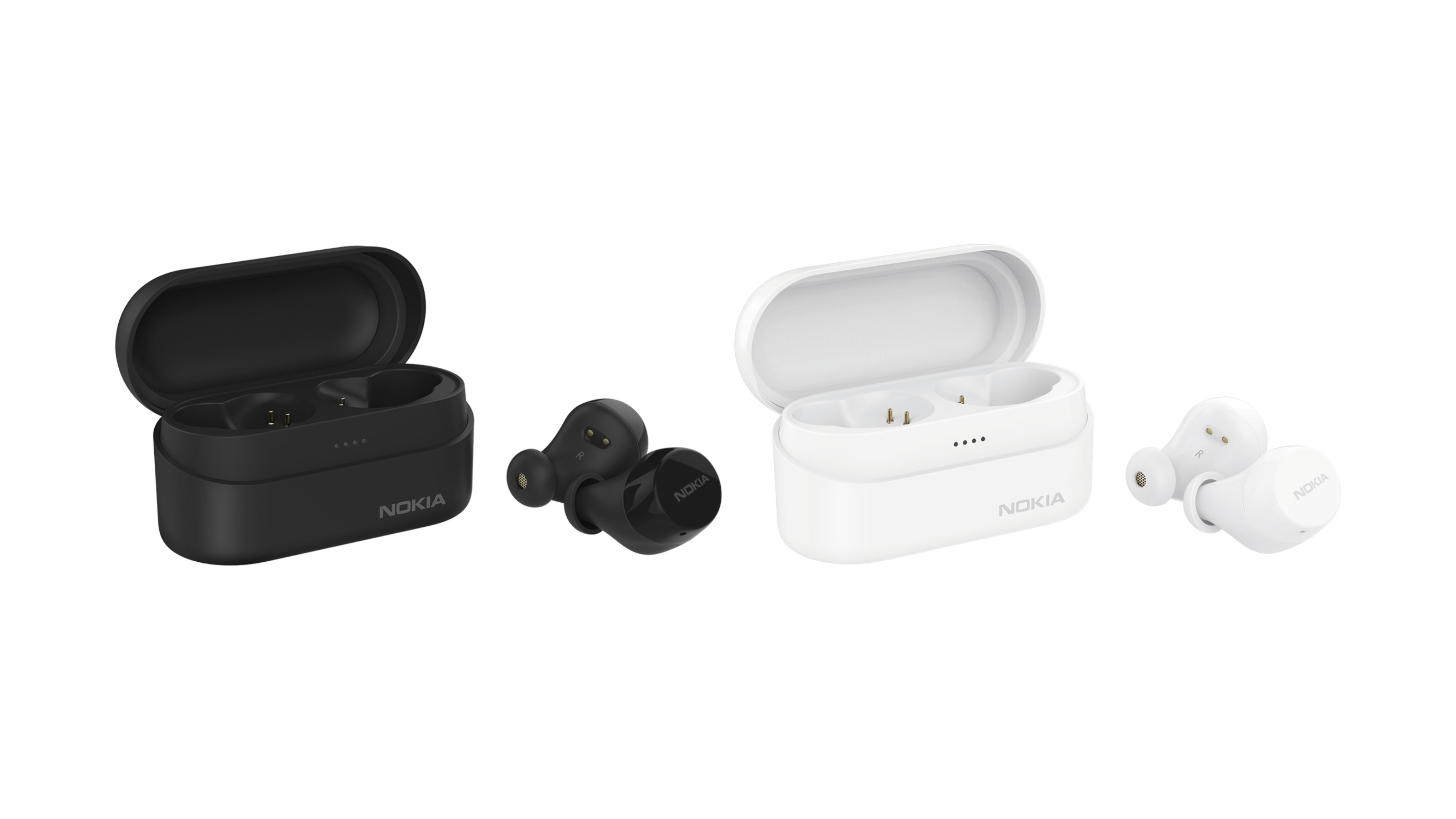
The Nokia Power Earbuds Lite with model number Nokia BH-405 is a toned-down version of Nokia Power Earbuds that was released in 2019. This pair of TWS connects with devices via Bluetooth 5.0, supports AAC audio codec, and comes in two colors (Charcoal, Snow).

Nokia Power Earbuds Lite BH-405 Charcoal Snow Featured
Nokia Power Earbuds Lite

The buds are IPX7-certified for water resistance and support gesture controls. Further, they measure 25 x 23 x 23.8mm in dimensions and can last up to 5 hours on a single charge.

Whereas the charging case measures 68 x 36 x 31mm in dimensions and features a 600mAh battery that charges via USB Type-C port. This case provides additional 30 hours of battery life. Hence, users get a total of 35 hours on a full charge.

Nokia 3.4, Nokia 5.4, Nokia Power Earbuds Lite Pricing and Availability

HMD Global has priced the Nokia 3.4 at ₹11,999 for the single 4GB + 64GB variant, whereas the Nokia 5.4 costs ₹13,999 and ₹15,499 for 4GB + 64GB and 6GB + 64GB variants respectively. The expensive handset will go on sale from February 17, however, the cheaper phone will be available from February 20.

Interestingly, Nokia 5.4 will be only available on Flipkart and Nokia’s official website. On the other hand, Nokia 3.4 can be not only purchased from the previously mentioned two channels but also from Amazon India and leading retail outlets.

Lastly, the Nokia Power Earbuds Lite is priced at ₹3,599 and it will be available for purchase from February 17 on Amazon India and Nokia’s website. Also, interested customers can get it for only ₹1,600 if they pre-book it with Nokia 3.4.


RELATED:


Apple again blocks users from side-loading apps in Mac devices powered by M1 chipset
Apple’s new Mac devices are powered by the M1 chipset, based on Apple Silicon which means that it now uses ARM architecture instead of Intel. Among several advantages of using ARM is the ability to use mobile apps on laptops.

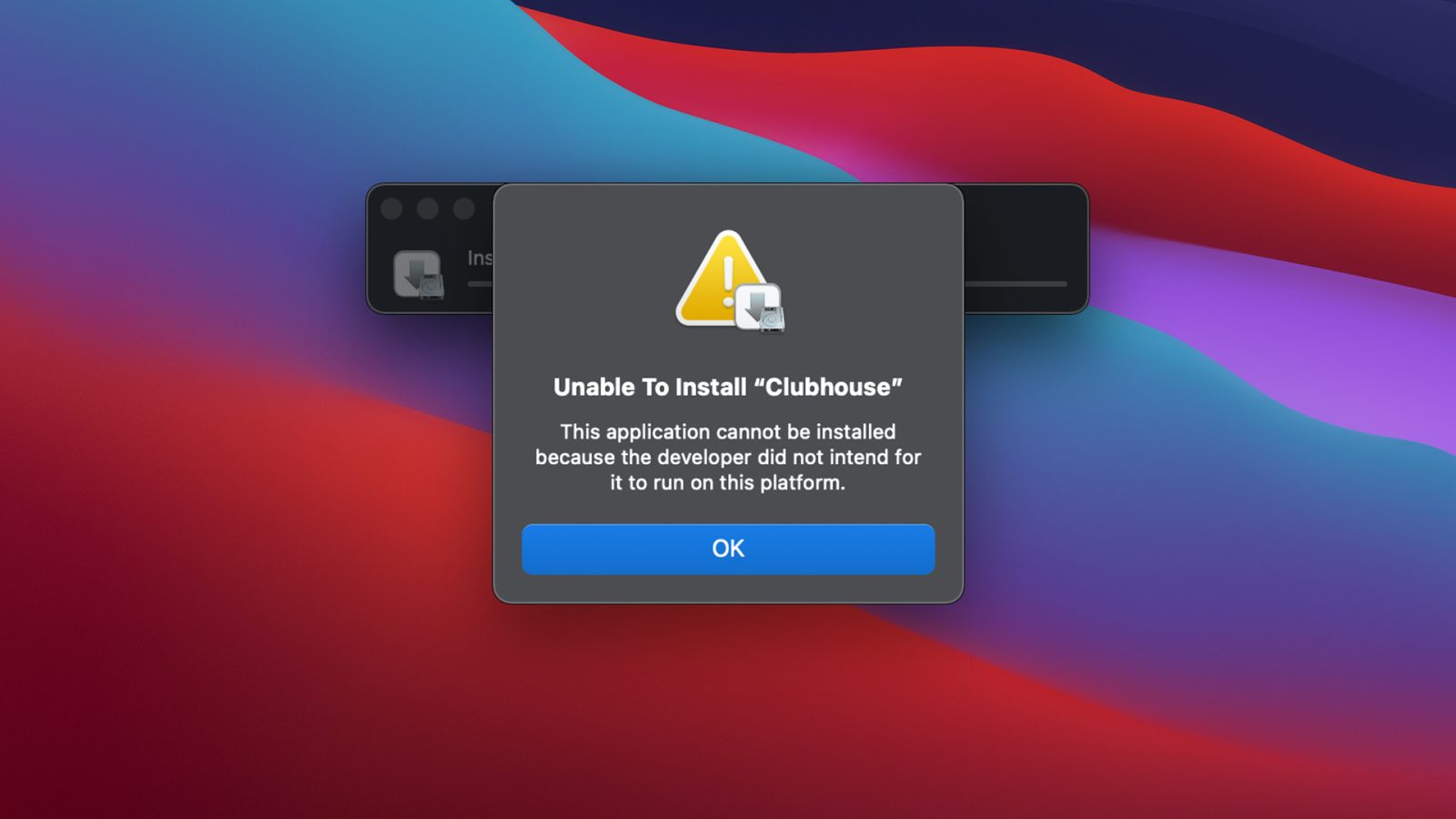
However, with the latest update of the macOS Big Sur, Apple has again blocked users from sideloading iOS applications on Mac devices powered by the M1 chipset. This means that users won’t be able to install iPhone and iPad apps on new Mac devices.

M1 Mac App Side-loading Error
Image: 9to5Mac

The company made a similar move in which it barred manual installation of iOS and iPadOS apps in the month of January with server-side protections. However, the restrictions were lifted around four days later.

A report from 9to5Mac confirms that the latest version of macOS Big Sur 11.2, which was issued last week, again activates the server-side block. The tests also show that the sideloading policy extends to the current macOS 11.3 beta.

As noted earlier, the new Apple M1 chip comes with an architecture similar to the company’s A-series silicon. This makes it easier to run existing iOS apps on the desktop platform. However, developers who do not wish to allow their apps on macOS can opt-out.

RELATED: 

Huawei asks US courts to overturn its national security threat designation

Huawei has filed another lawsuit against the US government. This time the company has decided to fight the US FCC (Federal Communications Commission) ruling that designated the firm as a national security threat.

Huawei Logo MWC 2019

According to a ZDNet report, the Chinese tech giant has stated in the complaint that the national security designation could impact its financial interests of the telecommunications industry as well. For those unaware, the FCC had designated the company as a national security risk, along with ZTE. This caused the US based telecom operators being unable to purchase equipment or services from both the Chinese brands.

Furthermore, the former US President Donald Trump had also signed a legislation, which barred the US companies from using federal funds to purchase equipment from companies that have the national security threat designation. Thus, the US also had to set up a 1 billion US Dollar reimbursement program to help smaller telecoms with the cost of replacing equipment provided from Huawei and ZTE.

Huawei

Apart from the FCC, the smartphone maker also filed a lawsuit against the agency claiming that it unconstitutionally enforced the ban. However, this was eventually dismissed last February on the grounds that the Congress was within its rights to enforce the ban. Huawei has also filed a legal action requesting for the law that enforced the ban to be overturned, which is currently being considered by the courts.

RELATED:


Apple to develop ultra advanced micro OLED displays in partnership with TSMC

Apple is planning on developing ultra advanced display technology at a secret facility in Taiwan in partnership with TSMC (Taiwan Semiconductor Manufacturing Company) as per a new report.

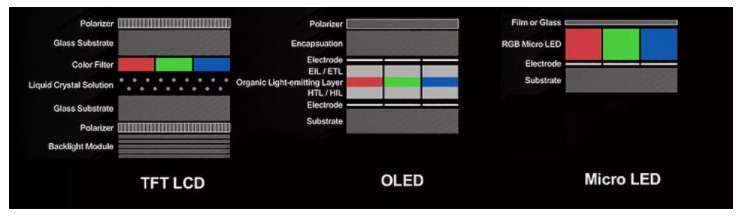
According to an AsiaNikkei report, the Cupertino based giant is partnering with the world’s largest contract chip maker to develop new micro OLED displays. For those unaware, this is a new type of display built directly onto chip wafers. The primary application for this new breed of displays is for upcoming augmented reality devices from Apple, as per sources close to the matter.

Apple

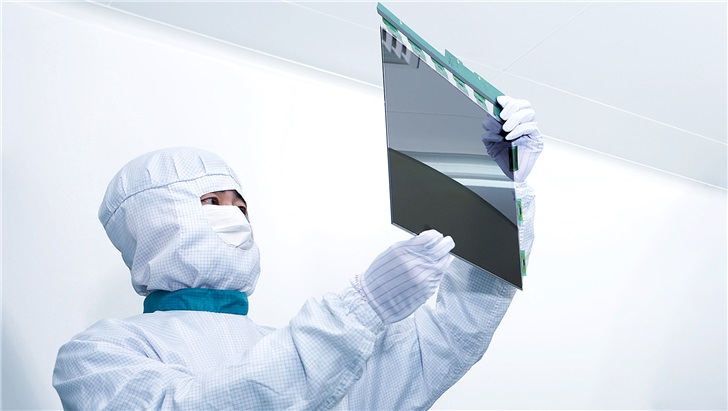
The company is collaborating with its known chip supplier since micro OLED displays are not built on glass substrates like conventional LCD panels found in smartphones and TVs, or even OLED displays used in premium grade flagship handsets. Rather, the new displays are built directly onto the wafers, or the substrates that semiconductors are fabricated on. This essentially allows these panels to be slimmer and small while also consuming less power, which in turn makes it great for AR device applications, as per the source.

Furthermore, this also marks the growing relationship between Apple and TSMC, which is also the sole supplier of the former’s iPhone processors. At the moment, the micro OLED project is at the trial production stage and it will still take several years to reach mass production. The displays that are currently under development are less than an inch in size. The source added that “Panel players are good at making screens bigger and bigger, but when it comes to thin and light devices like AR glasses, you need a very small screen.”

Apple

Apple has even hired dozens of veterans from Taiwanese display maker AU Optoelectronics to help with its micro OLED project. These new employees are apparently also made to sign a strict non disclosure agreement that forbids them from even meeting friends or acquaintances working in the tech industry, as per the source. Unfortunately, this is still an unconfirmed report so take it with a pinch of salt and stay tuned for more updates.

RELATED:


Apple autonomous driving car doubles testing mileage in California last year

Apple has actively started focusing on self-driving car technology and the autonomous driving technology seems to have reached a stage where the company is now looking for mass production of the so-called “Apple Car” in the coming years. This confidence for Apple comes through the results of the test car.

The California DMV has released new data that gives insights into Apple’s efforts as far the company’s ambitious Apple Car autonomous driving vehicle is concerned, reports MacRumors. As per the data, the self-driving test vehicle from Apple drove 18,805 miles in California last year, which is more than double compared to 2019.

Apple

Additionally, the report also mentions that the company reported 130 disengagements in the last year, which also indicates a noticeable improvement in the number of miles driven before requiring a disengagement from self-driving. Based on the data, Apple’s cars experienced disengagement every 144.6 miles.

For those unfamiliar, disengagements refer to a situation when the car stops self-driving and the human driver takes over. Further, it mentions that Apple reported no accidents with its self-driving test vehicles for the year 2020. The last collision reported by Apple for the self-driving car was in 2019.

Apple was recently in talks with Hyundai and it was reported that the automaker’s sub-unit Kia will be making the Apple Car. The deal was expected to get closed in March with Apple investing billion in Kia. However, a couple of days ago, it was confirmed that the talks with Apple and Hyundai have ended without the deal. We expect Apple to form a partnership for its upcoming Apple Car in the coming months.

RELATED: 

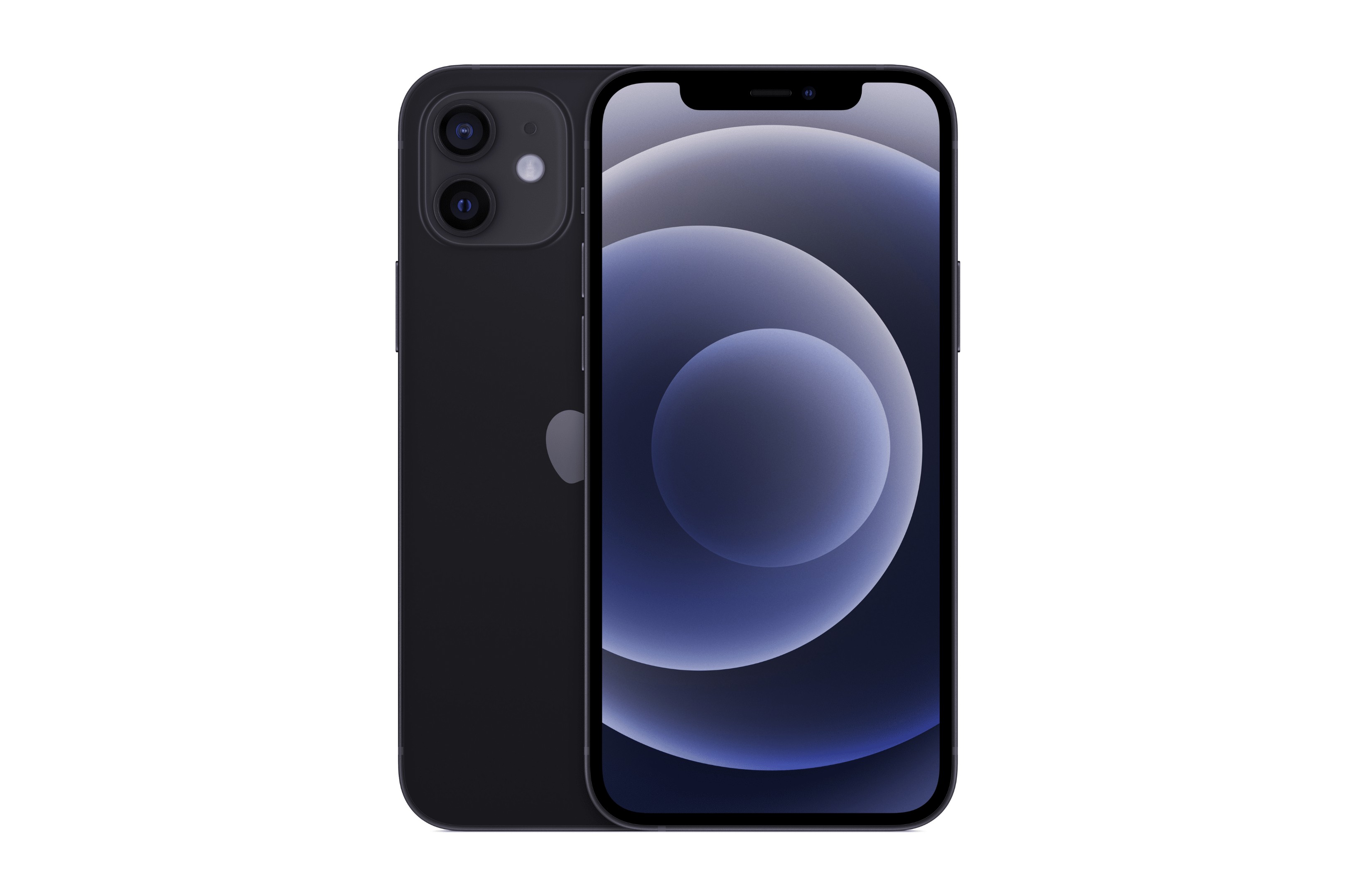
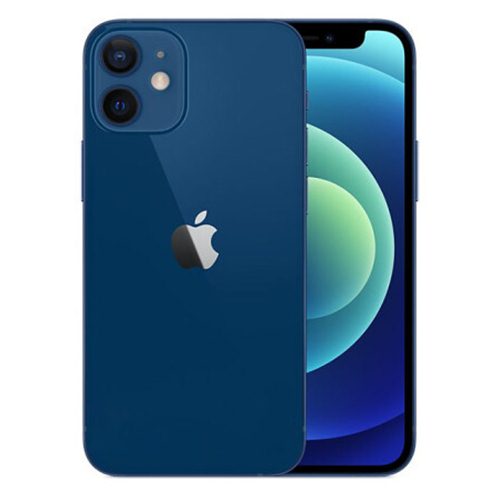
Apple iPhone 12 mini sales decline due to low appeal for small devices: Report

The Apple iPhone 12 mini sales in the US, the company’s largest market, accounted for just 5 percent of all new sales during the first half of last month. This is likely due to the declining demand for smaller smartphones in the market.

Apple

According to a Reuters report, market research from known analytics based firm, Counterpoint Research, found that the demand for the new small flagship has been low. In recent times, handsets with larger displays have become increasingly more popular due to the amount of multimedia entertainment consumed on smartphones (like videos, movies, and other streaming services) growing, especially through major social media platforms.

Earlier this week, we had also reported on the Apple iPhone 12 mini being discontinued soon due to sales being lower than what was initially expected by the Cupertino based giant. Notably, the brand also lowered the production capacity of iPhone 12 mini units and shifted the capacity towards the more popular iPhone 12 Pro model. For those unaware, the company had initially expected the mini being one of the more popular devices in the new series, although, its larger higher end siblings have been performing better in the market.

Apple iPhone 12 Mini
The iPhone 12 Mini has a 5.4-inch screen, making it way smaller than all flagship Android phones released this year

Counterpoint analyst Tom Kang added that “This is in line with what we’re seeing in the broader global market, where screens under 6 inches now account for around 10 percent share of all smartphones sold.” Apple has yet to comment and clarify on this matter. So stay tuned for more, as we will be providing updates when additional information is available.

RELATED:


Redmi Note 10 series launching in March likely with high refresh rate screen

Last year, Xiaomi India announced the Redmi Note 9 Pro and Redmi Note 9 Pro Max smartphones in March. Recent reports have claimed that the company may launch the Note 10 series of smartphones in India this month. However, an official confirmation released by the Xiaomi India Managing Director and Global VP Manu Kumar Jain today reveals that the company will be announcing the Redmi Note 10 lineup in March.

A teaser that was released by Jain yesterday revealed that the Redmi Note 10 will offer an exceptionally smooth experience. Today’s teasers suggest that the Redmi Note 10 series will be equipped with a high refresh rate display. The other thing that got confirmed today is that the Note 10 lineup will be available exclusively through Amazon India.

The BIS certifications have suggested that the M2101K6I model number belongs to the Redmi Note 10 Pro 5G handset whereas the M2101K7AI model number seems to be associated with Redmi Note 10 4G.

Leaked information that appeared last month revealed that the Redmi Note 10 Pro will be arriving in three options such as 6 GB RAM + 64 GB storage, 6 GB RAM + 128 GB storage, and 8 GB RAM + 128 GB storage. It is expected to arrive in markets in colors like bronze, blue, and gray.

On the other side, the Redmi Note 10 could be available in two options such as 4 GB RAM + 64 GB storage and 6 GB RAM + 64 GB storage. It could be coming colors like white, green, and gray. Since the Note 10 models are coming in March, the company is expected to release more teasers to confirm its new features in the coming days.

RELATED:

Black Shark 4 (PSR-A0) series phone’s images suggest it could be an affordable smartphone

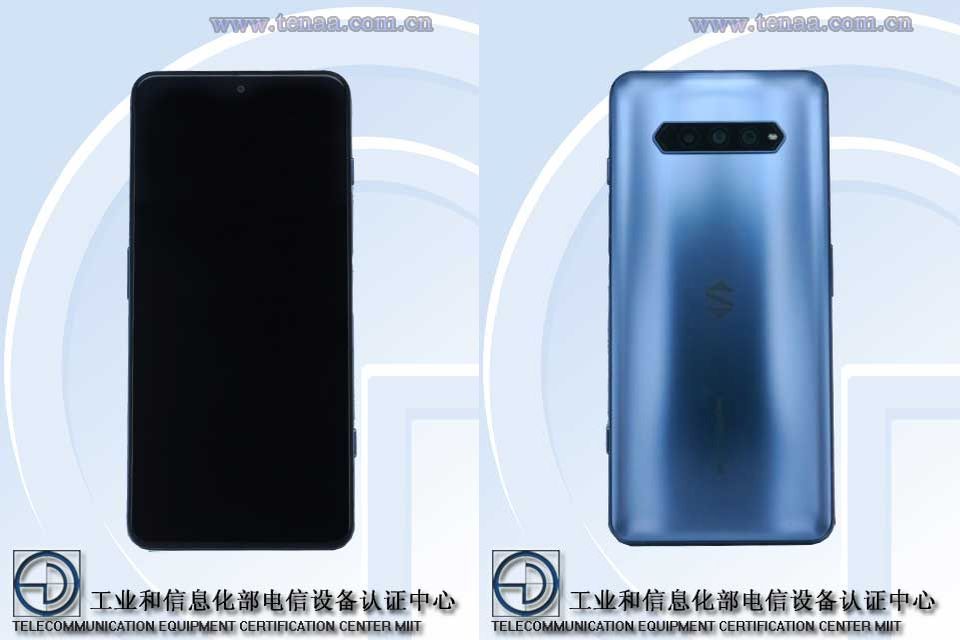
Two upcoming Black Shark 4 lineup smartphones with KSR-A0 and PRS-A0 model numbers were recently seen at the Google Play Console. The PRS-A0 model has now received certification from the TENAA authority of China. The listing has no information on its specs. The images that have appeared in the listing suggest that it may debut as an affordable gaming smartphone from Black Shark.

The Black Shark phones that have launched in the past have a gaming-centric rear design. However, the PSR-A0 rear design deviates from the predecessor models as it has a plain appeal. The top portion of the back panel has a horizontal camera setup that has three cameras and an LED flash.

A pair of gaming trigger buttons and a side-mounted fingerprint sensor are available on the right of the Black Shark PSR-A0 smartphone. A volume rocker is available on the left side of the phone.

Black Shark 4 PSR-A0 TENAA images

Moving to the front, the Black Shark PSR-A0 smartphone has a flat display. It seems to feature a selfie camera cutout at the top-center. The predecessor Black Shark 2 series and Black Shark 3 series of smartphones are all fitted with AMOLED display and in-screen fingerprint readers. The inclusion of a side-mounted fingerprint reader on the PSR-A0 indicates that it could be equipped with an LCD screen. Moreover, the plain rear design suggests that the PSR-A0 could be arriving as an affordable gaming smartphone.

In terms of specs, the Google Play Console listing of the device revealed that it is powered by Snapdragon 865 and 12 GB of RAM. It boots to Android 11 OS and produces a Full HD+ resolution. It is recommended to wait for newer reports to know its other specifications and final product name.

RELATED:

Huawei MatePad Pro 2 powered by Kirin 9000 SoC passes 3C certification

Huawei, the Chinese technology giant, has passed through the 3C certification process in its home country for several devices, ranging from a 40W charger to new 4G and 5G smartphones as well as routers.

Now, a new report revealed that the upcoming tablet from the company dubbed Huawei MatePad Pro 2, which carries the codename “Wanger” has passed through the 3C certification process in China.

Huawei MatePad Pro 5G

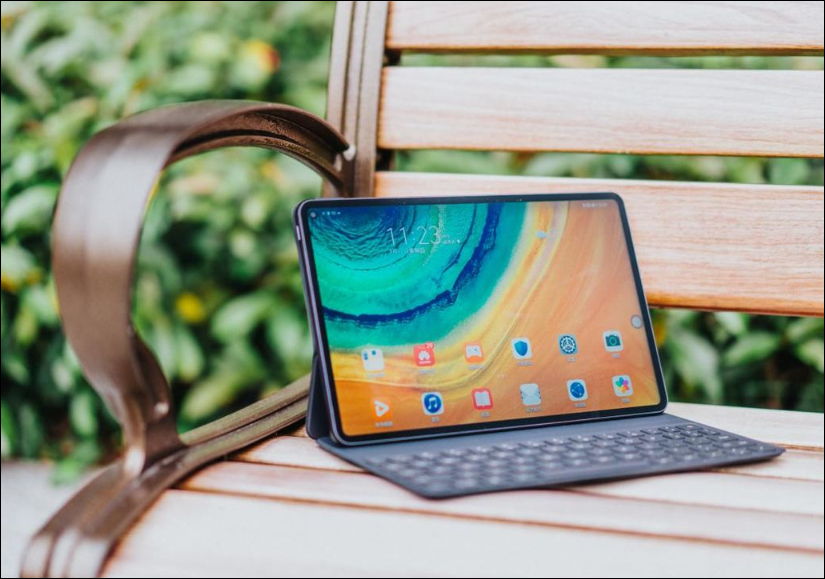
The device will be made available in two variants — one with a 12.2-inch screen supplied by Huaxiing and another with a 12.6-inch display panel provided by Samsung. Both of them are said to have support for a higher refresh rate.

It is also said to be powered by the Huawei HiSilicon Kirin 9000 chipset, the latest flagship chipset from the Chinese giant. This could also be the last one from the company, at least for the time being till the restrictions imposed by the United States are lifted.

The name of the device itself indicates that the tablet is the successor of the Huawei MatePad Pro 5G which was first introduced in the European market in February last year and was later made available in China.

As for the other devices that have passed through this certification process, the 4G smartphone is believed to be a part of the Huawei Enjoy lineup and could come with support for 22.5W fast charging.

There are two 5G smartphones, which are expected to be a part of the Huawei Mate 40 lineup and could expand the portfolio of the Mate 40 series. We will have to wait for more information to determine if these claims are true or not.

RELATED: 

New Xiaomi Mi 10 model with Snapdragon 870 appears in TENAA

A couple of upcoming smartphones have appeared in the database of China’s TENAA regulatory body such as Xiaomi Redmi K40, Redmi K40 Pro, Black Shark 4 series (PSR-A0) smartphone, and a new version of Xiaomi Mi 10. The latter which has a model number of M2102J2SC was approved by the 3C authority of China last week. Since it has appeared at TENAA today, it is likely that the company may launch it at some point in this month.

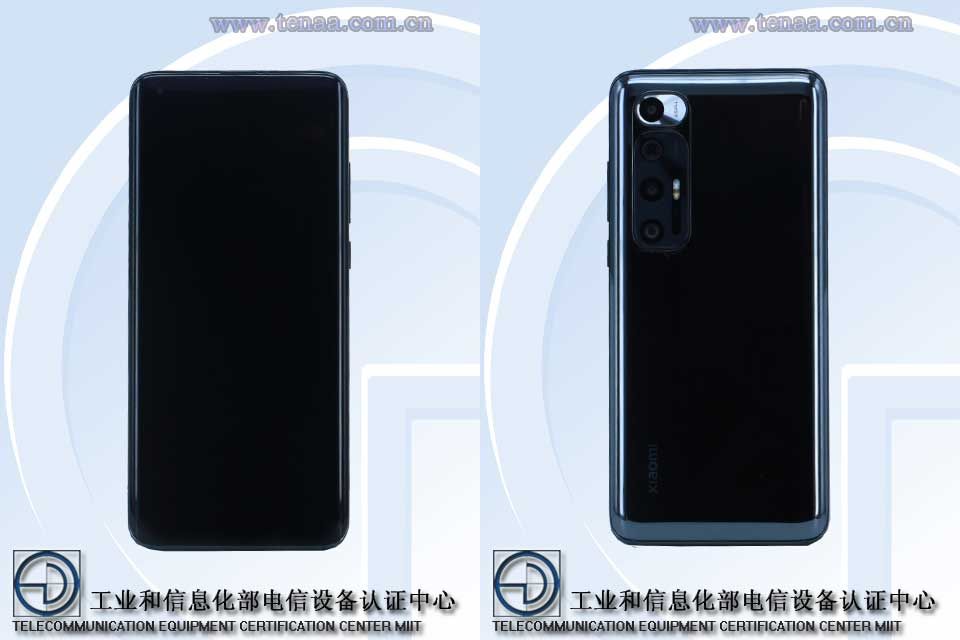
The Xiaomi M2012J2SC smartphone has a curved edge display. The image reveals that it has a punch-hole placed at the top-left corner of the screen. In all likelihood, the new version of Mi 10 has an AMOLED screen with an in-screen fingerprint reader.

Coming to the rear shell of the design, it has a curved appeal and a vertically aligned camera module. The handset seems to be equipped with a quad-camera system. A volume rocker and a power button are available on the right side of the device.

Xiaomi Mi 10 special edition TENAA images

As far as specs are concerned, the Xiaomi M2012J2SC’s TENAA listing has no details on it. The 3C appearance of the smartphone had revealed that it could be arriving with support for 33W rapid charging and 5G connectivity. The new version of the Mi 10 could be fueled by the Snapdragon 870.

Xiaomi is currently silent on the existence of the Xiaomi Mi 10’s new version. It is likely that the company may spill more information on it after the Chinese New Year (Feb. 12). With TENAA and 3C certifications under the belt, the handset is likely to go official at some point in this month or early in the coming month. It is expected to arrive with a pricing of around 3,500 Yuan (~$543).

RELATED:

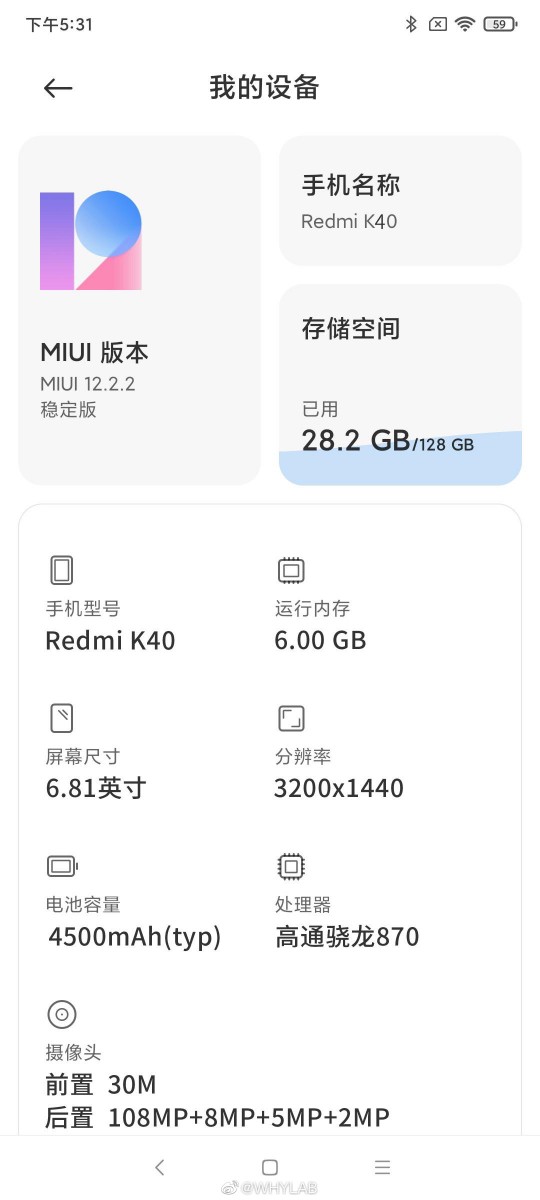
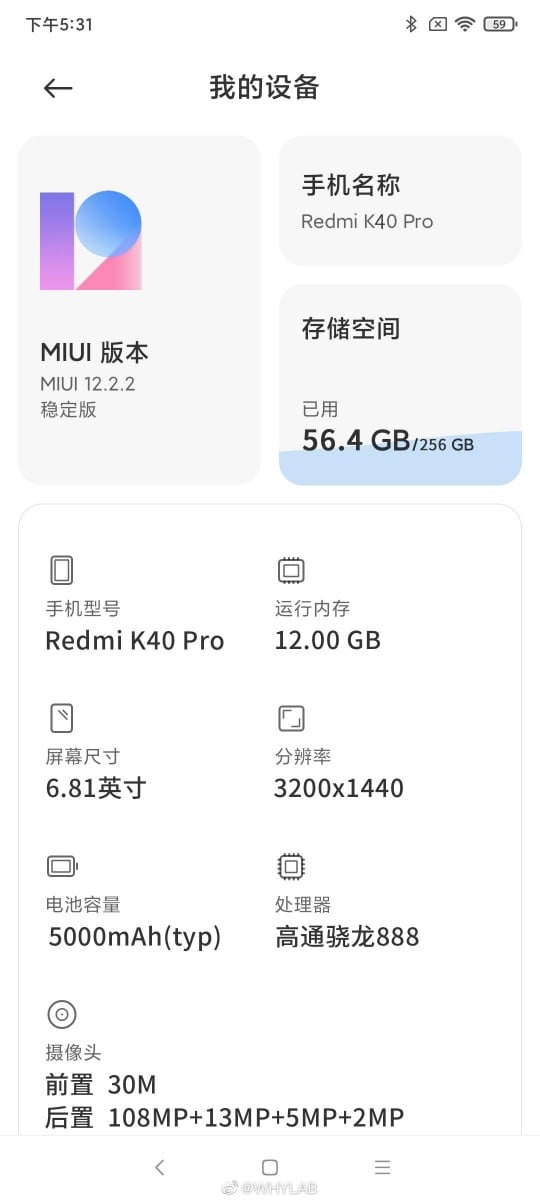
Unverified screenshots reveal Redmi K40 could be powered by Snapdragon 870 chipset

Xiaomi-backed Redmi has officially confirmed that the company will be launching its next-generation flagship smartphone — the Redmi K40 on 25th February. Now, ahead of the official launch, information about the devices are surfacing online.

The leaked screenshots have revealed that one of the major differences between the Redmi K40 and Redmi K40 Pro is the chipset. While the standard model is powered by the Qualcomm Snapdragon 870 SoC, the Pro variant is powered by the Snapdragon 888. Do note that we haven’t verified the authenticity of these screenshots and they may be fake as the number ‘4’ in the model name looks a bit odd.

Reports indicate that there will be a third model in this lineup which will be powered by the MediaTek Dimensity 1200 chipset, based on the 6nm process. This model is expected to be named Redmi K40S.

Both the models — Redmi K40 and K40 Pro features a similar type of display. There’s a 6.81-inch AMOLED panel that supports a screen resolution of 1440p. It uses the same E4 luminous material as the Mi 11 and is likely to have support for a 120Hz refresh rate.

In the camera department, both of them will come with a 108-megapixel primary sensor. However, the Pro model features a 13-megapixel ultra-wide lens and a 5-megapixel telephoto lens while the standard model will come with an 8-megapixel ultra-wide sensor and a 5-megapixel telephoto lens. Both of them will have a 30MP selfie snapper upfront.

Xiaomi has already teased that the Redmi K40 Pro will have a starting price of around 2,999 yuan (approximately $466) which means that the pricing of the Redmi K40 will be less than that and the Redmi K40S could be the cheapest among the three.

RELATED: