Advertisement

ZTE Blade X1 offers 5G, 48MP camera, and a punch-hole display for only $384

Visible, an MVNO (Mobile Virtual Network Operator) that uses Verizon’s network has launched ZTE Blade X1 in the US. This budget smartphone offers 5G connectivity for just $384 or $16 per month if you opt for the 24-month plan. However, it is worth noting that this phone does not support mmWave 5G.
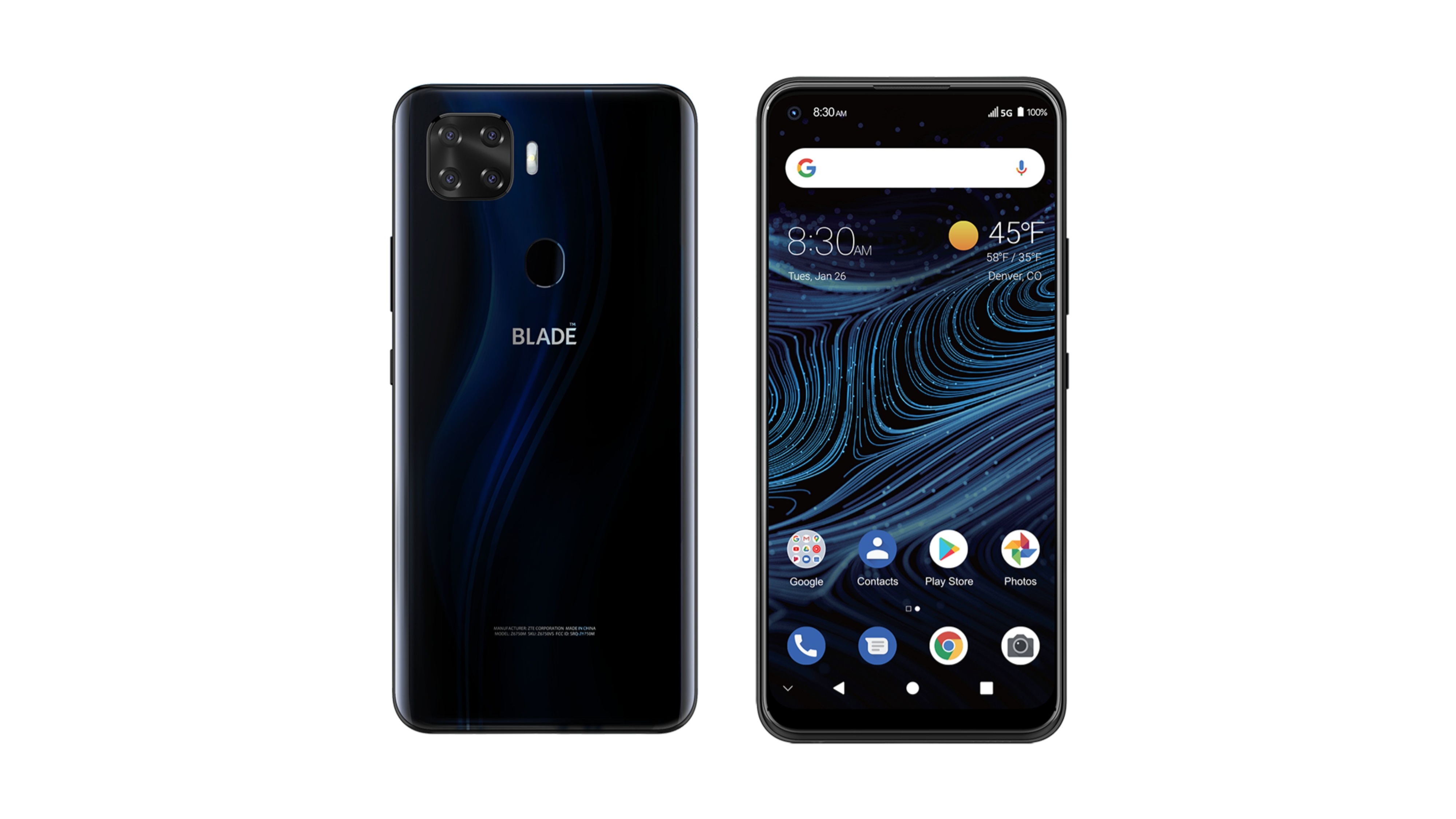
ZTE Blade X1 Midnight Featured

The newly released ZTE Blade X1 features a plastic build and flaunts a 6.5-inch FHD+ (2340 x 1080 pixels) IPS LCD panel on the front with a single punch-hole at the top left corner. This display has the standard 60Hz refresh rate and 19.5:9 aspect ratio

The handset is powered by Qualcomm Snapdragon 765G SoC paired with 6GB RAM and 128GB internal storage. If needed, the storage can be further expanded up to 2TB using a microSD card.

As for cameras, this device comes with a quad-camera setup on the back, which includes a 48MP primary sensor, an 8MP ultra-wide unit, a 2MP macro shooter, and a 2MP depth sensor. Whereas, for selfies, the smartphone uses a 16MP snapper that resides in the punch-hole on the front.


On the connectivity front, apart from sub-6GHz 5G, the phone also supports 4G LTE, VoLTE, 3G, dual-band WiFi, Bluetooth 5.0, GPS, and NFC. As far as ports are concerned, the handset comes with USB Type-C and a 3.5mm headphone jack.

Lastly, this smartphone sports a rear-mounted fingerprint sensor, runs Android 10 backed by a 4,000mAh battery, comes in a single ‘Midnight’ color option, measures 164 x 76 x 9.2mm in dimensions, and weighs around 190g.

In a nutshell, the ZTE Blade X1 is similar to the ZTE Axon 11 SE 5G and ZTE Blade V2020 5G but with a different chipset and the LED flash sits right to the camera module.


RELATED:


(Via)


Redmi Note 10 bags FCC certification ahead of rumored February launch

The Federal Communications Commission (FCC) had recently certified a Xiaomi smartphone with M2101K6G. It was found that this device will be arriving in the market with Redmi Note 10 Pro 5G moniker. The FCC authority (via) has now approved another device with the M2101K7AG model number. It is now known that this model number belongs to the Redmi Note 10 handset.

The M2101K7AG has been previously spotted at certification platforms like the Eurasian Economic Commission (ECC) of Europe and the TKDN authority of Indonesia. The FCC listing has revealed a few details of the Redmi Note 10.

The FCC listing states that the M2101K7AG model number belongs to the 4G version of the Redmi Note 10. It runs on MIUI 12 and it carries support 4G LTE and dual-band Wi-Fi. According to a recent leak, the Redmi Note 10 will be launching in February in India in colors like Gray, White, and Green.

The FCC listing of the Pro model revealed that it could be arriving in three options such as 6 GB RAM + 64 GB storage, 6 GB RAM + 128 GB storage, and 8 GB RAM + 128 GB storage. Apart from FCC, the Pro variant has also received approval from other certification platforms like BIS (India), IMDA (Singapore), EEC (Europe), and MCMC (Malaysia). It is speculated that the Redmi Note 10 Pro could be equipped with a 108-megapixel primary camera.

Redmi is also expected to announce the Redmi K40 series of smartphones in China in the coming month. While the Snapdragon 888 mobile platform is expected to fuel the Redmi K40 Pro, it is unclear which processor will be present under the hood of the vanilla K40 handset. The company is also working on a Dimensity 1200 chipset powered gaming smartphone. The identity of this model is yet to be revealed.

RELATED: 

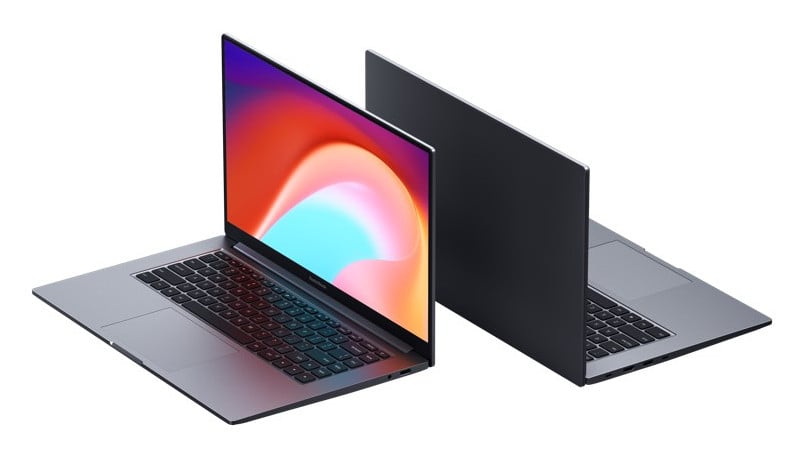
Xiaomi teases the RedmiBook Pro, which features a webcam again

Earlier today (26th January 2021), Xiaomi released a new promotional image poster for its upcoming RedmiBook Pro laptop. The teaser image shared offered us a small glimpse of the notebook, which is confirmed to feature a webcam on the front.

Xiaomi

For those unaware, back in 2020, the Chinese tech giant had launched the RedmiBook 14 and RedmiBook 16 laptops. These notebooks did not feature a front facing camera, which had led to quite a number of its prospective buyers being disappointed. While buying an external camera might offer better clarity, but it does incur an additional cost to the user. But now, it seems like Xiaomi has listened to its customers and has included the webcam again in its laptop offering.

Looking at the promotional image, we can observe that the front camera will be housed on the top, as is the case with most laptops. So, we can expect to see it on the top bezel region. Talking about the specifications of the laptop itself, the company’s previous teases had pointed at the laptop featuring an Intel 11th Gen Tiger Lake series processor, with a display that features 2K resolution.

Xiaomi
RedmiBook 16

For storage, Xiaomi is said to offer an NVMe solid state hard drive, along with a Type C port, which supports PD protocol charging as well. Furthermore, other features include fingerprint scanning for biometric security, backlight keyboards, and a new metallic body. Unfortunately, that is all we have to go on at the moment, so stay tuned for more as we will be providing updates when additional information is available.

RELATED:


Samsung Galaxy S21 does not support the seamless update feature

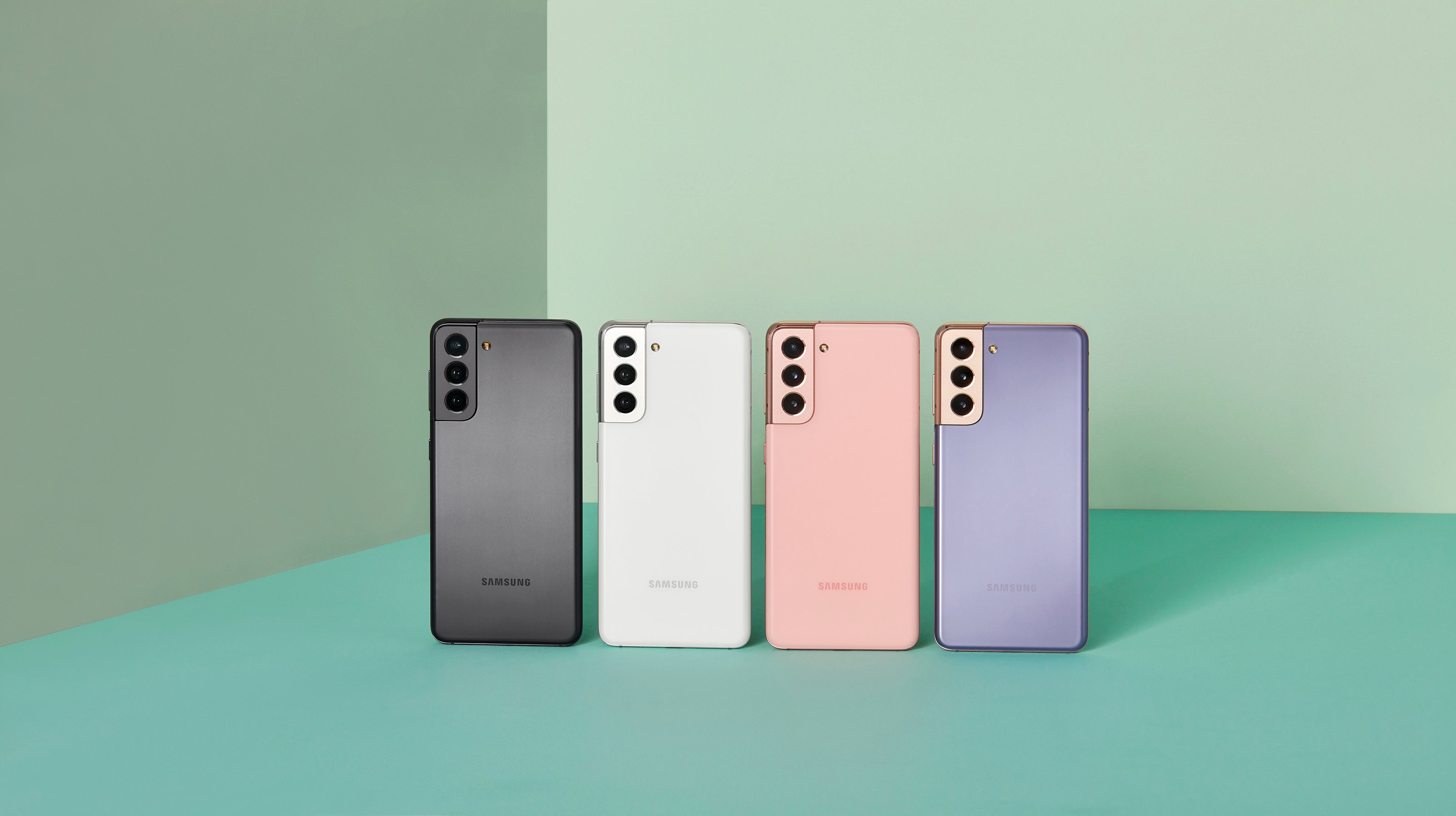
Back in 2020, “seamless” updates were first revealed to be a part of smartphones that are launching with the latest Android 11 OS. The feature would allow devices to install system updates while it’s running and even reboot into the new build without user input. However, it seems that Google has apparently rolled this requirement as it has been confirmed that the Samsung Galaxy S21 doesn’t support this feature.

Samsung Galaxy S21 Phantom Gray White Pink Violet Featured

According to an AndroidPolice report, the Android 11 Compatibility Definition Document (CDD) has apparently rolled back the requirement that stated that smartphones launching with the new OS will feature seamless updates. Google has been working on this feature since 2016. To put it simply, the seamless update enables the device to get updated in the background while it is being used. While it was expected to be a feature for devices that launch with Android 11, this has since been confirmed to not be the case.

Furthermore, the Samsung Galaxy S21 series is also confirmed to not feature seamless updates. The idea behind this new feature was to reduce the wait times behind the updates, namely the bootloader bar, which makes the device unusable for a short duration of time. While various OEMs like Google, Motorola, OnePlus, and even LG support it, Samsung still doesn’t support seamless updates on its devices despite the feature being announced almost half a decade ago.

Samsung

Last year’s Samsung Galaxy S20 series also did not support this feature despite the South Korean tech giant being one of the few manufacturers that offers timely updates. In other words, Samsung devices spend quite a bit of time in their bootloader screens due to the frequent updates. Thus, while the updates are a plus point, the constant downtime is a con to their otherwise great update cycles.

RELATED:


Huawei pushes health care focused wearables as part of its growth in new areas

Huawei Technologies is planning on pushing forward its research and development of its wearables offerings that would focus on health care. The move arrives as part of its efforts to expand into new areas amid the US sanctions.

According to an SCMP report, the Chinese tech giant’s push towards this line could have it catch up with its rival Xiaomi, which is the world’s second largest wearables maker after the Cupertino based firm, Apple. At the moment, Huawei is working on three health research programmes on hypertension management, body temperature, and coronary heart disease. The company announced these initiatives earlier this month in an online event.

Huawei Watch GT 2 Porsche Design

While it has announced that it is working on health care related wearables, it has yet to announce when we might see the integration of these new features in its offerings of smartwatches, smart bands, or even eyewear. However, the company did state that it is building a “strong barrier” to entry for other competitors in the industry. Unfortunately, a Huawei spokesperson said that the company has no further comments regarding this matter for now.

As per Jason Low, a Canalys analyst, “The whole industry is expecting [wearable] products which can really help consumers better manage their health [concerns], especially chronic diseases that both young and old people are likely to get. But there is still a long way to go because this requires a lot of R&D investment, as well as cooperation between smart hardware and technology companies.” Back in Q3 of 2020, Huawei was the world’s 3rd largest wearables maker, although, the US trade restrictions have hampered its ability to supply hardware and software components for its core smartphone and networking business operations.

Huawei

The company’s CEO and Founder, Ren Zhengfei previously stated that the company must stay committed to its research and development, focus on profits and even called for decentralization for survival during this time. Currently, Huawei has over 13 research centers across the globe that work on its smart wearable designs, development of software and hardware, and are even working on health care as well.

RELATED:


MediaTek’s new budget 5G chipsets reported to use 10/12nm process

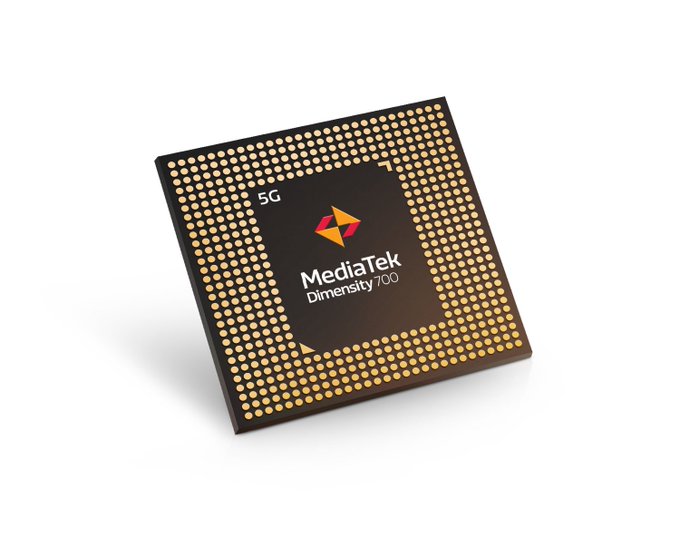
MediaTek’s latest chipsets, the Dimensity 1200 and Dimensity 1100, are both 6nm chipsets but its upcoming budget 5G chipsets under the Dimensity 700 and Dimensity 800 series may be built on larger node size.

Latest news says that the Taiwanese semiconductor company is planning to announce a new Dimensity 700 processor in the second quarter of the year while a new Dimensity 800 processor will be announced later at MWC 2021 which is scheduled for late June.

Dimensity 700 Featured

News of new chipsets should definitely sound exciting but that may not be the case for these new SoCs as it has been reported by Digitimes that they may be built using TSMC’s more mature 10nm or 12nm process. That sure sounds like the manufacturer is regressing seeing as the Dimensity 700 and Dimensity 800 chipsets are fabbed on TSMC’s 7nm node.

Sources have said that the focus for these new chips will be power-efficiency, sub-6GHz support, and multimedia and gaming performance. Our guess is that the chipsets will feature a CPU configuration with four Cortex-A55 cores and two Cortex-A76 cores. Differences between the chipsets should include CPU clock speed, maximum resolution display support, and number of GPU cores and clock speed.

These chipsets will go head-to-head against Qualcomm’s own Snapdragon 480 5G processor which has been released for entry-level and budget 5G smartphones.


RELATED:

TSMC reportedly planning to increase automotive chips pricing by 15%

The COVID-19 pandemic has severely impacted the supply chain for several technology companies and has created a shortage of key components. With the production impacted, manufacturers are looking to raise pricing.

TSMC, the world’s leading contract manufacturer for chipsets, is expected to do the same for its new automotive chips unit, for which the company is likely to cite the global shortage of components as the reason.

TSMC Logo

As per the report, Advanced Integrated Circuits (VIS), the automotive chipset unit or subsidiary of TSMC is considering increasing pricing by up to 15 percent while other foundries are also looking to do the same.

If the companies decide to increase the pricing, it will be the second round of price increase since last fall. Reports indicate that the price rise could take effect sometime at the end of February or early March.

With the increase in pricing for key components such as chipsets, the overall price of the Smart Car could also get increased, which can slow down the pace of adoption of electric vehicles, which is now gaining momentum globally.

Meanwhile, Samsung has partnered with Telsa to work on developing a new 5nm EUV chip for autonomous driving, which is currently said to be in the Research & Development stage but we should know more about it in the coming months.

RELATED:

Samsung and Tesla partners to make 5nm chip for autonomous driving

Samsung has been trying to become a leader in the chipset market and seems to be slowly progressing towards that. With Huawei out of the market, at least for the time being, the South Korean company has an opportunity to make its mark and it seems to be doing that.

As per the latest report coming from Korea, Samsung and Tesla are joining hands to make chips using the 5nm manufacturing process for autonomous driving. With the ongoing expansion and increased adoption of electric vehicles and the shortage of chipsets in the market because of the COVID-19 pandemic, the Korean giant saw the opportunity and has expanded its semiconductor business into automobiles.

Samsung

The chipset is being reported to be in Research & Development (R&D) stage at the Samsung Foundry Division and it will be mounted on Tesla’s autonomous vehicles. As said, it is being made using a 5nm Extreme Ultraviolet (EUV) process, which only a couple of companies can do — Samsung and TSMC.

Samsung is already a partner of Tesla for producing the company’s current self-driving chips for hardware 3.0 computer. But the chip currently being used is manufactured using a bit older 14nm technology.

The South Korean giant recently reorganized its organizational structure and relocated some manpower in the Advanced Driving Assistance System (ADAS) which is focusing on autonomous driving technology. If this new development of Samsung and Tesla works out, then Samsung could post a great threat to TSMC, which also entered into this sector last year with a 7nm chip.

RELATED:

Samsung targets shipping 26 million units of Galaxy S21 series smartphones

Samsung Galaxy S20 5G, the company’s last year’s flagship smartphone didn’t perform well in the market in terms of sales. That is said to be one of the reasons why the South Korean giant launched its successor, Samsung Galaxy S21 5G, a few weeks earlier.

However, it seems that the company is keeping its hopes in check and its estimates for the sales of the Galaxy S21 5G lingers on the conservative side. As per the report, Samsung is estimating to ship around 26 million units of the Galaxy S21 series for the year, which is the same as the Galaxy S20 5G.

Samsung Galaxy S21 Ultra Phantom Black S Pen Featured

Based on these expected numbers from Samsung for the flagship lineup, it could be the least popular Galaxy S-series lineup ever. The company is estimating sales of 10 million units for the S21, while the S21 Plus and S21 Ultra are expected at eight million each.

It looks like the company is estimating the sales of this new flagship lineup based on the performance of its predecessor in the market. For the Galaxy S20 lineup, Samsung had originally targeted sales of 35 million units but managed to sell 26 million units.

Samsung may adjust the estimated shipping numbers for the Galaxy S21 series smartphones as the first quarter ends, which should provide a more clear picture of where the company stands as far the demand for its flagship devices is concerned. For what it’s worth, the company is likely to surpass the currently estimated shipment of 26 million as several analysts hinting a realistic target of over 30 million units.

RELATED: 

Xiaomi Mi 10’s new variant with Snapdragon 870 rumored to be in works

The Xiaomi Mi 10 series includes a couple of smartphones such as Xiaomi Mi 10, Xiaomi Mi 10 Pro 5G, Xiaomi Mi 10 Ultra 5G, Xiaomi Mi 10T 5G, Xiaomi Mi 10T Pro 5G, Xiaomi Mi 10T Lite 5G, and Xiaomi Mi 10i 5G. While the Chinese manufacturer has recently launched the Xiaomi Mi 11 5G flagship smartphone, a new leak claims that the company is working on a new Mi 10 series handset for China. This handset is likely to be driven by the recently announced Snapdragon 870 mobile platform.

Unfortunately, the moniker of the Snapdragon 870 powered Mi 10 series phone is under wraps. Apart from the inclusion of the SD870 chip, its other specs could be identical to the original Mi 10 handset. The leak also states that the handset could be priced around 3,500 Yuan (~$541). It is unclear whether the device will be heading to markets outside China.

Except for the Mi 10T Lite and Mi 10i, all the other Mi 10 models are powered by the Snapdragon 865 that offers clocking speeds of up to 2.84GHz. The Snapdragon 865+ went official as its overclocked version delivered up to 3.1GHz clocking speeds. The recently unveiled Snapdragon 870 mobile platform promises up to 3.2GHz processing speeds.

Xiaomi Mi 10
Xiaomi Mi 10

The Motorola Edge S launching today in China will be the world’s first phone featuring the SD870 chip. Rumors are rife brands like OPPO, Vivo, and OnePlus are also gearing up to launch SD870 powered phones in the coming days.

Xiaomi Mi 10 5G specifications

The Xiaomi Mi 10 5G has a 6.67-inch S-AMOLED display that supports a 90Hz refresh rate and a Full HD+ resolution. The SD865 powered phone has LPDDR5 RAM and UFS 3.0 storage. It has a 20-megapixel front camera and 108-megapixel + 13-megapixel (ultrawide) + 2-megapixel (macro) + 2-megapixel (depth) quad-camera system. The phone carries support for 30W fast charging and 30W wireless charging for its 4,780mAh battery.

RELATED:

Motorola Edge S could be called Moto G100 outside China

Rumors have revealed a lot of information on an upcoming Motorola phone that is codenamed as Nio. It is being said that the device will be launching as the Motorola Edge S this evening in China. Recent reports have claimed that it will be breaking cover as a G-series smartphone in markets outside of China. Reliable tipsters have now revealed the moniker that the handset will be carrying in the global markets.

It is now known that the Motorola Nio phone will be heading to markets outside of China as Motorola Moto G100. The Capri and Capri Plus phones that have been in the rumors are expected to hit the markets as Moto G10 and Moto G30, respectively.

Coming back to the Moto G100, it will be a flagship-grade device powered by the newly introduced Snapdragon 870 mobile platform. In an image shared by reliable tipster Evan Blass, the Moto G100 can be seen docked in an HMDI cradle, which allows it to offer users with desktop PC experience like Samsung DeX. The said feature was recently teased by Motorola China recently for the Edge S as Multi-Screen Collaboration mode.

Motorola Moto G100 desktop mode
Motorola Moto G100 can be seen in a dock for a desktop PC-like experience

Also, the HDMI cradle has a rotating/swiveling that makes it possible to use the rear-facing cameras for split-screen teleconferencing. The tipster claimed that the color variant of the G100 which can be seen in the image will be called Iridescent Ocean.

Past reports have revealed that the smartphone will be coming with a 6.7-inch FHD+ display, a 16-megapixel + 8-megapixel dual selfie camera setup, a 64-megapixel quad-camera system, a 5,000mAh battery, and Android 11 OS. It may arrive in RAM variants like 8 GB and 12 GB along with storage options such as 128 GB and 256 GB.

(source 1, 2)

RELATED:

No periscope camera for the OnePlus 9 series says leaker

The periscope camera has become a common sight on a number of flagships lately. The lens allows you to capture close up objects from a much farther distance, as they offer a longer range of zoom than a typical telephoto camera. OnePlus is yet to announce a phone with a periscope camera, and now a leaker has revealed that the OnePlus 9 series will also be missing out on the future.

OnePlus’s sister company, OPPO, is one of the first manufacturers in the industry to launch a phone with a periscope camera. Actually, it was the first manufacturer to even show off the technology for mobile phones but Huawei launched the first commercially available phone with the feature. So you would think OnePlus will also be one of the early adopters but that has not been the case.

According to Max Jambor, OnePlus’s upcoming flagship phones, the OnePlus 9 and OnePlus 9 Pro do not have a periscope camera. That must be disappointing for fans of the brand that have hoped that the new flagships or at least the pro model will have a periscope camera.

Despite the missing periscope camera, the OnePlus 9 series is expected to have better cameras than its predecessor. The same leaker had said, albeit indirectly, in a tweet a few days ago that the OnePlus 9’s camera will be “worth the shot”.

The OnePlus 9 series will have three models – the OnePlus 9 Lite which should come with Qualcomm’s new Snapdragon 870 processor and the OnePlus 9 and OnePlus 9 Pro which will have the more powerful Snapdragon 888 processor.

Apart from the difference in processors, the three phones are expected to have different display sizes and resolutions It has been reported in a leak that the OnePlus 9 Pro will have a curved screen with a 120Hz refresh rate and a QHD+ resolution. The other two models should have flat displays with an FHD+ resolution and high refresh rates. Other areas where they will differ are cameras, battery capacity, and fast charging technology.

OnePlus is expected to announce the OnePlus 9 series in March alongside other products including its very first smartwatch which will launch as the OnePlus Watch.


RELATED:

Apple issues warning about the iPhone 12 & Magsafe magnets interfering with pacemakers

Apple has consistently disclosed the possibility of the iPhone 12 to cause electromagnetic interference with medical devices such as the pacemaker and defibrillators right from when the models were launched in October last year. This warning applies to most electronic gadgets with radio properties but Apple is sending out an additional warning due to the release of the Magsafe charger.iPhone 12

Apple recently updated a support document on the subject matter, adding the following;

“Medical devices such as implanted pacemakers and defibrillators might contain sensors that respond to magnets and radios when in close contact. To avoid any potential interactions with these devices, keep your iPhone and MagSafe accessories a safe distance away from your device (more than 6 inches / 15 cm apart or more than 12 inches / 30 cm apart if wirelessly charging). But consult with your physician and your device manufacturer for specific guidelines.”

Apple also specifically warned about accessories like the MagSafe Charger and MagSafe Duo Charger, stating that it may also interfere with medical devices:

“All MagSafe accessories (each sold separately) also contain magnets—and MagSafe Charger and MagSafe Duo Charger contain radios. These magnets and electromagnetic fields might interfere with medical devices.”

Despite the warnings, Apple insists that even though all iPhone 12 models contain more magnets than prior iPhone models, they are “not expected to pose a greater risk of magnetic interference to medical devices than prior iPhone models.”

Independent research findings published earlier this month in the Heart Rhythm Journal (via) indicated that iPhone 12 models can “potentially inhibit lifesaving therapy in a patient” due to magnetic interference with implantable medical devices. Three Michigan-based doctors tested this interaction by holding an iPhone 12 near a patient’s implantable cardioverter-defibrillator. The article shows that the device immediately went into a “suspended” state for the duration of the test.


OnePlus Camera APK reveals upcoming features including Moon mode and Tilt-shift mode

OnePlus phones or rather future OnePlus phones may be coming with some really interesting camera features based on details found in the latest version of the camera app.

OnePlus 8T Aquamarine Green featured

A teardown of the new camera APK, which has version number 6.4.2.3 and was found in the OxygenOS Open Beta released for the OnePlus 7 and OnePlus 7T series, was done by the folks at XDA Developers. The teardown revealed strings and codes relating to the new camera features which are expected to be released in the future. Below are the features:

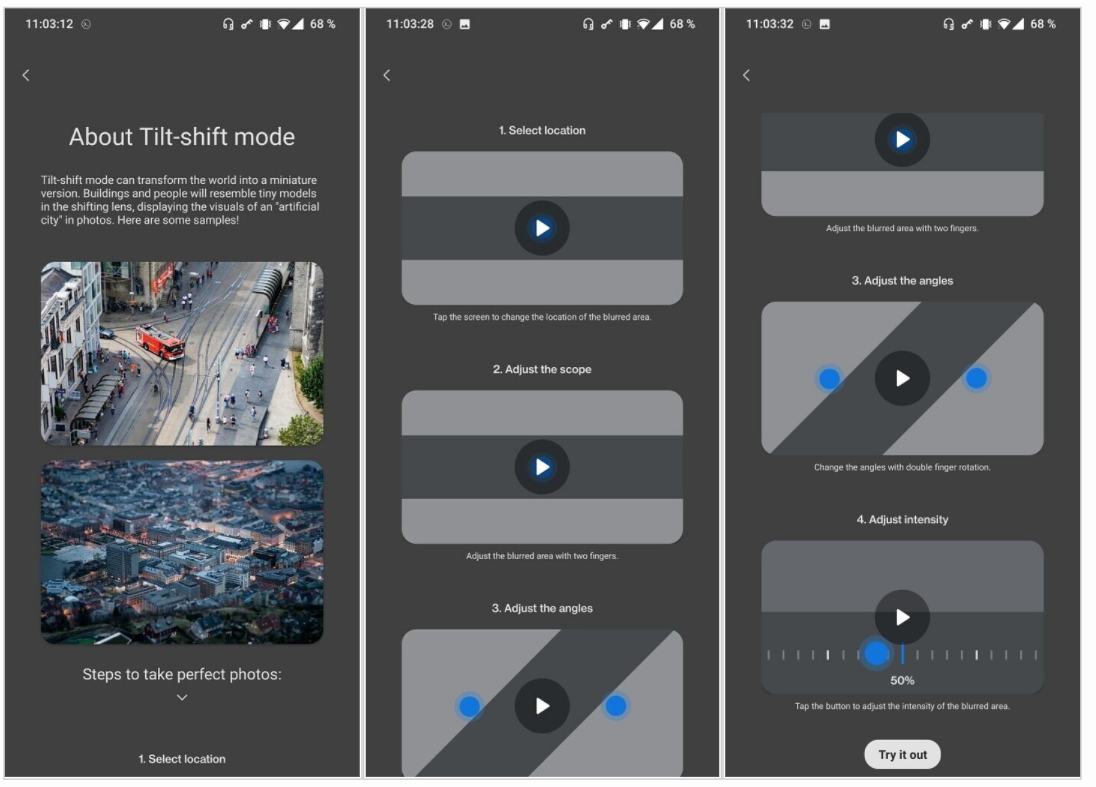
Tilt-shift mode

A tilt-shift lens is a type of lens that can change its orientation and position with respect to the image sensor. In a typical camera, the lens and sensor are parallel to one another and on the same plane. If you use a tilt-shift lens, you can “tilt” or “shift” the position of the lens to a different direction thus changing the angle of the plane and one of the results you get is a miniature image. The screenshot (below) of the Tilt-shift mode for the OnePlus Camera shows how the feature works.

OnePlus Camera Tilt-shift mode
Image source: LossyX via XDA Developers

This feature sounds like one that will be based on hardware, so there is a chance it may not be available for certain devices.

Starburst

If you look at a light source and you can see star-like effects around it rather than a dot, then you have what is called starburst vision and you should see a doctor. However, starburst looks nice in photos and it appears OnePlus will allow you to be able to capture images of a light source with the effect.

Moon mode

Huawei can be said to be the manufacturer that made taking photos of the moon with your phone popular, and lately more manufacturers have jumped on the bandwagon. OnePlus will be the latest to do so and they will even add different filters that allow you to change the color of the moon.

Hyperlapse

The OnePlus camera can take timelapse videos which is a sped-up video taken at a stationary point. OnePlus plans to add a dedicated Hyperlapse mode which will allow you to record sped-up videos over long distances. This should come in handy once the pandemic is over and folks can travel and visit places.

Focus peaking

Focus peaking is a feature that is found in a lot of cameras, and what it does is highlight the edges that are in focus for you. OnePlus seems to be bringing it to its phones.

We do not know when these features will be available and which phones will get them but our guess is that they may debut first on the OnePlus 9 series before rolling out to older eligible devices.


RELATED:

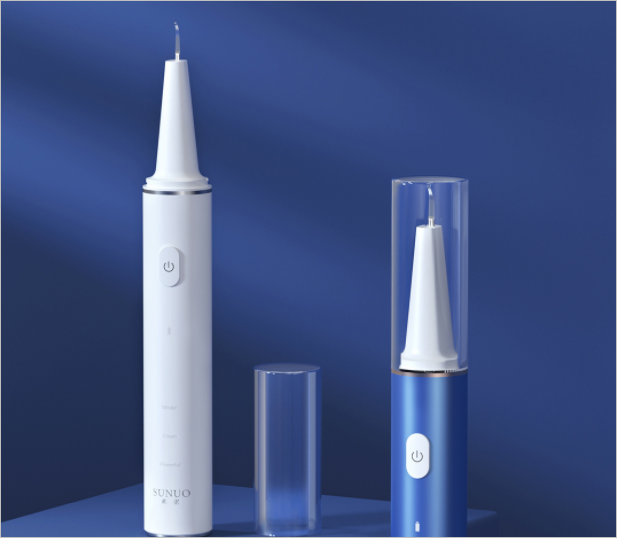
Xiaomi crowdfunds the Sunuo T11 Pro Smart Visual Ultrasonic Dental Scaler

Xiaomi has launched the Sunuo T11 Pro Smart Visual Ultrasonic Dental Scaler under crowdfunding on the Youpin platform. The product is a portable ultrasonic scaler that can be used right in the home without visiting the dental clinic.Sunuo T11 Pro Smart Visual Ultrasonic Dental Scaler

The COVID 19 pandemic and resultant lockdown across different countries of the world has left several persons missing their dental check-ups. It is usually recommended that we visit the dental clinic twice yearly (every six months) and during such visits, the dentist or Hygienist usually carry out routine Scaling and Polishing. The procedure involves using the ultrasonic scaler to remove calculus and plaque from the tooth surfaces and under the gingivae (gum). Sunuo T11 Pro Smart Visual Ultrasonic Dental Scaler

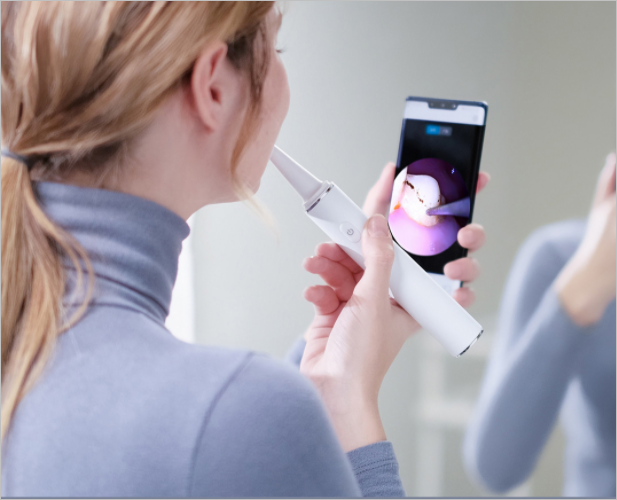
The new Sunuo T11 Pro Smart Visual Ultrasonic Dental Scaler makes it easy for families to carry out the procedure on their own right in the comfort of their home. It packs a 500W high-precision professional endoscopy camera which relays images of the oral cavity to a companion smartphone which can be paired with the device via WiFi. Ys, you heard it right, the portable scalercomes with WiFi support and can be paired with a smartphone. When that is done, the phone will give a clear view of the are of the mouth the device is pointed to. The scaler also has an LED light at the tip to illuminate the mouth.Sunuo T11 Pro Smart Visual Ultrasonic Dental Scaler

The Ultrasonic scaler uses Ultrasonic transducer technology and is capable of 200W times/minutes real ultrasonic vibration frequency. It also comes with a smart safety audio-visual protection. Xiaomi Sunuo T11 Pro Smart Visual Ultrasonic Dental Scaler

Further, the Sunuo T11 Pro Smart Visual Ultrasonic Dental Scaler comes with an IPX7 waterproof rating which ensures it can be used in a wet environment. You are guaranteed an extended usage period as the scaler comes with a 1200mAH battery which charges over a USB-C port.

The product is presently available on Xiaomi youpin for 199 yuan (~$30).

RELATED;

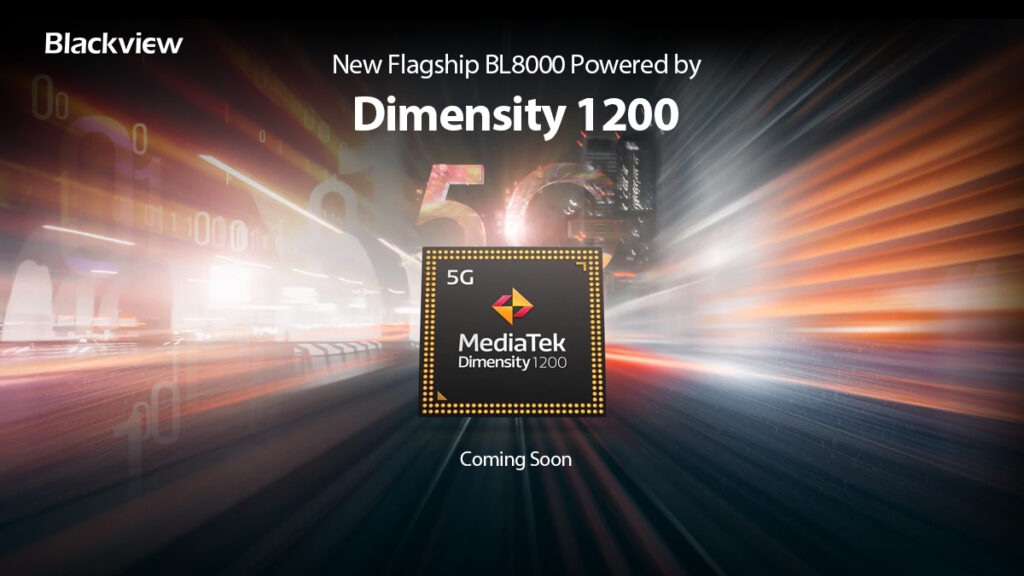
Blackview BL8000 smartphone coming with MediaTek Dimensity 1200 SoC and 12GB RAM

As promised a few weeks ago along with the launch of MediaTek Dimensity 1200 SoC, the Blackview is launching Blackview BL8000 soon. The company is known for its stellar rugged smartphones but it seems to change soon. Blackview is now entering the 5G rugged smartphone market with Blackview BL8000 smartphone. It will be a high-end rugged smartphone featuring Dimensity 1200 and that too at an attractive price.

Must See: Ulefone Armor 12 rugged phone with Dimensity 1200 5G SoC launching soon

Following its predecessor’s path, the new Blackview BL8000 will bring a state-of-art rugged design and technology. The presence of 6nm built MediaTek Dimensity 1200 5G chipset will further enhance the connectivity and performance reliability. However, the 12 GB RAM will further improve multitasking.

MediaTek Dimensity 1200 SoC will aid a massive performance upgrade as it houses a single Cortex-A78 core clocked at 3GHz and 3x Cortex A78 cores at 2.6GHz and 4x A-55 cores at 2GHz for low-power tasks. It further offers support of up to 168hz display refresh rate. The Hyper Engine 3.0 further improves gaming performance.

Along with the pure 5G support, the SoC comes with WiFi 6, Bluetooth 5.2, dual-band (L1+L5) GNSS, and much more. The chipset supports fast charging of up to 65W that can charge the whole device within few minutes.

Blackview BL8000 will be a game-changer in the rugged smartphone market as it will carry powerful specifications. The interested users can know more about the Blackview 5G technology by heading to the official website. In the meantime, you can win a Blackview A70 and A80 by entering the giveaway.

Related: Blackview BL6000 Pro 5G compact look isn’t compromising the rugged design; A70 launching soon

The Four-Year-Old Samsung Galaxy S8, S8+ gets the latest security patch update

Samsung Galaxy S8, S8+ aren’t even running on 2019’s Android 10 OS. However, the company is not giving up on the Quarterly update cycle for the 2017 flagships. Accordingly, the devices have received a new update.

Samsung Galaxy S8 and Samsung Galaxy S8+ with model numbers SM-G950F and SM-G955F respectively are getting a new update. As per the Sammobile report, the S8 is getting the firmware version G950FXXSBDUA3  and S8+ G955FXXSBDUA3 across Latin America(Exynos models).

Back in February 2019, Samsung rolled out the One UI update for the Galaxy S8-Series delivering the promise of extending the One UI to older Android versions(pie). However, they haven’t received any major updates after that. In fact, the company pushed them to the Quarterly cycle last year.

Considering it’s been four years since the official launch, it is appreciative of Samsung to at least roll out the security patches for those who are clinging on to their devices. Speaking of which, Samsung Galaxy S8’s IP68 and GPS locator have saved lives in the past. The devices, which were a solid offering of their time, might still be living to see another day for some even today.

Hence, if you are someone who is having one of these devices, we suggest you update it to the latest security patch ASAP(as soon as possible). You can do it by navigating to Settings->Software Update->Download and Install.

Coming back, the update doesn’t have any other changes apart from the January 2021 security patch. And this OTA(over-the-air) should extend to all the other regions and versions soon so if you haven’t received it yet, don’t panic.

RELATED:


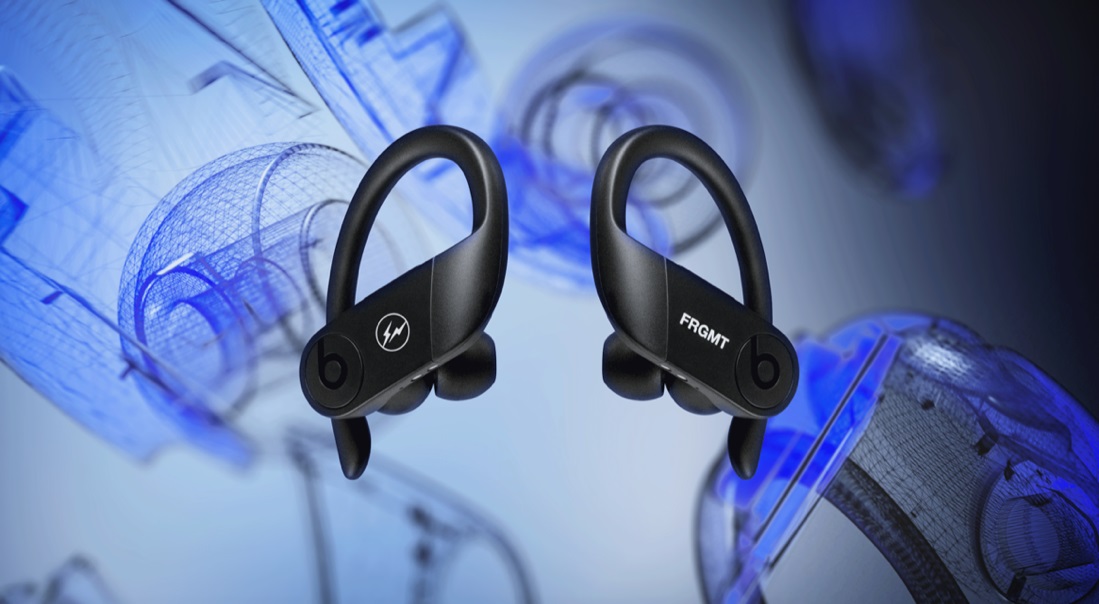
Apple launches the Powerbeats Pro Wireless Headset Special Edition

Apple‘s brand Beats once again joined forces with the famous design brand Fragment Design to jointly release a special edition Powerbeats Pro wireless headset.Powerbeats Pro Wireless Headset Special Edition

The design style of this headset pays tribute to the ideas and principles of Fragment founder and Japanese trend godfather Hiroshi Fujiwara. It is stylish and simple, with a pure single tone. The new edition is available in ivory white, navy blue, glacier blue, cloud pink, lava red, and black.

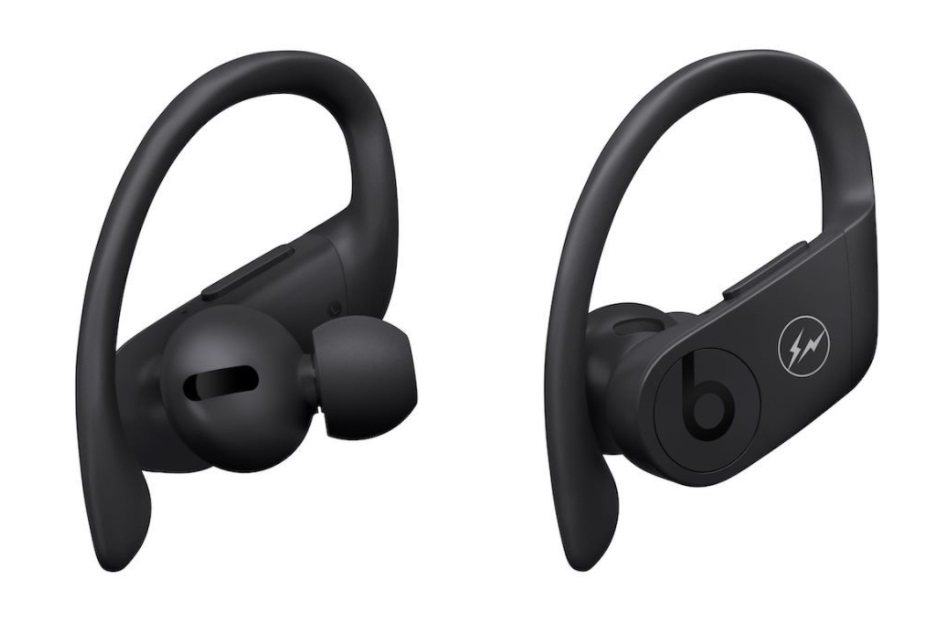
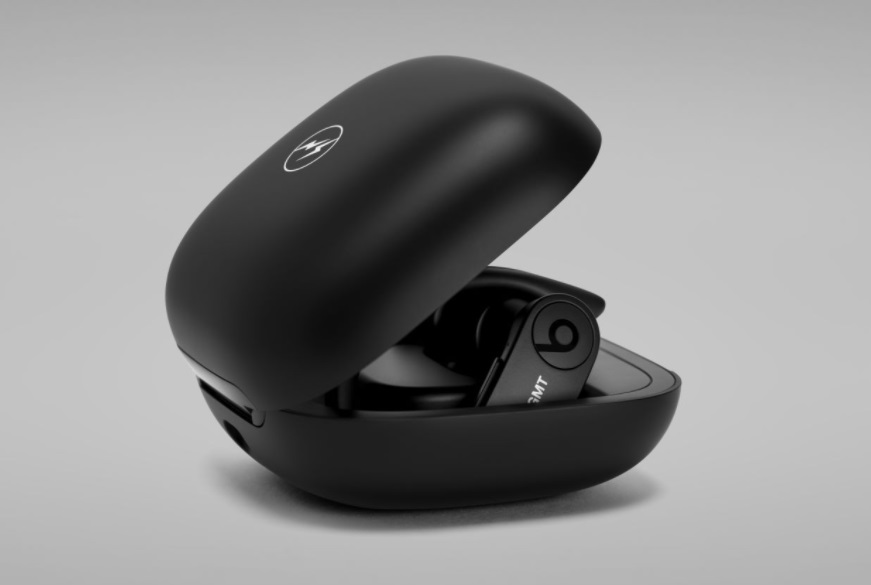
The classic double lightning logo is printed on one earplug of the headset, and the FRGMT brand is printed on the other earplug. The charging box also has a double flash logo and a set of stickers.Apple Beats Powerbeats Pro Wireless Headset Special Edition

The Powerbeats Pro special edition earphones are ergonomically designed and internally based on the new Apple H1 earphones. The new acoustic structure can output powerful and balanced sound effects, reproduce pure sound quality, bring clearer sound, and enhance the dynamic range.Powerbeats Pro Wireless Headset Special Edition

There are also adjustable non-slip ear hooks, four sizes of earplugs are available, the left and right earplugs are equipped with volume and song control buttons, the automatic play/pause sensor can detect whether the earplugs are in the ear, and it also supports receiving calls.

The earbuds come with Class 1 Bluetooth technology which has a wider coverage, less signal loss, supports Siri voice wake-up and can connect to the iPhone with one button.Powerbeats Pro Wireless Headset Special Edition

The standard battery life is up to 9 hours but with the charging box, the power can go up to more than 24 hours. Also, charging the earbuds for 5 minutes can deliver up to 1.5 hours of playback while a 15-minute charge can last up to 4.5 hours.

The Powerbeats Pro special edition headset is priced at 1888 yuan (~$291) in China. It is expected to go on sale on January 29.

RELATED;


Xiaomi Mi Earbuds Basic 2 available via Giztop flash-sale for $9.99

Xiaomi often brings massive discounts on its variety of products. After bringing huge discounts on smartphones, the company is offering Mi Earbuds basic 2 for $9.9 via Giztop. The retailer is offering a 50% discount using coupon code XMEB2 on the actual retail price of $19.99. The flash sale is time-limited, so we suggest you grab the device as soon as possible.

Must See: There’s a major difference between the Redmi Earbuds 2C and Redmi Earbuds S

Xiaomi Mi Earbuds Basic 2 is affordable true wireless earbuds featuring some decent specifications. The device comes equipped with Bluetooth 5.0 chip for excellent connectivity. It carries technology which switches the sound between single-ear and double-ear. A 7.2mm audio unit is present with DSP noise cancellation technology.

It offers 12-hour long battery life with 300 mAh charging dock. It is built with ABS material and weighs 4.1 grams. Its round and smooth design enhance comfortability while using the device for extended periods of time.

You can grab the device from Giztop at just $9.99 using Coupon Code XMEB2.

Grab Now

Related: Redmi Earbuds S launches as a rebadged AirDots S in India for ₹1,799 ($24)

Realme laptops may hit the market as early as the middle of the year

A number of Chinese phone manufacturers have expanded their portfolio to include computers. The group which includes Huawei, Honor, Xiaomi, and Redmi is about to get bigger with the addition of Realme.

Realme is one of the youngest phone brands in the industry but its product portfolio has expanded in the past year to include lifestyle products, smart TVs, and AIoT products. It has now been reported that it will be making its entry into the laptop business and we may even see the first models arrive by the middle of the year.

The info is from the popular leaker Mukul Sharma, and according to a tweet posted earlier today, he says Realme laptops are expected to launch in June of this year. Going by that date, we have about five months of waiting.

Realme’s laptops will go head to head with those from its biggest rival Redmi/Xiaomi, so we expect them to be affordable and priced competitively. We do not know which markets will get the laptops but our guess is India and China are on the list.

The realme laptops will most likely be made by an ODM as none of Realme’s sister/parent companies produce laptops, so it can’t leverage their production lines. The laptops should run Windows 10 and be powered by Intel and or AMD processors. They should also be available in multiple RAM and storage configurations.

With Realme entering the laptop market, is this a sign that Vivo, OPPO, and OnePlus may also launch laptops in the future? Only time will tell.

RELATED: