Advertisement

Flipkart announces Nokia-branded Air Conditioners in India starting at ₹30,990($420)

Flipkart has announced new Nokia-branded Air conditioners(AC) in India. The new ACs support inverter technology, have in-built Wi-Fi, intelligent motion sensors, and more.
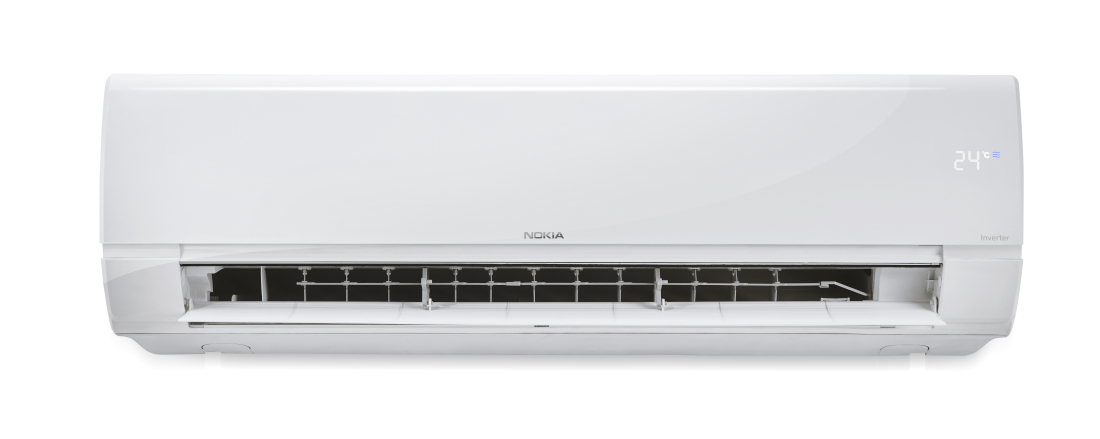
Back in 2019, India’s eCommerce giant Flipkart partnered with Nokia to launch Smart TVs in India. Since then, the company has been launching Nokia-branded products including Smart TVs in the country. Recently, it expanded the portfolio by launching the Nokia PureBook X14 laptop. Now, the series of products gets new Air Conditioners.

A Flipkart teaser page accordingly describes(via) the features of the new ACs. However, it is yet to reveal the details of the five different models that are launching in India. Anyway, the ACs will start at ₹30,999($420) and will be available for purchase from December 29 via Flipkart.

As with every ACs, we can expect the 5 variants to differ in capacity(in Tons) and Energy efficiency(star-rating). In a press release, Dev Iyer, Vice President  Private Brands, Flipkart says the ACs will be “Made in India”, multi-functional and environment-friendly. The Air Conditioners will also boast a minimalist design, have dual-rotatory compressors with brushless DC motors, eco-friendly R-32 refrigerant for cooling.

Some of the notable features of the Nokia-branded Air Conditioners are as follows:

  • Stabilizer free, Range of Voltage: 165V to 265V
  • Rapid room cooling, 4-way swing, Turbo cross flow fan.
  • Triple Inverter Technology with four-in-one Adjustable Mode(Inverter)
  • Anti-corrosive 100% copper materials with Bluefin and Self-cleaning technology.
  • six-in-one filters, Negative ionizer for Air purification.

In addition to the above features, the ACs also support smart home controls like customizable user profiles, multiple schedulers, smart-filter change reminders, and more. Users can also control the AC remotely via smartphone. The ACs also have intelligent motion sensors, ifeel technology for smart cooling.


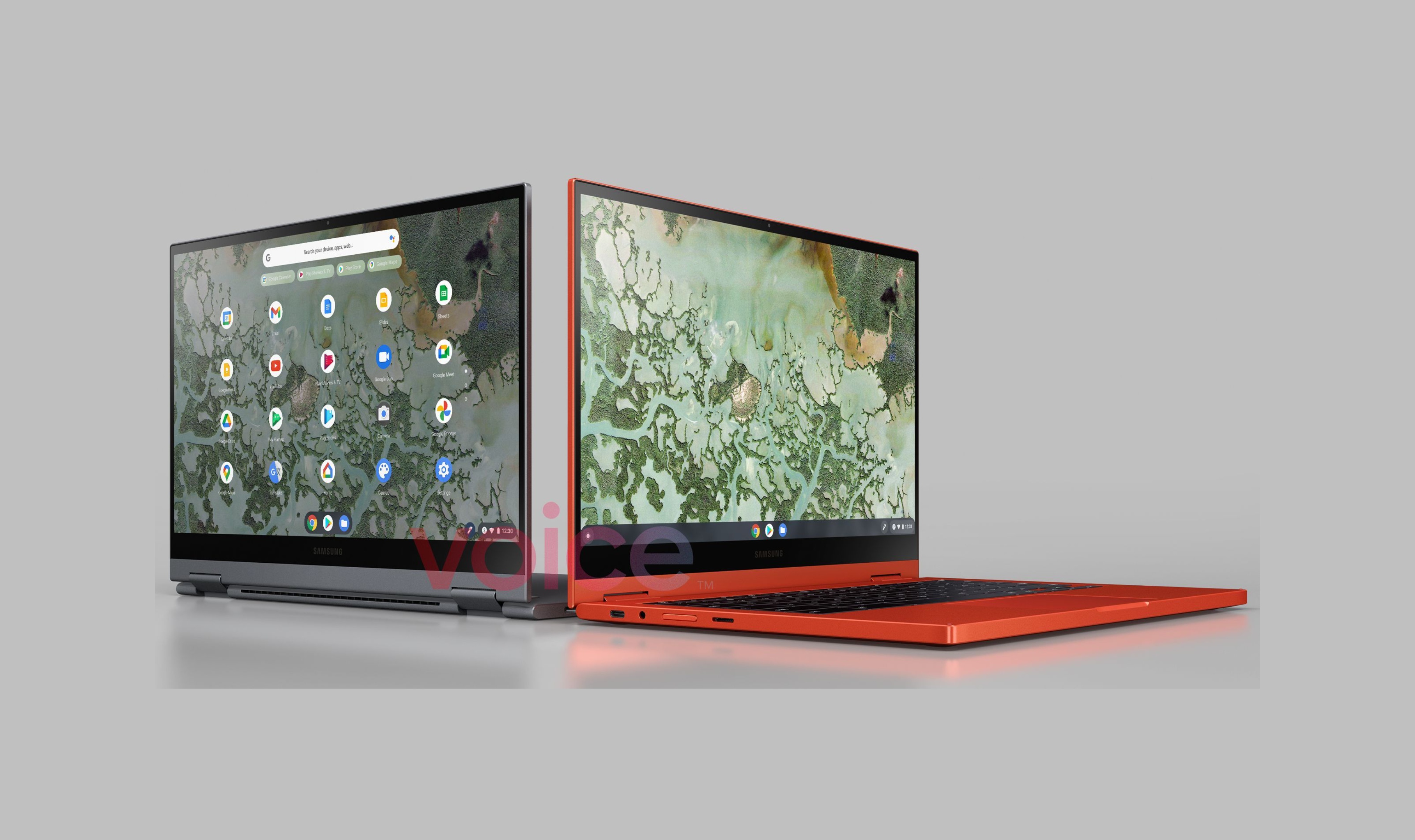
Galaxy Chromebook2 press render leak confirms two colors

Samsung unveiled the Galaxy Chromebook earlier this year ahead of CES 2020. The South Korean tech giant is reported to release its successor – Galaxy Chromebook2 very soon. Ahead of its official announcement, the laptop has now leaked in a press render confirming two color variants.

Samsung Galaxy Chromebook 2 Render Leak Featured

In early December, Evan Blass aka @evleaks revealed that Samsung will be launching the Galaxy Chromebook2 in the coming days. More than two weeks later, the leakster has shared a render of this notebook. This picture showcases the upcoming laptop in two colors – Gray and Red.

For those unaware, the original Galaxy Chromebook also comes in these two identical colors. The company calls them Mercury Gray and Fiesta Red respectively. But since Samsung has a habit of changing the color names, the exact name for the new model is a mystery as of now.

That said, according to Evan, the Galaxy Chromebook2 will feature a similar design as its predecessor. But the sides will also have the same color as the entire body, unlike the older model. Further, he hints that it will be coming with a new Intel chip and could even feature a built-in fan, which is missing in the original.

In other words, the forthcoming flagship Google Chrome OS laptop by Samsung will be identical to the original in terms of design but with updated internals. Hence, we can expect it to start at the same $999 price tag.


Drone user in the US accidentally discovers and rescues woman during aerial photography

Josh Hug, a UC Berkeley professor, was out with his children using his DJI Mavic Air 2 drone, when he accidentally discovered a woman who seemed incapacitated by the waves and even managed to rescue her.

Drone

Hugs stated that “We were just finding things to do with the kids. Brought the drone, kind of a lark.” He further added that “I’ve always been fascinated by gigantic waves” and had headed to the coast after he heard of a high surf warning. When Josh reached the Pacifica State Beach, he launched his drone high above and was admiring the view of the waves crashing into the rocks. However, he soon saw something amiss in the waters, as per an NBC report.

Hugs said that “I noticed there was somebody who looked like they just gotten owned by a wave, knocked over. Someone with a dog and seemed to be rolling with the wave and I was like, ‘That’s not good.” He rushed over to her location and found that a woman was lying face down in the sand as waves came crashing into her. “As I tried to help her up she just couldn’t move. She was incapacitated in some way. At this point, it became very clear this was a life or death situation.”

Drone

Josh managed to eventually get help in dragging the woman out of harm’s way and even managed to get medical professionals to arrive on the scene soon after. His drone managed to capture some scenes of him dragging the woman off of the shore. Jeff Huntze, Battalion Chief with North County Fire Authority, called Josh a hero and said that “If nobody had come that day she would have succumbed to the water.”


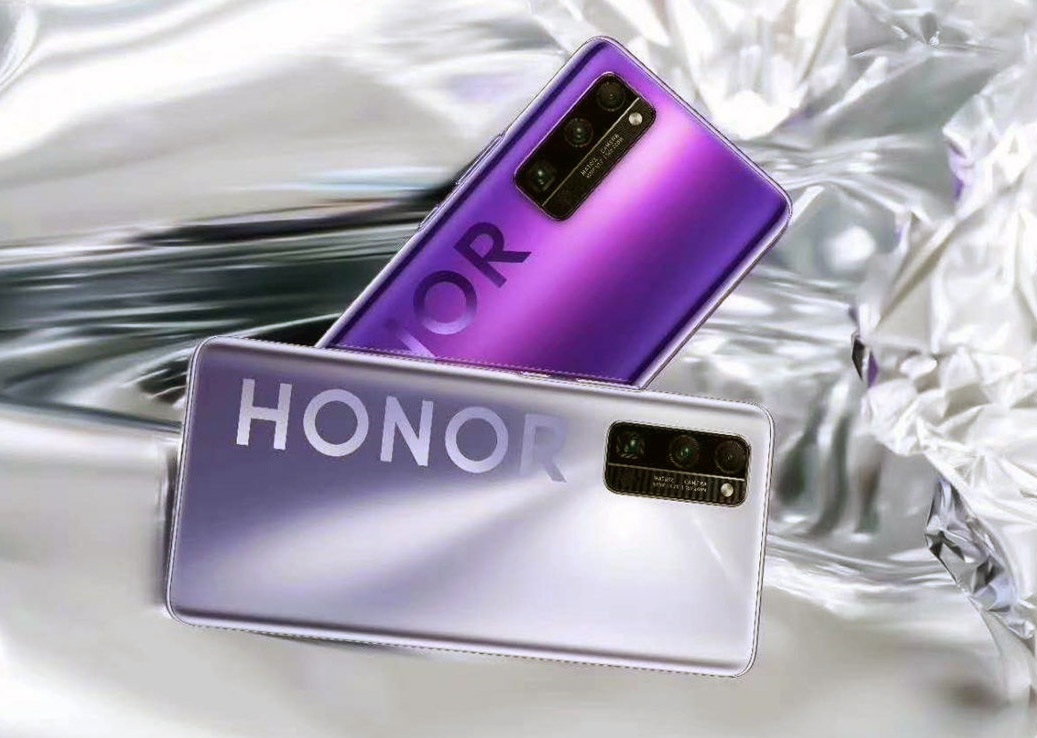
Alleged Honor 45W Wireless Charger Design leaked; could launch alongside the V40

After becoming independent from Huawei, Honor is planning to make 100 million smartphones next year. It has already started negotiations with Qualcomm, MediaTek to procure their chips. As a head start, the company is likely to unveil a product very soon and it could be Honor V40. Amidst a lot of leaks about the device, a leak now says it will support 45W wireless charging.

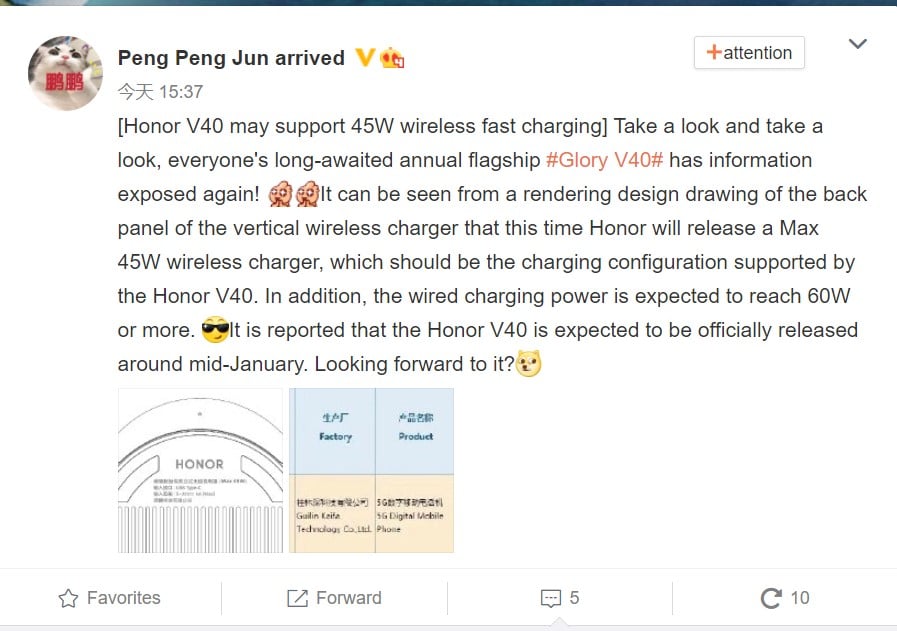
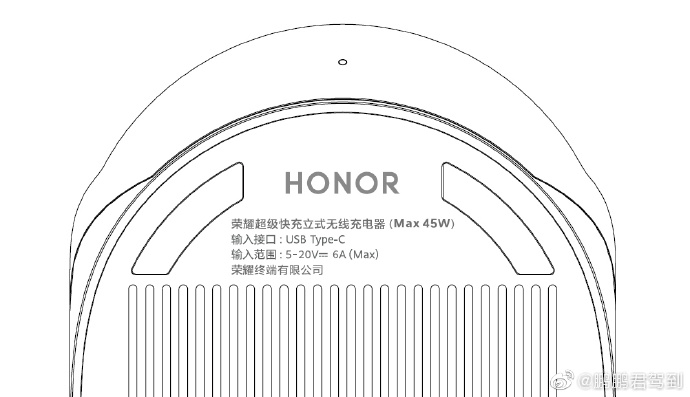
A user on Weibo(@鹏鹏君驾到) has leaked an alleged rear design of Honor’s wireless charger that could launch alongside Honor V40. The design shows a hemisphere design with an ‘Honor’ Logo at the bottom. There are a vertical array of slots and two arched cutouts possibly for the heat dissipation grille and rubber bush respectively.

There is a dot above the design and it could be an LED indicator. The rear of the design also has specifications. Accordingly, it is registered under Honor Terminal Co Ltd.,(English Translated). Interestingly, the specs have the name ‘Vertical Wireless Charger’ with a max output of 45W. The charger supports a USB-C port and draws input in the range of 5V-20V at 6A(max).

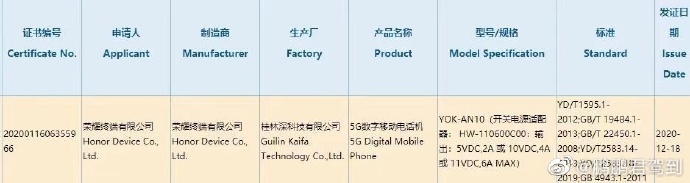
Further, the user says(via ITHome) that this charger will support the 45W which should also be the designation of the upcoming Honor V40. If we call, a recent report suggests that Honor V40 will have charging support(HW-110600C0x) of up to 66W. The rated speed configs are 5V at 2A, 10V at 4A, and 11V at 6A out of which the 10V at 4A(40W) could be the wireless charging designation.

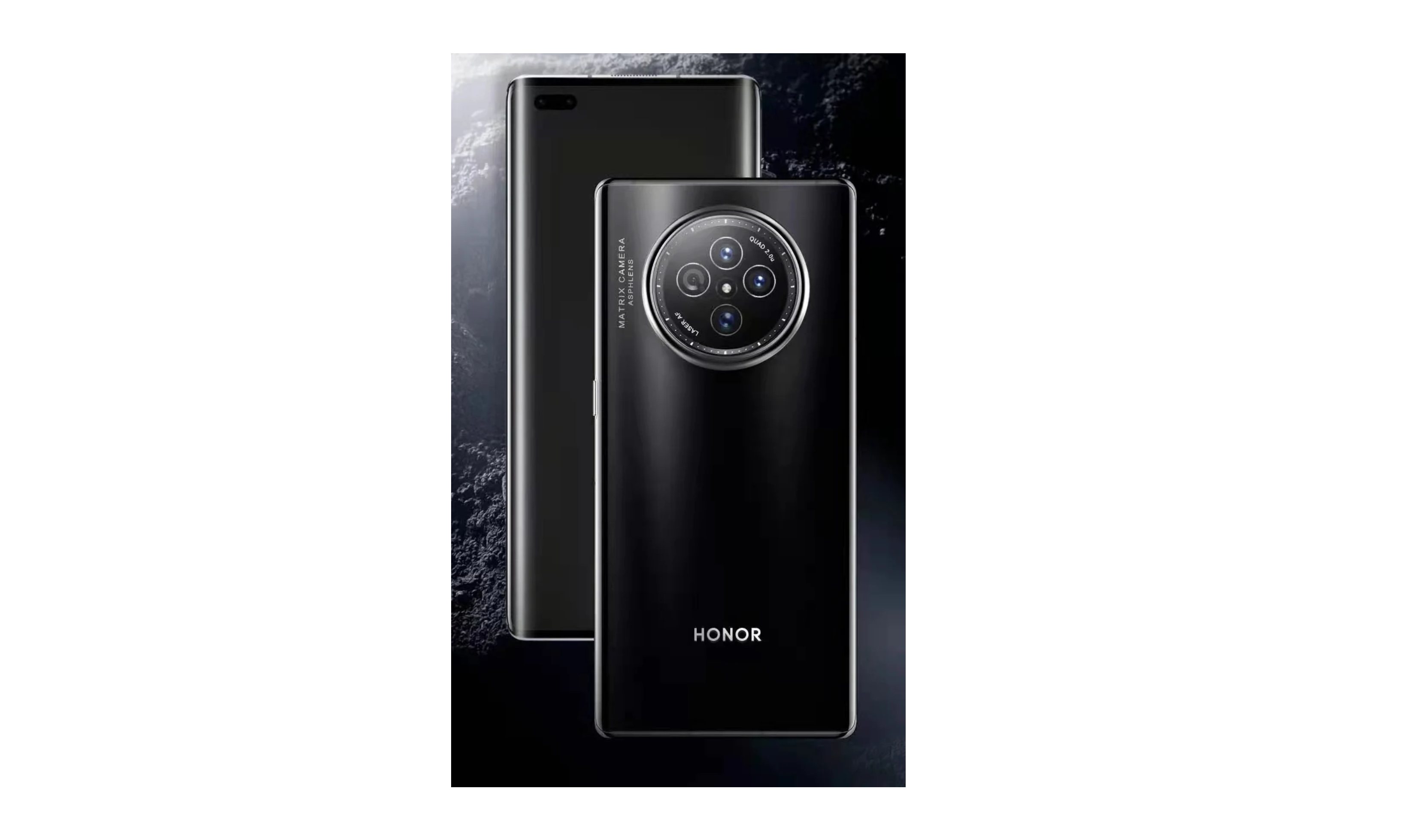
In any case, if this is true, Honor should launch a new Wireless charger alongside the Honor V40 in mid-January of 2021. The device with codename(YOK-AN10) has already appeared on China’s MIIT and 3C certifications. Further, a design leak reveals that it sports a dual punch-hole curved display and circular camera layout inspired by a Watch.

The Honor V40 is expected to feature a 6.7-inch FHD+ 120Hz AMOLED display, MediaTek’s Dimensity 1000+ SoC, 50MP Sony IMX700 RYYB sensor, and more. Either way, Honor hasn’t confirmed anything yet, and hence, let’s wait for more leaks in the coming days.

Samsung showcases its NEON artificial humans’ role in banking in the future

Earlier this year, Samsung had unveiled its NEON artificial human during CES 2020. This reveal had garnered a lot of attention due to its vast applications in multiple fields like healthcare, finance, retail, and more. Now, the company has offered us a glimpse into banking in the future with its recent collaboration with South Korean financial firm Shinhan Bank.

According to a SamMobile report, the South Korean tech giant has just announced its partnership with Shinhan Bank to offer NEON artificial humans as its customer’s personal tellers and financial advisors. In a newly shared video on YouTube, the company showcases its Samsung NEON Frame at the opening of Shinhan Bank’s newly dedicated innovation center. For those unaware, NEON Frame is a device, which features NEON artificial humans, a large portrait screen, a 4K vision sensor, RGB status indicator, Hi-Fi speakers, and microphones.

The device also houses a fingerprint scanner to offer a next generation banking experience to the customers. Furthermore, it can also be outfitted with additional features along with security measures such as card readers, contactless payments,  and other features as well. With Samsung NEON, Shinhan Bank is seeking to digitalize its transactional banking structure through the use of cutting edge technology.

Samsung

Samsung had also placed an emphasis on the human part of the technology, by giving the AI a face. Banking and finances are but one of the industries in the company that aims to deploy this technology. As the company put it, the technology is designed to aid and assist human beings and not to replace their jobs entirely, with an example being NEON being used as a backup news anchor for breaking news at odd hours in the day.


Hisense A7 5G launched as the world’s first E-ink display smartphone with 5G connectivity

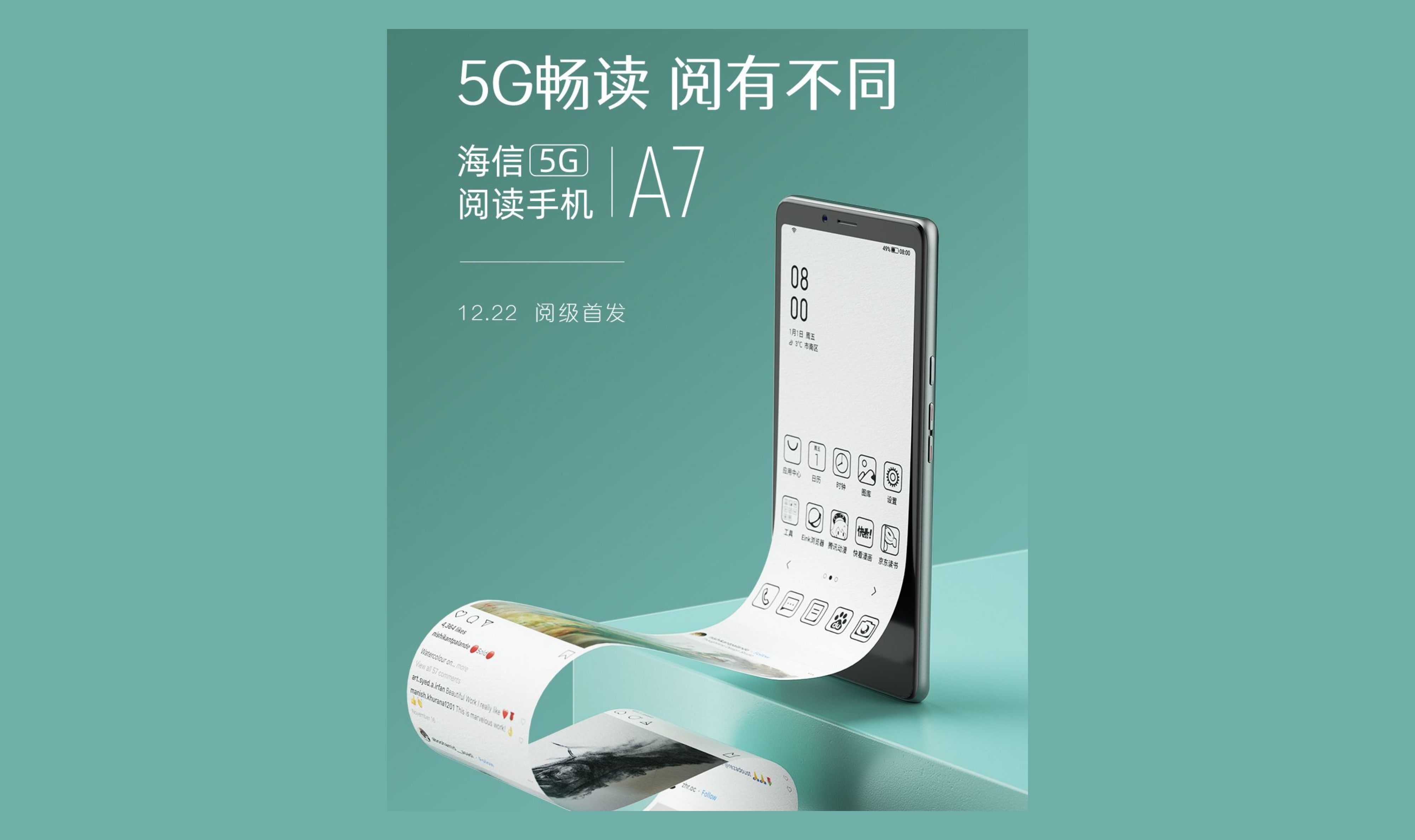
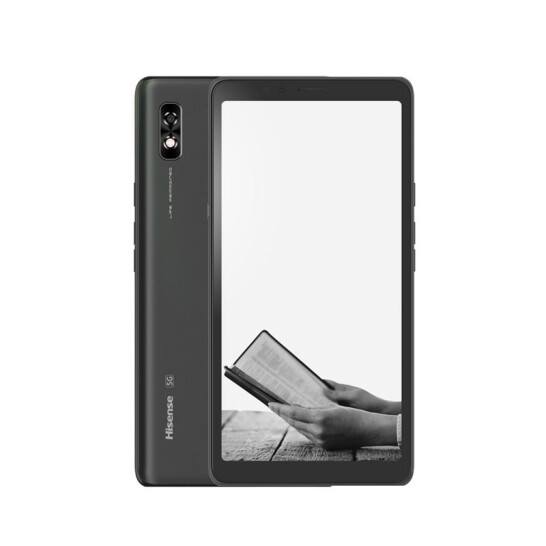
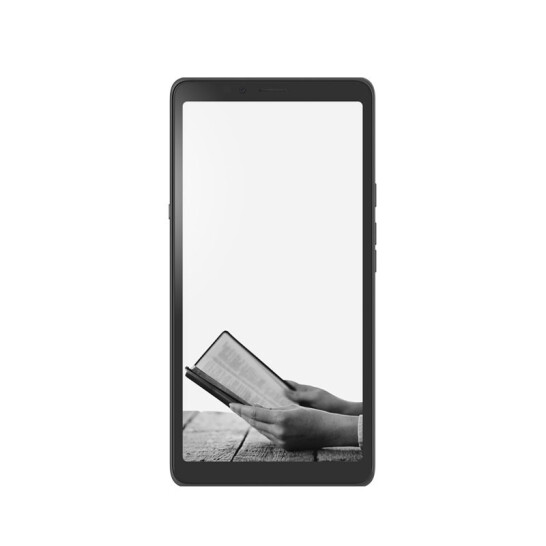
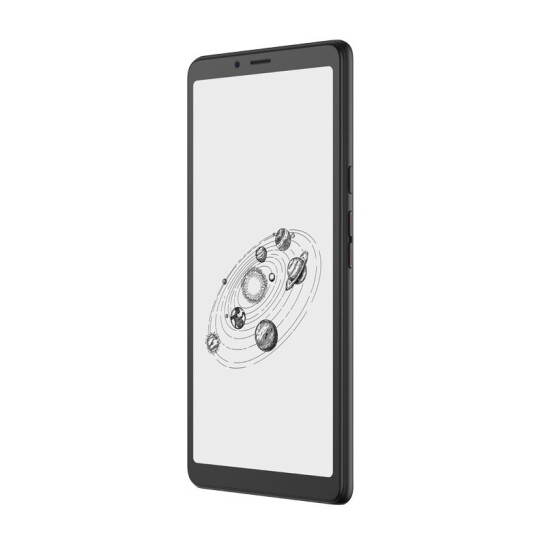
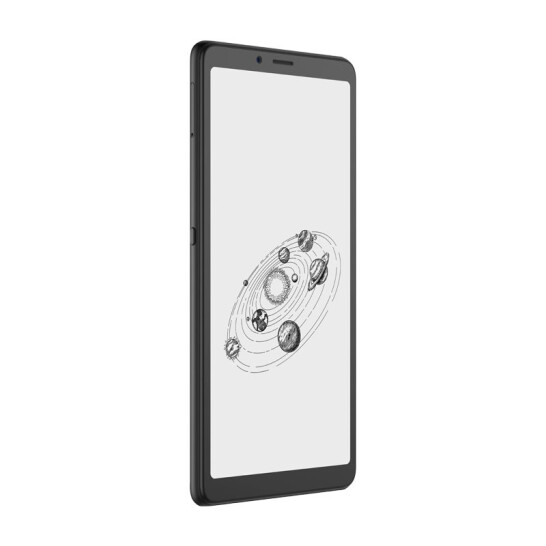
Hisense is commonly known for its televisions. But the company also sells phones in its home country. It has now launched the Hisense A7 5G as the world’s first E-ink display smartphone with 5G connectivity. This handset is priced at ¥1,999 ($305) and is exclusive to China.

Hisense A7 5G Featured

The Hisense A series of smartphones are known for E-ink display. Earlier this year, the firm launched the world’s first color E-ink display smartphones in the form of Hisense A5C, Hisense A5 Pro, Hisense A5 Pro CC. 

Although these handsets come with a new type of display, they lack 5G connectivity. To solve this issue, the firm has released a new phone called Hisense A7 5G. But the latest model comes with a 6.7-inch standard black and white E-ink display with 300 ppi.


The device is powered by UNISOC Tiger T7510 chipset, which is the same chip that’s found inside the Hisense F50 5G smartphone. This silicon is further paired with 6GB RAM and 128GB internal storage. Unlike most phones in the market, this one also includes a 3.5mm headphone jack along with AK4377AECB audio DAC with support for Hi-Res Audio.

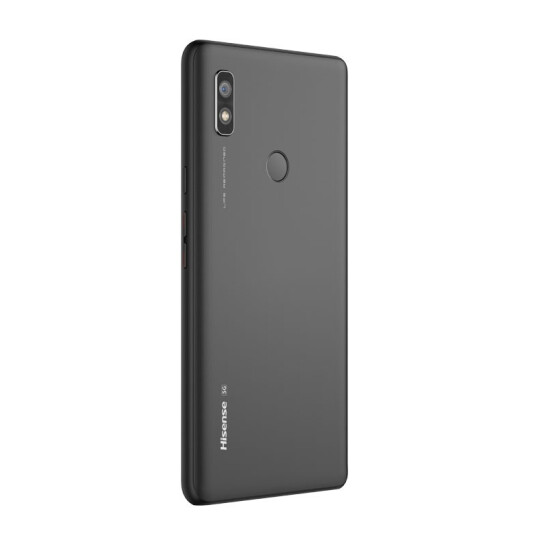
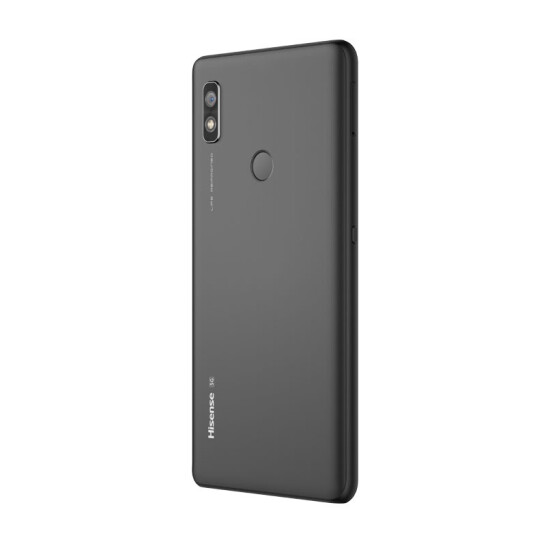
Further, the back of the handset sports an AG (anti-glare) matte panel housing a single camera accompanied by an LED flash. The rear also houses a capacitive fingerprint sensor.  Whereas, the right side of the device includes power as well as volume keys, and left side features an AI key, which can be mapped to perform one of the several actions.

Other features include a front-facing camera with support for AI face unlock, super-linear speaker, dynamic as well as constant (688ms, 364ms, 174ms, 136ms) refresh rates, different lockscreens (poetry, motto, word, wallpaper), new refined UI based on Android 10, and several other tweaks related to the E-ink display.

Last but not least, the Hisense A7 5G is backed by a 4,770mAh battery with support for 18W fast charging.


Apple first to contract TSMC’s initial 3nm production capacity: Report

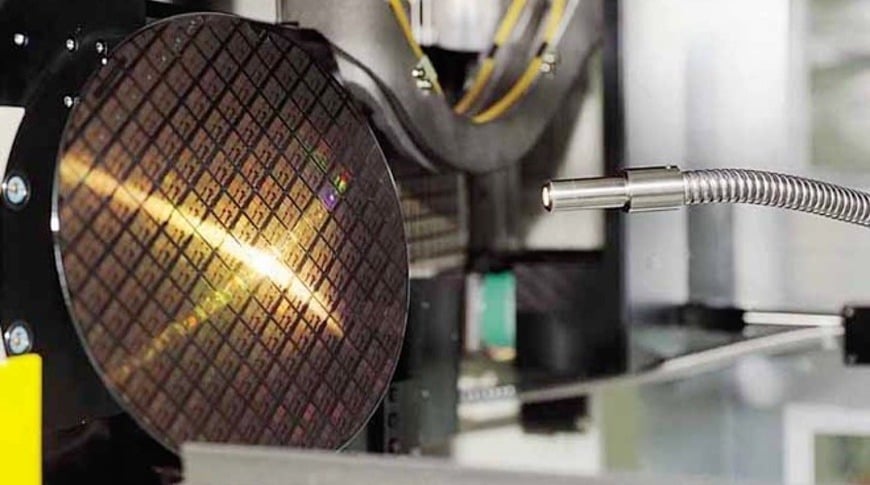
With TSMC rushing to develop its 3nm process, Apple is apparently going to be the first to contract the company’s initial production capacity. This arrives as the iPhone maker is shifting towards its proprietary chip designs for its Mac series of laptops as well.

For those unaware, TSMC has been working on its 3nm process for a while now, with trial production expected to start sometime during the latter half of 2021. Furthermore, the world’s largest contract chipmaker is expected to begin mass production in the year 2022. The 3nm process is the successor to the latest 5nm process, which is used for most flagship chips on smartphones at the moment, including the Apple A14 Bionic chipset found within the latest iPhone 12 series.

TSMC

According to the UDN report, the Cupertino based giant is the first to contract TSMC’s advanced manufacturing 3nm process. While the news hasn’t been confirmed by TSMC right now, sources from the chipmaker’s supply chain stated that the 3nm and 4nm trial production preparations are already progressing smoothly. Furthermore, the 3nm process is on schedule and moving toward its 600,000 annual production capacity and a monthly capacity of over 50,000 units.

TSMC moving towards the 3nm process is highly beneficial to Apple as well, considering it is moving to include its entire electronic product portfolio to self designed chips. The iPhone maker will be the first customer of the initial 3nm process batch, while it will also move its Mac and iPad lineup towards its newly released M series chips. The new process will also be used for the company’s A series chips as well.

Apple

Similar to TSMC, Samsung is also working to develop its 3nm process. Unlike TSMC with its FinFET structure, Samsung uses the GAA structure. However, with the current pace, it seems that the Taiwanese chipmaker is currently in the lead, especially after securing Apple as an early customer. That’s all we know, for now, so stay tuned for more updates.


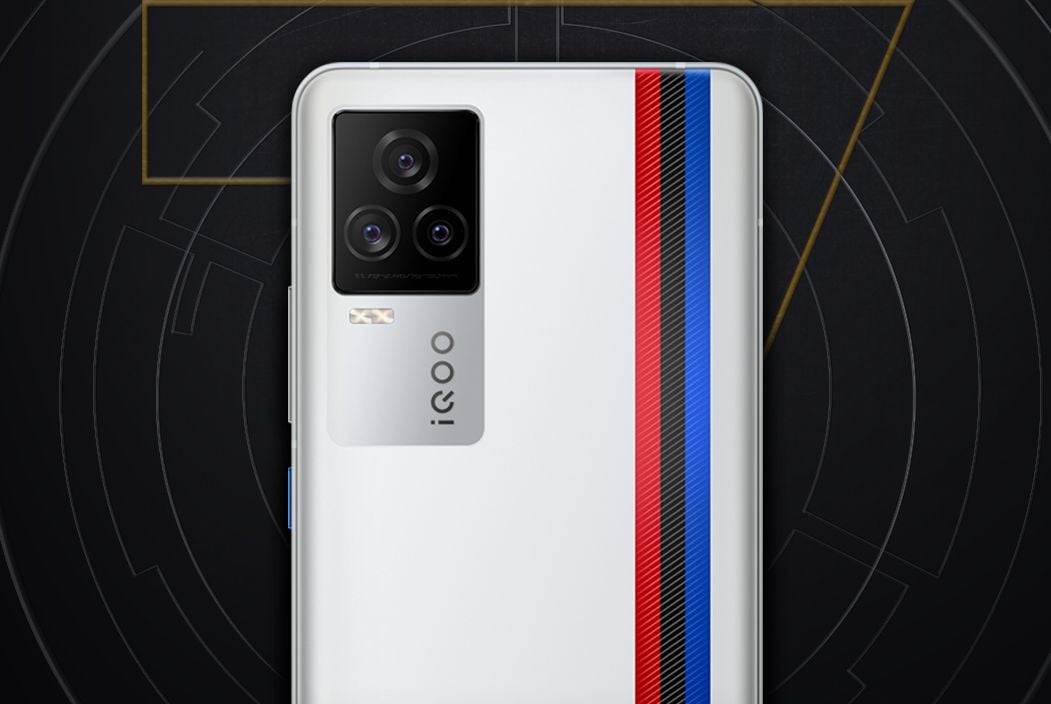
iQOO 7 could be the fastest charging smartphone in H1 2021; camera specs leaked

Well before 2021 could begin, smartphone brands showcased their next-gen fast-charging technologies to the world. Some of the contenders include Xiaomi, realme, OPPO, and its sisters Vivo, iQOO. Among this, iQOO has already confirmed its next smartphone iQOO 7 which going by the number, will be the next flagship from the company. Now, a tipster has details regarding it’s charging and cameras.

iQOO 7 BMW edition
iQOO 7 BMW edition

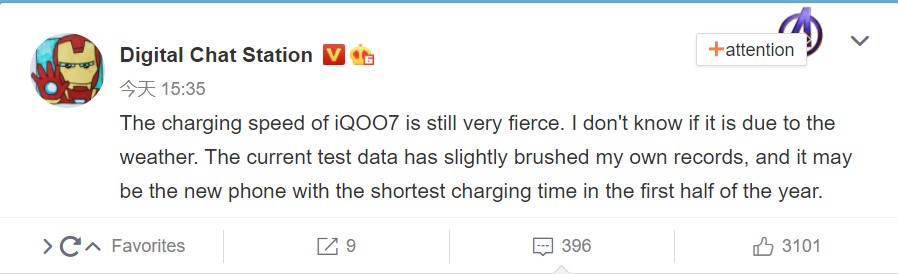
According to Digital Chat Station on Weibo, iQOO 7 could be the smartphone with the shortest charging time in the first half of 2021. This falls in-line with a 3C certification that reveals a possible 120W charging support for iQOO 7. If we recall, iQOO unveiled world’s first commercially viable 120W Ultra-Fast Charging Technology. This tech can charge a smartphone’s typical 4,000mAh battery in under 15 minutes.

In fact, the iQOO 7’s predecessor, the iQOO 5 series already has 120W charging support along with a 4,000mAh battery. Hence, it will be interesting to see how iQOO manages to improve this on the iQOO 7. We feel that iQOO might hold this crown by increasing the battery size to about 4,200/4,300mAh and achieve similar results.

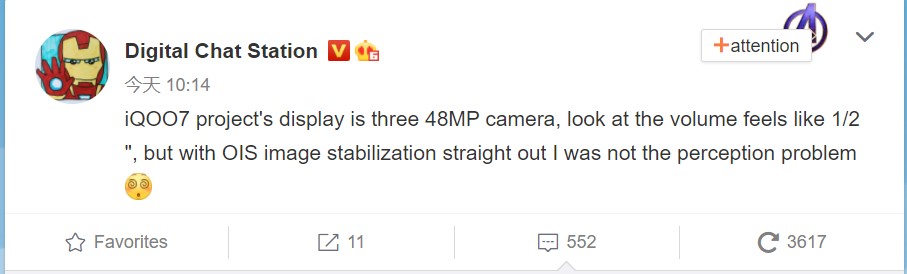
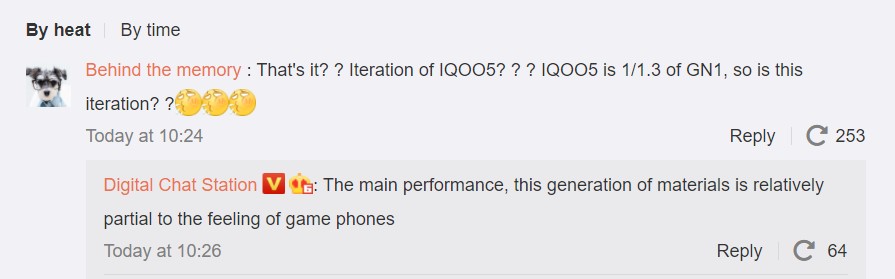
Anyway, this is just speculation from our side and we will have to wait for official news. Moving on, the tipster also mentions that iQOO 7’s triple camera will have a 48MP 1/1.2-inch sensor and come with OIS support. That’s surprising considering the predecessors(iQOO 5, 5 Pro) have a 50MP Samsung GN1 sensor.

When asked about the discrepancy between the series, he says that the above is the configuration of the main lens. And the iQOO 7 will be more of a gaming-focussed smartphone. In any case, the iQOO 7 is shaping out to be a device inspired by the upcoming Vivo X60 series of smartphones.

The iQOO 7 is speculated to feature an AMOLED display with a centered punch-hole, Snapdragon 888 SoC, and run iQOO UI inspired by OriginOS based on Android 11 out of the box. It is tipped to launch in mid-January of next year(2021).


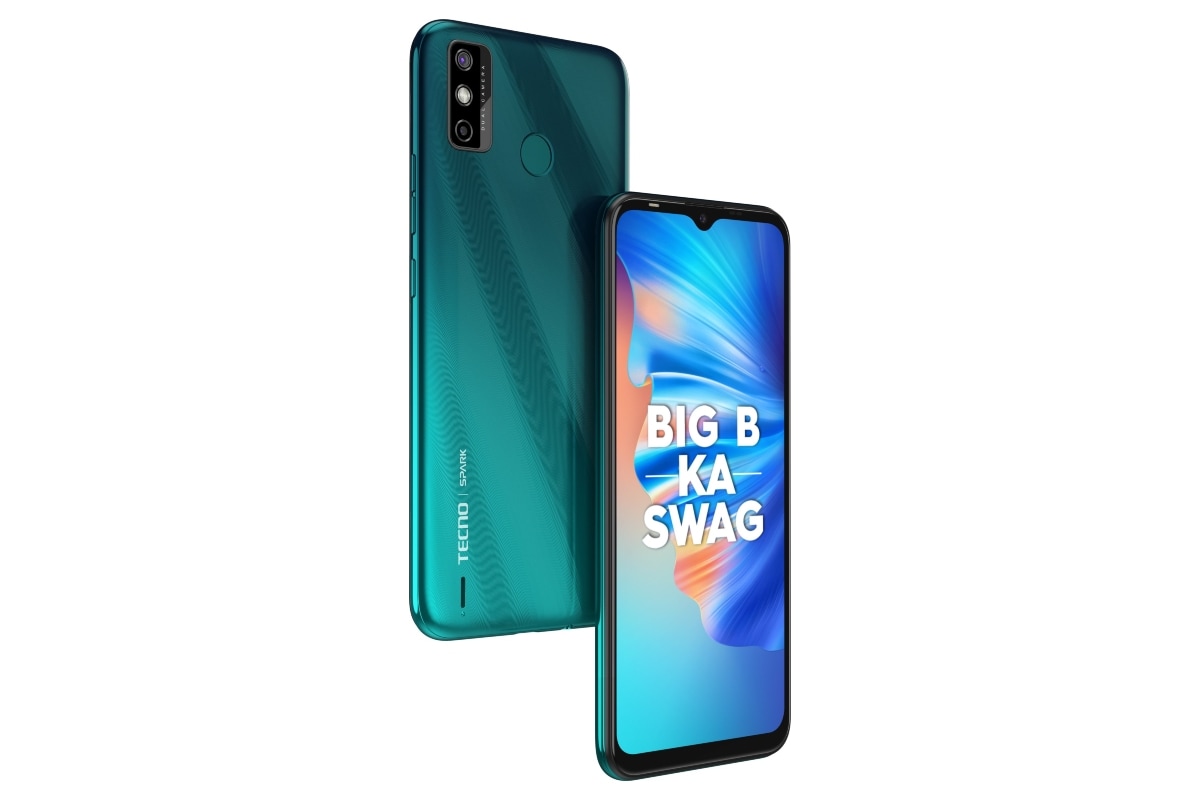
Tecno Spark 6 Go with Helio A25, 13MP dual cameras, and 5,000mAh battery launched in India

Tecno Spark 6 Go is the latest budget-phone by Tecno to go official in India. It is the stripped-down version of the Helio G70 powered Tecno Spark 6 that went official in Pakistan in September. The low-budget smartphone comes with an impressive design and promises a long battery life.

Tecno Spark 6 Go price in India

The Tecno Spark 6 Go has arrived in India with a price tag of Rs 8,699 (~$118) for its sole version that has 4 GB of RAM and 64 GB of storage. For a limited period, the phone will be available with an introductory price of Rs 8,499 (~$115). The first sale of the phone will be carried out through Flipkart starting from 12 PM on Dec. 25. Offline retailers will start selling the Tecno Spark 6 Go from Jan. 7.

Tecno Spark 6 Go
Tecno Spark 6 Go

Tecno Spark 6 Go specifications and features

The Tecno Spark 6 Go has a 6.52-inch HD+ display that offers a 20:9 aspect ratio and 480nits of brightness. The modest Helio A25 chipset is present under the hood of the device.

The phone draws power from a 5,000mAh battery that promises a standby time of 40 hours and 64 hours of talk time. It boots to HiOS 6.2 based Android 10 OS.

For snapping selfies, the Spark 6 Go has a front camera of 8-megapixel. The rear side of the device has a dual-camera system that includes a 13-megapixel main camera and an AI lens. The handset offers users other features such as dual SIM support, 4G, Wi-Fi 802.11 b/g/n, Bluetooth 4.2, microUSB, and a 3.5mm audio jack.


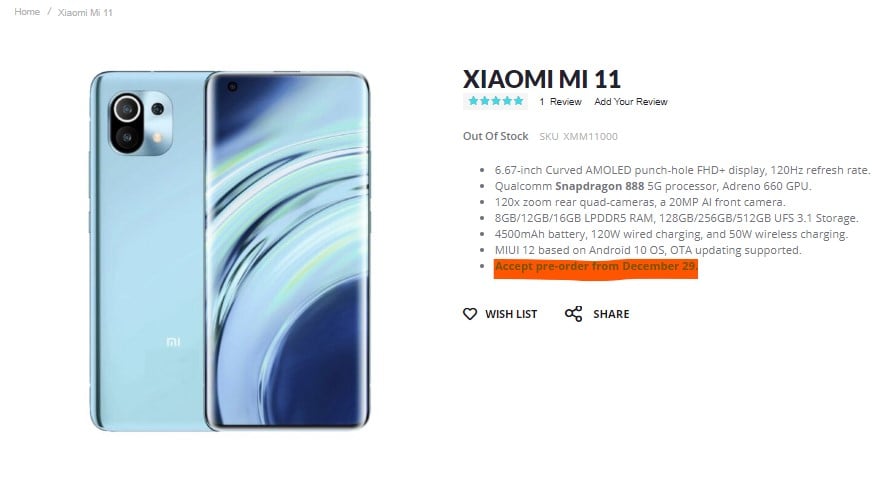
Xiaomi Mi 11 pre-orders will commence from December 29 via Giztop

Xiaomi is all set to become the first manufacturer to launch a new smartphone running the Snapdragon’s newest chipset – Snapdragon 888. Xiaomi Mi 11 will launch on December 28 and the pre-orders will be live on Giztop from December 29. However, the specifications of the device are not yet official. But, recent rumours and leaks have grounded important information about the device.

Must See: Xiaomi Mi 11 Pro+ variant tipped to launch with top-of-the-line specifications

Giztop offers international shipping at the same official price of the product. The users around the globe would be able to pre-order the device from December 29. However, the shipping date is not yet confirmed, but we expect more information after the device gets official.

Xiaomi Mi 11 Specs (Rumored)

In terms of specifications, the Xiaomi Mi 11 will be arriving with a 6.67-inch Curved AMOLED punch-hole display carrying curved edges. The display will feature Quad HD+ resolution and 120Hz refresh rate. It will debut in different storage options including 8GB RAM + 128GB storage and 12GB RAM + 256GB internal storage. There will be different colour options including Smoke Purple, Blue, and White.

It is speculated to feature a 108-megapixel triple camera module. There will be a 5000 mAh battery and 55W fast charging support. However, it will arrive loaded with Android 11 OS based MIUI 12.

Pre-Order Now

Related: Xiaomi Mi 11 with Android 11, Snapdragon 888 spotted on GeekBench

Motorola Android 11 OS update: List of eligible devices confirmed

In 2019, Motorola launch a wide range of smartphones in various markets. By launching the Motorola Edge and Edge+ also returned to launch flagship phones this year. Today, the company confirmed the names of the smartphones that are eligible to receive the Android 11 OS upgrade.

Among the various phones last year by Motorola, the Android 11 OS update will be only made available to the Motorola Razr (2019), Motorola One Action, Motorola One Vision, and Motorola One Hyper. The list does not include phones like the Moto G7 series, Moto G8 Plus, G8 Play, E6 series, Z4, and One Zoom.

Among the phones launched this year, the Motorola Razr 5G, Motorola Edge, Motorola Edge+, Motorola One 5G, Motorola One Fusion, Motorola One Fusion+, Moto G8, Moto G8 Power, Moto G 5G, Moto G 5G Plus, Moto G Fast, Moto G Power, Moto G Pro, Moto G Stylus, Moto G9, Moto G9 Play, Moto G9 Plus, and Moto G9 Power are mentioned in the list of devices that will be treated with Android 11 OS update. The only Lenovo-branded phone on the list is the Lenovo K12 Note that debuted in the recent past in Saudi Arabia.

Motorola Logo Featured

The Moto E (2020), Moto E6s (2020), Moto G8 Power Lite, Motorola One Vision, and Moto E7 phones that went official this year are not mentioned in the list. Hence, it is unclear whether these devices will receive the Android 11 OS update or not.

Lenovo did not confirm when it will begin rolling out the Android 11 OS update. Probably, the flagship and upper mid-range phones could be the first phones that will be updated to the newest version of Android. Users of all the Motorola phones that are eligible to receive the Android 11 update can visit this link to check whether devices are ready to receive the new software.


Xiaomi Mi Robot Vacuum-Mop P launched via open sale in India

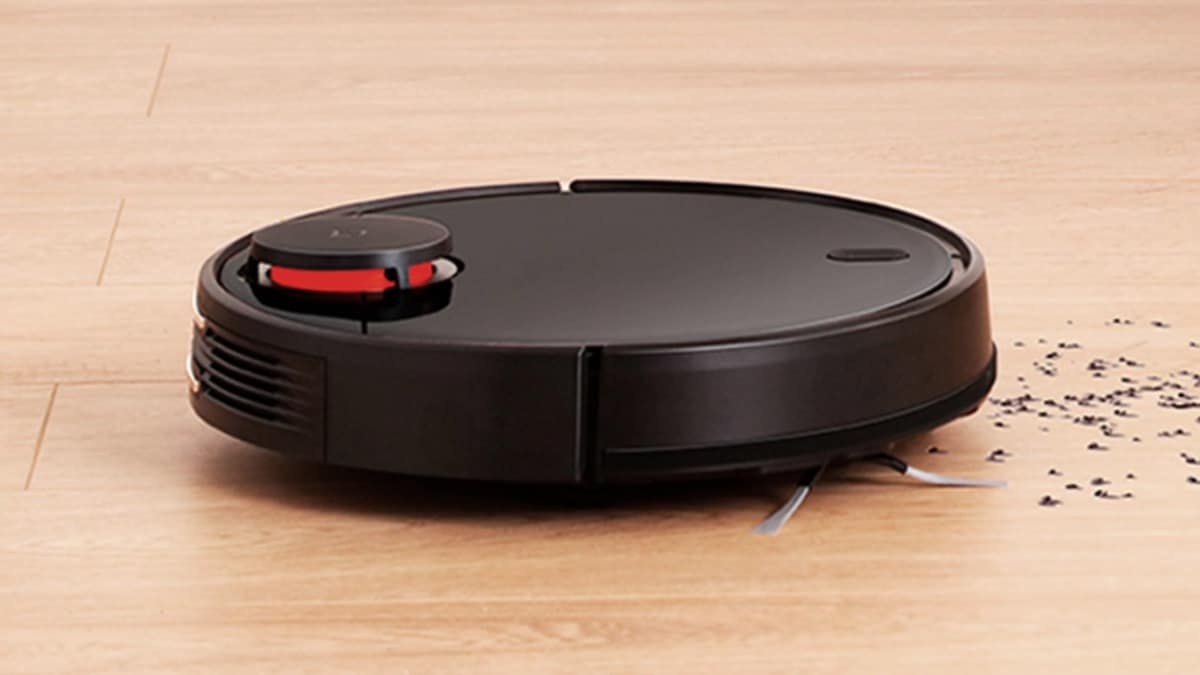
Xiaomi India has just launched the Mi Robot Vacuum Mop-P in India. The new product is currently available through an open sale in the region and arrives alongside some limited time offers and deals.

Xiaomi

The Mi Robot Vacuum Mop-P from the Chinese tech giant is essentially an automatic cleaning robot. It features the company’s advanced and smart solutions that should aid the customers in their cleaning needs. The robot is equipped with a smart Laser Distance Sensor (LDS) navigation system and a 12 way multi directional sensors that can provide an efficient cleaning for every corner of the users’ homes.

The Xiaomi Mi Robot Vacuum Mop-P sports a 2 in 1 sweeping and mopping functionality. Furthermore, it can be controlled via a smart app and sports a quad core Cortex-A7 processor under the hood. In terms of aesthetics, the company stated that the “Mi Robot Vacuum-Mop P is a thoughtfully designed product created for Indian homes.” The launch of the new product is a part of Xiaomi’s plans for growings its IoT portfolio in the region.

Xiaomi

The automatic cleaning robot is available for purchase through an open sale on Mi.com, starting from 24,999 INR (roughly 340 US Dollars). As a part of its special launch offer, the company is even offering customers a Mi Smart Speaker along with the Mi Robot Vacuum-Mop P, which is worth 3,999 INR (roughly 54 US Dollars) for free. The company is even offering no cost EMI options for purchase ranging from 3/6/9 months.


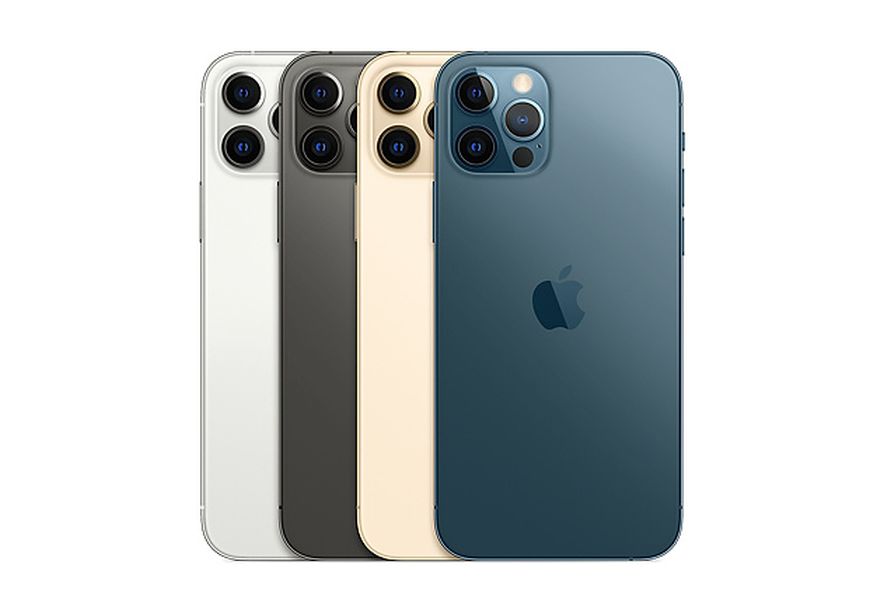
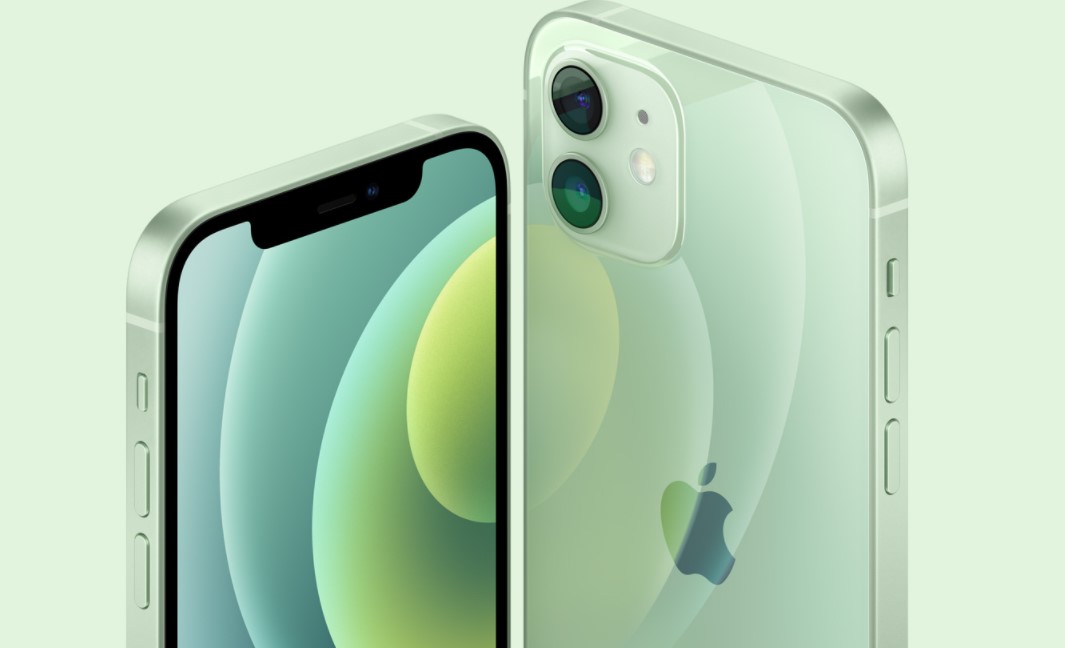
Apple iPhone 12 is the World’s top selling 5G smartphone just two weeks after its launch

The Apple iPhone 12 has become the world’s highest selling 5G smartphone model in October 2020. This arrives despite the company facing a delayed launch but still managing to reach the milestone just within two weeks of its release.

Apple

The base iPhone 12 model took the lead with a global 5G smartphone market share of 16 percent in October 2020. Similarly, the Cupertino based giant’s higher end iPhone 12 Pro arrived second with an 8 percent market share. To put things into perspective, the third highest selling 5G smartphone during this month was the Samsung Galaxy Note 20 Ultra 5G, which only had a 4 percent market share showcasing Apple’s dominance.

According to a Counterpoint Research report, the iPhone 12 and iPhone 12 Pro alone accounted for nearly a fourth of the total 5G smartphone sales in October. Notably, the iPhone 12 even entered into the top 10 best selling list of 5G smartphone for the period of January and October 2020. The Apple handset arrived seventh in the list, which is a considerable achievement as the device was only available for two weeks and even suffered from inventory and stock issues.

Apple

The report states that the large pent up demand for 5G upgrades was one of the primary reasons, especially for iOS users, for the iPhone 12 lineups great sales. Furthermore, Apple aggressively promoted its device, especially in the US, which is its largest market, accounting for over one third of the iPhone 12 and iPhone 12 Pro sale alone. The 2020 iPhone series also made a push to mmWave which also helped in raising the mmWave enabled smartphone market to rise to 12 percent in October from 5 percent in September. Lastly, the report also estimates that the iPhone 12 series will carry forward its healthy sales figures to 2021 with a steady momentum.


Samsung Galaxy A32 could be arriving in 4G and 5G versions

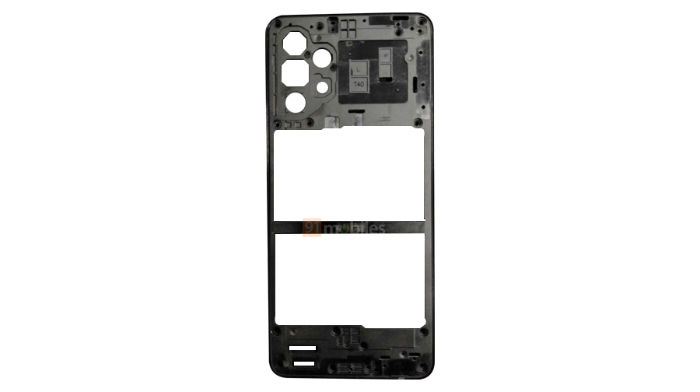
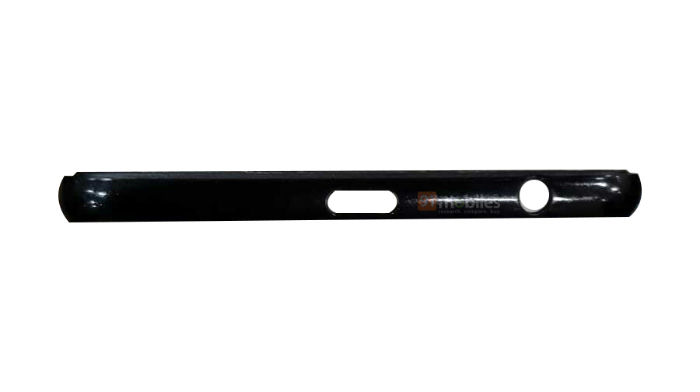
Recent reports have revealed that Samsung could be soon launching the Galaxy A32 5G smartphone. Reports surrounding it have revealed that it will be the cheapest 5G phone from the brand. A new report by 91mobiles suggests that the company may sell its 4G version in certain markets.

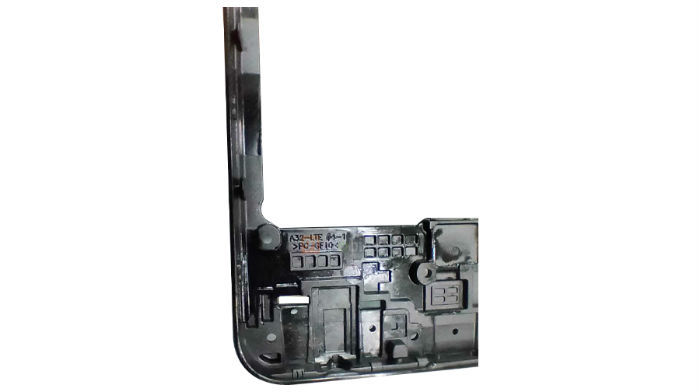
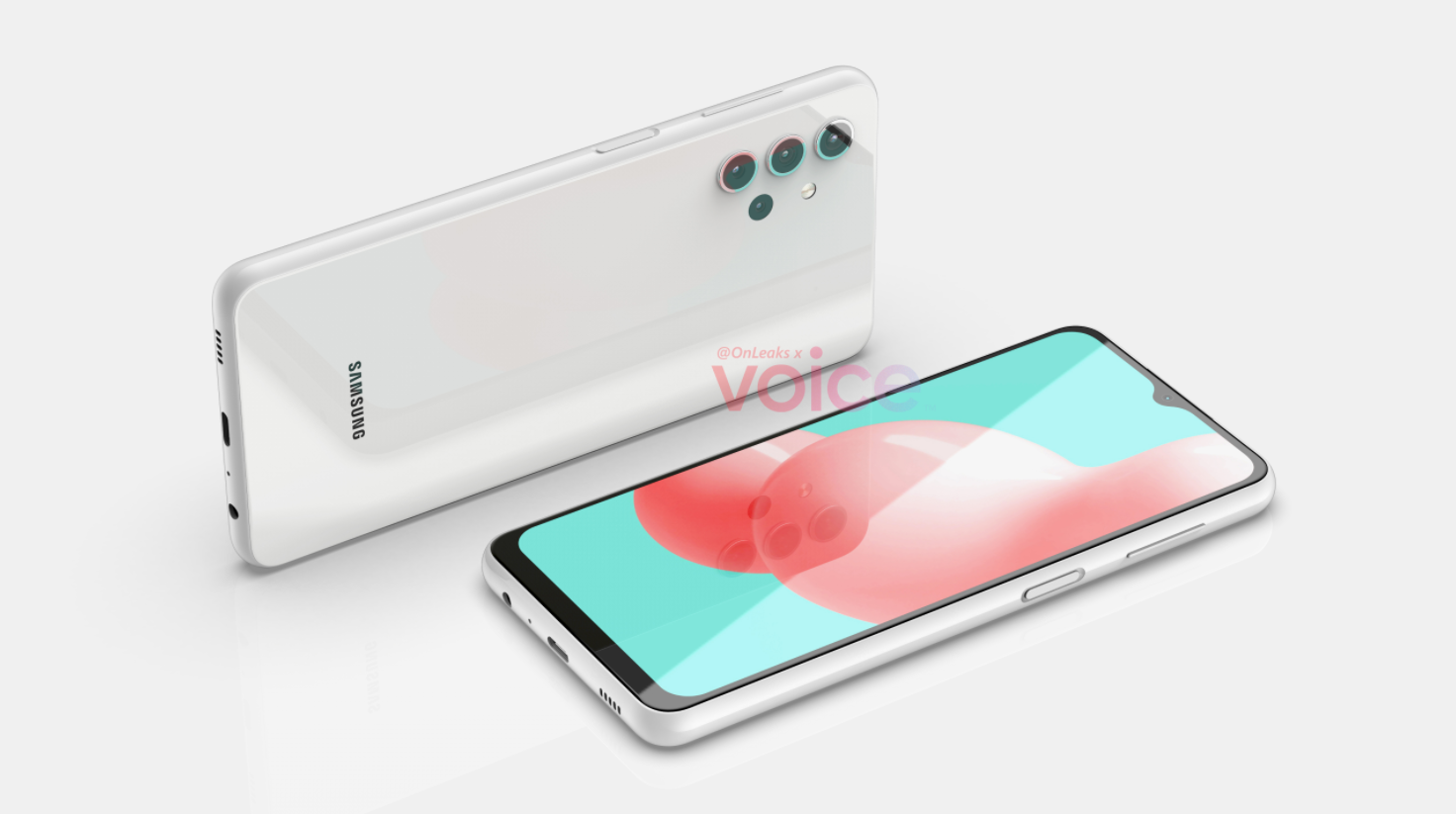
The publication has today shared the live shots of the rear panel of the forthcoming Galaxy A32 smartphone. The images match with the recently seen CAD renders of the smartphone. The new images reveal that the bottom edge of the device will have a USB-C port and a 3.5mm audio jack. The rear shell has cutouts for the quad cameras and an LED flash.

One of the images of the Galaxy A32’s rear shell has “A32 4G LTE” mentioned on it, which indicates that the phone will be arriving in the 4G version as well. It is likely that India will be treated with the 4G version of the Galaxy A32 5G. The 5G-ready countries are likely to receive its 5G variant. While the 5G and 4G versions of the Galaxy A32 5G will have different chipsets, it is unclear whether could be other differences between both variants.

Samsung Galaxy A32 specifications (Rumored)

Past reports have revealed that the Samsung Galaxy A32 5G measures 164.2 x 76.1 x 9.1mm and it houses a 6.5-inch screen. The handset is expected to arrive with Dimensity 720 chipset and Android 11 OS. Its FCC certification revealed that it will be equipped with NFC and 15W charging support.

Samsung Galaxy A32 5G CAD renders

Rumors have it that the Galaxy A32 5G is backed by a 5,000mAh battery. The smartphone could be equipped with a 48-megapixel primary camera. It is likely to arrive at a starting price of around 299 euros (~$365) in the European markets.


Xiaomi Mi 10i India launch set for January 5

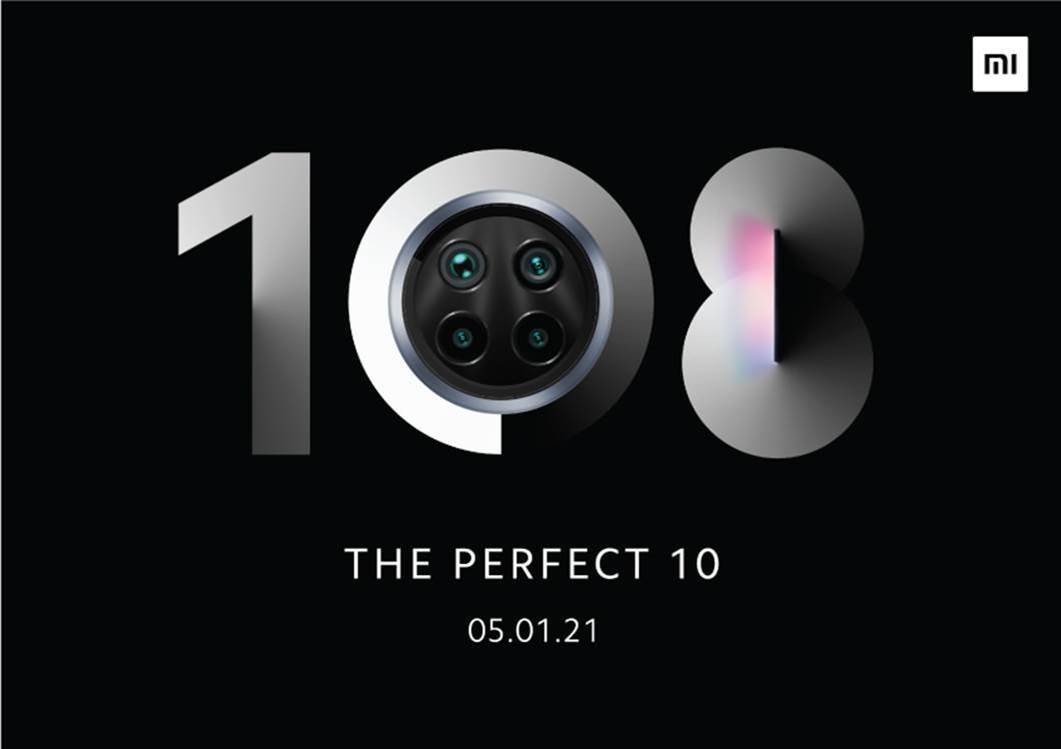
Xiaomi India is teasing to launch a new smartphone on January 5, 2021. As per the teaser poster, this handset will come equipped with a 108MP primary camera. Further, going by the camera layout, this device could be nothing but the rumored Mi 10i, which is said to be a rebadged Redmi Note9 Pro 5G.

Xiaomi Mi 10i India Launch Teaser January 5 2021

Redmi, the sub-brand of Xiaomi launched the China-exclusive Redmi Note 9 series in late November. One of the three devices in this series, Redmi Note 9 4G has already been unveiled for India as Redmi 9 Power with an additional 2MP macro camera.

Similarly, the Redmi Note 9 Pro 5G is expected to debut in India as Mi 10i, as per multiple findings. Now, although Xiaomi India has not confirmed the phone’s official branding yet, it has revealed to announce this handset officially in the country on January 5.

This means the Mi 10i will be the first smartphone launch for Xiaomi India in 2021. As far as specs are concerned, we expect it to be the same as the original Redmi Note 9 Pro 5G, unlike the Mi 10T Lite, which is basically the same phone with a 64MP primary camera.

Last but not least, according to a leak, the Mi 10i will come in 6GB + 128GB and 8GB + 128GB storage variants as well as in Black, Blue, and Orange-Green gradient color options.


Samsung to unveil new display technology and products on January 6

Samsung has scheduled an event named “First Look 2021” on 6th January where the company will be unveiling new display technologies along with new products showcasing its “vision for the future of the display.”

There’s a possibility that the company will be showcasing its new lineup of Smart TVs at the event, among others. Interestingly, the event is scheduled just ahead of the Consumer Electronics Show 2021, which will start on 11th January and end on 14th January.

Samsung - The First Look 2021 Invitation

While the company has not yet confirmed this but it’s likely that Samsung will be unveiling its new MicroLED TVs, Mini-LED TVs, as well as new models of its 4K and 8K QLED TVs. Do note that this is just speculation at this point in time.

The invitation poster shared by the company has an outline of devices and going by that, there’s also a possibility of new tablets and laptop devices getting announced at the event, probably featuring the new display technology.

EDITOR’S PICK: Samsung may launch a triple folding tablet and a “transparent display phone” next year

Recently, the South Koren giant unveiled its 110-inch Micro-LED TV which features 4K resolution, zero bezels on all four sides, 5.1-channel speakers, and is powered by the company’s own Tizen operating system.

The Samsung First Look 2021 event will be live-streamed on the company’s website from 11 a.m. EST. To know for sure what’s up the company’s sleeves, we will have to wait till the official event kicks-off.

Samsung is also expected to host another event next month, in January, most likely on 14th January, to launch its next-generation Galaxy S-series flagship smartphones — Galaxy S21, S21 Plus, and S21 Ultra.


Apple Car with new battery technology to start production by 2024

Apple has been working on several new technologies and one of them is for the autonomous car with which the company has entered another category of products — Electric Vehicles. Now, there’s some major development related to this.

A new report from Reuters claims that Apple is going forward with its self-driving car technology and is planning to start production by 2024. And it’s not just the car but the company is also working on a “next level” battery technology.

Apple Logo

For those who are unaware, the autonomous car project of Apple, called Project Titan, has been in the works since 2014 and the company started the design of its own electric car from the scratch.

However, the project struggled to proceed smoothly and at one point, Apple decided to just focus on the software part of the technology. But a couple of years back, Doug Field returned to Apple from Tesla to oversee the project and revamped the team.

EDITOR’S PICK: OPPO and Samsung are all set to soon start their smartphone production in Turkey

It seems that the development of this project has been significant enough for the company to build commercial vehicles. Reuters adds that Apple’s goal is to make a personal vehicle for the mass market while its competitors like Google‘s Waymo is building robo-taxis to carry passengers for a driverless ride-hailing service.

The report also sheds light on the battery that could be used in the car. A person aware of the development says that a new battery design could “radically” reduce the cost of batteries and at the same time, increase the vehicle’s range.

It is not yet clear which company would assemble the Apple-branded car. There’s also a possibility that Apple may decide to go ahead with the software part and integrate its technology into a car made by a traditional automaker.


Meizu 17/17 Pro Android 11 stable update will only arrive in Spring 2021

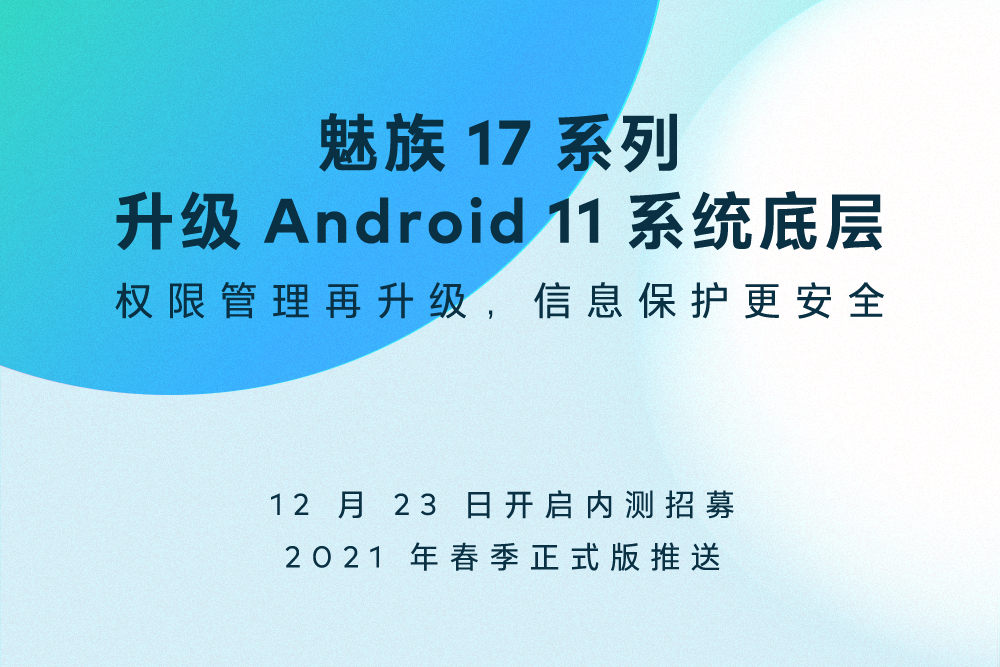
Yesterday, Meizu teased the arrival of Android 11 for its smartphones. Today, the company has officially confirmed the date on which it will start recruiting closed beta testers. Unsurprisingly, the brand’s flagship smartphones – Meizu 17 and Meizu 17 Pro will be the first in line to receive the update.

Meizu 17 Pro Android 11 Closed Beta Recruitment and Stable Release

According to a post by the official Flyme Weibo account, Meizu will open registrations for the Meizu 17 series Android 11 Closed Beta program on December 23. Although the company did not mention when the beta builds will start arriving, it did reveal that the stable release will happen in Spring 2021.

In other words, owners of Meizu 17 and Meizu 17 Pro will have to wait until either the end of Q1 2021 or early Q2 2021 to experience Android 11 on their smartphones. Though the wait seems too long, it is much better than the Android 10 rollout, which only began in late May 2020.

That said, the brand is yet to disclose the list of eligible devices for Android 11. Hence, we are not sure which Meizu phones will be getting the update. Given the firm’s market share, we think only certain handsets such as Meizu 16S, Meizu 16S Pro, and Meizu 16T will make it to the list.

Meizu was once known for its Flyme Android skin. But with diminishing market share, it is sad to see the firm’s software support to degrade over the years.


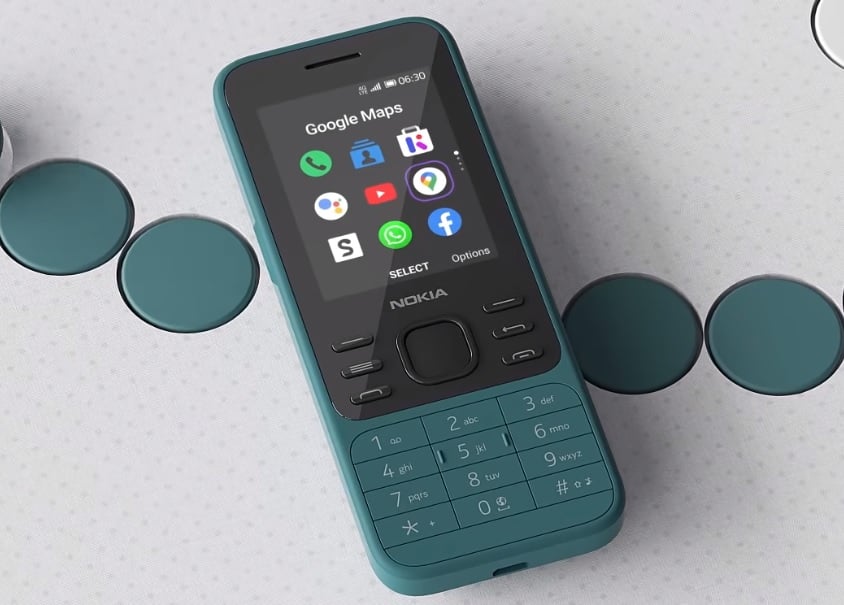
Nokia 6300 4G is now up for pre-sale in China for 399 yuan ($61)
Last month, Nokia 6300 4G smartphone was announced, adding another device to the expanding portfolio of revived classic Nokia phones. As the name indicates, it is an upgraded version of the Nokia 6300 which was first launched in 2007.

Now, the feature phone with 4G connectivity support has been listed online for pre-sale in China for a price of 399 yuan which roughly converts to $61. It is likely to be available for purchase in the Chinese market from 30th December.

Nokia 6300 4G featured

The Nokia 6300 4G features a 2.4-inch display, which is slightly bigger than the original model. Under the hood, it is powered by the Qualcomm Snapdragon 210 processor, along with 512MB of RAM.

As for the internal storage, the device comes with 4GB of inbuilt storage and also has a microSD card slot, allowing users to further expand the storage capacity up to 32GB.

EDITOR’S PICK: Honor is now planning to produce 100 million smartphone units in 2021, surpassing Huawei

In the software department, it is running KaiOS and comes with a bunch of pre-installed apps, including Facebook, WhatsApp, and YouTube. There’s also a VGA camera on the back with an LED flash that doubles as a flashlight.

Along with 4G, the phone also supports GPS and Bluetooth. The device is powered by an 860mAh removable battery, which can be charged through the MicroUSB port. The company has promised 27 days of usage on a single charge.


Honor plans producing 100 million smartphone units in 2021

Honor, which was started as a sub-brand of Huawei, recently became an independent company after it was sold off to Zhixin New Information Technology Co. Ltd. Going forward, the company has some ambitious plans.

As per the report from Nikkei Asia, Honor has planned to produce about 100 million smartphone units and the company has already contacted its suppliers in the United States informing the same.

Honor Logo

But it remains to be seen if the company manages to produce the required quantity of components as it will likely need to go through the approval process of the United States because of Huawei being put on Entity List.

The company is also working on strengthening its supply chain. Soon after the company became independent, it started talks with Qualcomm for chipsets and both of these companies are in advanced talks and could soon reach a deal. MediaTek is also evaluating legal options to supply chipsets to Honor.

EDITOR’S PICK: Honor’s Chief Executive Zhao Ming confirms to launch a flagship smartphone in the future

So far, most of the devices from Honor were powered by the company’s own Kirin chipsets. But that is not possible now as the recent sanctions on Huawei have made it impossible for Kirin to manufacture chipsets.

Whether Honor manages to achieve its goal of making 100 million units in 2021 will be dependent on its ability to procure components. On the other hand, Huawei is expecting to make 60 million units next year.

So, in total, both these companies plan to make 160 million units of smartphones, which is about 20 percent less than what Huawei managed to produce in 2019. Although Huawei was the leading smartphone company globally earlier this year, its market share is declining rapidly because of the sanctions.