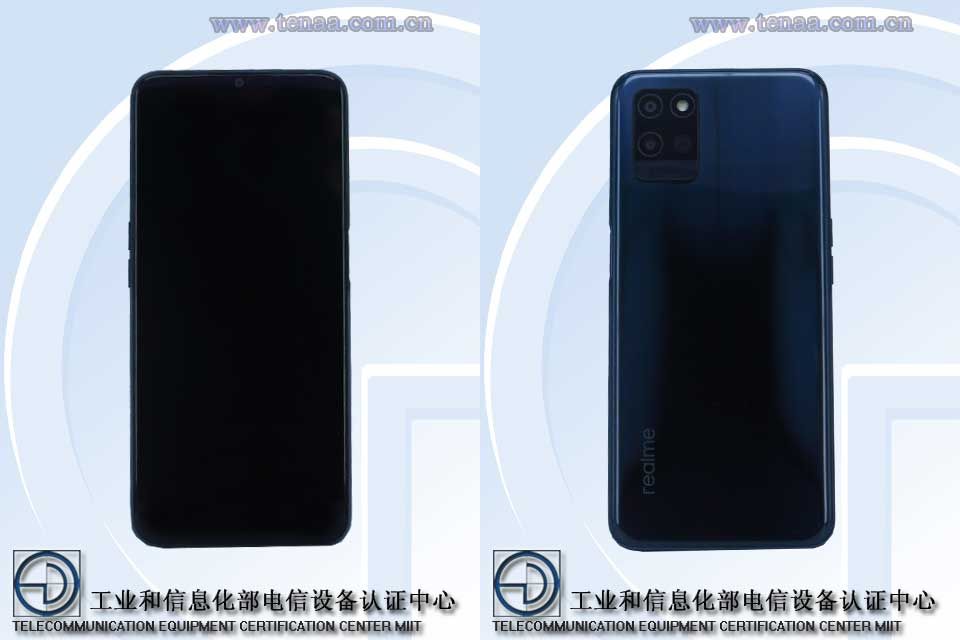
Samsung announced the Galaxy A21 smartphone in April this year. Fresh information shared by a South Korean publication (via) reveals that the company may launch the Galaxy A22 5G as its successor in the second half of 2021. The device is expected to break cover as the most affordable 5G-ready Samsung phone.
The Galaxy A32 5G that is expected to debut early in 2021 is expected to remain as the cheapest 5G phone in the first half of the year. A recent report revealed that it could be powered by the Dimensity 720 5G chipset. The handset could be costing around 299 euros (~$365) in the European markets.
Samsung Galaxy A32 5G CAD renders by Steve Hemmerstoffer
The Galaxy A22 5G could be positioned lower than the Galaxy A32 5G. The new report claims that it could be priced around 200,000 won (~$185). The handset will battle with low-cost 5G phones from Chinese brands like Huawei, Xiaomi, OPPO, and Vivo.
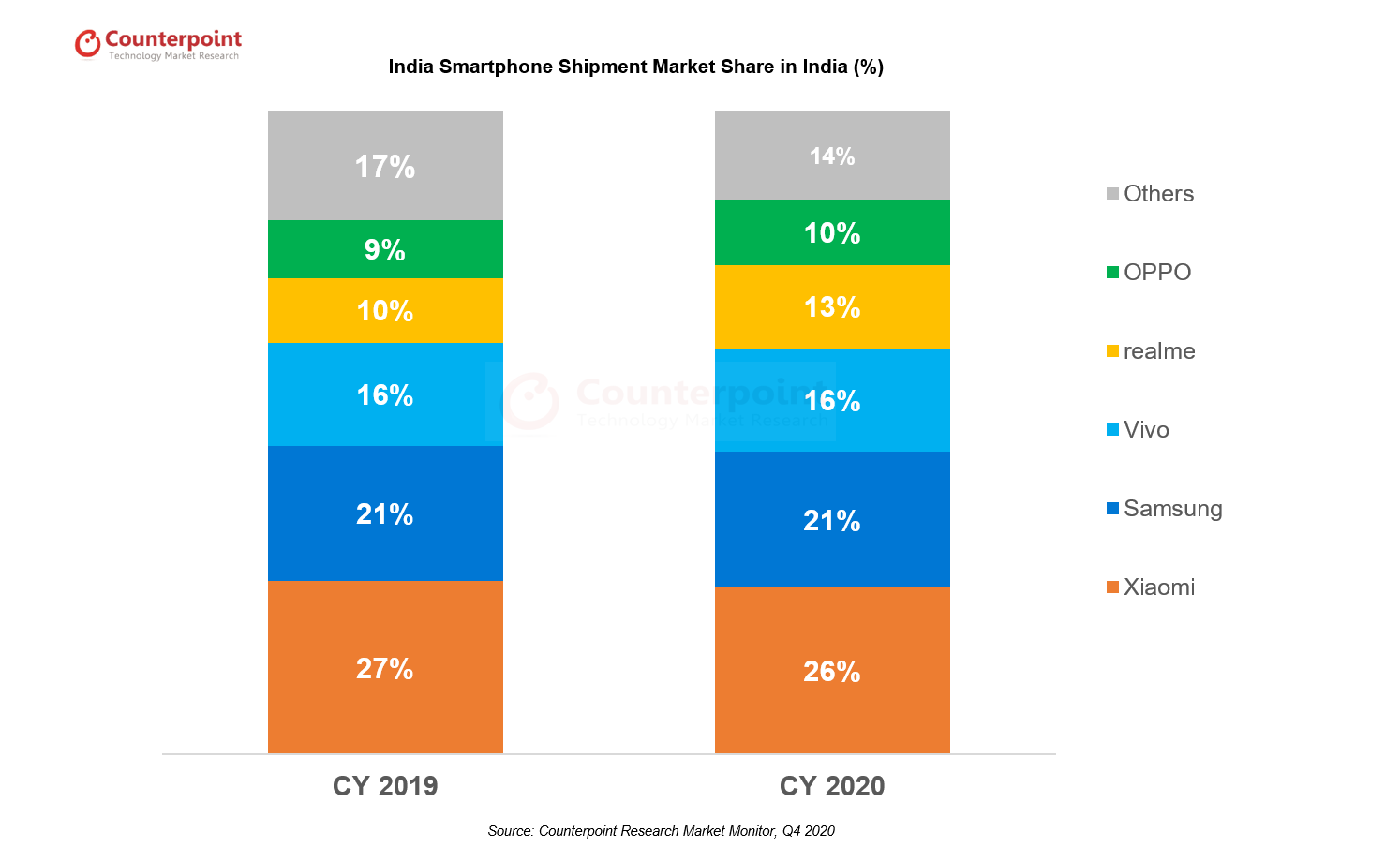
In 2018, Samsung adopted the ODM order system to let Chinese firms design and produce their smartphones. In 2019, Samsung increased the proportion of phones manufacturer by ODMs. This strategy was adopted to increase its market share in emerging markets like China and India. The ODM strategy resulted in a backlash among part suppliers who previously cooperated with Samsung. Hence, it came up with the JDM (joint development and production) strategy where Samsung is partially involved in the selection of major specifications of the product.
Samsung will reportedly jointly develop and manufacture the Galaxy A22 5G with China-based firms like Wingtech and Hwachin. It will be sold in emerging markets like India and Southeast Asian countries. Hopefully, reports arriving early next year will spill more information on the Galaxy A22 5G.
Oukitel, a Chinese phone manufacturing company has over 13 years of experience in the rugged phone manufacturing industry and has established itself as one of the biggest players in the industry. Apart from its durable devices, the company is also famous for installing powerful batteries in their smartphones. Of late, they have launched phones with some of the largest battery capacities in the world. And today, we have decided to review the top 6 Oukitel smartphones that have the most powerful batteries.
Oukitel K13 Pro
Oukitel K13 Pro has the highest battery capacity of all the phones with over 11000mAh. So far, among all the devices that we have reviewed, this is the only smartphone with such high power. It can easily run for days in just a single charge. K13 Pro comes with a charger of power rating 5V/3A that can juice it up in just 2 hours 20 minutes; it also supports fast charging.
Except for the battery, the other interesting features that this outdoor smartphone offers are a 6.41-inch o-notch display, MediaTek MT6762 octa processor, 6GB RAM, and 64GB internal storage.
Oukitel K12
Belonging to the K-series, Oukitel K12 comes with a massive battery, having a capacity of 10000mAh. This device can too run on a single charge for days to a stretch, ideal for all your camping and trekking adventures. Like the other models of this series, K12 too supports fast charging and comes with a 5V/6A adapter that can fully power up the phone in up to 2 hours 20 minutes.
Oukitel K12 boasts a 6.3-inch FHD+ hole-punch display with a resolution of 1080 x 2340p. It runs on MediaTek P35 chipset and has 6GB RAM and 64GB internal storage. This unit has a classic leather-on-metal look that is both durable and elegant.
Oukitel K7 Pro
Being a successor of the K12, K7 Pro too comes with a massive battery of 10000mAh. It supports fast charging and comes with a charger of 9V/2A rating that powers up the device in just 3 hours.
K7 Pro is enhanced with a 6-inch display, having a resolution of 1440 x 720p. It is powered by a MediaTek MT6763 processor and has over 4GB RAM and 64GB internal storage. Oukitel K7 Pro boasts a classic K-series look with a sturdy built, ideal for all environments.
Oukitel WP7
Oukitel WP7 features an 8000mAh battery that can easily last up to 2 days on a single charge. It supports 18W fast charging and can be fully powered up in under 3 hours.
WP7 packs a 6.53-inch display for seamless viewing. What sets it apart is the 48MP triple-rear camera with an in-built infrared function, multi-module support system with a UVC sterilizer, and a flashlight module. It also has 8GB RAM and 128 GB of internal storage for efficient multitasking and storage.
Oukitel WP10 5G
Oukitel WP10 5G is their latest introduction and is the first 5G rugged phone from this manufacturer. It is ranked as one of the best-rugged smartphones by Gizchina and a host of other websites. Packed with a 6.67-inch FHD+ hole-punch display, 5G network access, 8GB RAM, and 128GB ROM, this device offers seamless use.
WP10 5G has an 8000mAh battery that supports 18W fast charging that fully powers up the device in under 3 hours. Since the 5G network is expected to consume more energy, its large battery capacity seems like an ideal fit.
Oukitel C21
Out of all the listed phones, Oukitel C21 is a mainstream, budget-friendly smartphone. It has features like a 16MP quad-rear camera, a 20MP AI selfie camera, a 6.4-inch hole-punch display, runs on the MediaTek Helio P60 chipset with a RAM of 4GB and internal storage of 64GB.
Oukitel C21 packs a 4000mAh battery but still deserves a courtesy mention as it is a mid-range mainstream smartphone. Compared to the products in its category, this phone has the most powerful battery.
Now that you know how powerful these rugged phone batteries are, which Oukitel device do you prefer and why? Let us know in the comments section.
Earlier this month, OPPO unveiled the Reno5 and Reno5 Pro smartphones in China. During the event, it confirmed that it will be announcing the Reno5 Pro+ flagship phone on Dec. 24 in the home market. Recently, the smartphone was spotted at TENAA with its entire specifications. The listing had revealed that its rear camera setup has a 50-megapixel primary shooter. Today, the Chinese brand took to Weibo to confirm that the Reno5 Pro+ will be flaunting the Sony IMX766 primary camera. It seems to be a custom-made 50-megapixel lens jointly developed by Sony and OPPO.
The OPPO Reno5 Pro+ 5G will be the world’s first phone to sport the 50-megapixel Sony IMX766 camera. In the official poster, the handset can be seen sporting a matte color finish with a textured design. The protruding camera module of the phone has four cameras.
It can be said based on the TENAA listing of the Reno5 Pro+ 5G that its 50-megapixel camera will be coupled with a 16-megapixel superwide lens, a 13-megapixel telephoto lens, and a 2-megapixel macro shooter. For capturing selfies, it will be equipped with a 32-megapixel front camera.
The Snapdragon 865 mobile platform is present under the hood of the Reno5 Pro+ 5G. it will be arriving with 65W rapid charging technology for its rumored 4,500mAh battery. The handset could be housing a 6.55-inch AMOLED display with a punch-hole design and curved edges. The FHD+ screen may come equipped with support for a 90Hz refresh rate and an in-display fingerprint sensor.
1 of 4
Shown above are a couple of live shots of the Reno5 Pro+ 5G (via) that emerged on Weibo last week. It may arrive with 12 GB of RAM and 256 GB of built-in storage. At present, there is no word on the pricing of the smartphone. The handset is unlikely to arrive in markets outside of China.
Recent reports have claimed that the Vivo X60 series will debut on Dec. 28. However, Vivo has now officially confirmed that the Vivo X60 series will break cover on Dec. 29. The lineup is expected to include three smartphones such as the Vivo X60, Vivo X60 Pro, and Vivo X60 Pro+.
The Vivo X60 series launch event will be held at 7:30 PM (local time) on Dec. 29. Today, the company shared a promo of the Vivo X60 series to showcase its design. The lineup will be equipped with the second-generation micro-gimbal stabilization driven by ZEISS optics.
While the camera specs of the Vivo X60 and X60 Pro have leaked, the camera configurations of the X60 Pro Plus are not known yet. The triple camera system of the Vivo X60 is said to be equipped with an f/1.6 aperture 48-megapixel main camera, a 13-megapixel ultrawide lens, and an 8-megapixel lens for portrait shots. It is expected to arrive in variants like 8 GB RAM + 128 GB storage and 8 GB RAM + 256 GB storage in China. It may be available in three colors like blue gradient, black, and shimmer.
On the other side, the Vivo X60 Pro is expected to arrive in 12 GB RAM + 256 GB storage option only. It may come in two colors like blue gradient and black. The quad-camera system of the Vivo X60 Pro may feature an f/1.48 aperture 48-megapixel main shooter, a 13-megapixel ultrawide snapper, a 13-megapixel portrait lens, and an 8-megapixel telephoto sensor.
The Vivo X60 and X60 Pro are said to be fitted with 120Hz 6.55-inch AMOLED displays with top-centered selfie camera cutout. The X60 has a flat-screen, whereas the display of the Pro model has curved edges. The Exynos 1080 chipset will power both smartphones.
The X60 may house a 4,300mAh battery, while the Pro variant may get a 4,200mAh battery. The X60 series is expected to arrive with 33W fast charging support. The Snapdragon 888 mobile platform may power the Vivo X60 Pro+. It could be equipped with a more powerful camera setup.
Samsung will announce new wireless earbuds alongside the Galaxy S21 series next month. The pair of TWS earbuds will launch as the Galaxy Buds Pro, and early leaks have revealed what it will look like. Now, another leak has stated some key features Samsung’s new earphones will have, one of which Apple already offers on the AirPods.
According to Ishan Agarwal (@ishanagarwal24), the Galaxy Buds Pro will have support for “multiple levels of Active Noise Cancellation and Ambient Sound”. What this means is that users will be able to adjust the noise cancellation and ambient sound feature as they wish.
Galaxy Buds Pro Renders through Wearable APK
Found & uploaded by u/TheBone_
Supports multiple levels of Active Noise Cancellation & Ambient Sound. Voice Detection Feature which automatically turns on Ambient Sound. 3D Spatial Audio w/ Head Tracking. Seamless earbud connection. pic.twitter.com/IU76nvmObE
This is similar to a feature the Jabra Elite 85t offers which allows the user to switch between up to 11 different noise cancellation levels rather than having just one – noise cancellation on or off. You will also be able to adjust ambient sound level on the Galaxy Buds, hopefully in a similar way to how the Huawei FreeBuds Studio allows users to switch between two types of its Hear-through Mode.
The leaker doesn’t say if these features will be accessible via the app or can be adjusted using the controls on the earbuds. However, our guess is that you will have to launch the companion Galaxy Wearable app to access these features.
Rapoo, the Chinese company that manufactures keyboards, mice, and wireless chargers has announced a new keyboard in China. The new keyboard is a fabric version of the Ralemo Pre 5 that had been announced before.
Unlike the standard version of the Ralemo Pre 5 that has a polycarbonate body, this new one has fabric covering the space between the keys. It also comes in a single color variant – gray.
Apart from the change in materials, the Ralemo Pre 5 Fabric Edition has the same features as the standard version. The multi-device keyboard has pleated round keys with six backlight modes and four brightness adjustment levels.
The Ralemo Pre 5 Fabric Edition connects in four different modes. It has Bluetooth 3.0, Bluetooth 5.0, 2.4GHz Wi-Fi, and a wired USB-C mode. Rapoo says that it is compatible with both Windows and macOS and can be connected to up to five devices at a time. There is no dedicated number pad but the keyboard has multimedia shortcuts.
There is a 4000mAh rechargeable lithium battery inside the keyboard and it has support for fast charging. A full charge takes four hours and it will last up to 13 days.
The Ralemo Pre 5 Fabric Edition is priced at ¥599 (~$92), ¥100 (~$15) more than the standard version. Unfortunately, there is no info on availability. We also do not think it will be sold outside China.
We have just a few weeks left before the end of the year and while other industries are shutting down for the holidays, that is not the case in the tech industry as everywhere is still abuzz with activities. If you missed last week’s major announcements and happenings in the industry, then you should bring yourself up to speed with this roundup.
Vivo partners with ZEISS on smartphone cameras; OnePlus goes with Leica
The cameras on phones from Chinese manufacturers, Vivo and OnePlus, are about to get better. The former has confirmed it has signed a partnership with ZEISS to use its lens technology in its phones, beginning with the Vivo X60 series scheduled to launch by the end of December.
Benchmarking the Snapdragon 888, unveiling the Snapdragon 678
Qualcomm announced the Snapdragon 888 processor earlier this month. The chipset will power the flagships of 2021 and is expected to make its debut after this month in the Xiaomi Mi 11. If you want to know how well the chipset fares in benchmark tests, then Qualcomm has got you covered as it has released a video showing just that. The chipset shows its prowess on the popular benchmark apps such as AnTuTu, GFXBench, Geekbench, and AIMark.
The San Diego semiconductor company also announced a new mid-range processor last week. The Snapdragon 678, as it is called, is an upgrade over the Snapdragon 675 announced in October 2018.
DJI, the leader in consumer drone technology was added to the US Government’s entity list along with three others as they “enabled wide-scale human rights abuses within China through abusive genetic collection and analysis or high-technology surveillance”.
A new OnePlus backpack but nowhere to go
OnePlus is known for its phones but its product portfolio also includes lifestyle products such as backpacks. Last week, it announced a new one dubbed the OnePlus Urban Traveler that is scheduled to go on sale in early January. With countries going into a second round of lockdown, buying a backpack knowing you will be indoors for the unforeseeable future doesn’t seem like the wise thing to do.
An expensive Flex
Samsung’s Galaxy Book Flex got a second-generation model last week and it comes with all the bells and whistles of a premium computer. You get a QLED touch display, Intel’s 11th Gen processor, up to 16GB of RAM and 1TB of SSD storage, and an S Pen stylus. It also costs over $2500 and has a 5G model too.
Xiaomi is expected to launch the flagship Mi 11 later this month, precisely on December 29 according to rumors. The Mi flagship is expected to launch as the first Snapdragon 888-powered smartphone. Before now, a couple of leaks have emerged giving some hint of what to expect. A new leak has emerged, this time, pictures of the tempered protective glass of the M 11.
The picture which appeared on Weibo shows the device will utilize a curved screen and will have a punch-hole on the top right corner of the display. This is similar to the punch-hole design utilized on the Mi 10, Mi 10 Pro, and Mi 10 Extreme Edition.
Xiaomi had previously confirmed that its third-generation under-screen camera technology will be mass-produced and commercialized in 2021. However, going by this leaked tempered glass, the Mi 11 may likely miss out on this technology.
In terms of core configuration, in addition to the Snapdragon 888 flagship processor, the Mi 11 is also expected to pack 8GB of RAM and have support for 55W fast charging.
It is worth noting that there are reports that the Mi 11 series also has a high-end version, which will feature a Samsung 2K AMOLED screen and have support for a 120Hz refresh rate. The high-end version is also expected to support 120W ultra-fast flash charging.
For the optics, the device will have a triple camera setup on the back along with an LED flashlight. This is horizontally stacked inside a squircle housing. As per the concept renders, the layout will also have a Blue Gradient color with a chamfered bump. The triple-camera array will likely have a 108MP main camera, 13MP ultra-wide, and a 5MP macro sensor.
Chinese e-commerce giant JD (Jingdong) has announced an e-sports gaming phone alliance in partnership with players in the gaming industry. The alliance anchors on JD’s expertise in the supply chain, technology, distribution, marketing, and payment solutions to upgrade the gaming ecosystem and to make JD the top choice for customers purchasing gaming devices.
In 2019, China officially recognized esports as an occupation but before the recognition, it has been a booming industry. China’s e-sports market is said to grow 10% annually according to an industry report. The market is expected to hit RMB 270 billion yuan in annual revenue by 2022.
JD previously launched the JD Esports plan in the middle of this year with the aim of expanding to gaming phone hardware, service, and competitions. Based on the plan, JD formed the JDE gaming team and released new gaming-related products from Lenovo, ROG, Black Shark, and Nubia’s Red Magic further promoting the growth of the industry.
The president of JD Mobile Devices, Daniel Tan stated during the conference that: “With the development of the whole industry, gamers’ pursuit of a superior experience is even higher. The JD Esports Plan can provide an integrated service for them, as well as help our partners achieve maximum business value.”
During the ceremony, JD announced a series of services for gamers, including a special trial service, one-hour fast delivery, a special network guarantee, and more. Based on the JD Esports plan, JD will also help train professional gamers, appeal to more fans by working with live streamers on platforms like Huya, create Consumer-to-Manufacturer (C2M) products with brands, and launch brick-and-mortar experience shops.
Xiaomi is primarily known for its affordable smartphones across the globe. But, the Chinese electronics maker prominently develops several smart devices including items supporting IoT. Similarly, there’s a Mijia Portable Smart Tyre Inflator which is quite handy for daily commuters and travellers. It is on sale via Gearbest for $42.99offering 52% discount.
It is available only in black colour and the users can ship it around the globe from Gearbest. Moreover, you can avail an additional $3 discount upon buying two or more pieces and then paying via Paypal. It is a limited time deal, and we suggest you grab it from the button below.
Xiaomi Mijia Portable Tyre Inflator supports up to 150 PSI pressure with auto-shutoff function. It can inflate a bicycle tyre within 45-75 seconds, and car tyre can reach from 0 to 230KPA within 5-8 minutes. It is quite comfortable to carry and portable featuring a compact design.
The presence of Digital LCD display makes it easy for the users to use the product effectively. It can be a lifesaver in case of emergency situations at night. There’s a 2000 mAh rechargeable lithium battery which can keep the device running for several days. However, it is easily rechargeable via a power bank.
The multi-purpose and powerful tyre inflator can be yours without paying the premium price. You can own it for a discounted price from Gearbest.
The Realme X7 series of smartphones with exciting and power-saving features have now been released in Thailand, as the brand makes inroads into the overseas market after the release of the X7 series in China on September 1. The Bangkok, Thailand rollout features, for now, only the Realme X7 Pro, while the other models in the lineup make their way into the global smartphone market.
Realme X7 Pro
The X7 Pro is already available at the leading Thai online stores. The option available presently is the single memory device and it comes in two color options – Black and Gradient.
The choice of the Thai market as the first overseas debut for the Realme X7 series is yet unclear but may be indicative of an emerging business direction for the Realme brand, as it seems to tap from previously untapped markets in growing the firm.
The Realme X7 Pro runs on a Dimensity 1000+ chipset with next-generation 5G support. The fact that Thailand is among a very small class of South Asian countries that have established a functional 5G infrastructure, although quite restricted, could also be a major factor leading to the overseas debut of the X7 Pro in that country. This means the super-fast functionality of 5G will be on display with the smartphone even though Thailand is just a budding upstart in the technology and its supporting network architecture.
Several other exciting features are present in the just-released smartphone. Fast charging functionality is present (65W), it has a 64MP main camera that is bound to produce powerful and crisp visuals, a 6.55 inch AMOLED screen with a decent 120Hz refresh rate, and a 240Hz touch sampling rate. The smartphone also comes with 8GB of RAM and 128GB of memory.
The Realme X7 Pro sells from THB16,990 in Thailand (about $570 or €465).
The ongoing global pandemic has forced people to work from home. It has even led to the rise in sales of laptops, Home PCs, and accessories such as webcams. Xiaomi Mijia 1080P Smart IP Webcam can be an excellent choice at the given discount price of$29.99 from Gearbest. Xiaomi is offering a 25% discount over the actual retail price of $39.99.
The beautifully designed webcam is available only in white colour, but there’s an option to choose between different plug types – UK, AU, EU and US. There’s an additional $3 discount if you can two or more pieces and pay via Paypal.
Xiaomi Mijia Webcam comes with a beautiful design while offering support for HD ultra-wide-angle videos in 1080 FHD resolution. It also supports IR Night Vision for better video recording capabilities and supports IP65 certifications for outdoors. Xiaomi Mi Mijia features MicroSD card slot up to 32GB storage. It can be attached to Android iOS devices. The users can connect the camera with smart devices. It even supports Time-lapse, personal voice, multiple windows and much more.
This nifty and useful gadget can be yours at an ultra-affordable price of $19.99.
Samsung has an interesting lineup of devices planned for 2021. It will kick off the year with the launch of the Galaxy S21 series on January 14. It also has a handful of foldable phones planned for next year including the Galaxy Z Fold 3, Galaxy Z Flip 3, and possible lite versions of the Galaxy Z Fold and Z Flip. However, if a new report is true, then none of these devices are as exciting as two others Samsung has planned for next year.
According to the leaker Tron (@cozyplanes), Samsung has a triple foldable tablet, if you can call it that, planned for 2021. It also has a transparent display phone scheduled for next year too!
After seeing S21 leaks, you are probably disappointed.
Just wait a bit more, you will like foldables. You won't? Samsung will make you do.
Samsung has great stuff planned for 2021. Triple foldable "tablet", transparent display phone as well.
The triple foldable tablet is definitely a device that has its screen divided into three parts but has two hinges. This should be similar to what we have seen from Xiaomi and TCL but it remains to be seen which of the designs Samsung will adopt for its own foldable as both manufacturers use different designs.
Moving on to the transparent display phone, we want to believe this is a phone that has its components at the bottom rather than behind the screen and then projects content onto a display that appears to be transparent but actually isn’t. Think of it as Xiaomi’s Mi TV Lux OLED Transparent Edition but on a much smaller scale, one that fits into your pocket. This post explains how the technology works.
The leaker also mentions that Samsung is planning to launch “scrollables” and “rollables”. TCL already showed us a concept scrollable device earlier this year and a few months ago, it demoed a concept rollable device. LG will also unveil its first (sc)rollable smartphone in the first half of 2021. It appears Samsung doesn’t want to play catch up, so it is planning to announce its own too next year.
+ And a legendary product you have never thought to happen.
Tron adds in a reply to the tweet that Samsung is also planning a legendary product that we “never thought to happen”. We hope more details of this device surfaces soon.
Which of these devices are you most excited about? Do Let us know in the comment box below.
Oppo released the Reno5 series in China with great specifications at great prices and it registered an incredibly high amount of sales. The huge success of this series is letting a lot of people to wonder whether or not the OPPO Reno5 Pro 5G is really the amazing flagship killer it looks like. Is it the best choice or it would be better to opt for other flagship killers in the Chinese market? In order to answer this question, we decided to compare it with the most interesting and best-selling flagships in the Chinese markets. We chose the Realme X7 Pro which just debuted even in the international market and the best-selling Redmi K30 Pro also known as the POCO F2 Pro in the global market.
Realme X7 Pro 5G vs Redmi K30 Pro 5G vs Oppo Reno5 Pro 5G
Realme X7 Pro
Xiaomi Redmi K30 Pro
OPPO Reno5 Pro 5G
DIMENSIONS AND WEIGHT
160.8 x 75.1 x 8.5 mm, 184 g
163.3 x 75.4 x 8.9 mm, 218 grams
159.7 x 73.2 x 7.6 mm, 173 g
DISPLAY
6.55 inches, 1080 x 2400p (Full HD+), Super AMOLED
6.67 inches, 1080 x 2400p (Full HD+), 395 ppi, AMOLED
There are definitely no doubts: the OPPO Reno5 Pro 5G has the best design. It is thinner, it is lighter, and it is more compact than Redmi K30 Pro and Realme X7 Pro. Further, it has a curved display, fluorescent parts, and a more beautiful look for the camera module. You even get a higher screen-to-body ratio. The Redmi K30 Pro offers an interesting advantage: it has a full-screen display without holes. But it is thicker and heavier than its two opponents, and it has bigger dimensions. That is why we do not consider it as the best design choice.
Display
The most impressive display is the one found on the Realme X7 Pro because it sports a higher refresh rate. The AMOLED panel of the OPPO Reno5 Pro 5G stops at 90 Hz while the Redmi K30 Pro is 90 Hz. The Realme X7 Pro has 120 Hz and it offers a smoother viewing experience. The Redmi K30 Pro has the HDR10+ certification, but given the standard refresh rate, it is a less interesting option. The OPPO Reno 5 Pro 5G sits right in the middle with its 90 Hz refresh rate and high 1100 nits peak brightness.
Specs & Software
The best hardware department belongs to the Redmi K30 Pro: first of all, it has a stronger chipset. The Snapdragon 865 platform is actually more powerful than the Dimensity 1000+ found on its two rivals. Further, the Redmi K30 Pro packs UFS 3.1 internal storage instead of UFS 2.1. The OPPO Reno 5 Pro 5G packs a higher amount of RAM in its most expensive configuration (12 GB), but it has UFS 2.1 storage and Dimensity 1000+. But you should note that OPPO Reno5 Pro 5G runs Android 11 out of the box, so it is supposed to receive longer software support.
Camera
In each case, you get midrange cameras. The OPPO Reno5 Pro 5G is more interesting as a camera phone because it has a brighter focal aperture for the main sensor. But there are no huge differences between the camera departments of these handsets. All pack a 64 MP rear camera, but for those who love ultrawide photos, Redmi K30 Pro is slightly better with its 13 MP ultrawide sensor. Further, the Redmi K30 Pro supports 8K video recording. But its front camera is disappointing compared to Realme X7 Pro and OPPO Reno 5 Pro 5G.
Battery
The Redmi K30 Pro has a bigger 4700 mAh battery and a longer battery life thanks to its higher capacity and standard refresh rate. On the other hand, Realme X7 Pro and OPPO Reno5 Pro 5G offers way shorter charging times thanks to 65W fast charging.
Price
OPPO Reno5 Pro 5G is priced at about €337/$413, Realme X7 Pro costs about €312/$382, and Redmi K30 Pro costs €184/$225 (6/64 GB). The winner of the comparison is the OPPO Reno5 Pro 5G due to its better design and great cameras, but Realme X7 Pro offers a higher refresh rate and a bigger battery, which is why someone may prefer it. I would discard the Redmi K30 Pro due to the lack of high refresh rates, but it remains a very good option for those who want to save money.
It is no news that Lenovo owns Motorola, and the manufacturer does not hide the fact as it frequently rebadges phones launched under the Motorola brand as Lenovo phones. The recently-announced Lenovo Lemon K12 Pro and Lemon K12 are rebadged versions of the Moto G9 Power and Moto E7 Plus respectively. Now a leak has revealed that the Lenovo K12 will be getting a global version but as a rebadged Moto E7.
The Moto E7 was announced in late November in Europe with a promise to launch in Latin America, the Middle East, and other parts of Asia later. Now, it will be heading to markets outside China as the Lenovo K12 according to the leaker, Sudhanshu Ambhore.
Exclusive info provided to MySmartPrice by the leaker reveals the Lenovo K12 will be launching soon. The leaker provided an image of the phone which will arrive in (Aqua) Blue and (Mineral) Gray, though we expect Lenovo to give the colors a different name. There are two cameras on the back, arranged in a squircle with an LED flash. There is also a fingerprint scanner and an opening for a speaker on the back of the phone.
Since the Lenovo K12 Global Version will be a rebadged Moto E7, the phone should have a 6.5-inch 1600 x 720 LCD display with a waterdrop notch, a 48MP primary rear camera paired with a 2MP depth sensor. The processor inside should be the MediaTek Helio G25 processor, but unlike the Moto E7 which has just 2GB of RAM and 32GB of storage, Lenovo may decide to give the K12 more RAM and a larger storage capacity.
The Moto E7 has a 5MP selfie camera and a dedicated Google Assistant button. It packs a 4000mAh battery with support for 10W charging via USB-C and runs Android 10 out of the box. These are the features we expect the Lenovo K12 Global Version to also have when it is announced.
Lenovo is yet to announce a release date but we can’t say if it will arrive before the end of the year or not.
The year is almost over but Chinese manufacturers are not done announcing new products. Next week, a few products will be launching, some of which we expect to get to the hands of buyers before the month ends.
On Monday, Huawei kicks off the stream of launches with a smart screen. The new smart screen is practically a smart TV with more advanced features, most of which work with other Huawei devices. It is expected to be the first to run Harmony OS 2.0 out of the box with new features such as multi-tasking.
Huawei will also announce the Watch GT 2 Pro ECG version in China on that day. The smartwatch is already available for pre-order in China
On the 23rd of December, Huawei will return for the launch of new smartphones – the Nova 8 and Nova 8 Pro. The new smartphones will expand the Nova 8 series which began with the Nova 8 SE that was launched in early November. The new phones will come with a new design, Kirin processors, and displays with a hole punch. Huawei is also expected to announce another phone, the Enjoy 20 SE, but it has not yet confirmed the launch.
On the same day but in India, realme will announce three new products. The highlight of the launch is the realme Watch S Pro, a smartwatch with a round AMOLED display, support for 15 sports modes, and GPS. The standard realme Watch S which already launched in other markets will also be announced on that day.
realme Watch S Pro
The other product that will be unveiled is the realme Buds Air Pro Master Edition. This is a version of the Buds Air Pro announced back at IFA 2020 but with a new color and premium finish.
At the Snapdragon Summit, Vivo officially confirmed that it would bring mobile products with Snapdragon 888 SoC next year. However, there’s wasn’t much known about it until today. The Chinese giant has finally confirmed that the next flagship will be iQOO 7 and has revealed the first look of the device.
iQOO, in a Weibo Post, shared the first official look of the upcoming flagship. It says the iQOO 7 is the official KPL game machine during the Autumn Finals 2020. In case you don’t know, KPL aka King Pro League is one of the biggest eSports events in China. It occurs during the Autumn/Fall and Spring seasons every year.
It is hosted by Tencent Games that brings several professional teams of Honor of Kings to compete for the title crown. Previously, iQOO had collaborated with KPL during iQOO 3, which is also a KPL-certified gaming phone. Coming back, the iQOO 7 rear look shows triple-cameras and looks to be a BMW special edition.
What is interesting here is the camera layout. If you look closely, the cameras are arranged like the vertices of a triangle. Also, they resemble a lot like the Vivo X50 and the upcoming X60 series of smartphones. There is an LED flashlight beneath the housing and has iQOO branding beside it. Additionally, the White rear panel has vertical BMW stripes on the right side. Although Vivo hasn’t explicitly mentioned it, the possibility is quite high now.
1 of 2
iQOO 7
iQOO 5 Pro
iQOO 5 Pro
If you recall, Vivo collaborated with BMW Motorsport to launch a special edition of the iQOO 5 Pro. The new iQOO 7’s rear panel has similar shades of the BMW M logo with “Fascination meets Innovation” slogan, White background, and Blue, Black, Red stripes. However, we aren’t sure if it will get the Leather finish like the iQOO 5 Pro. You can compare the looks of both the devices above.
Anyway, it’s just a teaser for the device and we will have to wait for a bit to know the launch date let alone its price and availability. So far, iQOO 7 is speculated to feature an AMOLED flat display, Snapdragon 888 SoC, 120W fast charging, triple-camera with 50MP sensor, 16MP selfie-shooter, and iQOO UI inspired by OriginOS based on Android 11.
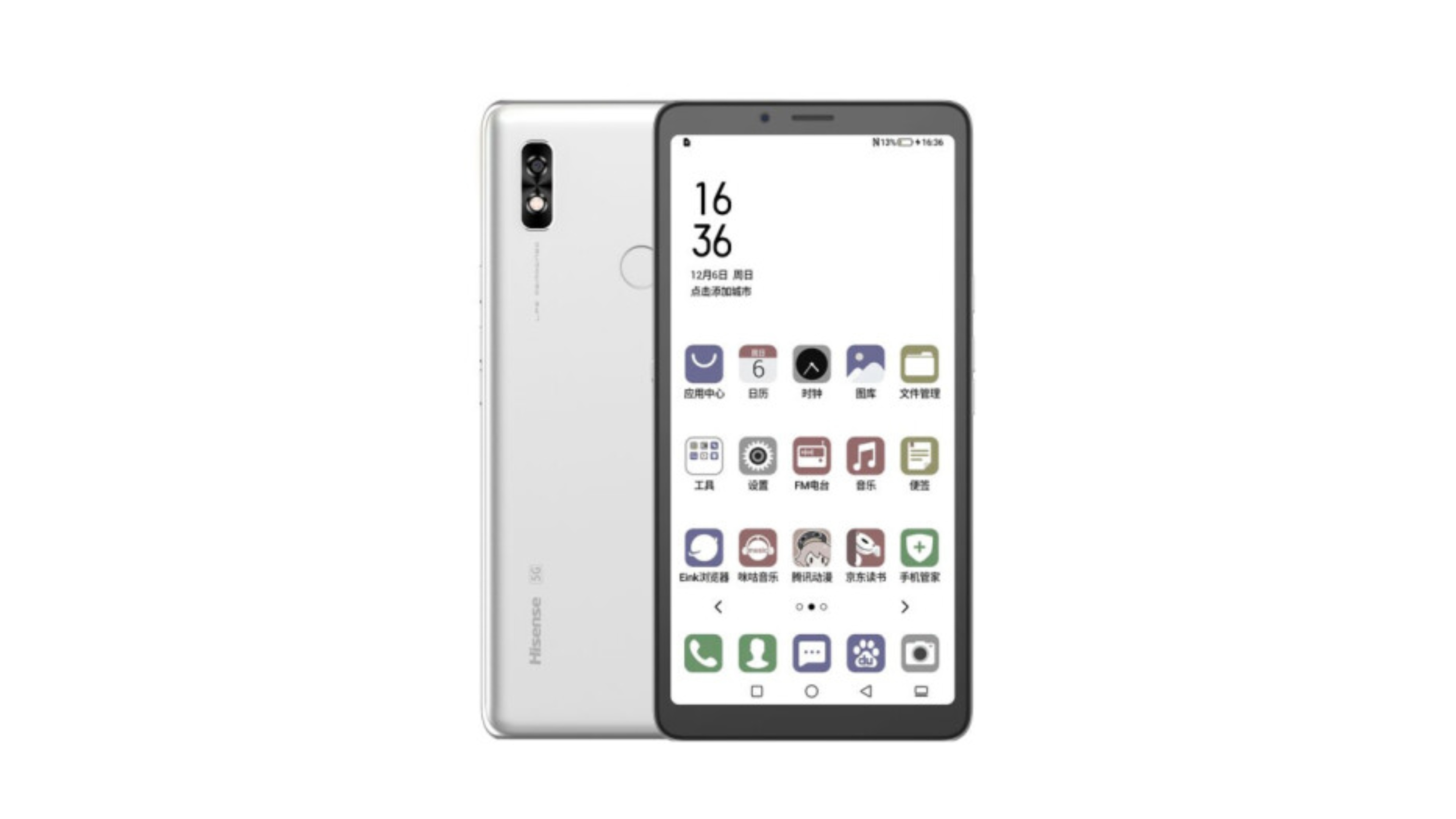
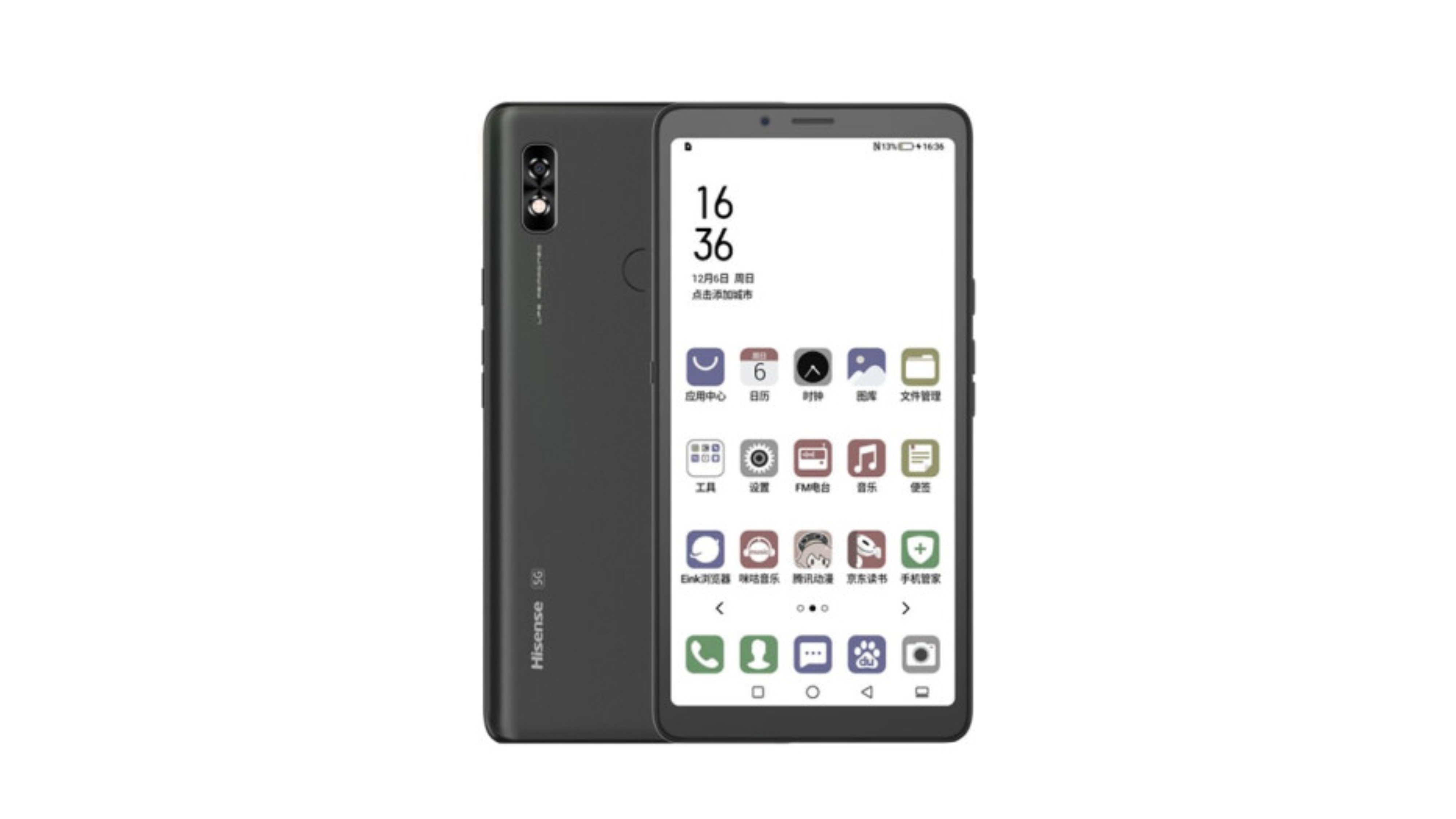
Hisense is practically the only manufacturer that still makes phones that double as e-readers. This year it changed its strategy from launching phones with dual displays – a standard screen + e-ink – to a single screen which is an e-ink display. Now it is set to announce its very first 5G phone with an e-ink screen that will launch as the Hisense A7.
The Hisense A7 5G will get a global unveiling on December 22. However, it appears the 5G e-reader that doubles as a smartphone will not be getting a color e-ink screen like its siblings, the Hisense A5 Pro, Hisense A5 Pro CC, and Hisense A5C which launched this year.
A teaser video released for the phone shows that it will come in two color variants – white and black. It will have a single camera on the back along with an LED flash and a fingerprint scanner.
While details such as screen size, processor, RAM, and storage are unavailable, we believe the phone will be powered by a UNISOC 5G processor, probably the Tiger T7510 that powers the Hisense T50 5G. The poster above shows the phone has an audio jack at the bottom along with a USB-C port and a four-hole speaker grille.
Hisense says the launch is a global debut which means the device should be sold in other countries other than China. We don’t know which countries will get it yet but availability details should be available by Tuesday.
Apple has been hitting headlines in India lately but not for good reasons. Its supplier Wistron’s facility near Bengaluru, India, recently got attacked by workers demanding unpaid wages. Now, as Reuters says the company has put Wistron on notice.
According to the report, an early audit by Apple reveals that Wistron has violated the “Supplier Code of Conduct”. Apparently, it didn’t manage the working hours properly and this led to delay in payment wages. Precisely, as Wistron admits it didn’t pay some workers during October and November on time. In case you don’t know, Wistron assembles Apple’s iPhones like iPhone 7 and iPhone SE 2020.
The report says that Wistron planned to expand operations by hiring 20,000 workers in a year. However, it couldn’t cope up with the scale of manpower, violated several laws which led to the outrage. Also, the inspection result by Karnataka Govt reveals Wistron had 5,500 workers more than the allowed number.
Some of the other violations include improper HR management, underpayment of wages for contract workers, housekeeping staff. The company has also made female staff work overtime without proper authorization.
As a result of this, the report says Wistron will face delays in production due to Apple’s probationary action. This will take dent over its earlier ₹13 billion($177 million) commitment for the next five years to leverage the PLI scheme. If you recall, the Indian Govt recently approved cash incentives of 4-6% of the Sale of goods locally made in next 5yrs from 2019-2020.
That said, Apple says it will continue to monitor how Wistron manages to mitigate the violent attack which made it lose millions of dollars of property, Gears, and iPhones. Apart from Wistron, Apple’s other suppliers Foxconn, Pegatron are also expanding production in Vietnam, India.
Apple has just updated the support page that outlines the key performance metrics including charging and battery-related aspects of the just-released AirPods Max. The support document provides insights into how wireless headphones behave when it is not in active use.
The support page specifies that when the headphones are in an idle position for 5 minutes, in order to substantially conserve battery energy, the low power mode is automatically activated. The low power mode ensures that some battery-draining activities are scaled down to reflect the idleness. The next milestone is achieved after the headphones have been without any activity for 72 hours (three days).
At this instant, they go into an even lower power mode that turns off Bluetooth and several power-draining activities.
When using the supplied case of the AirPods Max wireless headphones, the device will instantly switch to the low power mode. The ultra low power mode is activated after 18 hours of using the case. When the ultra-low mode is active, then Bluetooth and Find My feature is turned off in this very low power mode.
The tech giant specifically used the word ultra-low to denote the lowest power saving option while using the case but it is yet to be seen how this so-called ultra-low power mode differs from the lowest power mode when not using the case.
As could be seen in other wireless headphones without these new power mode functionalities, the major difference is that while those AirPods come fitted with a power button to switch off power when not in use, the AirPods Max does not have one, but uses a different technology that has incorporated a sort of smart and energy-conserving behavior into the workings of the device.
We use cookies on our website to give you the most relevant experience by remembering your preferences and repeat visits. By clicking “Accept”, you consent to the use of ALL the cookies.
This website uses cookies to improve your experience while you navigate through the website. Out of these, the cookies that are categorized as necessary are stored on your browser as they are essential for the working of basic functionalities of the website. We also use third-party cookies that help us analyze and understand how you use this website. These cookies will be stored in your browser only with your consent. You also have the option to opt-out of these cookies. But opting out of some of these cookies may affect your browsing experience.
Necessary cookies are absolutely essential for the website to function properly. This category only includes cookies that ensures basic functionalities and security features of the website. These cookies do not store any personal information.
Any cookies that may not be particularly necessary for the website to function and is used specifically to collect user personal data via analytics, ads, other embedded contents are termed as non-necessary cookies. It is mandatory to procure user consent prior to running these cookies on your website.