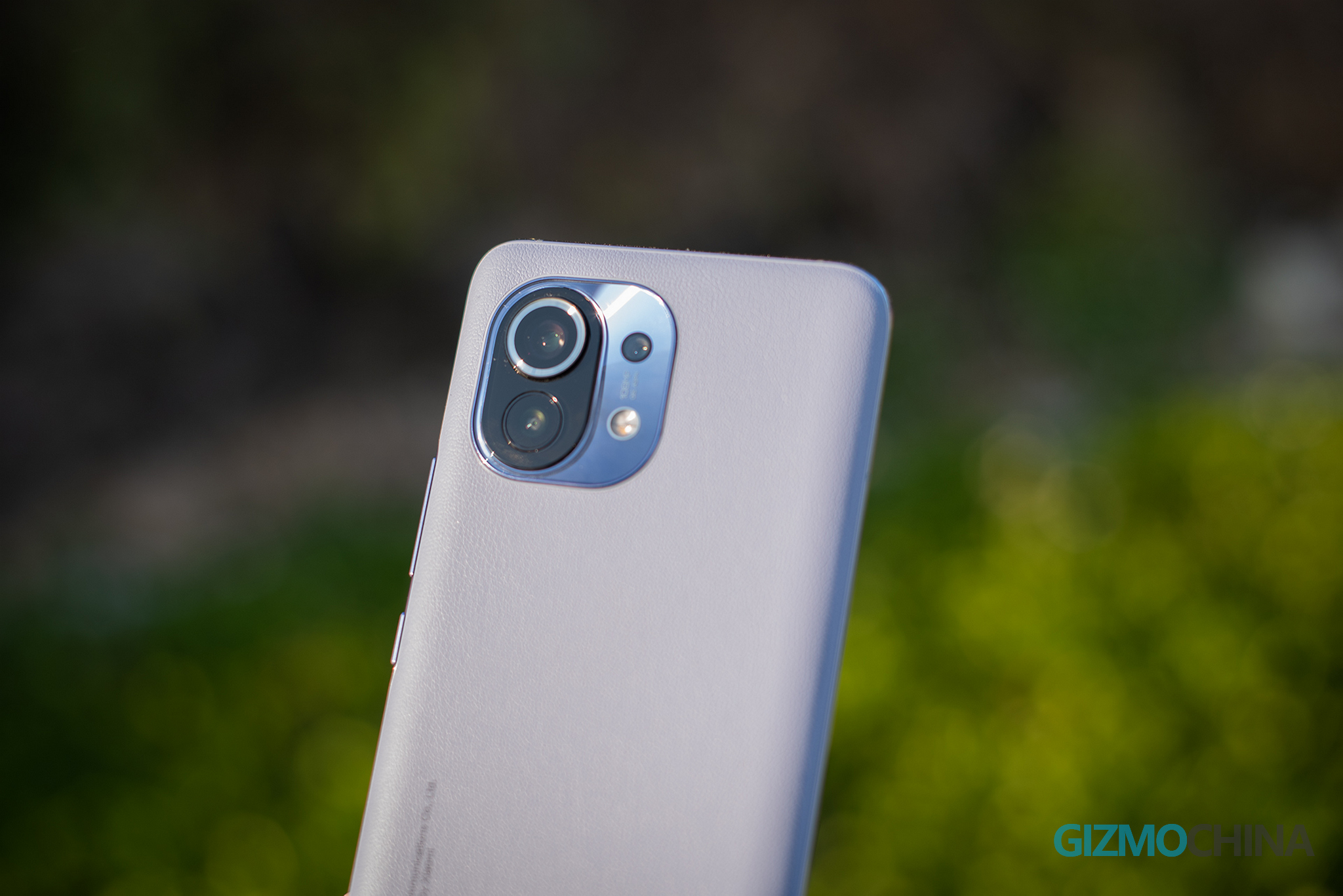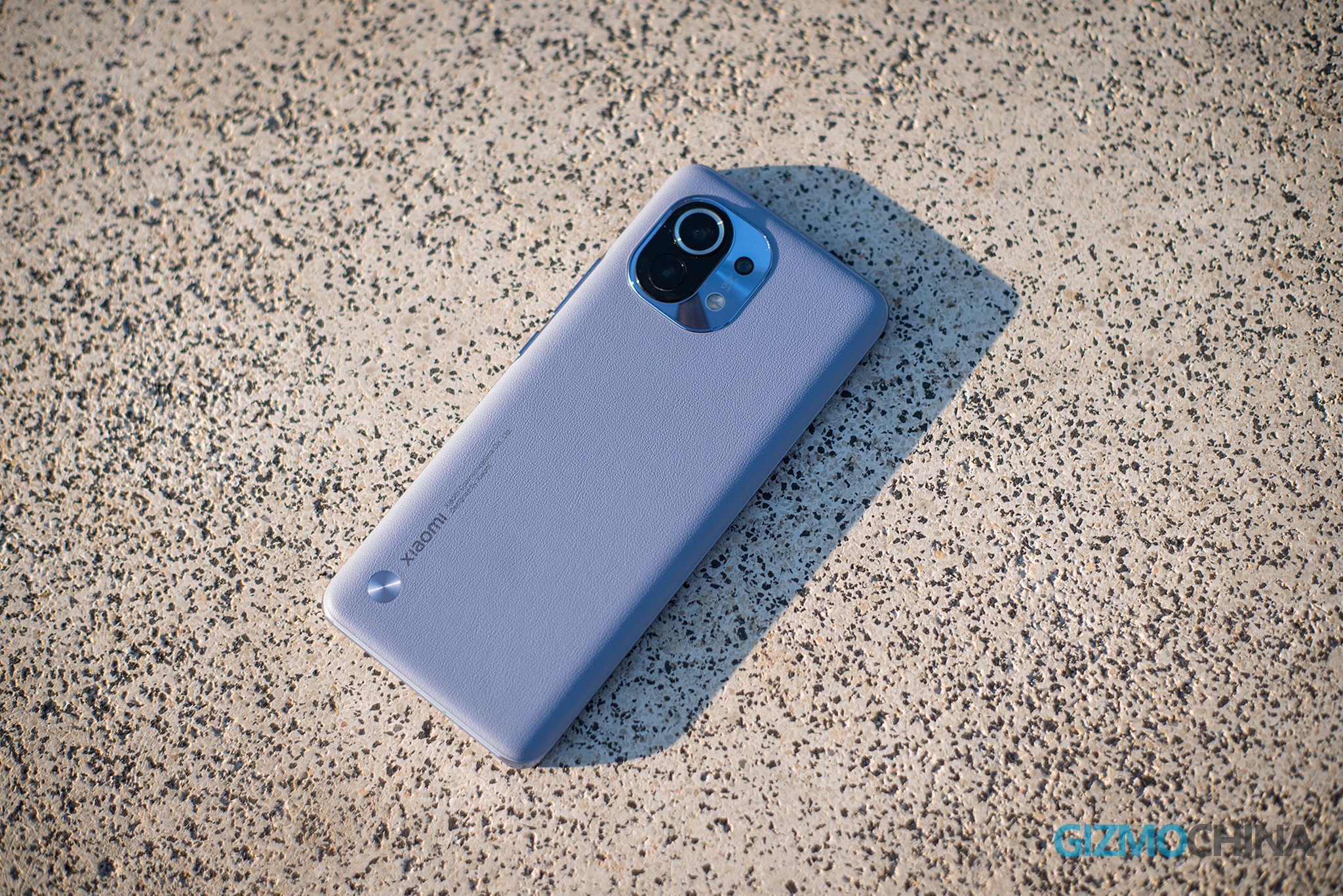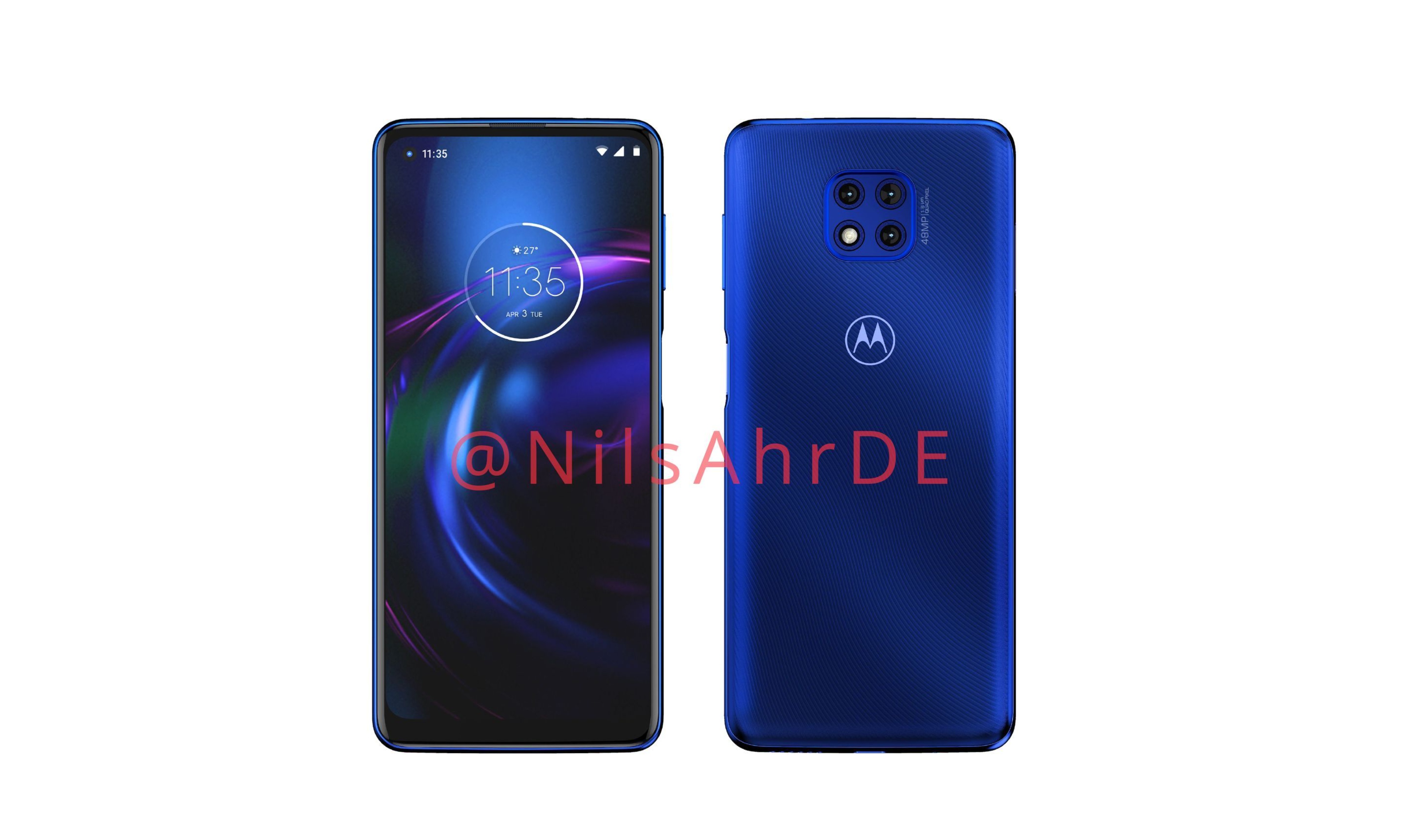
Recent reports have spilled a lot of information about the OPPO Reno5 5G and Reno5 Pro 5G smartphones. The Chinese manufacturer is also expected to announce the Reno5 Pro+ 5G flagship phones alongside the aforementioned models. OPPO is yet to reveal official details of the Reno5 Pro+ 5G. A fresh leak on Weibo (via) has revealed the rear design of the smartphone and some of its specs.
As it can be seen in the leaked render, the Reno5 Pro+ 5G sports a quad-camera like the other Reno5 models. However, the main difference with the Reno5 Pro+ 5G is that it has a distinctive rectangle-shaped snapper in the camera housing.
It is speculated that the Reno5 Pro+ 5G will have a 50-megapixel Sony IMX7xx primary shooter, a 16-megapixel ultrawide lens, and an unknown third sensor. The rectangle-shaped camera could a 12-megapixel telephoto lens with a 2x optical zoom.
The Reno5 5G is powered by the Snapdragon 765G and the Reno5 Pro 5G has the Dimensity 1000+. The Reno5 Pro+ 5G is rumored to be fuelled by the Snapdragon 865 mobile platform. There could be a version of the Reno5 Pro+ 5G with a leather rear. It is said to be the first mass-produced smartphone to come with an electrochromic rear. This reminds of the OnePlus Concept One phone with electrochromic technology that was announced in January.
The leak has no information on the other specs of the Reno5 Pro+ 5G The Chinese manufacturer will be announcing the Reno5 series on Dec. 10 in the home market. The Reno5 5G and Reno5 Pro 5G is already up for reservations through Chinese retailer sites. Unconfirmed information reveals that the Reno5 5G and Reno5 Pro 5G will be priced at 3,299 Yuan (~$505) and 3,899 Yuan (~$597), respectively.
HMD Global, the company behind the Nokia-branded smartphones and feature phones is no longer turning heads. Because the firm’s recent offerings have been mediocre for a while now. But the company keeps on trying to win customers. Hence, it is all set to launch another budget handset in China with model number TA-1335.
For those unaware, the hottest segment of the Chinese smartphone market is the ¥1,000-¥2,000 price bracket. This segment is filled with value for money 5G devices from the likes of Redmi, realme, HONOR, and iQOO to name a few.
Since HMD Global does not have similar spec’d handsets, it has been targeting the audience below the ¥1,000 price segment. The Nokia C3 is the firm’s latest attempt, which it debuted in August.
Now, it seems like this device will be soon joined by another model called Nokia TA-1335. This smartphone has been now listed on TENAA revealing its specifications and design.
According to the listing, the upcoming Nokia TA-1335 will feature a similar design as the Nokia C3 but it will come with an additional front-facing LED flash. This phone will measure 81 × 44.5 × 22mm in dimensions, weigh only 122g, and will be available in two colors – Navy Blue and Champagne.
Further, it will come with 2GB RAM, 64GB internal storage, and will run the Android 10 operating system. Interestingly, the TENAA listing has no information regarding this handset’s chipset and display. But it does say that it will be powered by a quad-core processor.
Other features of this unknown Nokia phone will include an 8MP primary camera, an 8MP selfie camera, 4G with VoLTE, a microSD card slot, a 3.5mm headphone jack, and a built-in 2,500mAh battery. Lastly, the listing also mentions the presence of a fingerprint sensor but we couldn’t see it in the pictures.
Having said that, the official name/branding of Nokia TA-1335 is a mystery just like its launch date.
At an interactive platform recently, the Shanghai-based Semiconductor Manufacturing International Corp (SMIC) hinted that it has started small-scale trial production of its second-generation N+1 FinFET process. This was disclosed in response to an investor’s question about the progress the company has made in the R&D and production of 7-nanometer products.
SMIC first announced that it has achieved mass production of the most advanced 14nm process in China in 2019. The process is the company’s first-generation FinFET process and it started mass production in the fourth quarter of 2019. The company deployed the process to manufacture the Hisilicon Kirin 710A chipset which was utilized first on the Honor Play 4T and then a couple of other Huawei products.
In September this year, when asked by investors to verify internal news about the mass production of its next-generation chips, SMIC responded that its second-generation FinFET N+1 process has indeed entered the customer introduction stage. The company equally hinted that it is expected to start small-scale production (trial production) by the end of 2020.
Later in October, China’s one-stop IP and custom chip company INNOSILICON announced that it has completed the world’s first chip tape-out and testing based on SMIC’s FinFET N+1 advanced process. All IPs are made in-house, with one-time functions.
Regarding the N+1 process, SMIC CEO Liang Mengsong revealed earlier this year that the process is very similar to the 7nm process in terms of power and stability, and does not require EUV lithography. The new N+1 process nodes are being called 8nm or an early stage 7nm process. The process is geared towards low-power applications. Compared to the 14nm process, SMIC’s N+1 process has a 20% increase in performance and a 57% reduction in power consumption, while the 7nm market benchmark performance increase should be 35%.
Apple is set to finally unveil the Wristcam, a strap equipped with front- and rear-facing cameras to be used for Apple watches. The launch is coming after about four years when a crowdfunding campaign was initiated for its development.
The Wristcam comes with an 8-megapixel camera that can shoot 1080p video and take still photos in 4K resolution and a 2-megapixel front camera for selfies. The device can also function as a video walkie-talkie with real-time live-streaming capabilities.
Of course, both cameras are nowhere close to the powerful cameras in the iPhone. Some visuals shot by the Wristcam, displayed by the company are quite decent.
The display of Wristcam is the Watch screen although the camera has a separate battery, which can last up to 24 hours. You can take images and video by pressing its multifunctional button, and this is synced to your iPhone automatically when you drop it on its magnetically attached charging cable.
The device comes with 8GB of memory and connects with the Watch via Bluetooth Low Energy (BLE) and with the iPhone via Bluetooth 4.2, 5.0, and Wi-Fi.
The band weighs about 23 grams and comes in interchangeable colors, including noir, blanc, gray, rose, and sage. Both cameras have LEDs that light up when a photo or video is being shot, so it’s clear when the device is in photo-taking mode.
According to CEO Ari Roisman, the Wristcam can take up to 20 seconds to share a photo directly from the Watch over Bluetooth but will sync directly with a connected iPhone. The ability to share photos directly from the Watch won’t be available when the device is officially launched but would be incorporated in the future.
Wristcam camera sample
Roisman said the company is focused on shipping units to customers who supported the original crowdfunding campaign, which pre-sold 10,000 units. The lengthy delay stemmed from design challenges.
Wristcam camera sample
Interested customers can make reservations for the Wristcam from the company’s website for $299. The first direct-to-customer units are expected by March 2021.
Researchers at WMG, University of Warwick, have produced groundbreaking artificial intelligence algorithms that enable a robot to perform dexterous manipulation of objects just like humans. While dexterous manipulation of objects is a basic and perfunctory task for humans, it is still very difficult for autonomous robotic hands to master before this seeming breakthrough.
The Shadow Robot Dexterous Hand compares well with a human hand and is capable of reproducing all of its functionalities. Simulations showed that the robotic hands learn on their own how to coordinate movements and execute tasks of varying difficulty.
Robot hands can be used in many important applications needing precision and versatility in manufacturing, surgery, and activities involving radioactive materials. The utilization of robotic hands in assembly lines has yielded higher productivity and reduced risks exposure from work risk situations to human workers.
In a paper titled ‘Solving Challenging Dexterous Manipulation Tasks With Trajectory Optimisation and Reinforcement Learning’, Professor Giovanni Montana and Dr. Henry Charlesworth, both from WMG, the University of Warwick proposed new AI algorithms (also called the “brain”) to enable robots to learn how to coordinate the fingers’ movements and manipulate objects.
The versatility of the algorithms is that the robots can learn any task so far it can be simulated. The 3D simulations were developed using MuJoCo (Multi-Joint Dynamics with Contact), a physics engine developed by the University of Washington.
The researchers’ approach uses two algorithms – an initial planning algorithm and then a reinforcement learning algorithm. By taking this approach, the researchers were able to produce significantly better movements compared to current methodologies.
The research team is expected to continue working with Shadow Robot and deploy the algorithms on real robotic hardware, which could see the hand advance one step closer to use in real day to day life.
In another paper, ‘PlanGAN: Model-based Planning With Sparse Rewards and Multiple Goals’, to be presented at the 2021 NeurIPS conference, the WMG researchers have also developed a general AI approach that enables robots to learn various tasks in order to improve their hand manipulation capabilities.
Rich Walker, Managing Director of the Shadow Robot Company, based in London, stated that the company has come a long way in, stressing that the research group is now delivering the promise of the hardware by creating algorithms clever enough to control the robot hand – soon perhaps we will see a super-human performance. (via)
Huawei has officially announced that it would hold the HarmonyOS 2.0 Beta developer conference on December 16. Details contained in a press release by the tech giant include the highlights and agenda of the event.
From the look of things, the HarmonyOS 2.0 beta will be the major highlight of the event. Huawei, in September, first unveiled the HarmonyOS 2.0 at the company’s Developer’s Conference 2020. The HarmonyOS 2.0 incorporates smartphone adaptability for the first time and the company disclosed that it would launch a beta test version for smartphones for developers at the end of the year. Later on, it was disclosed that the new OS will be unveiled in December.
Huawei Mate 40 will be the first device to run the HarmonyOS 2.0 Beta
Huawei will give an in-depth analysis of the HarmonyOS distributed application framework. The OS will also include DevEco Studio 2.0 one-stop distributed application development platform and mobile phone emulator. The event will also have in attendance HarmonyOS technical experts/developers which attendees can interact with face-to-face. The company will also release HarmonyOS 2.0 beta mobile phone developer plan. The company’s dev. experts will also explain the key features and development tools of HarmonyOS 2.0 mobile phone beta. App partners will also share HarmonyOS full-scene innovation cases.
In October this year, the president of Huawei’s Consumer Business Software department, Dr. Wang Chenglu, is reported to have hinted that the adaptation of Hongmeng OS 2.0 is currently progressing very well, and R&D is ready. He also stated that the new OS is expected to be released as scheduled in December.
According to previous details, Huawei and Honor branded phones which run on platforms such as Kirin 9000, Kirin 990 5G, Kirin 990, Kirin 985, Kirin 980, Kirin 820, Kirin 810, and Kirin 710 will continue to adapt to the HarmonyOS but models running EMUI 11 will be upgraded first. (via)
Doogee S59 Pro is here with a huge 10050 mAh battery, 128GB storage and 2W powerful speaker. The Chinese electronics maker has priced the smartphone at $199 on AliExpress. The interested users can pre-book the device to get hold of additional discounts once gets available. Moreover, Doogee introduced a new giveaway where users can win the device.
Some additional information about the device is made official by the company. According to new soters, the smartphone will come with a massive 10050 mAh battery which can last up to 3-5 days upon full charge. It can withstand 47 hours of continuous calling, or 50 hours of music listening. It also supports 24W of fast charging.
Doogee S59 Pro comes with 128GB internal storage which enables the users to store maximum content offline. One can easily expand the storage via miscroSD card slot.
Powerful and elegant audio is another primary feature of the Doogee S59 pro. The phone houses SMART IC power amplifier which can output 2W Super bass sound.
Doogee S59 Pro Giveaway
Doogee is hosting a giveaway of the new smartphone for the users and fanboys. The users can participate and grab Doogee S59 Pro for free.
Moreover, the buyers can add the smartphone to cart on AliExpress for additional discounts.
Samsung has begun rolling out the One UI 3.0 stable update for Galaxy S20 series recently. The update is currently reaching users in the USA, Europe with other regions to follow suit. While the other devices were expected to get it in the coming months, a tipster now says that the Galaxy Note 20, and S20 FE could get it before the year ends.
Max Weinbach, a well-known Samsung tipster says that One UI 3.0 stable update will probably arrive for the devices on the following dates:
If we recall, the Note 20 and Galaxy S20 FE launched with One UI 2.5. Although he has used the word ‘possible’ suggesting us to take the info with a heap of salt, we have two reasons to believe this might be true. First, the company is already working on the next One UI 3.1 and will likely debut it with the S21 series. Hence, it might look to roll out the 3.0 version to its 2020 flagships as soon as possible before the event to gain the goodwill.
12/14 12/27
Possible One UI 3 update release dates for Note20 and S20 FE
Additionally, a report on the alleged One UI 3.0 schedule for Egypt reveals that Note 20 update timeline is around January 2021. But, we feel Samsung might pull the trigger for all regions earlier. That is, considering the speed at which it is addressing the Beta updates, and has got to a point of releasing the stable version even sooner.
For instance, Samsung launched the Galaxy Note 20 series and Galaxy Tab S7 series with One UI 2.5 out of the box. However, the company pushed the update for the older Galaxy S20 series on the first-day sale of Note 20. Anyway, these are our early speculations, and hence, let’s wait for a bit to see what Samsung does.
Samsung confirmed the OneUI 3.0 Beta based on Android 11 back at the event on August 5. The Public beta program began after the initial developer build and has extended to a lot of flagships including the Galaxy S10 series from 2019. You can check out our coverage to know about the features of the UI.
Xiaomi has been beta testing Android 11 on a number of its smartphones. A few days ago, the Redmi Note 9 Pro aka Redmi Note 9S became the first Xiaomi phone in India to receive the stable Android 11 update. Now, the company’s 2020 flagship smartphone Mi 10 has also begun to get the same update.
The Xiaomi Mi 10 was part of the Android 11 Beta program was also one of the first to get MIUI 12 beta builds based on Android 11. However, the world’s third-largest smartphone maker has started rolling out Android 11 update to its current-gen flagship smartphone only now in India.
This update comes with build number V12.2.2.0.RJBINXM and is currently in the Stable Beta phase. That means it is only available for select users in the country. If the early adopters face no major issue, the company will be extending the update’s availability to more users. If not, a new build with fixes will be released and it will go through the same process.
In other words, we can expect the complete rollout to happen by the end of December. Talking about other regions, Xiaomi has already finished rolling out Android 11 stable to all the units of Mi 10 in China. On the other hand, the build for global and EEA variants of the phone is still in Stable Beta phased just like the Indian version.
A Seattle-based U.S company, DroneSeed has deployed drones in an innovative, much faster, and more effective way to provide solutions in the replanting of forests devastated by wildfires. The company uses fleets of drones (drone swarms) to replant hundreds of trees in forest areas that have been decimated. The operation involves dropping “seed vessels” into areas where they have the best likelihood of sprouting back to life.
The process of regenerating the forests would ordinarily take several years and involve hundreds of persons manually replanting the saplings.
Up to five eight-foot drones, flying together on pre-programmed routes, work to cover up to 50 acres a day and each drone carries up to 26 kg of seed vessels. According to DroneSeed CEO, Grant Canary, this approach is six times faster than a tree planter doing about two acres a day, and it has enabled the company to cut the supply chains for getting new seeds in the ground down from three years to an impressive three months.
DroneSeed had gotten exemptions from the US regulatory authority, the Federal Aviation Administration that allowed it to use the drone swarms to replant burned forests. The company is already restoring devastated forests in California and Oregon and is also examining other fire-stricken areas where its technology could be deployed to great effect.
Aerial sowing, that is, replanting forests from the air is however not a new approach – planes and helicopters have often been used to disperse seeds. This method is cheaper and easier than traditional hand planting but may not be as effective, with a significantly lower success rate. Selecting the right species of seed and the right place to drop them is the key to dramatically improving the success rate.
DroneSeed uses its proprietary seed vessels to accomplish greater success. The specially designed vessels consist of a combination of fertilizers, nutrients, and pest deterrents that assist the seeds take root more effectively without having to be physically buried in the ground.
The vessel is also capable of deterring squirrels and other rodents from destroying the seedling with the application of spicy pepper and other deterrent ingredients.
Droneseed also deploys Lidar technology to create a 3D map of the terrain and sensors that measure different wavelengths of light to get an accurate view of the topology and nature of the soil. LIDAR technology is also used in self-driving cars and even on Robotic Vacuum Cleaners to map the home terrain.
DroneSeed is of the view that it can grow more than 140 trees per acre based on trials conducted in New Zealand and Washington state.
LG unveiled the K42 and K52 smartphones in the Dominican Republic and other countries back in September. Now, it looks the company will bring the budget devices to India as they have reportedly cleared India’s BIS certification.
As noted by tipster Mukul Sharma, two LG devices with model numbers appear on the BIS database. They are LM-K420YMW, LM-K520YMW and are listed under LG. On screening the model numbers through FCC(1,2), and Bluetooth SIG(1,2), we found that the numbers indeed belong to an LG smartphone. And these have later turned out to be a variant of LG K42 and LG K52 respectively.
Besides, the BIS listing doesn’t give any other info but suggests that the device could debut soon in India. However, thanks to the earlier launch in the Dominican Republic, Europe, Central, and South American countries we know the specifications.
The LG K42 in other countries has a 6.6-inch HD+ punch-hole display, MediaTek Helio P22 chipset paired with 3GB RAM, 64GB storage. As for optics, you get a quad-camera with a 13MP main lens, a 5MP super wide, a 2MP depth, and a 2MP macro sensor. Upfront, there is an of 8MP selfie shooter.
Other features of the LG K42 includes a 4,000mAh battery, MIL-STD-810G certification and anti-scratch UV coating, side-mounted fingerprint sensor, Wi-Fi, Bluetooth 5.0, GPS, USB-C, 3.5mm audio jack, 3D sound engine. The device launched with an LG UX based Android 10 OS.
Despite having similarities to the LG K62, the LG K52 differs in areas like selfie-camera. It features a 6.6-inch FullVision display. Under the hood, it is powered by an octa-core CPU with a 2.3GHz frequency.
For cameras, we have a squircle quad-camera layout with 48MP main lens, 5MP ultra-wide with 115-degree FOV, two 2MP sensors. The device also has a 13MP selfie shooter tucked inside the centered punch-hole. It also has 4GB RAM, 64GB storage, microSD slot up to 2TB expansion, 4G, NFC, Type-C port, 4,000mAh battery, side-mounted fingerprint sensor.
Master Lu, a Chinese benchmarking platform has released the list of top-performing smartphones as well as best phones with UI fluency for the month of November 2020. Both the lists include some of the most popular handsets released last month.
Talking about the performance list first, the China-exclusive Samsung W21 5G leads the chart with 801,264 points. In case you are not aware, it is a heavily customized Galaxy Z Fold2 powered by Qualcomm Snapdragon 865+.
In the second place, we have the OnePlus 8T Cyberpunk 2077 Limited Edition with 796,932 points, followed by the Redmi Note 9 Pro 5G with a much lower 486,008 points. Since no other high-end smartphones launched last month apart from the first two, all the remaining eight models are either mid-range or budget devices.
Hence, even the chart for UI fluency includes the same handsets but with some minor changes in order. For instance, the OnePlus 8T Cyberpunk 2077 Limited Edition (180.70 points) tops this list, whereas the Samsung W21 5G (179 points) comes second.
However, the Redmi Note 9 Pro 5G (174.90 points) continues to be in third place and so does the Redmi Note 9 5G, HUAWEI nova8 SE High Edition, OPPO K7x, and Redmi Note 4G at the fourth, fifth, second last, and last positions respectively.
1 of 2
But since the HUAWEI nova8 SE Standard Edition has dropped to eighth place in this list, the vivo S7e captures the sixth spot, followed by OPPO Reno4 Mo Salah Limited Editon in the seventh position.
Having said that, we expect the December 2020 lists to include a little more high-end devices in the form of top model OPPO Reno5 series and vivo X60 series.
Google ventured into the mid-range segment with the Pixel 3a and 3a XL in 2019. Later, it continued the lineup with the Pixel 4a in 2020. Although the launch was delayed too much, the device is here and is a good deal at $349. While we already have seen reports about the next iteration, supposedly Pixel 5a, a purported Pixel XE has now appeared online.
The reason we are talking about the mid-range segment here is due to one of the images showing the device’s CPU frequency. Besides, before we question the genuineness, let’s look at them first. As reported by TechRadar, the leaks show a punch-hole display, NFC, and CPU of the alleged Pixel XE.
The first one on slashleaks shows four images. As you can see below, an image shows that the device has a centered punch-hole display. It has the name “Google Pixel XE” as displayed in the Settings->About Phone. If you recall, the recently launched Pixel 4a eliminated the notch and began the punch-hole trend in the Pixel lineup.
1 of 4
Alleged Pixel XE
NFC, Bluetooth options
CPU- 1.8GHz
Later, Google followed it with Pixel 4a 5G and Pixel 5 with punch-hole displays. It must be noted that all these devices have a punch-hole at the top left, unlike this leak. Moving on, another image also shows NFC, Bluetooth support options inside the ‘connected devices’ page.
Additionally, the device seems to have a Dual-SIM card support one of which could be an e-SIM. To top it off, one of the leaks, as spotted by Tom’s hardware shows the CPU frequency on the device to be 1.8GHz and running Android 11. Now, this could either mean one of the new mid-rangers of Qualcomm processors, or as Alex Dobbie of Android Central says, a prototype of the already tested Pixels.
The uncertainty of the CPU debug screenshot, and the fact that one can edit the names in settings makes them a bit questionable. Also, if Pixel were to be seriously working on a device, it’s codename should have leaked by now. For instance, we saw a report after Pixel 4a’s launch that a successor Pixel 5a with codename Barbette in the works.
Nevertheless, these are very early claims and hence, let’s wait for some concrete leaks to know about their existence.
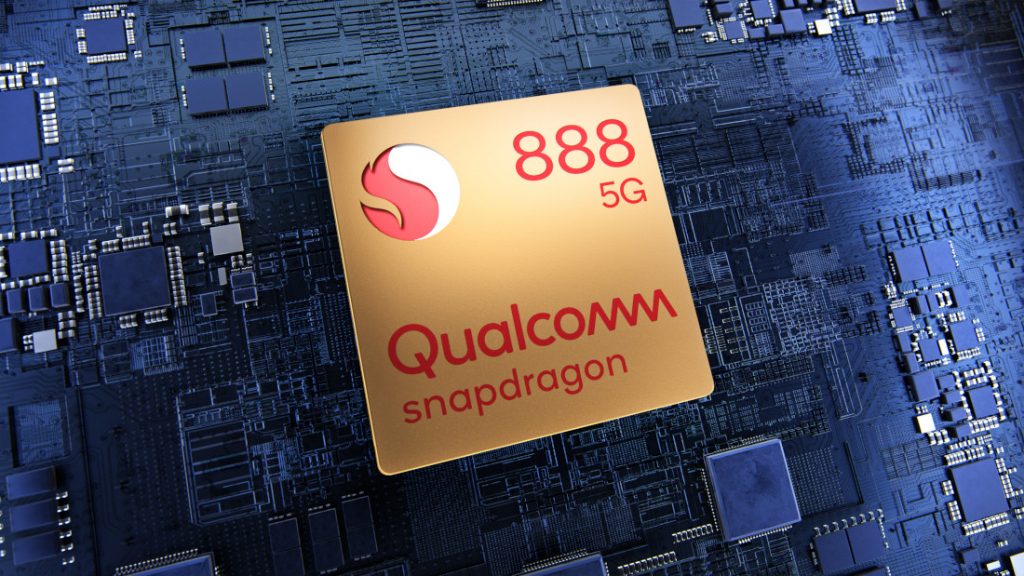
The Snapdragon 888 launched earlier this week at the Qualcomm Digital Summit 2020. The 5nm processor will power next year’s flagship phones from several manufacturers, a large percentage of which are Chinese. The new Snapdragon 888 joins the HiSilicon Kirin 9000 and Samsung Exynos 1080, the other two 5nm chips that have been announced for Android devices.
We know our readers are curious as to which of these three chipsets is the best but at the moment, only the Kirin 9000 is found in a commercially-available phone, so the only way to compare these chipsets will be on “paper”. For this article, we will be comparing the Snapdragon 888 against Huawei’s most powerful chipset, the Kirin 9000.
The table below shows the major specs of the two processors:
Processor
Snapdragon 888
Kirin 9000
Node
5nm
5nm
CPU
1 x 2.84GHz (Cortex-X1)
3 x 2.4GHz (Cortex-A78)
4 x 1.8GHz (Cortex-A55)
1 x 3.13GHz (Cortex-A77)
3 x 2.54GHz (Cortex-A77)
4 x 2.04GHz (Cortex-A55)
GPU
Adreno 660
Mali-G78 (24-core)
ISP
Spectra™ 580
ISP 6.0
AI Engine/NPU
Hexagon 780
Dual Big Core + Tiny Core NPUs
Modem
Snapdragon X60 5G
Balong 5000 5G
Connectivity
Wi-Fi 6E, Wi-Fi 6
Wi-Fi 6+
CPU
The CPU configuration is the first major difference between the Snapdragon 888 and the Kirin 9000. Both processors are octa-core chipsets with the same 1+3+4 CPU core arrangement, however, save for the four Cortex-A55 efficiency cores, the rest are different.
The Kirin 9000 may be Huawei’s most powerful chipset but its prime core and three other performance cores are last-gen Cortex-A77 cores. When compared to the prime core of the Snapdragon 888 which is the Cortex-X1, and its performance cores which are Cortex-A78 cores, the Kirin 9000 has some catching up to do even though all of its cores are clocked higher.
According to Arm, the Cortex-A78 offers a 20% improvement in performance over Cortex-A77 while the Cortex-X1 offers a 30% improvement in performance over the Cortex-A77.
When it comes to performance tasks, the Snapdragon 888 should take the lead. However, for tasks relegated to the efficiency cores (Cortex-A55), the Kirin 9000 should be faster due to the cores’ higher clock speed.
Overall performance should show the Snapdragon 888 taking the lead.
GPU
Qualcomm may have won the CPU category but the Kirin 9000 is the winner when it comes to the GPU. The Adreno 660 is said to bring a 35% increase in performance over the previous generation but Huawei claims its Mali-G78 GPU boasts a 52% increase in performance over Qualcomm’s last-generation GPU which is present inside the Snapdragon 865 Plus.
Benchmark results indeed show that the GPU inside the Kirin 9000 is no joke. It scores 6261 points on the GPU benchmark app, 3D Mark, leaving the Adreno 650 GPU of the Snapdragon 865 Plus with a score of 4286 points in the dust. We expect the Adreno 660 to do significantly better but we doubt it will be able to outscore the Mali-G78.
AI
The Snapdragon 888 comes with the new Hexagon 780 AI Engine that boasts up to 26 TOPS in performance. The Kirin 9000 also features a powerful tri-core NPU (Dual Big Core + Tiny Core) and currently sits at the top of the AI benchmark table. Qualcomm’s processor is yet to get benchmarked but the semiconductor company promises big gains. It remains to be seen if it can challenge the Kirin 9000.
Conclusion
The Kirin 9000 and Snapdragon 888 definitely bring huge improvements to the mobile chipset space, especially in the Android ecosystem. However, they have their individual strengths, the sum of which determines which of them is the more powerful one.
The Snapdragon 888 wins in terms of CPU performance while the Kirin 9000 seems to be the one with the better GPU and AI capabilities. However, there are other factors to consider such as power efficiency where the Kirin 9000 already does excellently well as shown in our review video. So until there is an in-depth device-to-device comparison, we can’t say which chipset is the clear winner.
Samsung Galaxy Z Fold2 has undergone the DXOMARK‘s stringent rear camera test. And it scores just about the OnePlus Nord but doesn’t even cut Xiaomi’s 2019 flagship and mid-range Pixel 4a in rankings.
According to the DXOMARK report, the Samsung Galaxy Z Fold2gets an overall score of 109. It’s worth noting that the device’s triple-camera sits below the 2019 flagship Xiaomi Mi 9‘s 110 points and even the Google Pixel 4a which recently got rated for 111 points with just a single camera. Precisely, the Z Fold2 scores 108 points in the Photo, 102 in video, and 63 in zoom categories.
Also, Galaxy Z Fold2‘s score is just a point above the 108 score of the recently reviewed OnePlus Nord. It is understandable that comparing a foldable flagship to a mid-range device would be annoying. But looking at scores and the rankings of DXOMARK, it is duly noted. Anyway, the report says that the device often lacks details in images from the main lens. Additionally, it suffers from noise and auto-focus issues in low-light and indoor situations.
This is surprising considering it has an f/1.8 wider aperture in a 12MP main camera which is a 1.8µm sensor. Essentially, the wider the aperture in a lens, the more light it can gather to produce great quality images. But that doesn’t seem to the case here. Besides, talking about the cameras, the device has a triple-camera setup and all of them are 12MP sensors. You can take a look at the specs below:
Coming back, the device also has few other Artifact issues(visible effects of image that doesn’t exist in real life) like color fringing, hue shift, etc. That said, the device’s rear cameras do have some positives like good exposure, vivid & punchy color images, ultra-wide lens’ FOV, white balance, and stabilization in static videos.
Even though the device’s talking point is that folding display, one would expect at least a decent performance over mid-rangers. Samsung needs to address certain areas in future updates like the Artifacts, Autofocus, improper texture(photo&video) in the coming updates.
Huami launched Amazfit GTR 2 alongside Amafit GTS 2 in late September in its home country China. More than a month later, the duo made their debut in global markets at the end of October. Now, the company has revealed to launch the first model in the series in India on December 17.
In a press release, Huami confirmed that it will be bringing the entire Amazfit GT 2 series to India. For those unaware, the series consists of three models namely Amazfit GTR 2, Amazfit GTS 2, and the recently unveiled Amazfit GTS 2 Mini.
For now, the firm has confirmed to launch the first wearable in the series – Amazfit GTR 2 in India on December 17. This is the only model in the series to feature a circular display and it is denoted by the ‘R’ in its name, which stands for ‘Round’.
Like any other Huami wearable product, the Amazfit GTR 2 is a fitness tracker disguised as a smartwatch. It is the successor to the original Amazfit GTR launched in 2019. Since the company debuted its predecessor in India, it was obvious that the brand would bring its successor to the country.
Having said that, we expect the company to debut the global variant in India with Amazon Alexa and 3GB internal storage, instead of the Chinese variant that comes with Xiaomi XiaoAI voice assistant and 4GB internal storage.
Xiaomi launched the Xiaomi Air 2 Pro in China on October 13. The Truly Wireless Earbuds have improved design, audio quality, and battery life over the Xiaomi Air 2. However, in our review, we found that the earbuds have certain issues like average ANC effect, interference of wind noise, hassles in mode switching, etc. It looks like the company has overheard the users’ request as the latest firmware update aims to solve some issues.
First, to get things out of the way, we found certain problems during our review of the Xiaomi Air 2 Pro. You can take a look at them below:
Mediocre ANC(compared to Freebuds Pro)
Interference of wind noise
Not so good Higher frequency sound quality
Hassle in switching between ANC & transparency mode
Absence of lower-latency mode(better than 0.6s), LHDC audio codec support(in 3.0.12 firmware).
Now, as reported by ITHome, users in China have received a firmware update for the Xiaomi Air 2 Pro wireless earbuds. Accordingly, the new update focuses more on sound effects, noise, and disconnection of one earbud. Precisely, you can take a look at the changelog below:
Optimize Sound effects: Volume and Bottom Noise.
Solve Noise reduction when switching and playing.
Solve the problem where one earbud cannot be used.
That said, the update looks to improve the noise reduction and audio issues of the earbuds. As per the report, it optimizes the quality at higher frequencies(volumes) whilst maintaining less noise levels at low(bottom) volume. Additionally, it fixes the noise reduction problem when switching between modes(ANC & Transparency), disconnection issues.
If you ask me, from the report, it looks like the noise cancellation, and sound quality are addressed more. However, we don’t have any info regarding the LHDC audio codec support and improvement of lower latency modes. If you are someone in China, and own a Xiaomi Air 2 Pro, do let us know if the update improves the experience any better.
OnePlus unveiled the OnePlus 8T Cyberpunk 2077 Limited Edition in early November exclusively for China. This version of the company’s latest flagship smartphone features a unique design inspired by one of the most anticipated video games of all time. Now, the brand has announced to bring this handset to Malaysia but with a big twist.
According to a Facebook post by Oneplus Malaysia (via Lowyat), the company will be selling 1,000 units of ‘OnePlus 12.12 Cyberpunk Mystery Box’ on Lazada on December 12 at 12 AM (local time). These boxes will be limited to one per customer and will only cost RM49 ($12).
Out of these 1000 boxes, 10 of them will include the OnePlus 8T Cyberpunk 2077 Limited Edition smartphone. To mix up the chances of getting gifts, Onplus will also be placing 10 units of the following four products in one of these boxes.
OnePlus Buds White
OnePlus Warp Charge 65 Power Adapter
OnePlus Warp Type-C to Type-C Cable (150cm)
OnePlus Type-C Bullet Earphones
Therefore, customers who buy the OnePlus 12.12 Cyberpunk Mystery Box, will have a 1% chance of obtaining any of the above products, including the said smartphone.
But thankfully, all of these boxes will come with an RM50 ($12) OnePlus Lazada Store gift voucher. Hence, customers won’t be losing any money if and only if they have plans to buy any other OnePlus product before February 24, 2021, at 11:59 PM when this voucher will expire.
The world’s fastest-growing smartphone brand realme launched realme X50 Pro earlier this year as its as well as India’s first 5G smartphones. It is the brand’s flagship handset for the year 2020. And therefore, it was the first to realme UI 2.0 (Android 11) beta builds in September. Now, months later, the company has finally started rolling out the stable update.
Smartphones from realme used to run ColorOS but that changed with the release of realme UI alongside ColorOS 7. The brand’s own Android skin is nothing but a slightly modified version of ColorOS. In other words, it is similar to HONOR’s Magic UI and HUAWEI’s EMUI.
Hence, the latest realme UI 2.0 based on Android 11 has the same features as OPPO ColorOS 11 with some minor changes here and there. So far, realme has rolled out beta builds to three of its devices namely realme X50 Pro, realme 7 Pro, and realme narzo 20.
Being a flagship smartphone, the realme X50 Pro has become the first to get the realme UI 2.0 stable update with build number RMX2076PU_11.C.16. According to the official announcement post on realme Community, the update is currently being rolled out in batches.
Therefore, it may take time to reach every unit. Nevertheless, the brand has confirmed to provide a manual update download link soon. Hence, if the OTA does not reach your phone for some unknown reason, you can install the update manually.
Similarly, users who have updated to realme UI 2.0 (Android 11) can also downgrade to older realme UI based on Android 10 if they want to by downloading and installing the ROM file from realme’s ‘Software Update’ page.
Huawei has just demonstrated its new video technology. The AI powered super resolution system on the Kirin 9000 processor is capable of turning old videos of 540p resolution into FHD 1080p content in real time.
Earlier today (4th December 2020), the Chinese tech giant took to Weibo, a Chinese microblogging website, to demonstrate the technology at work. In the online post, we can observe the Kirin 9000’s AI powered super sampling technology turning ow quality videoes into high definition content. An example of this was sharing certain images of a lizard, where the lower resolution 540p content carrying a lot more noise in the shot, while the super sampled 1080p version offers us brighter colors with much more details being retained as well.
This was further backed by images of a screen that was displaying various numbers and of a female subject. The former showcased that the numbers on the enhanced image are a lot more clearer, which makes it easier to read, while the latter showcases details being visible in the seams of the dress and accessories being worn by the subject. This technology also works on quality as low as 360p and even 270p as well. Another interesting aspect regarding this technology is that it can also detect faces and offers partial optimizations.
We use cookies on our website to give you the most relevant experience by remembering your preferences and repeat visits. By clicking “Accept”, you consent to the use of ALL the cookies.
This website uses cookies to improve your experience while you navigate through the website. Out of these, the cookies that are categorized as necessary are stored on your browser as they are essential for the working of basic functionalities of the website. We also use third-party cookies that help us analyze and understand how you use this website. These cookies will be stored in your browser only with your consent. You also have the option to opt-out of these cookies. But opting out of some of these cookies may affect your browsing experience.
Necessary cookies are absolutely essential for the website to function properly. This category only includes cookies that ensures basic functionalities and security features of the website. These cookies do not store any personal information.
Any cookies that may not be particularly necessary for the website to function and is used specifically to collect user personal data via analytics, ads, other embedded contents are termed as non-necessary cookies. It is mandatory to procure user consent prior to running these cookies on your website.