Advertisement

Moshi Otto Q Wireless Charger Review: A Stylish 10W Charger for your Smartphone

As fast wireless charging is making its way into more and more smartphones, we can see an increase in the number of wireless charging accessories in the market. However, most of these wireless chargers sport a plain design, more focused on utility than appearance. There are a few exceptions though like the Moshi Otto Q, which brings both stylish design and function to the wireless charging market. 
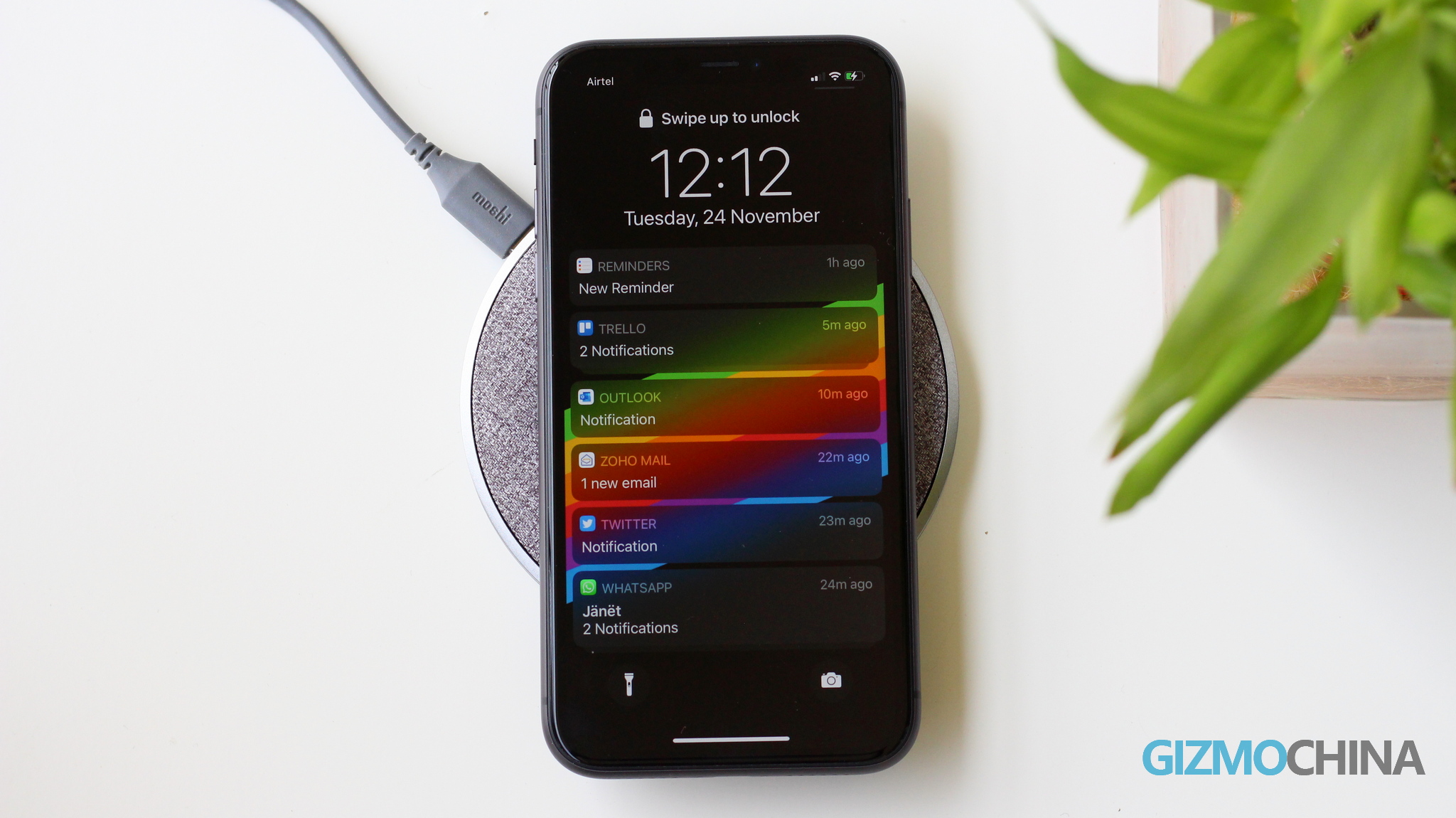
Moshi Otto Review wireless charging featured

Moshi Otto Q Review: Design

The Moshi Otto Q doesn’t look like a traditional wireless charger. It has a very stylish design and will easily blend in with your existing furniture. In fact, at first glance, you might not even identify it as a wireless charger. Moshi says that the design is inspired by Danish furniture design and I have to agree that it looks very premium and luxurious.
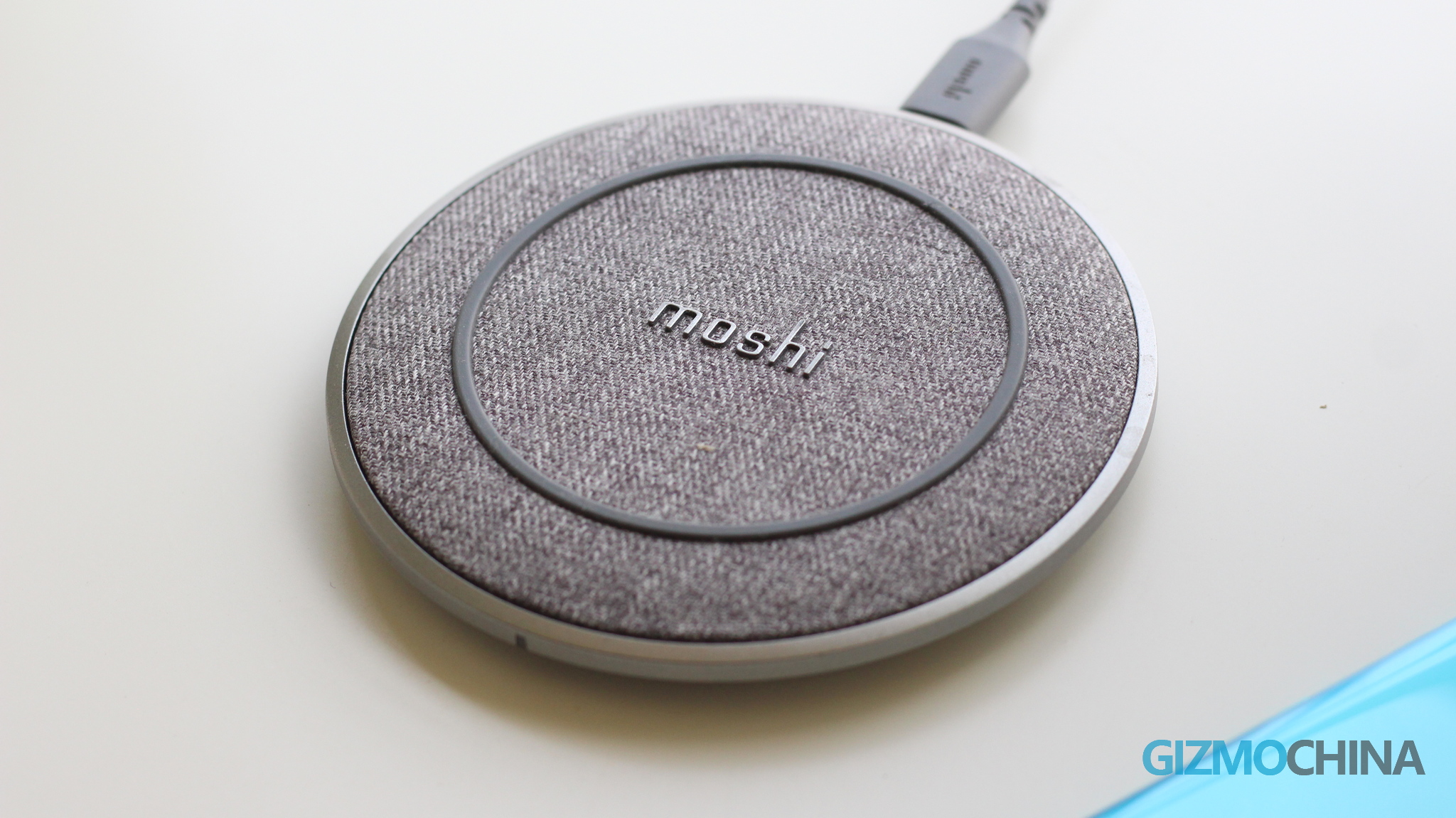
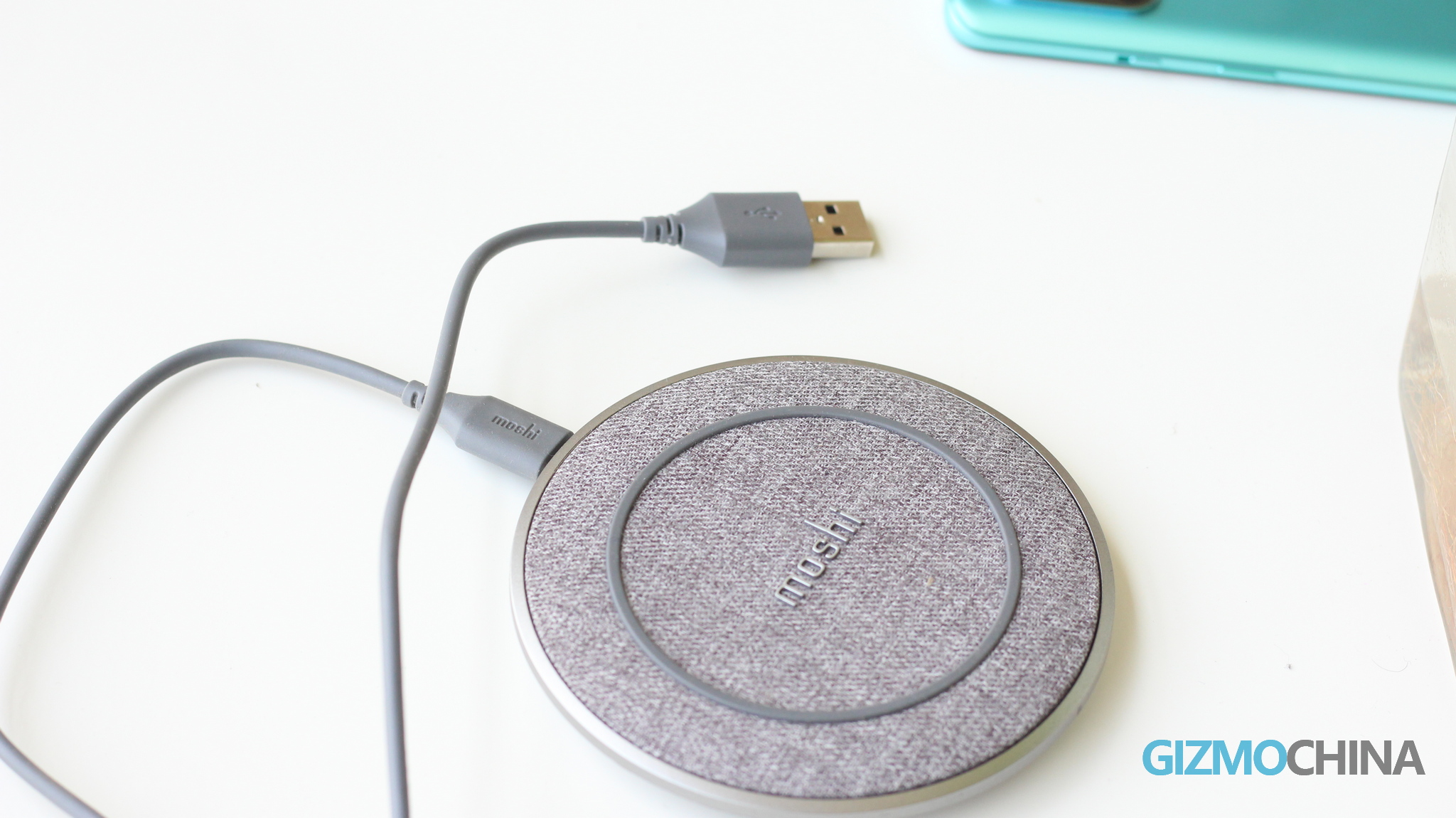
Moshi Otto Review 01 The top of the wireless charger is covered in a fabric-like material in a heather grey finish with a silicone surface ring that ensures your phone or other wireless charging compatible device stays firmly on top. The Otto Q comes with a matching grey color charging cable too, ensuring a uniformity. However, note that you don’t get the charging adapter in the box. Also, there’s just one color option for this charger – grey. The color looks very premium so I don’t think I would have opted for any other shade even if I had the option. 
Moshi Otto Review with USB wire
Moshi Otto comes with a USB-A to C wire but no adapter

The Moshi Otto Q wireless charger is pretty lightweight at just 137g and you can easily carry it around when you travel, even charging it via your laptop’s USB-C port. The 1-meter cable (USB-A to C) further ensures that you won’t have any issues connecting the charger to the nearest plug point.
Moshi Otto Review 05

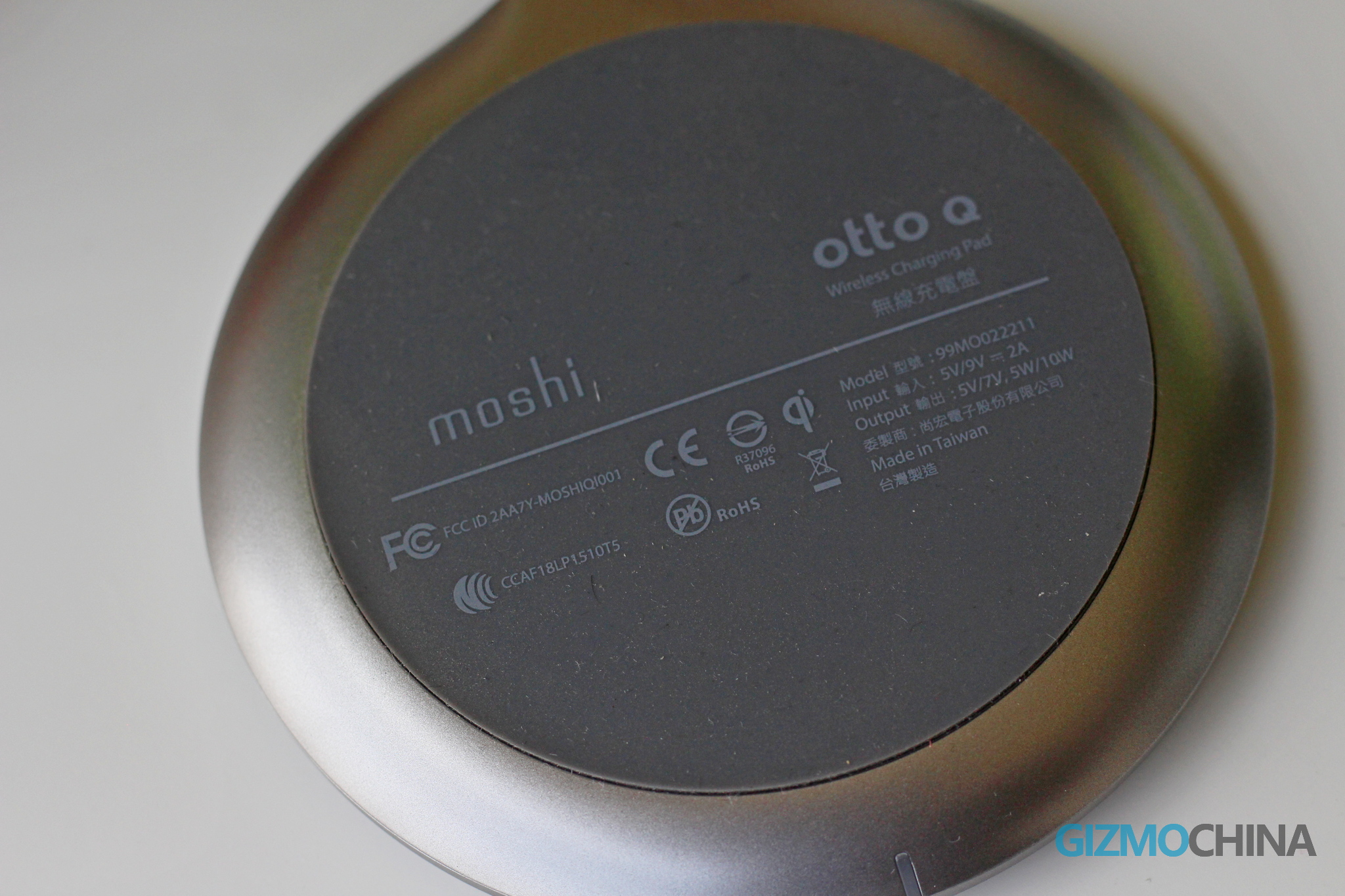
The bottom of the charger is made out of an anti-slip material which helps it stay firmly in its place. 


Moshi Otto Q Review: Charging Support / Speed

The Moshi Otto Q is not the fastest wireless charger around, maxing out at 10W output. However, it supports Qi wireless charging standard, so you should be able to charge any Qi-enabled device be it from Apple, Samsung, Xiaomi, or even Huawei at 5W/ 7.5W/10W. 

Note that the wireless charging speed depends on the adapter that it’s connected to. So if you are powering the Moshi Otto Q via a 5W adapter, you’ll only get 5W charging on your devices, even if the device is capable of charging at 10W. To ensure you take advantage of 10W charging, always use a 10W+ charging adapter. 
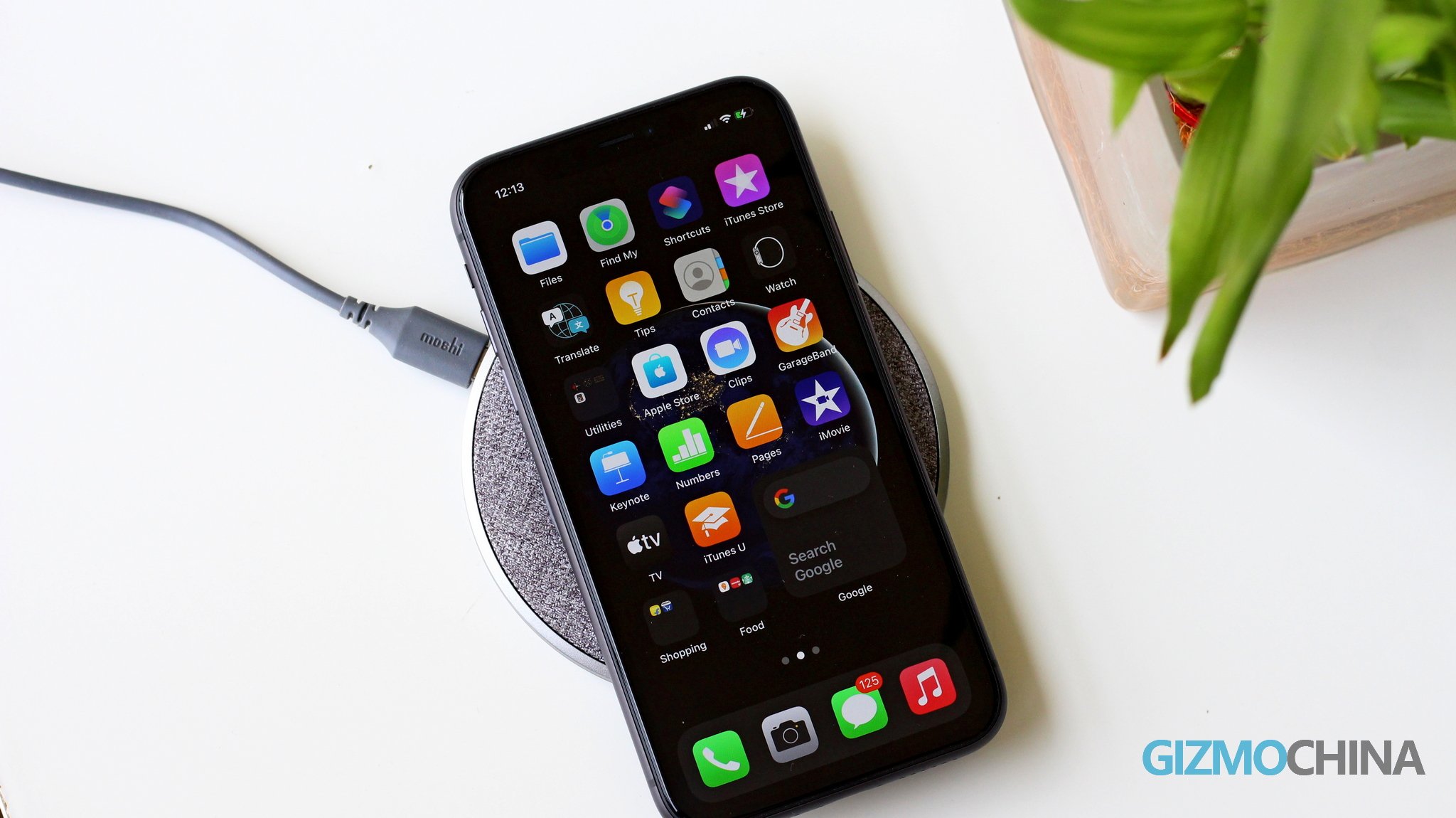
Moshi Otto Wireless Charger iPhone 11 Featured

The Otto Q can charge smartphones with cases up to 5mm thick, all thanks to its innovative Q-coil™ module that reportedly features a 2.6 mm ferrite sheet for efficient charging.

Editor’s Pick: Xiaomi Mi 20W Smart Tracking Wireless Charger Pad Review: A Cool Product with a couple of Drawbacks

You also get an LED charging indicator that blinks every couple of seconds when the device is charging. When the device is completely charged, the LED light will stop blinking to indicate the same. Note that due to the limited surface area of the charger, you have to align your device perfectly to ensure that it starts charging. There were a couple of times initially where I missed this sweet spot and my phone wasn’t charging even when it was placed on the charger. But after a couple of days, you figure out this spot.
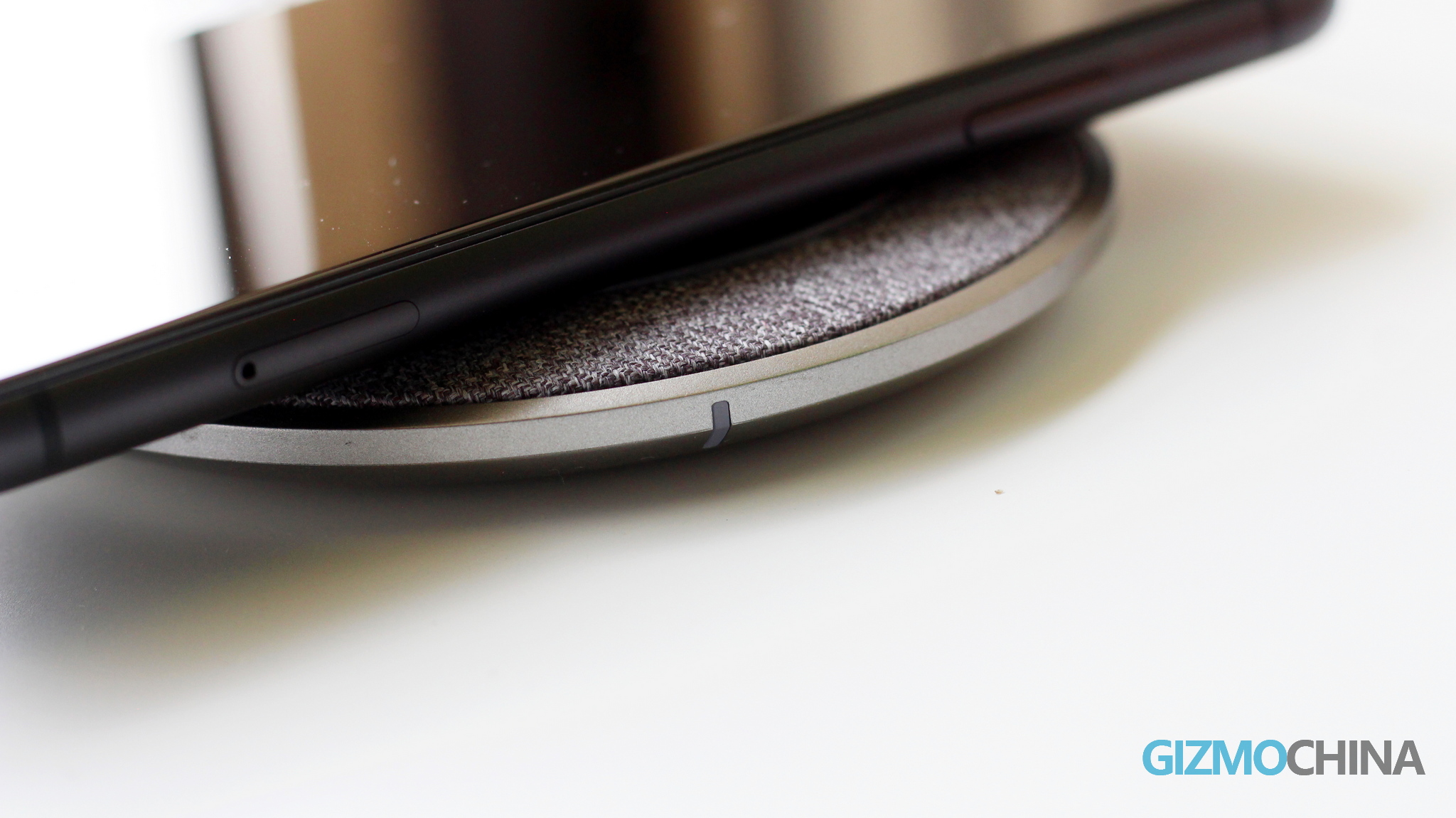
Moshi Otto Review LED 13

Other features include FOD (Foreign Object Detection) which has become standard among wireless chargers these days. 


Moshi Otto Q Review: Usage

Like I mentioned above, the iPhone 11 which I charged on the Moshi Otto Q had to be perfectly aligned with the charger to start the charging process. This is because the wireless charging area is limited by design (a problem for most compact chargers), and I would have preferred it to be slightly larger. Note that the wireless charger worked perfectly well even with a Spigen case on the phone. 
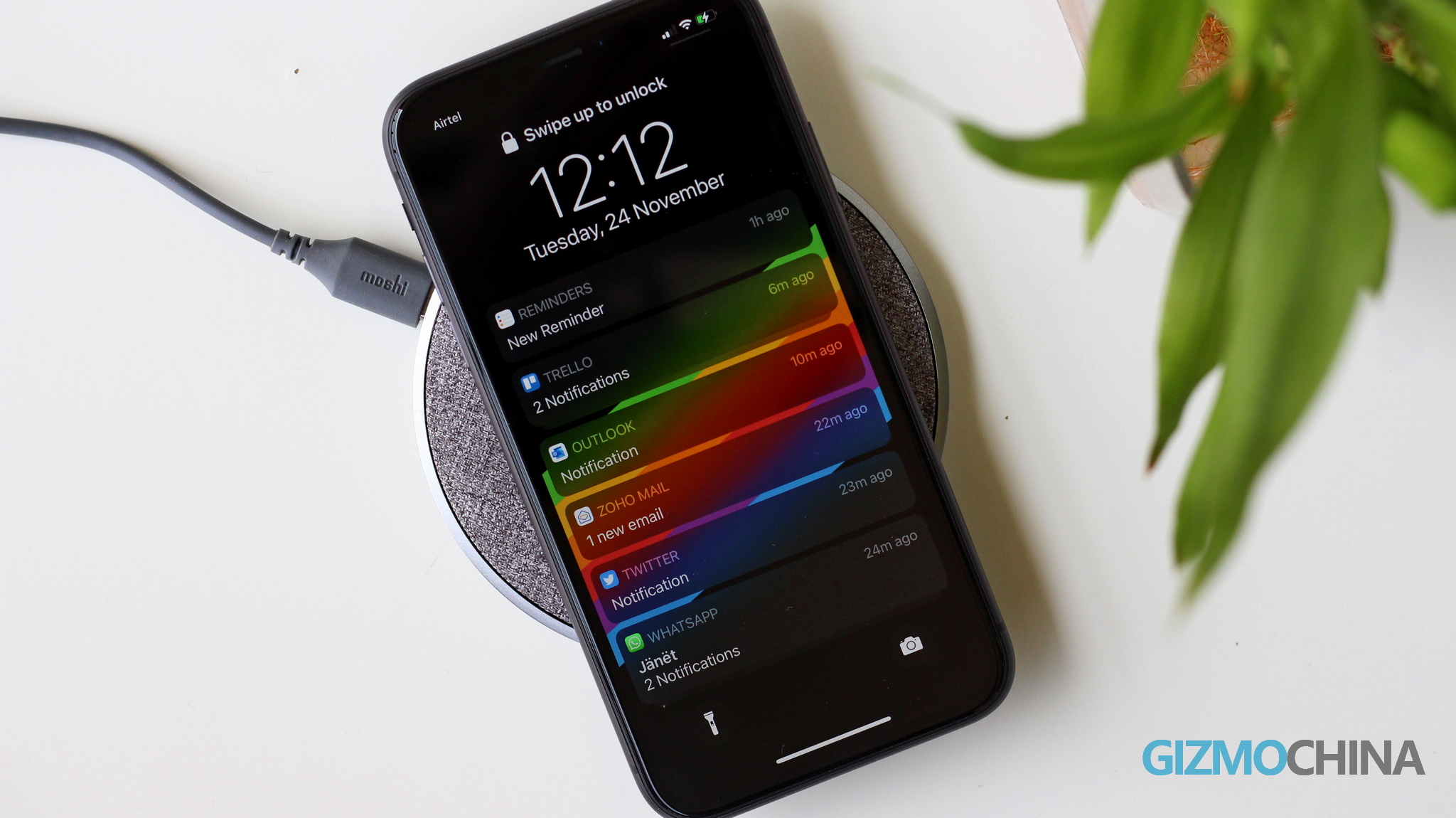
Moshi Otto Review 10

The Moshi Otto Q didn’t heat up while charging the iPhone 11 at 7.5W. It supports Qi-based charging up to 10W but at the time of testing the charger, I didn’t have a 10W supported device with me. But it can charge all Qi-enabled devices at up to 10W. It also immediately charged my Meizu and Airpods Pro earbuds without any issues. 

You can easily carry it around while traveling or at a cafe and power it through your laptop USB. The charging will be a bit slower (because of your USB output) but the convenience of having a wireless charger everywhere will offset this drawback. I tried it with my Macbook Pro in a cafe and I had no issues charging my phone or earbuds case. 
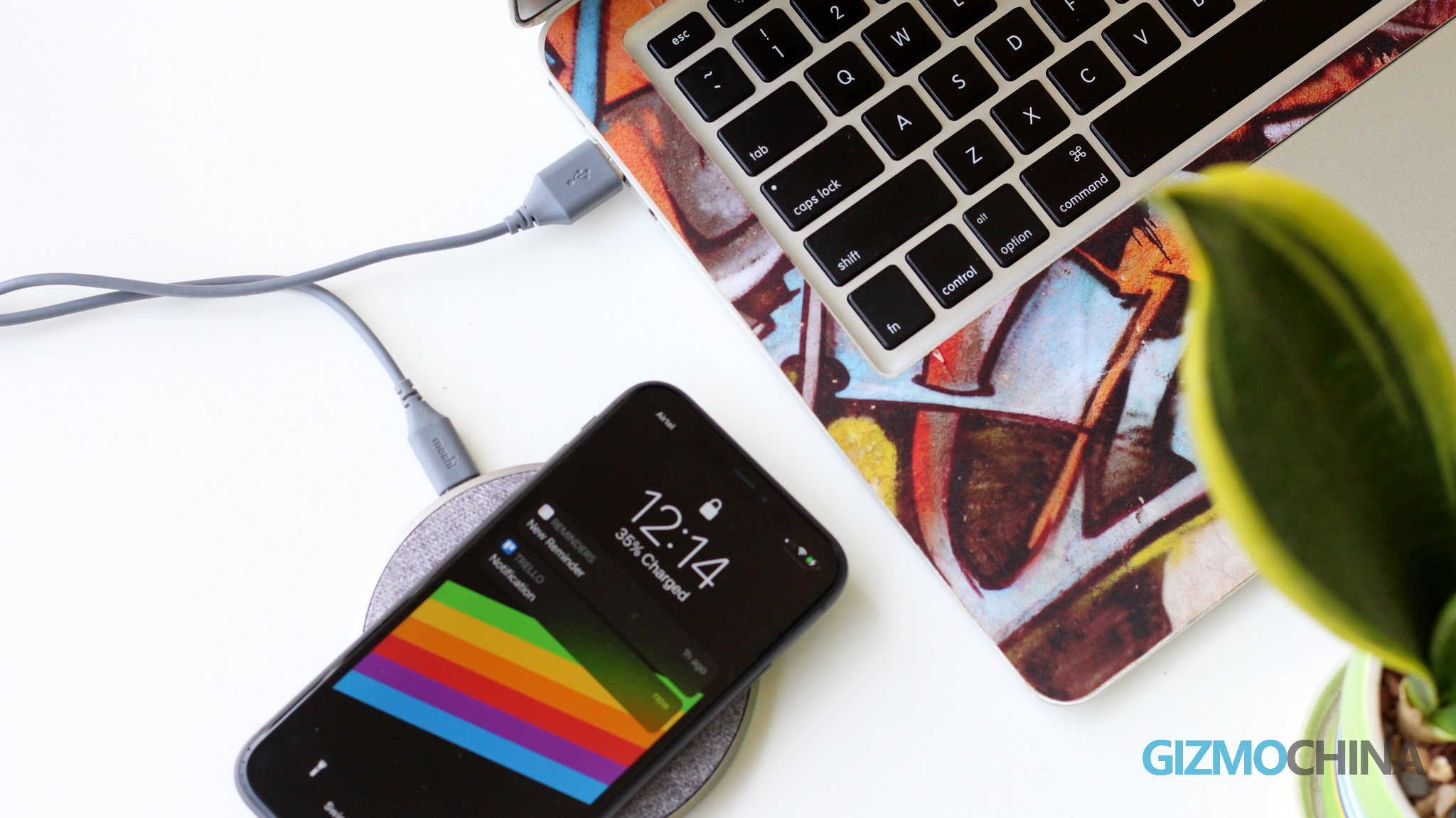
Moshi Otto Review Macbook Wireless Charging 14

The fabric-like material on top looks pretty durable too and after a month of testing, there was no sign of wear and tear. The circumference looks like it’s made out of metal but note that it’s just solid plastic with a metallic finish. Still, the overall design looks pretty premium and will be an attractive addition to your table. 


Moshi Otto Q Review: Verdict

The Moshi Otto Q is neither the fastest nor the cheapest (costs around $60 on Amazon) wireless charger in the market. But it is one of the most stylish wireless chargers I’ve seen and considering this is going to be a one-time investment for most users, I can recommend the charger to most users who want something more fancy and stylish than traditional wireless chargers. 
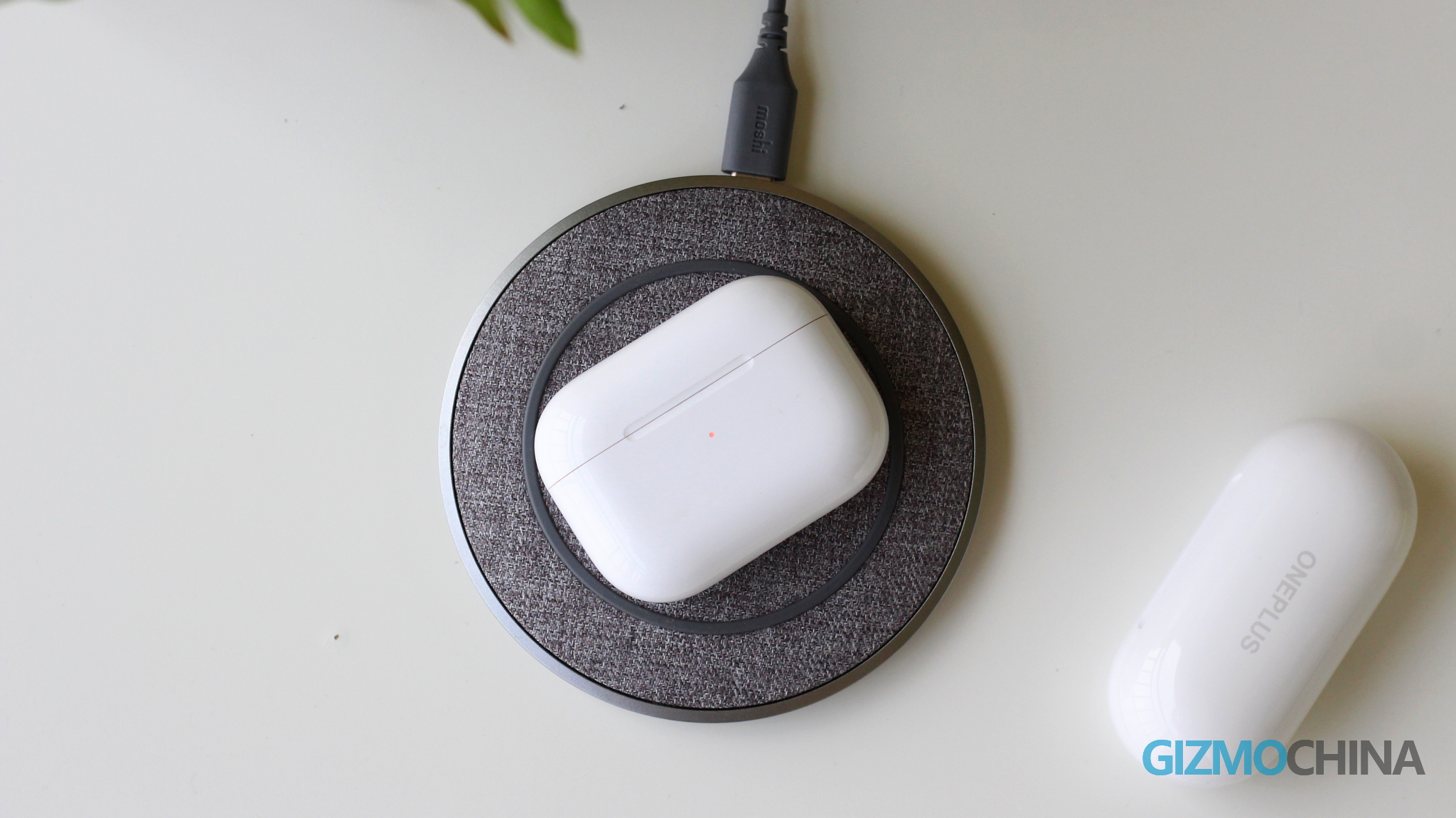
Moshi Otto Review Airpods Pro earbuds wireless charging 15
Please note that the grey color is a bit lighter than what you see in this image. Its very close to the color in the images added above.

One drawback is its limited charging surface but this is an issue with most compact wireless chargers in the market. If you can look past this (you figure out the sweet spot after using it for a couple of days), the Moshi Otto Q can be a stylish yet functional accessory to charge your phone every day. 

You can find more details about the Moshi Otto Q from the official website.


WHERE TO BUY
Moshi Otto Q @ – Amazon


**We may earn commission when you buy using any of our links.


Alldocube officially announces the release date of iPlay 40 tablet in China

A few days back, Alldocube announced the iPlay 40 tablet’s specs and price. Today, the company has officially announced the launch date and availability of the flagship tablet.

Alldocube iPlay 40 Price, Availability

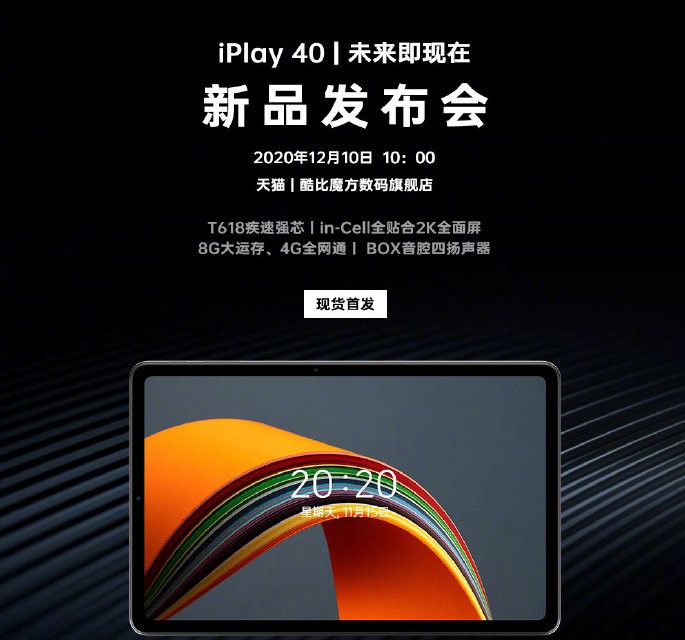
As per the official post on Weibo, the sale of the Alldocube iPlay 40 tablet will begin on December 10 at 10:00 AM China time(UTC+08:00). Plus, the company says that users can purchase it on Alldocube’s official website, and Tmall.

Regarding the price, as we all know, iPlay 40 comes in a single 8GB RAM, 128GB storage. The initial price of this tablet is 999 yuan($152). To compare, the predecessor Alldocube iPlay 30 is at 899($137.21) yuan but you get only 4GB of RAM in it.

Alldocube is a Chinese digital brand and Shenzhen Alldocube Science and Technology Co., Ltd owns it. In case you don’t know, it’s portfolio includes Android tablets, Windows 2-in1 PCs, MP3 & MP4 Players, E-books, and more. And some of the earlier launched tablets are iPlay 8 Pro, 10 ProiPlay 20, and the recently launched iPlay 30.

Alldocube iPlay 40 Specifications

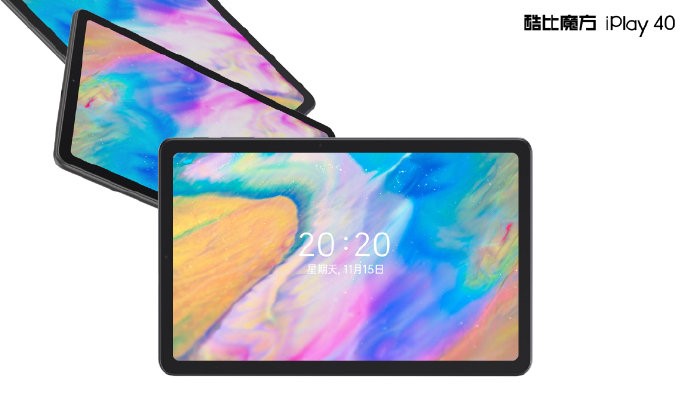
The Alldocube iPlay 40 has a 10.4-inch 2K display and a resolution of 2000×1200 pixels. As per the company, it is an in-Cell technology and is a full-fit display with equal bezels on all sides. Talking about the design, it has a micro-frame design built on Magnesium Alloy.  Weighing in at 474 grams, it has a thickness of about 7.8mm, and a rounded rectangle shape for ergonomics.

Under the hood, it is powered by the UNISOC Tiger T618 SoC. The chipset is UNISOC next-gen octa-core CPU built on a 12nm process. Regarding the cores, it has 2xCortex-A75 cores clocked at 2GHz, and 6xCortex-A55 clocked at 2GHz. It has a Mali G52 3EE game-level GPU.

That said, it also has one BOX cavity four Audio speakers that should ensure a great experience in gaming, and media consumption. Other features of the tablet include a new Customized UI, Memory expansion up to 2TB, Wi-Fi 802.11ac, Bluetooth 5.0, Dual-4G Network support.

Xiaomi India may soon launch QLED Mi TVs

Xiaomi entered the Indian smart TV market in early 2018. The company turned the industry upside down in the budget segment. With affordable televisions, the Chinese tech giant soon became India’s largest smart TV brand and it still holds this position. But with success came intense competition from established players as well as fellow smartphone brands. 

Competitors now even offer premium spec’d TVs at a cheaper price than ever before. But Xiaomi has not launched a single premium model yet. Thankfully, it may happen soon as the company has started teasing the arrival of such kind of televisions.

Back in September, Xiaomi launched Mi TV 4A Horizon Edition in India in two sizes (32-inch and 43-inch) and resolutions (HD and FHD). The teasers for these products initially suggested them to feature QLED panels. But sadly, they turned out to be regular budget models with LED-backlit LCD panels.

Now, this time around the company may finally debut QLED televisions in India. We think Xiaomi may bring the  Mi TV 5 Pro to India and not the newly launched Mi TV LUX Pro. There’s a chance that the firm may unveil a different model altogether.


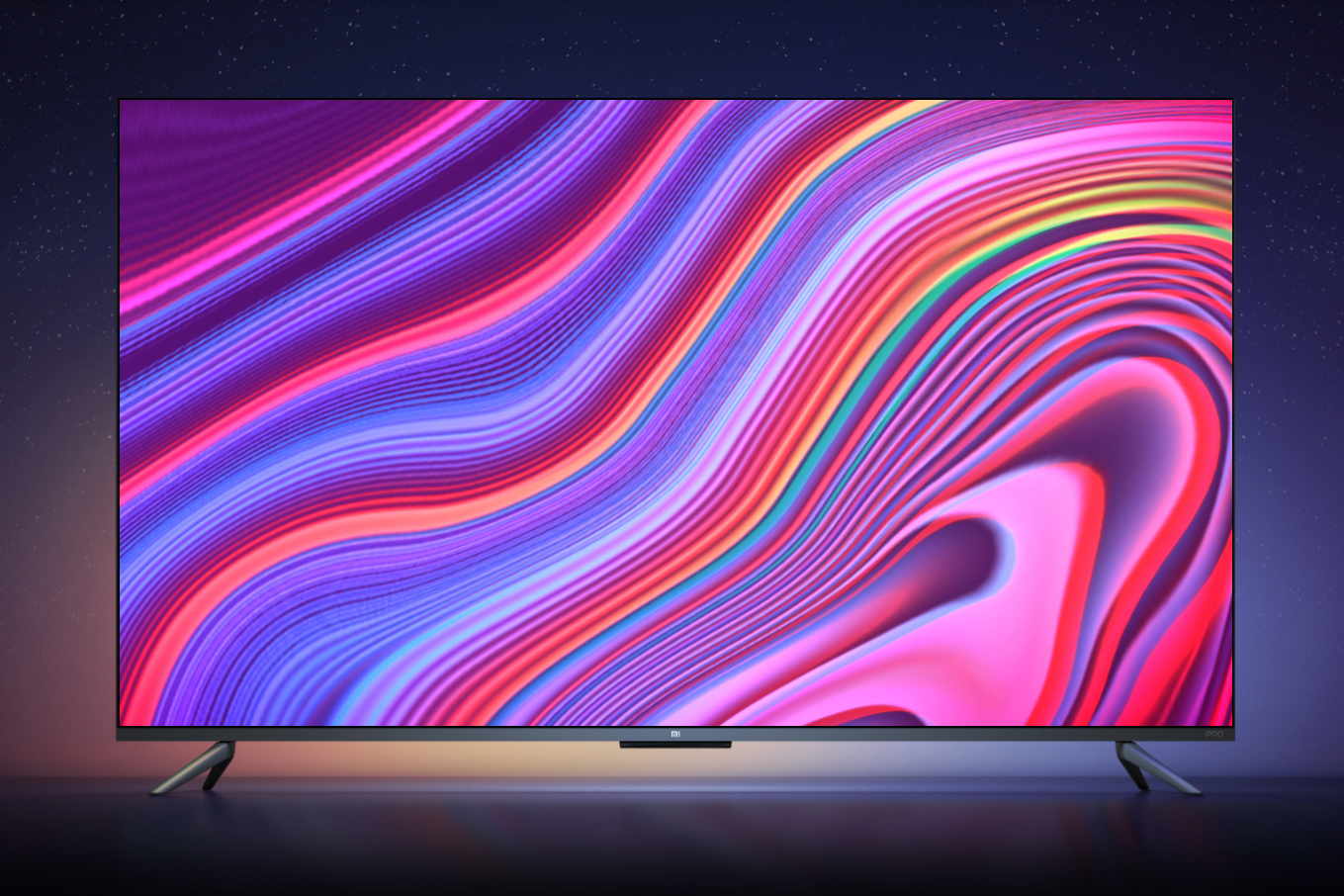
Having said that, last year, Xiaomi launched Mi TV 5 Pro in its home country China sporting a 4K HDR10+ QLED panel with 108% NTSC color gamut, 60Hz refresh rate, and MEMC. This model comes in three sizes – 55-inch, 65-inch, and 75-inch. They are currently sold for ¥4,199 (₹47,349), ¥5,299 (₹59,753), and ¥9,999 (₹1,12,751) respectively.

All three variants share an identical set of specifications and they only differ in size. That means all of them are powered by the same 12nm Amlogic T972 chipset paired with 4GB RAM and 64GB internal storage. This silicon is capable of 8K video decoding just like the chips inside the recently launched OPPO TV S1 and Mi Box 4S Pro.

Xiaomi Mi TV 5 Pro QLED 55-inch

They feature 2 x 8W speakers with support for Dolby Audio and DTS-HD decoding, dual-band WiFi, Bluetooth, 3 x HDMI (one of them is ARC compatible), 1 x AV, 1 x Analog DTMB, 2 x USB, 1 x S/PDIF, and 1 x Ethernet.

Other features include metal body, 97% screen-to-body ratio, and PatchWall UI based on Android. We are not sure if they have received an update to MIUI for TV 3.0.


Uber is already in advanced talks to sell its Air Taxi business

Uber, the known taxi service provider, is planning on selling its air taxi business, Uber Elevate. The company is already in advanced talks to sell the unit to Joby Aviation, an aerospace based firm, as per a new report.

Uber

For those unaware, the company had been working on its air taxi unit and had even announced a partnership with Hyundai Motor Co back at the start of this year. This partnership was to develop electric air taxis. At the moment, Uber has yet to comment on the matter when reached out by Reuters. Similarly, even Hyundai did not immediately offer a comment regarding this.

Back in May, the company had to cut 23 percent of its workforce as a part of aggressive cost cutting after its operations were drastically hit by the Coronavirus outbreak. Since then, it has focused on its core ride hailing and food delivery businesses. Thus, selling the air taxi operations might be due to its inability to manage another project at the moment. Uber has been known to have already been working on other projects as well, including development of self-driving cars, the Elevate project, and even a freight logistics network.

However, these might soon also be being sold, as Uber is also in talks to sell its self driving business as well. Unfortunately, we currently do not have further details regarding the matter and will have to wait for more information or an announcement from the company itself to know more. So stay tuned for more updates.


Samsung patents a user powered Wireless Charging Ring

Despite smartphone batteries greatly improving over the last couple of years, it is still a primary cause for concern on a long day. But with devices becoming more slimmer, accessories like power banks have also become more common. However, Samsung might have a different and more innovative idea for charging devices on the go.

Samsung

A recent patent filing by the South Korean tech giant has revealed that the company might be working on a new wireless charger that can top up smartphones and it isn’t anything like the ones the company has sold in the past. This one arrives as a ring, which is powered by the movement of the user. To explain the device in brief, it is not a small emergency battery to charge one’s phone with, rather, it uses a magnetic disc inside the ring which movers around when the users’ hand is in motion.

This process generates electricity, making the tiny product a mini generator of sorts. But this not the whole picture either, as the device is also capable of transferring heat from the users’ body to generate into electricity apart from just using kinetic energy alone. According to a PhoneArena report, Samsung plans on having the device hold a small battery to store the generated electricity before charging your smartphones.

Samsung

Charging your device is another interesting aspect of this patent, as the user will not be plugging in the device through the USB port. Rather, the handset will be charged wireless when one is using their device normally. This would mean that your finger must be in the position above where the wireless charging coils are housed to charge the phone. Keep in mind, this is still just a patent and we may never actually see the product being made for the commercial market, but it does offer a glimpse into possible future electronic accessories.


Vivo to set up a smartphone manufacturing plant in Pakistan

Earlier this week, Hammad Azhar, The Pakistani Federal Minister for Industries announced that Vivo will be setting up a smartphone manufacturing facility in the country and has already purchased land to build the facility.

Vivo

In a tweet, the minister also added that the “International Smart Phone Brand VIVO has decided to establish a smart phone manufacturing facility in Pakistan. Land purchased. Deployment of DIRBS eliminated smuggled phones. It was followed up by Mobile Manufacturing Policy. Revenues already doubled and now local manufacturing taking off. ” The new facility will be set up in Faisalabad, as per a GeoNews report.

The agreement between the Chinese tech giant and the Pakistani government was signed just last month. Furthermore, the previous week even had the Minister for Industries Mian Aslam Iqbal chair a ceremony to sign an agreement for setting up a smartphone manufacturing plant in the M-3 Industrial Estate Faisalabad through bilateral collaboration. Duam Tai Ping, Vice President of Vivo, and Zhang bin, Director of Manufacturing, signed the agreement at the Faisalabad Industrial Estate Development & Management Company (FIEDMC) office.

This agreement even had the company start with an initial investment of 10 million US Dollars. The meeting also had the FIEDMC CEO Aamer Saleemi attending. The move from Vivo is also likely to be an effort from the company to grow its presence in the region. So stay tuned for more, as we will be providing more updates when additional information is available.


Apple faces a new set of “batterygate” related lawsuits in Europe

Earlier this week, Apple faced a fine of 10 million Euros (roughly 12 million US Dollars) in Italy after it was found to have misled consumers regarding this water resistance feature on iPhones. Now, the company is facing an additional set of lawsuits regarding its infamous “batterygate” practice.

Apple
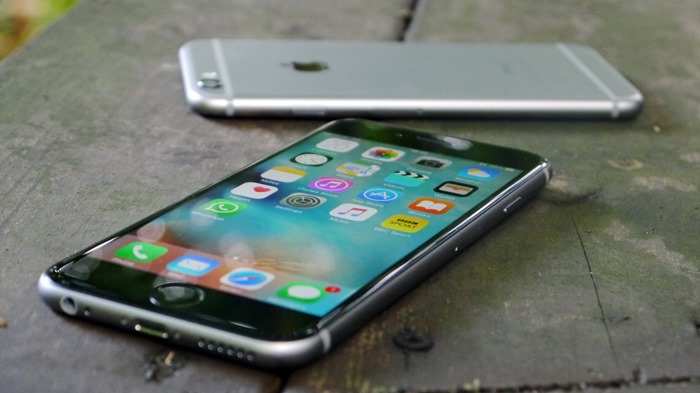
iPhone 6S

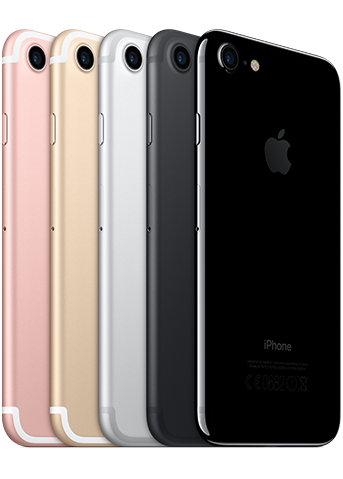
For those unaware, the term “batterygate” is used to describe manufacturers intentionally slowing down or throttling the performance older phones. This is apparently done to preserve system stability of older devices running newer firmware, but the practice has come into question in recent years. The Cupertino based giant previously payed 113 million US Dollars in settlements to consumers over fraud allegations in the US for this practice for its iPhone 6, iPhone 7, and iPhone SE models.

And now, a total of five European consumer organizations have filed another set of class actions lawsuits against Apple in Belgium and Spain. These allegations are over the similar planned obsolescence issue, and claims that iPhone 6 and iPhone 6s models are now facing intentional slowdowns as well. Furthermore, the lawsuit is asking the company to compensate customers affected by this issue with “at least €60 (around $70) per device” in both countries while additional lawsuits are being planned in Italy and Portugal.

Apple
iPhone 7

Apple has always denied the claims of batterygate lawsuits and said that it only reached a settlement to pay up its users to “avoid burdensome and costly litigation.” In other words, the settlements were just to remove the case and not to deal with the issue. Earlier this year, the company even paid out 25 US Dollars to each of its US customers over the identical issue for the iPhone 6. So, we will have to wait and see how the company responds to this matter.


realme C15 Holiday Edition launched in Indonesia for Rp 2,199,000 ($156)

In late October, realme unveiled a new budget smartphone called realme C15 Qualcomm Edition. This handset is nothing but the regular realme C15 with a Snapdragon chipset instead of the MediaTek silicon that is present in the original. The brand has now launched this phone in Indonesia with ‘realme C15 Holiday Edition’ moniker.

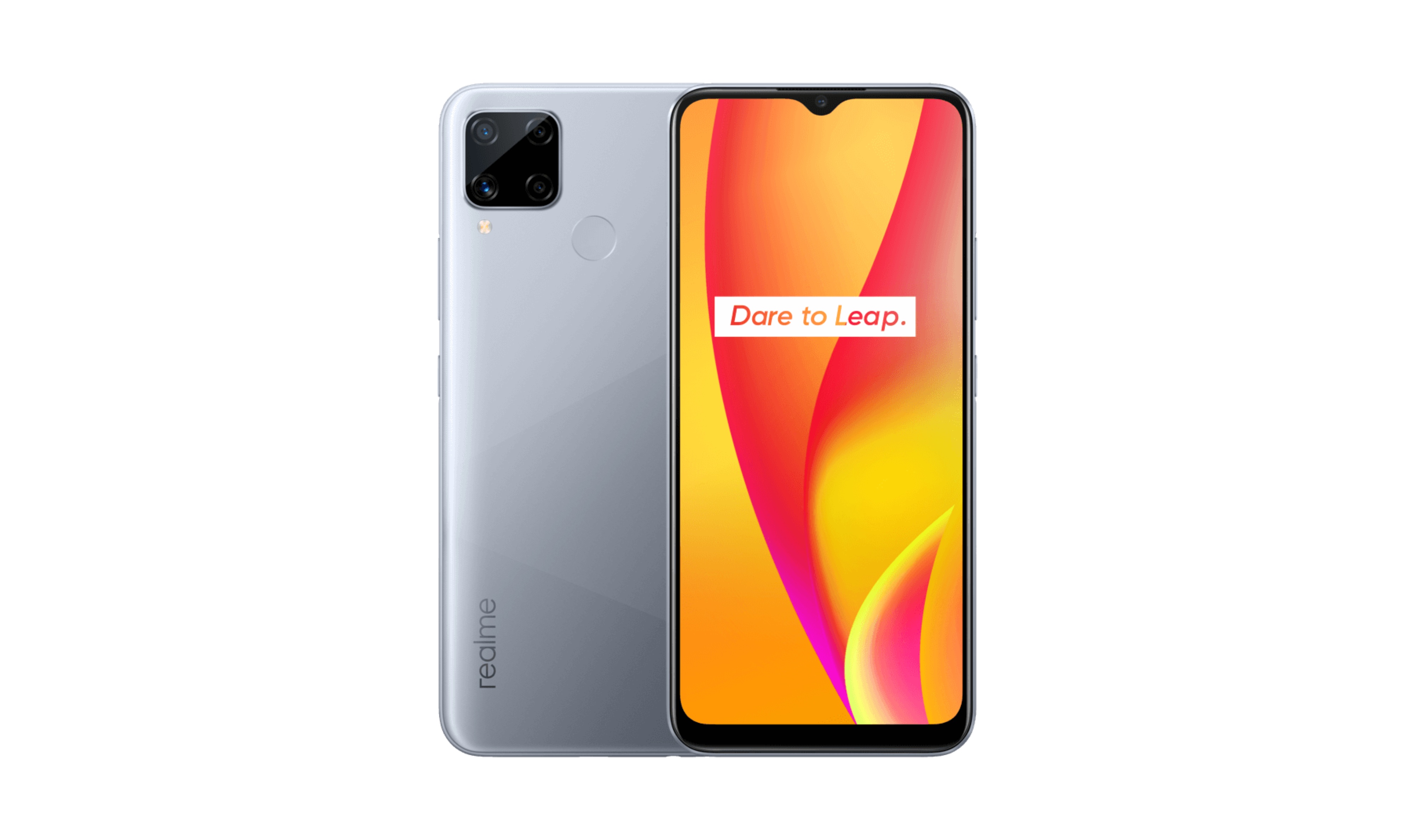
realme C15 Holiday Edition Seagull Silver

realme C15 Holiday Edition Specifications and Features

The realme C15 Holiday Edition sports a 6.5-inch IPS LCD panel with a resolution of 1600 x 720 pixels (HD+), 20:9 aspect ratio, 600 nits peak brightness, 88.7% screen-to-body ratio, dew-drop notch, and Gorilla Glass protection.

It is powered by Qualcomm Snapdragon 460 chipset paired with 4GB LPDDR4X RAM and 64GB eMMC storage. Being a budget smartphone, it comes with a triple card slot (dual-SIM + microSD) along with a 3.5mm headphone jack and MicroUSB port.


The handset runs realme UI based on Android 10 and is backed by a 6,000mAh battery with support for 18W fast charging and reverse charging. As for cameras, it comes equipped with a quad-camera setup on the back consisting of a 13MP primary sensor with PDAF and an f/2.2 lens, an 8MP secondary sensor with an f/2.25 119° ultra-wide-angle lens, a 2MP monochrome sensor with an f/2.4 lens, and a 2MP depth sensor with an f/2.4 lens. There’s also an 8MP selfie camera on the front with an f/2.0 lens.

Other features of this device include single-band WiFi 5, Bluetooth 5.0, GNSS (GPS, BeiDou, GLONASS), a rear-mounted fingerprint sensor, ambient light sensor, proximity sensor, compass, and accelerometer.

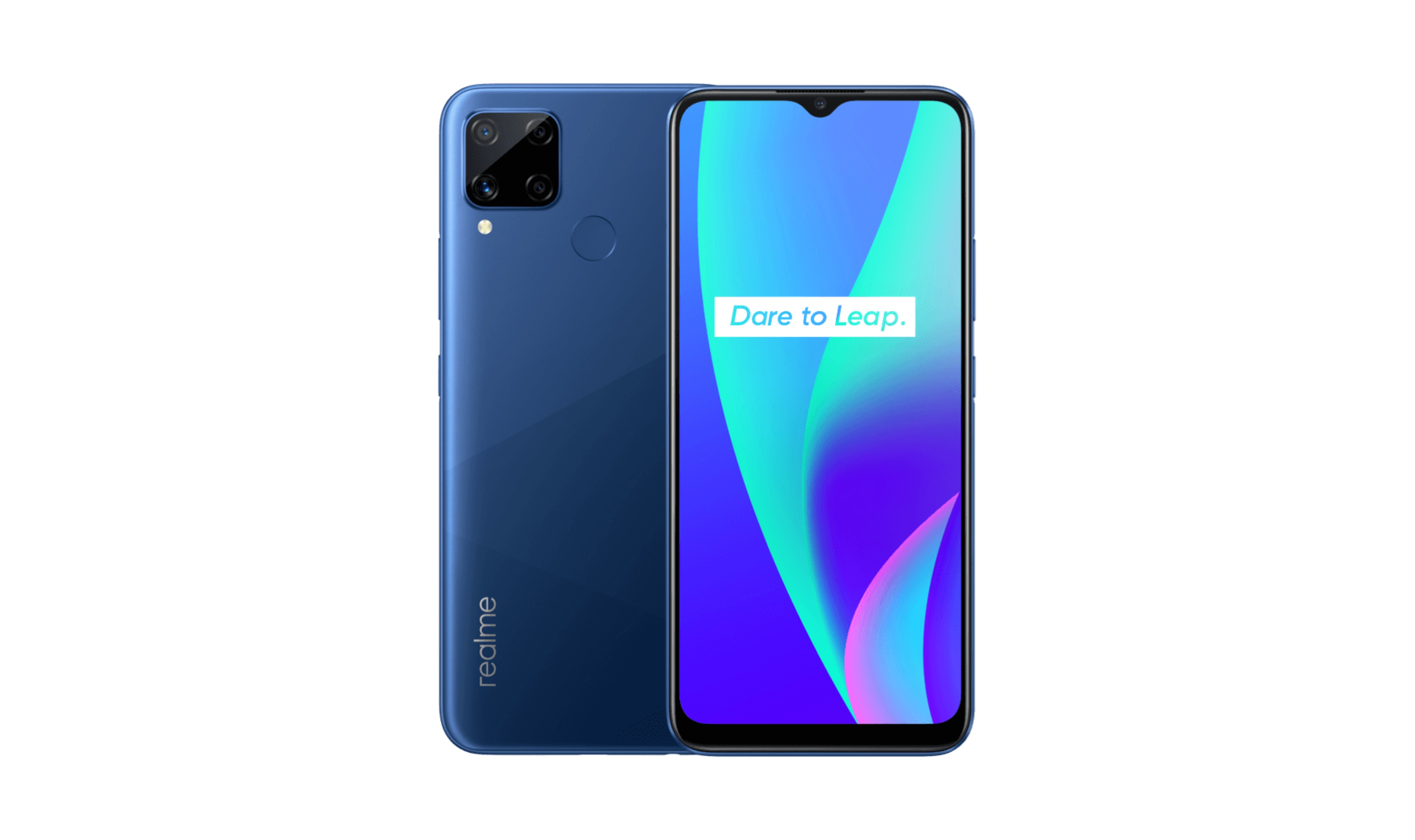
realme C15 Holiday Edition Marine Blue

Last but not least, it measures 164.5 x 75.9 x 9.8mm in dimensions, weighs 209g, and comes in two colors namely Marine Blue and Seagull Silver.

realme C15 Holiday Edition Pricing and Availability

The realme C15 Holiday Edition is currently limited to Indonesia priced at Rp 2,199,000 ($156). Anyway, if you reside in India, then you can buy the realme C15 Qualcomm Edition, which is exactly the same phone with a different name.


(Via)

Semiconductor equipment sales jump by 30% globally in Q3 2020

The semiconductor equipment sales have increased by a sizeable 30 percent worldwide in the third quarter of this year. This figure is a significant bump over the same quarter from back in 2019.

According to TheElec report based on a SEMI analysis, the global sales of semiconductor equipment reached 19.4 billion US Dollars in Q3 2020. Out of this, China accounted for a notable 5.62 billion US Dollars. This was closely followed by Taiwan with 4.75 billion US Dollars. South Korea arrived third with 4.22 billion US Dollars, despite semiconductor equipment sales dropping by 6 percent in the third quarter compared to the previous quarter, but still saw an impressive jump of 92 percent over the same period last year.

Semiconductor

Samsung Electronics and SK Hynix were notable figures and 2020 marked an increase in expenditure from both companies, which likely led to the growth. The former even began operations at its P2 line at its Pyeongtaek factory back in August. The South Korean tech giant has even signed contracts that are collectively worth 87.2 billion Won (or roughly 80 million US Dollars) in the third quarter for semiconductor equipment. Similarly, SK Hynix also signed two contracts worth 30.9 billion Won (roughly 28 million US Dollars) as well.


Motorola Capri and Capri Plus phones’ specifications leaked ahead of Q1 2021 launch

Motorola is reportedly working on a flagship phone that is codenamed as “Nio.” The Snapdragon 865 powered handset is expected to launch in Q1 2021. Fresh information shared by German publication Technik News reveals that the Lenovo-owned brand will also launch two budget phones in Q1 next year. These phones are codenamed as Capri and Capri Plus (caprip) and their respective model numbers are XT2127 and XT2129.

Motorola Capri and Capri Plus specifications (Expected)

The Motorola Capri is said to house a 60Hz display with a waterdrop notch and 720 x 1600 pixels HD+ resolution support. The Snapdragon 460 SoC powered device may ship with 4 GB of RAM and 64 GB of storage.

It has an 8-megapixel Samsung s5k4h7 lens as the front-facing camera. It rear-facing quad-camera module may feature a 48-megapixel s5kgm1st Samsung lens, an 8-megapixel ultrawide s5k4h7 Samsung sensor, a 2-megapixel OmniVision ov02b1b depth sensor, and a 2-megapixel GalaxyCore gc02m1 macro lens.

Motorola Capri mockup
Motorola Capri mockup by TechNik News

The Capri Plus has a 90Hz display that supports HD+ resolution. It is unclear which processor will be powering the device. The phone is expected to arrive in 4 GB RAM + 64 GB storage and 6 GB RAM + 128 GB storage options.

It will have a 13-megapixel Samsung s5k4h7 sensor as the selfie camera. The quad-camera setup of the device may comprise of a 64-megapixel OmniVision OV64B camera, a 13-megapixel Samsung s5k3l6 ultrawide lens, 2-megapixel OmniVision ov02b1b depth sensor, and a 2-megapixel GalaxyCore gc02m1 macro lens.

The battery size of both phones is not known yet. These phones are expected to arrive with some common features like Android 11 OS, NFC, and dual SIM support.


Google Pixel 5 durability test found metal under layers of plastic

The Google Pixel 5 series is the company’s 2020 flagship lineup. While the search giant claims that the device is made out of metal, a recent durability test video revealed that the metal is actually buried under layers of plastic.

Google

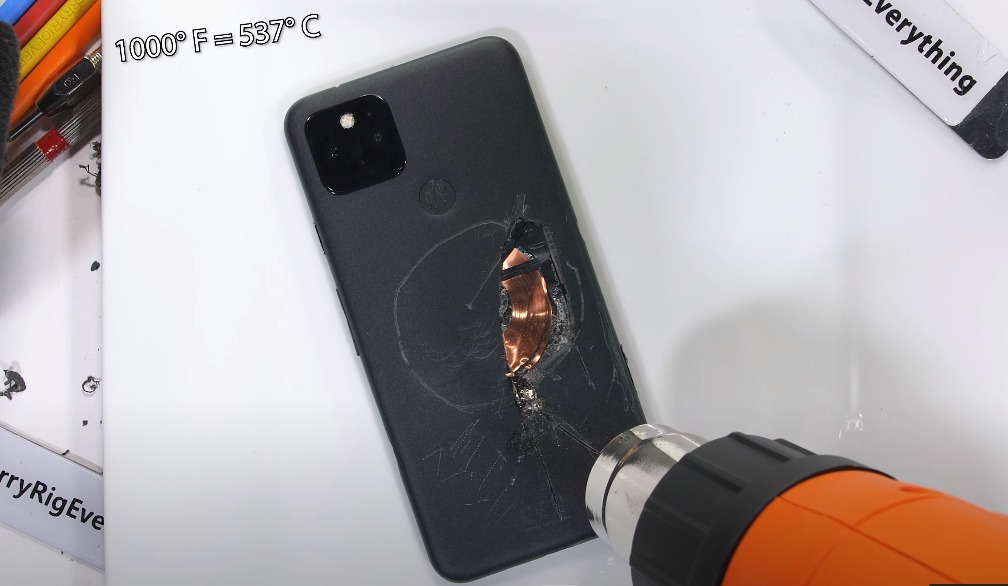
Known YouTube tech based content creator, JerryRigEverything, took to hunting down this metal that Google promised. In the video, we can observe him stress test and scratch test the Pixel 5. Apparently, the YouTuber wanted to find out for himself whether the company’s claims of using 100 percent recycled aluminum was true or not. Notably, since the Pixel 5 supported wireless charging, the claims from Google of an all metal device was already under scrutiny.

Apart from the power button, the rest of the smartphone is covered by layers of plastic. Google calls this finish, “bio resin,” which is just another name for plastic alloy. But, the device does have metal underneath all of these layers, although, one would have to dig around considerably. The video also reveals that once you go deep enough, you finally hit the wireless charging coils and the battery right underneath it.

Unfortunately, digging too deep had the YouTuber hit the battery, which caused fumes to come out of the rear. So, we advise you to not try this at home. To sum things up, Google did manage to make the device feel like metal, but its all just a clever trick that hides those fancy layers of plastic. You can check out the video yourselves above.


New Snapdragon 7-series chip could be coming in Q1 2021

Last year, Qualcomm announced the Snapdragon 765 and Snapdragon 765G for upper mid-range phones alongside the Snapdragon 865. At the recently held Tech Summit Digital 2020, the company unveiled the Snapdragon 888 as the replacement to the SD865 chip, but it did not unveil the successor chip for SD765G. A fresh leak by Digital Chat Station reveals that it may debut in Q1 2021.

It is unclear whether the SD765G’s successor will be called Snapdragon 775G or Snapdragon 777. What is known is that it will be closely related to the Snapdragon 888. Qualcomm’s next Snapdragon 7-series chip is expected to rival MediaTek’s upcoming 6nm MT6893 chip and Samsung’s 5n Exynos 1080 SoC.

Snapdragon 7-series Q1 launch

Past reports have revealed that its model number is sm7350 and it is codenamed Cedros. A prototype device powered with the chipset reportedly recorded over 530,000 points on AnTuTu benchmarks. The shipments of the chip is expected to begin soon after its announcement.

The alleged 6nm Snapdragon 777 is expected to arrive with several improvements over its predecessor. Phones powered with the new chip may arrive with up to 120Hz refresh rate supporting display, up to 12 GB of LPDDR5 RAM, and up to 256 GB of UFS 3.1 storage.

The Vivo X60 series that is expected to debut this month will be the first phones to feature the Exynos 1080 chip. The MediaTek MT6893 SOC is expected to go official this month. Phones feature the new Dimensity chip are expected to be available in the market next year.


Apple forced to ship iPhone 12 series with power adapter in Brazil

With the Apple iPhone 12 series, the company essentially removed any accessories that one would expect to arrive within the box. However, it seems that certain local laws are preventing the Cupertino based giant from following this practice in Brazil.

Apple iPhone 12 Featured

Previously, we had reported on Apple being forced to ship iPhones with the included EarPods in France due to local laws. Now, a similar case has occurred in Brazil, after the Brazilian state of São Paulo has basically forced the company to ship its new iPhones with the accessory included. According to a 9To5Mac report, local news agencies reported earlier today (3rd December 2020) that the public consumer protection agency has sent a notification to Apple, asking for clarification on the removal of the power adapter from the iPhone box.

Furthermore, the public agency is also asking the company to prove that not including the charger will be beneficial to the environment and the customers. Apple responded with its own arguments, which were its original points, that most users already have compatible chargers. Thus, removing the charger from the box will reduce the total carbon emissions. However, the Brazilian agency isn’t content with the response and ruled that the power adapter is an essential component of the product. So, shipping iPhones without it would be going against the Brazilian Consumer Defense Code.

iPhone 12 featured

As per the agency, the company hasn’t provided enough evidence that removing the chargers from the box would help the environment in any way. Additionally, Apple has also not guaranteed that it will offer the same technical support to consumers that purchased third party chargers. At the moment, the agency is waiting for Apple’s response, which must arrive by tomorrow lest the company faces a fine in the country. While the decision is exclusive to São Paulo State, Brazil’s National Consumer Secretary is considering enforcing this nationwide to have the company sell iPhones with its chargers.


Xiaomi Mi 11, Mi 11 Pro specifications and images leaked

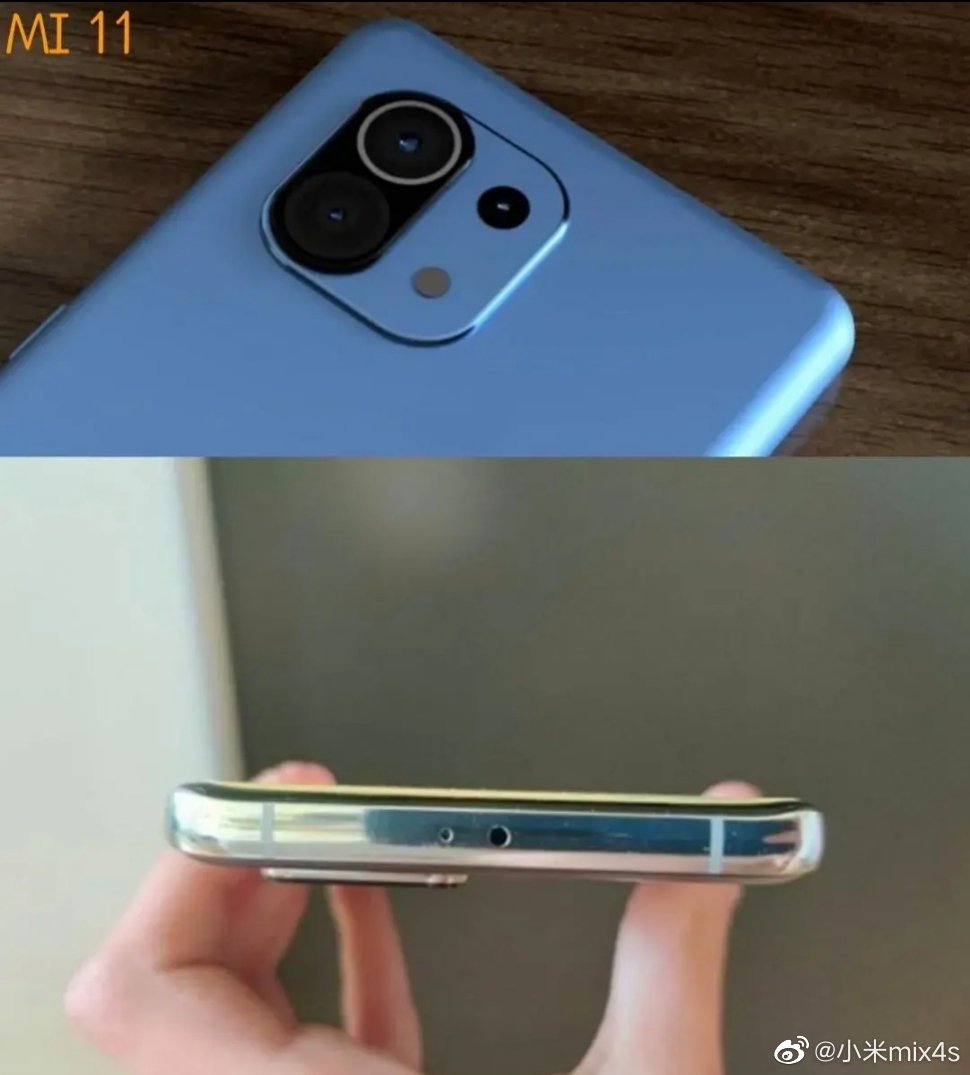
Xiaomi is expected to launch the Xiaomi Mi 11 series later this month. The lineup reportedly includes two handsets named the Mi 11 and Mi 11 Pro. Fresh leaks have surfaced on Weibo to reveal the specs of the two phones. Also, a couple of images have also surface to showcase the rear camera design of the Mi 11 duo. Before reading ahead, readers are advised to digest this report with a grain of salt since these leaks are not from regular leakers.

Xiaomi Mi 11 and Mi 11 Pro specifications (Unconfirmed)

The leak reveals that the Mi 11 and Mi 11 Pro will be equipped with S-AMOLED panels that offer a 120Hz refresh rate and quad HD+ resolution. The exact screen size is not mentioned in the leak. Both phones are said to be equipped with 20-megapixel front-facing cameras.

The Mi 11 could be backed by a battery of around 4,780mAh capacity and it may come with support for 50W wired charging and 30W wireless charging. The Mi 11 Pro could be coming with a smaller battery of around 4,500mAh capacity. It may support 120W wired charging and 80W wireless charging.

The leak states that Mi 11 may feature a 108-megapixel + 13-megapixel (ultrawide) + 5-megapixel (macro) triple camera setup. The Mi 11 Pro could be equipped with a 48-megapixel (OmniVision OV48C) + 20-megapixel (ultrawide) + 12-megapixel (telephoto with 2x optical zoom) triple camera setup.

The Snapdragon 888 will fuel the device with LPPDR5 RAM and UFS 3.1 storage. For security, these phones have an under-display fingerprint scanner and 2D face unlock. The other features that are available on Mi 11 duo include dual speakers, x-axis linear motor, IR blaster, and NFC. The leak states that the Mi 11 with 8 GB RAM + 128 GB storage may cost 3,999 Yuan (~$610) to 4,499 Yuan (~$686). The Pro model with the same RAM and storage may cost 5,299 Yuan (~$808) to 5,499 Yuan (~$838).

Tipster Digital Chat Station hinted today that the Mi 11 series will have a horizontal camera array. Shown above are some images that reveal that the Mi 11 duo will have a square-shaped camera module.


vivo Y51 with flagship X50 series’ rear design launched for $253

Chinese smartphone maker vivo has launched vivo Y51 as its latest budget smartphone in Indonesia. The new phone, albeit affordable, sports a rear design that is reminiscent of the expensive vivo X50 series. Let us take a closer look at the specs, features, and price of this new handset.

vivo Y51 Featured
vivo Y51

vivo Y51 Specifications and Features

The newly launched vivo Y51 flaunts a 6.58-inch IPS LCD panel on the front with a resolution of 2408 × 1080 pixels (FHD+). The display supports the standard 60Hz refresh rate and features a dew-drop notch on the top nesting a 16MP selfie camera.

Whereas, the back of the phone houses a vertically aligned ‘vivo’ branding and a triple camera system consisting of a 48MP primary sensor with an f/1.79 wide-angle lens, an 8MP secondary sensor paired with an f/2.2 ultra-wide-angle lens, and a 2MP tertiary sensor with an f/2.4 macro lens. These cameras are also accompanied by a dual-LED flash.


Further, the device is powered by Qualcomm Snapdragon 665 chipset coupled with 8GB RAM and 128GB internal storage. If needed, the storage can be further expanded up to 1TB using a microSD card. As for software, it runs Funtouch OS 11 based on Android 11.

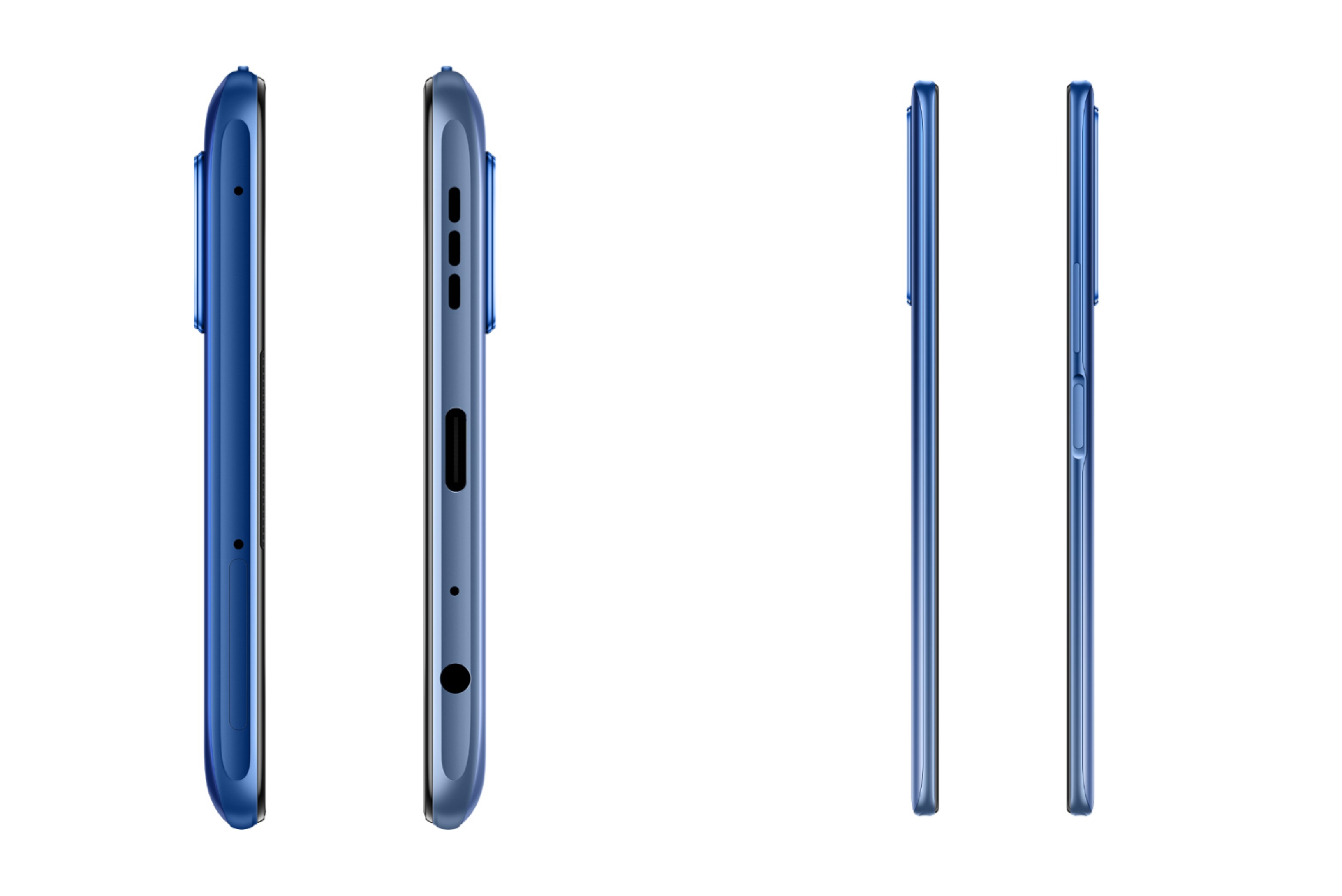
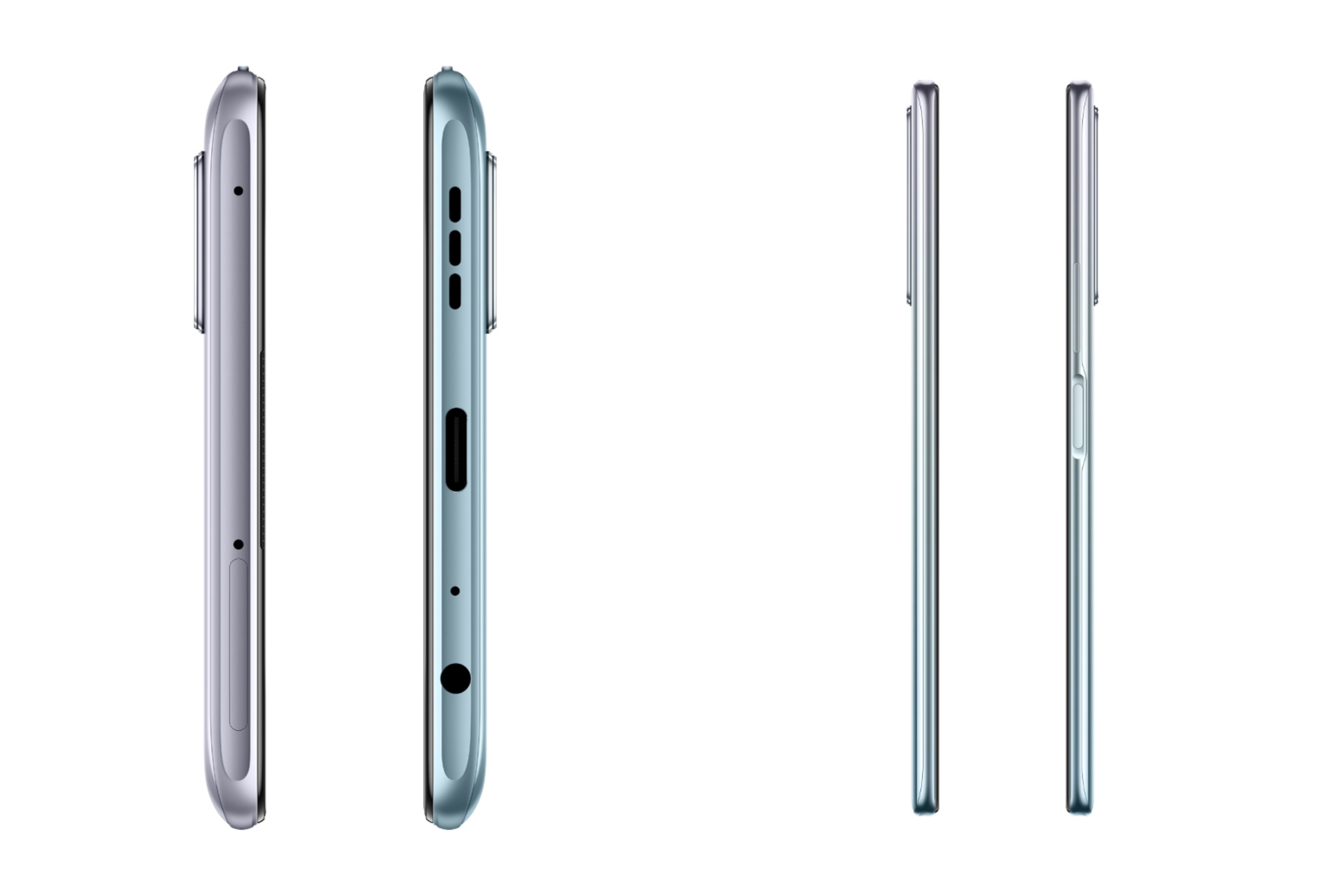
Being a budget smartphone, it comes with a 3.5mm headphone jack, which sits at the bottom alongside the USB Type-C port, speaker grille, and primary microphone. Then, the Dual SIM card + microSD card slot and secondary microphone are located at the top, volume rockers and a fingerprint sensor embedded power key reside on the right side, and finally, the left side is clean.

Other specs of this handset include dual-band WiFi 5, Bluetooth 5.0, GNSS (GPS, BeiDou, GLONASS, Galileo), accelerometer, ambient light sensor, proximity sensor, compass, gyro sensor, and a 5,000mAh battery with support for 18W fast charging.

Last but not least, the vivo Y51 measures 163.86 × 75.32 × 8.38mm in dimensions, weighs 188g, and comes in two colors namely Titanium Sapphire (Blue) and Crystal Symphony (Green).

vivo Y51 Pricing and Availability

The vivo Y51 is currently limited to Indonesia priced at Rp 3,599,000 ($253). According to a report, this phone may debut in India by the end of December to replace the vivo S1 Pro. Hence, it should cost under ₹20,000 ($271) in the country.


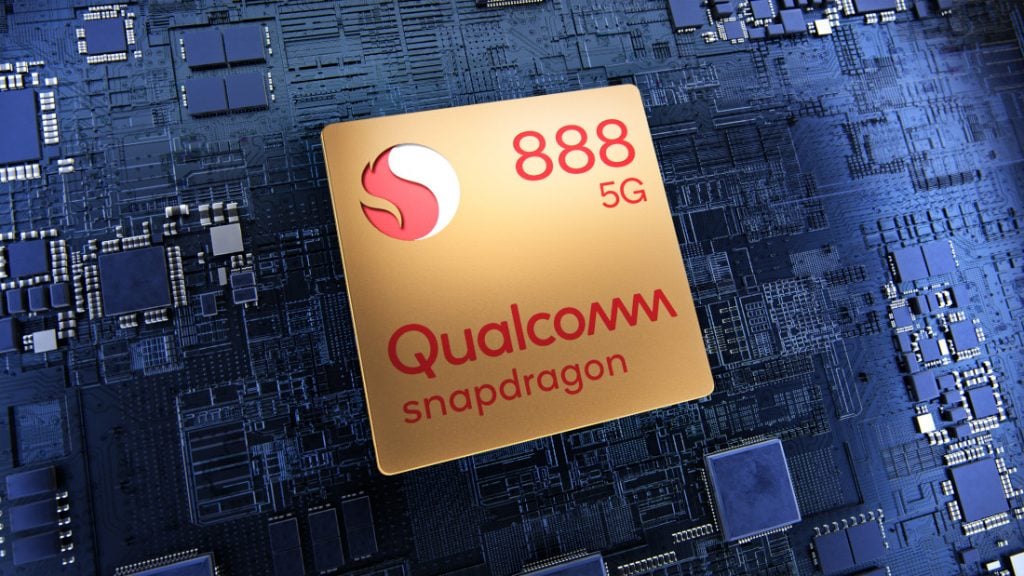
Here’s why Qualcomm’s flagship chipset is named Snapdragon 888 instead of Snapdragon 875

Recently, Qualcomm officially announced its next-generation flagship mobile chipset — Snapdragon 888. The processor is the successor to the company’s own Snapdragon 865 SoC launched last year.

The company was expected to name this chipset Qualcomm Snapdragon 875 but instead, when launched, the company named it Snapdragon 888. The reason for such a move from the company is also interesting.

Vivo Snapdragon 888 phone

During the keynote, Qualcomm claimed the number 888 to be the most premium name possible. That is because, in the Chinese culture, the number 888 symbolizes luck and prosperity, which the company wants to ensure for its continued success.

For Qualcomm, out of its 14 partners, 12 are the Chinese smartphone manufacturers. With the ongoing US-China trade war, the company wanted to ensure that it doesn’t affect the adaptability of its flagship chipset, and thus, opted for Snapdragon 888.

Xiaomi has confirmed that the brand’s Mi 11 will be the first smartphone to feature the newly launched SD888 SoC. While the launch date is not yet known, reports indicate that the phone could go official later this month.

EDITOR’S PICK: Alibaba-backed AutoX starts testing driverless robotaxis in China

Several other companies have also confirmed their flagship smartphone powered by the Snapdragon 888 chipset, which includes Black Shark, Nubia Red Magic, OPPO, Realme, LG, Vivo, iQOO, and OnePlus.

As for the chipset, the Qualcomm Snapdragon 888 is the most powerful offering from the company so far. It packs one Cortex X1 core, three Cortex A78 cores, and four Cortex A55 cores, along with Adreno 660 GPU.

It has an integrated Snapdragon X60 5G modem with support for mmWave and sub-6GHz 5G with support for most of the bands worldwide. The new SoC also supports Wi-Fi 6 and Bluetooth 5.2 and connectivity features. Here are the detailed specs of the chipset.


Infinix Zero 8i with 90Hz display, Helio G90T, 16MP dual selfie camera, and 33W fast charging launched for Rs 14,999 (~$203)

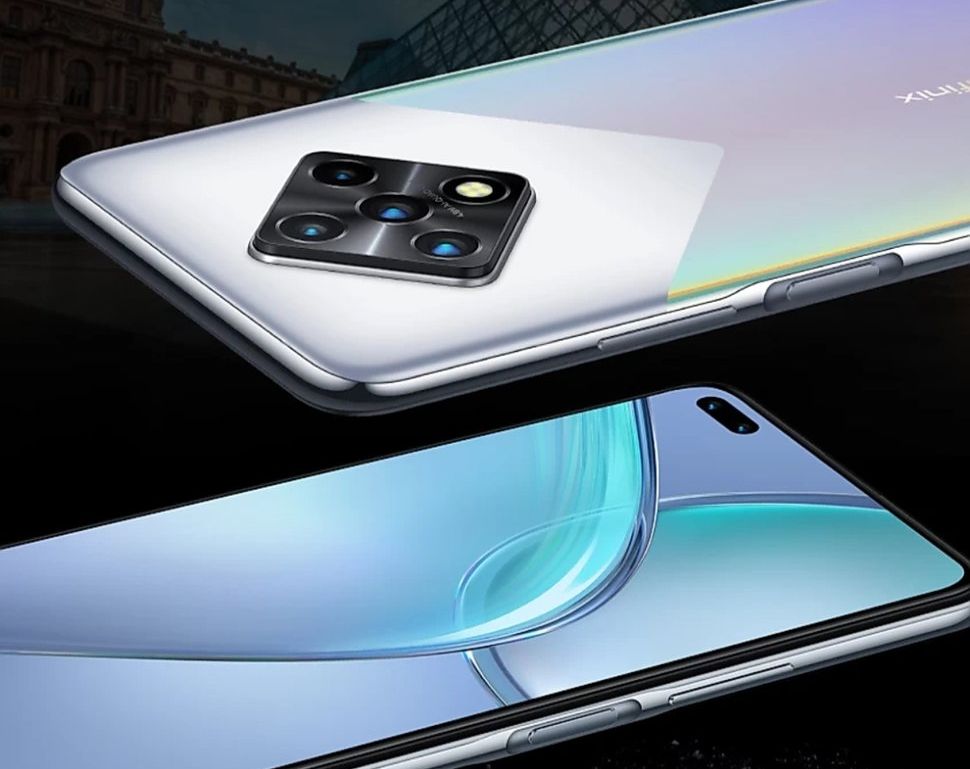
The Infinix Zero 8i smartphone is now official in India. It has arrived in the Indian market to rival other mid-range phones priced under Rs 15,000 (~$203). The major features of the Zero 8i include a high refresh rate display, dual selfie cameras, a gaming-focused mid-range chipset, and fast charging tech. Also, it sports a unique rhombus-shaped camera module for its rear cameras.

Infinix Zero 8i specifications and features

The Infinix Zero 8i has a massive 6.85-inch display that produces a Full HD+ resolution, a 90Hz refresh rate, a 20.5:9 aspect ratio, and a 180Hz touch sampling rate. The phone boots to OS7 based Android 10 OS and it has a side-mounted fingerprint scanner. The pill-shaped punch-hole cutout on the display has a 16-megapixel primary selfie camera and an 8-megapixel ultrawide lens. The front cameras support AI portrait mode, beautification features, and super night mode.

Infinix Zero 8i
Infinix Zero 8i

The backside of the device has a 48-megapixel main lens, a 119-degree 8-megapixel ultrawide shooter, a 2-megapixel depth sensor, an AI lens, and a quad-LED flash unit. The rear camera supports super night mode, an ultra-steady video mode that can shoot stable videos with the help of gyroscope and EIS, 4K video recording, and 960fps slow-motion video shooting.

The MediaTek Helio G90T fuels the device with 8 GB of RAM. The handset has 128 GB of built-in storage and a microSD card slot. Its 4,500mAh battery is equipped with 33W fast charging support.

Infinix Zero 8i price in India

The Infinix Zero 8i has landed in India for Rs 14,999 (~$203) and it comes in Black Diamond and Silver Diamond colors. The first sale of the phone will be carried out through Flipkart at 12 PM on Dec. 9.


Alibaba-backed AutoX starts testing driverless robotaxis in China

AutoX, a China-based autonomous vehicle startup which is backed by Alibaba Group, has today confirmed that it has started testing the fully driverless vehicles in China with Pacifica minivans from Fiat Chrysler Automobiles NV (FCA).

The company will be deploying a fleet of 25 driverless vehicles in Shenzhen and five more in other cities to test the technology. AutoX has modified a number of vehicles from various manufacturers and tested them in Shenzhen, Shanghai, Guangzhou, Wuhan, and Wuhu.

Earlier this year, in July, AutoX became the second company to test a passenger vehicle on California’s public roads without a safety driver sitting on the front seat. The first company to do so was Alphabet Inc’s Waymo.

AutoX has said that the company will not have a remote center. It’s competitors, WeRide and Baidu, which are also testing driverless vehicles in China, uses a remote center that can take control of the vehicle if and when needed.

The company is pursuing the so-called level 4 autonomous driving standard. In this, a vehicle can handle all aspects of driving in most possible circumstances without the need for human intervention.

EDITOR’S PICK: Xiaomi Mi 11 flagship smartphone powered by Snapdragon 888 to reportedly launch later this month

AutoX

Vehicles of AutoX are equipped with the startup’s proprietary vehicle control unit called XCU, which the company claims have faster processing speed and more computational capability to handle complex road scenarios.

Xiao Jianxiong, Chief Executive Officer of the company had revealed last month that the company is currently in talks with prospective investors to fund fleet expansion and development plans. However, he has not shared more details about this.

Apart from Alibaba, the company is also backed by Dongfeng Motor Group and SAIC Motor Corp. So far, it has raised more than 160 million in five funding rounds, the latest being Series B raised in December last year.


Realme Buds Q2 TWS earphones certified in Indonesia; launch imminent

Realme has launched a couple of truly wireless earphones in the market and now the company seems to be gearing up to expand its portfolio of audio offerings by launching yet another TWS earphones — Realme Buds Q2.

As the name indicates, the upcoming earphones will be the successor to Realme Buds Q that was launched in India in June this year. However, the earphones were originally launched in China in May.

Realme Buds Q

While the launch date for the upcoming Realme Buds Q2 is not yet known, but the fact that the device has been spotted on Indonesian telecom certification (via MySmartPrice) hints that the official launch should not be far away.

The listing has confirmed that the product is named Realme Buds Q2 and carries model number RMA2008. However, apart from that, the certification has not revealed anything else about the earphones.

EDITOR’S PICK: Qualcomm Snapdragon 888-powered Realme “Race” officially confirmed; specs and image leaked too

If the company is planning to launch it soon, we expect to get more details in the coming days or weeks and an official confirmation from Realme for the launch date.

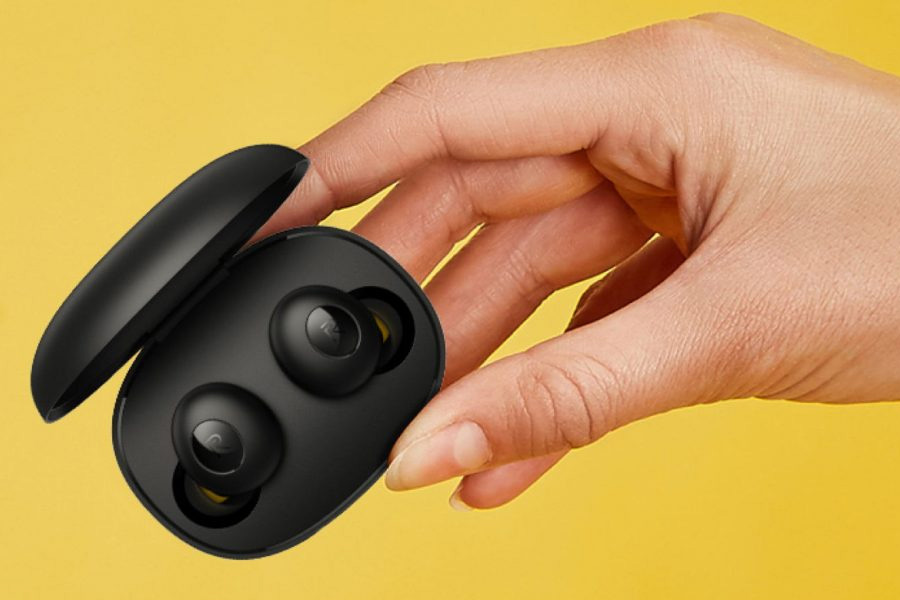
To remind you, the Realme Buds Q was launched as the company’s most affordable TWS earphones, priced at 129 yuan in China and ₹1,999 in India. Available in Black and Yellow colors, it features an in-ear design.

It comes with a 10mm bass booster unit with an ultra-low latency performance of 119ms. As for the battery life, it can run for about 4.5 hours on a single charge but with the storage box, that can be bumped up to 20 hours.


Apple M2-powered MacBook Pro tipped to launch next year

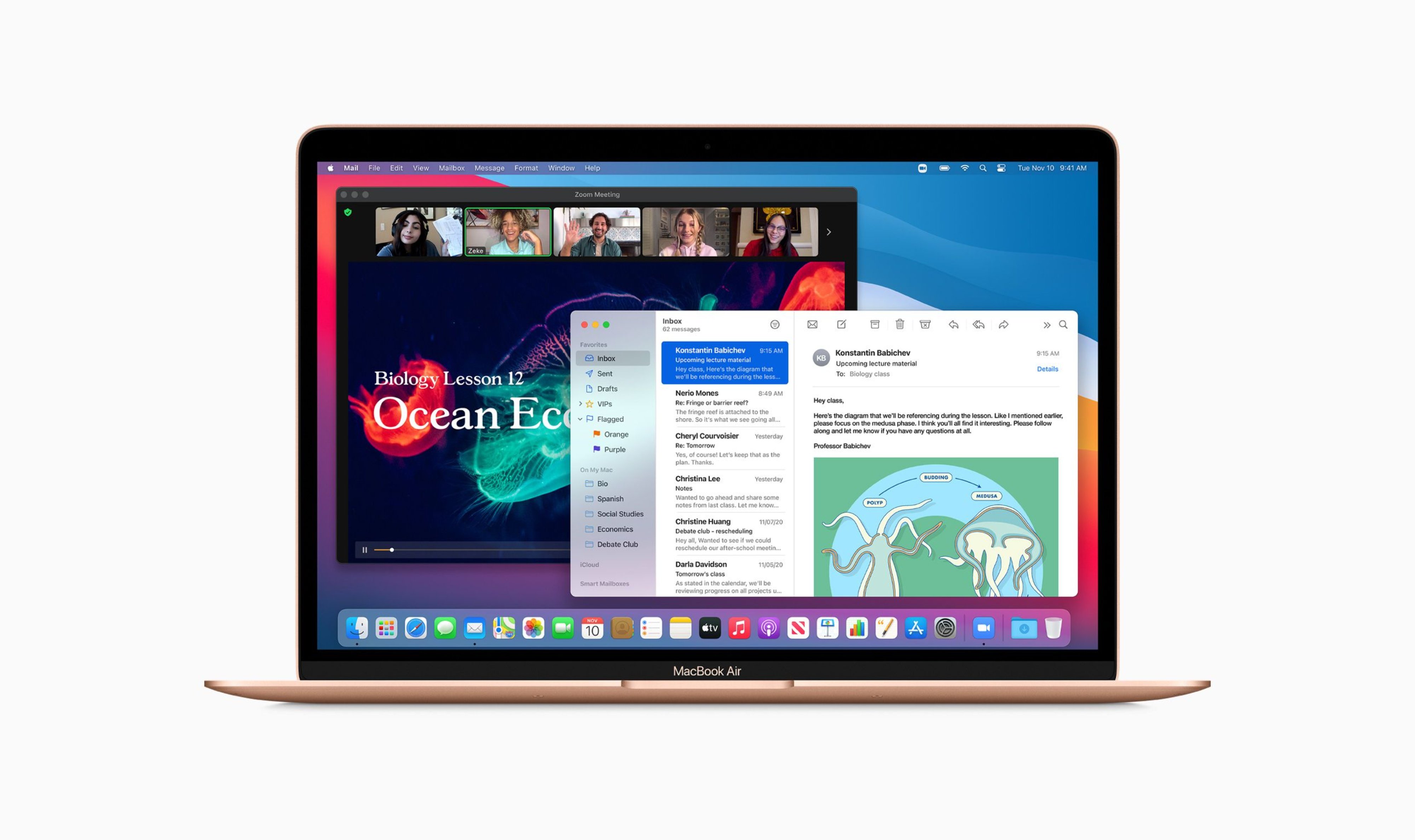
After promising Apple Silicon-powered MacBook devices, the Cupertino-based tech giant officially launched its new ARM-based M1 chipset and three new Mac devices — MacBook Air, MacBook Pro, and Mac Mini. With that, the company officially kicked-off the transition from Intel to its own ARM-based Apple Silicon.

So far, the response for the new M1-powered Mac devices is pretty good, thanks to the solid performance and improved battery life. Now, there are reports about the company’s new and more powerful chipset for Mac devices — Apple M2.

13-inch MacBook Air with M1 Chip Gold

While the company has not yet confirmed this, several reports hint that the company will soon be launching new MacBook and iMac devices with a more powerful Apple Silicon processor, likely to be named M2.

Now, a new report coming from China claims that Apple will be launching the M2 chipset, manufactured using the 5nm process, and a new MacBook Pro 13-inch and MacBook Pro 16-inch powered by the same chipset, in early 2021.

EDITOR’S PICK: Apple slapped with €10 million fine in Italy for misleading commercial practices

It is also being reported that Apple is planning to launch two newly designed MacBook Pro models next year. In the year 2022, the company is expected to launch a refreshed MacBook Air along with MacBook Pro and MacBook, equipped with a Mini-LED display.

Interestingly, the report also claims that Apple will be launching a couple of GaN chargers in 2021. So far, nothing is known about the said chargers but if it’s true, then expect a smaller charger with the new MacBook purchases.