Netflix has announced a price increase for two of its plans in the US. The streaming service made an announcement on Thursday that Standard and Premium subscribers will be paying a little more.
The Standard Plan which was originally priced at $12.99 is now $13.99 while the Premium Plan that used to be $15.99 is now $18.99. The basic plan which allows you to watch content on only one screen and in standard definition remains $8.99. The new prices take effect immediately.
If you are wondering if there will be a price hike in your country, a Netflix spokesperson told The Verge that changes in price happen on a country-by-country basis and the increase in the US is not an indication of a global change in price.
The price increase in the US comes nearly two years after the last one in January 2019. However, in that time frame, more streaming services have entered into the market such as Disney+, HBO Max, and Peacock. This means subscribers have more options, but Netflix is not fazed as it believes the increase in price will allow it to “continue to offer more variety of TV shows and films”.
The streaming service plans to invest more in content offerings as there are now more competitors in the business. It spent $18.5 billion in developing original content this year according to a Bloomberg report and that figure is expected to be higher in 2021. It is no surprise that some of this cost is being passed to consumers.
During its Q2 earnings call in July, Netflix announced it added 10.1 million subscribers between April and June to the about 180 million it originally had. With its recent promotions such as free content for those without a subscription and an upcoming 2-day streamfest in India that is scheduled for December 4, we expect the number of subscribers to enter 200 million by the end of the year.
This year has been a rough one for phone manufacturers. However, the last quarter seems to have faired better for Chinese manufacturers as a report says phone shipments increased.
Xiaomi Mi 10T
The info comes from Digitimes Research, and according to their findings, Chinese smartphone vendors saw their global shipments rise to 182 million, an increase of 10.6% from the previous quarter but a 5.6% drop when compared to the same quarter in 2019.
Unfortunately, Huawei wasn’t among those who recorded growth in shipment. The Chinese giant recorded a 25.5% decline in overall shipment in the third quarter of the year unlike its rivals – Xiaomi, OPPO, and Vivo that recorded an increase. Nevertheless, all four companies accounted for 74.3% of the total shipment recorded, though the report revealed that the figure is less than that of Q3 2019.
It is believed that Chinese manufacturers will account for about 50% of the total global shipment in the last quarter of the year but the figure should be less than that of Q4 2019 as the market is recovering slowly. Digitimes speculates that Huawei may get dethroned as its rivals continue to increase their global shipments.
South Korean giant LG, which announced the LG Velvet, and LG Wing this year, is looking to expand its ties with ODMs in 2021. Previously, some of the LG smartphones from 2018 to the current year(2020) were actually made by ODMs. And now, a report from Korea now says that the company will outsource more smartphones from ODMs next year, including the LG Velvet2(Tentative).
LG Velvet 2 outsourced from ODM
A report from TheElec saysLG will seek ODMs to make more of its smartphones in 2021. In fact, the report explicitly mentions that by 2021, ODMs will account for 70% of LG’s Smartphone production. For the unware, ODM is an Original Design Manufacturer. Simply put, it is a company that designs and manufactures a product that is ultimately sold by the other(here LG). That said, the next iteration of Velvet, the Velvet 2(Tentative) will reportedly be made by ODMs.
Besides, LG’s current ODM partners are Wingtech, Huaqin, and Longcheer in China. Interestingly, the report also says LG began seeking ODMs in 2018. Back then, only 10% of LG devices were made by contract companies. However, the number increased to 30%, and 60% in 2019, and 2020 respectively. This suggests that LG’s earlier plan to expand its market may come true soon. Plus, the new report also falls in line with the earlier ODM strengthening strategy for launching products to mass markets.
Apart from Velvet 2, successors of LG’s Q92, LG Stylo, will also reportedly be made by ODMs. Still, LG is said to churn out the next flagship codenamed Rainbow, rollable device(codenamed B Project) on its own. The device, Rainbow, will likely have similarities to the V series with 5G, Snapdragon 8xx SoC, and more.
On the other hand, B Project will be the second output of LG’s Explorer Project says the report. It will likely allow users to pull one of the sides of a screen to roll it out and expand the display. If we recall, the first device out of LG’s Explorer Project was the LG Wing 5G that launched recently in the US, Korea, and India.
Anyway, all of the devices mentioned above including Velvet 2 are likely headed for a 2021 release. However, if the report is true, Rainbow will launch by Q1, 2021 whereas B Project will debut in March of next year.
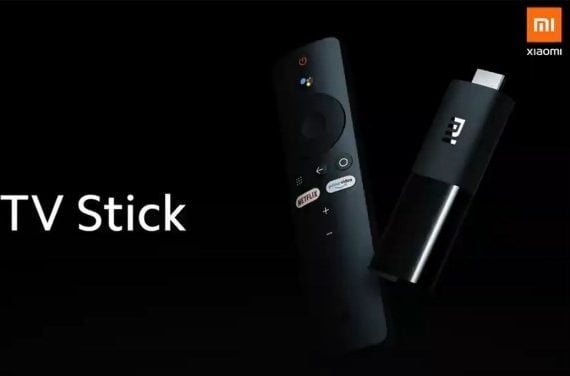
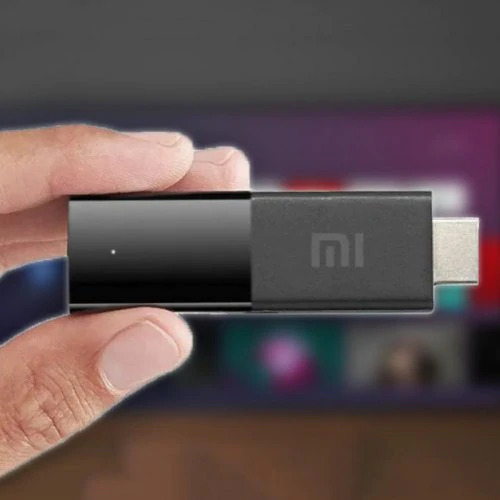
Ever since its launch, Xiaomi Mi TV Stick- Global Version has created quite a stir. With its sleek and versatile form, this stick caters to a large audience and comes in a pocket-friendly price range. Taking it a step ahead, Giztop is now offering a mega 60% off on it, meaning one can buy it at just $19.99.
Mi TV stick is powered by an Amlogic S905 Quad-core processor with ARM Mali-450 GPU and runs on Android TV 9.0 system. With 1920 x 1080p output and 60fps, it enables the user to view content in HD. It has 1GB RAM, 8GB internal storage, and supports dual-band Wi-Fi. This piece has an HDMI 2.0 interface for the transmission of audio and video. It supports both DTS and Dolby multichannel HD audio encoding to offer smooth, dynamic, and immersive sound.
Xiaomi Mi TV stick supports Bluetooth 4.2 to enable the direct streaming of content from mobile phones, tablets, and other devices. Chromecast allows one to watch videos and other content from various devices. The Bluetooth remote and Google Assistant allow one-tap operation, where user can command to control multiple functions. Its wireless form provides enhanced portability and connectivity options. The plug and play design allow the convenient connection.
Mi TV stick comes pre-installed with Netflix and Prime Video and allows one to download various apps and games from Google Playstore. This TV stick offers users most of the sought after functions at a reasonable price. Readers can enjoy a flat 60% discount on Xiaomi Mi TV Stick- Global Version at Giztop. It is available for only $19.99 for a limited time.
The Lenovo K Note series is due for a new model. While last year’s model launched as the Lenovo K10 Note, this year’s own will launch as the Lenovo K12 Note. Renders of the phone have now surfaced, confirming that the new phone is a rebadge of the already-announced Moto G9 Play.
New renders of the phone were posted on Twitter by Sudhanshu Ambhore (@Sudhanshu1414), and they show the Lenovo K12 Note from all angles. Gone is the batwing logo on the rear-mounted fingerprint scanner. There is also a Lenovo logo at the bottom right corner of the phone. The images show the phone will also come in green and blue just like the Indian version of the Moto G9.
While the Lenovo K12 Note is definitely a look-alike, it appears it won’t have the same specs through and through as the Moto G9 Play. According to the leaker, the K12 Note will have support for 15W fast charging instead of 20W fast charging.
There is still no news yet on when the phone will launch but when it does, it should arrive with a 6.5-inch HD+ display, a Snapdragon 662 processor, a 5000mAh battery, and a 48MP triple rear camera setup.
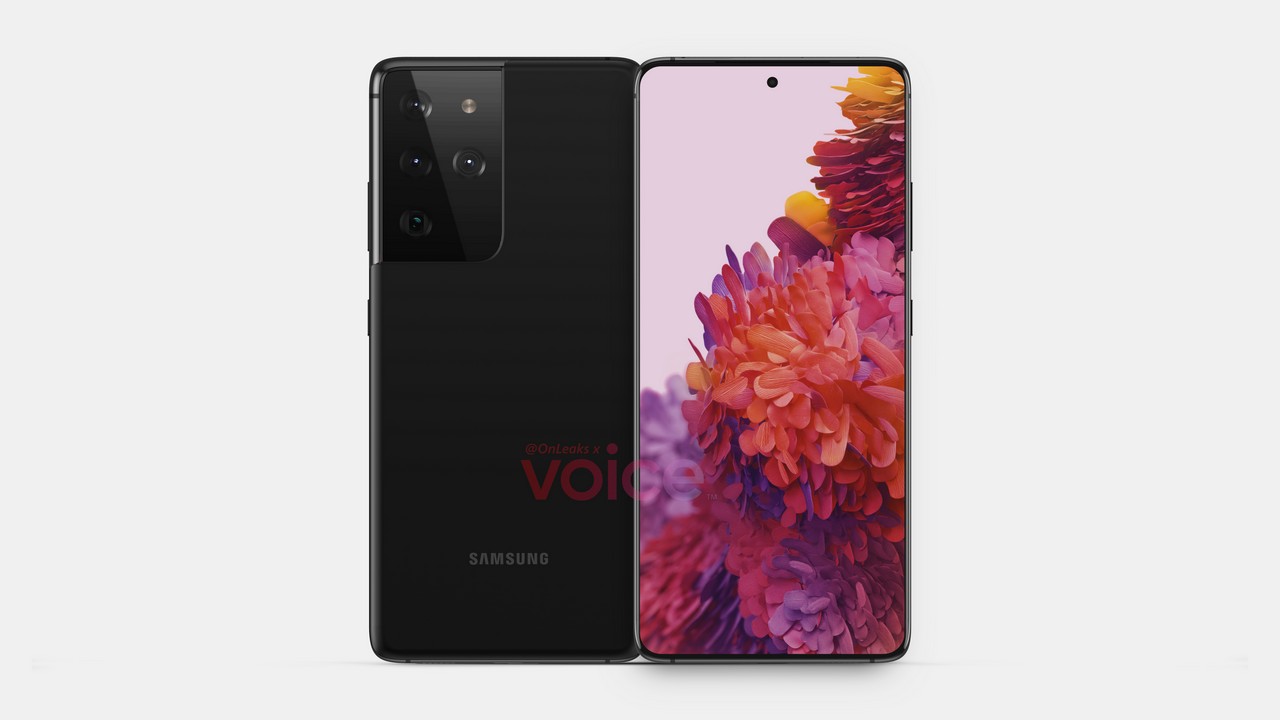
A few days back, we saw the first-ever unofficial look at the Galaxy S21/S30 series. It showed a quad-camera layout with a new design on the S21/S30 Ultra. Now, Steve from Onleaks has an update for us.
According to Steve, Samsung is apparently a cat on the wall when it comes to the Galaxy S21/S30 “Ultra’s” rear camera design. And as per his sources(via Sammobile), after the DVT, the device has one more sensor. Steve feels that the latest rear camera setup might have either five cameras or a quad-camera with an unknown sensor. For the unware, DVT is Design and Validation Test. It is reportedly the penultimate(one before the final) stage before the device enters mass production.
To match the new leak, Steve has also shared a new CAD render of the Galaxy S21/S30 Ultra. Just like the early renders, it shares a rectangle design with two edges and rounded corners. And, the new render also shows a protruding layout like the Note 20 Ultra. While we don’t know the specifications of the unknown sensor, an earlier leak says the series might have a second Telephoto lens instead of the ToF sensor.
Credit: Steve(Onleaks)
Galaxy S21/S30 Ultra: Expected Specifications
To recall, the Galaxy S21/S30 series is expected to have three variants- a vanilla variant, a Plus, and an S21/S30 Ultra. The entire series is reportedly coming a month early in January 2021. One of the leaks also says that the device will flaunt Black, Violet, and Silver color options.
Among them, Ultra reportedly carries a model number SM-G998U. In case you dint know, the leaked specifications of the device say it will have a dynamic AMOLED punch-hole display. The display will reportedly measure 6.8-inches and be a 2K display with a 120/144Hz refresh rate. It is expected to sport a 108MP rear camera sensor and a 40MP selfie shooter. As usual, you can expect the internals to differ based on the regions.
That is, a Qualcomm Snapdragon 875 for the US, China, and Exynos 2100 SoC for Korea, India. All of this will reportedly be backed by a 5,000mAh battery that probably supports charging up to 60W.
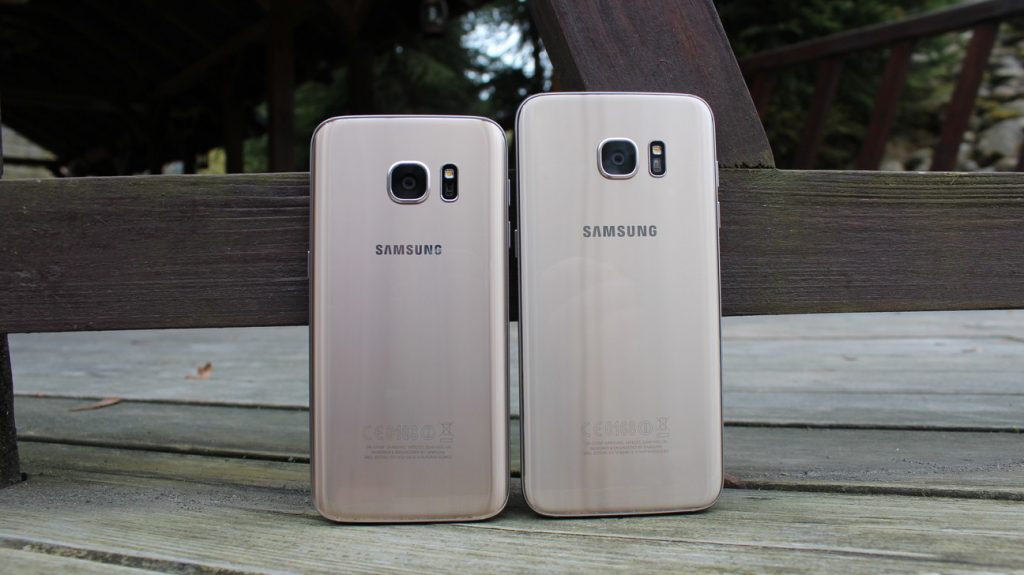
Samsung launched the Galaxy S7 series consisting of Galaxy S7 and Galaxy S7 Edge in March 2016. These devices are no longer eligible for security updates. However, despite being almost 5 years old, the South Korean tech giant is now rolling out September 2020 security patch to these two phones.
Previously, Samsung used to provide two Android updates and up to 4 years of security updates to its flagship handsets. Hence, the company provided security patches for Galaxy S7 and Galaxy S7 Edge up until March 2020.
But now, after 7 months, Samsung is seeding another update in the form of September 2020 security patch. There’s no need for the company to provide this update as the duo has received security patches for 4 years as promised.
As SamMobile suggests, this update may include certain critical patches and therefore, the world’s largest smartphone maker might have released it. Currently, the update is live in the US and Europe. It should be available in other regions in the coming days.
In August, HUAWEI Mate 8, a smartphone from 2015 also received a system update after the end of its support period. It not only brought July 2020 security patch but also a useful feature called “Smart Charge” for the battery.
Anyway, these handsets still pale in comparison with Apple’s track record of releasing iOS updates.
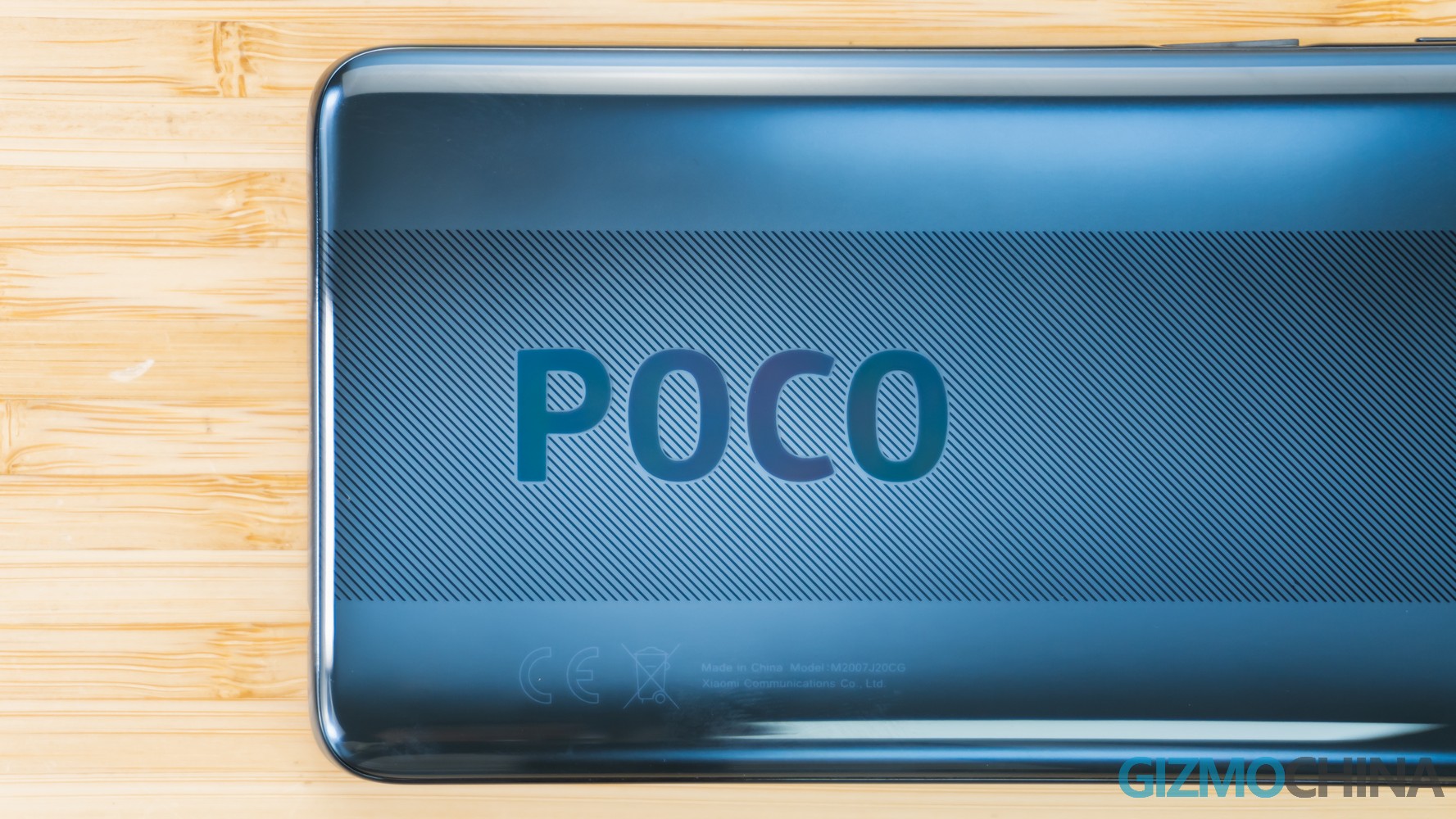
A while back, POCO Global launched the POCO X3 in Europe, before bringing it to India. Before we take a breather, a tipster on Twitter says another device from POCO will launch before the year(2020) ends.
Tipster Mukul Sharma says the next POCO device will likely launch in the first half of December citing his source. That is, if everything goes according to the plan. Now, this works out somewhere between December 1-14 of 2020 but isn’t official yet. He adds that the launch will mostly be a Global one(maybe Europe). And that there is no word on the Indian launch yet. Further, Mukul Sharma has replied to a user saying the device will seemingly be a mid-ranger.
This is understandable considering the company already launched a flagship Poco F2 Pro and a midrange POCO X3 NFC globally. On the other hand, the India division is operating with a different strategy in mind. It recently launched the POCO X3 with a modified 6,000mAh battery. Additionally, Country Director of POCO, Anuj Sharma said that POCO devices in India are better than the Redmi counterparts despite being rebranded.
Coming back, the latest tip affirms an earlier tweet by POCO’s Global Spokesperson, Angus Kai Ho Ng. He tweeted that POCO isn’t done yet with a #POCOcomingsoon. Following this, a smartphone with model number M2010J19CG was spotted at the database of EEC. EEC is the Eurasian Economic Commission. That said, the model number is reminiscent of a similar device(M2010J19SC) that’s probably heading to China as Redmi Note 10 4G.
Now, if we recall, the device also got certified at China’s 3C authority. It showed that the device will support 22.5W fast charging. However, we are devoid of further info and will have to wait for more leaks in the future.
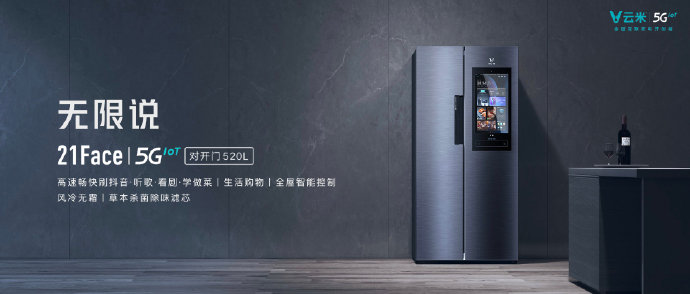
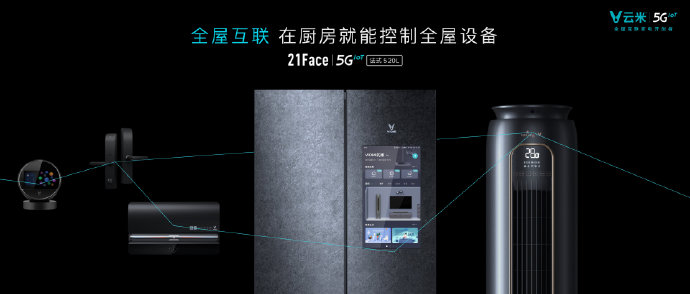
In May this year, Xiaomi’s ecological chain company Viomi unveiled the 21Face Interactive Smart Screen, it’s first 5G IoT smart TV. The company also launched a host of other smart home products which for its 5Gᴵᵒᵀ products. Viomi has yet again added yet another 5G IoT product, a refrigerator equipped with a large display screen and a WiFi 6 chip. The refrigerator is priced at 4999 yuan (~$744).
The Viomi 21Face 5Gᴵᵒᵀ large-screen refrigerator is the world’s first 5G IoT large-screen refrigerator with vibrato. It is equipped with the latest WiFi 6 chip module, which perfectly matches the high speed connectivity which 5G offers. The Wifi is capable of a maximum download rate of 1200M.
The smart refrigerator features a large volume of 520L and supports vector frequency conversion. It also works silently with an impressive noise level of 38dB.
The refrigerator packs an expansive smart interactive touch-sensitive screen. The screen can be used to watch videos, listen to songs or if the owner wants to read recipes. Quite interesting is the disclosure that the display can also be used as a hub to control all other connected house appliances. Its AI voice interaction system allows you to link other smart home appliances without hands, making the kitchen no longer monotonous.
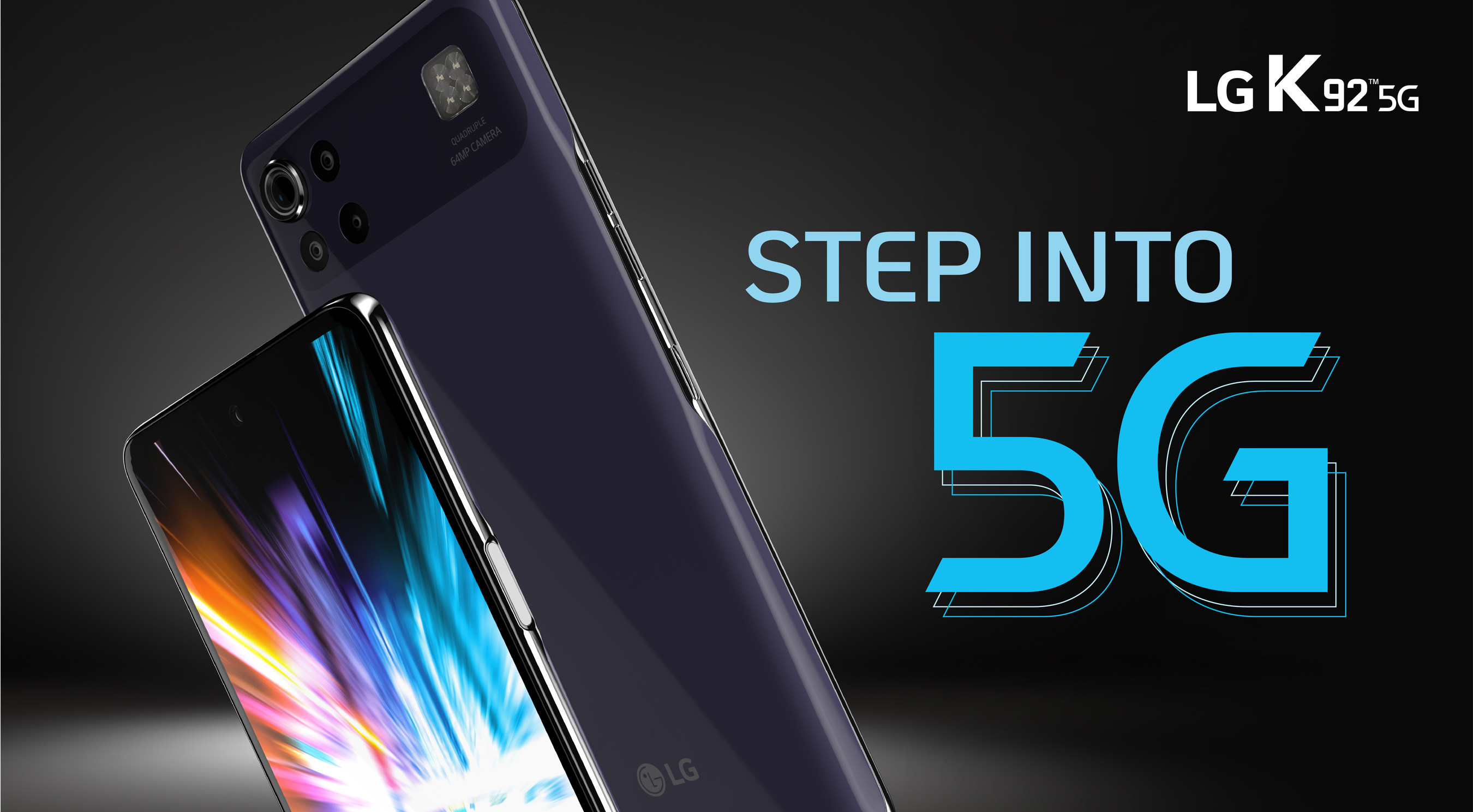
LG has silently launched the LG K92 5G smartphone. It has arrived as one of the cheapest 5G-ready phones in the U.S. Some of the major highlights of the K92 5G include a tall aspect ratio supporting screen, a midrange 5G chipset, a 64-megapixel quad-camera system, a rapid charging supported battery.
LG K92 5G specifications and features
The LG K92 5G measures 166.37 x 86.36 x 8.38mm and it weighs 202 grams. The smartphone sports a two-tone finish on its back. The quadruple-camera setup placed at the upper-left corner of the LG K92 5G’s back has a 64-megapixel primary lens, a 115-degree superwide sensor 5-megapixel, a depth assist lens of 2-megapixel, and a macro camera of 2-megapixel. The upper-right of the phone’s rear shell has a quad-LED flash unit. For snapping selfies, the handset has a 16-megapixel camera housed inside a top-center camera cutout on the screen.
The LG K92 5G mid-ranger has an IPS LCD display of 6.7 inches that offers a Full HD+ resolution. It is preinstalled with Android 10 OS and LG’s UI. The handset features stereo speakers that are powered by LG 3D Sound Engine.
The Snapdragon 690 5G is at the helm of the LG K92 5G with 6 GB of RAM. For storage, it offers an internal space of 128 GB and a microSD card slot. The device carries support for Quick Charge 4 technology for its 4,000mAh battery.
LG K92 5G pricing and release date
The LG K92 5G that is priced at $359 will be available for purchase from Nov. 6 in the U.S. It comes in a single color option of Titan Gray. It is unclear which other markets will be receiving the K92 5G.
What’s your opinion on the LG K92 5G? Do you think it is a worthy rival for the OnePlus Nord N10 5G? Share your thoughts by posting your comments.
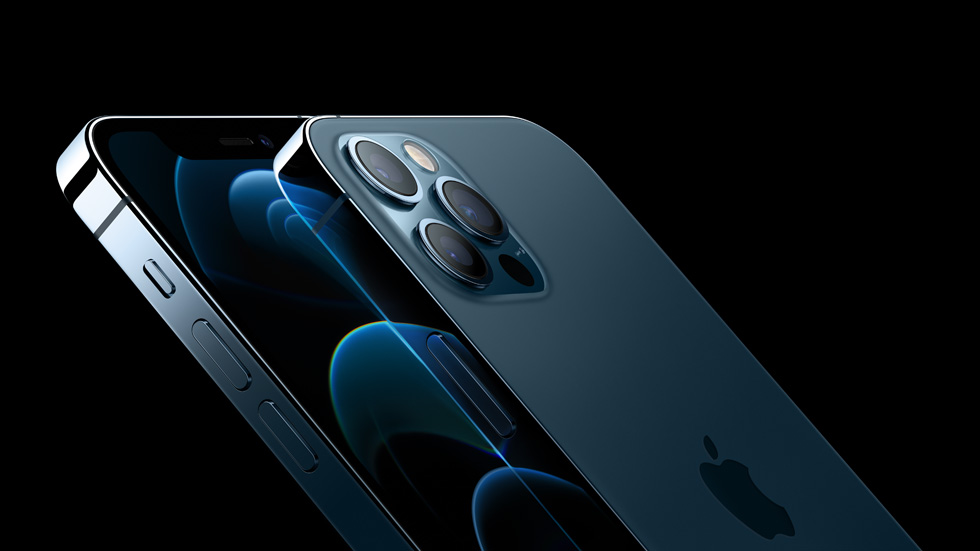
Apple’s latest iPhone 12 and 12 Pro are turning out to be hot-selling products. The models have been on open sale in some regions for just a few days since they were officially unveiled last week. From all indications, demand has been solid and there are reports that the increasing demand has prompted Apple to boost the orders for the iPhone 12 by two million units from its supply chain partners.
The iPhone 12 features an OLED screen and utilised a flat design. The device also emerges as the first iPhone with 5G connectivity and all these seem to have triggered the interest of consumers. Thus, a source from the iPhone industry supply chain is reported to have disclosed Apple’s decision to increase its order by 2 million units. The industry source also expressed optimism about the shipments of Apple’s product lines next year.
An estimate released by Cinda Securities projects that the demand for the iPhone 12 series will likely reach 80-85 million units. The firm also estimates that Apple will likely ship around 230-240 million units of the iPhone 12 in 2021. If this happens, the iPhone 12 series will emerge as the US company’s best-selling phones ever. That record is presently held by the iPhone 6 and 6 Plus with a massive estimated shipment of 222,4 million units.
Popular Apple analyst Ming-Chi Kuo recently disclosed that an estimated 7-9 million units of the iPhone 12 and 12 Pro were pre-ordered before the official sales commenced. He also predicted that the iPhone 12 and 12 Pro will account for 60-70% of the total 12-series shipments. Further, the topmost iPhone 12 Pro Max and the base model – 12 mini will each account for around 15-20% of total shipments.
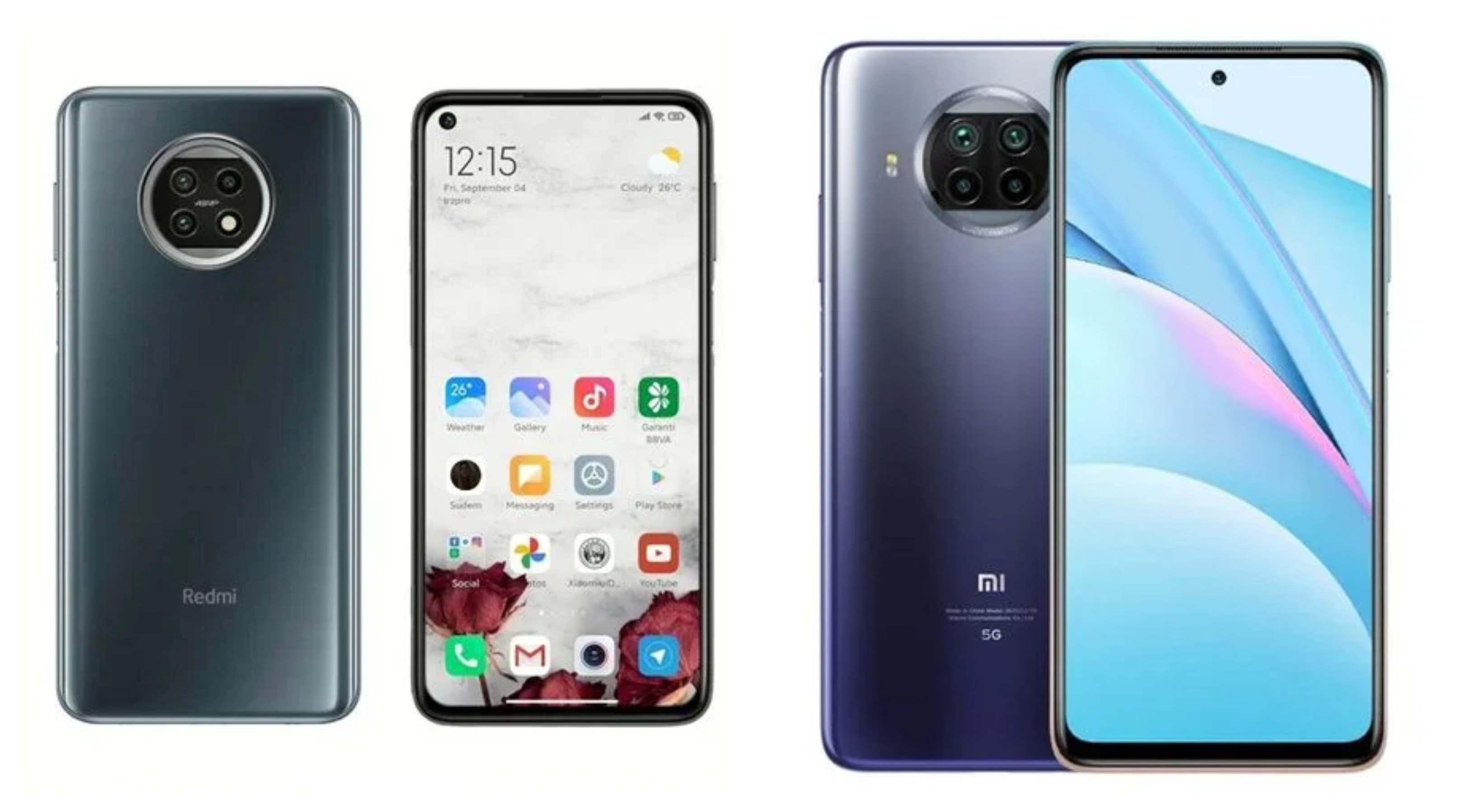
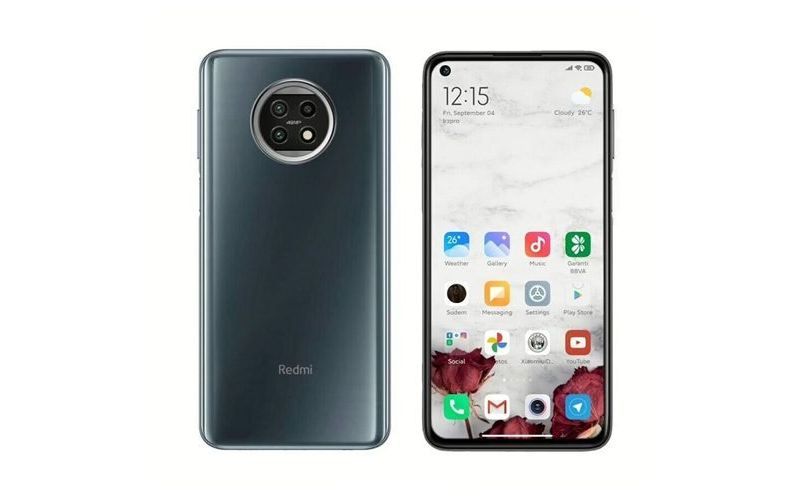
Xiaomi’s Redmi Note series is popular both in its home country and global markets like India. However, the company is yet to launch a Note device in China after the Redmi Note 8 Pro. Recent rumors and leaks point that the next series could be under the Redmi Note 10 moniker. And before Xiaomi unwraps it officially, let’s take a look at what we know so far.
Jumping right in, the Redmi Note 10 series is expected to come in three models- M2007J17C, M2007J22C, M2010J19SC. The first two are 5G devices while the last one is 4G as per certifications. Now, if we were to guess, Xiaomi should name the first one as Redmi Note 10 Pro Max considering it will likely hold a huge 108MP camera. However, the rest of the two could be Redmi Note 10 Pro, and Redmi Note 10 4G. Of course, these are our speculative names going by the past, and Xiaomi could change it before launch
Redmi Note 10 series – The basics
As is the case with every Note series, we can expect features like an LCD display with Gorilla Glass protection on the Note 10 series. Also, it is likely to hop on the high-refresh train with 120Hz displays. In terms of design, we can expect punch-hole displays at the front, and a circular camera layout at the back. For ports, 3.5mm jack, USB-C, microSD slot, Dual-SIM could be obvious inclusions.
We can also expect other features like IR blaster, P2i coating against water splashes, Wi-Fi 5, Bluetooth, GPS, BeiDou, SA/NSA 5G(on two models),4G, bigger battery with fast charging. For memory and storage, we can expect 6/8GB RAM and 64/128GB storage. However, a 256GB variant could also surprise us. All the devices are likely to run MIUI 12 based on Android 10 out of the box.
M2007J17C(Possibly Redmi Note 10 Pro Max)
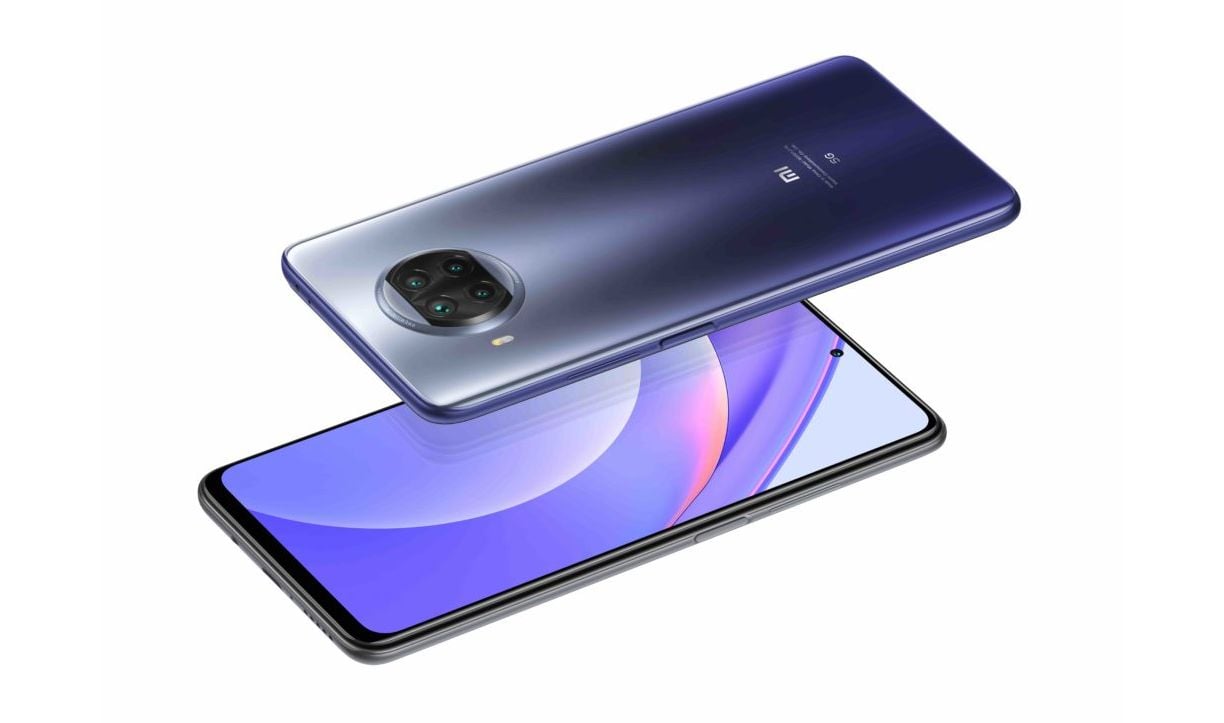
Talking about the device, it is rumored to be a tweaked version of Xiaomi’s Mi 10T Lite 5G from Europe. To affirm this, both the devices have the same model numbers(M2007J17C, M2007J17C) as well. Here “G” generally represents the Global variant(which is the Mi 10T Lite 5G), and “C” Chinese variant. If true, the Redmi Note 10 Pro Max could feature a 6.67-inch FHD+ LCD 120Hz display with a centered punch-hole.
The design will be a lot similar to the Poco X3 from Global Markets. Under the hood, it will likely sport the same Qualcomm Snapdragon 750G 5G(sm7225) SoC. Other specifications leaked so far say the device could have a rear 108MP camera sensor which is said to be the ISOCELL HM2 image sensor with 0.7μm pixels. And a sensor size of 1/1.52-inches. Other features sensors are likely a Telephoto & Macro lens.
This is will make it the first Redmi device to sport a 108MP sensor. The device is expected to have a 4,800mAh battery with 33W fast charging.
As per an earlier leak, the device could have a display with a punch-hole at the top left. However, the rear design is out of the leak radar so far. However, a close-up of the rear camera layout shows a Grey color panel. And 48MP primary sensor onboard a similar setup as the above.
Under the hood, the device is said to sport MediaTek’s Dimesnity SoCs. However, the leaks have been inconsistent with few suggesting a Dimensity 820 SoC, while the others pointing to a Dimensity 720 or 800U with a clock speed of 2.4GHz. Also, a listing on China’s 3C certification suggests that the device will come with a 22.5W fast charging.
M2010J19C (Possibly Redmi Note 10 4G)
While Xiaomi promised that it would launch more 5G devices in 2020, leaks show that Redmi Note 10 series could have a 4G variant. Although, a smartphone with a similar model number (M2010J19CG) is said to debut under POCO elsewhere, looks like it’s heading to China as well. Sadly, other than the model number, no concrete info is available about this device. A recent listing on China’s 3C certification also shows the device will support 22.5W fast charging.
Redmi Note 10 Expected Launch date, Price
The launch date of the device isn’t really known yet. However, we can expect them to debut sometime before the end of 2020. For the price, Xiaomi is expected to launch a 999 yuan (~$150) 5G device towards the end of 2020. And it could very well be a Note 10 series device.
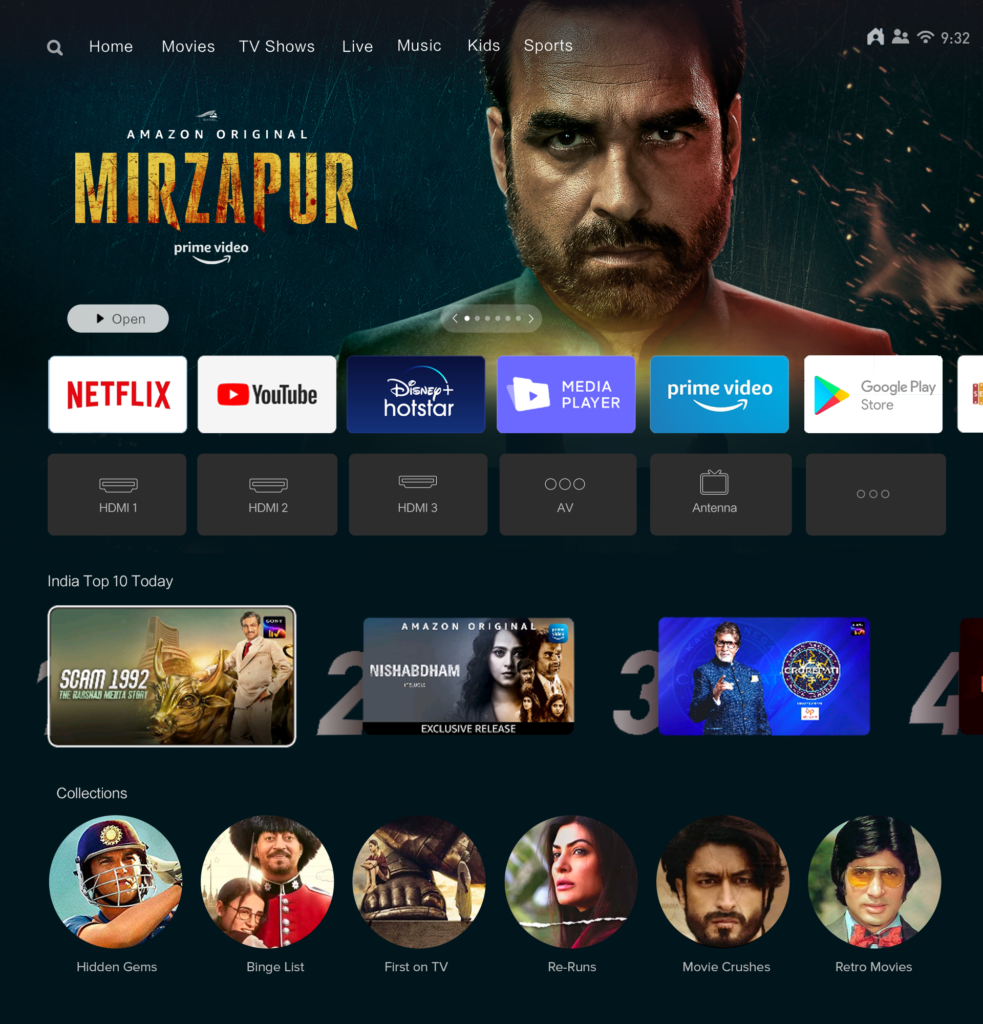
Xiaomi has been selling its smart TVs in India since early 2018. The company’s televisions in India except for Mi TV 4 run Android TV operating system. Additionally, they also come with a launcher called PatchWall offering content from partner streaming services. Earlier this year, Xiaomi updated it to v3.0. Now, the company is rolling out a new PatchWall 3.4 update with three new changes.
Xiaomi Mi TV 4A 43 Horizon Edition
The new PatchWall update for Xiaomi Mi TVs in India arrives ahead of Diwali festive season. The company is expected to sell more televisions in this period compared to previous months. Hence, it makes sense for them to introduce new features at this time of the year.
That said, the PatchWall 3.4 update brings the following three new features to all the Mi TVs in India.
Note: We are not sure if this will be available for the forgotten Mi TV 4 but the Mi TV 4A (32” & 43”) launched alongside it have received the update.
Immersive Carousel
The first thing you notice when you launch PatchWall on Mi TVs is the carousel at the top. In the latest update, Xiaomi has tweaked it in such a way that the content in the carousel act as the background of the entire screen. Thus, the company calls it ‘Immersive Carousel’.
Though the concept is cool, certain poster in carousel does not look as background as they interfere with icons and thumbnails on the foreground.
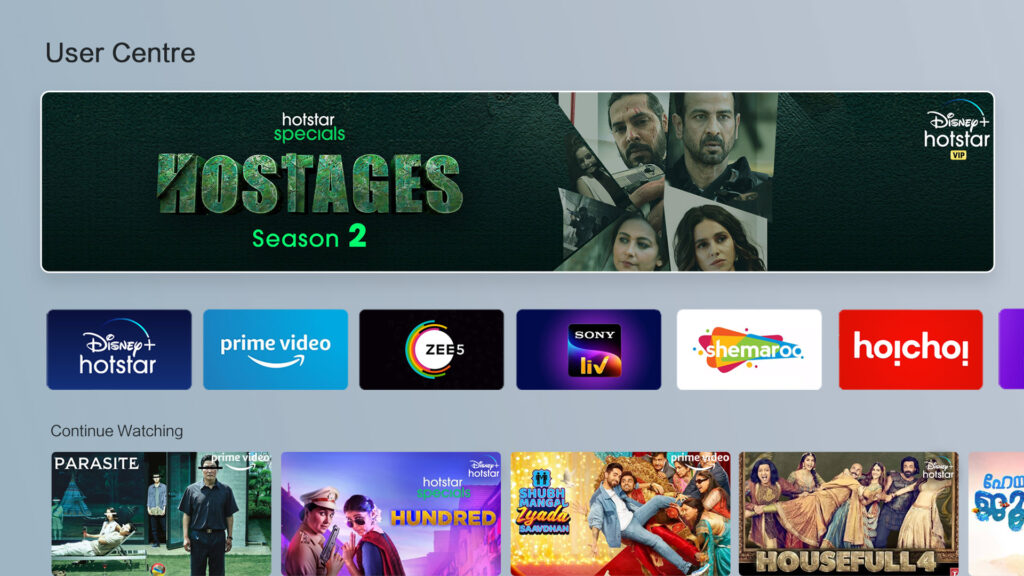
User Centre
This new page displays all the partner OTT platforms in a single row and even includes a row dedicated to offers on subscriptions. Further, it also shows trailers and upcoming movies/TVs.
Xiaomi says that users will be also able to access a universal watchlist comprising of content from partner streaming services.
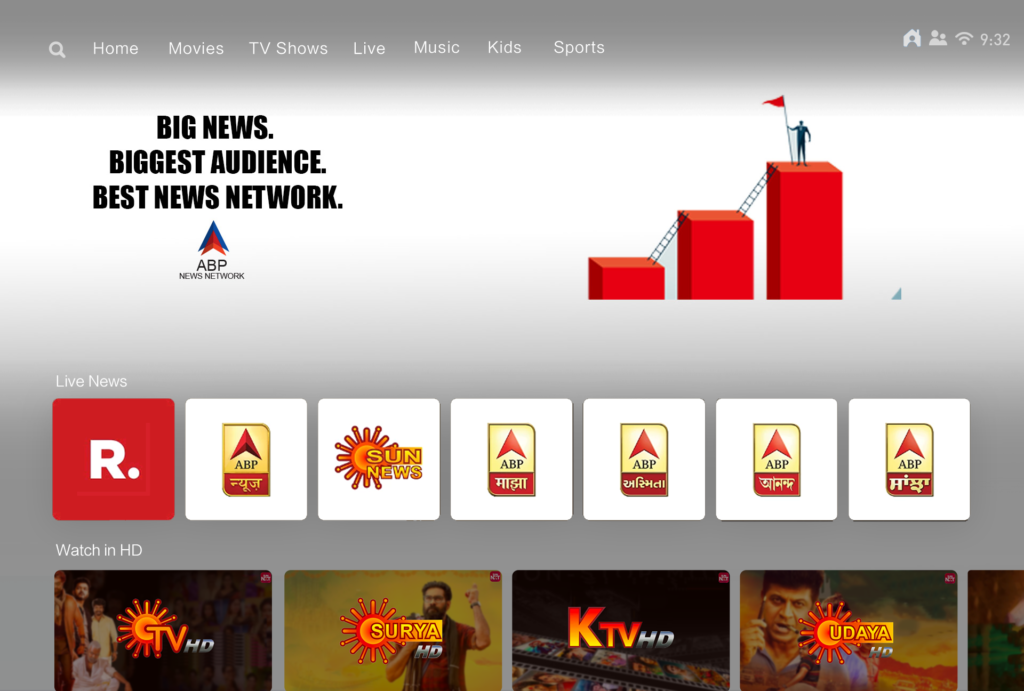
Live TV
As the name suggests, this page shows all the available live TV channels. The company says it will be adding more channels in the coming days.
Having said that, the PatchWall updates on Mi TVs are an automated process but still roll out in batches. They occur in the background when connected to the internet.
Hence, if you own a Mi TV in India and your television is always connected to the internet, then you should have received the update.
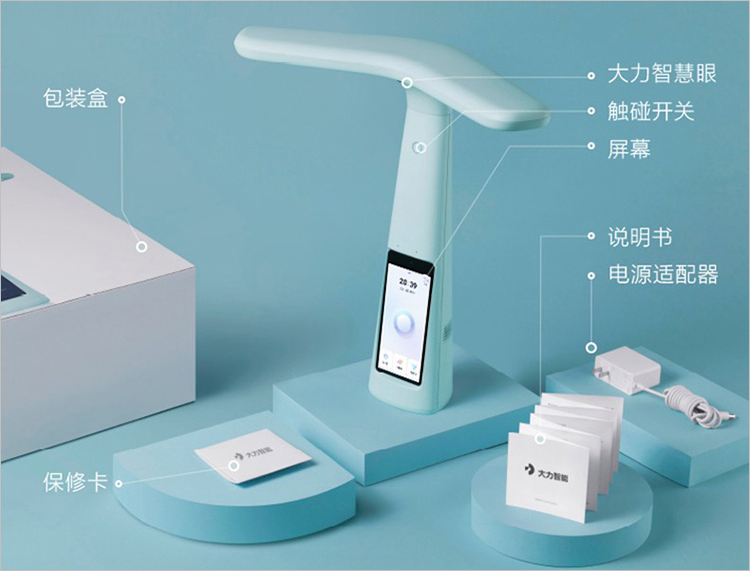
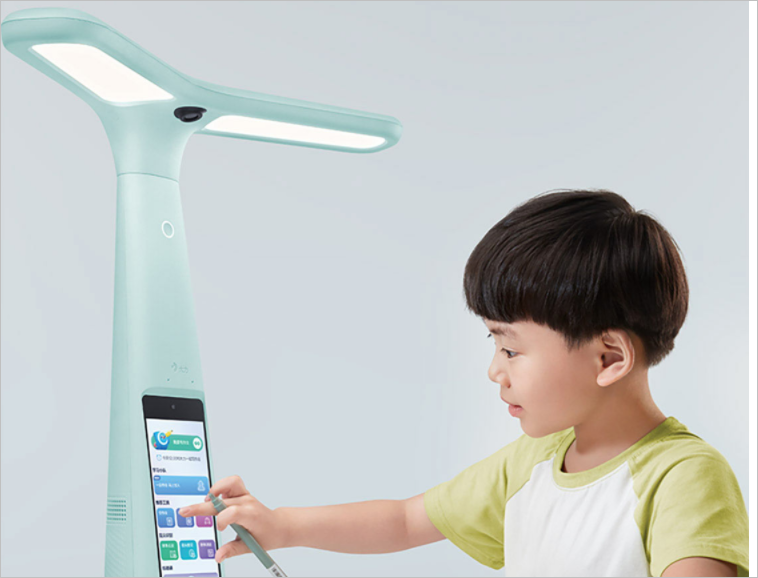
Chinese firm Bytedance gained prominence with its popular apps Tiktok and its Chinese version Duoyin. The company recently signified interested to venture into hardware manufacture with the acquisition of Smartisan. ByteDance has today announced a new education brand known as Dali Education. Interestingly, the company also unveiled the first hardware product under the brand dubbed the Dali Smart Tutoring Lamp T5.
The Dali Smart Tutoring Lamp T5 is a utility lamp which focuses on the child’s homework scene. It combines intelligent guidance with the desk lamp necessary for each child’s desk, which can protect the eyes and aid the child to complete his/her homework.
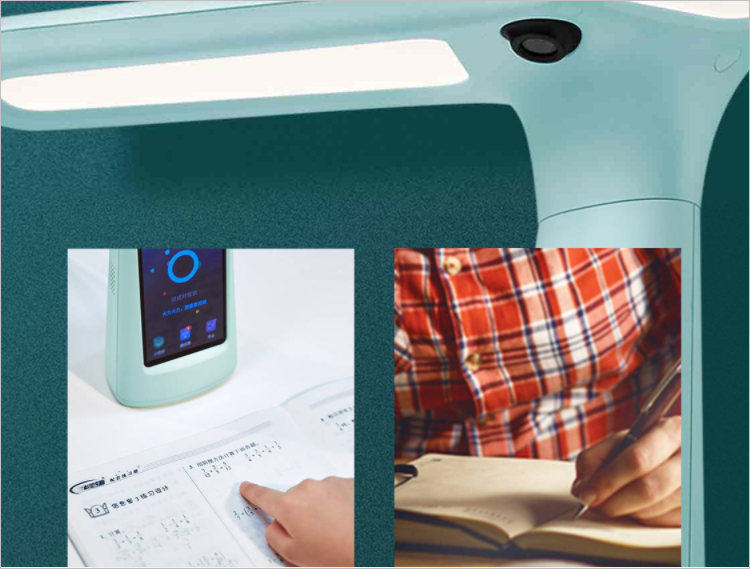
The lamp is a national AA-level professional eye protection light, and has obtained a number of certifications from authoritative organizations, including TUV Rheinland Low Blue Light Certification and National CQC Certification. At the same time, Dali Smart Tutoring Lamp T5 also draws on the inspiration of the “shadowless lamp” in the operating room, and uses the double-wing lamp holder design to solve the shadow problem of children when writing. This prevents the need for the child to want to tilt their heads to read words, thereby preventing incorrect sitting posture.
Secondly, the lamp is integrated with an intelligent coaching feature. It is equipped with an AI camera. With the help of artificial intelligence and related technologies, the camera is capable of performing several functions such as intelligent fingertip search for words, intelligent English follow-up reading, and intelligent calculation problem explanation to help solve children’s homework problems.
The lamp comes with a companion app known as “Daily Love Tutoring” app which parents can use to plan the child’s homework plan and completion progress can be synchronized in real time. Parents can also grasp the homework status remotely. In addition, the Dali Smart Tutoring Lamp is also equipped with smart dual cameras. Parents can not only see their children’s desk remotely but can also use real-time communication to interact with their children through video connections to understand their children’s learning status. The lamp is integrated with a smartphone size display with touchscreen functions.
The smart lamp is already on sale in China via major e-tail platforms such as Jingdong (JD.com). It carries a retail price of 799 yuan (~$119).
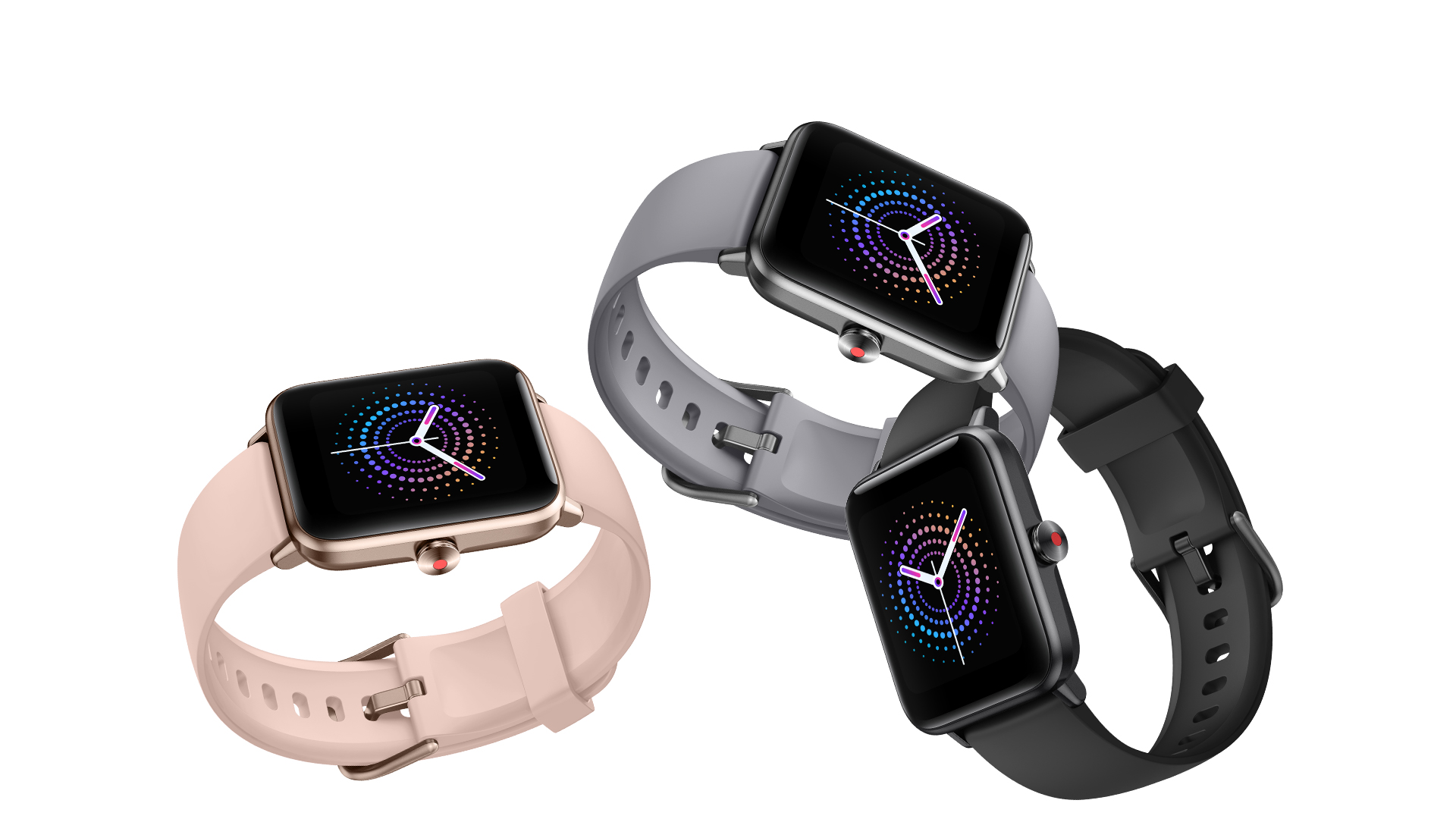
As the craze for fitness has been on the rise, many manufacturers have developed devices to help users track and be updated about their body levels. To cater to these needs, Ulefone recently launched 3 different smartwatches- Ulefone Watch, Ulefone Watch GPS, and Ulefone Watch Pro. All the 3 smartwatches come at a pocket-friendly price range and are up for sale at Ulefone’s official website.
The Ulefone Watch and Ulefone Watch GPS both have a 1.3-inch TFT touch display with well-spaced icons for convenient readability. With an advanced HX3600 optical sensor, these devices can conduct uninterrupted and precise heart rate monitoring for up to 24 hours. The female health tracking feature in these devices can record women’s menstrual cycle to keep them updated. The smartwatches also support sleep monitoring function. However, what sets them apart are functions like sports mode and battery.
Ulefone Watch features 9 modes that can track the calorie count of activities like yoga, hiking, dynamic cycling, and more. It also displays guided breathing exercises to help ease the body and mind. With up to 7.5 days of continuous performance and 50 days of standby on a single charge, this smartwatch offers versatility.
As the name suggests, Ulefone Watch GPS features a built-in GPS chip that comes in handy during outdoor adventures. With 14 sports modes, this smartwatch enables one to keep track of outdoor and indoor activities like running, walking, swimming, and more. Its powerful battery offers up to 7 days of working time and 40 days of standby time.
Ulefone Watch Pro features a 1.55-inch full-touch color LCD screen with high hardness for comfortable viewing. It is enhanced with various sensors to monitor the user’s heart, blood oxygen, sleep, and detect rapid eye movement (REM). Other features include pressure assessment, breathing training, women’s health tracking, and 14 sports modes to monitor indoor and outdoor exercises.
All the 3 smartwatches are enhanced with 5ATM waterproof built that can conveniently withstand low-velocity and shallow-water activities, including swimming. These Ulefone smartwatches allow the user to manage calls and get SNS reminders to keep them updated at all times. Their magnetic snap-on charger design further adds to the convenience. One can simply connect these watches to the Veryfit app to track the progress of daily activities, exercise, and health data. All the Ulefone smartwatches come in multiple color variants.
These devices are currently being sold for a discounted price on the company’s official website, where Ulefone Watch is priced at $39.99, Ulefone Watch GPS at $49.99, and Ulefone Watch Pro at $54.99.
The company is also conducting a giveaway where the lucky winners stand a chance to get a Ulefone Watch. Follow the rules and stay updated on the contest by clicking on the link here.
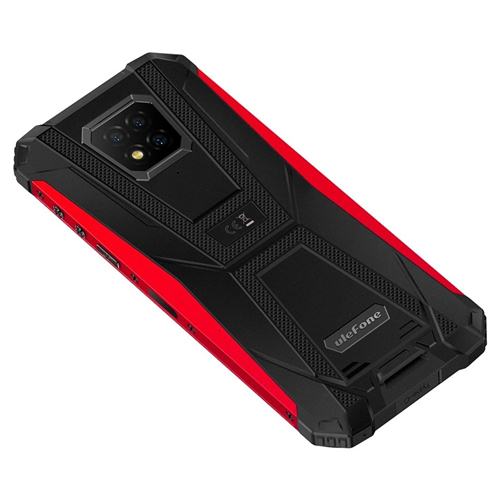
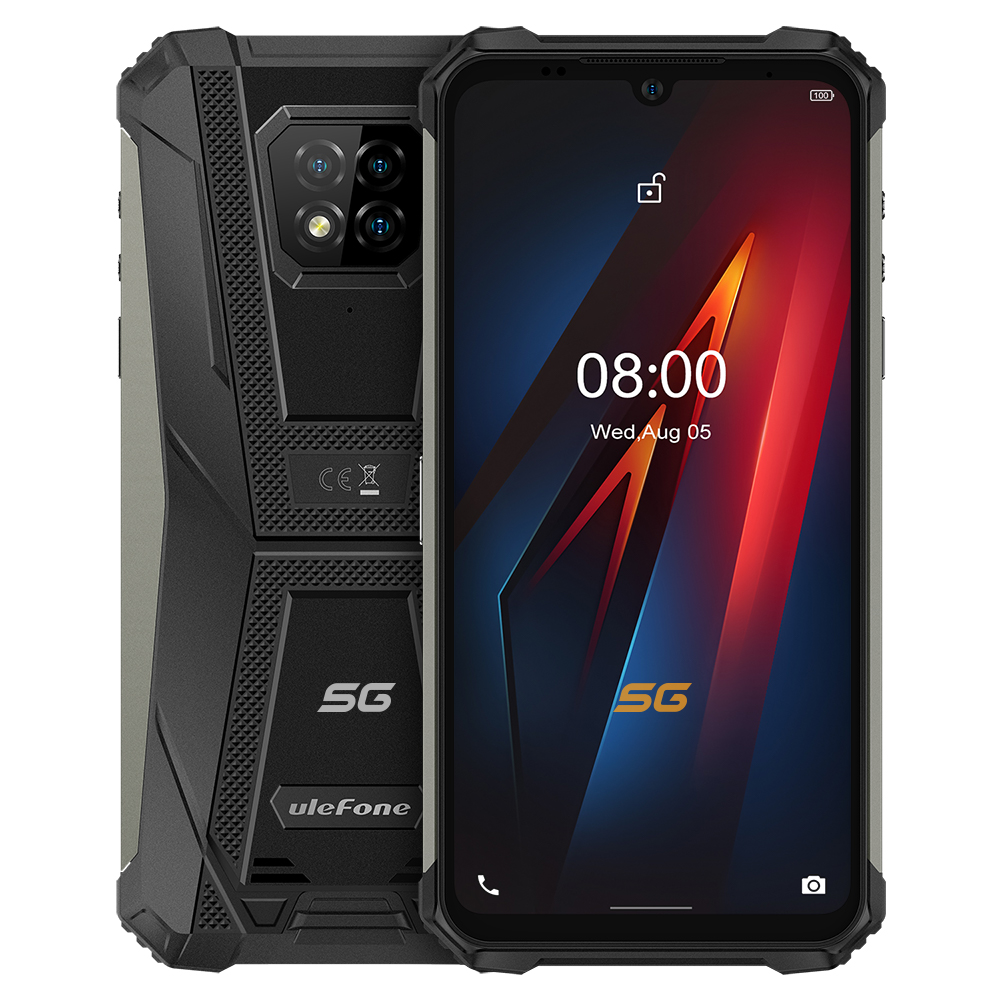
Ulefone is famous for making rugged smartphones among its wide range of devices. All the rugged phones belong to the Armor series, and recently, the company added on a new member to this collection called Ulefone Armor 8. To prove this phone’s ruggedness, the company conducted multiple tests to verify its claim for durability.
The test starts off with the phone being doused in alcohol and is later set on fire. The flames are put out by a fire extinguisher, after which the phone is checked for proper functioning. As a result, there was no visible damage by extreme temperatures or dust, and the phone worked perfectly fine.
For the next test, Armor 8 is repeatedly dropped from more than 1.5m on surfaces like lawn, concrete floor, and construction machinery. The smartphone endured a few scratches but remained functional. And for the last test, the phone was washed down by a hose/water-gun with high-pressure for quite some time; after which, the phone was just dabbed dry. Surprisingly it functioned efficiently despite shifting quite a bit due to the high water pressure.
Concluding the above tests, Armor 8 has certainly proved its durability. But apart from the sturdy built, this rugged smartphone also features a decent software configuration. It runs on the latest Android 10 OS and is powered by a MediaTek Helio P60 octa-core processor. Sporting a 6.1-inch 19.5:9 waterdrop screen, this device offers a fairly satisfactory viewing experience. It has 4GB of RAM and 64GB of internal storage. This Ulefone smartphone features a 16MP triple rear camera system, including a 5MP macro lens and a powerful 5580mAh with 15W fast charge for versatility. Functions like face and fingerprint unlock and payment portals like NFC and Google Pay further add to user convenience.
Ulefone Armor 8 is currently up for sale on Banggood at a discounted price of $139.99. Being a mid-range phone with decent configurations, it can be an ideal choice for people looking to upgrade their smartphones.
To know more about Ulefone Armor 8, readers can visit the official Ulefone website or click on the link here.
The OnePlus Buds has a companion app that allows you to configure the earbuds, find them, and also receive firmware updates that bring new features. However, the app is only compatible with select OnePlus phones (OnePlus 6 and up). This means that owners of older OnePlus phones or non-OnePlus phones who pick up OnePlus TWS earbuds will miss out on these features.
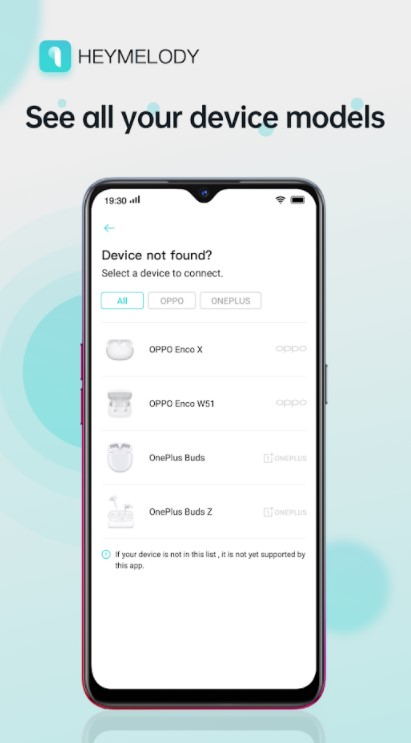
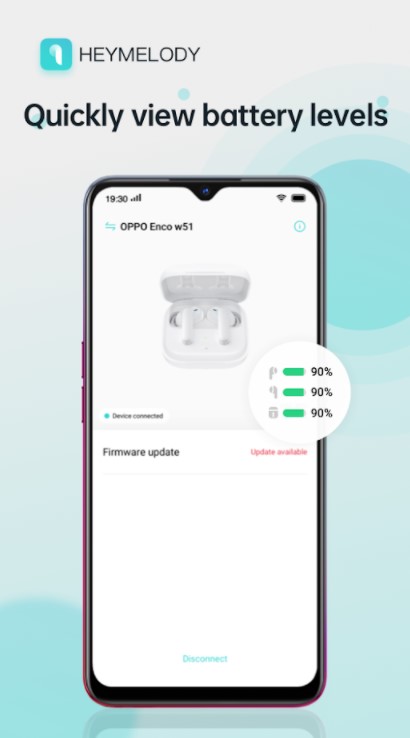
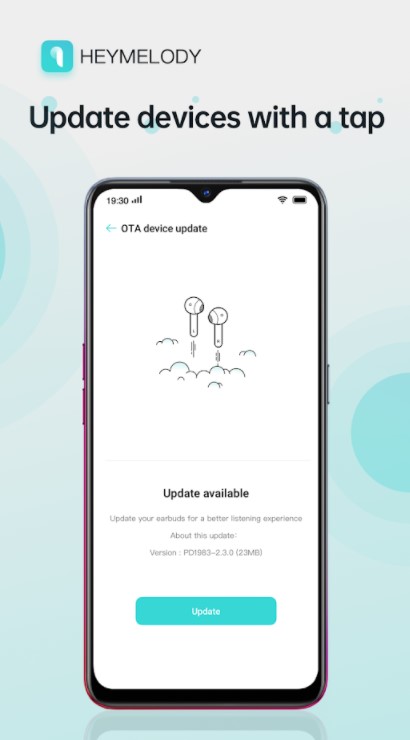
OnePlus has now released a new app called HeyMelody that allows owners of older OnePlus phones or non-OnePlus phones to enjoy some of the aforementioned features including firmware updates.
The HeyMeldoy app can be installed on any Android device running Android Marshmallow and up. While it is a OnePlus app, it works not only with the OnePlus Buds and OnePlus Buds Z but also with the newly-announced OPPO Enco X and OPPO Enco W51 earbuds.
Users will be able to pair their earbuds to their phones using the app, check the battery level of each earbud and charging case, and also receive firmware updates.
The app is still in development and may be unstable but if you are willing to give it a try, you can download it here.
Huawei first unveiled its HarmonyOS (Hongmeng OS in China) last year after the U.S government enacted a ban on the company. Huawei, in September, unveiled the HarmonyOS 2.0 at the company’s Developer’s Conference 2020. The HarmonyOS 2.0 incorporates smartphone adaptability for the first time and the company disclosed that it would launch a beta test version for smartphones for developers at the end of the year.
The president of Huawei’s Consumer Business Software department, Dr. Wang Chenglu, is reported to have hinted that the adaptation of Hongmeng OS 2.0 is currently progressing very well, and R&D is ready. He also stated that the new OS is expected to be released as scheduled in December.
According to previous details, Huawei and Honor branded phones which run on platforms such as Kirin 9000, Kirin 990 5G, Kirin 990, Kirin 985, Kirin 980, Kirin 820, Kirin 810, and Kirin 710 will continue to adapt to the HarmonyOS but models running EMUI 11 will be upgraded first.
Wang Chenglu also hinted that the Chinese tech giant started to internally develop the HarmonnyOS as early as May 2016 when it laid out the possible directions of the future market and technology. He hinted that the ROM is built on a special idea which gave as the decision to treat each isolated IoT device as a module. For example, the lamp is a display module, the TV is a display module with a speaker module. In this regard, while the user sees a connection between the two devices on the interface,HarmonyOS treat it as a connection of each module. This is said to be one of the core innovations of the OS which is believed to hold the ace to help the IoT industry solve the problem of failed interconnection.
Wang Chenglu also cited an illustration that he believes can help us understand how the OS works. He stated that in the future, as long as mobile phones and large screens all run on HarmonyOS, mobile phones can be transformed into professional microphones, while the TV can act as a media player that can be used to cut, tune or edit songs.
“In Huawei’s view, Hongmeng Operating System (HarmonyOS) is a set of operating systems developed for the Internet of Everything, and the mobile terminal industry has the most opportunity to develop in China,” the Huawei exec added.
The rollout will first happen in China but we believe Huawei will push it to other markets outside its home market.
The Vivo officially announced the 2020 Developer Conference earlier today (29th October 2020). The theme of this annual event was “Native Everything,” which will also have the company announce a new custom skin called Origin OS.
Previously, we had reported on Vivo possibly replacing Funtouch OS for a new custom skin. Now, it has been confirmed as the Chinese tech giant officially announced Origin OS. This new custom is also based on Android and is being made as a complete overhaul of the existing Funtouch OS. Vivo also took to the Chinese microblogging website, Weibo, to share the announcement.
The Vivo Developer Conference 2020 will focus on various different topics including apps, games, business cooperation, technology, IoT, and the new OS. Unfortunately, not a lot of information or finer details regarding the new custom skin is currently available. However, it has been confirmed as a remake of Funtouch, which might debut with the Vivo X60 series, as per reports. So stay tuned for more updates and for the Vivo Developer Conference 2020, since we will likely be covering the event as well.
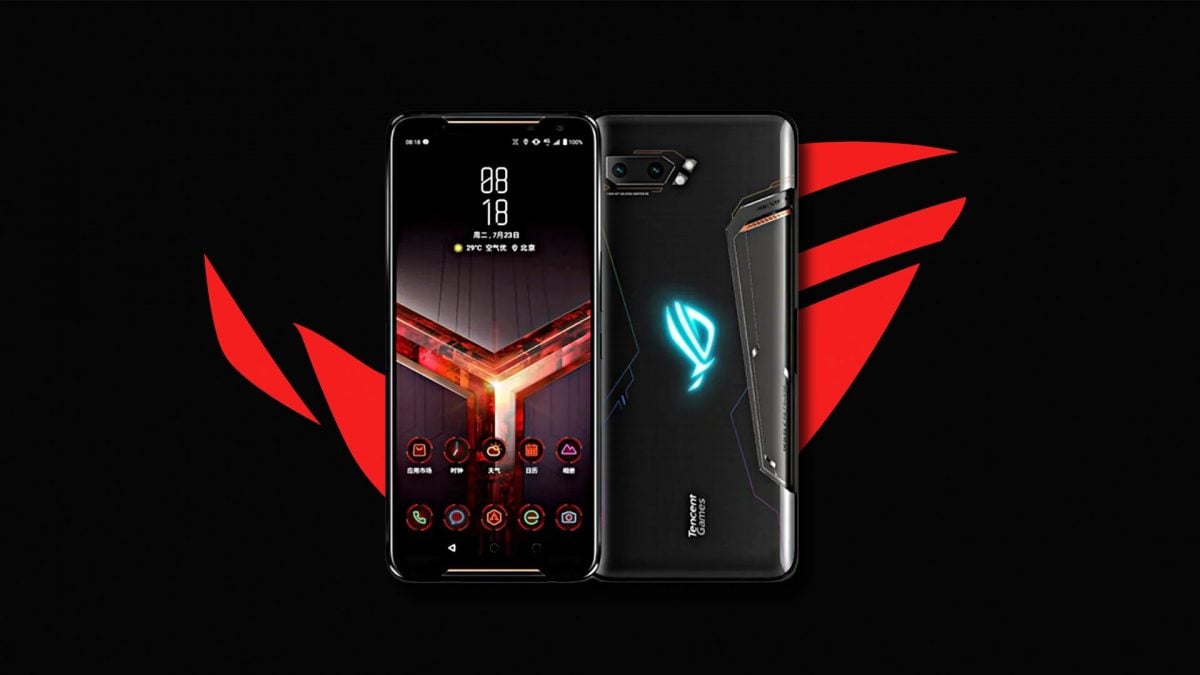
In July, ASUS ROG Phone 3 was made official in various markets including India. The company is selling three variants of the phone with a starting price of Rs 49,999. During the ongoing “Flipkart BIG DIWALI SALE” that begins from today, the ROG Phone 3 can be availed with a price cut of Rs 3,000 (~$40).
The ROG Phone 3 is available in the country in three choice such as 8 GB RAM + 128 GB storage for Rs 49,999, and 12 GB RAM + 128 GB storage for Rs 52,999 (~$711), and 12 GB RAM + 256 GB storage for Rs 57,999 (~$778). After a price cut of Rs 3,000, these three variants are now priced at Rs 46,999 (~$631), Rs 49,999 (~$671), and Rs 54,999 (~$738), respectively. The offer is valid till Nov. 4 on Flipkart.
Buyers who are looking forward to purchasing the ROG Phone 3 can opt for 3 months, 6 months, or 9 months no-cost EMI plans through Bajaj FinServ and credit/debit cards of all the banks that have partnered with the retailer site. Furthermore, users can benefit from a 10 percent instant discount of up to Rs 1,500 through credit/debit cards from Axis Bank during the ongoing sale on Flipkart.
The ROG Phone 3 has a 6.59-inch FHD+ AMOLED screen with support for 144Hz refresh rate support and a 270Hz touch sampling rate. The Android 10 OS along with ROG UI comes preinstalled on the gaming smartphone. The Snapdragon 865 Plus powers the device. The SoC is accompanied by LPPDR5 RAM and UFS 3.1 storage.
The triple camera system of the ROG Phone 3 includes a 64-megapixel Sony IMX686 main camera, a superwide lens of 13-megpaixel, and a 5-megapixel lens for macro shots. It has a frontal shooter of 24-megapixel. The massive 6,000mAh battery of the ROG Phone 3 comes with support for 30W rapid charging.
We use cookies on our website to give you the most relevant experience by remembering your preferences and repeat visits. By clicking “Accept”, you consent to the use of ALL the cookies.
This website uses cookies to improve your experience while you navigate through the website. Out of these, the cookies that are categorized as necessary are stored on your browser as they are essential for the working of basic functionalities of the website. We also use third-party cookies that help us analyze and understand how you use this website. These cookies will be stored in your browser only with your consent. You also have the option to opt-out of these cookies. But opting out of some of these cookies may affect your browsing experience.
Necessary cookies are absolutely essential for the website to function properly. This category only includes cookies that ensures basic functionalities and security features of the website. These cookies do not store any personal information.
Any cookies that may not be particularly necessary for the website to function and is used specifically to collect user personal data via analytics, ads, other embedded contents are termed as non-necessary cookies. It is mandatory to procure user consent prior to running these cookies on your website.







 As the name suggests, Ulefone Watch GPS features a built-in GPS chip that comes in handy during outdoor adventures. With 14 sports modes, this smartwatch enables one to keep track of outdoor and indoor activities like running, walking, swimming, and more. Its powerful battery offers up to 7 days of working time and 40 days of standby time.