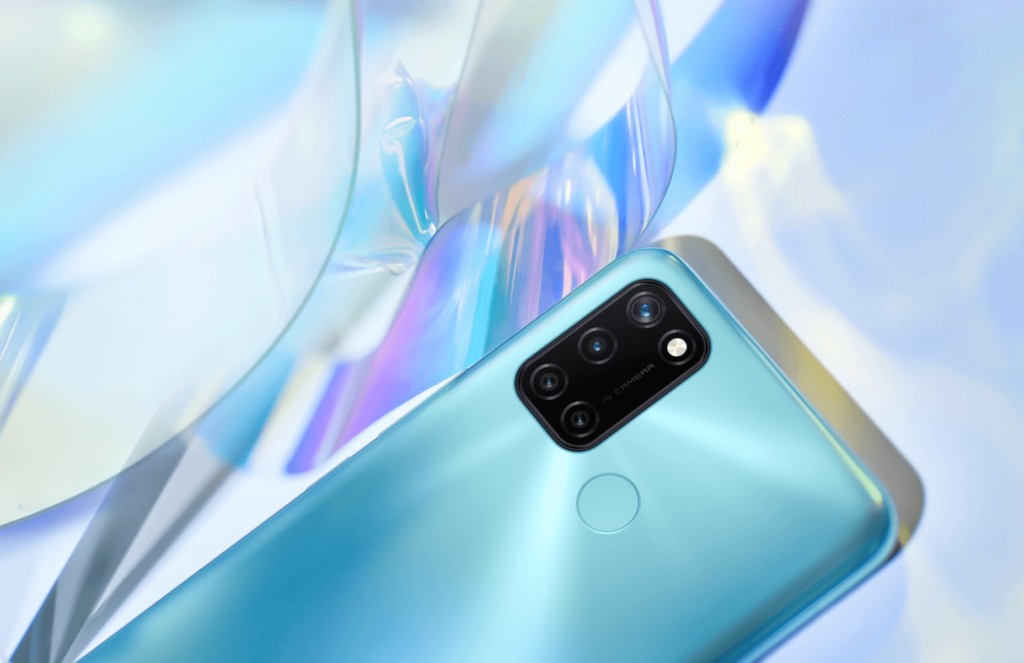
OnePlus silently announced the Nord N10 5G and N100 mid-range phones yesterday. At present, these are the cheapest smartphones from the OnePlus. OnePlus confirmed that both phones will be heading to markets like North America and Europe. A report by Android Centralclaims that the Nord N10 and N100 will not be releasing in India.
Weeks before the announcement of the Nord N10 5G and N100 the publication had spilled a lot of exclusive information on these phones. Now the same publication mentioned in the launch article of the Nord N10 5G and N100 that these devices will not be releasing in India. Hence, the Snapdragon 765G powered Nord will be the only OnePlus phone in the mid-range segment in the country.
OnePlus Nord N10 5G and N100 specifications and price
The OnePlus Nord N10 5G has a 6.49-inch IPS LCD screen with FHD+ resolution and a 90Hz refresh rate support. On the other side, the OnePlus Nord N100v has a 6.52-inch IPS LCD display that offers HD+ resolution and a 60Hz refresh rate. These phones are powered by Snapdragon 690 5G and Snapdragon 460, respectively.
The OnePlus Nord N10 5G has 6 GB of RAM, 128 GB of built-in storage, and a 4,300mAh battery with 30T Warp Charge support. The Nord N100 has 4 GB of RAM, 64 GB of storage, and a 5,000mAh battery with 18W charging support. Both phones have common features such as OxygenOS 10.5 based Android 10 OS, rear-facing fingerprint reader, microSD card slot, Wi-Fi 802.11ac, Bluetooth 5.0, GPS, and a 3.5mm audio jack.
The OnePlus Nord N10 and N100 feature 8-megapixel and 16-megapixel front-facing cameras, respectively. The N10 has a 64-megapixel + 8-megapixel + 2-megapixel + 2-megapixel quad-camera setup, while the N100 has a 13-megapixel + 2-megapixel + 2-megapixel triple camera setup.
The Nord N10 is priced £329/€329 (~$429) and comes in Midnight Ice hue. The N100 costs £179/€179 (~$233) and it can be availed in Midnight Frost color.
The Redmi K30S has dethroned iQOO Neo3, which has been exclusively available in China to become the most affordable Snapdragon 865 mobile platform. The phone features an attractive screen that supports up to 144Hz refresh rate. The device is backed by a huge battery that is coupled with fast charging support.
Redmi K30S specifications and features
The Redmi K30S measures 165.1 x 76.4 x 9.3mm and 216 grams. It is shielded by Gorilla Glass 5 on the front and rear. The 6.67-inch supports a Full HD+ resolution, a 20:9 aspect ratio, HDR10+, MEMC, 650nits brightness, and up to 144Hz refresh rate. The phone comes with support for AI face unlock and it has a side-facing fingerprint reader. The Android 10 OS that is skinned with MIUI 12 comes preloaded on the Redmi K30S.
The rear-facing triple camera system of the Redmi K30S is led by a 64-megapixel Sony IMX682 main camera with f/1.89 aperture. It is accompanied by a 13-megapixel ultrawide lens with a 123-degree field-of-view and a 5-megapixel macro shooter. It supports 1080p slow-motion video shooting and up to 8K video recording.
The Redmi K30S is powered by the Snapdragon 865 mobile platform. The SoC is assisted by up to 8 GB of LPPDR5 RAM and up to 256 GB of UFS 3.1 storage. The retail package of the Redmi K30S includes a 33W fast charger for its 5,000mAh battery. The phone comes with other features like dual SIM, 5G / 4G, Wi-Fi 6, Bluetooth 5.1, NFC for contactless payments, dual-frequency GPS, and dual linear stereo speakers. The Redmi K30S lacks support for a 3.5mm audio jack and external storage. As is known, the K30S is a rebranded version of the Xiaomi Mi 10T that debuted in global markets and India in the recent past.
Redmi K30S price and availability
Here is the pricing of the different variants of the Redmi K30S:
8 GB RAM + 128 GB storage – 2,599 Yuan (~$388)
8 GB RAM + 256 GB storage – 2,799 Yuan (~$418)
Color variants: Cosmic Black and Lunar Silver
During the upcoming Nov. 11 Singles’ Day sales in China, both models will be available for 2,299 Yuan (~$343) and 2,499 Yuan (~$373), respectively.
It’s been just a few days since Apple announced its next-generation iPhone 12 models in the market and details about the next year’s smartphones have started making rounds.
The newly launched iPhone 12 models are powered by the Apple A14 Bionic chipset and now a new report has surfaced online which reveals what to expect from the next-generation Apple A15 Bionic chipset which will power the iPhone 13 models.
A report coming from China Times claims that the A15 Bionic will be manufactured using the N5P node by TSMC, which is among the three variants of 5nm node being developed by the Taiwanese manufacturer.
It also adds that the mass-production for the same could start in the third quarter of the upcoming year, i.e. Q3 2021. Apple has reportedly started working on the same to avoid any delays as the company had to delay the launch of this year’s iPhone models because of the COVID-19 pandemic.
Recently, it was reported that TSMC’s facility for the production of 5nm chips has been fully booked by Apple and the reason for the preferential treatment is likely the fact that almost one-fifth of the company’s total revenue comes from the Cupertino-based tech giant.
This probably is the reason which led to Samsung getting orders from Qualcomm for the mass-production of the upcoming flagship chipset — Snapdragon 875, which is also being manufactured using a 5nm node.
While the Apple A15 Bionic chipset is expected to use the 5nm process, manufacturers like TSMC and Samsung have already started working on more advanced technologies, which includes a 3nm process and even a 2nm process, which will be ready for use in mass-production of chipsets in the coming years.
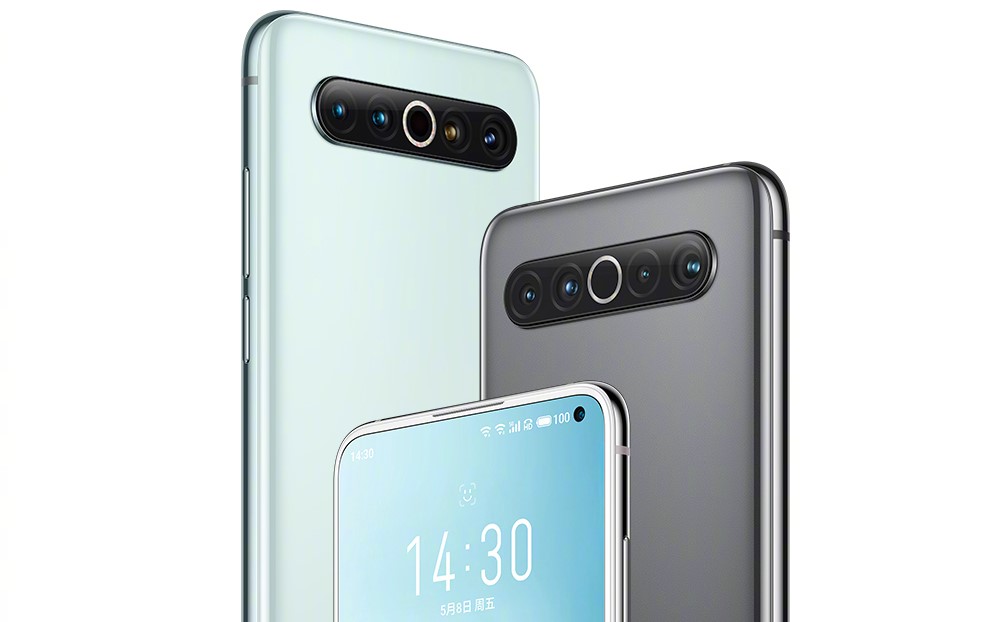
Earlier this year, in May, Meizu had launched its flagship smartphones in the form of the Meizu 17 series. Ever since the devices got launched, the company has been adding more and more features to the phones.
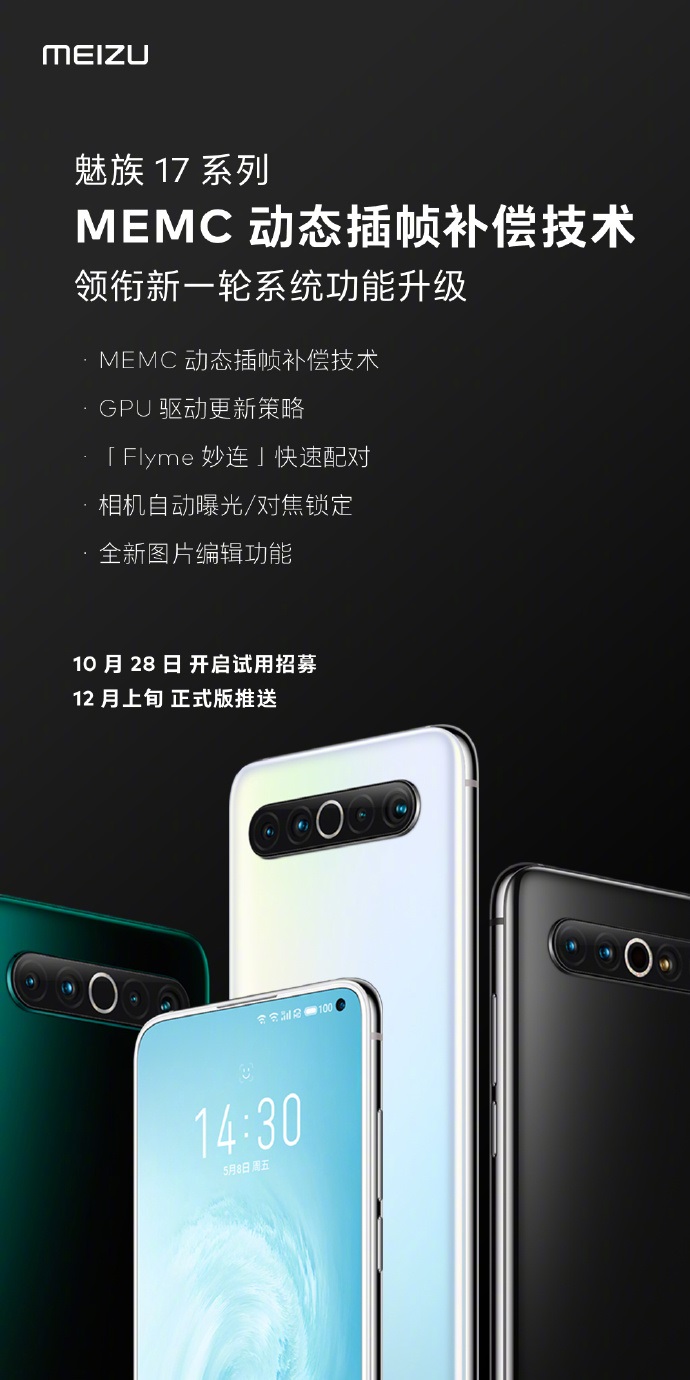
In the latest development, Meizu has announced that the Meizu 17 series smartphones will now get MEMC Dynamic Frame Compensation Technology. What it does is that it artificially adds frames to a video with a low frame rate so that it has a higher frame rate and offers a smooth effect. To know more about it, check out our detailed article about MEMC.
Along with MEMC technology, the new update will also offer improvements with regards to the graphics processor, “Flyme Magic” fast pairing system, automatic camera exposure, and introduce new photo editing features. Recruitment of beta testers for the update is expected to take place in the coming days while the update is expected to be available for users by the end of this year.
Soon after launching the flagship smartphones with 90Hz refresh rate support, the company released an update that enabled 120Hz refresh rate and added support for features like DC Dimming and HDR Playback.
After that, the company released an update that added support for stabilization for video recording from all cameras. Recently, the company had rolled out an important update with several bug fixes and a few new features.
In terms of specifications, both Meizu 17 and 17 Pro feature a 6.6-inch S-AMOLED Full HD+ display which comes with an in-display fingerprint sensor. Under the hood, the devices are powered by the Qualcomm Snapdragon 865 octa-core processor.
The Meizu 17 has a quad-camera setup that includes a 64-megapixel primary shooter, a 12-megapixel wide-angle lens, an 8-megapixel ultrawide sensor, and a 5-megapixel macro lens. On the other hand, the Pro model comes with a 64-megapixel main lens, an 8-megapixel telephoto shooter, a 32-megapixel ultrawide sensor, and a 0.3MP ToF lens.
Both the devices are equipped with a 20-megapixel front-facing snapper for taking selfies and video calling. Compared to the standard model, the Pro variant comes with features like ceramic chassis, LPDDR5 RAM, and 27W fast wireless charging.
A few days ago, China-based smartphone maker Smartisan launched its new flagship smartphone in its home country, dubbed as Smartisan Nut R2. This was the company’s first device after a long period of silence.
Now, days after announcing the device, it is now available for purchase in the Chinese market. The phone is available in two color options — Black and Green. The Black-colored model is available in two memory variants — 8GB RAM + 128GB Storage and 8GB RAM + 256GB storage. On the other hand, the Green-colored model comes is available in just the 8GB RAM + 256GB model.
As for the pricing, the 8GB + 128GB model is priced at 4,499 yuan, which is about $671 while the 8GB + 256GB costs 4,799 yuan, roughly $716. There’s also a limited-edition White color model that is not yet available for purchase.
The phone features a 6.67-inch Full HD+ AMOLED display with a screen resolution of 2340 x 1080 pixels, along with a 90Hz refresh rate and 180Hz touch latency. Under the hood, the device is powered by the Qualcomm Snapdragon 865 SoC. It comes packed with up to 16GB of LPDDR5 RAM and 512GB of UFS 3.1 internal storage.
In the camera department, it sports a quad-camera setup on the back that includes a 108-megapixel primary sensor, an 8-megapixel telephoto lens, a 13-megapixel ultra-wide lens, and a 5-megapixel macro lens. The camera configuration offers support for 3x optical zoom and 30x hybrid zoom, and 8K time-lapse photography. On the front side, it features a 20-megapixel snapper, taking care of the selfie and video calling needs.
It has support for dual-mode 5G connectivity, along with Wi-Fi 6 and NFC. The device comes with stereo speakers and DTS audio. There’s also a new slider button on the side that can quickly put the phone in silent mode. Running on the Android-based Smartisan OS 8.0, the is powered by a 4,510mAh battery that supports 55W fast charging technology.
Huawei has been releasing new smartphones at regular intervals, despite the company being restricted by the United States from sourcing technologies and components that are powered by or uses American technology.
But, with passing time, the company seems to be slowing getting its way forward as companies are being granted a license to continue doing business with the Chinese giant. After the likes of AMD and Intel, it is now Samsung which has received a green node from the United States government.
As per the report from Reuters, Samsung Display, a division of South Korean giant Samsung that develops display technologies, has been granted a license to continue supplying certain display panel products to Huawei Technologies.
But, it is still not clear whether Samsung Display will be able to export its OLED panels to Huawei as other firms in the supply chain that makes components necessary to manufacture panels would also have to get U.S. licenses.
Recently, LG Display, the rival of Samsung Display, had said that it needs to get a license to continue doing business with Huawei along with other companies are in the supply chain for making the display panels.
All the major companies that were doing business with Huawei before the tighter restrictions imposed by the U.S. have applied for required licenses to continue doing business with the Chinese giant.
Intel recently confirmed that it has been granted a license to supply chipsets to Huawei which are used in the company’s laptop products. Other companies like Qualcomm, MediaTek, Sony, Samsung Electronics, SK Hynix, and Kioxia, among others have also applied for a license with the United States.
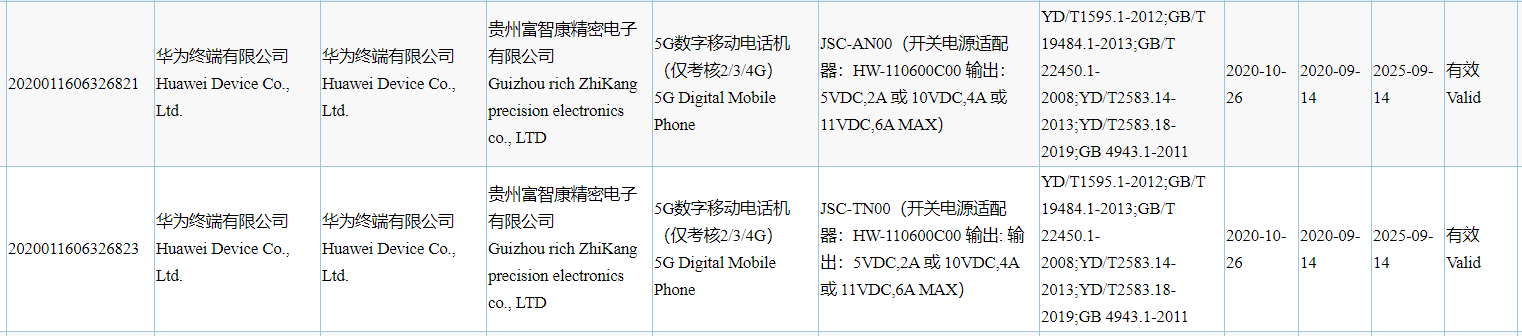
Recent reports have revealed that Huawei will be announcing the Huawei Nova 8 SE smartphone in November. The three phones that will be a part of the Nova 8 series include Nova 8 SE, Nova 8, and Nova 8 Pro. Today, one of these phones appeared in the database of the 3C authority of China.
In September, two Huawei phones with JSC-AN00 / JSC-TN00 and HJC-AN00 / HJC-TN00 model numbers were certified by China’s MIIT authority. The JSC-AN00 / TN00 phone has now received 3C certification. The 3C listing shows that the device could be shipping with a charger that has an “HW-110600C00” model number with up to 66W fast charging.
It is the same charger that Huawei offers with the Mate 40 models. It is unclear which of the three Nova 8 series phones have the JSC-AN00 / JSC-TN00 model number. However, speculations claim that it could either be the Nova 8 or Nova 8 Pro smartphone.
A Chinese tipster revealed that YOR-AN00 / TN00, YOR-AN10 / TN10, YOR-AN00S, and YOR-N49 model numbers belong to the Honor V40 series of flagship phones. The tipster claimed that the Nova 8 series and Honor V40 phones are also equipped with the same 66W charger.
He said that these devices will have a high refresh rate supporting a 6.72-inch dual punch-hole display with curved edges supplied by BOE or Visionox. He added that these devices could be powered by the Kirin 9000 series. Since yesterday’s leak revealed that the Nova 8 SE has a waterdrop notch display and Dimensity 720 / 800U chipset, it appears that the JSC-AN00 / TN00 model number does not belong to it.
The Nova 8 series from Huawei is expected to rival the upcoming Vivo X60 lineup and OPPO Reno5 series in China.
The iPhone 12 series are covered in glass on both sides. However, the glass on the front is a different type called Ceramic Shield and it does a very good job at protecting the screen as seen in the drop test video below.
Ceramic Shield is a new type of glass developed by Corning and Apple says it is tougher than any smartphone glass and provides 4x better drop performance. The drop test video made by PhoneBuff decided to see if this new display protection is as good as advertised by doing a drop test of the iPhone 12 and iPhone 12 Pro.
Long story short – if your new iPhone 12 phone falls, pray it lands face flat. As seen in the video, Ceramic Shield is indeed really great at surviving falls. After several drops, the display is uncracked and it works well. However, the glass on the back which is a different type is less strong and doesn’t even survive the first drop for the iPhone 12.
The Ceramic Shield isn’t the only addition that Apple has made to make the iPhone 12 series more durable, but it has also designed the glass to flush with the edge of the phone, so when it falls, the aluminum frame (or stainless in the case of the Pro models) absorb the shock too.
It is important to remind you that the drop test was carried out in a controlled environment and real-life scenarios will be different with a chance that your phone hits an object before it even gets to the floor. So, we will advise you to get a case, at least to protect the back of the phone and the sides from scuff marks when the phone does fall from your hands.
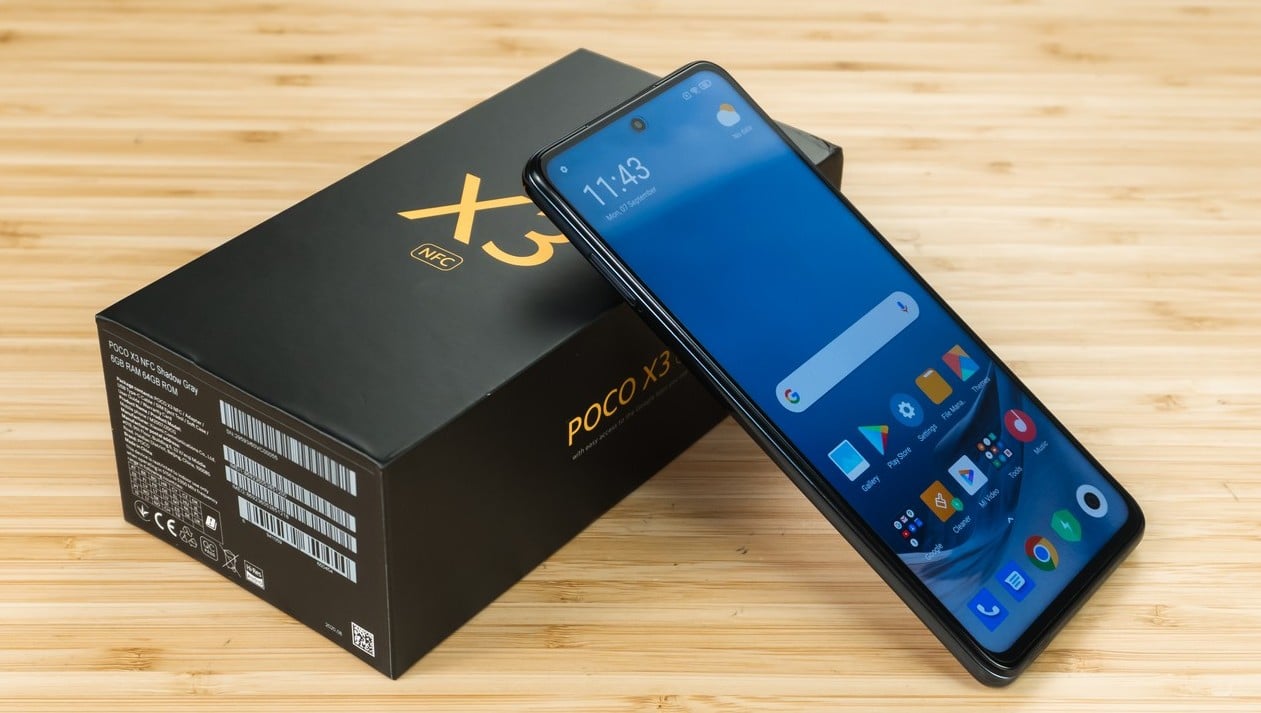
Recently, the Galaxy S20 was revealed to have an unofficial 96 Hz refresh rate option that wasn’t made available by Samsung. The guys at XDA Developers were able to force the device to load the 96 Hz refresh rate which will offer a better battery consumption than 120 Hz. A similar tweak has now come to the POCO X3 which allows you to keep the device locked on 120Hz, thanks to XDA member Slim K.
The POCO X3 as you may recall comes with a 120Hz refresh rate just like its predecessor. However, the drag is that POCO included a software feature known as Dynamic Refresh Rate. This feature intelligently adjusts the display refresh rate as a way to optimize battery usage. Thus, even when the refresh rate is set at full blast 120Hz by the user, the feature still reduces the refresh rate based on scenarios. For instance, the refresh rate will fall down to 60Hz during video streaming and even further down to 50Hz when scrolling through static images. While gaming, it then bumps up to 120Hz. The switch isn’t that smooth as it causes the phone to stutter, albeit momentarily but it is noticeable.
The discovery by XDA Member Slim K allows users to disable Dynamic Refresh Rate, thus unlocking the super-smooth 120Hz refresh rate in all apps. However, to be able to do this, you’ll need to unlock the bootloader and root the phone with Magisk v21.0. Mind you, this voids the warranty the phone has.
We should also point out that keeping the refresh rate permanently hooked on to 120Hz will have a huge toll on battery life. The smartphone comes with a massive 6000mAh battery for the non-NFC version released in India and a 5,160mAh battery for the NFC version so that may not be a big issue.
You can check out the step-by-step guide to disable the Dynamic refresh Rate from the XDA Forum thread from here.
Last year, Amazon announced its first wireless earbuds dubbed the Echo Buds. The Alexa-powered $130 earbuds have active noise cancellation and a case that supports wired charging via a MicroUSB port. Now, a successor is on the way and it will support wireless charging.
The info comes from listings of an Anker wireless charger at the FCC and Wireless Power Consortium that reveals the second-gen Echo Buds will have support for wireless charging.
A report by The Verge states the FCC listing is for an Anker wireless charging pad whose official name is PowerWave Pad for Amazon Echo Buds (2nd Gen with Wireless Charging)”.
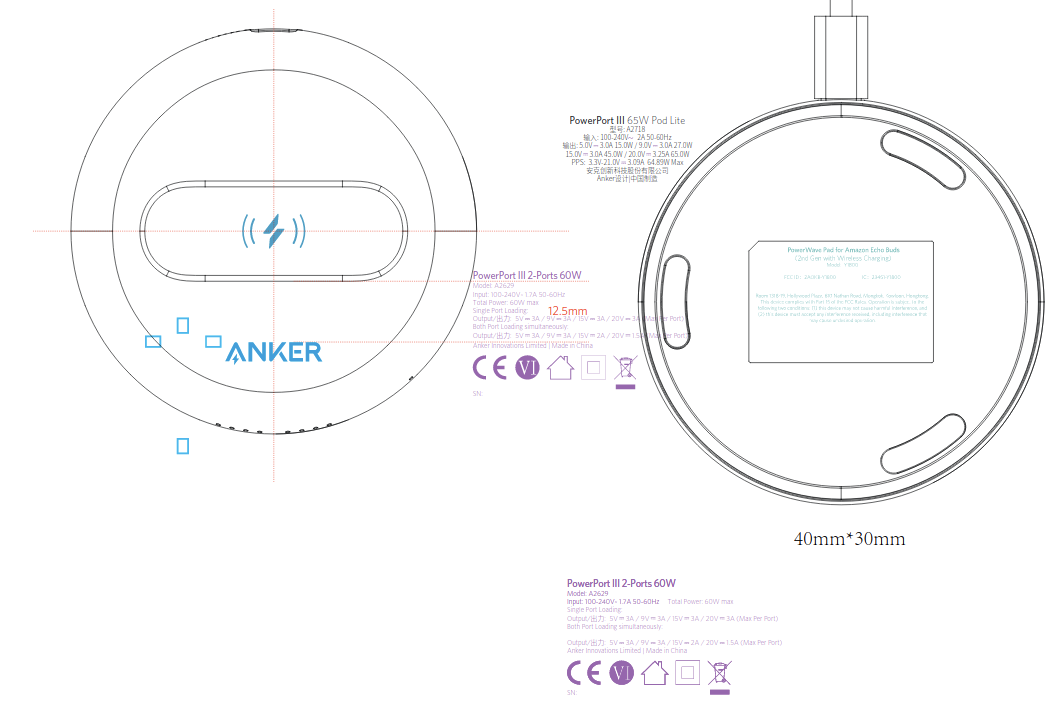
We decided to check the database of the Wireless Power Consortium (WPC) and found that the Anker wireless charger has also been certified there. The listing even includes a render of the charger that gives us an early look at the final product.
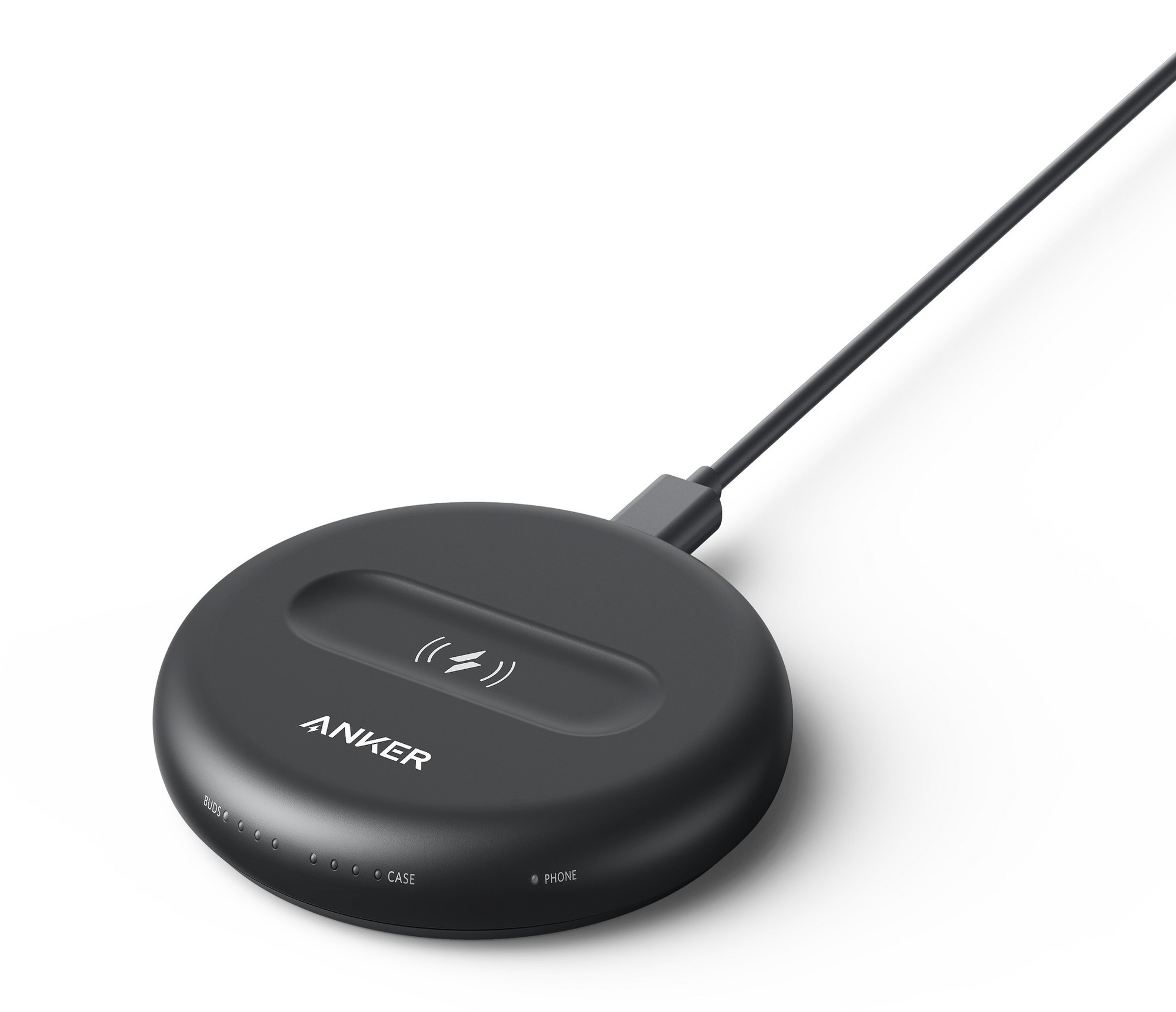
The image shows the Anker PowerWave Pad for Amazon Echo Buds (2nd Gen with Wireless Charging) is shaped like a round pebble and will come in black with a matte finish. While we are not sure, we want to believe the port at the back where the cable goes into the charger is a USB-C port. The top of the charger has a recess shaped like a pill, and it is speculated that the 2nd Gen Echo Buds may have a similar shape.
There are a total of 9 LEDs on the charger – four are placed beside an inscription that reads “BUDS“, another set of four LEDs are next to an inscription that says “CASE”, and the last is next to an inscription that says “PHONE”. Our theory is that the wireless charger will be able to indicate the battery level of not just the case but also the buds when charging which is why there are LEDs labeled “BUDS” and “CASE”. The LED labeled ”PHONE” should light up when you place a phone on the charger.
The original Echo Buds launched more than a year ago and the timing of these listings may be a hint a new model isn’t far off.
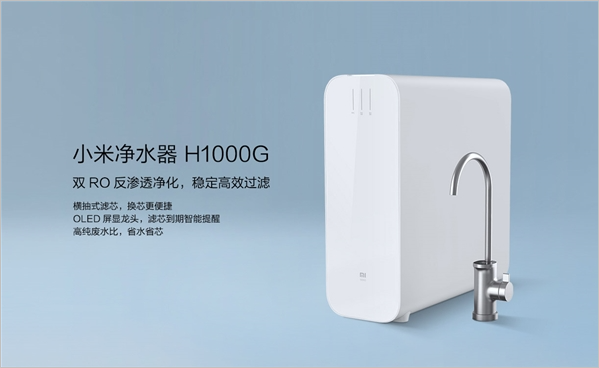
Just a couple of days back, Xiaomi launched the Mi Water Purifier H600G with a dual outlet design and 600G higher flux RO membrane. Just a few days after, the company released the Mi Water Purifier H1000G. The product carries a price tag of 3999 yuan (~$595) but early adopters can pick up the model for 2999 yuan ($446). It is scheduled to go on sale on November 1 via Xiaomi Youpin.
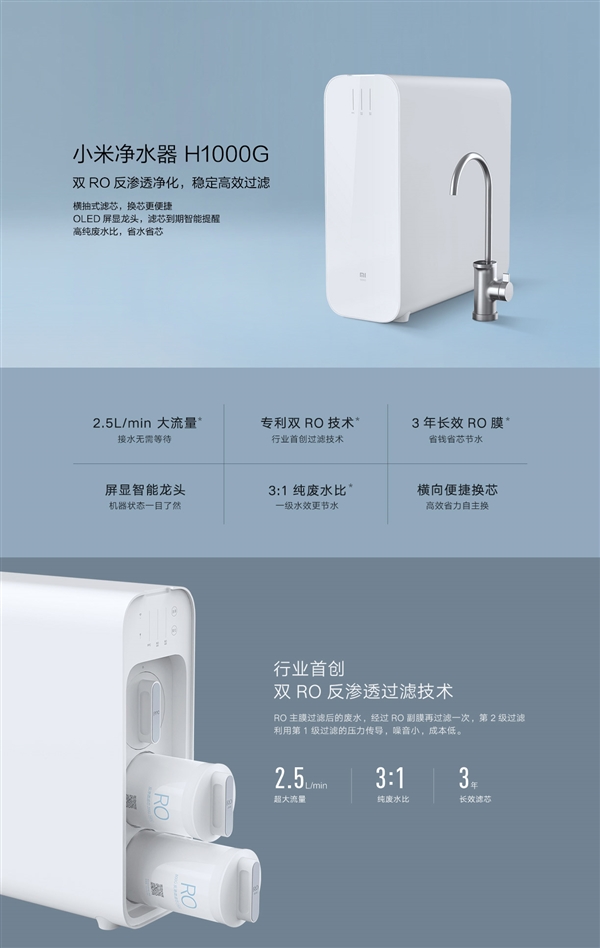
The Mi Water Purifier H1000G is Xiaomi’s water purifier with the strongest water purification capacity, the most water-saving and the fastest water output so far. It can purify 2.5L of water in 1 minute, which is close to the domestic water supply need of an average home.
The water purifier is said to have a stable 3:1 pure/wastewater ratio, which is higher than the national first-class water efficiency. In terms of water purification technology, the machine adopts the industry’s first double RO reverse osmosis filtration technology. The wastewater filtered by the RO main membrane is filtered again through the RO secondary membrane. The second stage filtration uses the pressure transmission of the first stage filtration, with low noise and low cost.
In addition to the double RO membrane, the three-stage filter element also includes folded PP cotton, pre-activated carbon, scale inhibitor, post-activated carbon, etc.
In terms of cost, the RO-800G filter element can be replaced after 3 years, and the cost of using it for the first three years is less than 1 yuan.
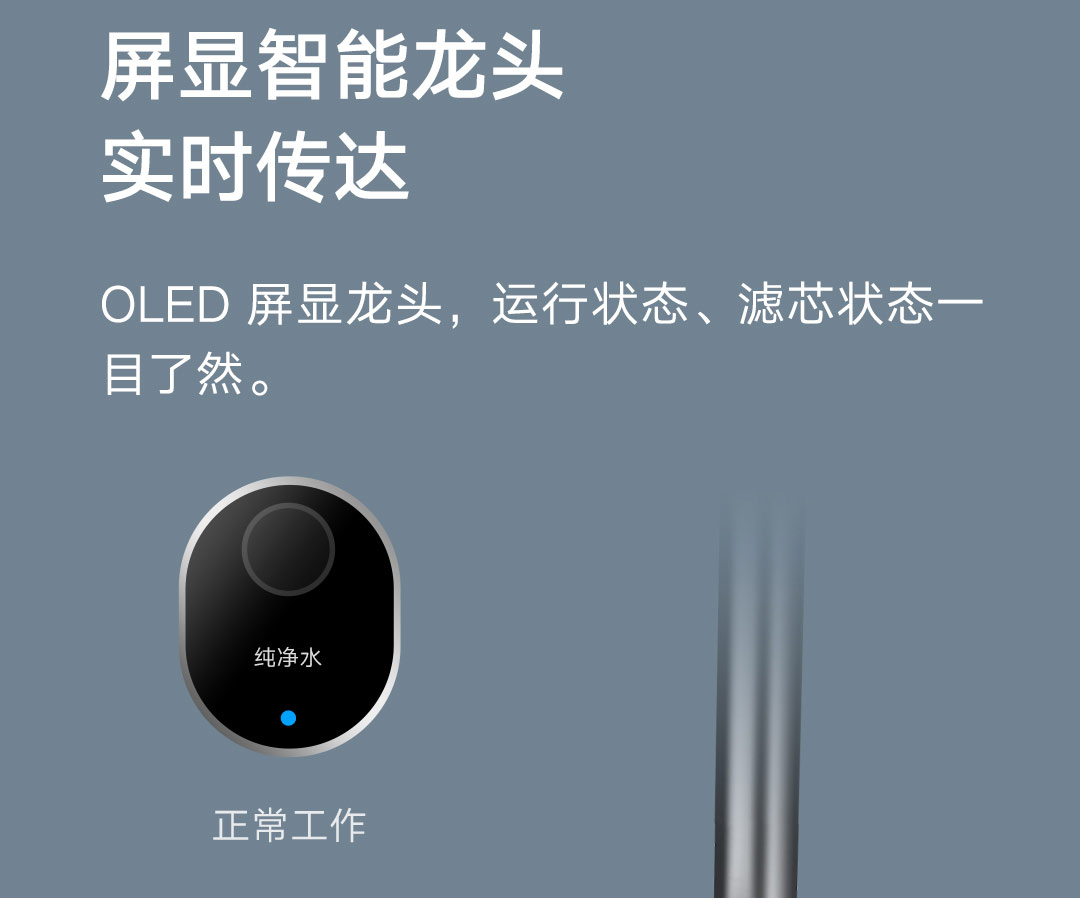
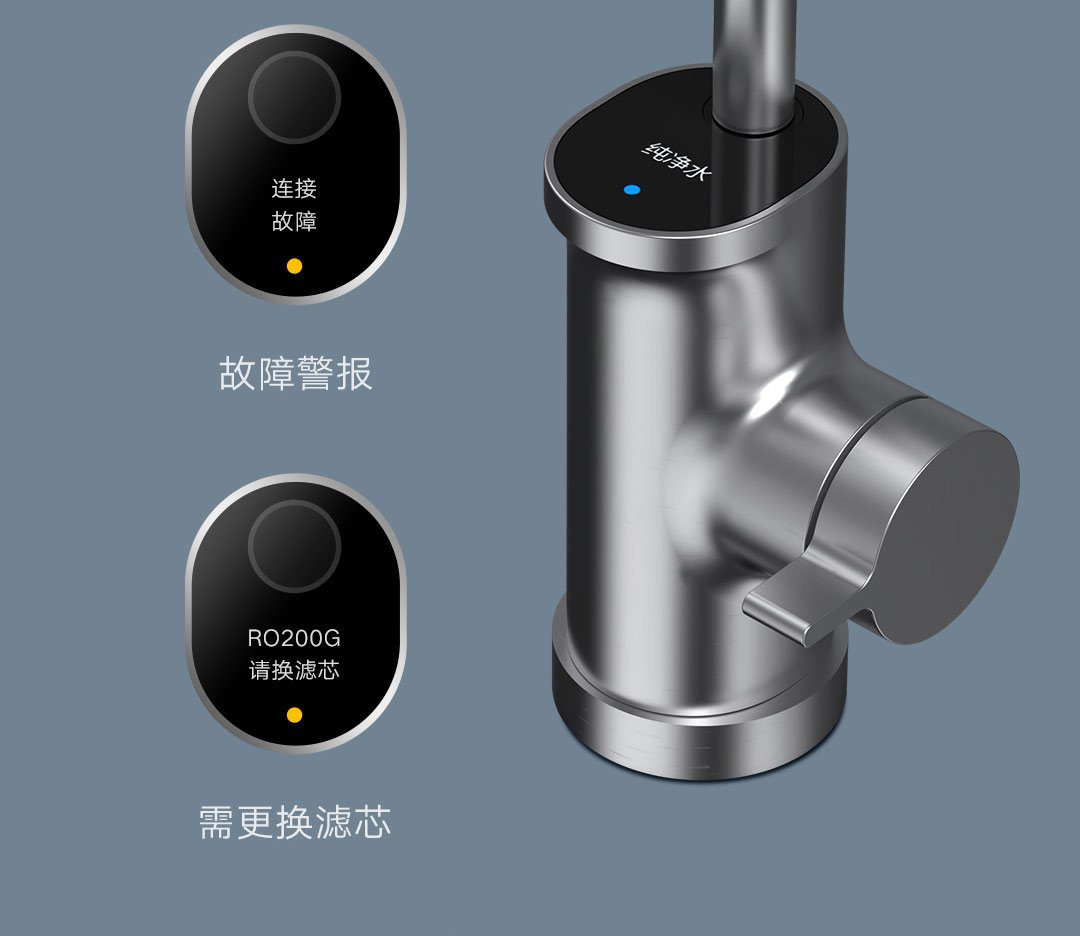
In addition, the Mi Water Purifier H1000G comes with a dedicated smart faucet which is equipped with an OLED display screen. The display screen shows the water purification status. It equally features a horizontal suction filter element and a design height of 43 cm with a water storage tank.
The new water purifier is also a smart home product, which means it can be paired with the MIJIA app. Through the app, users can check water quality, filter life, and other information in real-time.
Flagship killers are here to stay. With top-tier flagships becoming every day more expensive, the attention of the consumers moved mainly to affordable flagships and upper-midrange phones. Xiaomi and Realme are two of the leading company in the flagship killers segment and they released devices with incredibly high value for money this year. The latest one comes from Xiaomi and it is the Mi 10T Pro, the successor of the Mi 9T Pro also known as Redmi K20 Pro in China and India. Realme released three flagship killers this year, two of which come with 5G connectivity just like the Xiaomi Mi 10T Pro: we are talking about the Realme X7 Pro and the Realme X50 Pro 5G. Here is a comparison between Xiaomi and Realme’s affordable flagships.
Xiaomi Mi 10T Pro vs Realme X7 Pro vs Realme X50 Pro
Xiaomi Mi 10T Pro
Realme X50 Pro
Realme X7 Pro
DIMENSIONS AND WEIGHT
165.1 x 76.4 x 9.3 mm, 218 g
159 x 74.2 x 8.9 mm, 209 g
160.8 x 75.1 x 8.5 mm, 184 g
DISPLAY
6.67 inches, 1080 x 2400p (Full HD+), IPS LCD
6.44 inches, 1080 x 2400p (Full HD+), Super AMOLED
6.55 inches, 1080 x 2400p (Full HD+), Super AMOLED
Triple 108 + 13 + 5 MP, f/1.7 + f/2.4 + f/2.4
20 MP f/2.2 front camera
Quad 64 + 12 + 8 + 2 MP, f/1.8 + f/2.5 + f/2.3 + f/2.4
Dual 32 + 8 MP f/2.5 and f/2.2 front camera
Quad 64 + 8 + 2 + 2 MP f/1.8, f/2.3, f/2.4 and f/2.4
32 MP f/2.5 front camera
BATTERY
5000 mAh, fast charging 33W
4200 mAh, fast charging 65W
4500 mAh, fast charging 65W
ADDITIONAL FEATURES
Dual SIM slot, 5G
Dual SIM slot, 5G
Dual SIM slot, 5G
Design
Realme X7 Pro has an amazing design. It is thinner and lighter than its rivals, and it is made of premium materials. Realme X50 Pro 5G has a less elegant dual punch-hole, but the camera module on the rear is less invasive and the phone is more compact. Xiaomi Mi 10T Pro is the biggest, heaviest and thickest device of the trio, that is why I do not like it much. Realme X7 Pro and Realme X50 Pro 5G have an under-display fingerprint scanner, while Xiaomi Mi 10T Pro has a side-mounted sensor making the phone thicker.
Display
The most impressive display belongs to the Realme X7 Pro 5G. In terms of dimensions, its AMOLED panel sits in the middle with a diagonal of 6.55 inches, but it is more interesting than the Realme X50 Pro 5G because it has a higher 120 Hz refresh rate. On the other hand, Realme X50 Pro 5G supports the HDR10+ standard. The Xiaomi Mi 10T Pro has the highest refresh rate with 144 Hz, but it has an IPS display, that is the reason why it loses this comparison. It is a great IPS panel, but its image quality does not reach the level of those AMOLED displays.
Hardware/Software
If you need the most powerful hardware, you must go for the Realme X50 Pro 5G as it sports a Snapdragon 865 chipset, up to 12 GB of RAM, and up to 256 GB of UFS 3.0 internal storage. The Xiaomi Mi 10T Pro has a Snapdragon 865 chipset as well, but it offers a max of 8 GB of RAM paired with its UFS 3.1 native storage. The Dimensity 1000+ chipset found on the Realme X7 Pro is a great flagship chipset, but it is inferior to the Snapdragon 865. Each of these devices comes with Android 10 out of the box: even the Xiaomi Mi 10T Pro is based on Android 10, despite it is very recent and it runs MIUI 12.
Camera
The most convincing camera phone is the Xiaomi Mi 10T Pro. It has the best main camera: a 108 MP sensor with OIS which is able to record videos with 8K resolution. On the other hand, Realme X50 Pro 5G is more interesting when it comes to zoom and front cameras: it is the only with a telephoto sensor and it has a dual ultrawide front camera with 32 and 8 MP resolutions. Realme X7 Pro has a midrange-class rear camera which can not compete with its opponents.
Battery
Xiaomi Mi 10T Pro has the biggest battery with a 5000 mAh capacity, but Realme X7 Pro and Realme X50 Pro 5G support faster charging thanks to their 65W power.
Price
Xiaomi Mi 10T Pro and Realme X50 Pro 5G are priced €599/$707 globally in their base variants, while Realme X7 Pro is only present in China where it carries a €347/$410 starting price. Due to its great display, amazing hardware, pretty nice cameras, and very fast charging, Realme X50 Pro 5G looks the most complete device of the trio, despite it is older. Xiaomi Mi 10T Pro offers a better photo quality and a bigger battery, but it comes with an IPS display and not everyone likes it on a flagship killer. Realme X7 Pro has the highest value for money but it is a slightly inferior phone.
Today, OnePlus announced the Nord N10 5G, its second 5G mid-range phone this year. The phone will go on sale first in the UK and Europe at a price tag of £329 and €329 respectively before landing in North America.
While the OnePlus Nord N10 5G does pack decent specs, the category and price range it belongs to is packed full with several options. This post is a list of five alternative budget 5G phones you can purchase. Do note that this list of devices is in no particular order.
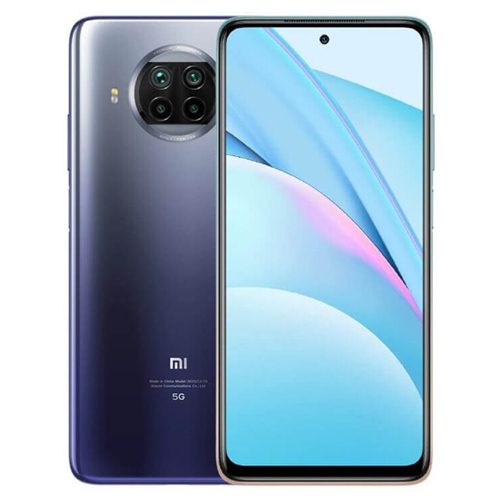
Mi 10T Lite 5G
The Mi 10T Lite 5G is a new phone that launched this month. It is the least powerful model of the Mi 10T series but is also the cheapest. Nevertheless, this budget 5G phone has a lot going for it.
The Mi 10T Lite has a 6.67-inch display with a centered punch hole in the middle. This is an LCD display like you have on the OnePlus Nord N10 5G but Xiaomi’s phone has a higher 120Hz refresh rate and AdaptiveSync that automatically switches between refresh rates based on the content on your screen. The phone is powered by the Snapdragon 750G and comes with 6GB of RAM and 64GB or 128GB of storage with a dedicated MicroSD card slot.
There is a 64MP + 8MP + 2MP + 2MP quad-camera setup on the back while a 16MP camera is in front for taking selfies. It also has a bigger 4820mAh battery and supports 33W fast charging. There is NFC, a 360° ambient light sensor, IR blaster, stereo speakers, and a side-mounted fingerprint scanner.
The Mi 10 Lite packs better specs than OnePlus’s new phone and is also cheaper in the UK, selling for £229 for the 64GB version and £249 for the 128GB version. You can even grab the base model for £199.00 today. Hurry, there are only a few hours left. In other parts of Europe such as Germany, the phone sells for €279.90 for the base model and €349.90 for the 128GB version. That sure is more expensive than the OnePlus Nord N10 5G but it offers more in terms of features.
Mi 10 Lite 5G
Before the Mi 10T Lite 5G, there was the Mi 10 Lite 5G. If you prefer an OLED display, then this should do it for you, however, its 6.57-inch FHD+ HDR10+ screen has a waterdrop notch and it only has a 60Hz refresh rate.
The Mi 10 Lite 5G also has a 48MP + 8MP + 2MP + 2MP quad-camera setup but its selfie camera is a 16MP sensor. You do get the Snapdragon 765G processor with up to 8GB of RAM and 256GB of storage. There is no storage expansion support but it has an in-display fingerprint scanner, NFC, stereo speakers, and an IR blaster. Its battery is slightly smaller than that of the Nord N10 5G at 4160mAh and it supports a much slower 20W fast charge.
The Mi 10 Lite is £349/€349 for the 6+128GB version and £299/€309 for the 6+64GB version.
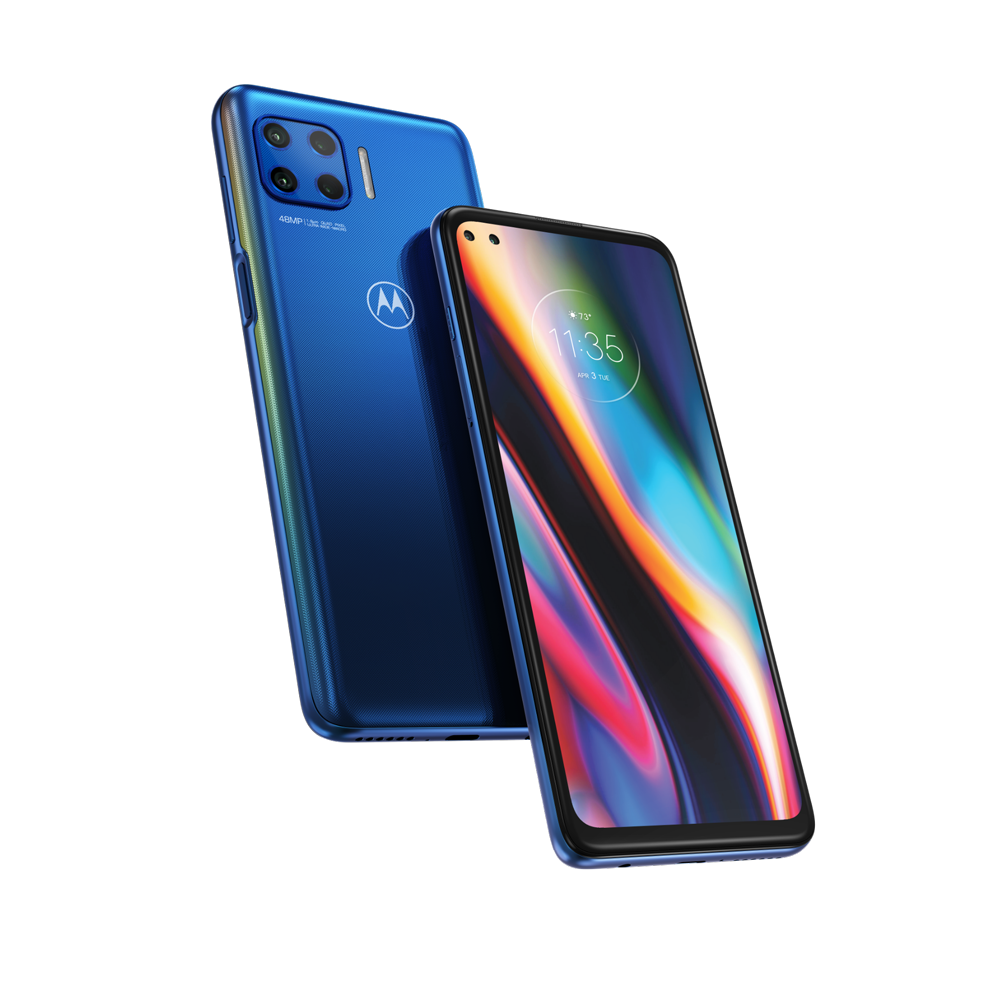
Moto G 5G Plus
Motorola’s Moto G 5G Plus is the first Moto G 5G phone and it keeps the affordable price tag the series is known for. Starting at €349, the phone has a 6.7-inch FHD+ display with a 90Hz refresh rate and two separate holes in the screen for front-facing cameras.
It is powered by the Snapdragon 765 processor and has up to 6GB of RAM and 128GB of storage. Just like the Nord N10 5G, and the other two phones mentioned above, the Moto G 5G Plus has quad rear cameras – a 48MP primary camera, an 8MP ultrawide angle camera, a 5MP macro camera, and a 2MP depth camera. Its primary front camera is a 16MP sensor paired with an 8MP ultrawide angle camera.
Other features are a side-mounted fingerprint scanner, NFC, a dedicated Google Assistant button, and a 5000mAh battery with support for 20W fast charging. The base model with 4GB RAM and 64GB of storage is €349 while the 6+128GB version is €399.
OPPO Reno4 Z 5G
The Reno4 Z 5G is another affordable 5G phone that launched earlier this month in Europe. Unlike the other devices on this list that are powered by Qualcomm processor, the Reno4 Z 5G has MediaTek’s Dimensity 800 chipset inside it.
The screen is a 6.57-inch FHD+ LCD screen with a 120Hz refresh rate and a pill-shaped punch-hole for dual front-facing cameras. The processor is paired with 8GB of RAM, more than the Nord N10 5G has but you get 128GB of non-expandable storage.
You also get a 48MP quad-camera setup on the back which includes an 8MP ultrawide angle camera and two 2MP sensors. The front cameras are a 16MP + 2MP combo with an ultrawide angle lens. You get a smaller 4000mAh battery and a much slower 18W fast charging. There is also NFC, an audio jack, and a side-mounted fingerprint scanner.
The phone is available for purchase for £329.99 and if you order between now and November 13, you get a free pair of OPPO Enco W31 TWS earbuds that are priced at £89.
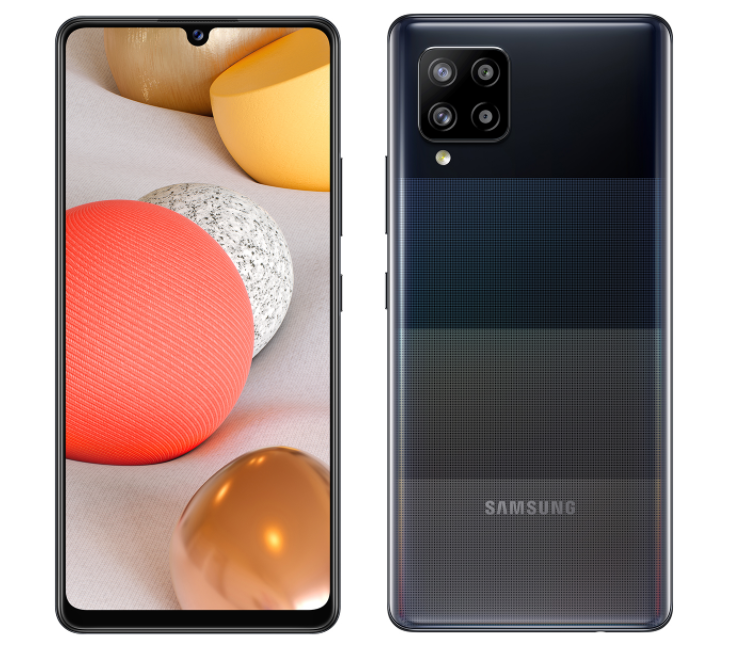
Samsung Galaxy A42 5G
The Galaxy A42 5G will arrive in Europe next month but it is still worthy of being on this list. The mid-range 5G phone will sell for £349/€369 when it goes on sale on November 6, and for that price, you get a phone powered by the Snapdragon 750G processor.
The phone also has a 6.6-inch Super AMOLED display albeit HD+. The variant that will be sold in the UK has 4GB of RAM and 128GB of storage. It also has a 48MP quad-camera setup that includes an 8MP ultrawide angle camera, a 5MP macro camera, and a 5MP depth of field camera. A 20MP selfie camera sits in the notch in the display. There is also a 5000mAh battery that charges at a disappointing 15W.
The Galaxy A42 5G also has an in-display fingerprint scanner, support for MicroSD card, and NFC.
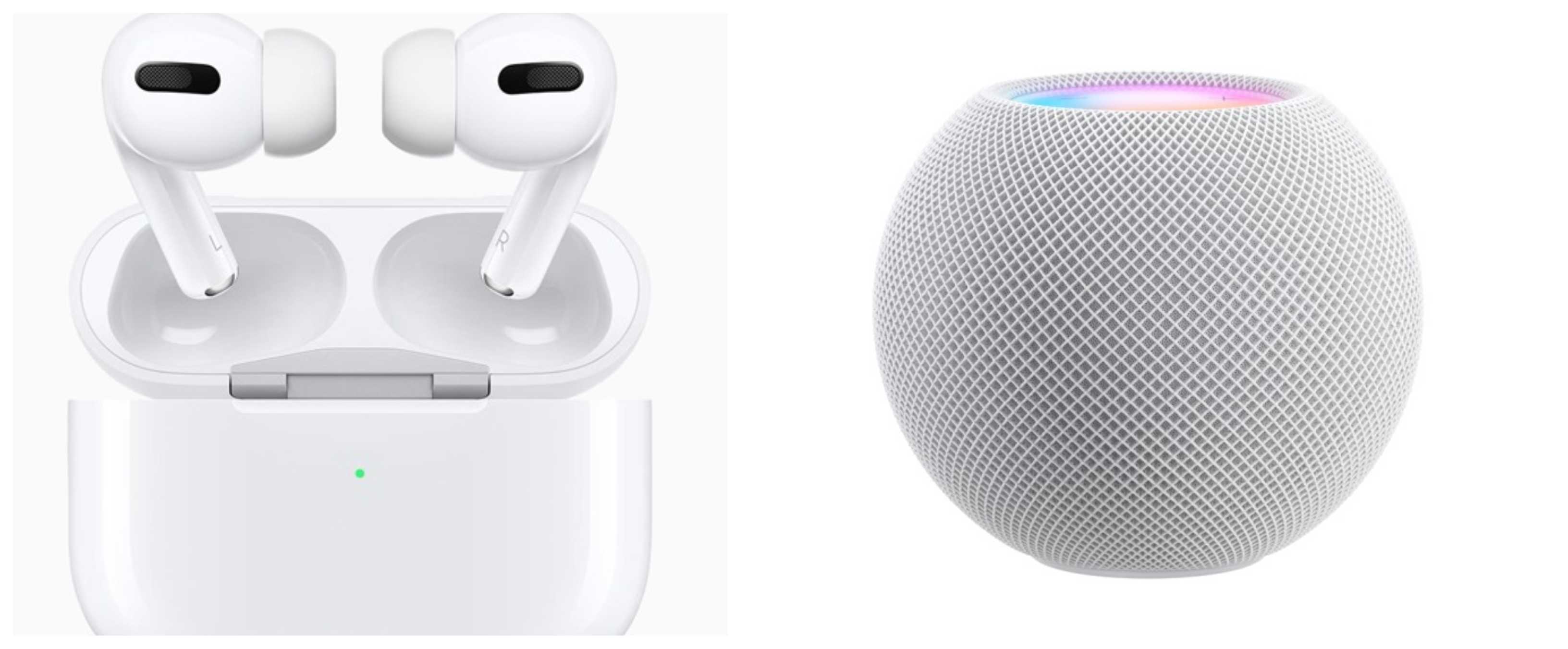
Apple recently announced a new HomePod Mini, along with the iPhone 12 series. Now, a report by Bloomberg says the company is gearing up to launch more Audio products including low-end AirPods in 2021.
Citing people familiar with the matter, Bloomberg’s report says(via TechRadar), Apple is working on the next entry-level Airpods( Tentative: AirPods 3), AirPods Pro 2nd gen, and a one more HomePod. This new HomePod is likely to take a spot between the Original HomePod(2018), and Mini(2020). Now, this is a bit surprising considering the Mini launched only a couple of weeks back.
AirPods 3, and AirPods Pro 2nd gen – Designs
Regarding the AirPods 3, the report says the design will be similar to the current AirPods Pro. If reports are true, Apple will shorten the stem and introduce in-ear design with ear tips for the new AirPods. This is a welcoming change considering the old design doesn’t seal your ears perfectly. Also, Apple will reportedly improve battery life for the AirPods 3.
Currently, Apple promises playback, talk time of 5hrs & 3hrs with each earbud, and 24hrs & 18hrs with charging case respectively. This model, however, isn’t going to feature ANC(Active Noise Cancellation) like the Pro version says the report. This negates an earlier report from last year that said the AirPods 3 will have ANC.
For the AirPods Pro 2nd gen, Apple is reportedly looking to get inspiration from Google, and Samsung. It is likely to eliminate the stem and sport a rounded design. Apparently, it is already testing a design that has a rounded shape to fill the user’s ear more. Looks like Apple wants to borrow some pages off Google’s Pixel Buds, and Samsung’s latest Galaxy Buds.
Besides, Apple has reportedly found it difficult to incorporate the ANC, antennas, microphones inside the new rounded design. Hence, don’t expect a revolutionary change in the design department whenever it launches commercially. The low-end AirPods(Tentative: AirPods 3) is rumored to launch in H1 of 2021. Luxshare Precision Industry Co. and Goertek Inc. are likely to handle the production.
Another HomePod, AirPods Studio details
As mentioned earlier, the new HomePod is likely to be placed somewhere between $99-$299 at which both the Original HomePod, and Mini sell. However, the report also warns that Apple may launch this, or just cut the price of the higher HomePod as well.
AirPods Studio headphones is a long-rumored product, and as of now it’s launch looks uncertain this year. The report says its production got delayed due to issues on the headband. Apparently, it was “too tight” in a few testing. Also, Apple has now re-designed the touchpads of the headphones and has reduced the “interchangeability of the buds” as well. Let’s wait for more info as we march ahead.
Microsoft has already confirmed that the company is working on a new variant of the Windows operating system — Windows 10X which is a modular and lightweight version of Windows 10.
Now, as per the latest report, the Windows 10X operating system from Microsoft could be ready by December this year. However, there’s one major disappointment for those who are looking forward to it.
As per the report, there will be no support for Win32 apps. Earlier, Microsoft had promised that Windows 10X will be able to run Win32 applications using virtualization but not it is being said that there will no support for VAIL technology and the users will be stuck using UWP and PWA applications.
We just hope that this is for the initial release and the company is working on adding support for VAIL and Win32 apps on the Windows 10X operating system soon.
Microsoft was set to launch the Surface Neo dual-screen device running the Windows 10X operating system. However, the device has now been delayed until 2022. With Microsoft set to offer Windows 10X RTM this December, third-party devices will get launched running this new operating system instead of Microsoft’s own hardware.
The devices running this new operating system should be available by Spring 2021. It seems that Windows 10X is now aimed towards low-cost devices and could compete against the likes of Chromebooks in the market.
A couple of weeks back Samsung rolled out a Public beta of One UI 3.0 in South Korea. Now, the company is rolling out the new beta version of the UI to signed-up users of the Galaxy S20 series in China, and India.
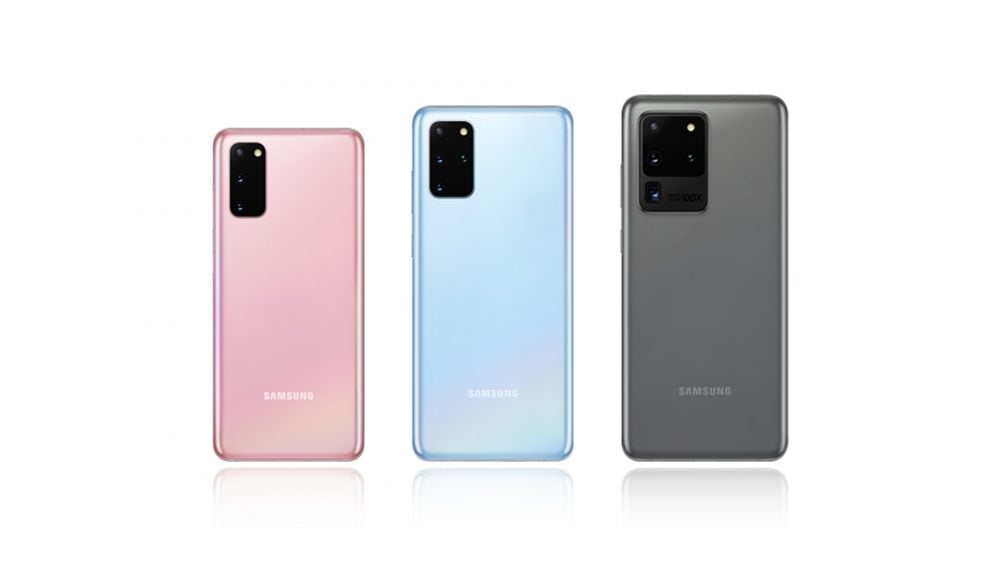
A report from Sammobile shows a first beta version of One UI 3.0 with firmware G98x0ZCU2ZTJG. The firmware version is for the Galaxy S20 series devices that have signed up for beta in China. This includes the Galaxy S20, S20+, and S20 Ultra. Also, a beta version with firmware version G98xFXXU5ZTJF is rolling out to Indian users as well. As promised, the beta is live in other countries like the United States, South Korea, United Kingdom, Poland, and Germany.
Further, the report says that the firmware version for China is same as the US. It is obviously based on Android 11, packs in October 1, 2020, Android Security patch, and Knox 3.7. And, it reportedly fixes bugs identified in the earlier release.
Also, the update is expected to arrive soon for devices like Galaxy Note 20 series, and S20 FE across the regions. Samsung confirmed the OneUI 3.0 based on Android 11 back at the event on August 5. The beta program began after the initial developer build and is now covered to almost all the countries as promised earlier. The public version will reportedly roll out before 2020 ends.
Besides, OneUI 3.0 has quite an overhaul from the earlier version apart from carrying the Android 11 features. The changes include Accessibility, Contacts, Bixby routine, Digital wellbeing, revamp to Home, Lock screen. And AOD features, revamped screenshots, and more.
So if you are someone who has signed up for the beta, navigate to settings->software update->download and install to try the new UI via OTA update. If you haven’t registered, you can click on the One UI banner inside the Samsung Members App.
Meizu is known for its uniquely-designed smartphones. Unfortunately, the company’s devices are currently limited to its home country China. Back in May, the firm launched Meizu 17 and Meizu 17 Pro as its flagship smartphones of 2020. Now, months later, the company has announced Meizu 17 limited edition box in collaboration with Crazyracing Kartrider.
Meizu is the second smartphone brand to partner with the popular go-kart racing game Crazyracing Kartrider this year. When HONOR X10 was unveiled, Huawei’s sub-brand HONOR announced a limited edition gift box for select customers in association with this game.
However, unlike HONOR, which offered a figurine inside the gift box, Meizu is only providing a scratch card for in-game content. Further, HONOR gave away the box to select customers who pre-ordered HONOR X10 ahead of its official sale. On the other hand, Meizu is offering the gift box as part of the 11.11 (Double Eleven) sale event.
That said, the smartphone included in the Meizu 17 Crazyracing Kartrider Limited Edition Gift Box comes with Fantasy Unicorn paint job and 8GB + 128GB storage configuration. This color variant of Meizu 17 is similar to the recently announced HUAWEI Mate40 Pro’s Mystic Silver color version.
Having said that, despite being a limited edition gift box, the Meizu 17 Crazyracing Kartrider box costs the same 3,699 yuan ($551) as the standard edition. The registration for this box is currently live on Jingdong(JD). Pre-orders will November 1, followed by Sale on November 11.
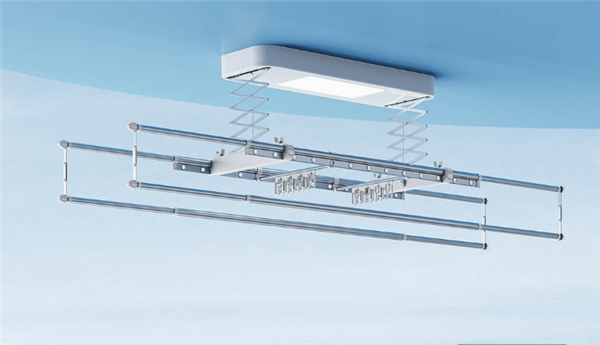
Xiaomi has launched the Viomi Electric Drying Rack Lite 1C under the Youpin crowdfunding platform. The device comes with a crowdfunding price tag of 699 yuan (~$104). It comes with free installation and free dismantling in China.
The Viomi Electric Drying Rack Lite 1C isn’t the first clothes drying rack that Xiaomi would be launching. The tech giant has its own MIJIA Clothes Dryer which was first launched in 2018 and a new model with voice control was released this year. There is also the Aqara Smart Dryer equally released last year.
The Viomi Drying Rack comes with support for XiaoAI’s voice control and can equally be controlled via the MIJIA app. It adopts a gradually brightening lighting design, has three-fold safety protection and a three-year warranty for the whole machine.
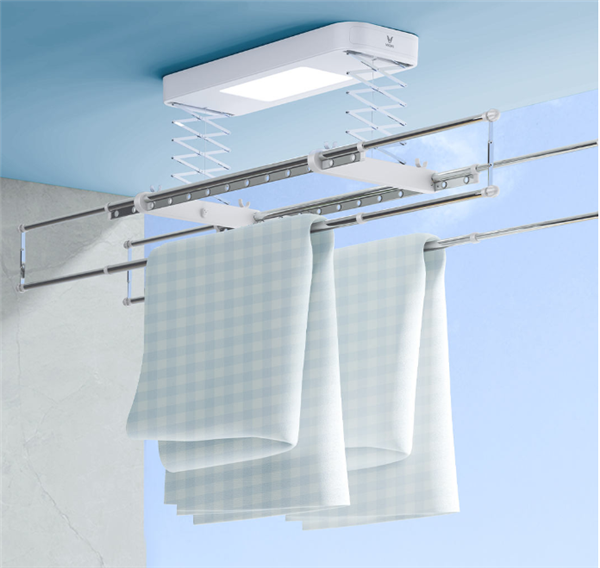
Viomi Electric Drying Rack Lite 1C supports one-key automatic lifting. When the drying rack is lowered to a suitable height, it will stop descending with a light hold of the hand. After hanging the clothes, push the hand upwards to automatically move it upwards so the clothes can be dried.
The rack can be extended up to 2.2 meters to create space for more clothes. It is also possible to extend it to the left and right sides. It comes with up to twenty-six wind-proof hanging holes and the entire rack can bear a gross weight of 70 kg.
The drying rack is equipped with two rows of multifunctional mother and baby clips, which can meet the needs of drying many small clothes. The unique hanging hole design, stable and windproof design all make this a good buy.
Further, when folded, the clothes drying rack has a thickness of just 152mm, which does not occupy too much ceiling space and has a wider field of vision.
The Viomi Electric Drying Rack Lite 1C can be controlled via the Mijia app to perform functions such as raising, lowering as well as pause the rack. The drying lamp can also be turned on using the app. You also get voice control via a XiaoAI supported device.
Xiaomi will launch the next iteration of the K30 series in China tomorrow(October 27). The company has confirmed today that the Redmi K30S Extreme Commemorative Edition will be the latest entrant in the series. Now, ahead of the launch, let’s look at the expected specifications, and price.
The Xiaomi Mi 10T will be rebranded as the Redmi K30S in China
Xiaomi’s approach has altered a bit in 2020. It skipped the Redmi Note 9 series in China, and now, the Redmi K30S is strongly hinted at as a rebadged version of Mi 10T from Europe. If we recall, Xiaomi launched the Mi 10T series in Europe last month. Later, it brought the series to India as well. Now, the company’s launch tomorrow in China will be at 2 PM local time. To affirm the hints, the company has already teased the device with a couple of pictures, and it is indeed looking like the Mi 10T.
Redmi K30S Design
First off, Xiaomi is calling it the Redmi K30S Extreme Commemorative Edition in China. The device will have a side-mounted fingerprint sensor embedded in the power button. Above that, there are volume buttons. At the bottom, we have speakers, a USB-C port, and a SIM card slot. The front has a display with a single punch-hole to the left whereas the rear has a rounded rectangle layout for cameras.
Considering its a rebadge of Mi 10T, we can expect the display and rear panel to sport Corning’s Gorilla Glass 5 protection. As for the color variants, teasers so far point to the same Cosmic Black and Lunar Silver options for China.
So, the Redmi K30S Extreme Commemorative Edition will probably feature a 6.67-inch FHD+ LCD 144Hz display. Now, a Xiaomi executive had already explained why the company had to opt for LCD on the Mi 10T. To affirm it, Redmi’s Product Director Wang Teng has replied to one of the users on Weibo citing that LCD on K30S will be of top quality.
If Xiaomi were to retain the same panel from Mi 10T, it will have ΔE=0.63 and JNCD (Just Noticeable Color Difference)=0.39. Additionally, it could also have features like Adaptive Sync, MEMC, Sunlight Mode 3.0, Reading Mode 3.0, and 4096 levels of brightness adjustments. Under the hood, a recent leak on TENAA hints at Qualcomm Snapdragon 865 SoC, and Xiaomi has confirmed it already. Also, the SoC will be paired with LPDDR5 RAM, UFS 3.1 storage but variants are China is not known yet. However, we can expect at least 6GB/8GB RAM and 128GB storage.
As for the optics, the teasers on Weibo already show a 64MP sensor on the renders which is the same as Mi 10T. Hence, the device is likely to host Sony’s IMX682 64MP main lens, a 13MP ultra-wide, and a 5MP macro lens. Upfront, it will probably host a 20MP selfie shooter like the Mi 10T. We can expect other features like NFC, Bluetooth 5.1, Wi-Fi 6, Stereo speakers, 3D audio recording, IR blaster, SA/NSA 5G, 5,000mAh battery with 33W charging via USB-C, and more.
Price, Availability
In both Europe and India, the Mi 10T is already starting at €499, and ₹35,999 respectively. However, a hint by Wang Teng suggests the Redmi K30S Extreme Commemorative Edition could start at 2,598 yuan($388) in China. This will make it the Cheapest Snapdragon 865 SoC device yet, if that happens.
For Availability, Xiaomi is already hinting at 11.11 which is a famous Double Eleven sales day in China. It is nothing but Nov. 11 Singles’ Day shopping festival in the country. Hence, we can expect it to go on sale that day but let’s wait for the official word during the launch.
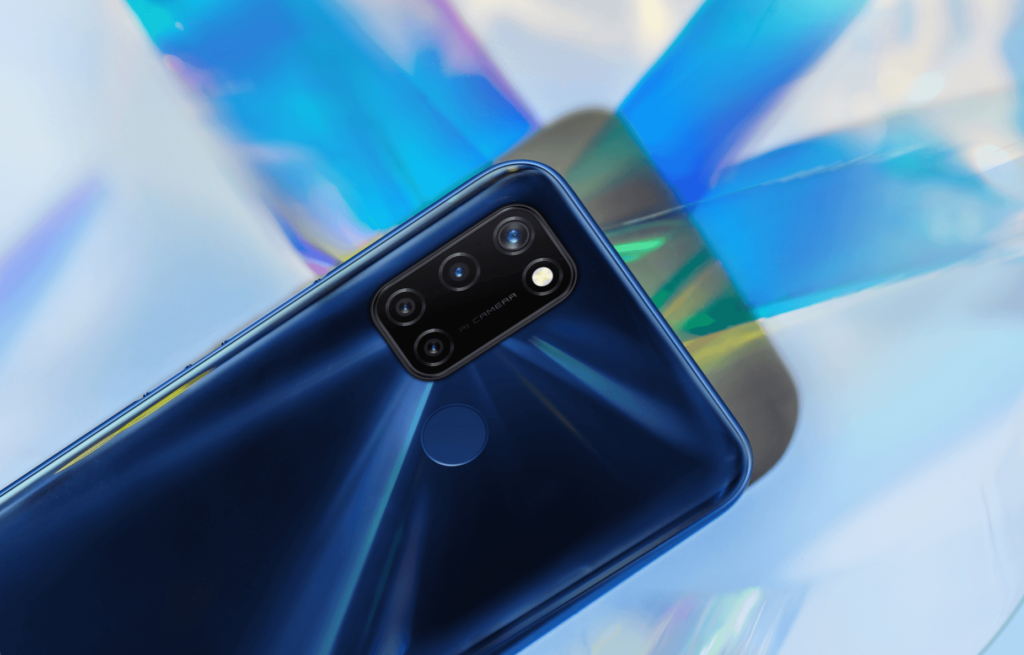
Chinese smartphone maker launched realme C17 first in Bangladesh in the month of September. This handset is also available in countries like Pakistan. However, it is yet to debut in India, which is the brand’s most important market. Now, more than a month after the phone’s initial announcement, a tech influencer has revealed when this device will land in India.
realme C17 Navy Blue
The Indian launch information about the realme C17 comes from one of the popular tech influencers known as Mukul Sharma. He tweeted that his handset may debut in the country in either late November or early December.
In other words, it will land in India after the Diwali festive season if this information is true. It is worth noting that this smartphone was already spotted on realme India’s website earlier this month.
The realme C17 is unlike other recent handsets in the realme C series. Because it is powered by a Qualcomm chipset, Snapdragon 460 to be exact, and sports a 6.5-inch HD+ (720 x 1600 pixels) LCD panel with 90Hz refresh rate, 90% screen-to-body ratio, 600 nits peak brightness, and a top left-aligned punch-hole for the selfie camera.
It comes in a single 6GB LPDDR4X RAM and 128GB UFS 2.1 storage configuration, however, India may get a lower variant so that the company could price it lower to cut the competition. Anyway, like almost all budget handsets, it supports microSD cards via a triple card slot.
realme C17 Lake Green
As for cameras, the phone comes equipped with a 13MP (wide) + 8MP (ultra-wide – 119°) + 2MP (macro) + 2MP (monochrome) quad-camera setup on the back and an 8MP front-facing camera for selfies and video calls.
Other features of the realme C17 include 4G LTE, dual-band WiFi 5, Bluetooth 5.0, GPS, 3.5mm headphone jack, USB Type-C, rear-mounted fingerprint sensor, light sensor, proximity sensor, compass, accelerometer, realme UI based on Android 10, 5,000mAh battery, 18W fast charging, and reverse charging.
We use cookies on our website to give you the most relevant experience by remembering your preferences and repeat visits. By clicking “Accept”, you consent to the use of ALL the cookies.
This website uses cookies to improve your experience while you navigate through the website. Out of these, the cookies that are categorized as necessary are stored on your browser as they are essential for the working of basic functionalities of the website. We also use third-party cookies that help us analyze and understand how you use this website. These cookies will be stored in your browser only with your consent. You also have the option to opt-out of these cookies. But opting out of some of these cookies may affect your browsing experience.
Necessary cookies are absolutely essential for the website to function properly. This category only includes cookies that ensures basic functionalities and security features of the website. These cookies do not store any personal information.
Any cookies that may not be particularly necessary for the website to function and is used specifically to collect user personal data via analytics, ads, other embedded contents are termed as non-necessary cookies. It is mandatory to procure user consent prior to running these cookies on your website.