Advertisement

Realme 7 series officially confirmed to launch in Europe on October 7

Realme went official with the Realme 7 series models in India at the beginning of the month.  As expected, the company has now confirmed that the 7 series will be unveiled in Europe next Wednesday.Realme 7

According to a post by Realme’s CEO Madhav Seth, the launch keynote is scheduled to hold on October 7 and will commence at 10:30 AM CEST (8:30 AM UTC).

The Realme 7 series comprises of the Realme 7 and 7 Pro. The European version will only be slightly different from the Indian version in that the vanilla 7 will have a downgraded 48MP primary sensor instead of the 64MP one found on the Indian Realme 7. The rest of the specs should remain unchanged as per the latest rumors and the 7 Pro will have no alterations.

We’re also expecting Realme’s 125W UltraDart charger though it remains to be seen what phone it will debut with.


Google Pixel 5 & Pixel 4A 5G Official – Snapdragon 765G, 5G & more!

Google has finally launched its first smartphones in the 5G era. The Pixel 5 and Pixel 4A 5G are the brand’s first models to feature a 5G modem. They are also primed to be among the first model that’ll get Android 11.

pixel 5
Google Pixel 5

Google Pixel 5

The Pixel 5 is the more premium model of the two even though it doesn’t make it beyond the mid-range point. The device sports s a 6.0-inch display with an FHD+ resolution and 90Hz refresh rate.

The Pixel 5 is powered by a Qualcomm Snapdragon 765G chipset, one of the newest premium mid-range SoC released by the US chipmaker. The SD765G chipset is equipped with an X52 modem that enables 5G connectivity. Sub-6 is supported on all Pixel 5 versions, while in some countries it will also work on mmWave networks. Still talking of connectivity, the phone comes with support for Wi-Fi 802.11ac instead of Wi-Fi 6. The processor pairs with an 8GB RAM on the 5 while there is a sole 128GB storage option.

For photography, the Pixel 5 packs a triple camera setup at the rear aspect. The three cameras are arranged in a square-shaped module located at the top-left corner of the panel. The main camera is a 12.2 MP sensor with 1.4um pixel size, as well as Google’s AI algorithms. This sensor doesn’t have particularly large pixels for night time shooting nor high resolution for lossless digital zoom, Google is hoping to deploy software optimization for those.

There is also a 16MP ultrawide-angle camera with f/2.2 aperture and 1.0um pixel size. There is also OIS and a relatively bright f/1.7 lens. The phone also supports 4K recording at 60 fps, the first Pixel phone with such capability. Google Pixel 5

The Pixel 5 packs a 4,080 mAh battery and has 18W fast charging support. The body is IP68-certified for dust and water resistance. The aluminium body is made out of recycled aluminium and is textured for better grip. The phone also comes with wireless charging support and reverse wireless charging despite the metal body. There is equally a rear-mounted fingerprint sensor.Google Pixel 5

The phone is available in Just Black and a new Sorta Sage colour option. Pre-orders for the Google Pixel 5 has already commenced ahead of availability in eight countries on October 15. The phone will be available in the US on October 29. The Pixel 5 comes in at $700 (€630/£599).

Early pre-orders between now and October 14 qualify for a  free pair of Bose QC 35 II wireless headphones. This offer is only valid in Germany, France, Ireland, and the UK, and only while stocks last.Google Pixel 5

Google Pixel 4a 5G

The Pixel 4a 5G packs a 6.2-inch OLED screen which makes it bigger than the 4a. The phone only comes with the standard 60Hz refresh rate. The body of the phone is made out of polycarbonate and is not dust or water-resistant.

It is also powered by a Snapdragon 765G chipset just like the 5 but it pairs with 6GB of RAM but the same 128GB storage option only.Google Pixel 5

The camera department is identical to the Pixel 5 – you get the same 12.2 MP main cam joined by the 16 MP ultrawide unit. The 8MP selfie camera is nested inside a punch hole. he model packs a slightly smaller 3,885mAH battery compared to the Pixel 5 but retains the 18W fast charging support. There is no wireless charging support.Google Pixel 4A 5G

The Google Pixel 4a 5G is priced at $500/€500/£500. Expect pre-orders to start on November 5, ahead of availability on the 19th of that month. Aside from Japan, that is, where it will go on sale on October 15.

If you pre-order one of these, you’ll get the same offer as the one for Pixel 5 pre-orders: a free pair of Bose QC 35 II headphones, provided you’re in the UK, Germany, France, or Ireland.

Leaked Surface Laptop Go specs reveal base model has eMMC storage

It is no longer news that Microsoft will be launching a more affordable Surface Laptop. Today more details of the notebook, which will launch as the Surface Laptop Go, were revealed in a leak.

The leak was posted on Twitter earlier today by Roland Quandt (@rquandt). According to him, the notebook will have a 12.45-inch PixelSense LCD with a 1532 x 1024 resolution. It will be powered by Intel’s 10th gen Core i5-1035G1 processor with 4GB or 8GB of RAM. Buyers will be able to choose between 64GB, 128GB, and 256GB of storage. He adds that the 64GB version uses eMMC storage.

The Surface Laptop Go will have a 13-hour battery life, USB-A and USB-C ports, and a Surface Connect port for power. It will also have a 3.5mm audio jack. The tweet reveals the notebook weighs about 1.1kg and will be available in Silver, Blue, and Gold color options.

The Microsoft launch event should happen next month. The tech giant is expected to announce a new version of the Surface Pro X which features a new processor – the Microsoft SQ2 to be precise. Other features may remain the same as last year’s model.


Mi 10T and Mi 10T Pro pre-orders in Germany include a free Mijia vacuum cleaner

The Mi 10T and Mi 10T Pro launched today and they both go on sale tomorrow. However, you don’t have to wait until tomorrow if you plan to grab either of the two phones as they are now available for pre-order in Germany. The exciting parts that you get a free gift along with your phone if you were to pre-order.

According to the info on Xiaomi’s German website, if you pre-order the Mi 10T (6+128GB) and either of the two configurations of the Mi 10T Pro, you get a free vacuum cleaner. The vacuum cleaner is the Mijia Handheld Vacuum Cleaner and it is worth about €40.

Mi 10T purchase bundle

The vacuum cleaner has a brushless motor with a suction power of about 13,0000 Pa. It has a rechargeable battery that should provide up to 30 minutes of use on a full charger. There is a HEPA filter and the dust box has a one-click function that makes it easy to empty. The handheld vacuum cleaner is designed for small vacuuming and can be used to remove the dirt in cars, on furniture, and even to clean electronics such as computers.

The Mijia Handheld Vacuum Cleaner is not officially sold in Europe, so this is a chance to own one for free. To grab the offer, check the page created for the promo.


Chromecast with Google TV launches for $49.99; Nest Audio speaker tags along for $99

At the Launch Night In online event today, Google announced two new products for the home. The first is the Chromecast With Google TV which is the first device to run Google TV and the second product is the Nest Audio smart speaker.

Chromecast with Google TV Snow

Chromecast with Google TV

While this device has Chromecast in its name, it is actually a streaming TV stick dongle. So it is going up against the Amazon Fire TV Stick line, the Xiaomi Mi TV Stick, and Roku’s streaming dongles.

Chromecast with Google TV brings a new UI called Google TV. Unlike Android TV which lists contents from apps such as Netflix and Prime Video, Google TV combines content from all the sources available. So on a row, you can have movies from Netflix, Hulu, HBO Max, and Prime Video. It doesn’t matter if you don’t have a subscription from all three, those you can’t watch will have a padlock icon.

Chromecast with Google TV also has Live TV available via YouTube TV, and a recommendations tab that is based on your subscription, viewing history, and your own content. Of course, there is support for casting from compatible devices. When not in use, the device will show a slideshow of your favorite photos from your Google Photos library.

The remote has a Google Assistant button which you can use to search for shows and movies and also use to control your connected smart home devices. You can even view the feed from your Nest camera on the TV.

Chromecast with Google TV price

Chromecast with Google TV is priced at $49.99 and comes in Snow, Sunrise, and Sky. It is available for purchase already in the US and will be available in more countries by the end of the year. Google also revealed during the launch that Google TV will be made available for more Android TV streaming devices but we don’t know how soon.


Nest Audio price

Nest Audio

The Nest Audio smart speaker is the spiritual successor to the original Google Home smart speaker. However, unlike the Nest Mini which has the same design as the Google Home Mini, the Nest Audio speaker has a different design.

The speaker is wrapped in fabric and comes in five colors – Chalk, Charcoal, Sage, Sand, and Sky. Google says the enclosure is made from 70% recycled plastic. It has a 75 mm woofer and a 19 mm tweeter for loud and crisp audio. It even adapts to your environment and what you are listening too. An example is news and audiobooks which sound clearer and differently from music.

Of course, there is Google Assistant which means you can ask it to play podcasts, audiobooks, and more from various platforms. You can also set reminders, ask questions about the weather, and control smart home devices. You can also pair speakers together and move playback from room to room.

If you have a Nest Aware subscription, the speaker will send you an alert when it detects sounds such as the breaking of glass or the sound of the smoke alarm. There is a button at the back to turn off the microphone and you can ask the assistant to delete what you just said by saying “Hey Google, delete what I just said”.

The speaker is powered by a quad-core A53 processor clocked at 1.8GHz. It supports dual-band Wi-Fi and its power rating is 30W.

Nest Audio

The Nest Audio smart speaker is priced at $99, lesser than the launch price of the Google Home. It will be available starting October 5 in 21 countries.


Google sets a humble target for the production of its new Pixel devices in 2020

Google is unveiling its new Pixel 5G devices today(September 30). Ahead of this, a report says that Google plans to produce only a limited number of the Pixel 4a, 4a 5G, and 5 5G this year.

Google-Logo-2015

A report from Nikkei says that less than 1 million Pixel 5 devices will be made this year. In fact, the numbers could be as low as 800,000 units as per its sources. While this is a shocker, the report adds that Google has set a moderate target of just 3 million devices for all the new Pixels combined. The pointed out reasons are a drop in sales and the effect of the pandemic on demand.

For instance, as of H1 2020, Google has reportedly shipped just 1.5 million devices. This is a huge drop from 4.1 million units when compared to last year. Besides, the US-China Trade war and the Global pandemic also has disrupted its migration plans. Apparently, Google decided to produce all the new Pixels in Vietnam. But only the Pixel 4a series is reportedly manufactured there while the Pixel 5 is still coming out of Shenzen, China.

Google had a rough year in 2019. As per IDC, It shipped 7.2 million units in 2019 falling behind the target of 8-10 million. Although it gained steam after Pixel 3a, the arrival of Pixel 4, 4XL stomped the figures. And now, Google is facing an ecosystem threat from Huawei. The latter is appealing to all of its Chinese colleagues to try and adopt the new HarmonyOS ecosystem.

That said, the report says that Google relatively gave conservative orders this year due to poor sales of Pixel 4 and COVID-19. This could be the reason for delays in Pixel 4a and shipment of the new Pixel devices. However, the situation might change once the new devices hit the stores. On the other hand, Google has already moved the major production of Nest Smart speakers, Nest Wi-Fi, and other home devices to Vietnam and Thailand. While Google is yet to officially comment on this, the phase-out plan is probably to end the dependency of China.

Up Next: Google Pixel 4a users are facing a touch sensitivity bug after Android 11 update


Huawei opens EMUI 11 Beta registrations for Mate Xs & MatePad 10.8 in China

Huawei announced EMUI 11 as the latest version of its mobile operating system earlier this month at the HUAWEI DEVELOPER CONFERENCE (HDC) 2020. At the very same day, the company started rolling out the beta updates to 10 of its devices in China. A few days later, 9 more devices were added to the program as the company promised. Now, the firm has opened beta registrations for two more devices namely HUAWEI Mate Xs and HUAWEI MatePad 10.8.

Huawei Mate Xs

The first batch of EMUI 11 Beta  initiative included the entire P40 series, Mate30 series, and the MatePad Pro tablet. Whereas, the second batch brought in certain nova7 and nova6 series smartphones as well as some HONOR 30 and V30 series handsets.

Now, the third batch has been announced in China and surprisingly, it only includes two devices. They are HUAWEI Mate Xs (TAH-AN00m), the last foldable form the company and HUAWEI MatePad 10.8 (SCMR-AL09, SCMR-W09).

That said, we expect the Chinese telecom giant to start recruiting beta testers for more devices in the coming days. Above all, we also look forward to seeing more regions added to the global beta program, in addition to new devices apart from the P40 lineup and Mate30 Pro.

Anyway, these are just beta build builds ast the name implies and the stable rollout for the current beta devices may take some more time.


Xiaomi finally starts pushing Stable Android Pie update to the Mi Box 3

In August this year, Xiaomi rolled out the much-anticipated Android 9 Pie beta update for the Mi Box 3. The update which has a file size of 620MB ushered in Android Pie to the Android TV box as well as brought support for the Mi Remote app.Xiaomi Mi Box 3

Xiaomi has now started pushing Android 9 Pie stable update to the Mi Box 3 (via). The update brings support for Android TV 9.0 and support for the Mi Remote app to the stable channel.

The Mi Box 3 stable Android Pie update has a size of 650MB and also delivers the Android security patches for July 2020. Apart from the security patch, the update also brings a couple of new features to the Android TV box. Some of the features include a new settings layout, a new power menu that can be accessed by pressing and holding the power button, a less intrusive volume interface, preinstalled Amazon Prime Video app, a Mi Box recommends section in the app drawer, a shortcut for the Google Play Store, and more.

The Mi Box 3 is an affordable Android TV box that is powered by a quad-core Amlogic SoC, Mali 450 GPU, and 2GB of RAM. It supports 4K video playback at 60fps and Dolby Digital Plus audio.


Huawei’s Italian President says the company is ready to show it’s internal operations to end security concerns

Italian President of Huawei Luigi De Vecchis says the company is ready to show the internal operations of its technology including 5G networks. This comes as a response to all political pressure that’s surmounting the company. His message comes at a time when the United States has warned Italy and Germany saying that Huawei is a tool for Human Rights abuse.

Huawei

De Vecchis has reportedly made the proposal at the opening ceremony of the group’s cyber-security center in Rome. He says he is speechless after seeing a country like the USA can attack a company from China of groundless accusations. He also mentions that the company is ready to open its insides and get vivisected. That said, the scrutiny can probably show the world that its technology is not dangerous to those who use it.

Also, De Vecchis says that despite the pressure, Huawei has no intention to leave the Italian market. Instead, it is considering exploring the field of energy and add it to the tally of products. This is surprising as the company is also looking to expand its local business in China to strengthen the supply chain.

That said, the company’s Italian division including other countries is under a lot of pressure from the US. These comments come in the wake of US Secretary of State Mike Pompeo’s visit to Italy. He has reportedly warned the Italian Prime Minister about the risks of doing business with Huawei. However, De Vecchis says his comments at the event amidst Pompeo’s visit has no relation and is merely coincidental.

Apparently, he is unaware of any issues regarding the closing of the 5G deal with the Italian Government. He further cites that the Government’s reversal of the Golden Power Law on infrastructure is strategic and hard to make. For the unware, Italy has a Golden Power Law under the scope of which it can review orders and projects. The matters pertaining to the issue include defense, national security, energy, transportation, communication, etc.

The United States has already made the UK and France ban the use of Huawei’s 5G equipment for its infrastructure. It is recommending companies like Nokia and 5G Ericsson as alternatives. Nevertheless, let’s wait and see how the Italian Government tackles Huawei on one side and the US pressure on other.

Up Next: HUAWEI 12000 66W SuperCharge Power Bank gets certified by 3C

Samsung launches Galaxy A3 Core in Nigeria

Samsung has announced a new entry-level smartphone today in Nigeria. The new phone is the successor of the Galaxy A2 Core that was announced last year.

Galaxy A3 Core featured

The Galaxy A3 Core drops the 16:9 aspect ratio of its predecessor. The bezels are now smaller but are still thick when compared to other phones. This is an entry-level device, so we are not knocking it for its bezels. The TFT LCD screen is 5.3-inches and has an HD+ (1480 x 720) resolution.

The Galaxy A3 Core has a 1.5GHz quad-core processor and it is paired with 1GB of RAM and 16GB of storage (available storage is 10.6GB). There is a dedicated MicroSD card slot that allows you to add up to an extra 512GB of storage!

The phone has a 5MP f/2.4 camera above the display while the rear has a single 8MP f/2.2 camera and LED flash. Samsung says it has digital zoom up to 4x and it can record FHD videos at 30fps. The phone has a textured polycarbonate backplate and comes in Blue, Black, and Red.

The Galaxy A3 Core runs Android Go but Samsung didn’t say what version it is. There s a 3000mAh battery with support for MicroUSB charging. The phone also has dual-SIM support (nano), 2.4GHz Wi-Fi, an audio jack, GPS, LTE, and Bluetooth 5.0

The Galaxy A3 Core is now available in Nigeria for ₦32,500 (~$85) at Samsung stores and partner stores.


Vivo V20 full specification sheet and price revealed

When the Vivo V20 Pro was announced in Thailand a little over a week ago, the Vivo V20 also tagged along. However, Vivo only revealed a few details, with the promise that the full spec sheet, pricing, and availability details will be revealed later. The full spec sheet is now live on the global site. We have also gotten info on the price tag of the device.

Vivo V20 featured

Vivo V20 design and specs

The Vivo V20 has a 6.44-inch 2400 x 1080 FHD+ AMOLED display just as the Pro model but it adopts the smaller-sized waterdrop notch. On the back, both phones are practically identical and they come in the same colorways.

Under the hood is a Snapdragon 720G processor which means there is no 5G support. If you want 5G, the Snapdragon 765G-powered V20 Pro is the one you should go for. The processor inside the V20 is paired with 8GB of RAM and 128GB of storage. A dedicated MicroSD card slot is available so users can add more storage.

With respect to cameras, there is a 44MP f/2.0 AF camera in front for selfies and it has features such as Eye Autofocus, slow-mo selfie mode, Super Night Selfie mode, and 4K video recording. On the back is a 64MP f/1.89 main camera and it comes along with an 8MP f/2.2 ultrawide angle camera that also does portrait and macro photography, and a 2MP f/2.4 mono camera. The rear cameras also have a handful of features and modes including a tripod night Mode, Ultra Stable Video mode, Super Macro, Style Portrait.

Other features of the phone include Dual-SIM support, Bluetooth 5.1, an in-display fingerprint scanner, and a USB-C port. The phone has a 4000mAh battery with support for 33W (11V 3A) fast charging. The Vivo V20 also runs Android 11 out of the box with Funtouch OS 11 on top.

The spec sheet says the phone measures 161.30 x 74.20 x 7.38 millimeters and weighs 171 grams. However, the Sunset Melody colorway is 1 millimeter thicker and 1 gram heavier.

Vivo V20 price and availability

The Vivo V20 is available for pre-order in Indonesia for IDR 4,999,000 (~$337) on Tokopedia. Those who pre-order get a free power bank and smartwatch with their order.


Google’s reinforced concessions set to win the EU Antitrust approval for its Fitbit deal

It looks like Google is not giving up on the disputes of its Fitbit deal. A report by Reuters says that the company is set to win EU antitrust approval for the earlier deal with its new set of concessions.

As per the report, Google has reinforced an earlier pledge and says it won’t access the Fitbit data for Google Ads. It will strengthen the monitoring process as well. In a statement, Google says that it is formalizing the commitment to support rivals and says it is all about devices and not data. Further, it says it will also allow Fitbit users to connect to third-party services via access to API.

API is an application programming interface which is a set of instructions for accessing web-based software application. Access to this will help rivals to get data from Fitbit’s tracking devices. However, the report adds that the EU Competition enforcer will now seek feedback regarding the new concessions from rivals.

Editor’s Pick: Fitbit Charge 4 is the first product from the company since Google Acquisition announcement

Google announced the acquisition of Fitbit in November 2019 for $2.1 billion. Post this, the company is under a lot of criticism. Also, consumer groups, privacy advocators have come out with antitrust and privacy issues. Recently, the EU opened an investigation on the acquisition and said that it will lead to the collection of sensitive health data.

For the unware, Fitbit is an American consumer electronics and Fitness company. As per IDC data, it had a 3% of the global wearable market holding a fifth place. Apple leads the segment with a close to 30% share as of Q1 2020. The position in between is occupied by Xiaomi, Samsung, and Huawei respectively. Google is acquiring the company probably to catch up with the competition.

Coming back, the EU Commission earlier said that Google should neither reinforce its dominance in advertising nor have control over Fitbits’ data from rivals. To this, Google had replied with a pledge not to use fitness data. However, the EU Commission rejected it on grounds of insufficiency. Recently, it had also asked rivals about interoperability and healthcare issues, data necessity. And asked for steps that Google needs to take to end the concerns. The deadline to decide the fate of the deal is December 23 and the report says that the decision could come earlier as well.

Up Next: Google is being sued by Sonos again, this time over wireless audio tech

Redmi Note 8 MIUI 12 update released in China with Android 10

The Redmi Note 8 has been one of the global bestselling Xiaomi smartphones for the past few quarters since its release. Unfortunately, this handset is still running Android Pie although it was updated to MIUI 11 a long time back. But now, finally, after a year from its launch, the device is receiving Android 10 update along with MIUI 12 in China.

Redmi Note 8
Redmi Note 8

Chinese smartphone maker Xiaomi has begun to roll out MIUI 12 to Redmi Note 7 series and Redmi Note 9 series worldwide. However, the Redmi Note 8 users were left out not only for MIUI update but also for Android 10.

Thankfully, the company has finally started to roll out them together in China with build number V12.0.2.0.QCOCNXM. Since it is the initial stable build, it is being seeded out to limited random users in the firm’s home country. In case you do not know, Xiaomi calls this sort of builds as “Stable Beta”.

If the early adopters don’t face any serious issues, the same build will be made available for more users in the coming days. Further, going by the company’s MIUI 12 rollout pattern, the global variants of this phone should get the update sometime later in October.

Having said that, the Redmi Note 8 is not eligible for Android 11 but it should receive MIUI 13 when it gets released.


OPPO Watch vs Xiaomi Mi Watch Revolve: Specs Comparison

Xiaomi launched its first smartwatch for the global market: the Mi Watch Revolve. Unlike the original Mi Watch, it comes with a round display and a proprietary operating system. It is a very interesting smartwatch for sport and fitness, but it also offers a lot of customization options. But is it the best smartwatch you can get globally or you can get even more interesting smartwatches out there? This is a comparison between the Xiaomi Mi Watch Revolve and OPPO Watch, one of the hottest wearables of the moment. Let’s find out which one is better and the main differences between their specs and features.

OPPO Watch vs Xiaomi Mi Watch Revolve

OPPO Watch Xiaomi Mi Watch Revolve
DIMENSIONS AND WEIGHT 46 x 39 x 11.4 mm,

45.5 grams

53.3 x 46.2 x 11.4 mm,

40 grams

DISPLAY 1.91 inches square, 402 x 476p, 346 ppi, 326 ppi, AMOLED 1.39 inches round, 454 x 454p, 462 ppi, AMOLED
PROCESSOR Qualcomm Snapdragon Wear 3100, quad-core /
MEMORY 1 GB RAM, 8 GB /
SOFTWARE Wear OS Proprietary OS
CONNECTIVITY Wi-Fi 802.11 b/g/n, Bluetooth 4.2 Wi-Fi 802.11 b/g/n, Bluetooth 5.0
SPORT MODES 5 10
BATTERY 430 mAh with VOOC flash charge 420 mAh
ADDITIONAL FEATURES GPS, accelerometer, gyro, heart rate, compass, barometer, waterproof 5 ATM GPS, accelerometer, gyro, heart rate, compass, barometer, altimeter, waterproof 5 ATM

Design

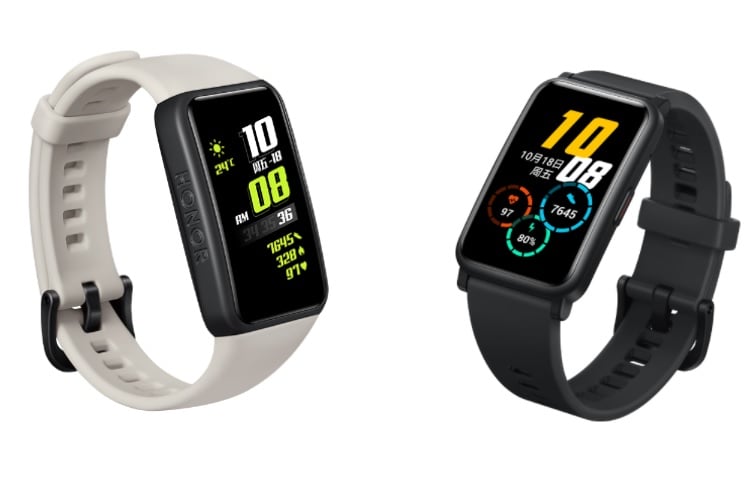
Thanks to its circular display, the Xiaomi Mi Watch Revolve is more similar to a real watch and it looks very sleek. But despite its square display, the OPPO Watch still looks elegant because it is built with premium materials and big attention to details: its design is reminiscent of the Apple Watch, but instead of a crown to navigate the user interface, you get two physical buttons. Do you prefer having a round smartwatch display or a square display? Let us know by using the comment box at the end of the article.
 

Display

The square shape of the OPPO Watch improves the usability: the smartwatch becomes easier to use thanks to UI elements placed in a more accessible way. This is a big advantage of the OPPO Watch, despite it may look uglier than its rival when it comes to aesthetics. The OPPO Watch also comes with a bigger display than Xiaomi Mi Watch Revolve: in its 46 mm version, it has a 1.91-inch panel. Even the image quality of the OPPO Watch is superior to the Xiaomi Mi Watch Revolve: the wearable supports 100 percent DCI P3 coverage for its AMOLED panel. But the Xiaomi Mi Watch Revolve still offers an excellent display with the AMOLED technology and a 454 x 454 pixel resolution which provides a high pixel density thanks to the smaller diagonal. Note that Xiaomi Mi Watch Revolve supports Always-On display which allows checking it even while the wearable is on standby.
 

Specs & Software

The hardware department of the OPPO Watch is way better than the Xiaomi Mi Watch Revolve. The wearable is powered by the great Snapdragon Wear 3100 chipset in the version sold in the global market. The SoC is paired with 1 GB of RAM and 8 GB of internal storage which you can use to install apps and save music or other files. The Xiaomi Mi Watch Revolve does not offer internal storage for your files and it is more like a fitness tracker. OPPO Watch runs Wear OS which gives you the chance to install a lot of additional apps and more features, especially when you pair your smartwatch with an Android phone. With the Xiaomi Mi Watch Revolve, you do not get the features, but you get more sports modes available for better tracking of your physical activity. At the end of the day, OPPO Watch is a better all-rounder, while Xiaomi Mi Watch Revolve is a better smartwatch for sports.


Sensors and connectivity

OPPO Watch and Xiaomi Mi Watch Revolve are both equipped with a great HR sensor, GPS connectivity, WiFi, and naturally Bluetooth. With the OPPO Watch, you also get the eSIM support which lets it be independent of your phone, while the Xiaomi Mi Watch Revolve does not include cellular connectivity. The Firstbeat motion algorithm is a very interesting feature of the Xiaomi Mi Watch Revolve which is able to track health indicators just as elite athletes and leading sports teams across the world do.


Battery

The battery of the Xiaomi Mi Watch Revolve has a capacity of 420 mAh and it lasts up to 14 days on a single charge. It can be charged through a dock. The OPPO Watch has a 430 mAh battery and it lasts just 30 hours on a single charge, but it can reach up to 21 days in power saver mode. The OPPO Watch supports VOOC flash charge technology and it is able to charge to 46 percent in just 16 minutes. Note that this data regards the 46 mm version of the smartwatch, while the 41 mm variant has a smaller battery.


Price

OPPO Watch hitten the global market with a price of €250/$294 for the 46 mm version, while the price of the Xiaomi Mi Watch Revolve for Europe is still unknown. In India, the smartwatch has a price of Rs. 9,999 which roughly translates into €116/$136 at the actual change. Unless sports tracking is your only priority and you need a more professional tracking, the OPPO Watch wins the comparison thanks to its better display, hardware, features, and more. But the Xiaomi Mi Watch Revolve provides a way longer battery life. Which is your favorite smartwatch between these two?


OPPO Watch vs Xiaomi Mi Watch Revolve: PRO and CONS

OPPO Watch

PRO

  • Wear OS
  • Bigger and better display
  • 8 GB internal storage
  • Better hardware

CONS

  • Bigger dimensions


Xiaomi Mi Watch Revolve

PRO

  • Circular display
  • More sports modes
  • 100+ watch faces
  • Great battery life

CONS

  • Proprietary OS

Top 5 Alternatives for Apple Airpods Pro with Active Noise Cancellation

Apple AirPods is one of the best earbuds in the market with Active Noise Cancellation. However, the AirPods Pro works best with Apple devices. Also, getting a pair of these would put a huge dent in your pockets. Considering the expensive pricing and the ecosystem constraints, you would often have to look for other options that are both compatible with Android (as well as Apple) devices and won’t cost as much as the Apple earbuds.

So here are some alternatives to Apple Airpods Pro with ANC.


Sony WF-1000XM3

Featuring active noise cancellation, these wireless earbuds offer an immersive experience. With DSEE HX, the user can experience an upscale in compressed music files and enjoy listening to high-resolution music. This unit’s touch-based form allows one to tap for controlling music and attending or disconnecting calls. The earbuds feature an optimized antenna design for wide BlueTooth coverage while the ergonomic shape offers a comfortable fit. The earbuds can be fully charged in 6 hours and provide 32 hours of playtime.

Sony WF-1000XM3 (3)

Huawei Freebuds Pro

The Huawei Freebuds Pro features three settings for noise control and 4 intensity settings for noise cancellation. With the Awareness feature, one can hear surrounding sounds like a car horn. The wireless settings for music and calls can be done with a pinch on the bud with two fingers. Housing a 580 mAh battery, the earbuds offer 4 hours of music playback with ANC enabled setting and 7 hours without it. The 11mm drivers deliver decent bass and crisp sound quality while the rubber tips offer a comfortable fit.

Freebuds pro


Anker SoundCore Liberty Air 2

Featuring BlueTooth 5.0, this pair offers quick and ultra-stable connections. These buds have diamond drivers that increase the sound frequency bandwidth by 15% and deliver 2 times the base volume. Both the earbuds are equipped with two microphones and cVc 8.0 noise reduction technology that reduces the surrounding sound by 60% when making calls so that 95% of your voice is retained for crisp delivery. HearID technology maps one’s hearing sensitivity at multiple frequencies to provide a personalized listening experience.

Anker_Soundcore_Liberty_Air_2_True_Wireless_Earbuds

Zeaplus Buds

The Zeaplus buds come with the active noise cancellation feature at the most budgeted price. The transparency mode makes noise from surroundings audible to the user, while the stereo sound quality offers a delightful listening experience. Functions like play/pause and answering calls can be controlled with a tap while the BlueTooth 5.0 offers seamless connectivity. These buds provide up to 20 hours of listening and 15 hours of talk time, making them ideal for their pocket-friendly price tag.

zeaplus buds

If you want earbuds in funky colors even without true noise cancellation, you can also check out the OnePlus Buds

Oneplus Buds

Equipped with a noise cancellation algorithm and three microphones to improve clarity, these earbuds ensure the user fully immerse in the world of music. The Dolby Atmos and Dirac Audio Tuner support offers crisp, 3D stereo sound quality. Tap controls of this pair are customizable according to the user comfort. The case allows one to enjoy 30 hours of listening time while a mere 10-minute charge allows 10 hours of power. Additionally, the earbuds come with an IPX4 rating to keep them protected from accidental splashes.

oneplus buds

EMUI 11 Beta recruitment for P40 series & Mate30 Pro live in Germany, Russia, Turkey & the UK

Huawei officially announced EMUI 11 earlier this month at the HUAWEI DEVELOPER CONFERENCE 2020. Initially, the beta builds of the company’s latest mobile software were limited to certain devices in China. Now, the Chinese smartphone maker has begun to recruit beta testers in Germany, Russia, Turkey, and the UK.

HUAWEI EMUI 11 Logo Featured

EMUI 11 is the ninth iteration of Huawei’s mobile operating system. Unfortunately, it is based on Android 10 due to the US ban. However, the company has promised to bring select Android 11 features to its devices before updating them to HarmonyOS later next year.

That said, the company has rolled out beta builds of the new version of its Android skin to a plethora of devices in its home country China. Thankfully, it has now started beta recruitment for global markets as well.

Currently, the registrations for the EMUI 11 Beta program is live in Germany, Russia, Turkey, and the UK for the following four smartphones.

We expect Huawei to soon open global beta registrations for more handsets as well as tablets in the coming weeks. 

Anyway, it is worth noting that this initiative is purely for beta builds that may contain severe bugs. So we would recommend you to stay away from it if you don’t know what you are getting into. 

Further, although the Chinese telecom giant will begin to seed beta builds to selected users in a few days from now, the stable rollout may take time.


(Via)

Foxconn’s AR Smart Glasses will reportedly feature micro-LED displays

Foxconn is one of the contract manufacturers of Apple and Xiaomi devices. Apart from assembling Smartphones, it looks like the company is now developing AR Smart Glasses. And, the new Glasses will reportedly have micro-LED displays according to Digitimes.

Foxconn logo

The report says that Electronics and Optoelectronic System Research Laboratories(EOSRL) has made the micro-LED displays of these AR Smart Glasses. Also, this is reportedly happening under the government-sponsorship of the Industrial Technology Research Institute(ITRI), Taiwan.

As per the report, Foxconn invested in US-based eLux displays in May 2017. And it has been developing the microLED since then. Previously, the company’s efforts to get future Apple’s iPhone orders involved investments in micro-LED technology. While the latter currently adopts OLED displays, it’s craving for micro-LED hasn’t died as well.

Coming back, Foxconn has reportedly struck a three-year deal for obtaining a license from EOSRL and use its micro-LED technology. For the unware, micro-LED displays have inorganic Gallium Nitride(GaN) which gives more life expectancy than OLED panels. Further, it has advantages like improved complexity proportion, quick reaction time, less luminance decay, genuine blacks, and more.

That said, EOSRL’s micro-LED is 5 micron in size and the report says the lab will match quantum-dot(QD) technology to make panchromatic displays having PPI greater than 2000. Also, EOSRL is reportedly working on changing the optical architecture to improve display effect, eye-tracking sensors, ICs etc. However, the displays will be available only by Q1 2021 as per the report.

Besides, Foxconn is hoping to complete the development of AR Glasses by 2022 and try them in smart retail, smart factories, and smart medical care sectors. While the reason for the delay could be a number of factors, the report says that using micro-LED in AR Glasses involves complex processes and will take three years to complete.

Apart from iPhones, Foxconn recently started the trial production of Apple’s AR Glasses as well. It is believed to have developed semi-transparent lenses for the AR Glass. However, we aren’t sure about the exact specifications of these Glasses and it is best to wait for future updates as we advance ahead.

Up Next: Foxconn denies reports about factory canceling holidays and running 24*7 for iPhone productions

Xiaomi Mi 10T Lite with 120Hz display launched as the first Snapdragon 750G phone

Xiaomi today took the veil off its latest Mi 10T series with the launch of three smartphones – the Mi 10T Pro, Mi 10T and Mi 10T Lite. While the duo of Mi 10T and Mi 10T Pro are flagship models packing a Snapdragon 865 chipset, the Mi 10T Lite emerges as a mid-range model. Let’s take a look at the specifications and features of this premium mid-ranger. Xiaomi Mi 10T Lite

The Mi 10T Lite is a budget-friendly smartphone which happens to be the first Snapdragon 750G chipset. The device features a 6.67-inch LCD with an adaptive refresh rate of 120Hz which can also be reduced down to 30Hz. The display comes with an FHD+ resolution of 1080p+, an aspect ratio of 20:9 and is covered with a layer of Corning’s Gorilla Glass 5.

The display is HDR10-certified and has 450 nits of brightness and equally promises 84% NTSC colour coverage. The phone is also armed with dual speakers and a Hi-Res Audio certification.Xiaomi Mi 10T Lite

For photography, the Mi 10T Lite packs a Quad-camera setup at the rear comprising a 64MP main camera with a 1/1.7-inch sensor. There is also an 8MP ultrawide camera as well as a 2MP macro cam and 2MP depth sensor. At the front, the phone packs a 16MP selfie camera is inside a centrally placed punch hole.

As stated earlier, the Mi 10T Lite is the first phone to be powered by the new Snapdragon 750G chipset. The chipset is built on the 8nm silicon wafer and has a built-in 5G modem. It offers sub-6 connectivity along with a slight performance boost over the S730G (+20% CPU performance, +10% GPU). The processor is paired with 6GB of RAM while there is the option of 64GB storage and 128GB storage. Xiaomi Mi 10T Lite

Under the hood, there is a 4,820mAh battery with 33W fast charger just like the flagship Mi10T models. capacity, 4,820 mAh. There is also a 3.5mm audio jack on this model.

As for the pricing and availability, the Mi 10T Lite with 6GB RAM and 64GB storage is priced at €280. On the other hand, the 6GB RAM and 128GB storage are priced for €330. Xiaomi is even offering an early bird deal for the 6GB RAM + 64GB storage on Amazon and Mi.com. The device will be sold for just €250 on October 13.


Mi 10T series arrives with impressive displays, 5G, big batteries, and competitive price tags

Today, Xiaomi had a global event during which it announced the Mi 10T series. The series includes the Mi 10T Pro, Mi 10T, and the Mi 10T Lite. All three devices pack displays with high refresh rates, Snapdragon processors, 5G, big batteries, and a ton of other features at affordable prices. This post is for the Mi 10T and Mi 10T Pro as we have a separate post for the Mi 10T Lite.

Mi 10T series featured

Mi 10T Pro and Mi 10T

The Mi 10T Pro is the top model of the series but it shares most of its features with the Mi 10T save for the main rear camera and configuration.

The two phones have a 6.67-inch FHD+ display with a hole punch and a 144Hz refresh rate. While they are LCD panels, Xiaomi says they are one of the best in the industry. The panels have a Delta E value of 0.63 and a JNCD (Just Noticeable Color Difference) value of 0.39.

There are also a bunch of other features such as Adaptive Sync, MEMC, Sunlight Mode 3.0, Reading Mode 3.0, and there is also a light sensor on the front and back of the phone for up to 4096 levels of brightness adjustment.

Powering the Mi 10T Pro and Mi 10T is a Snapdragon 865 processor with 6GB/8GB of LPDDR5 RAM and 128GB of UFS 3.1 storage for the Mi 10T and 8GB of RAM and 128GB or 256GB of storage for the Mi 10T Pro.

The camera department is another selling point of the Mi 10T series. The pro model has a 108MP primary rear camera with optical image stabilization, 8K video recording. The standard model has a 64MP primary camera. They both have the same 13MP ultra-wide-angle and 5MP macro camera for a triple rear camera setup. Their 20MP selfie camera is also the same.

Mi 10T Pro Mi 10T

Xiaomi has pre-loaded the two phones with some amazing camera features such as Dual Video which allows you to record at the same time from both the front and rear cameras; Video Clones that allows users to capture “two selves” in the same video; and Time Lapse which is available on both the rear and selfie cameras. There are also new color filters, long exposure, and a timed burst mode for still photos.

The Mi 10T and Mi 10T Pro have side-mounted fingerprint scanners, stereo speakers, 3D audio recording, an x-axis linear motor, NFC, Wi-Fi 6, an IR blaster, Gorilla Glass 5 on both sides including the camera housing. They also have the same 5000mAh battery capacity with support for 33W wired fast charging and run Android 10 out of the box.


Mi 10T and Mi 10T Pro Price and Availability

The Mi 10T is €499 for the 6+128GB version while the 8+128GB version will sell for €549. The Mi 10T Pro will sell for €599 for the 8+128GB version and the 8+256GB version will be sold for €649. The two phones will go on sale tomorrow on Mi.com and a host of other partner stores including AliExpress for international buyers.


Redmi S2/Y2 global variant starts receiving MIUI 12 update

In early August, Xiaomi rolled out MIUI 12 update to Redmi S2 in China. This smartphone is also known as Redmi Y2 in India. It was the second device in the now-defunct selfie-focused Redmi Y series lineup of phones. Now, almost two months later, this variant of the handset, as well as the global variant of Redmi S2 that was sold in countries like Indonesia, has begun to receive the update to the latest version of Xiaomi’s mobile operating system.

Redmi Y2
Redmi S2/Y2

The Xiaomi Redmi S2/Y2 launched in the first half of 2018 with MIUI 9.5 based on Android Oreo out of the box. The device was later updated to MIUI 10 and MIUI 11 subsequently. However, it only got a single Android update (Android Pie). Now, the company has started seeding out MIUI 12 to this phone.

The MIUI 12 global update for Redmi S2/Y2 is currently being rolled out to random users with build number V12.0.2.0.PEFMIXM. If these users don’t face any serious issues, this very same build be seeded out to more users and maybe even ever unit in the coming days.

Having said that, MIUI 12 is the last major update for Xiaomi Redmi S2/Y2. Anyway, it is worth noting that this smartphone may receive some bug fix builds and security patches if needed.