Advertisement

Realme Under-screen cameras will reportedly be mass-produced next year

For a while now, smartphone manufacturers have been working on different ways to bring an unobstructed view on full-screen displays. We have seen progress from bezels to the notch design, punch-hole, pop-up camera etc. Under screen camera technology is yet another solution that OEMs are working on. ZTE recently broke the record as the first OEM to release a commercially available under-screen phone – the Axon 20 5G.Realme

Apart from ZTE, Xiaomi has also showcased its own under-screen camera technology. Realme’s VP Xu Qi recently teased a smartphone that utilises the under-screen camera technology, showing the company is developing a phone with under-display camera technology. The exec did not reveal when the company will out the purported under-screen camera-packing phone but a trusted tipster Digital Chat Station has disclosed that Realme’s own screen tech will enter mass production and would be commercialized next year.Realme

Xiaomi is also expected to release its solution next year. While this may be exciting news, we do hope the OEMs will make improvements in the camera out quality. The Axon 20’s selfie camera was below par even for a mid-range model.

Grab 20% OFF Selpic’s cool new Handheld Printers in their latest Autumn sale

Selpic Discount

Ever thought of carrying an actual printer in your bag? The Selpic range of printers are offering just that. These portable printers are designed to be carried in a bag with their compact handheld design. The Selpic S1 Printer lets users print text, design, and customized pictures by just uploading the content using an app. With 600DPI and an optimal speed of 100mm/s, this printer provides crisp prints. A built-in roller sensor allows the printer to work even on uneven surfaces like wood, textiles, leather, glass, and walls for versatile use.

Selpic handheld printer (1)

The upgraded version, S1+, can manage to spit out ink at a speed range of 30-300mm/s. While its predecessor supports 9 languages, this unit can print content in all languages that are compatible with the user’s phone. Similar to the S1, this model too can be used on various curved and even surfaces and be controlled by an app. Other features like vertical, curved, and multi-sentence printing make S1+ versatile.

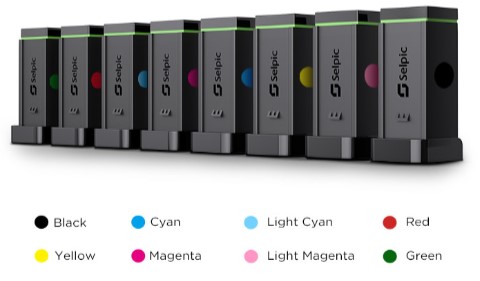
Both models work with pigment-based ink that provides quick-drying to prevent smudges and ensure precise output. The water-resistant and skin-friendly formula of the cartilage delivers good-quality prints. Both Selpic S1 and S1+ have cartilages with a difference of just 0.5″ in the nozzle. Cartridges come in 5 colors, namely, black, white, yellow, green, and blue for vivid printing.

Selpic handheld printer (1)

Selpic is offering 20% off on various items for its Autumn sale. The sale includes S1 and S1+ individual printer heads, a combo of S1 printer with 3 different inks and cartridge sets with quick-drying ink.


Huawei Chairman: Company has sufficient stocks for base stations

Guo Ping, Huawei Rotating Chairman, has stated that the company has sufficient semiconductor inventory to build telecom base stations. The senior executive made the statement during a press conference at Huawei Connect 2020.

According to TheElec report, this is the first official confirmation from the Chinese tech giant that it has stocked up semiconductors last year to better prepare for the US sanctions. For those unaware, the recent reinforcements of regulations against the company have taken effect as of 15th September 2020. Guo Ping also said that the ban made it very difficult for Huawei, as the company used millions of semiconductors a year for its smartphone and telecom operations.

Huawei Logo MWC 2019

The senior executive mentioned that the company is looking at methods to overcome its current predicament. Notably, the Chairman said that the company would gladly opt for Qualcomm chips if it received approval from the US. Despite being a big consumer electronics brand, Huawei is also a major telecom equipment and infrastructure provider. In China, the company has worked to build multiple base stations for the latest 5G networking standards as well. The company also recently revealed that it had reached 96 percent of its 500,000 5G base station target for 2020.


Epic Games and Spotify come together to advocate app store reforms

Epic Games and Spotify are banding together to push for reforms in mobile app stores’ policies rather than just rely on lawsuits. Both companies are uniting with other major developers as well.

Epic Games

According to a report from AndroidAuthority, this new alliance created by Epic Games and Spotify will include a group of developers and groups that will form the Coalition for App Fairness (CAF). The CAF will push for “enforcement and reforms” to help in the growth of healthy competition and choice in app stores through government policy rather than legal actions. At the moment, a few notable members include app makers like Match Group, Deezer, Tile, and ProtonMail, European Publishers Council, and News Media Europe.

The Coalition is primarily focusing on Apple currently, which has recently faced allegations regarding its approach to App Store policies that apparently have been “unfair.” Many developers have noted that its regulations have blocked innovative companies and raised app prices as well. According to the members of the Coalition, the Cupertino based giant exerts a monopoly behavior with, “the basic freedoms of developers are under attack,” said Tim Sweeney, CEO of Epic Games.

Epic

This group even published a list of 10 ‘app store principles’ that include ‘non exclusive app distribution, equal levels of developer access and promotion, transparent store policy, and the ability to offer third-party app stores on a given platform.’ In simpler terms, Epic Games and Spotify aim to break down the unfair App Store policies that have led to the many complaints from developers.


Redmi Note 10 4G likely certified by MIIT authority in China

Earlier this month, a new Xiaomi phone with model number M2007J22C was certified by China’s MIIT authority. The 5G-ready device was speculated to debut as Redmi Note 10 5G. Now, another Xiaomi phone with M2010J19SC with 4G support has also received MIIT approval. It is being said that this phone could be the Redmi Note 10 4G.

The MIIT listing of the M2010J19SC has no information on its specs. It seems that the “2010” numbers in the model number could be hinting October launch for the device. Recent reports have also claimed that Redmi could be announcing the Redmi Note 10 series in October.

Xiaomi M2010J19SC

In May, Redmi unveiled the Redmi 10X 4G, Redmi 10X 5G, and Redmi 10X Pro 5G smartphones in China. Hence, the rumor mill is speculating that the Redmi Note 10 series may have three models such as Redmi Note 10 4G, Redmi Note 10 5G, and Redmi Note 10 Pro 5G.

As far as the Redmi Note 10 is concerned, past reports have revealed that it will be coming with Dimensity 820 chipset, 8 GB of RAM, a 64-megapixel main camera, and Android 10 OS.  New information has suggested that the Snapdragon 750G powered Xiaomi Mi 10 Lite 5G (M2007J17G) could be arriving as a Redmi Note 10 series phone in China. The Chinese variant of the phone has the M2007J17C model number has also received approved from MIIT regulatory body. The device is expected to come with specs like a 108-megapixel main camera, SD750G, 4,820mAh battery, NFC, and 5G.

Hopefully, the MIIT certified M2007J22C and M2010J19SC will soon appear at 3C and TENAA certification platforms in the coming days. In related news, Redmi is also expected to announce its first Redmi Watch in China in October. There is a possibility that the Redmi Watch could be rebadged in other markets as Xiaomi Mi Watch Lite.


TicWatch Pro 3 unveiled, the first smartwatch with Qualcomm Snapdragon Wear 4100

The TicWatch Pro 3 has just been announced and it is the first smartwatch to feature the Qualcomm Snapdragon Wear 4100 chipset. Mobvoi has been making Google Wear OS wearables for a while now, and its latest offerings bring various features alongside the new chip.

TicWatch

Earlier this year, the company launched the TicWatch Pro 2020 smartwatch at a reasonable price. Now, the TicWatch Pro 3 arrives with a similar pricing and the new Snapdragon Wear 4100 platform. It also retains the unique dual display technology that seen earlier this year and offers one of the best battery life among the Wear OS smartwatches that is currently available in the market. According to Mobvoi’s official claims, the battery life can last up to 72 hours when in smartwatch mode.

TicWatch

The increase in battery life is accredited to the Snapdragon Wear 4100 that arrives with a 150 percent increase in GPU performance and an 85 percent bump in CPU performance. Furthermore, its memory speed has been increased as well, with a 25 percent increase in overall power saving as well. In terms of health management features, the TicWatch Pro 3 sports notable specs like blood oxygen level detection, heart rate sensor, as well as stress tracking and noise level measurement.

TicWatch

Additionally, it can also use GPS to track the users’ outdoor activities and arrives with an IP68 rating making it safe for those that wish to wear it during swimming. The new wearable also has NFC through which payment portals like Google Pay are supported. The watch even has a speaker and a mic, allowing one to take calls without requiring a paired smartphone. It is priced at 299.99 US Dollars and can be purchased through Amazon.com.

You can also purchase the TicWatch Pro 3 non-LTE version from the Aliexpress store for $269.99.


Samsung Galaxy A72 penta-camera setup revealed

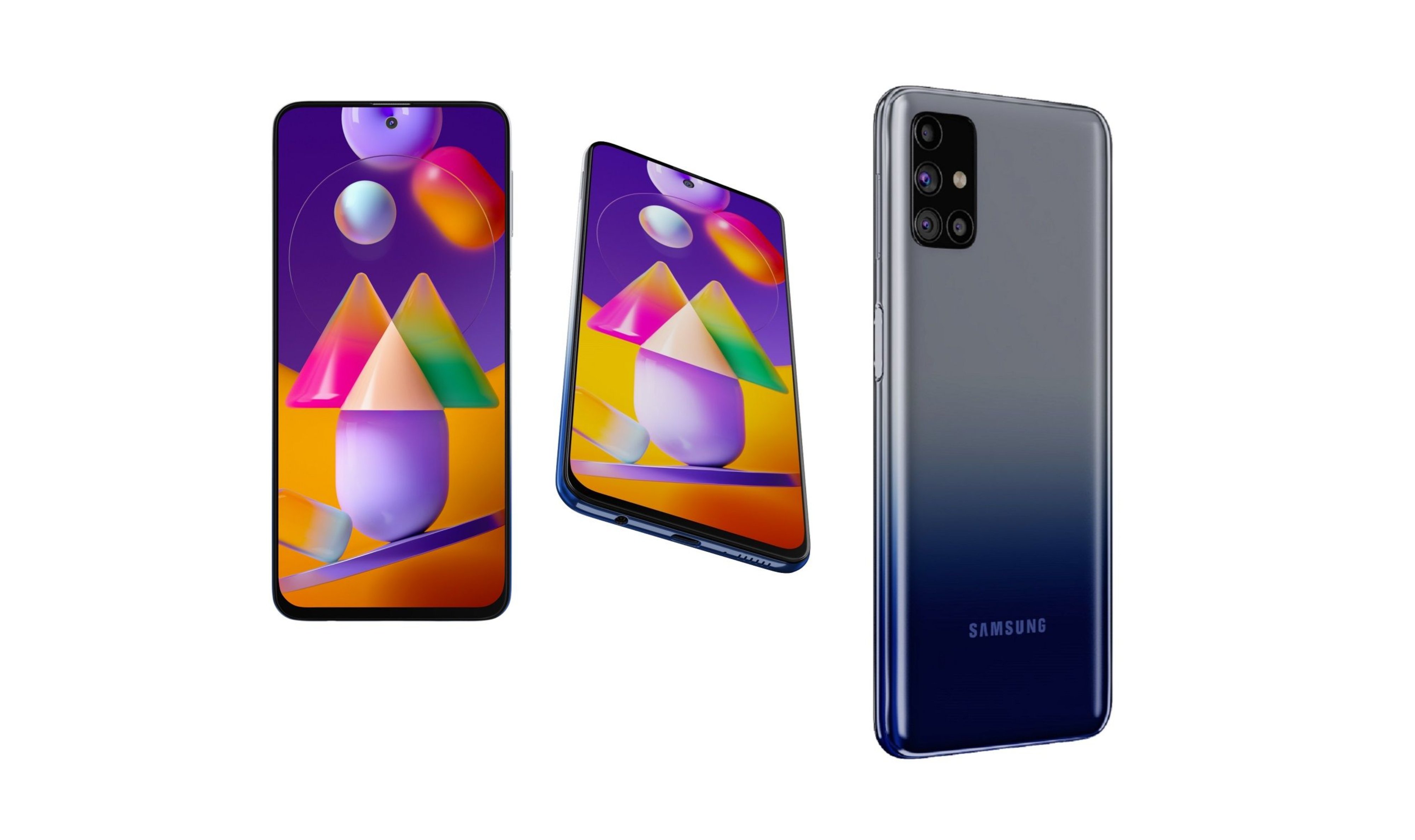
Samsung is known to introduce new features in its Galaxy A series before adopting them for its mainstream smartphones – Galaxy S and Galaxy Note series. Hence, the world’s, as well as the company’s first quad-camera smartphone was the Galaxy A9 (2018). Now, according to a new report, the South Korean tech giant will launch Galaxy A72 in the first half of 2021 as its first penta-camera handset.

Samsung Galaxy Logo Featured

Currently, there are only a few smartphones with a penta-camera setup (5 cameras) from the likes of Xiaomi and Huawei. But that will change next year, according to a report by The Elec (via Abhishek Yadav).

The publication says that Samsung will not only launch Galaxy A72 equipped with a penta-camera setup but the overall camera modules included in per Galaxy smartphone will increase in the coming year.

Above all, the report also details the entire camera setup of the upcoming Galaxy A72.

  • Rear Camer Setup

Primary

64MP sensor

Secondary

12MP sensor with an ultra-wide-angle lens

Tertiary

8MP sensor with 3x telephoto lens

Quaternary

5MP sensor with a macro lens

Quinary

5MP depth sensor


  • Front Camera Setup

Primary

32MP sensor

The five-camera setup that will be included with the Galaxy A72 seems to be impressive (at least on paper), sans the depth sensor. The new module in its setup (compared to Galaxy A71) is the 3x optical zoom camera from the Galaxy S20 series. Therefore, this forthcoming smartphone will be the first mid-range Galaxy device to come with such a camera.

That said, the report does not mention anything else about this handset apart from its cameras. Nevertheless, we expect it to arrive with a similar design as its predecessors with a Qualcomm Snapdragon processor and 5G connectivity.


New Lenovo 21.5-inch monitor comes with built-in camera and microphone

Lenovo has launched a new monitor in the market that offers a 21.5-inch display. The highlight of this new product is that it comes equipped with a Full HD camera and a built-in microphone. It is priced at 1,499 yuan which is roughly about $220 and can be purchased through JD.com.

Lenovo ThinkVision T22v-20 Monitor

EDITOR’S PICK: Qualcomm to soon launch Snapdragon 775G chipset manufactured using 6nm process

The 21.5-inch IPS display has support for Full HD 1080p resolution and 72% NTSC color gamut. The built-in camera also comes with support for infrared function and can be used for face recognition using the Windows Hello technology.

As for the connectivity, this new small-sized monitor from Lenovo comes with DisplayPort 1.2, HDMI 1.4, and VGA interfaces. There’s also a USB upstream interface and two USB 3.0 downstream interfaces. It also has support for VESA mount so that the monitor can be mounted on the wall.

Further, the monitor also comes equipped with a dual array of microphones and speakers. It has a base that supports the adjustment of the display panel. There’s also a groove on the base to easily place a smartphone.


Apple patents a futuristic VR/AR Headset that sends images directly to users’ pupils

Earlier today (25th September 2020), the US Patent and Trademark Office published a continuation patent application from Apple. The patent was titled “Dynamic Focus 3D Display,” which details a VR/AR headset that sends images directly to users’ pupils.

Apple

According to a PatentlyApple report, the device detailed in the patents works to direct a retinal projector system that provides dynamic focusing for a head mounted display. Through this, a superior experience is delivered in either VR (virtual reality) or AR (augmented reality) than what the current generation achieves. This is also quite different from the traditional system of displaying content in a headset.

The Apple patent also covers an apparatus and method for providing dynamic focusing on virtual reality or augmented reality. While conventional VR systems project images left to right on a screen that is viewed by the user, a direct retinal projector system scans images, pixels by pixel, and sends it directly to the retinas. This method could allow for AR/VR content to have another level of depth and immersion in each scene. In other words, the system could adjust the depth of the content being displays in accordance with the user’s positional in VR or AR.

Apple

The system could even help to minimize or eliminate the convergence-accommodation conflict in VR systems. Apple detailed the system through various detailed sketches in the patent. Unfortunately, it is still too early to tell if the Cupertino based giant is actually working on such a device or whether it is just covering all bases and patenting the technology, which might make an appearance of its upcoming Apple Glasses.


Xiaomi launches new energy-efficient Mi Vertical Air Conditioner in China

Xiaomi recently launched three-level energy-efficient air conditioners with 1hp and 1.5hp capacity and now the company has launched yet another similar product. The company has today launched Mi Vertical Air Conditioner with 2hp capacity. The product is priced at 3,699 yuan (~$543) and can be pre-booked with a deposit of 100 yuan (~$15).

Mi Vertical Air Conditioner 2HP

EDITOR’S PICK: TSMC reportedly sees breakthrough in 2nm architecture development for 2024 chips

This new three-level energy-efficient Mi Vertical Air Conditioner comes with a compact cylindrical design that has a touch panel on top for controls. The effective area covered by the device is 20-30 sq. mt. and the circulating air volume is 1000m³/h. The company adds that the fan and air duct are optimized for design and noise as low as 33dB(A).

It comes equipped with an anti-bacterial and anti-mildew filter. As per the company, the fins on the device are cleaned automatically when clogged. There’s also support for Mi App for controlling the device along with XiaoAI voice control support.

The company had first launched the vertical air conditioners in November last year and a couple of months ago, it launched 3hp vertical air conditioner for 5,999 yuan which covers an area as large as 30 square meters.


Redmi Note 10 series phone could be a rebranded Xiaomi Mi 10T Lite 5G

Recently, a new Xiaomi phone with model number M2007J17G was seen at the database of the Federal Communications Commission (FCC). It is speculated that the device could be heading to global markets as Xiaomi Mi 10 Lite. Vague information suggests that the device could be rebranded as Redmi Note 10 series smartphone in China.

In July, XDA had revealed that two of the upcoming phones by Xiaomi are codenamed as Gauguin and Gauguin Pro. A reliable tipster has claimed that the M2007J17C model number belongs to the Gaugin smartphone. The XDA report had claimed that Gauguin and Gauguin Pro smartphones heading to China have 108-megapixel main cameras. However, the same devices heading to global markets and India will have 64-megapixel main cameras.

The global edition of the M2007J17C smartphone has an M2007J17G model number. The FCC certification that the M2007J17G device has revealed that it will be arriving with specs like a 4,720mAh rated battery (4,820mAh typical value), NFC, and 5G support.

Speculations are rife that the device will break cover in the global markets as the Xiaomi Mi 10 Lite 5G and it could be driven by the all-new Snapdragon 750G chipset. The China variant of the device with model number M200717C was recently approved by the MIIT authority.

Redmi note 10 series leak

Coming to the new information shared by a Weibo user, Gauguin (Mi 10 Lite 5G) and Gauguin Pro phones will be heading to under Redmi branding. He further mentioned that the two devices will be debuting in China in October as Redmi Note 10 series smartphone. The Mi 10 Lite 5G is also expected to arrive as the Redmi Note 10 series handset in China.

Earlier this month, a Xiaomi phone with the M2007J22C model number was approved by the MIIT authority. It is speculated to debut in China as Redmi Note 10. A few months ago, the Redmi Note 10 with Dimensity 820, 8 GB of RAM, and Android 10 OS had appeared in AI benchmarks. It is advisable to wait for further reports to get clearer information on the mystery surrounding the Redmi Note 10 series.


(via)

TSMC sees breakthrough in 2nm architecture development for 2024 chips: Report

TSMC has apparently made another major breakthrough in its research and development process. This time the world’s largest contract chipmaker has made strides in the development of its 2nm architecture that will be seen in processors in the near future.

According to a PatentlyApple report, sources from its supply chain have revealed that the upcoming 2nm process will adopt a new multi-bridge channel field-effect transistor (MBCFET) architecture unlike the fin-type field-effect transistor (FinFET) architecture used in the 3nm and 5nm processes. This development also marks TSMC making another progress far ahead of its competition at the moment, like Samsung.

A TSMC official also stated to a publication that “We are optimistic that the yield rate of risk trial production in the second half of 2023 will reach 90%, which will help us continue to win large orders from major manufacturers such as Apple and Huida in the future.” Furthermore, the company plans on reaching mass production capabilities sometime in 2024.

Back in 2019, TSMC had dedicated an R&D team to find a feasible path for the development of the 2nm process. This team had to consider costs, equipment compatibility, technology maturity and performance, and other conditions as well. Notably, 2nm architecture adopts the MBCFET based on the surround gate (GAA) process, which solves the physical limitations of current control leakage caused by the FinFET process.

TSMC Fab 6

While the chipmaker is already working on 2nm processors for 2024, it has also begun studies into the processes that lay beyond it. This includes the possibility of the 1nm process and other ventures in the near future. TSMC is also gearing up to expand its factory site in central Taiwan for the 2nm process, as per a DigiTimes report. This report also signifies the widening gap between the Taiwanese firm and its rival, Samsung.


Alleged Huawei Mate 40 Pro real life images leak online ahead of launch

Chinese giant Huawei is currently gearing up to launch its next-generation Mate-series flagship smartphone — Huawei Mate 40 Pro, which will reportedly have four variants in the lineup. Now, ahead of the launch, real-life images of the phone have leaked online.

The leaked image shows that the alleged Mate 40 Pro smartphone has a dual punch-hole cutout on top of the display for housing the front-facing camera sensors in the top-left corner. Along with narrow bezels, the phone also seems to have a large curvature.

The flagship smartphone has a red-colored power button as well as volume rocker keys locked on the right side of the device. This is in line with the previous leaks related to the smartphone. In the leaked images, the phone has a protective cover on top.

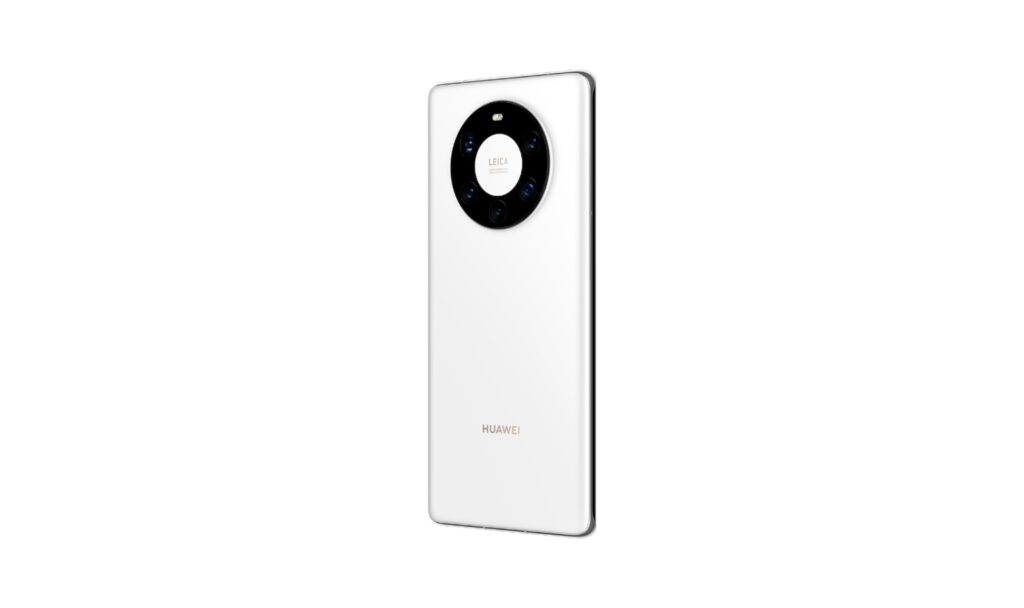
Previously leaks have hinted that the device will also come with dual-speaker support for better audio output. It is also reported that the phone will come with a circular camera module on the back.

EDITOR’S PICK: Huawei in talks with other manufacturers to use HMS and HarmonyOS: Chairman Guo Ping

As per the reports, the Mate 40 and Huawei Mate 40 Pro smartphones are expected to come with OLED display panels along with support for the 90Hz refresh rate. The Mate 40 may feature a 6.5-inch FHD+ display, whereas the Mate 40 Pro could be equipped with a 6.78-inch QHD+ display.

A recent report revealed that OCE-AN00, NOH-AN00, and NOP-AN00 models that belong to Mate 40, Mate 40 Pro, and Mate 40 RS Porsche Design or Mate 40 Pro+ have appeared in TENAA’s database. However, the listings are yet to populated with specs and images.

The company has already confirmed that the Kirin 9000 flagship chipset will be powering the smartphone, of which Huawei has less than 10 million units in stock because of the newly imposed restrictions by the United States.


TCL SIGNA offers Snapdragon 429 & 5.5-inch HD+ display for $79.99

Verizon Wireless launches a new entry-level smartphone in the form of TCL SIGNA priced at $79.99. For $10 more, it offers better features than Cricket Wireless’ ALCATEL APPRISE, which was released earlier this month. The phone is already on sale on the carrier’s official website and should be also available at its retail stores across the US.

Verizon Wireless TCL SIGNA Rear Featured

The newly launched TCL SIGNA flaunts a 5.5-inch HD+ LCD panel with 18:9 aspect ratio and Asahi Dragontrail glass protection. Under the hood, it comes with Qualcomm Snapdragon 429 chipset paired with 2GB RAM and 16GB internal storage with support for microSD card up to 256GB.

The phone is available in a single black color and its body is made of polycarbonate with stipe patterns mimicking fiber carbon. The right side of the device houses the volume rocker and the power key, whereas the left side includes a dedicated Google Assistant key.

The handset sports a single 8MP rear-facing camera accompanied by an LED flash and a 5MP selfie camera. For connectivity, it comes with 4G LTE, dual-band WiFi 5, Bluetooth 4.2, 3.5mm headphone jack, and USB Type-C port. Further, like most devices, it features a solo bottom-firing speaker and dual-microphones.

Verizon Wireless TCL SIGNA Front

Last but not least, it runs Android 10 with bloatware from Verizon and gets its power from a 3,000mAh battery.


(Source / Via)

Huawei Mate X2’s design maybe similar to the Galaxy Z Fold 2: Patent

Huawei is one of the few smartphone manufacturers that have launched its very own foldable handsets into the market. The company has previously released the Mate X and Mate Xs, with both of them featuring an outward folding display. Now, a new patent suggests that the next generation of this lineup might arrive with an inward folding screen, which is similar to the Samsung Galaxy Z Fold 2.

Huawei

According to a LetsGoDigital report, the Chinese tech giant filed a patent for the device back in 2019 with the CNIPA, which finally got approved earlier today (25th September 2020) and arrives with 32 product sketches and more. Looking at these images, it is clear that the smartphone features a foldable design and will be a premium grade flagship. It features both a large primary display along with an external screen as well.

The one on the outside acts as the primary display when the device is folded and features a dual punch hole selfie camera on the front. On the other hand, the large display on the back covers the majority of the rear panel, with its hinge mechanism bending inward, which is quite different from what the company has offered so far.  Furthermore, the rear camera system’s design resembles the Huawei P40 Pro+, although, the sensor configurations are a bit different, with a periscopic zoom lens also being found on the back.

Huawei

The inward folding design with an external display is quite similar to what Samsung has been offering in its foldable smartphones. However, the design isn’t just a simple replication. A very notable aspect is that the device gets thinner when we move away from the primary portion of the device. In other words, when the smartphone is fully unfolded, one can see that the area that houses the camera and all the necessary specs is thicker than the region that just houses the inner and outer displays. Unfortunately, this might be an attempt from Huawei to cover all bases and not something it is actively working on. So stay tuned for more updates.


Qualcomm to soon launch Snapdragon 775G chipset manufactured using 6nm process

Qualcomm has been working on its next-generation flagship chipset — Snapdragon 875, which is based on the 5nm process. It is expected to get launched by the end of this year and we could get devices powered by the same soon after the launch.

The upcoming flagship chipset is codenamed SM8350 and is internally known as Lahaina. Tipster Roland Quandt claims that there will also be Snapdragon 865 Plus variant, similar to what we have seen with the SD855 and SD865 chipsets.

Qualcomm Snapdragon

EDITOR’S PICK: Microsoft partners with Qualcomm to help developers make ARM-compatible apps for Windows 10

Now, as per the report, apart from the SD875 SoC with 5nm node, we will see Qualcomm launching its first 6nm processor — Qualcomm Snapdragon 775G. Going by the name, it will be a successor to the SD765G which powers the OnePlus Nord and LG Velvet.

It is reportedly based on a 6nm architecture and is expected to have a 40 percent faster CPU and 50 percent better graphics than the Snapdragon 765G. It is also said to support 120Hz display, 12GB LPDDR5 RAM, and 256GB UFS 3.1 storage.

As for the flagship Snapdragon 875 chipset, it is manufactured using Samsung’s 5nm EUV process as TSMC’s 5nm capacity has been reserved by Apple for its A14 Bionic chipset. The chipset is expected to be 25 percent smaller and 20 percent more power-efficient compared to the current-generation 7nm SoCs.


Xiaomi Mi Master Ultra TV pricing details leak online ahead of launch

Xiaomi has confirmed that the company will be launching a new Mi Master Ultra TV model in its home market on 28th September. With just a few days to the launch, details about its pricing have surfaced online.

As per the report, the upcoming Xiaomi Mi Master Ultra TV model will have five-digit pricing, but the exact price range is now yet known. It is also said that along with the TV, the company will also introduce a soundbar.

Xiaomi Mi Master Ultra TV Price Leak

Given that the Xiaomi Mi TV Master 65-inch OLED model is priced at 12,999 yuan in China, the pricing of the upcoming Ultra variant will definitely be higher than this. To know for sure, we wll have to wait for the official launch event.

Recently, an 82-inch Smart TV from Xiaomi with support for 8K and 4K resolutions were spotted on 3C certification. The 82-inch Mi TV 8K has a model number L82M6-8K and is reportedly using a panel from LG Display.

EDITOR’S PICK: Huawei all set to launch Watch GT 2 Pro and Watch Fit in Japan next month

It is also said that the TV will come with a Mini LED display that offers features like high brightness, high contrast, fast refresh rate, and wide color gamut. The smart TV has an integrated 5G modem for streaming 8K content.

The Xiaomi Mi TV Master 65-inch OLED model comes with support for 4K display with a 120Hz refresh rate and offers a screen-to-body ratio of 98.8 percent. It has support for features like high-speed motion compensation, AI image quality engine, and Dolby Vision, among others.


Xiaomi Mi Watch Lite certified; Could be rebranded Redmi Watch

In November 2019, Xiaomi unveiled the Xiaomi Mi Watch in China with a price tag of 1,299 Yuan (~$190). It appears that the company is now planning to launch a more affordable version of Mi Watch as a device named Xiaomi Mi Watch Lite has bagged a vital certification.

As can be seen in the screenshot, the UL (Demko) authority has approved the Xiaomi Mi Watch Lite. The listing reveals that the model number of the device is REDMIWT02 and it carries support for 5Vdc and 0.4A charging.

Yesterday, the REDMIWT01 had received approval from the MIIT authority of China. A reliable Chinese tipster had claimed that the REDMIWT01 will be debuting as Redmi Watch in China soon. The REDMIWT02 that has been approved by UL (Demnko) seems to be a variant of the REDMIWT01. Hence, it appears that the Redmi Watch could be rebranded version as the Xiaomi Mi Watch Lite in some markets. At present, there is no word on the specifications of the Mi Watch Lite.

Xiaomi Mi Watch specifications

The Xiaomi Mi Watch has a 1.78-inch S-AMOLED display that offers 360 x 448 pixels. The Snapdragon Wear 3100 chipset is present under the hood of the device. It comes with 1 GB of RAM and 8 GB of internal storage. The smartwatch is backed by a 570mAh battery and it offers connectivity features such as NFC, Wi-Fi 802.11 b/g/n, and Bluetooth 4.2. It carries support for wireless charging.


LG Wing gets the teardown treatment showing us the entire internals

LG has proven itself to be an innovative company over the years despite its smartphone business struggling in recent times. In its bid to relaunch its smartphone business, we have seen the South Korea company release a host of new smartphones in the mid-range and budget segment. But what has caught the attention of tech enthusiasts is definitely the LG Wing. LG Wing teardown

The Wing smartphone is a dual phone with a design like we have never seen before. The top display has a swivel which can rotate to an angle of 90-degrees. This is the main highlight of the phone and it would be interesting to see how that works from the inside. Zack Nelson of the YouTube channel JerryRigEverything has given us the opportunity to see the internals of the premium smartphone.

One of the noticeable thing about the Wing is the presence of some level of water and dust protection but there is no IP rating. The phone’s pop-up camera system is basically the same as that of others.LG Wing

However, the major highlight of the device is definitely the rotating screen. The swivel design brings along some unique challenges. LG utilised a kind of lubricated plastic to ensure the swivel moves smoothly. Also, the two halves are slightly concave creating a void, which prevents any dirt and sand getting caught between the halves from being dragged along and scratching the secondary display.

LG had earlier claimed that the swivel will survive at least 200,000 cycles. The mechanism itself uses an O-shaped hinge that allows a ribbon cable to pass through the middle and power the main display.

One spring helps the top half fully rotate 90° when opening, then another spring helps you close the wing. Interestingly, there’s a tiny hydraulic damper that smooths out the motion.

You can check out the teardown video from above. Zack also promised to publish a durability test video soon. Watch out for that too.


Hisense Hard Pro & Hard Plus Gaming Monitors join the fray

Chinese home appliances giant Hisense announced at the end of July that it would be entering the gaming display market. Two months after, Hisense has now officially released its own gaming monitor series called Hard series. Two new gaming monitors were unveiled dubbed Hard Plus and Hard Pro gaming monitors.Hisense Hard Pro

Hisense Hard Pro gaming monitor uses a 27-inch fourth-generation 1000R super-curvature screen which is more curved than the common 1500R curved screen. The gaming monitor has a smaller full-screen parallax and a stronger sense of immersion.Hisense Hard Pro

As a professional gaming monitor, it has a resolution of 2560×1440 pixels, a high refresh rate of 240Hz, a gray-scale response time of 1ms and a peak brightness 600nits. The monitor also supports adaptive synchronization technology (Adaptive-Sync) which can prevent smear, tearing, and stuttering. It also supports HDR Technology.Hisense Hard Pro

As a professional image quality display, it supports QLED quantum dot technology, and after professional image quality tuning. The three colour gamut indicators are far beyond those of other monitors at the same level. First, the sRGB coverage is 130%, suitable for playing games. Further, the DCI-P3 coverage is 103% which is suitable for watching movies while the Adobe RGB coverage reaches 112%, suitable for professional design.

In addition, it supports 1024 gray scales, 1 billion colors, and the ultra-low color difference ΔE<2.Hisense Hard Plus

In terms of experience, it supports power-on signal, smart switching, and power-on direct connection . It can meet the needs of PC, PS, Xbox and other game platforms without debugging one by one.

As for the pricing, the Hisense Hard Pro 27-inch monitor is priced at 3,999 yuan ($585). On the other hand, the Hard Plus 24-inch  model is priced at 1,399 yuan ($204) and the 27-inch version goes up for 1,699 yuan (~$248).