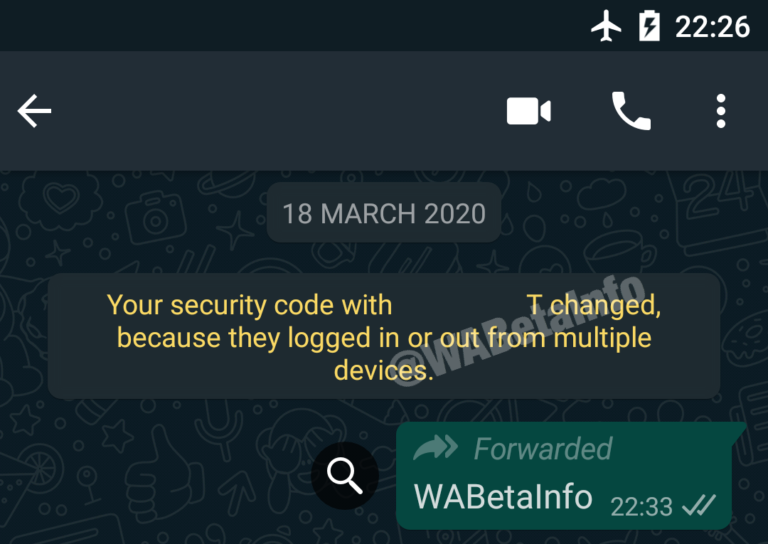
Previously, we had reported on WhatsApp, the popular messaging platform, working on a multiple device support feature for the same account. Now, a new report suggests that the company has reached the final stage in testing for the new feature.
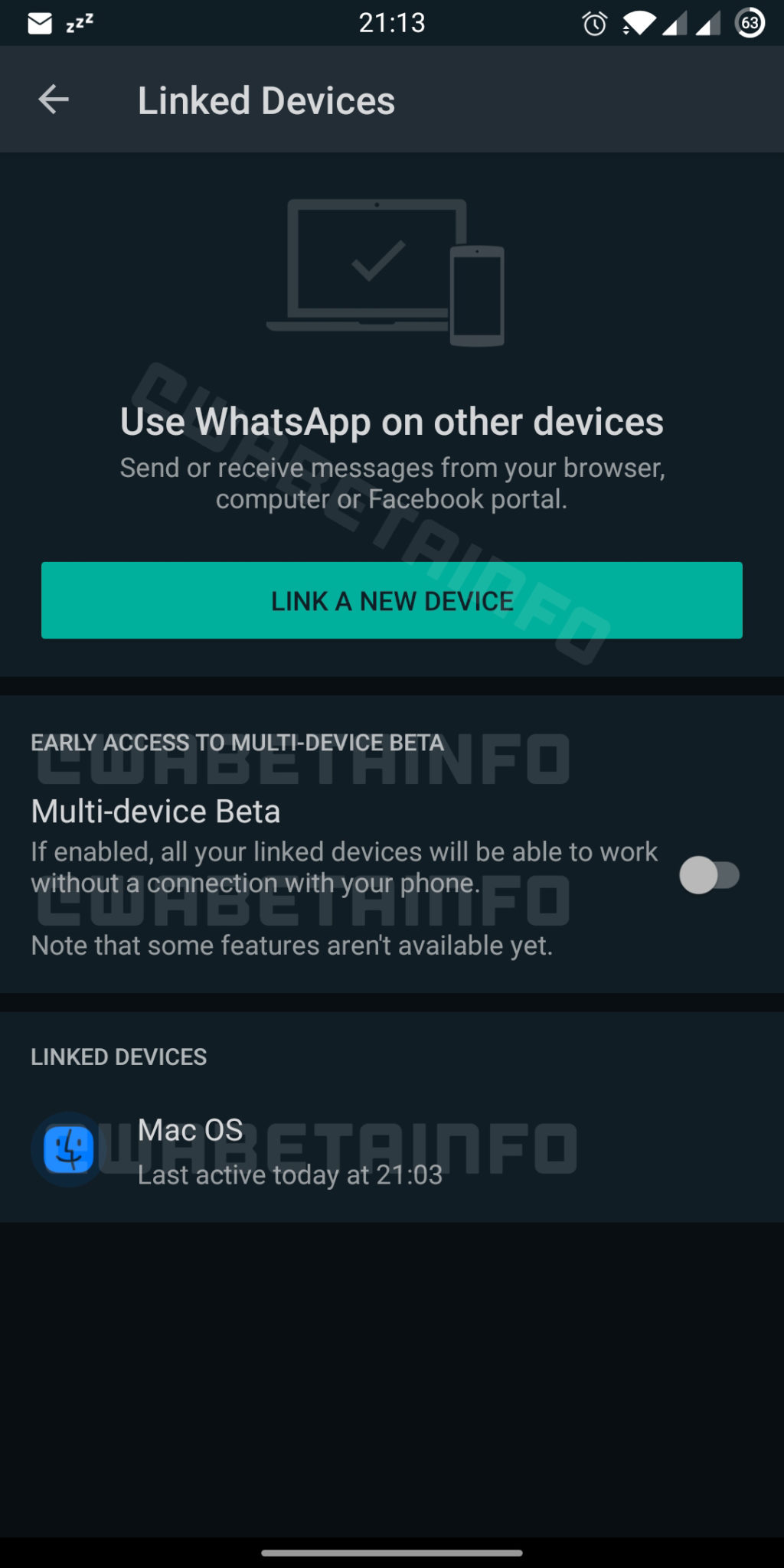
Images Via WaBetaInfo
According to a WaBetaInforeport, WhatsApp is in the final stages of a new feature that might be very useful to many users. The social media giant is working to bring support for up to 4 different devices that can run from a single WhatsApp account. This is something extremely useful, which might also benefit WhatsApp Web users, who would not have to rely on their primary phones to have an internet connection.
Furthermore, WhatsApp is also planning on building a new UI for the desktop client, which will showcase how the chat history is migrated and that the process is end to end encrypted. Apparently, a few features of the new update are still not ready, but the company has rolled out the more important ones like syncing various aspects chat history across multiple devices, muted chats, and even syncing starred/delivering messages.
However, this feature is currently in beta testing but users can opt in to try out this feature a bit early. The new feature is called “Linked Devices,” which enables all other linked devices of your account to work without an internet connection on your primary smartphone or main driver. This is still under development and users can also choose to opt out of the beta testing. Keep in mind, that entering into the beta testing will have all previous linked sessions be terminated since they are built on the old/current stable system.
Donald Trump recently said that he has approved the deal between TikTok, Oracle, and Walmart, clearing the path for ByteDance-backed TikTok to continue its business in the United States without the fear of getting banned.
Oracle will be owning about a 12.5 percent stake in the company while Walmart CEO Doug McMillon will join the company’s board. ByteDance founder Zhang Yiming and the Chinese company’s current directors — Sequoia China’s Neil Shen and General Atlantic’s William Ford — will reprise their roles.
In a statement released by the company, it confirmed that ByteDance will retain full control of its social media algorithms but will allow Oracle limited access to view source code for “safety” purposes.
The company has contested Trump’s assertions that the U.S. government will get $5 billion as part of the deal. ByteDance said that the figure was just an estimate of the amount of taxes TikTok Global would pay over several years if the business proved successful.
Earlier, in a joint statement released by Oracle and Walmart, it was said that TikTok will pay more than $5 billion in “new tax dollars to the U.S. Treasury” and develop an AI-driven online video curriculum.
As a part of the agreement, a new entity named TikTok Global will be created in which Oracle and Walmart will hold a minority stake. ByteDance has confirmed that it will continue to remain in control of the business, contradicting Trump’s claim of American companies being in control of TikTok.
The Chinese giant is expected to hold about 80 percent stake in TikTok Global, which could be valued at around $60 billion. It is not yet clear if the deal needs approval from the Chinese government or not.
Meanwhile, the Trump administration had banned WeChat downloads and transactions on the platform, effective 20th September. However, a judge has blocked the ban on WeChat and allowed the app to continue operation.
Infinix Hot 10 launches in Pakistan as the new entrant in the brand’s popular Hot series of smartphones. The handset comes in three storage configurations – 4GB + 64GB, 4GB + 128GB & 6GB + 128GB priced at PKR 20,999 ($127), PKR 23,999 ($145), and PKR 25,999 ($157) respectively. However, it will be available at PKR 1,000 ($6) discount up until October 31.
Additionally, customers who pre-order the device starting today till September 28 will be eligible for a free pair of Infinix Earbuds XE08 on the 4GB/6GB + 128GB variants and Infinix Smart Band 4 with the 4GB + 64GB version.
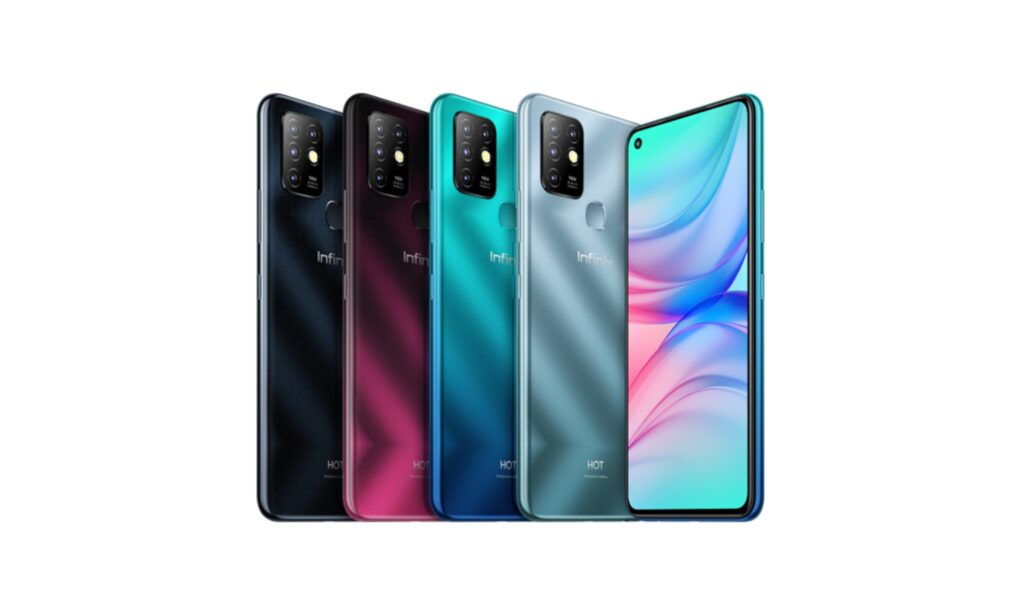
That said, the new Infinix smartphone will be available for purchase starting September 28 in the country in Obsidian Black, Amber Red, Moonlight Jade, and Ocean Wave color options.
Infinix Hot 10 Specifications
The newly launched Infinix Hot 10 is the successor to Infinix Hot 9 from May. This phone leaked earlier last month revealing most of its specs.
The Hot 10 is powered by MediaTek helio G70, a great leap from helio A25 present in its predecessor. However, it sports a similar HD+ (720 x 1640 pixels) punch-hole (top left) TFT LCD panel which is slightly larger at 6.78-inches compared to 6.6-inch on its forerunner.
On the back, the device houses a quad-camera setup that includes a 16MP primary sensor, 2MP macro shooter with AF, 2MP depth sensor, and an AI lens (¯\_(ツ)_/¯). The rear of the handset also features a capacitive fingerprint sensor. Whereas, the front camera is of 8 megapixels.
The smartphone comes with all the necessary sensors such as gravity sensor, gyroscope, light sensor, and proximity sensor but it misses out the compass, which is essential for navigation. On the plus side, it supports microSD cards up to 512GB, dual-band WiFi 5, Bluetooth 5.0, 3.5mm headphone jack, and DTS Audio.
Another highlight of this phone is its massive 5,200mAh but sadly, it can only charge at the rate of 10W via MicroUSB port. Last but not least, the Infinix Hot 10 runs XOS 7.0 operating system based on Android 10.
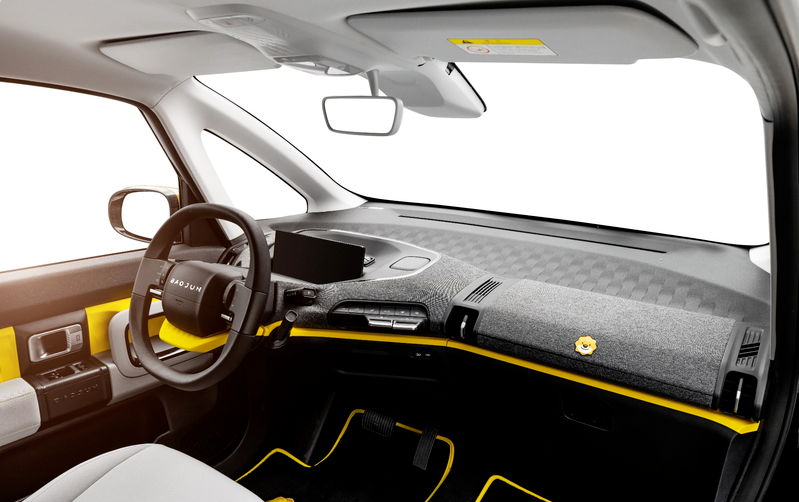
The Baojun E300 electric car is all set to be unveiled at the Beijing Auto Show on 26th September. The car, which will have support for Xiaomi‘s ecosystem, is built by Chinese carmaker Baojun along with Suning.
The E300 series electric car includes six months and the company claims that it is the world’s first smart electric vehicle that comes integrated with the Xiaomi ecosystem and XiaoAI smart voice assistant.
The car will come with support for features like remote car control, humanized interactive experience, car home interconnection, and several other functions. The company is focused on offering a full ecological link of travel with a strategy of “people + car + home.”
The E300 car has 39 horsepower and body shape of fewer than 3 meters, which is very similar to the Hongguang MINI EV aka Chinese version of K-Car. It is equipped with a permanent magnet synchronous motor, a 30kWh lithium iron phosphate battery pack, and an NEDC battery life of 305 kilometers.
It also has a model that integrates the Huawei 5G ecosystem and is touted to be the industry’s first smart car to implement voice-controlled ADAS systems. The pricing for this Baojun E300 Electric car ranges from 65,800 yuan (~$9,721) to 85,800 yuan ($12,676), depending on the model.
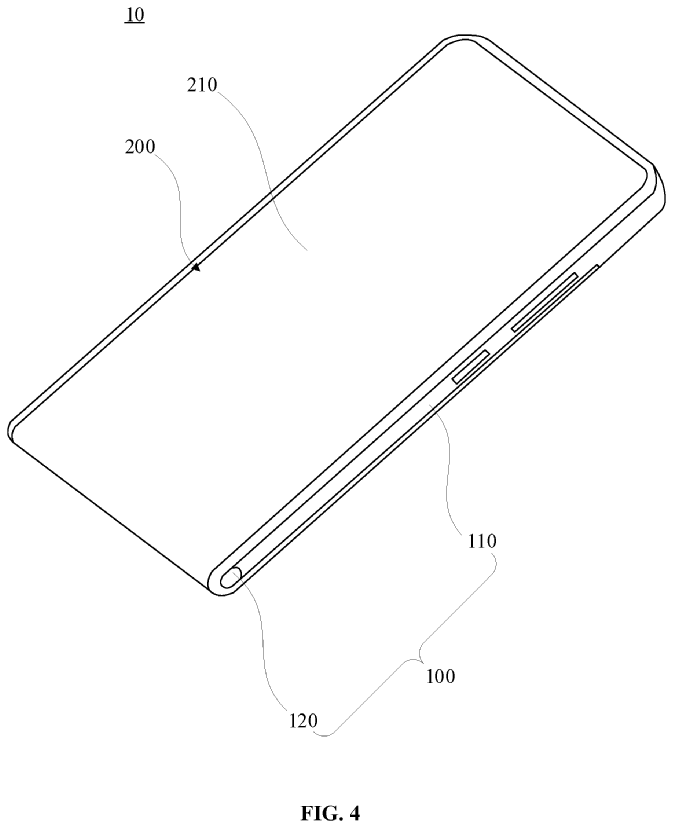
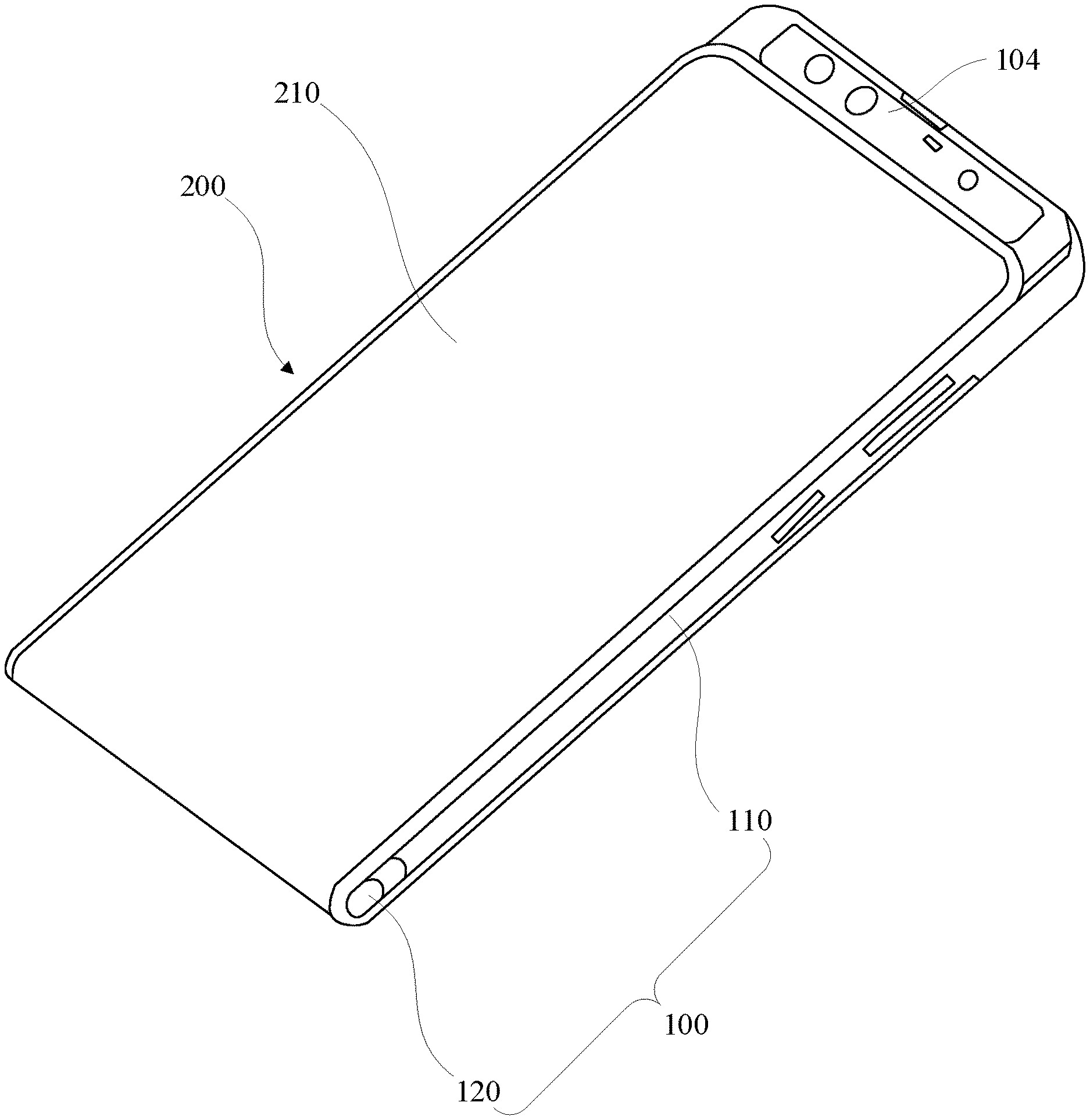
Xiaomi has recently patented a new smartphone with a very unique design. The device features a sliding mechanism that is built into its flexible display, which wraps around the body of the handset.
Traditional slider phones generally have two bodies that are joined together, with one sliding up to reveal a camera or another mechanism. However, in this case, the Chinese tech giant has built a sliding device with just a single body but built the sliding mechanism into the flexible display itself. Looking at the image provided, the display of the patented smartphone covers the front and only 3/4th of the rear portion that wraps around the device from the bottom. This was first reported by WindowsUnited, with the patent being found in the incoPat Global Patent Database.
Thus, when the flexible display slides downward to unveil the front facing cameras and other sensors, the display on the back also rises upward. To put things simply, the display is the only portion that moves due to a sliding mechanism, which is possible due to the screen itself being flexible and covers both the front and back portions. This makes it stand out from any other slider phones that are available in the market at the moment.
Unfortunately, finer details regarding this very unique device are currently unknown. It is also unclear whether Xiaomi is actually working on such a device or if it is just covering all bases. However, this is a never before seen use of a flexible display and sliding mechanism, which shows that innovation is still what drives the company.
The Trump administration recently confirmed that the Tencent-backed WeChat and ByteDance’s TikTok will be banned in the United States from 20th September. It also blocked all the transactions to WeChat from the same day while broader restrictions for TikTok were related till November because of the on-going negotiations.
Now, in a major relief, a judge has blocked the ban on WeChat just as the restrictions were about to go into effect. U.S. Magistrate Judge Laurel Beeler said in an order that WeChat users, who filed a lawsuit, “have shown serious questions going to the merits of the First Amendment claim, the balance of hardships tips in the plaintiffs’ favor.”
The ruling also temporarily halts the ban on transactions for the application in the United States. This is a major setup for President Donald Trump who has labeled the service as a national security threat, just as election date nears.
In her order, Judge Laurel Beeler said that she had chosen to grant the motion because of some serious questions raised by the plaintiffs about the harm of First Amendment rights. The plaintiffs had also argued that the ban would shut down the primary means of communication for the Chinese community.
The lawsuit was filed by the U.S. WeChat Users Alliance, which says that it has no connection with Tencent or its affiliates. The group argues that the ban violates several constitutional provisions, including the right to free speech, due process, and equal protection against arbitrary discrimination.
Meanwhile, Donald Trump has approved the deal of TikTok with Oracle and Walmart where both the American companies will take up a minority stake in TikTok Global while the Chinese group will continue to hold the majority stake.
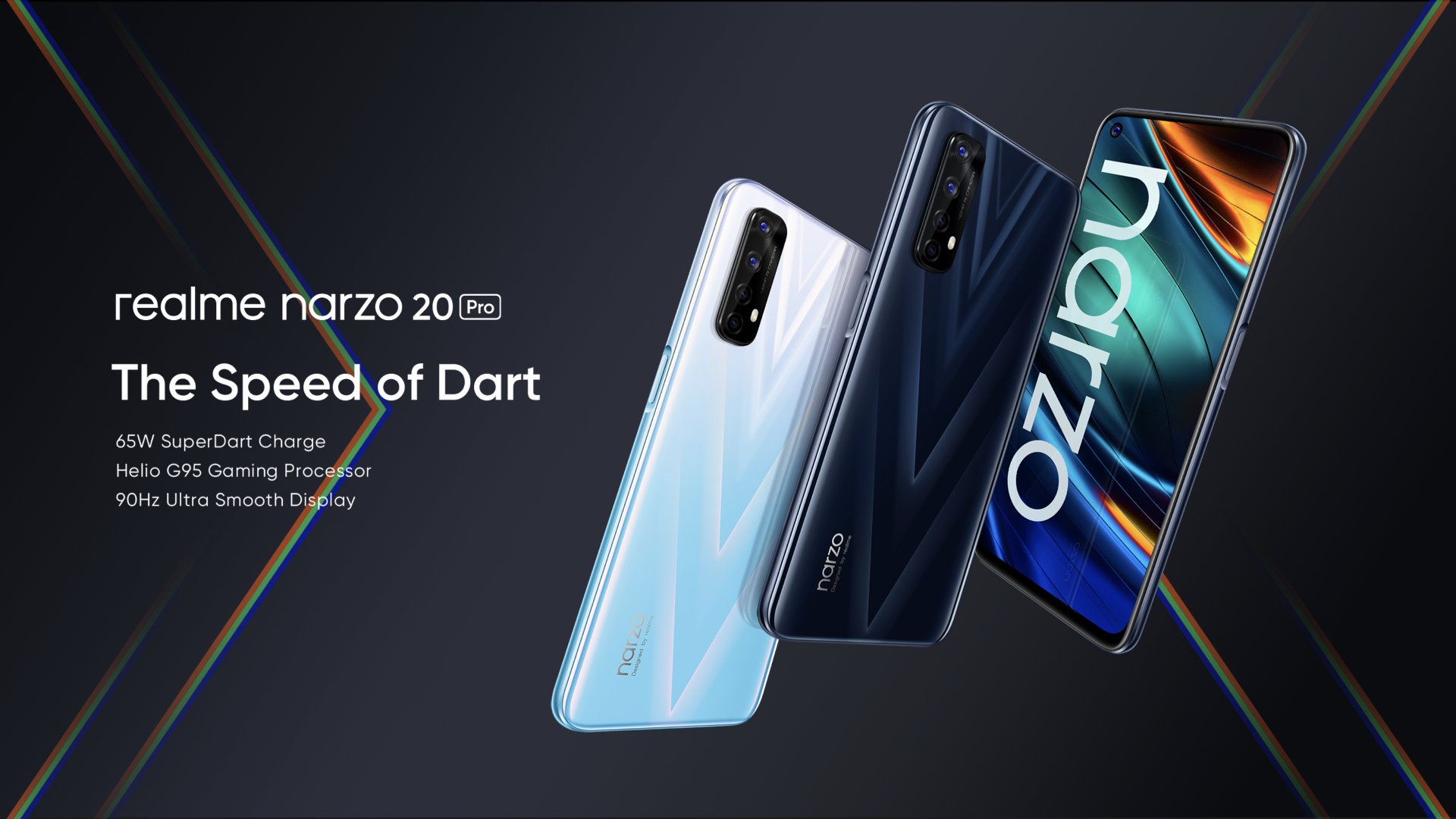
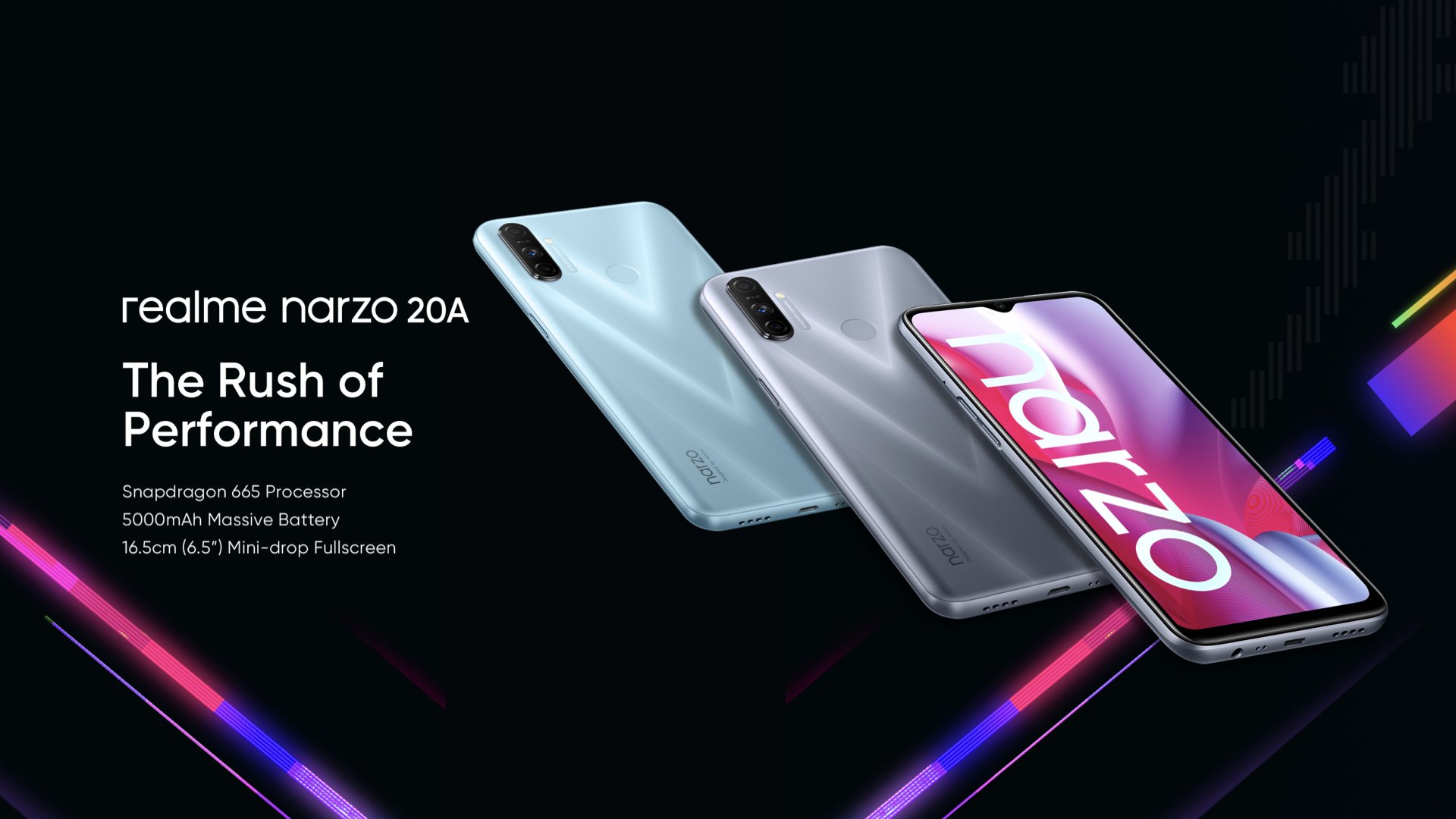
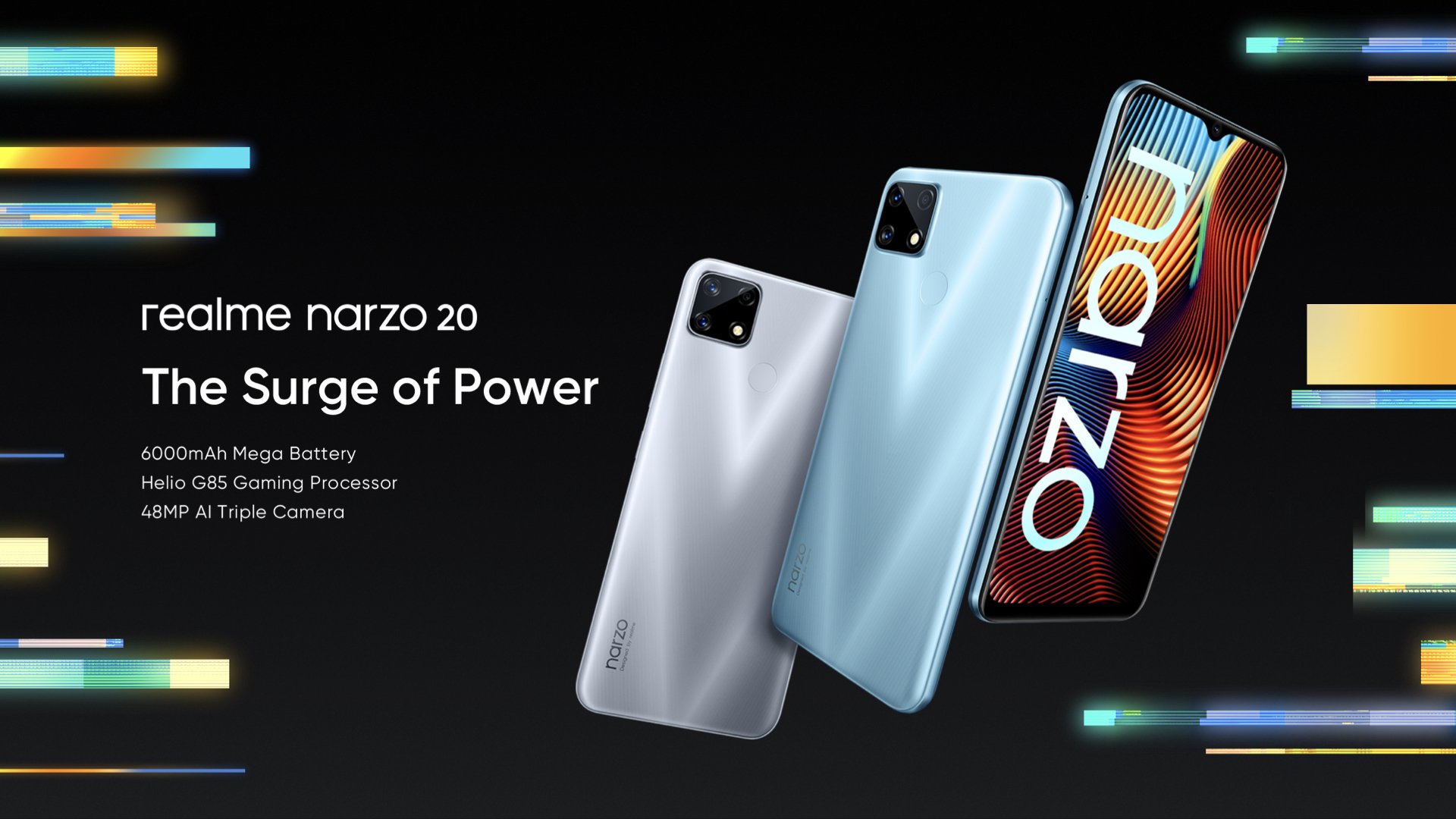
Earlier this year, Realme introduced the Narzo smartphone brand by announcing Narzo 10A and Narzo 10v in India. Today, the Chinese firm held an online-only launch event in India to announce the successor models. The company took off covers from Narzo 20A, Narzo 20A as well as Narzo 20 Pro. These new phones offer users with up to 90Hz display, up to 5,000mAh batteries, up to 65W fast charging, and up to 48-megapixel quad cameras.
Realme Narzo 20 Pro specifications and features
The Realme Narzo 20 Pro has a 6.5-inch IPS LCD punch-hole screen that produces a 1080 x 2400 pixels Full HD+ resolution, a 20:9 aspect ratio, and a 90Hz refresh rate. The device delivers a screen space of 90.5 percent. The Helio G95 which fuels the recently announced Realme 7 is present under the hood of the Narzo 20 Pro. The smartphone comes with up to 8 GB of LPDDR4x RAM. The Narzo 20 Pro has up to 128 GB of UFS 2.1 storage.
The Narzo 20 Pro has an f/2.1 aperture 16-megapixel selfie camera. The rear-facing quad-camera system of the smartphone includes an f/1.8 aperture 48-megapixel main lens, a 119-degree 8-megapixel ultrawide snapper with f/2.3 aperture, a 2-megapixel macro lens with f/2.4 aperture, and a 2-megapixel B&W portrait sensor with f/2.4 aperture. It has a side-facing fingerprint reader. The 4,500mAh battery of the Narzo 20 Pro is blessed with support for 65W fast charging, which will come packed in the retail package. Its dimensions are 162.3 x 75.4 x 9.4mm and it weighs 191 grams.
Realme Narzo 20A and Narzo 20 specifications and features
The Realme Narzo 20A and Narzo 20 are fitted with 6.5-inch IPS LCD panels with a waterdrop notch. They offer HD+ resolution of 720 x 1600 pixels, a 20:9 aspect ratio, and a 60Hz refresh rate. The Narzo 20A offers an 89.8 percent screen-to-body ratio, whereas the Narzo 20 delivers a screen space of 88.7 percent.
The Snapdragon 665 chipset fuels the Narzo 20A with 3 GB / 4 GB of RAM. It comes with 32 GB / 64 GB of storage. The device is backed by a 5,000mAh battery that supports 10W charging. On the other side, the Helio G85 powered Narzo 20 comes with 4 GB of RAM. It offers 64 GB / 128 GB of storage. The smartphone features a 6,000mAh battery with 18W rapid charging technology.
The Narzo 20A and Narzo 20 phones are equipped with an 8-megapixel front-facing camera. The Narzo 20A has a triple camera system that comprises of a 12-megapixel main lens with an f/1.8 aperture, a 2-megapixel B&W lens with f/2.4 aperture, and a 2-megapixel retro sensor.
The Realme Narzo 20 has a 48-megapixel main snapper with f/1.8 aperture, a 119-degree 8-megapixel ultrawide sensor, and a 2-megapixel macro lens. Both phones are equipped with rear-facing fingerprint scanners.
The Realme Narzo 20 Pro, Narzo 20, and Narzo 20A are preinstalled with the new Realme UI flavored Android 10 OS. These phones are equipped with other features like face unlock, microSD card slot, dual 4G VoLTE, Wi-Fi 802.11ac, Bluetooth 5.0, GPS, microUSB, USB-C (on Pro model), and a 3.5mm audio jack.
Realme Narzo 20A, 20, and 20 Pro prices in India and release date
Here is the pricing of the different variants of the Narzo 20 series smartphones:
Realme Narzo 20A
3 GB RAM + 32 GB storage – Rs 8,499 (~$116)
4 GB RAM + 64 GB storage – Rs 9,499 (~$129)
Color variants: Glory Silver and Victory Blue
First sale date: Sept. 30 (12 PM IST) through Realme.com, Flipkart.com
Realme Narzo 20
4 GB RAM + 128 GB storage – Rs 10,499 (~$143)
6 GB RAM + 64 GB storage – Rs 11,499 (~$156)
Color variants: Glory Silver and Victory Blue
First sale date: Sept. 28 (12 PM IST) through Realme.com, Flipkart.com
Realme Narzo 20 Pro
6 GB RAM + 128 GB storage – Rs 14,999 (~$204)
8 GB RAM + 128 GB storage – Rs 16,999 (~$232)
Color variants: Black Ninja and White Knight
First sale date: Sept. 25 (12 PM IST) through Realme.com, Flipkart.com
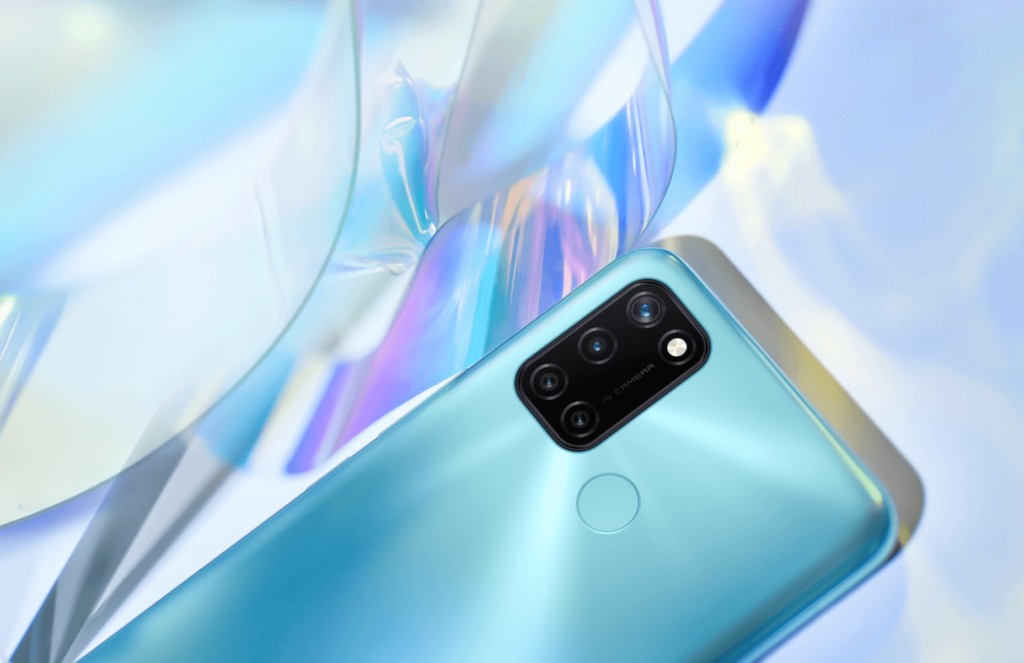
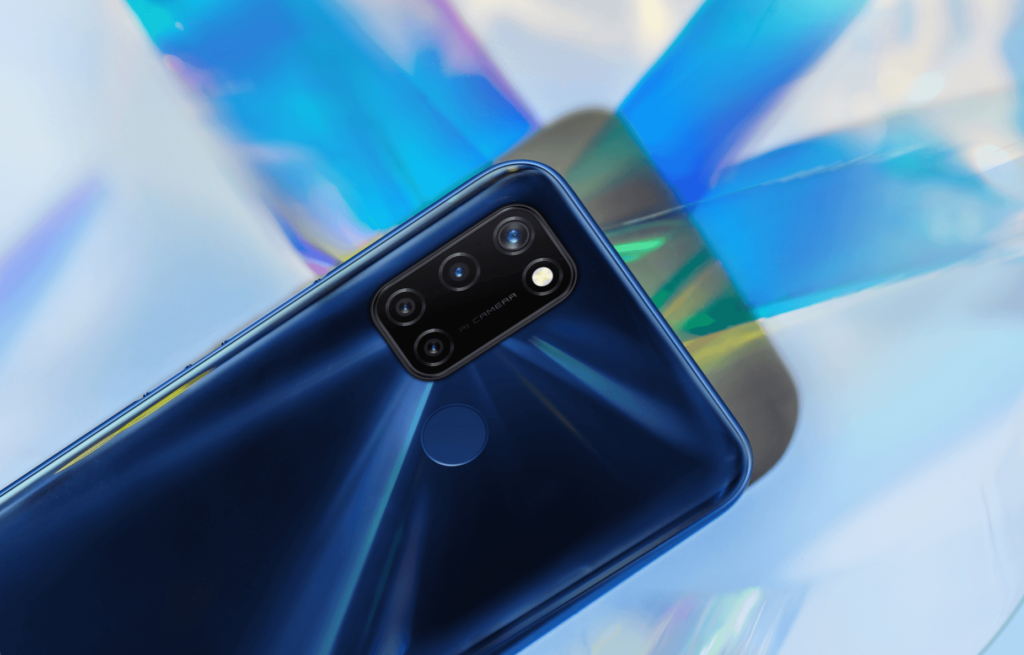
Chinese smartphone maker realme launches realme C17 as the newest member of realme C series of phones. In other words, it is a lite version of realme 7i with Snapdragon 460 and lower megapixel cameras. That said, the handset debuts first in Bangladesh in a single 6GB + 128GB storage configuration priced at BDT 15,990 ($189). Customers can buy it in either Navy Blue and Lake Green color option.
realme C17 Lake Green
As leaked last week, the all-new realme C17 sports a 6.5-inch HD+ (720 x 1600 pixels) IPS LCD panel on the front with a single-punch hole at the top right corner nesting an 8MP selfie camera, 90Hz refresh rate, 90% screen-to-body ratio, and a peak brightness of 600 nits. This display is also protected by an unspecified version of Corning Gorilla Glass.
Under the hood, the device features a Qualcomm Snapdragon 460 chipset paired with 6GB LPDDR4X RAM and 128GB UFS 2.1 internal storage. It also includes all the necessary sensors such as light sensor, proximity sensor, compass, and accelerometer.
On the connectivity front, the realme C17 supports 4G LTE, dual-band WiFi, Bluetooth 5.0, 3.5mm headphone jack, and USB Type-C. The handset comes with a triple card slot so that users can use dual SIM and a microSD card at the same time.
realme C17 Navy Blue
The back and the frame of the body is made of polycarbonate just like any other realme budget smartphones. This rear panel houses a quad-camera setup consisting of 13MP primary sensor, a secondary 8MP sensor with a 119° ultra-wide-angle lens, a 2MP tertiary sensor with a macro lens, and a 2MP quaternary monochrome sensor. The back of the device also includes a fingerprint sensor.
As for software, the realme C17 runs realme UI based on Android 10 and should get realme UI 2.0 based on Android 11 as it is a new product. Last but not least, it is backed by a 5,000mAh battery with support for 18W fast charging and reverse charging.
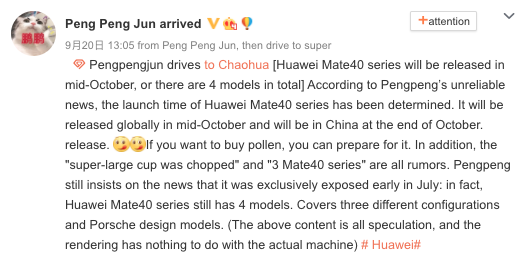
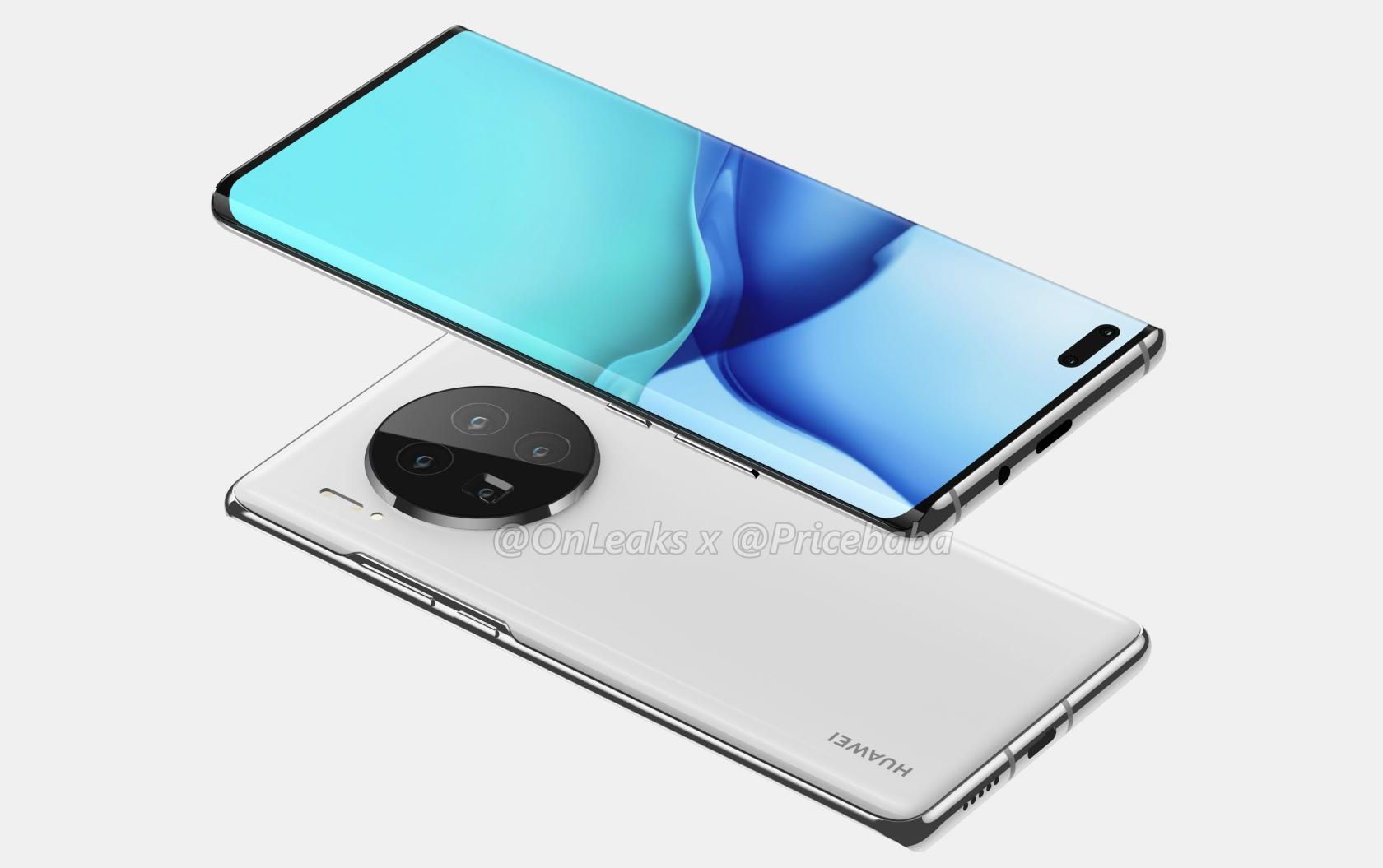
After months of reports and leaks, it seems that we now have an idea of when Huawei‘s upcoming flagship smartphone will get launched. As per the latest information coming from China, the Mate 40 series could go official in October this year.
Even though the flagship smartphone lineup will be launched in mid-October, it is believed that the phones will be available for purchase in the month of November. This upcoming series is expected to four models — Mate 40, Mate 40 Pro, Mate 40 Pro+, and Mate 40 RS Porsche Edition.
It has been confirmed by the company that the Mate 40 series will come powered by the HiSilicon Kirin 9000 SoC, which could be the brand’s last flagship chipset because of the new sanctions imposed by the United States.
As per reports, the Mate 40 could be powered by the Kirin 9000E SoC based on the 7nm process while the other models in the lineup will pack Huawei Kirin 9000 SoC, which is likely made using 5nm chipset.
The devices are expected to come with EMUI 11 based on the Android 10 operating system with support for some advanced features. If the recent reports are to be believed, then Huawei has around 8.8 million units of Kirin 9000 SoC, thus, it seems that the company won’t be able to make more units of the Mate 40 series.
Ahead of the official launch of the upcoming flagship lineup, it has already been confirmed that the series will be launched in the United Kingdom. However, the company has not yet revealed information about the launch date.
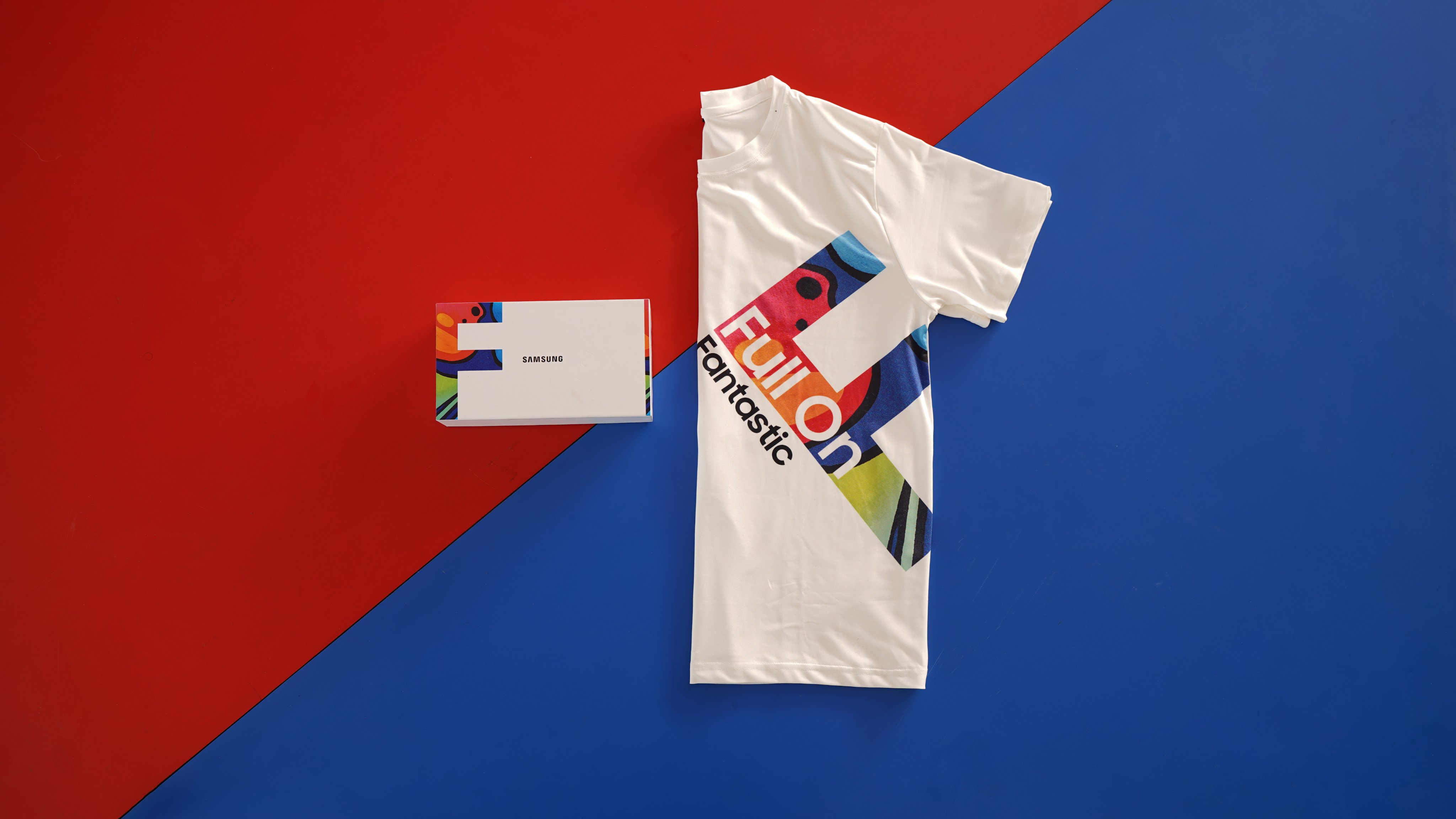
Samsung might just be working on a new series of Galaxy smartphones. This new lineup could be under the Galaxy F branding, as the company has recently teased the new series in India.
According to a SamMobilereport, the South Korean tech giant has sent special T-shirts and boxes to various tech related publications and YouTube content creators in the country. Previously, a device with the model number SM-F415 was spotted, which was found to be a budget handset. The T-shirt sent by the company also carried the slogan ‘Full On,’ which was also tweeter by Samsung’s official Twitter handle.
Reportedly, the new Galaxy F series might be a rebranding/replacement of the Galaxy On series of devices. These could be positioned similar to its Galaxy M series and might arrive at even more affordable prices, with new colors and storage variants as well. The SM-F415 is said to similar to the Galaxy M31 in specs and pricing, but will feature only three cameras on the rear instead of four. The Google Play Console listing revealed that it also features the Exynos 9611 processor and 6GB of RAM.
A few reports have claimed that the Galaxy F series will also be an exclusive lineup, which will only be available in Flipkart, a major local e-commerce based Indian website. This would make sense considering the Samsung Galaxy M series is an Amazon India exclusive in the country. Unfortunately, apart from these rumors we still don’t have much to go on regarding the launch, so stay tuned for more updates that should arrive soon.
Xiaomi is expected to announce the Xiaomi Mi 10T Pro and Mi 10T smartphones by the end of this month. Rumors have it that the lineup also includes the Xiaomi Mi 10 Lite smartphone. A Xiaomi phone with model number M2007J17G has been certified by the Federal Communications Commission (FCC) in the U.S. According to tipster Mukul Sharma, this device could be heading to markets with the Xiaomi Mi 10T Lite moniker.
The FCC listing of the M2007J17G has revealed that it is preloaded with MIUI 12 and it has a rated battery of 4,720mAh capacity. The handset is equipped with support for 5G, Wi-Fi 802.11ac, Bluetooth, and NFC.
The model number of the M2007J17G’s battery is BM4W. The leakster has also shared a screengrab that reveals that the BM4W battery has been certified by the Bureau of Indian Standards (BIS). It indicates that the Mi 10T Lite could be also releasing in India. At present, there is no word on the other specifications of the Mi 10T Lite.
Xiaomi M2007J17G (Mi 10T Lite) appears on the FCC certification with MIUI 12 and a 4,720mAh battery The device could very well launch in India, as it's battery model (BM4W) has already received the BIS certification and the IMEI number is also CEIR IMEI compliant.#Xiaomi#Mi10Tpic.twitter.com/2FE3UDjbsE
Xiaomi Mi 10T Pro and Mi 10T specifications (Rumored)
The Xiaomi Mi 10T Pro will come with a 6.67-inch IPS LCD screen with a punch-hole design. The screen carries support for Full HD+ resolution and a 144Hz refresh rate. The Snapdragon 865 mobile platform fuels the device with 8 GB of RAM. The phone may arrive in 128 GB and 256 GB of storage. It has a 5,000mAh battery that supports rapid charging technology. The Mi 10T Pro has a triple camera system that includes a 108-megapixel main lens, a 20-megapixel ultrawide lens, and an 8-megapixel lens. It could be priced at 699 euros.
The Xiaomi Mi 10T is rumored to be priced around 550 euros. The phone may feature a new Snapdragon 7-series 5G-enabled chipset. The phone may feature 6 GB of RAM and 64-megapixel triple rear cameras. It is unclear the alleged Mi 10 Lite smartphone will debut alongside the Mi 10T and Mi 10T Pro smartphones.
Redmi Note series is Xiaomi’s second-best selling smartphone series after Redmi A series of entry-level handsets. Despite that, the Redmi Note phones are usually not the first devices to get latest software updates. For instance, the Redmi Note 7 Pro released in the first quarter of 2019 in India, got its Android 10 update only in August 2020. Similarly, it has now started receiving MIUI 12 update in the country months after other devices have got it.
The Redmi Note 7 Pro only launched in India and China. Like any other Xiaomi smartphone it received MIUI 12 first in its home’s country earlier last month. Now, a month later, the Indian variant of this phone is also being blessed with the same update.
That said, MIUI 12 for Redmi Note 7 Pro in India comes with build number V12.0.1.0.QFHINXM (via @miu12_officialTelegram channel). It is currently being rolled out to select users across the country in a typical Xiaomi manner.
If early adopters don’t face any issues, the update will be made available for users in the coming days, followed by complete rollout. Until then, all you can do is wait as this so-called Stable Beta build cannot be sideloaded.
Having said that, Redmi Note 7 Pro is not eligible for Android 11 update but it may receive MIUI 13 as its last major update next year.
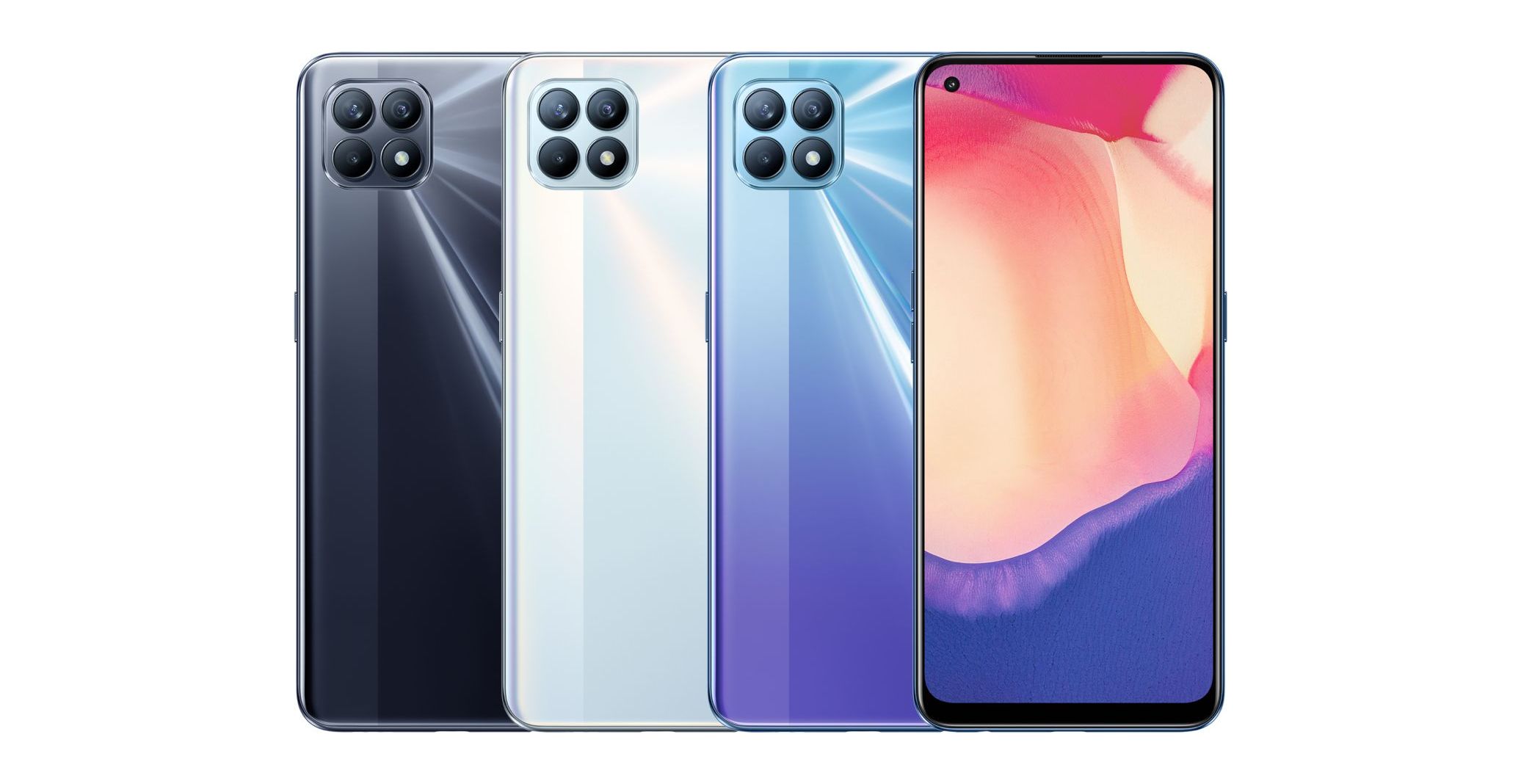
The OPPO Reno4 SE 5G smartphone has gone official in China. It is the fourth Reno4 series phone to go official in the home market after the Reno4, Reno4 Pro and Reno4 Pro Artist Limited Edition phones that debuted in the recent past. The major highlights of the Reno4 SE include a large AMOLED display, triple rear cameras, 65W fast charging, and support for 5G connectivity.
OPPO Reno4 SE 5G specifications and features
The OPPO Reno4 SE 5G has 160.5 x 73.5 x 7.85mm dimensions and it weighs 169 grams. It has a 6.43-inch AMOLED display with a punch-hole design. The 60Hz screen supports 1080 x 2400 pixels Full HD+ resolution, 20:9 aspect ratio, 91.97 percent DCI-P3 color gamut, 100 percent sRGB, and up to 180Hz of the touch sampling rate. The screen of the Reno4 SE is integrated with a fingerprint scanner. The phone offers users with a 90.8 percent screen-to-body ratio.
The Reno4 SE has a 32-megapixel front-facing camera with f/2.4 aperture with support for EIS, AI smart beauty, portrait mode, night scene mode, and 30fps 1080p video recording. The back panel of the phone features a square-shaped camera housing. It comprises of a 48-megapixel main camera with f/1.7 aperture with support for autofocus, an 8-megapixel ultrawide shooter with f/2.2 aperture and 119-degree field-of-view, and a 2-megapixel macro lens with f/2.4 aperture and an LED flash unit. The rear cameras support features like professional mode, portrait mode, panorama, night scene mode, EIS, 120fps 1080p slow-motion video shooting, and 30fps 1080p video recording.
The MediaTek Dimensity 720 chipset that clocks at 2.4GHz is present under the hoof of the OPPO Reno4 SE. The phone features 8 GB of LPPDR4x RAM and up to 256 GB of UFS 2.0 storage. The device lacks support for external storage.
The OPPO Reno4 SE boots to ColorOS 7.2 based Android 10 OS. It has a 4,300mAh dual-cell battery that supports 65W SuperVOOC 2.0 Flash Charge technology. According to OPPO, it takes around 37 minutes to fully charge the Reno4 SE. The other features that are packed inside the smartphone are dual SIM support, 5G, Wi-Fi 802.11ac, Bluetooth 5.1, USB-C, and a 3.5mm headphone slot.
OPPO Reno4 SE 5G pricing and availability
The OPPO Reno4 SE 5G variant such as 8 GB RAM + 128 GB storage and 8 GB RAM + 256 GB storage are priced at 2,499 Yuan (~$369) and 2,799 Yuan (~$413). Its color variants are Super Flash Black, Super Flash White, and Super Flash Blue. It will be available for purchase from Sept. 25. There is no word on the availability of the Reno4 SE outside of China.
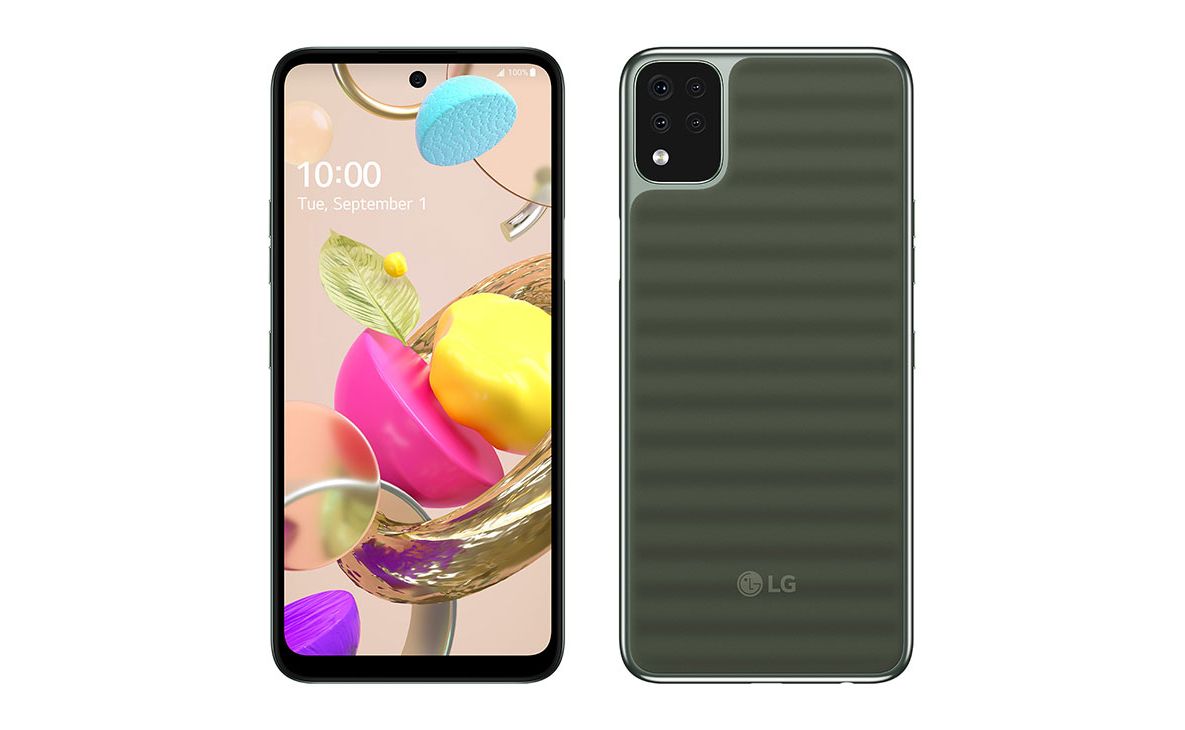
LG has silently unveiled a new smartphone called LG K42 in the Dominican Republic. The mid-range phone sports a wave pattern on its back, which gives it a unique appeal. The handset offers users with a tall aspect ratio display, quad rear cameras, and a large-sized battery.
LG K42 specifications and features
The LG K42 measures 165 x 76.7 x 8.4mm and it weighs 182 grams. The MIL-STD-810G certified smartphone can withstand extreme environmental conditions. The grippy back panel of the LG K42 has an anti-scratch UV coating that accentuates its appeal. The smartphone flaunts a 6.6-inch display that produces HD+ resolution.
The LG K42 is yet another phone to feature the Helio P22 chipset. The handset comes with 3 GB of RAM and 64 GB of internal storage. There is a microSD card slot onboard for more storage. The LG UX based Android 10 OS comes preinstalled on the LG K42.
The LED flash assisted quadruple camera system placed on the backside of the LG K42 comprises of a 13-megapixel main camera, a 5-megapixel superwide lens, a 2-megapixel depth sensor, and a 2-megapixel macro shooter. It has a front-facing camera of 8-megapixel.
The LG K42 has a 4,000mAh battery. It has a dedicated button for accessing the Google Assistant. The phone features a side-mounted fingerprint sensor. For music lovers, the LG K42 offers users with 3D Sound Engine and a 3.5mm audio jack. It comes with usual connectivity features such as Wi-Fi, Bluetooth 5.0, GPS, USB-C, and a 3.5mm audio jack. At present, there is no word on the pricing of the smartphone.
Last week, Realme announced the Realme 7i smartphone in Indonesia alongside the Realme 7 phone. Fresh information shared by an Indian tipster reveals that the Realme 7i will be debuting in India in the coming month. The tipster also shared the variants and color editions of the Realme 7i for India.
According to the tipster, the Realme 7i will be landing in India in October in two variants such as 4 GB RAM + 128 GB storage and 6 GB RAM + 128 GB storage. In Indonesia, the Chinese firm is selling the Realme 7i in a single version with 8 GB of RAM and 128 GB of storage with a price tag of IDR 3,199,000 (~$217; ~Rs 16,025). The new leak has no information on the pricing of Realme 7i for India.
Realme 7i in Polar Blue and Aurora Green colors
India is expected to receive the Realme 7i in Fusion Green and Fusion Blue. These seem to be the same color variants that are selling as Aurora Green and Polar Blue in Indonesia.
The Realme 7i has a 6.5-inch IPS LCD display with a punch-hole design. It offers an HD+ resolution of 720 x 1600 pixels, an aspect ratio of 20:9, and a refresh rate of 90Hz. The Snapdragon 662 chipset is present under the hood of the Realme 7i. The SoC is coupled with LPDDR4x RAM and UFS 2.1 storage.
It has a front camera of 16-megapixel and its rear is fitted with a 64-megapixel + 8-megapixel (ultrawide) + 2-megapixel (macro) + 2-megapixel (B&W) quad-camera system. The phone houses a 5,000mAh battery with 18W fast charging support.
Last month, Google announced Nearby Share for Android, a feature similar to AirDrop on iOS, that allows users to share photos, links, files, and more with users near them.
The feature which began rolling out to Pixel and Samsung phones is now more widely available to other Android phones as long as they are running Android 6.0 Marshmallow and above.
For this week’s poll, we want to know if you have already gotten it and if you have used it since you did. So please take the poll and also let us know in the comment box below what you think about the feature and if you believe it will see much use or replace other methods you use to share things before.
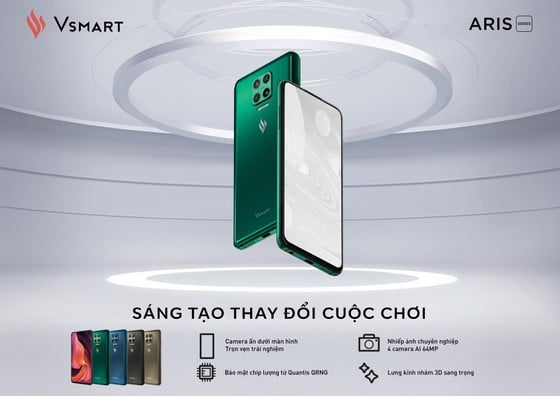
The ZTE Axon 20 5G is no longer the only phone in the world with an under-display camera. It has now been joined by the Vsmart Aris Pro, a phone manufactured by Vietnam’s VinSmart.
The Vsmart Aris Pro has a 6.39-inch FHD+ AMOLED display that has a 20MP camera buried under it. VinSmart says it has partnered with VinAI Research Institue for Artificial Intelligence to develop an AI image processing algorithm specifically for phones with cameras under the screen.
The phone is powered by a Snapdragon 730 processor with 8GB of RAM and 128GB of storage. The processor draws power from a 4000mAh battery with support for Quick Charge 3.0.
The Vsmart Aris Pro has quad rear cameras arranged in a squircle that sits in the middle of the phone. The setup includes a 64MP main camera, an 8MP ultrawide angle camera, an 8MP telephoto camera with 2x optical zoom, and a 2MP macro camera.
The phone ships with Android 10 out of the box, has dual SIM support (nano-only). It is available in Blue, Black, Gray, and Green and is already available for pre-order. The phone is priced at VND 9,990,000 (~$431) and the first 5000 pre-orders get a VND 500,000 (~$22) voucher and a free pair of Anker TWS earphones worth VND 1,700,000 (~$73).
The Mi 10T series of smartphones from Xiaomi are the successors to the Mi 9T and Mi 9T Pro that launched last year. While we know the series is for the international market including countries in Europe, new info has revealed the phones will launch in Thailand too.
The info comes from a picture that was taken at a store (probably a Mi Home Store) in Thailand. The image, which was posted on Twitter by Sudhanshu Ambhore, shows a large display showing the Mi 10T series.
A source from Thailand exclusively send me this Mi 10T series poster displayed in a Mi Store, confirming that the phones will launch in Thailand too. Apparently the machine translated tagline for Mi 10T series is "Awakening Your Creativity In Camera"#Mi10TPro#Mi10T#Mi10Tseriespic.twitter.com/VnXMLaqON9
The photo confirms the design of the phones and also the support for 5G. As you can see, the Mi 10T/Mi 10T Pro is shown with a flat display with a punch hole at the top left corner of the screen. We can also see that the phone has four rear cameras and will be available in black and white colorways.
The Mi 9T and Mi 9T Pro were both announced in Thailand, so it is no surprise that their successors will also be launched in the country. At the moment, the Mi 9T Pro is no longer available on the Xiaomi Thailand website. It is not also available on partner stores Lazada, Shopee, and JD.com. This most likely means stock has been cleared to make way for the new model.
The Mi 10T is reported to have a Snapdragon 865 processor which means it is a flagship phone, unlike the Mi 9T that launched with a Snapdragon 730 processor. It will have up to 8GB of RAM, up to 256GB of storage, and a 64MP main camera. The pro version will also have a Snapdragon 865 processor, an AMOLED display with a high refresh rate, and a 108MP primary camera.
We expect Xiaomi will announce a launch date for the new smartphones very soon.
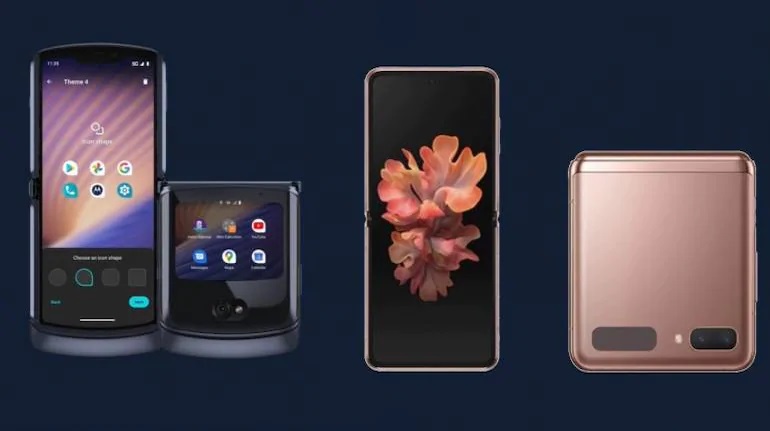
The new generation of clamshell foldable phones is here! After releasing the first-ever clamshell phones with a foldable display in 2019, Motorola and Samsung launched their successors and brought the support to 5G connectivity even in this innovative segment. If you only look at the names of the new handsets, you might think that they are just variants of the previous models with a 5G modem inside and the same specifications. But this is not the truth: the new Motorola Razr 5G and the Samsung Galaxy Z Flip 5G are very important upgrades compared to the previous generation. Let’s discover all the upgrades done and the differences between the two handsets.
Motorola Razr 5G vs Samsung Galaxy Z Flip 5G
Motorola Razr 5G
Samsung Galaxy Z Flip 5G
THICKNESS
169.2 x 72.6 x 7.9 mm (unfolded)
91.7 x 72.6 x 16 mm (folded)
192 grams
167.3 x 73.6 x 7.2 mm (unfolded)
87.4 x 73.6 x 17.3 mm (folded)
183 grams
DISPLAY
Main display: 6.2 inches, 876 x 2142p (HD+), 373 ppi, Foldable P-OLED
External display: 2.7 inches, 600 x 800 pixels, G-OLED
6.7 inches, 1080 x 2636p (Full HD+), Foldable Dynamic AMOLED
External display: 1.1 inches, Super AMOLED, 112 x 300 pixels
PROCESSOR
Qualcomm Snapdragon 765G, octa-core 2.4 GHz
Qualcomm Snapdragon 865+, octa-core 3.09 GHz
MEMORY
8 GB RAM, 512 GB
8 GB RAM, 256 GB
SOFTWARE
Android 10
Android 10, One UI
CONNECTIVITY
Wi-Fi 802.11 a/b/g/n/ac, Bluetooth 5.1, GPS
Wi-Fi 802.11 a/b/g/n/ac/ax, Bluetooth 5, GPS
CAMERA
Single 48 MP f/1.7
20 MP f/2.2 front camera
Dual 12 + 12 MP, f/1.8 and f/2.2
10 MP f/2.4 selfie camera
BATTERY
2800 mAh
Fast charging 15W
3300 mAh, Fast Charging 15W, and fast wireless charging 9W
ADDITIONAL FEATURES
5G, water-repellent, optional eSIM
5G, eSIM
Design
The Motorola Razr 5G wins the design battle because of its iconic design which reminds of the old Razr feature phones. It has a more compact body, a more original look, and even amazing build quality. The Motorola Razr 5G is built very well and it includes a glass back protected by Gorilla Glass 5, a frame made of aluminum 7000 series, and a stainless steel hinge. It is even a water-repellent phone, so it offers some kind of protection against water despite being a foldable phone. The Samsung Galaxy Z Flip 5G is a beautiful and well-built phone as well, but it can not compete with the Motorola Razr 5G when it comes to aesthetics.
Display
If we talk about the internal foldable displays, the Samsung Galaxy Z Flip 5G is actually superior. Its internal foldable display with the Dynamic AMOLED technology has a higher 1080p resolution and the HDR10+ certification which is not present on the Motorola Razr 5G. Instead, if we talk about the external displays, Motorola Razr 5G is way better: the Samsung Galaxy Z Flip 5G houses a very small cover display which does not offer so many ways to interact. With the Motorola Razr 5G, you can do a lot of things without opening the phone thanks to its wide external display.
Specs & Software
Samsung Galaxy Z Flip 5G beats the Motorola Razr 5G 10-0 when it comes to the hardware department. It has a stronger chipset: the Snapdragon 865+ which is actually the best processor in the market, while the Snapdragon 765G found on the Razr 5G is just a mid-range SoC. The Snapdragon 865+ of the Samsung Galaxy Z Flip 5G is paired with 8 GB of RAM and 256 GB of UFS 3.0 internal storage. Samsung Galaxy Z Flip 5G and Motorola Razr 5G run Android 10 out of the box.
Camera
Both Razr 5G and Samsung Galaxy Z Flip 5G are pretty nice camera phones with OIS providing a good photo quality, but they are not top camera phones. Among these twos, I would go for the Samsung Galaxy Z Flip 5G because it offers a secondary ultrawide lens and because it is able to record better videos and shoot better selfies. Unfortunately, you do not get secondary sensors paired with the main rear camera of the Motorola Razr 5G. With both the handsets, you can click selfies with the rear camera by using the secondary display.
The battery of the Motorola Razr 5G is very small compared with the other Android smartphones released in 2020. The reasons are its small dimensions and the fact that it is a clamshell foldable phone: there is no space for a huge battery. The Samsung Galaxy Z Flip 5G is below-average too, but it has more space for a bigger 3300 mAh battery. And with its efficient components, it is enough for a day of moderate use. It even supports wireless charging.
Price
The prices of the Motorola Razr 5G and the Samsung Galaxy Z Flip 5G vary depending on the market. The former is priced €1599 in Europe and $1399 in the U.S. while the latter is priced €1599 in Europe and $1449 in the U.S. If the design (and usability while the phone is folded) is your main concern, then you should go for the Razr 5G. But for all the rest, Samsung Galaxy Z Flip 5G is a way better phone. It has a superior display, flagship-class hardware (you get midrange hardware with the Razr 5G and that is very disappointing for several potential users), a great camera, and even wireless charging.
Motorola Razr 5G vs Samsung Galaxy Z Flip 5G: PRO and CONS
The OnePlus 5 series is nearing its end of life. Actually, it has already received its last major OS upgrade in form of Android 10 last quarter. However, that update had some serious bugs which OnePlus is yet to fix with an update. An official statement was released a few days ago explaining the reason for the delay.
According to the statement which was published on the OnePlus Forums, a serious bug related to the communication module was found in the update that was to be released. The bug is said to have a serious impact on user experience and solving it has resulted in a series of back and forth with communication carriers.
While the statement also included an apology for not communicating to users the situation, it did not say when the update will eventually be made available to users as the bug is yet to be fixed. OnePlus says they will share progress henceforth and also announce when they have a release plan.
The original Android 10 update broke a number of features including Electronic Image Stabilization (EIS). Some OnePlus 5/5T users have requested that OnePlus make it up to them by releasing OxygenOS 11 based on Android 11 for them but we do not see that happening.
We use cookies on our website to give you the most relevant experience by remembering your preferences and repeat visits. By clicking “Accept”, you consent to the use of ALL the cookies.
This website uses cookies to improve your experience while you navigate through the website. Out of these, the cookies that are categorized as necessary are stored on your browser as they are essential for the working of basic functionalities of the website. We also use third-party cookies that help us analyze and understand how you use this website. These cookies will be stored in your browser only with your consent. You also have the option to opt-out of these cookies. But opting out of some of these cookies may affect your browsing experience.
Necessary cookies are absolutely essential for the website to function properly. This category only includes cookies that ensures basic functionalities and security features of the website. These cookies do not store any personal information.
Any cookies that may not be particularly necessary for the website to function and is used specifically to collect user personal data via analytics, ads, other embedded contents are termed as non-necessary cookies. It is mandatory to procure user consent prior to running these cookies on your website.