OnePlus recently introduced the budget-friendly OnePlus Nord 5G smartphone. The handset is aimed towards India and Europe. A tipster has leaked the pricing of the OnePlus Nord for China. It appears that China could be the next market to receive the OnePlus Nord.
The OnePlus Nord is the company’s first mid-range phone in recent times. It has received good receptions in the Indian and European markets, and it appears that it may soon go official in the home market. In India, the OnePlus Nord comes in three variants such as 6 GB RAM + 128 GB storage, 8 GB RAM + 128 GB storage, and 8 GB RAM + 256 GB storage. They are priced at Rs. 24,999 (~$340), Rs. 27,999 (~$381), and Rs. 29,999 (~$408), respectively.
Except for the 6 GB RAM base model, the other two variants have been available for purchase in India since the beginning of this month. The 6 GB RAM variant will be available in September in India. The tipster has speculated that the OnePlus Nord could be priced around 2,300 Yuan (~$335) in China.
The OnePlus Nord has a 6.44-inch AMOLED display that produces FHD+ resolution, 20:9 aspect ratio, and 90Hz refresh rate. The Snapdragon 765G processor powers the device. The OxygenOS 10.5 based Android 10 OS runs on the device.
It has a 32-megapixel + 8-megapixel dual front-facing cameras. It rear is fitted with an OIS ready 48-megapixel (Sony IMX586) + 8-megapixel (ultrawide) + 5-megapixel (depth) + 2-megapixel (macro) quad-camera system. The phone is backed by a 4,115mAh battery that supports 30W fast charging. It comes with support for NFC and in-display fingerprint reader.
The on-going development related to the acquisition of TikTok’s U.S. operations from the platform’s parent company ByteDance has been dramatic. While Microsoft has already confirmed that it’s in talks with the company, other companies also started talks for the same, including Oracle.
Now, Walmart has confirmed that it has partnered with Microsoft in an attempt to purchase TikTok in the United States. The company has revealed that it is participating in the negotiations with Microsoft over a potential deal.
Revealing the reason behind Walmart’s interest in purchasing the short-video social media platform, the company said that it has “integrated e-commerce and advertising capabilities in other markets” and could bolster its access to consumers.
In a statement, Walmart said: “We believe a potential relationship with TikTok US in partnership with Microsoft could add this key functionality and provide Walmart with an important way for us to reach and serve omnichannel customers as well as grow our third-party marketplace and advertising businesses. We are confident that a Walmart and Microsoft partnership would meet both the expectations of US TikTok users while satisfying the concerns of US government regulators.”
The development comes just hours after TikTok CEO Kevin Mayers announced his resignation. It is being speculated that his resignation could be because of the acquisition deal getting finalized. In his resignation letter, he said that he expects “a resolution very soon.” Before joining TikTok this year, Mayer was leading Disney‘s streaming division.
Some reports have started making rounds claiming that TikTok could announce the sale of its U.S. operation within a week. It is said that the deal could be worth around $20 billion to $20 billion and the company is considering between Microsoft and Oracle.
TikTok is being forced to sell off its U.S. operations to an American company by the government amid intense political scrutiny because of the platforms’ country of origin. It has also been under fire because of its data collection practices, which the United States claims put its national security at risk.
Samsung Display, an arm of Samsung Electronics which makes displays for various devices, has filed a trademark application for an unusual name — Iris Ring. The application was filed in South Korea last week.
While the trademark application doesn’t reveal the potential use-case of this new branding, the company has reportedly confirmed that it for its punch-hole cutout on the displays that houses the front-facing camera sensor.
The South Korean giant has also said that it has received the Hole Area Clarity verification from the Underwriters Laboratories (UL) for no color difference in the areas around the punch-hole cutout on the screen.
Samsung first used the punch-hole cutout for the front-facing camera sensors on the Galaxy S10 series. Currently, the company is calling it Infinity-O branding. It is now yet clear which branding will be used going forward and if the newer Iris Ring is used, it remains to be seen what happens to the Infinity-O branding.
With the new branding for the punch-hole cutout, we can also expect a new display technology from the company for its upcoming premium flagship smartphones. However, it’s just speculation at this time and nothing has been confirmed by the company.
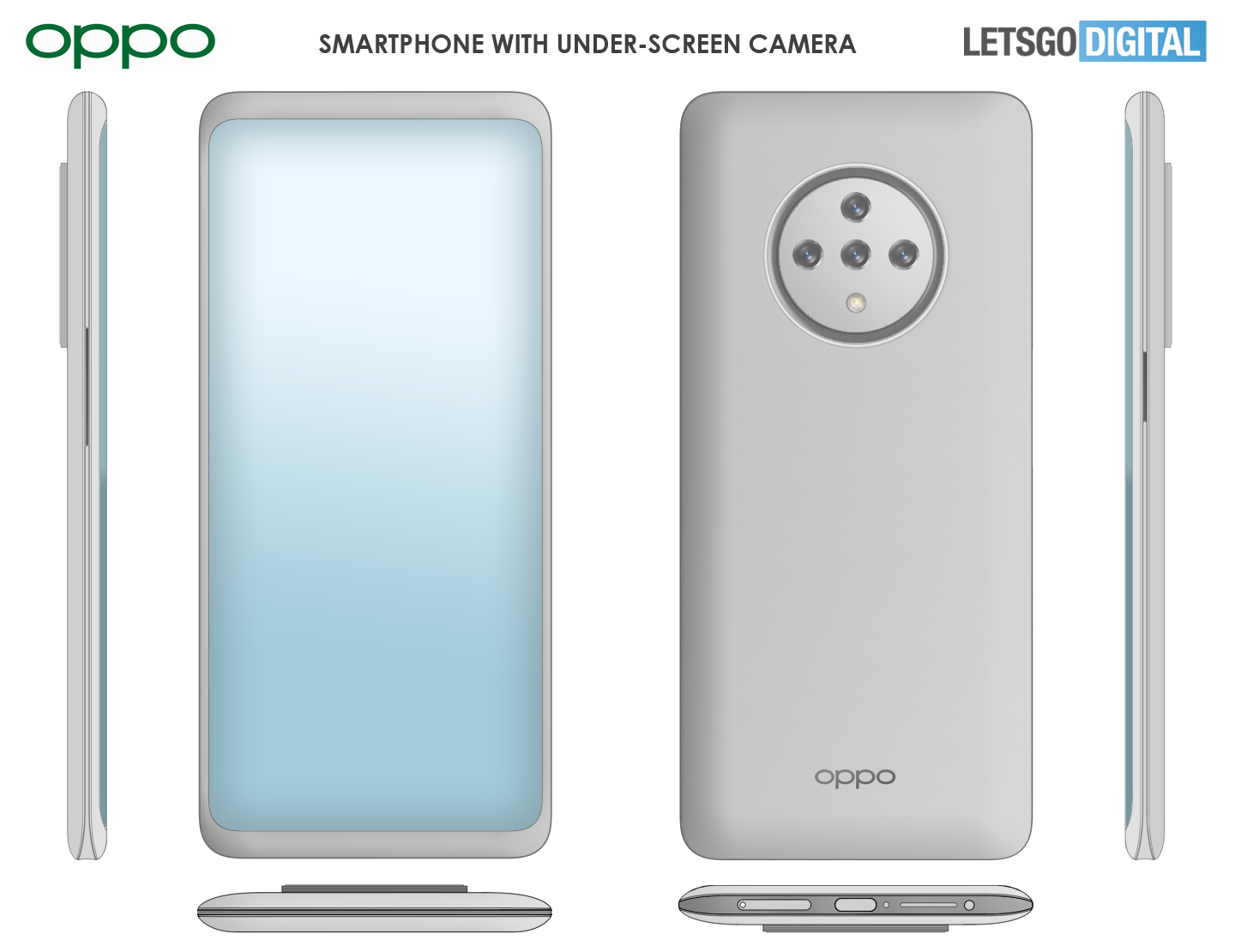
Smartphone manufacturers have been working on under-display camera technology for years, and now it is ready for a commercial launch. ZTE is all set to launch the world’s first in-display camera smartphone in a couple of days.
Now, ahead of the launch, ZTE has confirmed that the upcoming Axon 20 5G smartphone is using third-generation in-display camera sensor technology. As per the report, this was confirmed by ZTE’s executive Lv Qianhao in response to a user’s question on Weibo.
In this technology, only two-thousandth of the entire screen is used for the camera sensor behind the display, which is just about a small square-inch. The company adds that its Research & Development team managed to achieve the desired output after working day and night to fine-tune the technology.
Furthermore, the screen is also divided into seven different layers — cover glass, polarizer, encapsulation glass, cathode, OLED, array, and substrate glass. It has been given an anti-reflective treatment to maximize transparency and suppress optical diffraction.
ZTE’s confirmation about using third-generation in-display camera technology comes at a time when Xiaomi has also showcased its own third-gen tech. It revealed the technology showcasing a working prototype and detailed the improvements. It utilizes a self-developed pixel arrangement and achieves light transmittance through the sub-pixel gap area. The company said that the tech is ready for mass-production and will be in the market in 2021.
As per the reports, the ZTE Axon 20 5G smartphone features a 6.92-inch OLED display with a screen resolution of 2460 x 1080 pixels without any kind of notch. It is powered by Qualcomm Snapdragon 765G along with up to 12GB of RAM and 256GB of internal storage.
On the back, the device has a quad-camera setup that includes a 64MP primary sensor, an 8MP secondary sensor, and two other 2MP sensors. On the front side, it is equipped with a 32MP snapper for taking selfies and video calling. The device is expected to be available in four color options — Black Hole Gravity, Streamer Sea Salt, Phantom Orange Wind, and Purple Moon. To know more about the phone, it’s pricing and availability details, we will have to wait for the official launch on 1st September, just a couple of days from today.
Sony announced the Snapdragon 855 powered Xperia 5 phone in September last year. The handset was announced at the IFA 2019 tech trade show. Earlier this week, a render of the unannounced Xperia 5 II phone was leaked by reliable tipster Evan Blass. Now, Android Headlineshas carried an exclusive report that features new renders of the phone. Moreover, the report also includes the specifications of the device. The publication states that the phone will not be announced at the IFA 2020, but it will go official on Sept. 17.
Sony Xperia 5 II specifications (Unconfirmed)
In terms of appearance, the Sony Xperia 5 II looks identical to its predecessor. The publication has revealed that the Xperia 5 II has a 6.1-inch OLED display with Full HD+ and HDR support. Like the predecessor model, it will also offer an aspect ratio of 21:9. It will be the company’s first smartphone to sport a 120Hz refresh supporting display. The screen will also support the 240Hz touch sampling rate. It will be a compact device as it measures 158 x 68 x 8mm.
The Snapdragon 865 SoC along with 8 GB of RAM will fuel the Xperia 5 II. It will offer users with 128 GB of built-in storage and a microSD card slot. It will house a 4,000mAh battery with USB-C PD rapid charging support.
The rear-facing triple camera system of the Xperia 5 II has an f/1.7 aperture 12-megapixel main camera with a 24mm lens and 82-degrees FOV. It is assisted by an f/2.4 aperture 12-megapixel telephoto snapper with 3x optical zoom support and an f/2.2 aperture 12-megapixel superwide sensor with 124-degree FOV. The Xperia 5 II’s cameras will support OIS, EIS, hybrid OIS/EIS in the video, slow-motion video shooting at 4K HDR, and 120fps 4K HDR video recording.
Sony did not offer a 3.5mm audio jack on the Xperia 5 II. However, it’s coming back on the successor model. It has a side-mounted fingerprint reader. Lastly, the phone will arrive with support for 5G connectivity.
Under screen camera is going to be the next big thing in the smartphone market. Companies are working very hard to perfect in-display cameras because of the tremendous aesthetic upgrade that it brings to smartphones. Without a notch or a punch hole on top, smartphone screens will have no distractions up front, ensuring a true, full screen visual experience.
We already know that ZTE will soon announce the world’s first commercial under screen camera smartphone, the Axon 20 5G. But Xiaomi didn’t want to miss out on the party as it decided to reveal its third generation under screen camera technology today. Not only did the company show off a working prototype with the new in display camera, but it also revealed how the technology was improved to make it as good as a traditional front camera.
The company developed the first generation under screen camera technology last year in June 2019. We also got to see a video of the prototype in action but a closer inspection revealed that the display on top of the camera wasn’t perfect and the pixel density in that area was low.
Xiaomi’s CEO Lei Jun revealed that the second generation version of the under screen camera technology was developed in October 2019. And today, it has announced the third generation version of the tech, which it believes is almost perfect and comparable to a traditional selfie camera shooter.
How does Xiaomi’s Under Screen Camera Work?
In a detailed post, Xiaomi explained how it achieved ‘near perfect’ camera quality in its third generation in-display camera solution. The company revealed that the first two generations managed to make the display above the front camera transparent by sacrificing the pixel density in that area. In fact, the pixel density of the display above the camera was only half as compared to the rest of the OLED panel.
Xiaomi explained that early implementation of in display cameras could only reserve 1 in 4 pixels for the display as the remaining three pixels had to be made transparent for better light transmission by changing its internal structure and material.
Top – Traditional OLED display with 4 RGB subpixels Middle – Early In display camera tech had only 1 RGB subpixel reserved for the display Last – All four RGB pixels are lit up in the third gen technology ensuring high pixel density
However, the third generation solution solves this problem by utilizing a self developed pixel arrangement. The company has managed to achieve light transmittance through the sub-pixel gap area. Also, the company has doubled the number of pixels in both vertical and horizontal arrangement to achieve an overall pixel density similar to the rest of the display. As a result, the display area on top of the under screen camera manages to achieve a similar level of pixel density, color accuracy, color gamut, and brightness as the rest of the OLED panel.
The company has also improved the OLED pixel driving circuit to improve the light transmittance above the camera. Finally, Xiaomi claims that its self developed camera algorithm is capable of delivering the same image quality as traditional selfie shooters making its latest solution ‘almost perfect’.
Xiaomi is has never been shy to show off its upcoming technologies. The company first revealed its prototype under screen camera phone back in June 2019. More than a year later, we have a video of a working prototype using its third generation under screen camera technology.
In the video shared by Lei Jun on Weibo, Xiaomi’s under screen camera prototype looks like a modified Mi 10 Ultra. The video compares the prototype with the standard Mi 10 Ultra and the increased pixel density above the camera seems to completely hide the camera below the display.
Xiaomi 3 gen under screen camera selfie
Lei Jun says that the third generation under screen camera solution is ready for mass production and should end up on smartphones by 2021.
Realme’s next major phone is the Realme X7 Pro smartphone that is also set to debut with its inferior sibling Realme X7 on Sept. 1. It will be Realme’s first phone to feature the Dimensity 1000+ 5G chipset. Realme 6 series and X series smartphones have featured Samsung GW1 64-megapixel sensor. A new leak reveals that the Realme X7 Pro could be the company’s first smartphone to flaunt the Sony IMX686 lens.
The TENAA listing of the Realme X7 Pro revealed that it has a quad-camera setup on its back. It comprises of a 64-megapixel main camera, an 8-megapixel second lens, and a pair of 2-megapixel snappers. A Chinese tipster with a good track record has shared two screenshots taken from the Realme X7 Pro. One of them confirms the presence of the Sony IMX686 lens.
1 of 2
The Sony IMX686 has a slightly larger 1/1.7-inch sized sensor compared to Samsung GW1. With larger pixels, it can allow more light to capture impressive shots not only in daylight but also in low-light conditions. Hardware is not the only thing that matters when it comes to smartphone photography. Software-based enhancements and processing also play an integral role in it.
The TENAA listings show that the Realme X7 and Realme X7 Pro are both equipped with 64-megapixel + 8-megapixel + 2-megapixel + 2-megapixel quad camera setup. Both phones may come with some differences in the camera department. It is unclear whether the Realme X7 will feature the Sony IMX686 lens or Samsung GW1 lens.
As far as other specs are concerned, the Realme X7 Pro is equipped with a 6.55-inch AMOLED display with a punch-hole design. It supports FHD+ resolution and 120Hz refresh rate. The phone will come with up to 8 GB of RAM and up to 256 GB of storage. It will run on Android 10 OS and it will draw power from a 4,500mAh battery. The phone will arrive with support for 65W fast charging. The above-shown image that appeared on Weibo reveals that the Realme X7 Pro’s 6 GB RAM + 128 GB storage edition could be priced at 2,299 Yuan (~$334).
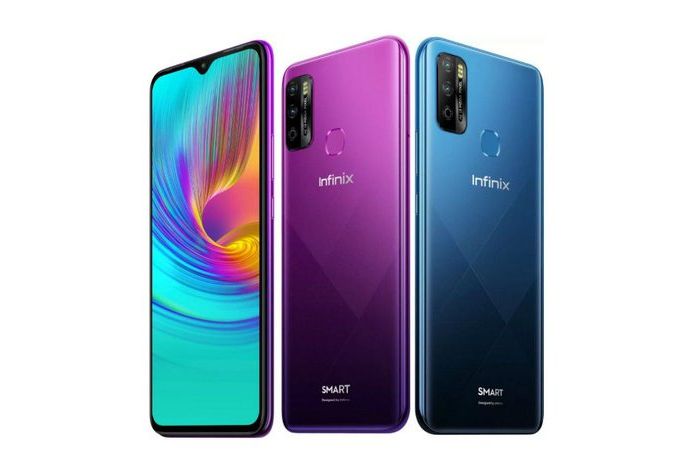
The Infinix Zero 8 smartphone has gone official in Indonesia. It is the first smartphone from the Chinese brand to feature a 90Hz refresh rate supporting display. The mid-ranger comes with an intriguing rhombus-shaped camera module that features 64-megapixel quad cameras. The Zero 8 is designed to capture impressive selfie shots through 48-megapixel dual selfie snappers. Also, it houses a decent battery with fast charging capabilities.
Infinix Zero 8 specifications and features
The Infinix Zero 8 houses a massive IPS LCD panel of 6.85 inches. The dual punch-hole display supports Full HD+ resolution, 90Hz refresh rate, and 180Hz touch sampling rate. The display cutout houses a 48-megapixel main selfie camera and an 8-megapixel ultrawide camera with EIS. The main selfie camera can capture 4K videos and is optimized to shoot better shots in low-light conditions.
Infinix Zero 8
The gradient back of the Infinix Zero 8 houses a quad camera system that is led by the Sony IMX686 64-megapixel primary lens that supports 4K video recording and EIS. It is accompanied by an 8-megapixel ultrawide lens, a 2-megapixel depth sensor, and a 2-megapixel low-light camera.
The Helio G90T by MediaTek is the driving force of the Infinix Zero 8. It is assisted by 8 GB of RAM. The phone has a massive internal storage of 128 GB. For additional storage, there is a microSD card slot.
Infinix Zero 8
The Infinix Zero 8 is powered by a 4,500mAh battery. The phone comes with support for 33W rapid charging. The Infinix X OS 7 based Android 10 OS runs on the device. It comes with other features such as FM radio receiver, side-facing fingerprint reader, face unlock, USB-C, and a 3.5mm audio jack.
Infinix Zero 8 pricing and availability
The Infinix Zero 8 is scheduled to go on sale from Aug. 31 in Indonesia with pricing of IDR 3,799,00 (~$259). The phone is expected to release in global markets on Sept. 1.
While the COVID 19 pandemic has been hitting hard on companies all over the world, Chinese tech giant Xiaomi has shared a couple of infographics showing its progress in the second quarter of the year.
Of particular note is the massive jump in the number of monthly active users (MAU) for MIUI which increased from 279 million in June 2019 to a whopping 343 million persons in June 2020. The infographics also show that the number of Xiaomi devices that are connected to the company’s IoT platform reached 271 million. Mi Home app monthly active users peaked at 40.8 million, a growth of 34.1% YoY.
Xiaomi’s revenue also surged as the company’s gross revenue in the second quarter is estimated to be 53.5 billion yuan (US$7.8 billion) with an impressive net profit of 3.4 billion yuan (US$494 million). The brand’s overseas business contributed 23 billion yuan which is almost half of the entire revenue in the quarter.
The smartphone market still remains Xiaomi top revenue earner. In Q2 2020, an estimated 28.3 million smartphones were shipped with the Mi 10 series acting as a major catalyst in that regard. The company revealed that it sold over one million Mi 10 phones within the first two months. The series still continues to bring success the brand’s way as the Mi 10 Ultra with its DXOMark top-ranking camera having the potential to knock off all other flagship options in China. During its first sale in China, Xiaomi raked in 400 million yuan (US$58 million) in sales in just 10 minutes. If Xiaomi should accede to the demand of its fans to release the phone in the global market, we just might see another record being set in the final quarter.
Apart from the flagship segment, the Redmi series also contributed its own fair share to the company’s growing revenue. The Redmi 9 series and Redmi K30 Ultra have also proven to be strong releases which will help the company cement its position as the fourth-largest smartphone brand globally.
Xiaomi prides itself as not just a smartphone manufacturer but as an internet company. Its tentacles extend into wearable, hearables, smart TV and other smart home and ecosystem products. Xiaomi has repeatedly dominated the smart TV market in India and China. The brand continued its dominance in China buoyed by the launch of the Mi TV Master Series and just this month, the company added the Mi TV LUX transparent TV. Xiaomi is presently ranked among the top 5 smart TV brands in the world and occupies the number one spot in China. The brand reported an estimated 2.8 million smart TVs were shipped in Q2 2020, with the company spreading its tentacles to new markets like Poland, France, and Italy with its Mi TV lineup.
One of the markets where Xiaomi’s progress continues to resonate is in Europe. In Q1 2020, the company’s market share grew 145% YoY to rank as the third-largest phone brand in the old continent ahead of Huawei. In Q2 2020, Xiaomi continued its impressive run as it is ranked first in Spain, second in France, and fourth in Germany and Italy in terms of smartphone shipments.
Google is reported to officially unveil Android 11 on September 8. Ahead of it, the search giant itself and partner OEMs part of Beta program have been releasing builds for their select devices. Xiaomi is one of those companies and three of its devices namely Mi 10, Mi 10 Pro, and Redmi K30 Pro/POCO F2 Pro are officially enrolled in this program. Now, surprisingly, Mi CC9 Pro aka Mi Note 10 has also received Android 11 beta.
For those unaware, the official Xiaomi Android 11 Beta devices initially got an AOSP build. But soon later, the Chinese smartphone maker swapped it for MIUI 12. Since then, weekly MIUI beta builds for those devices have been based on Android 11.
When the company released weekly builds for this week, the Mi CC9 Pro also bagged Android 11 like the other three smartphones. Since MIUI beta builds are now only limited to China, users of the global variant of this handset – Mi Note 10/Mi Note 10 Pro will have to use custom recovery like TWRP to install this firmware.
Hene, we would recommend you not to go through this hassle if you do not what you are doing. Even if you manage to install this build, you will not have access to GMS (Google Mobiles Services) on this firmware since Google is banned in China.
Hopefully, Xiaomi releases Android 11 stable for Mi Note10/Mi Note 10 Pro sooner than later so that global users don’t miss out on all the fun.
Not only gaming phones: Asus launched two other flagship phones this year, with the most advanced variant named Asus Zenfone 7 Pro. It brings extremely powerful hardware and innovation to the market without carrying an extremely high price. After comparing the vanilla Zenfone 7 to the Realme X50 Pro and the Xiaomi Mi 10, we think it is time to compare the Pro variant with its main rivals in the same price segment. For this comparison, we chose the OnePlus 8 Pro and the Xiaomi Mi 10 Pro, hoping it will help you understand all the differences between them.
Asus Zenfone 7 Pro vs OnePlus 8 Pro vs Xiaomi Mi 10 Pro
OnePlus 8 Pro
Asus Zenfone 7 Pro
Xiaomi Mi 10 Pro
DIMENSIONS AND WEIGHT
165.3 x 74.4 x 8.5 mm, 199 g
165.1 x 77.3 x 9.6 mm, 230 g
162.6 x 74.8 x 9 mm, 208 g
DISPLAY
6.78 inches, 1440 x 3168p (Quad HD+), Fluid AMOLED
6.67 inches, 1080 x 2400p (Full HD+), Super AMOLED
6.67 inches, 1080 x 2340p (Full HD+), Super AMOLED
Asus Zenfone 7 Pro carries an extremely innovative form factor with its flip-up cameras, but the sleekest device of this trio is the OnePlus 8 Pro, in my honest opinion. It has a higher screen-to-body ratio, a thinner body and it is lighter. Last but not least, it is the only waterproof phone of this comparison: with the IP68 certifications, you can put it underwater up to 1.5 meters deep without damaging it. On the other hand, Asus Zenfone 7 Pro and Xiaomi Mi 10 Pro are smaller because of their smaller displays.
Display
The most stunning display belongs to the OnePlus 8 Pro: this handset features a 10-bit panel that is able to show up to one billion colors, a higher Quad HD+ resolution and even a 120 Hz refresh rate. The panel is even wider than its rivals. With the Asus Zenfone 7 Pro and Xiaomi Mi 10 Pro you get a classic Full HD+ panel with a 90 Hz refresh rate, definitely inferior to the OnePlus 8 Pro. All of the handset feature OLED panels, but the Asus Zenfone 7 Pro does not have an in-display fingerprint scanner. Instead, it features a side-mounted sensor.
Hardware/Software
While OnePlus 8 Pro and Xiaomi Mi 10 Pro are fueled by the Snapdragon 865 mobile platform, the Asus Zenfone 7 Pro features a more powerful Snapdragon 865+: an upgrade which offers a 10% performance boost with both CPU and GPU. Further, it gets faster UFS 3.1 internal storage instead of UFS 3.0. Unlike the OnePlus 8 Pro and Xiaomi Mi 10 Pro packing up to 12 GB of RAM, the Asus Zenfone 7 Pro comes with just 8 GB of RAM, but its better chipset is definitely a more interesting feature. OnePlus 8 Pro, Xiaomi Mi 10 Pro, and Asus Zenfone 7 Pro run Android 10 out of the box.
Camera
The most advanced cameras are on board of the Xiaomi Mi 10 Pro. The handset is equipped with a 108 MP sensor supporting 8K video recording, two telephoto sensors with 12 and 8 MP resolution (and optical zoom up to 3.7x), and a 20 MP ultrawide sensor. The second place goes to the OnePlus 8 Pro with its quad camera including two 48 MP sensors, an 8 MP telephoto lens with 3x optical zoom, and a 5 MP color filter camera. On the paper, Zenfone 7 Pro looks less impressive, but it has an important advantage: the flip-up camera. You can regulate the position of the camera in order to shoot photos from different angles and you can even use the rear cameras to shoot selfies.
Battery
The winner of the battery comparison is the Asus Zenfone 7 Pro thanks to its bigger 5000 mAh battery. Xiaomi Mi 10 Pro and OnePlus 8 Pro offer a similar battery life, but the former has a faster charging technology.
Price
The global price of the Asus Zenfone 7 Pro is yet to be announced. Xiaomi Mi 10 Pro has a €999/$1181 listing price, while OnePlus 8 Pro starts from €919/$1086. However, they are actually a lot more affordable thanks to street prices. My choice would actually be the OnePlus 8 Pro due to its better display, waterproof design, and more. Xiaomi Mi 10 Pro has better cameras. Zenfone 7 Pro offers a more advanced chipset and a longer battery life. Which one would you pick?
Elephone is well-known for its affordable yet useful smartphones across the globe. The company recently unveiled Elephone U5 mid-range smartphone featuring decent specifications at an exceptional price. Already, the company is offering Elephone U5 at a limited-time introductory price of $159.99. The company will unleash new discount offers and will provide highlights of the Elephone U5 via Facebook and YouTube Livestream.
The interested users can head over to the Elephone Facebook and YouTube channels in order to know more about the latest device. Some goodies will also be a part of the Livestream which will take place tomorrow.
However, Elephone U5 hosts a 6.4-inch HD+ display, Helio P60 SoC, 4GB RAM, 128GB internal storage, and much more. In the camera department, the user gets a quad-rear camera (48MP + 13MP + 5MP + 2MP) and a 24MP on the front side. The smartphone carries a 4000 mAh battery and runs Android 10 OS. NFC support contactless payments via GooglePay is also a reality with the Elephone U5 smartphone.
It is currently available for the price of $159.99 from the online store. You can know more about the device by heading to the official website. Meanwhile, don’t forget to head over to the Elephone Facebook page and YouTube channel to watch the live stream scheduled for tomorrow. The users from Russia can head over to VK, a day after tomorrow for live streaming.
OnePlus Nord is the brand’s first-ever mid-range handset after the OnePlus X from 2015. It is also the most hyped device of 2020. Further, it is also probably the only smartphone released this year to get 5 system updates with various bug fixes within a month of its release. Despite that, certain users are reporting Bluetooth connectivity issue on their units.
Due to its immense popularity, OnePlus Nord is criticized for its plastic frame, which made it fail the JerryRigEverything durability test. Many users are also reporting display tint issue on their units. Now, adding to that list, another set of users are experiencing problems with Bluetooth.
According to users on OnePlus Community, Reddit, and Twitter, the Bluetooth on OnePlus Nord drops connection within a few minutes of pairing. Thus, users can neither listen to music nor have proper calls on their wireless earphones.
One of the users even pointed out (via PiunikaWeb) that he is facing the issue only when his phone is connected to 2.4GHz WiFi. Whereas, on 5GHz WFi, Bluetooth works as usual.
It is worth noting that OnePlus Nord is not the only smartphone from the company to be plagued by Bluetooth issue. A few users of OnePlus 5/5T and OnePlus 6 also faced similar issues a couple of years back.
The brand is yet to acknowledge the issue. Only then, we will know if it can be fixed via software update or affected users will get a free repair service/replacement unit.
Umidigi is coming up with a new smartphone – Umidigi A7S which will debut in the entry-level segment. The upcoming smartphone has appeared in a new leak confirming some features like the presence of a new infrared thermometer, 3D-unibody design, and an anti-fingerprint texture back. Moreover, you can even enjoy the dedicated physical button on the side of the smartphone.
Umidigi A7 series is soon going to get a new member as the company officially teased the Umidigi A7S via Twitter. Now, some render images have also popped up which even confirms some specifications of the upcoming entry0level smartphone.
The official poster of Umidigi A7S confirms the presence of an infrared thermometer which can calculate the temperature even without touching the body. However, the new sensor measures the human body temperature, but the measurement of other objects is still unknown. It is a rare feature in entry-level smartphones.
However, the leaked render image confirms the presence of a quad-rear camera sensor consisting of 3x photography cameras and a single infrared sensor. The device appears to be carrying a 3D unibody design with an anti-fingerprint texture as of Redmi 9A. We were able to spot a customizable independent button on the left side of the device. It could be used to assign any popular function.
However, the waterdrop display is easily visible offering a better overall view. Umidigi A7S is expected to launch in September with some useful specifications. we expect some more information to unveil before its official launch.
Umidigi is giving away 10 units of Bison smartphone, and the users can join the giveaway by heading to the company’s official website.
Xiaomi has pushed a new OTA upgrade to the Mi Watch. This happens to be the fifth upgrade the company was pushing to the smartwatch since it was first released in November last year. Each new update brings several interesting and practical features, and continuously improve and fix the problems that users send as feedback during use, so as to provide users with a better experience.
The highlight of this latest OTA upgrade is small habits, including the development of 16 habits such as drinking water frequently, not staying up late, eating breakfast, reading, and calling your aged parents through reminders.
Also, this new OTA update, Mi Watch supports one-click remote control to take pictures. With this function, you don’t need to ask for help to take a group photograph or even selfies. Just set the phone and use the watch as the shutter.
The update also brings voice and vibration reminders during supporting exercise. It alerts you of distance covered, elapsed time, and heart rate zone changes during exercise. This allows users to understand their exercise status and their physical condition in real-time. After the exercise, you can also customize and share the workout data.
Further, Xiaomi has also added over 100 new watch faces to the Mi Watch. Himalaya is a built-in application when Mi Watch was released, and it is also an application frequently used by users. This time with the OTA update to the latest version, sleep aid decompression content is added, and sleep aid mode duration can be customized. All content in the app can be synchronized with the mobile phone or downloaded to the watch. In addition, this update will also receive a 7-day free membership for a limited time, and 19000+ good books and lessons are free to listen to.
In addition, Tencent Translator has been included on the Mi Watch for the first time . It is a real-time voice dialogue translation software produced by Tencent. It has accurate translation and simple operation. Support live simultaneous interpretation, real-time subtitles, and have 3 languages for mutual translation: Chinese-English, Chinese-Japanese, and Chinese-Korean.
The system is also optimised to support English language, add more usage scenarios, optimizes the boot process, reduces boot time, fixes the problem of automatic deletion of WeChat, and solves the problem of abnormal power consumption caused by third-party applications.
Amazon has made its entry into the wearable market with its Amazon Halo, however, it is taking a different approach. First, its new wearable doesn’t have a screen which is not unusual. It also has a paid subscription that allows you access to some key features.
The Amazon Halo is described as a health and wellness band with a price tag of $99.99. Unlike other bands that focus on what sports they can track, Halo’s focus is on your lifestyle and how it affects your body and overall health.
The sensor which attaches to the underside of the band has two microphones whose function we will discuss below and a pill-shaped button on the side.
Since there is no screen, the Halo app is your best pal. The app offers two main features called Body and Tone. Body requires you to take a 3D scan of your body as seen in the video and then proceeds to calculate your body fat using machine learning which is a better parameter at calculating how healthy you are rather than focusing on weight and BMI.

Amazon says the images used to calculate your body fat are deleted from its servers once it is done creating the scan. It also claims that its body composition is 2x as accurate as smart scales and that it offers more value when compared to a clinical body fat analysis that has an average cost of $80.
The body scan created has a slider that you can use to see what your body would look like with more or less body fat. This should help motivate you to be healthier. The Verge reports that Amazon has put in some safeguards such as a notification for low levels of body fat and how it can affect your health. The feature is also not available to users less than 18 and will also not work for those that weigh over 500 pounds or have 50% body fat, pregnant women, and those who use wheelchairs. The app will also recommend you to scan your body every two weeks.
The second feature is Tone which uses the microphones on the sensor to analyze your voice. No, it is not for Alexa as the assistant is not even built-in. The voice analysis is to determine your emotional state throughout the day by noting the pitch, intensity, and tempo.
Amazon says the voice recordings are analyzed locally on your device and it presents the results in the following categories with time stamps – Hopeful, Elated, Hesitant, Bored, Apologetic, Happy, Worried, Confused, and Affectionate. The Verge says Tone is currently only modeled on American English but it should improve and add more languages and accents as time goes on. Tone will also provide suggestions on how you can improve your relationships with people.
Halo has sleep tracking and will provide suggestions on things to do such as reducing liquid intake so your sleep is less interrupted. There is also a step counter but it focuses on the intensity and duration of your movement such as if you took the stairs or climbed a hill.

The subscription service which costs $3.99 per month (free for the first 6 months) will also allow you to access other features called Labs that are developed by Amazon partners. Labs are challenges designed to help you carry out small changes that improve your health. Some of the partners Amazon mentioned include Mayo Clinic, SWEAT, and Headspace.
Amazon Halo has a waterproof rating of 5 ATM, connects via Bluetooth 5.0, works with Android and iOS devices and is available in three sizes – small, medium, and large – and three colors – Black+Onyx, Blush+Rose Gold, and Winter+Silver. The band that comes with it is made of woven fabric but you will be able to purchase other straps in various designs and colors that are made from woven fabric and high-performance silicone.
Amazon doesn’t state the battery life but says it will last up to 7 days with Tone disabled and up to 2 days with Tone enabled. A charging clip that charges the device from empty to full in less than 90 minutes is included in the box.
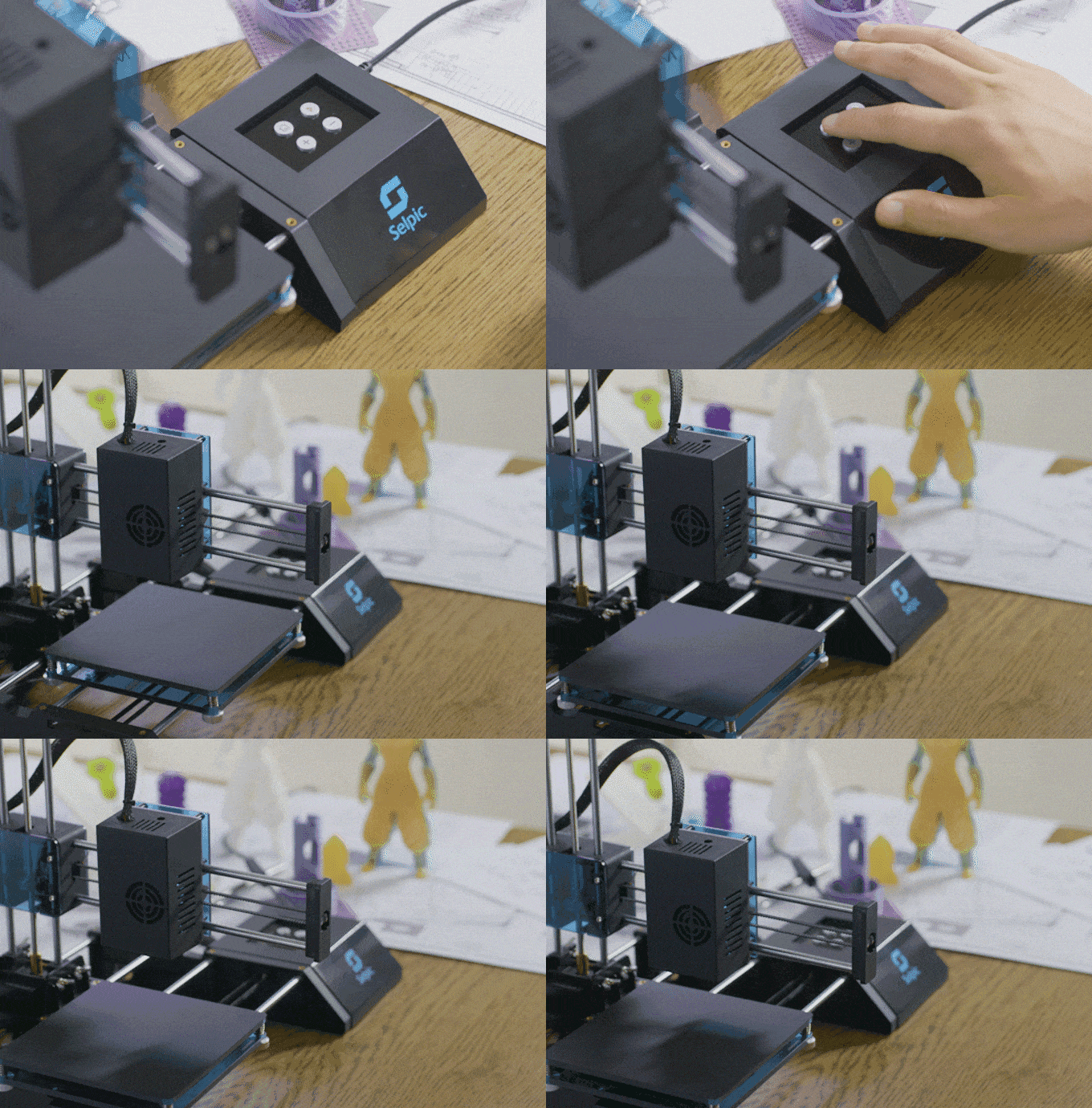
Selpic is here with a 20% discount offer on its handheld printers – Slepic S1 and Selpic S1 Plus. It is a limited time discount offer and will last only for a few days. These fully portable and compact printers facilitate effortless printing on almost any surface. Both the printers have some differences based on the functionality, print head, and ink tank.
Selpic S1 portable printer enables the users to easily print any graphic using its dedicated Android or iOS app. After connecting with the Selpic printer, upload the text, image, or barcode to easily print it on surfaces such as paper, textiles, stationery, leather, and even fruit peels.
Selpic S1 can print at the speeds of 30-300 mm/s and holds a 40 ml ink capacity in a single fill which can print up to 900 A4 papers with 5% ink coverage. Its 1200 mAh battery can work straightly for 6 hours and can remain on standby for 72 hours. There’s a 1/2″ print head which can print at the resolution of 600 DPI.
While the S1+ houses a 1.0″ print head which further improves the printing speed and depth. It weighs 260 grams and houses a 1200 mAh battery.
Like the Selpic S1, the upgraded version can also print at any angle and features built-in WiFi.
Both the printers come with a 1-year warranty and support for Android, iOS, and Windows Operating Systems. The last but not the least, the users can customize the firmware as the source code is freely available.
The discount offer is only applicable to Selpic printers, not the ink cartridges. You can get Selpic S1 for the price of $199.99 while the Selpic S1+ is available for $239.99. The interested buyers can head over tot he Selpic official website to grab the portable printers at a 20% discount price.
Luxury mobile phone brand 8848 today released its latest product – a limited Supercar edition of the 8848 Titanium M6 5G. The product is one expensive smartphone just like the brand’s other products. It carries a hefty price tag of 19,999 yuan (~$2903) and the company says it produced just 600 units.
The premium smartphone retains the design style of its predecessor. It comes with a titanium alloy frame with an outer covering having carbon fibre texture. At the rear, there is a diamond-cut watch dial which is 1.19 inches. According to the official announcement, the elegance of this phone coexists with a sense of future technology, highlighting luxury technology and delivering a sense of superior value.
1 of 4
The hardware configuration is the same with that of the Titanium M6 5G including a 6.01-inch screen, Qualcomm Snapdragon 865 processor, 12GB LPDDR5 memory and 512GB UFS 3.0 storage. For photography, the phone packs a triple camera setup at the rear spearheaded by a 64MP main camera. It also features a 4380mAh battery, dual SIM/dual standby support, and standard wireless security lock.
Fairphone 3+ launches as a successor to Fairphone 3 from last year. The new handset and its modules contain 40% recycled plastic, more than any other device from the brand. Also, it comes with an upgraded 48MP primary camera and 16MP selfie camera. Further, it arrives with Android 10 and is currently up for pre-order on its official website for €469. It will start shipping to buyers from September 14.
Apart from the above-mentioned changes, the new Fairphone 3+ (Plus) is identical to its predecessor Fairphone 3. In fact, if you own the last year’s model, you can upgrade it with the new 48MP Samsung ISOCELL GM1 rear and 16MP front camera modules priced at €59.95 and €34.95 respectively.
Talking about other specs, the Fairphone 3+ sports a 5.65-inch FHD+ (2160 x 1080 pixels) IPS LCD panel with 18:9 aspect ratio, 427ppi, and Gorilla Glass 5 protection. It comes powered by Qualcomm Snapdragon 632 paired with 4GB RAM and 64GB internal storage with support for microSD card up to 400GB.
It features dual nano-SIM card slot, 4G, dual-band WiFi 5, Bluetooth 5.0, GNSS (GPS, Glonass, Galileo), NFC, 3.5mm headphone jack, USB Type-C, rear-mounted fingerprint sensor, and a 3,040mAh battery.
1 of 2
The device is only available in Black color and the box only contains the phone, a mini screwdriver as well as a quick start guide. Hence, even though the handset comes with 2 years of warranty, you will need to buy the charger and USB cable separately.
The CEO of Realme India, Madhav Sheth, took to Twitter today to announce that he will be taking on a new role. According to the tweet, his new role is as the CEO of Realme Europe, and it is in addition to his current role as the head of Realme India.
Madhav Sheth is practically the face of Realme Mobiles. The company executive who is also the Vice President of Realme will most likely shuttle between Europe and India with his new appointment.
I'm delighted to announce that I'll be the CEO of @realmeeurope in addition to @realmemobiles from today. It will give me an opportunity to establish our core values – focus on user feedback & introduce Tech Trendsetting products in Europe as I continue to steer growth in India. pic.twitter.com/wK268QPLq6
Realme was founded in 2018 and is one of the phone companies owned by BBK Electronics. The company which started as a smartphone company has now included smart TVs, wireless earbuds, power banks, and smartwatches to its portfolio of products.
Since its launch in 2018, Realme has announced more than 25 mobile phones. The manufacturer is scheduled to announce the Realme 7 series in India soon and the Realme X7 series in China.
We use cookies on our website to give you the most relevant experience by remembering your preferences and repeat visits. By clicking “Accept”, you consent to the use of ALL the cookies.
This website uses cookies to improve your experience while you navigate through the website. Out of these, the cookies that are categorized as necessary are stored on your browser as they are essential for the working of basic functionalities of the website. We also use third-party cookies that help us analyze and understand how you use this website. These cookies will be stored in your browser only with your consent. You also have the option to opt-out of these cookies. But opting out of some of these cookies may affect your browsing experience.
Necessary cookies are absolutely essential for the website to function properly. This category only includes cookies that ensures basic functionalities and security features of the website. These cookies do not store any personal information.
Any cookies that may not be particularly necessary for the website to function and is used specifically to collect user personal data via analytics, ads, other embedded contents are termed as non-necessary cookies. It is mandatory to procure user consent prior to running these cookies on your website.