According to a Reutersreport, the Tencent owned app saw a rise in downloads, as users rushed to install the application before it completely disappeared from the app stores in the country. Similarly, Signal also saw a similar trend, especially in China, as it is an encrypted alternative, which owned by non-profit Signal Foundation. The report stated that the WeChat app downloads rose by 41 percent in a six day average in the United States when compared to the previous week.
This occurred immediately after the Trump Administration threatened to ban the app last week. Notably, the Signal app download rose by 30 percent in the US app stores and by a whopping 90 percent in the Chinese app stores. A Sensor Tower analyst stated that, “Not only are alternatives like WhatsApp and Telegram officially blocked in China, but Signal has an inherent advantage in that it’s well known for being strongly encrypted.”
Furthermore, WeChat users have also turned towards other Tencent owned chat apps like QQ, since the ban did not specifically include this platform. As such, the downloads for this app have also tripled in the past week. At the moment, Apple and other US giants are pushing back against the move from the government, citing various busines losses that would occur if it is enforced. Although, it remains to be seen how this event develops, so stay tuned.
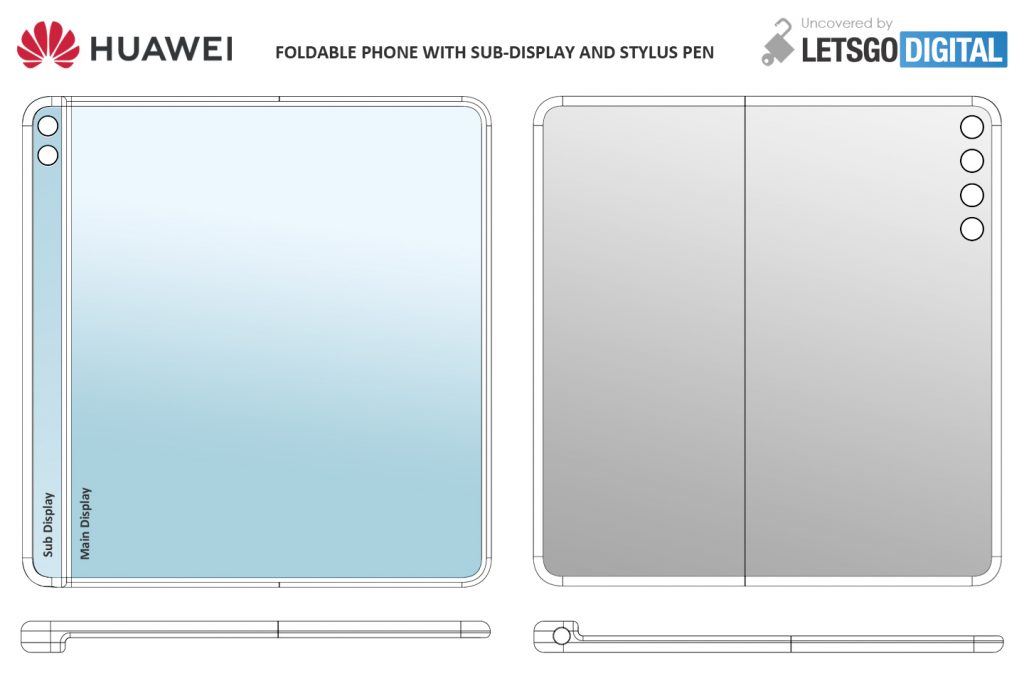
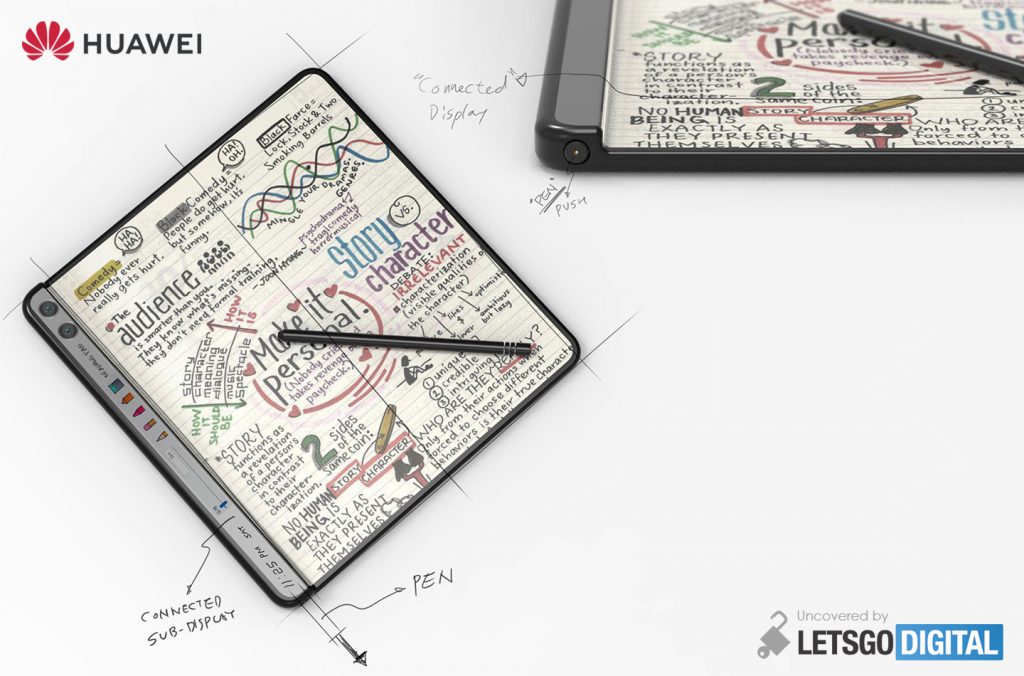
Huawei had filed the design patent back in 2019 with the CNIPA (China National Intellectual Property Administration), which got approved and published earlier today (14th August 2020). The notable aspect of the foldable smartphone is the fact that it features a stylus and has a sub display right next to the primary screen, which follows an inward folding design.
Looking at the detailed images provided by LetsGoDigital, the bezels around the primary screen are thin, including the one next to the secondary display. This sub display is narrow and long, covering the entire length on the left side, and features two cut outs for a dual front facing camera system. This entire setup is slightly raised, providing space for the stylus as well. On the rear, a quad camera setup can be found.
While the sub display and camera module portion are rather thick, the portion with the flexible display is rather thin. This allows the device to fold right up till the sub display, matching it in overall thickness when folded. Notably, no physical buttons can be observed on the device, which might suggest the functionality of its smaller display. Unfortunately, the patent might just be Huawei’s attempt to cover all bases and they may never really develop such a device, but we would have to wait for an official announcement to know for sure. So stay tuned.
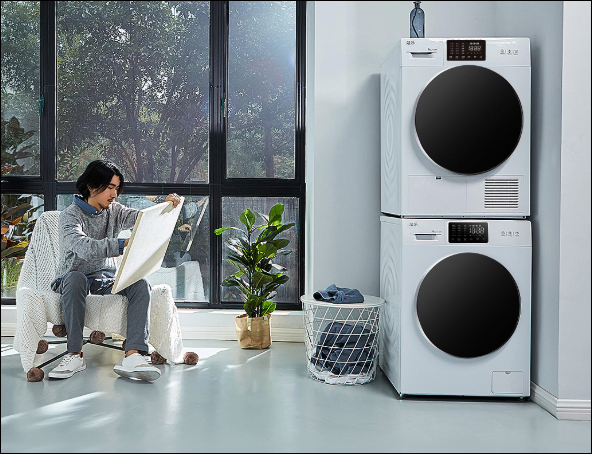
A new report from 91Mobileshas revealed that Xiaomi is planning on launching a range of new smart home products in India later this year. A source from the Chinese tech giant has revealed that the company will be launching new smart refrigerator and washing machines in the fourth quarter of 2020.
These will be the first ever washing machines and refrigerators that would be launched in the country from the Chinese brand. The new launches would be from MIJIA‘s lineup and are in line with Xiaomi’s plans on expanding its IoT and home product portfolio in the region. Notably, the company’s India managing director Manu Kumar Jain had stated last year stated that Xiaomi plans on entering into new categories like water purifiers, laptops, and washing machines.
The OEM has already launched the Mi Water Purifier and recently unveiled its Mi Notebooks as well. So, we can expect the washing machines to arrive soon as well. Furthermore, Xiaomi would likely follow its aggressive pricing policy, which would make the offerings attractive in the market. Unfortunately, the company has yet to comment on the matter or confirm the news.
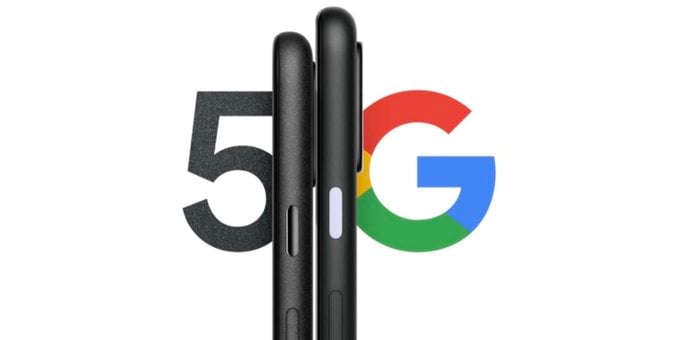
Google is expected to announce the Pixel 4a (5G) and Pixel 5 in October. While the former is a 5G-version of the recently announced Pixel 4a mid-ranger, there are conflicting rumors about the latter. According to GSMArena that cites information revealed by @ImJustSayingJC Twitter user, the Pixel 5 will come only in an XL version. He has also shared some vital information on the specs of the phone.
Earlier this month, display analyst Ross Young had claimed that the Pixel 5 will be sporting a 6.67-inch display supplied Samsung and BOE. He had claimed that the screen will support a 120Hz refresh rate. The Twitter user has also claimed that the Pixel 5 has a 6.67-inch 120Hz display. It appears that it will be a large-sized display, but it will not be carrying the ‘XL” branding.
The Google Pixel 5 smartphone will be arriving with a rear-facing fingerprint reader and 128 GB of storage. It will be fueled by the Snapdragon 765G mobile platform. Recently, the handset was spotted at AI Benchmark with 8 GB of RAM. The Pixel 5 may arrive with a price tag of $699. As Google has already confirmed, the Pixel 4a (5G) will be arriving in the market with a $499 price tag.
The recently announced Google Pixel 4a features a 5.81-inch OLED display and it is powered by Snapdragon 730 mobile platform. The phone comes with 6 GB of RAM and 128 GB of native storage. It has a 12.2-megapixel rear camera and it has a front camera of 8-megapixel. It is backed by a 3,140mAh battery that supports 18W charging. The phone is priced at $349.
Redmi launches its first gaming laptop in China dubbed as Redmi G. It comes in three variants powered by three different chipsets. But the design and most specifications are common on all the models. It starts at 5,299 yuan ($763) and will be available starting August 17.
Redmi G Gaming Laptop Specifications
All the three models of the Redmi G gaming laptop sport a 16.1-inch FHD (1920 x 1080 pixels) LCD panel with 100% sRGB color gamut, 81% screen-to-body ratio, 178° viewing angle, brightness of 300 nits, and anti-glare coating. However, only the mid and top variant feature 144Hz refresh rate, whereas the base model comes with the standard 60Hz refresh rate.
Under the hood, they feature three different processors and two different GPUs.
Base Variant
10th Generation Intel Core i5-10200H
8-Thread Quad-Core Processor
Base Frequency – 2.4GHz
Max Turbo Frequency – 4.1GHz
8MB Intel Smart Cache
NVIDIA GeForce GTX 1650
Mid Variant
10th Generation Intel Core i5-10300H
8-Thread Quad-Core Processor
Base Frequency – 2.5GHz
Max Turbo Frequency – 4.5GHz
8MB Intel Smart Cache
NVIDIA GeForce GTX 1650 Ti
Top Variant
10th Generation Intel Core i7-10750H
12-Thread Hexa-Core Processor
Base Frequency – 2.6GHz
Max Turbo Frequency – 5GHz
12MB Intel Smart Cache
NVIDIA GeForce GTX 1650 Ti
Talking about common parameters, they feature identical boxy design with a 720p webcam at the chin of the display, full size backlit keyboard with 1.5mm keystroke, Hurricane Cooling 2.0 copper cooling system with dual-fan, 2 x 2W speakers, DTS:X Ultra 3D Sound, Microsoft Windows 10 Home Chinese version, and 55Whr battery. As for memory, all the models come with 16GB ( 2 x 8GB) 2933MHz DDR4 RAM and 512GB PCIe × 4 NVMe SSD (up to 2TB).
Also, here’s the list of connectivity and I/O options on the Redmi G Gaming Laptop.
WiFi 6
Bluetooth 5.1
Gigabit Ethernet Port
1 x USB 2.0
2 x USB 3.0 Gen2
1 x USB Type-C
1 x Mini DP 1.4
1 X HDMI 2.0
3.5mm Headphone Jack
Power Input
Redmi G Gaming Laptop Pricing and Availability
Redmi G Core i5-10200H + GTX 1650
5,299 yuan ($763)
Redmi G Core i5-10300H + GTX 1650 Ti
6,299 yuan ($907)
Redmi G Core i7-10750H + GTX 1650 Ti
6,999 yuan ($1,007)
The notebook is exclusive to China but you can pre-order it from Giztop with international shipping for a starting pricing of $959.
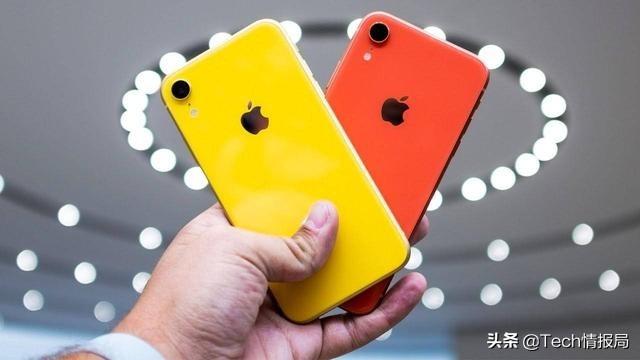
Recently, we had reported on the Trump administration banning the WeChat app, a popular Chinese social media platform. This new US sanction would force Apple to remove the app from its App Store, which was expected to cause it to lose a significant part of its sales in China. Now, a new report reveals that Apple plans to push back on the ban while a survey found that 95 percent of Chinese users would rather give up iPhone than lose WeChat.
At the moment, it is unknown if the ban on the WeChat app is strictly restricted to just the US App Store or the global one. Tencent, the parent company of WeChat, stated that it believed that the ban is only applicable in the US but is seeking clarity. The cause for this unsure atmosphere around the new order is due to its vague working, which states banning any transaction related to WeChat.
According to a Bloombergsurvey, 95 percent of the 1.2 million Chinese Apple users said that they would rather switch to an Android device than use an iPhone without WeChat. A HongKong user stated that banning WeChat would make an iPhone into “electronic trash.” Another stated that his “family in China are all used to WeChat and all our communication is on the platform.”
A Wall Street Journal report also revealed that over a dozen companies including Apple, Ford, Walmart, and Disney are pushing back against the ban. In a call to the White House, the known brands detailed the adverse consequences that a ban on WeChat would have on their businesses. With WeChat being used to payments, e-commerce and marketing as well, Tencent stated that any device without it would be “extremely hard to sell” in China.
Rumors have it that HMD Global will soon launch a low-budget phone called Nokia 2.4. The handset was spotted at Geekbench in the previous month. A fresh report by Nokia Power Userhas revealed some key information on the specs of the Nokia 2.4.
The report reveals that the highest model of the Nokia 2.4 will have 3 GB of RAM and 64 GB of internal storage. It will also come in 2 GB RAM + 32 GB storage version. The handset may arrive in color options like grey, blue, and purple.
The rear side of the Nokia 2.4 will be sporting a 13-megapixel + 2-megapixel dual camera like the predecessor Nokia 2.3 phone. For selfies, it will have a front camera of 5-megapixel. Through the FCC certification, it is known that the model numbers such as TA-1270, TA-1274, TA-1275, and TA-1777. Among these, the TA-1270 could be the dual-SIM edition of the Nokia 2.4 heading to wider markets.
The Nokia 2.4 is said to be backed by a 4,500mAh battery. The Geekbench listing of the phone has revealed that it measures 165.85 x 76.3mm. It could be sporting a 6.5-inch display.
The Geekbench listing of the Nokia 2.4 revealed that it will be yet another phone to arrive with Helio P22 chipset. The phone will come preinstalled with Android 10 OS. There is no word on the launch date of the smartphone. Probably, it could be one of the phones that HMD Global may launch at the IFA 2020 tech trade show in the coming month.
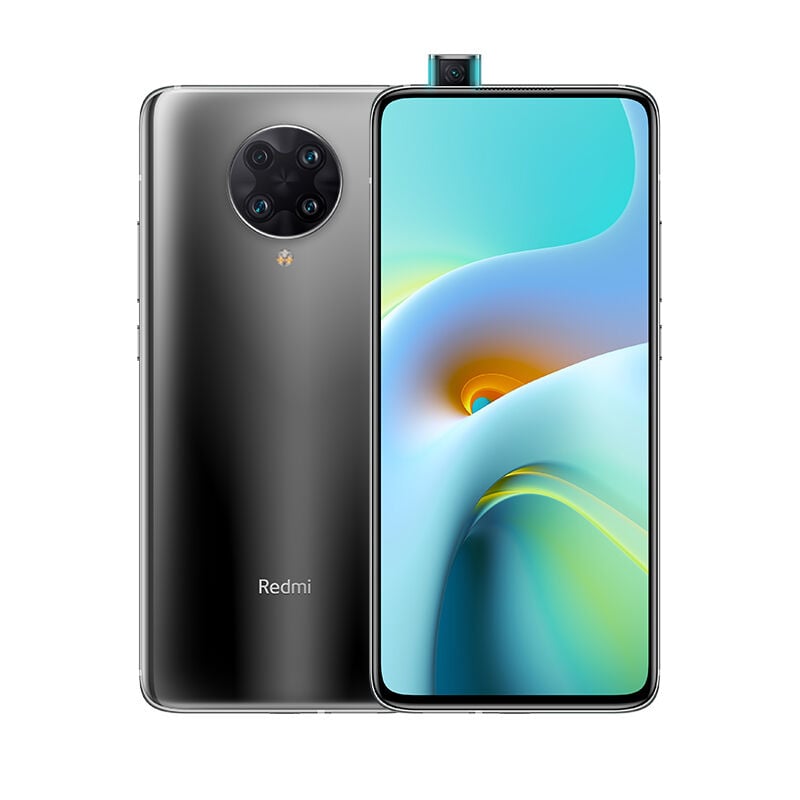
A couple of days ago, Xiaomi launched the Redmi K30 Ultra smartphone in the Chinese market, marking the 10-year anniversary of the company. Today, the smartphone went on sale for the first time.
Now, the company claims that during the first sale of Redmi K30 Ultra in China, it managed to sell 100,000 units within a minute. Xiaomi CEO Lei Jun has also promised to get more units of the phone for the next sale.
As for the pricing, the phone comes in four variants — 6GB RAM + 128GB storage, 8GB + 128GB, 8GB + 256GB, and 8GB + 512GB, all of which are priced at 1,999 yuan (~$287), 2,199 yuan (~$316), 2,499 yuan (~$359), and 2,999 yuan (~$388) respectively.
The Redmi K30 Ultra features a 6.67-inch Samsung AMOLED display with Full HD+ screen resolution of 2400 x 1080 pixels, HDR10+ support, 120Hz refresh rate, and 92.7 percent screen-to-body ratio.
Under the hood, the device comes powered by the MediaTek Dimensity 1000+ 5G chipset. It is built using a 7nm process and packs the latest high-performance ARM Cortex-A77 and Mali-G77 cores. The device supports SA/NSA dual-mode 5G as well as dual 5G standby.
In the camera department, there’s a quad-camera setup on the back that includes a 64-megapixel primary camera, a 13-megapixel ultra-wide-angle lens, a 5-megapixel tele-macro lens, and a 2-megapixel depth sensor. On the front side, there’s a 20-megapixel snapper for taking selfies and video calling.
The phone is also optimized for gaming as it comes with dual Hyper Engine 2.0 and Game Turbo optimization engines. It also has a 3,495mm² ultra-large area vapor chamber along with a graphene + graphite 3D heat dissipation system.
It runs the Android 10 operating system with the company’s MIUI 12 on top. The phone is powered by a 4,500mAh battery along with support for 33W fast charging technology.
Huawei‘s sub-brand Honor has today confirmed that the company is gearing up to soon launch its first gaming laptop in China. On its official Weibo account, the company has already started teasing this upcoming device.
From the teaser, it seems that the company has confirmed that the upcoming gaming laptop will come powered by the Intel chipsets. It is likely to the 10th-generation Intel Core i7 series chipset.
It has also showcased some of the keys from the keyboard which seems to indicate that there will be support for different types of lighting effects. However, the keyboard teased in the image isn’t the real one and it goes on to spell out “Intel” and “Honor” with the keys.
The company’s executive has teased that the first gaming laptop from Honor will come with an advanced heat dissipation technology, as well as some more powerful features. However, the company has not revealed those features yet. It is also claimed to be a “lot thinner” than what people usually expect from a gaming laptop.
So, nothing much is known about the Honor gaming laptop’s configuration but it to arrive in multiple configurations. Since the company has already started teasing this device, we expect the official launch to happen soon.
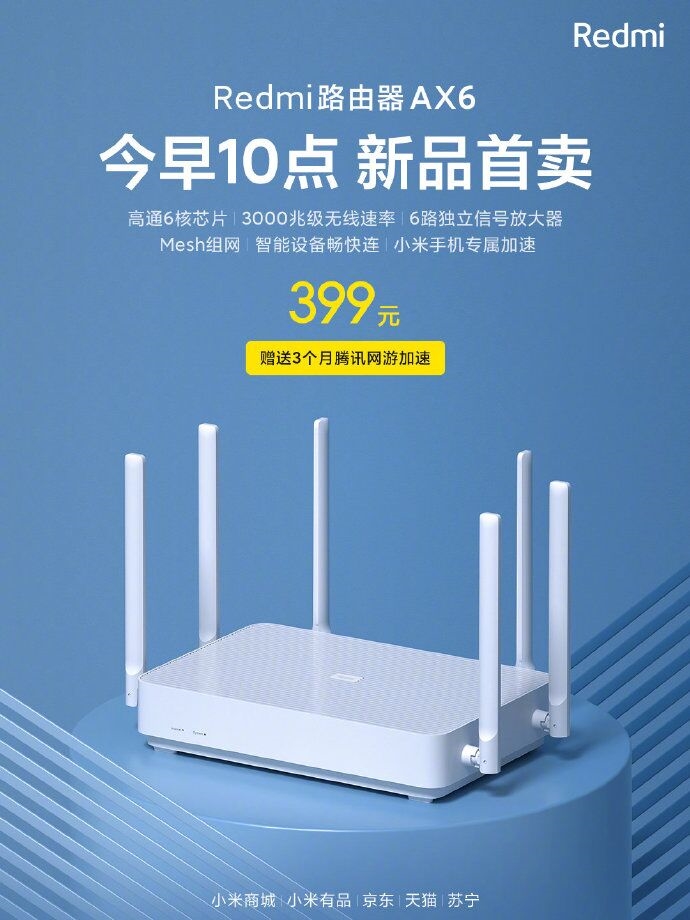
Redmi has today officially started selling the Redmi Router AX6 Wi-Fi 6 Router in China. It is priced at 399 yuan, which roughly converts to $57. As the name indicates, it is an upgraded variant compared to the Redmi Router AX5 launched a couple of months back.
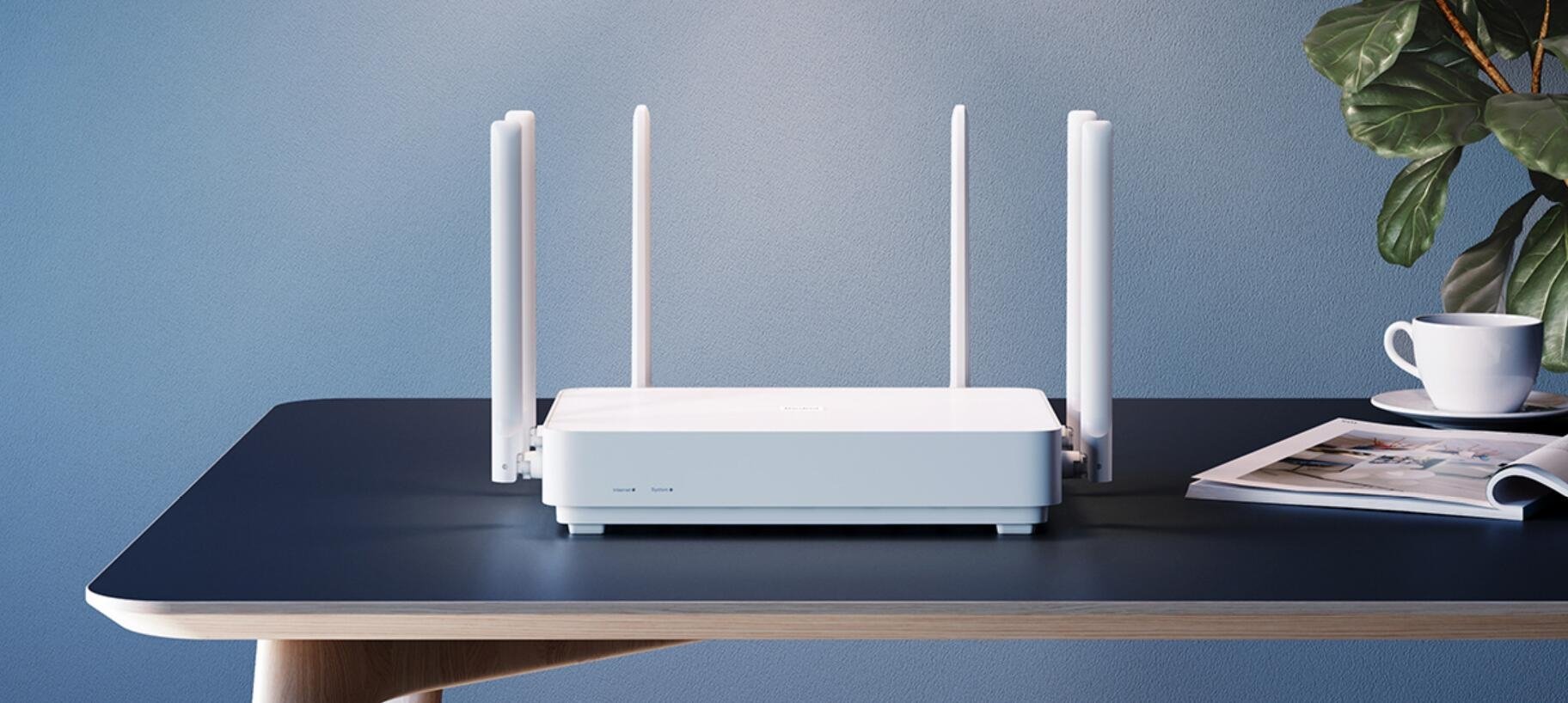
As for the design, it comes with Xiaomi’s typical white-color simple, sleek, and elegant design. There are six antennas on the device or the independent signal amplifiers. It measures 320 x 320 x 55mm and weighs 0.95kg.
The device comes powered by the Qualcomm six-core enterprise-level chipset which includes four Cortex-A53 cores clocked at 1.4GHz and dual-core NPU for hardware-level acceleration, clocked at 1.7GHz. This chipset is manufactured using the 14nm process.
The Redmi Router AX6 comes with support for the new Wi-Fi 6 technology and has dual-band support as well — 2.4GHz and 5GHz for the concurrent wireless rate of up to 2976Mbps. This is claimed to be 2.55 times the wireless rate of AC1200 Routers, and it also comes with support for the full Gigabit network port.
The company says that the router supports OFDMA transmission, multi-device access to the internet. it can also complete data transmission from eight devices in one transmission and reduces network latency by more than 35 percent.
It also comes with features like Mesh Hybrid networking to cover the entire household and one-click connection of smart devices. The company is also offering a 3-month membership of Tencent Game Accelerator for online games.
For those who are unaware, the Redmi Router AX5 launched in June this was the company’s first Wi-Fi 6 router. On the other hand, Xiaomi has launched two Wi-Fi routers in the market this year — Mi Router AX1800 and Mi AIoT Router AX3600.
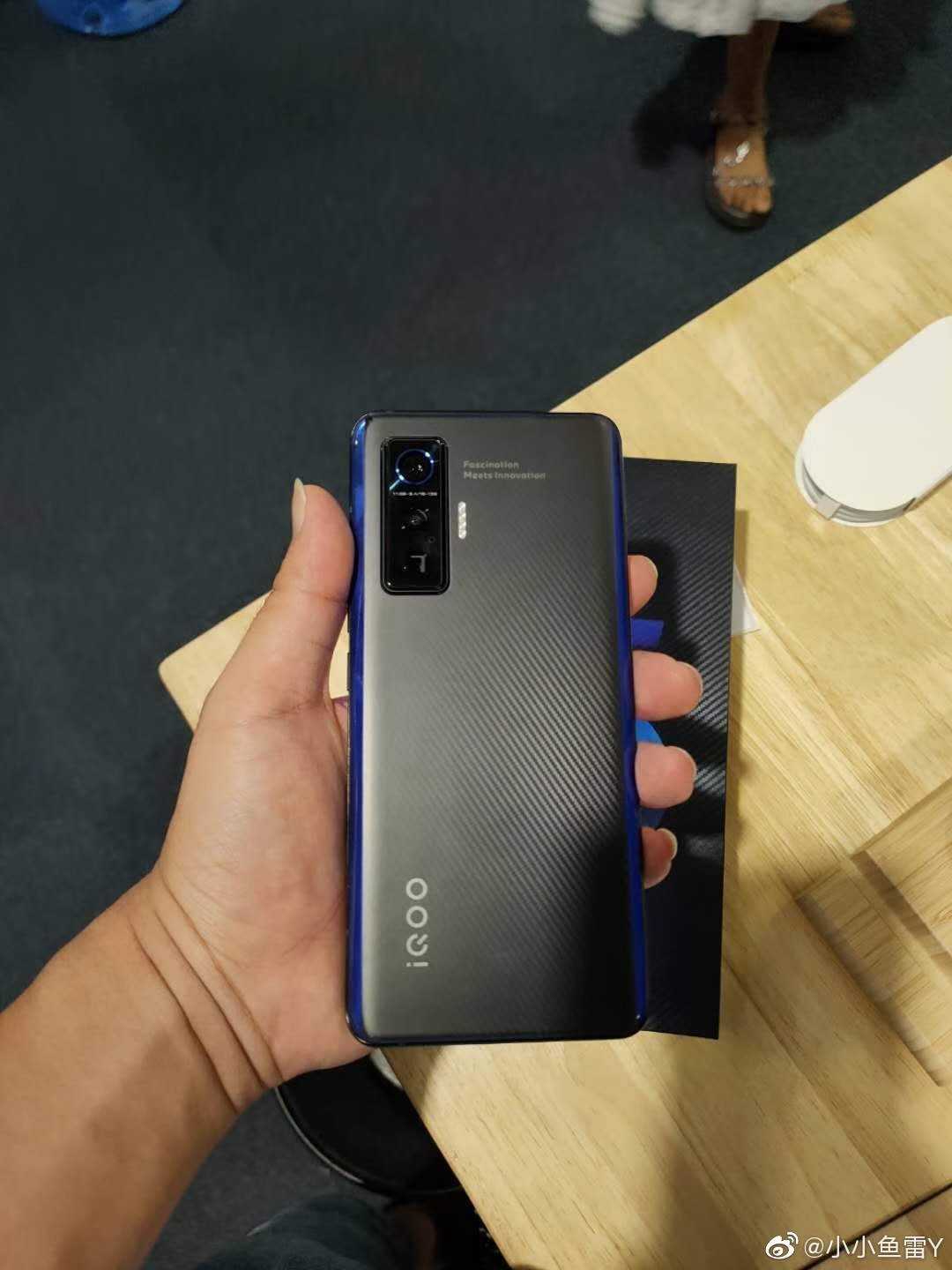
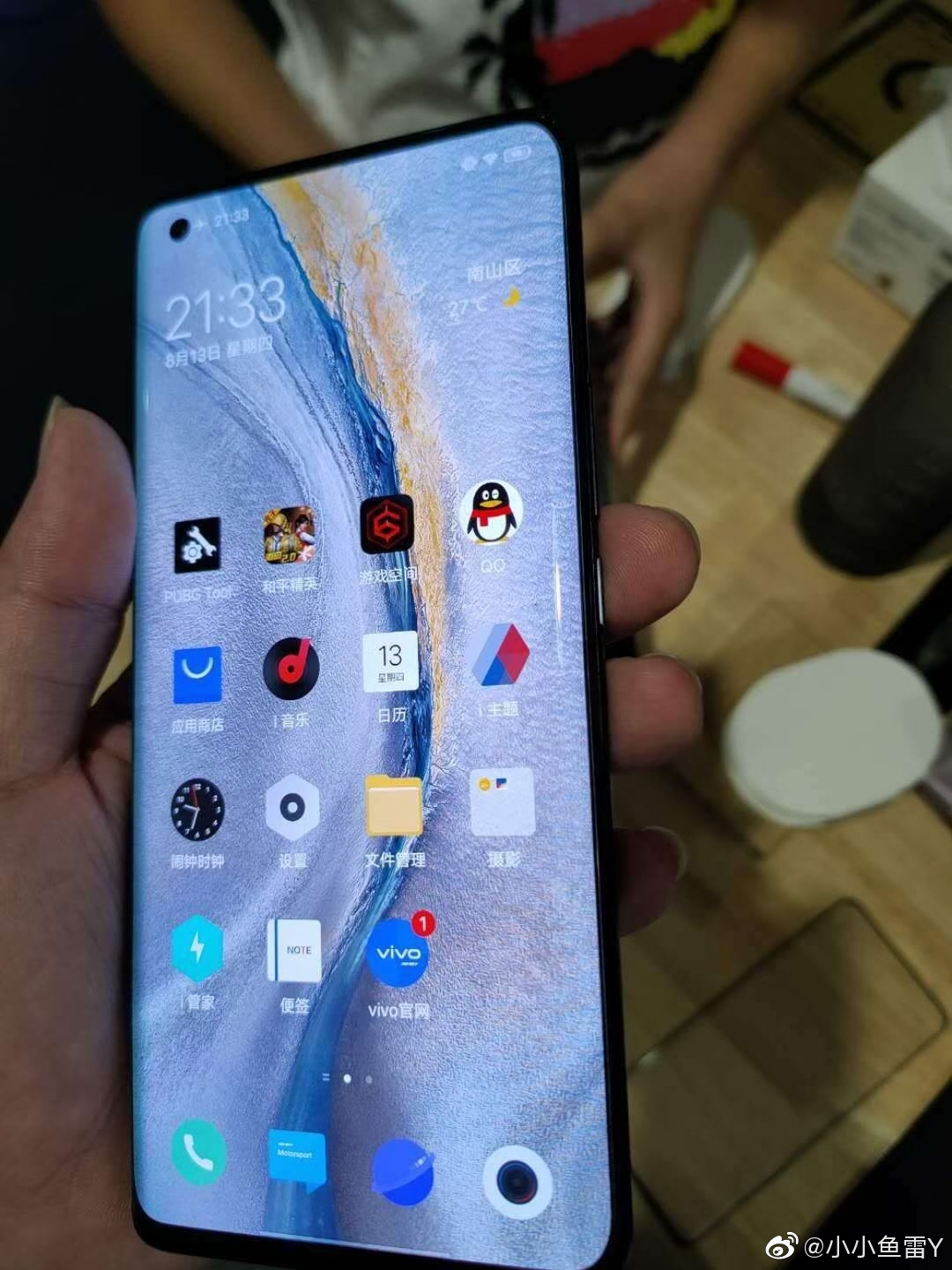
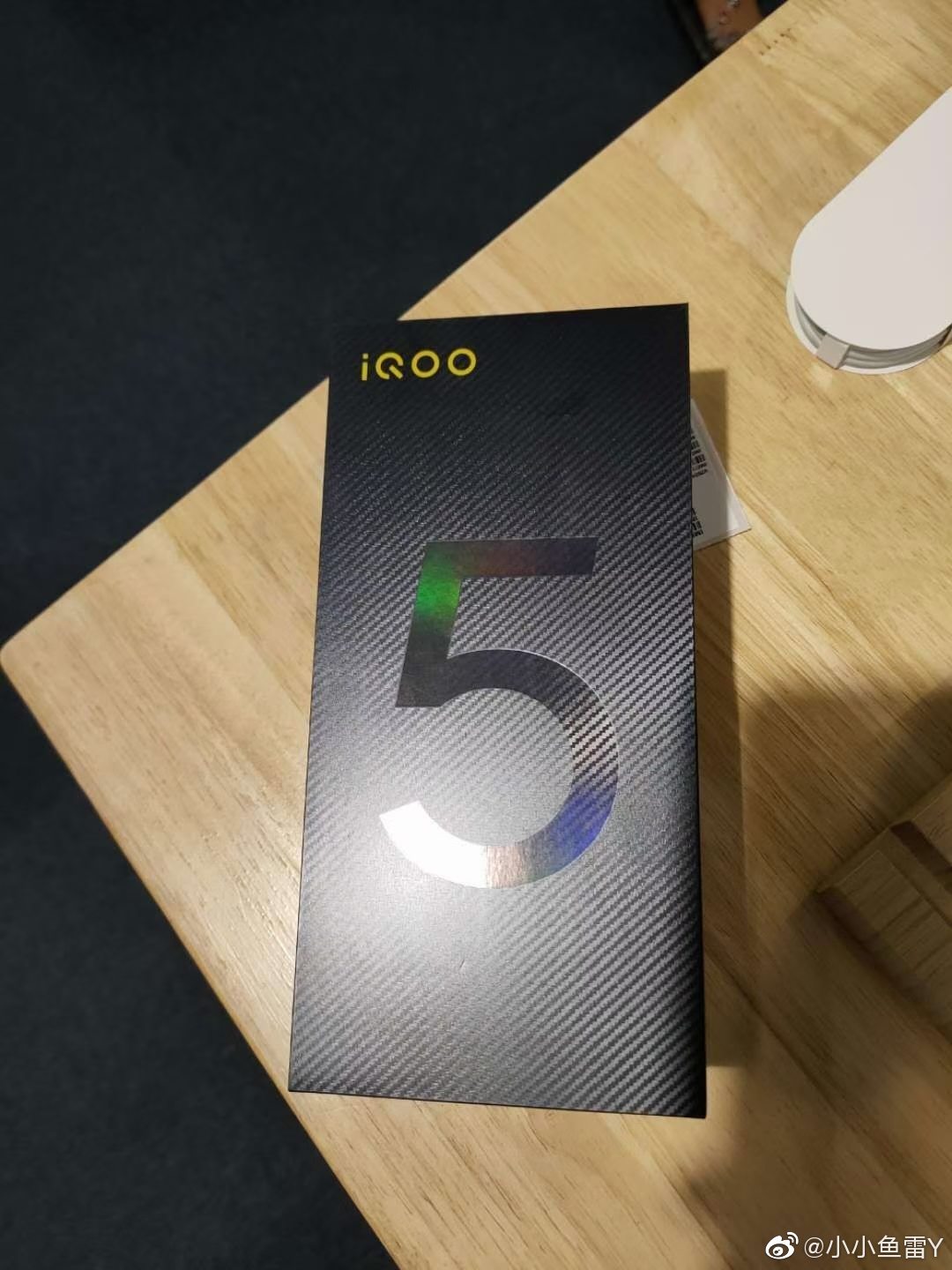
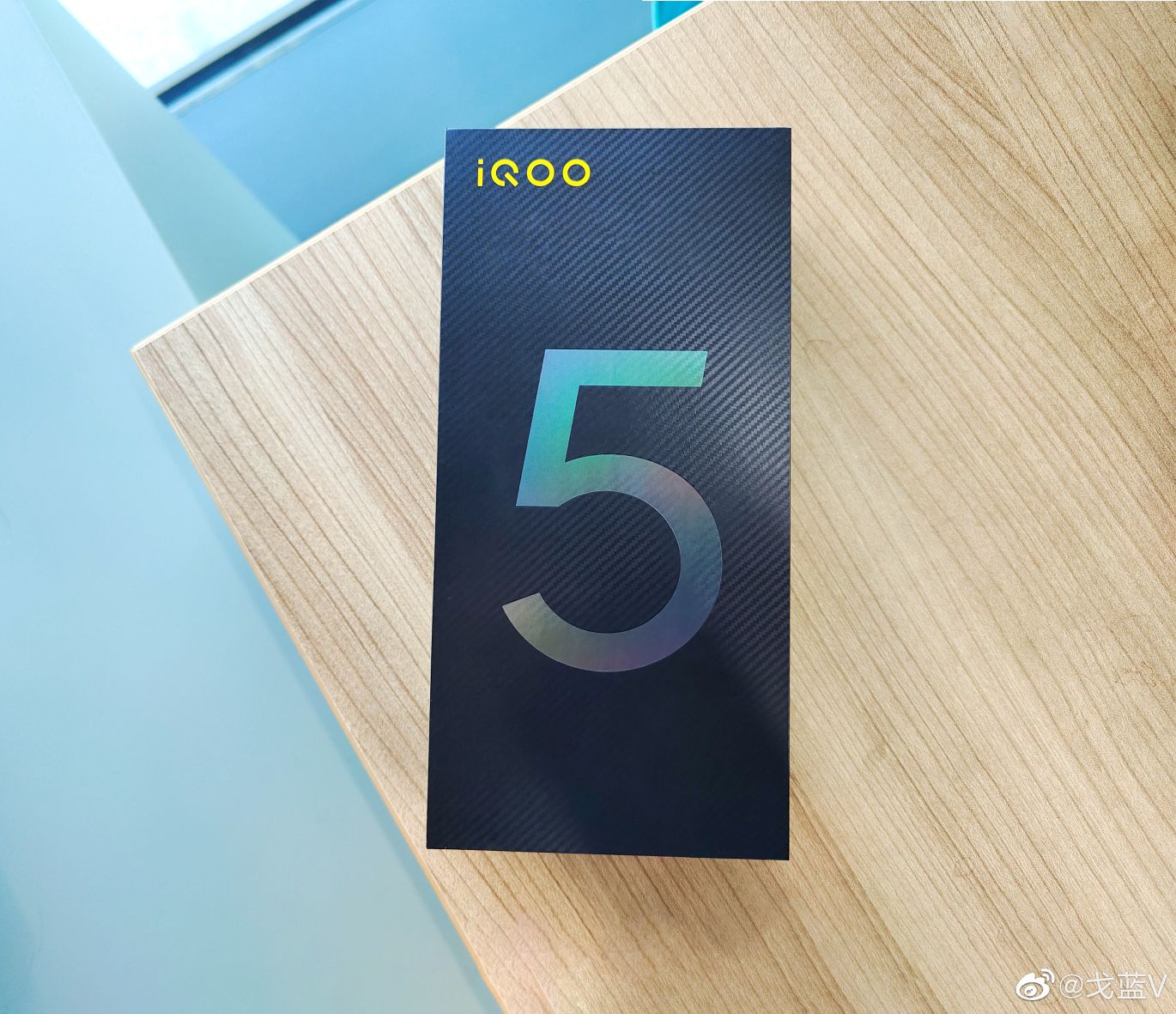
The iQOO 5 Pro will break cover along its iQOO 5 sibling on Aug. 17. Yesterday, a leaked shot revealing the retail box of the iQOO 5 had surfaced on Weibo. Today, a Weibo user shared real-life images of the iQOO 5 Pro to reveal its front and rear design.
As can be seen, the iQOO 5 Pro has textured carbon fiber finish on its back. The same kind of textured design can be seen in the images of the retail box of the phone. There are three cameras on the backside of the iQOO 5 Pro. The third one is a periscope zoom lens. Recently, a reliable tipster from China had revealed that the phone will support the 5x optical zoom and 60x hybrid zoom.
The iQOO 5 Pro has an AMOLED display with curved edges. A punch-hole cutout can be seen at the top-left corner of the screen. The Full HD+ display will offer a 120Hz refresh rate. It is speculated that the phone is equipped with the same 6.56-inch curved AMOLED panel that was made available on the Vivo X50 Pro+ phone.
The phone is powered by a Snapdragon 865 mobile platform and LPDDR5 RAM. It has UFS 3.1 storage and is likely to be backed by a 4,000mAh battery. It will be arriving with support for 120W fast charging technology.
In related news, the iQOO 5 handset that has a model number of V2024A was spotted at Geekbench in June. At that time, the 8 GB RAM edition had appeared and now the 12 GB RAM variant has surfaced on the benchmarking platform. It is speculated that the iQOO 5 will come with a flat 6.56-inch AMOLED display with punch-hole design and it will carry support for 55W fast charging.
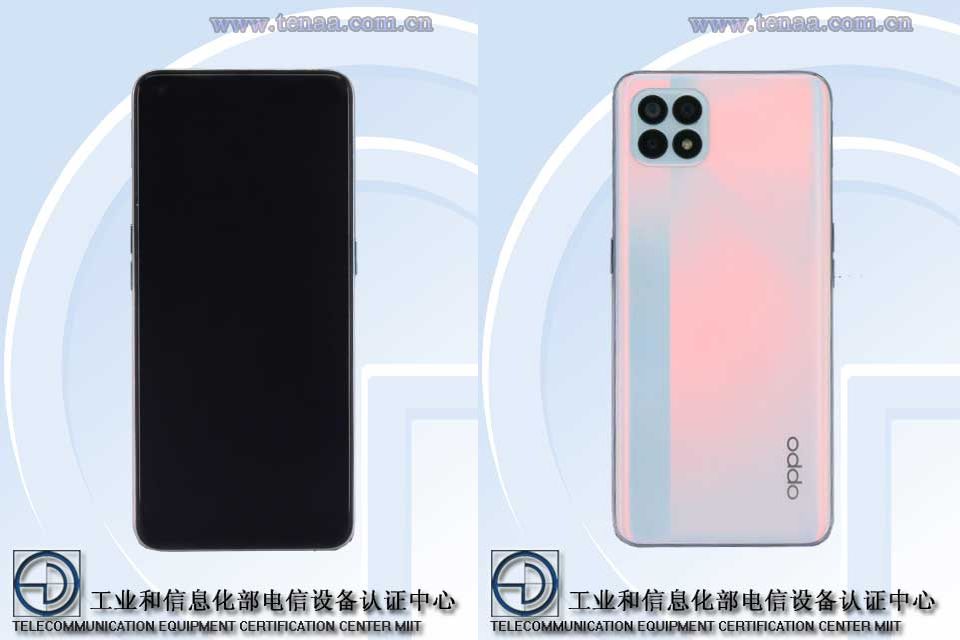
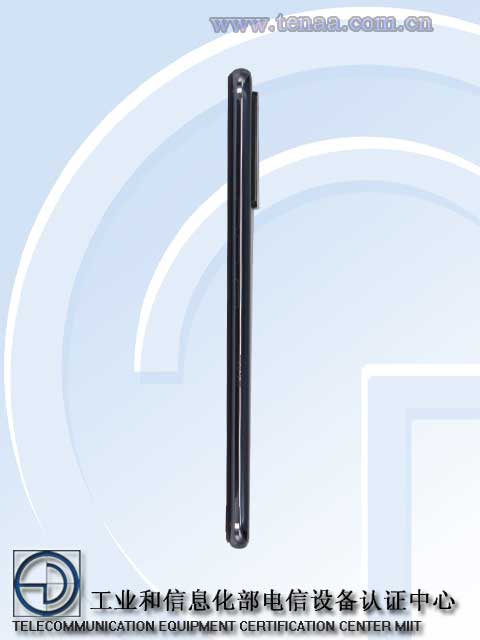
An unknown OPPO phone with model number PEAM00 / PEAT00 has received certification from the TENAA regulatory body of China. The handset has also received approval from the 3C authority of the country. These listings suggest that the handset will go official as early as this month in China. Probably, it may debut as an A-series smartphone.
The OPPO PEAM00 / PEAT00 measures 160.5 x 73.9mm. It is a slim and lightweight 5G phone as it measures 7.85mm in thickness and weighs 169 grams. It has an AMOLED panel of 6.43 inches. The display seems to feature a punch-hole at its top-left corner. The Full HD+ resolution supporting screen delivers a 20:9 aspect ratio. The screen is integrated with a fingerprint sensor.
The smartphone receives the power to perform from a 2.0GHz octa-core processor. It is unclear whether it is powered by a Qualcomm or MediaTek chipset. The phone is likely to come with 8 GB of RAM and 256 GB of built-in storage. The phone is preloaded with Android 10 OS. It lacks a microSD card slot
The OPPO PEAM00 / PEAT00 has a front-facing camera of 32-megapixel. There is a square-shaped camera module at the corner of the phone’s rear. It includes a 48-megapixel main camera, an 8-megapixel lens, and a 2-megapixel sensor. The phone will come with the support of 4K resolution.
The PEAM00 / PEAT00 smartphone has a dual-cell battery. The rated value of one of its batteries is 2,100mAh. It is known through the 3C listing o the device that it may ship with a 65W fast charger. The PEAM00 / PEAT00 handset was previously believed to be the upcoming OPPO Ace3 phone. However, the specs of the phone that have appeared on TENAA suggest that it could be an A-series phone.
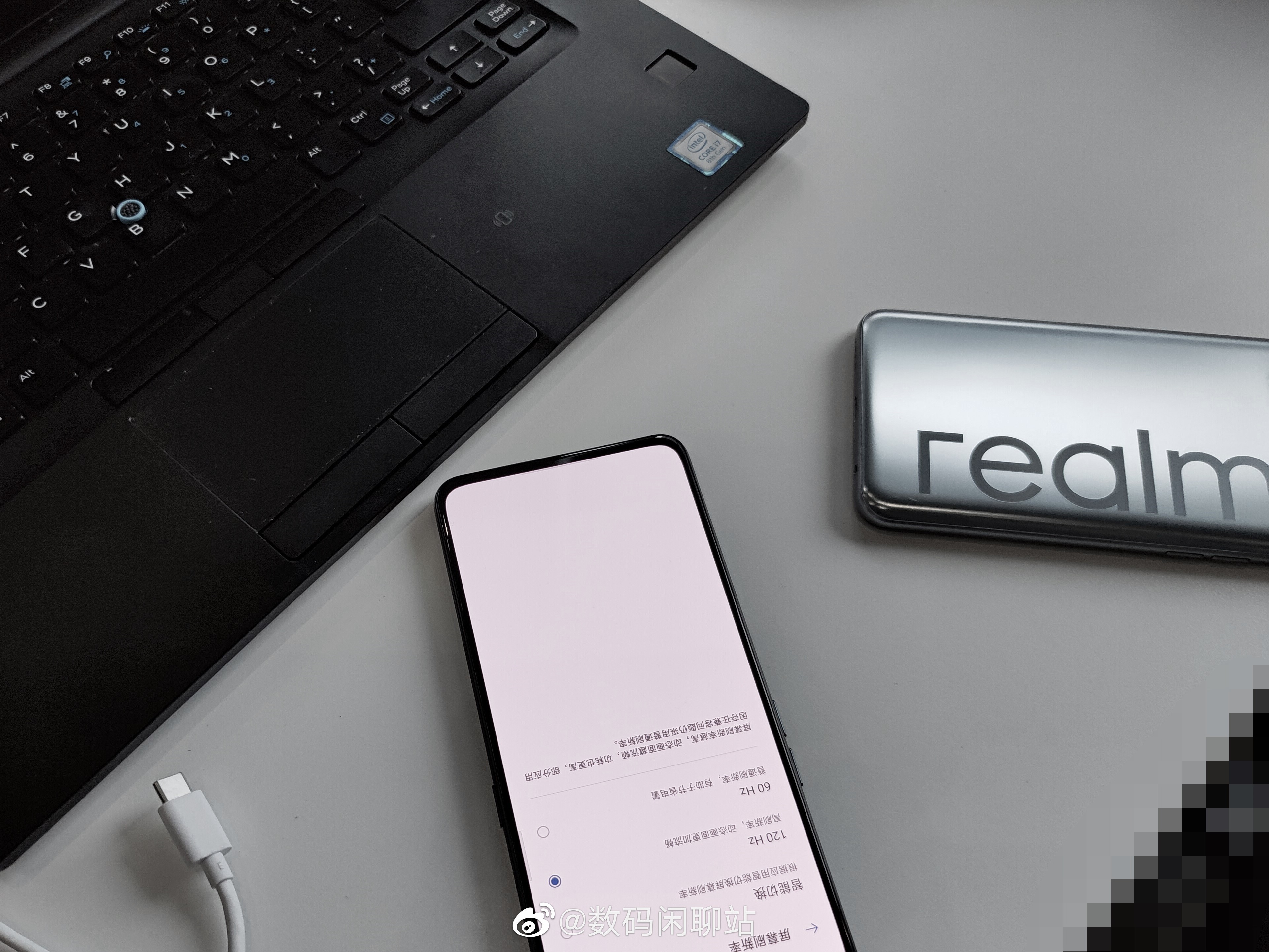
Recent reports have revealed that Realme is planning to launch a couple of new phones in China. Phones with model number RMX2200/RMX2201, RMX2176, and RMX2121 have appeared in the database of TENAA in the recent past. The final product names of these devices are not known yet. Expect for the RMX2121, the entire specifications of other phones have already appeared at TENAA. The RMX2121 could be a forthcoming flagship phone, but there is no confirmation on it yet. A tipster from China with a good track record has shared a live shot of the smartphone. He claims that it is an upcoming X-series flagship phone from Realme.
Last year, Realme launched the Realme X2 mid-range and Realme X2 Pro flagship smartphone. In June, Realme India took off covers from the Realme X3 and Realme X3 SuperZoom smartphones. The Chinese firm is yet to announce the Realme X3 Pro phone. The X-series flagship smartphone shown in the leaked shot could be the Realme X3 Pro.
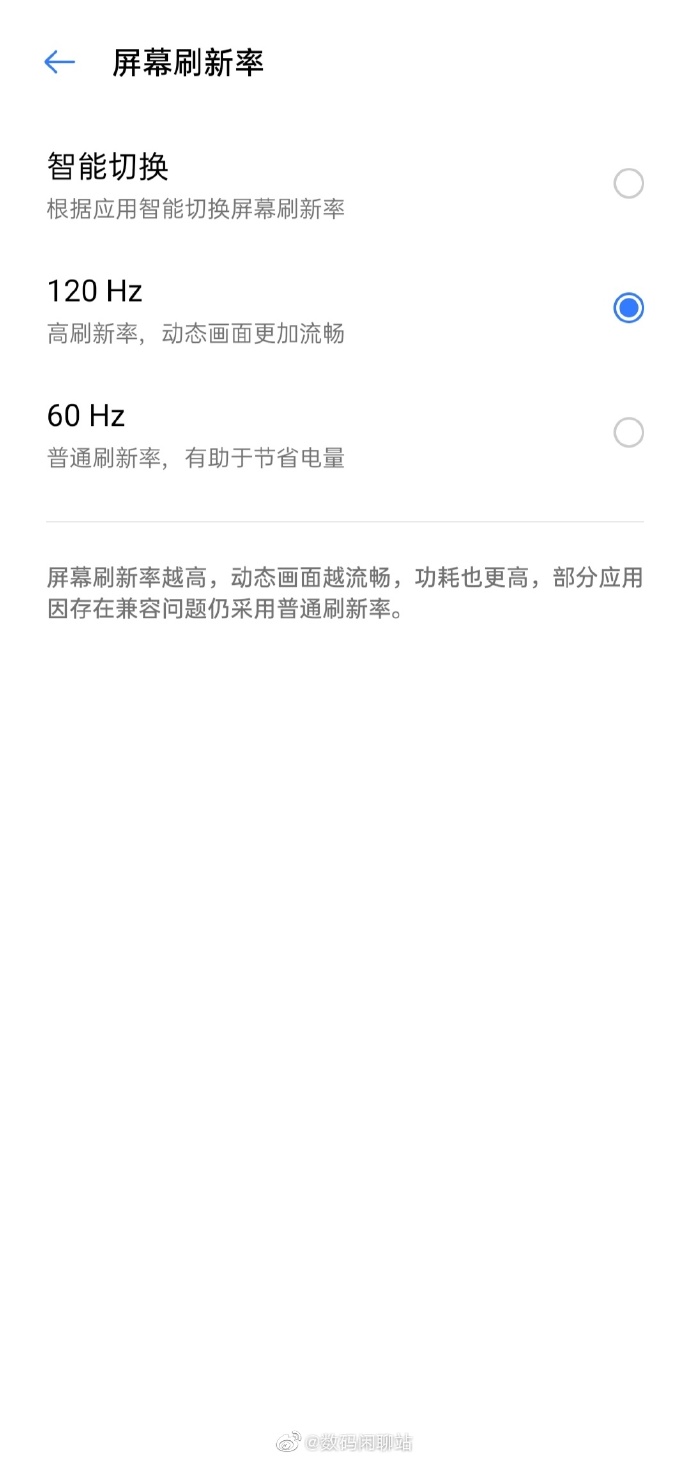
The Realme X2 Pro that debuted in October last year came with a 90Hz refresh rate supporting display. According to the tipster, the next Realme X series flagship is equipped with a Samsung-made curved display with COP packaging technology. The screen supports a 120Hz refresh rate and has a very thin-sized bottom bezel. As it can be seen in the screenshot below, the alleged Realme X3 Pro will let users to switch between 60Hz and 120Hz refresh rates.
There is no information available on the specifications of the Realme X3 Pro smartphone. The flagship phone could be powered by the Snapdragon 865 mobile platform. Hopefully, upcoming reports will spill more information on the specs of the Realme X3 Pro.
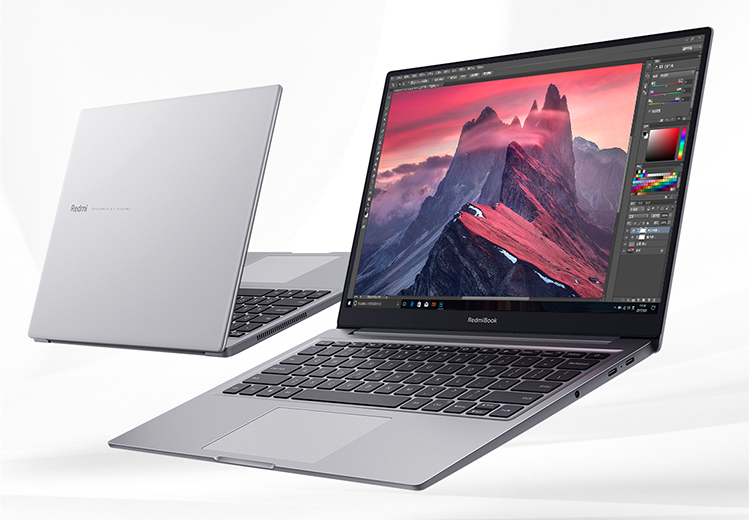
Xiaomi-backed Redmi has already entered the laptop space with its RedmiBook range of notebooks. Expanding the portfolio, the company has today quietly launched a new laptop in China — RedmiBook Air 13.
The device is now up for pre-order in the company’s home market with a deposit of 100 yuan and will go on sale from 17th August. In terms of design, the laptop comes with an all-metal body but the company says that it is ultra-light in weight at just 1.05kg and measures just 12.99mm in thickness.
It comes with a 13.3-inch display with 2560 x 1600 pixels screen resolution and 16:10 aspect ratio. It supports 100% sRGB color gamut and 300nits brightness. The display also supports the DC Dimming feature.
Under the hood, the device comes powered by the 10th generation Intel Core i5-10210Y processor with Turbo Boost of up to 4.5GHz. The laptop is being offered in two variants based on the memory configuration — 8GB and 16GB RAM with 512GB SSD.
To ensure that the device doesn’t heat up during heavy usage, it packs an all-copper heat dissipation module and comes with a dual-outlet design. Ensuring better connectivity, it comes with support for Wi-Fi 6 along with Bluetooth 5.1.
It is powered by a 41Wh battery which the company promises can offer eight hours of usage. The company is also bundling a 65W USB-C adapter to charge the device. It runs Microsoft Windows 10 operating system. It features two USB Type-C ports and a 3.5mm headphone jack on the right side.
The RedmiBook Air 13 model with 8GB RAM and 512GB SSD is priced at 4,899 yuan, which roughly converts to $705 while the model that packs 16GB RAM and 512GB SSD cost 5,199 yuan, which is about $748.
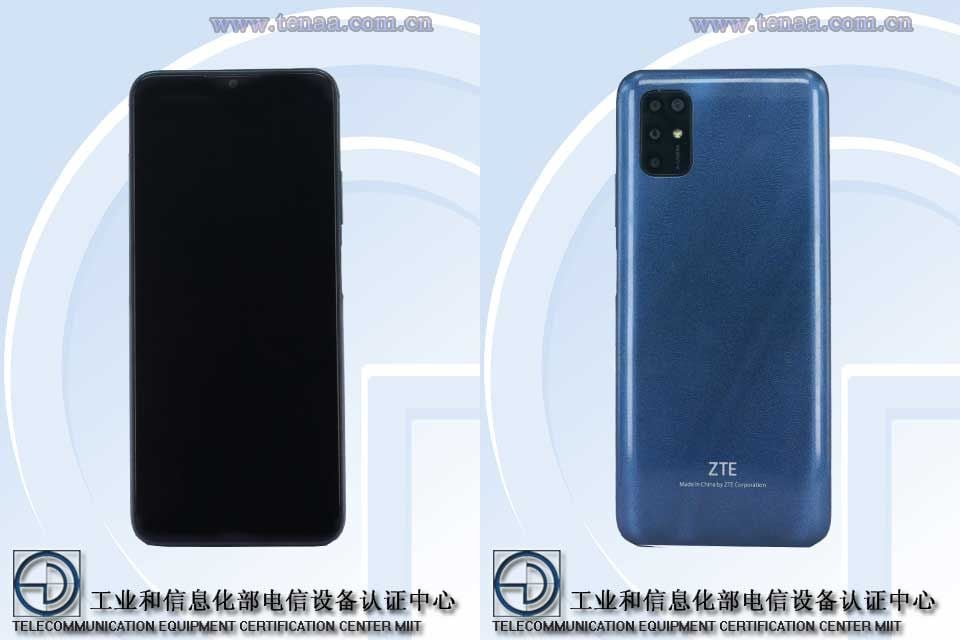
The ZTE A20 5G that has a model number of ZTE A2121 appeared at TENAA today with full specifications and images. It is already known that it will be debuting as the world’s first smartphone with the under-display camera technology. Apart from the ZTE A20 5G, another phone from the brand that has a model number of ZTE 8010 has emerged at TENAA with full specifications and images. The same phone was spotted in the database of the Federal Communications Commission (FCC) in July. With modest specs onboard, the device appears to be an upcoming Blade A series smartphone.
The ZTE 8010 smartphone measures 173.4 x 78 x 9.2mm and it weighs 204 grams. The phone is fitted with a massive display of 6.82 inches. The waterdrop notch screen offers an HD+ resolution of 720 x 1640 pixels. It is equipped with a side-mounted fingerprint reader.
The 4G LTE phone from ZTE is powered by a 1.6GHz processor. Its FCC appearance revealed that it is fueled by the Spreadtrum SC9863A processor. The chipset is coupled with 4 GB of RAM. The handset may arrive in Chinese markets in storage options like 64 GB and 128 GB. There is an external storage slot on the device, and it is preinstalled with Android 10 OS.
The waterdrop notch houses a selfie camera of 8-megapixel. The backside of the device has a rectangle-shaped camera module that includes a 16-megapixel main camera, an 8-megapixel secondary lens, and a pair of 2-megapixel sensors. The handset houses a 5,000mAh battery. The FCC documents had revealed that the phone will carry support for 15W charging through USB-C. Lastly, it has a 3.5mm audio jack.
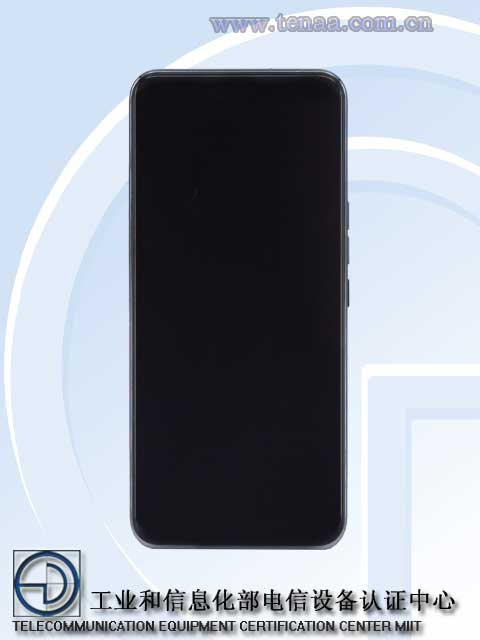
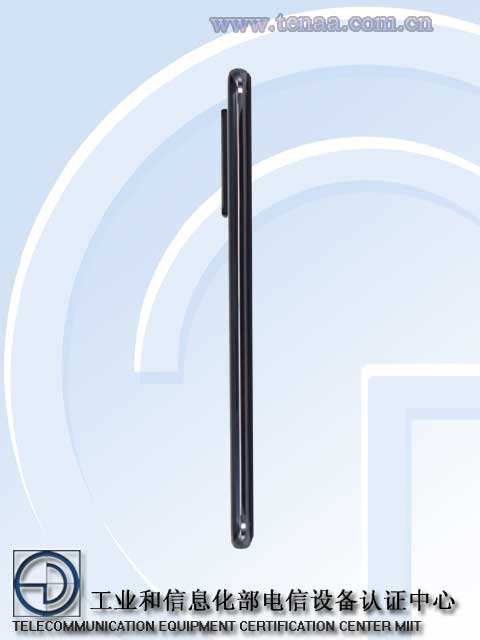
ZTE is expected to launch the first phone with an under-display camera soon. The device which should arrive as the Axon 20 5G has now appeared on TENAA, baring its spec sheet and exposing its design. Surprisingly, it also reveals the phone is not a flagship.
Listed as the ZTE A2121, the phone has a 6.92-inch OLED display with a 2460 x 1080 resolution. There is a 2.4GHz octa-core processor inside the device paired with 6GB, 8GB, or 12GB of RAM and 64GB, 128GB, or 256GB of expandable storage.
The clock speed of the chipset gives it away that it is not a flagship SoC. It is not any of Qualcomm such as the Snapdragon 865 which is clocked at 2.84GHz or the Snapdragon 865 Plus that has its prime core clocked at 3.1GHz. It is not even the Dimensity 1000+, as that is clocked at 2.6GHz.
The chipset in the phone is the Snapdragon 765G, the same one that powers the Axon 11 5G. It is a capable processor, but who would have thought that the first phone with an under-display selfie camera won’t be a flagship.
ZTE has equipped the phone with four cameras – a 64MP primary sensor, an 8MP ultrawide angle camera, and two 2MP sensors which should be a depth sensor and a macro sensor. The selfie camera buried under the display is a 32MP sensor.
The Axon 20 5G will ship with Android 10 out of the box. There will be a 4120mAh battery under the hood along with support for fast charging. TENAA also confirms that there is a fingerprint scanner under the display.
With respect to design, the phone is sure missing a notch, and when we brightened the image showing the front of the device, we didn’t see a punch-hole, leading to the conclusion that the phone does have an under-display camera.
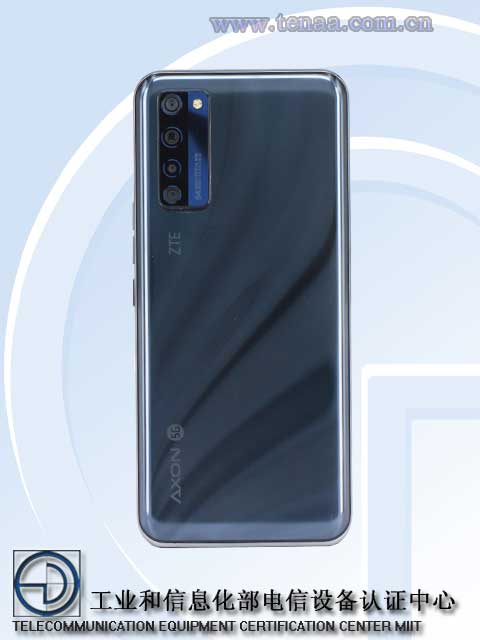
The back of the Axon 20 5G is curved and is home to a rectangular camera housing that holds four sensors and an LED flash. Personally, I prefer the camera housing of the Axon 11 5G over this. There is a ZTE logo below the camera housing and “AXON 5G” is printed at the bottom of the phone. The listing reveals the device will be available in two colorways – Cold Flame Blue and Dazzling White.
ZTE is yet to announce a launch date for the phone but we expect it to be around the corner seeing as it has been certified by TENAA.
Google has announced that it would be pushing a new update to its Wear OS used by millions of smartwatches te world over. The update is expected to start rolling out in the Fall and will deliver several improvements which were highlighted in the post.
The tech giant says it is improving performance by making it faster to access your info and start your apps. The pairing process has also been simplified to make onboarding easier. There is also an improvement to the OS’s system UI for more intuitive controls for managing different watch modes and workouts. For watches with improved CPU cores, they will get up to a 20% speed improvement in startup time for their apps.
Google noted that some of the most used features of Wear OS by Google are hands-free timers and tracking fitness metrics. In response to COVID-19, a new handwashing timer has been built into the user interface to help ensure users practice good hygiene.
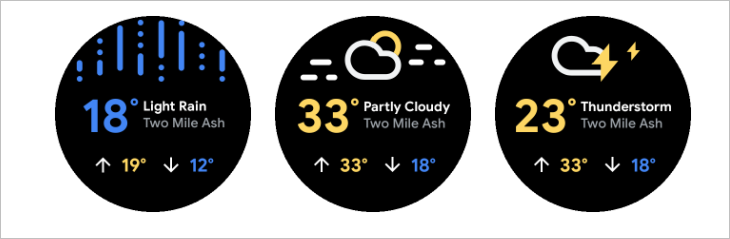
Further, the tech giant promises a beautiful new weather experience for Wear OS which aims to be easier to read while on the go. The weather widget will have an hourly breakdown of today’s weather to help you plan ahead and provide information about important weather alerts in your area. This feature will roll out in 2021.
Google is also working on updating the core of Wear OS to Android 11, bringing newer APIs to the platform. As a reminder, Wear OS is currently based on Android 9 Pie.
When Xiaomi announced the Mi Box in 2016, I was pretty excited. So excited that I got one for myself. However, it has not been a smooth experience all the while especially with respect to updates.
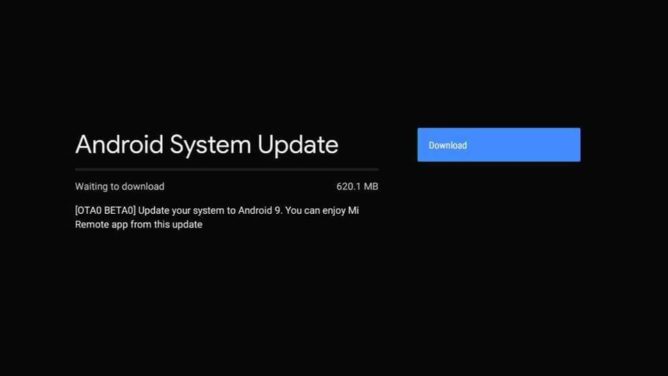
The device which launched with Android 6.0 Marshmallow got an Android Nougat beta update but a stable update was never rolled out. Instead, it received an update to Android Oreo. It has now been reported that a beta version of Android 9.0 is now available for the device, and that is exciting news for owners of this 4K streaming box.
The info comes from a Redditor who has shared a screenshot (above) of the update for the Mi Box. The 620MB update is said to bring support for the Mi Remote app but doesn’t say more.
Android TV 9.0 was made available for the Mi Box S back in January. While this is just a beta version, it means a stable update is on the way if there is no repeat of what happened with the Android Nougat update.
While celebrating its 10th anniversary, Xiaomi launched a new flagship killer for the second half of 2020: the Redmi K30 Ultra. It is part of the K30 series and, unlike the other variants launched outside China with different monikers, it looks like it will never be available in the global market. But if you are a Chinese customer, you can get an amazing flagship killer at a very impressive price. Despite they all belong to the same lineup, Redmi K30, K30 Pro and K30 Ultra are very different devices. That is why we decided to include all the variants in a specs comparison: this comparison will highlight the differences.
Xiaomi Redmi K30 vs Xiaomi Redmi K30 Pro vs Xiaomi Redmi K30 Ultra
Quad 64 + 8 + 2 + 2 MP f/1.9, f/2.2, f/2.4 and f/2.4
Dual 20 + 2 MP f/2.2 and f/2.4 front camera
Quad 64 + 5 + 13 + 2 MP
20 MP front camera
Quad 64 + 13 + 5 + 2 MP f/1.8, f/2.4, f/2.2 and f/2.4
20 MP front camera
BATTERY
4500 mAh, fast charging 27W
4700 mAh, fast charging 33W
4500 mAh, fast charging 33W
ADDITIONAL FEATURES
Hybrid Dual SIM slot
Dual SIM slot, 5G
Dual SIM slot, 5G
Design
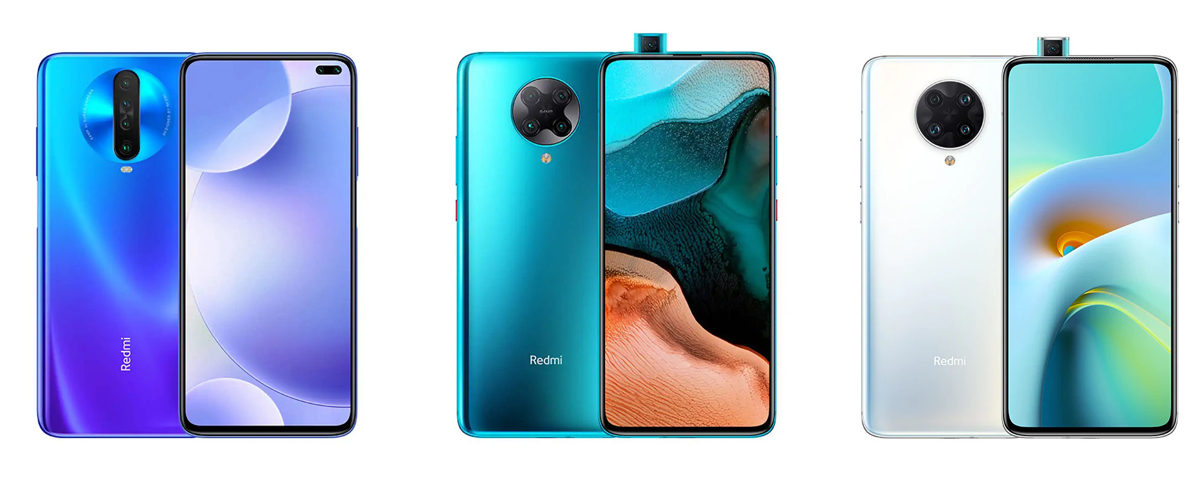
Redmi K30 Pro and K30 Ultra have the same look: just the color variants are different. But they are slightly different in terms of weight and thickness because they pack different components. The Redmi K30 Ultra is slightly thinner than K30 Pro. Redmi K30 is totally different: while Redmi K30 Pro and Ultra come with full-screen displays and a motorized pop-up camera, the vanilla Redmi K30 has a dual punch-hole display with dual front cameras. Redmi K30 retains the premium materials used for the Redmi K30 Pro and K30 Ultra, but it looks different for both the front and rear sides.
Display
Redmi K30 features an IPS display (boo) with a 120 Hz refresh rate (yay), while Redmi K30 Pro features an AMOLED display (yay) with a standard refresh rate (boo). Redmi K30 Ultra merges all the features in one: it packs an AMOLED display with a 120 Hz refresh rate! And it obviously wins the display comparison. It even comes with high brightness, HDR10+ certification, and the Gorilla Glass 5 protection by Corning. If we exclude the Redmi K30 Ultra, do you prefer having an IPS panel with a very high refresh rate or an AMOLED panel with a standard refresh rate?
Specs & Software
The Redmi K30 Ultra should be the most advanced device of the trio, but the Redmi K30 Pro actually comes with a better hardware department: it packs a more powerful Snapdragon 865 chipset paired with LPDDR5 RAM and up to 256 GB of UFS 3.1 internal storage. Well, you get up to 512 GB of internal storage with the Redmi K30 Pro, but the Dimensity 1000+ chipset is less powerful than the Snapdragon 865. In each case, you get Android 10 out of the box, but on the Redmi K30 Ultra, it is customized by MIUI 12 instead of MIUI 11.
Camera
Redmi K30 Pro and Redmi K30 Ultra boast the same camera department composed of a 64 MP main sensor, a 13 MP ultrawide lens, and two sensors with 2 MP resolution for macros and depth. Redmi K30 is almost the same, but it has an inferior ultrawide sensor with an 8 MP resolution. On the other hand, it offers an additional depth sensor for the front camera which calculates depth info for selfies. I would prefer having a better ultrawide camera instead of that additional sensor on the front. But there is another thing to consider: the Redmi K30 Pro has a better chipset which guarantees the support to 8K video recording, unlike the Redmi K30 Ultra.
Battery
Redmi K30 Pro has a bigger 4700 mAh battery than its rivals and its display is more efficient because it does not feature a high refresh rate. That is why it lasts more than Redmi K30 and K30 Ultra on a single charge. With the Redmi K30 Ultra, you get the fastest charging technology with a 33W power.
Price
Redmi K30 has a €270/$318 starting price, Redmi K30 Pro begins at €360/$425, and Redmi K30 Ultra is priced €243/$287. It lacks a 120 Hz refresh rate, but the Redmi K30 Pro because it features a better chipset, besides a bigger battery. The K30 Ultra still comes with a flagship-class chipset and it is more affordable than K30 Pro, but it is an inferior SoC and the phone has inferior camera capabilities. On the other hand, it has a better display. It has no sense to get Redmi K30 right now unless you find it at a much more affordable price.
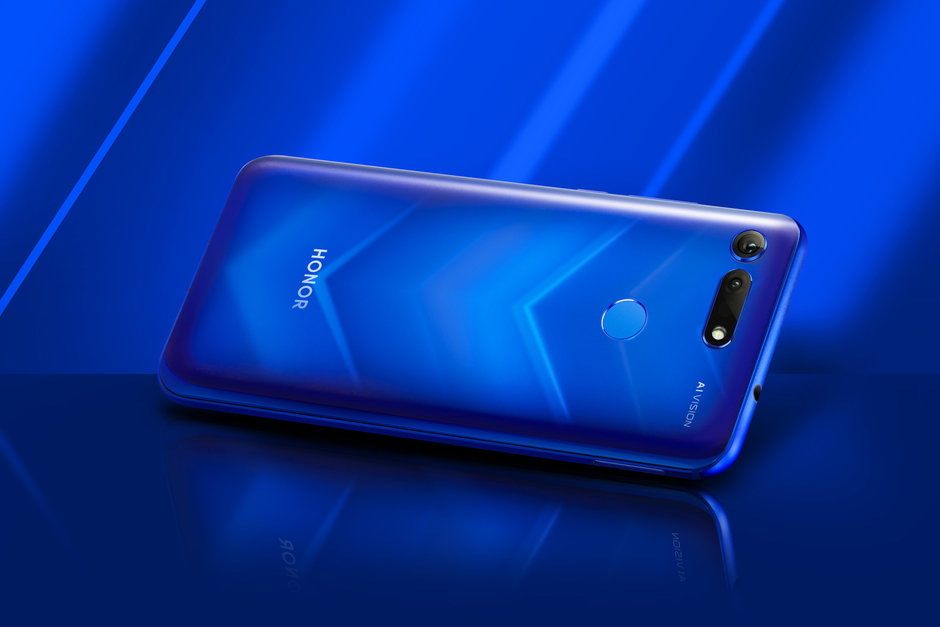
Last week, Huawei started rolling out Magic UI 3.1 update to Honor 20 users in India. Now, the Honor View 20 has also begun to receive the update in the region. The company’s new mobile software for this handset comes with Android 10, bears build number EMUI 10.1.0.221, and weighs 4.91GB in size.
EMUI 10.1 aka Magic UI 3.1 initially debuted on Huawei P40 series. Then, the company began to seed it out to more devices starting in the company’s home country China. As the firms finished up rolling out the update in that region, it began to start updating global variants.
Since Huawei is a big name in Europe, devices in those countries were first in line to receive the update. As days passed by, the company finally seeded out Magic UI 3.1 to Honor 20 in India last week. Now, even the Honor View 20 aka Honor V20 has also started to get it.
Like any other system update, it is being rolled out in batches. Anyway, when the OTA hits your device, make sure to download and install it to experience new features like Multi-Window, Multi-Screen Collaboration, Cross-Device Photo Gallery, and more.
The first-ever Magic UI 3.1 Closed Beta for Honor V20 was released in April alongside Honor V30 series and Honor 20 series. That means, it took the company four months to deliver the stable update in India.
We use cookies on our website to give you the most relevant experience by remembering your preferences and repeat visits. By clicking “Accept”, you consent to the use of ALL the cookies.
This website uses cookies to improve your experience while you navigate through the website. Out of these, the cookies that are categorized as necessary are stored on your browser as they are essential for the working of basic functionalities of the website. We also use third-party cookies that help us analyze and understand how you use this website. These cookies will be stored in your browser only with your consent. You also have the option to opt-out of these cookies. But opting out of some of these cookies may affect your browsing experience.
Necessary cookies are absolutely essential for the website to function properly. This category only includes cookies that ensures basic functionalities and security features of the website. These cookies do not store any personal information.
Any cookies that may not be particularly necessary for the website to function and is used specifically to collect user personal data via analytics, ads, other embedded contents are termed as non-necessary cookies. It is mandatory to procure user consent prior to running these cookies on your website.