Advertisement

The Mi 10 Ultra’s screen is supplied by TCL’s China Star Optoelectronics Technology

The Xiaomi Mi 10 Ultra that was announced yesterday packs a pretty impressive display. It is not a QHD+ panel but it is still worthy of attention.
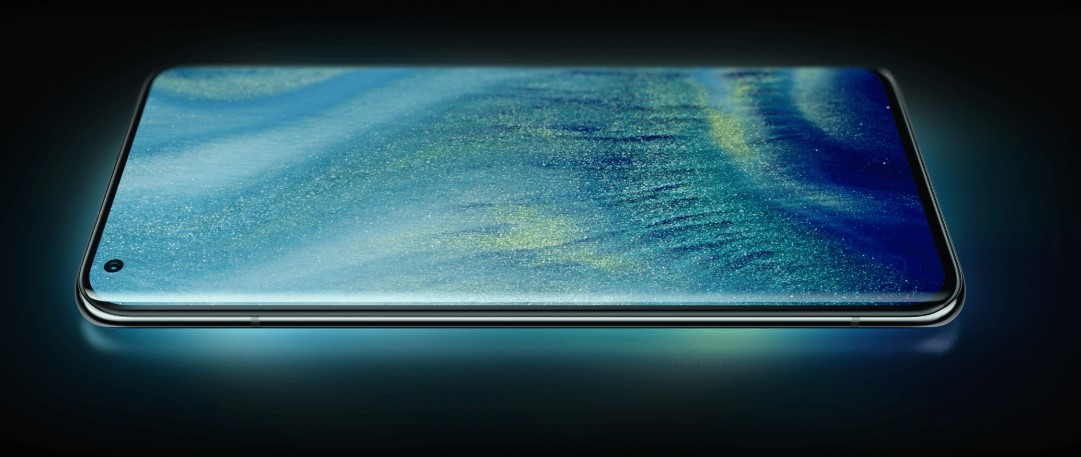
Mi 10 Ultra Display

The curved AMOLED 6.67-inch screen not only has a 120Hz refresh rate but is a 10-bit panel that is capable of displaying over 1 billion colors. The only other devices, as far as I can remember, that launched this year that are capable of displaying such impressive colors are the OPPO Find X2 Pro and the OnePlus 8 Pro.

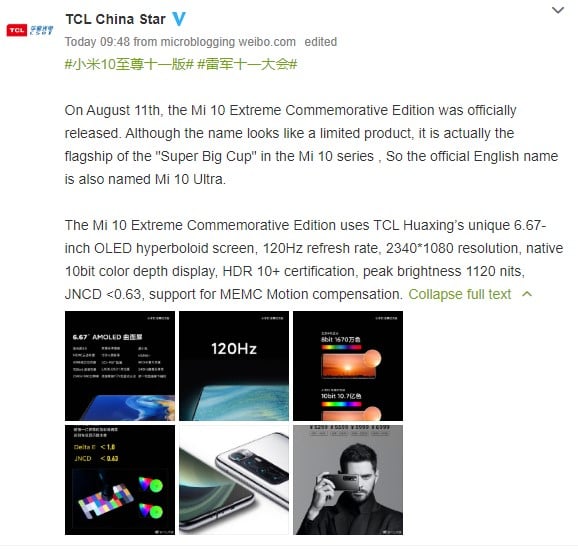
While the display of the Find X2 Pro and the OnePlus 8 Pro is supplied by Samsung Display, it has been revealed that the one used in the Mi 10 Ultra was supplied by TCL’s display subsidiary, China Star Optoelectronics Technology (CSOT). The info was revealed on Weibo by the manufacturer itself.
TCL CSOT Mi 10 Ultra Display weibo

The post also includes some specifications and features of the OLED display such has its Delta E Value of less than 1, JNCD value of less than 0.63, its brightness (800 nits, 1120 nits max.), DCI-P3 color gamut, and MEMC support.

Fact – the Find X2 Pro doesn’t use a true 10-bit panel like that of the Mi 10 Ultra. Actually, it uses a combination of 8-bit color depth and a 2-bit dither algorithm to achieve 1.07 billion colors.


Huawei MateBook X with an ultralight & thin build launching on August 19

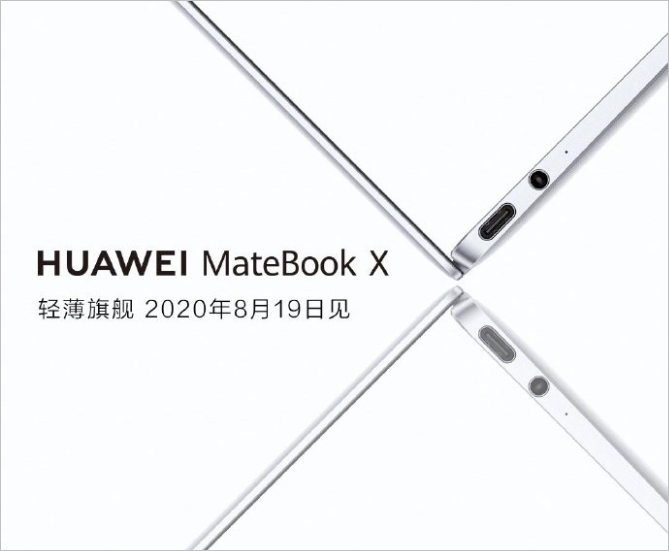
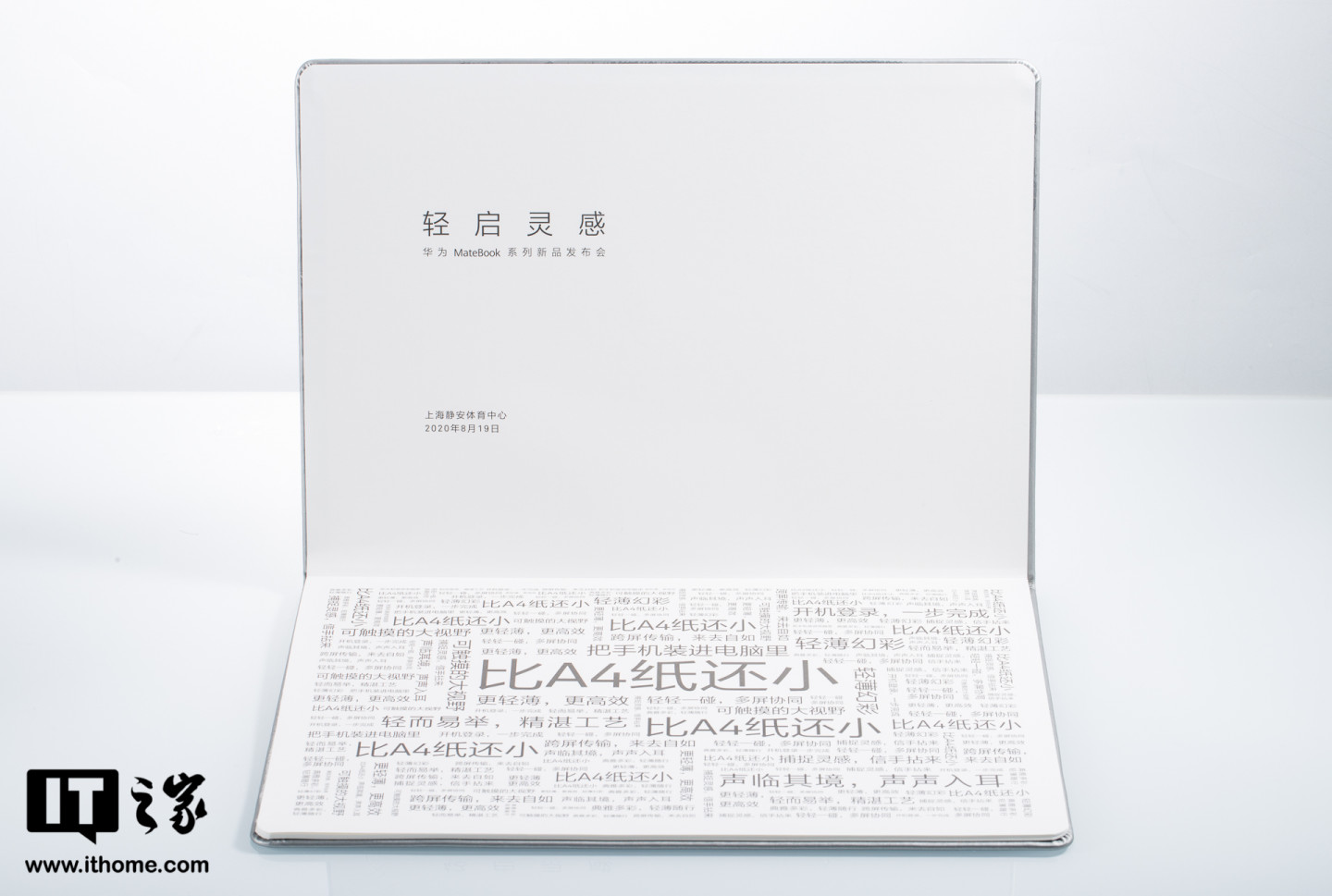
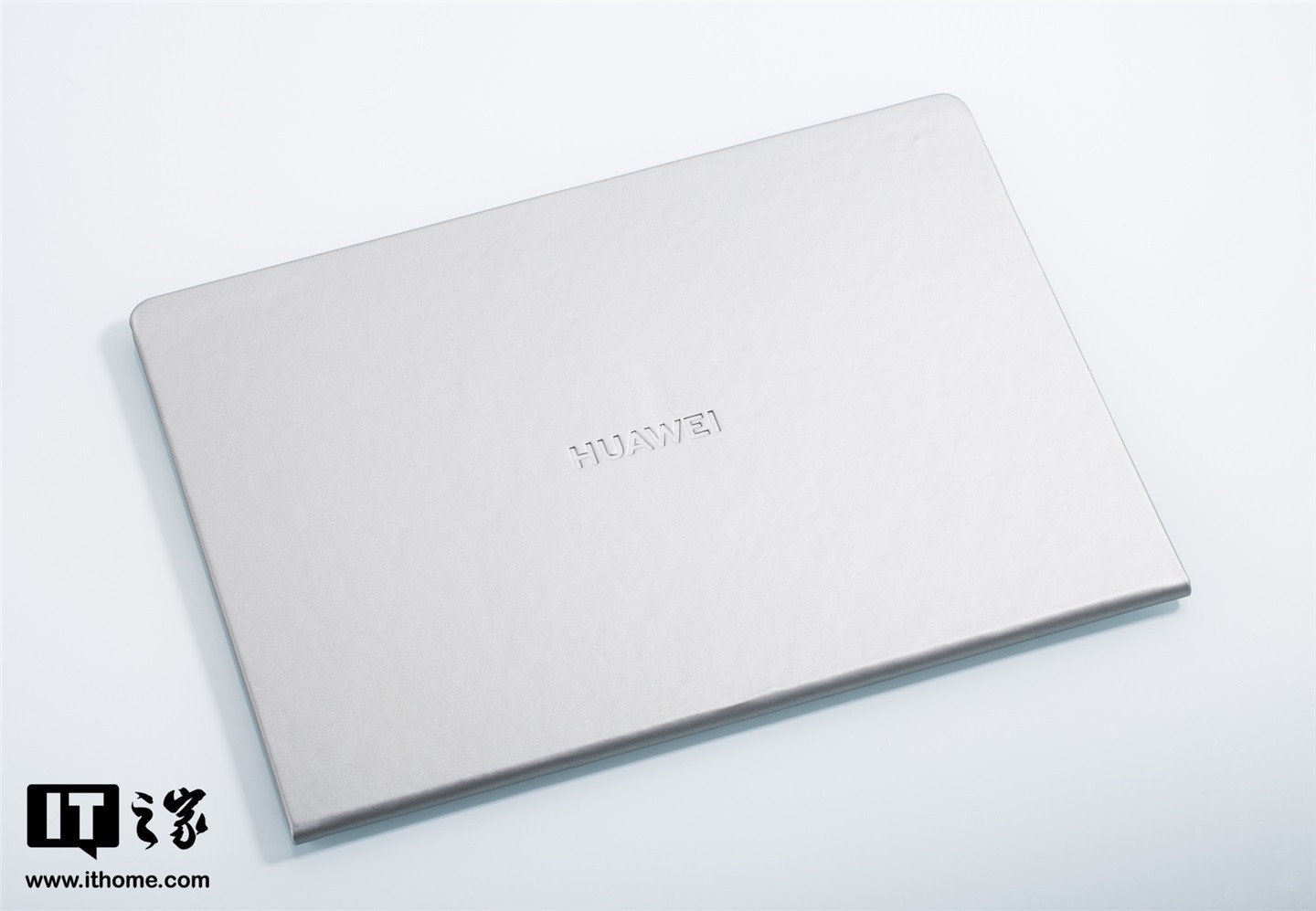
Huawei has scheduled a launch event for august 19 and the product that will be launched is the MateBook X notebook PC. The company has sent out launch invites to some media houses. The one sent to IT home seems to have drawn inspiration from the laptop itself.Huawei Matebook X

The invitation is a booklet designed like a Notebook PC. This is no doubt a reflection of design the laptop will adopt, which is a thin and light build, no bigger than the size of an A4 paper.

The teaser poster of the MateBook X inside the launch invite equally contains a render of the laptop, confirming a thin and light build. The teaser poster also shows the device will utilise the faster USB-C port. It is also shown to have a 3.5mm headphone jack.

The hardware configuration of the MateBook X has not been released by Huawei but we expect it to come with a top of the pack specs. We’ll have to wait until the launch date to find out more details.


Xiaomi announces Mijia Electric Precision Screwdriver Kit with a USB-C port

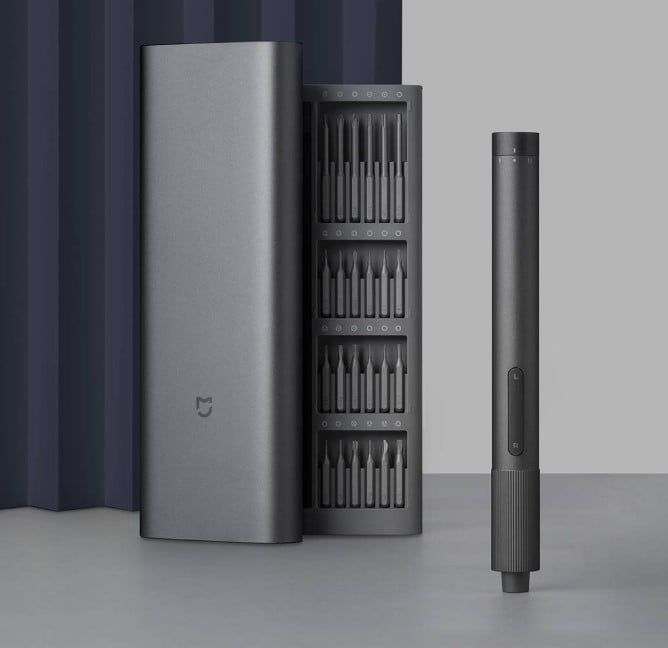
The Mijia Precision Screwdriver Kit a.k.a. Xiaomi Precision Screwdriver Kit just got a new version. The new Mijia Electric Precision Screwdriver Kit now has an electric screwdriver and what makes it even cooler is that it charges via USB-C.

Xiaomi Electric Precision Screwdriver Kit

The new screwdriver kit is priced at ¥169 (~$24) which is higher than the price of the Mijia Electric Screwdriver that launched last year. However, the Mijia Electric Precision Screwdriver Kit comes with 24 steel bits, double that of the Mijia Electric Screwdriver.

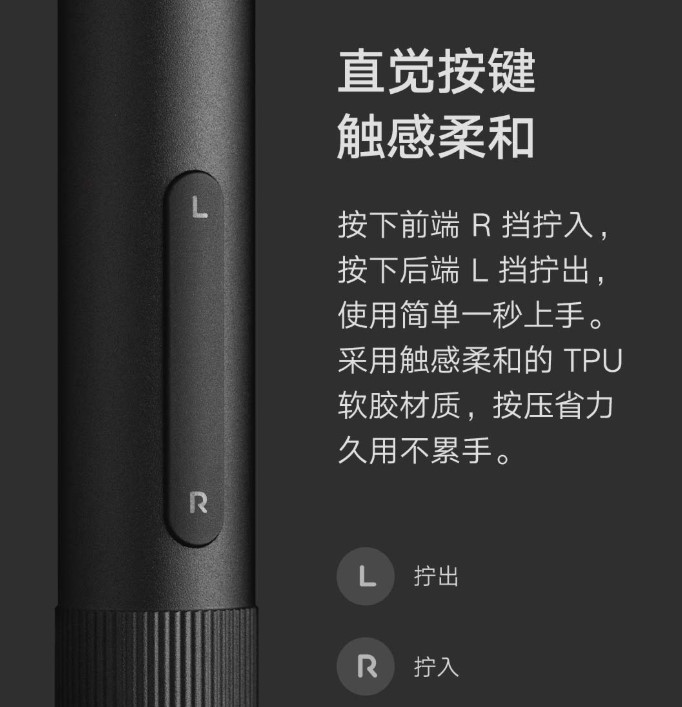
The Mijia Electric Precision Screwdriver Kit has an all-metal gearbox and a strong magnetic motor that can reach a maximum speed of 200 rpm. Because the handle now contains an electric motor, it is significantly thicker. It also has two soft-touch buttons on the side so you can switch between clockwise and anticlockwise rotation.

MiJia Electric Precision Screwdriver Kit handle

The top of the handle can be rotated to switch the torque between 0.05N m and 0.2N m. The former is suitable for phones, glasses, and other products with precision screws while the latter is suitable when unscrewing laptops, smart speakers, and other electronic appliances.

MiJia Electric Precision Screwdriver Kit handle

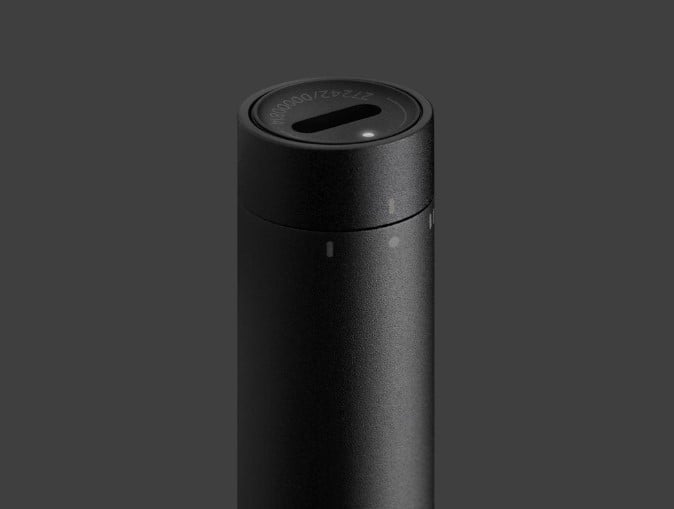
The 350mAh built-in battery can be used for tightening or loosening up to 400 screws. The USB-C port for charging is at the top of the handle and it takes between 160 – 200 minutes to fully charge. Below are the screw bits that come with it:

  • PH000, PH00, PH0, PH1, SL1.5, SL2.0, H0.7, H0.9, H1.5, H2.0, P2, P5, 2.3, W1.5, Y0.6, Y1, T2, T3, T4, T5H, T6H, T8H, T9H, and T10H.

Xiaomi says the screwdriver has undergone 13 battery safety tests and also has three charging protections built-in including over-charging protection.

You can book the Mijia Precision Screwdriver Kit now on Youpin.


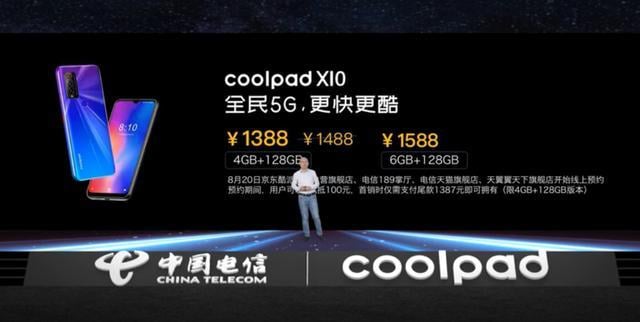
Coolpad X10 5G sporting a UNISOC T7510 chip launched for ¥1,388 (~$199)

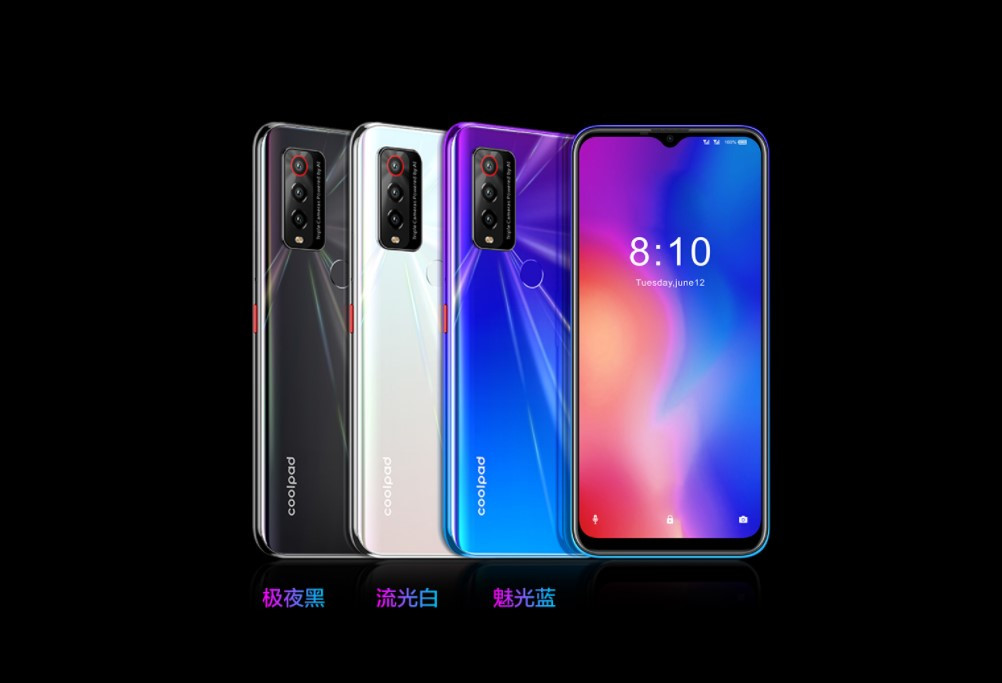
Chinese phone maker Coolpad today held a strategic partnership conference alongside China Telecom and UNISOC group where it officially unveiled one of the cheapest 5G phones in China. The Coolpad X10 5G brings 5G connectivity to the budget segment with a starting price tag of 1,388 yan (~$199).Coolpad X10 5G

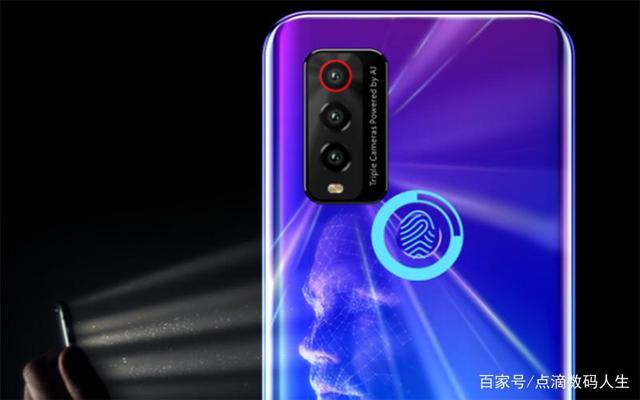
The affordable 5G phone is powered by a UNISOC T7510 chipset which supports SA/NSA dual-band 5G network mode. The chipset also supports all the mainstream 5G frequency bands in China as well as full Netcom 4G. It adopts HD voice EVS over 5G NR technology, 2T4R transmission technology, Wi-Fi MIMO dual-antenna technology. The phone also supports physical fingerprint and face recognition unlock methods. Coolpad X10 5G

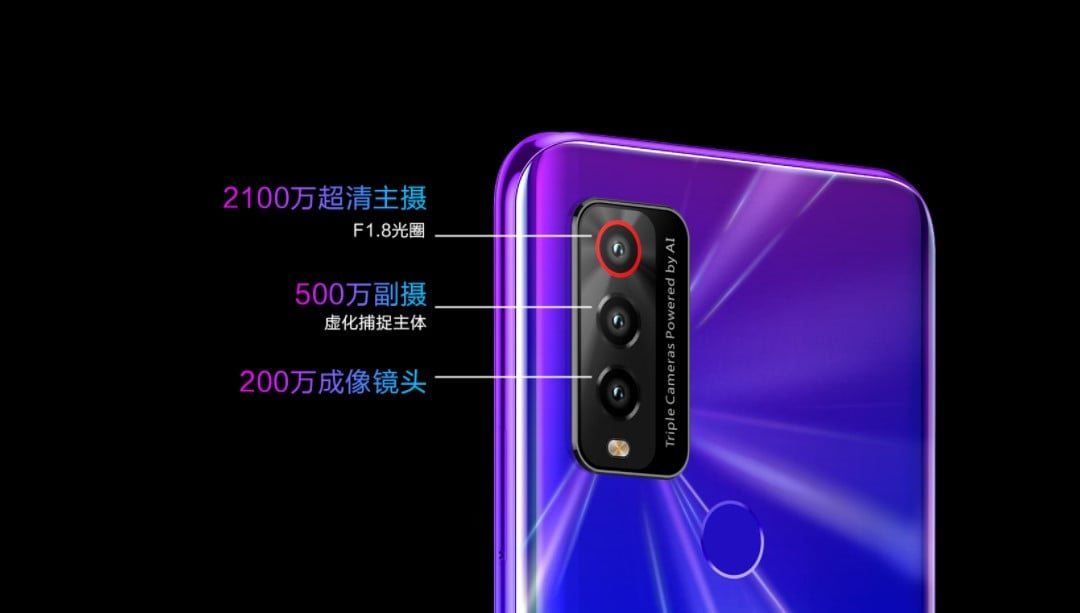
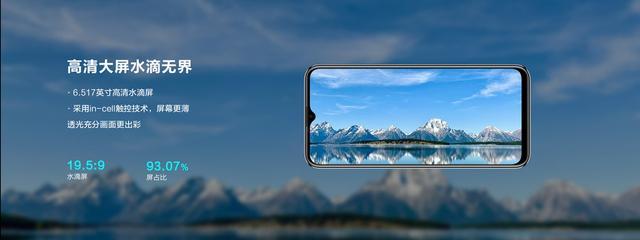
The Coolpad X10 5G is equipped with a 6.5-inch high-definition LCD waterdrop screen with a screen-to-body ratio of 93.07%. The waterdrop notch houses a 13MP selfie camera. At the rear aspect, there is 21MP main camera with an f1.8 aperture in a triple camera arrangement.  The other imaging sensors include a 5MP depth sensor and a 2MPAI lens.  The camera setup also includes a high-sensitivity color temperature flash. The phone is also equipped with an enhanced camera optimization technology which includes super night scene mode.Coolpad X10 5G

The X10 5G is available in two memory configurations and these include a 4GB RAM + 128GB storage combo and the top-end 6GB RAM + 128GB storage option. The 5G mobile phone will get power from a 4600mAh battery and is said to utilise a PC-level liquid cooling technology.Coolpad X10 5G

In addition, the machine adopts a 3D curved body made of glass and will be available in three colour options: Black, White, and Blue.Coolpad X10 5G

In terms of the prices and availability, the Coolpad X10 5G 4GB+128GB version is priced at 1,388 yuan(~$199) and the 6GB+128GB version is priced at 1,588 yuan (~$228). The phone will officially be on pre-sale from August 20.


Xiaomi spokesman: No plans to launch Mi 10 Ultra and others globally

Xiaomi’s 10th-anniversary event yesterday saw the tech giant announce a number of awesome products. Among the lineup is the Mi 10 Ultra which is the first phone with support for 120W fast charging. There is also the Mi TV Lux Transparent Edition, a literally transparent flatscreen TV. A Xiaomi spokesman has now revealed that there are no plans for these products to get a global release.

Daniel D (@Daniel_in-HD) is the Senior Product Marketing Manager and Global Spokesperson for Xiaomi and he revealed in a tweet that there are no plans for a global release for the Mi 10 Ultra, Redmi K30 Ultra, Mi TV Lux Transparent Edition, and the Ninebot GoKart Pro Lamborghini Edition.

The tweet was retweeted by David Liu, the Global Social Media handler for Xiaomi.

It sure is disappointing news but there is still a chance that at least one of these products may get an international release before the end of the year. However, the chances of the Mi 10 Ultra getting a global release might be the slimmest of them all.

To start with, Xiaomi didn’t announce the Mi 9 Pro 5G outside China last year. So, it is understandable why there are no plans to launch the Mi 10 Ultra globally. Another reason is that the Mi 10 Ultra flagship is assembled at Xiaomi’s new Smart Factory, a next-gen fully-automated production line that is designed for making flagships and as a testing-ground for high-end products.

The Mi 10 Ultra is the first premium smartphone to be assembled at this factory which means if Xiaomi is going to launch the device outside China, it will have to be exported to these markets which will significantly raise the price. The same can be said for the Mi TV Lux Transparent Edition too.

Anyways, we can look forward to the Mi 11 (if that is what it will be called and they don’t pull a Samsung move and jump to Mi 20). Next year’s flagship should get a global release and should pack some of the features of the Mi 10 Ultra including 120W fast charging.


WhatsApp may soon support cross platform chat sync for iOS and Android

Despite being available for both Android and iOS platforms, WhatsApp does not offer any cross platform support. However, this might soon change and its parent company, Facebook, might soon offer the ability to sync your messages between both operating systems.

While we had previously reported on Facebook Messenger and WhatsApp receiving cross chat feature, this new cross platform support would allow WhatsApp users to access the service in up to four different devices. The news was first reported on by WABetaInfo, which revealed that the cross platform chat synchronization feature is under works. According to the report, this feature would require a Wi-Fi connection to safely decrypt and copy all existing conversations from one device to another.

WhatsApp Pay
WhatsApp Pay

In other words, any Android user will soon be able to transfer all of their chats over to an iOS device, and vice versa. This is currently not possible, and one would lose all data when switching platforms. So, this feature would be a great quality of life improvement with an added touch of convenience. Reportedly, WhatsApp is also working on a dedicated iPad app, which should be available around the same time as the cross platform feature is introduced. Meaning, soon a person would be able to access their chats through an iPad, iPhone, and Android smartphone as well.


Google is making Android a Global Earthquake Detection Network

Google is turning the Android platform into a global earthquake detection network that is powered via smartphones. The system is in its nascent stages and was first rolled out today, with The Verge reporting on it.

Android users can opt in for the program which will basically utilize the accelerometer found in your smartphone, to become one data point for an algorithm that can detect earthquakes. What Google hopes is that, when the network gets large enough, people would automatically receive warning messages regarding a possible earthquake impacting their region.

Google

The system is made possible with a large number of Android smartphones scattered across the globe along with a smart algorithm that intelligently utilizes the data it receives. This entire network showcases the fact that smartphones have a lot more passive practical uses to offer. This was also highlighted in previously tested car crash detection and emergency location services systems.

At the moment, Google is rolling this out in small stages. It will be teaming up with the United States Geological Survey and the California Office of Emergency Services within the state. These alerts are currently being generated by the already existing ShakeAlert system that utilizes data generated from conventional seismometers. According to Marc Stogaitis, lead Google Android software engineer, the use of Android aims to fill in the areas where seismometers cannot cover due to expensive costs to set up and maintain.

Google

“We figured out [Android phones are] sensitive enough to detect earthquake waves. As an earthquake wave goes through, they’re able to detect them and usually see both key types of waves, the P wave and the S wave,” said Stogaitis. In other words, your Android device can act as a “mini seismometer” using the accelerometer. The feature is only active when the device is plugged in to help save battery and even gives out helpful tips and actions to be performed under emergency.


Honor announces new Hunter Gaming Laptop series, reveals the official Logo

Earlier today (12th August 2020), Honor officially revealed the logo of its new gaming laptops. This marks the Huawei subsidiaries’ entry into the laptop gaming market, with the company revealing the brand’s logo as well.

The Honor Hunter series is the official brand name of the upcoming gaming laptop series. The Chinese tech giant also shared the company logo through an official image poster on Weibo, a Chinese microblogging website. In the image, the words “Hunter is coming” are also written in Chinese that may be indicative of an imminent launch. Previously, a senior official had revealed that the company’s first gaming laptop will feature great heat dissipation capabilities, which is likely the Hunter series.

Honor

Furthermore, it was also revealed that the new gaming laptops will be “a lot thinner than expected.” Notably, Redmi also recently revealed the design of the Redmi G Gaming Notebook series. The Xiaomi subsidiary is also launching a new gaming laptop series on 14th August 2020, so we can expect the Honor Hunter series to be a likely competitor in the same market. Unfortunately, no finer details regarding the Honor Hunter series is currently available, and its launch is also unknown. Although, we can expect more information to be announced soon, so stay tuned.


Microsoft Surface Duo ships on September 10, priced at $1399 and features Cloud powered Windows 10

A new blog post on the Surface IT Pro blog has revealed the launch date and price of the new Microsoft Surface Duo. The device will be available from 10th September 2020 and launches for a price of 1,399 US Dollars.

The official blog post also focused on many of the device’s features which were aimed at business users. This includes an enterprise level security via a custom engineered Unified Extensible Firmware Interface (UEFI), among other things. Microsoft is also providing Intune, and a straightforward mobile device management solution as well. Through the Surface Duo, one can also allow users to access a cloud powered Windows 10 experience thanks to the Windows Virtual Desktop. Making the device, a mini and portable PC.

Microsoft Surface Duo

At the moment, there is currently no news regarding any accessories, carrier support, and retail availability. But since the blog post has already announced the launch date and pricing, we can expect finer details to follow soon. Additionally, the company will likely further elaborate on its dual display device. Unfortunately, the pricing and launch dates seemed to be rushed and do not divulge a lot of information or feature regarding the new device. The pricing for the device is also along the same lines as the previous generation foldable devices from Huawei and Samsung.


Samsung Galaxy Note 20, Galaxy Tab S7 Enterprise Editions announced

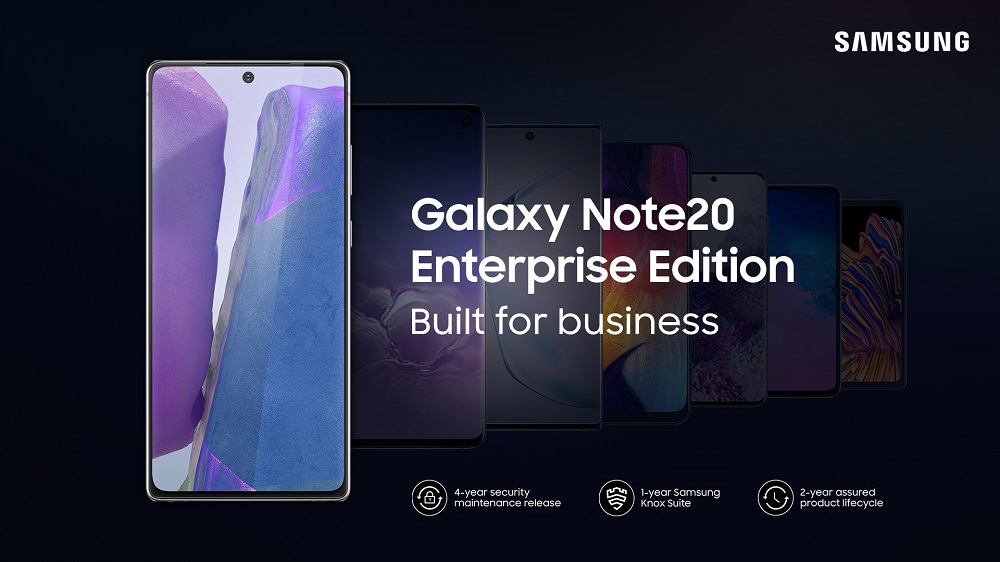
Samsung’s Germany division has announced the Samsung Galaxy Note 20 Enterprise Edition and Galaxy Tab S7 Enterprise Edition. Designed for business use, the Enterprise Editions come with four years of maintenance updates guarantee. The Note 20 5G is the second 5G-ready Enterprise Edition phone from Samsung. Also, the Galaxy Tab S7 is the first-ever tablet from the company to arrive in Enterprise Edition

The Galaxy Note 20 5G and Galaxy Tab S7 Enterprise Edition comes with one year of free access to Knox Suite that includes enterprise solutions such as Knox Manage, Knox Platform for Enterprise, Knox Mobile Enrollment, and Knox E-FOTA.

Samsung Galaxy Note 20, Galaxy Tab S7 Enterprise Edition

The Samsung Galaxy Note 20 Enterprise Edition has arrived with a price tag of 1,059 euros.  The Samsung Galaxy Tab S7 Enterprise Edition costs 809 euros. The tablet does not support 5G connectivity and it comes with support for LTE networks. The sales of both models will kick off in September in Germany.

Some of the productivity features offered by these devices that will help business users include the S Pen, improved Samsung Notes app, and the Wireless DeX feature that allows users to take advantage of full-blown desktop PC experience by connecting it to a larger display. While using Wireless DeX, the display of the phone or tablet can be made function as a trackpad.


Samsung partners with ARM and AMD for custom chips to rival Qualcomm: Report

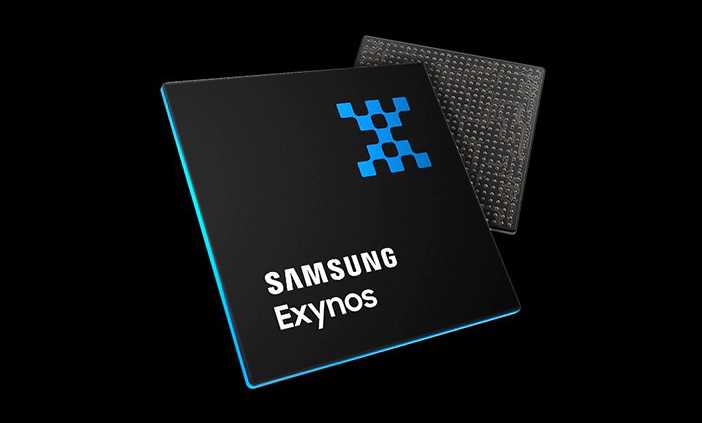
Samsung is apparently collaborating with AMD and ARM to bring custom CPU cores for its Exynos line of processors. These new chips will likely be for its next generation of Galaxy S30 flagship series and will be a step in Samsung’s aim at becoming the top Android application processor (AP) maker.

Samsung

After Huawei lost its Kirin chip supply from TSMC, the South Korean tech giant is the only Android OEM with its own custom chips. While the recent Exynos 990 SoC wasn’t on par with its Qualcomm’s Snapdragon 865 and 865+ SoC, the dynamics might change with the upcoming generation of flagship mobile processors. According to a report from Business Korea, the new custom CPU cores that are being built through the help of AMD and ARM could have the Exynos lineup see a massive improvement overall.

The report stated that Samsung is already working with ARM to create a new CPU based on the Cortex-X core, which was announced earlier this year and brought a 30 percent improvement in performance over the Cortex-A77. While ARM helps out on the CPU side of things, AMD will be helping Samsung in the graphics performance of its upcoming custom chips.

Samsung + AMD

In the current market, Qualcomm has a lead in graphics processing with its Adreno GPU. Thus, to surpass the well established chipmaker, the South Korean OEM will have AMD develop custom GPU for its 2021 Exynos chips. Furthermore, the report also claims that the NPU (neural processing units) and the modems in the new chips will be better than Qualcomm’s offerings. Although, without the actual release, it is still too early to say which company’s chip will come out on top. So stay tuned.


TCL launches new 6-series Smart TVs with QLED 120Hz panel and Mini-LED backlighting

TCL has launched its new 5- and 6-series 4K Smart TVs in the market which comes with several features, including built-in Roku TV. Models in both these series come with QLED display and “HDR Pro Pack” for better visuals.

The highlight is the new TCL 6-series TV which comes with a QLED panel but has Mini-LED backlighting, which was showcased at CES earlier this year. The company has been using the same technology for its high-end 8-series TV models launched last year.

TCL QLED TV Mini-LED Backlighting

The Mini-LED backlighting gives a major boost to local dimming zones. The 6-series models also come with a 120Hz refresh rate. They are also ready for gaming, being the first to feature THX Certified Game Mode that promises to offer ultra-low-latency gaming mode.

On the other hand, the 5-series models also come with a QLED screen and a 60Hz refresh rate panel. There are three models — 50-inch, 55-inch, and 65-inch, each having 40, 48, and 56 dimming zones respectively.

EDITOR’S PICK: Xiaomi Mi TV LUX OLED Transparent Edition is the cheapest transparent TV at 49,999 yuan ($7,195)

All the TV models come with support for HDR and the new “HDR Pro Pack” which includes Dolby Vision, HDR10, and HLG. As for the pricing, the 50-inch, 55-inch, and 65-inch series-5 models are priced at $400, $450, and $630 respectively.

On the other hand, the 55-inch model in the 6-series lineup costs $650 and goes up to $900 for the 65-inch model. The model with the biggest screen in the lineup measures 75-inch, which is priced at $1,400.


Apple 2023 Foldable iPad specs leaked, features 3nm chip and microLED display

While foldable smartphones aren’t a new thing anymore, many OEMs have yet to launch their own offerings of this new breed of devices. One of these includes Apple, but a new leak has revealed that the company is apparently planning on launching a foldable iPad sometime in 2023 along with a few of its specs.

According to the Komiya, a known tipster on Twitter, the Cupertino based giant is planning on launching a foldable iPad device sometime in 2023. Apart from its launch date, the leakster revealed that it will sport a microLED display, which is something the company has already been working on for a while now and should offer its products featuring this technology in the next three to four years, according to one of its partners.

Furthermore, Komiya stated that Apple wants to win with its first foldable device, and will not have it sport any hinges. Rather, the two panels will be connected to each other seamlessly. Another claim of the tipster is that the front camera will be housed under the display, with Touch ID as the primary biometric security. Under the hood, it is claimed that a 3nm A series chip will power the device, which according to Komiya is either the A17 or A16X processor in the future.

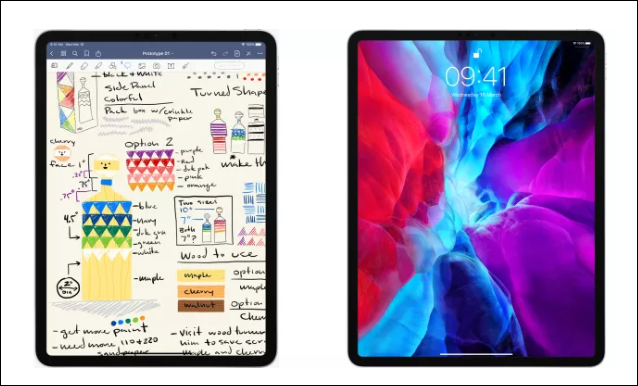
Apple iPad Pro 2020
Apple iPad Pro 2020

The transition to 3nm theoretically implies more efficiency and could make the 2023 Foldable iPad a powerhouse. Notably, due to its impressive internals, the device will also be able to offer a great VR experience through a headset and be paired with the Apple Glass as well. Unfortunately, this news is still three years too early and it is too soon to confirm anything at the moment. So take this report with a pinch of salt and stay tuned for more updates.


Redmi G Gaming Notebook design revealed; launching on August 14

Redmi, after splitting from its parent company Xiaomi, has expanded its product lineup from smartphones and is focused on increasing product categories. The company has already entered the laptops market with the launch of RedmiBook.

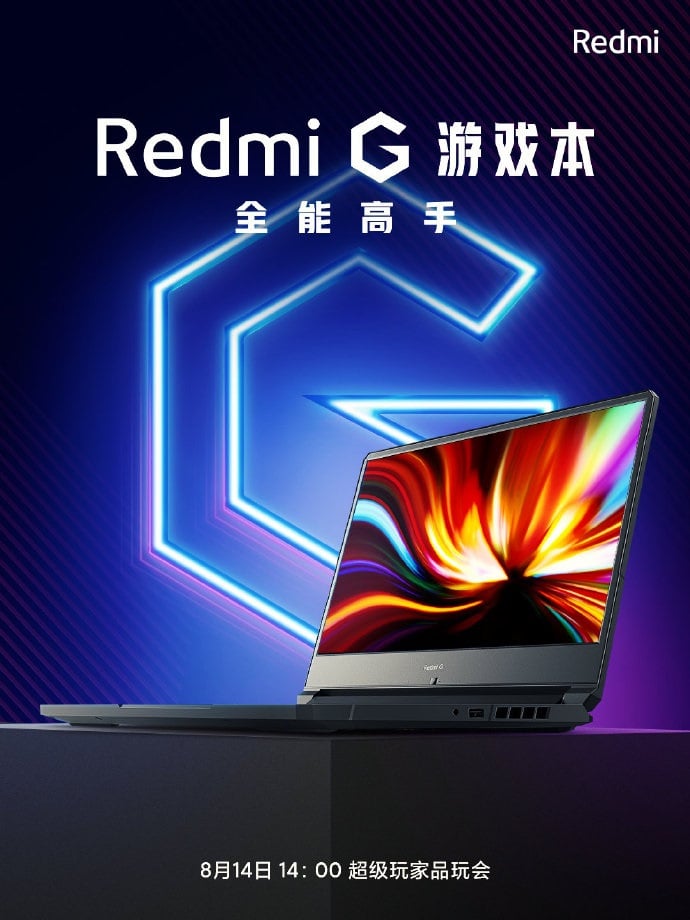
Today, the company confirmed that it will be launching its first gaming laptop and revealed that the product is named Redmi G Gaming Notebook. The image shared by the company announcing this has also revealed the laptop’s design.

Redmi G Gaming Laptop

From the teaser poster, it’s clearly visible that Redmi has opted for an all-black color theme for the gaming laptop, which has a matte finish. There are thin bezels on the left and right side and a slightly thicker bezel on the top, but the chin is quite thicker.

EDITOR’S PICK: Xiaomi Mi TV LUX OLED Transparent Edition is the cheapest transparent TV at 49,999 yuan ($7,195)

It also seems that there are cooling fans on the sides of the fuselage, giving it a traditional gaming laptop look which we have been seeing from other brands. As for the configuration, nothing related to this device is known at this time.

The Redmi G Gaming Notebook is all set to get launched in the company’s home market China on 14th August at a launch event, which will take place at 02:00 PM local time.

Redmi seems to be following the footsteps of Xiaomi, which has also launched its dedicated gaming laptop lineup. Last year, the Xiaomi Mi Gaming Laptop lineup was launched, powered by the Intel Coffe Lake processors.


India’s PC market declines 37.3% YoY during Q2 2020 with shipments of 2.1 million units

International Data Corporation (IDC) has released new data which reveals that India’s traditional PC market, which includes desktops, notebooks, and workstations, has declined by 37.3 percent Year-over-Year (YoY) in Q2 2020.

The report shows that desktop PCs were the most affected product category which registered a 46.4% decline. However, due to the COVID-19 pandemic and the following country-wide lockdown in India, there was a rise in demand for notebooks because businesses started adopting work from home model.

IDC India PC Market Share Q2 2020

This led to an all-time high of enterprise notebook purchases with shipments growing by 105.5 percent YoY in the second quarter of this year. SMBs also increased their procurement of notebooks with relatively moderate growth of 12.1 percent YoY in 2Q20.

The decline in the overall market share seems like an unfavorable YoY comparison against Q2 2019 given that Lenovo executed a mega-deal of shipping 1.1 million units to Electronics Corporation of Tamil Nadu (ELCOT).

EDITOR’S PICK: Xiaomi CEO Lei Jun confirms that the company has not given up on its self-developed Surge chipsets

If we exclude that deal, then the PC market in India saw an annual decline of 6.3 percent in Q2 2020 while the notebooks grew 17.6 percent during the same time. The report adds that the overall consumer segment saw a YoY decline of 21 percent in 2Q20.

As for the companies, HP took the pole position with a 32.8 percent market share, having shipped 692,000 units in Q2 2020. The second and third positions have been grabbed by Lenovo and Dell with 27.5 percent and 17.8 percent market share and 580,000 and 377,000 units shipments respectively.

Acer Group is ranked fourth with 9.9 percent market share and 209,000 units shipments while ASUS stands fifth with shipments of 107,000 units and 5.1 percent market share. It’s noteworthy that ASUS is the only brand that registered 55.5 percent growth compared to Q2 2019 while all the other four brands saw a decline in market share.


Xiaomi CEO Lei Jun confirms that the company has not given up on Surge chipsets

Huawei is one of the three smartphone brands in the world that makes its own chipsets, apart from Apple and Samsung. However, with the new sanctions on the company by the United States, Huawei CEO recently revealed that it will stop making flagship Kirin chipsets.

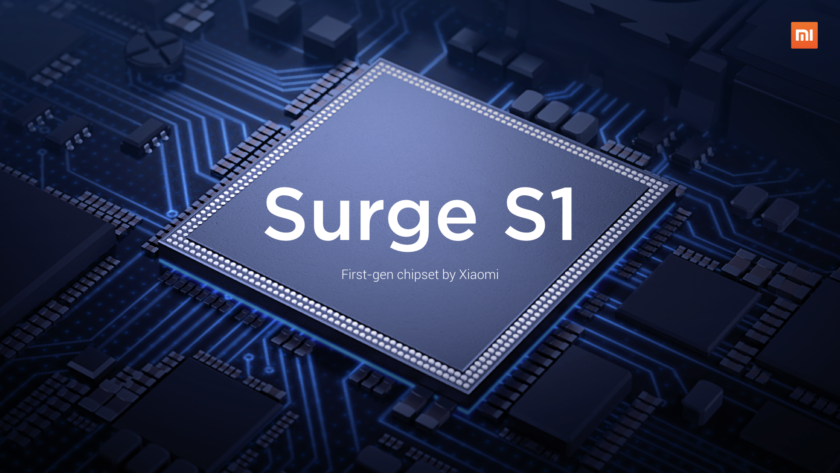
Xiaomi, another Chinese smartphone maker tried making its own chipset — Surge S1 which was launched in 2017. Years after its launch, there’s no follow-up from the company in this segment and we have seen only one smartphone being powered by Surge S1.

Xiaomi Surge S1
Xiaomi’s first chipset — Surge S1, released in 2017

This led to many people think that the company has given up on its own chipset plans. However, Xiaomi CEO Lei Jun has confirmed that the company has not given up on its Surge chipset plan and added that he will not disappoint everyone’s expectations.

It remains to be seen what exactly is the company planning in terms of its second smartphone chipset and when it will get launched. Given that Huawei is out of the flagship chipset market, at least for the time being, Xiaomi seems to be in a good position to boost its chipset dreams and could rely on domestic players for this.

EDITOR’S PICK: Xiaomi Mi TV LUX OLED Transparent Edition is the cheapest transparent TV at 49,999 yuan ($7,195)

The Xiaomi Surge S1 was an octa-core chipset that packed four Cortex-A53 cores clocked at 2.2GHz and four Cortex-A53 cores at 1.4GHz. It was built on a 28nm HPC+ process and used ARM Mali-T860 as GPU.

It had 32-bit DSP support, VoLTE, 14-bit dual ISP with support for dual noise optimized night picture improvement. The chipset also included Xiaomi’s own chip-level security that’s upgradeable via OTA, having mechanisms to prevent data leakage.

Soon after the launch of the Surge S1 chipset, Xiaomi had launched the Mi 5C smartphone, making it the only smartphone in the world to come powered by the Surge S1 SoC. Nokia had reportedly partnered with Xiaomi to use the same chipset, but the brand has not launched any devices that use the Surge series of chipsets.


Realme C12, C15 launch date for India is August 18

Realme has been teasing the arrival of new C-series phones in India. The rumor mill speculated that the company could be launching the Realme C12 and Realme C15 since they had appeared in the database of the Bureau of Indian Standards (BIS) recently. Today, the company officially confirmed that the Realme C12 and Realme C15 will break cover in India on Aug. 18.

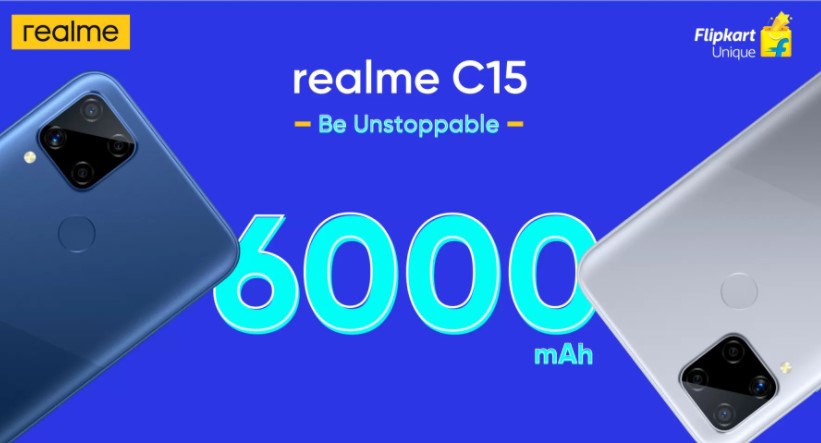
The Realme C12 and C15 will be joining Realme C11 that debuted last month in India. The microsites for both phones are now available on Realme India’s website and Flipkart. The Realme C15 microsite has revealed that it has a 6,000mAh battery that promises 46 hours of calling, 60 hours of music playback, and 28 hours of playback of YouTube videos. The phone supports 18W fast charging through microUSB.

Realme C15 teaser

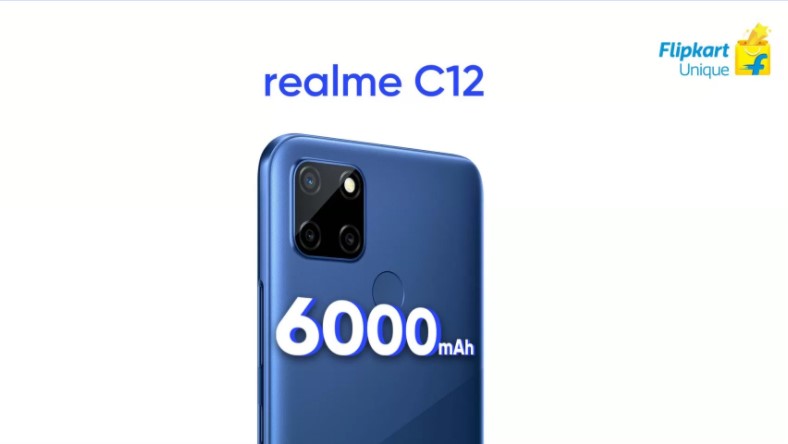
The Realme C12 houses a 6,000mAh battery. However, it appears that the device does not have fast charging capabilities. The microsites have also revealed the rear appearances of C12 and C15.

The Realme C15 has a quad camera setup and it can be seen in blue and grey colors. The Realme C12 is shown only in blue variant and it is fitted with a triple camera system. Both phones are fitted with rear-mounted fingerprint scanners. Realme CEO Madhav Sheth’s new tweet states that the Realme C-series phones will be priced under Rs. 10,000 in India.

The Realme C15 has already launched in Indonesia. It has a 6.5-inch IPS LCD display with waterdrop notch, Helio G35 chipset, 3 GB / 4 GB of RAM, 64 GB of storage, 13-megapixel + 8-mgeapixel + 2-megapixel + 2-megapixel quad camera setup, 8-mgeapixel camera and 6,000mAh battery. The handset is priced at IDR 1,999,000 (~Rs. 10,100; ~$135) in Indonesia.


OPPO patents smartphone with Li-Fi technology that’s much faster than Wi-Fi

In the year 2020, 5G technology has become a norm for smartphone and most of the high-end devices as well as mid-range phones come with support for this next-generation communications technology.

However, people rely more on the Wi-Fi network for data consumption, more than 5G or 4G. This is also getting updated as the next-generation Wi-Fi 6 is now being included in flagship smartphones.

OPPO Smartphone with Li-Fi Technology Patent

Now, based on a report by LetsGoDigital, OPPO seems to be working on a new smartphone that supports Li-Fi technology, which is much faster than the Wi-Fi. The Li-Fi technology has been in development for years as an alternative to Wi-Fi.

Instead of relying on radio waves like Wi-Fi, the Li-Fi technology uses light through an LED lamp and thus, its name — Light Fidelity. OPPO filed for a patent of a phone with Li-Fi support, which has now been published.

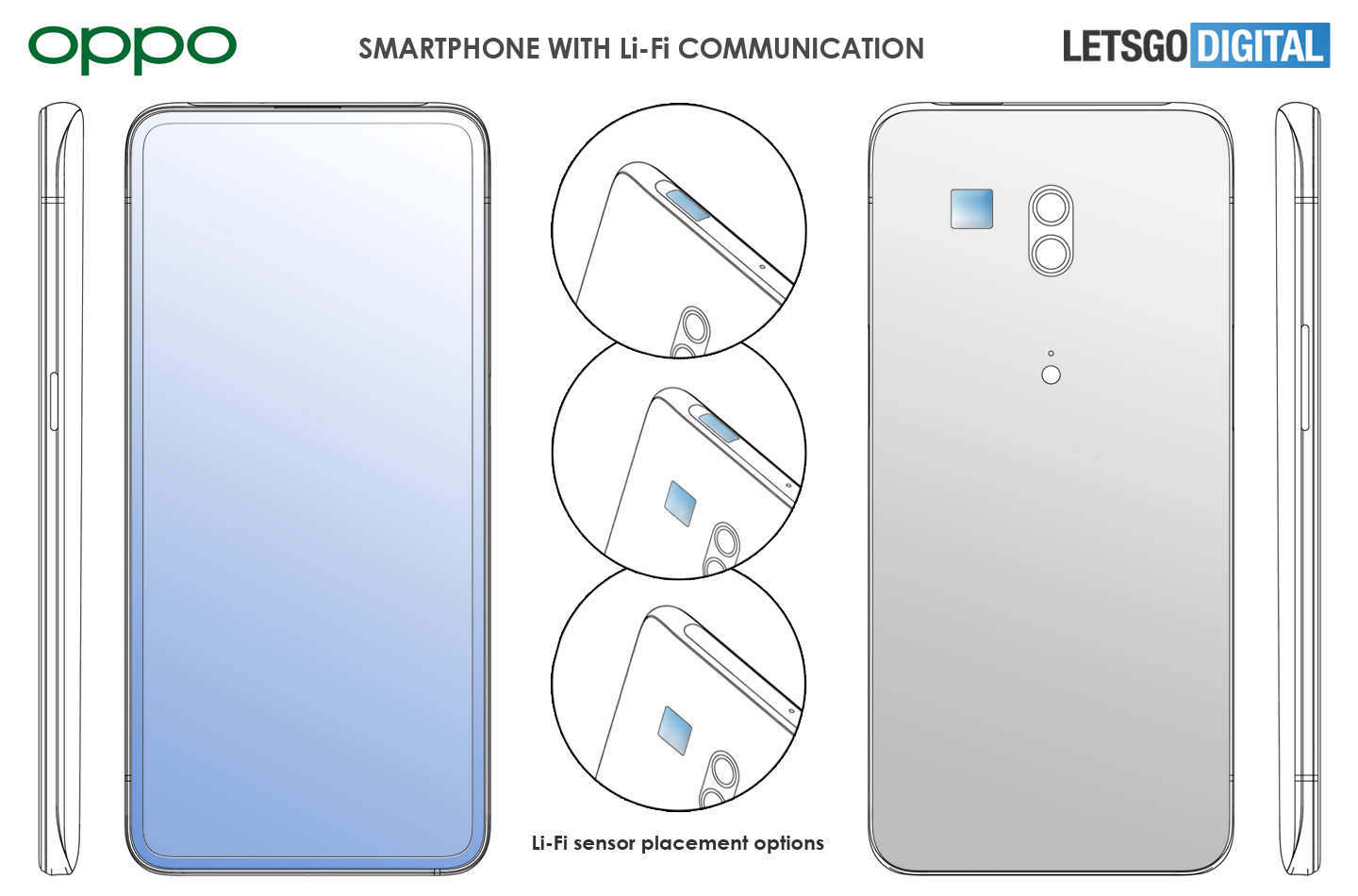
The patent shows a smartphone with a full-screen design and narrow bezels. There’s no front-facing camera visible, which could mean that it has a pop-up mechanism for the front camera sensor.

EDITOR’S PICK: iQOO 5 Pro BMW Edition teased; Sports triple cameras with a periscope zoom lens

It also shows possible placements for the Li-Fi sensor — right next to the camera module on the back, or at the top edge of the phone. The sensor is square in shape and is likely to be a photodetector that converts the change in amplitude to an electrical signal to enable Li-Fi communication with a smartphone.

Currently, there’s no information available about how OPPO is planning to implement this technology on the smartphone. We are not even sure if the company is seriously considering this option for a commercial device. And if it is, then we don’t expect the company to launch it anytime soon.

PureLiFi, a UK-based startup that is working on incorporating this technology on laptops and smartphones, had showcased the same during Mobile World Congress last year. At the time, it had predicted that we could see phones using Li-Fi somewhere around 2022.


ZTE Axon 20 5G could be world’s first under display camera smartphone

Many smartphone OEMs are working on phones with under display camera technology. It is speculated that flagship phones arriving in 2021 could be sporting the new camera technology to offer users with full experience without any notch or punch-hole cutout. While multiple smartphone manufacturers are working on the technology, ZTE has jumped the gun to confirm that it will be soon launching the world’s first under display camera smartphone. It appears that the ZTE Axon 20 5G could be the first phone to sport the technology.

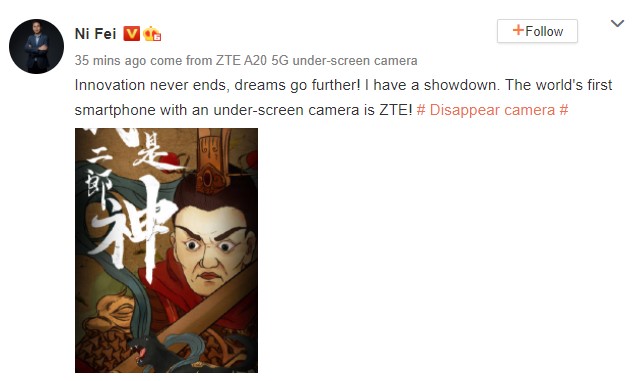
Ni Fei who was appointed as ZTE’s President of Mobile Devices in June took to Weibo today to confirm that ZTE will launch the world’s first smartphone with under display camera technology. Fei did not reveal the name or launch date of the smartphone. However, a well-known Chinese tipster has revealed that the advanced selfie camera technology will be first seen on the ZTE A20 5G.

ZTE A50 5G SRRC

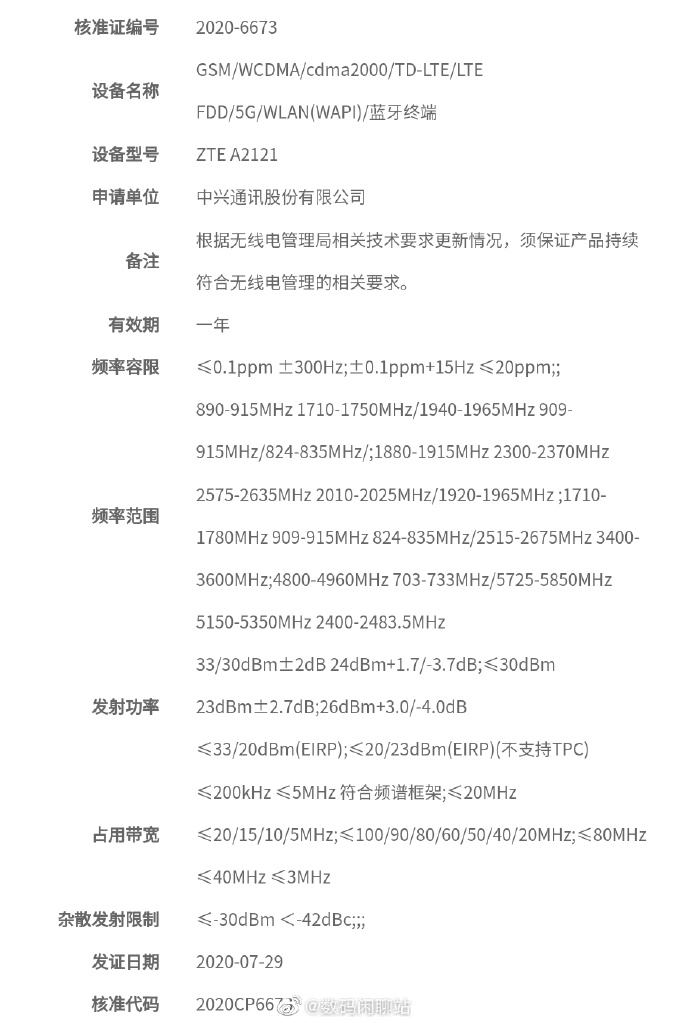
The tipster shared a screenshot to reveal that the ZTE A2021 phone that has bagged certification from the State Radio Regulation of China (SRRC) will be debuting as the ZTE A20 5G. it appears that the handset could actually arrive as an Axon series phone.

The ZTE Axon 10 Pro 5G flagship that went official earlier this year has an A2020 model number. Hence, the SRRC certified A2021 could be the Axon 20 5G phone. At present, there is no word on the specs of the device.

As far as the under display camera technology is concerned with Axon 20 5G is concerned, ZTE is likely to make use of China-based Visionox’s solution. Last month, Visionex confirmed that it has started the mass production of its under display camera solution and phones featuring will be debuting soon.