Xiaomi India has confirmed last week that the Redmi 9 Prime will go official in the South East Asia country on August 4 which is just two days away. Now, the device which is an offshoot of the Redmi 9 still falls under the entry-level category but in a surprise twist, the company has disclosed that the Redmi 9 Prime will come with Full HD+ display.
This was made known by Xiaomi India MD Manu Jain via a post on Twitter. The Xiaomi exec also touts the device to present with best-in-class features that no other phone offers in the price band. That is an indication that the Redmi 9 Prime will still retain the affordable pricing the Redmi 9 series is known for.
The Redmi 9 Prime is said to be a rebranded Redmi 9 global variant that was first announced in Spain back in June. So we don’t expect any difference in the spec. The model should pack a 6.53-inch display with a MediaTek Helio G80 SoC providing the firepower.
In terms of the optics, the Redmi 9 Prime will come with a total of five cameras – an 8MP selfie shooter on the front while at the rear, there will be a Quad camera setup. the setup is made up of a 13MP primary camera teaming up with an 8MP ultrawide, 5MP macro and 2MP depth sensor units. There will also be a fingerprint reader on the back for biometric authentication.
The Redmi 9 Prime will pack a mammoth 5,020 mAh battery and will feature support for 18W fast charging via a USB-C port.
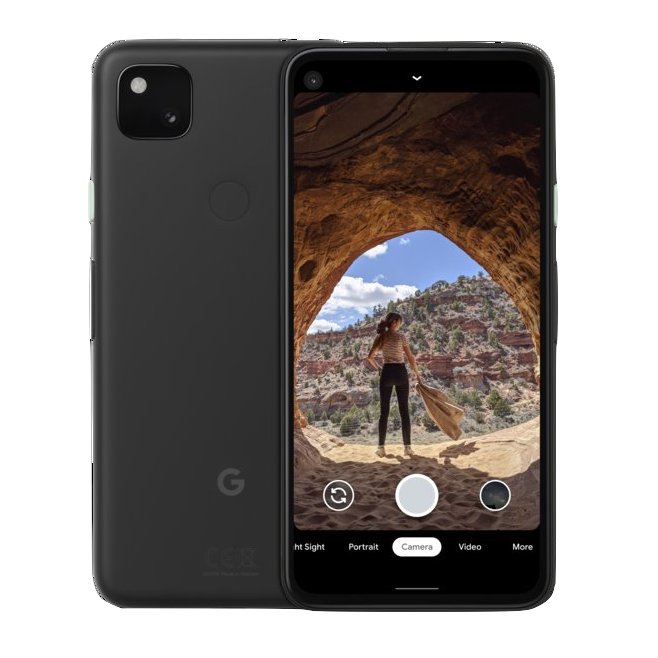
Google‘s upcoming Pixel 4a smartphone has been elusive for quite a while now despite several launch dates pushed forward which ended up not materializing. However, a new August 3 date was rumoured recently and Google shared a couple of teasers that confirm the launch will take place on that day.
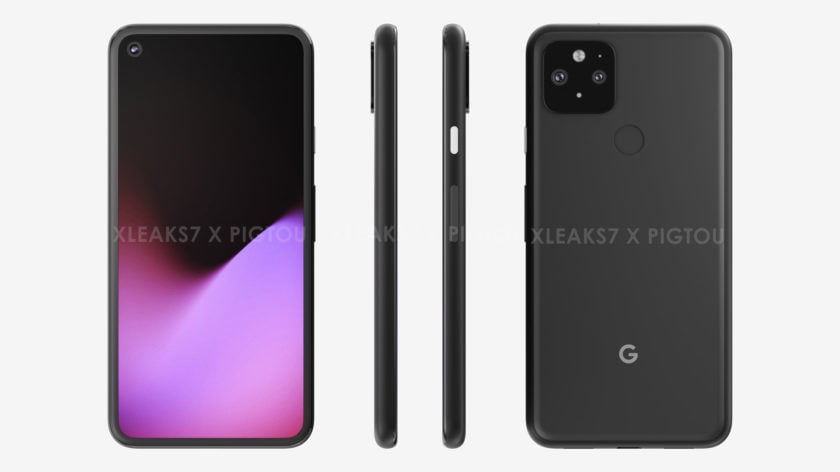
Ahead of tomorrow’s launch, the full specs of the Pixel 4a have leaked on Twitter. This is the first time the complete specs of the Google smartphone are coming out. The leaked specs include a 5.81-inch OLED display with a punch-hole design, 19.5:9 aspect ratio and FHD+ resolution. The display is said to feature support for Always On Display and Now Playing.
-12.2MP (F/1.7) 77° FOV Dual Pixel Phase Detection Camera w/ OIS -8MP (F/2) 84° FOV Front Camera -Upto 4K 30FPS, 1080p 120FPS -Titan M Security Module -Availability: U.S, UK, Ireland, Germany, Austrailia, Japan, Canada
The Pixel 4a is powered by a Qualcomm Snapdragon 730 chipset paired with 6GB if RAM. There is also 128GB of internal storage onboard. We expect the phone to be available in other storage options but the leakster tips the price of this version to be $349 in the US. If that turns out to be true, it will be a steal.
For photography, the phone packs a single 12.2MP main camera at the rear with F/1.7 aperture, 77° FOV, Dual Pixel Phase Detection and OIS. At the front, there is an 8MP sensor with an F/2.0 aperture, 84° FOV. The camera can shoot videos in 4K resolution. It also supports 30FPS and 108p 120FPS captures. It also crams a 3140mAH battery and suports 18W fast charging. The device will also come with dual stereo speakers.
The leakster hints the phone will be available in the UK, Ireland, Germany, Australia, Japan, Canada in addition to the US. We expect it to hit other markets as time goes on.
Hisense is expanding its portfolio with the addition of a new category of products- gaming monitors. The Chinese manufacturer announced its Hardcore gaming monitor series at the International Display Expo.
The Hardcore Gaming Monitor was on display at the expo and is said to be the official monitor of the third Counter-Strike: GO national competition. The monitor has a 2K resolution, a 240HZ refresh rate, and a 1ms response time. It also has a curvature of 1000R.
Hisense is yet to reveal a full spec sheet including pricing and availability of the Harcore Gaming Monitor line.
Alongside the monitor, Hisense also announced a new model of its Social TV which has a 325° panoramic pan-tilt camera with audio and object tracking. Its 100-inch cinema-grade laser TV, the Hisense 100L9, was also on display in addition to the industry’s first 8K laser TV.
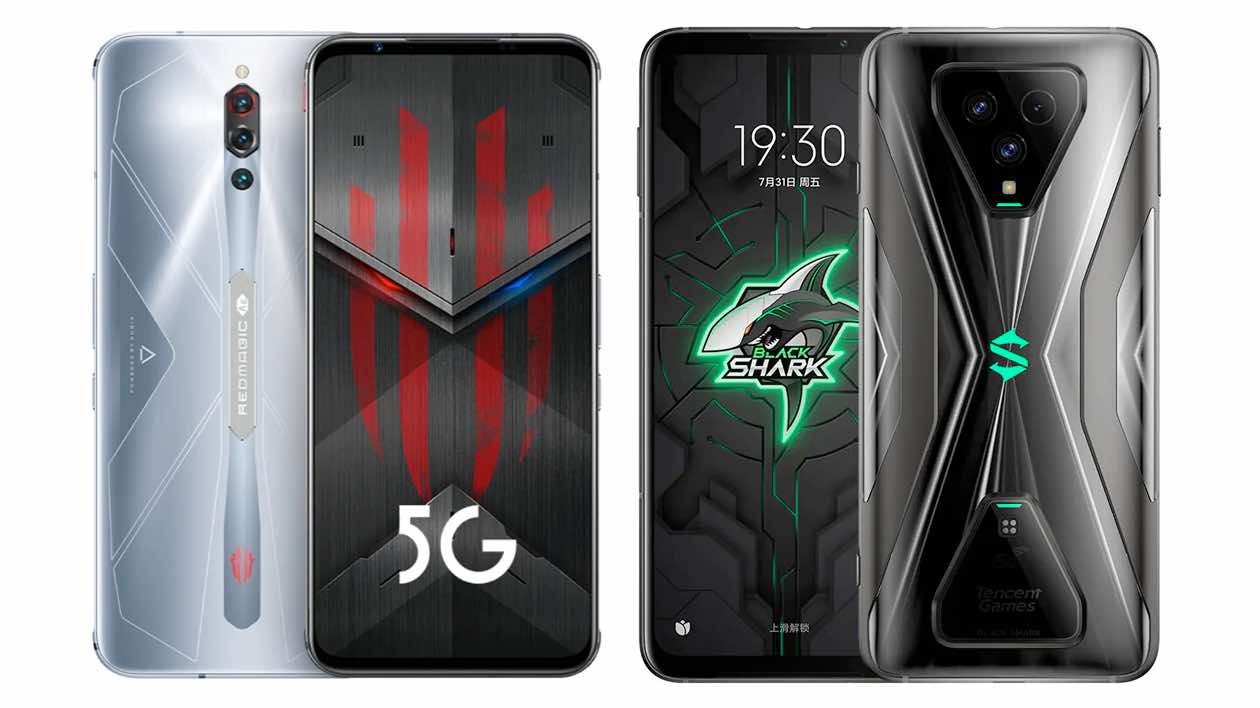
If you thought Asus ROG Phone 3 and Lenovo Legion Duel would be the only gaming phones of the second half of 2020 you were so wrong. Nubia and Xiaomi came up with two other gaming-centric devices: the Nubia Red Magic 5S and the Black Shark 3S. Both come with an S in their name because both are upgrades of previous models released earlier this year. Unfortunately, they do not bring all the power of the new Snapdragon 865+, unlike Asus and Lenovo’s solutions, but on the other hand, they carry more affordable prices while still offering stunning hardware departments. In this comparison, you will learn which of these two gaming phones has more potential depending on your needs. ù
Triple 64 + 8 MP + 2 MP f/1.8, and f/2.0
8 MP f/2.0 front camera
Triple 64 + 13 + 5 MP f/1.8, f/2.3 and f/2.2
20 MP f/2.0 front camera
BATTERY
4500 mAh
Fast charging 55W
4720 mAh, Fast Charging 65W
ADDITIONAL FEATURES
Dual SIM slot, RGB lights, 5G, triggers
Dual SIM slot, RGB lights, 5G, triggers, magnetic charging
Design
When it comes to aesthetics, it is a matter of tastes, but I personally love the design of the Nubia Red Magic 5S. Despite coming with a built-in cooling fan, it is thinner and lighter, as well as more attractive in terms of look. Its design is still gaming-centric, but according to my tastes, it is more elegant and stylish than the Black Shark 3S. Both the Black Shark 3S and Nubia Red Magic 5S offer support to interesting external accessories which make them better choices for gamers than other phones.
Display
Do you only care about gaming or you also need a phone with a great display quality to watch videos and streaming platforms? If you just want the best performance while playing games, get a Nubia Red Magic 5S. It has a higher refresh rate for the display, as well as a higher touch sampling rate for its pressure sensitive zones which can be used as air triggers. If you need a better image quality, then choose the Black Shark 3S which offers the HDR10+ certification, but note that its refresh rate is lower (120 Hz).
Specs & Software
Nubia Red Magic 5S and Black Shark 3S are both powered by the Snapdragon 865 mobile platform. But there is a difference in memory configurations: you can get max 12 GB of RAM with the Black Shark 3S, while Nubia Red Magic 5S goes up to 16 GB of RAM. Further, Nubia Red Magic 5S has a better cooling system which adopts silver and a built-in cooling fan to dissipate the heat for better performance in long gaming sessions. So, at least on the paper, Nubia Red Magic 5S looks more convincing in terms of hardware. On the software side, you get a gaming-centric user interface based on Android 10 on both the devices.
Camera
Despite Nubia Red Magic 5S offers an option to record video with an 8K resolution, Black Shark 3S should provide a better photo quality because it sports better secondary sensors. Both the ultrawide camera and the macro lens have higher resolutions and they are better sensors overall. Even the front camera is better on the Black Shark 3S (20 MP vs 8 MP). Obviously, none of these devices is a real camera phone and usually, gamers do not care a lot about cameras, but we think it is still worth highlighting the differences given that cameras can be used for AR games and live streaming.
The Black Shark 3S has a slightly bigger battery (more than 200 mAh of difference compared to the Nubia Red Magic 5S) and, given the lower refresh rate and the absence of a physical cooling fan, we believe it will offer a longer battery life. It also packs a faster charging technology. Further, the USB-C port of the Black Shark 3S can be used for wired screen mirroring allowing to connect the handset to an external monitor with a low latency.
Price
There is not a definitive winner of this comparison. With the Nubia Red Magic 5S, you can get a higher refresh rate, a better hardware, and better cooling system, as well as a more interesting design. The Black Shark 3S offers a bigger battery, better camera, and the option to use USB screen mirroring. But while Black Shark 3S starts from about €600/$707, the Nubia Red Magic 5S costs just €460/$542 in its base variant. So it actually has a higher value for money. We think the pros of the Black Shark 3S do not justify the price difference.
Red Magic 5S vs Xiaomi Black Shark 3S: PRO and CONS
TCL is a household name in both the TV market and smartphone market but they are actually different companies. TCL TVs are made by TCL Electronics while TCL phones are manufactured by TCL Communications. Now, TCL Electronics plans to acquire the latter as part of its AI x IoT strategy.
The decision was made at an Extraordinary General Meeting (EGM). The acquisition (actually more of a merger) according to Business Wire will result in TCL Electronic’s addition of new arms including TCL smartphones, tablets, wearables, and connectivity in addition to its TV business. TCL Electronics also plans to spin off its ODM business for TVs which has actually been manufacturing TVs for Samsung since 2008.
With TCL Electronics focusing on TV and mobile communication businesses, it will enter into the smart home, internet services, and smart commercial displays markets that is valued at more than 1 trillion Chinese Yuan. The smart home market has big players such as Xiaomi and Huawei. It will be interesting to see what new products TCL will churn out to compete with them.
The business transformation is expected to be finished by the end of August said CEO of TCL Electronics, Kevin Wang.
It has also been reported by ITHome that TCL Electronics and TCL Communications have some of their supply chains overlapping, so the acquisition will help in the optimization of logistics, capital flow, and information flow for better efficiency.
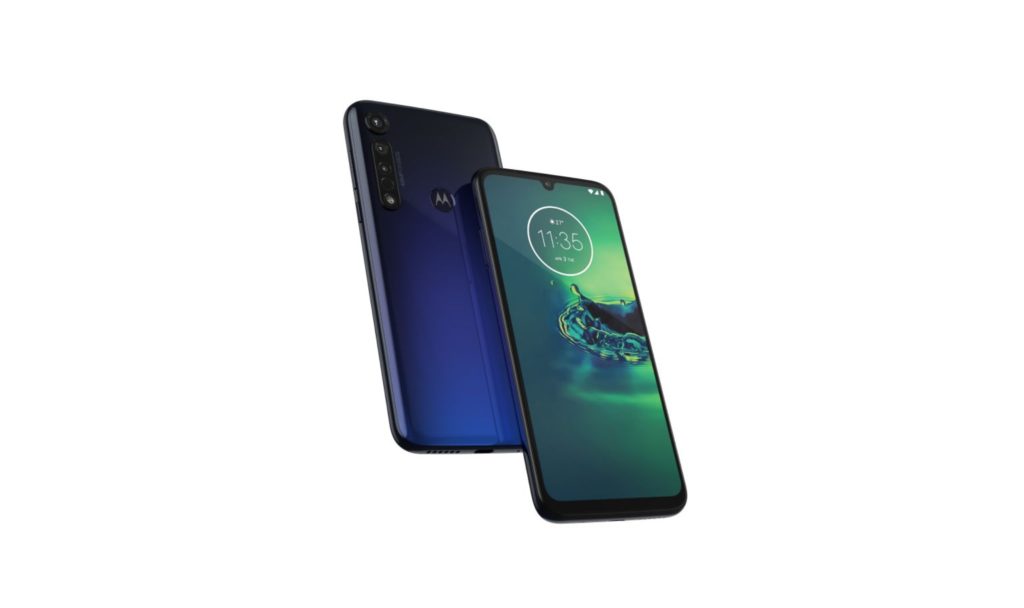
Motorola Moto G series is one of the most popular budget smartphone lineups. However, over the years, the series began to fade in Asia due to intense competition from products from other Chinese OEMs. But it still performs strongly in South America. Now, the company is all set to launch the 2020 models in the series as Moto G9 Plus visits FCC.
Motorola Moto G8 Plus Cosmic Blue
The upcoming Motorola Moto G9 Plus was spotted two times on the internet prior to the latest instance. At first, the handset in 4GB + 128GB storage configuration was found listed on a retailer for €227.15. The next time, it surfaced on TÜV Rheinland with a 5,000mAh (4,700mAh) battery supporting 30W fast charging.
The new FCC listing (via Dealntech) corroborates the second leak with the same model number XT2087-1. It also reveals the battery model to be MG50, in addition to chargers for different markets – SC-301, SC-302, SC-303, SC-305, SC-306, SC-307, and SC-309.
Nothing else is known about the forthcoming Moto G9 Plus apart from the above-mentioned information. We expect more details regarding the phone to emerge in the coming days ahead of its launch.
Xiaomi has a plethora of earphones with various designs and features. Lately, its focus has been shifted to TWS earbuds with the most recent models being the Mi True Wireless Earphones 2 and the Mi True Wireless Earphones Basic. However, none of its TWS earbuds have active noise canceling (ANC) but that should change soon.
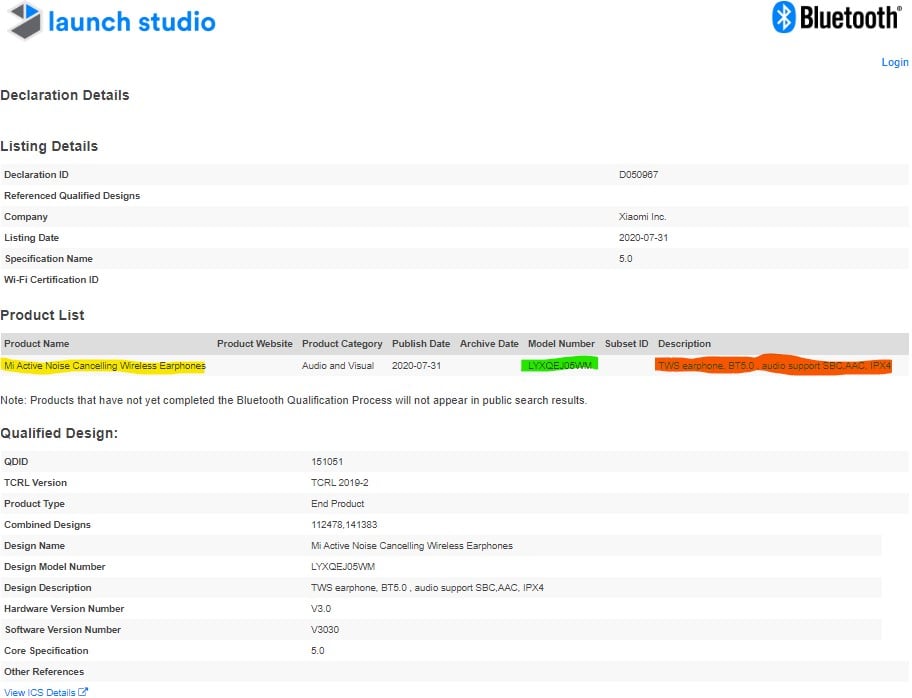
Today, we discovered that Xiaomi will soon announce a pair of TWS earphones with ANC and they will launch as the Mi Active Noise Cancelling Earphones. The product has received its Bluetooth Certification and it is expected to launch anytime.
The earphones have the model number LYXQEJ05WM and the description says it is a pair of TWS earphones. It also reveals the earbuds have Bluetooth 5.0, support SBC and AAC audio codecs, and have an IPX4 rating.
We do not know when the earbuds will launch but seeing as they have active noise cancelation, we expect them to get a high-profile launch, possibly alongside a flagship phone such as the Mi 10 Pro Plus.
There is still a lot we do not know about the upcoming Mi Active Noise Cancelling Wireless Earphones. We do hope it has a great battery life and support for wireless charging, and not forgetting; a competitive price tag.
Chargers have gotten pretty small and thin in recent years thanks to new advancements in technology such as the use of GaN (gallium nitride) instead of silicon. So it is not surprising to see a 60W charger that can practically fit in your palm. Realme has some new SuperDart Ultra-thin chargers and it has confirmed they will be coming soon (to India).
The announcement was made earlier today on Twitter by Madhav Sheth, the CEO of Realme. The tweet said the 65W and 50W Realme ultra-thin SuperDart chargers will soon be introduced and that these chargers are easier to carry and use. We expect them to be announced later this month.
Realme’s current 50W charger is sold for INR 1699 (~$23). The new charger may have the same price or a slightly higher or lower one when it launches. It doesn’t sell a 65W charger on its Indian online store but the 65W SuperDart Ultra-thin charger should be priced between INR 1899 (~$25) and INR 2199 (~$29).
TCL’s CSOT subsidiary that is known for its displays has shown off two new screens with a refresh rate as high as 240Hz. The displays were on exhibition at the second International Display Expo (UDE2020) held at the Shanghai New International Expo Center.
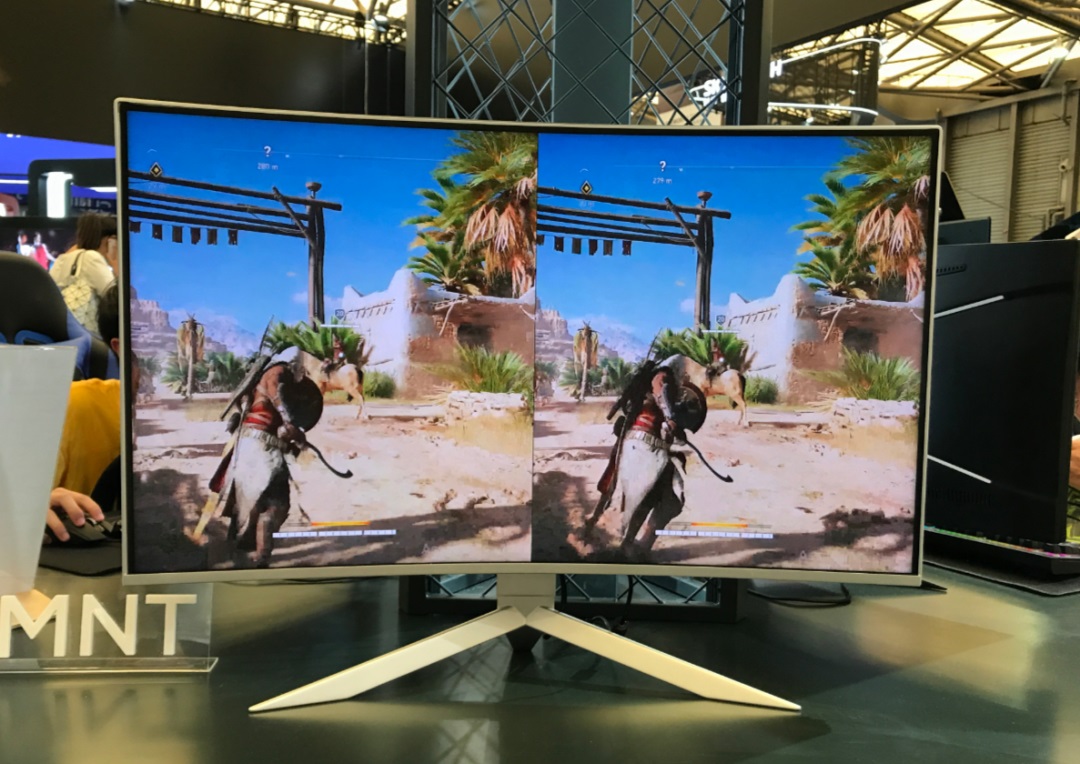
One of the displays is a 32-inch curved gaming monitor. It has a 240Hz refresh rate and has support for Free-Sync and G-Sync. It has a curvature if R1500 and meets VESA’s HDR 1400 certification requirement.
Image source: ITHome
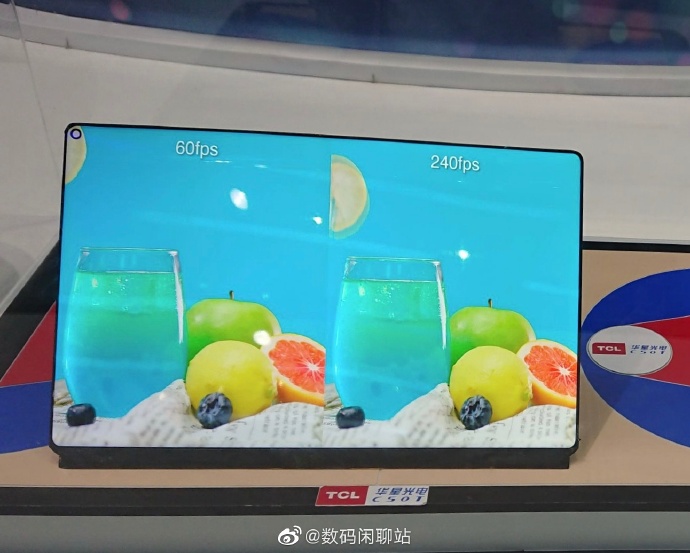
CSOT also showcased a 10.8-inch LCD display with a 240Hz refresh rate. The screen has a punch hole at the top left corner and a resolution of 2560 x 1600. TCL says it also has a 2ms touch response speed. The display should be great for high-performance tablets with a powerful processor and pretty large battery capacity.
Image source: Digital Chat Station
TCL hasn’t said anything about which manufacturers are signed up for the displays but we won’t be surprised if they appear in products later this year. For the 10.8-inch screen, that may get fewer clients seeing as there are only a handful of manufacturers that still make tablets.
Having a high-refresh-rate is the cool thing now, especially if you are making products for gamers. Manufacturers are churning out both mid-range and flagship phones with refresh rates that go as high as 144Hz. The trend is expected to continue for the foreseeable future.
Google finally revealed to launch the Pixel 4a on August 4. But ahead of it, his handset’s successor, Pixel 5a has been spotted on AOSP alongside Pixel 4a 5G and Pixel 5. Further, the comment that exposed these upcoming smartphones also confirmed the end of Android platform update for Pixel 2 series with the release of Android 11.
The Pixel 4a can be termed as the most leaked smartphone of 2020. We know almost everything about this handset except for its price. The device is finally scheduled to go official coming Mondy after months of delay.
As a matter of fact, Google withheld the launch of Pixel 4a too long that the company has already begun to work on its successor – Pixel 5a (via 9to5Google). Anyway, this phone will be mostly launching next year or maybe even get cancelled.
Apart from this phone, the internet search giant is also readying Pixel 4a 5G and Pixel 5, which are expected to debut this fall. The developer comment on AOSP mentions them to release with Android 11 out of the box. Same goes for the Pixel 5a.
Lastly, Google is in the process of dropping Android update support for Pixel 2/2 XL, which launched with Android Oreo and will be receiving its last update – Android 11 very soon.
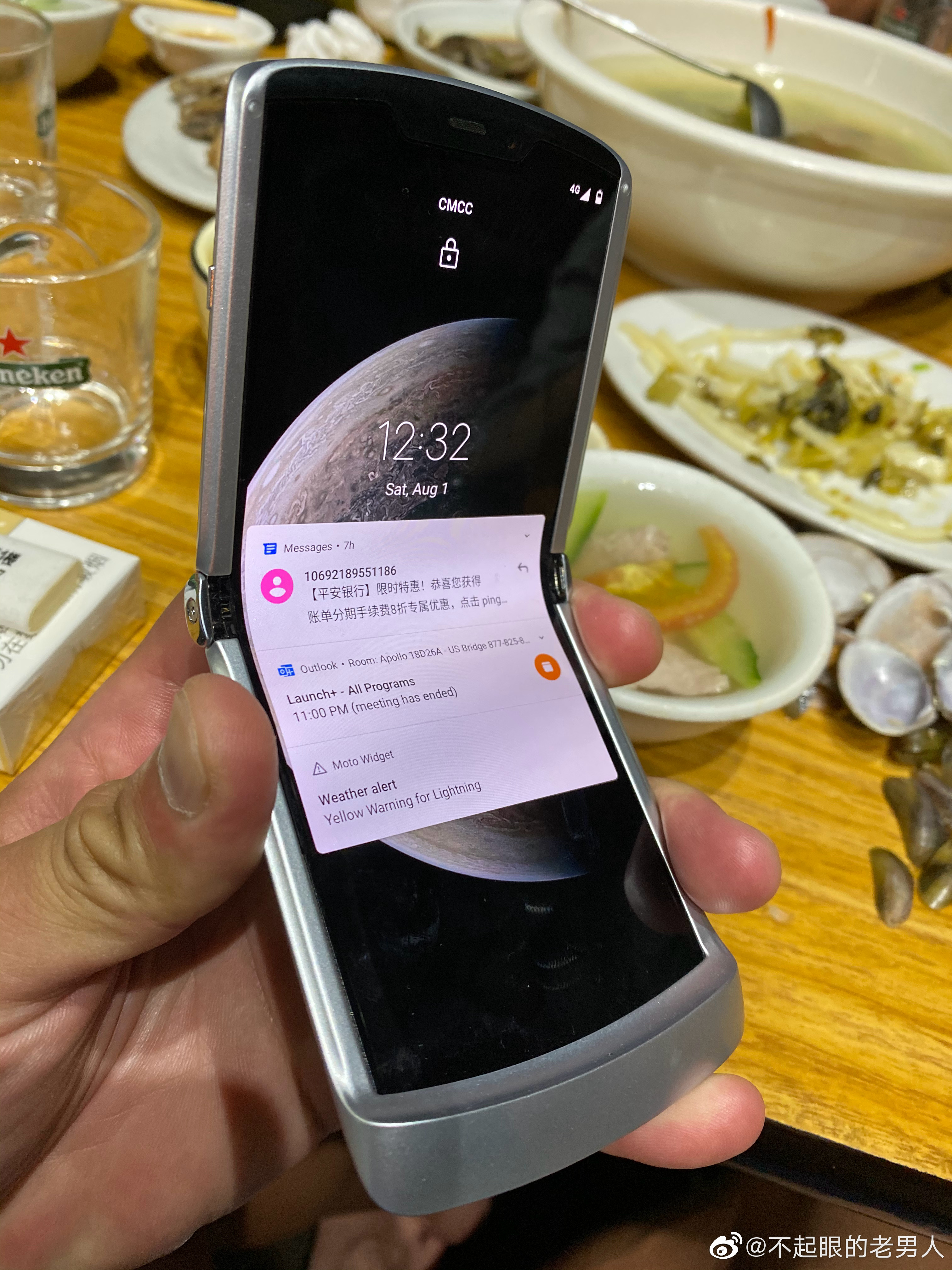
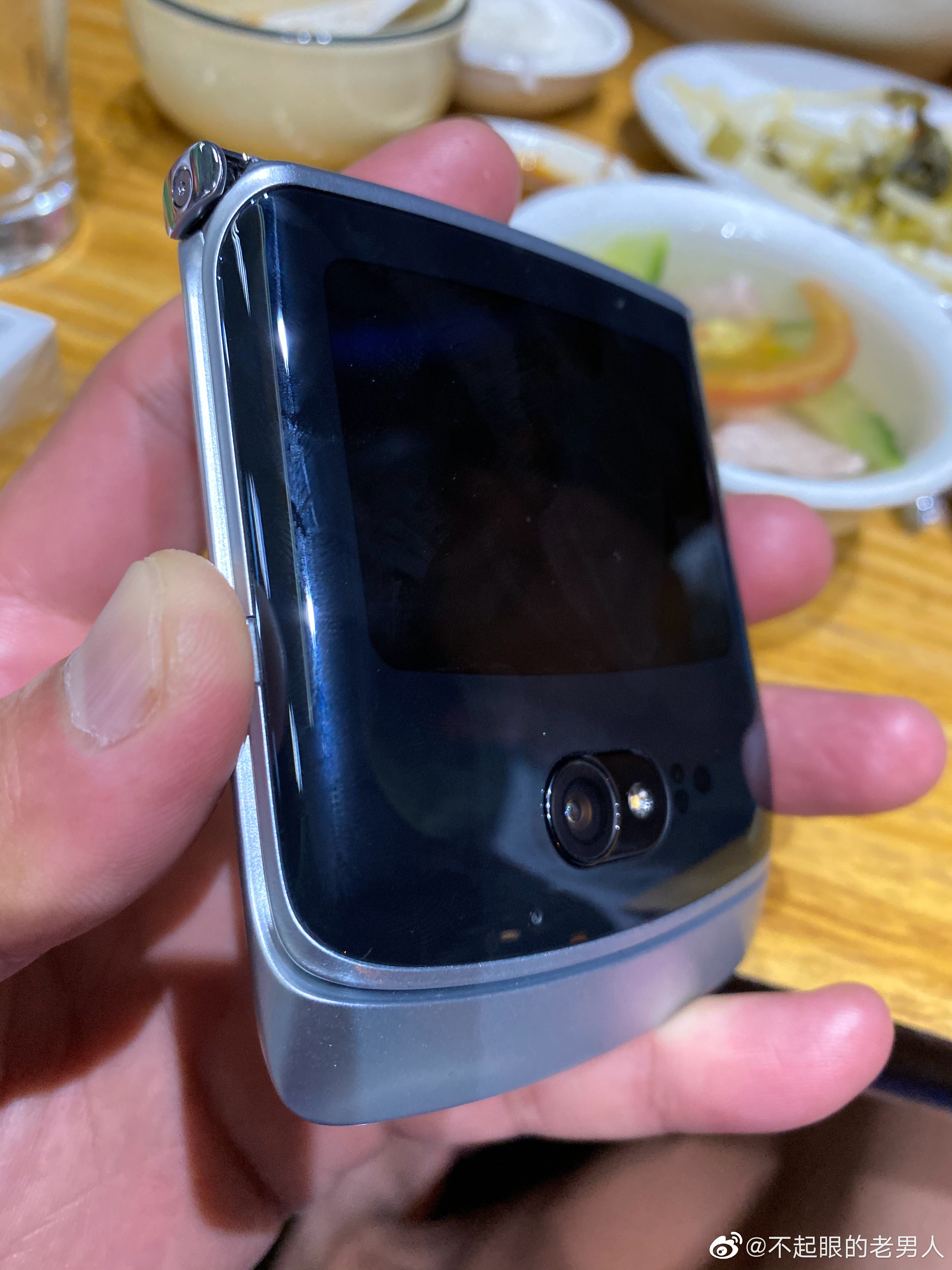
Motorola has been long rumored to launch a new razr foldable smartphone in 2020 with 5G connectivity. This handset is in the leaks for months in terms of a spec sheet, renders, and whatnot. Now, live images of this upcoming phone have popped up on Weibo confirming some of the aspects from previous leaks.
Motorola is one of the few companies other than Samsung and Huawei to sell foldable smartphones. The Lenovo-owned brand with American origin is known for its RAZR lineup of clamshell phones from the 2000s. Hence, the company continued to use the same branding for its foldable smartphones but without capitalizing the letters. The first one in the series was announced last year and went on sale early this year.
But this handset never hit the shelves in China as the carriers in the country don’t offer eSIM service which is the only thing this device has. The pandemic could also be termed as another reason for the phone to not launch in the region.
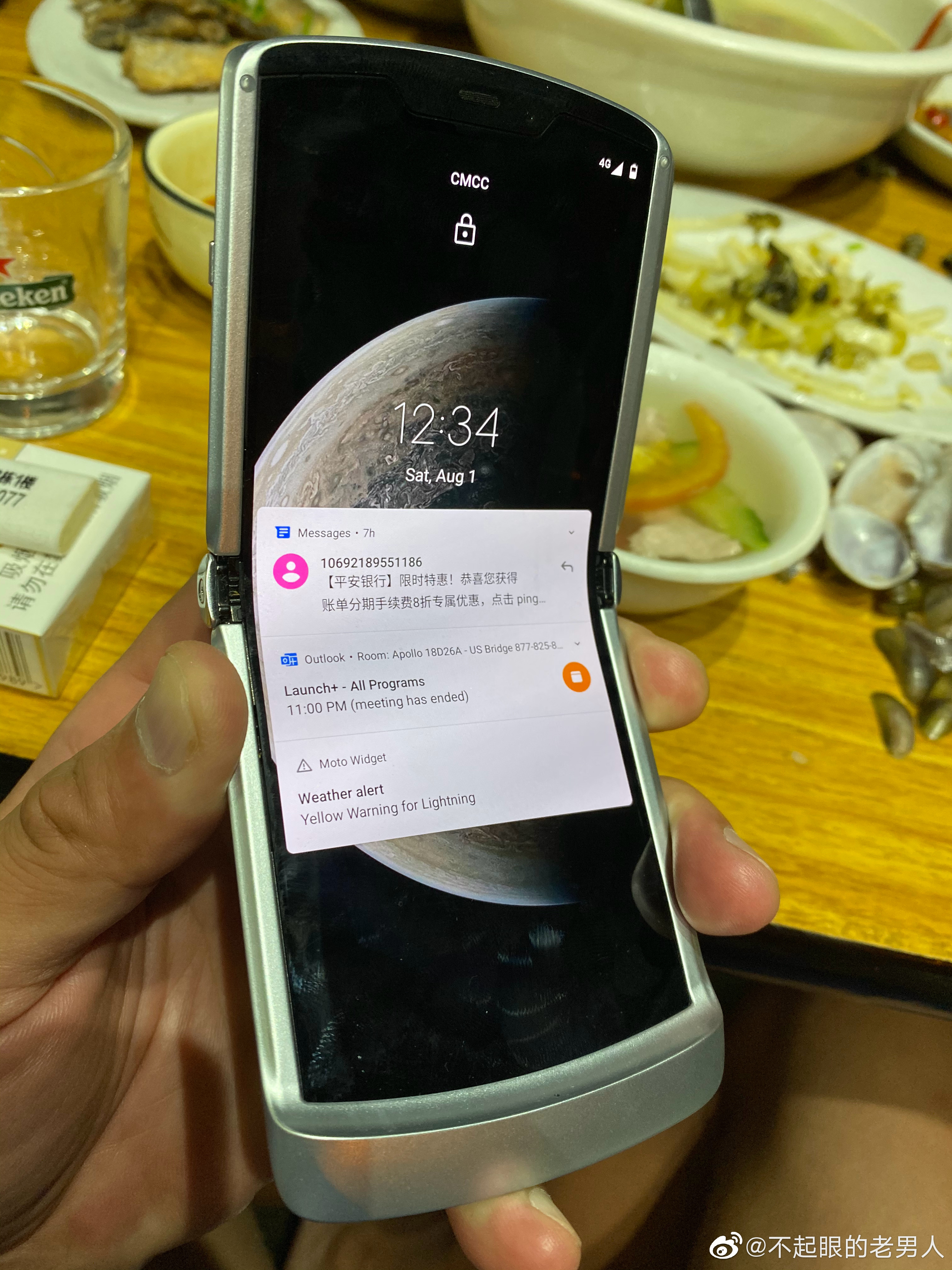
However, the live images of the Motorola razr 2020 come directly from a Chinese investor (via MySmartPrice). Looks like Lenovo showcased the phone to some investors over a dinner (going by the background) in its home country.
The investor posted the pictures on Weibo (terrible mistake) with a caption, “Who remembers “Hello Moto”? It has evolved like this now……” (translated from Chinese).
From the images, we can notice that Motorola’s second foldable smartphone will have a slightly larger outer display and camera bump. Also, there’s no fingerprint sensor at the bottom chin. Above all, the design and color (Mercury Silver) of the handset match exactly to the renders leak.
Further, though this phone is said to be called Motorola razr 5G codenamed “odyssey” (aka “smith”), the images show it to on 4G network. One might ask how could the device be on the network in China as the country does not have eSIM services. That’s because the new model features a nano-SIM card slot, in addition to eSIM support, according to the specs leak.
It is expected to feature 6.2-inch (or 6.7-inch) foldable OLED display, Qualcomm Snapdragon 765G platform, 256GB internal storage, 48MP Samsung ISOCELL Bright GM1 primary sensor, 20MP selfie camera, 2845mAh battery, 18W fast charging and Android 10.
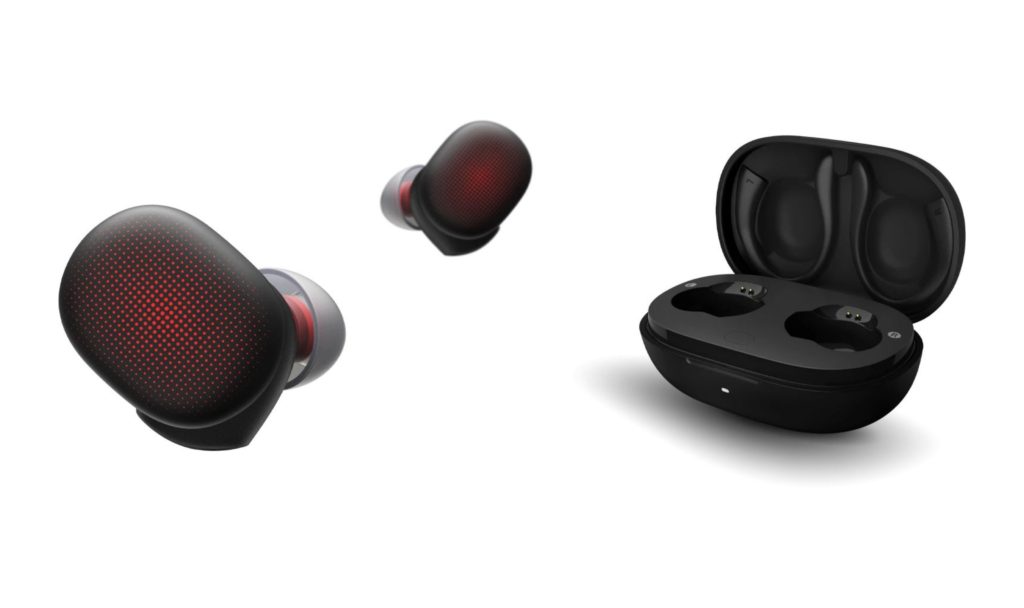
Huami Corporation’s Amazfit has finally launched PowerBuds TWS in India. It will be available starting August 6 exclusively on Amazon India as part of Prime Day sale. It only costs ₹6,999 ($93) in the country, which happens to be cheaper than its pricing in the US ($99), Europe (€99), and China (699 yuan).
Amazfit PowerBuds Dynamic Black
The Amazfit PowerBuds TWS is different than other truly wireless earphones available in the market. Apart from playing music, the buds are also capable of monitoring the heart rate of users during workouts with the help of built-in PPG heart rate sensor.
The buds feature 9mm drivers and connect to devices via Bluetooth 5.0. They are compatible with smartphones running Android 5.0+ and iOS 10.0+ for tracking features, however, the music playback is supported on any device with Bluetooth. They also come with ENC (Electronic Noise Cancellation) for calls using dual-microphone.
Being a sports-focused TWS, the earbuds are IP55-certified for dust and water resistance and also come with detachable magnetic ear hooks for a snug fit. They also support gestures for controls like pause/resume, next/previous track, accept/decline calls, and voice assistant.
As for endurance, the brand claims 8 hours of battery life on a single charge and 24 hours with the charging case featuring USB Type-C port. The earbuds are also said to offer 3 hours of battery life with 15 minutes of charging (heart rate monitoring turned off).
Last but not least, they will come in two color variants namely Dynamic Black and Active White in India. The third version called Racing Yellow will not be available in the region for some reason.
HMD Global, the company behind Nokia-branded handsets have scheduled an event for August 4 to launch a new smartphone in China. The teaser poster gives us a glimpse of the device in blue color with an accented customizable key.
The upcoming Nokia device will be the first smartphone by the brand in China after more than a year. The last smartphone, Nokia X71 was launched back in April of 2019.
The teaser does not say much about the forthcoming handset except for the color and customizable key, which the company uses for Gooogle Assistant in international markets. However, there’s a high chance of this phone to be the recently spotted Nokia TA-1258 on TENAA.
If that’s the case, then we are looking at a budget smartphone powered by an unknown 1.6 GHz octa-core processor paired with 2GB RAM and 32GB internal storage. It will sport a 6.99-inch HD+ (720 x 1440 pixels) LCD panel with 18:9 aspect ratio and no fancy notch or punch-hole.
Further, the phone will come with an 8MP primary camera and a 5MP selfie camera. It will also a boast fingerprint sensor at the back. Last but not least, the device will run Android 10 and will be backed by a 3,040mAh battery with no support for fast charging.
UP NEXT: Juho Sarvikas now VP of HMD Global North America; Nokia 8.3 5G to get US launch this autumn
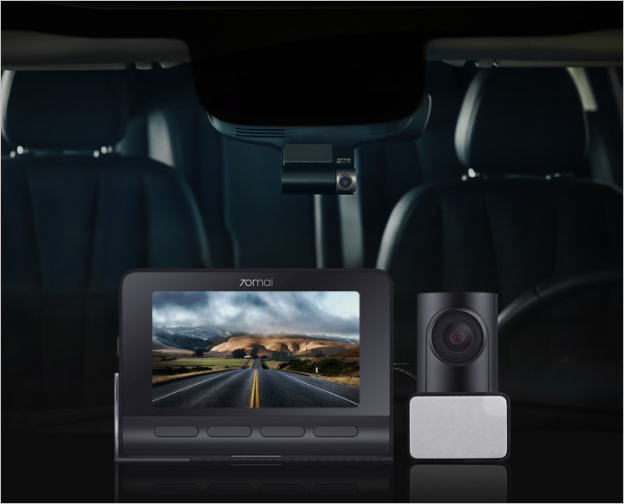
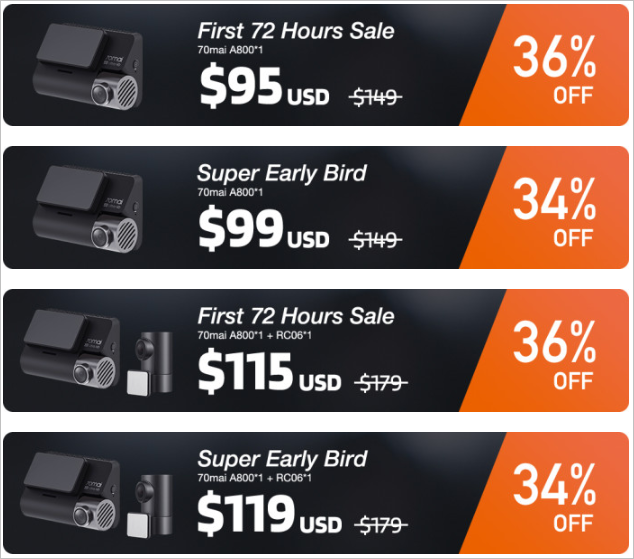
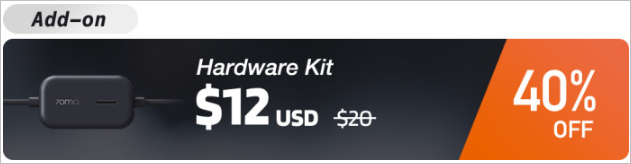
Xiaomi‘s ecological chain company 70Mai has launched its first product under the Indiegogo crowdfunding platform which is an indication that the product is available to buyers from all parts of the world. The product is the 70Mai A800 Dual-vision 4K Dash Cam with pricing starting at $95.
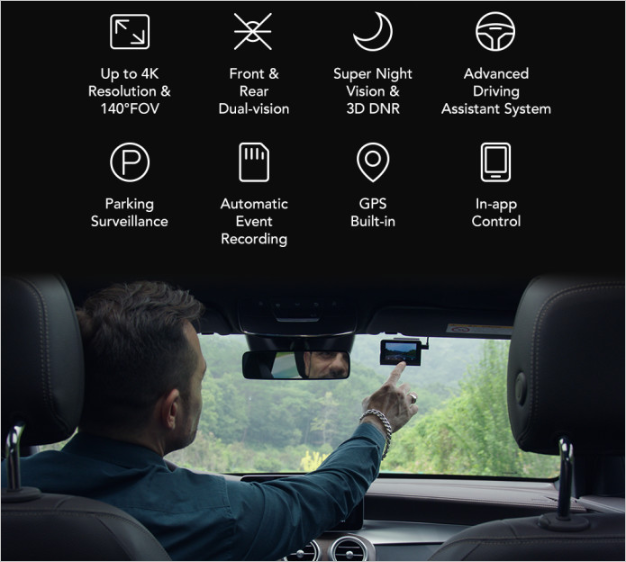
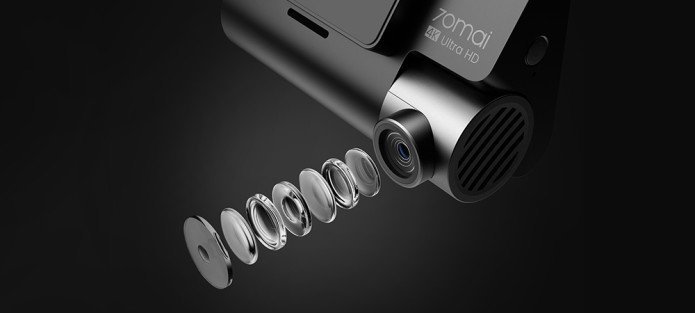
The 70mai A800 is an in-car DVR that delivers day-and-night cinema-quality (up to 4k resolution) images in dual vision. It’s equipped with the leading ADAS (Advanced Driving Assistant System) tech that boosts your driving safety. When the vehicle is parked, the parking mode will monitor the car’s surroundings and automatically start recording if any collision is detected. Recordings are stored locally and can be viewed in-app for on-site download and instant sharing.
Built around a powerful Sony IMX 415 CMOS image sensor, the A800 dashcam records 4K UHD videos with a wide-angle 140° FOV. Combined the optional rear cam*, every important detail in the front or rear of the vehicle can be recorded clearly to provide irrefutable video evidence or capture the landscape along your journey with cinema-quality video.
The A800 achieves stunning video and vivid, clear images even in low-light conditions using a 3D DNR (Dynamic Noise Reduction) tech, F/1.8 aperture lens and a smart algorithm that significantly reduces image noise and automatically adjusts the exposure balance. The result is an enhanced night vision with greater details.
The dashcam packs a 3-inch High Definition screen from which users can easily switch between the front and the rear views with a simple press.
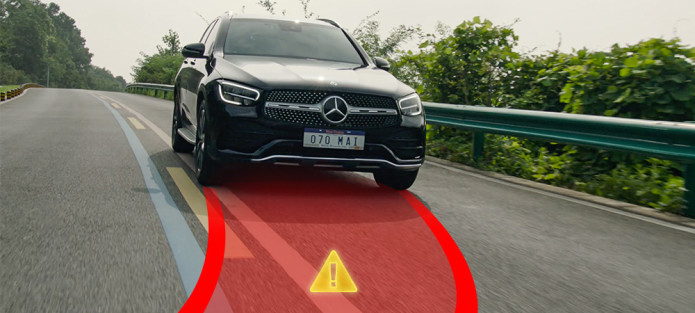
The A800 is more than just a reliable dashcam. When you start the car, the camera automatically begins recording and enables the ADAS (Advanced Driver-Assistance System) that will assist you while driving with lane-departure and forward-collision warnings that help you avoid accidents.
The Lane Departure Warning (LDW) system uses the A800 camera to monitor the lane markings to make sure the car remains safely in the lane of travel. In case you are distracted and begin to drift, the LDW system uses an audio alarm to warn you, for a safe driving every day!
The A800 also includes an advanced Forward-collision Warning system that automatically monitors the car driving in front of you. If the vehicles get too close, too quickly, for instance in the case of a sudden stop by the leading car, A800 will warn you with an audible alarm. This system is especially useful in stop-and-go traffic during busy commute times.
With A800 4k dashcam, the protection doesn’t stop when you leave your car. After parking, the Parking Mode is automatically activated. Using a 3-axis gravity sensor, A800 can detect any hit-and-run collision and immediately begin recording to capture valuable video evidence.
When you return to the car after a Parking Mode incident, A800 will remind you to check the event recordings in-app.
A800 also acts as an accurate trip computer, storing data that includes mileage, range, average speed, max speed, duration and more that can be viewed conveniently in-app. It’s great for long trips and to record the exact location of an accident if one should occur.
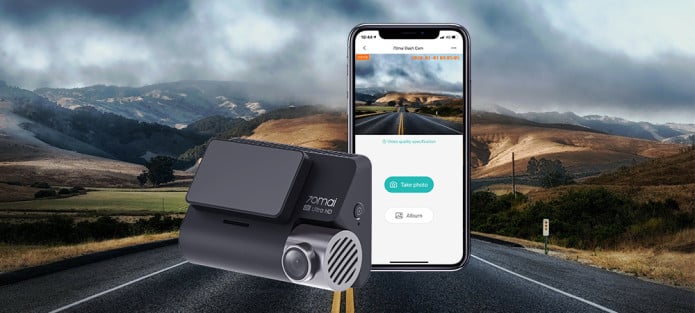
The A800 records video on a loop and stores it locally on a Micro SD memory card (up to 128GB supported) while driving. This ensures that in the event of an accident, the video evidence will be captured and then safely secured from overwriting. You simply open the App to playback or download the videos free of charge.
No network is necessary to connect your smartphone with A800. It seamlessly connects using its own Wi-Fi for full instant access to stored videos. The dashcam also acts as a digital camera, controlled with your phone to capture any picture or view along your route. Share memories of every special road trip fast and easy online!
Installation is super easy. Because it requires no special wiring, the A800 can be installed in minutes. Simply attach to the windscreen, connect to power at the vehicles 12v power source, download the 70mai app and connect with your smartphone using built-in Wi-Fi.
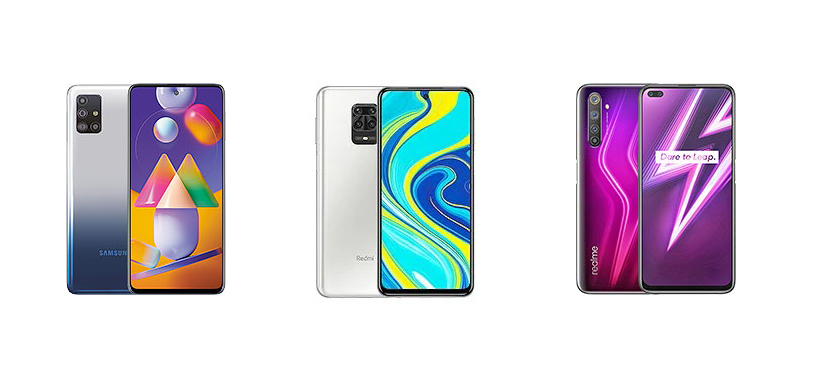
Samsung launched a new amazing battery phone: The Galaxy M31s. The handset just hitten the Indian market with a very interesting price tag but is it the best affordable phone in India in terms of value for money or there is something better for your actual needs? We want to let you understand this by comparing the new Galaxy M31s with two other mid-rangers with an incredibly high value for money. We chose the Redmi Note 9 Pro and the Realme 6 Pro as we never put these two devices together in comparison and we believe they are among the very best options you can actually get in that price range. Let’s discover together which one is the most interesting handset.
Samsung Galaxy M31s vs Xiaomi Redmi Note 9 Pro vs Realme 6 Pro
Quad 48 + 8 + 5 + 2 MP f/1.8, f/2.2, f/2.4 and f/2.4
16 MP f/2.5 front camera
Quad 64 + 12 + 5 + 5 MP f/1.8, f/2.2, f/2.4 and f/2.4
32 MP f/2.0 front camera
Quad 64 + 12 + 8 + 2 MP f/1.8, f/2.5, f/2.3 and f/2.4
Dual 16 + 8 MP f/2.1 and f/2.2 front camera
BATTERY
5020 mAh, fast charging 18W
6000 mAh, fast charging 25W
4300 mAh, fast charging 30W
ADDITIONAL FEATURES
Dual SIM slot, splash resistant
Dual SIM slot
Dual SIM slot
Design
The attractive rear cover of the Realme 6 Pro (which is actually made of glass) would let me go for this device if I had to choose the best design. The suggestive light effects created by its rear cover are amazing (especially in the orange color variant, according to my tastes) and the camera module of the device is smaller than its rivals. You should note that the Realme 6 Pro has a dual punch hole instead of a single punch-hole, unlike Samsung Galaxy M31s and Redmi Note 9 Pro. So its front panel actually looks less elegant.
Display
The Samsung Galaxy M31s provides a higher image quality with its Super AMOLED display and it wins the display comparison. Both Realme 6 Pro and Redmi Note 9 Pro feature an IPS display, which is not a trend, unlike the AMOLED panels providing more brilliant colors and deeper blacks. The Realme 6 Pro still offers an interesting feature: the 90 Hz refresh rate. But most people prefer having an AMOLED display with a standard refresh rate rather than an IPS panel with a higher refresh rate. What would your choice be?
Specs & Software
Samsung Galaxy M31s is powered by the Exynos 9611 chipset, which is the lowest-end SoC of the trio. Both Redmi Note 9 Pro and Realme 6 Pro are fueled by a way better Snapdragon 720G providing high CPU and GPU performance. The Realme 6 Pro wins the hardware comparison because it exists in a configuration with 8 GB of RAM, while with the Redmi Note 9 Pro you can get max 8 GB. In each case, you get Android 10 out of the box with a highly-customized user interface.
Camera
The most convincing camera department, on the paper, belongs to the Realme 6 Pro. It sports a 64 MP main sensor, the only telephoto sensor of the trio supporting 2x optical zoom, an 8 MP ultrawide sensor and a 2 MP macro camera. Further, on the front side, you get a dual ultrawide selfie camera. The second place goes to the Samsung Galaxy M31s with a 64 MP main sensor, a 12 MP ultrawide lens and a 32 MP selfie camera providing great quality. Redmi Note 9 Pro is an inferior camera phone with its 48 MP quad-camera.
Battery
Samsung Galaxy M31s provides the longest battery life thanks to its huge 6000 mAh battery and its efficient AMOLED display, The chipset is built at 10 nm, but it is enough to still guarantee the longest battery life in every scenario, given the bigger battery capacity. Samsung Galaxy M31s also supports reverse charging through its USB port. Right after, we got the Redmi Note 9 Pro with a 5020 mAh battery, while the Realme 6 Pro has the fastest charging tech with a 30W power for its 4300 mAh battery.
Price
Samsung Galaxy M31s is priced €230/$270 in its base variant, you need €159/$187 for the Redmi Note 9 Pro, and Realme 6 Pro costs about €215/$253. The most balanced device of this comparison is the Realme 6 Pro with its 90 Hz display, great hardware, and very nice cameras, but it has the smallest battery. With the Samsung Galaxy M31s you get a better display and a way longer battery life. Redmi Note 9 Pro is inferior to the Realme 6 Pro, if we exclude the battery life. But it provides a better hardware department than Samsung Galaxy M31s and it is way more affordable.
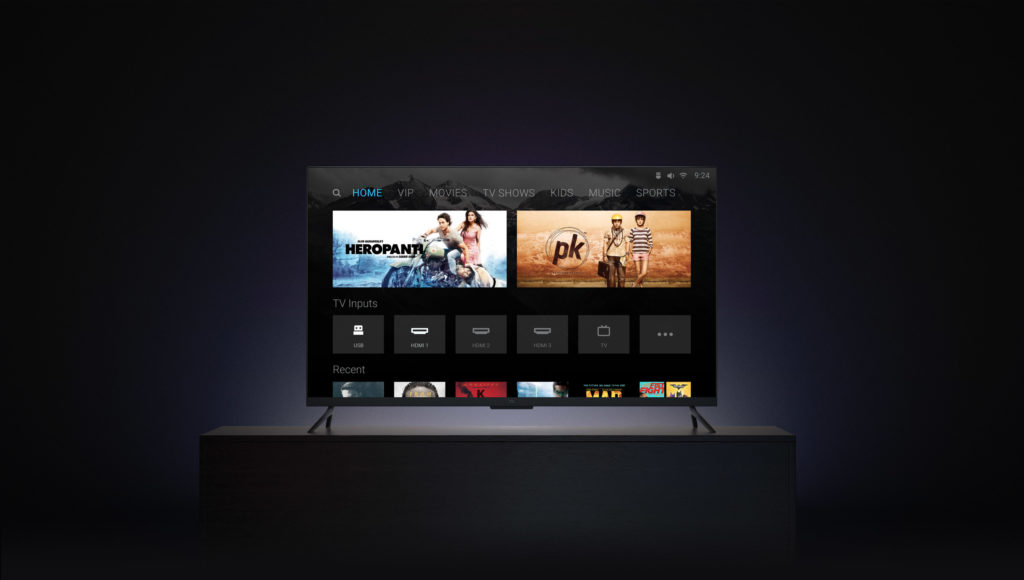
Xiaomi, apart from being India’s largest smartphone brand, is also the market leader in the smart TV segment. The company says that local manufacturing of color televisions will witness boost due to the import restrictions introduced by the government.
Chinese smartphone maker Xiaomi has been manufacturing and selling smart TVs in India since 2018. According to a company spokesperson (via ET Telecom), 85% of the televisions sold by the brand in the country are manufactured locally.
Currently, only 35% of Mi TVs sold in India are imported. The company expects this amount to further drop, thanks to the new import policy on color television sets, which has been “amended from free to restricted” by the Directorate General of Foreign Trade (DGFT).
The change in policy is also applicable to televisions under the “other color” category, which includes the likes of LCD TVs. In the fiscal year 2020 alone, the total imports under the now restricted category accounted for $781 million. Out this amount, goods worth $428.37 million came from Vietnam, compared to $292.48 million from China.
The Indian government is trying to boost domestic manufacturing by cutting down imports on non-essential goods like televisions. The centre is expected to take a similar decision for other categories like sports goods, plastic goods, and toys.
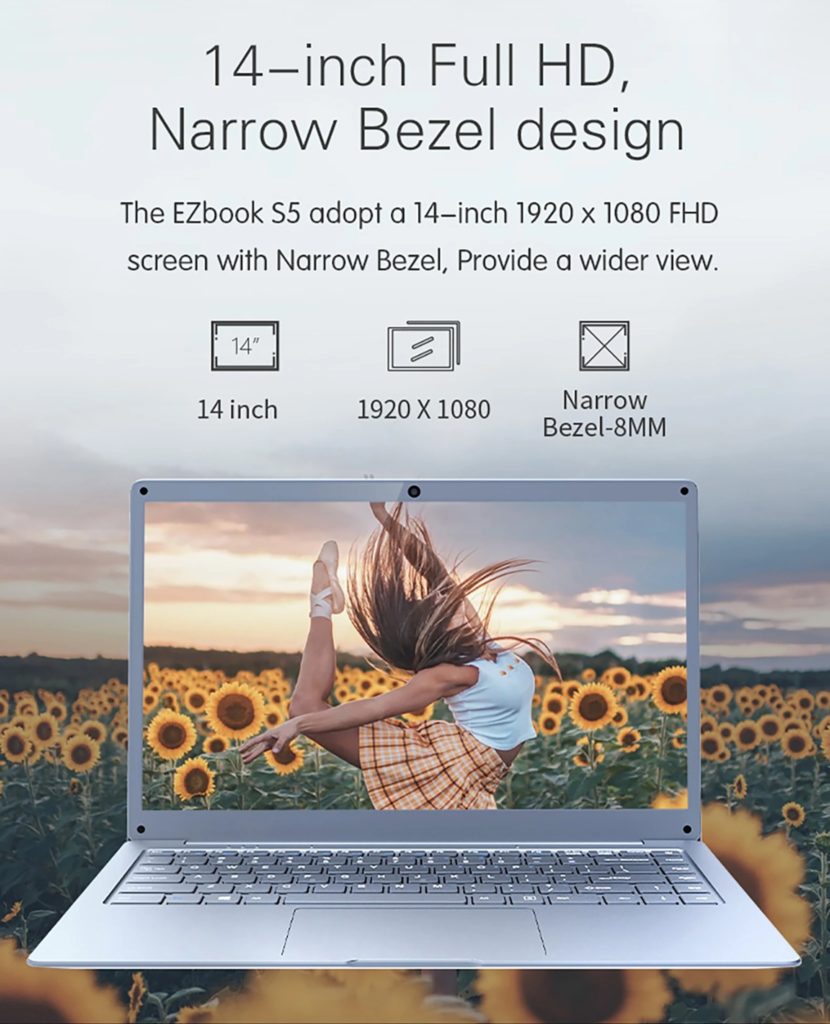
Jumper EZbook S5 is an ultra-affordable laptop having 14-inch FHD display, 6GB RAM and several other highly-anticipated features. The ultra-thin laptop houses a powerful Intel Celeron N3350 Dual-Core CPU which can easily handle power-intensive tasks. It is an exciting deal for the users who are looking to get an affordable laptop in this COVID-19 pandemic era.
Jumper EZbook S5 14-inch laptop offers powerful specifications at an affordable price of $179.99. The powerful laptop houses a 14-inch Full HD display with 1920 x 1080 pixels resolution for better experience while watching videos, playing games and doing work. You can even connect it with TV or projectors using the HDMI output port.
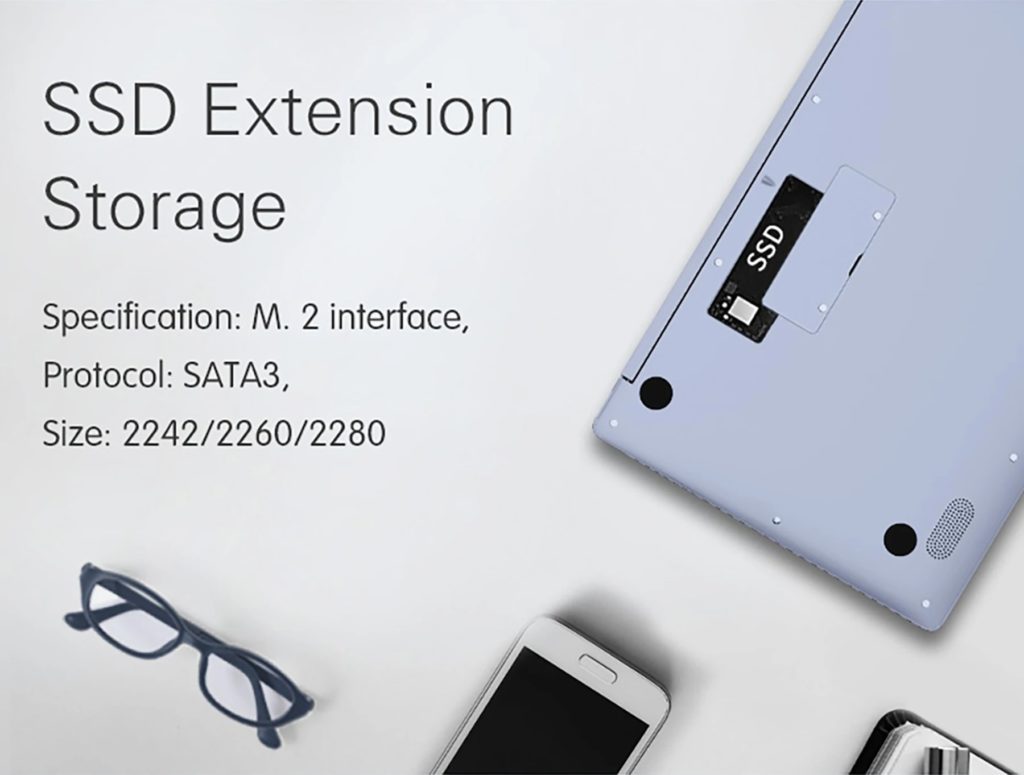
Furthermore, Jumper EZbook S5 is powered with Intel Celeron N3350 SoC having clocking speed of 1.1GHz and can go up to 2.4GHz. The processor is based on the 14nm process and uses 6W Lithography power consumption. It houses a 6GB LPDDR4 RAM for advanced multitasking which enables you to run games, photos and video-editing applications without any issue. There’s a 64GB storage capacity and also features a SSD storage expansion M.2 port for fast operations.
A 0.3-megapixel camera is present for assisting video calls and even allows to capture memorable moments. The support for dual-band WiFi enables to surf fast internet connection without the need of any LAN wire. It weighs 1.24KG and bezels measure 8mm in size.
Jumper EZbook S5 is a fanless device with low power energy consumption design. The 9200mAh built-in lithium battery offers long standby and high performance. The laptop offers standard size keyboard and large size touch-pad with the same colour offering fast typing experience.
In port, the laptop offers a 3.5mm 2 in 1 audio jack, TF Card Slot, USB 2.0, USB 3.0, mini HDMI port and a DC input.
You can grab the Jumper EZbook for the price of $179.99 from the UK warehouse between July 20 to August 9. Head over to the Jumper Mall to grab the EZBook at a discounted price.
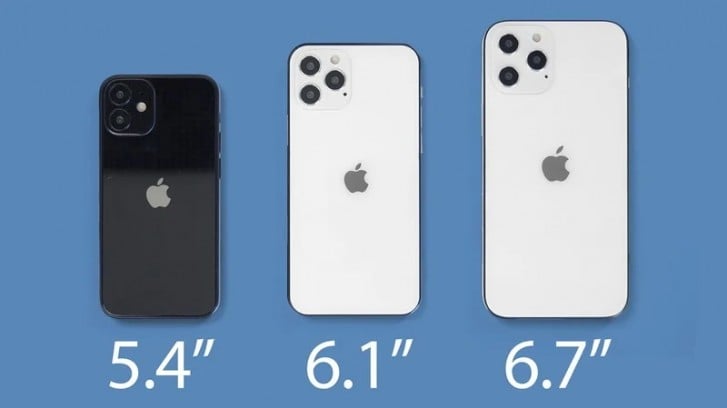
Apple‘s upcoming 2020 flagship iPhone 12 series have been in the news for quite a while. An earlier rumour had hinted that the company will shift the release date for the models from the usual September release date. Apple has now officially confirmed that it would shift things by a few weeks.
This was made known during the tech giant’s earnings call for the second quarter of the year (via) which is the company’s third fiscal quarter of 2020. According to Luca Maestri, Apple’s Chief Financial Officer, despite the sales of last year’s new generation iPhones going on sale in September, this year the company projects supply will be “available a few weeks later”.
The company didn’t give any reason for this slight delay but it may not be unconnected with the COVID 19 pandemic which slowed down production in several factories across Asia including those which supply Apple components used for the iPhones.
Qualcomm, which is expected to supply the modem Apple will use on the iPhone 12 had earlier hinted that the company will delay shipment of the iPhone 12 to October 2020.
The delay in shipment is expected to impact the company’s financial result for the third quarter of the year since the new models will completely miss it, not being out before the end of September.
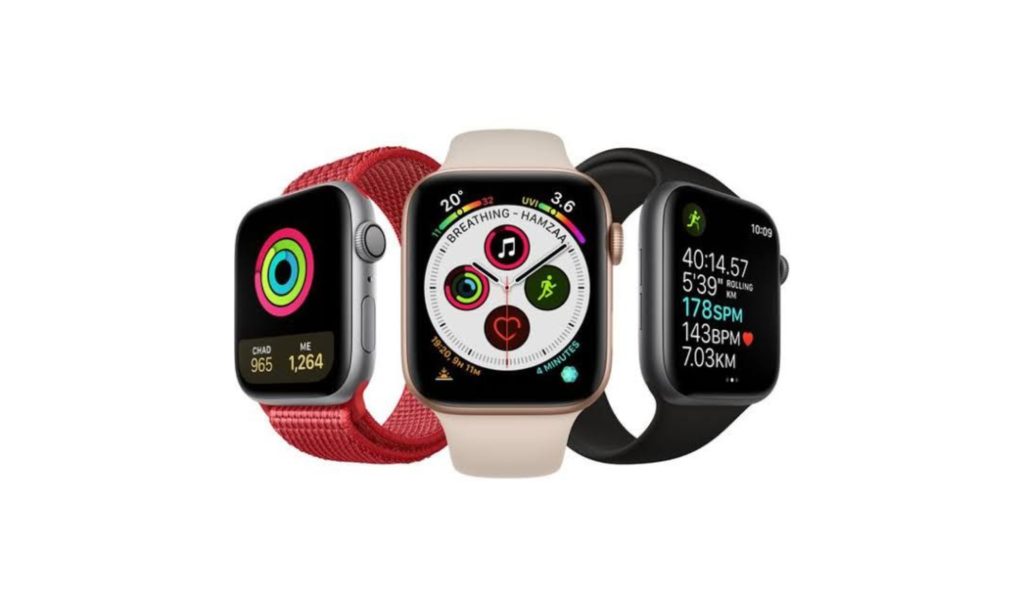
Apple Watches are arguably the best smartwatches available in the market. Over the years, the Cupertino-based tech giant improved the product line with new hardware and useful software features. According to a new report, the upcoming Apple Watch Series 6 will finally bring support for monitoring blood oxygen level and sleep tracking.
Apple Watch Series 5
The iPhone maker is expected to introduce Apple Watch Series 6 in fall 2020 alongside iPhone 12 series. As per a new report by DigiTimes (via MacRumors), it will finally come with the most requested features on the wearable.
The report says that Taiwan’s ASE has got major SiP orders for the forthcoming Apple Watch. Also, the sources of the publication mention the new smartwatch to feature biosensors to monitor sleeping conditions, detect blood oxygen, and measure pulse rates, heartbeats as well as atrial fibrillation. The wearable is said to incorporate MEMS-based accelerometer and gyroscope for precise measurements.
This is no the first time we are hearing about Apple Watch with support for monitoring blood oxygen level. This feature was already spotted in an iOS 14 leaked code in March.
Apart from the above-mentioned additions, according to Ming-Chi Kuo, the Apple Watch Series 6 is also expected to feature LCP (Liquid Crystal Polymer) for the flexible circuit board.
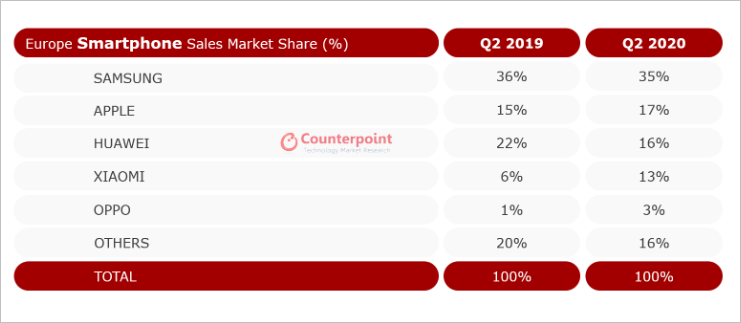
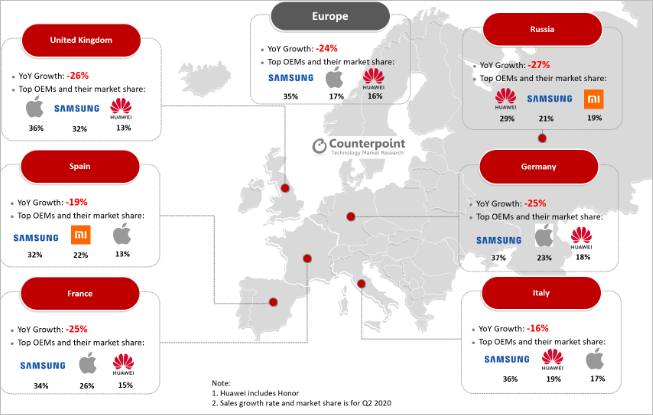
A report by market research firm Counterpoint Research shows that the smartphone market in Europe saw a significant decline of 24% from the same period last year in Q2 2020. The report also shows a 22% quarter-on-quarter (QoQ) decline in the same period. The slump is due to the COVID 19 pandemic which seems to have affected the demand for smartphones. The report also reveals that Eastern Europe which had shown somewhat of an immunity to the pandemic in the first quarter also experienced a decline of 24% YoY in the second quarter.
Commenting on the overall market, Peter Richardson, VP of Research said, “The impact of COVID-19 gathered speed in Europe during April as it was the first full month of lockdowns across almost the entire region, causing a decline of around 45% YoY and 30% MoM. As the lockdowns started to lift across Europe in May, the sales rebounded (+33% MoM). June was equally good, posting a further sequential increase of 34%. Though MoM comparisons look good, the overall scenario for the quarter still shows a 24% YoY decline.”
The lockdown imposed by several countries to flatten the curve of COVID 19 infections is responsible for the slowed growth. However, the lockdown did not completely stop the sales as e-commerce channels remained open and functioning even in countries with the most severe lockdowns such as Spain and Italy. The e-commerce efforts were supported by European governments’ generous furlough schemes. Since the easing of the lockdown, governments’ support to business are being reduced, increasing the threat of wide-spread redundancies across many businesses.
Russia’s smartphone market, which was slow to acknowledge the presence of COVID-19 in Q1 2020, became the worst affected European market in Q2 2020 declining 27% YoY for the quarter.
In terms of individual brands, Counterpoint reveals that Samsung continued its lead of the market, driven by its diversified portfolio and new product lines that cater to the requirement of all price bands. Apple, supported by the good performances of the iPhone SE 2020 and 11 series, saw the decline of its sales volume reduced to 14% YoY. Meanwhile, Huawei recorded a massive decline of 46% YoY amid US-China trade sanctions. The ack of Google Mobile Services on its new models may have contributed to this decline than privacy concerns. Xiaomi and Oppo grew 55% YoY and 41% YoY even during the pandemic. With their attractive specs at affordable prices.
We use cookies on our website to give you the most relevant experience by remembering your preferences and repeat visits. By clicking “Accept”, you consent to the use of ALL the cookies.
This website uses cookies to improve your experience while you navigate through the website. Out of these, the cookies that are categorized as necessary are stored on your browser as they are essential for the working of basic functionalities of the website. We also use third-party cookies that help us analyze and understand how you use this website. These cookies will be stored in your browser only with your consent. You also have the option to opt-out of these cookies. But opting out of some of these cookies may affect your browsing experience.
Necessary cookies are absolutely essential for the website to function properly. This category only includes cookies that ensures basic functionalities and security features of the website. These cookies do not store any personal information.
Any cookies that may not be particularly necessary for the website to function and is used specifically to collect user personal data via analytics, ads, other embedded contents are termed as non-necessary cookies. It is mandatory to procure user consent prior to running these cookies on your website.