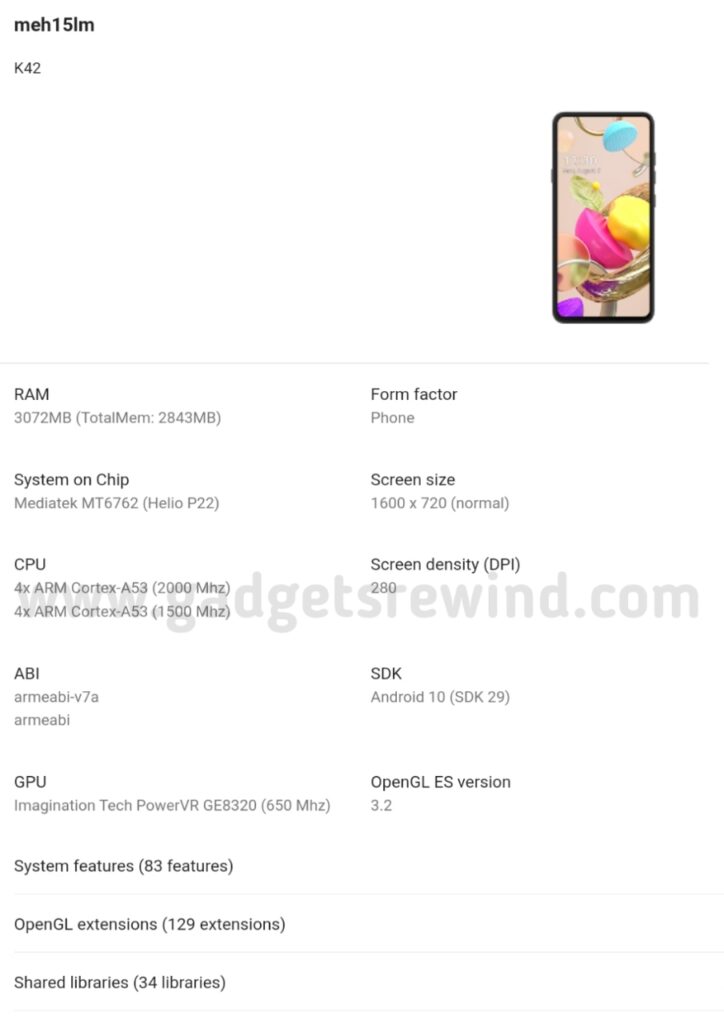
Looks like LG is planning to go on a release spree any time soon going by the rate at which its upcoming models appear on leaks. Recently, the Q92 5G was spotted on Google Play Console. Now, the LG K42 has also been listed on the website.
The K42 is a low-end model that is listed to pack a MediaTek MT6762 SoC which is the Helio P22 chipset. The processor pairs with 3GB of RAM. The display size is unknown but the phone will have an HD+ resolution of 1600 x 720 pixels.
The render of the phone uploaded on the Play Console (via) doesn’t contain a selfie camera cut out but we expect the device to feature a notch design. In addition, the phone is listed to get its interface from Android 10 OS.
For now, no other detail is known about the K42 but we expect more info to emerge as time goes on.
Samsung launched the Galaxy S20 series consisting of Galaxy S20, Galaxy S20+ (Plus), and Galaxy S20 Ultra earlier this year. Now, just after five months from their launch, the model numbers of their successors (Galaxy S21 series) have leaked even before the debut of Galaxy Note 20 series.
There used to be only one Galaxy S device per generation. Slowly, it increased to two, followed by three. According to an exclusive report by SamMobile, the company will continue launching three handsets for the third year in the row.
The sources of the publication have revealed the South Korean tech giant has begun to work on three models for the Galaxy S21 series. Their model numbers are said to be SM-G991, SM-G996, and SM-G998.
If Samsung does not change its branding, then these smartphones will end up as Galaxy S21, Galaxy S21+ (Plus), and Galaxy S21 Ultra respectively.
These phones are expected to support 5G, however, there could be 4G variants as well like the Galaxy S20 series but their existence is yet to be confirmed. Further, the sources also confirm these three devices to come in 128GB and 256GB storage variants.
There may be a 512GB or even 1TB variant like the Galaxy S10+ (Plus ) 5G but there’s no sign of them as of now. It is worth noting that Samsung skipped 1TB this year but it is strange to cross out 512GB as smartphones are now capable of recording 8K videos and other heavy-duty tasks.
Unfortunately, that’s all know about the upcoming Galaxy S21 series, which will mostly launch in the first quarter of 2021. Anyway, we can surely expect more leaks about these handsets in the coming months.
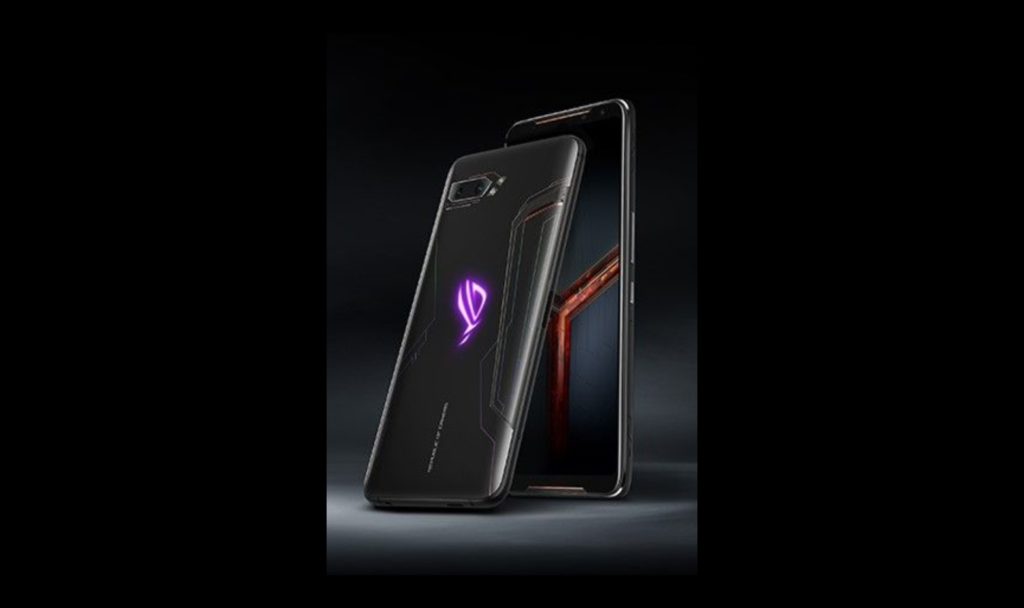
Recently, Asus launched ROG Phone 3 as its third-generation gaming smartphone worldwide. But the company did not announce all the variants of the handset for India. However, the firm’s Indian head has now confirmed to launch the 16GB + 512GB of the device based on demand. Unfortunately, he also revealed the company’s plans to discontinue ROG Phone 2 in the country.
Last year’s ROG Phone 2 was only available for a short period of time in India. It was out of stock most of the times on official online retailer Flipkart. The smartphone was briefly made available last month in the country with new updated price, thanks to increased GST (Goods & Services Tax) on phones.
At the moment, the device is listed as unavailable on Flipkart, whereas the ROG Phone 3 is noted as “Coming Soon” as it is set to go on sale starting August 6. But the ROG Phone 2 may be soon removed from the platform as per Dinesh Sharma, Mobile Business Head, Asus India (via HT Tech).
The executive confirmed the discontinuation of ROG Phone 2 in India to the publication. However, he did not mention when and hence, we believe it may be available for the last time during Flipkart sale around August 5-6 when Amazon India will be hosting Prime Day sale.
According to him, customers get a better package in ROG Phone 3 compared to ROG Phone 2 and thus it makes sense for them to remove it from the shelves. However, the price difference between the two is ₹10,000, which is more according to us.
Since India is a price-sensitive market, there is a high probability of people buying the older model, which may cannibalize the sales of the newer model. But Asus could have made use of this situation like OnePlus, which still continues to sell OnePlus 7T from 2019.
Further, the Asus executive also revealed they have no plans to launch ROG Phone 3 Strix Editon powered by Qualcomm Snapdragon 865 in India. However, they may bring the 16GB + 512GB variant of ROG Phone 3 to the country if there’s a “massive demand”.
He also hinted if it comes, it will be priced much higher and that’s the reason they stuck to only two options for the world’s second-largest smartphone market.
The Asus ROG Phone 3 will be available for the following prices starting August 6 in India.
As 5G connectivity expands, the demand for 5G smartphones will continue to rise. To this end, mobile phone manufacturers have continued to broaden their product offerings in the 5G market. Vivo has updated its portfolio with the launch of the Vivo Y51s in China.
Vivo Y51s is a midrange 5G phone with a premium design. The specs is similar to that of the Y70s which was announced recently, including an Exynos 880 SoC. The device packs a 6.53-inch LCD display with an FHD+ resolution of 2400 x 1080 pixels and 19.5:9 aspect ratio. This display features a hole-punch for the selfie camera located at the top left corner.
The phone is powered by an Exynos 880 chipset which integrates a 5G modem. The modem in this SoC is capable of supporting sub-6GHz 5G with a maximum downlink and uplink of 2.55Gbps and 1.28Gbps respectively. The processor is paired with 6GB RAM and there is 128GB of internal storage onboard.
On the camera side, the VivoY51s packs a triple camera setup aligned vertically at the top left corner. The main camera is a 48MP sensor paired with a 2MP depth sensor and a 2MP macro shooter. The rear camera supports video shoot up to 4K resolution. The device packs a single 8MP sensor under the hole-punch for selfies.
The smartphone is fired up by a 4,500 mAh battery and has support for 18W fast charge. It utilises a micro USB port and packs a side-mounted fingerprint sensor. In addition, the Y51s runs on Android 10-based Funtouch OS 10.5.
As for the price, the Vivo Y51s is priced at 1,798 yuan (~$256) in China. The phone which comes in black, blue and white colours will be on sale from July 29. Presently, it is up for reservations via Vivo’s website.
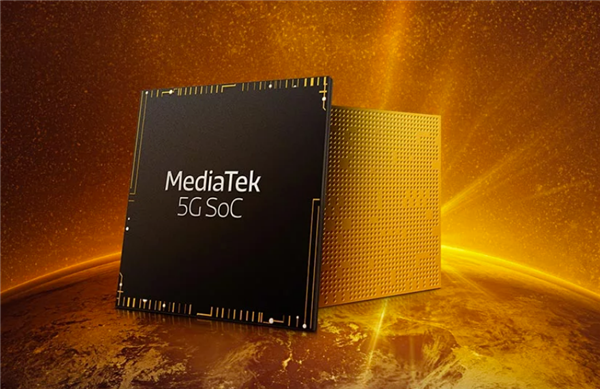
Apart from Huawei and Samsung that have their own independent chipset foundries, all other mobile phone manufacturers rely mostly on Qualcomm and MediaTek for their chip supplies. Before the 5G era, MediaTek was experiencing some difficulties but since 5G started gaining traction, the Taiwanese fabless chip maker has experienced a rebound.
Between April and now, some of the new smartphones packing a MediaTek SoC includes the OPPO A92s, iQOO Z1, Huawei Enjoy 20 Pro, ZTE AXON 11 SE, Redmi 10X series and many several others. The majority of the models have equipped with a Dimensity series 5G chips.
According to latest media reports, MediaTek will launch a new generation of 5G flagship mobile platform under the Dimensity series. The flagship processor will be unveiled in the second quarter of next year. The flagship chipset will reportedly be called Dimensity 2000, taking a cue from the Dimensity 1000 series. However, it will be built on a 5nm process, unlike the Dimensity 1000 series which utilised a 7nm silicon. There will also be a significant improvement in its performance.
At present, MediaTek has successively launched Dimensity 1000 series, Dimensity 800 and 700 series processors, occupying a key position in mid-to-high-end 5G mobile phones market. Just a few days back, the Dimensity 720 chipset was announced. Further, the company is rumoured to be working on the Dimensity 600 series as well as a Dimensity 400 series targeted at entry-level 5G smartphones, enabling cheap 5G phones.
OnePlus recently launched its third smartphone of 2020 and its first mid-range device in years in the form of OnePlus Nord. Now, it looks like the brand is gearing up to launch its next flagship models, possibly called OnePlus 8T and OnePlus 8T Pro. Either one of these phones or even both may also feature a 64MP camera according to strings of code in OnePlus Camera v5.4.23.
The Chinese smartphone maker OnePlus has been using 48MP shooter on its phones ever since it introduced it on the OnePlus 7 series. Now, finally, it will be making a switch to a 64MP sensor as per new findings by XDA Senior Member Some_Random_Username.
The OnePlus Camera app was recently updated to v5.4.23. A teardown was carried out by the person mentioned above and found out strings mentioning 64MP. This clearly suggests that OnePlus is preparing its stock camera app for its next smartphones with 64MP camera sensor
These strings reveal that there will be a dedicated 64MP mode and burst capture will not work in this mode. By default, the images will be captured at 16 megapixels like any other 64MP smartphone.
Having said that, there are no leaks on OnePlus 8T and OnePlus 8T Pro so far. Hence, it is not sure if both of them will come equipped with a 64MP camera sensor.
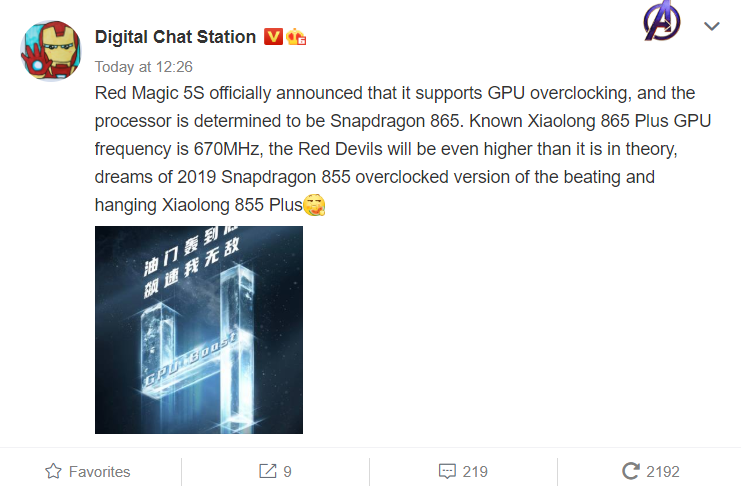
With Nubia gearing up for the launch of its next gaming smartphone Red Magic 5S, the Co-founder and President, Ni Fei, shared more promotional images. These indicate that the upcoming device might feature an overclocked GPU for better gaming performance.
Looking at the shared image poster, the Red Magic 5S is confirmed to support GPU Boost. While GPU boosts conventionally hint at a software tweak, a known blogger on Weibo @数码闲聊站 (Chinese microblogging website) stated that the device will feature an overclocked Adreno GPU in its Qualcomm Snapdragon 865+ SoC. The overclocked variant of the base Snapdragon 865 chip has a 670MHz GPU clock speed, and the Red Magic 5S will have an even higher frequency.
Unfortunately, this seems like speculation at the moment, so take it with a pinch of salt for now. But since the upcoming Nubia handset is made specifically with gaming in mind, it won’t come as a surprise if the company tweaked with its hardware as well as the software. Although, we will have to wait for an official launch before making any concrete statements, so stay tuned.
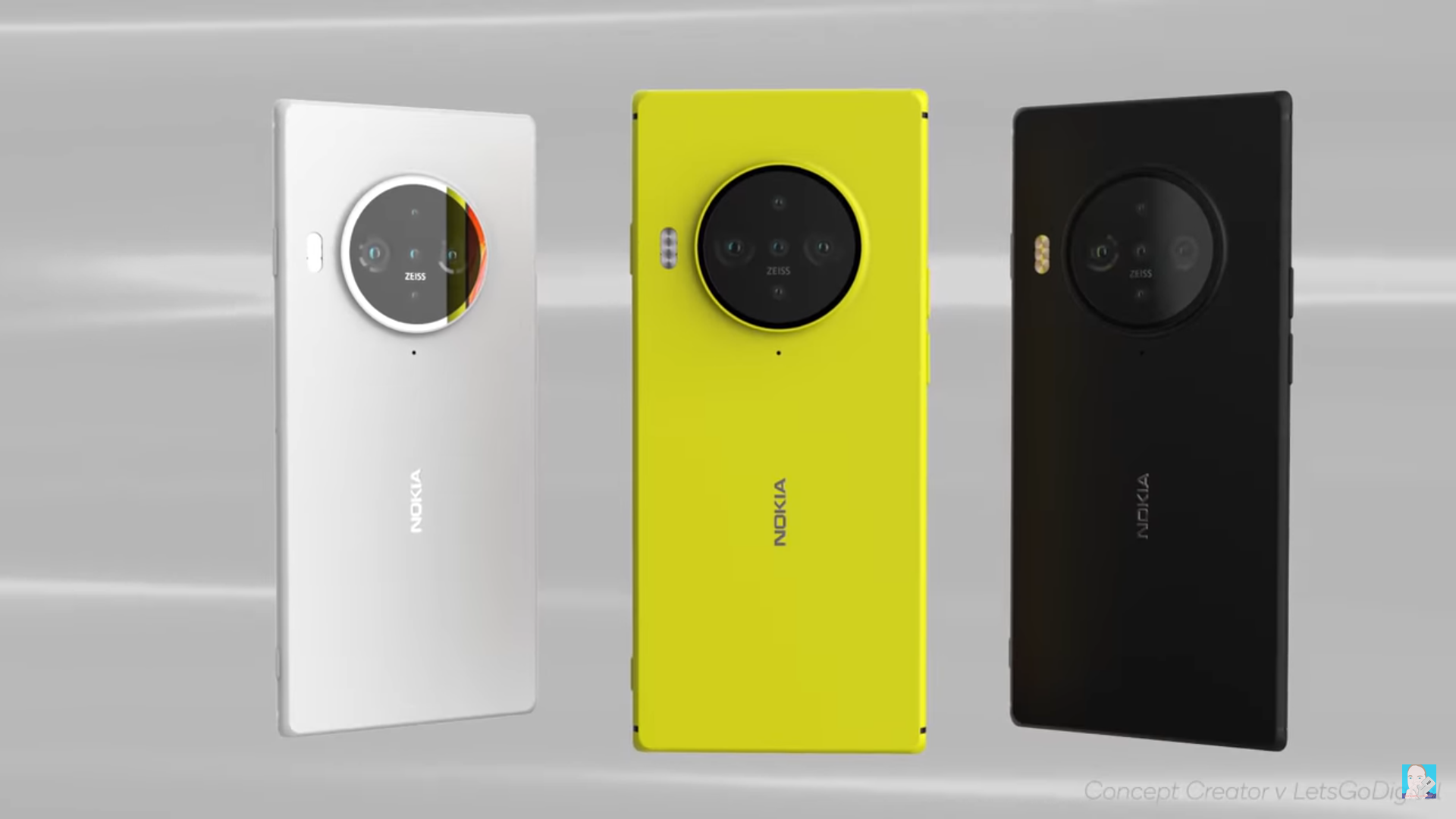
Nokia is currently working on multiple smartphone launches in different categories. While multiple rumors have surfaced in the past, a new report states that the development for the Nokia 9.3 PureView, Nokia 7.3, and Nokia 6.3 are on track and will launch by either late Q3 or early Q4 2020.
According to a NokiaPowerUser report, sources close to the matter have revealed that the development of the aforementioned handsets is still on schedule, despite various constraints caused due to the ongoing Coronavirus pandemic. Although, the exact launch date for different countries still depends on how the situation is being handled across the globe.
The sources claimed that HMD Global is currently testing Nokia 9.3 PureView, Nokia 7.3, and Nokia 6.3 prototypes and is making steady progress. Furthermore, the upcoming lineup will also include 5G handsets from the Finnish brand. We had also covered another NokiaPowerUser report in the past, which had detailed a possible launch delay. But it seems that the company might be able to avoid it if further complications do not arrive. So stay tuned, as we will be providing updates when more information is available.
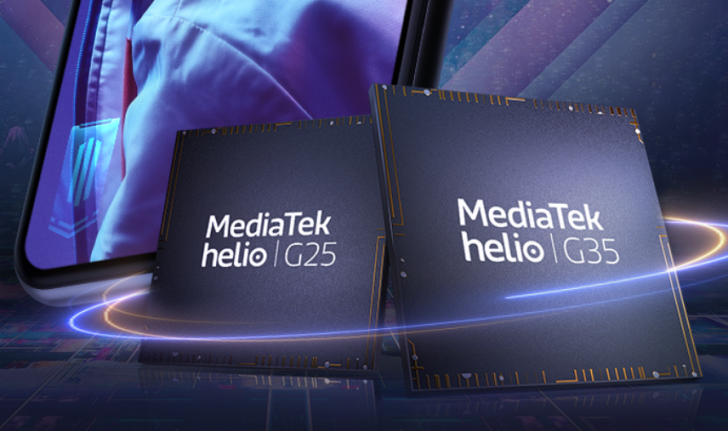
With 5G being the new trend in the smartphone industry, more and more OEMs are adopting the newer and faster bandwidth for their handset offerings from different segments. Despite this, 4G LTE enabled smartphones are still more popular and see higher sales and, due to supply constraints, many 4G chips from MediaTek to be out of stock until the end of 2020.
According to a UDN report, MediaTek’s supply for many of its 4G mobile chip has run dry and the restock will arrive only by 2021. The lack of supply is also indicative of the chipmaker’s focus on 5G chips, which has become popular in the current market in 2020. At the moment, the company has yet to comment on this matter but it is already known that its Dimensity chips have seen a rise in orders in the past quarter.
TrendForce, a known research based firm, also pointed out that the inclusion of Apple into the 5G market will boost the reach of 5G smartphones in multiple markets. Previously, we had even reported on another analysis from TrendForce that projected that Apple and Huawei will be the market leaders of the 5G market in 2020, especially in the second half of 2020. Ever since Huawei lost TSMC for chip supply, 5G Dimensity chips from MediaTek have also seen increased orders.
Although, while 5G chips have become increasingly more popular, 4G handsets are still preferred by consumers and have dominance in the market. One of the reasons for the shortage stems from the company’s supply chain, coupled with a lack of power management ICs. Thus, the supply for low end MediaTek chips are in short supply till the end of this year.
Xiaomi has announced earlier today (24th July 2020) that it would start crowdfunding of a new product. The crowdfunding for the new Mijia Vacuum Cleaner begins on 29th July 2020 at 10 am in China, and is priced at 199 Yuan (roughly 28 US Dollars).
Looking at the official images that the Chinese tech giant shared online, the upcoming vacuum cleaner resembles a water bottle. In other words, its design is cylindrical with a minimalistic aesthetic. According to official notes, the Mijia product has a weight less than a 500ml mineral water, while still offering a suction power of 13,000 Pa.
The new Mijia Handy Vacuum Cleaner houses a brushless moto, which runs at 88,000 rpm. It is a wireless product, which means it runs on a battery. The product seems to be aimed at portability and versatile use, as its promotional image showcases it collecting finer particles like dust or crumbs from a table and other areas where a conventional vacuum cleaner will not be used.
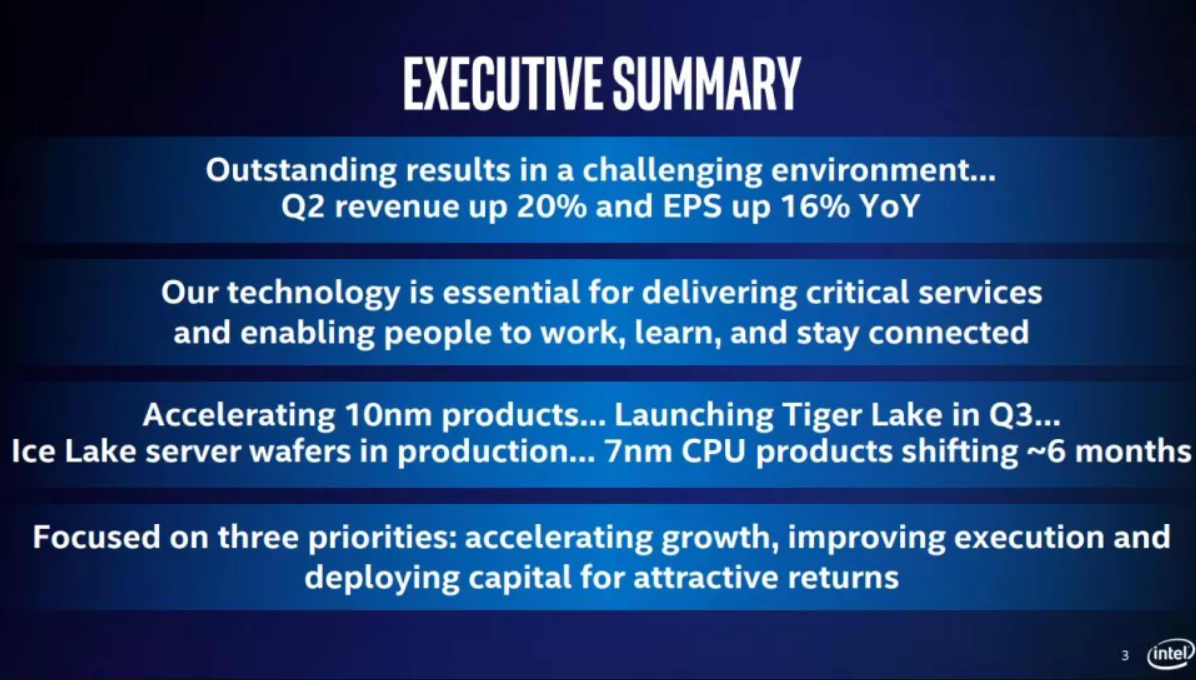
Earlier today (24th July 2020), Intel revealed its earnings for the second quarter of 2020. During the announcement, the known chipmaker also stated that its 7nm CPUs are being delayed by another 6 months and may now release in late 2022 or early 2023.
The delay now sets back the previously revealed release date, which means that its yields for the 7nm process are now 12 months behind the company’s originally planned roadmap target. In other words, the company is still not able to produce 7nm chips in an “economically viable way,” according to TomsHardware.
Box Swan, Intel CEO, said that the company had found a “defect mode” in its 7nm process. This caused yield degradation issues, as a result of which, the company had to invest in “contingency plans.” These plans also included third part foundries for its upcoming 7nm Ponte Vecchio GPUs that are the company’s first discrete graphics cards, which the company said will arrive in late 2021 or early 2022; showcasing another delay from the original 2021 launch.
Furthermore, Intel will also be launching its 7nm server CPUs (Granite Rapids) in 2023 that was originally listed for launch in 2022. This is especially concerning considering its primary rival AMD, has already made the shift to 7nm, and the current Intel roadmap will have Team Red’s EPYC server CPUs shift to 5nm before the end of 2022. Although, Team Blue will be launching the commercial 10nm desktop CPUs (Alder Lake) for laptops and PCs in the second half of 2021.
Huawei and Honor have been launching a number of 5G smartphones since the beginning of this year. As of June 10, both the brands have introduced a total of 15 5G handsets. However, the number has already increased with the debut of Enjoy 20 Pro, Honor 30 Youth, and Honor X10 Max. Now, adding to that list, the Chinese telecom giant has officially announced to launch Huawei Maimang 9 on July 27.
This is not the first time we are hearing about Maimang 9 by Huawei. This smartphone has leaked extensively revealing everything about it including the price.
At first, the specs of the phone with model number TNN-AN00 was shared by a tipster on Weibo. It was initially thought to be Enjoy 20 Plus. Then, the handset made its appearance on TENAA revealing it to be a Maimang series device, thanks to its unique logo.
Then, once again, the device leaked in live pictures, which was then followed by a listing on China Telecom, the former exclusive carrier partner for the series. This listing also confirmed its starting price to be 2,199 yuan ($313).
Now, today, Huawei has officially posted a teaser image of the device on Weibo mentioning its July 27 launch date. This particular picture only highlights the 64MP triple camera setup of the phone. We expect the company to tease more specs leading up to the day of the launch although we know everything about it.
In a major boost to the Indian government’s “Make in India” initiative, Apple has now started manufacturing iPhone 11 in India at the Foxconn plant which is located near Chennai in Tamil Nadu, reports The Economic Times.
Apple has already been manufacturing iPhones in India but there were not premium devices. That changed last year when Apple started assembling iPhone XR locally in India and now the current-generation iPhone 11 model has joined the list.
As per the report, Apple is ramping up production in phases and will soon start exporting the iPhone from India to other markets. This will likely lead to a price cut in the Indian market for the same model. Apple could reportedly save around 22 percent in import duties on locally assembled iPhone 11 in India.
The company started manufacturing smartphones in the Indian market with the first-generation iPhone SE, which is no longer on sale. It later started assembling iPhone 6S, iPhone 7, iPhone XR, and iPhone XS in India.
The report further adds that the company is also planning to start manufacturing the new iPhone SE 2020 as well as the iPhone 11 Pro smartphones in the Indian market at the Foxconn facility near Chennai.
Apple seems to be drawn to the benefits of the Government’s Production Linked Incentive (PLI) scheme. Also, smartphone companies are also planning to shift production outside of China to reduce dependence on a single country. Such a move is likely to help the manufacturing sector in India, along with countries like Vietnam.
The development of Apple manufacturing iPhone 11 in India comes just days after it was reported that the next-generation AirPods as well as 2021 AirPods Pro will be made in Vietnam. The company has already shifted the production of AirPods Pro to Vietnam.
Meanwhile, Apple is gearing up to launch four iPhone 12 models this year — iPhone 12, iPhone 12 Max, iPhone 12 Pro, and iPhone 12 Pro Max, having three different screen sizes. Reports indicate that while the announcement will take place in September, sales for some of the models could commence from October.
Earlier this week, Asus started taking pre-orders for a new Wi-Fi 6 router variant. The Mobile Suit Gundam Special Edition router is being sold for the RT-AX82U and RT-AX86U models and are priced at 1,199 Yuan (roughly 170 US Dollars) and 1,699 Yuan (roughly 242 US Dollars) respectively.
Looking at the new limited edition Wi-Fi 6 routers, we can see that RT-AX82U model perfectly resembles the main Gundam unit from the popular and iconic Mobile Suit Gundam series with its white, red, and blue color schemes. For those unaware, the anime is set in the distant future and feature giant fighting mechs (manned robots).
Similarly, the RT-AX86U fits the main antagonist’s color scheme and also supports Wi-Fi 6. Under the hood, the RT-AX82U Wi-Fi router sports high performance multi core processors and offers a peak bandwidth of 5,700Mbps. It is equipped with a 2.5G port and supports the latest Wi-Fi 6 standards. It also features AURA RGB gaming lighting effects as well. Unfortunately, these routers are only available in a limited quantity of 500 units and will go on sale from 3rd August 2020.
Xiaomi is known to provide at least 3 MIUI updates to most of its devices. Unfortunately, that isn’t the case with Mi Mix 3 5G as the company’s first 5G smartphone is still running its launch software MIUI 10 based on Android Pie. Though Xiaomi customer support confirmed the handset to get MIUI 12 by the end of October, a new Q&A on Mi Community contradicts it saying “there is no update plans for the 5G variant”.
It is said that Xiaomi did not manage to sell a large number of Mi Mix 3 5G in both Europe and China. As a result, the company seems to have abandoned plans to update it even to MIUI 11 and Android 10.
Therefore, a petition was created on Change.org by an owner of the device urging Xiami to provide MIUI 11 update. A month later, the customer support confirmed direct upgrade to MIUI 12 but based on Android Pie. This brought relief to the users of the handset.
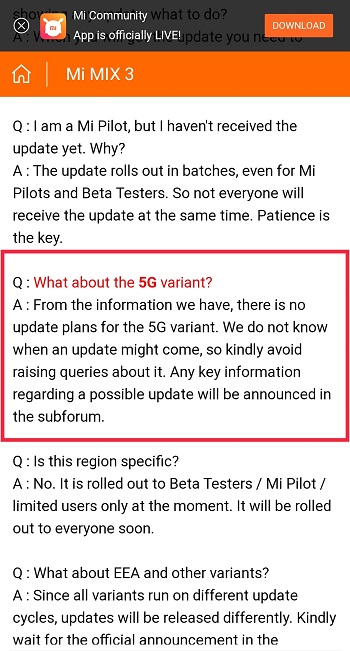
Recently, a post regarding MIUI 12 update for the regular (4G) Mi Mix 3 was posted by the company on Mi Community (via PiunikaWeb). It contains a Q&A at the bottom where a question asks “What about the 5G variant?”
The answer to this question reads, “From the information we have, there is no update plans for the 5G variant. We do not know when an update might come, so kindly avoid raising queries about it. Any key information regarding a possible update will be announced in the subforum.”
This clearly contradicts the statement given by customer support. Unfortunately, since this post is new, we think Xiaomi might have changed its plans for the Mi Mix 3 5G. That means the company’s first 5G smartphone may never receive MIUI 12.
As expected, Realme has today launched its new budget smartphone in the Indian market — Realme 6i. From the looks of it, the device seems like a rebranded version of the Realme 6s smartphone which was launched in Europe a couple of months ago.
The Realme 6i comes with a 6.5-inch Full HD+ LCD display that offers a screen resolution of 2400 x 1080 pixels. It has a 20:9 aspect ratio, 90Hz refresh rate, and 90.5 percent screen-to-body ratio, and is protected by a layer of Gorilla Glass 3 on top.
Underneath, the device is powered by the MediaTek Helio G90T chipset. It comes in two memory variants — 4GB RAM with 64GB storage and 6GB RAM with 128GB storage. The phone also has a dedicated microSD card slot for expanding the storage capacity.
Coming to the optics, the device features a quad-camera setup on the back. It comes with a 48-megapixel primary sensor with f/1.8 aperture, an 8-megapixel 119-degree ultra-wide-angle lens with f/2.3 aperture, a 2-megapixel mono sensor with f/2.4 aperture and a 2-megapixel MP 4cm macro sensor with f/2.4 aperture.
On the front side, the smartphone has a 16-megapixel snapper with f/2.0 aperture for taking selfies and video calling. The device also features a side-mounted fingerprint sensor that can unlock the phone in about 0.2 seconds, claims the company.
The smartphone runs the Android 10 operating system out-of-the-box with a layer of Realme UI on top. It is powered by a 4,300mAh battery that has support for 30W Flash Charge fast charging technology.
The Realme 6i comes in two color options — Eclipse Black and Lunar White. The 4GB RAM model costs ₹12,999 while the 6GB RAM model is priced at ₹14,999. It will be up for sale in India from 31st July through Realme’s official website and online marketplace Flipkart.
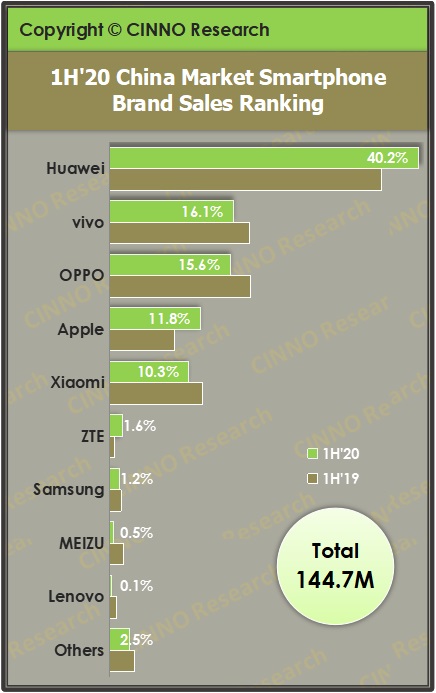
A recent CINNO Research report has revealed important news regarding the Chinese smartphone market. In the first half of 2020, the smartphone shipments in the region fell by a sizeable 24.7 percent compared to 2019, with Huawei, including Honor, leading the market with a share of more than 40 percent.
According to the report, the top three players in China’s market for the first half included Huawei (and Honor), Vivo (and iQOO), and Oppo (and Realme). These three alone accounted for 71.9 percent of all domestic smartphone shipments. The primary reason for the sharp decline in the market was due to the ongoing Coronavirus pandemic, which had first reported cases surface in China.
The report revealed that Huawei and Honor sold about 58 million handset unit combined and held a market share of 40.2 percent with a year on year increase of 4.9 percent. Furthermore, Vivo and iQOO shipped over 23.2 million units and had a market share of 16.1 percent and a year on year growth of 2.1 percent. And lastly, Oppo and Realme sold approximately 22.6 million units and had a market share of 15.6 percent and saw a year on year decline of 2.6 percent.
Similarly, Apple and Xiaomi rounded up the top 5, with the former shipping 17 million units and held a market share of 11.8 percent and year on year increase of 3.4 percent. As for the latter, 15 million units were sold with a market share of 10.3 percent and a year on year decline of 1.7 percent. Notably, we had reported on a projection from TrendForce which expected Huawei and Apple to lead the 5G smartphone market in 2020; and with the launch of the 5G iPhone 12 series coming up, we may expect a shift in the ranking for the second half of 2020.
OnePlus seems to be having some serious issues when it comes to data security. The Chinese company has yet again exposed user data, in what Android Police is calling the stupidest way. The company exposed email addresses of hundreds of its customers in a research email.
While it’s not data breach and the issue is a bit less serious, it showcases the trend on how OnePlus continues to face data-related issues. The development comes when the company suffered two security-related issues this month.
In this customers’ email exposure, OnePlus sent out a mass mailer for research and study, and instead of putting email ids of customers in the BCC field, the company sent out the email with all email ids in the To field, exposing them to everyone on the list.
However, the number of the leaked email address of OnePlus customers have not been independently verified but a user on Reddit which revealed this and shared image, claims that it is hundreds of customers.
Last year, in November, the company had revealed a major data breach in which customer’s information such as name, contact number, email, and shipping address was exposed but the company had said that payment information was safe.
Prior to that, OnePlus had reported its first security breach in which credit card information of nearly 40,000 OnePlus customers was exposed through the company’s official website. After last year’s breach, the company had said that it would partner “with a world-renowned security platform” and launch a bug bounty program.
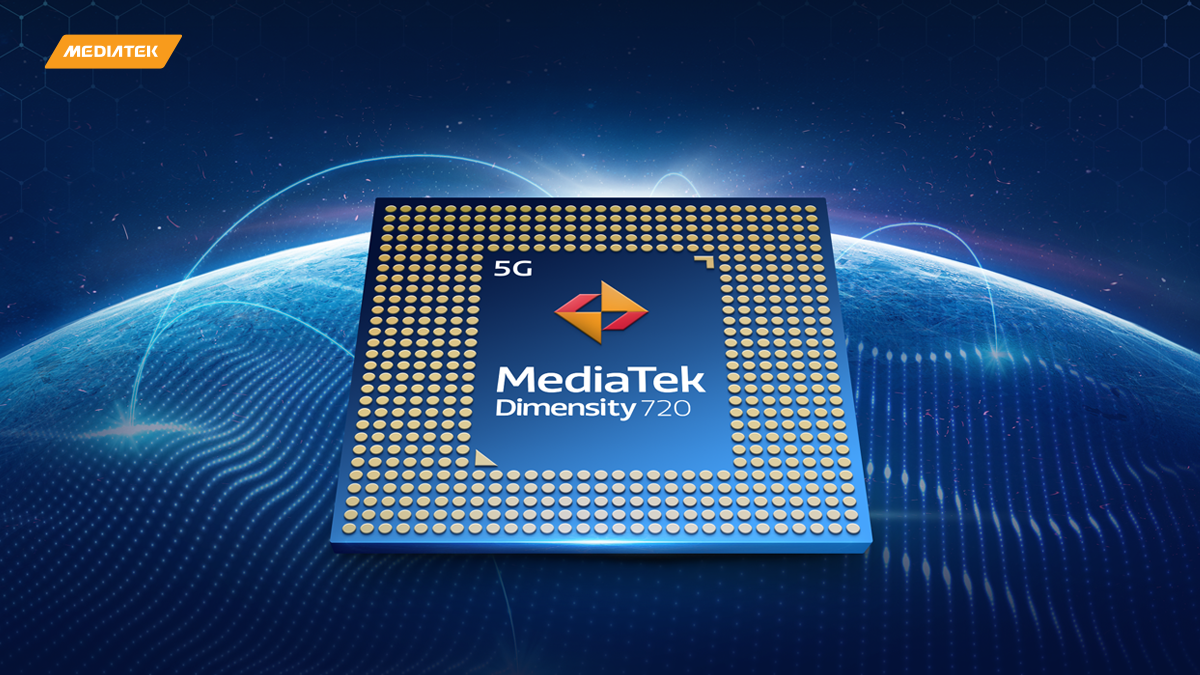
MediaTek recently launched its all-new chipset under the Dimensity lineup — MediaTek Dimensity 720 5G, which is aimed towards mid-range smartphones. The launch of this new chipset introduced the new Dimensity 700-series of processors from the company.
At the time of launching the chipset, MediaTek had not revealed details about which manufacturers will be among the first to launch devices powered by this new chipset. Today, the company has revealed that information.
MediaTek has confirmed three Chinese smartphone makers — Huawei, OPPO, and Xiaomi as the first brands which will launch devices powered by the Dimensity 720 SoC, reports China-based Economic Daily. However, there’s no timeline for this, but we expect something in the coming weeks.
Coming to the chipset, it is manufactured using TSMC‘s 7nm process. It comes with an integrated 5G modem that supports 2CC carrier aggregation, VoNR, 5G/4G Dual SIM dual standby, and sub-6GHz 5G.
It packs two ARM Cortex-A76 big cores operating at 2GHz in the octa-core CPU, which the company claims to improve the responsiveness of applications for fluid user experience. It also packs an ARM Mali G57 GPU, up to 12GB fast LPDDR4X memory and UFS 2.2 storage for fast read/write speeds.
This MediaTek Dimensity 720 SoC has support for 90Hz high frame-rate displays along with enhanced video streaming capabilities like MiraVision and HDR10+. It supports up to 64-megapixel single sensor or a dual-camera setup consisting of a 20-megapixel and 16-megapixel sensors, with AI-backed features powered by integrated APU.
It also comes with MediaTek 5G UltraSave technology which uses both network and content awareness intelligence to manage the modem’s operating mode in real-time to further extend the battery life. To minimize the power consumption of always-on voice assistants, the company has included a feature called Voice Wakeup.
After teasing the upcoming smartphone, Realme has now confirmed that the company will launch the Realme V5 smartphone in China. Now, the brand has revealed the launch date, confirming that it will be launched on 27th July.
While the company has teased the smartphone’s design through teasers, nothing about the device’s specifications and features has been revealed by the company so far. But, we have some idea about what to expect.
Realme has said that the phone will be made up of a brand new material. It seems that the device will have an AG glass back with matte-finish and will feature a larger Realme branding.
Recently, RMX2111/RMX2112 5G smartphones got certified by TENNA, which reveals that the phone will come with a 6.5-inch Full HD+ LCD display with a 20:9 aspect ratio and a punch-hole cutout from the front-facing camera. Under the hood, the device may reportedly be powered by the MediaTek Dimensity 800 chipset.
The device is expected to come in variants — 6GB RAM and 8GB RAM with three internal storage options — 64GB, 128GB, and 256GB. It reportedly has a microSD card slot, allowing uses to expand the storage capacity.
In the camera department, the listing reveals a quad-camera setup on the back. It consists of a 48-megapixel + 8-megapixel + 2-megapixel + 2-megapixel sensors. The smartphone will be running the Android 10 with its own Realme UI on top.
It will be powered by a 5,000mAh battery and we expect some sort of fast charging solution from the company, probably 30W fast charging. As per the listing, the phone will come in four color options — Black, Gray, Green, and Silver.
From the TENAA listing, it seems that we could see Realme launch the V5 series of smartphones and just a single phone. There could be some other variants of the Realme V5 as well, including the Pro model. To know for sure, we’ll have to wait for few more days.
We use cookies on our website to give you the most relevant experience by remembering your preferences and repeat visits. By clicking “Accept”, you consent to the use of ALL the cookies.
This website uses cookies to improve your experience while you navigate through the website. Out of these, the cookies that are categorized as necessary are stored on your browser as they are essential for the working of basic functionalities of the website. We also use third-party cookies that help us analyze and understand how you use this website. These cookies will be stored in your browser only with your consent. You also have the option to opt-out of these cookies. But opting out of some of these cookies may affect your browsing experience.
Necessary cookies are absolutely essential for the website to function properly. This category only includes cookies that ensures basic functionalities and security features of the website. These cookies do not store any personal information.
Any cookies that may not be particularly necessary for the website to function and is used specifically to collect user personal data via analytics, ads, other embedded contents are termed as non-necessary cookies. It is mandatory to procure user consent prior to running these cookies on your website.