OnePlus has commenced a phased rollout of OxygenOS 15.0.2.601 for the OnePlus 13s (review) in India. The update, identified by build number CPH2723_15.0.2.601(EX01), is reaching a limited user group before a wider release.
OnePlus 13s
This new software introduces several key feature updates. Lock screen animations for Live Alerts and notifications have been improved. The Photos app now includes a “map album,” which plots geotagged images on a map. Privacy features are enhanced, allowing users to change their privacy password from secondary pages within Private Safe and Photos’ Locked album. Additionally, images restored from a Private album will now reappear in their original folders.
Digital wellbeing tools have also been refined. Users can now access daily and weekly screen time statistics in App Management, located within Phone Manager. The IR Remote application sees an improved layout for control panel buttons.
The update integrates the September 2025 Android security patch, strengthening device security. The over-the-air (OTA) rollout is incremental, with a small user percentage receiving the update first. Users can manually check for the update by navigating to Settings > System > System Updates.
OnePlus has also recently published its August 2025 OxygenOS FAQ, addressing issues related to the Google dialer pad font size, limitations of the Private Safe feature, and restrictions of BeaconLink short-range calling.
For more daily updates, please visit our News Section.
Motorola is gearing up to expand its tablet lineup in India with the upcoming Moto Pad 60 Neo. The company has just announced the Moto Pad 60 Pro in the region, and now, a new affordable tablet has been teased to arrive in the Indian market soon.
Moto Pad 60 Neo Could Be the Budget Stylus Tablet You’ve Been Waiting For
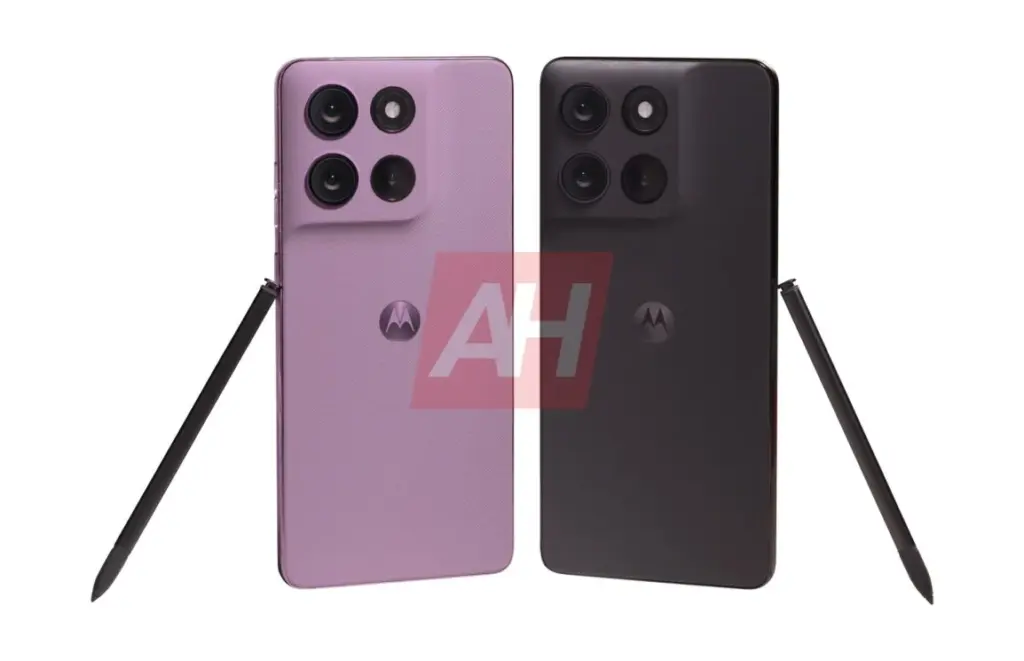
Motorola’s upcoming tablet just surfaced in a teaser on an official Flipkart microsite. This confirmed a bunch of its key spesc and features while also offering us a look at its design. The Moto Pad 60 Neo appears similar to the Moto Pad 60 Pro with a dual tone green finish, metallic build, 490 gram body, and a 6.99mm chassis.
Moto Pad 60 Neo
On the front, the Moto Pad 60 Neo sports an 11-inch display with a 90Hz refresh rate and a 2.5K resolution. This is likely an LCD panel, similar to the Moto Pad 60 Pro model. Looking at the teaser poster, the screen is surrounded by relatively thin but noticeable bezels. Another notable feature is the support for a stylus, which is also included in the box. The new tablet supports tilt detection, low latency, Bluetooth auto connect, and 4,096 levels of pressure.
Under the hood, the Moto Pad 60 Neo is equipped with the MediaTek Dimensity 6300 SoC. A sizeable 7,040mAh battery pack, which supports 68W wired fast charging via a USB Type-C port (charger included in the box). Motorola is set to debut the new budget tablet on 12th September 2025. So stick around for more as we will be covering the launch event next week.
For more daily updates, please visit our News Section.
ALLDOCUBE has officially launched its first 13-inch flagship tablet, the Ultra Pad, expanding its product line from compact devices to large-screen models. The tablet will be available starting September 10, 2025, at 12:00 AM PT.
During the launch offer period, buyers can get it for $299 until September 25, 2025. Afterward, the regular price will be $339. The Ultra Pad will be sold on Rakuten Japan and AliExpress.
Large 13-inch Display with Smooth 144Hz Refresh Rate
The ALLDOCUBE Ultra Pad features a 13-inch 2.8K IPS in-cell display. With its 144Hz refresh rate, the screen offers smooth scrolling, fluid animations, and responsive performance for gaming and video playback. Wide viewing angles make it convenient for sharing content, while the large format enhances both entertainment and productivity tasks.
Strong Performance with Snapdragon® 7+ Gen 3
The tablet is powered by the Snapdragon® 7+ Gen 3 processor, built on a 4nm process for high efficiency. It also includes a 40 TOPS AI NPU, enabling AI-driven tasks and optimized performance across applications. With an AnTuTu benchmark target of ~1.4 million, the Ultra Pad is equipped to handle demanding gaming, multitasking, and productivity needs.
Memory, Storage, and Expansion Options
To support modern usage, the Ultra Pad comes with 12GB of RAM and 512GB of internal storage. Users who need more capacity can expand storage via a microSD card up to 1TB. This setup ensures enough space for large files, apps, and media libraries.
Productivity, Creativity, and AI OS
Running on ALLDOCUBE AI OS (based on Android 15), the tablet provides a range of productivity features. It supports split-screen multitasking, floating windows, and PC mode for a desktop-like experience. The device also works with optional accessories including a pogo pin keyboard and a 4096-level pressure stylus, making it suitable for writing, sketching, and office tasks.
Audio and Battery for All-Day Use
For entertainment, the Ultra Pad comes with an eight-speaker DTS-certified system, offering immersive audio. Powering the tablet is a 15,000mAh battery that supports 33W PD/QC fast charging. The battery capacity allows for up to 14 hours of continuous video playback, making it dependable for long workdays or travel.
The ALLDOCUBE Ultra Pad combines a large high-refresh display, powerful Snapdragon performance, generous storage, and long-lasting battery life at an accessible price point. With its $299 launch offer, it delivers a balance of productivity, creativity, and entertainment features, making it a strong option for students, professionals, and media enthusiasts alike.
At IFA 2025, a new outdoor technology brand called RugOne made its global debut. The brand is incubated by Ulefone, a company well-known for its rugged smartphones. RugOne’s mission is to create technology that is durable, sustainable, and repairable, designed specifically for outdoor adventurers and professionals. With its slogan “To Be Bold”, the brand emphasizes leadership, innovation, and a strong commitment to eco-friendly technology.
The name “RugOne” combines the words “Rugged” and “Top One,” symbolizing a promise of strength and excellence. RugOne also benefits from Ulefone’s established manufacturing expertise and shared supply chain, ensuring production efficiency and high-quality standards.
Focus on Sustainability and Repairability
RugOne aims to stand apart by minimizing environmental impact. The company focuses on products that last longer, can be repaired, and use eco-friendly designs. This philosophy aligns with EU Ecodesign directives, which encourage more sustainable and recyclable consumer products. The highlight of this commitment is its first product, the Xever 7 series.
RugOne Xever 7 Series Unveiled
The Xever 7 series introduces a global first in rugged smartphones: a swappable battery system. Unlike traditional phones, where the battery is sealed inside, the Xever 7’s battery can be removed and replaced without turning off the phone. This innovation provides uninterrupted power, making it perfect for hikers, field workers, and explorers in remote areas where charging sockets are unavailable.
Both the Xever 7 Pro and Xever 7 come with a 5550mAh Class-A EU-rated battery. Every device ships with two batteries and two battery covers, and users can purchase extra original batteries for extended use. This design helps reduce electronic waste and extends the overall lifespan of the device.
Powerful Performance and Display
The Xever 7 series is built for both rugged use and high performance. It features a 6.67-inch AMOLED display with a 120Hz refresh rate, delivering smooth visuals and an excellent viewing experience for videos, maps, and games.
Under the hood, the phones support eSIM connectivity, an X-axis linear motor for advanced haptic feedback, and are optimized for outdoor reliability.
Advanced Camera System
Photography is another key strength. The Xever 7 series comes with a 50MP AI main camera with Optical and Electronic Image Stabilization for steady shots. There is also a 64MP infrared night vision camera with quad IR LEDs, making it highly useful in darkness.
The Xever 7 Pro goes a step further by including a FLIR® Lepton® 3.5 thermal imaging sensor. This technology allows the phone to detect heat signatures in darkness, through smoke, or on objects, a valuable tool for engineers, rescue workers, and adventurers. The standard Xever 7 replaces the thermal sensor with a 50MP ultra-wide camera, catering to photography enthusiasts who want a wider field of view.
Designed for Adventure
RugOne’s philosophy centers around durability, sustainability, and personalization. The Xever 7 series is designed to be tough, versatile, and reliable, while also offering technology that adapts to the real-world needs of outdoor users.
With its swappable battery innovation, rugged durability, and advanced camera features, the RugOne Xever 7 series marks a bold new chapter in the rugged smartphone market. By combining eco-conscious design with powerful performance, RugOne positions itself as a forward-looking brand for both explorers and professionals.
Oppo has officially launched the A6 Pro, a budget-friendly smartphone that manages to pack in some surprisingly great features. For around 250 US Dollars, the new device brings an absolutely massive battery pack, smooth OLED display, and flagship level water and dust resistance.
This Oppo Budget Phone Packs a 7000mAh Battery, 120Hz Display, & Flagship-Level Durability
The Chinese tech giant announced the Oppo A6 Pro with a tall 6.57-inch OLED display with a 120Hz refresh rate, FHD+ resolution, up to 1400 nits of peak brightness, 100 percent DCI P3 color gamut, and up to 2160Hz PWM dimming. Under the hood, it is equipped with the MediaTek Dimensity 7300 SoC, which is paired with up to 16GB of RAM and 512GB of internal storage.
Oppo A6 Pro 5G
A massive 7,000mAh battery pack powers this model, which supports 80W wired fast charging. Despite this large capacity, the Oppo A6 Pro measures just 7.96mm thin and weighs 190 grams. You get a glass rear panel along with a metallic frame and MIL-STD-810H military durability certification. Similar to flagship Android phones, the smartphone also arrives with an IP66 + IP68 + IP69 rating for water and dust resistance. For optiocs, the rear has a 50MP + 2MP dual camera setup, while the front houses a 16MP shooter for selfies and video calls.
Other notable features include an in-display fingerprint scanner, stereo speakers, Bluetooth 5.4, NFC, WiFi 6, dual SIM support, and an IR blaster. Oppo announced the A6 Pro in multiple color options, namely Black Jade, Gold, and Blue. There are multiple storage variants as well, so here are the pricing:
8GB + 256GB – 1,799 Yuan (roughly 252 US Dollars)
12GB + 256GB – 1,999 Yuan (roughly 280 US Dollars)
16GB + 256GB – 2,199 Yuan (roughly 308 US Dollars)
16GB + 512GB – 2,499 Yuan (roughly 350 US Dollars)
This model is available for pre-order right now, while the first sale will kick off in China on 12th September 2025.
For more daily updates, please visit our News Section.
Last year in September, Redmi unveiled the Redmi 14R 5G. The China-exclusive phone was a rebranded version of the Redmi 14C 5G. It appears that the company will apply the same strategy for the Redmi 15R 5G and Redmi 15C 5G. In a new development, the upcoming Redmi 15R 5G has appeared in China Telecom’s product library, revealing all its key details.
Redmi 15R 5G specifications (rumored)
Redmi 15R 5G
The Redmi 15R 5Gl is said to feature a 6.9-inch IPS LCD panel with HD+ resolution. In terms of size, it measures 171.66 x 79.47 x 7.99mm and weighs 205 grams, giving it a fairly large and sturdy build.
Under the hood, the device will be powered by the MediaTek MT6835T, which is the Dimensity 6300 SoC. It is expected to offer multiple configurations with up to 12GB of RAM and up to 256GB of internal storage. The phone will pack a 6,000mAh battery that supports 33W fast charging. On the software side, it will run Android 15 with the HyperOS 2.0 skin on top.
For photography, the Redmi 15R 5G will feature a 13-megapixel rear camera paired with an LED flash, while the front side will have a 5-megapixel selfie shooter. Additional features include a side-facing fingerprint sensor, a microSD card slot, and a 3.5mm audio jack.
The Redmi 15R 5G will be sold in configurations, such as 4GB+128GB, 6GB+128GB, 8GB+128GB, 8GB+256GB, and 12GB+256GB. The phone will also be available in multiple colour options, such as Titanium Purple, Star Rock Black, Lime Green, and Cloud White. The China Telecom listing reveals that the 15R will be available for purchase starting Sept. 11.
Redmi 15C 5G: What to expect?
So far, Redmi has launched the Redmi 15 5G, Redmi 15C, and Redmi 15C 5G globally. The brand is yet to announce the rumored Redmi 15C 5G. This device, which is expected to be available globally, will reportedly be a rebranded version of the China-exclusive Redmi 15R 5G.
For more daily updates, please visit our News Section.
OnePlus has started rolling out OxygenOS 15.0.0.860 for the OnePlus 13. The update is live in India with build number CPH2649_15.0.0.860(EX01) and is being released in batches. A wider rollout will follow in the next few days.
Changelog highlights
The update improves animations when tapping Live Alerts or notifications on the lock screen. A new map album in the Photos app lets users view all images with location data on a map. Photos moved from the Private album back to public now return to their original locations. Users can now change their privacy password from any secondary page of Private Safe and from the Locked album in Photos.
The update adds daily and weekly screen time tracking under App Management in Phone Manager. The layout of the remote control panel buttons in IR Remote has also been improved.
BeaconLink has been added under Settings > Mobile Network. This feature allows users to send text, image, and voice messages to nearby people without an internet connection.
The update integrates the September 2025 Android security patch to improve system security.
Rollout details
As with other updates, the rollout is incremental. A small number of devices are receiving it now, and more users will get it in the coming days. Update content may vary by region.
For users in India, bug reporting has been made easier. Issues can be reported directly from the OnePlus Community app under the Bug Report section or by dialing *#800# to access the feedback tool.
Users who have not yet received the notification can check manually by going to Settings > System > System Updates.
For more daily updates, please visit our News Section.
HyperOS 3 is a major upgrade for Xiaomi devices that brings a host of exciting features, plenty of under-the-hood improvements, and security enhancements. It’s smoother, feature-rich, and more secure. The brand recently unveiled HyperOS 3 in China, and now it appears the global release is also around the corner.
In a recent post on X, Xiaomi announced that the Xiaomi 15T series will launch on September 24th. The more exciting part is that Xiaomi’s HyperOS official account on X quoted the post with a message, “Big surprises incoming… Don’t miss it: Sept 24th!” While there was no mention of HyperOS 3, it is pretty clear that the company is referring to its global release, which will happen alongside the Xiaomi 15T series later this month.
So, the Xiaomi 15T series will come with Android 16-based HyperOS 3 right out of the box. At the event, the company will also showcase major features and improvements of the new software and announce the beta rollout schedule. The Xiaomi 15 and Xiaomi 14T Pro are likely to be the first phones to receive early access to HyperOS 3.
In China, Xiaomi began rolling out beta updates shortly after the launch event. We can expect the same with the global release. If you want to test HyperOS 3 beta on your Xiaomi device, remember to apply as soon as the beta program becomes available in your region. Here’s our step-by-step guide on becoming a HyperOS beta tester.
Since HyperOS 3 has already been released in China, we already know what it has to offer. So, let’s take a look at the major changes while we wait for the global release.
What to expect from HyperOS 3?
Xiaomi has made numerous under-the-hood changes to HyperOS 3, which make it 10% more energy efficient and 4% lighter in terms of CPU load. The brand also claims a 21% faster app launch and 10% power reduction for video playback.
Gamers also benefit from this upgrade as it promises 15% improved frame rates and a 9% reduction in touch response latency. Xiaomi has optimized over 100 system animations, offering a more fluid and responsive software experience.
HyperOS 3 isn’t all about under-the-hood changes. There are visual upgrades as well, including a Xiaomi Super Island, which works similarly to Apple’s Dynamic Island, but with its own set of unique features and capabilities, including support for up to three islands, small window multitasking, and the ability to drag and drop content from Super Island to supported apps.
There are new icons with more vivid color palettes, round corners, and a polished look. The status bar has also been redesigned, featuring new icons and smoother animations. HyperOS 3 also brings a glimpse of a liquid glass design to the launcher’s search bar and settings menu, giving them a premium look. The new Gallery app supports auto-sorting albums, pet face recognition, and photo organization.
Customizing the lock screen becomes easier and more enjoyable with new options, including AI-generated dynamic wallpapers, various clock styles, fresh wallpapers, and new fonts. HyperOS 3 also offers a centralized lock screen editing interface, making it easier than ever to personalize your lock screen.
Xiaomi has also made an effort to bridge ecosystem gaps, as HyperOS 3 allows Apple users to run Android apps seamlessly on macOS (up to three mobile app windows), unlock their Xiaomi phones using Touch ID, share files, and sync notifications. Privacy and security also improve with two-factor authentication login, enhanced data protection, and better control over app permissions. HyperOS 3 users will also be able to locate their lost devices even if they are powered off.
We’ll continue to track HyperOS developments and publish them in our HyperOS section. So, don’t forget to visit that regularly for the latest updates. You can also join our Telegram channel for all the latest happenings in tech.
iQOO is expected to launch the iQOO 15 in October in China. This is expected to be followed by the iQOO Neo 11 and Neo 11 Pro in November or December. In a new update, two new Vivo smartphones have surfaced in the database of China’s 3C certification platform. These are believed to be the upcoming iQOO 15 and Neo 11 Pro.
iQOO 15, iQOO Neo 11 Pro 3C listings
iQOO 15 and iQOO Neo 11 Pro 3C approved
As can be seen above, two new devices bearing the model numbers V2505A and V2520A have received approval from the 3C authority in China. According to reports, these devices will be called the iQOO 15 and iQOO Neo 11 Pro, respectively, when they hit the market. The 3C listings hint that these devices may ship with a 100W charger.
iQOO 15 specifications (rumored)
As per reports, the iQOO 15 will have a 6.85-inch Samsung AMOLED 2K screen, a Snapdragon 8 Elite Gen 5 chipset, in-house gaming chip, and a battery of around 7,000mAh capacity. Its topmost configuration is expected to offer 16GB of RAM and 1TB of internal storage.
The iQOO Neo 11 Pro is expected to feature a 2K OLED panel, a Dimensity 9500 chipset, in-house gaming chip, a battery of around 7,000mAh capacity with 100W charging. It will also feature a metal frame, an ultrasonic in-screen fingerprint sensor, and a possibly waterproofing.
The iQOO Neo 11 is likely to feature the Snapdragon 8 Elite and pack the same specs as the Neo 11 Pro. Likely, its camera specs will not be as powerful as the Pro model.
For more daily updates, please visit our News Section.
BASF and Chinese battery maker Welion say they’ve reached a key step in bringing semi-solid-state batteries to market. BASF Shanshan Battery Materials (BSBM), the company’s joint venture in China, has shipped its first batch of cathode active materials (CAM) for these batteries to Welion.
The project began in August 2024 and hit this milestone in just a year, according to Batteries News. The new CAM uses ultra-high nickel and a composite coating to address one of the toughest problems in solid-state development: the unstable interface between cathodes and solid electrolytes. Fixing that issue improves energy density, reduces resistance, and extends cycle life.
Welion plans to use the material in its next generation of semi-solid-state packs aimed at electric vehicles, large-scale storage, and smaller devices like drones. Semi-solid batteries are seen as a bridge between today’s lithium-ion cells and full solid-state designs. They promise better safety and durability than conventional batteries while being easier to scale than true solid-state.
“This is a milestone for our battery materials business,” said Desmond Long, CEO of BSBM. Welion’s general manager, Dr. Jin Xiang, added that BASF’s materials provide a strong base for further cooperation.
The battery industry is racing to find alternatives that boost range and safety for EVs. Full solid-state remains years away, but semi-solid options are getting closer to production. BASF and Welion’s progress shows the technology is moving out of the lab and into industrial supply chains — an encouraging sign for the next generation of energy storage.
If battery life tops your smartphone wish list, Honor’s latest release might catch your eye. The company has announced the Play10T in China, and its standout feature is a huge 7,000mAh cell paired with budget-friendly pricing.
The phone went official on September 9, 2025, and comes in three storage options: 8GB+128GB for 999 yuan (around $140, or 849 yuan with subsidy), 8GB+256GB for 1,199 yuan ($168, or 1,019 yuan with subsidy), and 12GB+256GB for 1,399 yuan ($196, or 1,189 yuan with subsidy). Color choices include black, white, and blue.
On the hardware side, the Play10T runs on Qualcomm’s Snapdragon 6s Gen 3 chip and carries a 6.77-inch LCD screen with 2412×1080 resolution. This is an upgrade over the 720p panel of the Play9T. The display supports 120Hz refresh rate and peaks at 700 nits of brightness. Honor has added aluminosilicate glass protection and an eye comfort mode.
The battery is clearly the star here. Along with its size, it supports 45W wired charging and even reverse charging for topping up other devices. The rear camera includes a 50MP sensor, while the front gets a basic 5MP unit.
Other features include IP65 dust and water resistance, Wi-Fi 5, Bluetooth 5.1, NFC, and single-frequency GPS. Dual speakers are onboard too, and Honor claims up to “400% volume.” The phone measures 8.24mm thick, weighs 207 grams, and has earned SGS’s five-star durability certification.
The Play10T doesn’t try to be a premium phone, but with its giant battery, modern software, and aggressive pricing, it’s aimed squarely at buyers who want longevity and value in the same package.
Ulefone has officially revealed the launch prices of its new Armor 29 Pro series, the successor to the Armor 28 Ultra line. The global sale begins on September 15th, 2025, across platforms such as AliExpress, Ulefone’s official store, and Ozon.
At launch, the Armor 29 Pro Thermal will be sold for $599.99, down from its regular $799.99 price, while the non-thermal Armor 29 Pro will cost just $459, instead of $649.99. These discounts make the series one of the most competitively priced rugged smartphone launches of the year.
Armor 29 Pro Thermal – Flagship at $599.99
The Armor 29 Pro Thermal brings premium rugged features with the added benefit of a built-in thermal imaging camera. The thermal sensor offers a resolution of 640 × 512 with a 25Hz refresh rate, powered by an advanced AI algorithm for sharper thermal results. Alongside this, users get a massive 21,200mAh battery supported by 120W fast charging that can reach 20% capacity in just 10 minutes.
The device features a 6.67-inch flexible AMOLED display with a 120Hz refresh rate, paired with a 1.04-inch AMOLED sub-display for quick notifications. It runs on the MediaTek Dimensity 7400 processor and houses a 64MP night vision camera, 50MP main sensor, and 50MP ultrawide lens. With IP68/IP69K ratings and MIL-STD-810H certification, it’s built to endure extreme conditions.
Armor 29 Pro Standard – Power at $459
For those who don’t need thermal imaging, the standard Armor 29 Pro offers the same massive 21,200mAh battery, 120W charging, AMOLED dual-display setup, Dimensity 7400 chip, and versatile triple-camera system. The only missing feature is the thermal camera, which makes the price drop to $459 at launch, offering great value for users who prioritize performance and durability over specialized imaging.
Promotions and Lucky Draw
In addition to discounted launch prices, Ulefone is also running a lucky draw event on its official website, where one winner will receive a free Armor 29 Pro Thermal.
With flagship-level durability, an unmatched battery size, and launch prices as low as $459, the Ulefone Armor 29 Pro series positions itself as one of the best-value rugged smartphones of 2025.
OnePlus is expected to announce the OnePlus 15 and OnePlus Ace 6 flagship phones in October in China. There are speculations that the brand may introduce the OnePlus Turbo series before the end of the year. It seems that tipster Digital Chat Station has shared the key details about the rumored Turbo lineup.
OnePlus 8,000mAh+, 9,000mAh+ battery phones could be in the works
Alleged leak about OnePlus Turbo series
As can be seen above, OnePlus has a mid-range flagship performance-driven phone packed with an 8,000mAh+ battery under testing. The leak also reveals that the brand is also testing a mid-range sub-flagship performance-focused phone.
This seems to align with recent leaks that OnePlus is working on a new Turbo-branded series of performance-focused phones. According to a recent leak, the OnePlus Turbo series is expected to be priced more competitively, making it accessible to a wider range of markets. Despite its lower pricing, the device will reportedly focus on performance tuning to deliver strong performance in the budget segment.
Back in June, DCS said that OnePlus’ new smartphone series will debut by the end of 2025. The lineup is expected to compete with Redmi smartphones, probably the Redmi Turbo lineup. Therefore, the new lineup is expected to be priced at around 2,000 Yuan (~$280).
Meanwhile, the brand is currently busy teasing the arrival of the OnePlus 15. Recently, the brand shared the first camera samples and confirmed that it has ended its collaboration with Hasselblad, and the device will ship with the company’s self-developed DetailMax engine for image optimizations.
A recent leak claimed that the OnePlus 15 will be priced significantly lower and will be more performance-focused. It is expected to compete with the likes of the iQOO 15 and Realme GT 8 Pro in the Chinese market.
For more daily updates, please visit our News Section.
Ever run out of storage on your phone or wished your laptop had more space without paying extra for a higher-capacity model? A new materials breakthrough suggests that future devices could hold far more data than today’s NAND flash storage allow — all in the same space.
A research group led by Professor Yoichi Murakami at the Institute of Science Tokyo, has developed a covalent organic framework (COF) structure that uses tiny “molecular rotors” to store information. Their findings were published in the Journal of the American Chemical Society and highlighted by Notebookcheck.
Unlike today’s semiconductor-based memory, this COF crystal is designed with ultra-low density, giving the molecular rotors enough space to spin and hold orientation. Each rotor acts like a switchable bit, potentially serving as the building block for non-volatile memory such as ROM.
To be useful, these rotors had to meet four conditions: respond to an electric field, keep their position stable at room temperature, rotate without interference, and withstand high temperatures.
According to the researchers, the material checks all four boxes. The rotors remain stable at everyday conditions, can endure up to 150°C, and the overall framework doesn’t break down until close to 400°C. Data orientation can also be switched reliably under strong electric fields or when heated above 200°C.
This is the first time such performance has been achieved with a COF material, addressing a long-standing obstacle in molecular memory research. While practical storage devices based on the technology are still some years away, the approach could eventually allow far denser storage than is possible today.
If developed further, molecular rotor memory could make it possible to fit vastly more data into smaller chips—potentially impacting everything from smartphones and wearables to IoT devices.
Sony’s next mid-range smartphone has surfaced ahead of its official announcement. An early product listing spotted in Hong Kong, along with leaked renders, has revealed the upcoming Xperia 10 VII in detail. While the company has yet to confirm its launch timeline, the information gives a good idea of what to expect from the successor to last year’s Xperia 10 VI.
Sony Xperia 10 VII specifications (rumored)
Sony Xperia 10 VII render
According to the leak, the Sony Xperia 10 VII will feature a 6.1-inch OLED display with a resolution of 1080 x 2340 pixels and an aspect ratio of 19.5:9. It is unclear whether the screen supports a 120Hz refresh rate.
For imaging, the handset is said to include a dual rear camera system with a 50-megapixel main lens and a 13-megapixel secondary sensor, likely for ultra-wide shots. On the front, an 8-megapixel camera will handle selfies and video calls.
The device will be powered by the Snapdragon 6 Gen 3 chipset paired with 8GB of RAM and 128GB of internal storage. Expansion through a microSD card of up to 2TB is also supported. The phone will ship with Android 15 out of the box.
A 5,000mAh battery is expected to power the phone, and connectivity options include 5G (covering a wide range of Sub-6 bands), NFC, GPS, Wi-Fi, Bluetooth 5.4, and USB Type-C.
Sony Xperia 10 VII render
The phone will also support dual SIM functionality. Measuring 153 x 72 x 8.3mm and weighing 169g, the Xperia 10 VII is said to come in Charcoal Black, Cedar White, and Turquoise color variants.
One notable change is the redesigned camera arrangement, shifting from a vertical alignment to a horizontal layout at the back. While pricing and availability remain unclear, the premature listing suggests an official announcement could be close. The Xperia 10 series has followed an annual update cycle, and the Xperia 10 VII looks set to continue this pattern with a combination of fresh design and updated hardware.
While the Xperia 1 VII is available in limited markets, a recent report claimed that the Xperia 10 VII could be available in multiple markets, including Europe, EU, and some Asian regions. As far as launch is concerned, the device may launch in October.
For more daily updates, please visit our News Section.
A recent leak by reliable tipster Digital Chat Station carried a hint about the Realme GT 8 Pro’s camera module design. The same leak also revealed that Realme will collaborate with popular camera brand Ricoh for an enhanced photography experience on the GT 8 Pro. Now, a leaked image of what appears to be the GT 8 Pro’s camera module has surfaced on Weibo. At the same time, a newer leak by DCS has revealed the chipset that powers the GT 8 along with the key specifications of the GT 8 Pro.
Realme GT 8 Pro camera module design
Alleged Realme GT 8 Pro camera module live shot
As can be seen, the alleged Realme GT 8 Pro is enclosed in a protective case. The camera module features a triple-lens setup with two large circular sensors on top and a square periscope lens below, accompanied by an LED flash on the side, all housed within a rectangular island.
Realme GT 8 Pro leaked specs
According to reports, its camera setup will include a 50-megapixel main camera, an ultra-wide lens, and a 200-megapixel periscope telephoto camera. In today’s leak, DCS revealed that the device is equipped with a 6.78-inch flat OLED 2K panel integrated with an ultrasonic fingerprint sensor, 1115E dual master-level dual speakers, an X-axis linear motor (probably 1016-level), and an IP68/69-rated body.
Realme GT 8 chipset revealed
Realme GT 8 to feature Snapdragon 8 Elite
In the comments section of the same Weibo post, DCS revealed that the Realme GT 8 is equipped with the Snapdragon 8 Elite SoC. He added that the configuration of the GT 8 is not photography-focused like the Pro variant.
Previous reports have revealed that it will have a smaller 6.6-inch screen and is expected to pack a battery of around 7,000mAh capacity. The other details of this device are under wraps.
For more daily updates, please visit our News Section.
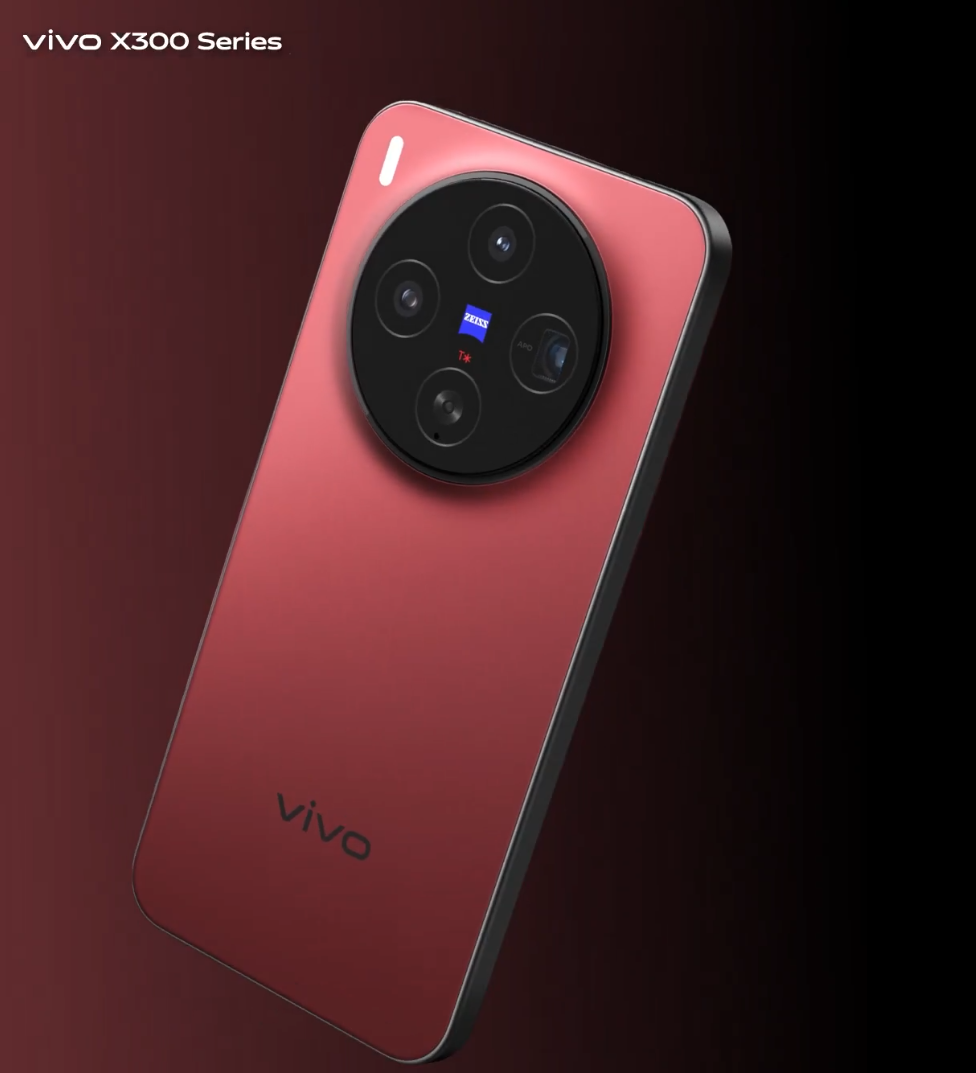
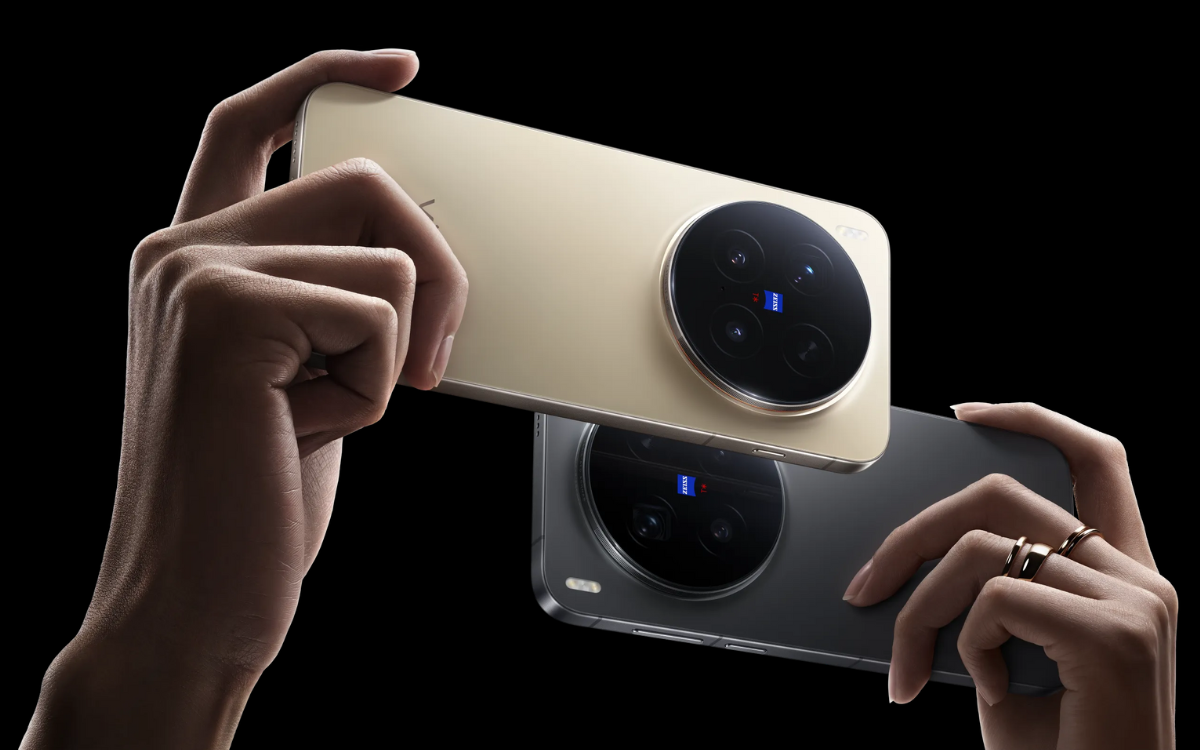
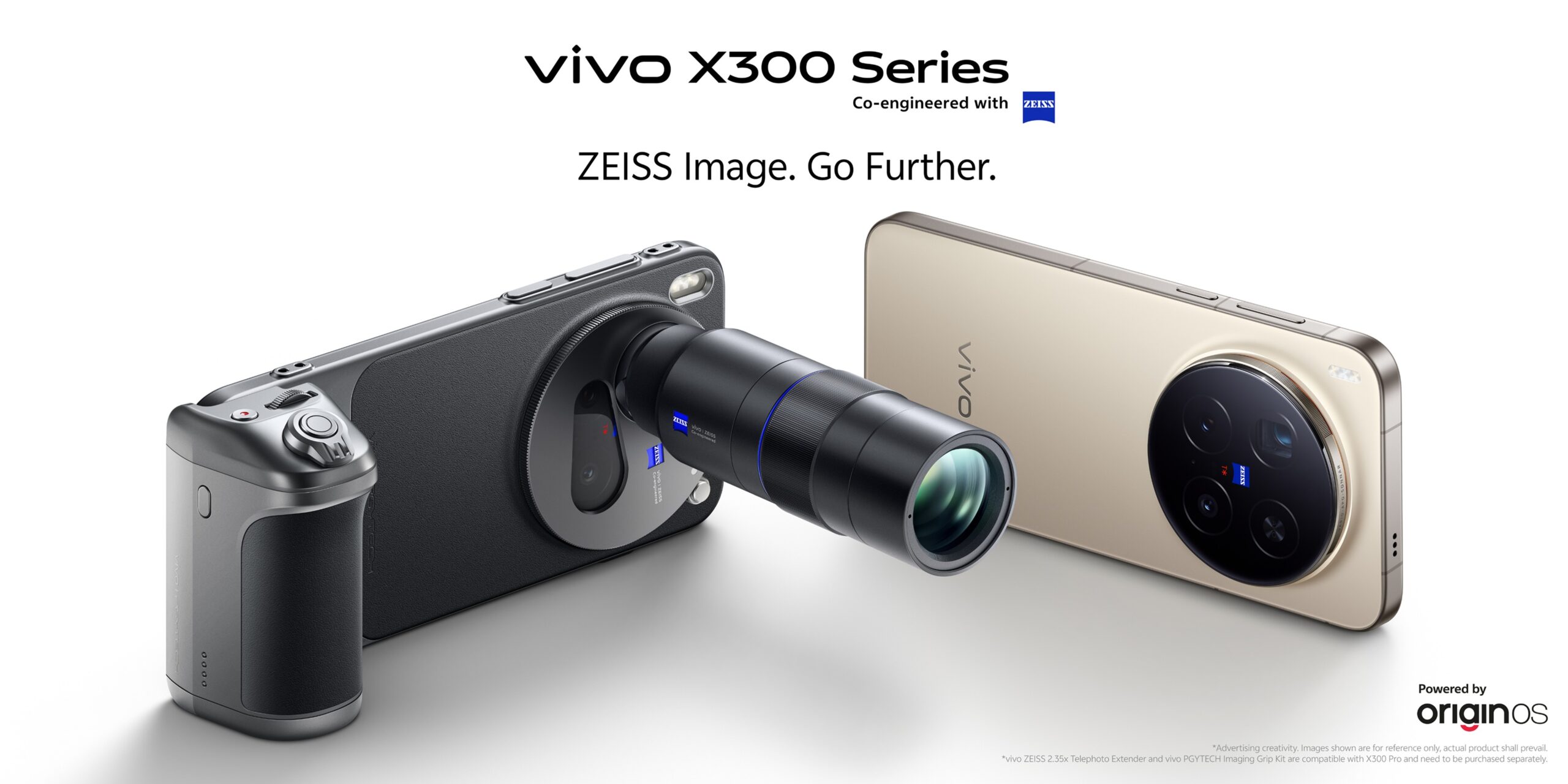
For the past few days, Han Boxiao, Product Manager at Vivo, has been sharing early insights about the Vivo X300 series. Recently, he shared the primary and periscope telephoto camera details of the X300 and X300 Pro. Today, he shared the following image to give a glimpse of the Vivo X300’s side profile.
Vivo X300 design teased
Vivo X300 series phone side view
Shown above is a side profile of an upcoming Vivo X300 series. While he has not specified the exact model, Chinese tech bloggers claim that the said device is the Vivo X300.
According to Boxiao, the X300 series is equipped with Zeiss dual 200-megapixel sensors along with a stronger periscope telephoto lens, placing it at the top of the imaging category. With such heavy specifications, many expected the Vivo X300 series to become thick or cumbersome, especially around the camera housing.
However, the Vivo X300’s camera deco has been kept surprisingly slim, rising only 1.28mm above the rear glass. This has been made possible by an advanced cold-carving process that uses glass three times thicker than usual, with production requiring more time and precision. Despite the powerful setup, the phone retains a thin profile, with both the X300 and X300 Pro measuring just over 7mm at their thinnest.
Boxiao emphasized that the X300 series represents Vivo’s most significant effort in terms of design so far. By combining slimness with strong imaging hardware, Vivo aims to deliver not only one of its most powerful photography flagships but also the most refined and comfortable design in the X series’ history.
Vivo is yet to confirm the launch of the Vivo X300 series. However, reports suggest that the X300 and X300 Pro will debut as the world’s first Dimensity 9500-powered smartphones in October in China.
For more daily updates, please visit our News Section.
Mini tablets have made a strong comeback in 2025, packing flagship specs into compact frames that are easier to carry and more versatile than ever. From stylus support and high-refresh-rate OLED panels to vapor chamber cooling and gaming-ready internals, the latest generation of sub-9-inch tablets offers something for everyone. Here’s a look at the best mini tablets you can buy right now.
Huawei has launched the MatePad Mini in China as a premium compact device positioned between a large smartphone and a small tablet. It features an 8.8-inch 2.5K OLED screen with a 120Hz refresh rate, 1800 nits peak brightness, and ultra-thin 2.99mm bezels. The device measures just 5.1mm in thickness and weighs 255g.
It supports the Huawei M-Pencil Pro and runs HarmonyOS 5.1. The MatePad Mini likely uses the in-house Kirin 9010 chip, though Huawei has not confirmed the exact processor. It also includes a 6400mAh battery with support for 66W fast charging. The tablet has a dual rear camera setup with a 50MP main sensor and an 8MP wide-angle lens, along with a 32MP front-facing camera.
Connectivity includes Wi-Fi 7, Bluetooth 5.2, and single SIM support for cellular data. The MatePad Mini is available in several configurations, starting at 3899 yuan (around $545) for the 12GB+256GB model. Huawei also sells a Collector’s Edition with 16GB RAM and up to 1TB storage, priced at up to 6499 yuan (about $909).
Redmi has introduced the K Pad in China as its latest compact tablet with a focus on gaming and performance. The device has an 8.8-inch 3K LCD screen with a 165Hz refresh rate and Gorilla Glass 5 protection. It supports HDR10, HDR Vivid, and Dolby Vision, with a peak brightness of 700 nits.
The tablet is powered by the Dimensity 9400+ chip and features a large 12050mm² VC cooling system for sustained performance. It includes Xiaomi’s first dual USB-C architecture with bypass charging. The stereo speaker setup uses a four-voice coil design, and the tablet has dual X-axis linear motors to improve gaming feedback.
Redmi ships the K Pad with Android 15 and Xiaomi HyperOS 2. It comes in storage options up to 1TB and RAM up to 16GB. Pricing starts at 2799 yuan (about $390) for the 8GB+256GB version and goes up to 4199 yuan (about $585) for the top model.
Red Magic has launched the Astra Gaming Tablet for the global market. It features a 9.06-inch 2.4K OLED display with a 165Hz refresh rate and a peak brightness of 1600 nits. The screen supports ultra-high-frequency PWM dimming and is paired with dual DTS:X Ultra-certified speakers.
The tablet runs on the Snapdragon 8 Elite chip and is available with up to 24GB LPDDR5T RAM and 1TB UFS 4.1 Pro storage. It uses Android 15 with Redmagic OS 10.5 and includes features like a power button with a fingerprint sensor and bypass charging. The 8200mAh battery supports 80W fast charging.
The Red Magic Astra is available in several global markets. Pricing starts at $549 for the 12GB+256GB model and goes up to $899 for the 24GB+1TB version.
Lenovo has launched the Legion Y700 (2025) in China as a performance-focused 8.8-inch tablet. It features a 3K LCD panel with a 165Hz variable refresh rate and 600 nits peak brightness. It runs on the Snapdragon 8 Elite chip and supports up to 16GB LPDDR5X Ultra RAM and 512GB UFS 4.0 storage.
Lenovo has added a VC 7-layer composite cooling system with a total cooling area of 41,356mm². The battery capacity is 7600mAh and supports 68W fast charging. The tablet ships with Android 15 and ZUI 16 and includes features like Dolby Atmos dual speakers and DP Out via USB-C.
The standout feature is its compatibility with the G9 game controller, which transforms the device into a handheld gaming console. The tablet starts at 3299 yuan (about $462), while the controller attachment is priced at 499 yuan (about $69).
For more daily updates, please visit our News Section.
Oppo’s Find series head Zhou Yibao has shared fresh details about the upcoming Find X9 lineup. According to his post, the new flagship range will continue the company’s trend of pushing boundaries in display design and could bring yet another industry first. He shared the following images and hinted that the Find X9 is set to refine the work done on the Find X8 and Find X8s, where bezels were already trimmed down significantly, surpassing rivals like the iPhone 16 Pro Max.
Oppo Find X9: Narrowest four-sided bezels
Oppo Find X9 has the slimmest bezels compared to Find X8s and Apple iPhone 16 Pro Max
Yibao highlighted that the upcoming Find X9 takes bezel design to a new level. He noted that the previous generation, the Find X8s, had already surpassed the iPhone 16 Pro Max with the narrowest bezels in the industry at the time. With the Find X9, Oppo has gone even further, achieving bezels slimmer than those on the X8s, and very likely delivering the narrowest physical four-sided equal bezels seen so far across the entire lineup.
He pointed out that Oppo has been consistently pushing boundaries for three consecutive generations, from the Find X8 to the Find X8s and now the Find X9, backed by billions invested in its self-developed display production lines.
Oppo Find X9 has the slimmest bezels compared to Find X8s and Apple iPhone 16 Pro Max
Yibao also emphasized design refinements such as the golden R-corner, balanced dimensions, and the breakthrough in bezel slimness, presenting the Find X9 as Oppo’s strongest standard edition yet and a flagship created to mark the brand’s 30th anniversary. He concluded by inviting fans to guess the exact bezel measurements.
Oppo Find X9 specifications (rumored)
The Find X9 is said to feature a 6.59-inch LTPO OLED screen with 1.5K resolution and a 120Hz refresh rate. At the core, the Find X9 is expected to debut with the MediaTek Dimensity 9500 chip built on TSMC’s 3nm process. Powering the phone will be a 7000mAh battery, paired with 80W wired and 50W wireless charging.
Camera hardware is said to include a 50-megapixel Sony LYT-808 main sensor with optical stabilisation, a 50-megapixel Samsung JN5 ultra-wide lens, and a 50-megapixel Samsung JN9 periscope telephoto unit supporting 3x optical zoom. The front camera is said to use a 50-megapixel Samsung JN1 sensor. Additionally, Oppo is introducing an upgraded Danxia color reproduction system across the series, ensuring more precise and natural colour output.
The Find X9 series is expected to launch in October in China, and it is said that its global launch will be held on Oct. 28.
For more daily updates, please visit our News Section.
Samsung is heading toward the launch of its Galaxy S26 series, but not everyone is impressed with what’s been shown so far. Well-known leaker Ice Universe has been critical of Samsung’s designs in the past, and now he’s calling out the Galaxy S26 Pro’s bezels—drawing comparisons with Xiaomi’s upcoming 16 Pro.
Xiaomi 16 Pro (left) vs Galaxy S26 Pro (right)
According to Ice Universe, the Galaxy S26 Pro doesn’t show much progress in trimming its bezels, while Xiaomi’s 16 Pro is taking a clear lead thanks to its use of “the most advanced technology in the industry”. The renders he posted show the Xiaomi 16 Pro with slimmer bezels and significantly more rounded corners, while the Galaxy S26 Pro appears almost identical to its predecessor. The leaker even suggested Samsung might be intentionally aligning with Apple’s iPhone 17 Pro look rather than chasing maximum screen-to-body ratio. This leak even reaffirms the previous rumor that Samsung is ditching the Note series’ signature boxy design, starting with the S26 Ultra.
He goes further, saying the Xiaomi 16 Pro could end up being the best-selling non-Ultra Android flagship, potentially putting real pressure on Samsung. That’s partly because Xiaomi seems to be going bigger on hardware as well: the 16 Pro is tipped to feature a 6,300 mAh battery, compared to the Galaxy S26’s modest 4,300 mAh pack.
Meanwhile, Samsung has been criticized for sticking with older camera hardware across multiple generations, while the Xiaomi 16 Pro is rumored to bring notable upgrades — including a larger main sensor — you can check out its leaked camera specifications here.
The Galaxy S26 series is expected in January 2026, while the Xiaomi 16 lineup is rumored to arrive in September 2025.
We use cookies on our website to give you the most relevant experience by remembering your preferences and repeat visits. By clicking “Accept”, you consent to the use of ALL the cookies.
This website uses cookies to improve your experience while you navigate through the website. Out of these, the cookies that are categorized as necessary are stored on your browser as they are essential for the working of basic functionalities of the website. We also use third-party cookies that help us analyze and understand how you use this website. These cookies will be stored in your browser only with your consent. You also have the option to opt-out of these cookies. But opting out of some of these cookies may affect your browsing experience.
Necessary cookies are absolutely essential for the website to function properly. This category only includes cookies that ensures basic functionalities and security features of the website. These cookies do not store any personal information.
Any cookies that may not be particularly necessary for the website to function and is used specifically to collect user personal data via analytics, ads, other embedded contents are termed as non-necessary cookies. It is mandatory to procure user consent prior to running these cookies on your website.