Advertisement

Asus ROG Phone 3 Rumor Roundup: Specs, Features & Everything We Know

The official launch of the Asus ROG Phone 3 is just a few days away. It is the most awaited gaming phone of 2020 and it will launch on the same day of the first Lenovo gaming phone which will debut under the Legion lineup. We already made a rumor roundup of the Lenovo Legion phone; now, it is time to tell you everything we know about the ASUS ROG Phone 3. Thanks to numerous leaks and rumors, we know most of the specifications of the upcoming gaming phone, and we had the chance to see its design in all its splendor. In this rumor roundup, we will give you all the known info about the specifications, features, and launch of the ASUS ROG Phone 3. Note that a lot of things are not officially confirmed, so take rumors with a pinch of salt.

ASUS ROG Phone 3 Rumor Roundup

ASUS ROG Phone 3 render by Evan Blass

Design

ASUS ROG Phone 3 leaked render

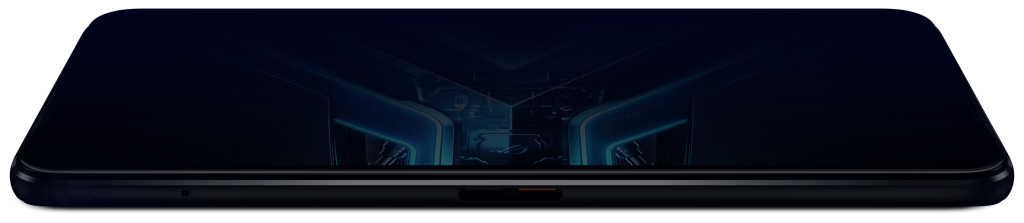
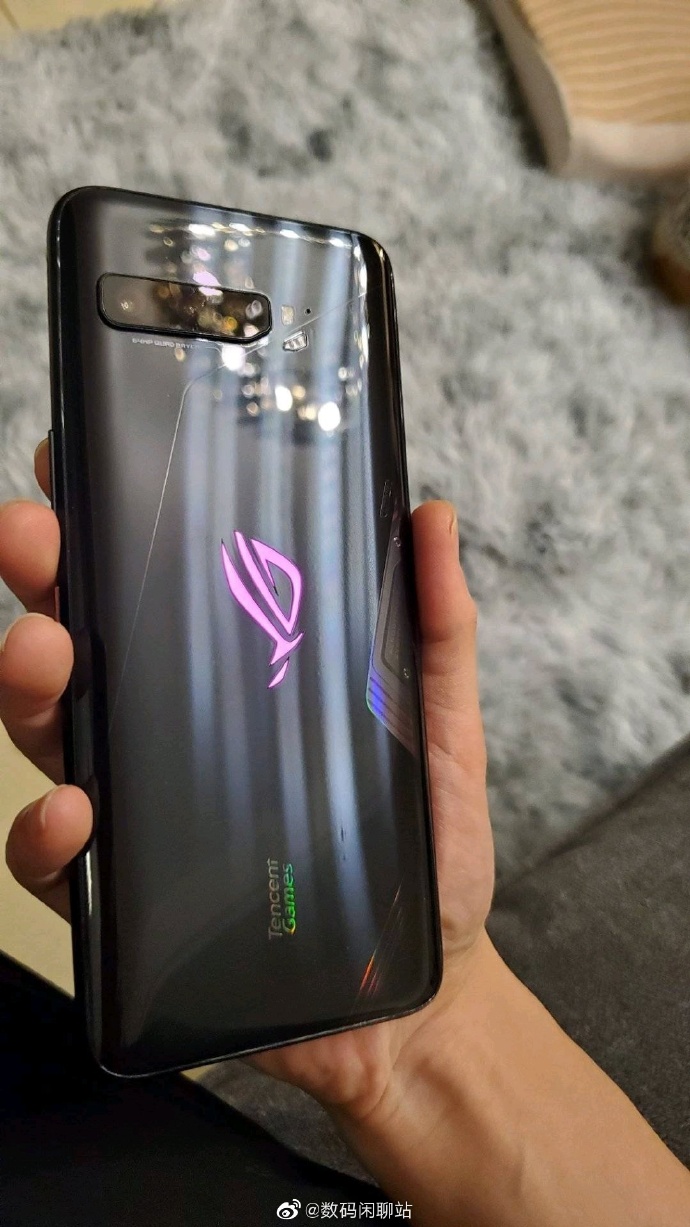
Thanks to renders published by the known leakster Evan Blass and several other leaks, we know how the Asus ROG Phone 3 will be when it comes to the aesthetics. Its design will be similar to the predecessor Asus ROG Phone II, but there will be a few important changes that will improve its look and the user experience. The Asus ROG Phone 3 still comes with noticeable bezels around the display, but they are narrower than the ROG Phone 2. However, they still house front-facing stereo speakers, but not with the color accents found on the predecessor. The edges are less sharp than the ROG Phone 2.
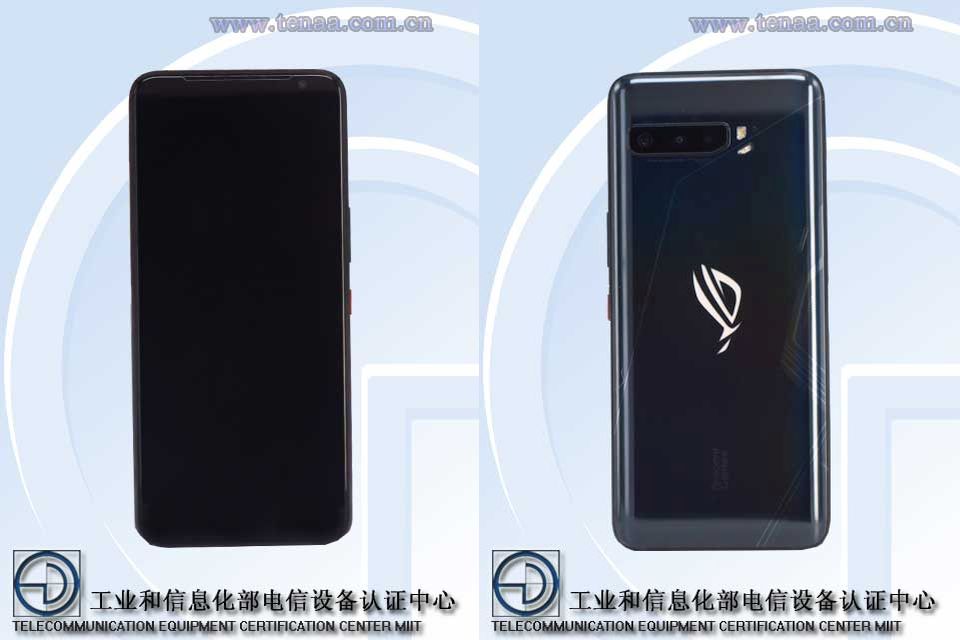
ASUS ROG PHone 3 TENAA

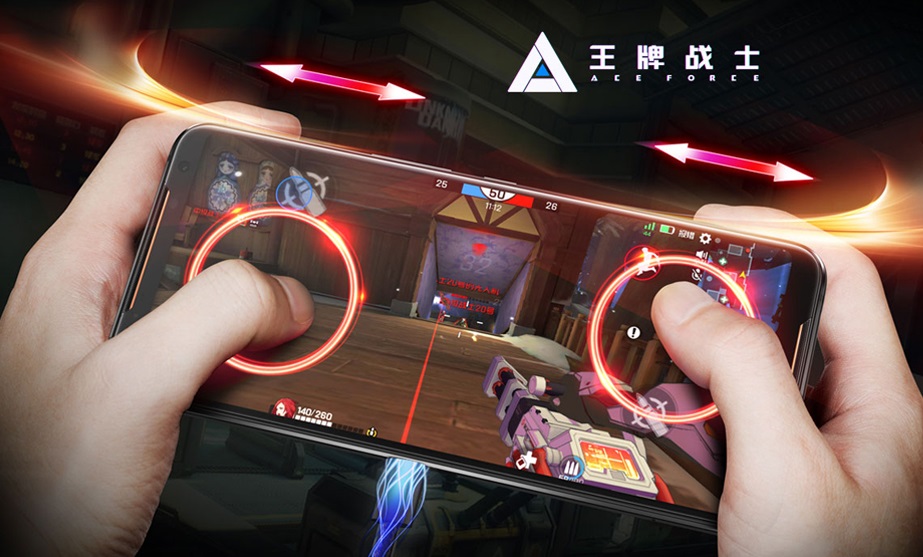
On the right edges of the ROG Phone 3, you get two buttons and an additional USB-C port. There is a richer camera module as well, but we will talk about it in the paragraphs below. The TENAA listing revealed that the ROG Phone 3 measures 171 x 78 x 9.85 mm and it weighs 240 grams. TENAA only revealed the existence of a Bright Black color variant: we do not know whether or not the Taiwanese giant will launch different color variants. The phone will also feature four different gesture controls built into the AirTrigger: on the frame of the phone, there will be ultrasonic pressure-sensitive regions that can be mapped to emulate a tap on the screen.
Asus

Display

The display of the Asus ROG Phone 3 will be an AMOLED panel with a diagonal of 6.59 inches and a 19.5:9 aspect ratio. It will sport a Full HD+ resolution with 1080 x 2340 pixels, as well as a refresh rate up to 144 Hz, the highest ever seen on a phone. The display will not be the only light on the phone: on the rear side, there will be a LED-lit ROG logo. As for now, this is all we know about the display of the ROG Phone 3. Its predecessor ROG Phone 2 also came with the Gorilla Glass 6 protection by Corning and it carried the HDR10 certification. So it is legit to expect these two specifications on its successor as well.

Specs & Features

ASUS ROG Phone 3 AnTuTu

The Asus ROG Phone 3 will be powered by the new Snapdragon 865 Plus mobile platform and it will be the first phone launched with this SoC alongside the Lenovo Legion phone. In case you do not know, Snapdragon 865 Plus is actually the best flagship chipset released by Qualcomm and it offers a 10 percent performance boost if compared to the Snapdragon 865 in both CPU and GPU performance. It is even the first mobile chipset to offer a clock frequency above 3 GHz (3.1 GHz, to be accurate). The Snapdragon 865+ is bundled with a Snapdragon X52 external 5G modem supporting all the 5G spectrum, including mmWave (SA and NSA).

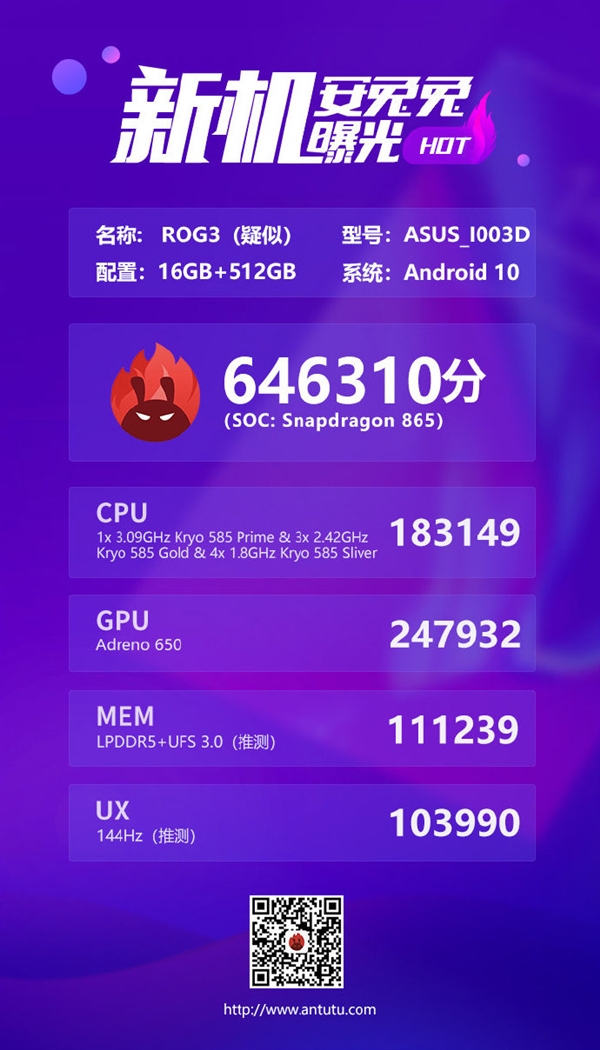
As revealed by benchmarking platforms and leaks, the Snapdragon 865 Plus will be paired with up to 16 GB of LPDDR5 and up to 512 GB of UFS 3.0 internal storage. The phone was spotted on AnTuTu where it recorded a marvelous benchmarking score of 646,310 points, identified by the model number ASUS_I003D. The result refers to the top-end configuration with 16 GB of RAM and 512 GB of internal storage, but it seems there will be other configurations with 8 and 12 GB of RAM, as well as 128 and 256 GB of internal storage. On Geekbench, the handset scored 910 points in single-core and 3229 points in multi-core with Snapdragon 865+ and 12 GB of RAM.

The Asus ROG Phone 3 will run Android 10 out of the box, customized by the ROG UI. Note that the ROG UI found on the ROG Phone 2 offered the chance to switch between a customized user interface and stock Android, which is a very interesting and useful feature. Bluetooth SIG confirmed that the phone will support Bluetooth 5.2, besides Wi-Fi 6.

Camera

While the ROG Phone 2 packed a dual camera setup on the rear side, its successor ROG Phone 3 will sport a triple camera on the back. The main sensor of the triple camera will be a 64 MP lens. We expect it to be a midrange camera phone, nothing surprising. The front camera will have a 13 MP resolution. We do not have any info about the secondary sensors of the rear camera department, but we believe they will include an ultrawide sensor (finally).

Battery

The ASUS ROG Phone 3 is expected to be powered by a whopping 6,000 mAh battery just like its predecessor, which will guarantee a very long battery life. The battery will support a 30W fast charging technology, not the fastest one, especially for a 6000 mAh battery, but enough. Further, there will be a secondary USB-C port which will allow charging the phone without disturbing the gameplay while the handset is in landscape mode.

ASUS ROG Phone 3 – Launch, price, and availability

ASUS ROG PHone 3 poster

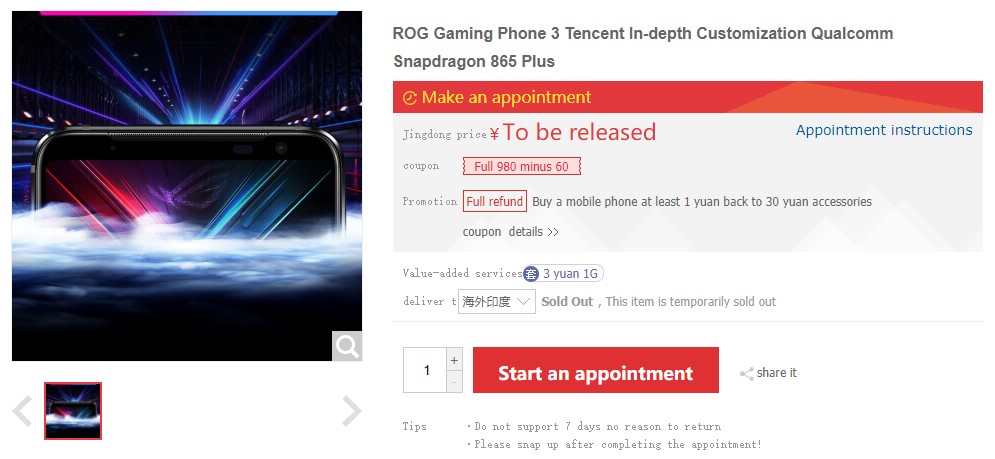
ASUS ROG Phone 3 will be officially announced on July 22 and it will be officially launched in India the same day as a Flipkart exclusive. The day after, on July 23, it will be launched in China: it is already available for reservations on JD.com and it will go official at 7:30 PM local time in China. Unfortunately, there is still no word on its pricing. We will update you once we know more.

ASUS ROG Phone 3 India Launch

ASUS ROG PHone 3 JD listing

OPPO Find X2 Pro Automobili Lamborghini Edition goes on sale in Switzerland; comes with Lamborghini-branded accessories

Just as it did with the original Find X smartphone, OPPO once again partnered with Lamborghini for the special edition Find X2 Pro Automobili Lamborghini Edition. The device which already went on sale back in March in OPPO’s home country is now available for purchase in Europe.

The phone is now available for purchase in Switzerland for CHF 1999 (~$2130), and for that price, you get 12GB of RAM and 512GB of UFS 3.0 storage. The package also includes a handmade microfiber leather phone case, a pair of TWS earbuds, and a car charger; all-branded with Lamborghini’s famous raging bull logo.

Find X2 Pro Automobili Lamborghini Edition

EDITOR’S PICK: AnTuTu’s top 10 best performing flagship and mid-range phones for June 2020

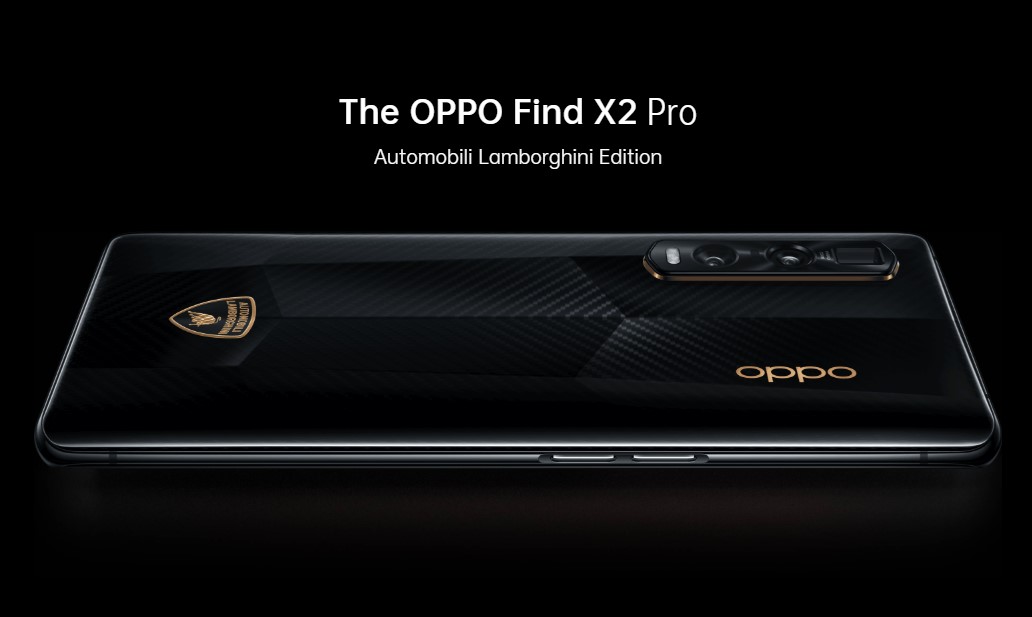
The Find X2 Pro Pro Automobili Lamborghini Edition looks pretty different from the standard version. OPPO says its design was inspired by the Aventador SVJ Roadster.

Its glass back has undergone a special process that gives it a carbon-fiber-like texture and also has Lamborghini’s classic hexagonal design. There is a Lamborghini logo on the back along with OPPO’s own logo in the car manufacturer’s signature bronze color.

The exterior of the phone is not the only one that is different. The phone also has custom icons with sharp contours and a carbon-fiber backdrop specially made for the device.

The Find X2 Pro Automobili Lamborghini Edition has a 6.7-inch QHD display with a 120Hz refresh rate and Gorilla Glass 6 protection. It is powered by Qualcomm’s Snapdragon 865 processor that draws juice from a 4260mAh battery with support for 65W SuperVOOC 2.0 Flash Charge.

For cameras, the phone has a 32MP selfie camera while the back is home to a 48MP Sony IMX689 primary camera, a 48MP Sony IMX586 ultra-wide-angle camera, and a 13MP periscope telephoto camera with 5x optical zoom. Other features of the phone are NFC, Bluetooth 5.1, stereo speakers, and an in-display fingerprint scanner.


The $3500 Microsoft HoloLens 2 can now be purchased directly on the Microsoft Store

The Microsoft HoloLens 2 is a mixed-reality headset that was announced back in February 2019, three years after the first-gen model. When it was announced last year, it was sold to companies with an option to even customize it before purchase. Now, it has made it available for purchase on the Microsoft Store for anyone who has the funds to do so.

With a price tag of $3500, the Mixed Reality headset is definitely not cheap and if you are forking out that amount, you are probably a professional that needs it for work.


Microsoft has designed the headset for professionals in the manufacturing, retail, and healthcare industries.

The HoloLens 2 is powered by Qualcomm’s Snapdragon 850 processor along with a second-gen custom-built holographic processing unit. It packs 4GB of RAM and 64GB of UFS 2.1 storage. It also has Bluetooth 5, Wi-Fi 5, and a USB Type-C port.

The headset has 6DoF tracking, spatial mapping, and mixed reality capture. There is also real-time eye-tracking (two IR cameras), voice command, Windows Hello. Microsoft has designed it to fit over prescription glasses, so you don’t have to take them off to use the headset. Its battery will last 2-3 hours on a single charge and it supports USB-PD for fast charging.


BOE manages to produce QLED panel with 500ppi and 114% NTSC color gamut

BOE is one of the largest Chinese display makers. On Friday (July 17), the company announced that they have achieved a breakthrough in QLED technology. The firm says that it has managed to produce a panel with a resolution of 500ppi and 114% NTSC color gamut.

BOE

AMOLED (Active-Matrix Organic Light-Emitting Diode) displays are considered superior. It is a type of OLED panel with TFT (thin-film transistors) for better light control. This type of display is found on premium smartphones, laptops, TVs, and more.

For the past few years, display manufacturers are investing more in a new type of panel called QLED (Quantum Dot Light-Emitting Diode). A few months back, Samsung  Display even officially announced to exit the LCD business by the end of 2020 to focus more on QLED. It even has plans to invest $11 billion for this tech.

When the world’s largest OLED maker is crazy towards QLED, why would other companies miss out? Hence, firms like BOE has been researching on the same.

Now, for the first time, the Chinese display maker has achieved to manufacture QLED panel with higher pixel density and color gamut. Hence, it is indeed a breakthrough for the company.

Having said that, BOE OLED panels were previously inferior to those by Samsung Display and LG Display. But the company has now caught up and even Apple is reported to use its panels for the upcoming iPhone 12 series.


(Via)

Vivo patents a phone with a rotating lower display

There was a time phone manufacturers were more creative with phone designs. At the forefront of this era was the old smartphone king, Nokia. It wasn’t unusual to see a phone that could be bent, folded, or twisted into different forms. Now, we may be getting a modern take on one of these old designs from Vivo.

Do you remember the Nokia 5700 XpressMusic with its rotatable lower half that allowed you to turn the keyboard to the back so you can use the phones dedicated playback controls or to the side so you can point its side-mounted camera towards your subject while looking at the screen? Now imagine a modern phone with a full-screen display with a similar concept, and you have an idea what Vivo’s patented device looks like.

Vivo patents phone with rotating display

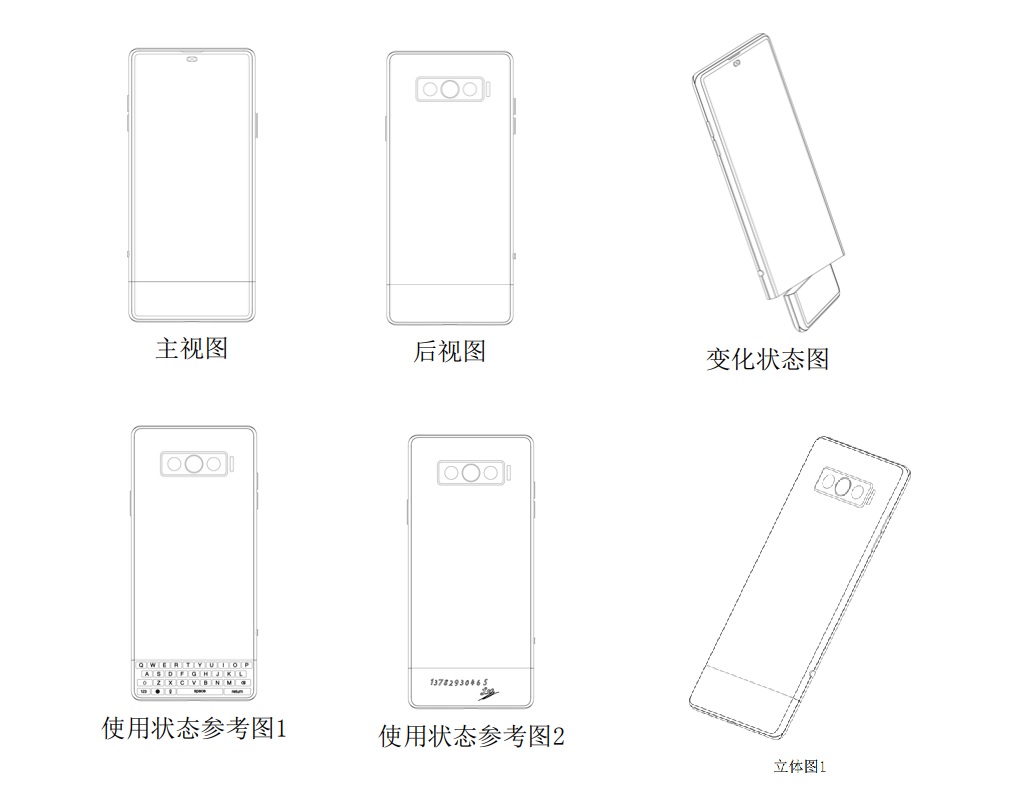
First reported by Twitter user @the_tech_guy, the patent diagram shows a phone with a full-screen design with a lower part that can be rotated 180°. Based on the diagram, the phone seems to be made up of two different screens – a larger portion and the rotatable lower portion.

EDITOR’S PICK: World’s First 120W fast charging unveiled by iQOO; the First phone with this tech could be announced in August

The diagrams show that the bottom screen can be used even when it is rotated to the back. In one of the images, we see a QWERTY keyboard on the screen and in another, we see that the user can scribble on the screen. Another use case we can think of is the screen displaying notifications or as a viewfinder for the rear cameras when you want to take a selfie.

The images also show the phone has a punch-hole in the upper-middle part of the display and also packs three rear cameras arranged horizontally. There is no visible fingerprint scanner which means it most likely has an in-display sensor.

The patent is not a confirmation that such a device is coming soon. Vivo may likely not be able to pull off the design now with the current technology standards and even if it can, it will have to take into consideration factors such as durability and cost of making it.


Realme C11 reported to be heading to Europe; a challenger to the Redmi 9C

Following a launch in Malaysia, Indonesia, and more recently, India; it has been reported that Realme is making plans to bring the Realme C11 smartphone to Europe too. We believe the phone is heading to the Old Continent to take on the Redmi 9C that was announced there a few days ago.

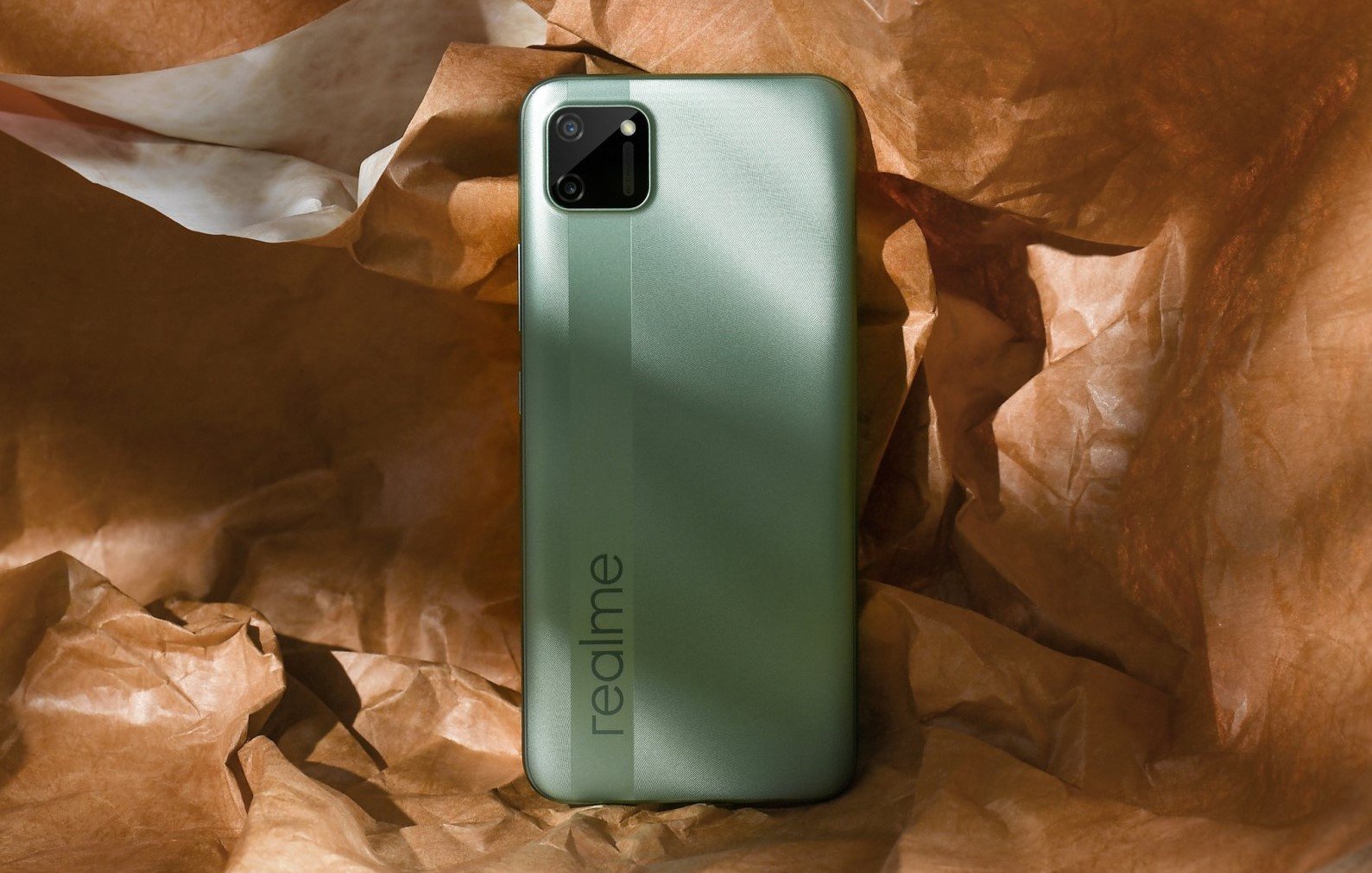
Realme C11 Rich Green Featured
Realme C11 in Rich Green

The info about the Realme C11’s European launch is not from an official source but comes from the young leaker, Sudhanshu Ambhore (@Sudhanshu1414). He said in a tweet that the phone will be arriving in Europe soon and will be available in Mint Green and Pepper Gray color variants. It appears Realme has changed the name of the colors for Europe seeing as they go by Rich Green and Rich Gray in India.

The tweet also adds that the phone will be priced between €100 and €120. The Redmi 9C with the same RAM and storage configuration (2GB RAM + 32GB) as the Realme C11 has a price tag of €119 in Europe.

The Realme C11 and Redmi 9C are actually pretty similar devices. They have roughly the same screen size with the same waterdrop notch style, are powered by the same Helio G35 processor, have the same rear camera design, and pack the same 5000mAh battery capacity. However, the Redmi 9C has some advantages over the Realme C11 such as having three rear cameras and a fingerprint scanner.


Kospet Prime 2 leaks again with rotatable Sony IMX214 camera, launch expected by mid-August

A major high-end smartwatch manufacturer – Kospet is working on the Prime 2 smartwatch since past few months. There are already multiple leaks regarding the specifications and other details of Kospet Prime 2. According to the latest leak, the smartwatch is expected to feature a rotatable Sony IMX214 camera.


See more: Kospet Prime 2 coming soon with a 3D-sensing camera

The rotatable camera helps to make video calls better with the ability to change the angle. It is a creative idea in order to bring more usefulness and further aids in free-form camera movement. The new feature will actually help users to capture better photos than any other smartwatch.

Kospet Prime 2 expected specifications

According to previous rumours, the Kospet Prime 2 is expected to feature Helio P22 chipset coupled with an octa-core processor. Reportedly, it will carry double the RAM and storage than that of Apple Watch i.e a 4/6GB RAM and 64GB internal storage. The abundant RAM will be helpful in multitasking and storage will enable you to store all the files.

It will run on Android OS enabling users to install all the Android apps from the Play Store.

Helio P22 SoC

Helio P22 is a powerful processor that is built on a 12nm FinFET process to provide flawless performance and efficiency. It is a perfect companion for smartwatches as it ensures a long battery life. We expect the smartwatch to feature dual cameras as the chipset supports 13+8 MP dual-camera system. The EIS and RSC – Rolling Shutter Compensation are some advanced features which increase its camera capabilities.

Connectivity

We speculate the Kospet Prime 2 to feature support for GPS, Glonass, Beidou, Galileo navigation system. In connectivity, the smartwatch can come with Bluetooth 5.0 and dual-band WiFi support Moreover, there will be 64GB eMMC 5.1 storage.

Kospet Prime 2 is expected to feature fully round dial along with much-needed improvements. As per the images leaked until now, we can see the round buttons on the Prime 2 which are different from cylindrical shaped buttons on Kospet Prime 2. The rotatable camera is another big change in Kospet Prime 2 as it can be helpful in capturing memorable moments and do video calling at better angles.


Some previous rumours state that the new smartwatch could feature 5G network support. But, the slated presence of MediaTek Helio P22 on the smartwatch dismantles all these rumours.

The upcoming flagship smartwatch – Kospet Prime 2 is expected to launch by mid-August. After the development of over a few months, the final product is just a few weeks away. Take the above specifications as a pinch of salt in the ocean until nothing gets confirmed officially. We have to wait for some more days before speculating any other specification or design detail of the device.

Kospet Prime

Kospet launched Prime smartwatch last year featuring some splendid features, and the latest iteration will be a step ahead. Kospet Prime features a 3GB RAM and 32GB internal storage along with a 1.6-inch IPS display. The smartwatch houses a dual 2-megapixel front and an 8.0-megapixel side camera.

Kospet Prime carries  1260 mAh battery which can last up to several days. It runs on Android 7.1 OS featuring all the luxuries. It can be easily paired with iOS 9.0 and Android 5.1 and above devices. Kopset Prime 2 features some high-anticipated features which are generally not present on smartwatches. Few of those features are Face ID unlockings, 3GBR AM, and 1260 mAH battery.

Related: Buy Kospet Probe Smart Watch for Just $31.99 from Gearbest

Huawei Mate 40 series may not come with Kirin chipsets outside China

The Mate 40 series is Huawei’s upcoming flagship series scheduled for launch in a few months. Known for bringing new technology including a new Kirin flagship processor to the market, the Mate line is one we all look forward to. A new report says Huawei may copy a Samsung tradition for its upcoming flagships.

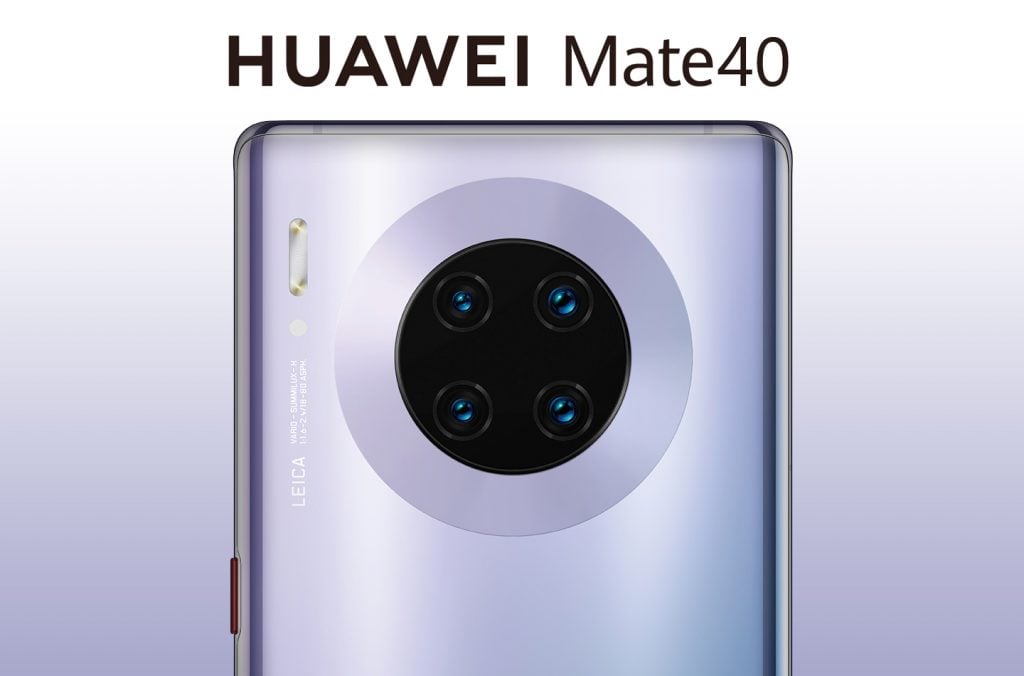
Huawei Mate 40

According to Teme (@RODENT950), the leaker who is known for Huawei and Honor-related leaks, the Mate 40 series powered by the Kirin 1000 processor may be exclusive to China. He goes on to say that Huawei will follow Samsung’s strategy of using dual chips in its phones no thanks to the recent ban that restricts it from getting new HiSilicon chipsets from its suppliers.

Wondering which chipset that will be? We were too. A reply under the tweet by the leaker says the processor for other markets will likely be one from MediaTek. While he didn’t specify, the Dimensity 1000+ seems like the best bet unless the Taiwanese semiconductor company launches a more powerful processor before the launch of the Mate 40 series.

EDITOR’S PICK: Huawei Watch GT 2e Review: A Sporty Smartwatch with Accurate Health Tracking

It is also mentioned that Huawei may buy Qualcomm’s new Snapdragon 865 Plus processor. That is not surprising as there are reports that Qualcomm may actually be granted a license to sell to Huawei. Back in May, a market analyst for KeyBanc Capital Markets revealed that Huawei will use Qualcomm’s Snapdragon processors in its P50 and Mate 50 series. The analyst, John Vinh believes that the Commerce Department’s Bureau of Industry and Security will eventually grant Qualcomm the license to sell chipsets to Huawei.

Teme also revealed that Huawei doesn’t even have enough Kirin processors for the Mate 40 series. The Chinese giant has only 8 million units which is less than the average number (10 million units) of Mate phones sold annually.

What do you think about Huawei adopting a dual-chip strategy? Do you want it to use a MediaTek processor or a Snapdragon processor for the international variant of the Mate 40 series? Let us know in the comment box below.


[Update: Official Statement] Pixel 4 XL users are reporting peeling off of rear glass panel

Update (July 21): Official Statement by Google

Google responded to the Reddit post discussed in the original story that the problem is not related to the battery. It recommends users facing the “rear glass panel peeling off issue” to reach out 1:1 support to explore warranty options.

Here’s the official response by Google on Reddit.

“We’ve investigated the issue and concluded that this is not related to the Pixel battery. If you’re experiencing back glass lift on your Pixel 4/4XL, we recommend reaching out to 1:1 support to explore warranty options. We’re here to help and want to make sure your Pixel 4/4XL is operating properly.

Original Story (July 18)

Google’s hardware products have always had some sort of flaws since the beginning. Even after making Pixels for about 5 years, the company still falls behind in quality control. Currently, a number of Pixel 4 XL users are reporting peeling off of rear glass panel on forums.

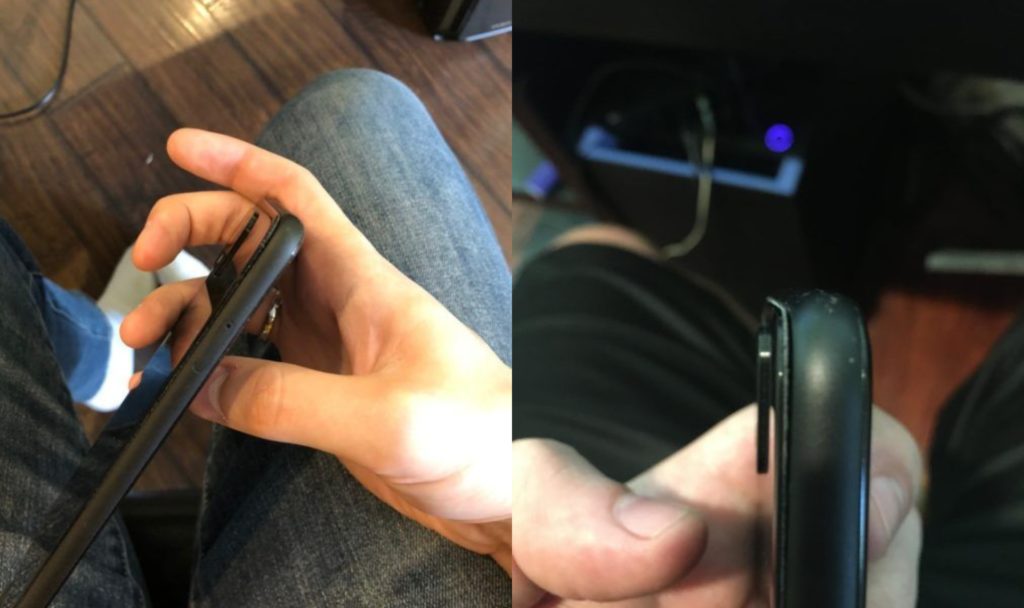
Google Pixel 4 XL Rear Glass Panel Peeling Off

Google Pixel 4 and Pixel 4 XL are one of the least popular flagship smartphones released in 2019. Both the devices are notorious for their poor battery performance and various software issues. The Soli radar chip, due to which the phones did not make some markets has remained a useless utility apart from biometrics.

Now, users of Pixel 4 XL are flocking to Reddit and Google Support forums to report “peeling off of real glass panel”. This issue is present on units since the launch of the device, however, it is gaining traction only now.

One of the users says they are on their fourth replacement device over the course of 10 months. They think the problem is due to the swelling of the battery. 

According to an individual, who claims to be a general manager of a uBreakiFix store, an authorized Google repair partner, the cause of the issue is the faulty battery connector, which in turn leads to swelling of the battery.

Although most users have obtained replacement units after complaining to the company, Google is yet to officially acknowledge the true cause of the problem.


(Via)

AirPods manufacturer Luxshare acquires two subsidiaries of iPhone producer Wistron

Wistron is one of the three iPhone producers for Apple apart from Foxconn and Pegatron. All of them are Taiwanese contract manufacturers. But not anymore, as Luxshare, a Chinese company has officially announced to acquire two subsidiaries of Wistron in Eastern China for 3.3 billion yuan ($472 million).

Apple Logo

Luxshare is known for producing accessories, cables, chargers, antennas, and other similar products. Above all, it is also the world’s largest Apple AirPods manufacturer. With the new acquisition, it will also become an iPhone assembler posing a threat to Pegatron’s business in China as per GF Securities analyst Jeff Pu.

According to a Wistron representative, the Kunshan site that is being sold to Luxshare makes smartphones, notebooks and connected devices. Some of these products are expected to be manufactured somewhere else. However, the spokesperson declined to comment on the company’s iPhone business.

Though Wistron is expected to not manufacture iPhones anymore in China, it will continue to assemble cheaper Apple smartphones in India

The Luxshare-Wistron deal is said to be finalized by the end of 2020 pending regulatory approval. The acquisition is a win for both Luxshare and Apple as the former can now try its luck in manufacturing iPhones, whereas the latter gets a Chinese partner to expand its local sources.


(Source)

India smartphone market declined by 48% in Q2 2020, Realme slipped to fifth position

The smartphone market of India witnessed its worst performance in recent years in Q2 2020. According to Canalys, the overall market declined by 48% YoY during the period from April to June. As for companies, though Xiaomi continued its lead, Realme slipped to the fifth position, which was surpassed by none other than its former parent and current sister brand Oppo.

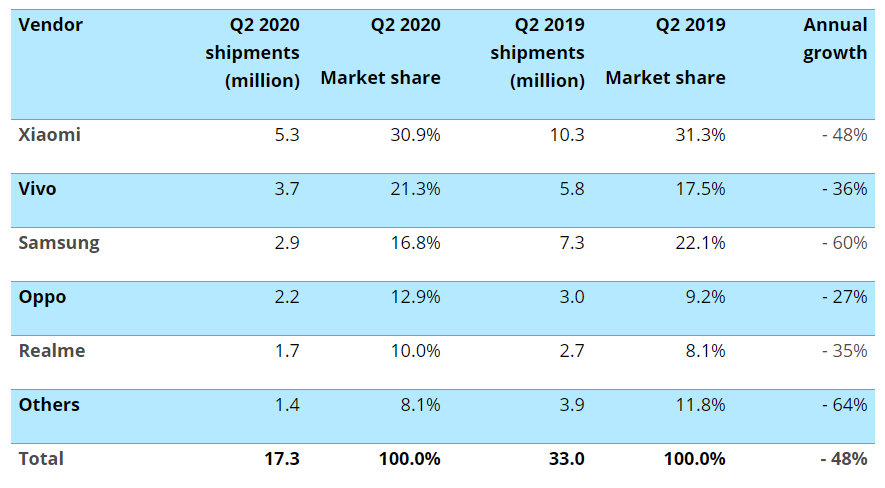
Canalys India Smartphone Market Q2 2020

The Indian smartphone market shipped a total of 17.3 million units in the second quarter of 2020. As always, Xiaomi ranked first accounting for 30.9% market share with 5.3 million units of shipments.

Vivo retained the second position, which it first grabbed in Q4 2019. The company shipped 3.7 million units with a 21.3% market share. Samsung was the third-largest company in the same period capturing 16.8% of the market with shipments of 2.9 million units.

Interestingly, Oppo snatched the fourth position from Realme with 2.2 million units in shipments compared to the latter’s 1.7 million units. Both of them had 12.9% and 10% market shares respectively.

Lastly, OEMs including Apple, OnePlus, Lenovo Motorola, Asus, Tecno, Infinix, and others only accounted for 8.1% of the total market in Q2 2020 with 1.4 million units in shipments. But the Cupertino-based tech giant was the least affected of all the brands with only a 20% YoY drop in its shipments.

It is worth noting that the global pandemic was the primary reason for the decrement in shipments. Anti-China sentiments did not affect the Chinese smartphone companies as much as people portrayed on social media.


The color filter camera of OnePlus 8 Pro can be accessed via an ADB command

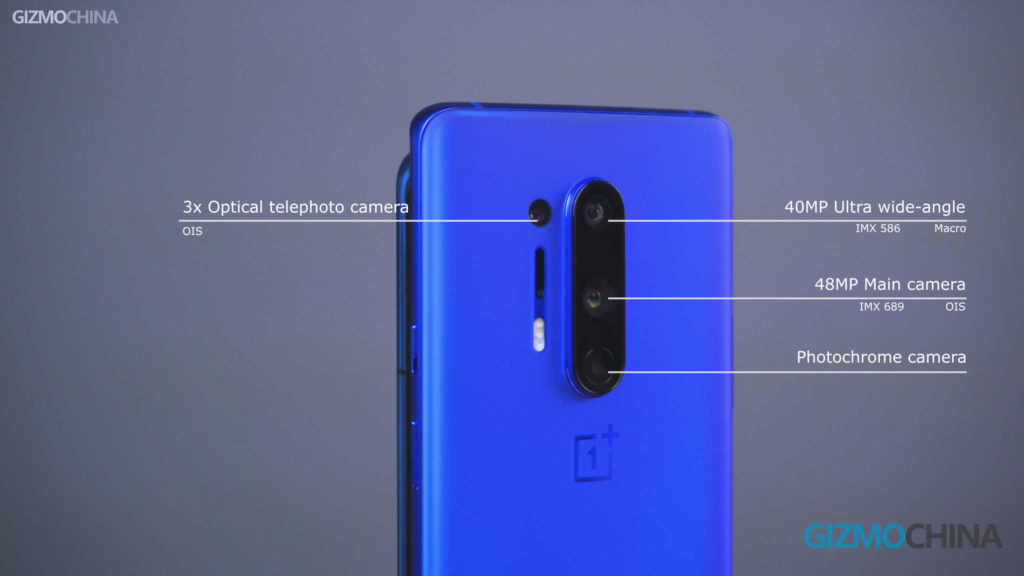
OnePlus 8 Pro comes with a color filter camera, which is capable of seeing through thin plastics and clothes. Due to concerns raised by the public, the company disabled it on both Chinese and global variants of the device. In India, the company even sells the handset with this camera disabled. Anyway, as promised, the brand brought back the filter without using the fourth camera. But if you want to use it for some reason, you can still access it via an ADB command.

OnePlus 8 Pro vs Huawei P40 Pro (3)

OnePlus 8 Pro is the brand’s first fully-fledged flagship smartphone with all the features found on premium devices from top companies. It also sports a color filter camera, making it one of the first high-end handsets to have it. Unfortunately, it had to be disabled citing privacy concerns.

However, the brand replicated the same “photochrom filter” achieved by the color filter camera via software. Hence, one might ask why the need for that camera in the first place when the filter is possible through software trickery.

Having said that,  if you are an OnePus 8 Pro user and want to use the disabled fourth camera, you can still access to by running the following ADB commands.

  • adb shell
  • am start -n com.oneplus.factorymode/.camera.manualtest.CameraManualTest

These commands will launch the option to test cameras in Factory Mode app. Here, you can switch between all the cameras on the phone by tapping on the icon located at the bottom right corner. The color filter camera is named as “Fouth rear camera(4)”.

Since this is part of the Factory Mode app, we don’t expect OnePlus to disable this method of accessing the color filter camera.


(Source)

Realme could launch X3 Pro flagship phone in its debut at IFA Berlin this year

Several tech events and conferences got canceled this year because of the COVID-19. Despite the pandemic having no end in sight, IFA Berlin, scheduled for September this year, will have an in-person event.

In the latest development, Realme has now been confirmed to attend IFA Berlin for the first time. IFA is calling this year’s event as a Special Edition, maybe because it could have invite-only 1,000 attendees at a time.

realme logo

Realme India CEO Madhav Sheth also confirmed the news about the company making its debut in IFA this year. He has also teased a big announcement at the event but refrained from sharing more details.

If the reports are to be believed, then there’s a possibility that the OPPO-backed company could launch its flagship smartphone, dubbed as Realme X3 Pro. The company recently unveiled its 125W UltraDart fast charging technology, which could be present in the upcoming X3 Pro flagship smartphone.

EDITOR’S PICK: Samsung Galaxy Note20 Ultra may feature dynamic refresh rate switching between 60Hz and 120Hz

Along with the upcoming flagship smartphone, we expect the company to launch a few other products as well. The company has also forayed into the accessories market, so there could be new accessory products coming from the brand at IFA.

Last month, the company had launched Realme X3 and X3 SuperZoom smartphones in China as well as India. The upcoming X3 Pro will complete the lineup and instead of the SD855+ SoC, the phone could pack the newly announced Snapdragon 865 Plus chipset.

The Special Edition of IFA 2020 will take place in Berlin as an in-person event from 3rd September to 5th September, despite the COVID-19 outbreak. While Samsung has pulled out of the event, brands like Huawei, LG, Qualcomm, among others are the key participants for the event.


Samsung Galaxy Fan Edition moniker for S20 Lite, codename and few key details appear

Recent reports have revealed that Samsung is working on the successor for the Galaxy S10 Lite. The rumor mill initially dubbed the device as the Galaxy S20 Lite, but newer information revealed that it could be called Galaxy S20 Fan Edition. Fresh information shared by reliable tipster Ishan Agarwal through 91mobiles states that the device could be called Galaxy Fan Edition. He has also revealed some details like codename, variants, and model numbers of the Galaxy Fan Edition.

According to the tipster, the Galaxy Fan Edition will have come in 4G and 5G flavors. The 4G edition’s model number is SM-G780 and its 5G variant has SM-G781 model number. The handset is codenamed as R8. He further revealed that the Galaxy Fan Edition 5G will not launch in India, but the country will receive its 4G version.

Samsung Galaxy S10 Lite and Note 10 Lite

The Galaxy Fan Edition is expected to arrive as a cheaper version of the Galaxy S20. Recently, the handset was spotted on Geekbench with Snapdragon 865 mobile platform. In order to make the SD865 powered handset at a cheaper price, the South Korean company may launch it after few months. The Galaxy S10 Lite went official in January this year. A reliable tipster had recently claimed that the Galaxy Fan Edition will debut in the last quarter of this year.

The Geekbench appearance of the phone had revealed that it will run on Android 10 OS and it has 6 GB of RAM. Other reports have revealed that it has a 120Hz refresh rate display with a 3.5mm punch-hole, 128 GB of native storage, and an IP68 rated chassis.


Huawei announces plan to open three new Experience Stores in the UK

Chinese technology giant Huawei, which opened its flagship store in Shanghai, China last month, has now announced its plan to launch three new Experience Stores in the United Kingdom.

The company is planning to spend around £10 million to open three stores in London and Manchester. It will also create the first own-brand stores on the UK’s High Street. The company says that it will be creating over 100 jobs in the region.

Huawei store logo official

As per Huawei’s plan, the first store will open in London’s Olympic Park, Stratford, in October 2020, and will be followed by a dedicated retail space and service center in Manchester, slated to open in February 2021.

There will be another experience store in London, slated to open next year. The company already has a Huawei Service Centre in Wembley, London, that opened in June this year.

The company says that the aim behind these new ‘Huawei Experience Stores’ is to allow consumers to interact with a range of Huawei products including smartphones, laptops, tablets, headphones, earbuds, smartwatches, fitness bands, speakers, etc.

EDITOR’S PICK: World’s First 120W fast charging unveiled by iQOO; the First phone with this tech could be announced in August

The announcement of opening three new stores with an investment of £10 million is a bold move from Huawei, which has been banned by the UK from participating in its 5G infrastructure development just a few days ago.

The UK government’s ban on Huawei will reportedly cost telecom operators in the country around £2 billion (roughly $2.52 billion). Furthermore, it will also delay the adoption of 5G by at least a couple of years.

The Chinese giant has been operating in the UK for the past 20 years and has urged the UK Government to reconsider its decision. The new announcement shows that the company is planning to stay and compete in the UK market, despite the government’s decision.


Moto G9 Play launch nearing as its gets spotted on Geekbench

Motorola has recently launched the Moto G 5G Plus smartphone as its first 5G-ready G-series smartphone. The Lenovo-owned company could be planning to launch the Moto G9 series soon. Recently, a third-party listing of the upcoming Moto G9 Plus was spotted. Now, a Geekbench listing of the Moto G9 Play has appeared with some specs.

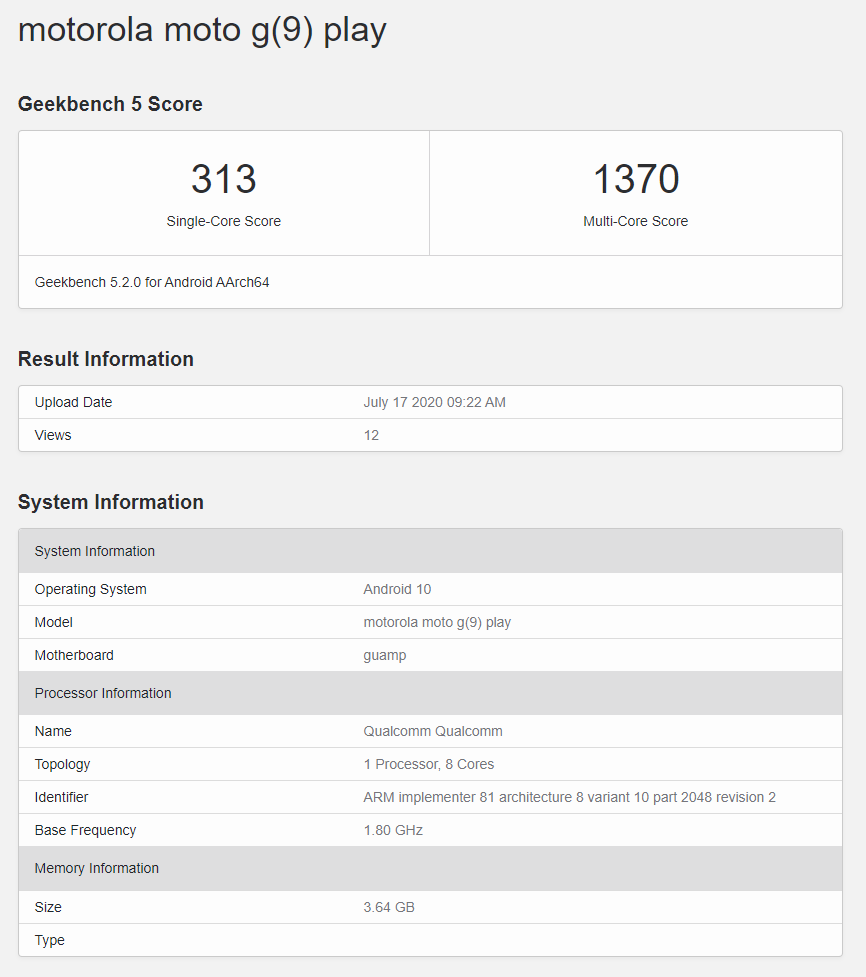
On Geekbench 5, the Motorola Moto G9 Play has scored 313 in the single-core test and 1370 in the multi-core test.  The phone’s codename ‘guamp’ is seen mentioned in the field for Motherboard in the listing. It is powered by a Snapdragon chipset. However, the exact name of the SoC is not known yet.

The octa-core chipset that fuels the Moto G9 Play clocks at 1.80GHz. The publication that first spotted the Geekbench listing has speculated that it could be driven by the Snapdragon 660 chipset. The predecessor Moto G8 Play was fueled by MediaTek Helio G70.

Moto G9 Play Geekbench

It is advisable to wait for further reports to know the exact details of the chipset present inside the Moto G9 Play. The Geekbench listing further reveals that it has 4 GB of RAM and it is preinstalled with Android 10 OS. The other details of the phone are not known yet.

Last year, Motorola had launched the Moto G8 Play with Moto G8 Plus in October. Hence, there is a possibility that the recently spotted Moto G9 Plus may debut with Moto G9 Play in the next few months. The online retailer listing of the G9 that was spotted recently revealed that it has 4 GB of RAM, 128 GB of storage and is priced at 227 euros.


Lenovo Legion to be the world’s first smartphone powered by Snapdragon 865 Plus chipset

After months of leaks, speculations, and rumors, Lenovo finally confirmed that the company will be launching its first gaming smartphone — Lenovo Legion Gaming Phone on 22nd July in China.

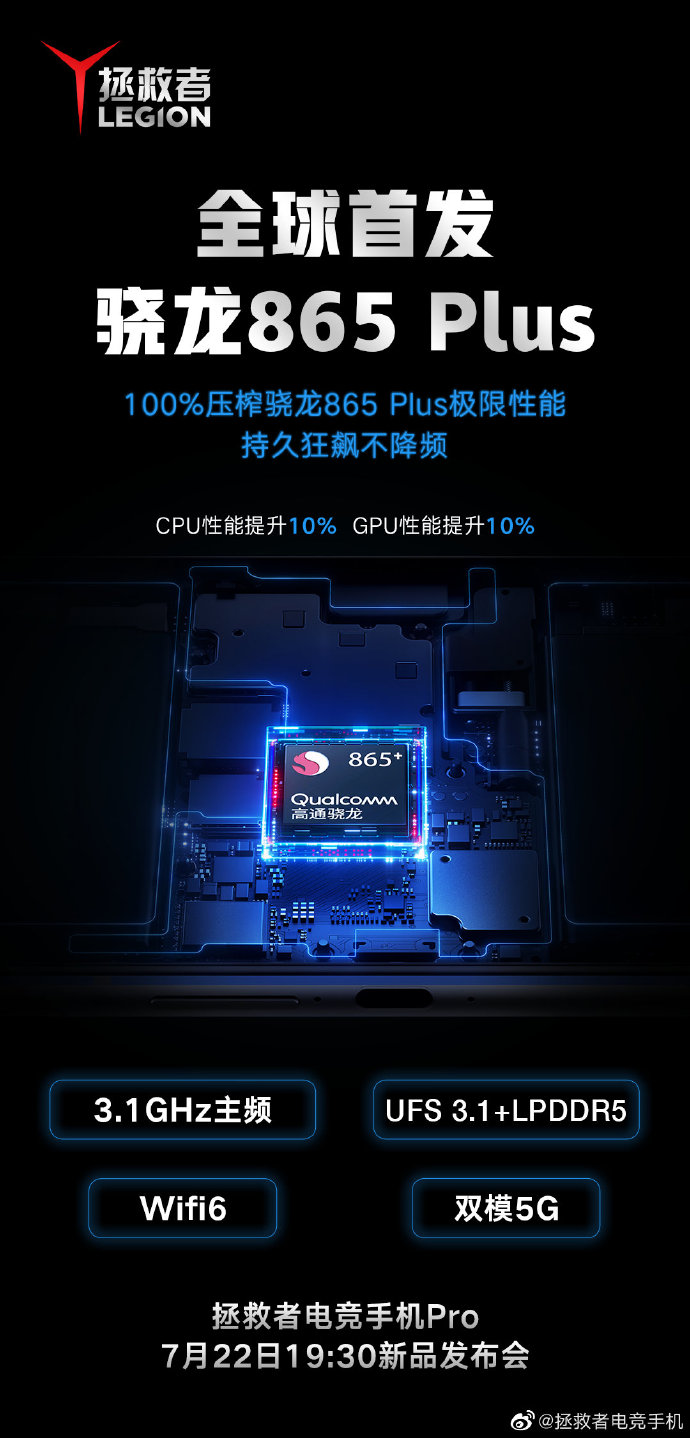
Today, the company has shared a new teaser poster on its Weibo account which reveals that the Lenovo Legion will be the first smartphone in the world to come powered by the newly announced Qualcomm Snapdragon 865 Plus chipset.

Lenovo Legion Snapdragon 865 Plus

Soon after the launch of Lenovo Legion, ASUS will also be launching its next-generation gaming smartphone, dubbed as ASUS ROG Phone 3. The India launch is set for 22nd July while the China launch event will take place a day later.

Coming to the specifications of the Lenovo smartphone, it has been revealed that the phone will come with a 6.67-inch AMOLED screen with support for Full HD+ screen resolution and 144Hz refresh rate.

As for the memory configuration, we expect the smartphone to come packed with up to 16GB of LPDDR5 RAM and 512GB of UFS 3.1 storage. It will come with a pop-up side-mounted front-facing camera, which will be of 20-megapixel.

EDITOR’S PICK: Xiaomi Mi 10 Pro selfie camera isn’t flagship-level, claims DXOMark Selfie camera review

Lenovo Legion Gaming Phone Pro image
Lenovo Legion Gaming Phone Pro Render

On the backside, the device is expected to feature a 64-megapixel primary sensor and a 16-megapixel ultra-wide lens. The phone will be running the Android 10 OS with the company’s own Legion UI on top and will pack 5,000mAh battery with support for 90W fast charging technology.

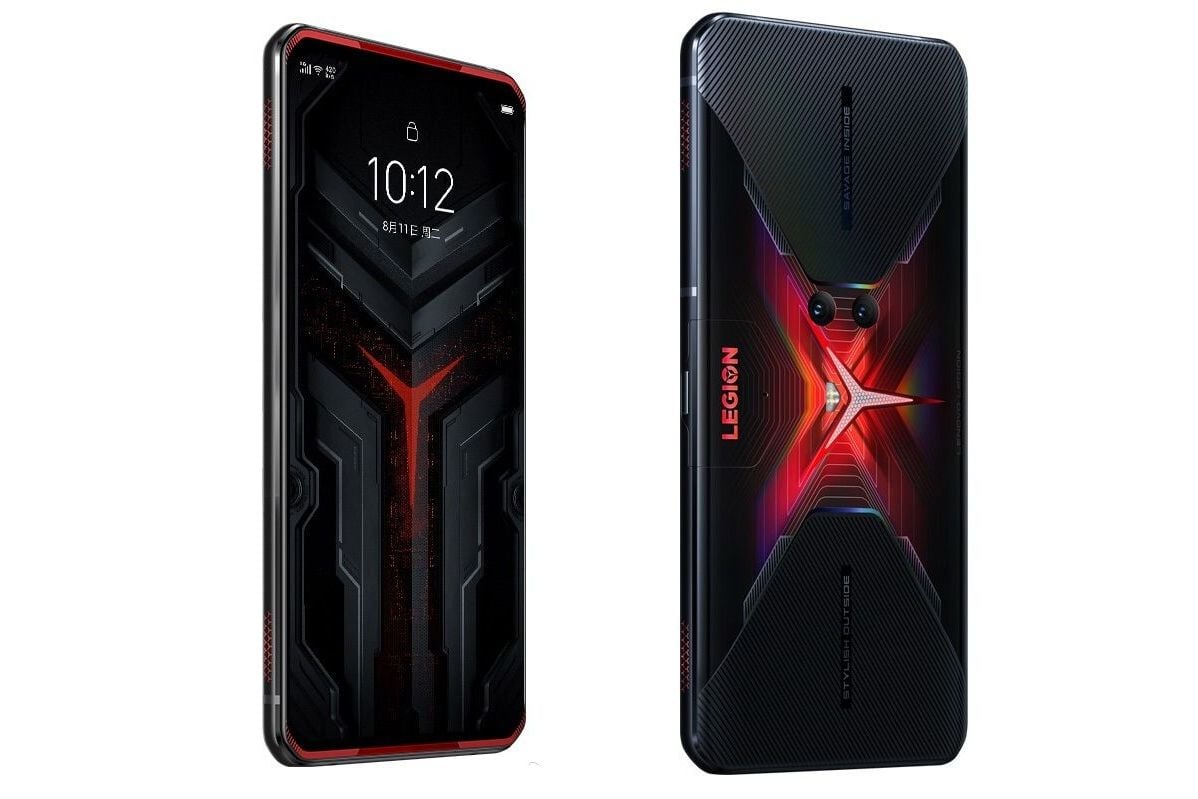
The company had recently revealed that the phone will be arriving with the industry’s most powerful speakersdual liquid cooling system, and dual X-axis linear motor. Recently, the smartphone’s render has surfaced online, where the company is referring to the device as the Lenovo Legion Gaming Phone Pro.

It remains to be seen if we will be getting two models of Lenovo Legion — a Pro and a non-Pro variant. Whatever be the case, the launch event is just a few days away, so it’s not a long wait to know more about the device.


OnePlus Nord to arrive with 90Hz display, 12GB RAM and Google apps

The OnePlus Nord will go official on the coming Tuesday. Ahead of the launch, the company has been spilling information on some of the key specs of the smartphone. Yesterday, the company revealed that the OnePlus Nord will be arriving as many as six cameras. Shawn L who is the head of product for OnePlus Nord has revealed some information on the other specs of the device.

It is already known that the OnePlus Nord is a Snapdragon 765G chipset powered handset. Shawn revealed that the smartphone will come with up to 12 GB of RAM. It will run on OxygenOS based Android 10 OS and it will come equipped with Google Comms Suite. Hence, it will be the first phone from the brand to feature Google apps such as Messages, Dialer, Duo, and so on. An Instagram post from the brand also confirms that the phone will ship with Google apps.

OnePlus Nord
OnePlus Nord in Gray and Cyan

Coming to the display of the OnePlus Nord, reports have claimed that it could be sporting an OLED panel with a pill-shaped cutout for the two front-facing cameras. Shawn did not confirm the size of the display but revealed that it supports the 90Hz refresh rate and a touch sampling rate of 180Hz.

The display punch-hole houses a primary selfie camera of 32-megapixel and an 8-megapixel ultrawide shooter with 105-degree field-of-view. The front cameras are optimized by AI to capture brighter shots in low-light conditions.

The rear side of the OnePlus Nord has a quad-camera setup led by a 48-megapixel Sony IMX586 sensor with OIS support. The main lens is coupled with an 8-megapixel ultrawide shooter, a 5-megapixel depth sensor, and a macro lens. With few days remaining for the launch, the Chinese firm is expected to confirm some more features of the OnePlus Nord before the unveil event.


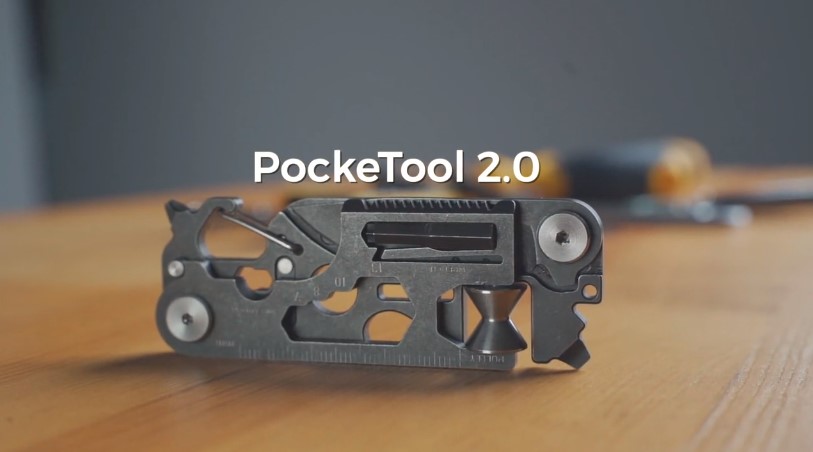
All in One PockeTool 2.0 EDC tool arrives on Kickstarter for $35

PockeTool is an essential instrument that everyone should carry before going out on an adventure. Moreover, it is useful in day-to-day life and can be used in different ways. The PockeTool 2.0 works as a ruler, a key chain, pocket knife, bottle opener and offers several other uses.  It is a convenient tool to accomplish several tasks as it supports all the basic tools.

See More: Sony’s Reon Pocket wearable Air Conditioner now on sale in Japan

PockeTool 2.0 has just arrived on Kickstarter for the starting price or pledge of $35. However, you can grab a Poctool along with Survival Bracelet for the price of $40. There’s also an option for 2x PockeTool and 2x Survival Bracelets for $70, and 3x units cost $105. It is also available in bulk, as you can order 100x PockeTool 2.0 for $3900.

PockeTool 2.0 Features

PockeTool 2.0

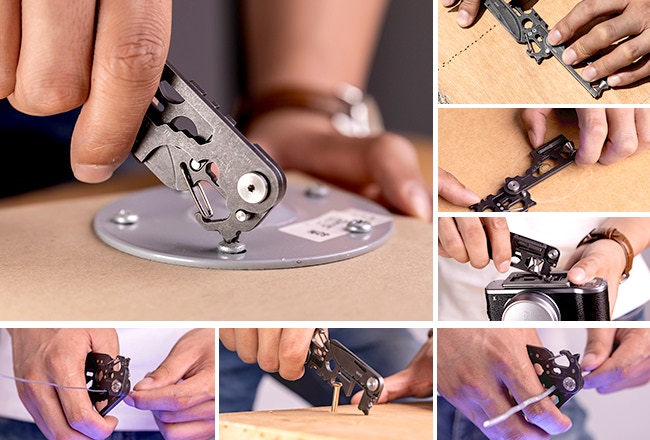
Multiple Uses: The Pocketool 2.0 can be used as a Standard Metri ruler, Buckle/Key Chain, Pocket Knife, Bootle Opener, Protractor, Spoke Wrench, Hex Wrench, Wire Buckle, Pulley, Flat Head Screwdriver, Philips Screwdriver, Special Wrench and as a Flint to burn fire.

WaterProof + Stainless Steel: The whole device is built using Stainless Steel and is fully waterproof. It can be used as a pulley to carry the equipment on your back. You can easily relieve from the burden and can hand anything under permissible weight limits using the PockeTool 2.0.

It can be used to ignite fire as PockeTool 2.0 has some improved and renovated mechanism. It even acts as a pocket knife which can cut rope branches and meat easily.

Daily life Usage: It can be a bottle opener, lid opener, and can even facilitate in removing tags from new clothes.

DIY and Repairing: PockeTool 2.0 can be used as a standard metric ruler for enhanced precision and can be used as a stable and nail remover. It also enables to cut, twist wires and even use Hex Wrench.

Built and Design

The PockeTool 2.0 is carved out of high-quality 405-grade stainless steel with stonewash finish that hides minor scratches. It is corrosion-resistant and prevents any rust formation. It is tough, reliable, extra-durable, and super lightweight.

PockeTool is ergonomically designed for easy usage and makes it more appealing.

PockeTool 2.0 Specifications

  • Material: 405 Grade Stainless Steel
  • Size: 9cm x 3.2cm x 1.1cm
  • Weight: 90g

You can grab it via different packages offering varying perks. The minimum package starts for $35 with 1x PockeTool 2.0, and other packages varies form $45, $45, $72, $70, $105, $175, $350 and $3900. Head over to the Kickstarter to grab it and know more details about the product.

Related: Xiaomi crowdfunds the Merach Merrick Nano Pocket Massage Gun

ASUS ROG Gaming Phone 3 to feature four AirTrigger gestures

ASUS will officially unveil the ROG Gaming Phone 3 on July 23rd. Ahead of the launch, the Taiwanese company has been teasing several features that the powerful gaming machine will bring with it. The latest teaser borders on the innovative AirTriggers ultrasonic buttons.

ASUS ROG Phone II
ASUS ROG Phone II

ASUS has hinted that the ROG 3 will have four different gestures control built into the AirTrigger. Those familiar with the ROG Phone II will recall that the phone features what ASUS called AirTriggers on the right edge. These triggers aren’t exactly buttons, but ultrasonic pressure-sensitive regions in the device’s frame and they can be mapped to emulate a tap on the screen.

Later on, the company pushed an update to the phone which added a second function which essentially allows you to map a horizontal slide function on the screen to one of the AirTriggers. This new feature could come in handy in a variety of games that require you to swipe horizontally on the screen to perform a specific function. For example, in Asphalt 9 Legends, the horizontal slide to change lanes can be mapped to the AirTriggers.ASUS ROG Phone 3

There is no mention of what the added AirTrigger features will be but it sure will be features that will afford users easy gaming.

The ROG Phone 3 is expected to arrive with a 6.59-inch AMOLED display that will offer Full HD+ resolution, 19.5:9 aspect ratio, and a refresh rate of up to 144Hz. It will be powered by a Snapdragon 865 Plus SoC paired with up to 16 GB of LPDDR5 RAM.


(via)