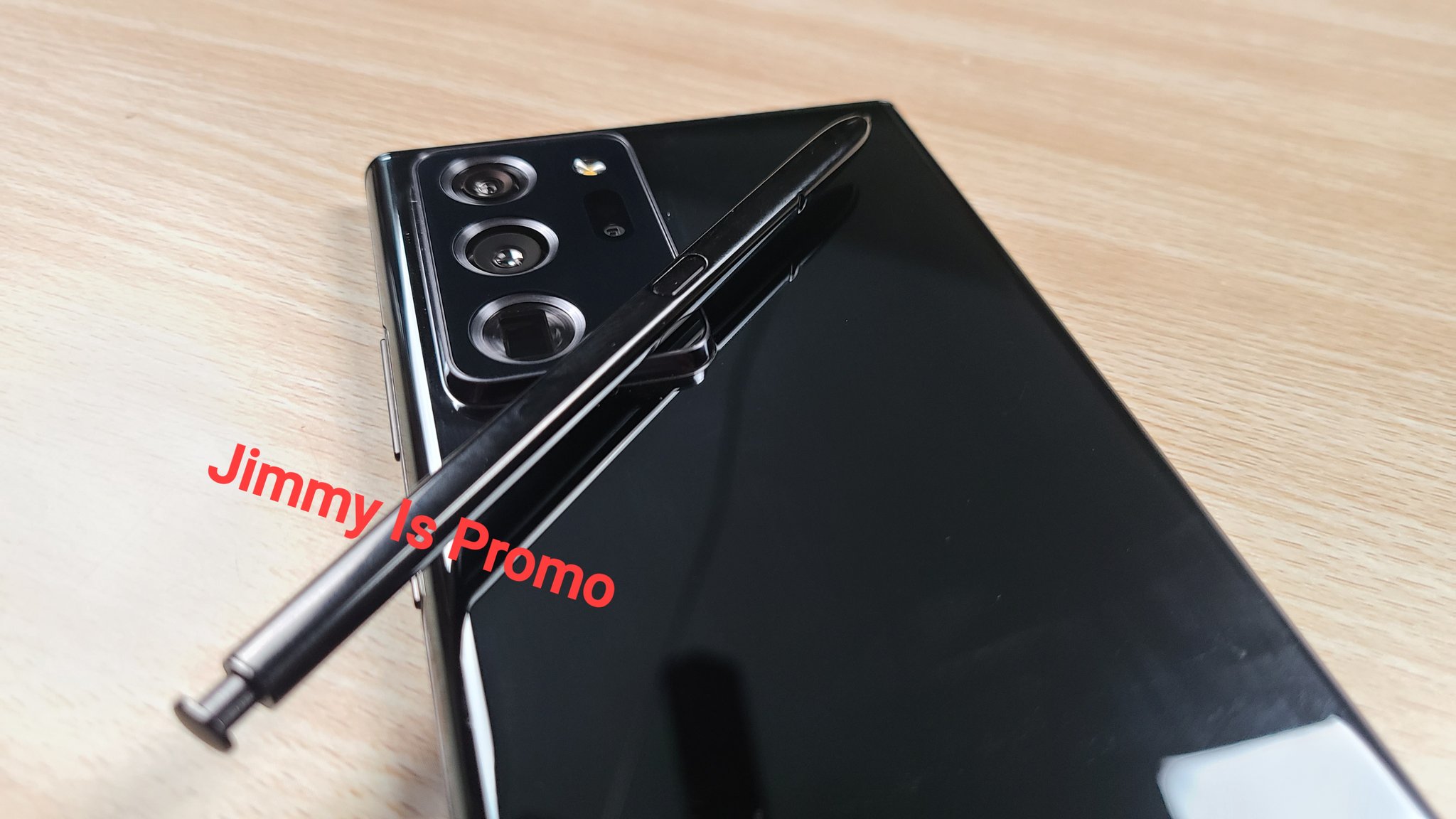
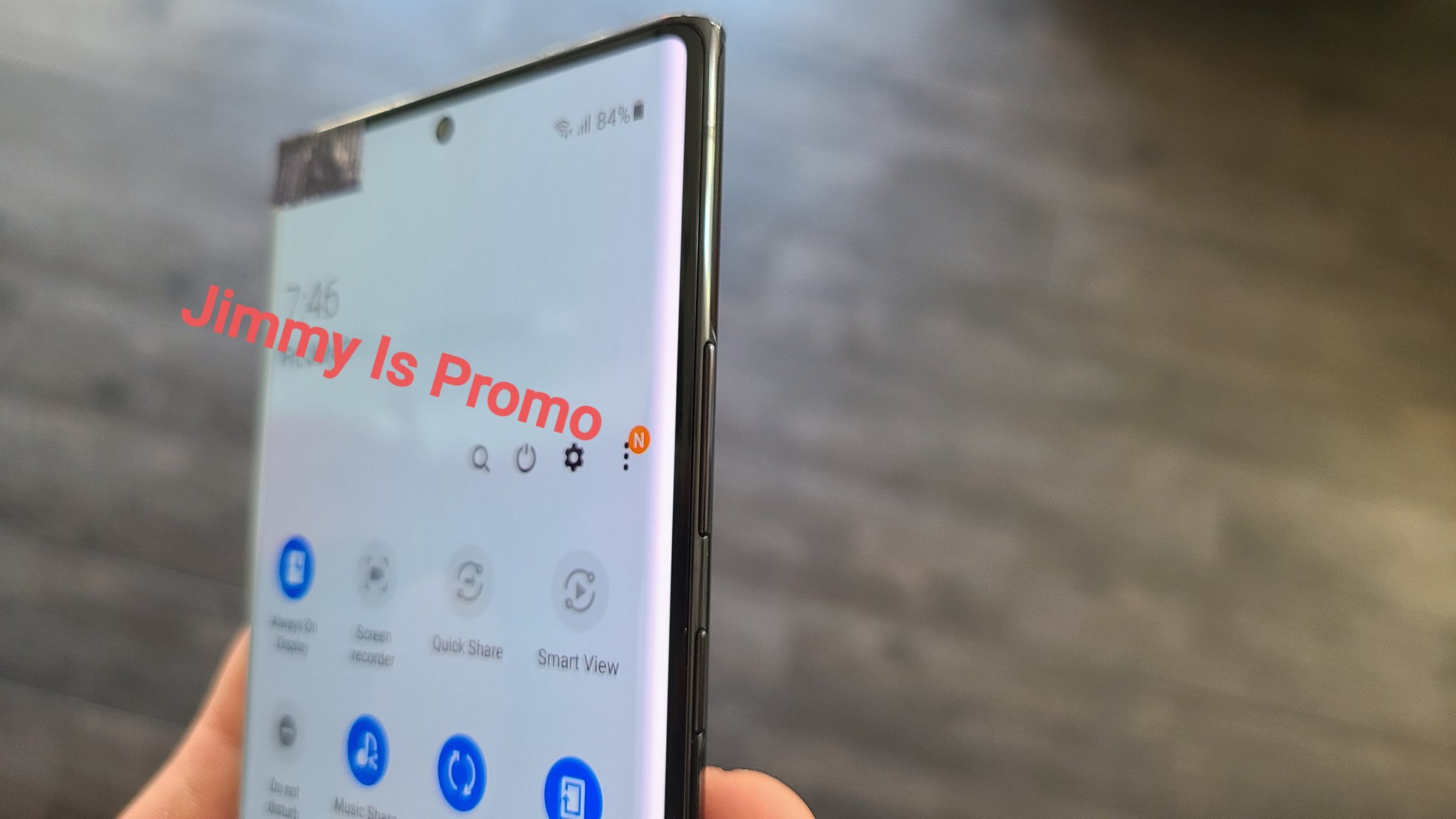
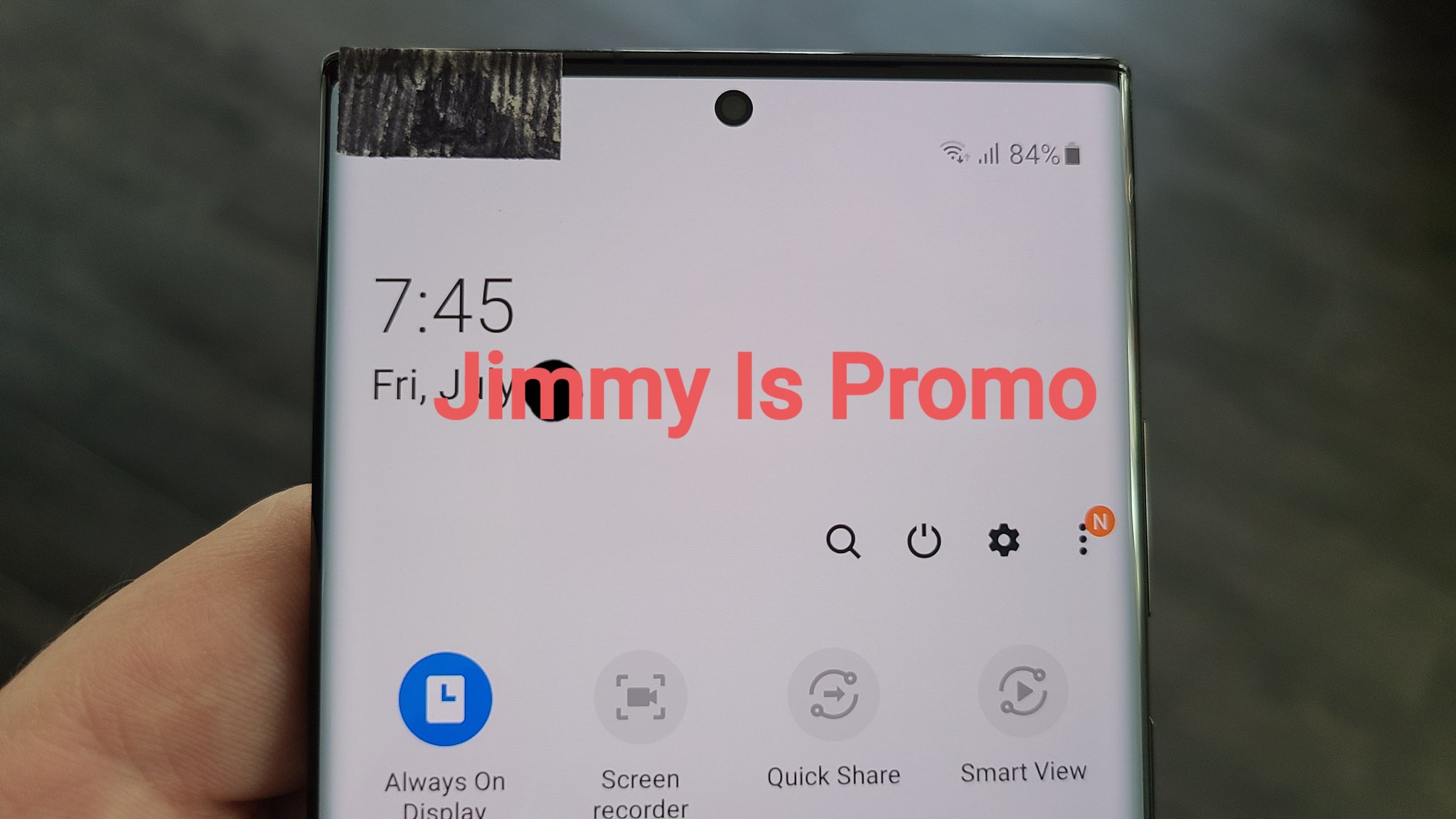
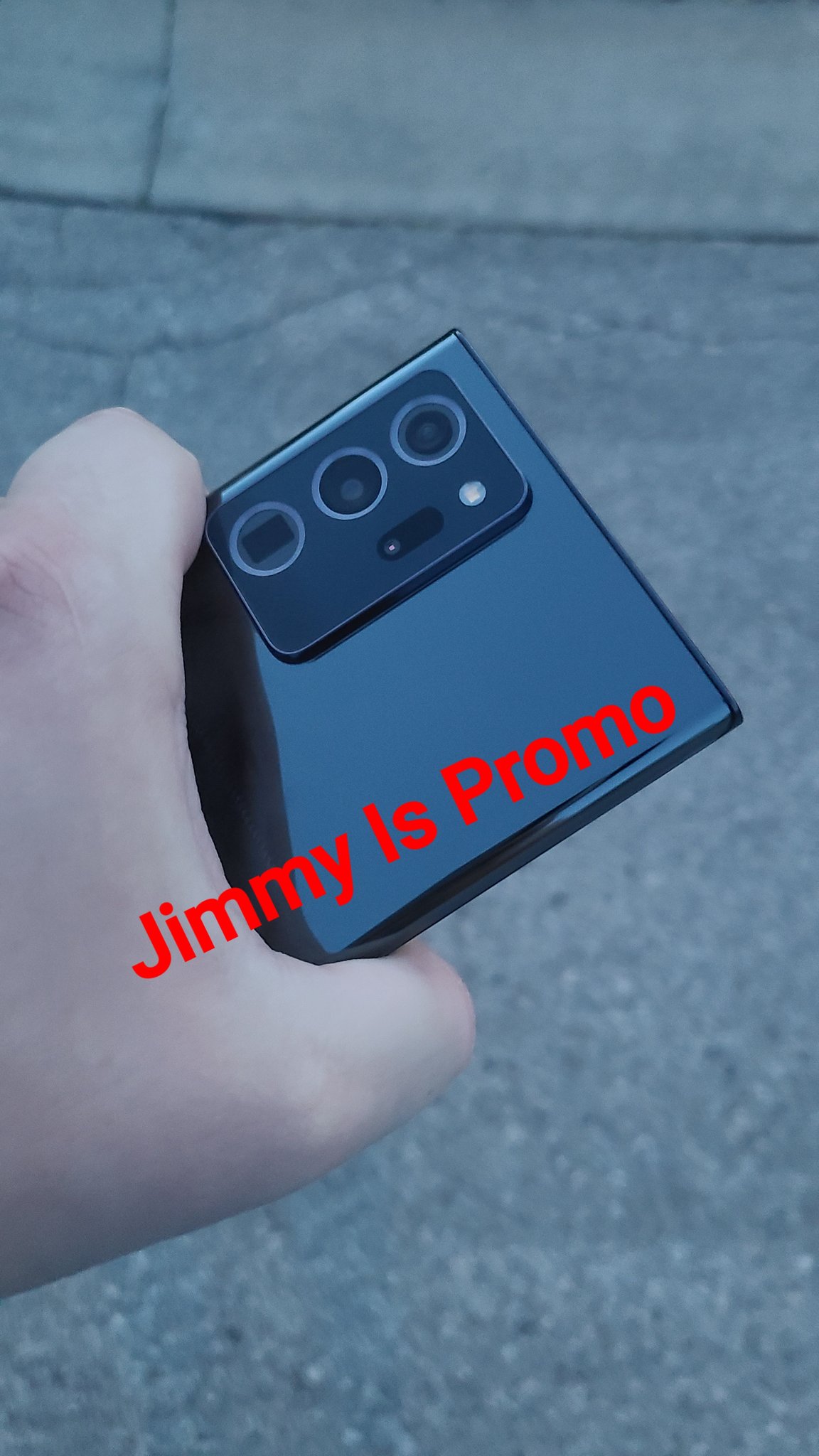
Samsung will be launching the Galaxy Note20 series in August. The rumored launch date is Aug. 5. Speculations are rife that the most advanced model in the series will be called Galaxy Note 20 Ultra. Twitter user and Youtuber Jimmy is Promo shared the leaked shots of the Galaxy Note20 Ultra. The new images showcase the sleek design of the phablet.
The live shots of the black variant of the Galaxy Note20 Ultra show that it has a glossy appeal. Recently, the Mystic Bronze edition had surfaced inadvertently on Samsung Ukraine’s website. The bronze edition seemingly Matte AG Glass finish. However, this finish seems to be absent on the black variant.
Here is a comparison done by a well-known Chinese tipster between the front design of the Galaxy Note 20 Ultra and last year’s Galaxy Note10+.
I shot Note10+ at the same angle, let's compare the subtle differences between N20U and N10+. 1.N20U is more square 2. N20U bezel is narrower 3. N20U hole is smaller 4.N20U seems to be more curved pic.twitter.com/TBSooqTMiB
The leakster mentions the Galaxy Note20 Ultra’s screen will be more curved and it will be surrounded by slimmer bezels. The South Korean company seems to have reduced the size of the camera hole. Lastly, the device appears more squarish.
The camera bump is easily noticeable on the backside of the Galaxy Note20 Ultra. Three camera lenses, an LED flash, and another sensor can be seen inside it. The third lens appears to be a periscope zoom lens.
The redesigned chassis of the Note20 Ultra features the volume rocker and power button on its right edge. The leakster who shared the images claims that the location of the S-Pen and the speaker are now on the left side of the USB-C charging port. The device lacks a 3.5mm headphone jack.
Rumors have it that the Galaxy Note20 Ultra will have a 120Hz refresh rate supporting 6.87-inch QHD+ display. It will be fueled by Snapdragon 865+ SoC and may come with up to 12 GB of RAM. The 108-megapixel triple camera system of the Note20 Ultra may support up to 50x zoom. The phablet may house a 4,500mAh battery. According to a latest report on ETNewsSouth Korean publication, the Galaxy Note20 series will be available for purchase from Aug. 21 in the home market.
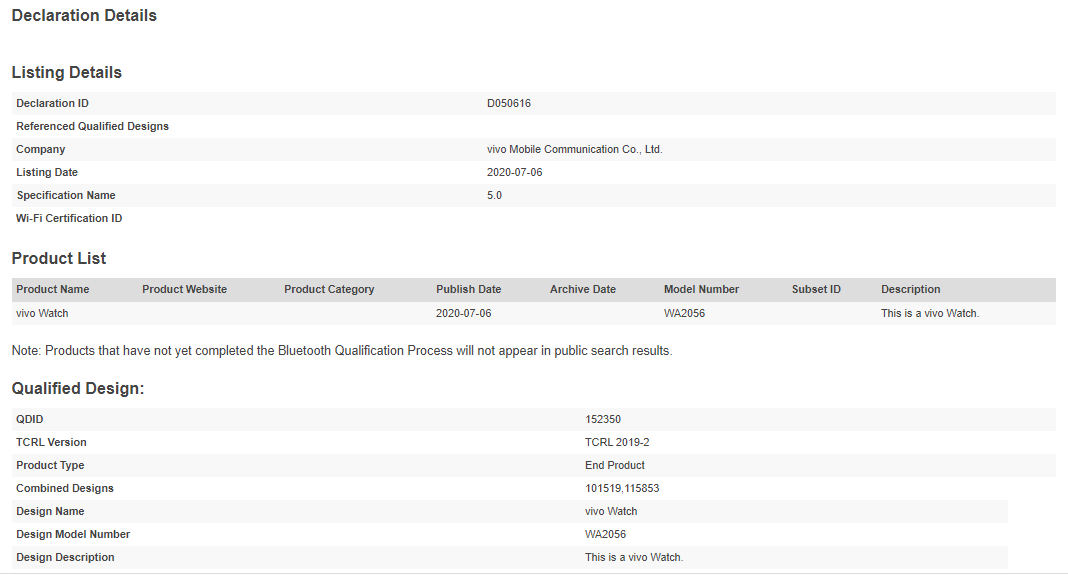
Vivo is reportedly working on a smartwatch. The moniker of the device could be Vivo Watch. Two variants of the Vivo Watch were spotted at the 3C certification platform in the previous month. The listings suggested that the smartwatch could be inching towards its launch in China. Yesterday, the Vivo Watch was found listed in the database of the Bluetooth SIG certification platform. Devices are known to go official in a timeframe of around one month after appearing at Bluetooth SIG. Hence, there is a possibility that the Vivo Watch may break cover as early as next month.
The Vivo Watch variant that has received approval from the Bluetooth SIG as a W2056 model number. The listing only confirms the support for Bluetooth 5.0 on the device.
The 3C listing of the Vivo Watch had revealed two model numbers namely, W2056 and W2052. The 3C listing only confirmed that the device may come with 5W charging. The two model numbers may belong to the two size variants of the Vivo Watch.
It was in June 2019 that Vivo China had claimed that it would be launching devices like smartwatches and AR glasses in the future. Since then, it has been silent on the existence of Vivo Watch. In April, a reputed tipster from China had first spoken about the existence of the Vivo Watch wearable device. He had revealed that the company began with the production of the Vivo Watch. Hence, it appears that the arrival of the Vivo Watch may not be far away.
At present, there is no word on the design and specifications of the Vivo Watch. Hopefully, the rumor mill will spill more details before its official announcement.
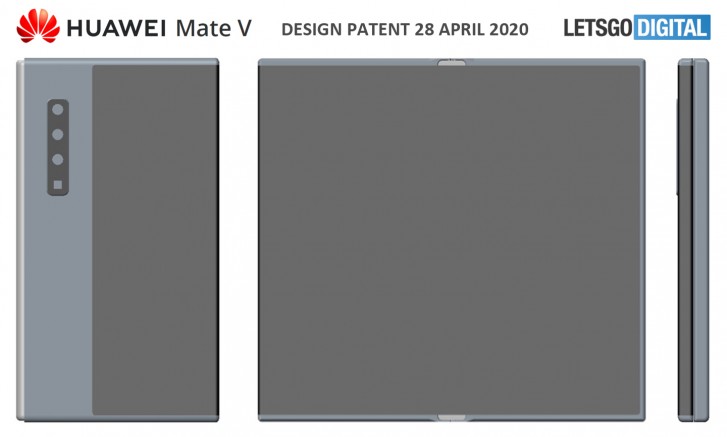
Among the mainstream smartphone brands, Huawei and Samsung are the two companies that have successfully launched foldable smartphones that can transform into a tablet-like device. Samsung will be announcing the Galaxy Z Fold 2 in the coming month. Like the predecessor Galaxy Fold from last year, the upcoming model will be flaunting inward folding design. On the other side, Huawei’s Mate X from last year and the Mate Xs that went official earlier this year both arrived with fold-out design. A fresh report on LetsGoDigital states that Huawei Technologies trademarked the “Mate V” brand name with European Union Intellectual Property Office (EUIPO). It is speculated that the Huawei Mate V could be arriving later this year with a fold-in design like Samsung’s foldable phones.
Reports surrounding the upcoming foldable phone from Huawei claims that it could be called Huawei Mate X2. However, since it is likely to arrive with a completely new form factor, the company may adopt a new name for it just as Samsung is now rumored to call its next Fold product as Galaxy Z Fold 2, and not Galaxy Fold 2.
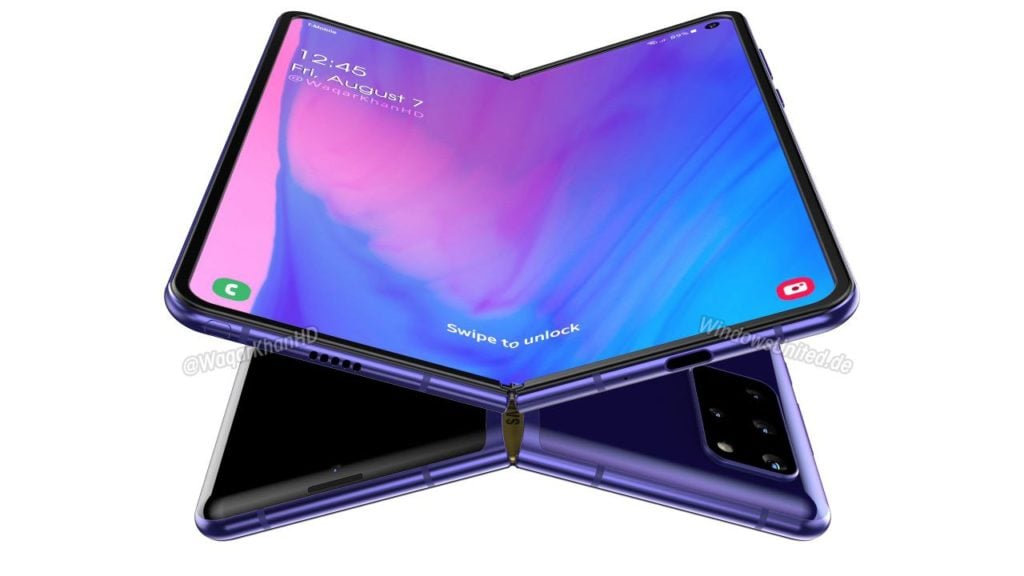
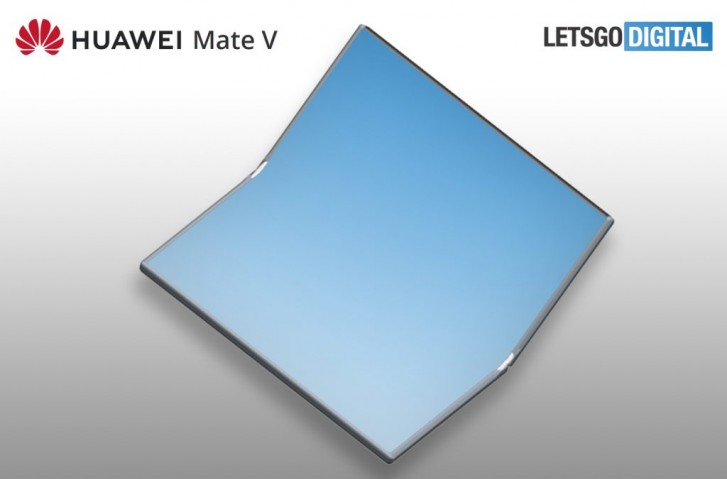
The publication has shared some design renders of how the Huawei Mate V with fold-in design will appear. The Mate V name appears suitable since the letter V looks like a book-like folding design. One of the patent filings that Huawei had filed in August had carried the design of a fold-in foldable phone. The images in the post belong to those patent filings.
The images show the presence of a large inner display and a smaller display on the outside. The backside of the device has a quadruple-camera unit. The fourth lens in the setup appears square which indicates that it could be a periscope zoom lens.
Rumors have it that the main display of the upcoming foldable smartphone will support a 120Hz refresh rate. The Huawei Mate Xs reportedly encountered lackluster sales due to its hefty price tag. It remains to be seen whether the Mate V arrives with an enticing price tag.
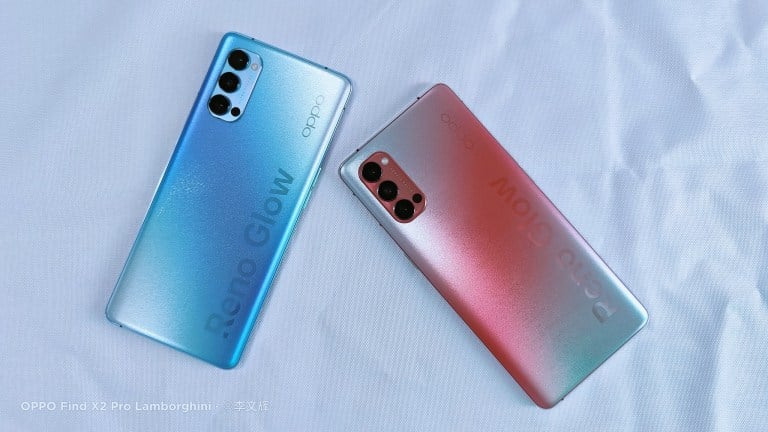
Recent reports have revealed that OPPO is gearing up to launch the OPPO Reno4 series in India. Fresh information shared by 91mobiles reveals that the Chinese firm will launch the OPPO Reno4 Pro in the third week of this month. Its arrival is going to clash the launch of the OnePlus Nord that is expected to go official on July 21. It will also rival with the Vivo X50 and Vivo X50 Pro phones that are rumored to launch around July 16.
It is unclear whether the company will be launching the vanilla OPPO Reno4 alongside the Pro model. There is no word on the pricing of the Reno4 Pro for India. The predecessor OPPO Reno3 Pro had landed in India for Rs. 29,990 (~$402) and the pricing had increased to Rs. 31,990 (~$429) in April due to the GST hike in the country. Hence, it seems that the Reno4 Pro could be priced between Rs. 30,000 (~$402) and Rs. 35,000 (~$469) in the country.
The OPPO Reno4 Pro that debuted in June in China came with a 6.55-inch Full HD+ AMOLED display that supports the 90Hz refresh rate. Rumors are rife that the India edition of the phone will support a 120Hz refresh rate. The rest of the specs of the phone could be identical with its Chinese variant.
The Reno4 pro is powered by up to 12 GB of LPDDR4x RAM and 256 GB of UFS 2.1 storage. It runs on ColorOS 7.2 based Android 10 OS. It has a 4,000mAh battery that supports 65W SuperVOOC 2.0 fast charging. The smartphone is powered by a Snapdragon 765G mobile platform.
The Reno4 Pro has a 32-megapixel front camera. Its back is fitted with a triple camera system that includes an OIS ready 48-megapixel main camera, a 13-megapixel telephoto lens and a 120-degree 12-megapixel dedicated ultrawide video camera.
Aside from the ban placed on Huawei, the US government has continued to mount pressure on its allies to boycott Huawei’s 5G gears. The US’ effort has been yielding results as some countries like the UK are already contemplating making a U-turn. On the other hand, France may not be planning an outright ban at the moment but the European country won’t be encouraging telecommunication companies to use Huawei’s 5G gears.
BANGKOK, THAILAND – 2019/01/16: The Huawei logo seen displayed on an Android smartphone. (Photo by Guillaume Payen/SOPA Images/LightRocket via Getty Images)
Reuters credits the head of the French cybersecurity agency ANSSI to have stated that there would not be a total ban on using equipment from Huawei in the rollout of the French 5G telecoms network, but that it was pushing French telcos to avoid switching to the Chinese company.
“What I can say is that there won’t be a total ban. (But) for operators that are not currently using Huawei, we are inciting them not to go for it,” Guillaume Poupard told Les Echos newspaper in an interview.
Reuters attributes sources to have disclosed in March that France would not ban Huawei but just like the UK and other countries, would seek to keep the Chinetech giant out of the core mobile network. The core mobile network carries higher surveillance risks because it processes sensitive information such as customers’ personal data.
The U.S. government has repeatedly claimed that Huawei’s5G gears could be used by China to spy on the West, hence the sustained pressure on allies to use alternatives instead of the Chinese company. The US has even offered to provide funding for countries to buy 5G gears from Huawei’s rivals.
Huawei has severally denied that its 5G gears pose any security risk from China.
Ulefone is a popular rugged smartphone maker, and the Armor series is a well-known smartphone series offering value-for-money and other high-end rugged smartphones. The latest addition, Ulefone Armor 9 has recently arrived on the Kickstarter crowdfunding website at a starting price of $429. However, the company is evolving new use-cases of the Armor 9 using Endoscopic Tool.
A new video is uploaded on the company’s official YouTube channel depicting the extensive use of the smartphone using an Endoscopic semi-rigid waterproof cable. It helps to see the household corners, automotive cylinders, narrow pipe to check blockage, and helps to peep into other confined places. Several other accessories like reflecting mirror, hook, and magnet for different scenarios.
In the video, we can see that Uelfone Armor 9 is helping to see any blockage in the washbasin, auto exhaust pipe and even in the air conditioner vent. It can be a troubleshooter for the majority of the blockage issues. It is a perfect tool for inspecting hard-to-reach, and narrow places easily.
Additionally, Ulefone Armor 9 features an Helio P90 AI processor coupled with 8GB RAM + 128GB internal storage. A 6.3-inch FHD+waterdrop display, 6600 mAh massive battery, face unlock and fingerprint ID. It also supports NFC for wireless payments via Google Pay. Ulefone Armor 9 is a 5G dual VoLTE device with support for global frequency bands.
It is IP68/IP69K and MIL-STD-810 certified device featuring a dustproof, waterproof and drop-proof body. In connectivity, you will get a GPS, GLONASS, Beidou, Galileo quadruple navigation system, and fingerprint ID, NFC, and 4G VoLTE support.
Ulefone Armor 9 is available via crowdfunding website Kickstarter with early bird discount till July 14th. You can know more about the device by heading to the crowd-funding website or Ulefone Official website.
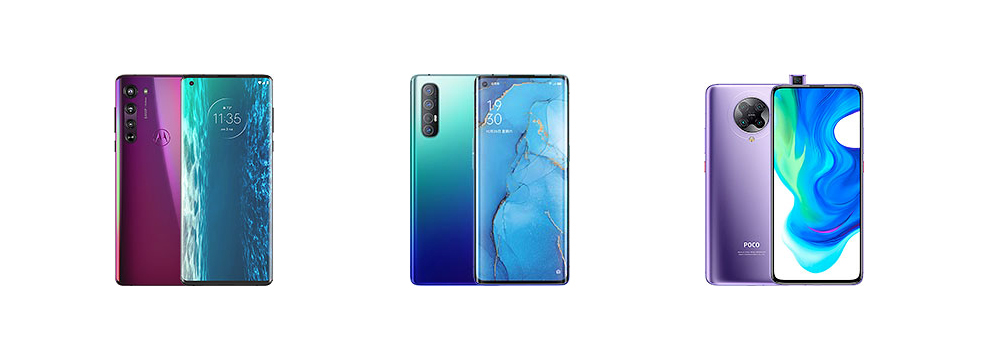
You do not need a flagship anymore to get a perfect phone. Differences between flagships and upper-midrange phones have thinned in the last year and with the price hikes of the most advanced models, the upper-midrange devices became the main choice. Among the best high-end devices sold at modest prices this year we got the Motorola Edge, the Oppo Find X2 Neo, and the POCO F2 Pro. All offer the power of 5G and advanced hardware, but with a few differences. The first twos come with upper-midrange hardware, while the third is an affordable flagship. Which one should you go for? We will try to give you an answer through this specs comparison.
Motorola Edge vs Oppo Find X2 Neo vs Xiaomi Poco F2 Pro
Motorola Edge
Oppo Find X2 Neo
Xiaomi Poco F2 Pro
DIMENSIONS AND WEIGHT
161.6 x 71.1 x 9.3 mm, 188 g
159.4 x 72.4 x 7.7 mm, 171 g
163.3 x 75.4 x 8.9 mm, 219 g
DISPLAY
6.7 inches, 1080 x 2340p (Full HD+), OLED
6.5 inches, 1080 x 2400p (Full HD+), AMOLED
6.67 inches, 1080 x 2400p (Full HD+), Super AMOLED
Motorola Edge looks undoubtedly impressive because it has the highest screen-to-body ratio, but my favorite design in this trio is the Oppo Find X2 Neo. It is more compact, thinner, and lighter than the Motorola Edge: with a thickness of just 7.7 mm, it is one of the thinnest 5G phones ever. And despite packing a battery with a capacity above 4000 mAh, it weighs just 171 grams: that is definitely an engineering miracle. With the absence of a curved screen and a big camera module, as well as less care for details, POCO F2 Pro looks less attractive than its opponents.
Display
Motorola Edge and Oppo Find X2 Neo are actually equipped with better displays than POCO F2 Pro. They feature a higher 90 Hz refresh rate, while POCO F2 Pro lacks it and it offers just 60 Hz. The AMOLED panel of the Motorola Edge looks really great with its Full HD+ resolution and the HDR10 certification: it is very hard to distinguish it from a top-tier flagship. Note that Motorola Edge and Oppo Find X2 Neo have curved punch-hole displays, while POCO F2 Pro has a flat full-screen display and a pop-up selfie camera. It does not have a 90 Hz refresh rate, but it is still a great panel with HDR10+.
Hardware/Software
The hardware is the department in which POCO F2 Pro takes the gold medal and it is the main advantage of the phone. It is fueled by the flagship-class Snapdragon 865 mobile platform paired with up to 8 GB of RAM and up to 256 GB of fast UFS 3.1 storage. Motorola Edge and Oppo Find X2 Neo are powered by the mid-range Snapdragon 765G: you would not notice the difference in daily use and most of the apps, but only in the most advanced scenarios such as gaming and video rendering. Motorola Edge loses against the Oppo Find X2 Neo because it sports just a half of its RAM (6 GB vs 12 GB). In each case, you get Android 10 out of the box, naturally.
Camera
The best cameras are built on the Oppo Find X2 Neo: it is the only one with OIS, so it offers superior stabilization. It also packs an amazing telephoto sensor with a 2x optical zoom and an ultrawide lens. Right after we got the Motorola Edge with a 64 MP main sensor, a telephoto lens, a TOF 3D sensor, and an ultrawide sensor, but no OIS. POCO F2 Pro is not the best camera phone out there, but unlike its rivals, it is able to record 8K videos.
Battery
POCO F2 Pro wins the battery life comparison because it has a bigger 4700 mAh battery and also because its display has a standard refresh rate. The silver medal goes to the Motorola Edge (but it comes with slower 18W charging), while Oppo Find X2 Neo wins the charging speeds comparison thanks to a 30W fast charging technology and a smaller 4025 mAh battery.
Price
In the global market, Motorola Edge is actually priced €600/$700. Oppo Find X2 Neo costs €700/$792, and POCO F2 Pro starts from just €500/$566. While it surely provides the highest value for money and the highest performance, at the end of the day, POCO F2 Pro is not the most complete phone. Oppo Find X2 Neo looks more complete as it offers a real high-end camera, stereo speakers, a sleek design, and all you can expect from a 2020 high-end phone. On the other hand, Motorola Edge has a longer battery life than Find X2 Neo, but lower-end hardware and cameras, as well as a thicker and heavier design. Note that, unfortunately, Find X2 Neo is mono SIM. Which one would you pick?
A new detail about the OnePlus Nord has been revealed. According to a tweet by Ishan Agarwal, the phone will have optical image stabilization. The tweet was retweeted by OnePlus Co-founder, Carl Pei with the comment “Flagship camera incoming”.
Optical Image Stabilization or OIS for short is a feature commonly found in flagship phones. There are even a few flagship phones that have been released in the past that do not have the feature, so it is no surprise that OnePlus is bragging about its availability on its mid-range device.
OIS allows users to take shake-free photos. If you don’t have steady hands or you are taking a photo while moving, you will definitely find it very useful.
Other than the confirmation of the new feature, the retail box of the phone has also been revealed.
The OnePlus Nord will come in a black box, a first for the company whose previous phones ship in white or red (orange in the case of the McLaren edition phones) retail boxes. The top part of the box has the OnePlus logo at the corner while the word “Nord” is written multiple times in a much larger font. On the side of the box is written “OnePlus“.
The retail box is designed in such a way that you can see the teal/cyan color of the inside of the box. This is the same color OnePlus is using for the OnePlus logo for the Nord line but we are surprised the logo on the box doesn’t have that color.
In one of the images posted, OnePlus demonstrates the sturdiness of the box by having two people stand on top of it. This particular picture has gotten mixed reception with some defending it and others saying they really do not care how strong the box is since it is going to get discarded once the phone is out of it.
The OnePlus Nord launches on July 21 and the event will be the world’s first AR smartphone launch.
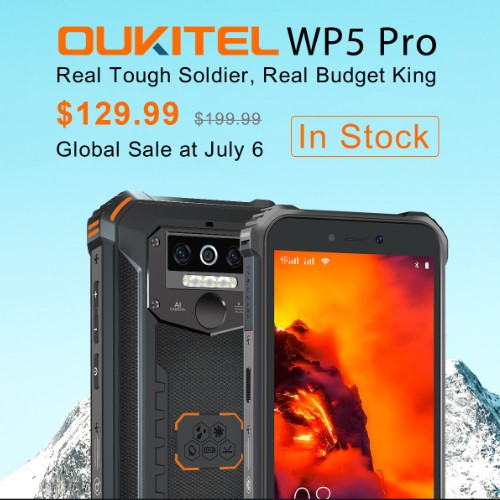
Oukitel WP5 Pro is finally made available today after its announcement last week. The rugged smartphone offers excellent specifications at a compelling price. It is an affordable device offering tripel camera sensor, 8000 mAh battery and 5.5-inch HD+ display for $129. You can grab the Oukitel WP5 Pro from the official Oukitel store at a limited-time introductory discount as its actual price is $199. The company has enough stock to meet the demand.
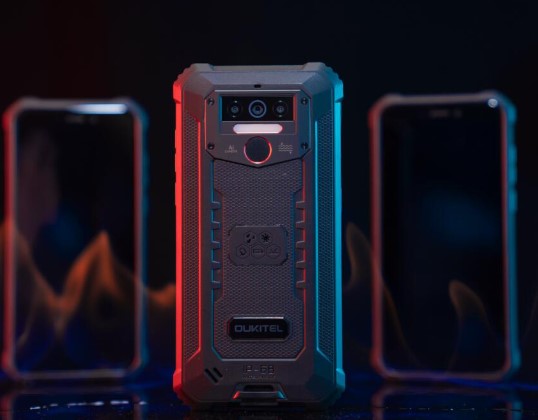
The beautifully designed device houses a triple camera module on the rear side featuring a 13-megapixel primary camera, 2-megapixel and another 2-megapixel sensor. A set of four LED flashlights sits just below the camera module for better lighting. The camera module is quite different from the other rugged smartphones.
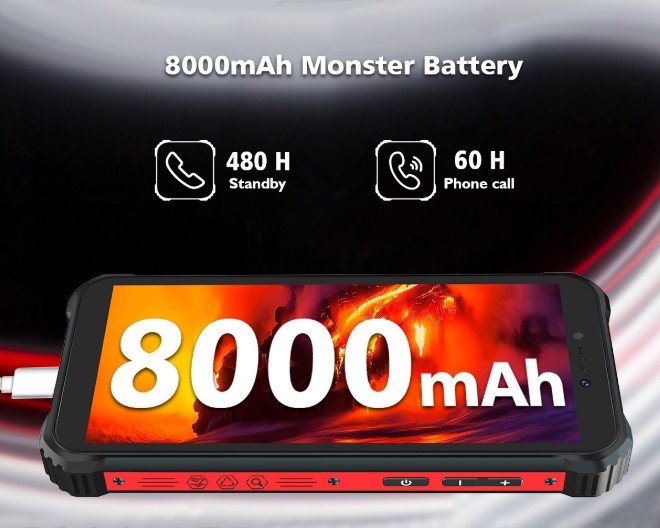
A massive 8000 mAh battery can provide backup for up to several days upon a single full charge. It can be your perfect companion on an extreme outdoor adventure or while working in extreme conditions. It works perfectly in outdoors without the need for charging and can remain on 480 hours of standby.
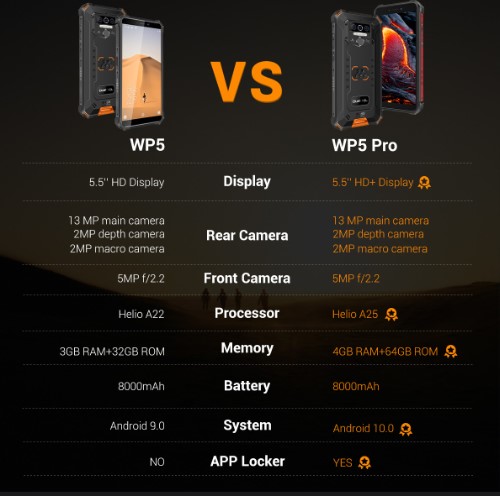
Other prominent features include a 5.5-inch HD+ In-Cell display, and corning Gorilla Glass 5, and runs Android 10 Go OS. It is powered with MediaTek Helio A25 SoC featuring an octa-core processor coupled with IMG VR GE8320-class GPU. The smartphone is available in 4GB RAM and 64GB Internal Storage.
An improved Helio SoC, better RAM, and presence of Android 10 Go makes the Oukitel WP5 Pro a better device than its predecessor Oukitel WP5. The device even houses an App locker application to safeguard your data.
It is a beautiful, rugged and powerful device available for the exceptional price of $129. You can buy it from Aliexpress. TO know more features, head over to the Oukitel official website.
The POCO M2 Pro is launching tomorrow in India as the young brand’s third smartphone in the country. While POCO has confirmed some key specs of the phone, some have also surfaced in leaks and on benchmark sites. This post is a roundup of all we know about the mid-range phone.
POCO M2 Pro Design
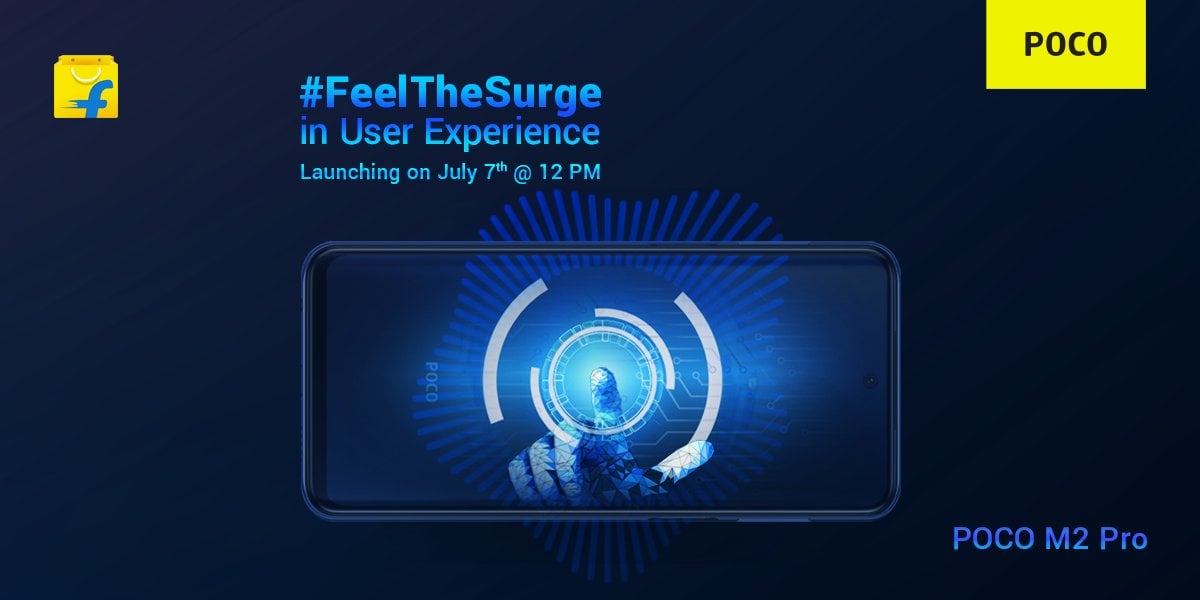
While we are yet to see an official press render of the POCO M2 Pro, teaser posters have given us an idea of what the phone looks like.
The POCO M2 Pro has a hole in the middle of the upper part of the display for a selfie camera. This is similar to what we have seen in phones from a number of manufacturers including Samsung and Redmi. The bottom of the screen has a thicker bezel than the rest of the phone while the top and side bezels are pretty slim.
On the back, the phone has four rear cameras arranged in a squircle and positioned in the center. Below the camera housing is an LED flash.
There is no fingerprint scanner on the back but posters have shown the phone has an indentation on the right side for what is most definitely a side-mounted fingerprint scanner.
The design of the POCO M2 Pro is not unique. Actually, it is very similar to that of the Redmi Note 9 Pro (global edition).
POCO M2 Pro Specifications
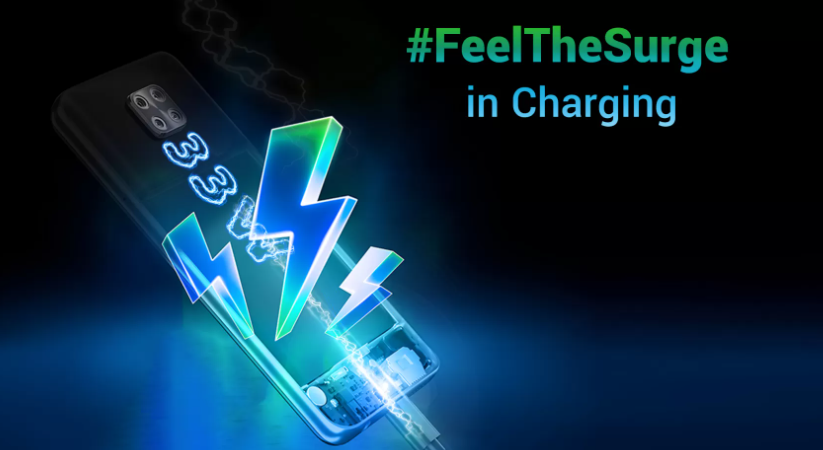
A lot is unknown about the POCO M2 Pro’s specs. However, some of the specs have been officially confirmed by POCO such as support for 33W fast charging just like we have on the Redmi Note 9 Pro Max; a Snapdragon processor; and quad rear cameras.
A Geekbench listing already revealed that the phone is powered by the Snapdragon 720G. It also has 6GB of RAM but we won’t rule out the possibility of other RAM variants.
We presume the POCO M2 Pro will come in 64GB and 128GB variants with support for storage expansion via a dedicated MicroSD card slot or a hybrid slot.
The global Redmi Note 9 Pro which the phone shares its design with has a 64MP + 8MP + 5MP + 2MP quad camera setup. The POCO M2 Pro may have the same configuration or have slightly different specs. For the selfie camera, POCO may decide to go for a different sensor from the 32MP camera of the Redmi Note 9 Pro to differentiate the two phones.
33W fast charging is definitely good news for those whose eyes are set on the phone. We expect the battery capacity will be pretty big too and definitely not less than 4500mAh.
The POCO M2 Pro is expected to run Android 10 out of the box. It will have a USB-C port and one of the posters has shown that there is a 3.5mm jack at the bottom of the phone too.
POCO M2 Pro Price
The POCO M2 Pro will have a starting price lower than that of the POCO X2 according to C. Manmohan, the GM of POCO. The POCO X2 currently sells for INR 17,499 (~$234), so the M2 Pro may have a starting price between INR 14,999 (~$200) to 16,499 (~$220).
Launch
The phone will launch tomorrow at 12 PM IST and POCO has revealed it will be taking a different approach with the launch.
Rather than having the launch in only English, POCO will be partnering with three tech bloggers and YouTubers who will serve as regional presenters and handle the launch in Kannada, Tamil, and Malayalam.
Apart from this, we will also be launching the phone in Kannada, Tamil and Malayalam with the help of @Techysomz, @GiriSonnaSeri and @nirmaltv respectively.
Keep an eye out, subscribe to their channels to make sure you don't miss out! https://t.co/xCA5qdK9vw
— Yash Garg #POCOForIndia (@yash3339) July 6, 2020
Here's something that we're doing for the first time only for you. A launch in a language you love. 🙂
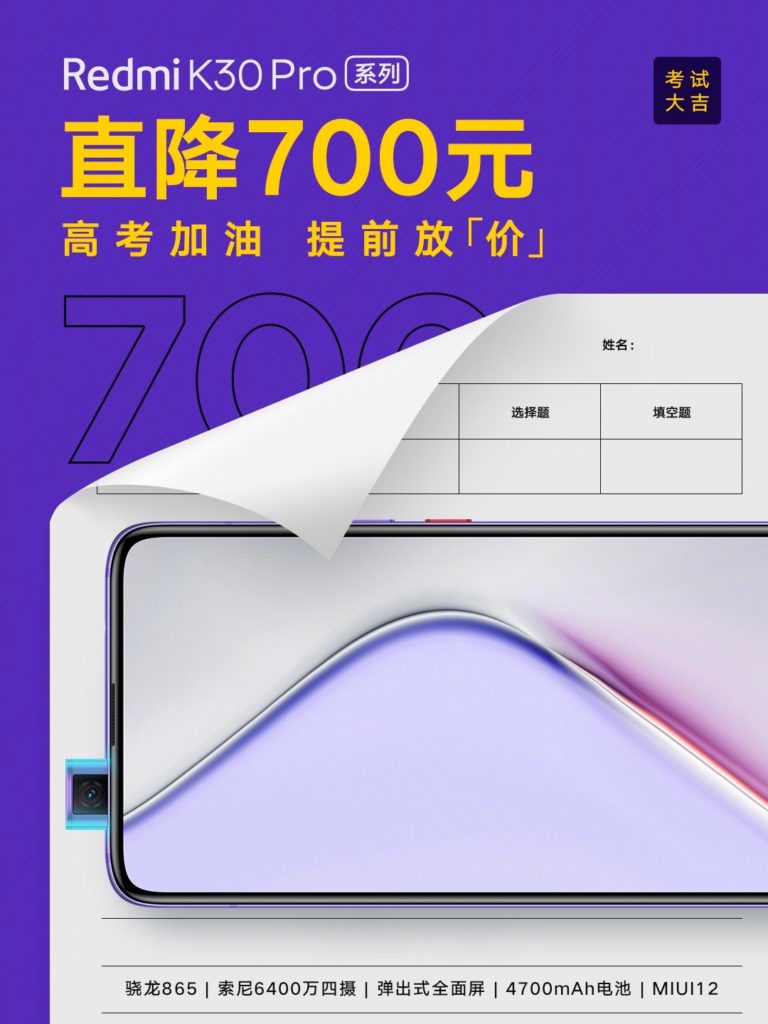
Redmi K30 Pro is the brand’s second flagship smartphone after last year’s Redmi K20 Pro. It is probably the only high-end smartphone from any brand to offer full-screen experience in 2020 with the help of a pop-up camera. Currently, it is on sale in China for a whopping 700 Yuan ($100) discount just a little over three months from its launch.
This is not the first discount on the Redmi K30 Pro. The handset’s price was permanently decreased in May, about two months after its launch. Then, on account of 618 sales, it was available at a discounted price in June for a limited time.
Now, once again, the brand is selling the handset at a discounted price due to the National College Entrance Exam, which is scheduled for July 7 and 8. Redmi’s official Weibo account says it is offering this discount so that college aspiring students can buy the latest Snapdragon 865-equipped 5G flagship smartphone at an affordable price with up to 24 months no-cost EMI.
Having said that, here’s the latest temporarily discounted price of Redmi K30 Pro in China.
Variant
Retail Price
Discount
Selling Price
8GB + 128GB
3,399 Yuan ($484)
700 Yuan ($100)
2,699 Yuan ($384)
8GB + 256GB
3,699 Yuan ($527)
700 Yuan ($100)
2,999 Yuan ($427)
12GB + 128GB
2,999 Yuan ($427)
–
2,999 Yuan ($427)
As you can see from the tabular column, the price of the newly launched 12GB + 128GB variant is not discounted. Also, the price of 8GB + 256GB is exactly the same as the latter model so that customers can either choose for more RAM or storage.
Anyway, the Redmi K30 Pro is limited to China and this discount is only available in that region. In other regions like Europe and South East Asia, interested customers get the POCO F2 Pro, which is basically the same phone with a different name.
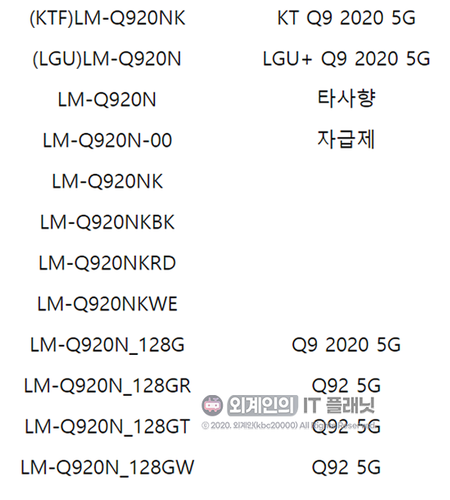
LG happens to be a pioneer of the smartphone era but the company’s smartphone business has been on a steady decline in the past few years. The brand isn’t giving up just yet but is working on a couple of strategies to mount a resurgence. One such strategy is the release of premium mid-range models that would be affordable. To this end, the company reportedly trademarked a massive 13 different monikers under the Q-series back in May.
Turns out that a number of the models are 5G-enabled phones. This was picked up from new details about the naming that just emerged. The LG Q92 5G (LM-Q920N) is among the 5G phones and it is believed to be a cheaper alternative the well-received LG Velvet 5G.
LG seems to have initially planned to launch the Q92 5G as LG Q9 2020 5G but that may have been jettisoned. The list also shows that LG will launch two carrier-specific model – LG KT and LG U+. Korea Telecoms and U+are two of the top three carriers in South Korea.
In addition, the listing also suggests that there will be 128GB storage models and they will be available in an array of colours.
Apart from the Q92, the listing also shows the Q series will be made up of the Q3x, Q5x, Q6x and Q9x. This means there are other Q9 models in the pipeline some likely for next year and beyond.
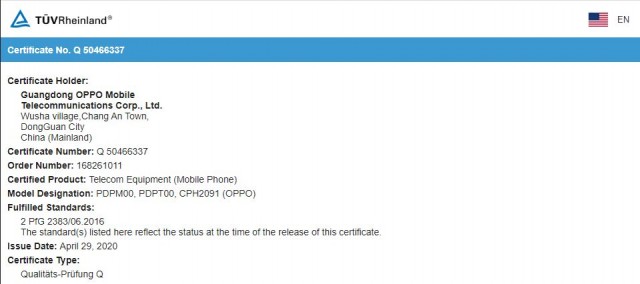
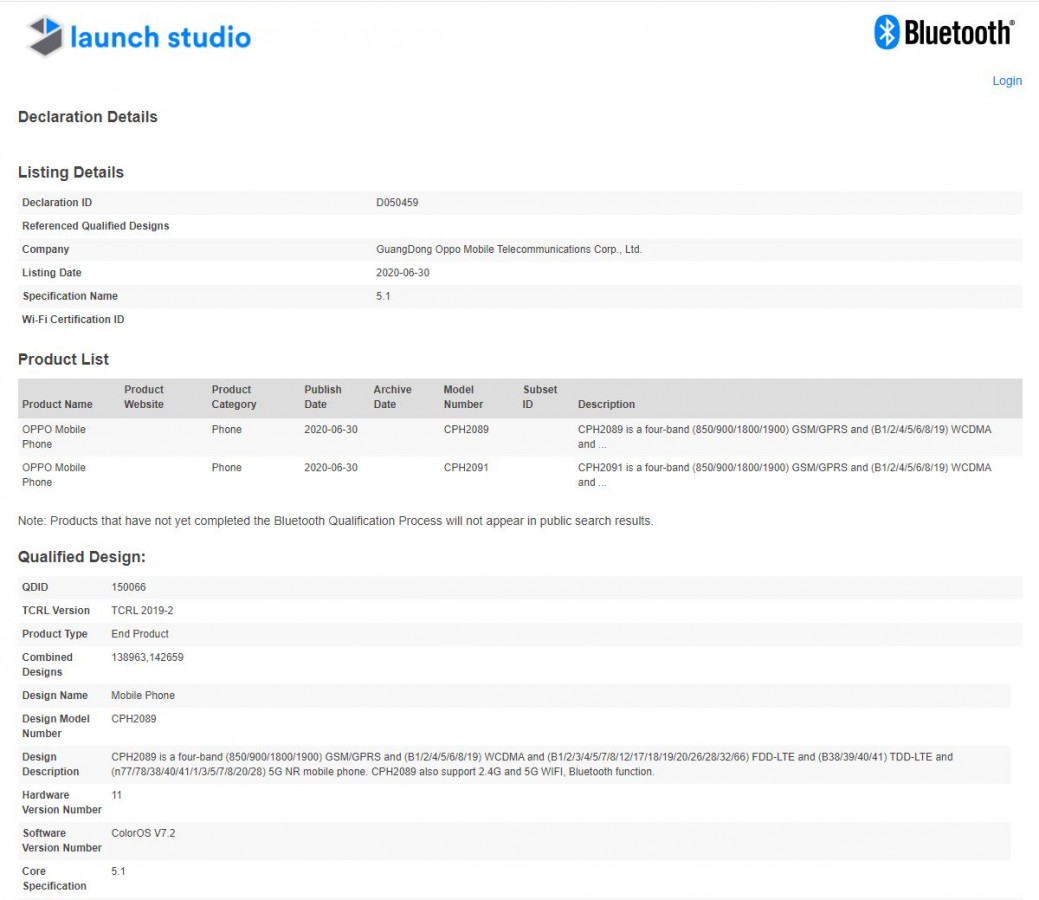
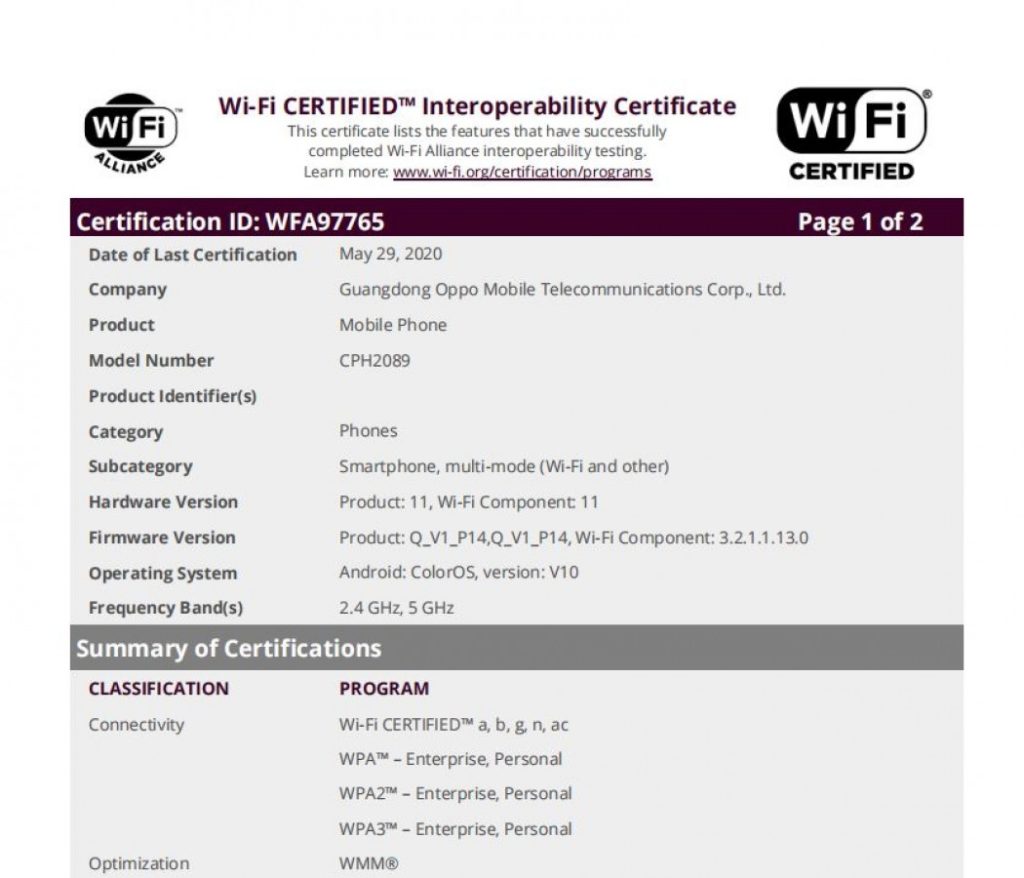
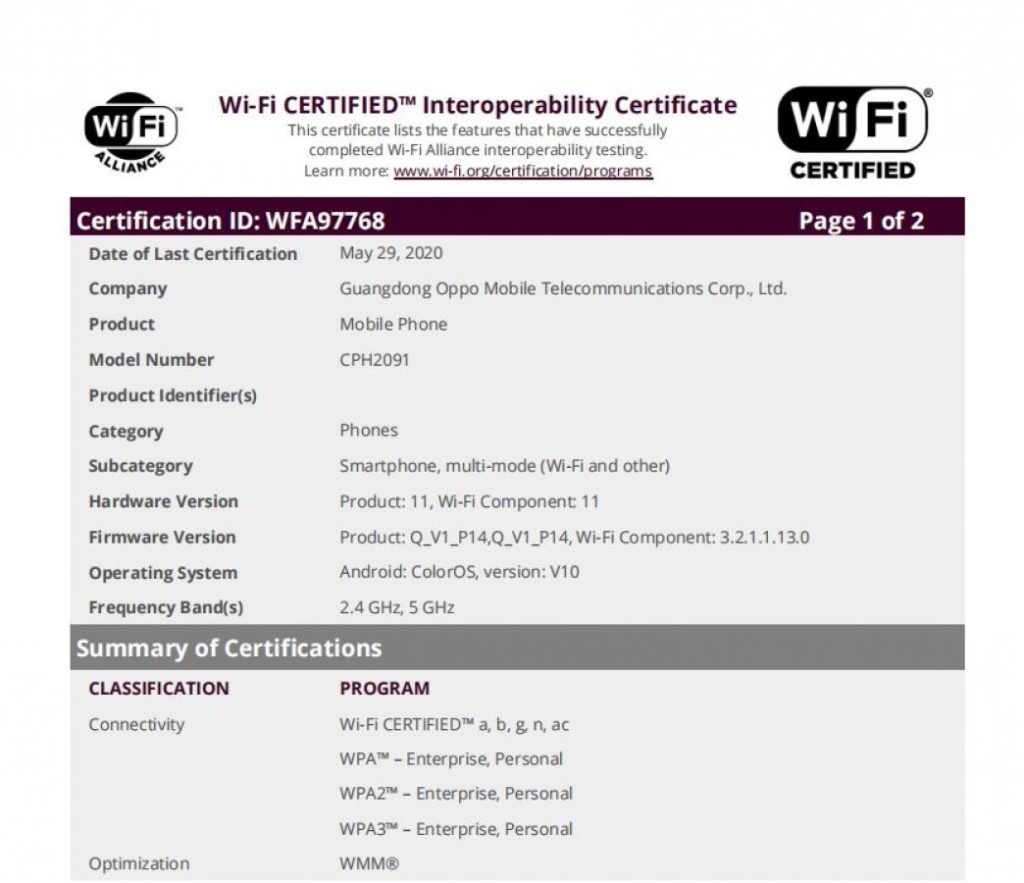
OPPO launched the Snapdragon 765G-powered Reno4 and Reno4 Pro 5G in China on June 5. Since then, there has been speculation of the models launching in India. The Reno4 was also certified in Thailand last month suggesting a launch in South East Asia. Right now, the Reno4 has accumulated a host of certificates which not only confirms its launch in SEA but for the global market.
First in line is the TUV Rheinland certification, followed by Bluetooth SIG and then WiFi Alliance certification. The Reno4 appears sporting the model number CPH2089 while the Reno4 Pro appears as CPH2091. The listings are pointers to the impending launch of the models outside China.
The Reno4 and 4 Pro both features dual-mode Wi-Fi and Bluetooth 5.1 connectivity. The models are also billed to run on Android10-based ColorOS 7.2. However, there are speculations that the Reno4 will be similar to the Chinese version while the Pro variant is anticipated to receive a bump in its screen refresh rate from 90 Hz to 120Hz.
To recall, the Reno4 series is equipped with AMOLED panels on both models but the Reno4 comes in at 6.43 inches with a pill-shaped cutout while the 4 Pro gets bumped up to 6.55 inches with a punch-hole design. The phones are both powered by the Snapdragon 765G chipset with up to 12GB RAM. Keeping the lights on is a 4,000 mAh battery. For photography, both models pack triple cameras with 48MP main shooters and 32MP selfie cameras.
There is no official word yet about a launch date for the models outside China.
Samsung is expected to launch the successor to Galaxy Fold in August. Ahead of it, the foldable smartphone has been rumored and leaked multiple times since the past few months. Now, a new leak says that this upcoming device will be called Galaxy Z Fold 2 and not Galaxy Fold 2 as everyone thought.
According to an exclusive report by SamMobile, the forthcoming Samsung foldable smartphone will be marketed as Galaxy Z Fold 2. The publication received the information from their reliable sources and it could be mostly true.
Earlier this year, the South Korean tech giant confirmed to Bloombergthat it will use “Galaxy Z” branding on all of its future foldable smartphones. But somehow, this news remained hidden in the tech community so that people simply called the next foldable from Samsung as Galaxy Fold 2.
In fact, the branding was right under our nose on the Samsung website. The company has listed both Galaxy Z Flip and Galaxy Fold under “Galaxy Z” series category.
Huami has not released a smartband in a while but it is no news that it is the company behind Xiaomi’s Mi Band line whose latest model is the Mi Band 5. It appears Huami may soon launch a new smartband under the name Amazfit Band 5.
The smartband has been certified by the FCC and the listing reveals some of its key specs. First reported by GadgetsandWearables, the Amazfit Band 5 might be a rebadged Mi Band 5.
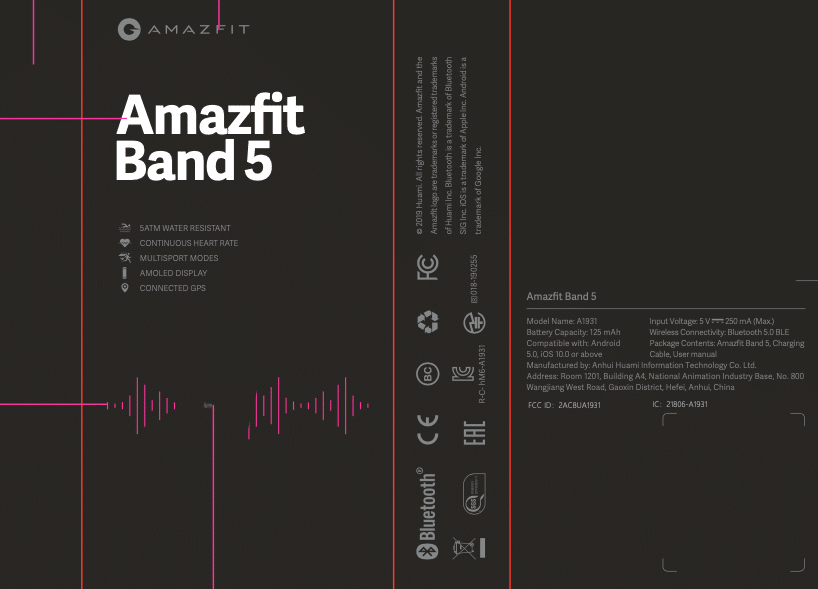
The FCC listing includes an image of the packaging of the band and it contains some key specs and more info. The Amazfit Band 5’s model number is revealed as A1931. It has a 125mAh battery and connects via Bluetooth 5.0 BLE to devices running Android 5.0 and up and iOS 10.0 and up. Inside the box will be the band itself and a charging cable.
The Amazfit Band 5 will be water-resistant up to 5ATM. It will also have continuous heart rate monitoring, multisport modes, an AMOLED display, and connected GPS. There are no images of the smartband, but as you can see a lot of its specs are similar to that of the Mi Band 5 so they may also have the same design.
If the Amazfit Band 5 is getting a global launch, there is a possibility it will not launch in the same markets Xiaomi will launch the Mi Smart Band 5 if the only difference is their names.
There is no news on when this new smartband will launch at the moment. Nevertheless, we will let you know when more details surface.
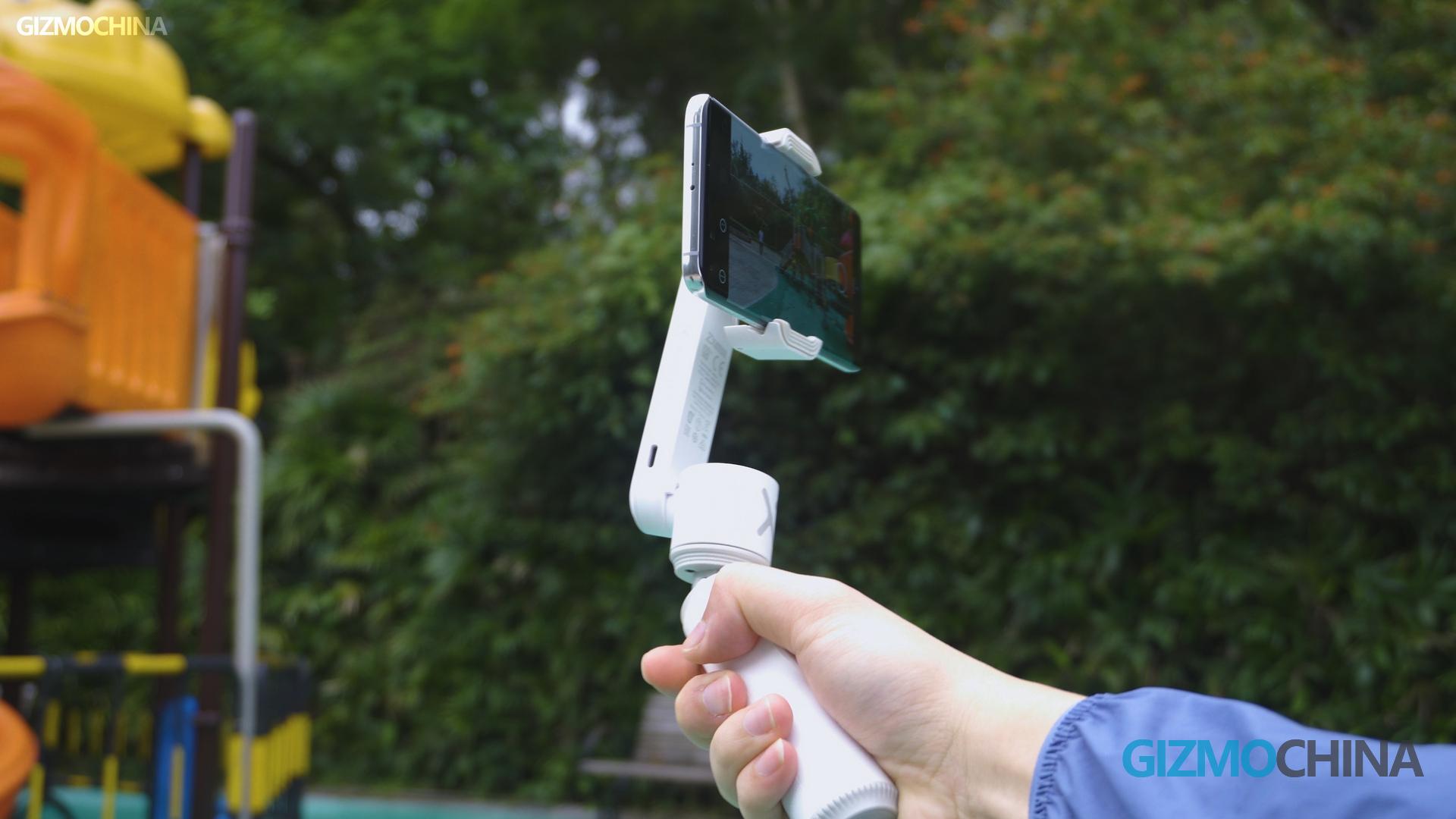
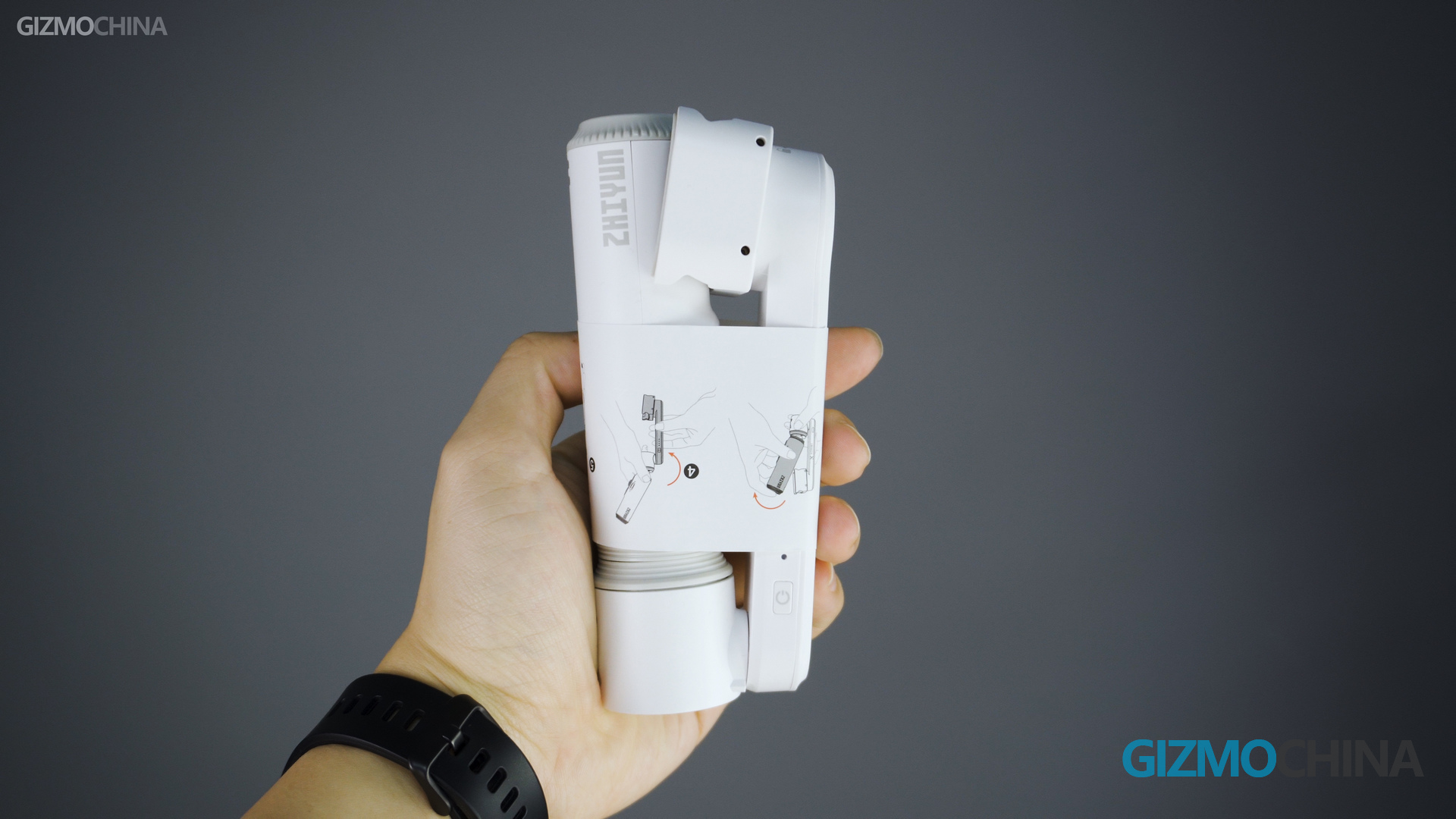
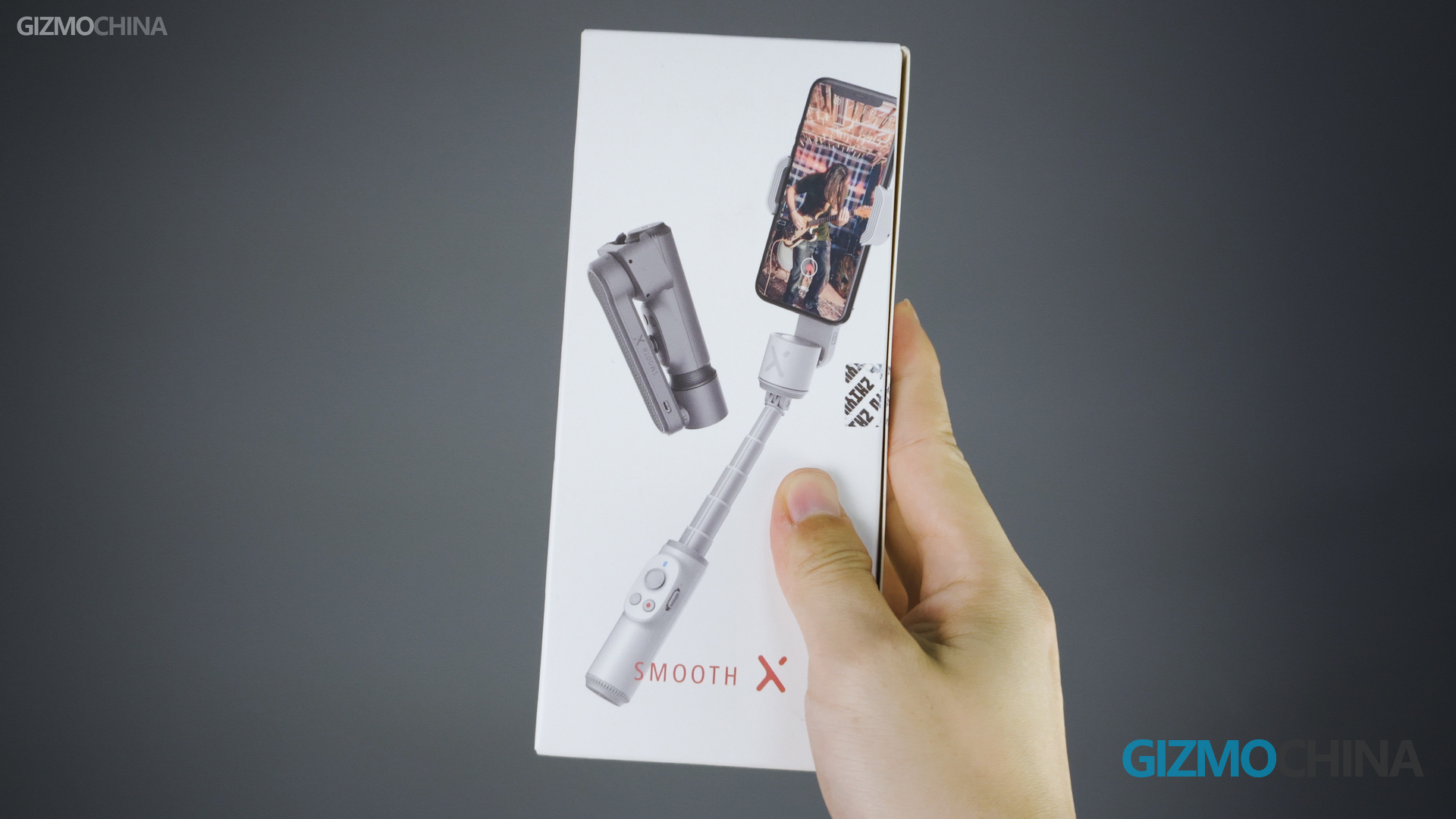
Ever since Zhiyun impressed us with its fine-designed Smooth Q2 mobile gimbal last year, we’ve been looking forward to its new gimbal in 2020. And we finally have their latest product, the Zhiyun Smooth X, in for review. Its design is so special that we cannot classify it as a basic gimbal or a selfie stick at first glance. It seems that Zhiyun just created a new market segment, a combination of mobile gimbal and a smart selfie stick. That’s probably the reason why Zhiyun keeps attracting a wider crowd globally: its product design is often unique. But how about its actual performance? Let’s find out the answer.
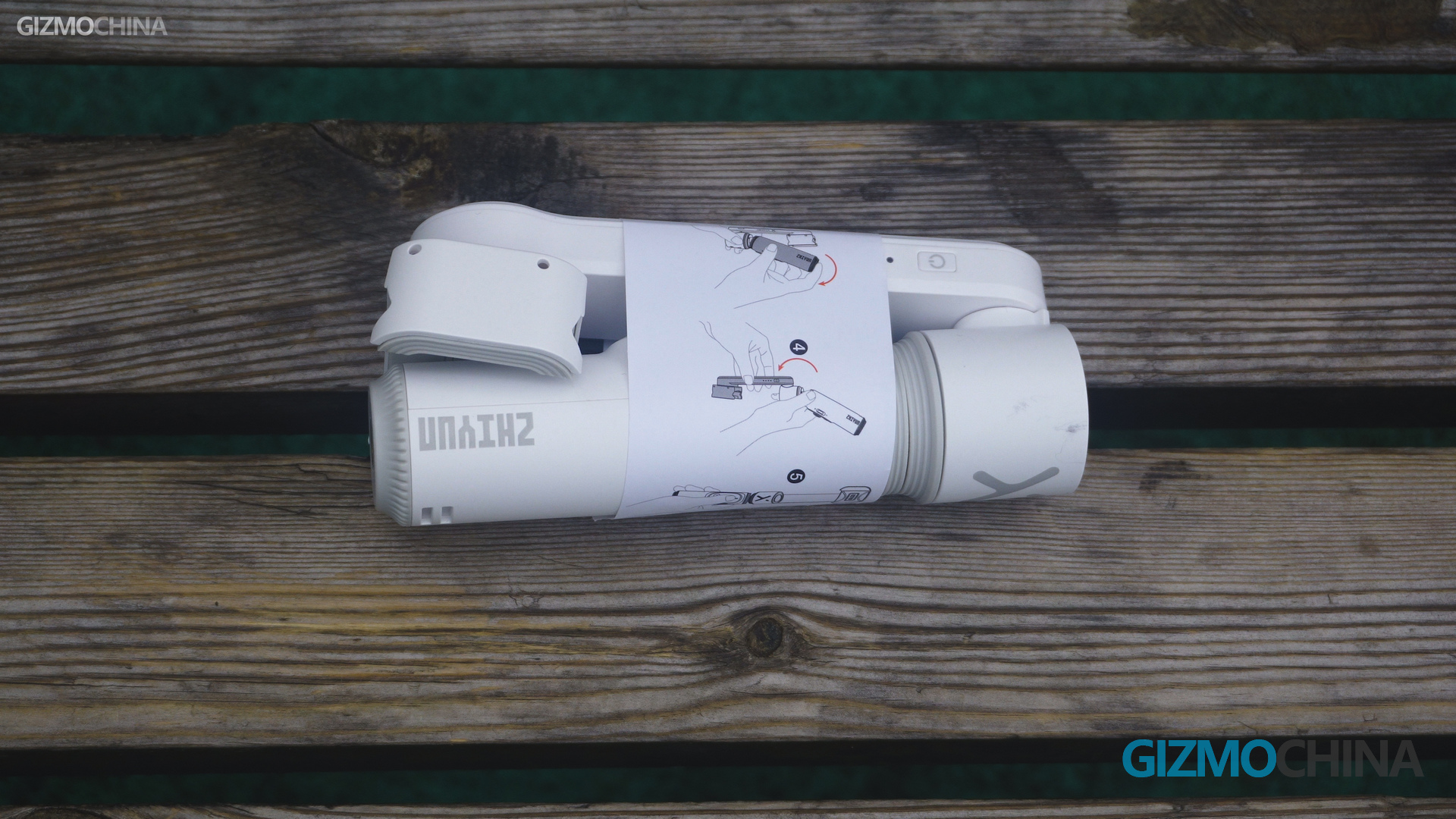
In addition to the white version we’re holding, there is a gray option for the Smooth X. But the white model is really impressive as there are very few white gimbals in the market in this shade.
Zhiyun Smooth X Gimbal
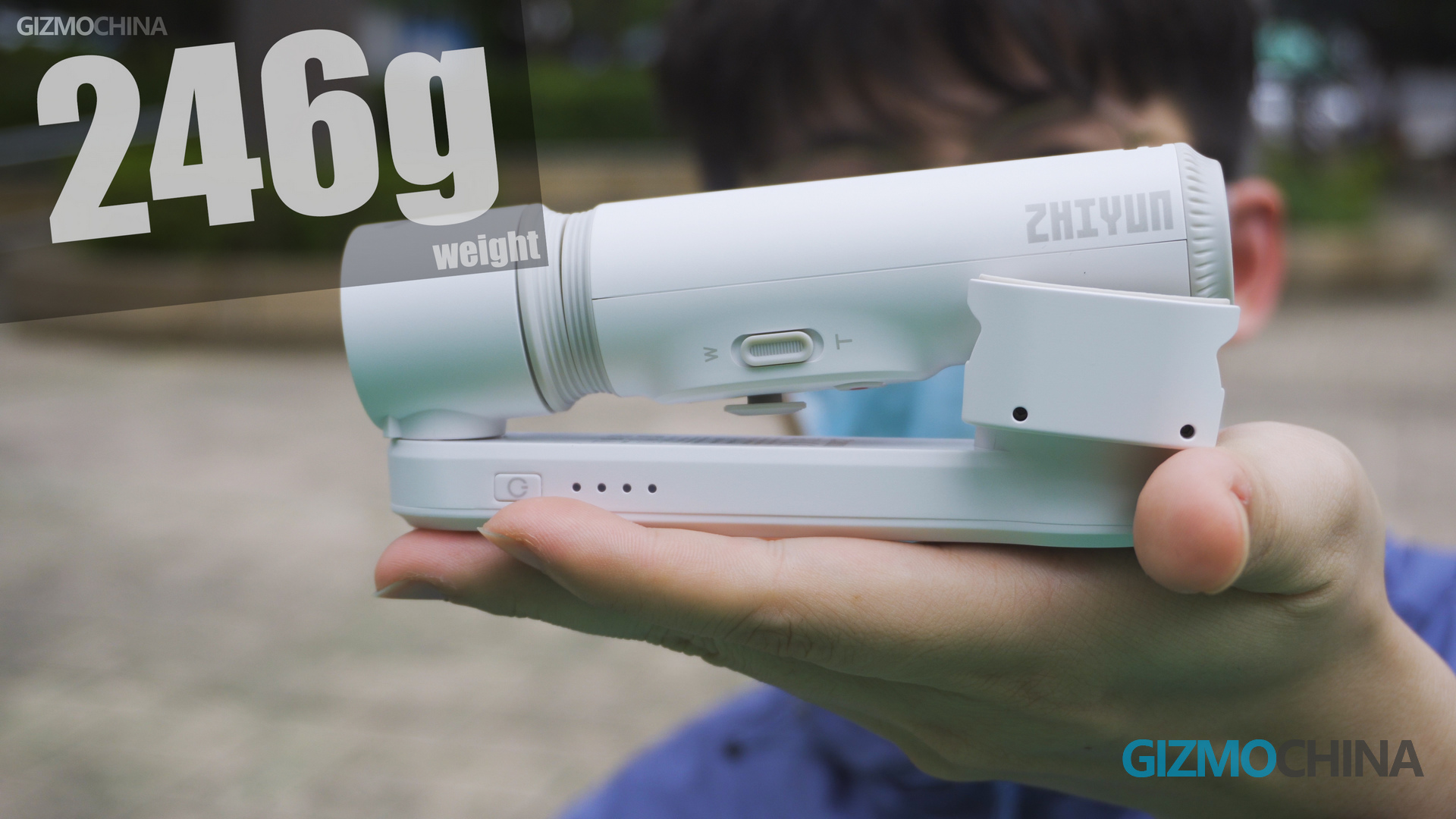
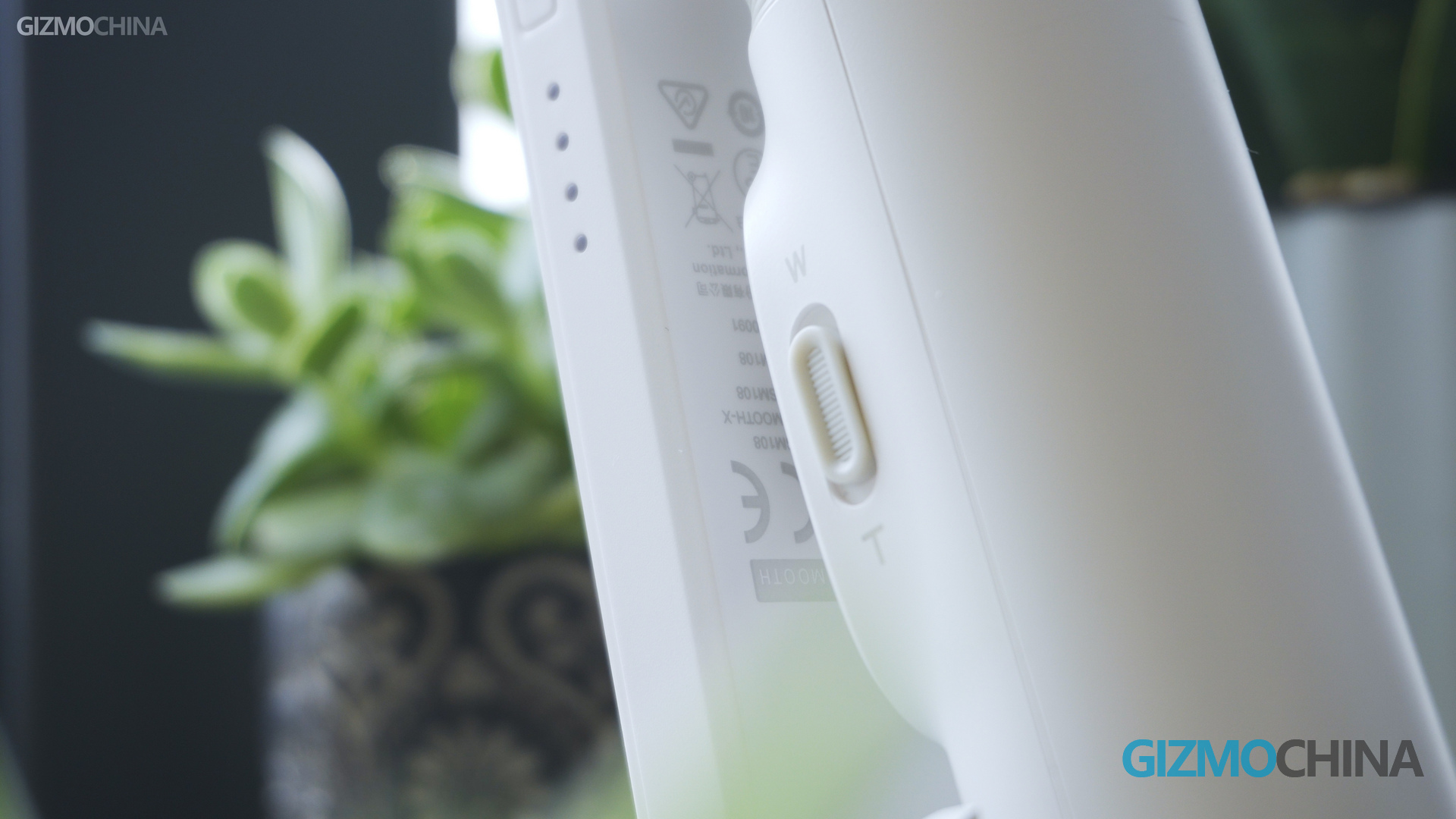
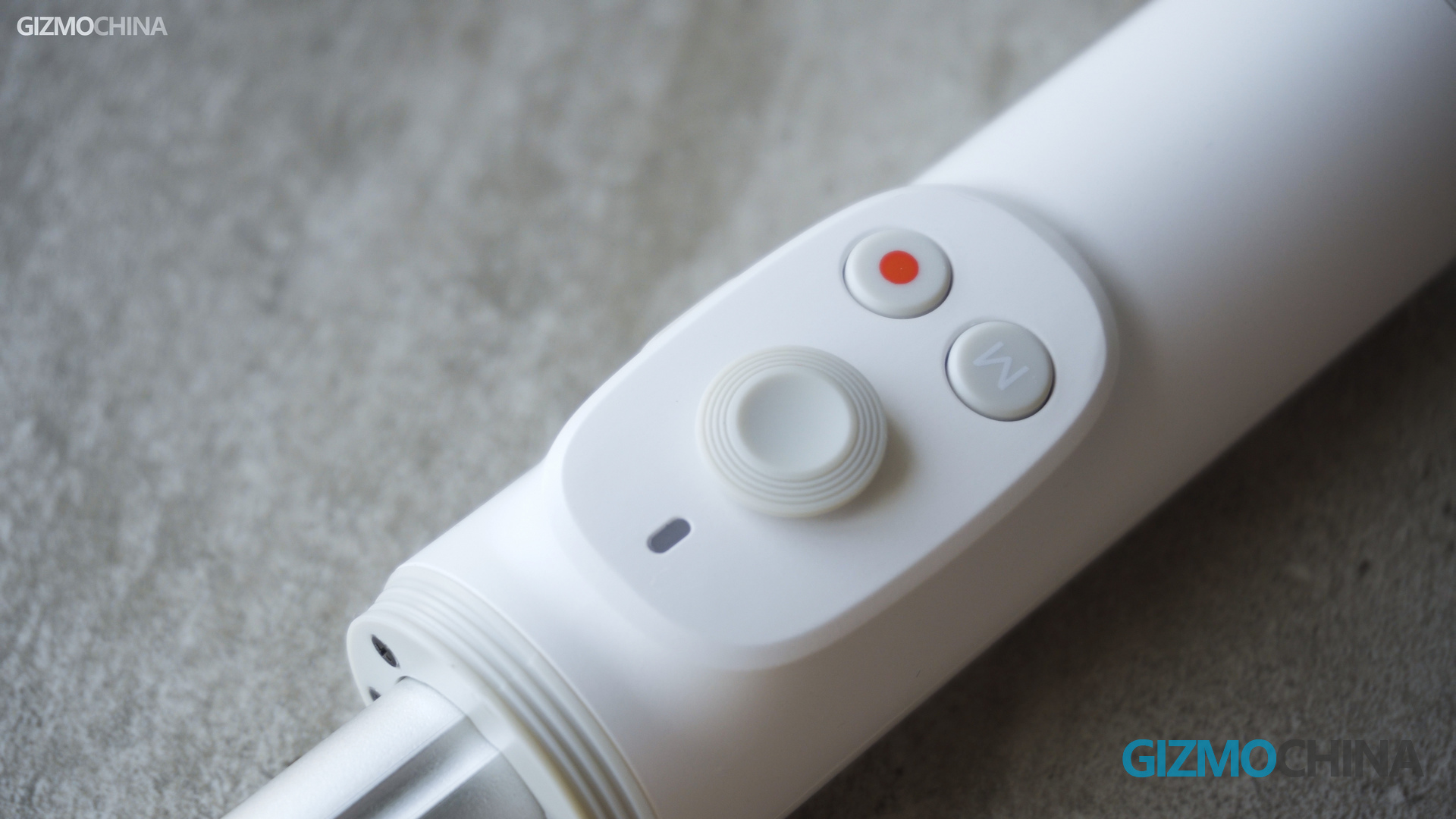
Unlike the Smooth Q2’s metal casing, the body of Smooth X is made of plastic material, which is probably out of light weight and convenience concerns. Although we still miss the feeling of metallic solidity on the Smooth Q2, lighter weight should be a higher priority for most people. The smooth X’s physical control includes a mode button, another shutter button, and a joystick on the front face. The side one is for zoom-range adjustment, and the power button is on the right side of the upper arm.
1 of 9
Zhiyun Smooth X GImbal White
Zhiyun Smooth X
There are other commands for the front buttons as well, like Double click the mode button for changing the phone direction; double click the shutter button for switch photo or video shooting, and press it three times for a switch between selfie camera and rear camera. So, when you use the telescopic rod of the Smooth X, you can control almost all the basic camera settings through the handle’s buttons without touching your phone.
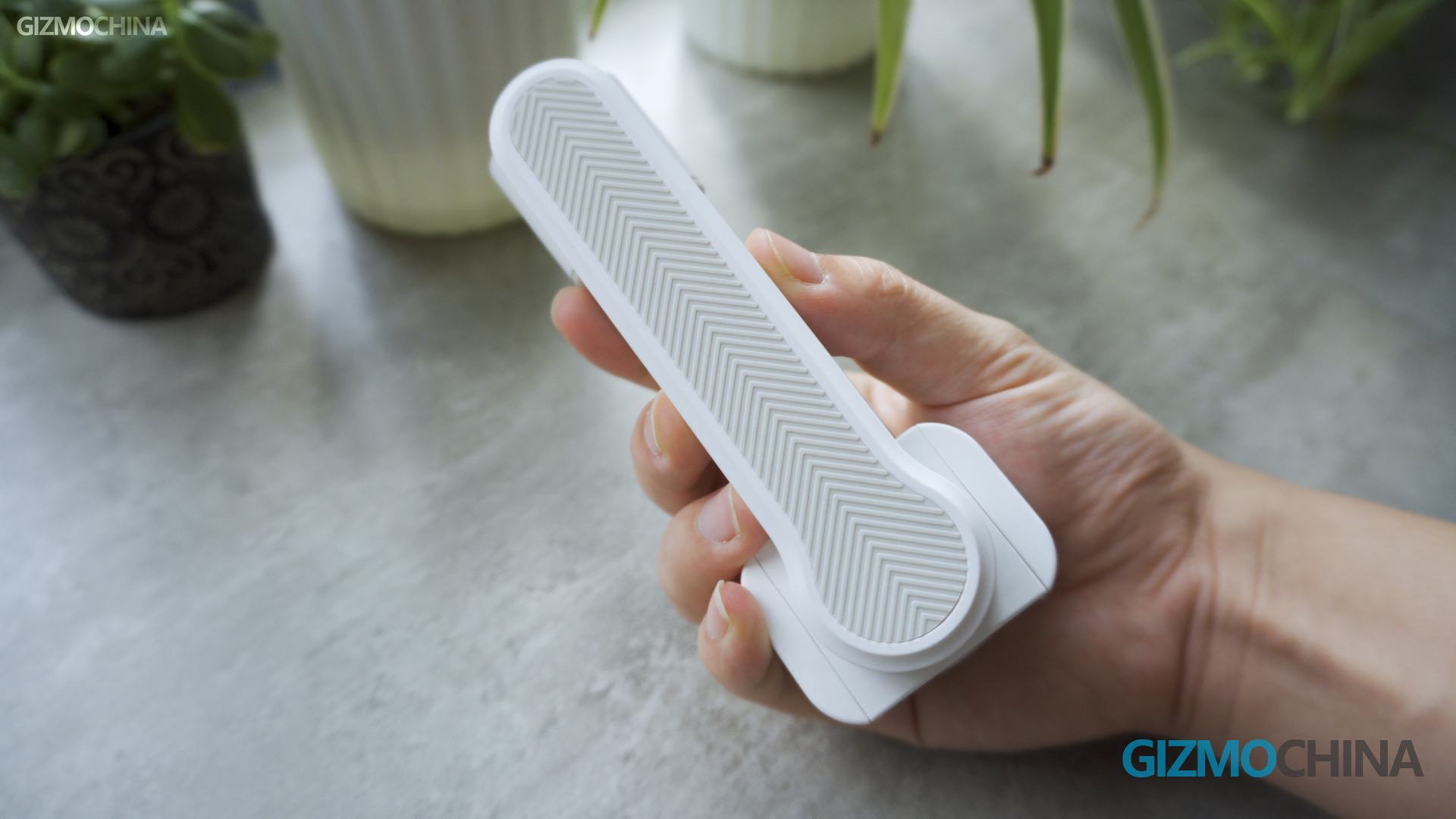
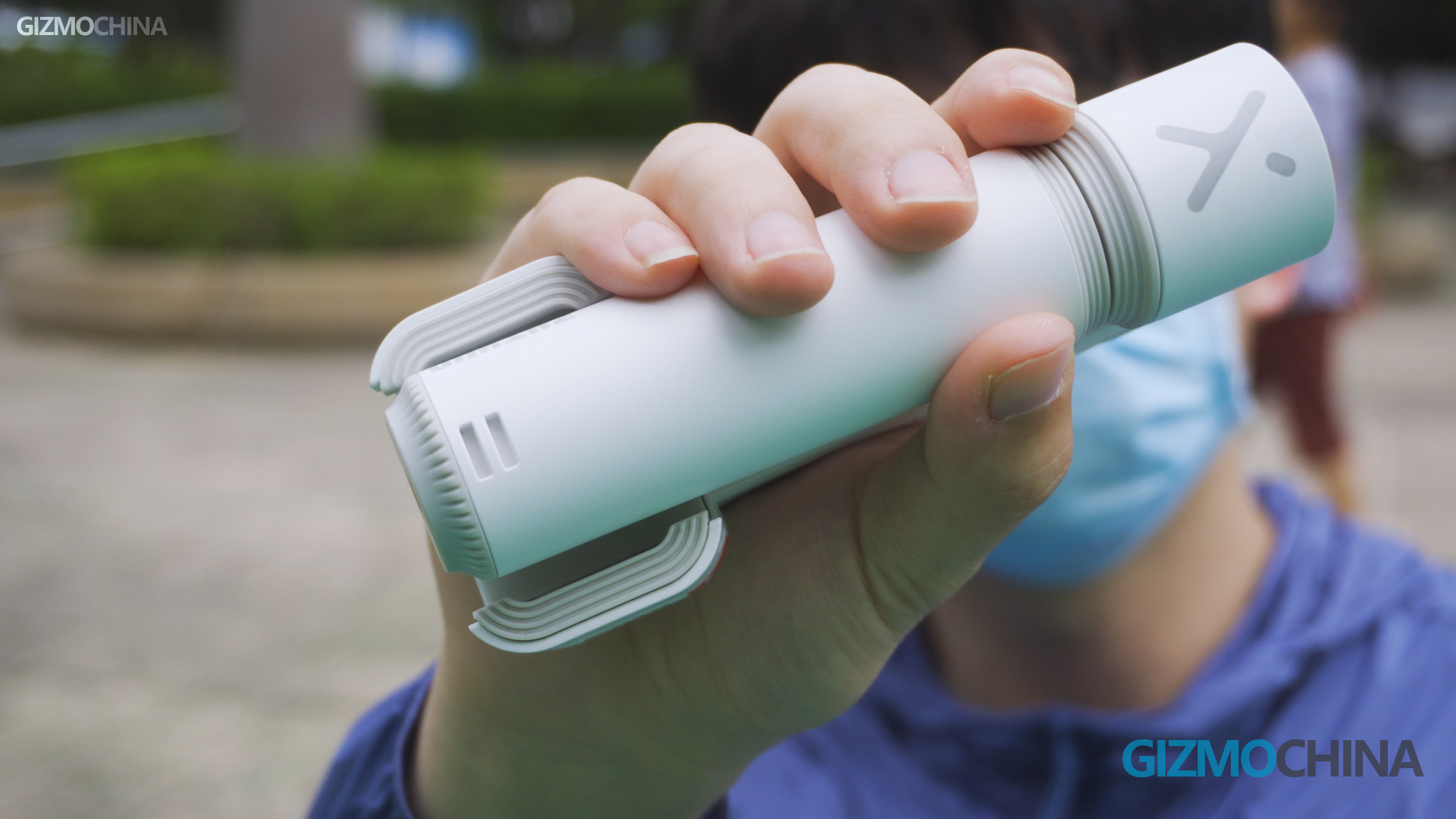
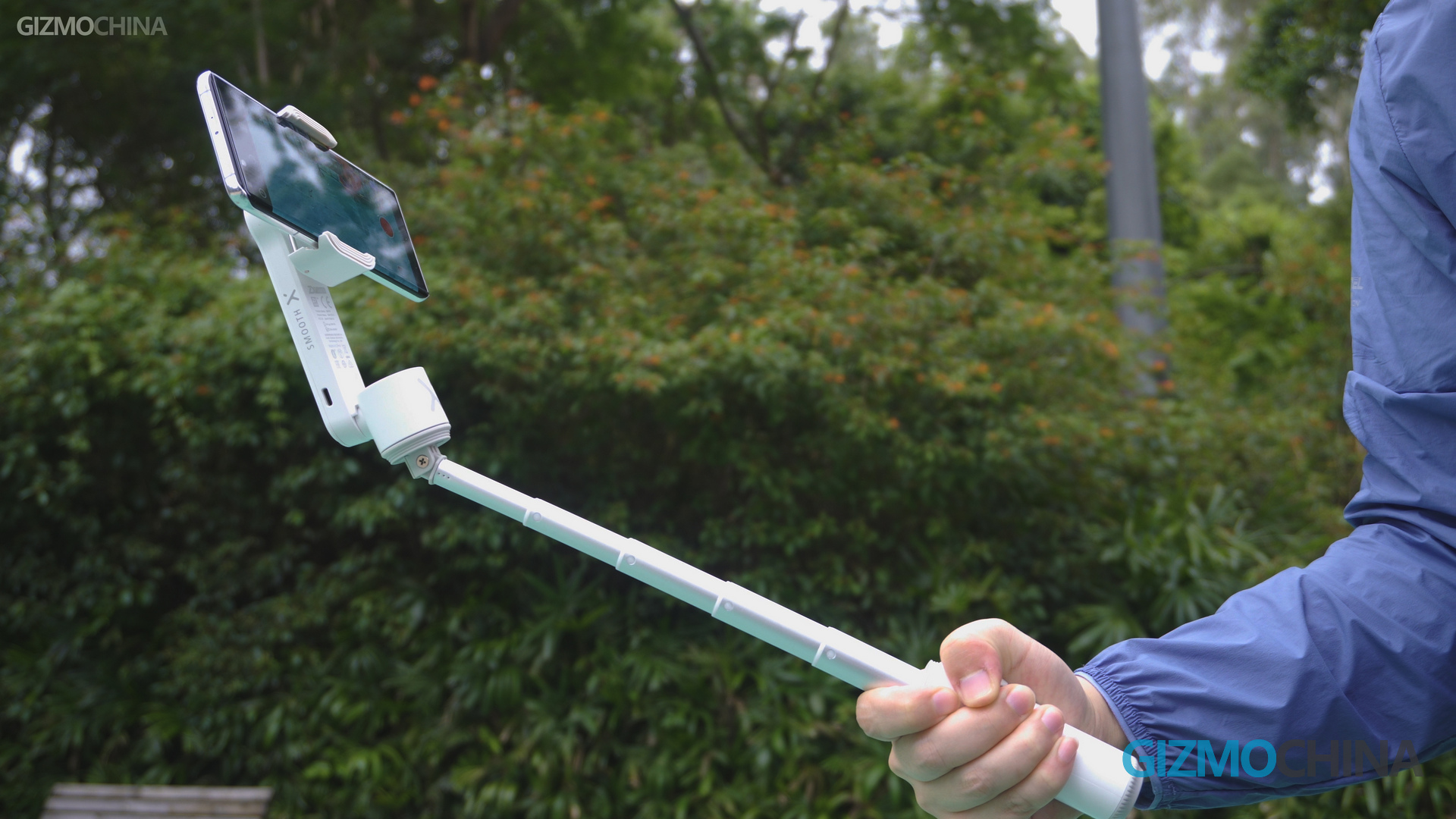
The backside has an anti-slip design, which allows users to place it firmly on a surface. Thanks to the foldable and rotatable mechanism, the pocketable gimbal could be easily stored without taking up much space. But at the same time, it also complicates the unfolding process. So just follow the instruction in the manual and remember the right rotating direction so as to not damage the gimbal.
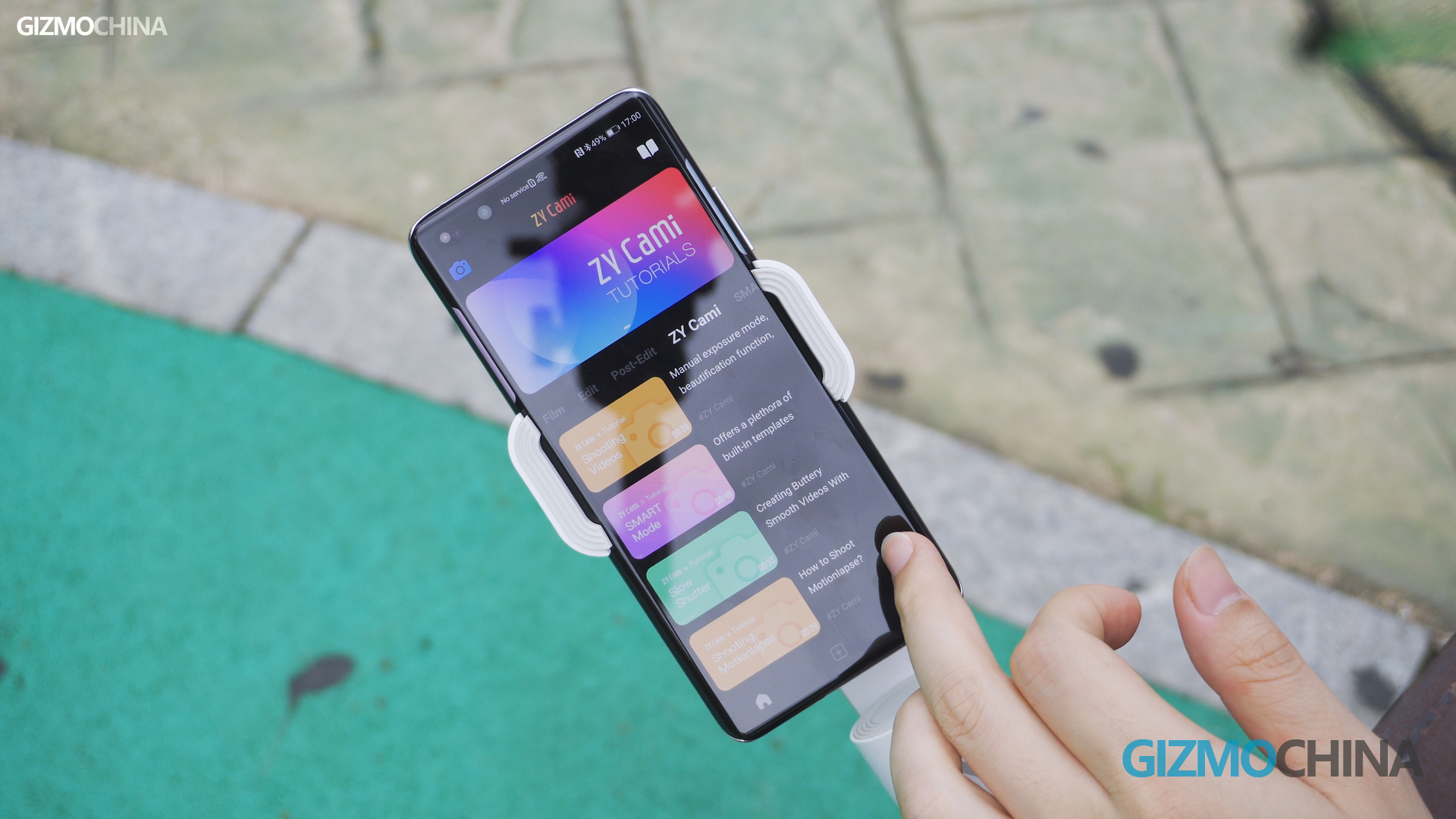
Even so, as compared to most mobile gimbals in the market, the overall user experience was still quite easy. Before first use, the Smooth X would require a phone connection to activate the gimbal through an official app — ZY Cami. In this app, you will find quite a lot of tutorials teaching you how to use the gimbal appropriately. Even though you may not have prior knowledge about mobile videography, the tutorials should be helpful for you to improve your skill in a short time.
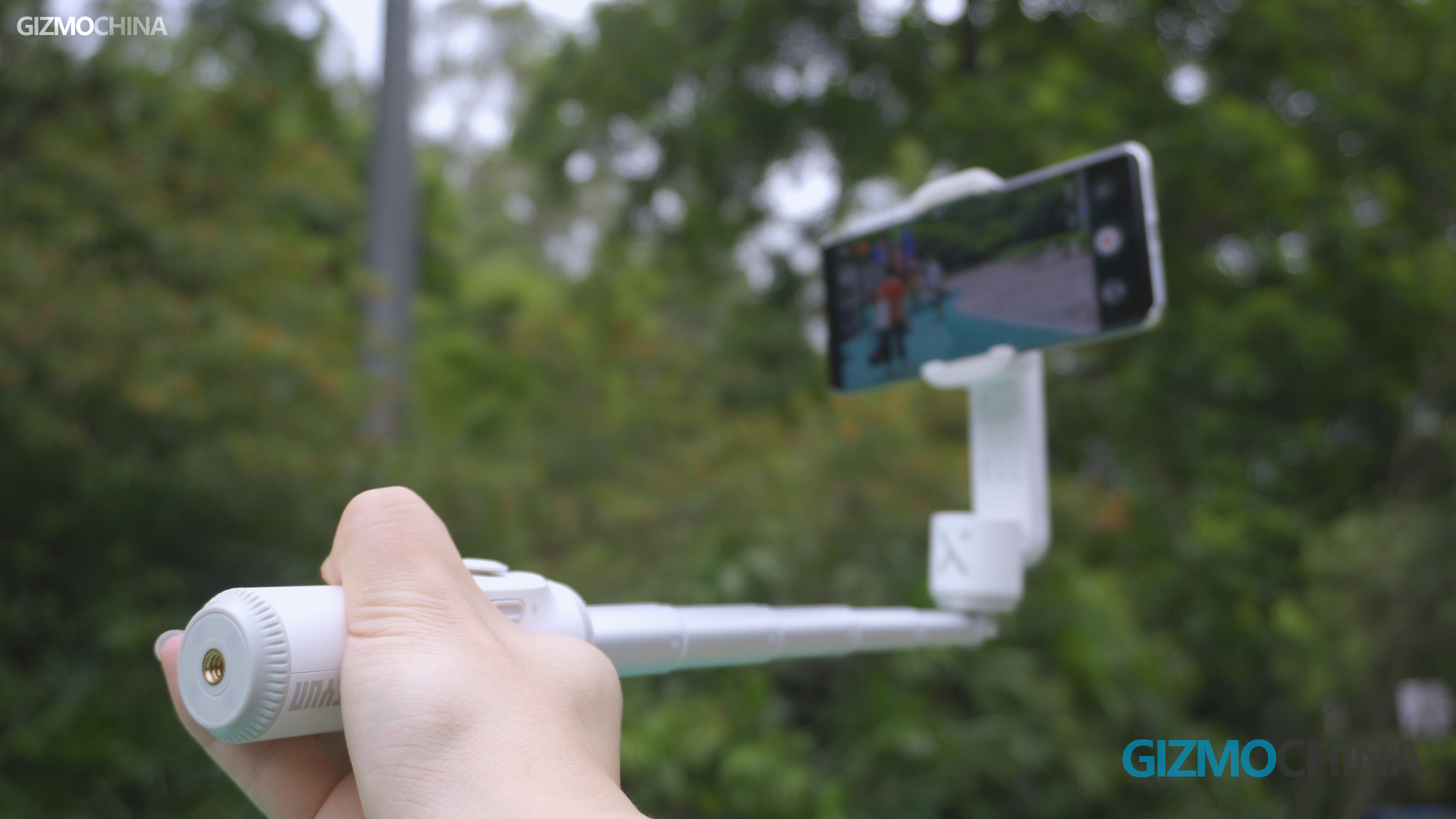
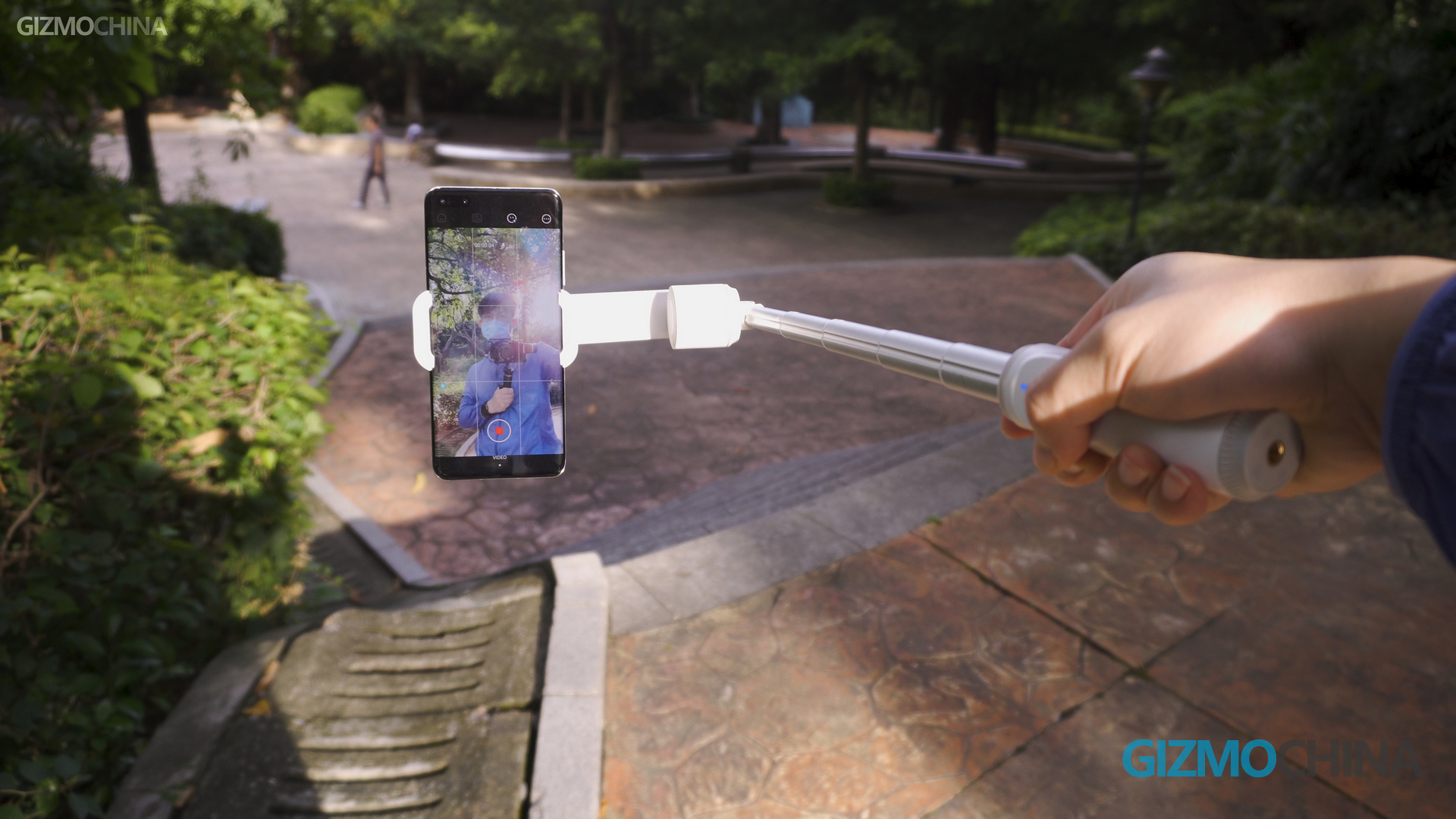
The Smooth X has Pan and roll motors but no tilt motor, which means that it features 4-axis stabilization. But as a gimbal-like selfie stick, the stabilization is already good enough for general users. Especially for Vloggers who use phones to shoot their work, the Smooth X creatively sports a telescopic rod. The rod can extend up to 26cm. So we can call the Smooth X as a convenient selfie stick essentially with gimbal features, rather than a full-featured mobile gimbal. So, as I said, it’s special equipment designed for vloggers and travelers.
Let’s see how good Smooth X is in mobile videography (check the review video above). The Smooth X provides 3 working modes, which are Pan-Follow Mode, Lock Mode, and Roll-Pan Follow. All of them were working pretty well. I have to remind you that unlike 6-axis stabilizers, there is no Tilt option for users, which can be adjusted only by changing their holding angle.
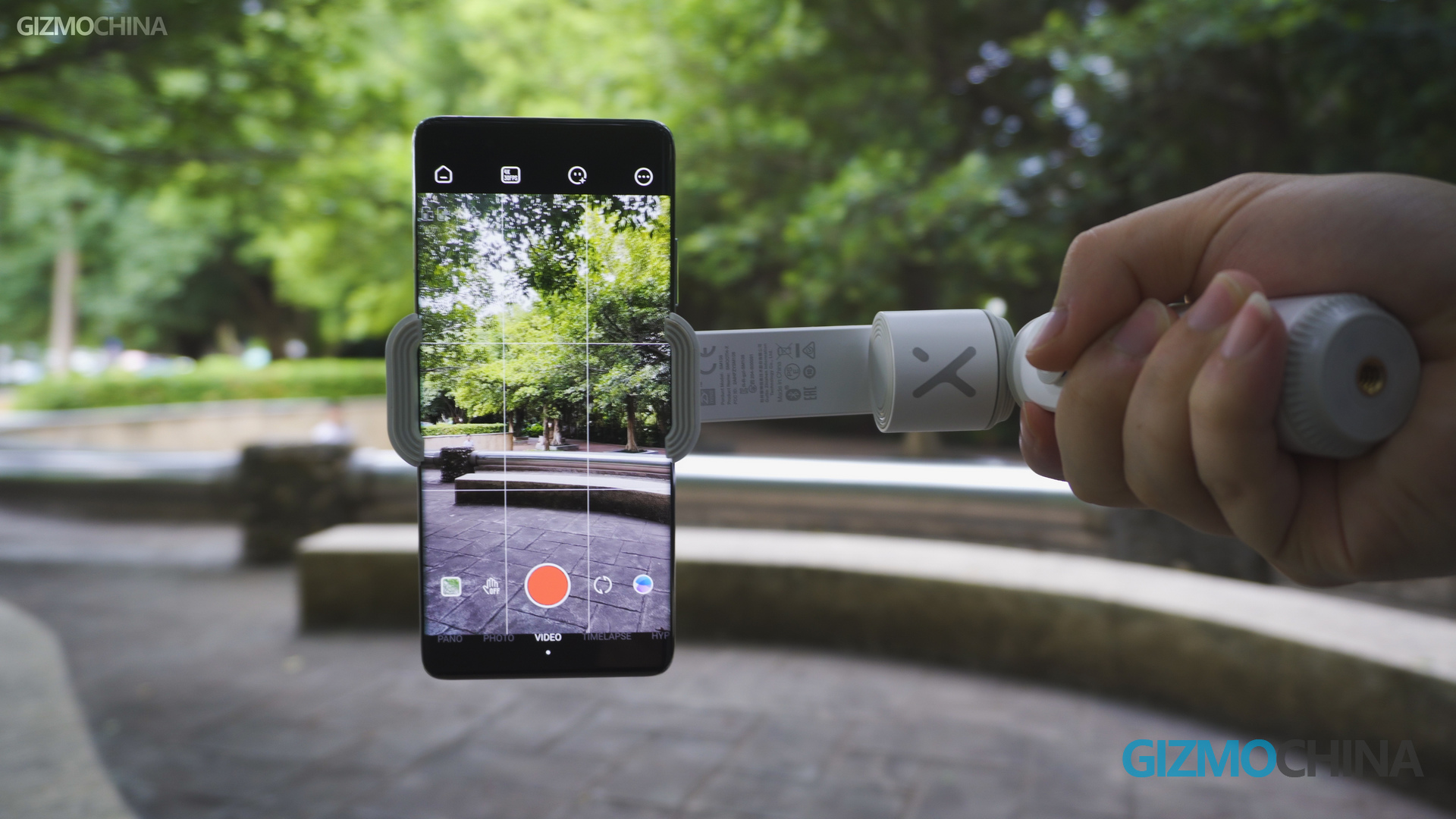
Notably, this time the latest ZY Cami app is working better than ever before, not just for its specific tutorials about mobile filming, but also for its targeted optimization for the Smooth X. For example, the app connection is really smooth and fast. And the interface is much user-friendly and intuitive. Its good to see that the app displays important information in a smart way, including phone battery, gimbal connection, and working mode. And the object tracking also works a bit better than it did on the Smooth Q2. But due to the lack of Tilt motor, there is only Pan follow for the tracking.
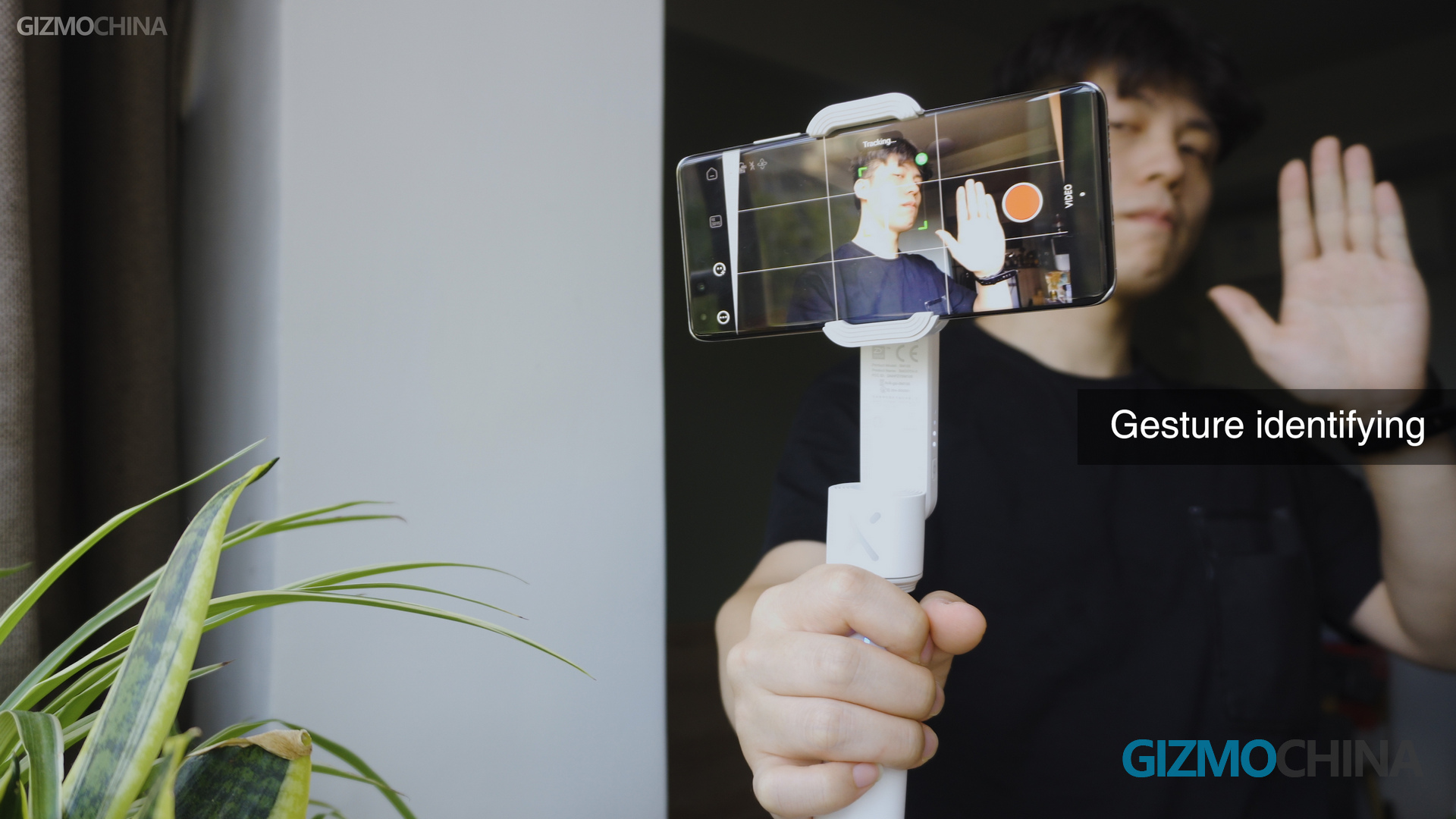
The other features like gesture control are also quite useful. When turning on the gesture control mode, the camera could automatically activate the object follow and start filming or capture photos once it caught on to the specific gesture.
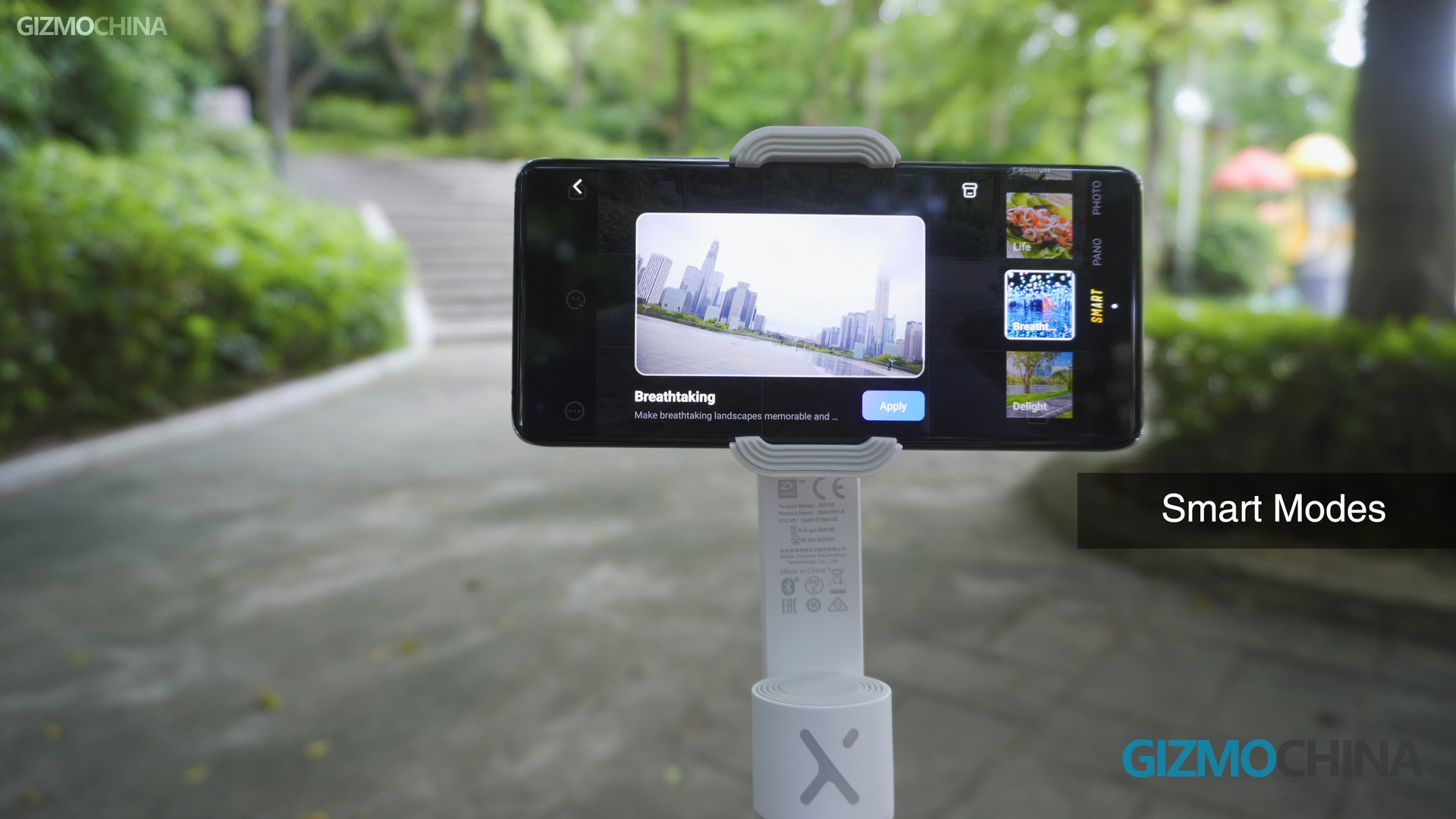
The app also supports real-time facial beauty options, but only for 1080P and 720P filming. Besides the basic photo and video shooting, the App features Timelapse, Hyperlapse, Pano, and smart modes. The Smart modes allow users to apply the auto-shooting pattern to your filming. There are five patterns with their sample tapes inside the smart mode, including exploration, Fashion, Life, breathtaking, and Delight shots, which absolutely help you add more fun in your filming.
You can also choose your scene mode in the APP when you’re walking or running. And the Running mode indeed is a bit more stable for the scene of running while holding the gimbal.
Using the Zhiyun smooth X is really a different experience. We used to complain that most gimbals are not flexible enough to find special angles or for selfie filming. But the Smooth X is definitely an innovation to solve these specific pain points.
If we had to mention its drawbacks, it should be the lack of a tilt motor and the small size tripod.
Meanwhile, it doesn’t give up on Zhiyun’s reputation as an excellent and stable mobile gimbal. It’s convenient, easily operated, dual-purpose, and more importantly, cheaper than most good quality mobile gimbals in the market right now.
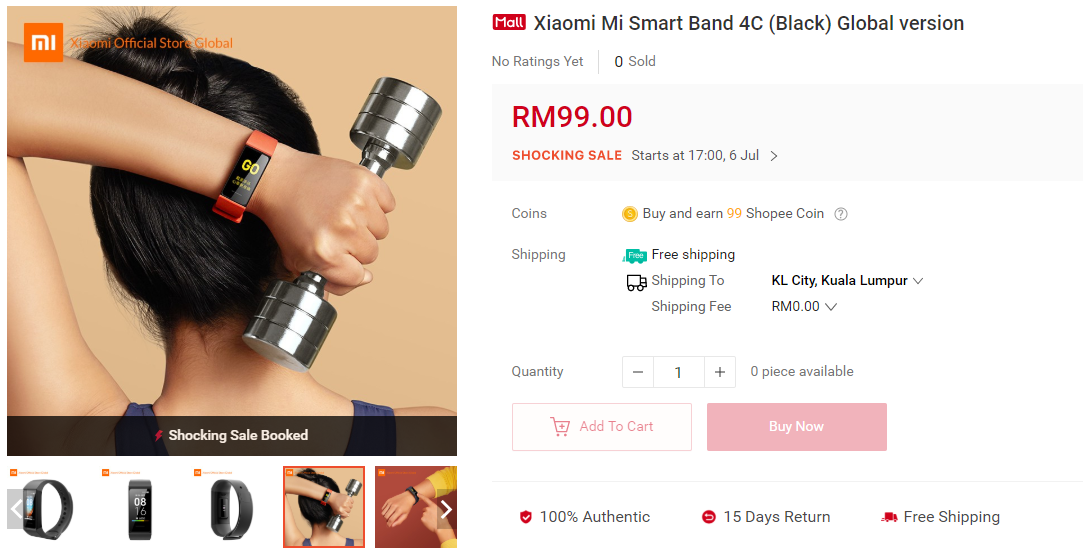
The Mi Smart Band 5 is expected to launch soon as a global version of the Mi Band 5 that is already sold in China. However, we may be getting another Mi Band 4 first. Actually, the Mi Band 4C. The device has been listed on the Malaysian online store, Shopee.
The Mi Smart Band 4C is expected to be a rebadged Redmi Band. So, save for the change in name, the two smartbands should be the same. There is no official listing of the fitness tracker on the Xiaomi Malaysia website neither is there any mention of it on its social media channels. So the only listing we have seen is on Shopee Mall.
The listing uses product images of the Redmi Band. It says the band has a 1.08-inch TFT color display with a 128 x 220 resolution and screen brightness up to 220 nits. There is a 130mAh battery inside it and will last up to 14 days on a single charge. It doesn’t need a cable to charge like its other siblings. All you have to do is plug one of its ends into the USB-A port of a charger, power bank, or PC. Charging time is stated to be 2 hours.
The Mi Band 4C can track five sports including outdoor running, cycling, and indoor running. It also has a heart rate sensor, sleep tracking, and a sedentary reminder. Other features are music playback control, apps and call notifications, and water resistance up to 5ATM.
The Shopee listing says the Mi Band 4C will sell for RM 99 (~$23) and is only available in black. Unfortunately, it is currently listed as out of stock.
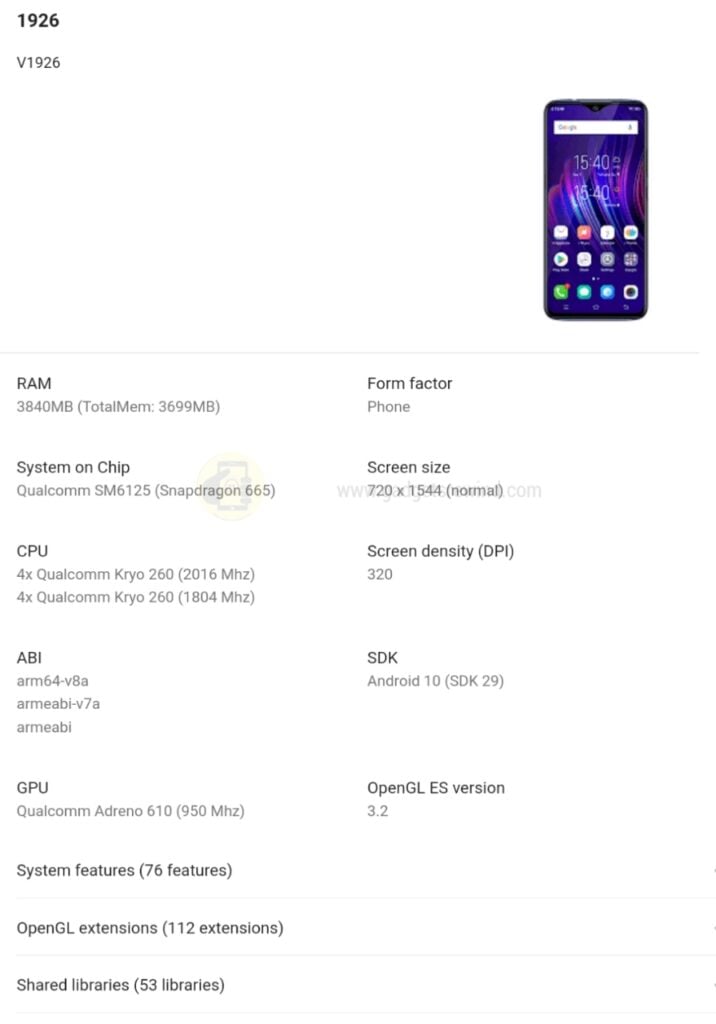
A new Vivo model has been spotted on Google Play Console. The model appears with the model number Vivo V1926 but is believed to be the 2020 edition of the Vivo Y12.
The new Vivo V1926 model is powered by a Qualcomm Snapdragon 665 processor paired with 4GB of RAM. The display size wasn’t indicted but it has an HD+ resolution of 720×1544 pixels.
The image of the model shows it will feature a waterdrop notch on a full-screen display. The pone will get its interface from an Android 10-based Funtouch OS.
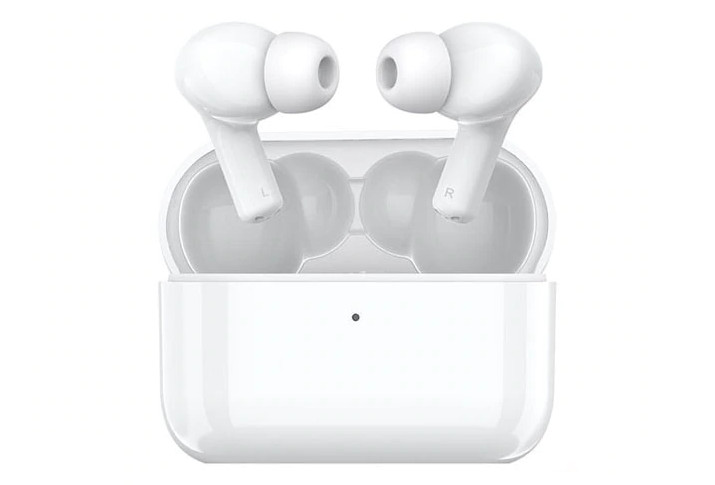
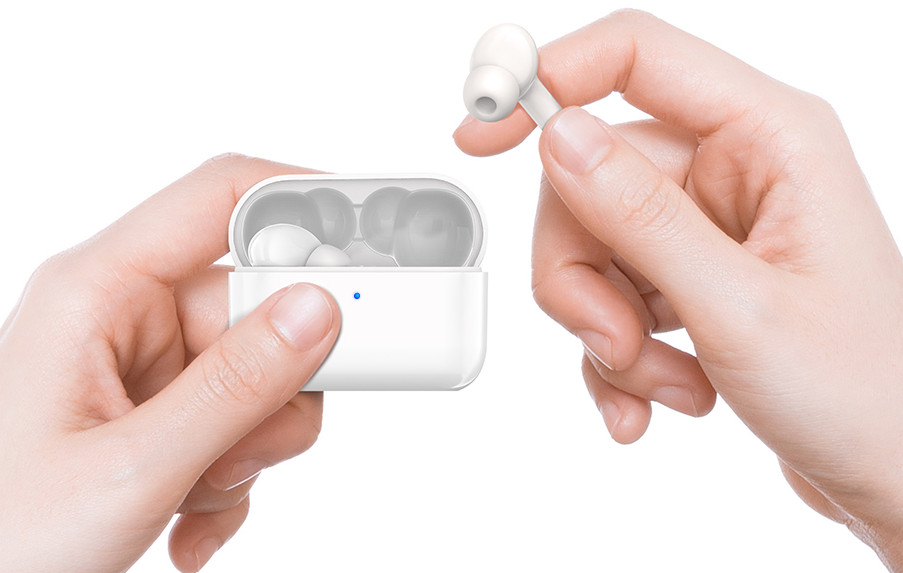
During the Honor 9A launch event last month, Honor unveiled a new product line christened CHOICE with the first product being the CHOICE TWS earbuds. The Choice TWS earbuds have now been launched for sale in Europe. The new TWS Earbuds is priced at £34.9 (~$ 43.5) in the UK which in Europe, it will go on sale in countries such as France, Spain, Germany ad Italy for €34.9 (~$39.40).
The Honor Choice TWS earbuds feature a 7mm drivers which are capable of delivering an immersive listening experience with impactful bass and crisp sounds. The earbuds adopt a minimalist yet classy design which the company touts to have been manufactured with a sophisticated audience in mind.
It also comes with support for Bluetooth 5.0 and has a low latency of 130 milliseconds as well as dual-microphone noise cancellation technology that can capture voice effectively and ensure crisp call quality even in noisy environments. The earbuds are IP54-rated water and dust resistant, effective against splashes from rain or dust ingress.
In addition, the headset features a 55mAH battery which offers 5 hours of standalone music playback. The carry case packs a 500mAh battery with 24-hour battery life and USB-C charging. The earbuds equally feature intuitive touch controls and voice assistant support.
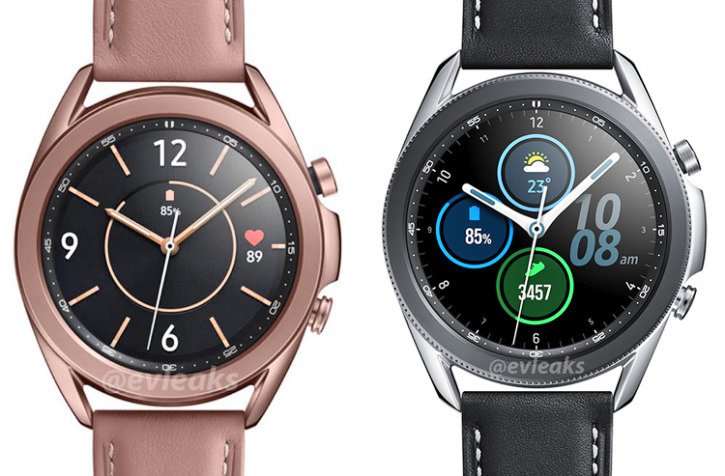
The upcoming Samsung Galaxy Watch 3 was recently spotted at the database of the Bureau of Indian Standards (BIS). The listing revealed that India could be one of the markets that will be receiving the smartwatch. It appears that the India launch of the device may not be far away as its support pages have gone live on the Samsung India website.
Recently, reliable tipster Evan Blass that the 45mm edition will have up to five variations. The Black color model may come with a titanium chassis (Bluetooth only) or in stainless steel body (Bluetooth and LTE) and color editions like Silver or Black.
The 41mm edition has a stainless steel case and it will come in Silver or Bronze colors. Both variants will have support for Bluetooth and LTE. The smartwatch could be priced between $400 and $600..
The 41mm Galaxy Watch 3 will have a 1.2-inch display and 247mAh battery whereas the 45mm variant will have a 1.4-inch screen with a 340mAh battery. The MIL-STD 810G complaint smartwatch will come with 50ATM water resistance. Its other features include Tizen OS 5.5, 1 GB of RAM, 8 GB of internal storage, Qi wireless charging, blood pressure monitor, ECG and heart rate sensor. It is speculated that the Galaxy Watch 3 may break cover on July 22.
We use cookies on our website to give you the most relevant experience by remembering your preferences and repeat visits. By clicking “Accept”, you consent to the use of ALL the cookies.
This website uses cookies to improve your experience while you navigate through the website. Out of these, the cookies that are categorized as necessary are stored on your browser as they are essential for the working of basic functionalities of the website. We also use third-party cookies that help us analyze and understand how you use this website. These cookies will be stored in your browser only with your consent. You also have the option to opt-out of these cookies. But opting out of some of these cookies may affect your browsing experience.
Necessary cookies are absolutely essential for the website to function properly. This category only includes cookies that ensures basic functionalities and security features of the website. These cookies do not store any personal information.
Any cookies that may not be particularly necessary for the website to function and is used specifically to collect user personal data via analytics, ads, other embedded contents are termed as non-necessary cookies. It is mandatory to procure user consent prior to running these cookies on your website.

 The publication has shared some design renders of how the