Even though the United States continues to crackdown on Huawei and trying to cut it off from its vendors, the U.S. Commerce Department has announced that it will allow American companies to work with Huawei to set standards for the 5G networks.
With this rule change, the companies can disclose U.S. technologies to the Chinese giant without the need for a license but only if the purpose is of 5G standards development. For those who are unaware, Huawei was put on Entity List by the United States last year and now requires any American company doing business with the Chinese company to obtain a license from the government.
The announcement from the Commerce Department says that the amendment is meant to ensure that Huawei’s placement on the entity list “does not prevent American companies from contributing to important standards-developing activities despite Huawei’s pervasive participation in standards-development organizations.”
The change in rule follows the U.S. government’s order last month to clamp down on Huawei’s semiconductor supply. It now requires companies to get an export license to sell to the Chinese giant.
Although Huawei has not been able to get permission for the 5G infrastructure development in countries like Canada, Australia, and New Zealand, the company has emerged as one of the leading in 5G development.
Huawei is currently ranked first in the world in contribution to 5G standards development, having 3,147 related patents filed as of January 2020. Following Huawei is Samsung, ZTE, and LG Electronics.
Meanwhile, Huawei became the world’s largest smartphone maker in the month of April 2020, surpassing Samsung for the first time. This is quite impressive given that the development comes despite the company has been banned by the United States.
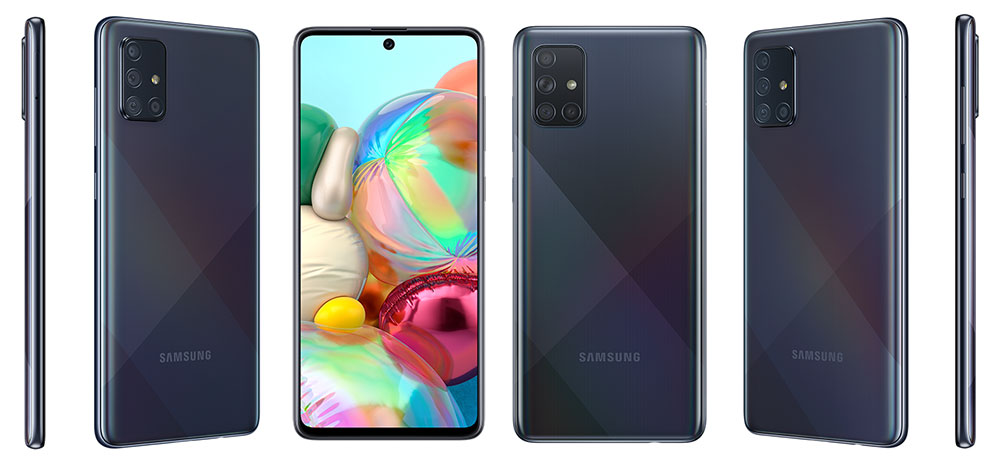
Samsung has confirmed that the Galaxy A71 mid-range smartphone will be available for purchase in the United States from 19th June. Initially, the device will up for sale through T-Mobile, Sprint, and Samsung and will later be available widely.
The Samsung Galaxy A71 5G smartphone was announced in April this year for a price of $599.99. With such pricing, it will be the cheapest 5G smartphone in the US, undercutting OnePlus 8 by about $100.
As the name itself indicates, the device is a step-up compared to the Galaxy A51 5G, with the main difference being the camera department. Also, the variant coming to the United States is powered by the Qualcomm Snapdragon 765G chipset instead of Samsung’s own Exynos 980 SoC.
In the camera department, it comes with a quad-camera setup that includes a 64-megapixel primary sensor, a 12-megapixel ultrawide camera, a 5-megapixel depth camera, and a 5-megapixel macro lens.
The phone features a 6.7-inch FHD+ Super AMOLED Plus Infinity-O display with a 32-megapixel selfie shooter housed inside the notch. Under the hood, it is powered by a 4,500mAh battery with 25W fast charging support.
For the price of $599.99, Samsung is offering Galaxy A71 5G with 6GB of RAM and 128GB of internal storage. In the USA, the phone will support sub-6GHz 5G with its initial launch on T-Mobile and Sprint, and AT&T confirmed that its version will also be Sub-6GHz only. The company will reveal more information about mmWave support later this summer.
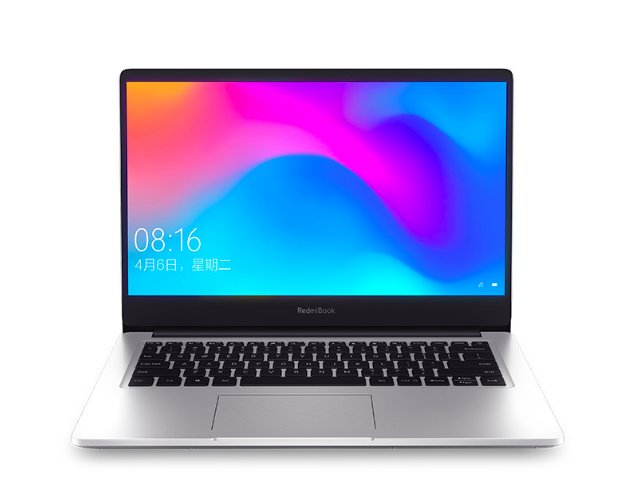
Xiaomi recently unveiled the highly anticipated Mi Notebook laptops in India. The Mi Notebook 14 comes with a starting price of Rs. 41,999 ($554) whereas the Mi Notebook 14 Horizon starts at Rs. 54,999 (~$725). A fresh report on TechPP reveals that Xiaomi India is planning to bring Redmi branded laptops to India with a starting price tag of less than Rs. 20,000 (~$264).
Before Xiaomi introduced the new Mi Notebooks in India, Mi fans were expecting the devices to carry cheaper price tags. Leading laptop brands in India are selling around notebooks that are priced around Rs. 25,000 (~$330). In order to rival with these notebooks, Xiaomi seems to be gearing up to launch new notebooks with Redmi branding in India.
The publications state that the RedmiBooks may start at less than Rs. 20,000 in the country. The report further mentions that the notebook could feature the Intel Core i3 processor and lower. Also, the RedmiBooks may come with the older generation Intel Core i5 processor.
The Core i3 RedmiBooks may start at less than Rs. 25,000 while the less powerful models may cost lower than Rs. 20,000. The highest model could be priced around Rs. 33,000 (~$435). The RedmiBooks are expected to be manufactured in India. And also, the Redmi laptops are said to be quite different from the RedmiBooks that have launched in China.
The upcoming RedmiBooks could be aimed towards students and people who are looking for budget-friendly laptops. These devices won’t have premium appeal like the Mi Notebooks since their construction will have more plastic. Also, the RedmiBooks for India may not have the same kind of RAM and storage that are available on the Mi Notebooks. However, the Redmi laptops will have attractive design and color options and they are expected to offer long-lasting battery life of around 10 hours. The Redmi notebooks are also expected to offer users a wide range of connectivity options and ports. Lastly, the Redmi notebooks will be running on Windows 10 Home edition.
The arrival of the RedmiBooks in India could be timed with the re-opening of schools and colleges in the country. Hence, there is a possibility that the Redmi notebooks may launch around mid-July to mid-August.
After launching the OnePlus 8 and 8 Pro smartphones, the company is now getting ready to launch a new budget smartphone next month. The phone is expected to be named OnePlus Nord, which was earlier said to have been named OnePlus Z and OnePlus 8 Lite.
When rumors started circulating about the budget OnePlus smartphone, the device was said to have a dual-camera setup on the back. Later, it was said that the phone will feature a triple-camera setup. Now, the latest report claims that it has now been upgraded to a quad-camera setup on the back.
Although the exact camera specifications have not been revealed yet, the report indicates that the phone could come packed with a 48-megapixel primary sensor, a 16-megapixel ultra-wide-angle lens, and a 2-megapixel macro lens. The fourth camera sensor in the setup could be a depth sensor or a color filter.
The smartphone will reportedly come powered by the Qualcomm Snapdragon 765 chipset, along with support for 5G connectivity. The device should have up to 8GB of RAM and 128GB of internal storage.
As for the display, we are expecting a 6.4-inch OLED display with Full HD+ screen resolution and a 90Hz refresh rate. Running on Android 10, the device is said to be powered by a 4,000mAh battery with the company’s own Warp Charge technology.
Along with the OnePlus Nord or whatever the company ends up calling this new budget smartphone, OnePlus Pods, the Chinese company’s first true wireless earbuds are also expected t get launched.
Meanwhile, the company has confirmed that a new lineup of affordable OnePlus Smart TVs will be unveiled in India on 2nd July. It has also been confirmed that the starting price of this new lineup will be under ₹20,000. To know more, we will have a wait for a couple of weeks more.
The Redmi 10X series was made official in May. The 4G and 5G editions of the Redmi 10X went on sale at the beginning of this month. In its first sale, the handset met with more than 100 million Yuan in just 5 minutes. The phone comes in multiple variants, but they were not made available on its first sale. Starting from today, the Chinese brand has begun with the sales of the top variant of the Redmi 10X 5G.
The Redmi 10X 5G with 8 GB RAM + 256 GB priced at 2,399 Yuan (~$339) is now available for purchase in China. Deep Ocean Blue, Night Purple, and Hazy Moon Gold are the three color variants of the smartphone.
The Redmi 10X 5G features a 6.67-inch S-AMOLED waterdrop notch that produces Full HD+ resolution and 20:9 aspect ratio. The Dimensity 820 chipset is present under the hood of the device with LPDDR4X RAM and UFS 2.1 storage.
The MIUI 11 based Android 10 OS comes preinstalled on the smartphone. It has a front-facing camera of 16-megapixel. The back panel of the phone has a triple camera system. It is pioneered by a 48-megapixel main lens, an 8-megapixel ultrawide sensor, and a 2-megapixel depth sensor.
The Redmi 10X 5G has a 4,520mAh battery that supports 22.5W fast charging. It is equipped with an under-display fingerprint reader.
China Unicom, which is already using Nokia’s equipment for the 4G technology, will now be expanding the partnership for the new 5G technology as well. The Finland-based Nokia has announced that the telecom network has awarded approximately 10 percent share of the company’s 5G core network.
For those who are unaware, the core network performs a variety of functions, including setting up connections, bandwidth management, scaling and securing the network, and now with 5G, opening up the network to support new, software-enabled use cases such as network slicing.
The Nokia Cloud core products selected by China Unicom provides Unified Data Management, Session Management, and User Plane functions, which are complemented by Data Refinery and NetAct, all deployed on Nokia’s CloudBand.
The company says that the deal also includes products from Nokia’s Cloud Packet Core portfolio, including the Nokia Cloud Mobile Gateway. It provides the 5G standalone Session Management Function and User Plane Function, in addition to supporting the 4G Serving Gateway and the Packet Data Network Gateway in China Unicom’s network.
Nokia currently has a 17 percent market share in China Unicom’s rapidly expanding VoLTE network, where it has deployed Nokia’s cloud-based vIMS platform. This deal is expected to further enhance the partnership between China Unicom and Nokia.
China Unicom has already deployed around 130,000 5G base stations across China, in which around 115,000 were built in partnership with China Telecom. As per the company, its 5G base stations would reach 300,000 by the end of this year.
Wang Xiaochu, CEO of China Unicom, says that the growth of 5G could accelerate in the second half of this year after the deployment slowed down and impacted business development in the first half because of the COVID-19 pandemic.
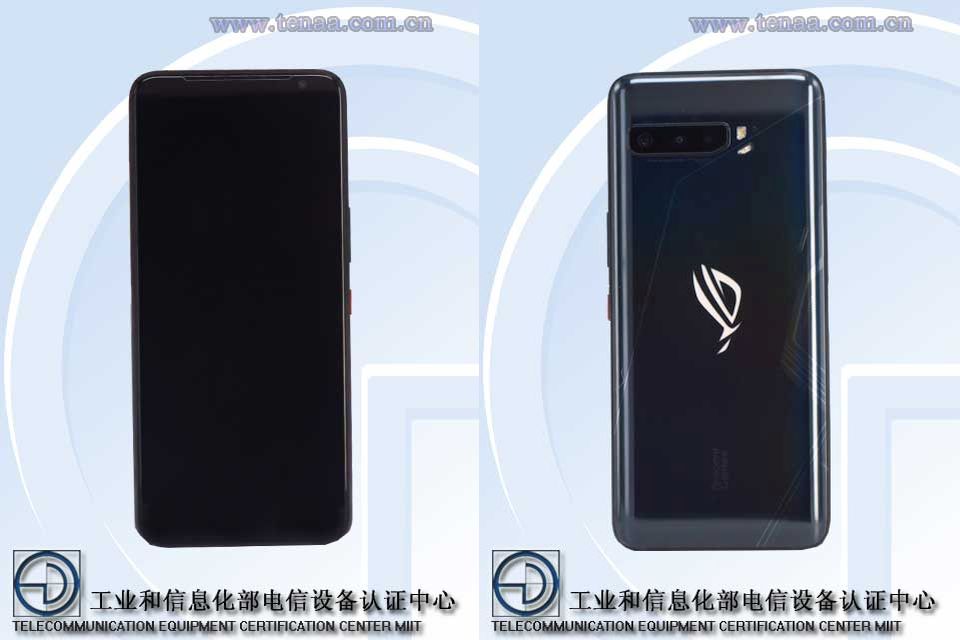
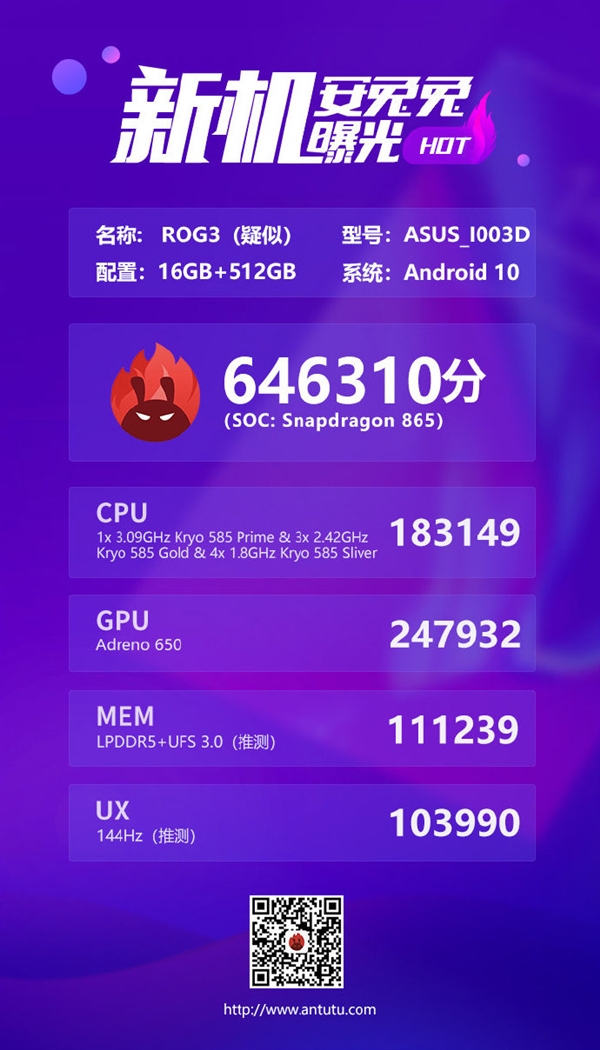
ASUS ROG Phone 3 with model number ASUS_I003DD had appeared at the database of China’s TENAA telecom authority with minimal specs. The listing is now updated with its entire specifications. Moreover, the smartphone has been benchmarked on AnTuTu with an impressive score. The Taiwanese company is still silent on the launch date of the ROG Phone 3. These listings are a good hint that it may either launch by the end of this month or early July. Also, these listings suggest that it could be equipped with Snapdragon 865 Plus SoC.
ASUS ROG Phone 3 specifications
The TENAA listing reveals that the ROG Phone 3 measures 171 x 78 x 9.85mm and it weighs 240 grams. Only Bright Black color variant is listed on TENAA. Hence, it is unclear whether it will be available in other color options. The device houses a notch-less 6.59-inch AMOLED display that offers 1080 x 2340 pixels Full HD+ resolution and 19.5:9 aspect ratio. The rated capacity of its battery is 5,800mAh battery. Past reports have revealed that the phone may ship with a 30W fast charger.
The ROG Phone 3 is powered by a flagship chipset that clocks at 3.091GHz. This clocking speed is faster than that of the 2.85GHz clocking speeds of Snapdragon 865. The increased processing speeds spotted even on AnTuTu listing on the phone indicates it could be fueled by the unannounced Snapdragon 865+ SoC. The variant of the ROG Phone 3 that appeared on AnTuTu has 16 GB of RAM and 512 GB of native storage. The phone is loaded with Android 10 OS. The handset recorded a marvelous benchmarking score of 646,310 on AnTuTu. The benchmarking platform speculates that the ROG Phone 3’s screen supports up to 144Hz refresh rate.
The ROG Phone 3 has 8 GB, 12 GB and 16 GB RAM variants, reveals TENAA listing. Its storage variants are 128 GB, 256 GB, and 512 GB. It lacks a microSD card slot. The TENAA images of the phone show that the design of the ROG Phone 3 is almost identical to the predecessor i.e. the ROG Phone 2. The inclusion of an additional rear camera brings slight design changes and at the front, it features dual front-firing speakers.
It has a front camera of 13-megapixel. On it back is a horizontally aligned triple camera setup that includes a 64-megapixel main camera. The other features of the phone include iris recognition and under-display fingerprint scanner.
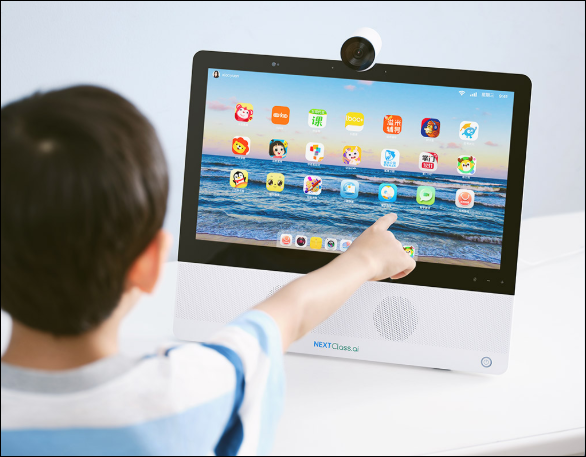
Xiaomi has launched a new product under the Youpin crowdfunding platform. The product is the NextClass.ai NX1 which has a massive 15.6-inch display screen. The product is manufactured by NextClass.ai, a Chinese startup which manufactures tablets focused on early education for kids. The company’s tablet has a large number of online classes, practise sets and audiobooks, and provides a rich interactive experience, increasing children’s interests in studying.
As stated, the NextClass.ai NX1 is equipped with a 15.6-inch capacitive touch screen which is certified by TUV Rhineland as having low blue light, preventing damage to the eyesight. The tablet also supports functions such as ambient light detection and reminders of too close distance. Not only is the display effect outstanding but also the eye protection effect is topnotch.
The device is also equipped with a dual-camera setup designed impressively to capture both the pull and his book. The main camera is mounted in a cone-shaped housing on top of the screen while the second sensor is housed in a cutout at the bottom of the cone facing the desk. The camera can be adjusted as desired. The tablet is also equipped with infinitely adjustable brackets that can be adjusted to different angles.
The NextClass.ai NX1 is also equipped with HiFi audio and 360° omnidirectional microphone. It is powered by a Quad-core Cortex-A55 processor paired with 4GB of RAM and 64GB of storage. There is also a built-in 1.2T deep neural network computing NPU, support for 2.4/5G Wi-Fi, Bluetooth 4.2, USB, HDMI and other output interfaces. The device even comes with a stylus pen.
The NextClass.ai NX1 learning tablet is on crowdfunding for 1999 yuan (~$250) but will be sold for 2699 yuan (~$338) after the exercise.
As likes the Black Friday deals, the Double 11 sales festival is popular in China. Apart from the Double 11 discount extravaganza, the companies also celebrate summers with the 618 shopping festival. To celebrate the festival, the popular Chinese smartphone maker Uelfone has published its 618 Sale page. Various new offers and discount items have been unleashed after the Ulefone 618 Sale page went live.
Ulefone will host 618 Sale from June 15 to June 21 with considerable and excellent discounts on most of its popular products. The company will put forth its Armor series on sales starting with the entry-level Note series. Furthermore, there will be Ulefone Armor X7 Pro and Note 8P like smartphones which will be part of the Ulefone 618 Sales festival. Below we are listing some of the best discounts available at the sale:
Ulefone Armor X7 Pro
Ulefone Armor X7 Pro is a rugged smartphone that was launched a few days ago with a 5-inch display, 4000 mAh battery. It is a fully 4G-rugged smartphone running on Android 10 OS. The smartphone is powered with Helio A20 quad-core processor and coupled with 4GB RAM and 32 GB internal storage. A beautiful 5.0-inch HD screen is present on the front, whereas there’s a face unlock and fingerprint ID for quick unlock.
It offers contactless payments using NFC via Google Pay. Ulefone Armor X7 Pro will be on sale at the discount price of $79.99.
If you’re looking for an entry-level smartphone at a super affordable price, then you can look after the Uelfone Note 6P. The smartphone is available for a quad-core CPU, 2GB RAM, and 16GB ROM. It runs on Android 10 Go Edition OS and focuses an 8-megapixel dual rear camera. The users can easily face unlocking the device.
In connectivity, the user will get a GPS navigation system and dual SIM dial stand. Ulefone Note 8P is available at a jaw-dropping price of $54.99 at 618 promotions sales.
The company is offering massive discounts on its best-selling smartphones. Similarly, Ulefone Armor 7E rugged smartphones with Helio P90 SoC is available for $219, which usually retails at a much higher price. A walkie-talkie rugged Armor phone 3WT is available for $247. There are many other attractive discounts that you might found useful. We suggest you head over to the event page to know more about the sale.
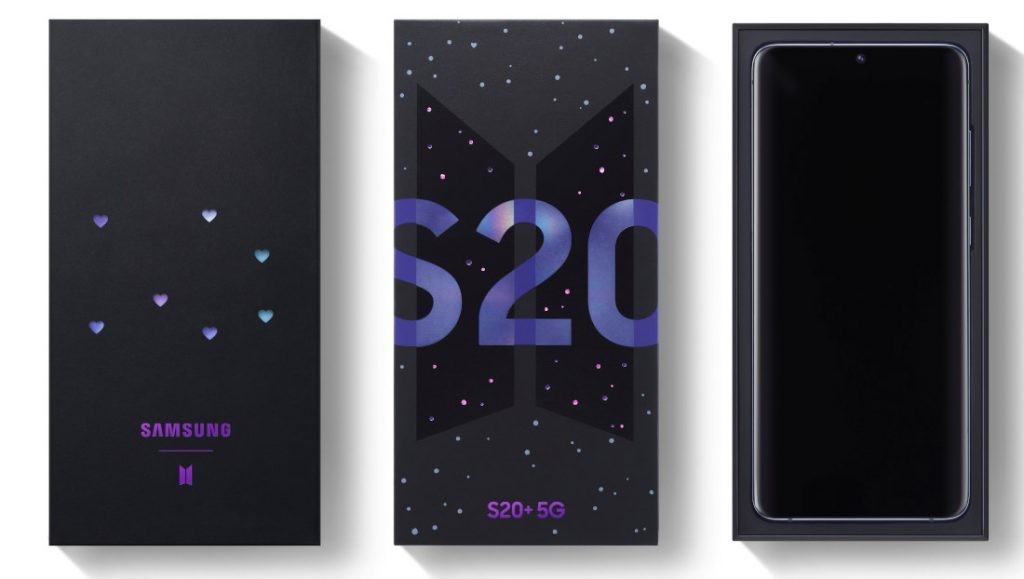
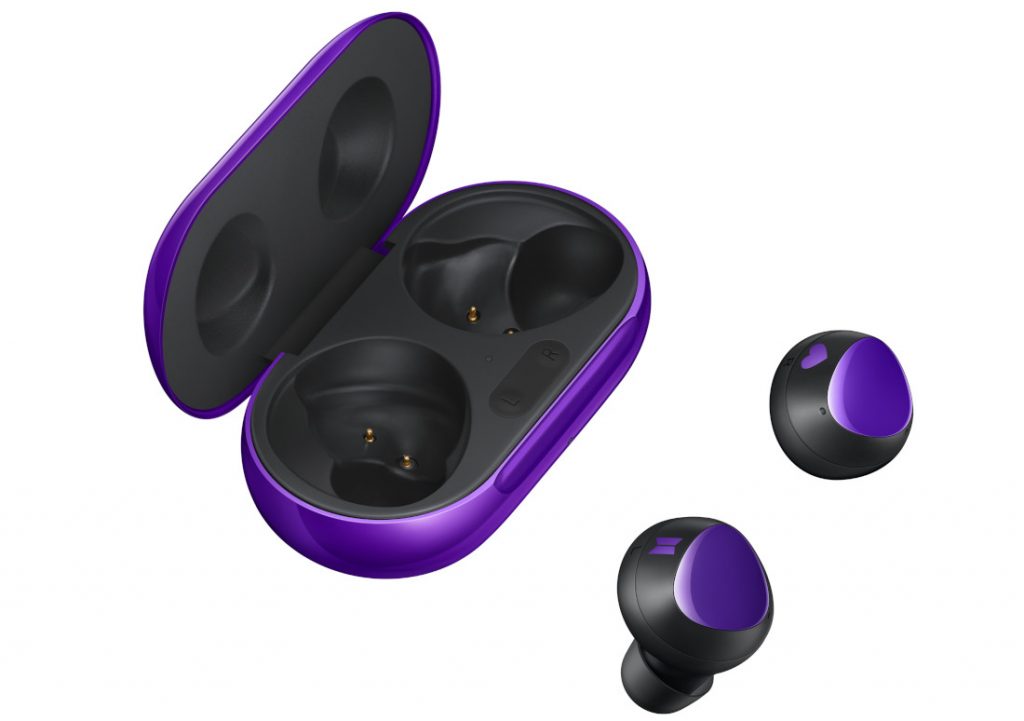
Samsung has officially announced the Galaxy S20+ BTS Edition as well as the Galaxy Buds+ BTS edition. The limited-edition models are the products of a partnership between the Korean tech giant and K-Pop band BTS.
The new custom edition of the Galaxy S20+ is available for both the 4G and 5G versions of the smartphone. The models all come with purple glass and metal body. The truly wireless earbuds also get the purple paint job as well as the charging case. They also carry the band’s logo and purple heart iconography.
Further, the Galaxy S20+ 5G and S20+ BTS Editions come with pre-installed BTS-inspired themes and a fan community platform app, Weverse. There are also decorative stickers and photo cards featuring pictures of the band members inside the box. The BTS Edition of the Galaxy Buds+ also comes with the photo cards of the band right inside the retail packaging.
As for the pricing and availability, the Galaxy S20+ 5G BTS Edition unlocked version and Galaxy Buds+ BTS Edition will be available for pre-order on Samsung.com in the US from June 19 till July 8. Those who pre-order the Galaxy S20+ BTS Edition can get a 50% discount on the Galaxy Buds+ BTS Edition as well as one, free limited edition poster of BTS.
Also, fans who pre-order both the Galaxy S20+ BTS Edition and the Galaxy Buds+ BTS Edition will receive two free limited edition posters. Yet another perk is that the Galaxy Buds+ pre-orders come with a BTS wireless charger.
The new editions will go on sale from July 9 on Samsung.com and Amazon.com in the US. It will also go on sale in Korea on the same date. The prices in the US are yet to be announced but in Korea, the Galaxy S20+ 5G BTS Edition is priced at 1397,000 won (~$1,155) and the Galaxy Buds+ BTS Edition is priced at 220,000 won (~$181) in Korea.
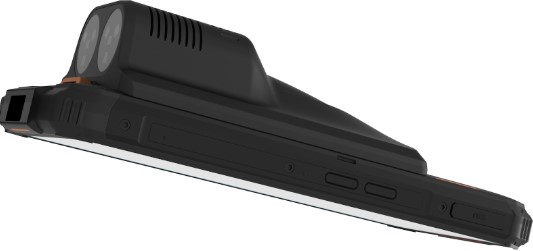
After waiting for such a long time, Oukitel launched the Oukitel WP7 rugged smartphone last week, featuring impressive specifications at an affordable price. Initially, the smartphone was made available via the official Oukitel store, but now it has surfaced on Banggood and that too at a special price of $299.99. The smartphone with a built-in infrared Night Vision camera also hosts traditional functions apart from being a rugged smartphone.
Oukitel WP7 is a fully IP68 certified device for protection against dust, water, and accidental drop. It also features high-end features like night vision detection, high-intensity light for UVC sterilization.
High-End Camera with Infrared Cameras
OukiTel WP7 packs triple camera sensors consisting of a 48-megapixel primary sensor, an 8-megapixel IR Night vision sensors, and a 2-megapixel depth lens. It is among rare smartphones that feature a built-in infrared night vision camera enabling you to get a clear photo in a night environment without any light. It can snap beautiful scenes in the low-light environment supporting LED fill-in light.
Ultra Flashlight
Oukitel WP7 supports the Ultra Flashlight external module, which can fully lit dark environments. The high-intensity torch supports five different smart modes, including intense light, mediate light, weak light, flashlight, and SPS. It is the best source to send SOS signals in danger.
UVC Sterilization
The backlight is easily switchable to UVC sterilization mode. It enables the users to eliminate 99.99% bacteria and kill viruses within 10 seconds. In the ongoing Pandemic era, users can easily sterilize their hands whenever and wherever.
Other Features
The smartphone features a powerful MediaTek Helio P90 chipset, 8GB LPDDR4X RAM, and 128GB UFS 2.1 ROM. A triple rear camera resides to capture high-quality and detailed photos. There’s a 5000 mAh massive battery with support for NFC, IP68, IP69K, and MIL-STD-810G certification.
It is among the most potent yet rugged smartphones available at a reduced price. The smartphone is available for $299.99 at a reduced rate on Banggood between June 15 and June 21. The smartphone features competitive specifications at such a jaw-dropping price of $299 from Banggood. You can know more about the features by heading to the official website.
Top tier flagships became incredibly expensive but also incredibly powerful. Unlike 2019, this year, Samsung and Huawei launched three variants of their flagship lineups. The most expensive variants are the Huawei P40 Pro+ (which just hitten several European markets) and Samsung Galaxy S20 Ultra. Meanwhile, Motorola is back in the flagship segment after years of silence with its Motorola Edge+. All of these devices carry a price tag superior to €1,000, but are they worth the money asked? And which one should you prefer? We will try to answer these questions through the following specs comparison between Huawei P40 Pro+, Samsung Galaxy S20 Ultra, and Motorola Edge+.
Huawei P40 Pro+ vs Samsung Galaxy S20 Ultra vs Motorola Edge+
Motorola Edge+
Samsung Galaxy S20 Ultra
Huawei P40 Pro+
DIMENSIONS AND WEIGHT
161.1 x 71.4 x 9.6 mm, 203 g
166.9 x 76 x 8.8 mm, 222 g
158.2 x 72.6 x 9 mm, 226 g
DISPLAY
6.7 inches, 1080 x 2340p (Full HD+), OLED
6.9 inches, 1440 x 3200p (Quad HD+), Dynamic AMOLED 2X
Dual SIM slot, fast reverse wireless charging 27W, 5G, eSIM
Design
If I had to make a choice by considering the design only, I would go for the Motorola Edge+. First of all, it has a higher screen-to-body ratio. It is more compact and its rear side is more elegant due to its smaller camera module. But several people may not agree with me because Huawei P40 Pro+ comes with more unique and premium materials (it is made of ceramic). Further, unlike the Motorola Edge+ which is just splash resistant, Huawei P40 Pro+ is waterproof with the IP68 certification. Samsung Galaxy S20 Ultra should be sturdier thanks to its waterproof certification (IP68) and the Gorilla Glass 6 protection for both front and back glasses, but its dimensions are big, just like its camera module.
Display
Samsung Galaxy S20 Ultra provides the most impressive display: not only it is wider with its 6.9-inch diagonal, but it also supports a higher 120 Hz refresh rate, despite you can only use it by setting a Full HD+ resolution. The Dynamic AMOLED display of the Samsung Galaxy S20 Ultra has the HDR10+ certification and a high Quad HD+ resolution, while Huawei P40 Pro+ and Motorola Edge+ stop at Full HD+. Currently, we believe the only displays which can compete with the Samsung Galaxy S20 Ultra in the Android world belong to OPPO Find X2 Pro and OnePlus 8 Pro.
Hardware/Software
The Motorola Edge+ has the most interesting hardware department because it is fueled by the Snapdragon 865 mobile platform which has currently no rivals among Android phones. On the other hand, while providing a less powerful chipset, Samsung Galaxy S20 Ultra comes in a variant with a higher amount of RAM and internal storage: 16 GB and 512 GB respectively. Motorola Edge+ only comes in a configuration with 12 GB of RAM and 256 GB of native storage, while Huawei P40 Pro+ stops at 8 GB of RAM. Note that if you get the global version of the Huawei P40 Pro+, you won’t get Google services out of the box due to the U.S. ban.
Camera
The most amazing camera (and not only of this comparison) is on board of the Huawei P40 Pro+. It features a 50 MP Penta-camera (the fifth sensor is a TOF 3D sensor) including 10x optical zoom and a 40 MP ultrawide lens. Further, on the front side, the 32 MP selfie snapper is accompanied by another TOF sensor for 3D facial recognition. The silver medal goes to the Samsung Galaxy S20 Ultra offering a 108 MP quad camera with a 48 MP periscope lens, 4x optical zoom supporting 8K video recording, and awesome stabilization.
Battery
Since it packs a huge 5000 mAh battery and a less energy-demanding display than Samsung Galaxy S20 Ultra, Motorola Edge+ is more satisfying in terms of battery life. However, the Motorola Edge+ has slower charging speeds (just 18W with wired charging and 15W with wireless charging), while Samsung Galaxy S20 Ultra and Huawei P40 Pro+ charge at 40W and 45W, respectively.
Price
Huawei P40 Pro+ is priced €1399 globally, Samsung Galaxy S20 Ultra starts from $1199/€1099, and Motorola Edge+ costs $1199/€1200. Is it worth getting one of these handsets? Well, if you need an astonishing camera quality or you are a power user, then yes. But if you do not want the max you can get, there are a lot of more affordable devices that will let you save a lot of money while still giving you nearly perfect user experience.
Despite Huawei P40 Pro+ does not have Google services, it remains a very impressive phone due to its ceramic design, better cameras, and very fast wireless charging technologies. Samsung Galaxy S20 Ultra has the best display, while Motorola Edge+ has longer battery life than S20 Ultra but inferior cameras and display. What do you think about actual top tier flagships? Do they cost too much or they deserve a chance? Let us know by using the comment box below.
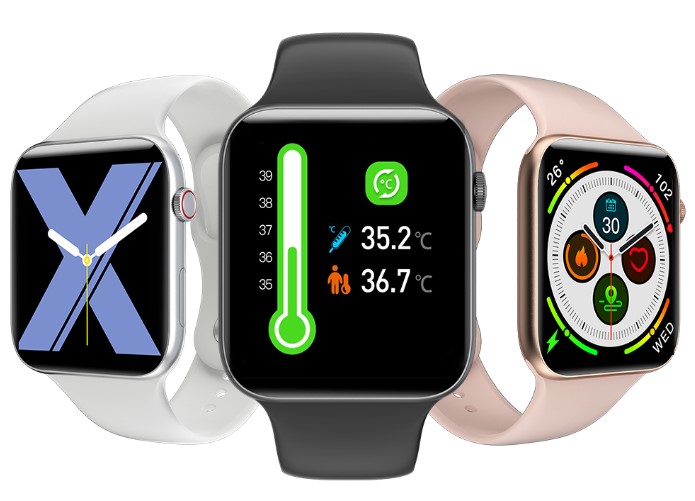
The Smartwatch market is flourishing from the past few months due to the improved features that come bundled with them. Smartwatches have become a lifesaver with the added features such as Real-Time body temperature for 24*7 monitoring in an ongoing pandemic era. The Fobase Air Pro Smartwatch also carries these features at an affordable price of $29.99.
Fobase Air Pro smartwatch packs temperature control and real-time Heart Rate monitor for every easy and effective monitoring. It is quite a useful wearable that can help aid in preventing the COVID-19 pandemic. It can monitor your temperature throughout the day and can send a notification if there’s any anomaly found in your body temperature. The sensor is fully verified under laboratory environment for reliability and accuracy purposes.
The smartwatch from Fobase houses a thin and light design carved out of the metal body. There’s a rubber strap, metallic body, and 7H tempered glass lens for comfortable use across different environments.
It features a 1.54-inch TFT large color display to bring you information about weather, step counts, calorie burn, real-time temperature, ongoing activity, and heart rate essentials. The watch supports beautiful, colorful, and stylish UI interfaces for better user interaction.
Fobase Air Pro Smartwatch can monitor your blood pressure and SPo2 accurately with its advanced VC31 heart rate monitoring sensor. The sensor carries the ability to monitor heart rate 24 * 7 and is compatible with Level 15 black skin.
Apart from the extraordinary features of the smartwatch, it extends support for call reminders, rejection, and message reminders. The Sleep monitoring feature helps to analyze the quality of sleep and patterns of sleep. The sedentary reminder is also a part of the smartwatch that can help you remind you to wake, walk, or stand up.
Fat Burning Sports Mode is quite effective in burning fat by daily exercising for 5 minutes. Moreover, it can easily distinguish between different sports activities like running, cycling, swimming, Table Tennis, Badminton, and Tennis.
It offers an efficient battery life of up to 15 days of continuous normal use upon full charge.
Hardware Specifications of Fobase Air Pro Smartwatch
RK8762C
Bluetooth 5.0
200 mAH battery
Lithium Polymer battery
128MB Flash storage
1.54-inch TFT with 240 x 240 pixel resolution
Fobase Air Pro Smartwatch is available six different colors of light blue, navy blue, Obsidian black, silver-green, silver-white, and rose gold. You can grab the smartwatch at the affordable price of $29.99 from AliExpress.
Xiaomi launched the budget Redmi 9 last week in Europe with a starting price of €150. The phone is now set to hit other markets in South East Asia as it has been launched in Malaysia. The phone will go on sale from June 18.
As should be expected, the Redmi 9 is priced lower than what it sells in Europe. The device starts at MYR499 (around €103) for the 3GB+32 GB version while the 4GB+64GB version is priced at MYR599(~€125). The phone will b sold on Shoppee Malaysia and early birds even have the opportunity of buying the 3GB+32 GB version for MYR449 (€93) which is an amazing offer.
As a reminder, the Redmi 9 features a 6.53-inch FHD+ IPS LCD panel with 19:5:9 aspect ratio, 394 PPI, 70% NTSC color gamut, 400 nits brightness. The display holds a waterdrop notch and is covered by a Gorilla Glass 3. The phone is powered by MediaTek Helio G80 SoC paired with 3GB/4GB LPDDR4X RAM and 32GB/64GB eMMC 5.1 flash storage options.
The phone adopts a polycarbonate body with a matte finish. For photography, it packs a Quad-camera setup at the rear comprising a 13MP (primary) + 8MP (118° ultra-wide) + 5MP (macro) + 2MP (depth) setup. Selfies are taken care of by an 8MP camera. The phone also holds a rear-mounted fingerprint sensor.
The Redmi 9 also packs features such as dual SIM, 4G connectivity, VoLTE, single-band (2.4 GHz) WiFi, Bluetooth 5.0, GPS, wireless FM radio, dedicated microSD card slot, multifunctional NFC, IR blaster, 3.5mm headphone jack, and USB Type-C. It runs on MIUI 11 based on Android Pie and crams a huge 5,020 mAh battery under the hood with 18W fast charging.
Oppo will be soon launching the Find X2 series in India on June 17. The brand has confirmed that it will be bringing both Find X2 and Find X2 Pro to the country. Now, just a couple of days ahead of launch, their pricing has been tipped by Money Control.
According to the website, their sources have revealed the pricing for both the handsets in the series. However, they are only sure of the standard Find X2’s price, which is said to retail between ₹60,000 ($789) and ₹65,000 ($855) for the 12GB + 256GB variant.
For comparison, the same device sells for €999 ($1,126, ₹85,616) in Europe. In fact, India could be the cheapest place to buy the Find X2. Because in China, the handset maxes at 8GB + 256GB and that variant itself costs 5,999 Yuan (₹64,284, $846).
This is not the first time we are seeing a smartphone selling for a lower price than other markets. OnePlus 8 series launched in April also retails for a much lower price tag in Indian than western nations.
OnePlus and Oppo managed to do this as their phones are locally assembled in the same factory in India along with Realme.
Anyway, we would still highly advise you to take this piece of information with a pinch of salt. We will know the exact Indian pricing of Find X2 series on June 17.
Xiaomi Mi 10 flagship is done and dusted for the year or so we thought. We had expected that the next big thing in terms of flagship phone this year should be the Mi Mix 4. However, a poster has merged which appears to reveal the moniker Mi 10 Pro+.
The poster which appeared online recently also shows the supposed Mi 10 Pro+ will feature a 65W super flash charge support. This is higher than the 50W fast charge support which the Mi 10 Pro had. The device will also pack a new 100MP main camera sensor with support for up to 12x optical zoom. There is equally a 120Hz super-sensing screen and a Snapdragon 865 chipset onboard.
In other aspects, the Mi 10 Pro+ is also expected to be equipped with 16GB RAM and 40W wireless fast charging support.
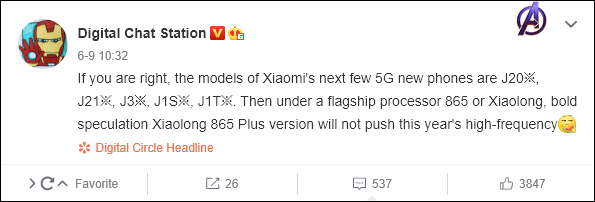
However, we can’t vouch for the authenticity of these leaked details. It is difficult to see the essence of this model since it will feature the same Snapdragon 865 chipset. here are rumours that Qualcomm will not be launching a SNapdragon 865+ chipset this year. Nevertheless, going by Xiaomi’s product releases this year, it won’t be surprising if indeed it is confirmed that the Mi 10 Pro+ is indeed in the works.
Prior to the launch in Europe, the official Realme India website listed the Realme X3 SuperZoom alongside a standard edition called the Realme X3. Today, it has now been officially confirmed that the Realme X3 is coming soon.
Shared on Twitter a short while ago, the tweet said the device is on its way but didn’t say when and which markets will get it first. There are speculations the Realme X3 may be announced alongside the Realme X3 SuperZoom in India, but until there is an official announcement, we advise you to take it with a pinch of salt.
The Realme X3 is reported to have similar specs to the SuperZoom edition according to a leak from early this month. So you will get a 6.6-inch FHD+ display with a 120Hz refresh rate, a Snapdragon 855+ processor, up to 12GB of RAM, and a 64MP quad rear cameras. It will also come with 16MP + 8MP dual front-facing cameras and a 4200mAh battery with support for 30W fast charging.
The difference between the two phones seems to be the camera configuration. The SuperZoom edition has an 8MP periscope camera with 5x optical zoom but the standard edition has a 12MP telephoto camera with 2x zoom. The Realme X3 SuperZoom also has 32MP + 8MP dual front-facing cameras.
Though Samsung was overtaken by Huawei globally in the month of April, the company witnessed its highest average selling price (ASP) in 6 years in Q1 2020 according to Strategy Analytics.
Samsung’s ASP was $292 from January to March, an 8.5% YoY increase and 20.7% more than Q4 2020. This is indeed a great achievement by the South Korean tech giant despite the global pandemic.
Last time the company’s ASP was around this value ($297) was in Q2 2014, almost 6 years back. Though the new steep ASP is $5 less than the previous one, it is yet much better than the other quarters.
In previous years like 2017, 2018, and 2019, Samsung’s average selling price was $243, $251, and $247 respectively.
The huge increment in Q1 2020 was due to the demand for expensive flagships like the Galaxy S20 series and Galaxy Z Flip clamshell foldable smartphone. Samsung’s revenue surged 22.1% in this period from 21.7% last year and 14.4% from the previous quarter (Q4 2019).
For comparison, Apple had the highest revenue of 37.5% at the same time. Samsung is expected to launch Galaxy Fold 2, a cheaper Galaxy Fold, and Galaxy Note 20 series in the second half of this year. If the demand for high-end devices stay constant or increase, the company’s ASP could further improve.
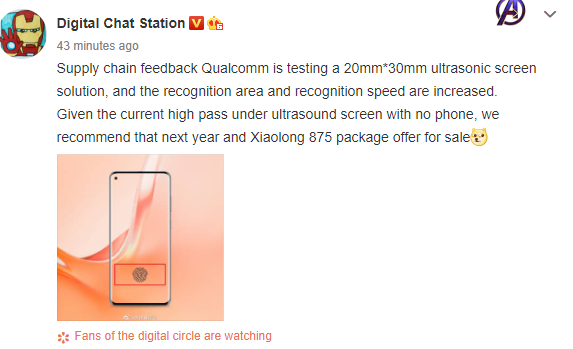
Qualcomm not only makes chipsets but also makes fingerprint sensors. For example, the ultrasonic in-display fingerprint scanner used in the Galaxy S10 series is actually supplied by Qualcomm. A new report says the San-Diego-based semiconductor company is testing a new sensor with a larger area and increased unlocking speed.
The info was revealed on Weibo by Digital Chat Station and he said he was informed by someone from the supply chain that Qualcomm is testing a 20mm x 30mm ultrasonic in-display sensor.
The new sensor has a larger scanning area and the speed of recognition is also faster. The Weibo post says that the new sensor may likely be bundled with the Snapdragon 875 processor next year. This means we may see the new sensor in 2021 flagship phones first.
Qualcomm also has another sensor that is yet to appear in devices. This sensor is its 2nd-gen 3D Sonic Max fingerprint sensor and it is capable of scanning two fingerprints at the same time. This means you can have both thumbs on the screen before your device unlocks. The sensor is expected to appear in the upcoming Galaxy Note20 series set to launch in August.
If it had crossed your mind that exploding earbuds could be a thing someday, it definitely won’t hit you that an Apple product will suffer such fate. We have mostly heard of exploding smartphones with the Galaxy Note 7 still in mind but it is extremely rare to hear of earphone explosion.
A report on Weibo says an AirPods allegedly exploded on May 19 while the owner was on a call. The report hinted that Zheng Tang, 23, sustained minor injuries on his right ear when the AirPods piece he was using exploded. The report also included a supposed medical report issued by the First Affiliated Hospital of Zhengzhou University. The medical report confirmed the skin rupture of the anterior wall of the boy’s right ear canal to have been caused by an explosion. The ear’s condition improved after two days of treatment with anti-inflammatory drugs but the victim still gets pain and hearing loss. A revisit to the doctor reveals swelling in front of the right ear with fresh blood oozing out. A crack was also noticed on the anterior cartilage of the right ear canal, about 1cm, and the tympanic cavity seemed to have blood accumulation.
However, from the pictures of the exploded AirPods, there was no obvious sign of scorching or charring but just a noticeable crack.
The ill-fated AirPods was purchased from an Apple dealer store in Wanda for 1,276 yuan (around $180). Apple has retrieved the unit for further investigation to ascertain what actually happened. The customer will be compensated in accordance with extant laws if the product is found to have quality issues.
We use cookies on our website to give you the most relevant experience by remembering your preferences and repeat visits. By clicking “Accept”, you consent to the use of ALL the cookies.
This website uses cookies to improve your experience while you navigate through the website. Out of these, the cookies that are categorized as necessary are stored on your browser as they are essential for the working of basic functionalities of the website. We also use third-party cookies that help us analyze and understand how you use this website. These cookies will be stored in your browser only with your consent. You also have the option to opt-out of these cookies. But opting out of some of these cookies may affect your browsing experience.
Necessary cookies are absolutely essential for the website to function properly. This category only includes cookies that ensures basic functionalities and security features of the website. These cookies do not store any personal information.
Any cookies that may not be particularly necessary for the website to function and is used specifically to collect user personal data via analytics, ads, other embedded contents are termed as non-necessary cookies. It is mandatory to procure user consent prior to running these cookies on your website.