The Galaxy A51 5G and Galaxy A71 5G phones went official in Vietnam back in December 2019. Both phones debuted as first Samsung phones powered by Exynos 980 5G chipset. In some markets, the South Korean company is selling 4G variants of both phones. The company is expected to launch the Galaxy A51 5G and Galaxy A71 5G smartphones in the U.S. Fresh information shared by XDA Developers reveals that the U.S. edition of the Galaxy A71 5G will be driven by Snapdragon 765 SoC.
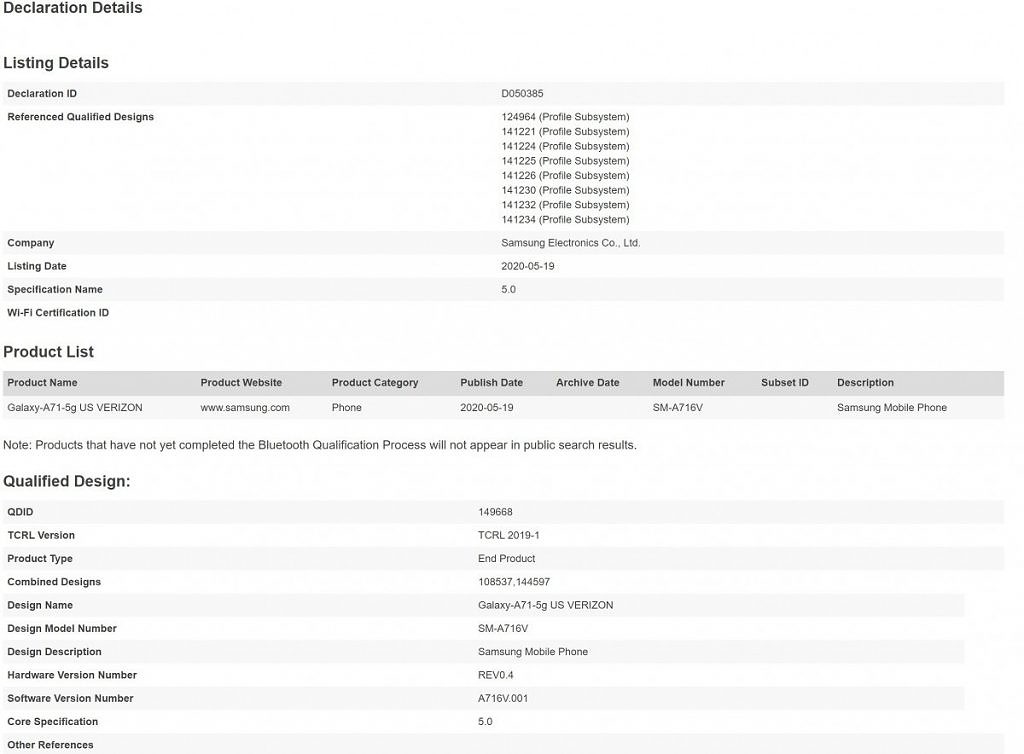
The Verizon variant of the Galaxy A71 5G has surfaced on the database of the Bluetooth SIG platform. The model number of the device is SM-A716V. The publication revealed after investigating the publicly available database for upcoming devices with online services from Verizon, it could come across “Samsung_a71xq” text. Here, “x” refers to a 5G device and “q” means it is fueled by a Snapdragon chipset.
The Geekbench listing of the U.S. variant of the Galaxy A71 5G has revealed that it is powered by a Qualcomm SoC that has a base frequency of 1.80GHz. Since Qualcomm offers Snapdragon 765 and 765G as the 5G chipset for powering mid-range phones, there is a possibility that the Galaxy A71 5G for the U.S. may include any of the two chipsets. The Verizon variant of the Galaxy A71 5G may come with mmWave support, while the non-Verizon models may lack it.
The publication has claimed that the Verizon and non-Verizon variants of the Galaxy A71 5G may break cover in the U.S. in June or July. The rest of the specs of the A71 5G for the U.S. could be the same as its 5G variant available in other countries.
The Redmi 10X smartphone is scheduled to go official on May 26. It is expected to launch as the first smartphone powered by the Dimensity 820 5G chipset. Ahead of the launch, the company has been consistently releasing posters through Weibo to reveal its features. Two images showing the phone’s display and its Always-On Display feature have been shared by the executives of the company.
In the first image, Xiaomi China Commercial Director Yang Lin can be seen posing for a photo with UNIQ boyband singer Wang Yibo. Lin can be seen holding the Redmi 10X smartphone. As can be seen in the image, even when the display is off, a blue-colored text can be seen glowing on it.
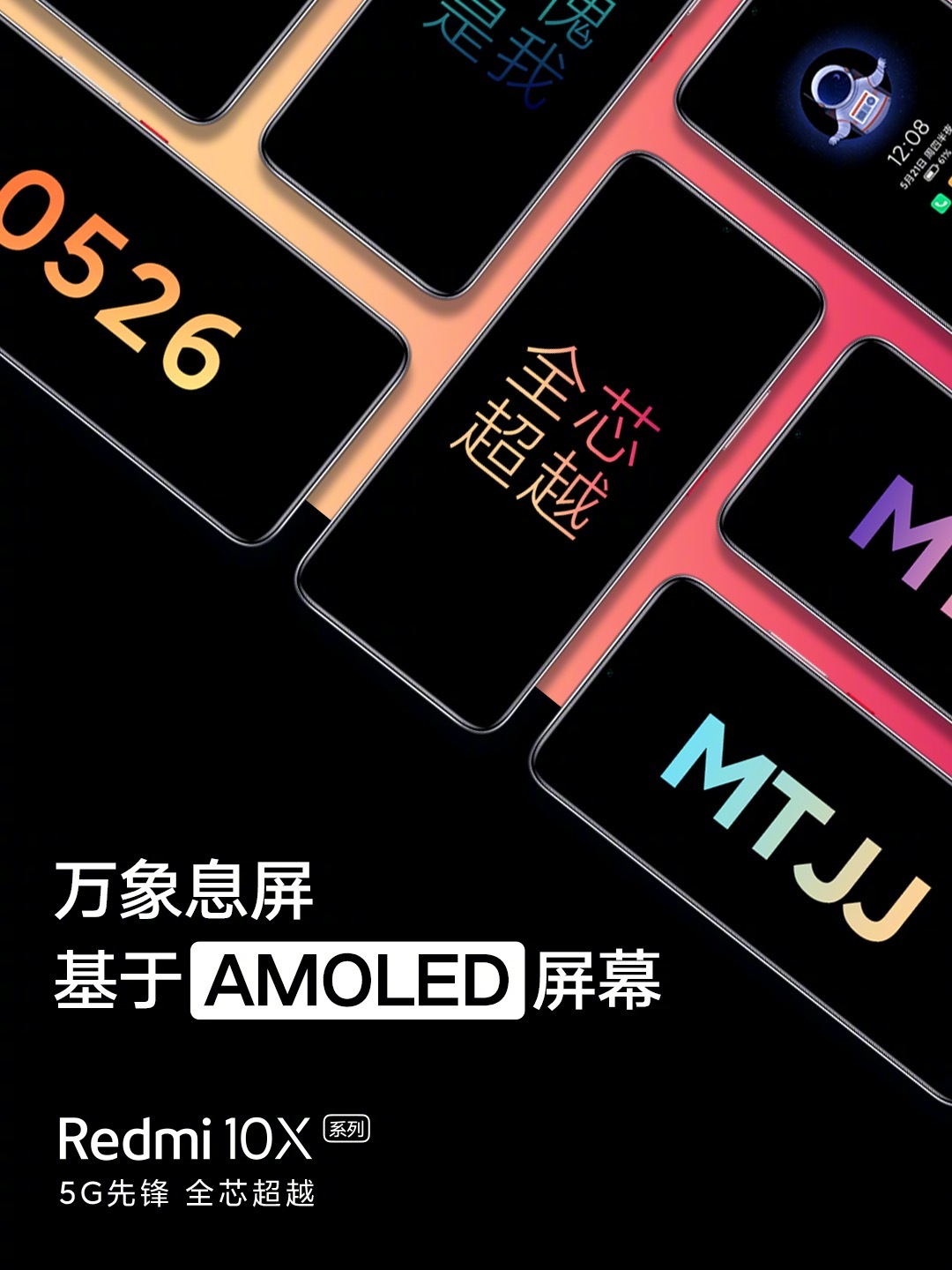
The company has already confirmed that the Redmi 10X is equipped with an AMOLED panel which allows it to support Always-On Display (AOD) feature. It makes it possible for the display to show limited information like time, date, battery status and notifications, and so on without turning on the entire screen. The other image that was shared by Wang Teng Thomas who is the Product Director with Xiaomi Redmi has also shown the Redmi 10X with its AOD feature.
Since the phone features an AMOLED display, it also comes with an in-screen fingerprint reader. The size of the screen is 6.57 inches and it supports 1080 x 2400 pixels full HD+ resolution. The image also shows that the bottom edge of the smartphone has a 3.5mm audio jack, a USB-C, a microphone, and an external speaker.
The Redmi 10X’s Dimensity SoC is rumored to be coupled with up to 8 GB of RAM and up to 256 GB of built-in storage. It has a 16-megapixel selfie camera and a quad-camera setup on its back. The phone houses a 4,420mAh battery. The Redmi 10X will be available in four color editions such as white, purple, blue, and gold. The Redmi 10X series reportedly includes Redmi 10X 4G, Redmi 10X 5G and Redmi 10X Pro 5G.
Samsung is among the very few smartphone companies that builds its own chipsets and now the South Korean giant has planned to become the leading semiconductor company in the world by 2030.
In line with that goal, the company has announced that it will start building a new chipset production facility in Pyeongtaek, South Korea which will be focused on manufacturing 5nm chipsets from Samsung.
The new facility will be responsible for making AI-powered (artificial intelligence), high-end smartphones, and HPC (high-performing computing) chips. The company has already started construction work which is expected to get completed by next year.
With the planned investment of around KRW 10 trillion ($8.1 billion), Samsung is looking to start production at this new facility by the second half of next year, i.e. H2 2021. The new production means that Samsung now has three such facilities in the Gyeonggi Province in South Korea, each one in Pyeongtaek, Hwaseong, and Yongin.
Samsung is going after TSMC which is currently the world’s leading contract chip manufacturer capturing a massive 54 percent of the market share. TSMC has already started mass production of 5nm chips and is currently making Apple’s A14 chipset.
The development from Samsung comes just days after TSMC announced its new 5nm chip production line in Arizona, United States. The company is expected to spend about $12 billion between 2021 and 2029 on the project, with construction slated to begin next year.
Chinese giant Huawei is also among the leading mobile chipset makers but we’ll have to see what the future holds for the company given that TSMC has stopped taking new orders from Huawei after the U.S. government changed rules where companies making use of any of the U.S.-based company’s design or tech needs a special permission to do business with Huawei. This is also a major blow to TSMC as Huawei was the second largest client for the company after Apple.
OPPO launched a new trio of affordable smartphones in the global market: it is composed of OPPO A52, OPPO A72, and OPPO A91. The first covers the price range below €200, the second is sold for less than €300, while for the third you need more than €300. Which one should you choose in order to get the highest value for money? Is it worth spending more for a device like the OPPO A91, you can save money as much as possible by going for the OPPO A52 or should you sit in the middle with the A72? This specs comparison will give you a complete view of the main specifications of these three phones.
Quad 12 + 8 + 2 + 2 MP, f/1.8 + f/2.2 + f/2.4 + f/2.4
8 MP front camera
Quad 48 + 8 MP + 2 + 2 MP f/1.7, f/2.2, f/2.4 and f/2.4
16 MP f/2.0 front camera
Quad 48 + 8 + 2 + 2 MP f/1.8, f/2.2, f/2.4 and f/2.4
16 MP f/2.0 front camera
BATTERY
5000 mAh, fast charging 18W
5000 mAh
Fast charging 18W
4025 mAh, Fast charging 20W
ADDITIONAL FEATURES
Dual SIM slot
Dual SIM slot
Dual SIM slot
Design
Do not expect premium materials from these devices as they are made of polycarbonate, but you still get a pretty nice design with each of them. Despite it does not feature a punch-hole display (unlike the OPPO A52 and the A72) and it comes with a traditional waterdrop notch, the one I love is the OPPO A91 because it offers a higher screen-to-body ratio, a more minimalistic rear side, a thinner (and lighter) body, and an in-display fingerprint reader. OPPO A52 and A72 come with the same design, with the exception of colors. The strongest point is the punch-hole display making them more futuristic, but they are less compact and they have a bigger camera module on the back.
Display
One of the key features of the OPPO A91 is the presence of an AMOLED display offering more brilliant colors and deeper blacks, as well as an in-display fingerprint scanner. It is a smaller display compared to OPPO A52 and A72, but it has a more stunning image quality. The OPPO A52 and A72 which can be considered successors of OPPO A5 and A9 2020 both come with the same IPS panel, but unlike their predecessors, they boast a satisfying Full HD+ resolution just like the OPPO A91. Note that OPPO A52 and A72 boast stereo speakers, while OPPO A91 is mono.
Hardware/Software
Despite OPPO A52 and A72 are more affordable phones than OPPO A91, their Snapdragon 665 chipset (by Qualcomm) offers more or less the same power and performance level as the Helio P70 (by MediaTek) found on the A91. What really makes the difference is the amount of RAM: you get only 4 GB on the OPPO A52 and A72, while OPPO A91 ships with 8 GB of RAM. OPPO A52 and A72 differ for the internal storage: the former offers 64 GB, while the latter has 128 GB (just like the A91). The operating system installed is Android 10, customized by ColorOS.
Camera
OPPO A72 and A91 come with the same camera department composed of a 48 MP main sensor, an 8 MP ultrawide lens, and two additional sensors with 2 MP resolutions. They are not high-end camera phones, but they are all but disappointing. OPPO A52 is inferior due to its inferior 12 MP main sensor and 8 MP front camera (against the 16 MP front snappers of its rivals), but the secondary sensors of the rear camera setup are the same.
Battery
OPPO A52 and A72 win the battery life comparison and they are two of the best battery phones thanks to a huge 5000 mAh battery. But OPPO A91 remains a pretty nice battery phone with its 4025 mAh battery.
Price
OPPO A52 sells for €199/$217 globally, OPPO A72 is available for €279/$305, and OPPO A91 has a €329/$360 price tag. Despite the OPPO A91 is the best phone of this comparison, I do not think it is worth spending more than €300 to get it. It has a better display and (slightly) better performance, but it lacks stereo speakers and it has a smaller battery than OPPO A52 and A72. Unless you need an above-average camera setup and 128 GB of internal storage, OPPO A52 should be enough. But if you want more than just decent cameras and more storage, then go for the OPPO A72. Do you agree?
Vivo announced the Y30 in Malaysia earlier this month and the device came with an affordable price tag of RM899 (~$208). There are feelers that the device will be made available in the India market in the first week of June. 91mobiles quotes Vivo officials who did not want to be named to have disclosed this detail.
The Vivo Y30 is an affordable mid-range model equipped with most of the features you’ll find in a high-end model. The device packs a 6.47-inch IPS LCD with a punch-hole at the top left corner housing the selfie camera. The display has reduced bezels on all sides except at the chin where it is a little bit pronounced.
The rear shell of the phone is made of polycarbonate material with a glossy appeal. The Y30 has four cameras housed inside a rectangle-shaped housing at the rear. The setup is pioneered by a 13-megapixel lens followed by an 8-megapixel ultrawide shooter of, a 2-megapixel macro lens and a 2-megapixel depth sensor. The device equally packs a rear-mounted fingerprint reader.
For hardware, the Vivo Y30 crams a MediaTek Helio P35 chipset under the hood, paired with 4GB of RAM. The phone comes with expandable internal storage of 128GB. Keeping the light on is a massive 5,000mAh battery which supports only 10W charging. Providing the interface is Vivo’s proprietary FunTouch OS 10 based on Android 10 OS. The phone comes in Moonstone White and Dazzle Blue colour options.
The Y30 is expected to retail for around Rs.15,000 in India.
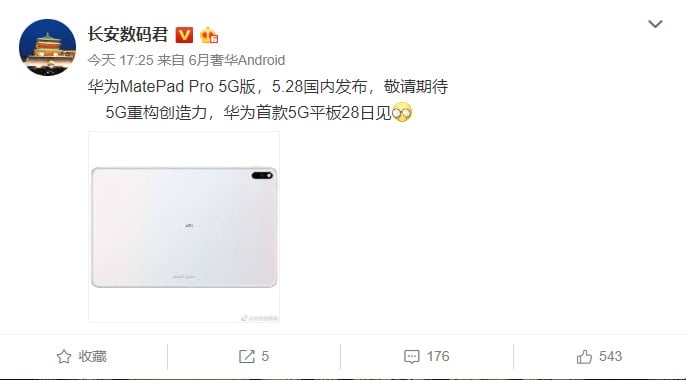
Huawei has already launched the MatePad Pro 5G in Europe as far back as February this year but the flagship tablet is yet to be sold in China. A tipster has now hinted that the MatePad Pro 5G will be launched in China on May 28. It is sort of an irony that the Huawei MatePad Pro 5G was launched in Europe before China considering 5G has rolled out more in China.
As a reminder, the MatePad Pro 5G is flagship tablet as it is powered by a Kirin 990 chipset paired with 8GB of RAM and up to 512GB storage. The tablet packs a nanoSD card slot onboard that can be used to expand the storage when needed.
Design-wise, the MatePad Pro features a 10.8-inch IPS LCD display with rounded corners and a punch-hole that houses an 8-megapixel selfie camera. The display comes with quad HD+ resolution of 2560 x 1600 pixels and DCI-P3 color gamut. The device weighs just 460 grams. With 4.9mm slim bezels around the display, the MatePad Pro promises a screen-to-body ratio of 90 percent.
The tablet is equipped with a huge 7,250mAh battery that supports 40W rapid charging. However, the device ships with 20W fast charger. There is also support for 15W wireless charging and 7.5W reverse wireless charging on the onboard.
The rear aspect of the device is made of a premium metal panel. The rear panel features a 13-megapixel main camera with f/1.8 aperture. It comes with features like phase detection autofocus and LED flash. The device comes with support for M-Pencil stylus that 4096-level pressure sensitivity nib. The stylus can be charged wirelessly by simply attaching to the device.
For interface, the Huawei MatePad Pro runs EMUI 10-flavoured Android 10 OS. It also ships with a smart keyboard which can be bought separately costing around €129 (around $140). Other features include Histen 6.0 audio support, quad speakers, Wi-Fi 802.11ac, Bluetooth 5.1, GPS (only on LTE edition) and USB-C.
Oppo Find X2 Pro is the company’s flagship smartphone of 2020. The phone costs a whopping €1,199. It shares its entire specifications with the OnePlus 8 Pro except for camera setup and rear design. The handset comes in two finishes – ceramic and vegan leather. The latter variant recently underwent JerryRigEverything durability test and passed it with some caveats.
The Oppo Find X2 Pro passes all the regular JerryRigEverything durability tests without any hiccups. The only problem with the phone is its vegan leather AKA artificial leather.
This material is durable and does not get easily damaged. But when it gets bruises as a result of sharp objects, there’s no way to fix it. The inner white plastic material becomes visible through the torn outer layer.
This makes the handset look terrible (personal opinion) and you cannot even apply skins on this material. Thus, if your €1,199 Find X2 Pro gets damaged, you will have to use case for the rest of its life if you don’t want to show off the ugly back.
Anyway, as Zack mentions in the video this is a similar type of vegan leather that is used by Tesla in its cars. But the ones used in cars are thicker than on the Find X2 Pro and that is the primary reason it can be torn apart easily with sharp objects.
That being said, the Oppo Find X2 Pro is of the unique smartphones launched this year with high-end specs and stand-out design.
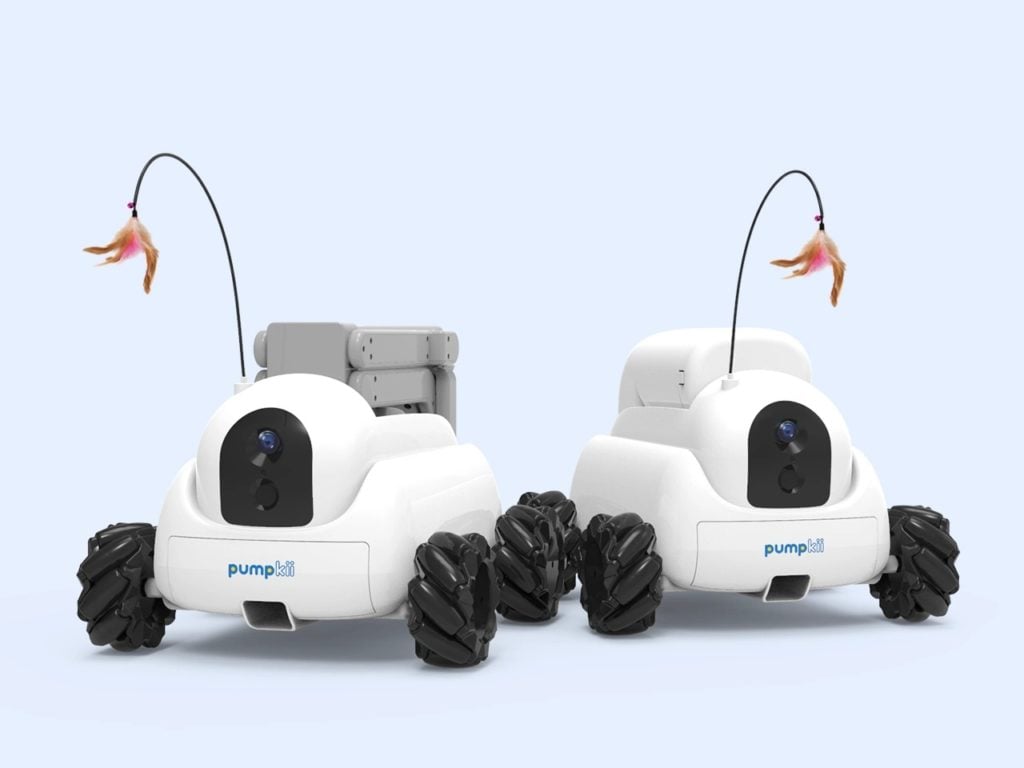
We have seen a whole dog robot, a medic robot, and various other robots for different works, but the Pumpkii Robot is designed for something unconventional. The new Robot from Pumpkii, a talented group of engineers and pet lovers has built a new exceptional robot that can be your pet’s best companion. Pumpkii Robot has the ability to clean and entertain pets including both dogs and cats. The useful robot is soon going to be available from Indiegogo at a super early bird price of $99. However, it will retail for the price of $229 once officially out of the funding phase. You can know more details about the Pumpkii Robot over at Indiegogo, or can he’s Dover to the official website for detailed specifications.
Pumpkii Robots make you free from your pet worries by facilitating them when you’re out for work. It features every useful feature that helps to take care of your pets effectively.
PumpKii Robot is a multifunctional machine that can perform various features from rewarding pets on task accomplishment, to watching and talking with them live via the inbuilt camera and mic. Remote assistance using the Pumpkii app from anywhere around the globe. Moreover, it can effectively clean the pet’s waste and can even cleanse the litter box itself.
PumpKii Robot is fitted with a wheeled base, high-definition IP camera, external apparatus like treat pod, robotic arm, teasing faster, and much more. The availability of a software development kit and open hardware interface opens the door for endless opportunities.
Reward Pets with Treats
Your pet is lazy or keeps sitting in the same place for hours? Then the PumpKii robot’s feature of rewarding would help you to make them more energetic and active. The robot houses a treat pod that can be filled with different treats aka food items or some playing material. You can treat your pets with these items on the accomplishment of any tasks or freely using an intuitive application on your smartphone.
Ability to talk and watch your pets
If you’re missing your pet while working in the office or during your vacations. Then, you can easily chat with your friend using the inbuilt cameras of Pumpkii robot. The inbuilt app helps the robot to make movements and check your pets in any chore of your house.
Automatic Clean Litter Box
The robotic arm at the base helps it to get rid of the litter and even empties the litter box. The whole process is automatic and the user need not to interfere in any way.
Overall, it is an innovative Robot that helps to relapse you from some pet duties a keeps you stress-free when you are away from your pets. You can subscribe the Pumpkii Robot at its Indiegogo project page for an early bird price of $99.
The US-China trade war may soon cause Chinese companies listed on US stock markets to be delisted. Reuters reports that Baidu Inc. is planning to delist from Nasdaq due to the tension between its home country and the US.
The anonymous sources that revealed the info on the company’s plans, said discussions are still at an early stage and may change.
The sources also said Baidu believes it is undervalued on Nasdaq. The search engine’s shares are reported to have fallen more than 60% since they peaked in May 2018.
The company’s co-founder and Chief Executive, Robin Li, told China Daily that they were paying close attention to America’s tight scrutiny of Chinese companies listed on US stock markets.
For a good company, there are many choices of destinations for listing, not limited to the U.S. – robin Li, Co-founder of baidu,
Baidu, CTrip, and NetEase Inc. are reported to have had discussions with Hong Kong Exchanges and Clearing on a secondary listing just as Alibaba has done so as to have an investor base closer to home.
The US Senate passed a bill on Wednesday that may hinder the listing of Chinese companies on US exchanges unless they follow standards for US audits and regulations. Chinese companies looking to get listed on US exchanges may change their minds following the passage of the bill.
The Galaxy S20 series is the most expensive Galaxy S series phones Samsung has launched till date. All three devices in the series – Galaxy S20, Galaxy S20 Plus, and Galaxy S20 Ultra are currently receiving a new update with May 2020 security patch and camera improvements.
The new update for Galaxy S20 series comes with build number G98xxXXU2ATE6. This is said to be the second update with May 2020 security patch for Samsung’s 2020 flagship smartphones. However, it is presently only available in the regions where the initial May 2020 security patch was not available.
Apart from the security patch, the new update is also said to improve camera performance on all three handsets. Sadly, there’s no concrete proof for it as like any other OTA update, it is being rolled out in batches across various regions.
So far, users who have received the update claim the latest build to have improved night mode performance. We will know more about the improvements as the update gets rolled out to more users in the coming days.
Until then, if you own any of the Samsung Galaxy S20 series devices, then head over to Settings – > Software update to check manually if the OTA has been delivered to your handset.
No doubt 2020 is the year of 5G. The new network standard is no longer limited to flagships but has now made its way to mid-range devices. Chipmakers such as MediaTek have announced affordable 5G processors such as the Dimensity 800 and Dimensity 820 for budget phones. Now it is the turn of Qualcomm.
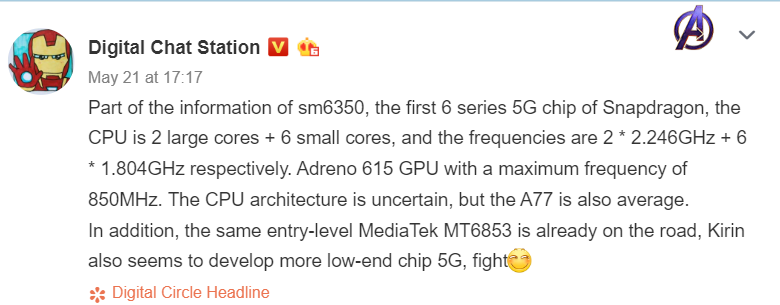
A new leak has revealed that the San-Diego-based semiconductor company is working on its first Snapdragon 600 series 5G processor. So far, Qualcomm’s 5G processors are limited to the Snapdragon 800 and Snapdragon 700 series but that should change soon.
According to Digital Chat Station, Qualcomm’s first Snapdragon 600 series 5G processor has the model number “SM6350”. The chipset has eight cores in a 2+6 core arrangement. The two performance cores are clocked at 2.246GHz while the efficiency cores are clocked at 1.804GHz.
The source said he is not sure about the CPU in use but seeing as the Snapdragon 765 and Snapdragon 765G have Cortex-A76 performance cores, that is the most likely it will have too. The efficiency cores should be Cortex-A55 cores. With respect to GPU, the SM6350 will come with the Adreno 615 clocked at 850MHz.
There is no specific info on when the chipset will launch but we don’t expect it to appear in devices until Q3 2020.
Digital Chat Station also mentioned in the Weibo post that the entry-level MediaTek MT6853 processor is on the way and that Huawei is also developing an entry-level 5G Kirin processor.
When these processors launch, we should have 5G devices with price tags under $200. The only thing left is for countries to play catch up as there are already several 5G phones available for buyers to purchase.
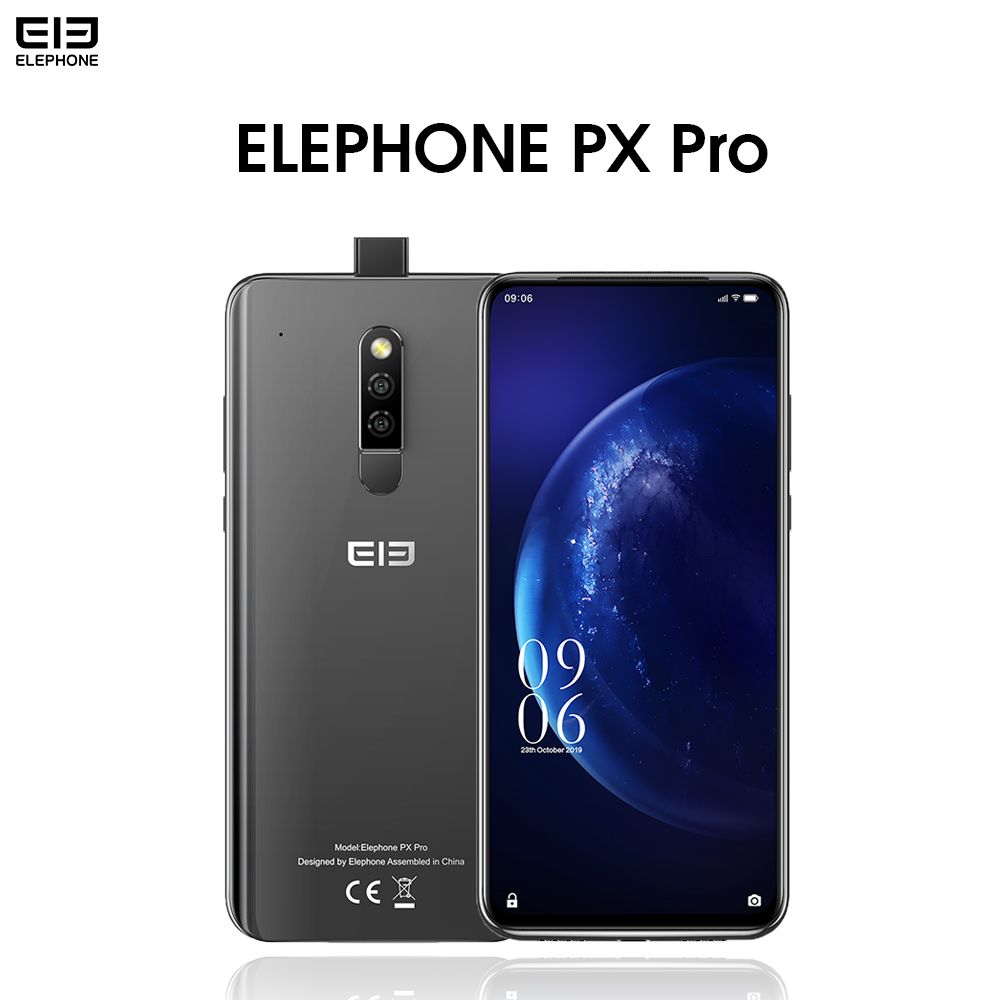
Elephone is on the verge of launching a new smartphone and successor to the Elephone PX. The new smartphone share some similarities with its predecessor in terms of design. After confirming the presence of Elephone PX Pro via a few leaked images last week, here come some more images of the device posing at different angles. These images give us a whole glimpse of the Elephone PX Pro’s design from both the rear and front sides.
Elephone PX Pro will feature upgraded hardware for smooth and easy task handling. It features a full-view display for vivid and immersive viewing experience with a 19:9 aspect ratio. The pop-up selfie camera enriches the gaming and movie-viewing experience without any obstruction on the display. However, the display and front design resemble the Elephone PX.
The rear side of the device also features similarity to the Elephone PX. There’s a horizontal dual camera module along with an LED flashlight and a fingerprint sensor. There’s a slight change in the fingerprint location which will make it more accessible. The company’s branding is engraved exactly at the center of the smartphone’s rear side. The volume rocker and the power button is present on the right side of the smartphone.
The new smartphone will be a perfect fit for business users.
As far as the specifications of the Elephone PX are concerned, it packs a 6.34-inch IPS LCD display with the resolution of 1440 x 720 pixels. It is powered with an octa-core processor and coupled with 4GB RAM and 64GB internal storage. A dual-camera module is present on the rear with 16-megapixel primary. On the front, there’s a 2-megapixel sensor. A 3300 mAh battery is available with 2Amp fast charging. It is available in two colors of Purple and Crystal Cream.
In sensors there are Proximity Sensor, Accelerometer, Ambient Light, Gyroscope, Fingerprint (Rear Fingerprint), Compass. It measures 16.30 cm x 7.60 cm x 0.98 cm and weighs 189 Grams (with Battery).
THE Elephone PX Pro launch could launch within the next week. We expect some more information to appear before the official launch. However, the interested users can follow the Elephone social media handles to know more about the ELEPhone PX Pro. Live unboxing will be done on Elephone Facebook, YouTube, and VK handle.
Ever since Huawei announced EMUI 10.1 / Magic UI 3.1 in late March, it has been rolling out beta builds to eligible devices in China. After almost two months of testing, the company has now begun to release stable builds for certain devices. Earlier today, we reported the arrival of EMUI 10.1 stable update for Huawei P30 series and MatePad Pro. Now, Huawei Nova 6 series and Honor V30 series are getting a similar treatment.
So far, Huawei / Honor has managed to roll out EMUI 10.1 / Magic UI 3.1 stable update for 7 devices including a tablet. The latest batch of devices to get the update are the ones listed below.
Huawei Nova 6 5G
Huawei Nova 6
Huawei Nova 6 SE
Honor V30
Honor V30 Pro
Before these devices, the stable update was first available for Huawei P30, P30 Pro, and MatePad Pro.
Anyway, it is worth noting that the update for the above-mentioned devices is limited to China only. Also, uses will have to register in Huawei Club app to receive the update. The wider rollout for these devices will begin based on feedback from the early adopters.
We except more devices to receive stable builds in the coming days, especially those models that entered Open Beta channel last week. Nevertheless, Huawei and Honor are yet to announce the global rollout of EMUI 10.1 and Magic UI 3.1.
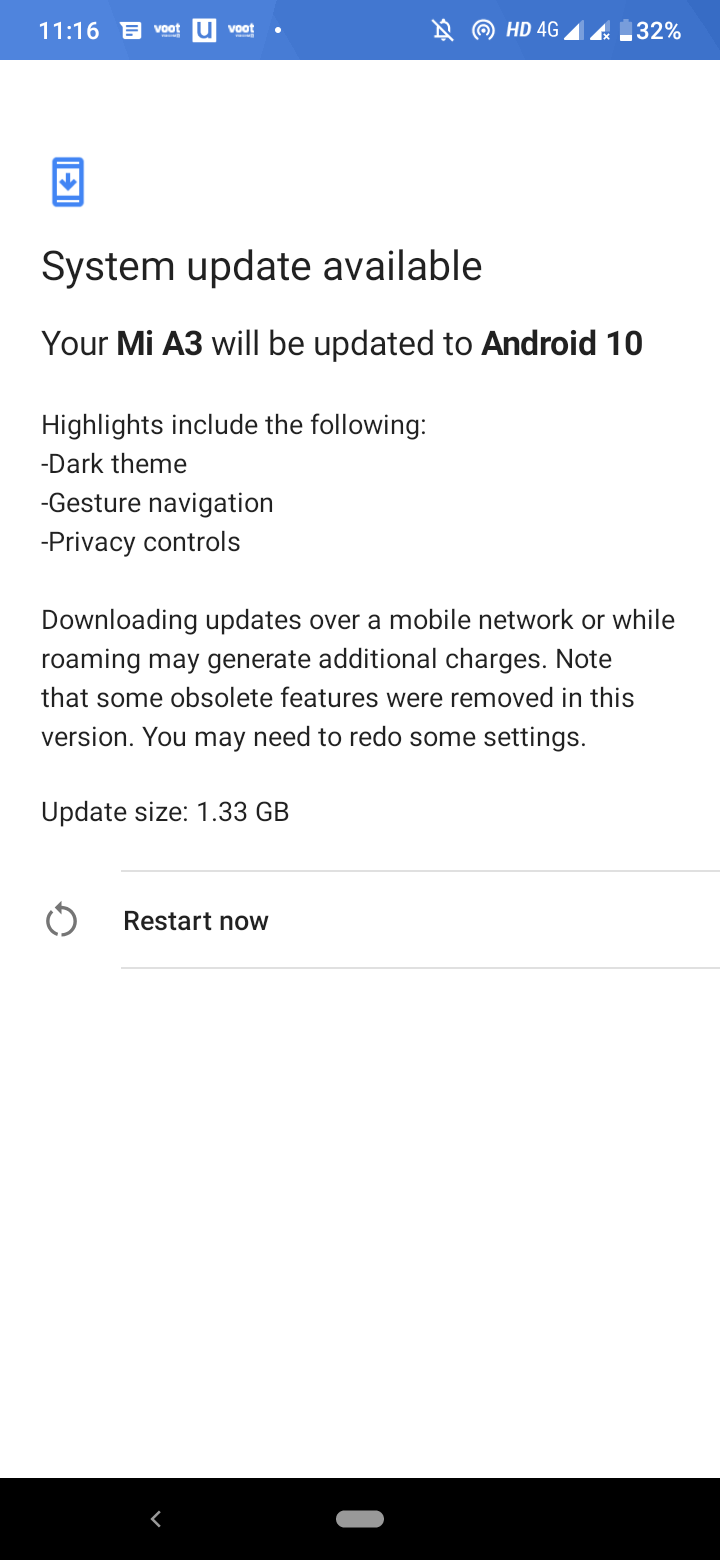
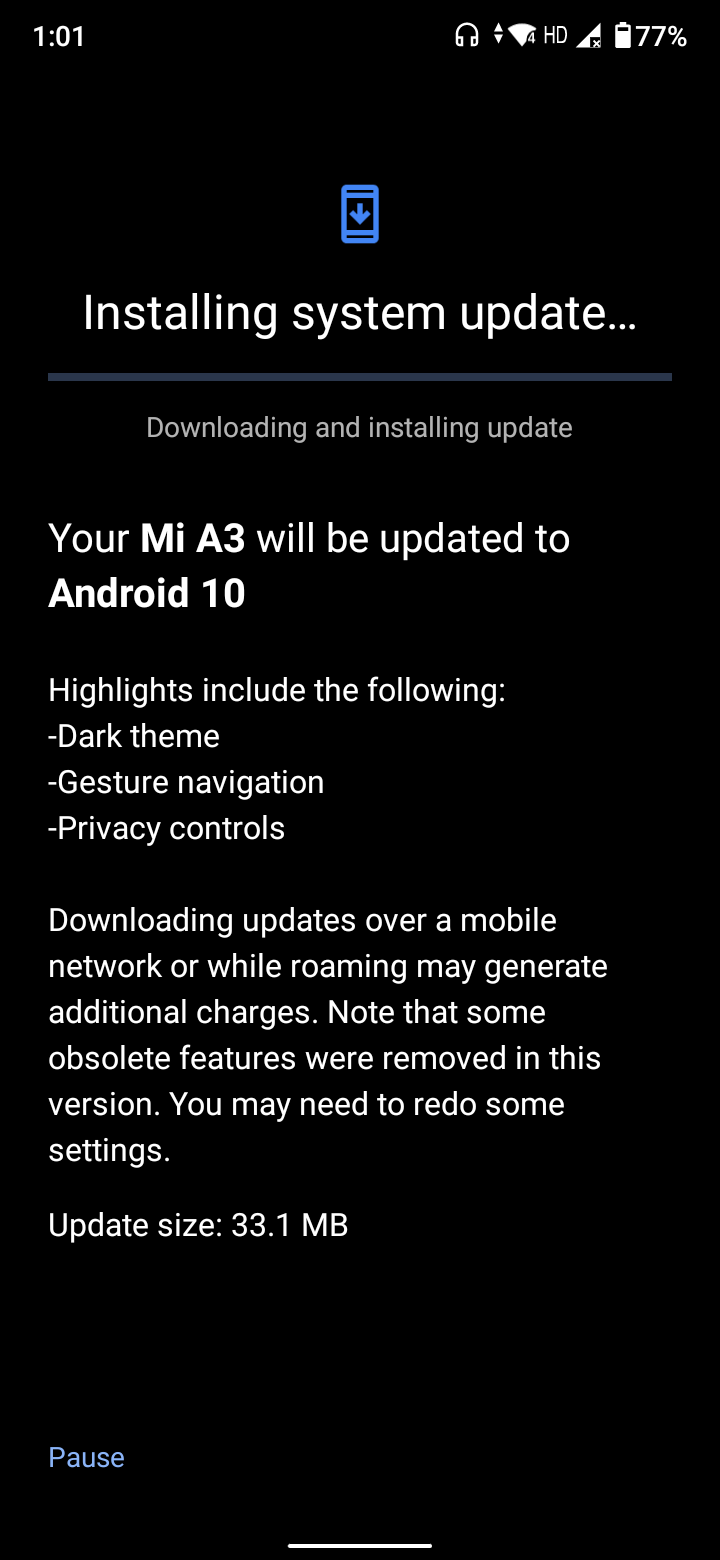
It’s raining Android 10 updates for Mi A3. The Indian variant of the handset is currently receiving a new build with May 2020 security patch similar to the Global and European versions. The new build seems to have fixed most of the bugs faced by users in the previous builds.
Xiaomi has begun to roll out Android 10 update (again) with May 2020 security patch to users in India. The update comes with the same build number as the Global variant, which happens to be V11.0.15.0.QFQMIXM.
Thanks Aashka for the tip!
Source: Reddit (u/mr_innocent_desai)
The latest build is currently being rolled out to 1% of users in India according to the official Mi Community thread. However, units running both Android Pie and Android 10 are receiving the update.
For users who are currently on Android Pie, the new update weighs 1.33 GB, whereas, for users who are already on the previous build of Android 10, the May 2020 security patch update only weighs 33.1 MB for them.
Although we couldn’t find any major complaints regarding the latest build on Reddit and Mi Community, the camera performance seems to have affected, especially the 48MP mode as per one of our readers.
Having said that, if you own a Xiaomi Mi A3 and have updated it to Android 10 May 2020 security patch update with build number V11.0.15.0.QFQMIXM, then do share your experience in the comment section below.
After excelling in the smartphone market, Elephone is marching ahead with the launch of new smart products. The company has announced the new TWS real Bluetooth wireless earphones including the ElePods, ElePods 1, ElePods 2, ElePods X and ECam X to give a variety of options to choose. The ever increasing demand and aspirations of the Elephone fans have made the company to widen its portfolio.
Elephone’s aim behind the incorporation of new products is to improve consumers’ life. However, we are listing some of the best smart products available from Elephone as of now.
TWS Wireless Earphones
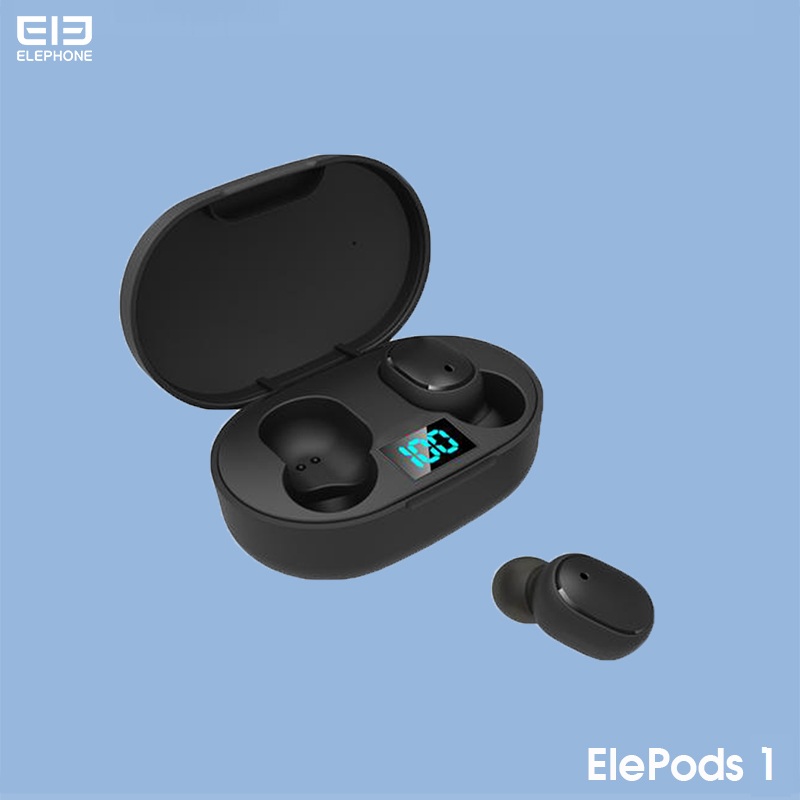
ElePods 1 TWS Bluetooth 5.0
It is the most affordable earphones with True Wireless Stereo, Bluetooth 5.0, intelligent power digital display and customized flagship edition. It automatically connects with the paired device improving the convenience. A digital power display in ElePods case allows seeing power information anytime and anywhere. It also houses intelligent noise reduction with 6D surround sound effect.
The user can connect to Virtual assistants like Google Assitant and Siri on a single touch.
Technically, these are low latency earbuds with a range of up to 10M. The Earpods house a 45mAh battery in each unit, and with a case of 280mAh capacity. You can continuously enjoy music for 3 hours.
You can own it for the price of $9.99 from Elephone official store.
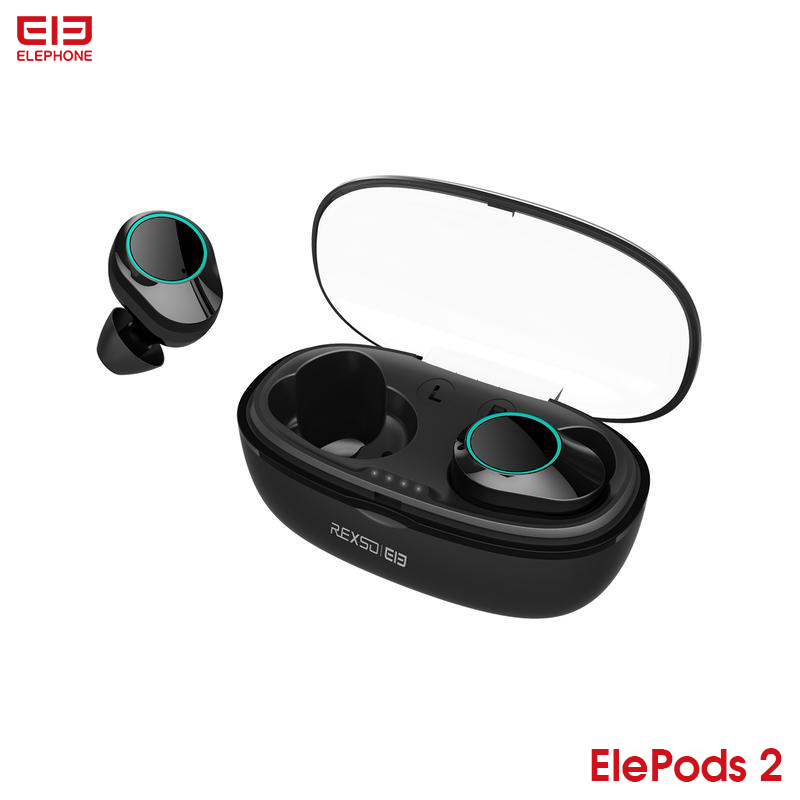
ElePods 2 TWS earphones
ElePods 2 TWS earphones are based on Bluetooth 5.0 and come with the range of 10 meters. Each EarPod consists of a 50 mAh battery while the case carries 300 mAh battery capacity and can sustain up to 3 hours of continuous playback. It can fully charge within 60 minutes. It features a low latency, visual assistant support, and noise reduction algorithm.
The user can own it for the reduced price of $39.99.
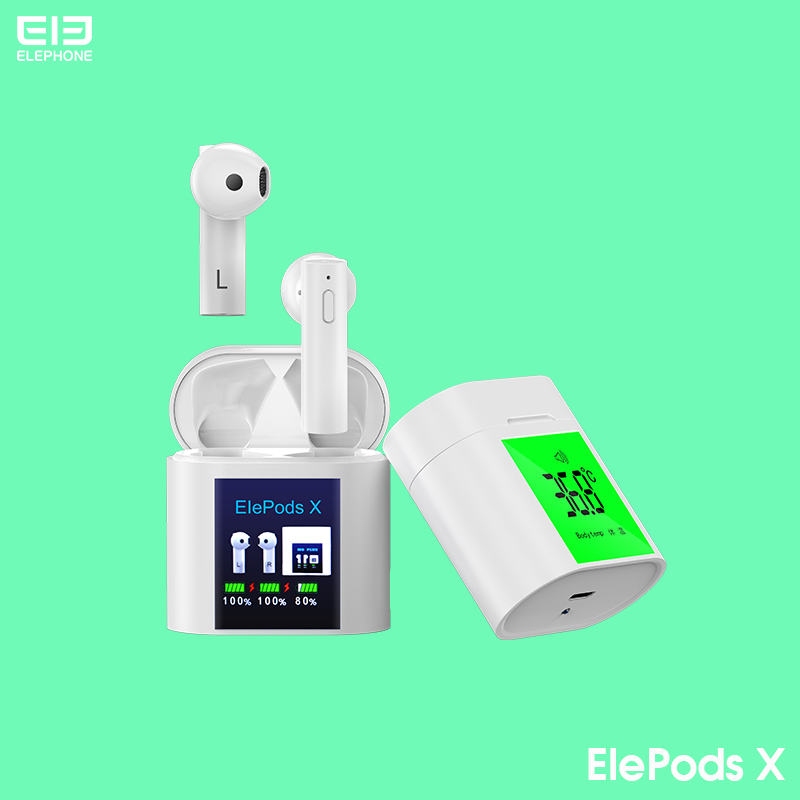
ElePods X RWS Earphones
It is highly efficient and premium quality earphones from ElePhone. The Bluetooth 5.0 Earbuds are capable of providing a beautiful and enriching sound experience. You can grab them for the reduced price of $49.9.
Elephone Ecam X
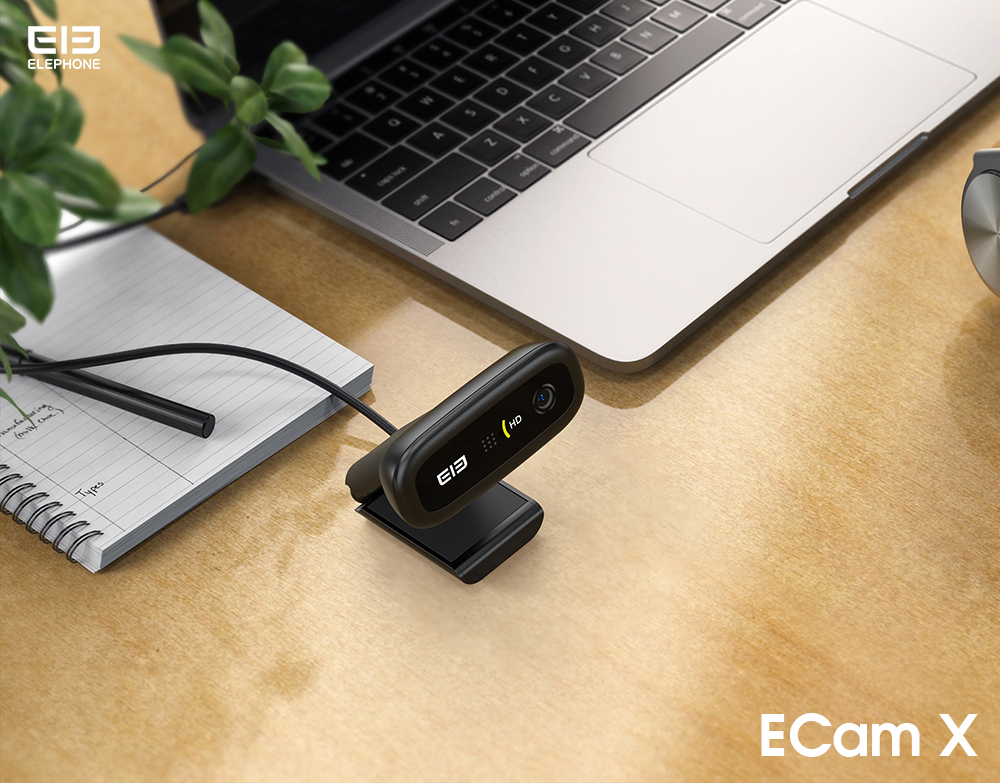
Elephone also offers webcam at an affordable price of $27.99. It supports standard UVC and UVA protocol assisting plug and play. The camera supports Android, Windows and Linux operating systems. Elephone Ecam X supports 5-megapixel resolution with 30fps video rate. It can be used for online teaching, live broadcast, video conference, Video chat, intelligent TV external devices.
To learn about Elephone smart devices, head over to the official website.
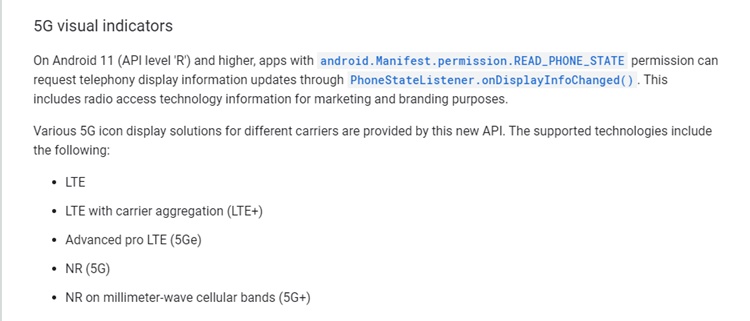
Android 11 is nearing stable build as Developer Preview 4 went live earlier this month with several new changes and advancements. The search giant today updated the Android 11 Features overview page with a lot of new information based on the changes. The company informed about the Android 11 based new iconography related to the 5G network.
In addition to the already present telecommunication technologies, the Android 11 will have three different labels for 5G networks. It will further fuel the confusion rather than clearing the buzz. However, the new information would be helpful only if you know the exact meaning of these labels.
The signal iconography got three new labels of 5G, 5G+, and 5Ge in addition to the already present LTE and LTE+ which derives plain 4G and 4G with carrier aggregation respectively. However, the “5Ge” label is for LTE Advanced Pro which is not regarded as the pure 5G network. It is just an upgrade of 4G LTE advanced pro-technology with speeds of up to 3Gbps using carrier aggregation technology. AT&T and some other carriers throughout the world using advanced LTE networks will be labeled as “5Ge” on Android 11.
The pure next-generation networks will use “5G” and “5G+” labels on Android 11. Precisely, the “5G” label is dedicated for sub 6GHz network, while the millimeter-wave will show as “5G+” with greater speeds in comparison with the 6GHz network. However, the millimeter-wave network is blocked easily by trees, rain, and even with any small object in between. Here’s the list of new labels with small detailing:
LTE
LTE+ – Carrier Aggregation
5Ge – Advanced Pro LTE
5G – NR on 6GHz
5G+ – NR on millimeter-wave cellular bands (5G+)
It will help to ease confusion and will bring transparency to users about the network they are using.
Redmi will be announcing Redmi 10X, a budget 5G smartphone powered by Dimensity 820 on May 26 in China. Ahead of it, the brand has started teasing the features of the handset on Weibo. Today’s teasers confirmed the phone to come with AMOLED display, in-screen fingerprint sensor and MIUI 12.
The presence of AMOLED display with an in-screen fingerprint sensor in Redmi 10X was almost certain since the same was already spotted on TENAA. However, the certification portal mentions the device with its model number M2004J7AC rather than its marketing name.
A teaser video posted by Redmi today (attached above) also suggests the Redmi 10X will be the first phone with MIUI 12 out of the box. The video showcases Super Wallpaper and AOD+ dynamic styles on the handset.
Further, we think the render shared by the brand is of Redmi 10X Pro with model number M2004J7BC since the regular Redmi 10X (M2004J7AC) is expected to feature triple camera setup according to TENAA unlike quad-camera found in the render.
1 of 2
So far, Redmi has launched four 5G smartphones in China and they are Remdi K30 5G, Redmi K30 Pro, Redmi K30 Pro Zoom Edition, and Redmi K30 5G Racing Edition. These phones start from 1,999 Yuan ($281) and go up to 3,999 Yuan ($563).
With the launch of Redmi 10X, the brand is expected to break the price barries of 5G smartphones. The current cheapest 5G handset in China is the recently announced Honor X10 that starts at 1,899 Yuan ($267).
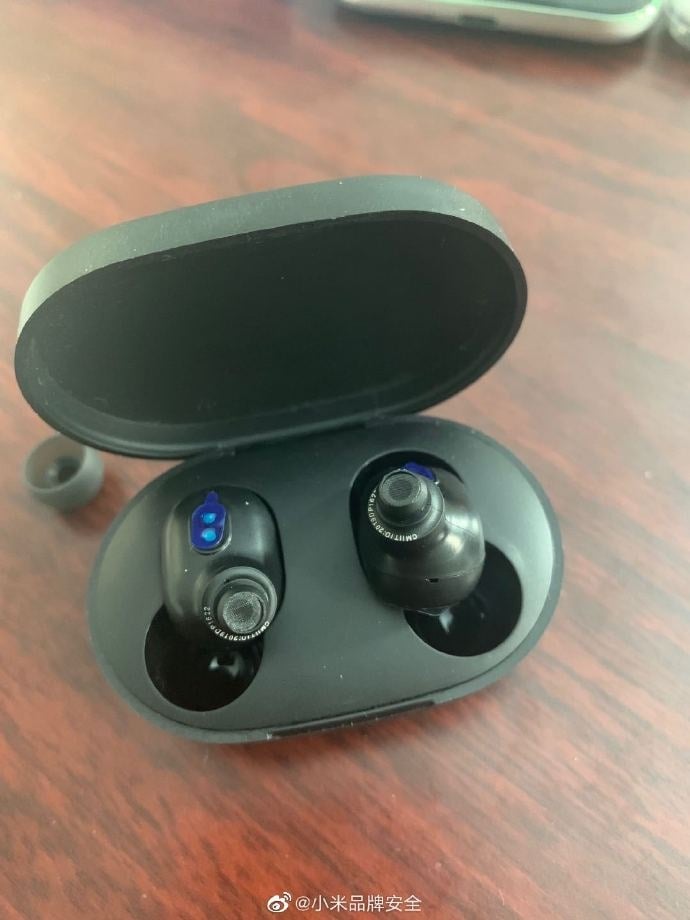
Xiaomi‘s Legal department has announced the apprehension of a criminal ring that specialises in production and sales of fake Mi Bluetooth headsets.
The legal team disclosed that they received a report in March this year and subsequently discovered an online shopping platform that sold a large number of counterfeit Mi Bluetooth headsets. The company hinted that they swung into action with the assistance of the security forces and were able to track the production base of the fake Mi headsets to an industrial park in Shenzhen, Guangdong Province in April.
The team also disclosed that some of the products have already been fully produced while some others were still in production when the crack team stormed the factory. Over 1000 units of the fake Mi Bluetooth headsets, packaged in similar boxes as the original products were seized and the culprits apprehended. Xiaomi will also pursue a legal means of bringing the culprits to book.
The popularity of Xiaomi products has made it a lucrative venture for counterfeiters who ope to profit from the brand’s highly sought-after products. There have even been reports of fake Xiaomi phones and other products in the ecosystem. The fake products are not only a problem in China but even in India where the brand has attained unprecedented popularity. In December 2019, fake Xiaomi products worth over 13 Lakhs or $18,000 were confiscated at Delhi’s Gaffar Market in India.
The recommendation is for buyers to only purchase their favourite Mi products from the regular channels to avoid getting their hands on substandard or low-quality gadgets which is the major attribute of fake products.
There is a new version of the Galaxy S20 but unless you work for the US Government and its Department of Defense, you most likely will not be able to get your hands on a unit. Called the Galaxy S20 Tactical Edition, the phone has special features designed for those on the field.
According to the press release by Samsung Electronics America, Inc., the Galaxy S20 Tactical Edition is bundled with a highly-customized software and feature set with “support for the requirements of tactical and classified applications, especially those designed to help operators navigate complex terrain, expansive distances, and the potential loss of communication with command units”.
The Galaxy S20 Tactical Edition provides the warfighter with the technology that will give them an edge in the field, while providing their IT teams with an easy-to-deploy, highly secure solution that meets the demands of their regulated environment.”
The phone has a 6.2-inch Dynamic AMOLED QHD+ display with a 120Hz refresh rate. It is powered by the Snapdragon 865 with 12GB of RAM and 128GB of expandable onboard storage. There is a 12MP primary camera on the back along with a 64MP telephoto camera, and a 12MP ultrawide angle camera. A 10MP camera is up in front for selfies. The phone also packs a 4000mAh battery with support for wired and wireless fast charging.
Custom software features include support for multiple mission applications such as ATAK, APASS, KILSWITCH, and BATDOK. Samsung Dex will also allow users to connect to a monitor for a desktop-like interface to complete mission reports and create training and mission plans.
The Galaxy S20 Tactical Edition also has a night-vision mode that allows the user to turn the display on or off when wearing night-vision eyewear. There is also a stealth mode that disables LTE and mutes all RF broadcasting for complete off-grid communications. Samsung has also designed the phone to be unlocked in landscape mode when the device is mounted on the chest and also allows for quick launching of most-used apps.
The Galaxy S20 Tactical Edition will be available in Q3 2020 through select IT channel partners.
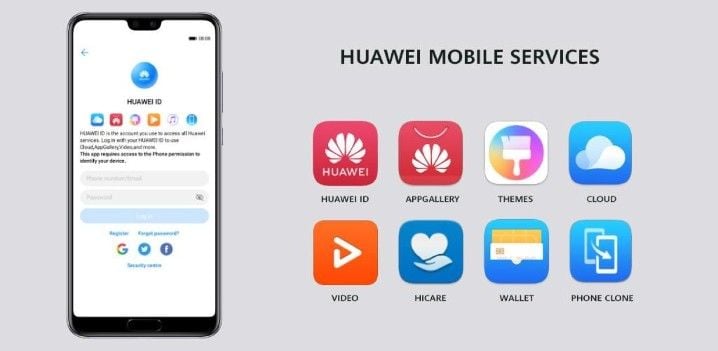
Huawei‘s reply to losing Google’s Mobile services was developing its own very own counterpart, the HMS. This proprietary service included various apps that directly replaced many popular Google apps and featured a new app store called, AppGallery as well. Now, this service is seeing a healthy surge of developers as more than 1.5 million app developers have registered to fill the Chinese tech giant’s software ecosystem.
Previously, Huawei had set up a massive fund to incentivize various app developers to make applications for the AppGallery, since it lacked a large number of popular apps and software. This move has been seemingly successful, as the adoption of HMS is now becoming more smoother. According to Huawei Consumer Business Cloud Services Vice President, Tan Donghui, the HMS is showing a lot of promise with rising numbers.
For those unaware, Huawei had lost support for Google apps and services back in 2019, when it was placed on the Entity List by the US, and faced a trade ban. This essentially caused the company to acquire a license to buy or sell services to American firms, so the company planned on developing its very own alternative. While HarmonyOS did make rounds online, the company settled for vanilla Android with its proprietary services.
At the moment, the HMS has nearly 650 million monthly active users across the globe. This is quite impressive as it marks an increase of 25 percent during the same time last year. Furthermore, the 1.5 million registered developers showcase a massive increase of 115 percent over 2019. Currently, over 60,000 applications can be found in the HMS core, marking another significant increase of 66.7 percent. So while it’s still too early to say that Huawei has turned things around, it is well on its way to carving its own independent path.
We use cookies on our website to give you the most relevant experience by remembering your preferences and repeat visits. By clicking “Accept”, you consent to the use of ALL the cookies.
This website uses cookies to improve your experience while you navigate through the website. Out of these, the cookies that are categorized as necessary are stored on your browser as they are essential for the working of basic functionalities of the website. We also use third-party cookies that help us analyze and understand how you use this website. These cookies will be stored in your browser only with your consent. You also have the option to opt-out of these cookies. But opting out of some of these cookies may affect your browsing experience.
Necessary cookies are absolutely essential for the website to function properly. This category only includes cookies that ensures basic functionalities and security features of the website. These cookies do not store any personal information.
Any cookies that may not be particularly necessary for the website to function and is used specifically to collect user personal data via analytics, ads, other embedded contents are termed as non-necessary cookies. It is mandatory to procure user consent prior to running these cookies on your website.


 The company has already confirmed that the Redmi 10X is equipped with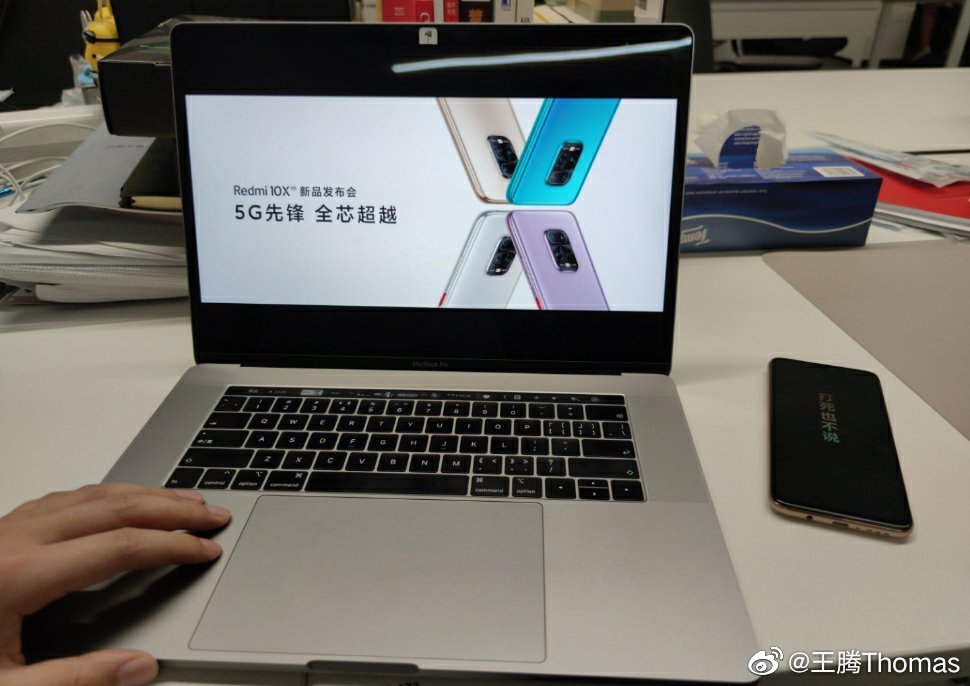










 Elephone also offers webcam at an affordable price of $27.99. It supports standard UVC and UVA protocol assisting plug and play. The camera supports Android, Windows and Linux operating systems. Elephone Ecam X supports 5-megapixel resolution with 30fps video rate. It can be used for online teaching, live broadcast, video conference, Video chat, intelligent TV external devices.